
A Fish Tale:
or On Collecting Vintage Fish Bowl/Aquarium Mermaids, Ornaments, & Stands
In the Beginning
Why do collectors fall in love with a particular item? It can be hard to pinpoint. It seldom has anything to do with monetary value for those I know. I’ve been a collector since I was a child, starting out with sea shells (from an allergy doctor who gave out shells instead of lollipops after a shot), small china animals, and bits of broken jewelry. My siblings had a few collections and grew out of them, but I have stayed fascinated all my life with “going down the rabbit hole” in some new collectible area every few years. There is an initial deep dive and then interest typically wanes over time, unless I find a new piece at a great price.
For close to 20 years now, collecting in the vintage fishbowl/ aquarium world has been a different game entirely, one that has yet to grow old for me. Fishbowl stands, full of antique mermaids, treasure chests, divers, fantasy buildings, and castles, make my heart beat faster and cartoon hearts swirl around my head.

Figure 1: Antique Fish Tank Plate

Figure 2: Ornaments in Fish Bowl
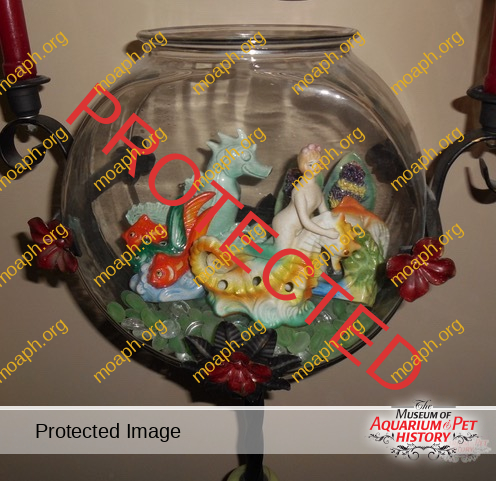
Figure 3: Ornaments in Fish Bowl
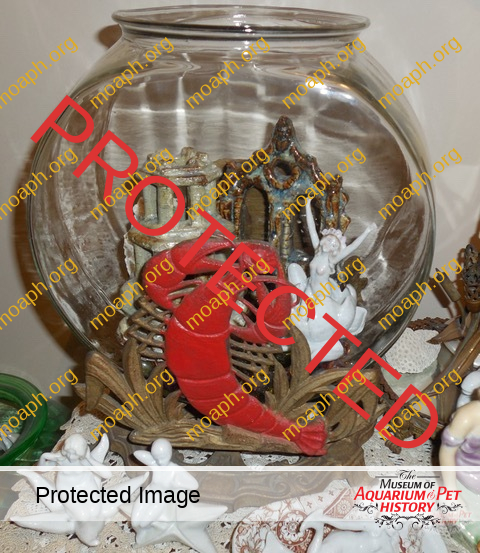
Figure 4: Ornaments in Fish Bowl
Why? I’m not entirely sure I know myself. Perhaps partly due to a long-standing love for golden age fairy tale illustrations. Favorite artists like Warwick Goble, Walter Crane, and Arthur Rackham, as well as the art of the Pre-Raphaelites and J.W. Waterhouse, often featured mermaids and dreamlike landscapes. Also, going to see the amazing Colleen Moore’s Fairy Castle and the Thorne Miniature Rooms on school field trips to Chicago museums gave spark to an interest in tiny fantastical treasures. Mix this together with a love for ornate and uncommon antique items and you may have scratched the surface.
How It Started
I saw my first antique fish bowl stand in Jo Packham’s interior design book “Decorate Rich”. “How incredible”, I remember thinking. “Why haven’t I ever known about these before?” I had been an avid antique enthusiast for years and had never seen anything like it. Probably less than a year later I found my first stand, albeit a much more Art Deco influenced design than the one in the book. I walked away due to the price, even though it was my birthday, but couldn’t get it out of my head. Of course, I went back, talked them into a discount, and finally owned my first fish bowl stand – with lights! (the antique mall owner joked it was because the fish were scared of the dark). I filled it with some of those sea shells from my childhood collection.
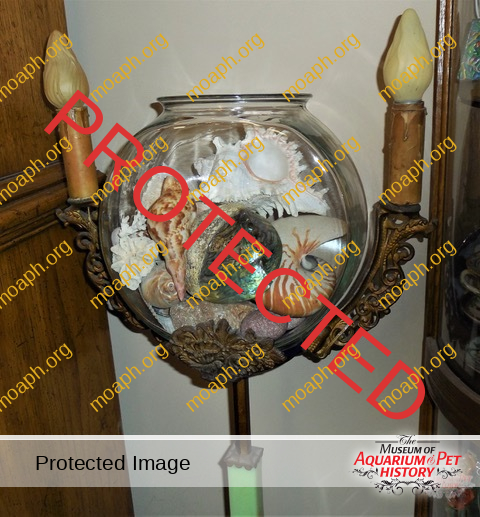
Figure 5: My First Fish Bowl Stand
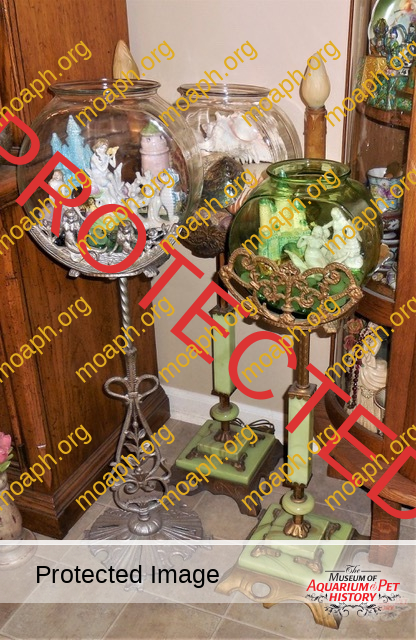
Figure 6: A Few of my Earlier Fish Bowl Stand Purchases.
Left: similar to the one in the Packham book
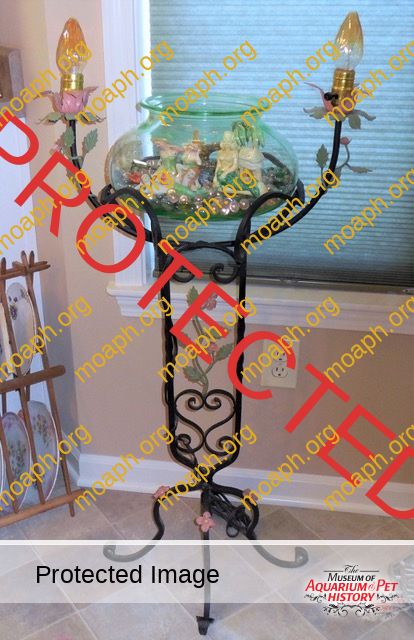
Figure 7: A Toleware Style Stand
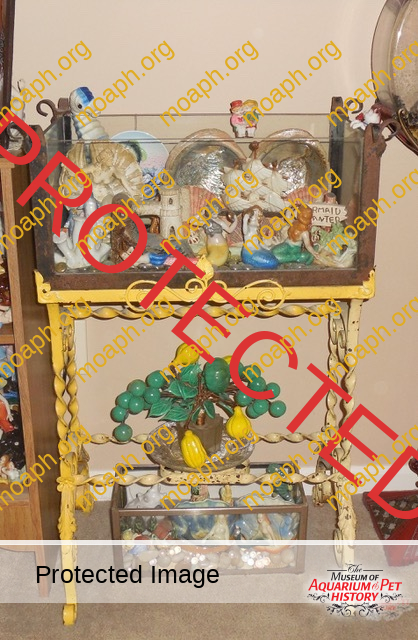
Figure 8: Yellow Fish Tank Stand
The real clincher came in the form of two magazine articles on vintage collections of mermaids and aquarium ornaments. Intrigued and inspired, I was off to find these tiny magical figurines to go inside my bowl. Even the Made in Japan varieties were somewhat hard to track down at first. I scooped up everyone I could find within a four-hour radius of home, from antique malls to flea markets and shows. Soon the internet became another favorite resource.

Figure 9: Mermaids on Two Shells Japan, Variations, note the larger size top row, and overall changes in tail bend, tiara
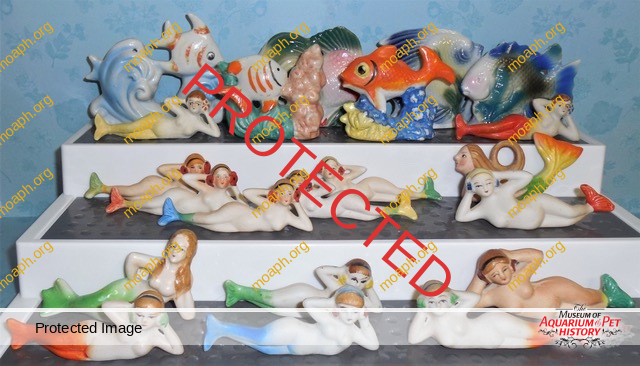
Figure 10: Bisque Mermaids Japan (and some fish).
Second row, on the left: note how they begin altering from the front row bulky basic form, to mimic the more refined German Versions size.
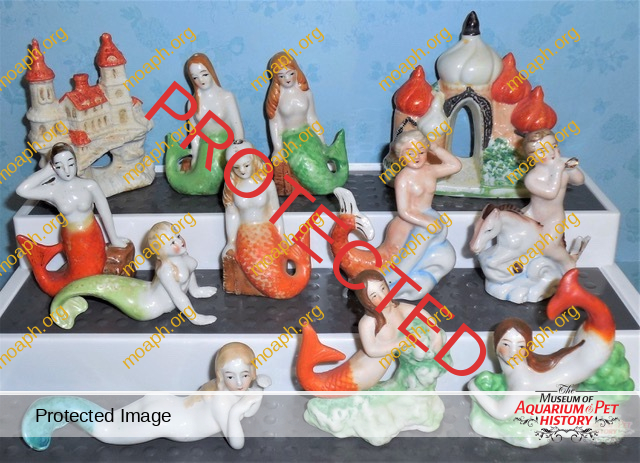
Figure 11: More Japan Mermaids (and castles)
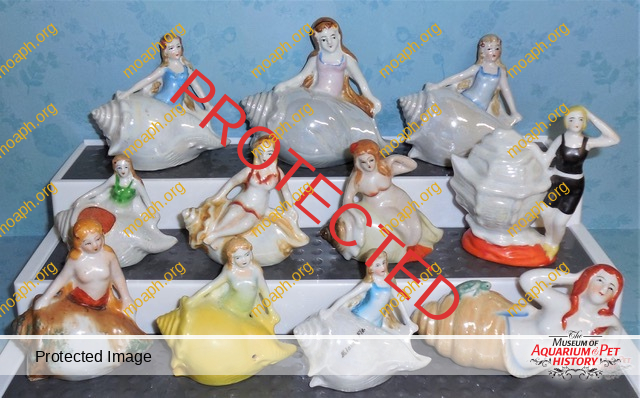
Figure 12: Mermaids in Shells-Three in Blue are German, the rest Japan
The first few vintage ornaments I purchased, are likely ones that many people start out with. The Japan Mermaid on Two Shells, and the small bisque mermaid, hands behind head, also from Japan. They are some of the most common to find. However, over the years I have been continuously amazed by the variations, not only in paint colors, but a differing bend in the tail or the change in size, and facial expressions that can make a piece come alive, even with these more common figures.
Later, seeing the elusive German-made versions of these ornaments was another revelation – the details, the much more delicate artistry – and the difficult quest to find even more had begun.
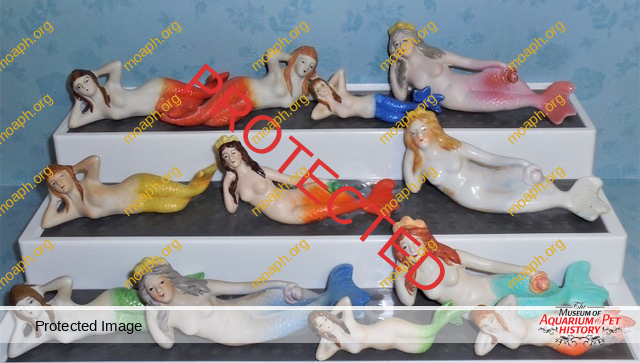
Figure 13: Lounging German Mermaid Center, surrounded by Japan Mermaids
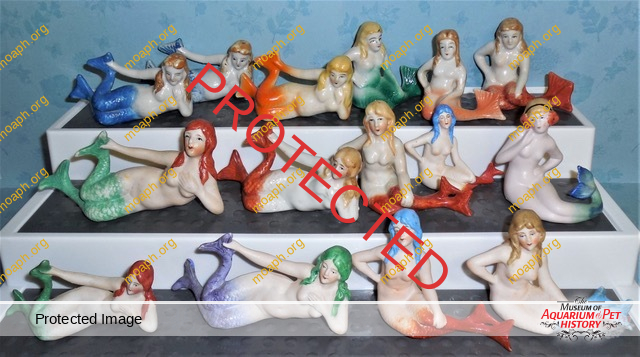
Figure 14
For comparison, a mix of German & Japan Mermaids All of front row and two right in middle row are German, the rest Japan – the three Japan in the middle row have become much closer to the German versions than the Japan top row versions.
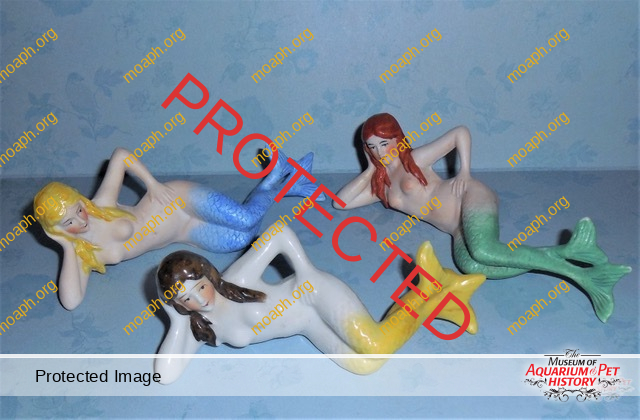
Figure 15
Front: Japan Two Fins Mermaid
Back two: German versions with more detailing including pronounced scales
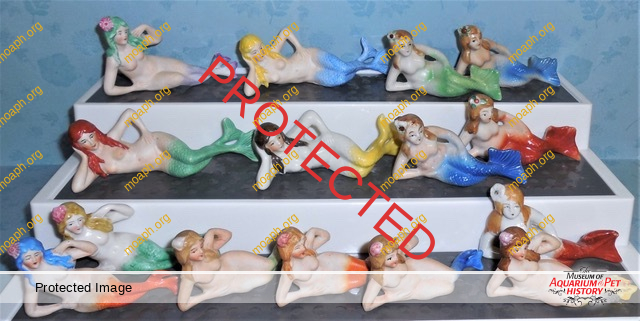
Figure 16
Front row: two left German, the rest Japan
Middle row: one left German, the rest Japan
Back row: two left German, the rest Japan
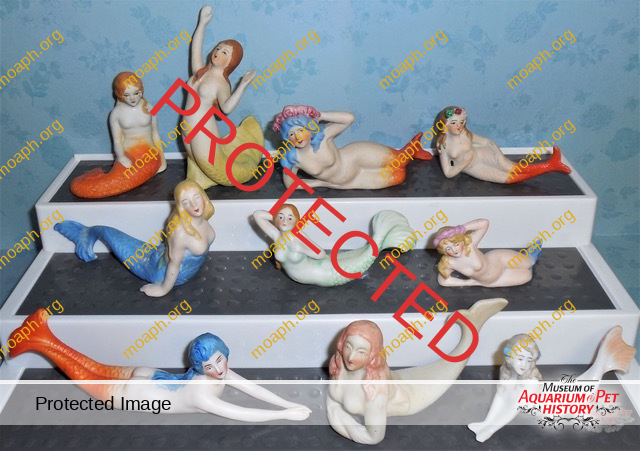
Figure 17: A mix of Figures with more unique poses
Front row: left and right German made, middle Japan
Middle Row: all German
Back Row: all Japan
The Struggle Is Real – Real vs Repro
There were stumbles along the way. I didn’t know anyone else who collected these pieces, so there wasn’t a lot of guidance. The first few years I wound up by accident buying some artisan-made ornaments, sold as the real thing, and also a few reproductions. A lot of the more recent reproducers like the German Doll Company marked their items, but those marks can easily be filed off. If you think they’re well done and you want one, great! I own some myself. But you should be able to know what you’re getting for the money you’re paying. Many sellers are honest, but some don’t know they’re not old, and some don’t care.
With lessons learned, I got better at recognizing the real thing, however, there are fantastic artists out there who can fool even the best collectors. Then also, repro companies like Mundial and others sometimes use the old original molds with numbers, but don’t mark their items with their logo, making the age identification harder. Facial details, especially, can be one of the best giveaways. All that said, I do still own a few I’m still not sure about. It might not matter to everyone, for me, I just like to know. Soon emails with experts I found online like Gary Bagnall and Sharon Hope Weintraub were an additional, and quite helpful, resource.
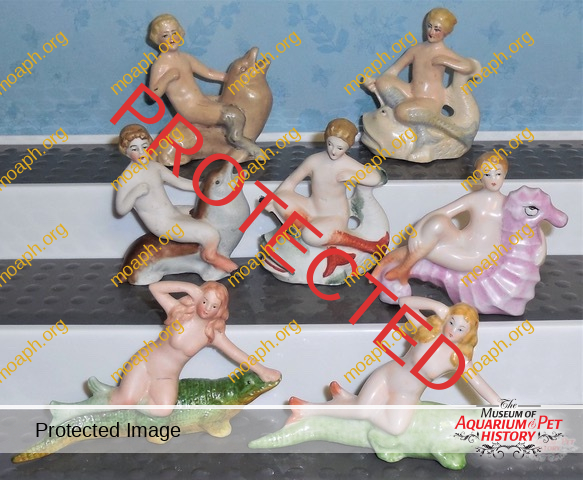
Figure 18
Front row: left German, likely vintage/real-right repro
Middle row: left two German vintage/real-right repro
Top row: likely repro but unusual and well made
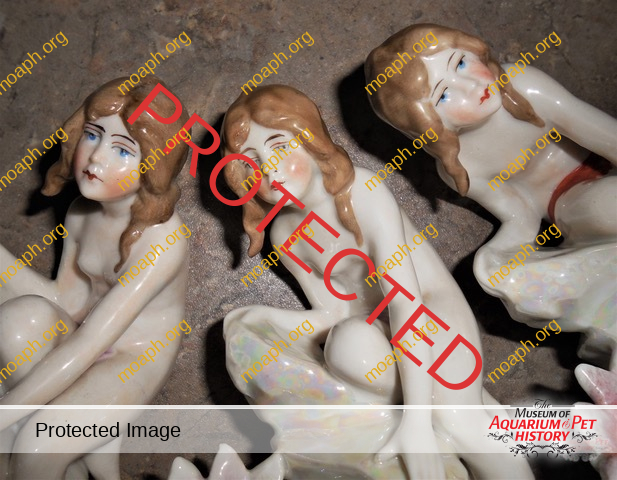
Figure 19: Examples of antique German facial details, Sitzendorf
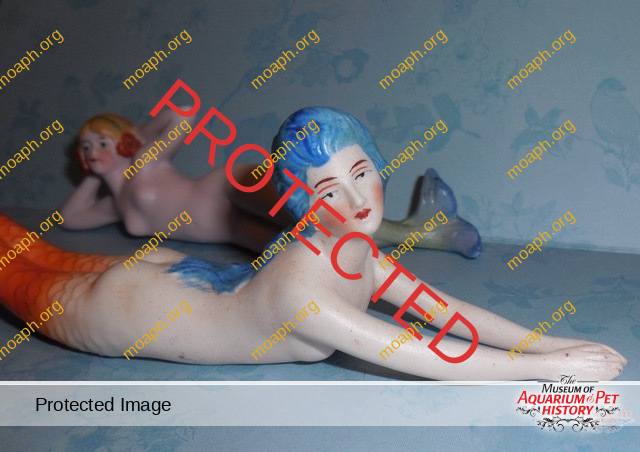
Figure 20: Example of antique German facial detail, William Goebel
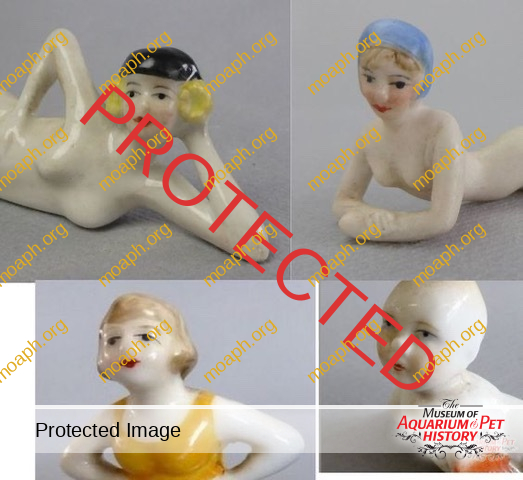
Figure 21: Modern Reproduction Facial Details
Just How Crazy Am I?
There are some, ok maybe many (even friends), who would call me at least a little crazy. When I started with the most basic Made in Japan aquarium mermaids, I wanted to find them all, my favorites being the older pre-1950s ones. All the colors of tails, all the variations of right and left facing, differing poses, and so on. They even made some figures in as many as three sizes, likely to fit whatever size bowl or tank you could afford. It might be I’m only a completist collector because that makes it all the more fun. The fact that you can never really find it all, you’re on the romantic impossible journey, but therefore have a reason to keep hunting and searching. This is certainly a collecting area for that!
Old catalogs are really helpful in finding out what existed, although certainly not all inclusive. The two books written by Sharon Hope Weintraub are a wonderful resource, as is the book “The Ladies of Hertwig.” There are many illustrations showing original factory catalog pages that I’ve used to know what figures, shapes and poses are accurate. For those who like to be more restrained in their collecting, it’s easy to find a sub-category to focus on: figures riding on fish, figures on turtles, figures on a seahorse, swimming through arches, and so on.
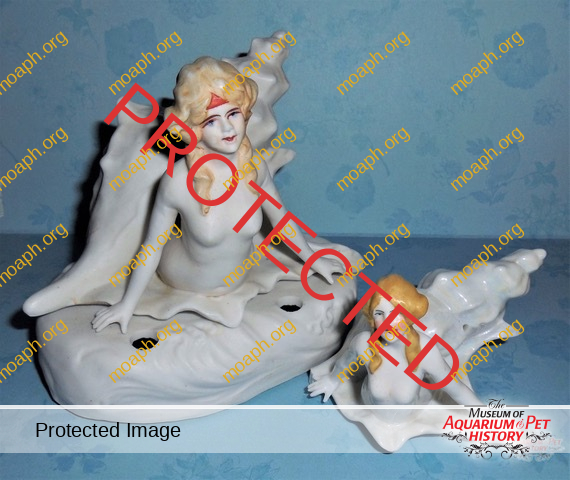
Figure 22: Big and Little size versions vintage German Aquarium Sirens
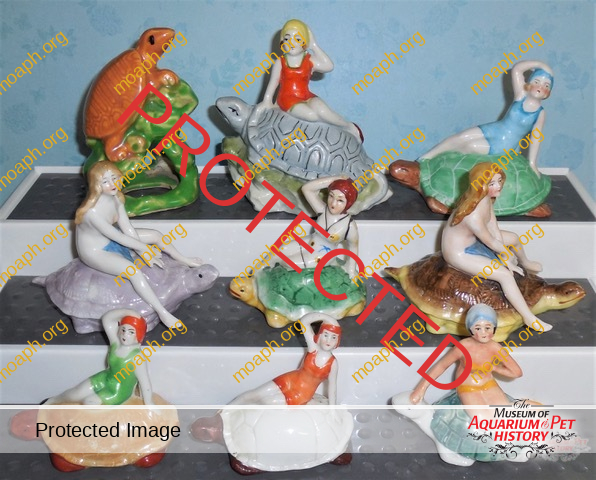
Figure 23: Mix of German and Japan Turtle Riders
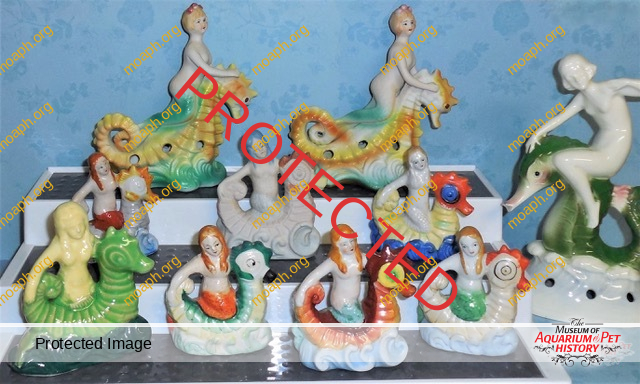
Figure 24: Seahorse Riders Japan, German Flower Frog right

Figure 25: Sea Creature Riders
Front Row: German
Middle Row: Japan
Top row: on Goldfish is German, the rest are Japan
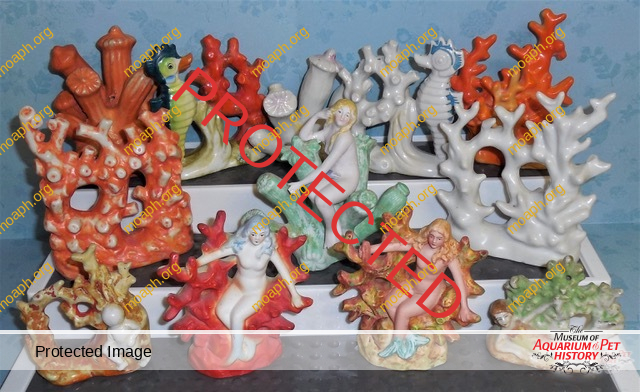
Figure 26: Sea Coral
Front row: two middle figures German, outer figures Japan
Middle row: Middle German, left & right are Japan
Back row: Japan
Besides a growing specialization in mermaids, I continued to find more fishbowl stands, and then began hunting for tabletop ones that wouldn’t take up as much room. Of course too, there are the neverending buildings and castles, divers and fish, treasure chests, and that whole other arena of collecting – bathing beauties. Those were often made by the same companies who made mermaids, where they sometimes kept the same body and just swapped out the feet for fins. There are even cross-over smaller-sized figural flower frogs that work just as well in an aquarium as in a bowl with flowers, some of which were likely made for both. Along the way, I also discovered bisque floaters and fish bowl hangers to add to the never-ending list of what was out there in this genre.
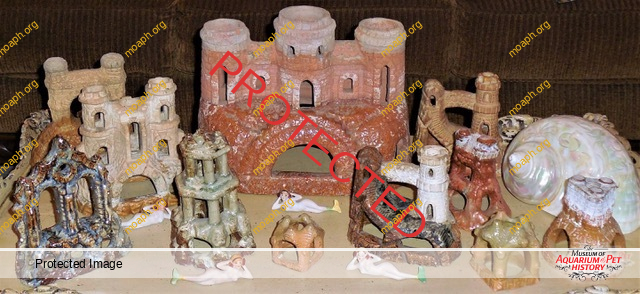
Figure 27: Sewer Tile Castles (with Japan mermaids for scale)
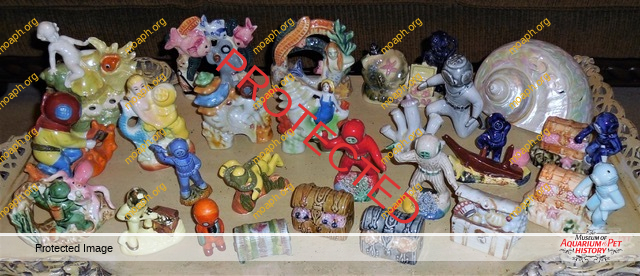
Figure 28: Divers and Ornaments

Figure 29: Bathing Beauties German, Hertwig, Goebel and Unknown Makers
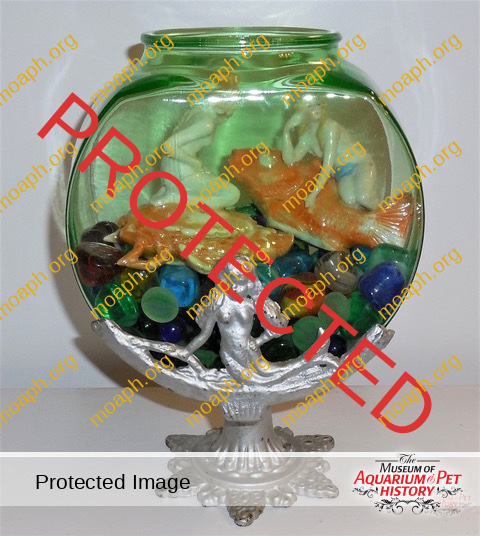
Figure 30: Mermaid Tabletop Stand with ornaments

Figure 31: Mermaid Tabletop Stand with ornaments
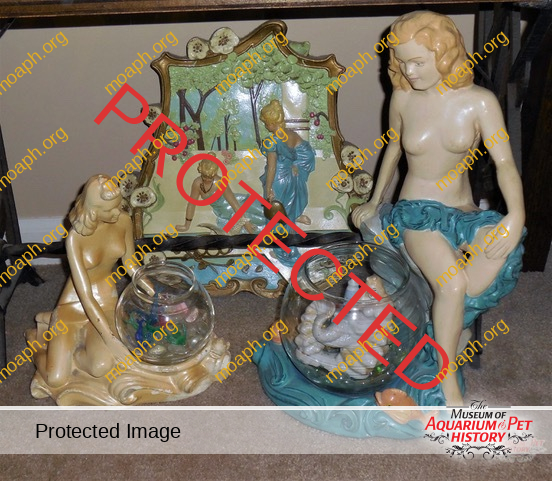
Figure 32: Plaster Bathing Beauty Bowl Holders
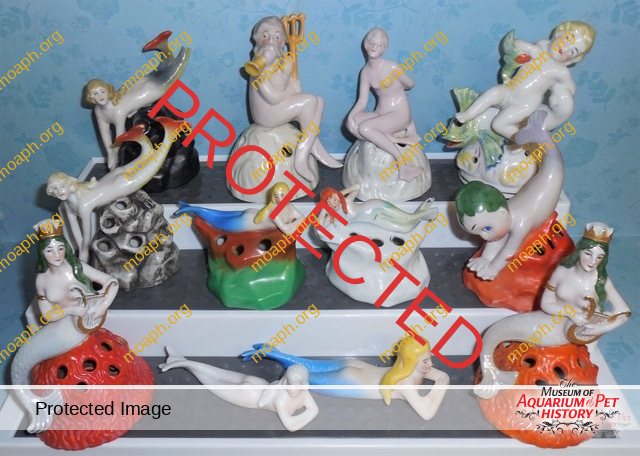
Figure 33: Aquarium Flower Frog Style German Ornaments (plus two German Mermaids)
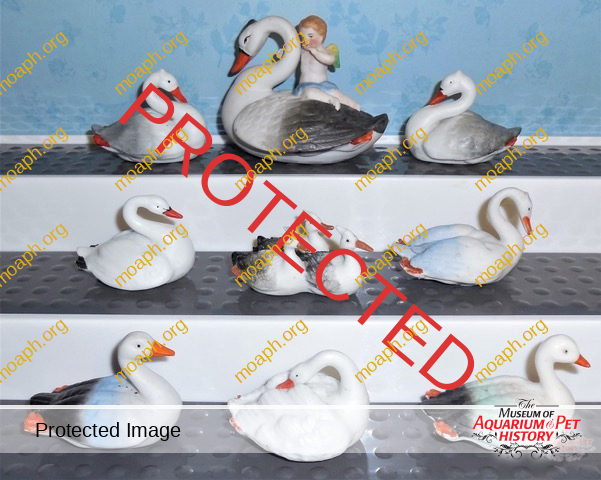
Figure 34: Bisque Aquarium Floaters
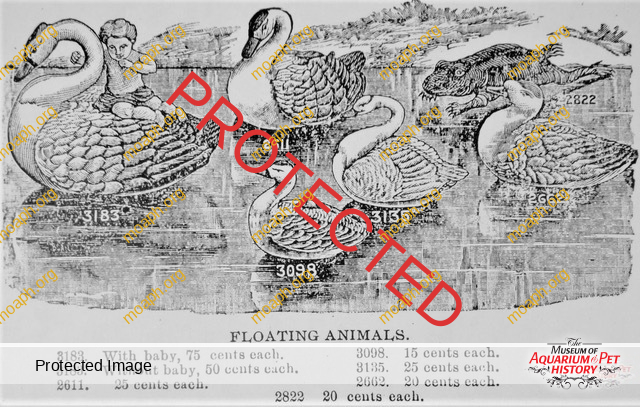
Figure 35: Aquarium Floaters Ad
The Sitzendorf Six And Collecting German Ornaments
The Sitzendorf Porcelain Factory made some of my favorite aquarium ornaments. They are very Art Nouveau in influence and have an incised crown with an S mark on the base. The six German Sitzendorf Sirens are a great example of collecting in the fish bowl ornament world. A 1929 catalog shows six sea siren ladies, five of whom have feet (are more bathing beauties or nymphs) and one traditional mermaid with fins, all riding sea creatures. To find all six can be difficult to almost impossible. If you follow the old adage to collect items in the best condition you can find – well, in this area of collecting that might mean your piece has faded or missing paint, missing fins or fingertips, a chipped nose, a re-glued on head and so on. I still have not found a really nice example of the mermaid from this set, mine has some major wear and tear – although I have a similar larger figure atop a flower frog. For a stubborn collector, you do the best you can and trade up when you find a better example – often years, literally, years later.
Then, what if like me, you suddenly find an alternate version of the Lady on the Crab! Probably the same maker. Smaller. Slightly different pose. This wasn’t in the catalog ad. Aaarrghhh! How many more are out there? Are there alternatives of the other five? How do I know? Am I starting over? Help! I still don’t know the answers to these questions. If you do, let me know!
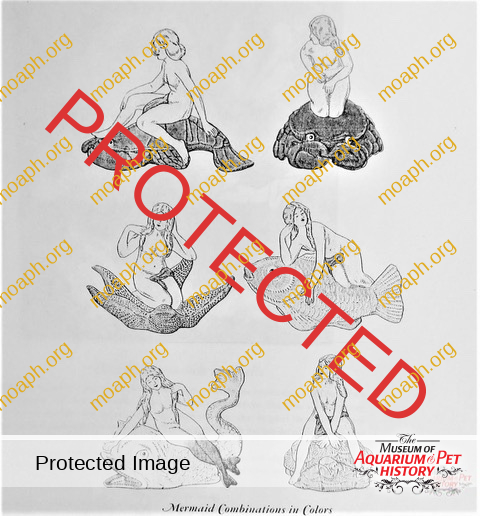
Figure 36: Ad for Sitzendorf Set of Six
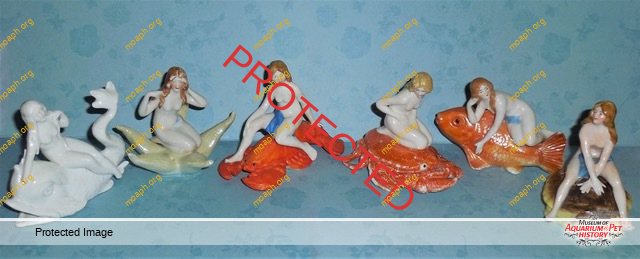
Figure 37: My Set of Sitzendorf Six
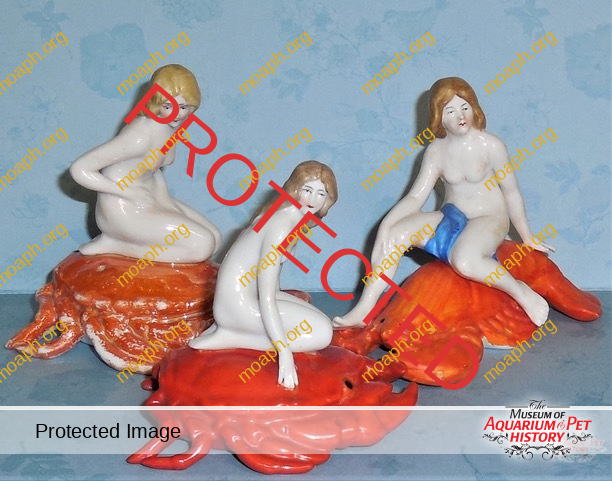
Figure 38: Small Sitzendorf Crab Lady
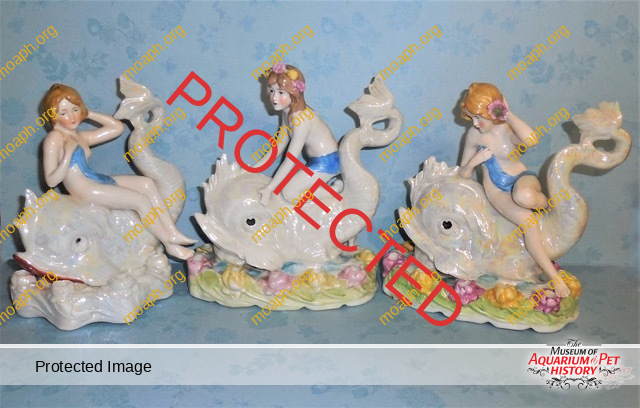
Figure 39: Three Sitzendorf Sea Rider Flower Frogs
While initially frustrating to me, it came to be fun to find ornaments missing their paint (as long as I also eventually find the painted version!). The fine details you can see, especially on the German-made ones, stand out even more without paint. The bonus is they can be easier to find as some collectors are particular about buying only in perfect painted condition. Once an item became worn, broken or was chipped, it was often tossed. If they were truly utilized for tank decoration, you have to imagine that in the use and frequent cleaning process many if not most were damaged over time. And too, the factories made fewer of these figures to begin with, since it was a specialized use, and generic decorative figurines were more popular and more plentifully made.
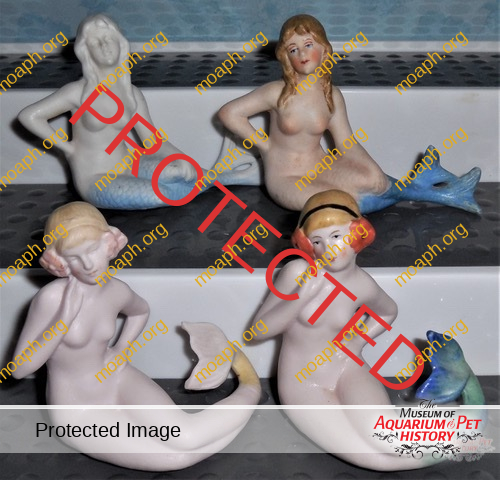
Figure 40: German Mermaids with & without Paint
German Makers & More
Besides Hertwig and Sitzendorf figures, other gorgeous collectibles are the early bisque ornaments marked Bavaria, many made by William Goebel. Goebel mermaids are often stamped Bavaria in black, a mark easily worn away, but sometimes may also have an incised crown mark along with letters W, G, and numbers.
It can be difficult to find items from Weiss, Kuhnert, and Company that are not reproductions, but I have managed a few. The German Doll company bought many of their original molds and reproduced some figures for a period just prior to when I started collecting. Often ornaments from Weiss, Kuhnert are marked Relpaw, for a US company that marketed aquarium-related products, for whom Weiss, Kuhnert produced figures.
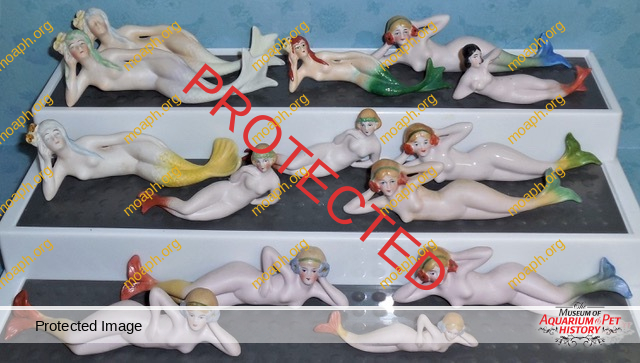
Figure 41: Basic Form German Mermaids
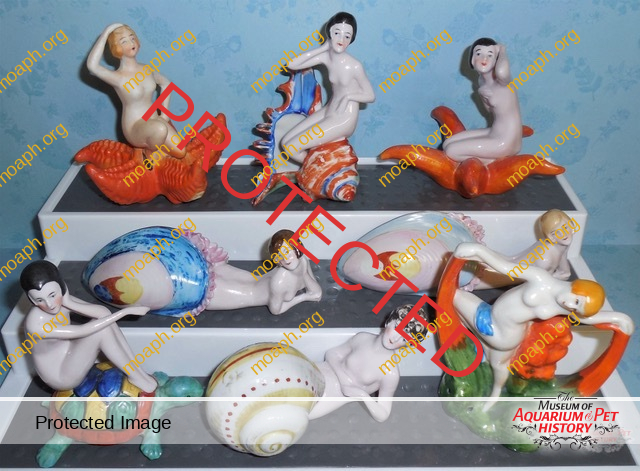
Figure 42: Art Deco German Hertwig Ornaments except top left & bottom right Deco Japan
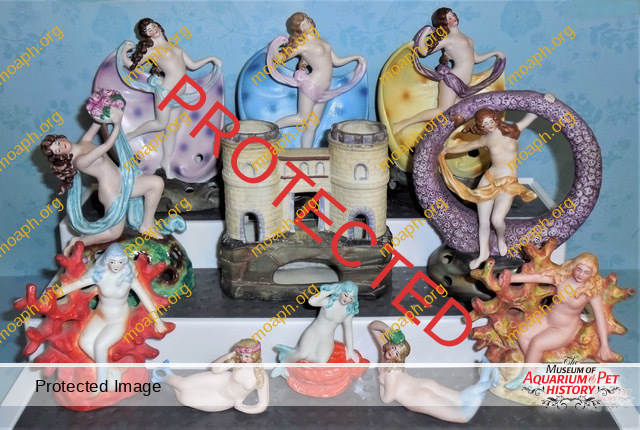
Figure 43: Weiss Kuhnert Relpaw Mermaids, Nymphs and a Castle
Of course, many makers are lost to time. Even if shown in a vintage catalog that can be found, they often did not identify who manufactured the figures shown, merely stating they are imported. Some pieces only have incised numbers on the back, a Foreign stamp, or no markings at all. By the quality, you may be able to make an educated guess if the figure is German, but there is much more to discover about the history of these pieces. Weintraub’s books contain very useful history on German porcelain, manufacturing, and companies, but there are many, many pieces where attribution is still just guesswork. German companies often did produce figures in families or a series that went together. With most that I’ve found I just don’t know (and may never) whether my set is complete.
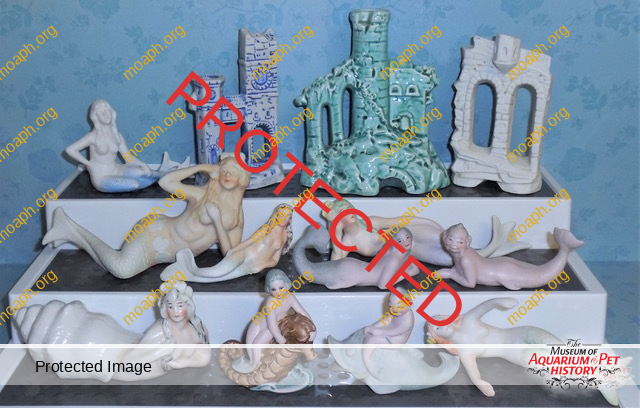
Figure 44: German Family Middle right and front middle, plus German Castles & more
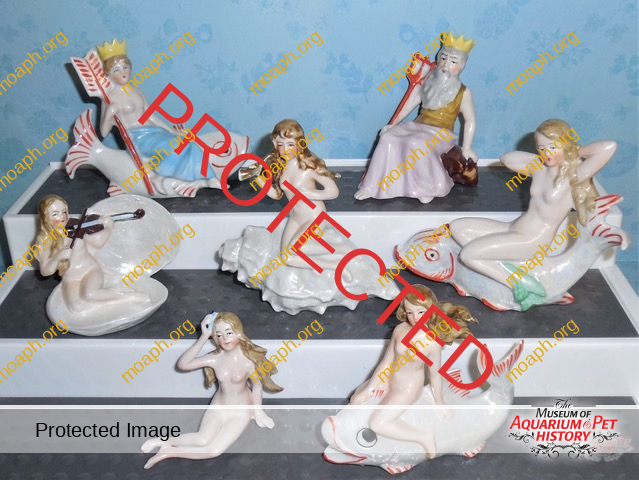
Figure 45: German Lustre Series
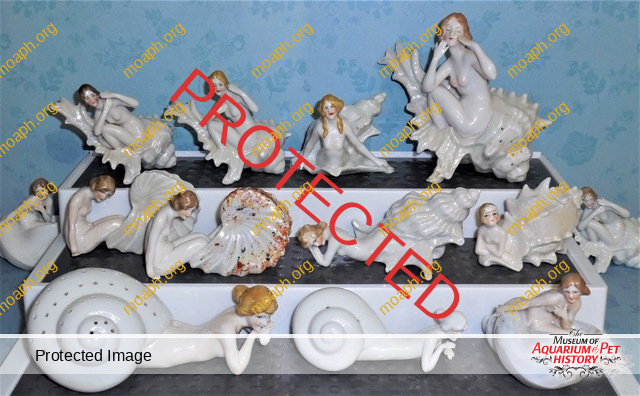
Figure 46: Another German Lustre Series
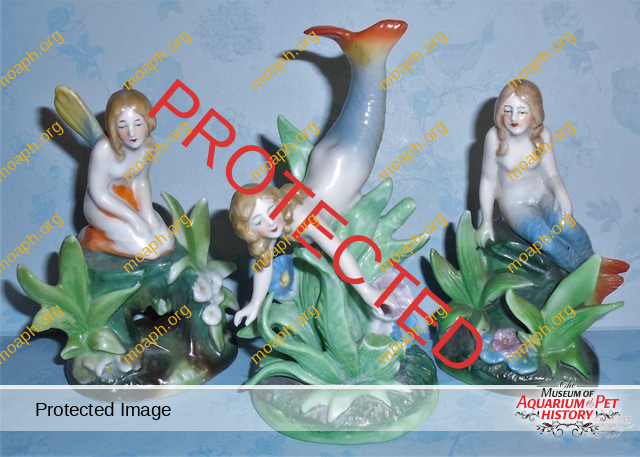
Figure 47: German Trio Sea Plant Series (with the only Fish Bowl Fairy I have seen)
Bad Luck and Good
And sometimes there’s just the piece that eludes you, the bane of the collector. None of these figures are super common, and it’s great fun to find one you’ve never seen before. Then there are some pieces you see periodically and just aren’t able to buy. The price goes too high, something malfunctions as you go to bid, and your computer freezes, or you just don’t see it until after it sold (insert many deep tragic sighs here). I know these all painfully well. Many will come back around at some point – but some you’ll never see again, the name of the game in collecting.
If you’re a steadfast collector though, good luck swings in your favor (maybe?) almost as often as bad. Like the time I found the wonderful Verona fish bowl stand with a mermaid on either side to hold the bowl in place. Nowadays, I’ve seen both vintage catalog listings, and modern photos of several of these, but at the time I had never seen one before. I’ve rarely found stands with the original bowl and this was no different, in fact, I don’t think there was a bowl with it at all. But, a fish bowl stand with mermaids? It took a minute for me to decide, but after seeing someone else start to look it over I bought it the second they walked away.
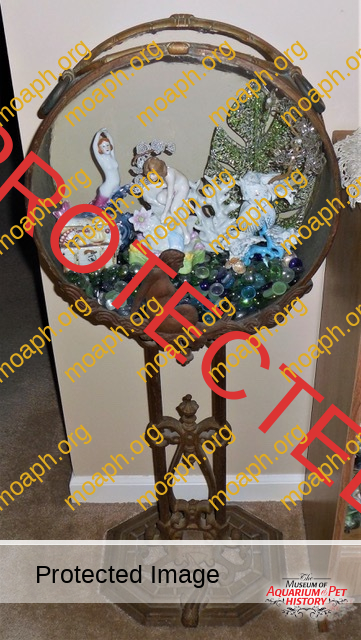
Figure 48: Verona Fish Bowl Stand
Probably eight years later I was walking through a different antique mall in the same city and spotted an unusual large round copper-sided bowl hanging from the ceiling. I thought it looked as though it might fit one of my stands, but I was three hours from home with no specific measurements in hand. I took the leap and bought it based on instinct that it was likely a standard size. Turns out it was the nicest of one of three or four options they made for use in my Verona stand. It fit like a glove. What are the odds?
Some Thoughts
Back in the day when eBay showed the names of who else was bidding on an item, in jest, I would curse the names of those who regularly seemed able to beat me out on an item I dearly wanted. Some of you might be reading this now! But seriously, my hope in sharing my story and some of my collection is that it leads to a preservation and even elevation of these wonderful items that have certainly captured my imagination, and my heart. I know when I see photos – and even videos – of what is in collections like those of the MOAPH and others, it is such a treat. There are many who don’t share what they own, making it harder to keep the narrative and interest flowing. What all is out there, that I don’t even know about? That question can make a collector crazy (or crazier)!
I understand all the pluses and minuses of focusing on a collectible area that might make prices go up and items disappear off the market, but I think it’s worth it. I grew up in the age of Record Shows and even Newsletters for buying and selling collectibles. People then were happy to share and make a connection with a fellow enthusiast. Even while I’m probably more thankful for the reach of finding more and better items online, I miss that more personal and friendly interaction from those days. I think the coolest thing would be that this and other platforms bring collectors together to share their collections and knowledge, and maybe even do a bit of old-school swapping and trading. I promise not to hold a grudge if I see you own one of the ones that got away. I’ll trade you for it!
Resources & Recommended Reading:
“The Ladies of Hertwig: Bathing Beauties, Half Dolls & Figurines of the Hertwig Porcelain Company, 1900-1945” by Gold Horse Publications
“Bawdy Bisques & Naughty Novelties: German Bathing Beauties and Their Risque Kin” by Sharon Hope Weintraub
“Naughties, Nudies & Bathing Beauties” by Sharon Hope Weintraub
“Flower Frogs for Collectors” by Bonnie Bull
“Made in Japan Ceramics” series I-IV by Carole Bess White
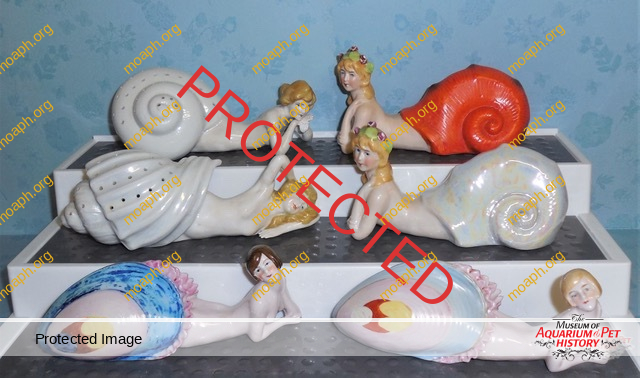
Figure 49: Larger Size German Ornaments in Shells
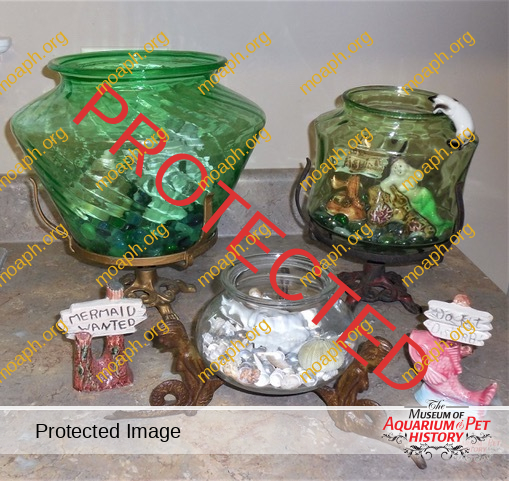
Figure 50: Three Table Top Stands & Ornaments
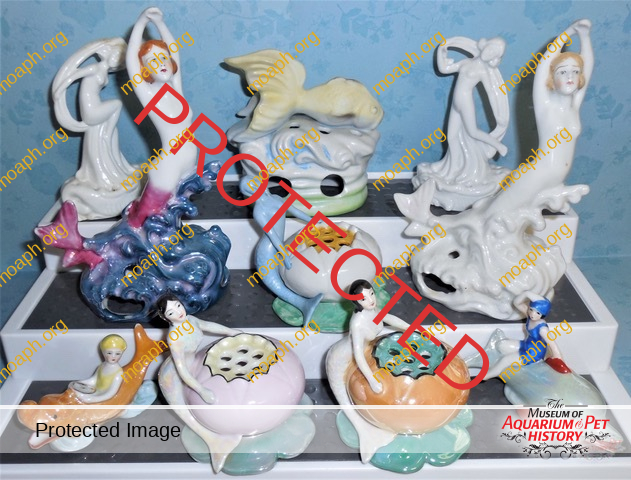
Figure 51: Medium & Small Size Fish Bowl Related Flower Frogs / Center-Center Row German, Front two Center Deco Japan/Noritake (who knocked off who?)
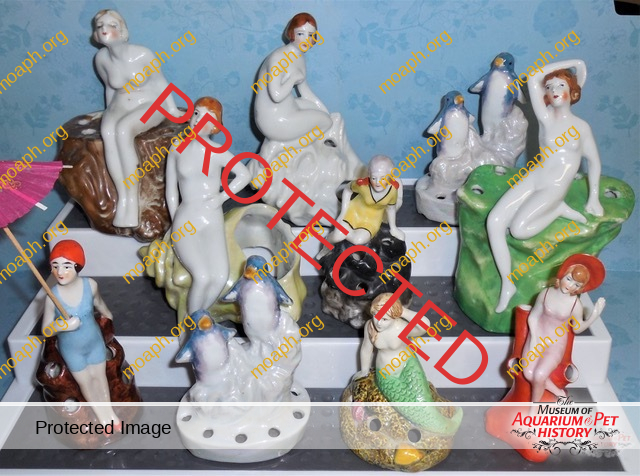
Figure 52: More Fish Bowl Related/Bathing Beauty Flower Frogs
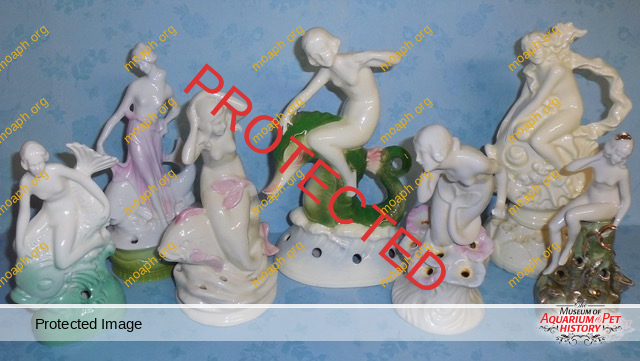
Figure 53: Full Size Sea Related Flower Frogs
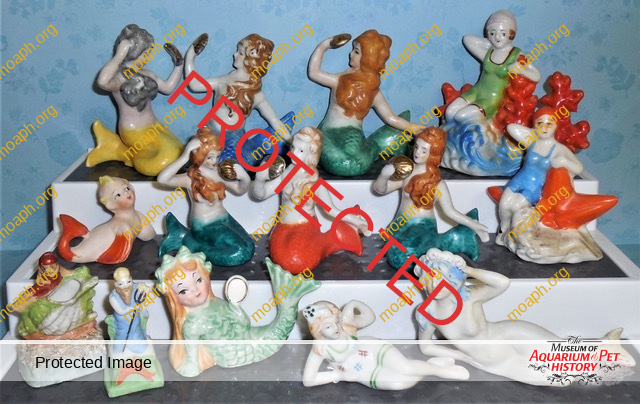
Figure 54: More Japan Mermaids
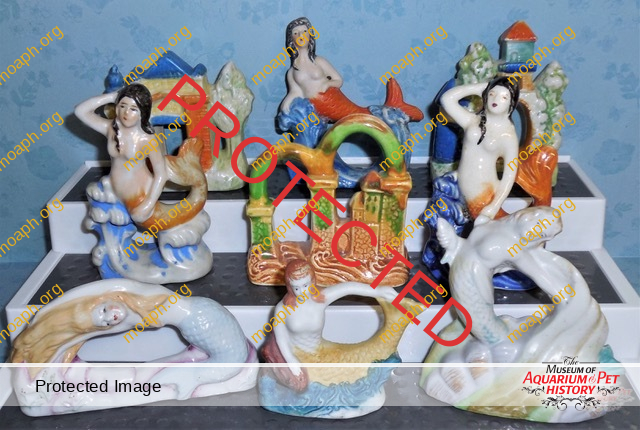
Figure 55: Swim Through Ornaments & Mermaids Japan
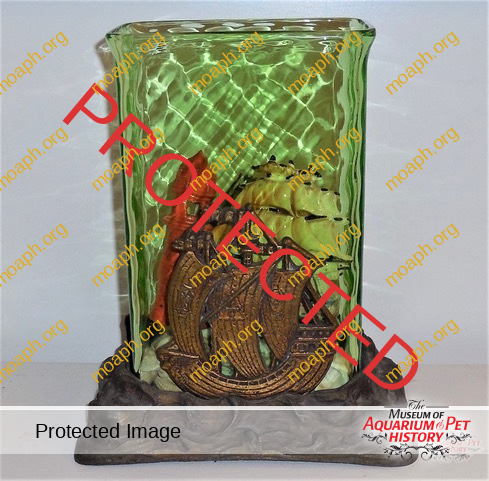
Figure 56: Tabletop Ship Stand
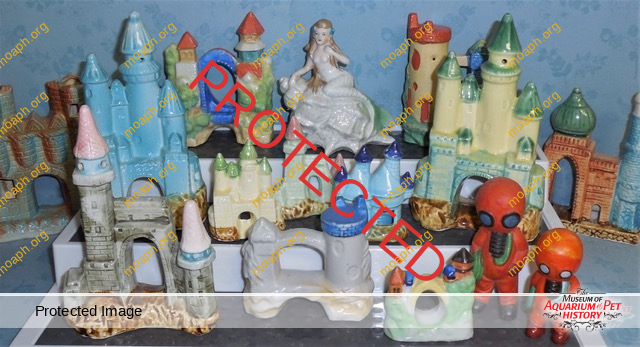
Figure 57: German Mermaid w/Misc Japan Castles & Divers
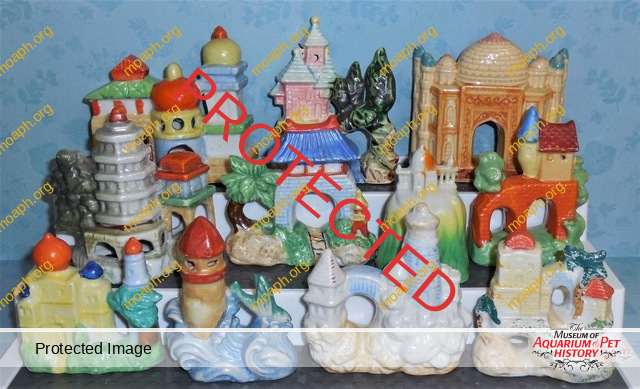
Figure 58: Misc Japan Buildings and Castles
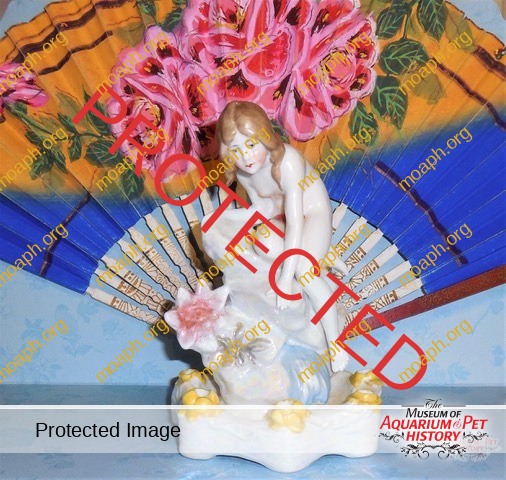
Figure 59: German Flower Frog closeup
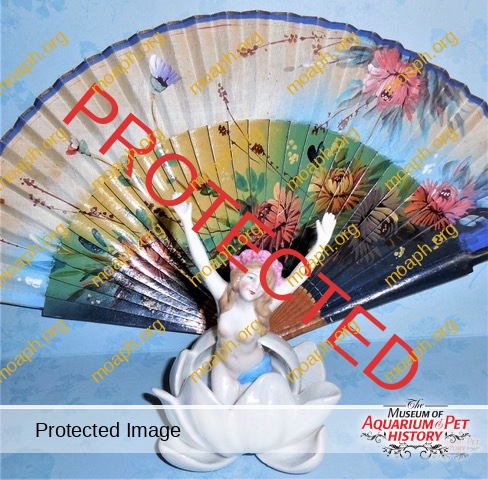
Figure 60: German Lotus Ornament closeup