Coup’s Aquarium Is Coming To Town!! Redux
In the beginning stages of my interest in 19th century public aquaria I found the following quote from James G. Bertram’s book “The Harvest Of The Sea” (London, Third Edition, 1873): “It may be interesting, by the by, to note here that in America they have started traveling shows of living fish, which visit inland towns, and delight hundreds who never before saw a lobster or an aquatic sheep’s head.” While I initially thought this might make a nice little piece of “trivia” to file mentally away, on-going research has shown that this traveling aquarium concept deserves more attention. When I first wrote on this topic 20 years ago (Finley, 2002) little did I realize that the piece would lie untouched for so long. But the interest was always there and slowly materials on the topic accumulated. Thanks must go to the MOAPH for the encouragement to now provide an update on the topic. Now, as it was 20 years ago, it is beyond this article to examine the whole history of such traveling aquaria, but I can provide additional information on what is, without question, the apex of such ventures – the aquarium of William Cameron Coup’s New United Monster Shows, which was a circus-based venture that was on the road from 1879 to 1882.
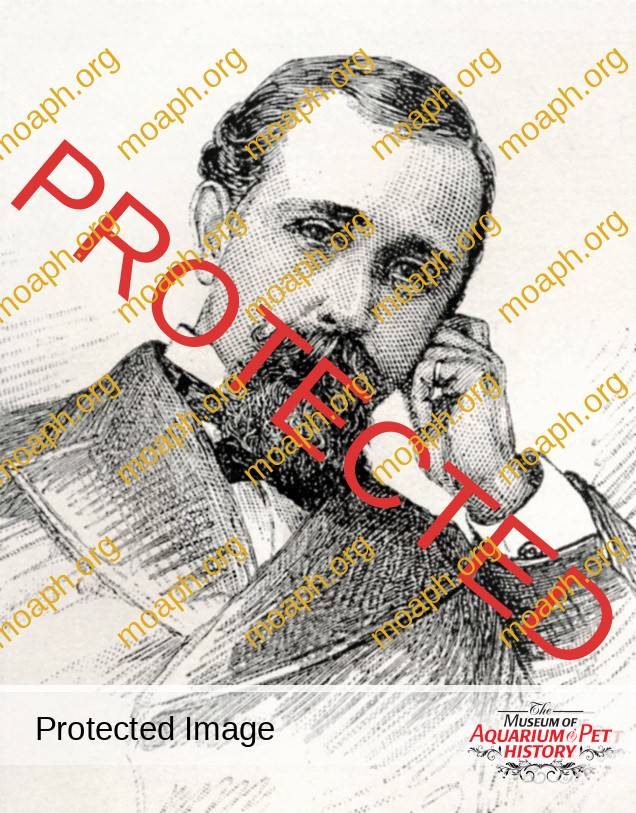
Figure 1: William Cameron Coup in 1877.
Illustration Credit: From the author’s collection.
W. C. Coup (1837-1895) (Figure 1) is rightfully recognized as one of the greats of the 19th century circus world. One source of the time dubbed him as the Napoleon of the circus world. Among other things Coup is credited with such innovations as the railway circus concept and the widespread use of lithographic advertising posters. With the former he designed longer railway cars and modified them to ease the loading and unloading of the numerous materials needed to set up and maintain a moving circus. He, along with Dan Castello, “partnered” with P. T. Barnum (some say “made” Barnum the circus great he became) in the early 1870s and from this gathered great experience in rapid moving of a full circus. In 1876, he partnered with the German bird and animal dealers, Charles and Henry Reiche, and together they opened a private venture, the New York Aquarium at 35th Street and Broadway in New York City. Coup, was the upfront manager of the facility and in his autobiography (Coup, 1901) he fondly notes “Nothing in my career touched and moved me like the great New York Aquarium enterprise.” But Coup’s participation in this “enterprise” was not to last; the partnership with the Reiche brothers was dissolved, and he was on the road with his Equescurriculum Show in 1878. Although the Reiche brothers became the full owners of the aquarium, Coup obviously had a good working relationship with them, and he maintained an office on site and used the aquarium as his mailing address. As will be seen below he was also able to use the aquarium as a source for a wide variety of aquatic life and other animals for his circus ventures. Advertisements of the time for his first 1878 venture noted the show to be “…From the New York Aquarium…”. A high point of this show was his exhibition of the preserved giant 39 ó foot “Devil Fish” (giant squid) that had been bought by and placed on exhibit at the aquarium.
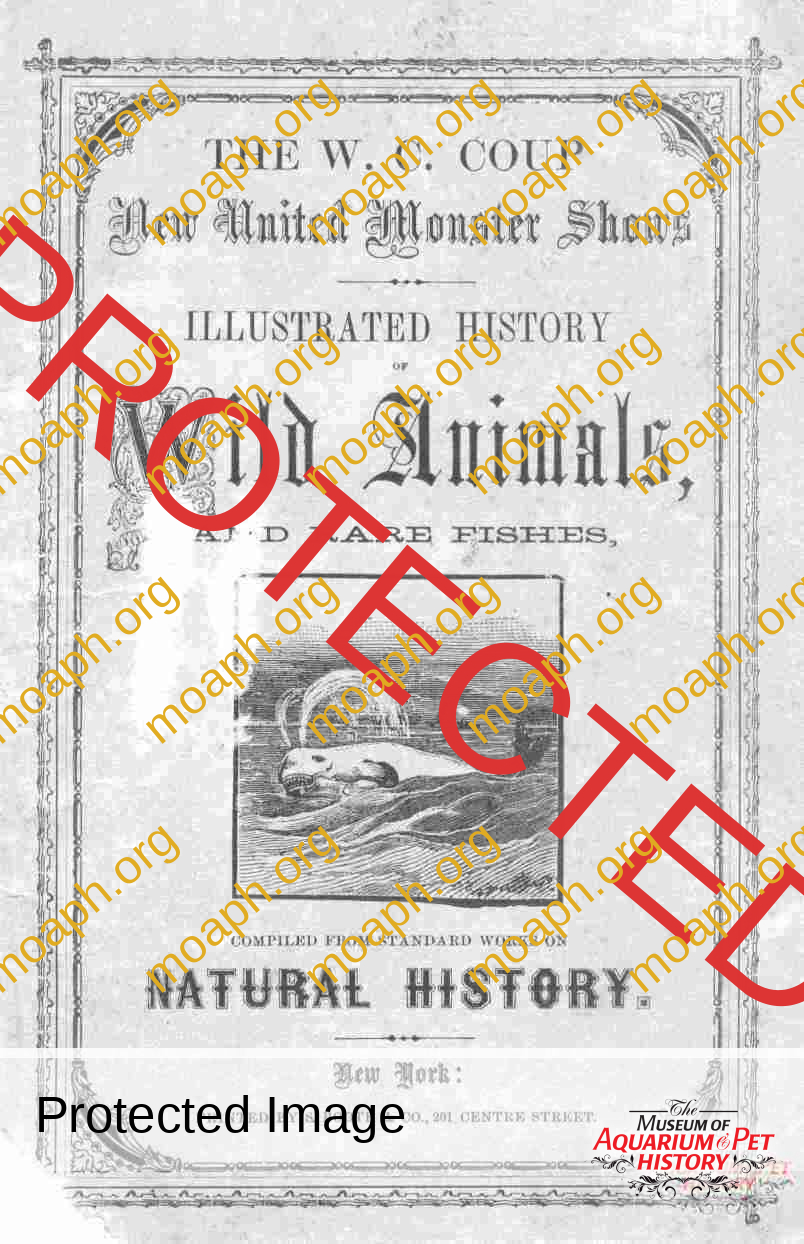
Figure 2: Cover of a 40 page guidebook to Coup’s animal and aquarium shows. It is not dated, but is most likely from 1879. Note the imaginative “double spouting” of the Beluga whale.
Illustration Credit: Scanned from the author’s collection. Currently this pamphlet is in the MOAPH library.
In 1879 Coup formed his New United Monster Shows, which included an aquarium in addition to an almost bewildering number of animals, acts and other “attractions”. Guidebooks for the animals and the aquarium (Figure 2) were available for sale throughout the stay of the show, as short as it might be. This apparently wasn’t the first attempt to take a true aquarium on the road (see the postscript for some comments on this). But, for an idea of what Coup faced in his venture consider the following: In 1879 there were 18 “Travelling Shows” on the road around the U.S. (Robinson, 1925); From April 21st to November 7th Coup had 154 show dates in 11 states and Washington D.C. and covered a grand total of 6,418 miles! (Anon. 1879 A); Additionally for the 1880 traveling show season there were 16 working shows according to Robinson. Coup’s show in this year covered 23 states (plus Washington D.C.) and racked up a total 11,260 miles(!) (Evarts, 1880) for the season (April 7th to December 7th). For a general idea of what Coup was moving around please check out the title of the provided Anon. 1879A reference in the references. The moving around by Coup was done with from two to three trains. There was a short train (circa three cars) that would usually arrive in a town three days before the show. They were there to arrange for needed materials and to generally plaster the town with the famous colorful lithographed circus posters. The “regular circus train or trains” could vary in length. Coup would usually travel on two larger trains. The set-up materials (tents, booths, etc.) were to arrive first with their crews to get going and then the various acts, animals, aquaria, and all their supporting materials would be waiting to go into action once the super-structures were in place. If one large train was used it would be loaded from back to front to achieve the same effect.
Before proceeding, a brief definition regarding aquariums and circus/shows is needed. For my purposes here I refer to an aquarium in the generally understood sense – a glass fronted tank, or tanks, of fishes and/or other aquatic life. Many shows during the last three decades of the 19th century (and into the 20th) list “Aquarium” in their name or descriptive ads. But most often these refer to non-glass containers of water that were used to house a variety of aquatic mammals (seals, sea lions, hippopotami, etc.). Often the “Aquarium” carried a prefix that somewhat designated its contents: e.g., “African Aquarium” for the hippos; “Artic Aquarium” for the seals, sea lions, walruses, etc.).
Before moving on to the “regular” aquariums in the show I would like to cover two items that were a different part of the aquarium set-up area. The first of these was the previously mentioned…
THE DEVIL FISH
This, a true wonder, was a giant squid that had been displayed at the New York Aquarium, preserved in a combination of brine and alcohol. This animal had been captured in Trinity Bay Newfoundland on September 23, 1877. There was great scientific interest in the creature and a bidding war of sorts broke out to obtain it. The Smithsonian Institution was very interested in it but they were outbid by Coup who reportedly ended up paying $50,000 for it (in today’s money that is roughly equal to one million, four hundred thousand dollars!) Coup took it on the road in his 1878 show and then made it a major feature in the New United Monster Shows. During the off season for road shows (most of the winter) the devil fish returned to display at the aquarium. As a result of the fixation the body of the animal had shrunk from 10 feet to six and a half feet and the long tentacles from 30 feet to 24 feet in length (Dorner, no date but probably 1879). This shrinkage was routinely ignored by Coup and the animal was advertised as being “39 and a half feet long” …and occasionally as “nearly 40 feet long.” It was displayed in the aquarium in a large marble and glass aquarium filled with the preservative fluid. Coup offered in his advertising to pay $50,000 for another specimen and noted that his specimen was “…worth traveling a thousand miles to see.” Unfortunately, the well too often used circus hyperbole ruled the day and later in 1880 Coup started advertising the specimen as “A MIGHTY FIFTY-FOOT DEVIL FISH!”. On occasion the original size was put in an ad, but this was probably an advertising goof-up. The larger size that it had “become” ruled. Coup used this larger size all the way through his subsequent ventures into the 1890’s.
The next item for discussion is one that garnered wide attention. This was…
THE WHITE WHALE
Very early in the history of public aquaria the Beluga (or white) whale (Delphinapterus leucas) was a known and popular attraction. The first specimens were on display in Boston in early 1861 at the Boston Aquarial Gardens which was managed by James A. Cutting and Henry D. Butler. Contrary to what you might have heard or read P.T. Barnum was not the first to accomplish this…although granted he probably provided funds making their initial capture and display possible. Later in 1861 Barnum started displaying white whales at his American Museum in New York City. Later, in 1865, the keeping of Beluga whales came to a temporary end with the burning of Barnum’s Museum. It was in 1876 that Beluga whales again became prominent on the public aquarium scene at the New York Aquarium captained by W.C. Coup and Henry Reich and Brother (but see the Postscript below). In any case, Coup decided to make these beautiful creatures a part of his New United Monster Shows aquarium. As it was, this only took place in 1879, the first year of the venture. Coup made sure to have the whale included in a long poem which was published in Anon. 1979B and in a small pamphlet titled “The W.C. Coup New United Monster Shows” which is a cute little heavily illustrated free standing version of the poem (Anon. No date). In all three whales were captured and displayed in the show…and the results were not very good (mainly for the whales). It appears most probable that very few patrons were ever able to see a live whale as the last stages of the pre-arrival process consisting of travel by train took a terrible toll on the whales. The second whale received was reported to have arrived in good shape but was reported to be dead the next day. The first and third individuals did not fare any better. But Coup made the best of it and had the whales packed in ice and “frozen” and advertised that in this way the patrons could get a much better look at them – much better that seeing them in the water. As such, they were popular with a wide swath of inland folks who had never seen such a creature before. Advertising even went on to say that the whales so “preserved” might last for a year. At least one such whale ended up in a few weeks being sold to a candle maker who utilized it in his trade. At this point I must digress, and in a touch of parody, note that this situation made me think of some verses in a song that Rogers and Hammerstein wrote for their musical “OKLAHOMA”. The song is “PORE JUD IS DAID” (also seen as “POOR JUD IS DEAD”). The verses go:
“He’s lookin oh so purty and so nice
He looks like he’s asleep
It’s a shame that he won’t keep
But it’s summer and we’re runnin’ out a’ ice.”
Coup could have well used this as advertising – had it been available at the time.
Coup had noted in an interview that he would be obtaining at least another whale for the 1880 season, but this never came to fruition. Certainly, for the whales, Coup’s decision was a wise one. One last note on circus advertising. Advertisement for the show on several occasions noted that the whale(s) displayed were the “…only white whale ever exhibited in the interior.” This was a flat-out fib…and Coup knew it. In 1877 he personally oversaw a sale, and delivery, of a Beluga whale to A.A. Stewart of Cincinnati, Ohio. He is apparently the only private citizen to have ever owned such an animal. It was for a Fourth of July fest at the Lookout House in that city. The first whale shipped by train died on the way; the second one arrived and lasted not long at all; the third one arrived alive and lived long enough to be part of the celebration. Afterwards, it did not last long passing away two days after the holiday. RIP.
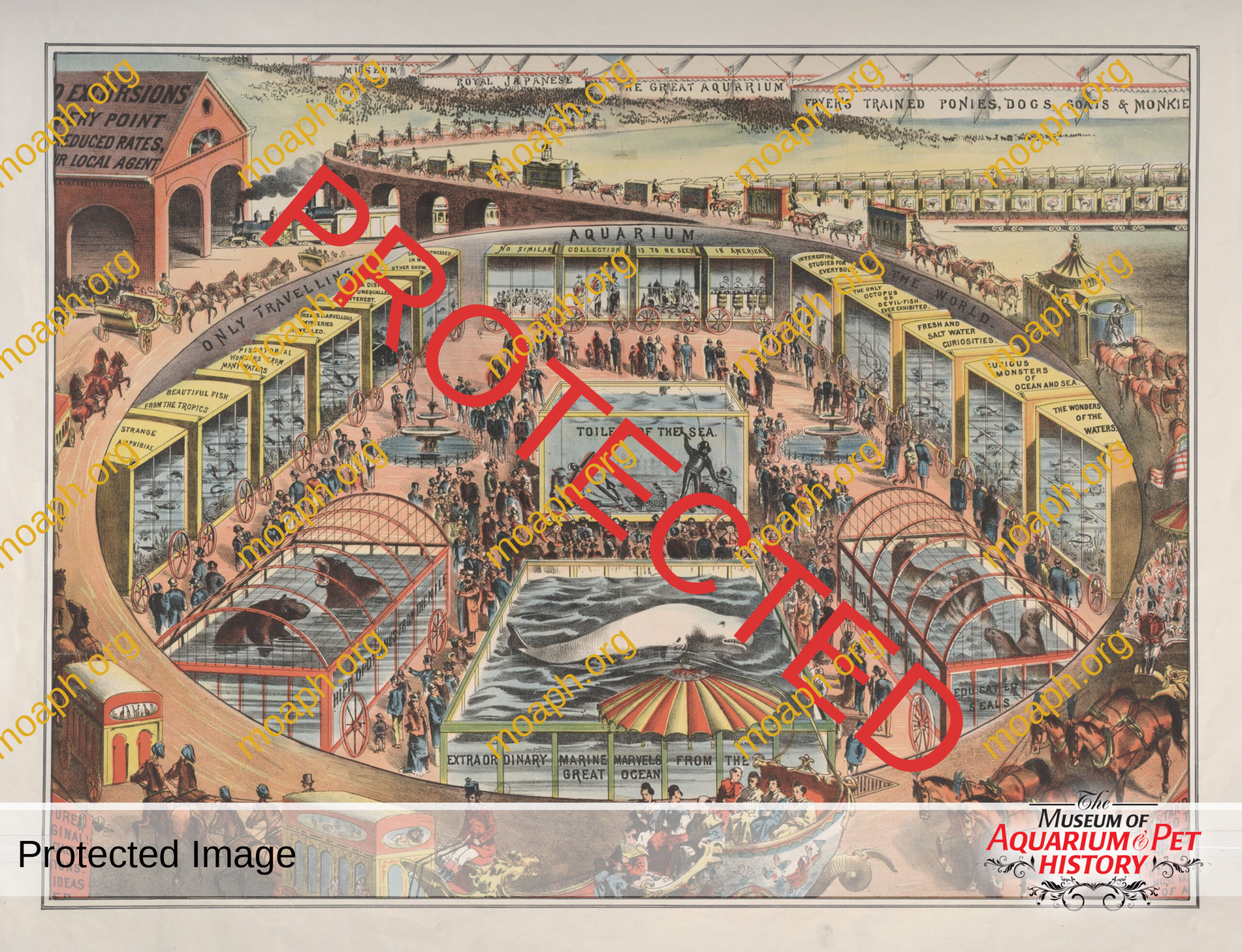
Figure 3: A parade winds around the Travelling Aquarium Tent of Coup’s show in this lithographic poster which would be from 1879.
Illustration Credit: Printer: Paul Dupont, Imp. DuPont 19th Century.
W.C. Coup: Parade Winds Around Aquarium.
Ink on pager, 1 sheet(H): 23 ¾ X 42 in/ (60.3 x 106.7 cm.) ht2004418.
Collection of the John and Mable Ringling Museum of Art Tibbals Collection.
THE AQUARUM
Coup’s “Aquarium” for his show starting in 1879 was an aquarium in the sense of the word noted above. Early in the 1879 season Coup advertised the use of “…splendid and costly slate and crystal tanks.” Before long the advertising changed and noted “A GRAND AQUARIUM of Living Fishes and Marine Monsters, the massive but exquisite Parisan [sic] Marble and Glass Tanks being actually supplied with running water.” This direct quote is as it was in my 2002 article, and I had misinterpreted it to note a source of the marble that was used. Further research has shown that Parian Marble was what was used in the construction of the tanks. Possibly early experience with the generally darker slate made the viewing of the inhabitants of the tanks difficult, especially in the ambient light conditions in the aquarium tent. It was noted that this was “The Only Legitimate Marine Aquarium supplied with Running Sea Water Ever Exhibited Under Canvass [sic]!” There were also freshwater aquaria on display. According to an advertising poster of the time, the water was “…kept in motion by powerful steam pumps.” These pumps were so-called force pumps and were in widespread use as bilge pumps for ships although they were often in such cases manually operated. The situation of aquaria on wheels is an interesting one. I was somewhat flummoxed by the idea and then saw the lithograph poster of the aquarium tent set up (Figure 3). It all came (kind of) together then. Coup was used to having whole train cars built so it would not a problem for him to have aquaria on wheels built. These would have to be very strongly constructed. Freshwater water weighs in at 8.3 pounds per gallon (saltwater slightly more). It is currently impossible to correctly know the size of the tanks illustrated in the lithograph, but I went on what might be a fool’s errand and made some measured guesses. The tanks might have been eight feet long, five feet wide and the illustrated water depth at six feet. If this was the case the total gallonage would be around 1800. The weight of this freshwater would be a stunning almost 15,000 pounds! If the tanks were only four feet wide, it would hold a little over 1400 gallons weighing almost 12,000 pounds. For this amount of water, it is easy to see why Coup (in Anon. No date but probably 1880) has stated that “The difficulty of securing water of a sufficient purity and proper grade for my Travelling Aquarium, has been one of my greatest troubles…”. And that was just the freshwater. For the saltwater aquariums Coup had a special railroad car built that did nothing but carry water for these tanks. The water was reported to be collected 40 miles from shore in the Atlantic Ocean. I think it is obvious that the water would be added to the tanks once they were moved into the tent and disposed of before the loading on the train. Probably a minimum of water was left in the tanks…hopefully enough to keep the fishes alive until the next set-up. The long-range status of many fishes would not have been very good under these circumstances, consequently needing to be regularly replaced (by train of course) from the New York Aquarium.
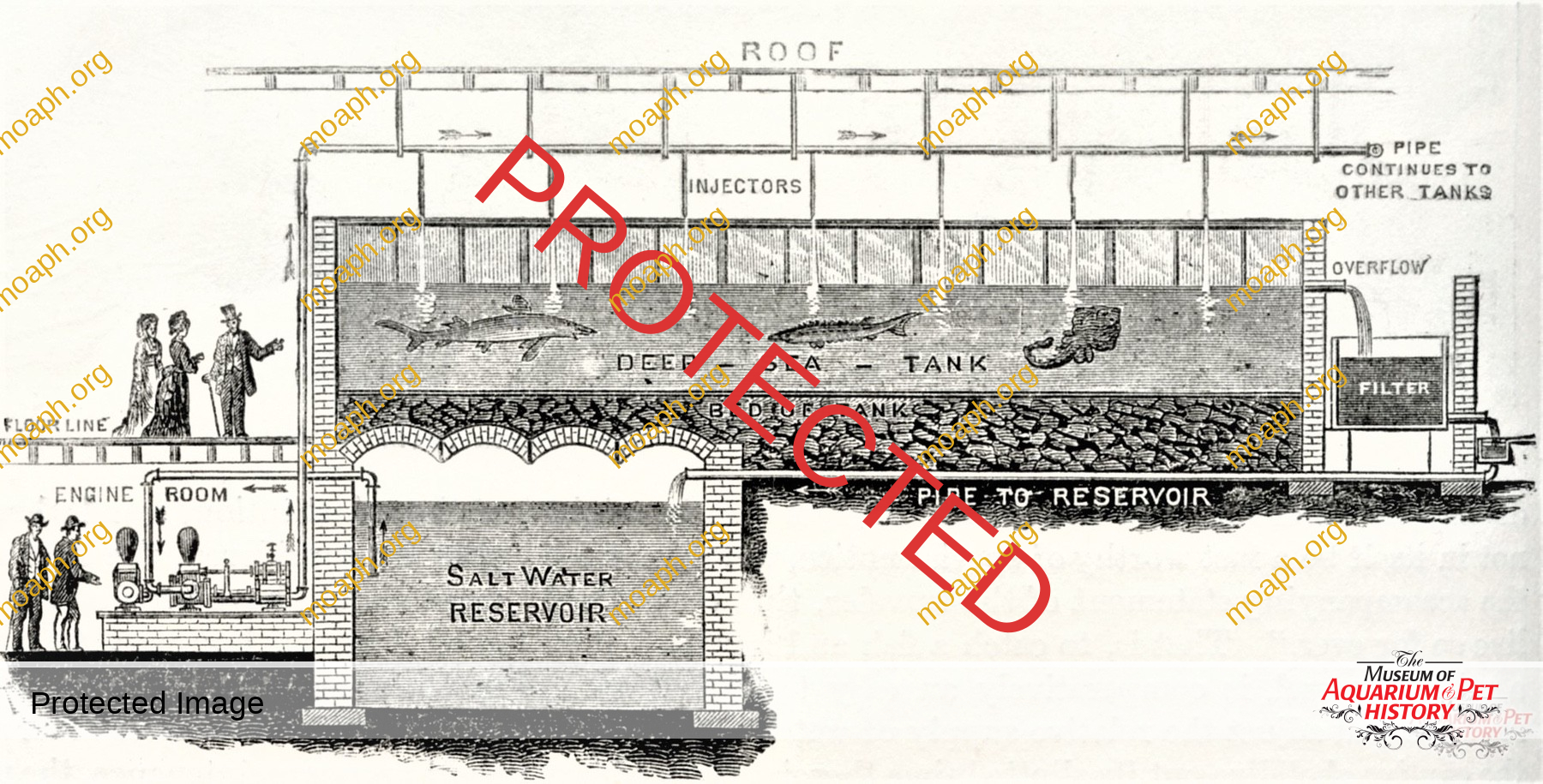
Figure 4: The water circulation system at the New York Aquarium – 1877
Illustration Credit: From the author’s collection.
The situation of the “running water” could have been set up similar to the plan at the New York Aquarium (Figure 4). Using the force pumps water could be pumped into the tanks through hard rubber (Vulcanite) using a closed circulating system. At least two such systems, one fresh and the other salt would be needed. Of course, there would be no underground reservoir, just constantly circulating water. Although I have seen no mention of filtration on the show tanks, I would suspect that Coup would have made sure that this was done.
A couple of comments on the Travelling Aquarium lithograph: A total of 15 tanks are shown in the picture (view with the top of the tent removed). Close examination shows that only eight of them contain live fishes, and one other contains the Devil Fish. The others contain various “inhabitants” that seemingly have nothing to do with the aquarium. Of note is the upper left-hand tank which appears to be holding the Educated Monkeys which were a feature of the show. The contents of other tanks are not, currently, readily identifiable. But the idea is no doubt that having an empty tank or six is not a good idea…then or now. On the Toilers of the Sea tank, I will reserve comment for the present. And lastly, the shark-like teeth on the Beluga whale are…don’t get me started. Although beautiful, no one I know has ever praised circus advertising as being the true representation of what was there.
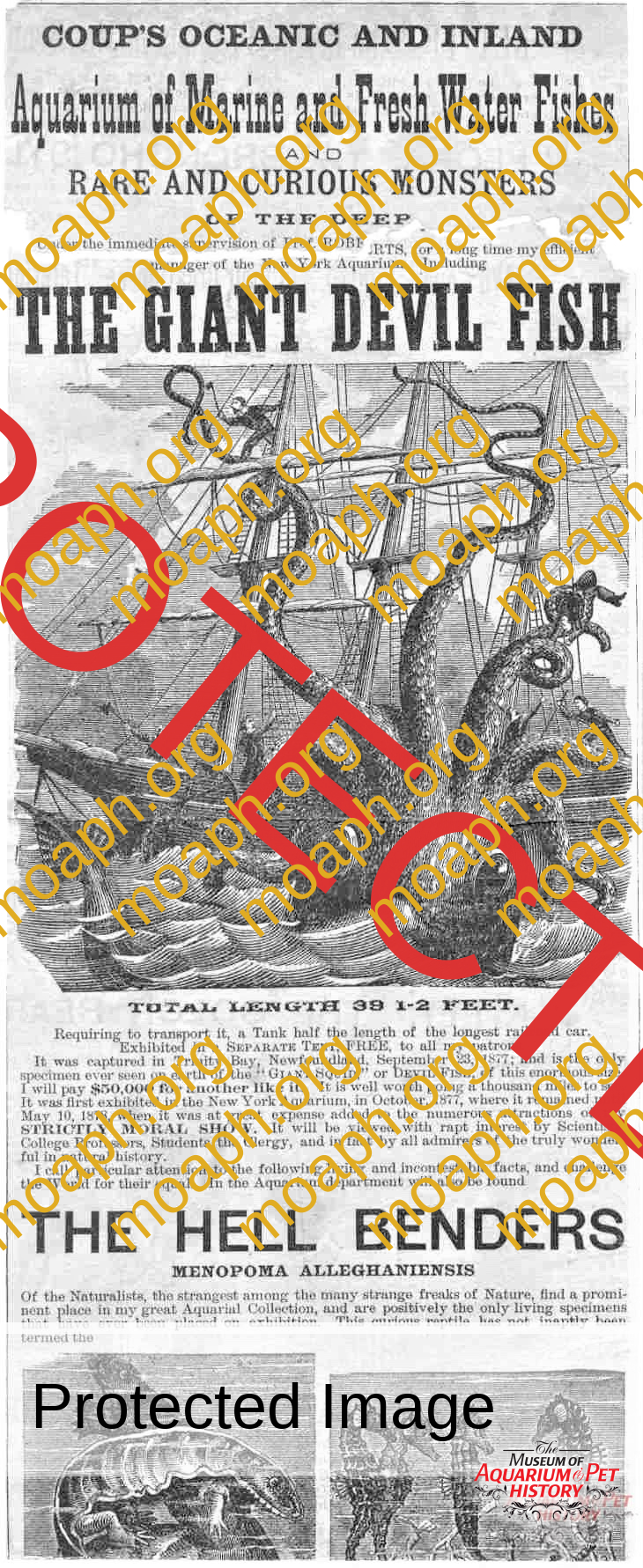
Figure 5: A partial small newsprint broadside for Coup’ show. It is undated, but probably from 1880. The Devil Fish is the highlight.
Illustration Credit: From the author’s collection.
A large variety of fishes and other aquatic life was offered to the public for viewing. While it may be impossible to ever know the full extent of Coup’s holdings, advertising and booklets of the time do note the following animals: seahorses, angler fish, kingiyo (a fancy triple tailed goldfish made famous at the New York Aquarium), hell benders (a large salamander), starfish, gar, pike, dog-fish, eels, lobsters, crabs, king (or horseshoe) crabs, crawfish, porgies, cod and killifish (Anon. No date but probably 1879; and various ads). Early on, it appears, even angelfish (of the marine variety) were also exhibited (Anon. 1879 B). Various reptiles including turtles, Egyptian crocodiles and alligators were also exhibited time to time.
During this 1879 season Henry D. Butler was listed as superintendent of the aquarium. Sometimes, Butler is seen designated as “W.D. Butler.” It is assumed that this is based on what now would be called a typo. Barnum, had from time to time, made the same mistake. But it has stuck and in some more modern secondary literature that designation has been used. Butler made himself available at the set-up to answer any questions that might arise from the patrons (when he wasn’t out bringing whales back). William Seely was listed as his assistant. I have found very little regarding him but possibly he came with Butler from the New York Aquarium. Butler, in the position of general superintendent, had worked with Coup at the New York Aquarium and left there in February of 1879. Butler was not the only member of the New York Aquarium team to travel with the Coup show. A. W. Roberts, who oversaw Fisheries at the Aquarium, was also on the road for some unknown period. An undated (but probably 1880) partial broadside (Figure 5) lists him as a “Prof.” (as Butler was listed. This title was widely used in such employ) and notes him to have been an “…efficient manager of the New York Aquarium.” Roberts, like Butler, had “cut his teeth” on aquaria under Barnum at the American Museum. Butler moved on from the employ of Barnum and subsequently Roberts served with noted aquarist William E. Damon and together they garnered great praise for their improvements and work at the aquarium.
The season for 1880 offered many of the same fishes and aquatic life, but also added new ones and all of these were more heavily advertised under the heading “The New York Aquarium”. New additions for the season included: banded proteus (mud puppies), sea robins, sea ravens, climbing perch, and South American electric eels. As in the year before, the preserved “Giant Devil Fish” always received heavy billing (Figure 5). In In the latter part of the show year Coup really pushed the aquarium as exemplified by the following text in a large ad in the Atlanta Weekly Constitution for September 14th: “The Great New York Aquarium! “Has been shorn of half its marvelous attractions to furnish me with features for my Colossal Travelling Shows. Multitudinous Wonders from the Ocean’s Deepest Depths! Twelve Living Hellbenders, first and only time they were ever with a travelling show and countless other marine marvels IN HUGE GLASS TANKS ON WHEELS!”
Interestingly the 1880 Route Book by Evarts (1880) makes no mention whatsoever of the aquarium. It is during this time period that I suspect the Roberts may have helped out with the aquarium, but to date I have been unable to find any materials matching the above noted one piece that I have in my collection noting his involvement with the aquarium. The search goes on.
In 1881 there was a change in the advertising for the aquarium. W. D. Hager (sometimes with Colonel in front of his name), who had held various positions in the show since the beginning was heading the aquarium part of the show. Advertising varied and included billing the aquarium as “Hager’s Royal Aquarium”, “Hager’s New York Aquarium” and “Hager’s Aquarium, Animals, Birds, Reptiles.” Nothing new appears to have been added and basically the aquarium was exhibiting the same animals as previously noted. Coup’s train for this season consisted of 80 cars (Anon. 1881).
Although Coup was usually still advertising the Aquarium as part of his show in 1882, it received not a large amount of ink and appeared to be relegated to just another part of the show instead of the headliner of the first two years. But in some sources, it was still noted to be a principal attraction of the show. It appears to have also changed in scope as an ad from June of that year notes “An Immense Marine Aquarium with its Sea Lions, Sea Leopards, Elephants, and Monsters of the Deep”. There is no mention of fishes at all! But the fishes were undoubtedly there. Certainly, the beautiful, lithographed poster shown herein advertised “The Great Oceanic & Inland Aquarium. Rare & Wonderful Marine Monsters, Animals and Fishes” and illustrated a wide, and somewhat strange, combination of marine and freshwater life ranging from a Beluga whale to a sailfish (!) to a freshwater paradise fish (a recent import to the U. S. Whether there were any in the show is currently unknown) to an African lungfish eating a frog! (Figure 6). It is doubtful that many of the fishes illustrated would actually be seen in any of the aquariums. Not to long into the season a major railway accident on August 22 wherein two of the trains in the show collided and put the New United Monster Shows out of business along with generating numerous lawsuits. Coup later had a museum in Chicago and tried to re-group with a smaller show, but this was unsuccessful. Later, he had a small railroad car based show which had a combination of live and preserved creatures in the aquarium car. The Devil Fish was also (still) there…to the end. But the era of the great traveling “true” Aquarium had passed in 1882.
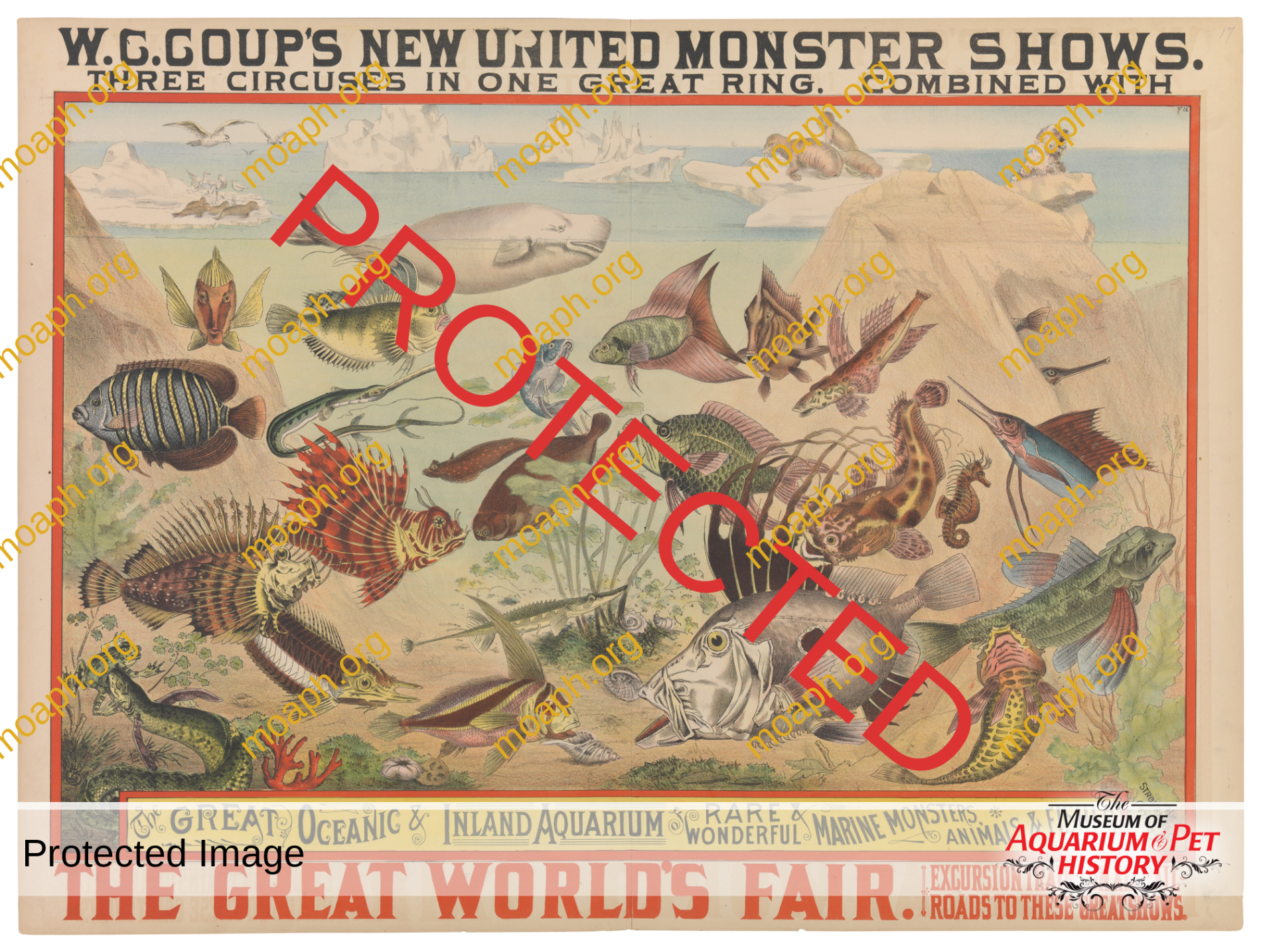
Figure 6: A beautiful, but quite imaginative , 29 9/16 x 39 1/2 in. inch lithographic poster for Coup’s aquarium from 1882
Illustration Credit: W.C. Coup’s New United Monster Shows: The Great Oceanic & Inland Aquarium of Rare & Wonderful Marine Monsters, Animals & Fishes, Strobridge Lithographing Company, 1882, color lithograph poster, Cincinnati Art Museum, Gift of the Strobridge Lithographing Company, 1965.685.17 www.cincinnatiartmuseum.org.
Postscript
In the early 1870’s Barnum (with Coup as a more or less silent partner) exhibited live fish in his Great Traveling Museum, Circus, Menagerie and World’s Fair. There are indications that a Beluga whale might have been, at least for a short time, also on exhibition with this show. Research in this area is continuing. Stay tuned.
Acknowledgements
Many people have helped me over the years that transpired between the first version of this article and the current one that you are reading. I offer my sincere thanks to the following (in no particular order): Gary Bagnall and Wayne Leibel (RIP) for their sharing of materials and overall support for my various projects; Mary Sears of the Ernst Mayr Library of the Museum of Comparative Zoology, Harvard University; Rob Deslongchamps of the Cincinnati Art Museum; Heidi Taylor, Heidi Connor, Susan O’Shea and Jennifer Lemmer Posey of The John and Mable Ringling Museum of Art; Maureen Brunsdale of the Milner Library, Illinois State University; and Fred Dahlinger (when he was at the Circus World Museum in Baraboo Wisconsin). Grand thanks to all. Sorry if I overlooked anyone.
References and Suggested Reading
Anon. No date – could be 1879 or 1880. The W.C. Coup New United Monster Shows. No publisher evident. 16 pages plus covers. (Used with permission of Special Collections, Milner Library Illinois State University).
Anon. 1879 A. Route of the W.C. Coup New United Monster Shows, New York Aquarium, Wonderful Broncho Horses, Royal Japanese Circus, Melville’s Australian Circus, Colvin’s Great Menagerie, Fryer’s Startling Trained Animals and Wood’s Museum, For the Travelling Season of 1879. Lexington Ky: Transylvania Printing & Publishing Co. 16 pp. plus covers.
Anon. 1879 B. The Mighty Monarch of the Rail. The W.C. Coup New United Monster Shows. The Courier Company Show Printing House, Buffalo, N.Y. 16 Pages.
Anon. No date, but probably 1979. The W. C. Coup New United Monster Shows Illustrated History of Wild Animals and Rare Fishes. S. Booth and Company, New York. 40 pages plus covers.
Anon. No date but probably 1880. Illustrative History of Rare and Remarkable Representative Types of the Animal Kingdom and Aquarium Novelties. Press of the Courier Company, Buffalo, N.Y. 32 pages plus covers. Note: I don’t feel that Coup wrote this whole book, but in that the aquarium water situation is worded in the first person I will accept that as his writing.
Anon. 1881. The W.C. Coup New United Monster Shows Three Times Larger Than Ever Combined With Farini’s Paris Hippodrome. The Courier Company Show Printing House, Buffalo, N.Y. 16 pages.
Coup, W.C. 1901 – Reprint reissue in 1961. Sawdust and Spangles: Stories & Secrets of the Circus. Paul A. Ruddell – Reissue. 262 pages. Note: Coup’s autobiography should be considered a must read for anyone interested in him and his life. It has more than a few holes in it, but what it offers more than makes up for this.
Dorner, H. No date, but probably 1879. The Mammoth Devil Fish of the New York Aquarium. (Architeuthis princeps Verrill) A Brief Account of its Capture, Habits and Organism. Apparently published by the New York Aquarium. Four pages not numbered.
Evarts, H. 1880. Route of W. C. Coup’s New United Monster Shows for the Season of 1880. Published by the author. 29 pages plus covers. (Note: The publication is not dated (possibly covered with a price sticker) but from the text I am comfortable assigning the 1880 date).
Finley, L. 2002. Coup’s Aquarium is Coming to Town! Bartlett Society Newsletter, North American Edition: Number 32. July – December 2002). Pages not numbered but would be 13 and 14. (A slightly modified version of this article was reprinted (2003) in Modern Aquarium, Series 3 (The Greater City Aquarium Society, New York), Volume 10, Number 6, June: 6-8. Reference to the original publication was provided. This article is available online at Modern Aquarium by Dan Radebaugh – Issuu.
Robinson, G. 1928. Old Wagon Show Days. Cincinnati, Brockwell Company Publishers. 250 pp.
Yoho, R.E., R. Ford, B. Edvardsson and F. Dahlinger. 2018. Moving “The Greatest Show on Earth”: W.C. Coup as an innovation champion. Journal of Management History, Vol. 24, No.1, pages 76-98.
A note regarding some other sources: large parts of this article were produced using multiple (hundreds and hundreds) newspaper sources which included advertisements, real news tidbits, and a favorite of many show people, the planted favorable article that they wrote and got published as news via a friendly newspaper (who often might receive a batch of free circus tickets). Listing all of these can be done. But within the framework of herein I am foregoing this. But, if the reader might have any questions, or whatever, that might not be addressed by the references provided above please feel free to contact me through the Museum website and I will be happy to respond.