An Overview of Aquarium and Aquatic Life Trade Cards Issued by the Tobacco, Coffee, and Food Companies of Yesteryear
Beginning in the 1880s, a multitude of businesses started to distribute chromolithographic advertising cards to promote their products and services. The tobacco, coffee, and food companies extensively used these eye-catching ephemera made out of thick paper, usually inserting them into the product packaging as a prize for their customers’ fidelity and as an incentive to make further purchases. It didn’t take long before collecting these little beauties became an addictive hobby for many people.
Since some cards were issued as parts of sets related to a certain subject, collectors started to swap their duplicates with other fellow collectors to complete their sets. The term “trading card” comes just from this old habit.
Pioneers
The front side of the cards usually consisted of color images designed to be interesting, in terms of visual appeal and topic, to the eyes of the average consumer of the time. A few companies imprinted their name, or even the product name, on the illustrated side, including, in some cases, the product image into the drawing. The reverse side could be blank or printed with advertising messages. Normally, blank-backed cards were rubber-stamped or imprinted by local distributors or retailers of the company’s product.
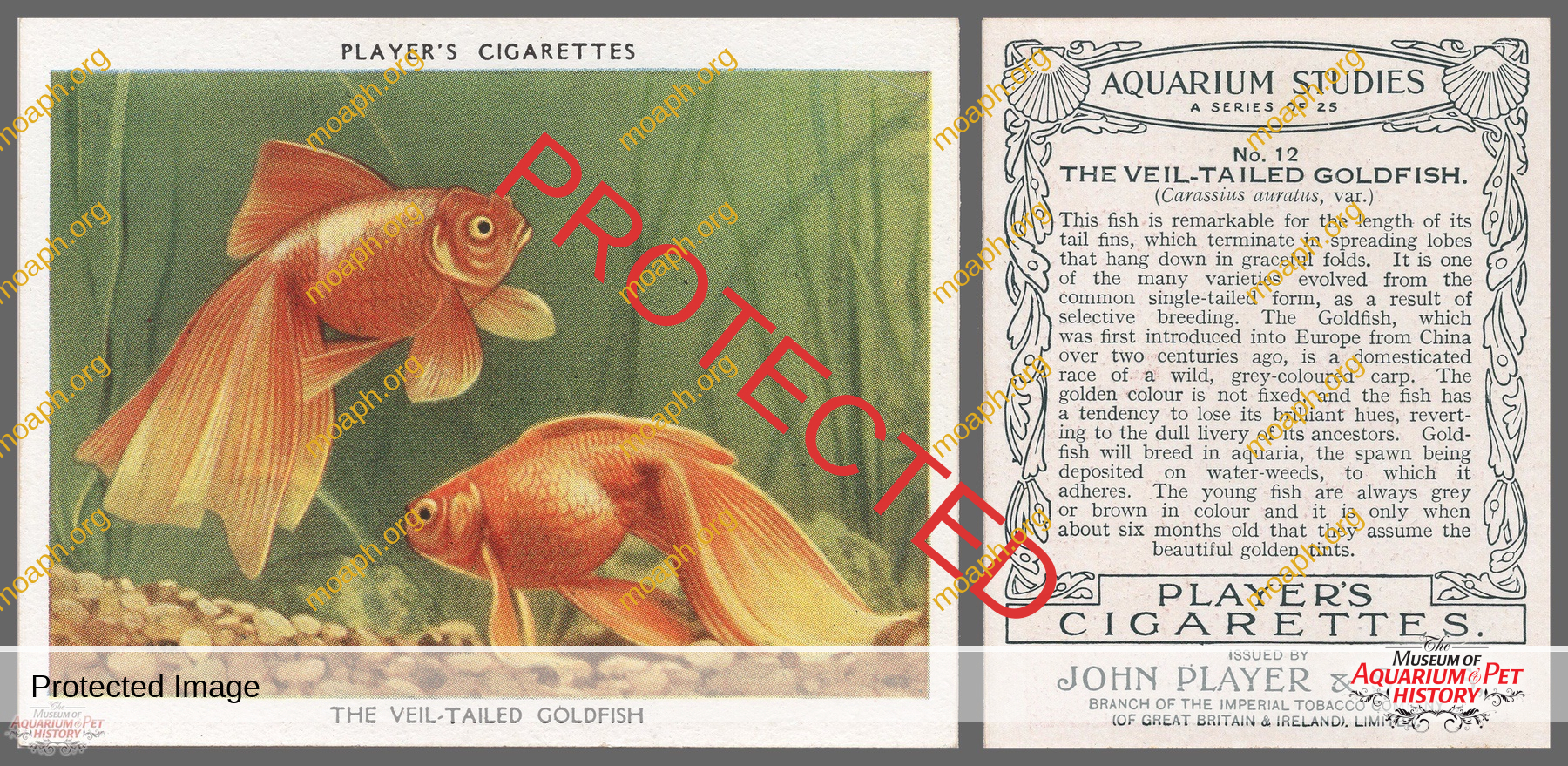
Card from the set “Aquarium Studies” by John Player & Sons, 1930s.
Among the pioneers of the trade card system, there were British tobacco companies such as John Player & Sons and W.D. & H.O. Wills, and Allen and Ginter in the U.S. The cards also had a practical purpose, as they acted as stiffeners for the paper packs of tobacco and cigarettes, protecting their content.
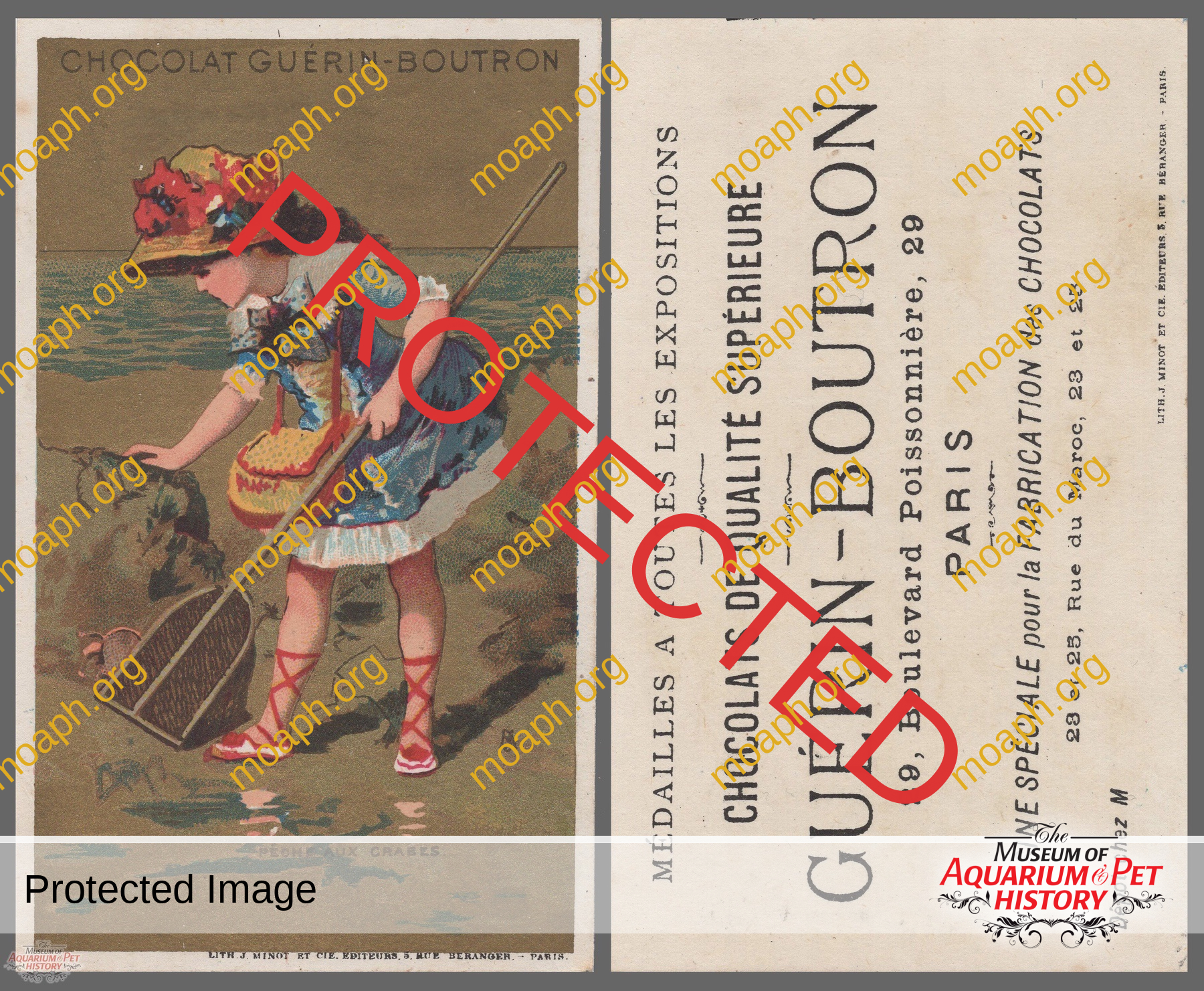
Victorian double-sided trade card issued by the French chocolate manufacturer Guérin-Boutron.
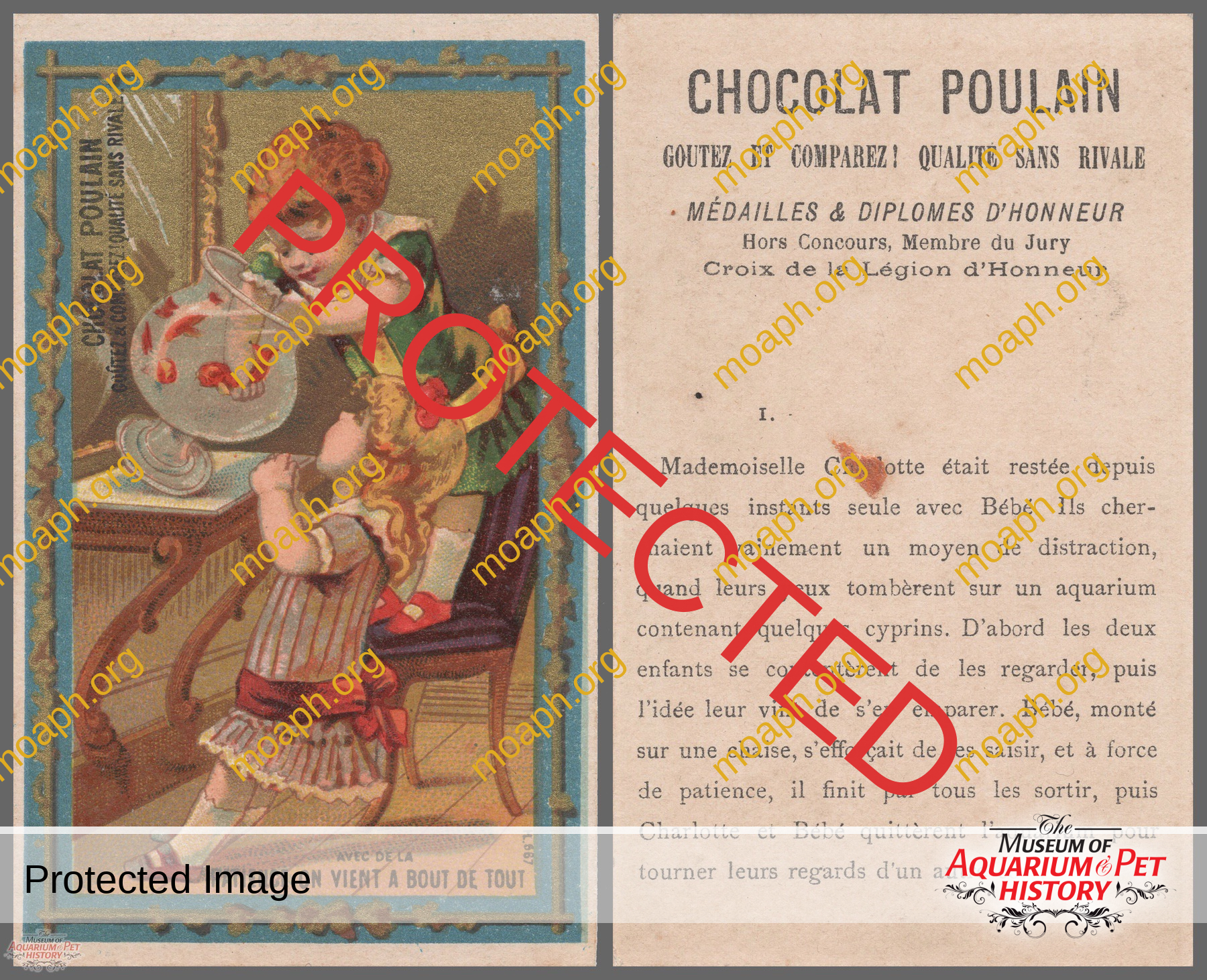
Exquisite Victorian trade card issued by Chocolat Poulain.
The French and German chocolate brands used this advertising tool from the late 19th century as well, together with the earliest coffee companies in Europe and in the U.S. Some of the finest cards, still much sought-after by collectors, were issued just by chocolate manufacturers such as Chocolat Poulain and Chocolat Guérin-Boutron, and by the Arbuckle Brothers Company (U.S.), owner of the popular coffee brand “Ariosa”.
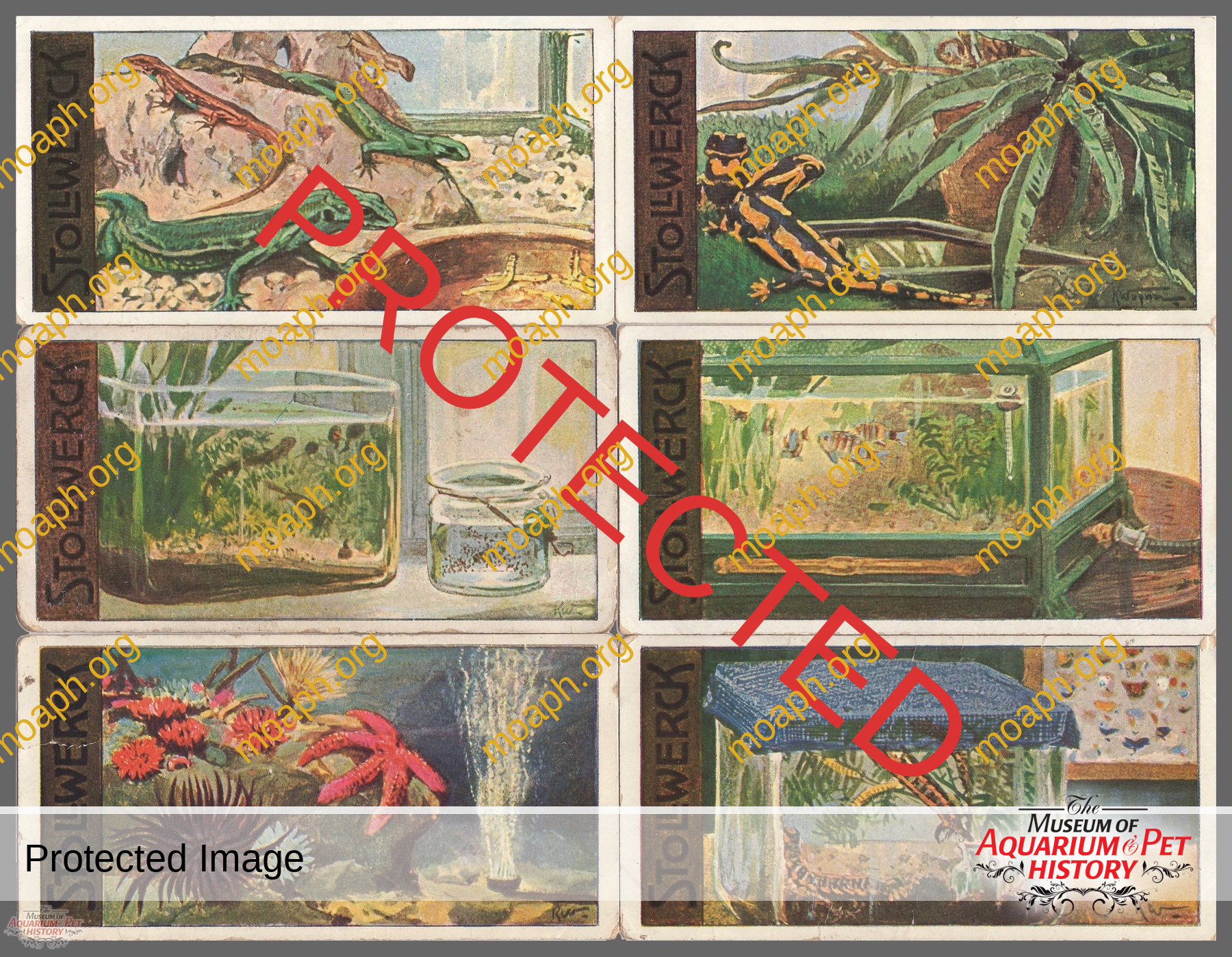
In the late 19th century, the German cocoa and chocolate manufacturer Stollwerck started to issue its series of albums and trade cards. The set No. 474 (“Aquarien und Terrarien”) from 1910 matches with the album No. 11 “Das Tier im Dienste des Menschen” (The Animal in the Service of Man).
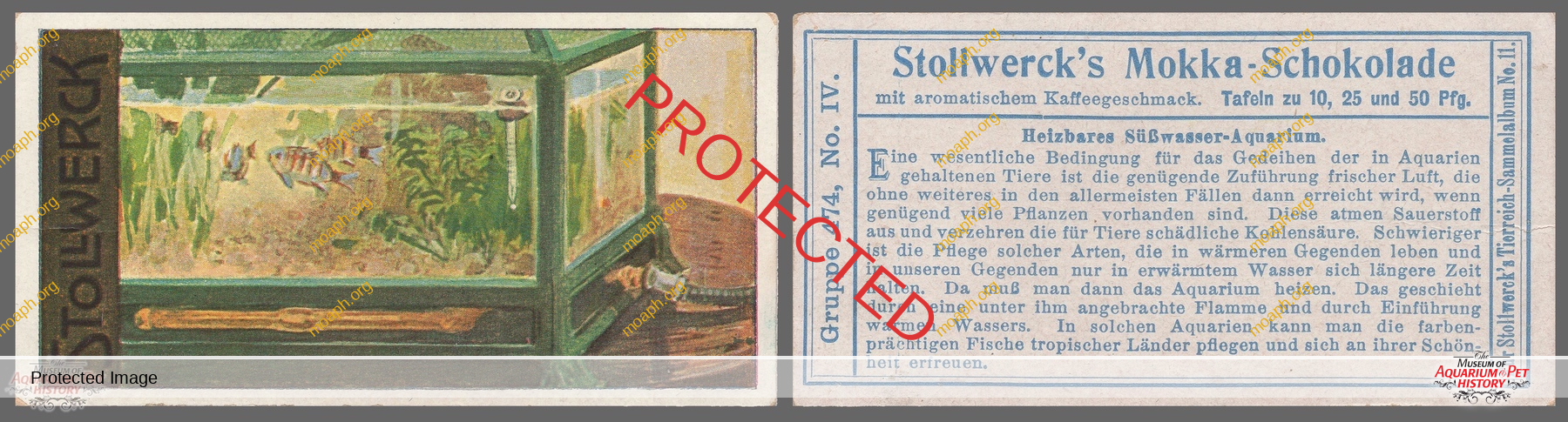
The most popular Stollwerck card among aquarists collecting trade cards.
The Liebig collection: an illustrated encyclopedia
A successful marketing strategy developed by some brands was to give educational and cultural value to the advertising cards. They, in fact, issued cards on many interesting topics of human knowledge, providing on their reverse side tidbits and explanatory texts about the featured theme. Besides, some companies started to release beautiful albums to store and display the cards, another winning idea much appreciated by collectors.
The trade cards issued by the Liebig company, a famous producer of meat extract, are my favorite. The whole production is really huge, comprising 1871 sets printed from 1872 to 1974. Without counting the editions in different languages, the collection encompasses more than 11,000 illustrations!

The Liebig company was named after the baron Justus von Liebig (1803-1873), a German organic chemist who developed and promoted a method for the industrial production of beef extract.
The Liebig cards have always stood out for the high quality of the chromolithographic prints (up to 12 colors) and the perfection of the images. The endless number of covered subjects makes this crazy collection a real illustrated encyclopedia and a masterpiece of high cultural value. Unfortunately, there is neither a printing date nor a set number on the cards, therefore, how do you determine this missing information? In order to date, to assign a set number, and to give a proper market value to the Liebig cards, most Italian and international collectors refer to the Sanguinetti catalog and to the Sanguinetti price guide. I did the same in the captions for the Liebig images selected for this article.
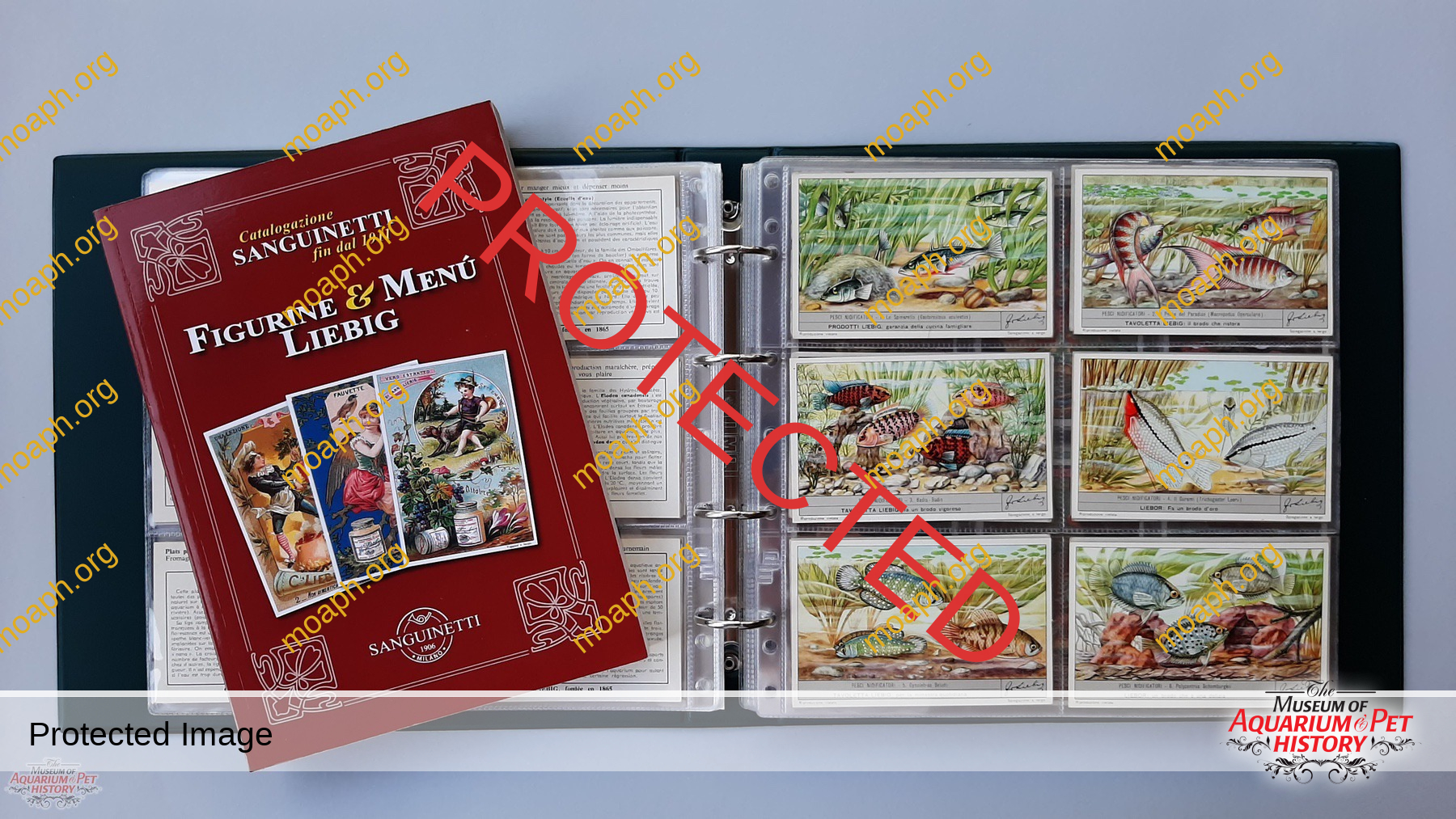
2016 Sanguinetti guide on a classic binder for Liebig cards.
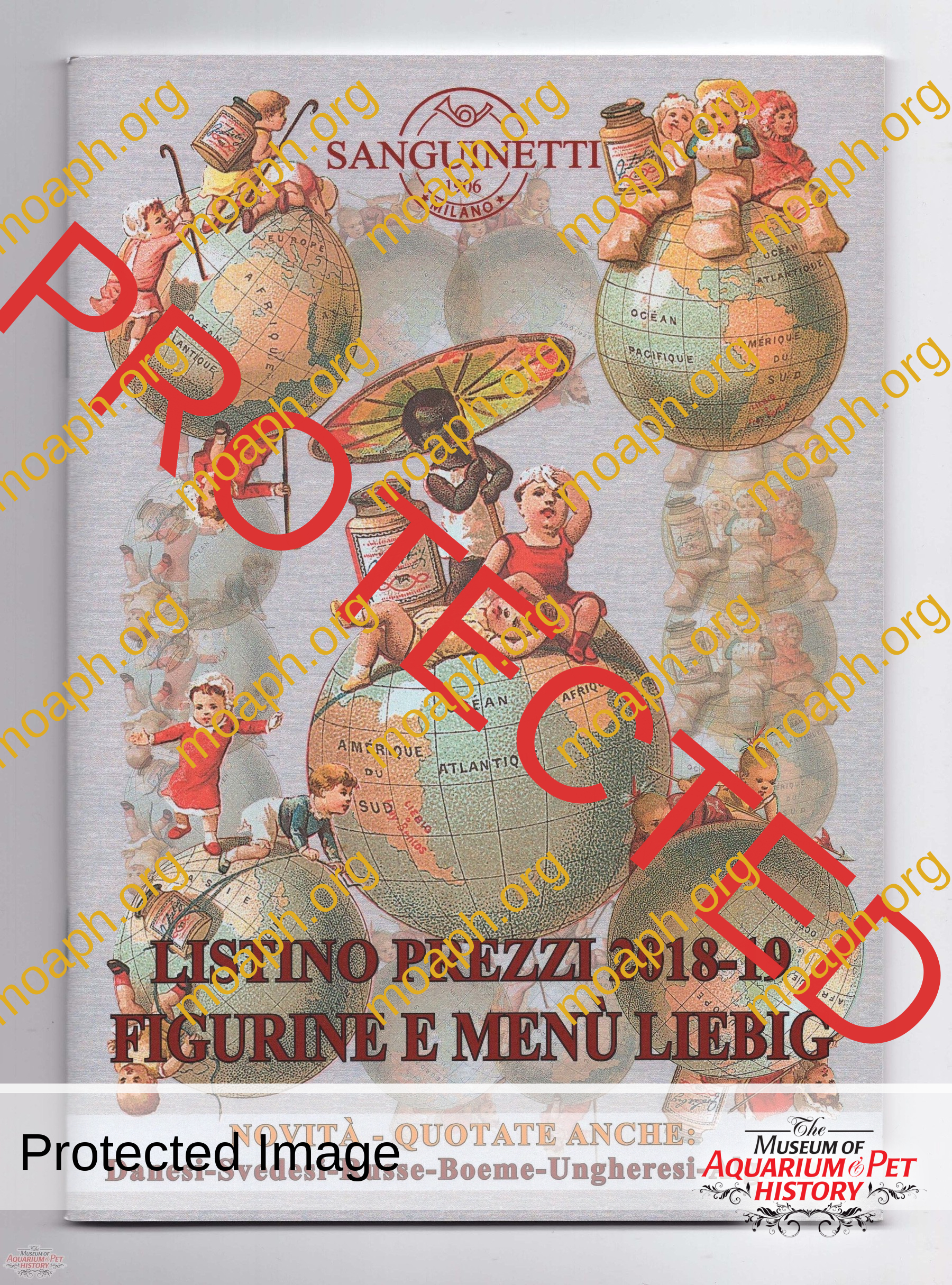
2018-2019 Sanguinetti price guide.
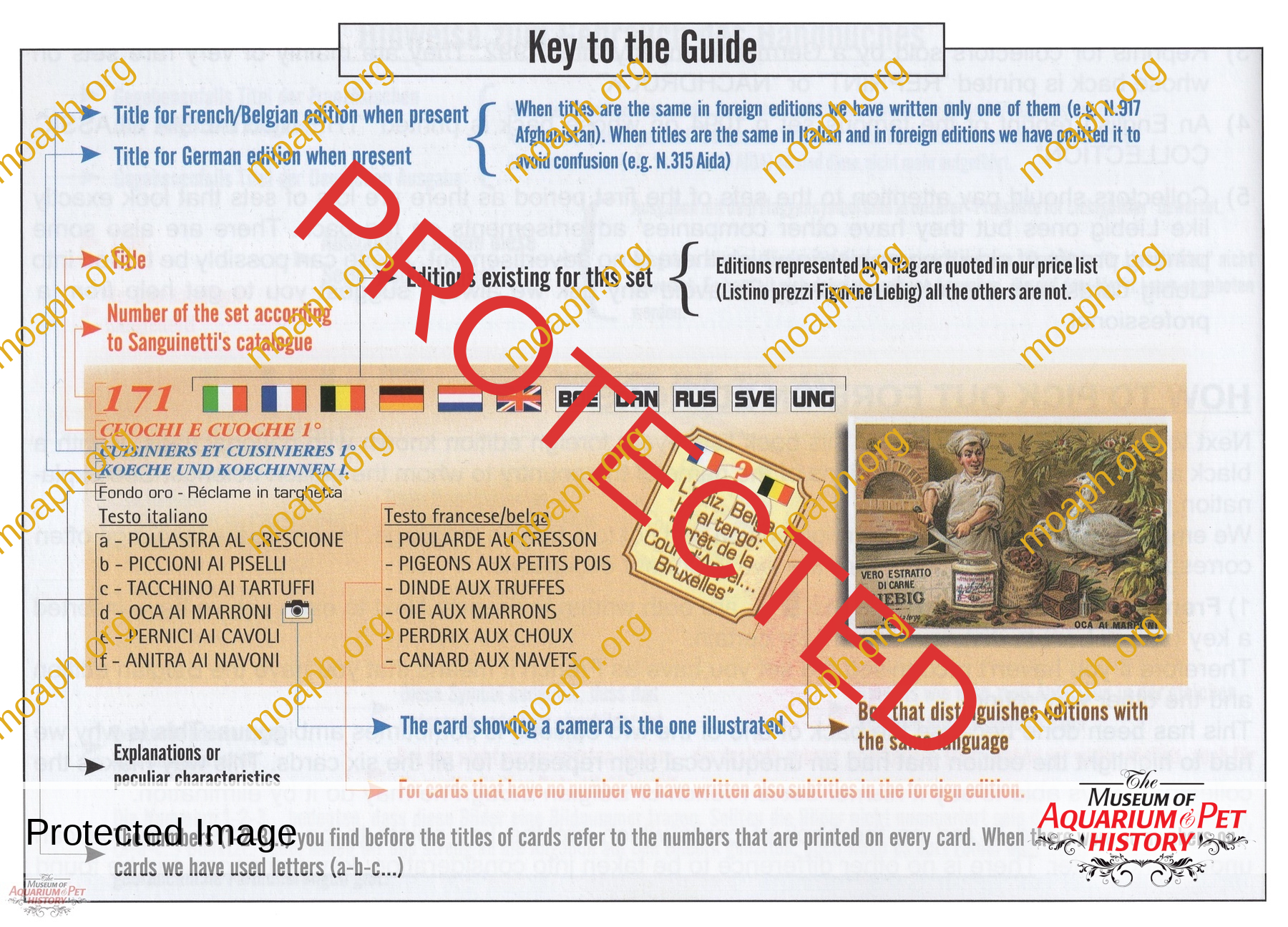
How to use the Sanguinetti guide.
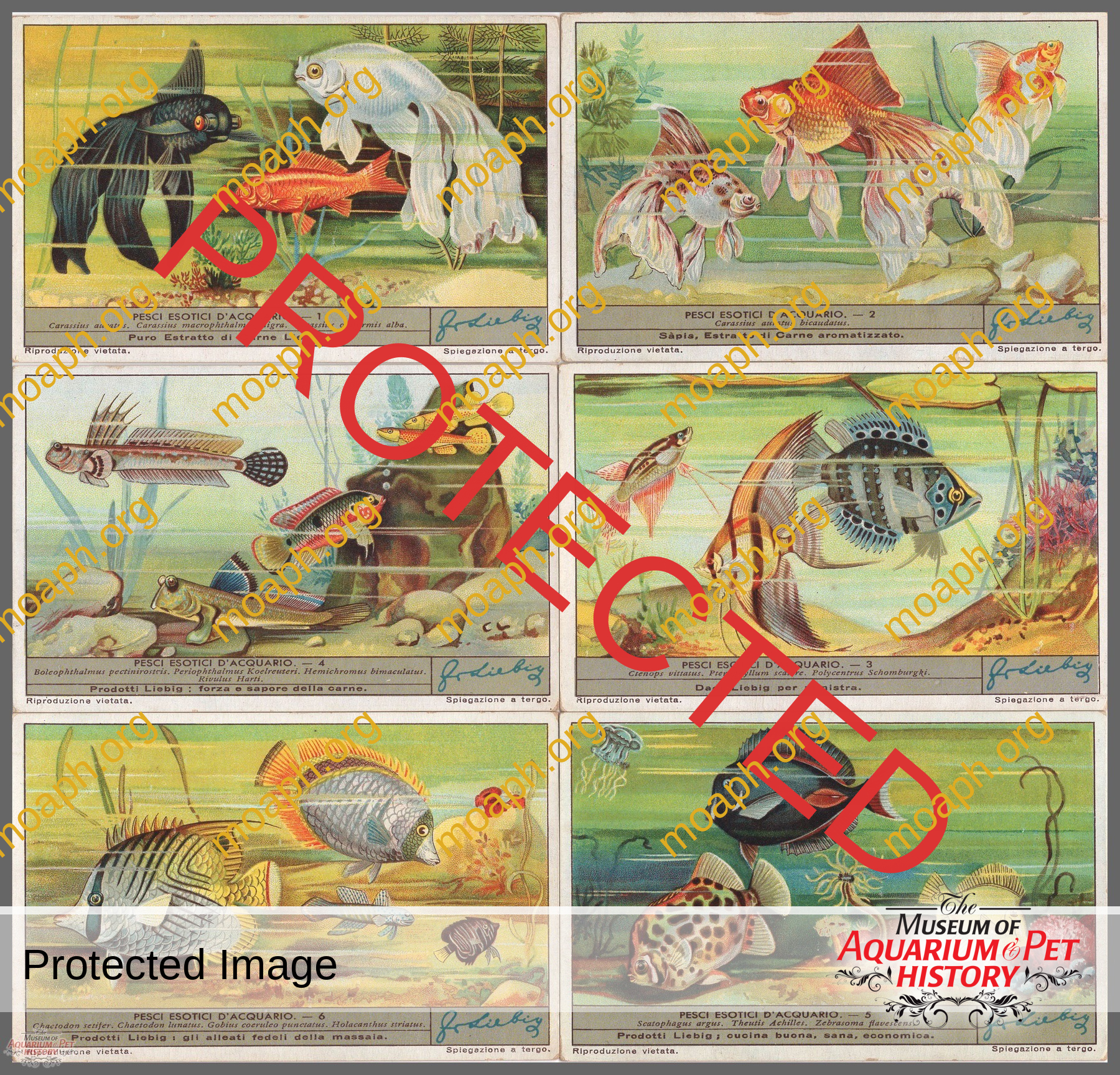
Liebig set No. 1339. Year: 1936.
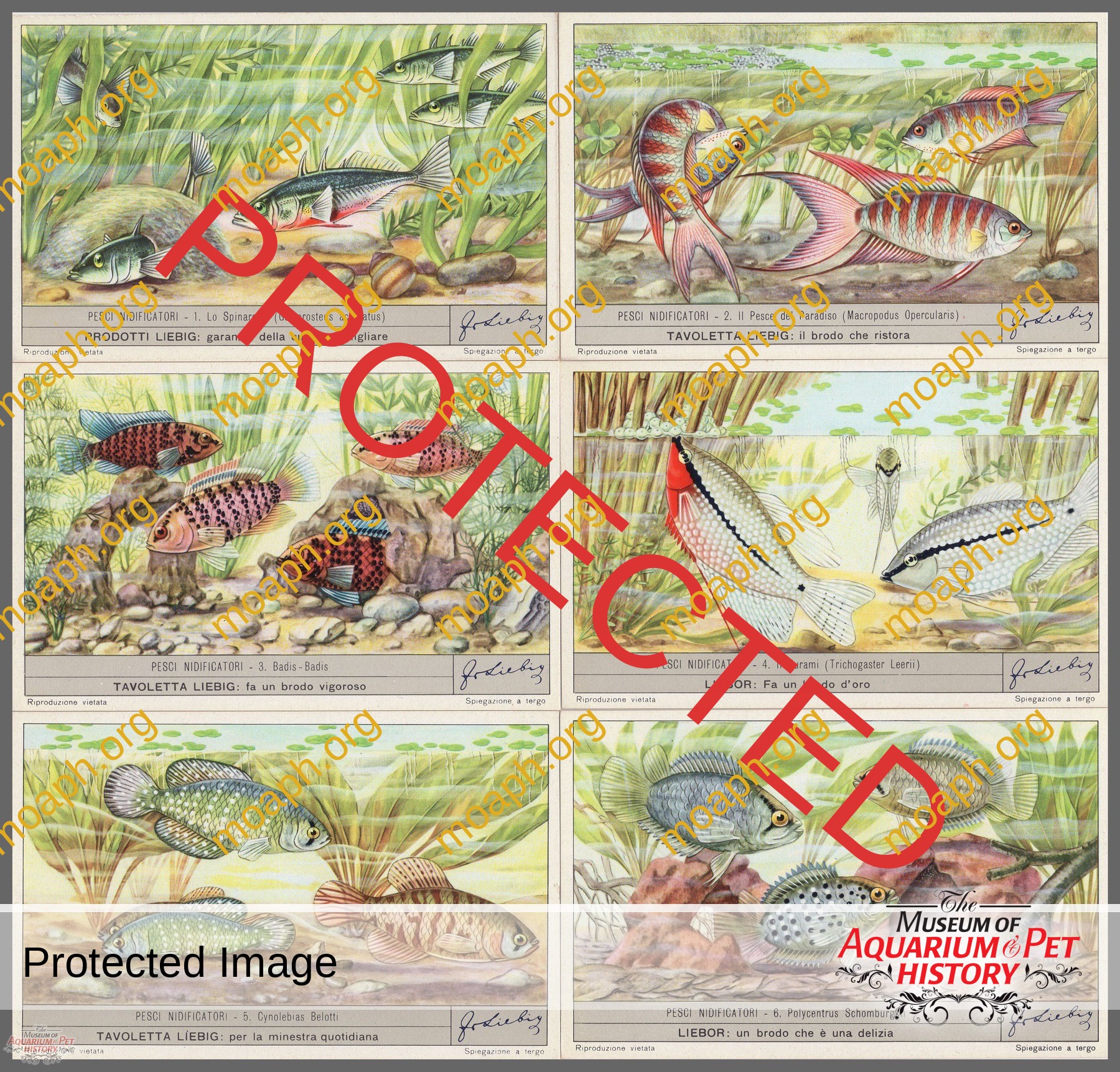
Liebig set No. 1597. Year: 1954.
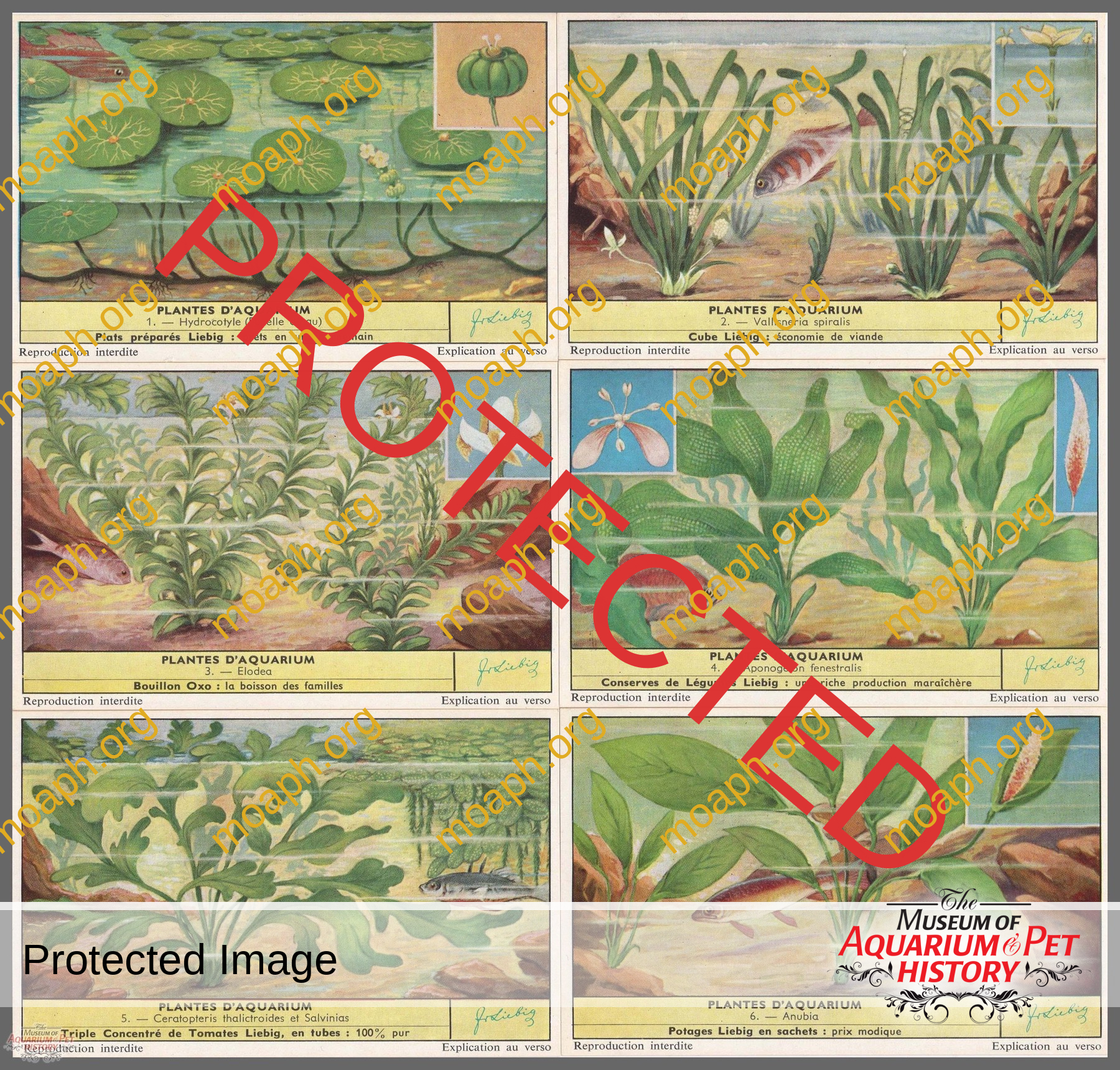
Liebig set No.1716. Year: 1959.
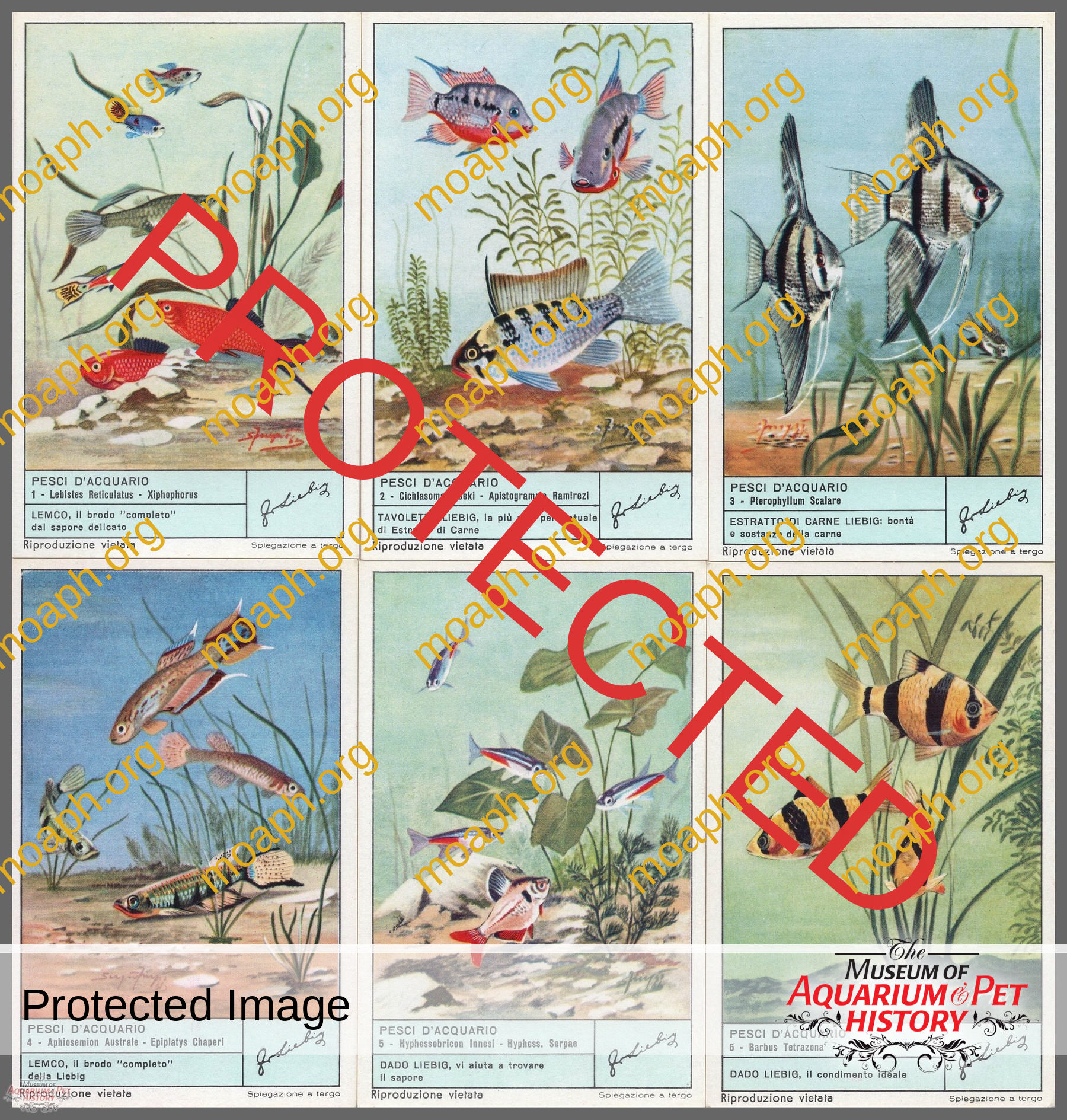
Liebig set No. 1780. Year: 1962.
The more you smoked, the more you collected!
During more than a century, Liebig issued many advertising cards dealing with aquaria and aquatic life. The most famous sets among the aquarists are “Exotic Aquarium Fish” (1936), “Aquarium Fish” (1962), “Nest-Making Fish” (1954), and “Aquarium Plants” (1959).
While Liebig sets usually consisted of 6 cards, the tobacco companies often produced sets of 25, 35, 50 or even 100 cards, starting a competition for the longest series!
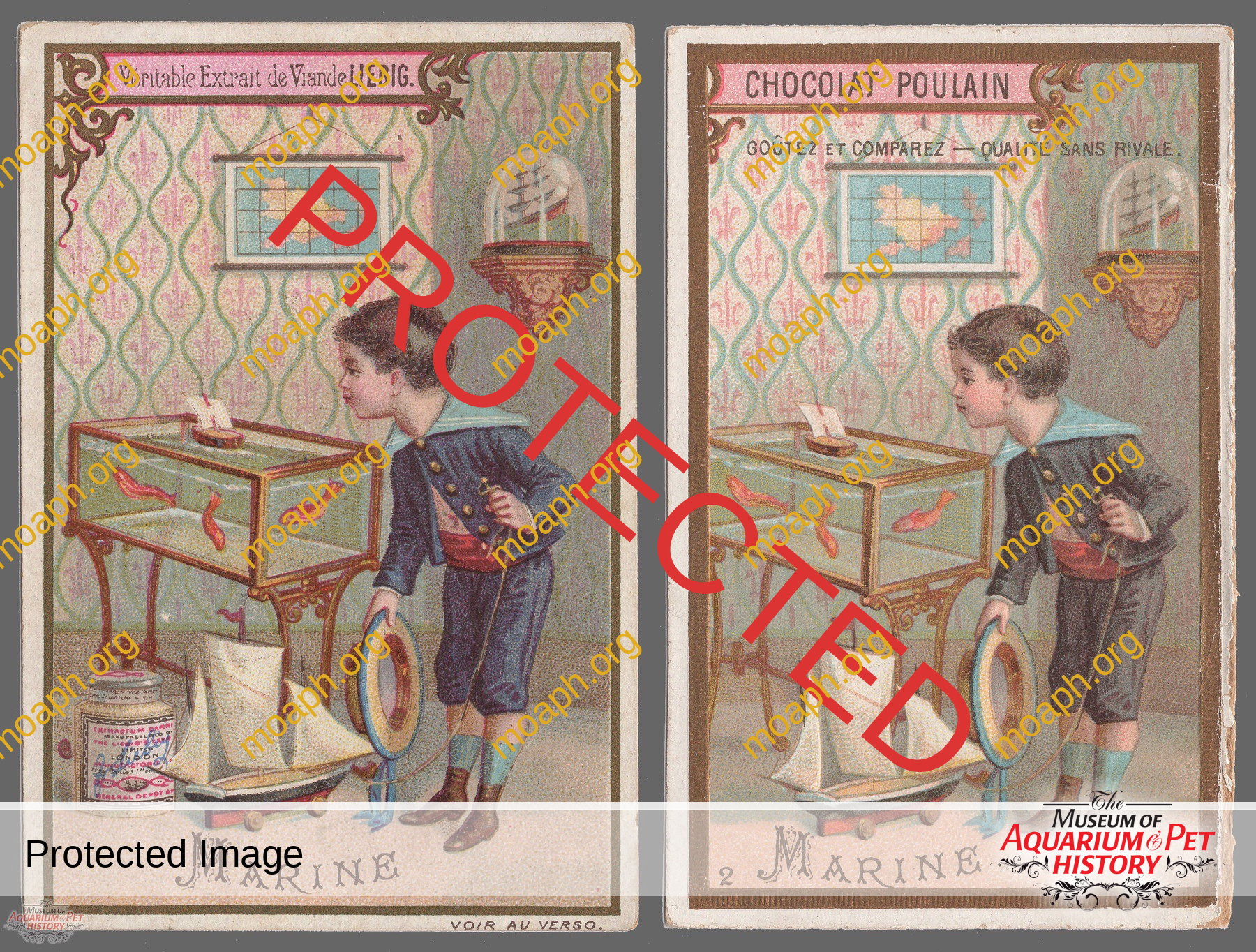
A stock image used both by Liebig and Chocolat Poulain at the end of the 19th century. Back then, many card designs were available to all advertisers, that’s why there are several instances of the same design used to promote different products and services. Over time, larger businesses began to commission exclusive designs, sometimes specifically related to their products.
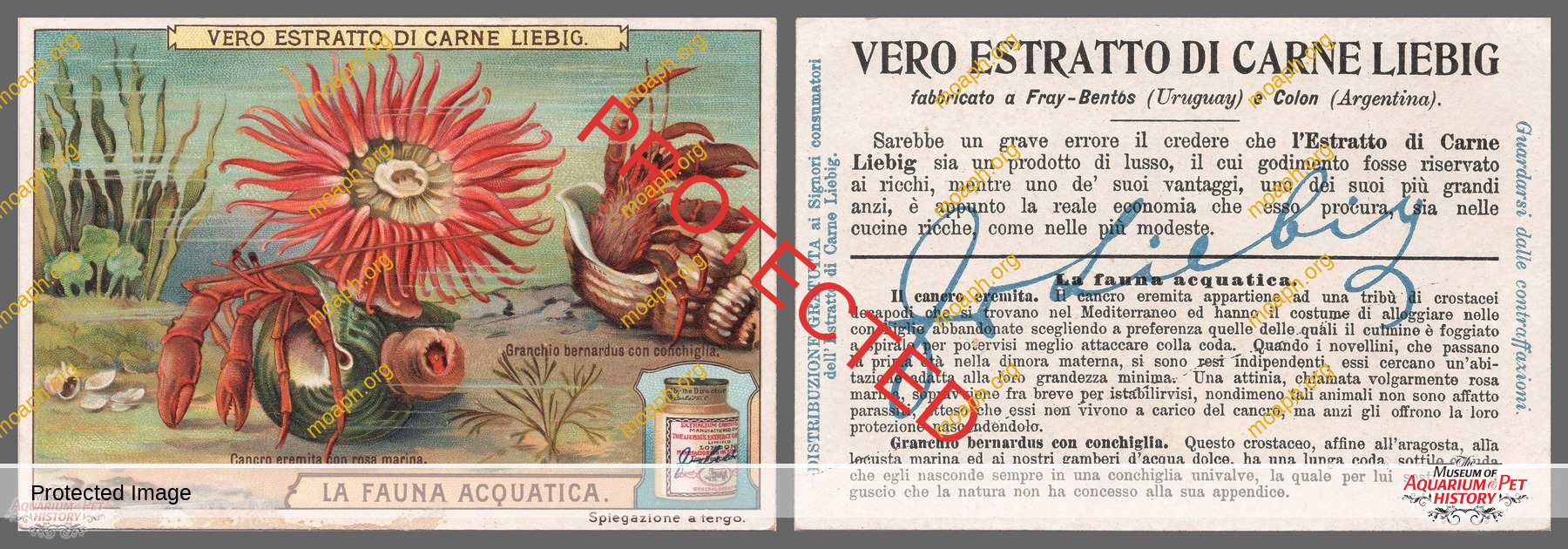
Liebig card from the set No. 926. Year: 1908.
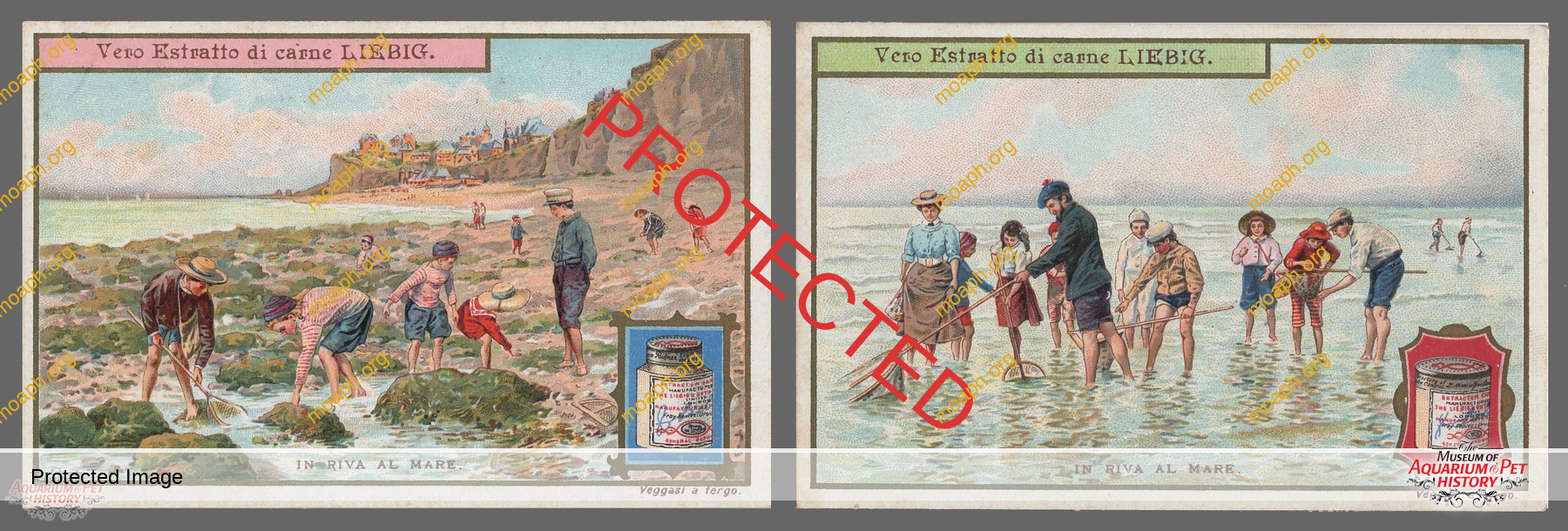
1910 Liebig cards, set No. 999. Collecting marine animals on the coast at low tide was a popular topic featured by several trade cards issued by Liebig and other food companies.
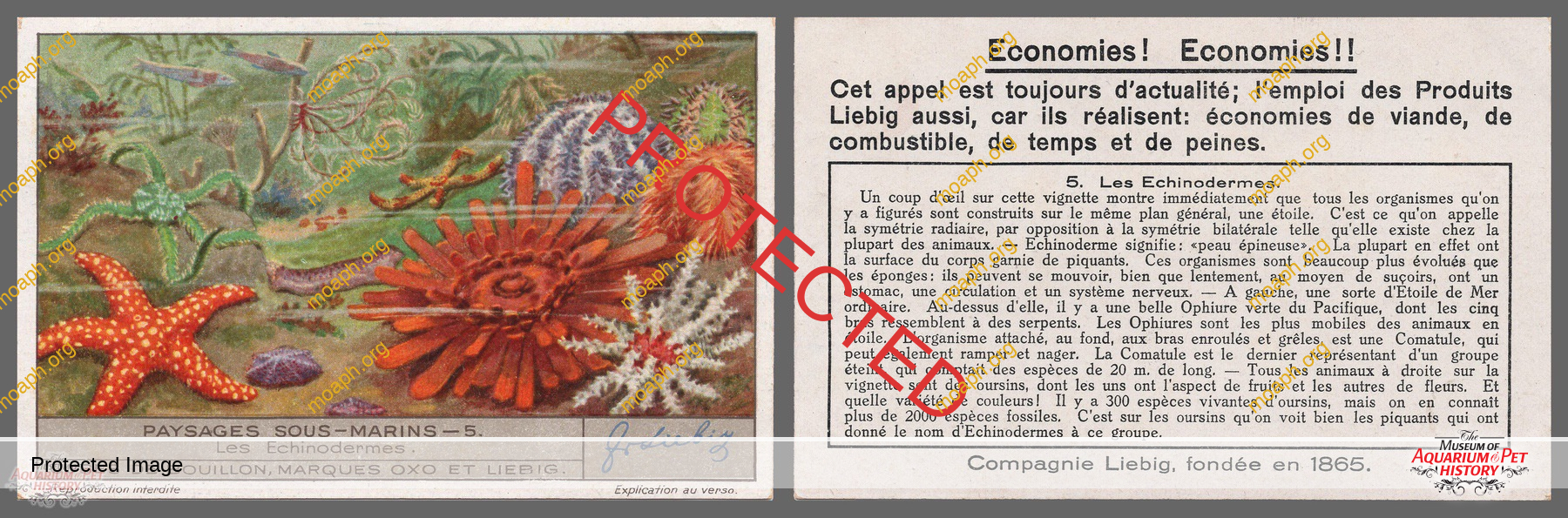
Liebig card from the set No. 1345. Year: 1936.
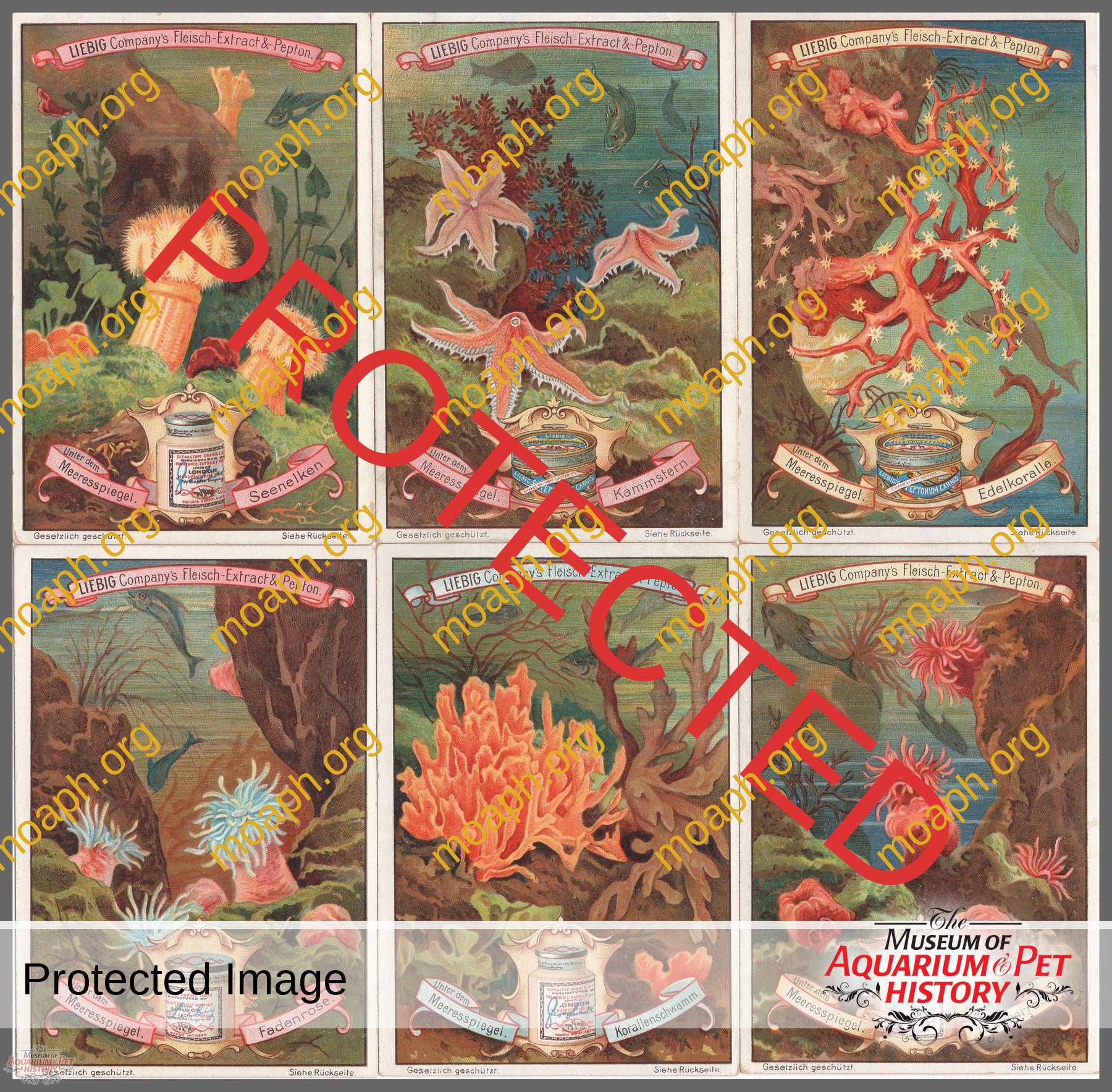
Liebig set No. 595. Year: 1899.
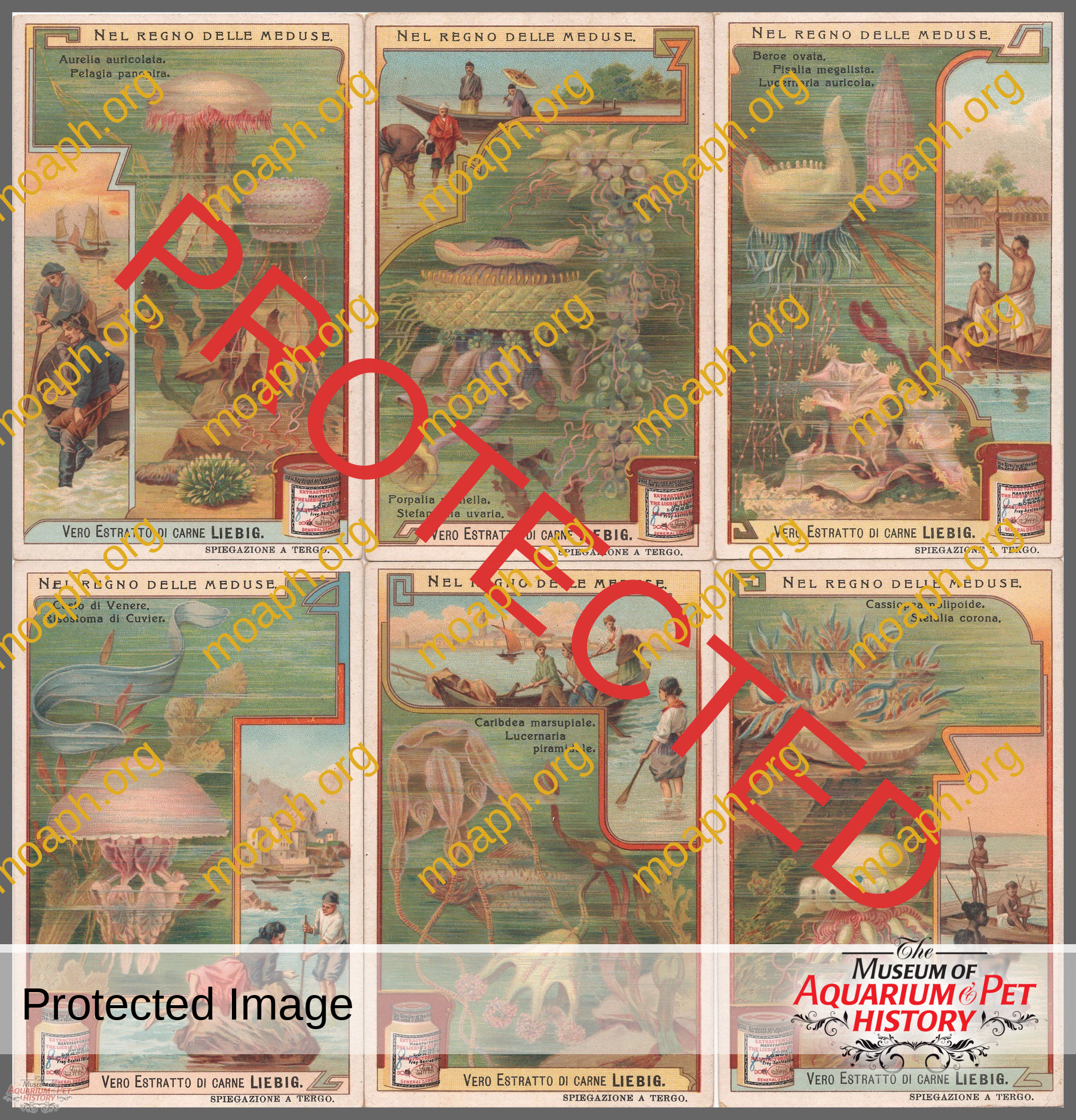
Liebig set No. 938. Year: 1908.
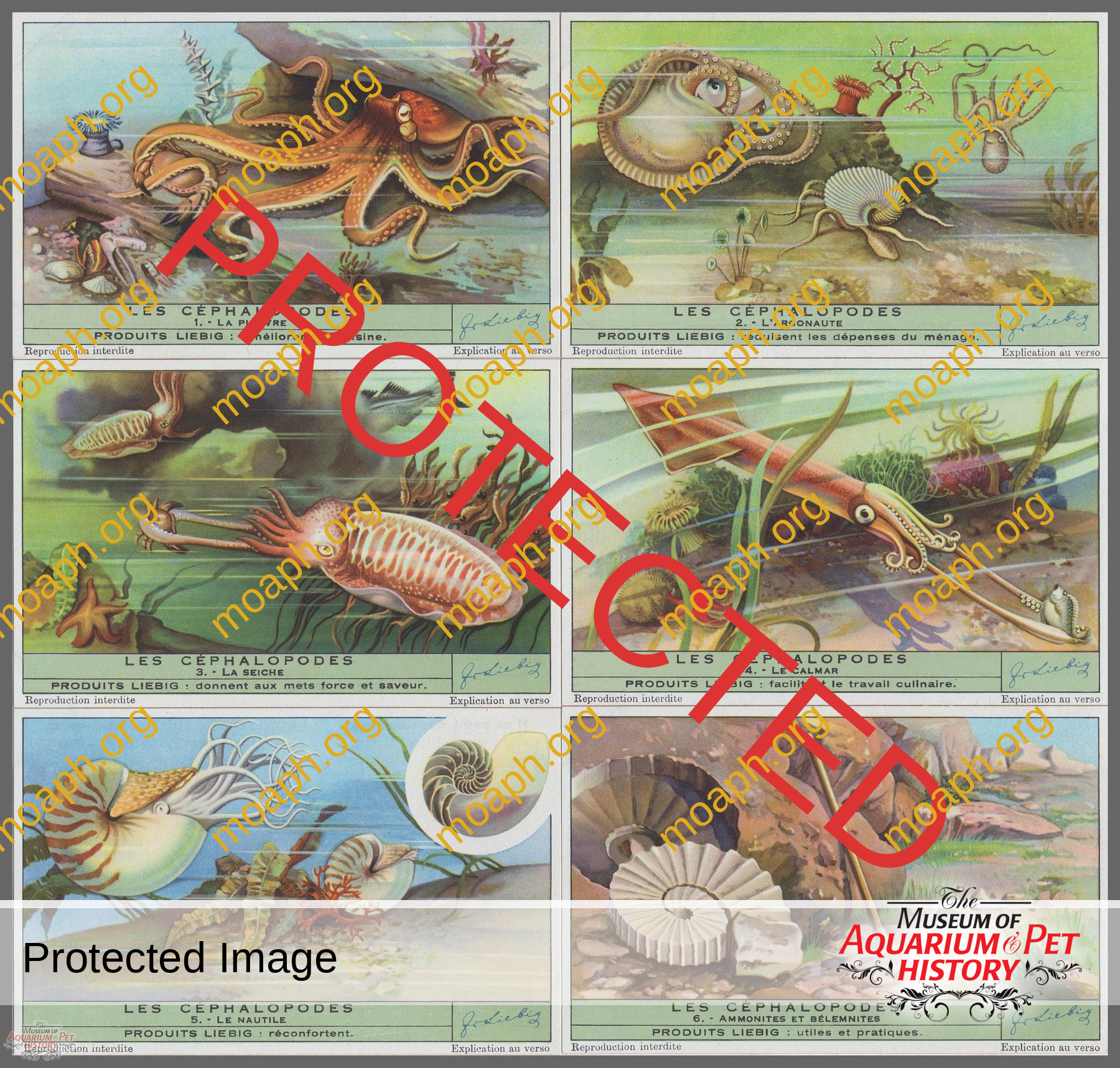
Liebig set No. 1456. Year: 1947.
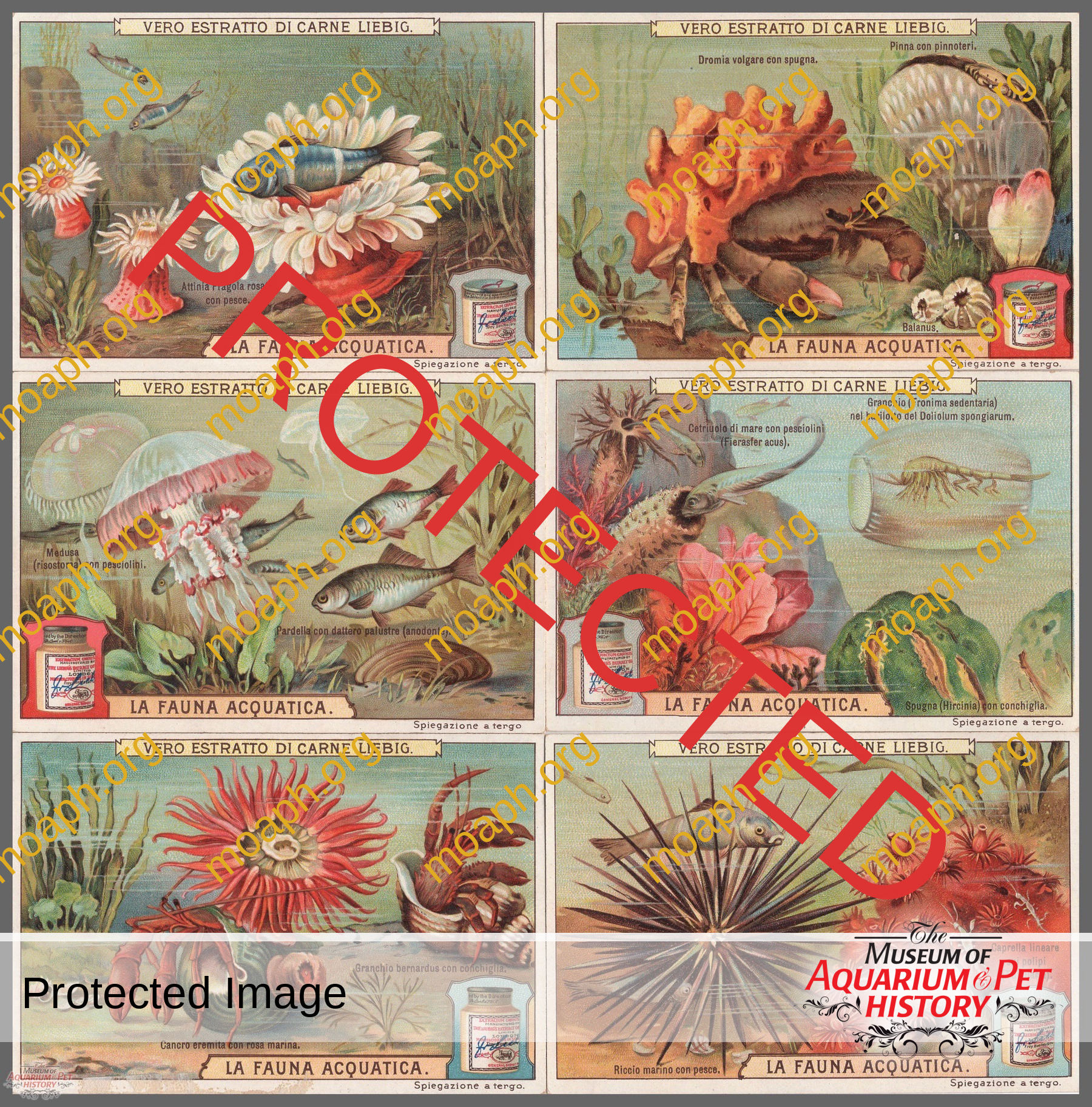
Liebig set No. 926. Year: 1908.
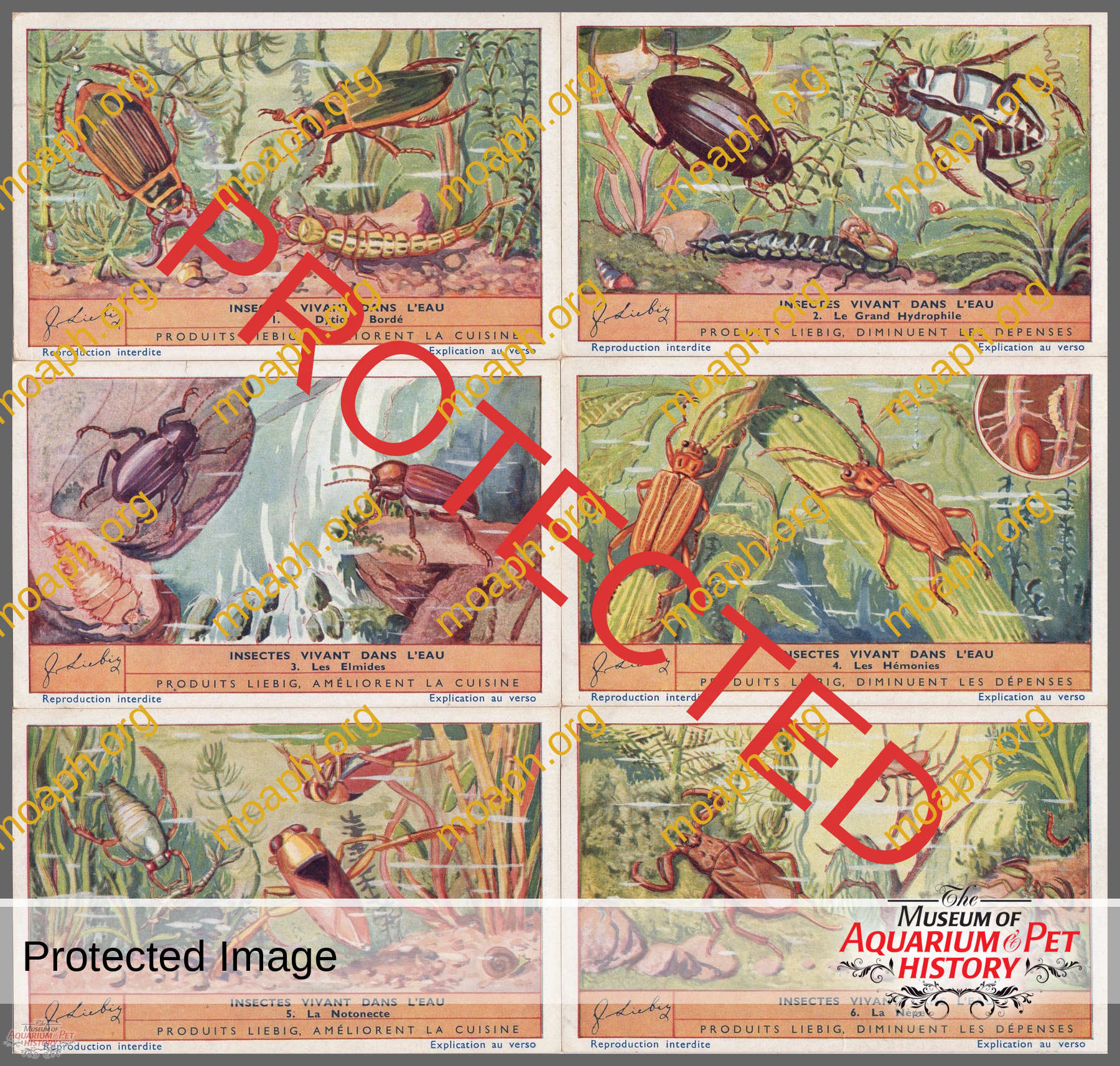
Liebig set No. 1357. Year: 1937.
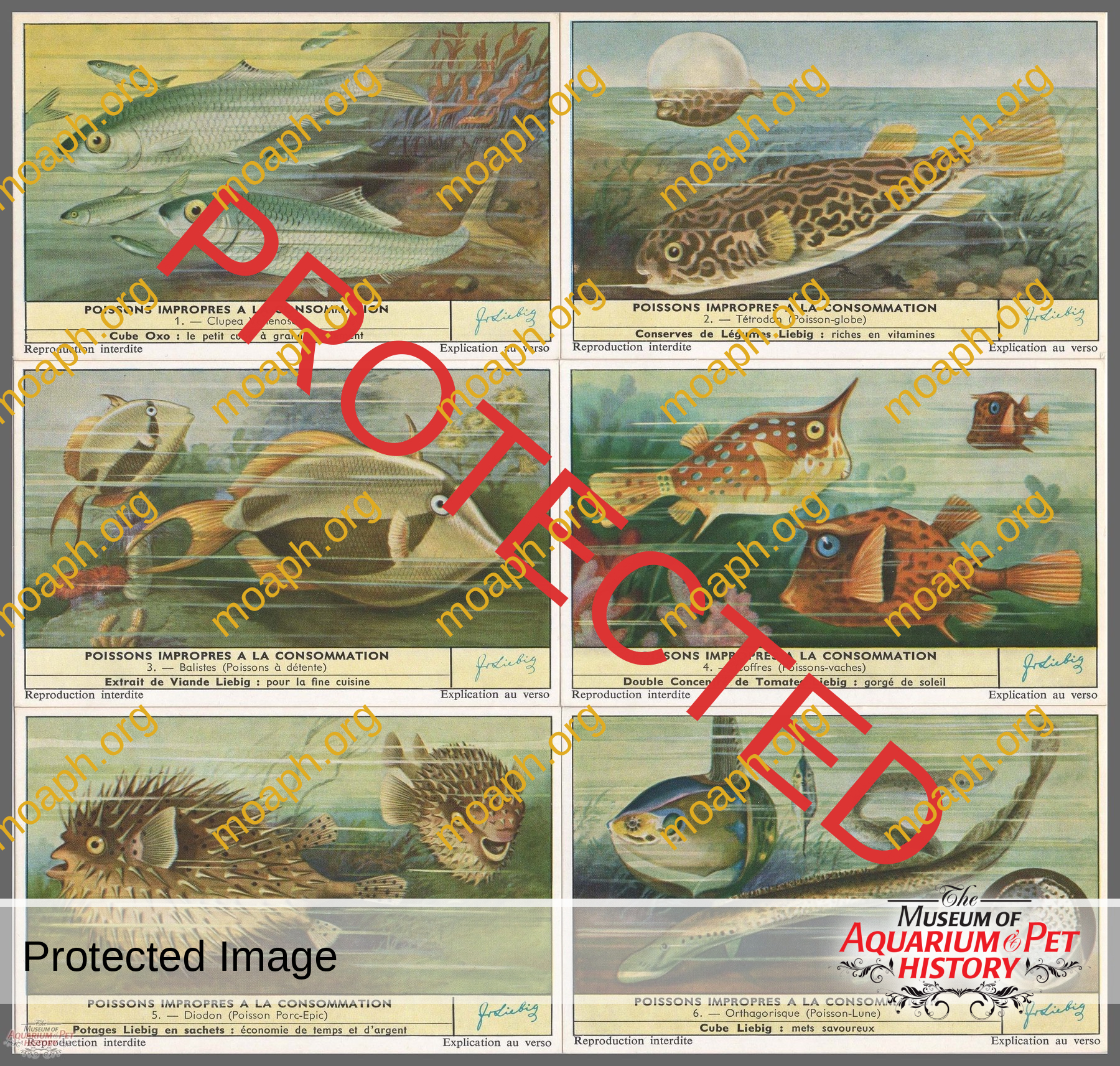
Liebig set No. 1715. Year: 1959.
Beginning in the early 1900s, John Player & Sons printed a few series on zoological subjects. The set “Aquarium Studies” made of 25 cigarette cards arrived later, in the 1930s, together with many thematic albums, which this company also sold at the reasonable price of one penny, a very good idea to encourage the consumer to complete the series by means of smoking like there was no tomorrow!
Other cigarette cards interesting for aquarists can be found in the “London Zoo Aquarium” series issued in the 1920s by Gallaher Ltd (100 cards) and by B. Morris & Sons Ltd (35 cards).
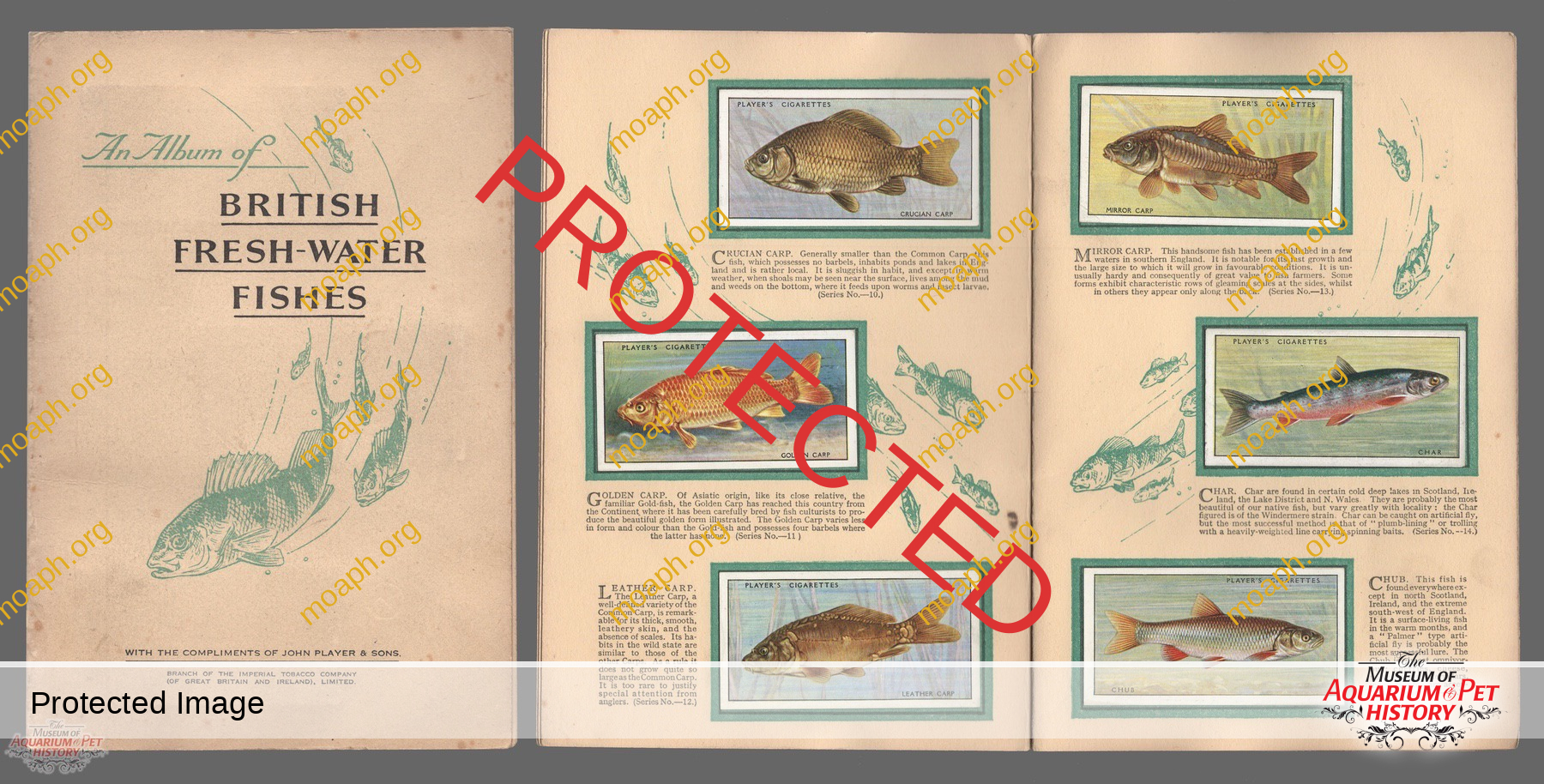
“The Album of British Fresh-Water Fishes” issued by John Player & Sons in the 1930s.
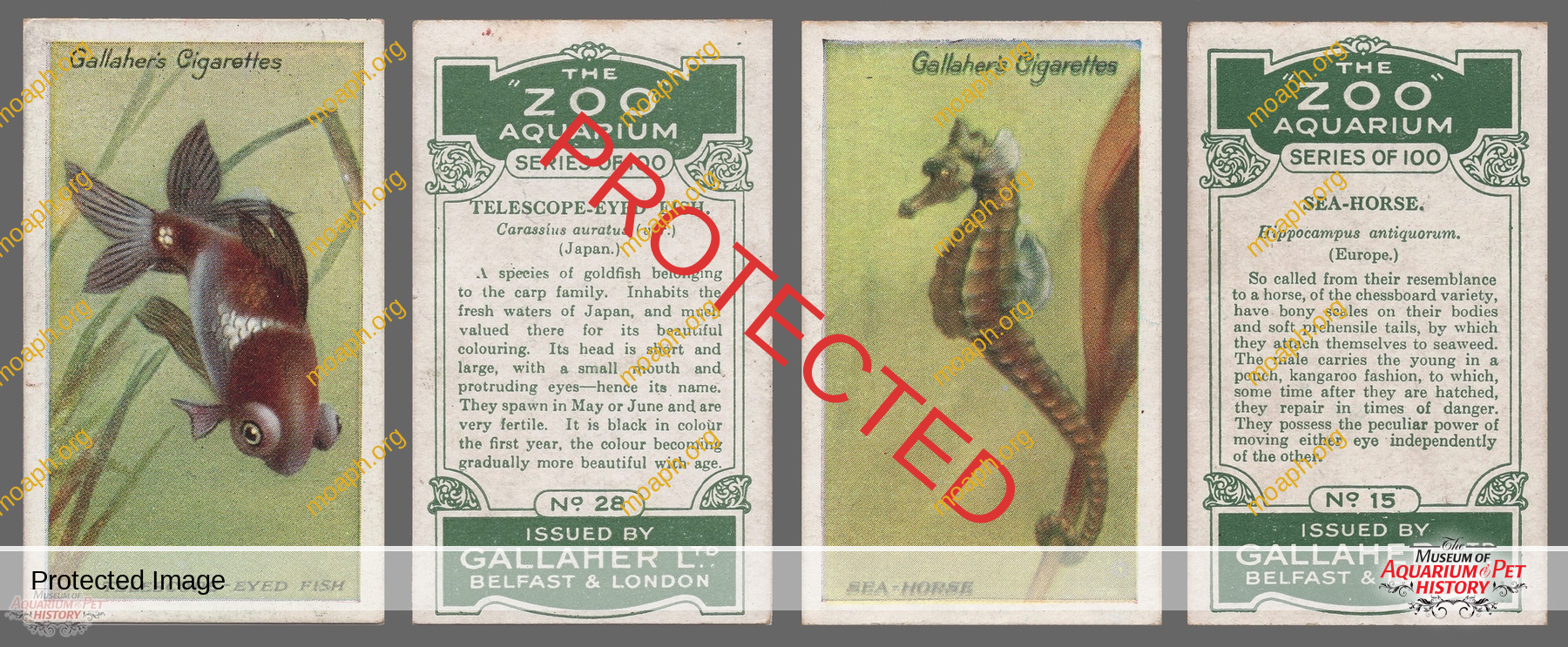
1920s cards by Gallaher Ltd.
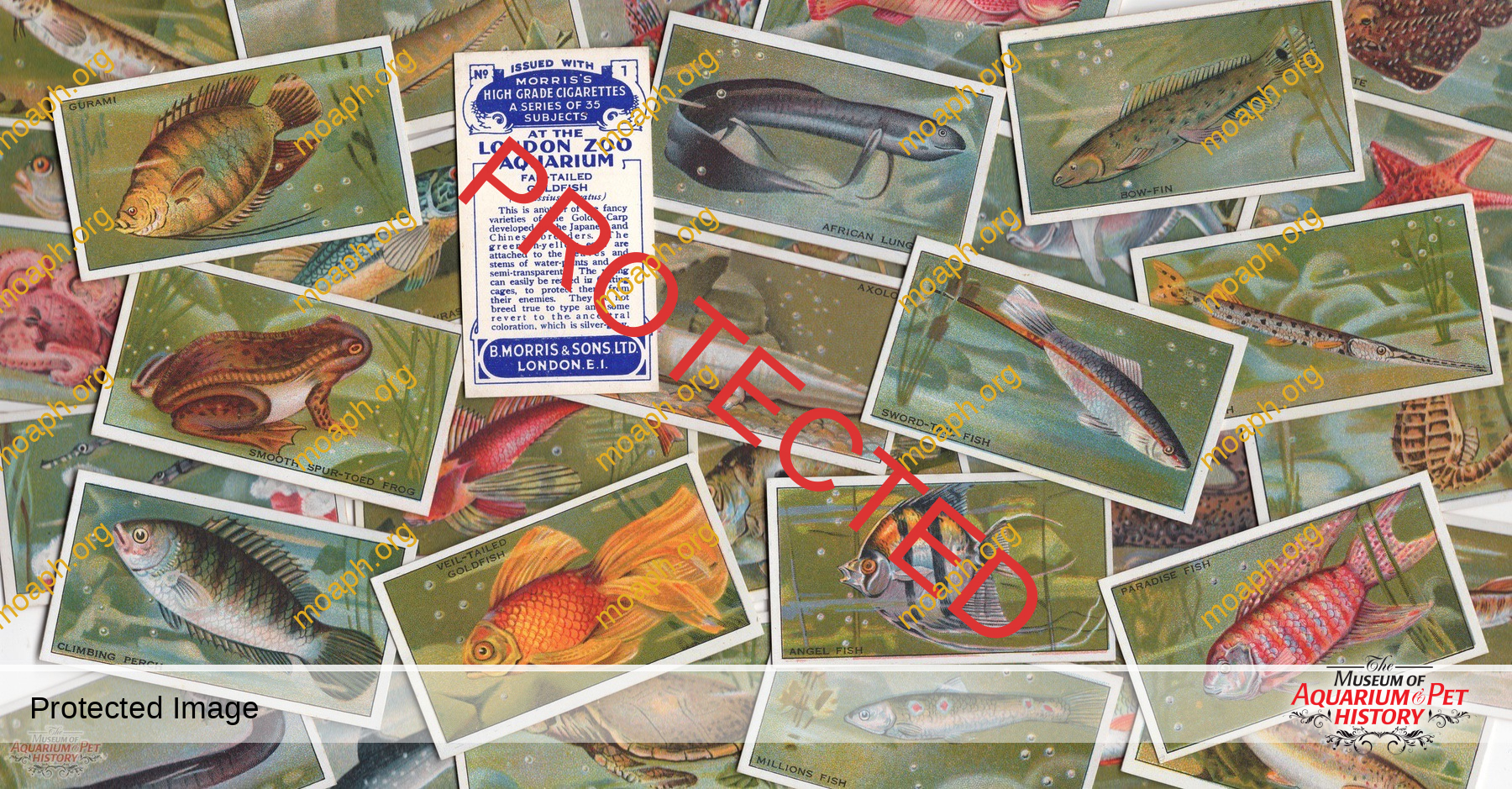
“At The London Zoo Aquarium”, a series of 35 cards by B. Morris & Sons Ltd, 1920s.
Post-WWII
After WWII, new developments in printing technology enabled large-scale color printing in magazines and other publications, which became the main advertising platforms for most firms.
The tobacco companies gradually lost interest in the advertising cards as a device to tout the “virtues” of their noxious products, with a few exceptions, such as W.D. & H.O. Wills, which released two good-quality sets (each consisting of 25 cards) with the title “Pond & Aquarium” in the 1950s, and Mills with the set “Aquarium Fish” (25 cards) printed in 1961.
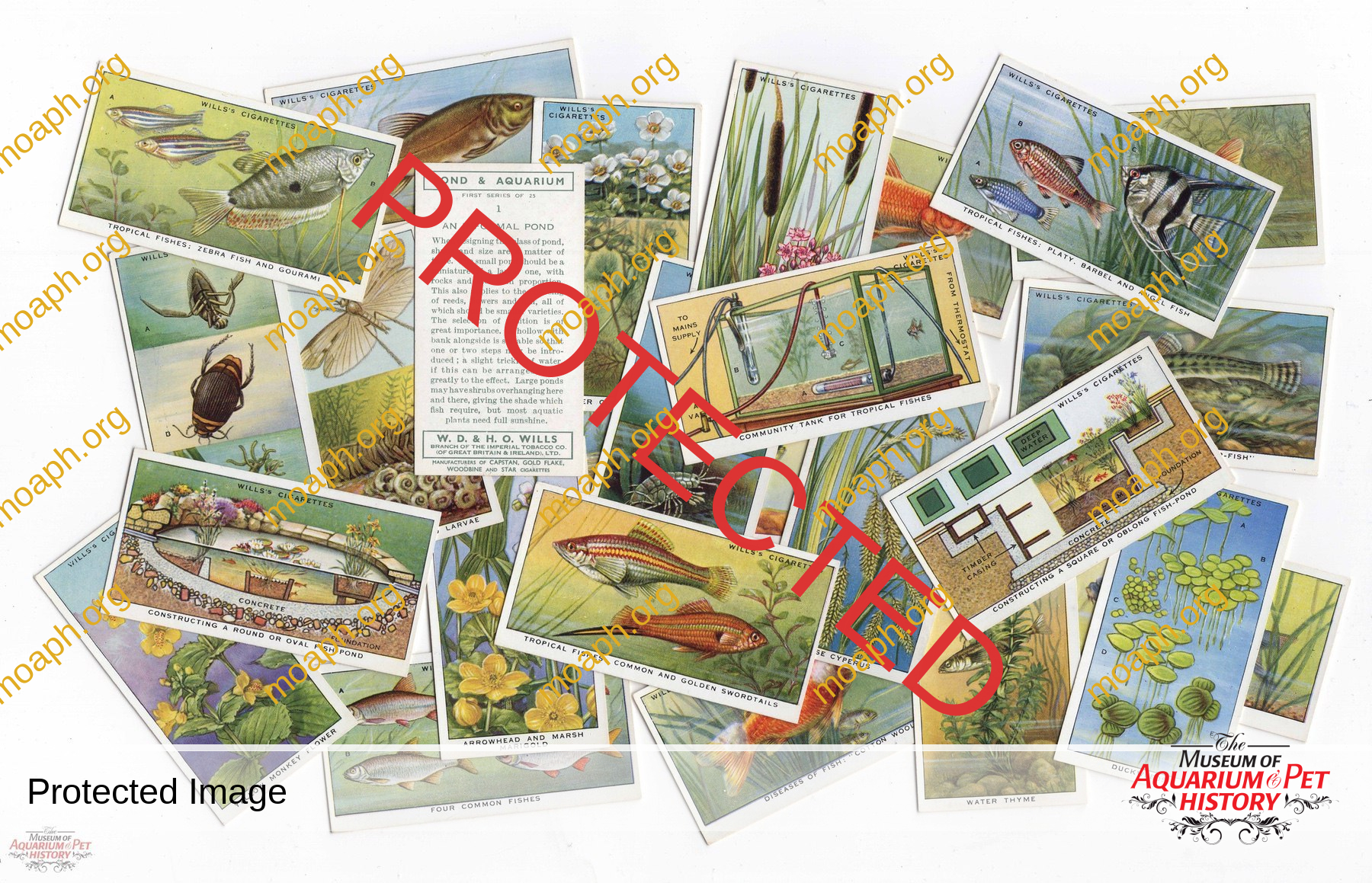
“Pond & Aquarium”, first series (25 cards), by W.D. & H.O. Wills (1950).
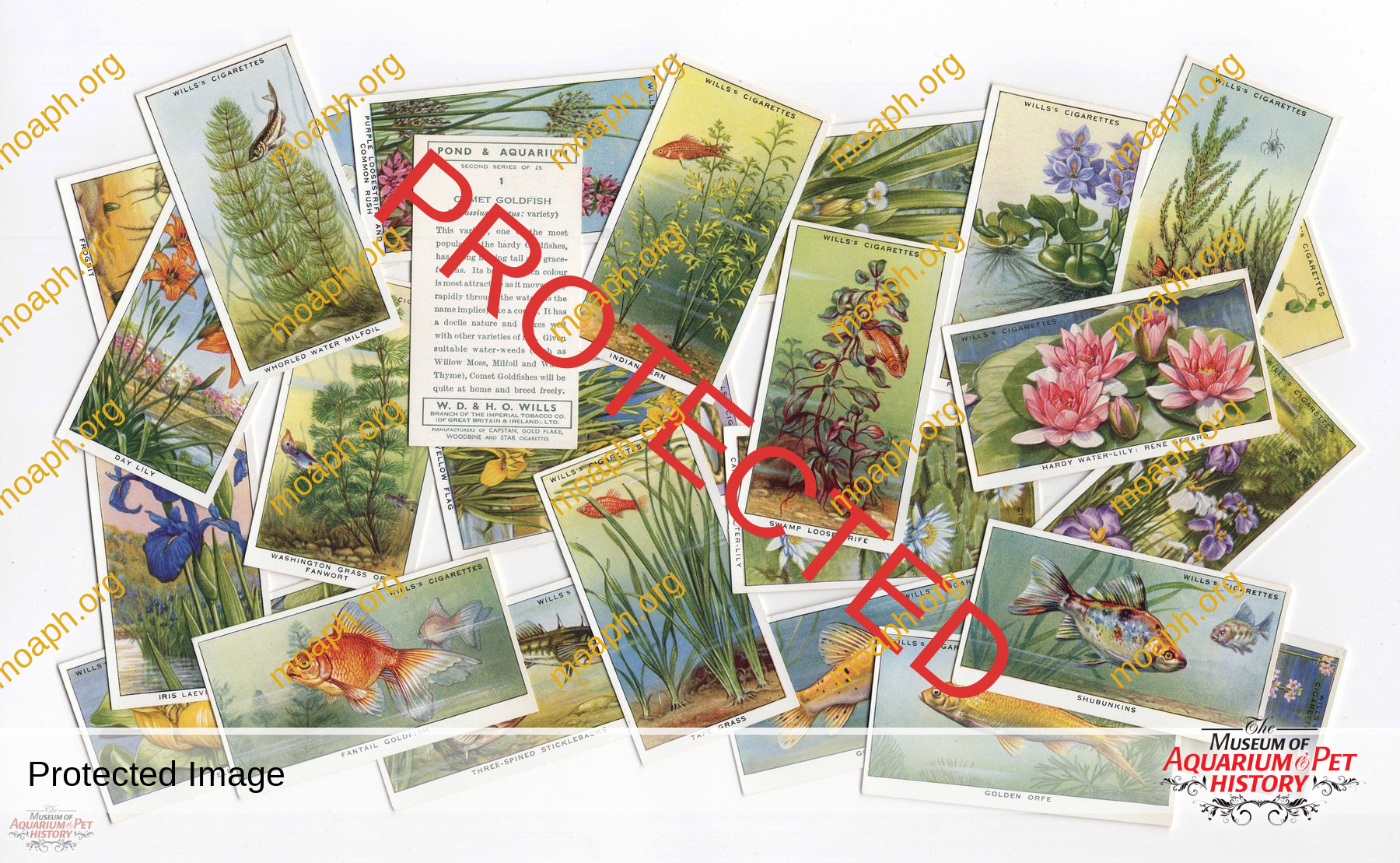
“Pond & Aquarium”, second series (25 cards), by W.D. & H.O. Wills (1950).
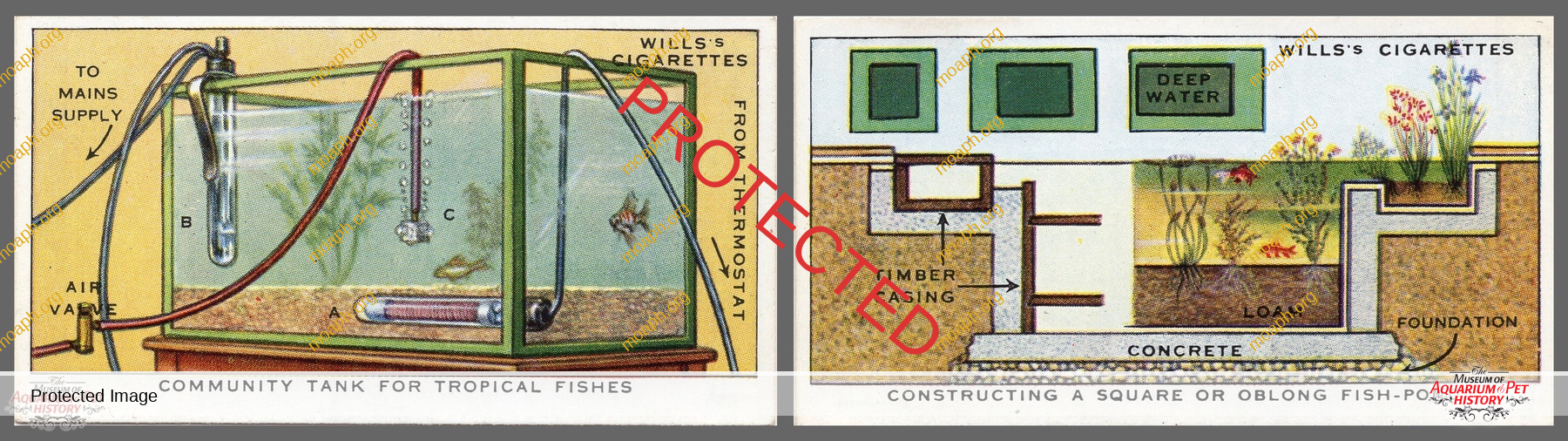
1950 Wills cards.
I found other appealing illustrations in the post-WWII series printed by brands such as Nestlé with its postage stamp-like cards and beautiful albums, the Italian manufacturer of coffee products Lavazza, the English company Mitcham Foods Ltd, and Liebig.
In particular, the 283 sets of Lavazza educational chromos issued from 1949 to 1970, for a total amount of 1698 cards, represent a monumental effort in terms of printing quality, design research, and number of featured subjects.
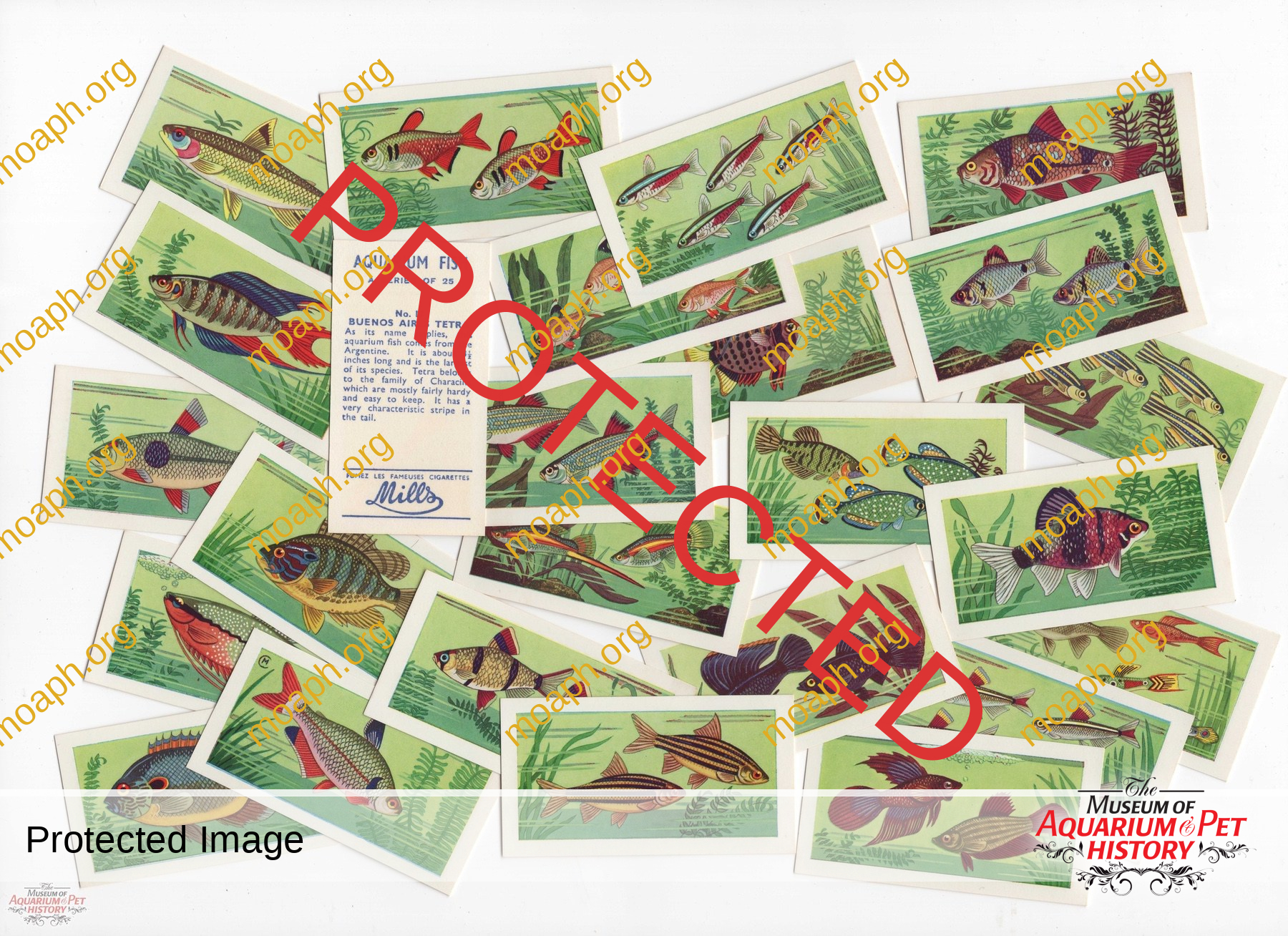
“Aquarium fish”, a set issued by Mills in 1961.
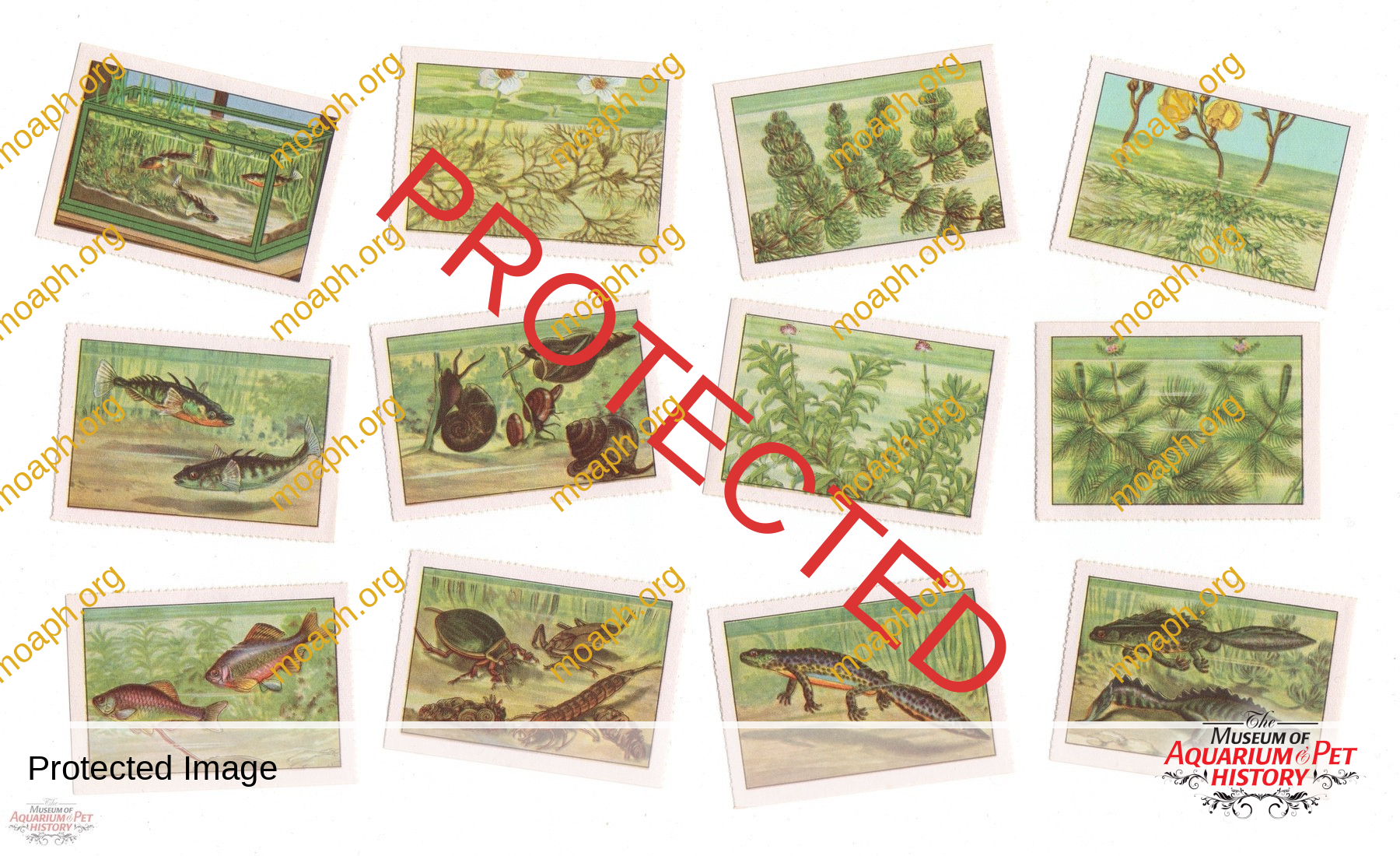
Nestlé, Peter, Cailler, Koholer cards from the series No. 72.
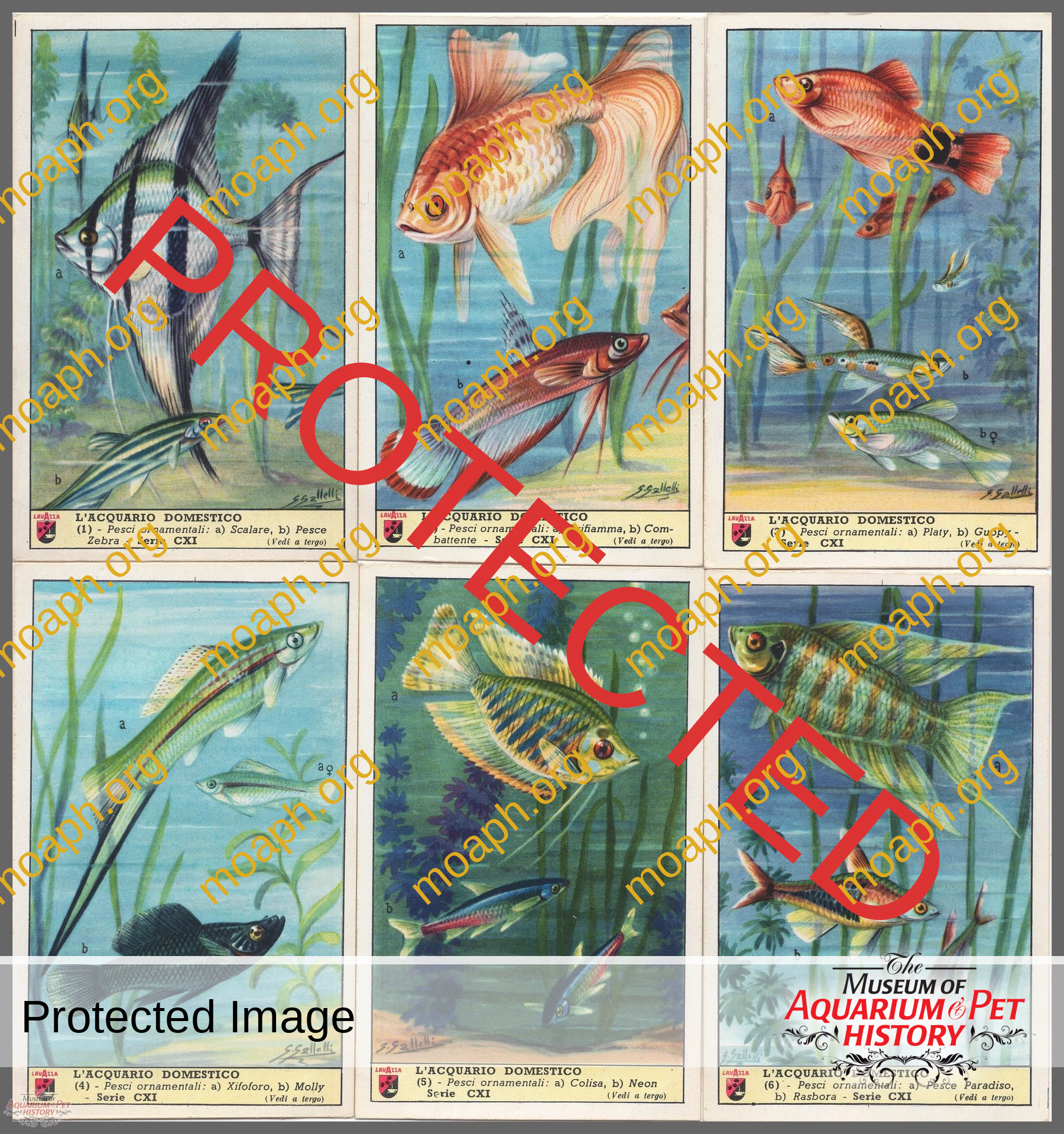
Lavazza set No. CXI (111). Year: 1956.
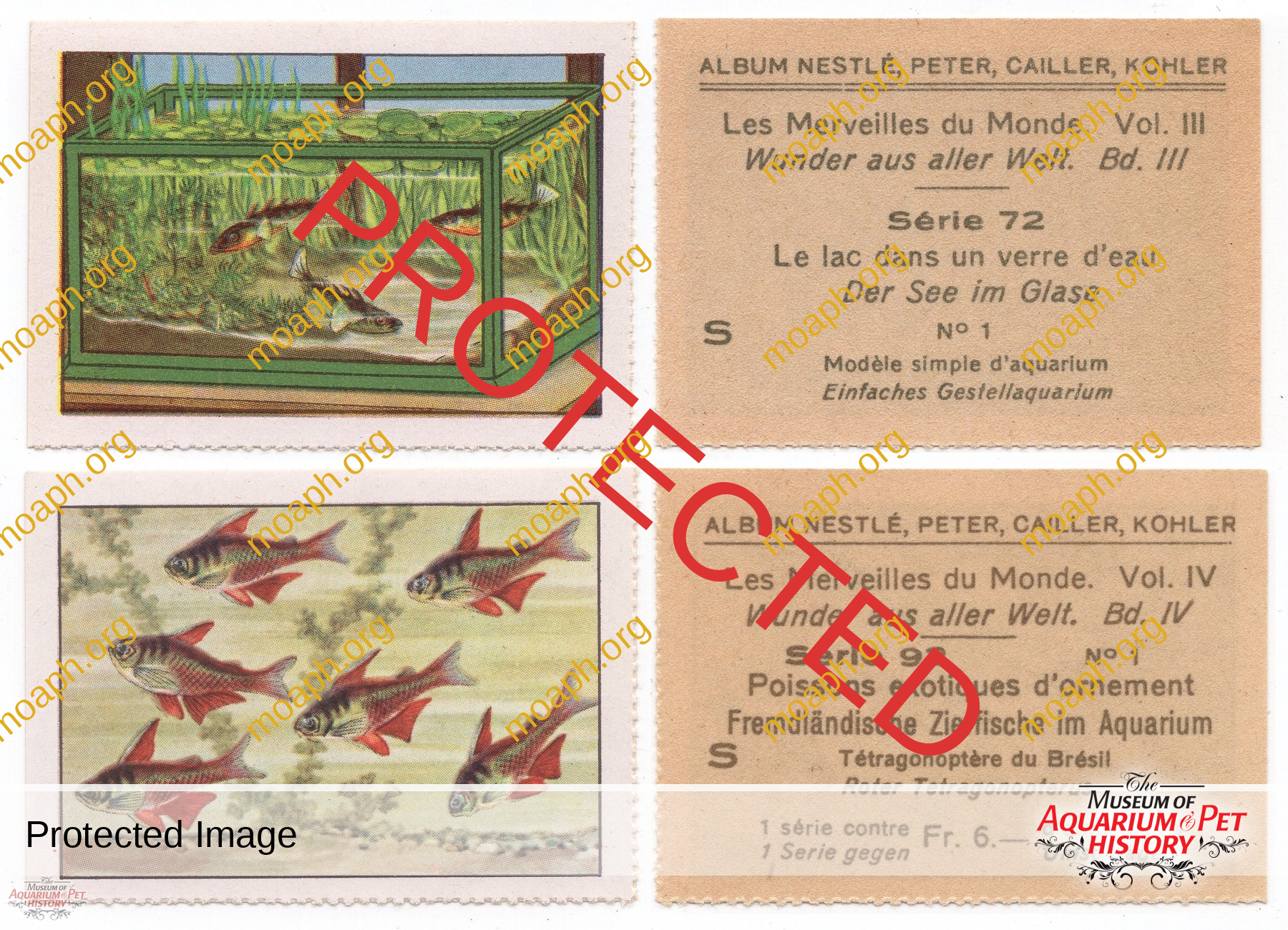
Postage stamp-like cards for the Nestlé, Peter, Cailler, Koholer album “Les Merveilles du Monde” (likely 1950s era).
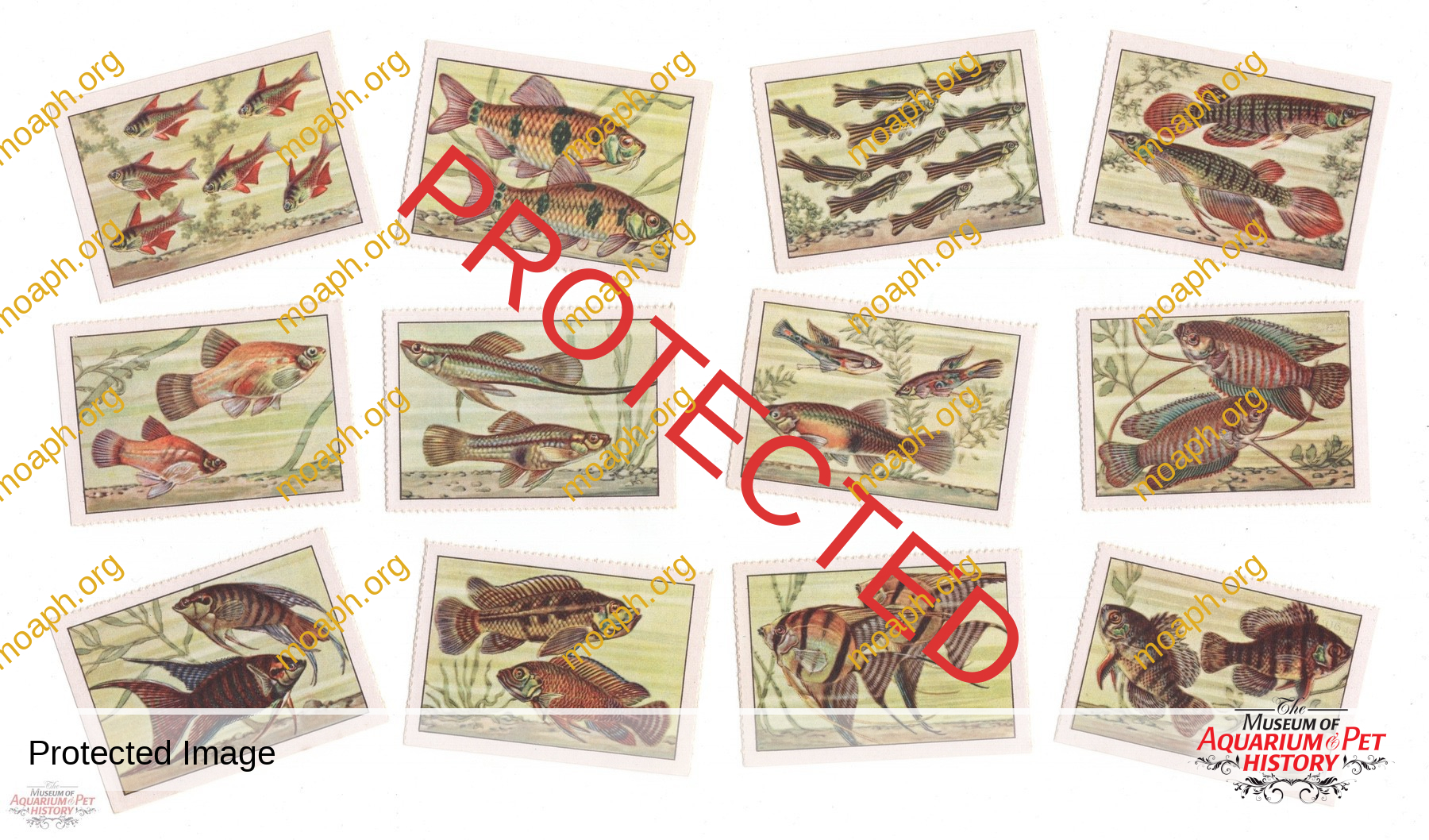
Nestlé, Peter, Cailler, Koholer cards from the series No. 92.
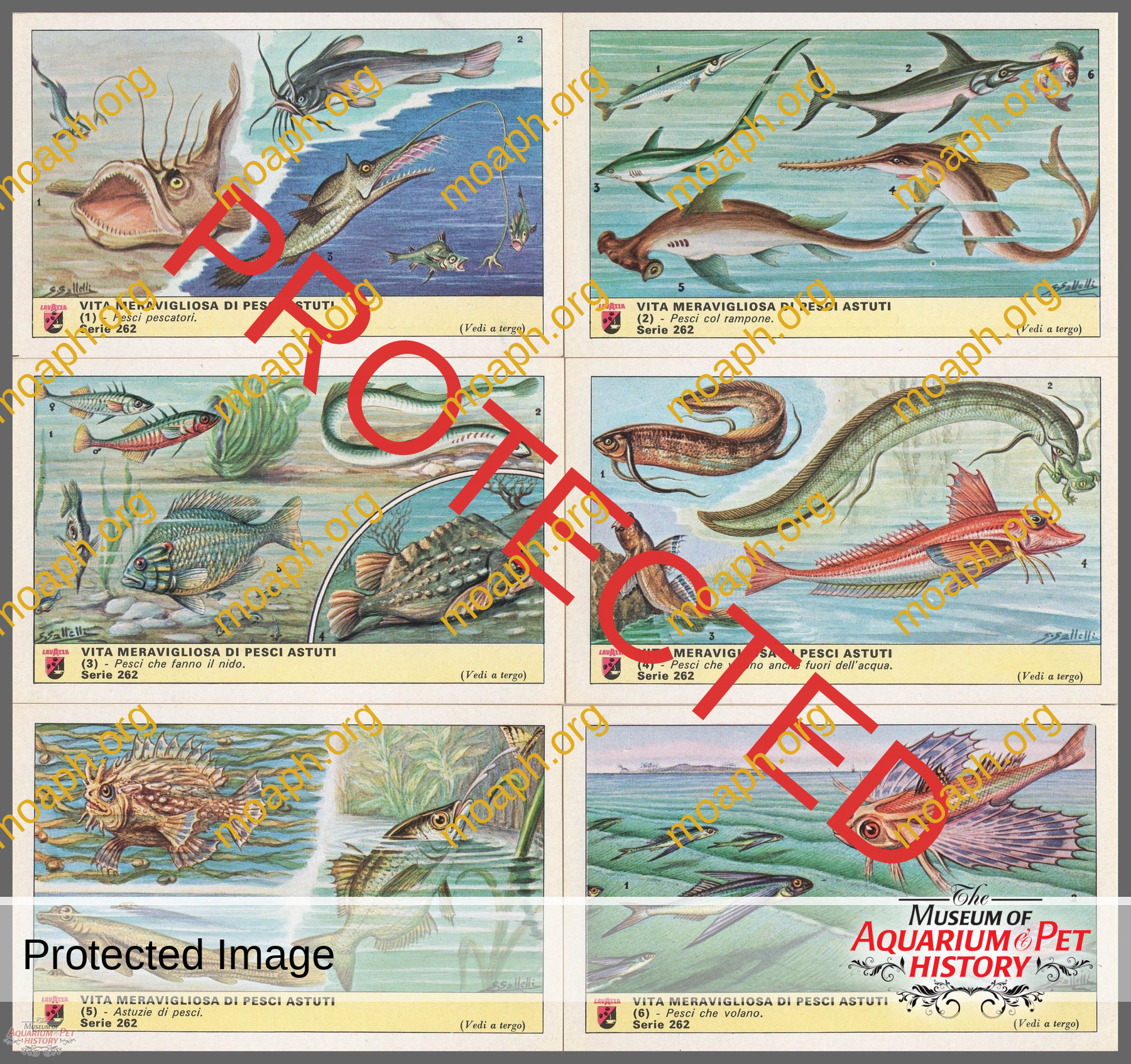
Lavazza set No. 262. Year: 1968.
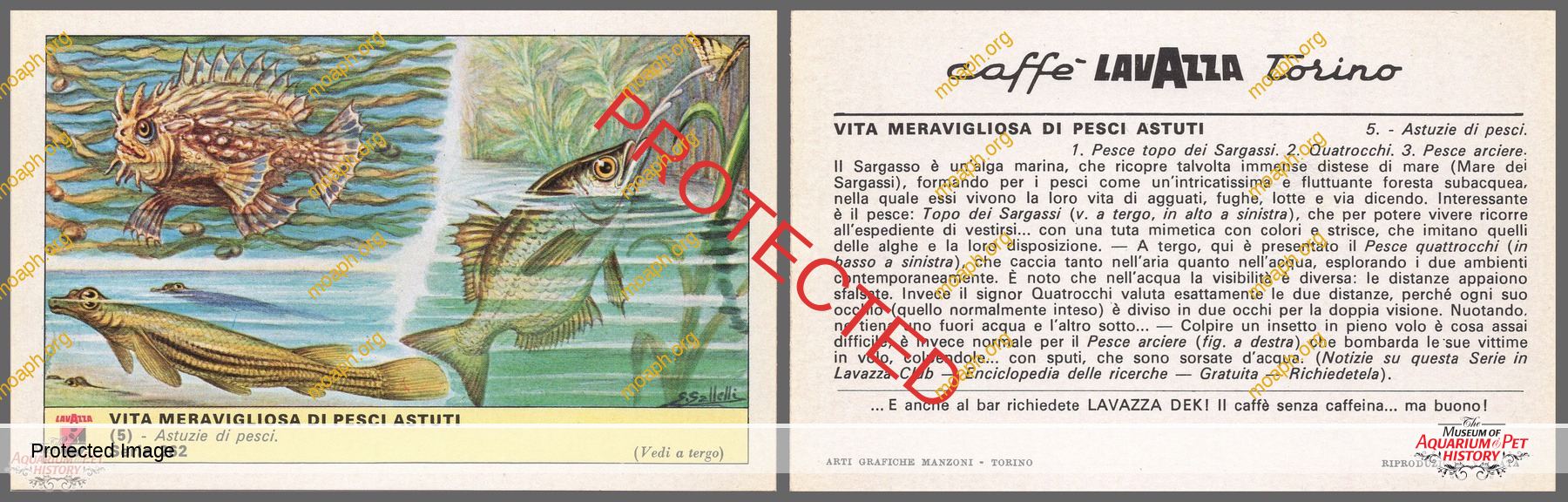
1968 Lavazza card signed by the Italian artist Giovanni Gallelli.
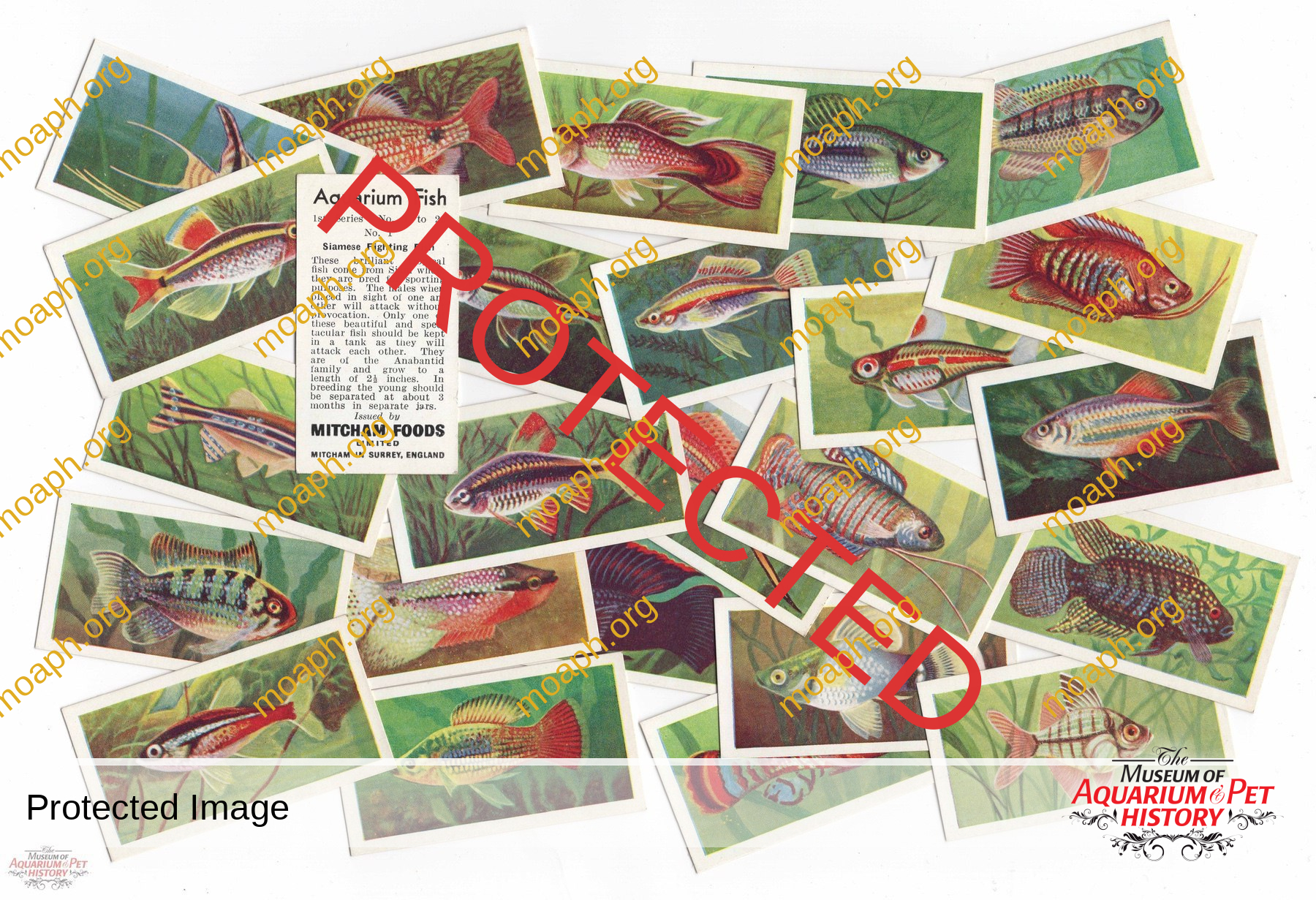
“Aquarium Fish” first series (25 cards) by Mitcham Foods Ltd, 1957.
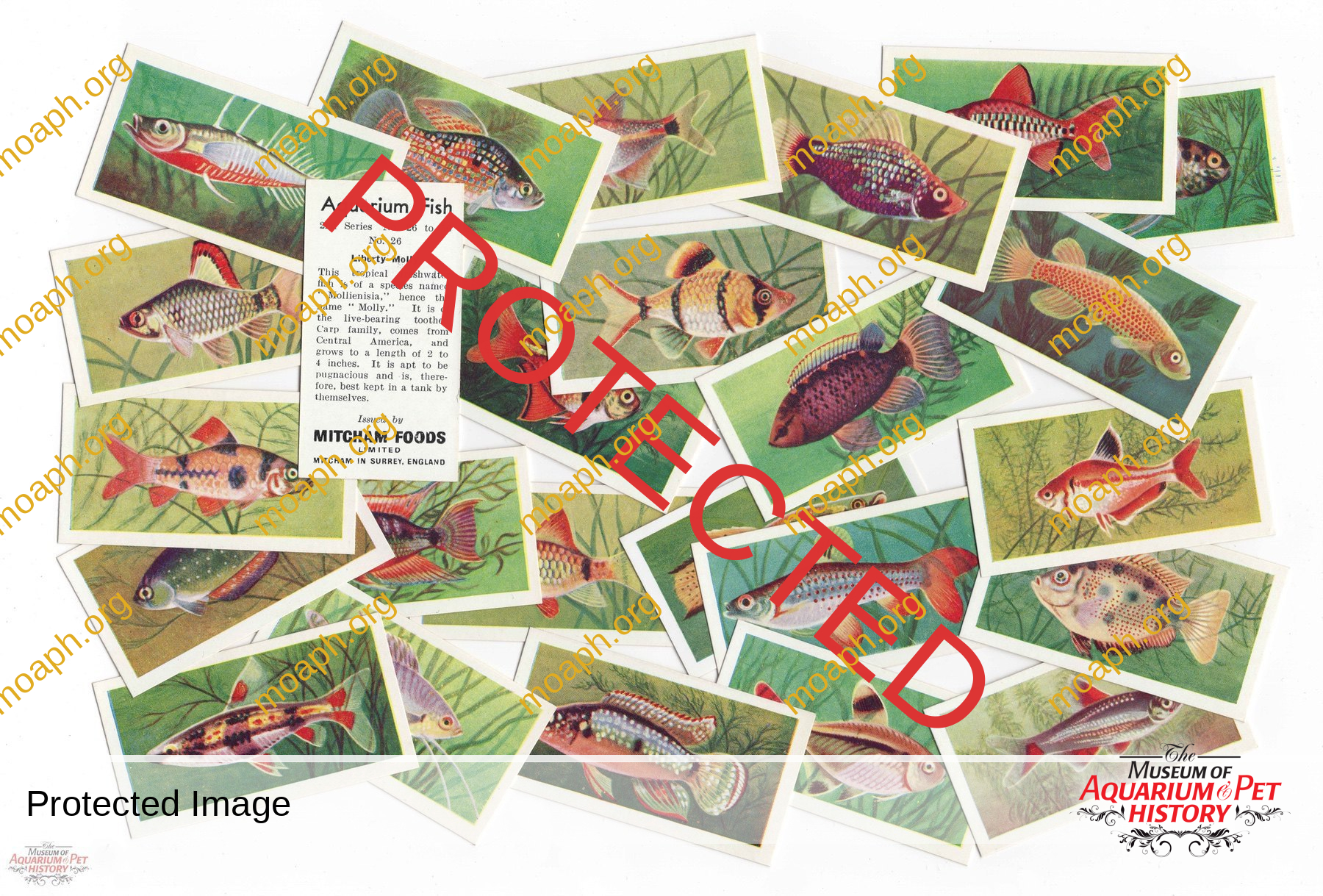
“Aquarium Fish” second series (25 cards) by Mitcham Foods Ltd, 1957.
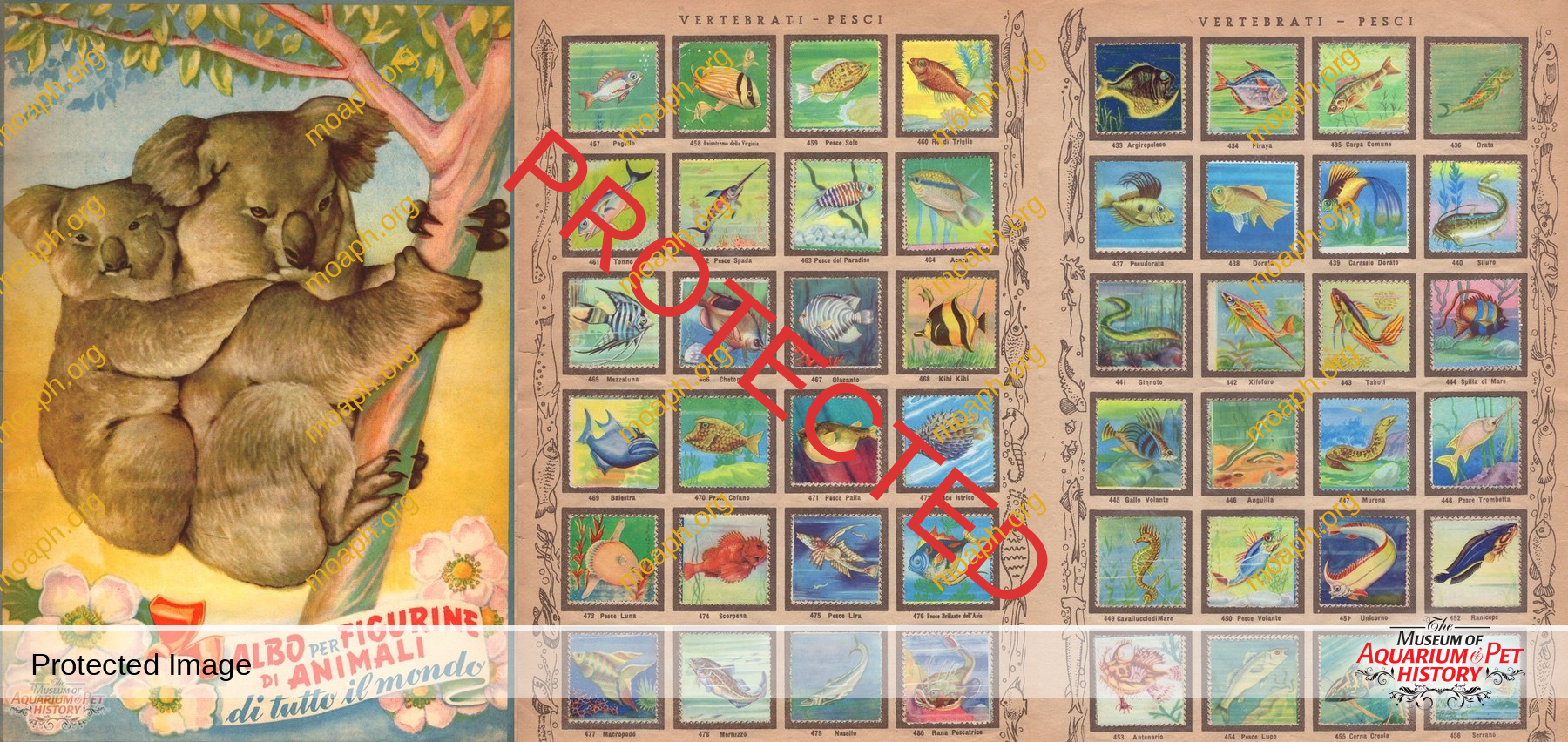
Starting from 1949, the educational postage stamp-like cards released by the publishing company Astra became a classic for Italian children. They could be bought at newsstands, together with their beautiful, iconic album “Animali del Mondo” (Animals of the World).
Let’s start collecting!
To me, collecting trade cards has always been a relaxing hobby within a hobby. Nowadays, referring to catalogs and specialized websites, price guides, online swapping platforms, online marketplaces, specialized sellers, and senior collectors, you can find almost everything you need to gather new cards for your own collection, with the advantage of not being forced to smoke like crazy or to drink gallons of coffee and meat extract!
The subject covered in this article is broad, and I know I’ve only scratched the surface, nonetheless, I hope to have shown enough to infect the readers with my passion for these colorful beauties.
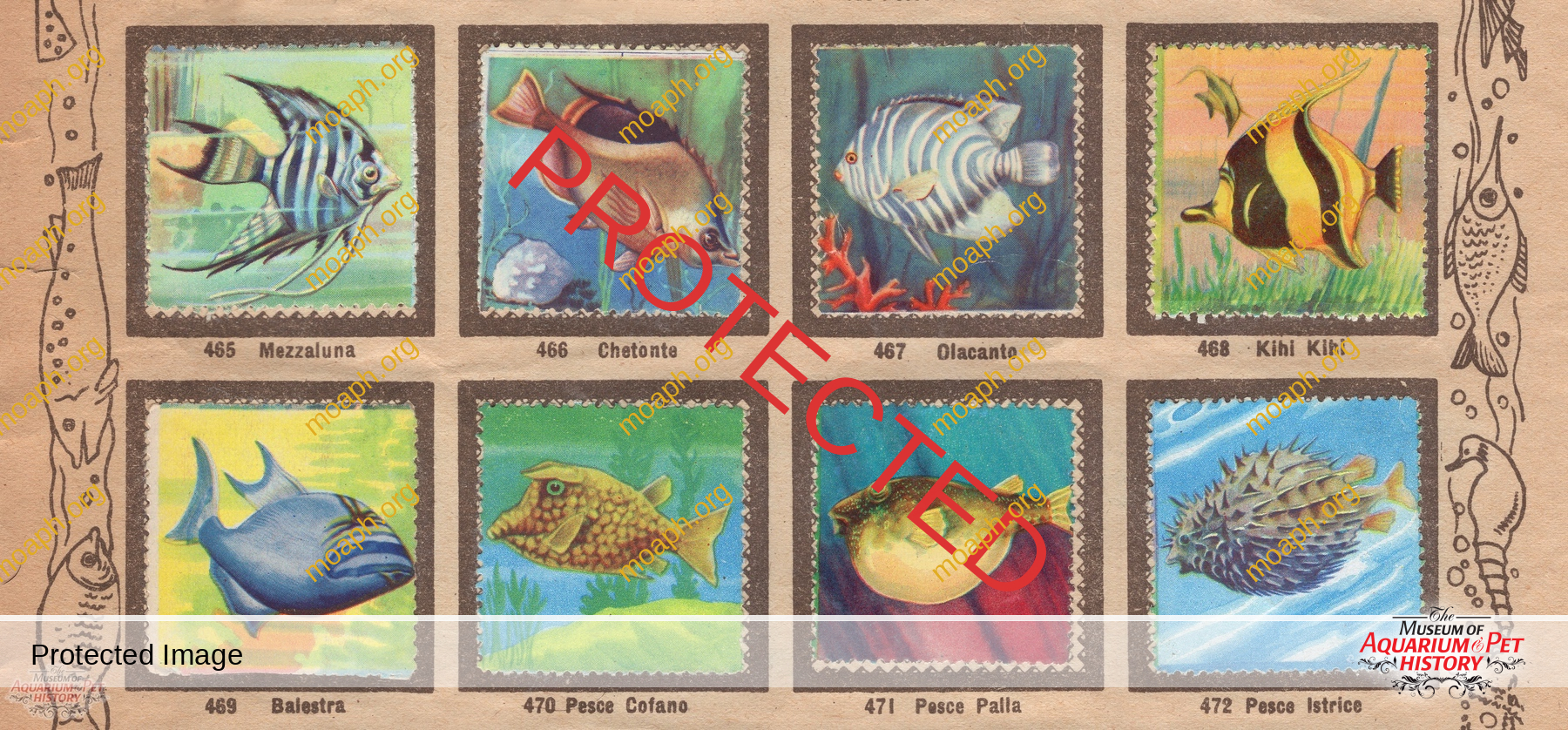
1951 Astra cards depicting popular aquarium fish.