
Gone Fishing
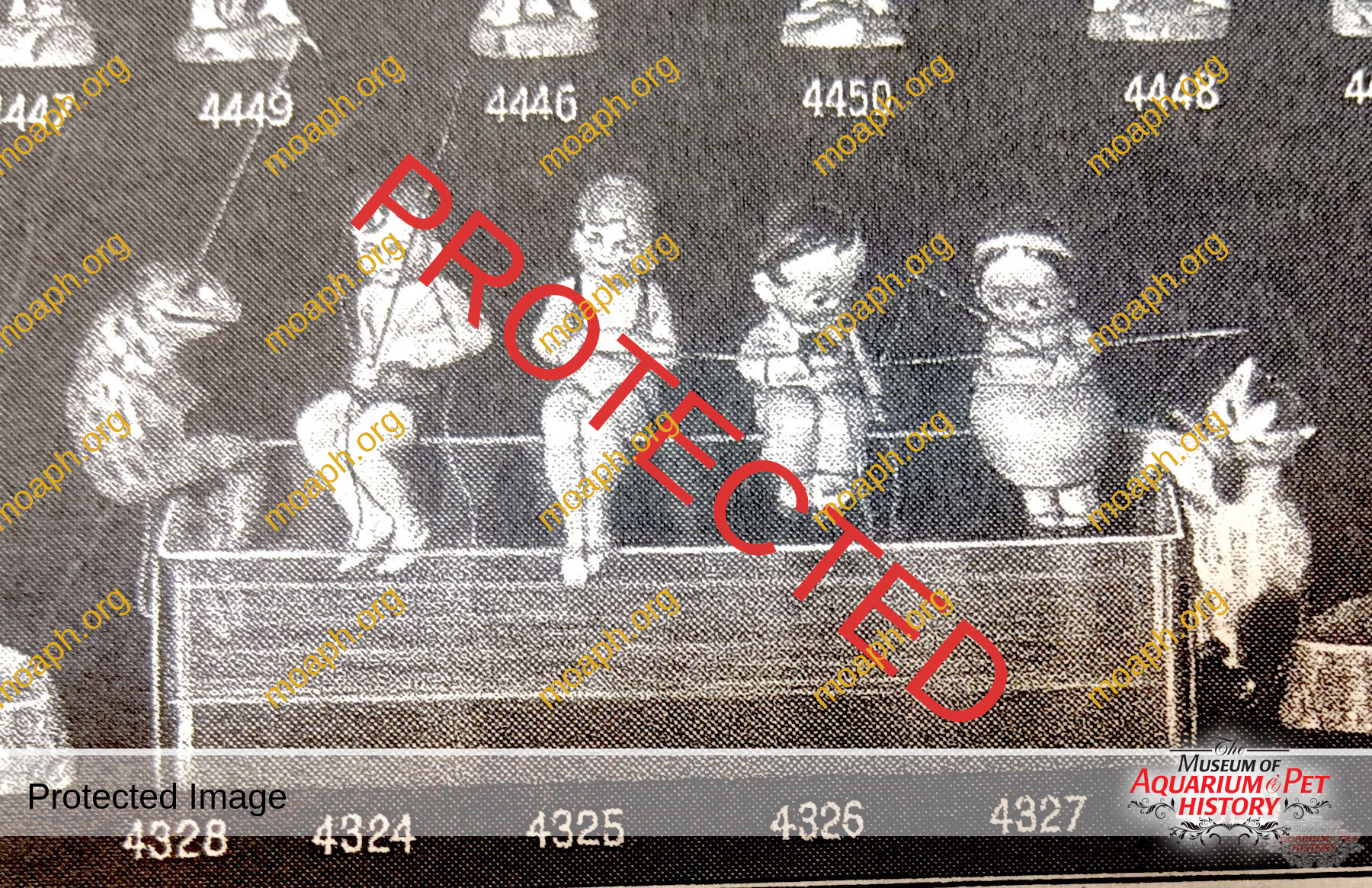
The urge to whimsically adorn aquariums appears to have reached its peak in the early decades of the 1900s, with German manufacturers producing a wide and creative range of fish tank fancies, from schools of mermaids and sea nymphs to tiny castles and other architectural adornments. As well as providing all sorts of bisque and china ornaments for the floor of the fish bowl, German companies created decor for the rim as well. These included fishing figurines, accessorized with tiny fishing poles, which perched on the edge of the fish tank, appearing to wait patiently for a nibble. Illustration I is a picture of a page from a catalog of Hertwig and Company dating from the late 1920s to early 1930s, featuring a rather odd assortment of little fishers. Founded in 1864 in the town of Katzhütte, Germany, this prolific firm produced everything from fine figurines to utilitarian household goods in bisque, china, and earthenware, until the East German Government seized its factory in 1953. Beginning in the early 1900s, the company produced a wide variety of all-bisque dolls, bathing beauty figurines, half dolls, and other little novelty toys and figurines that found their way to shelves of American stores.
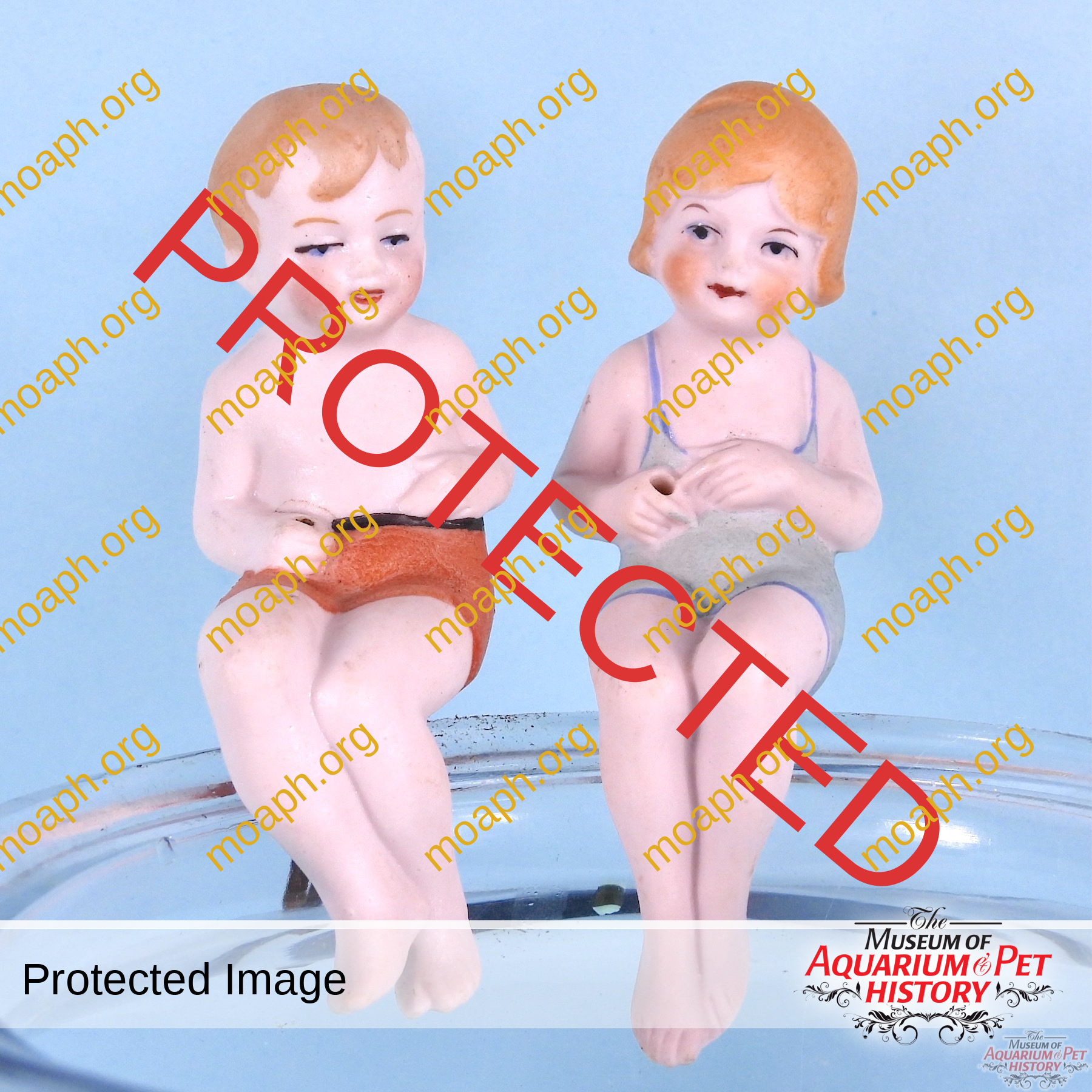
Illustration 2 shows the same models of the bisque boy and girl fishers pictured in the catalog sans their fishing poles. Each is 3.5 inches tall; the boy is incised on his lower back “Germany 4324,” and the girl “Germany 4325,” matching the model numbers in the catalog. Despite their small size, these chubby children, clad only in their bathing suits, are well-modeled and decorated. They are made from pre-colored bisque. Originally, the clay slip used to make bisque was uncolored, so the pieces came out of the kiln stark white. The complexion and features were then painted, and the items re-fired. Beginning around WWI, Hertwig began to use a pre-colored bisque slip that already had a pink or skin tone for many of its all-bisque dolls and other small bisque novelties, as this saved the time and expense of adding a complexion coat and re-firing. The company often went a penny-pinching step further by cold-painting the features rather than firing them in. These cold-painted features were susceptible to being worn or washed away (not ideal for an aquarium ornament!).
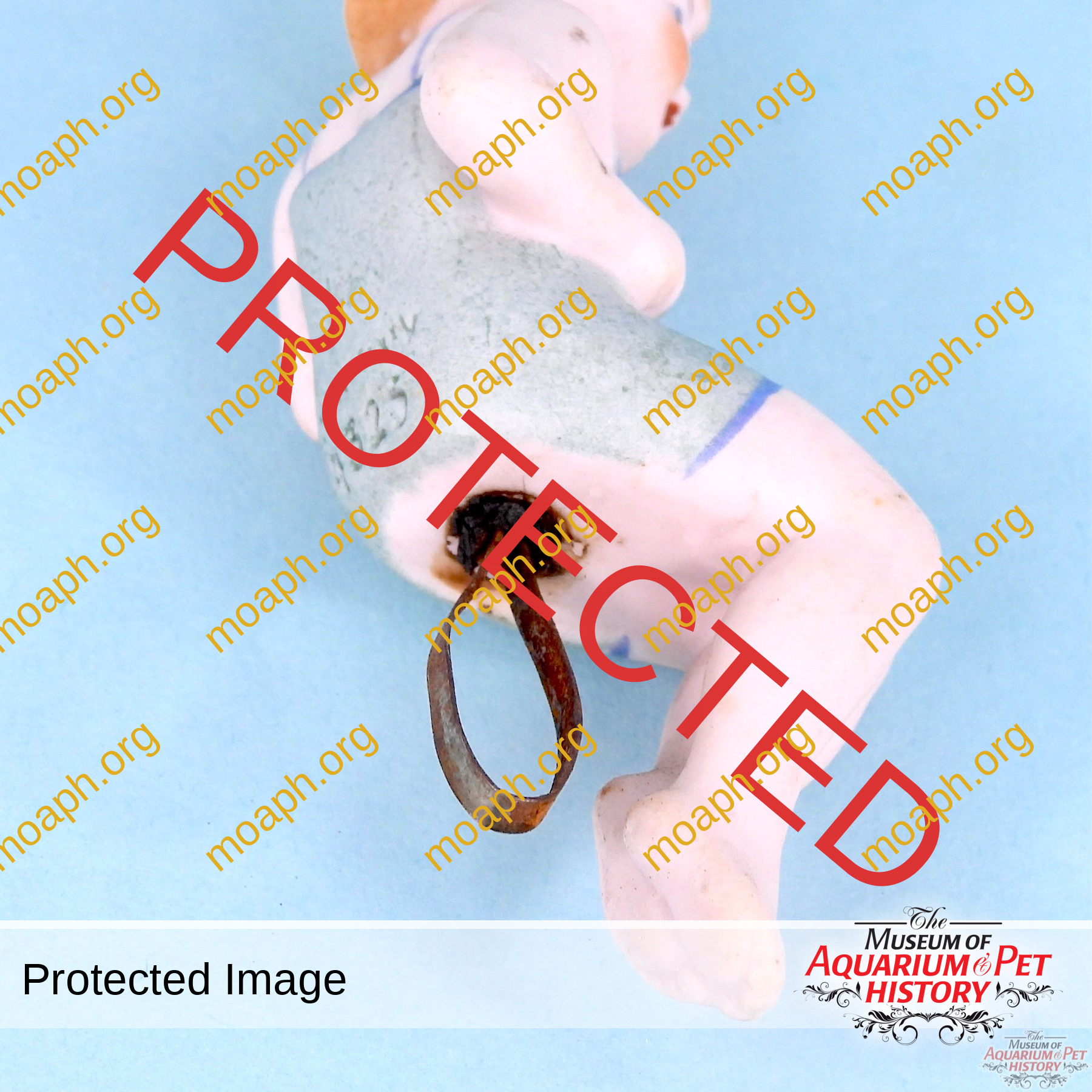
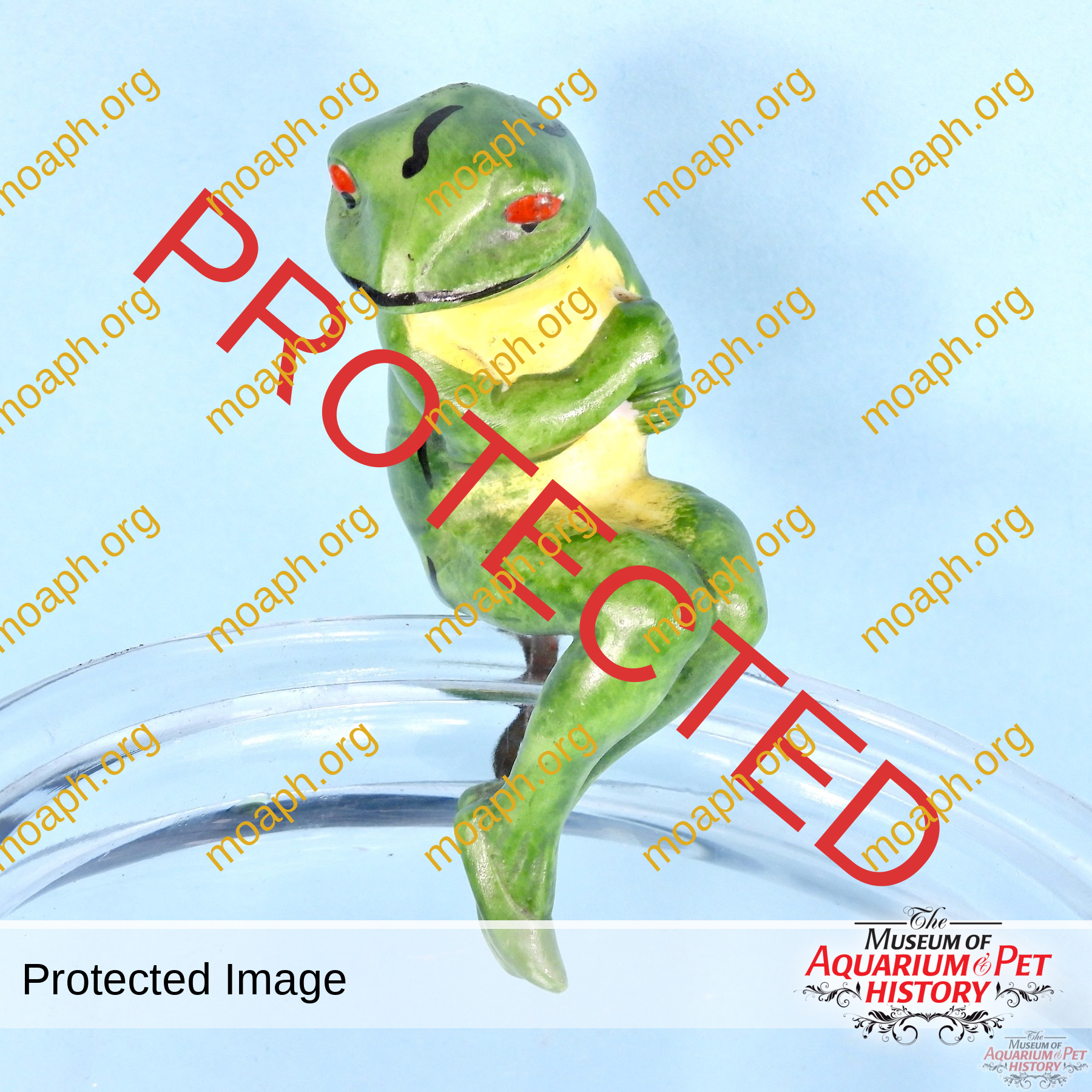
Illustration 3 shows how the figurines were secured to the rim of a fish tank by a clip made from a metal loop. Often these loops are now missing, having rusted away or fallen out over the decades.
The frog fisherman in Illustration 4 also appears on the Hertwig catalog page. Oddly, this amphibian has molded slim slippers rather than large finned feet. He is 3.5 inches tall and incised “Germany 4328” on his lower back, again matching the model number in the catalog.
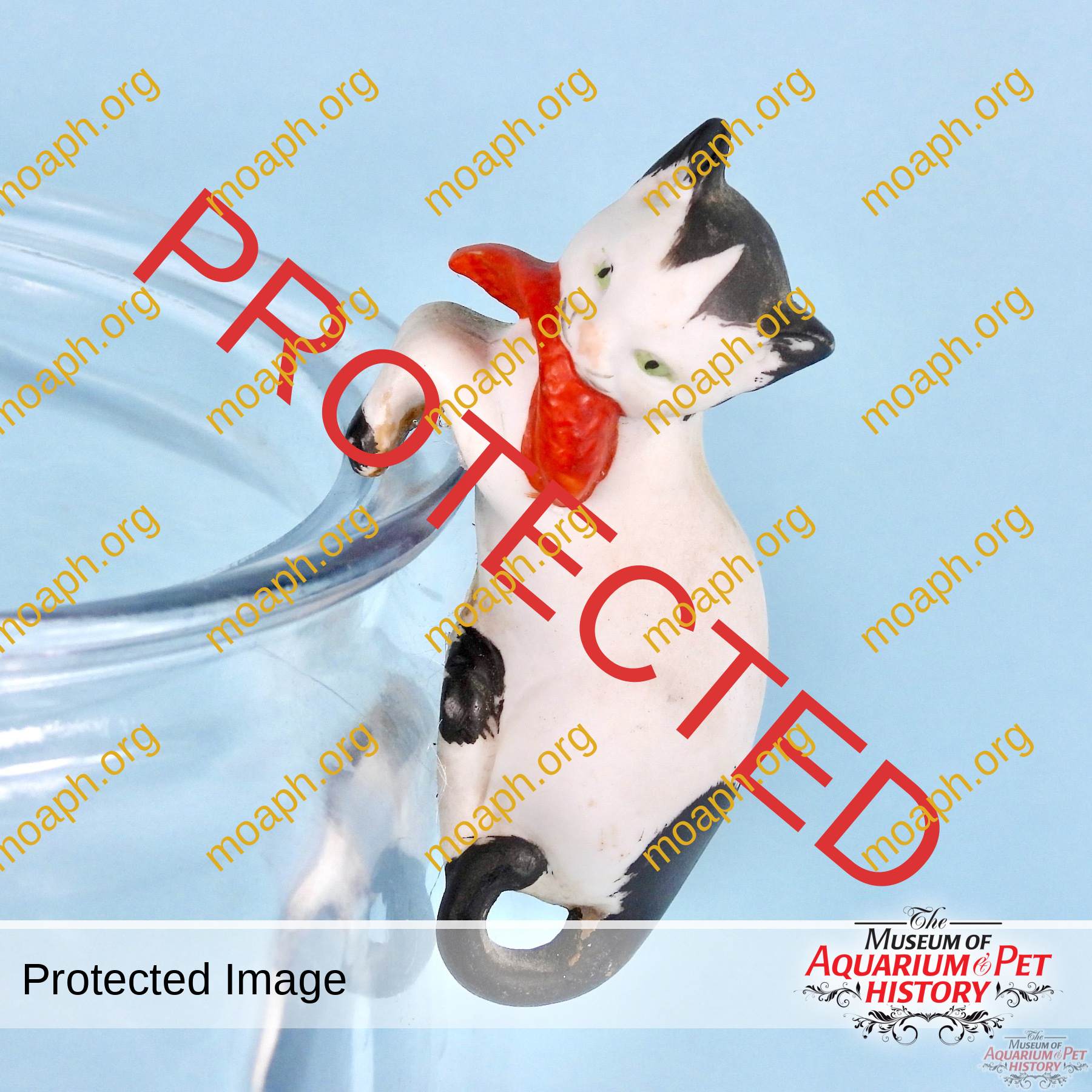
The black and white fishing feline in Illustration 5 proves that one does not need a fishing pool to catch a fish. Instead of a metal clip, the kitten’s front legs are molded to fit over the rim of a fish tank. Just 3 inches long, this cute kitty also appears in the catalog; it is incised “Germany 4329” on its left side, matching the catalog’s model number.
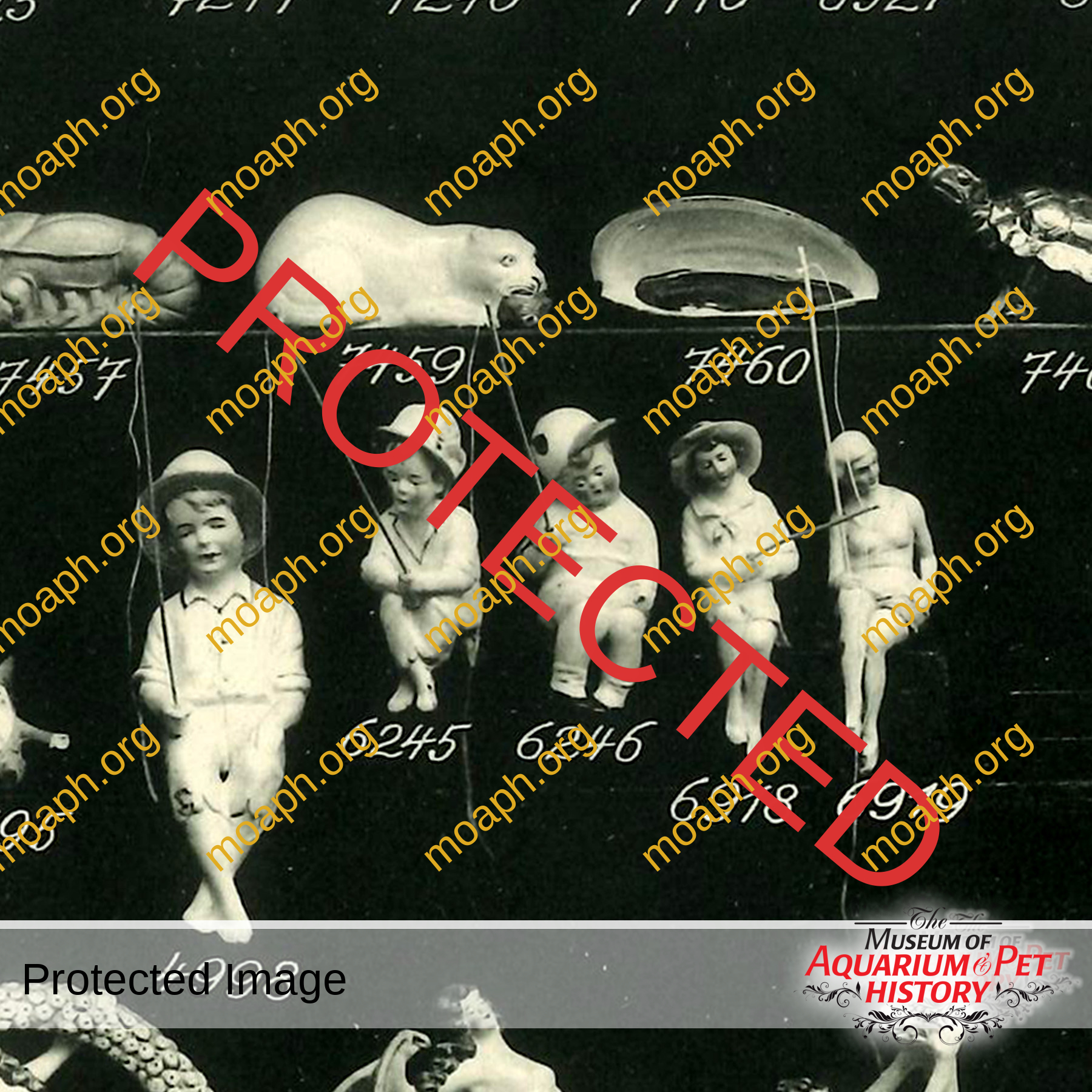
Illustration 6 is a picture of a page from the catalog of the German firm of Weiss, Kühnert, and Company featuring several of its fisherfolk, no doubt from the same era as the Hertwig catalog. Founded in 1891, the company produced a range of bisque and china knickknacks and novelties. During WWII, the German government ordered Weiss to produce material needed for the war, and afterward, the company manufactured only utilitarian tableware.
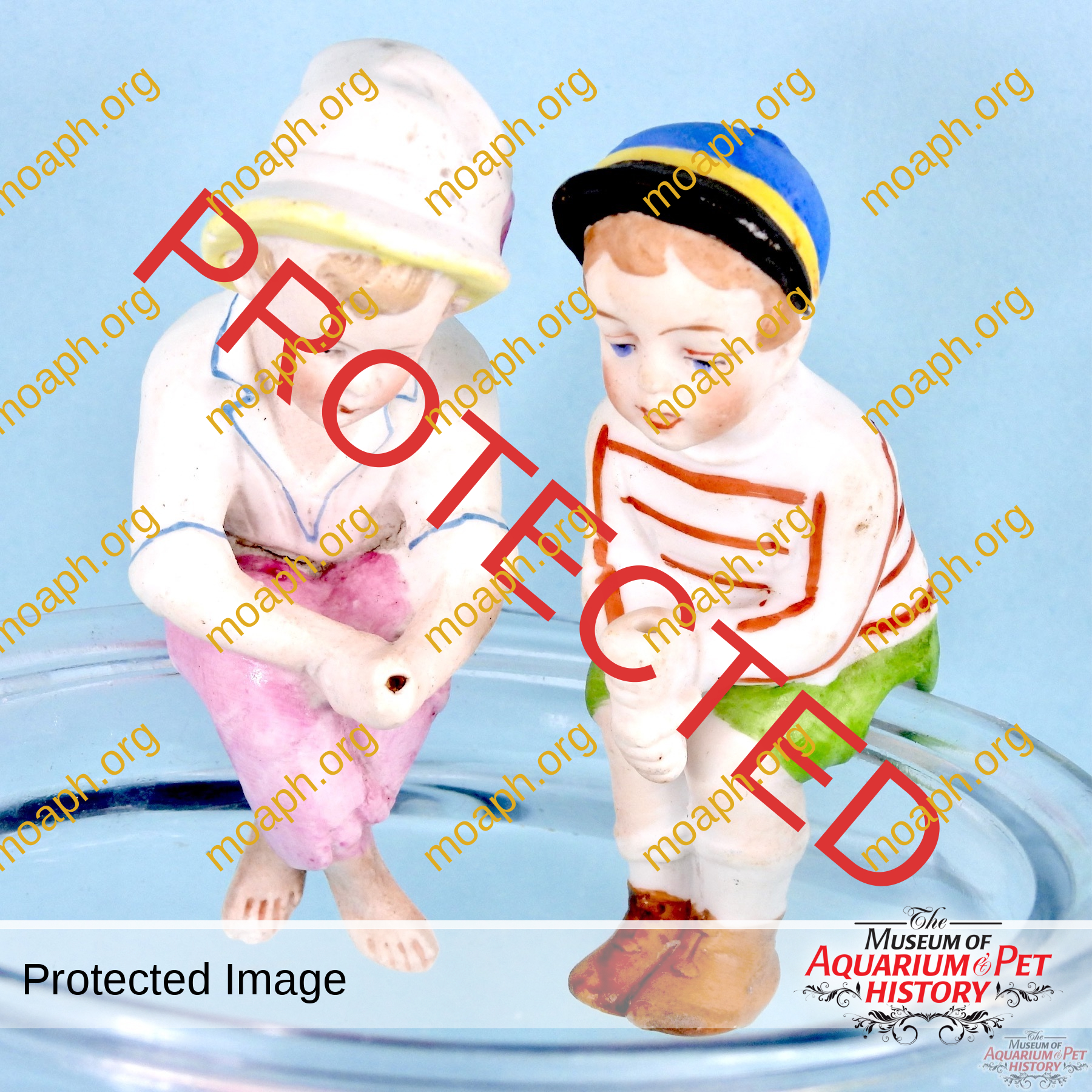
The two little lads in Illustration 7 seem to be in serious consultation regarding the art of fishing. The boy in the bucket hat matches the picture of model number 6245 in the Weiss catalog, and he is, in fact, incised on his lower back “Germany 6245.” Of good bisque with adequate decoration, he is 3.75 inches tall.
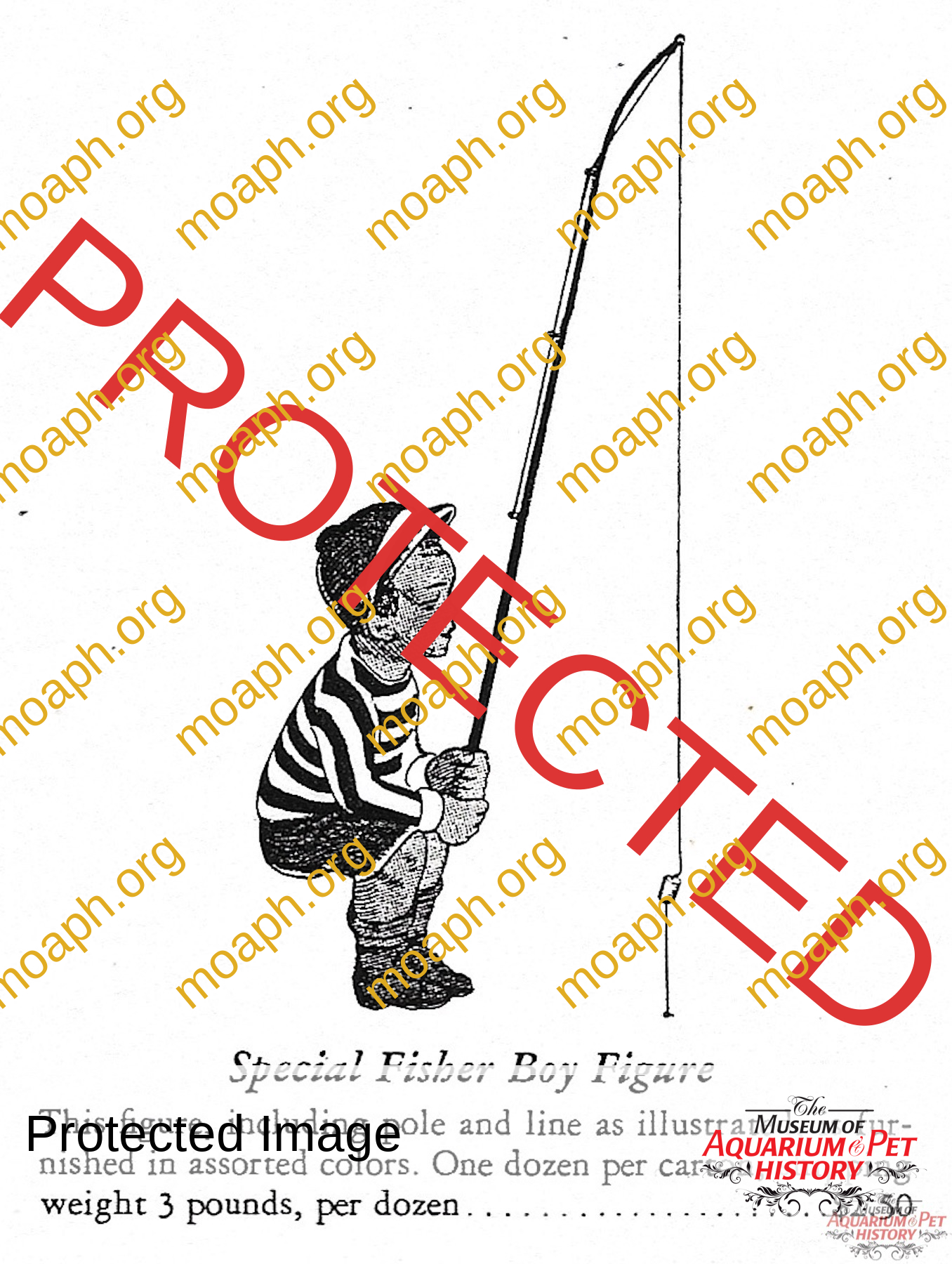
His companion is from an unknown maker, but the quality of the bisque, modeling, and decoration is superior to the Weiss creation; he is 3.5 inches tall and incised “26018” on the rim of his seat. Illustration 8 is a picture of what appears to be an identical figurine from a 1931 Grassyfork Industries, Inc. aquarium supply catalog. Dubbed “Special Fisher Boy Figure,” he came with a detailed fishing pool and sold for $2.50 for a dozen, “finished in assorted colors.”
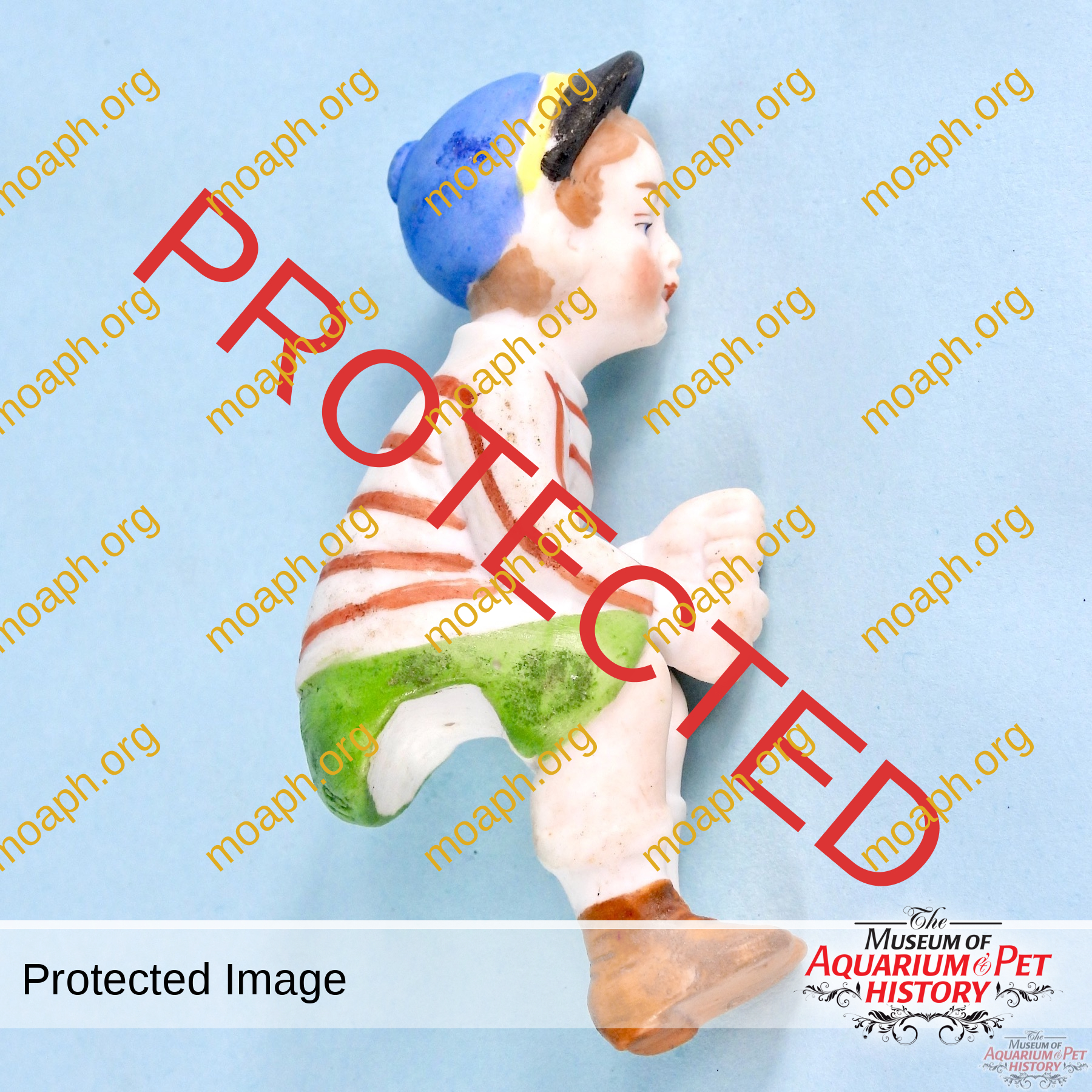
As shown in Illustration 9, the “Special Fisher Boy” had a notch in the seat that would fit over the edge of an aquarium. The Weiss boy also has a similar notch. Such a perch must have been precarious, which helps explain why so few of these little fisher folk survived.
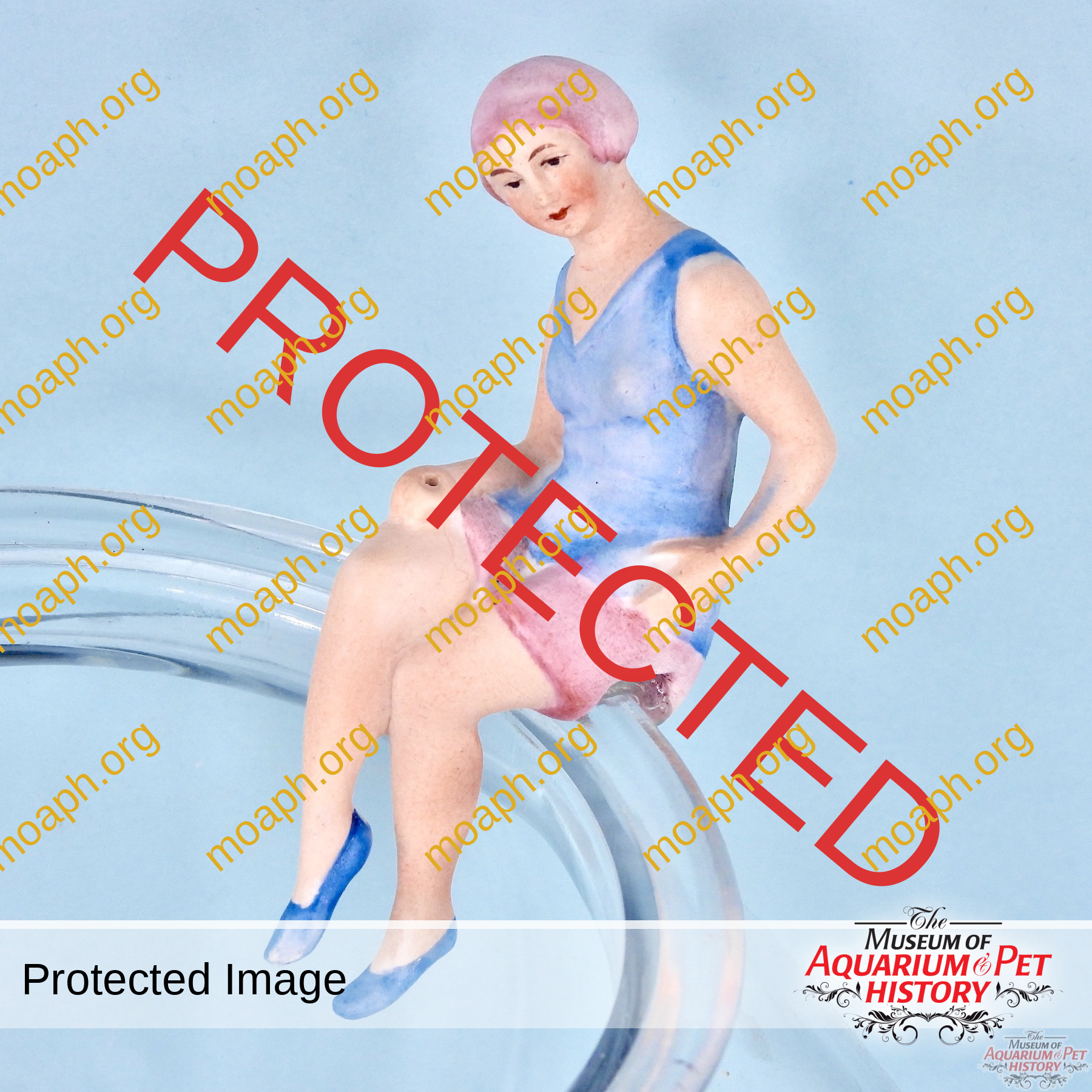
Also by, Weiss product is the bathing beauty in Illustration 10. Pretty in pink and blue, this lithe lady is incised “Germany 6919” on her lower back, matching the model number in the Weiss catalog. She is 3.75 inches tall.
In their day, these fanciful fisher folk was simply inexpensive ornaments to adorn a fish tank, but now any collector of antique aquarium novelties would consider them a good catch.