
Who Made these Mermaids?
Aquarium catalogs around the turn of the last century are swimming with schools of mermaids for ornamenting aquariums. Unfortunately, other than typically describing these undulating ondines as “imported,” the catalogs give no clue as to their origins. Most of these finny femmes are marked, if they are marked at all, only with a number and country of origin. German porcelain manufacturers created extensive catalogs of their products, but sadly most of these publications have been lost or discarded, with a few examples securely ensconced in German museums. However, occasionally a rare catalog, or even a mere page or two becomes public, allowing collectors to trace a mermaid’s maker.
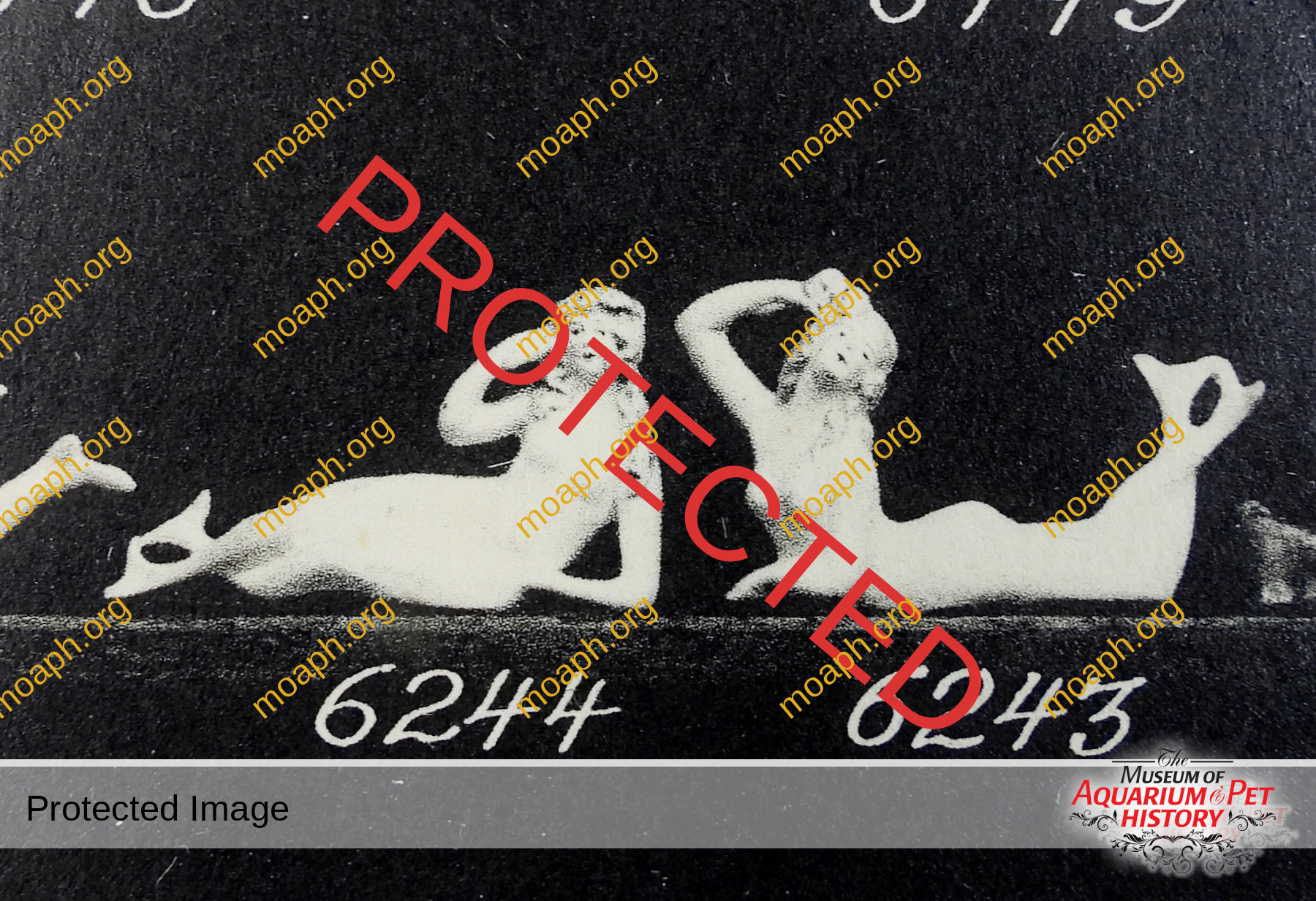
Illustration 1
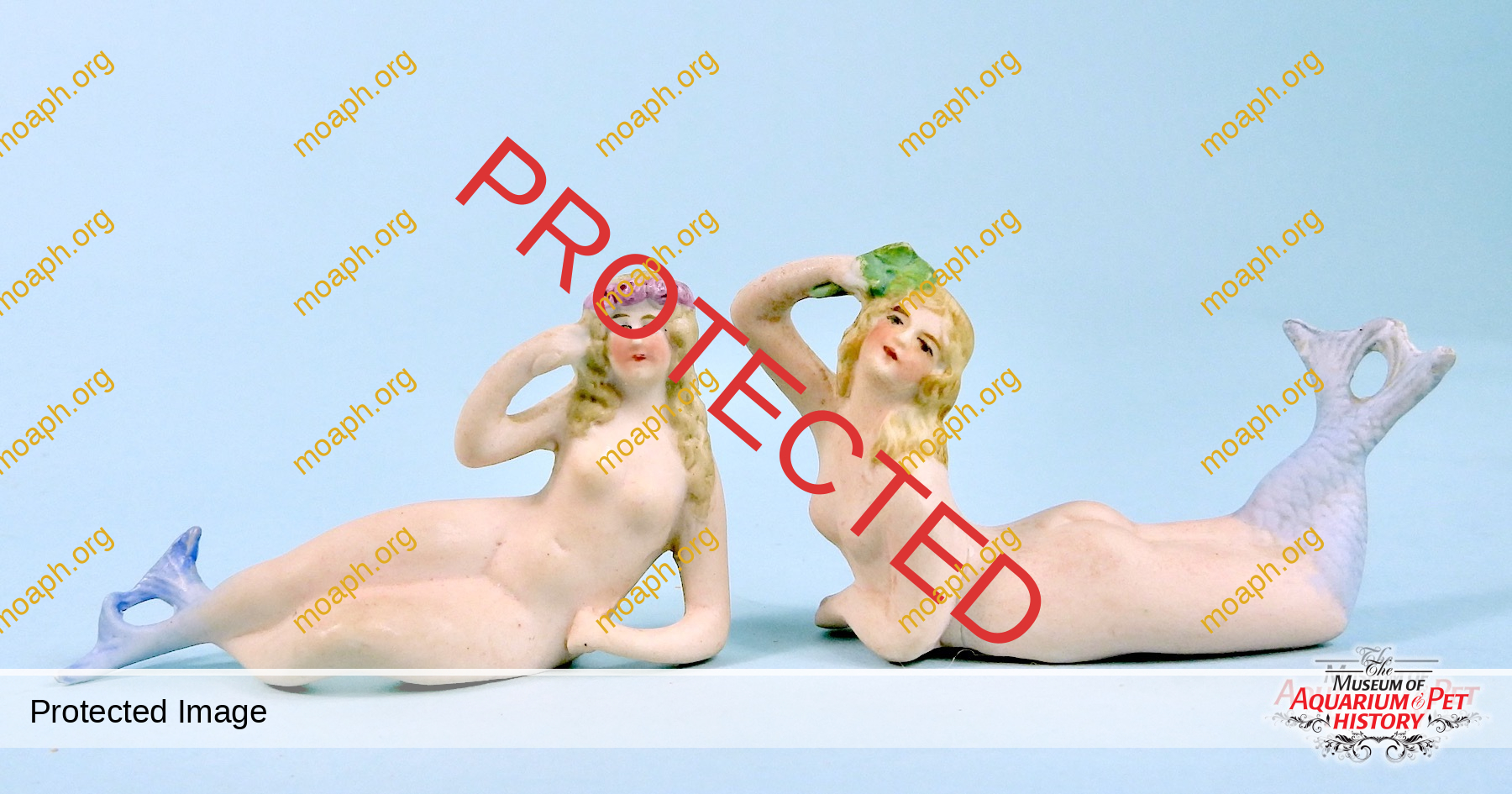
Illustration 2
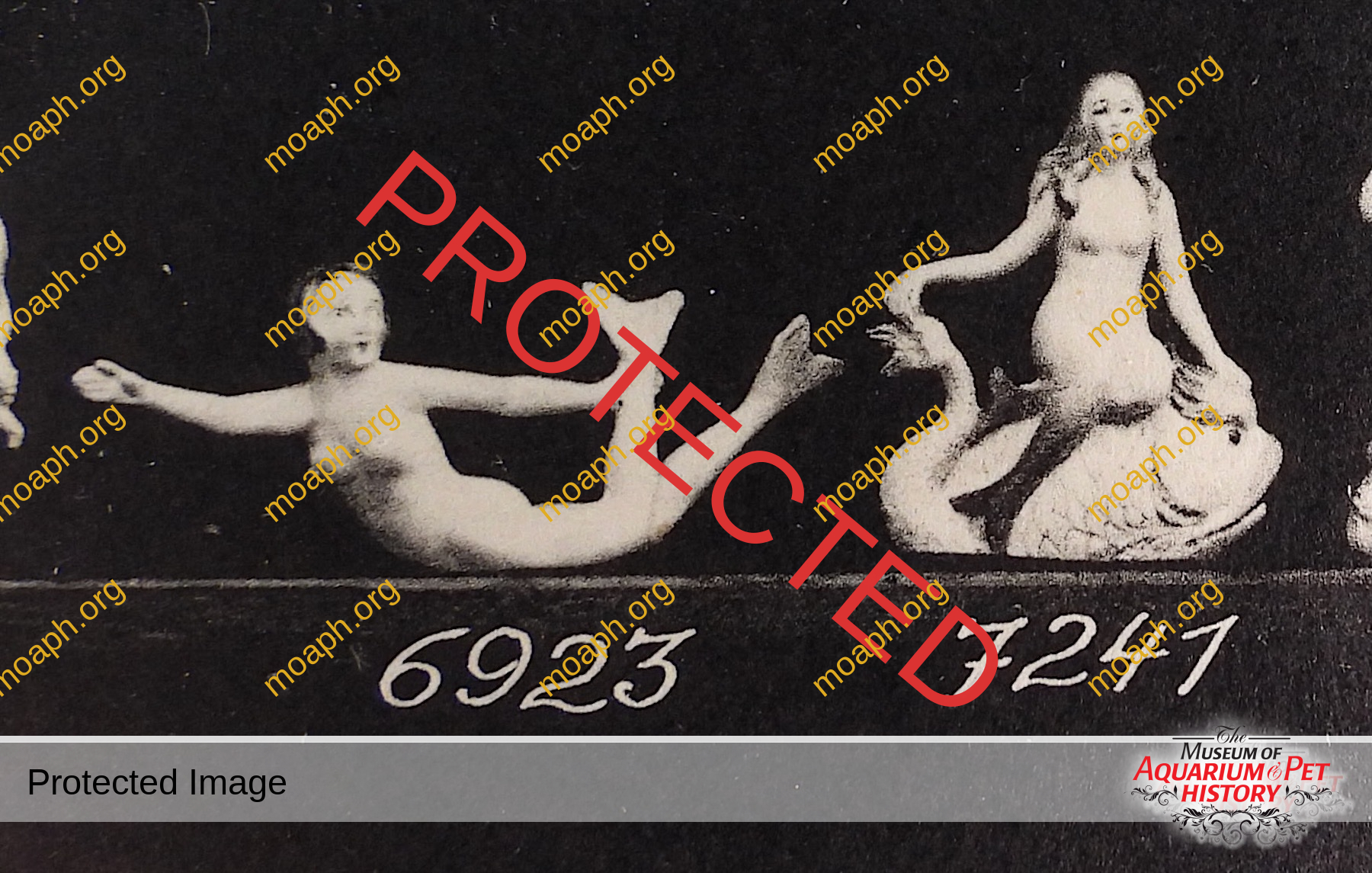
Illustration 3
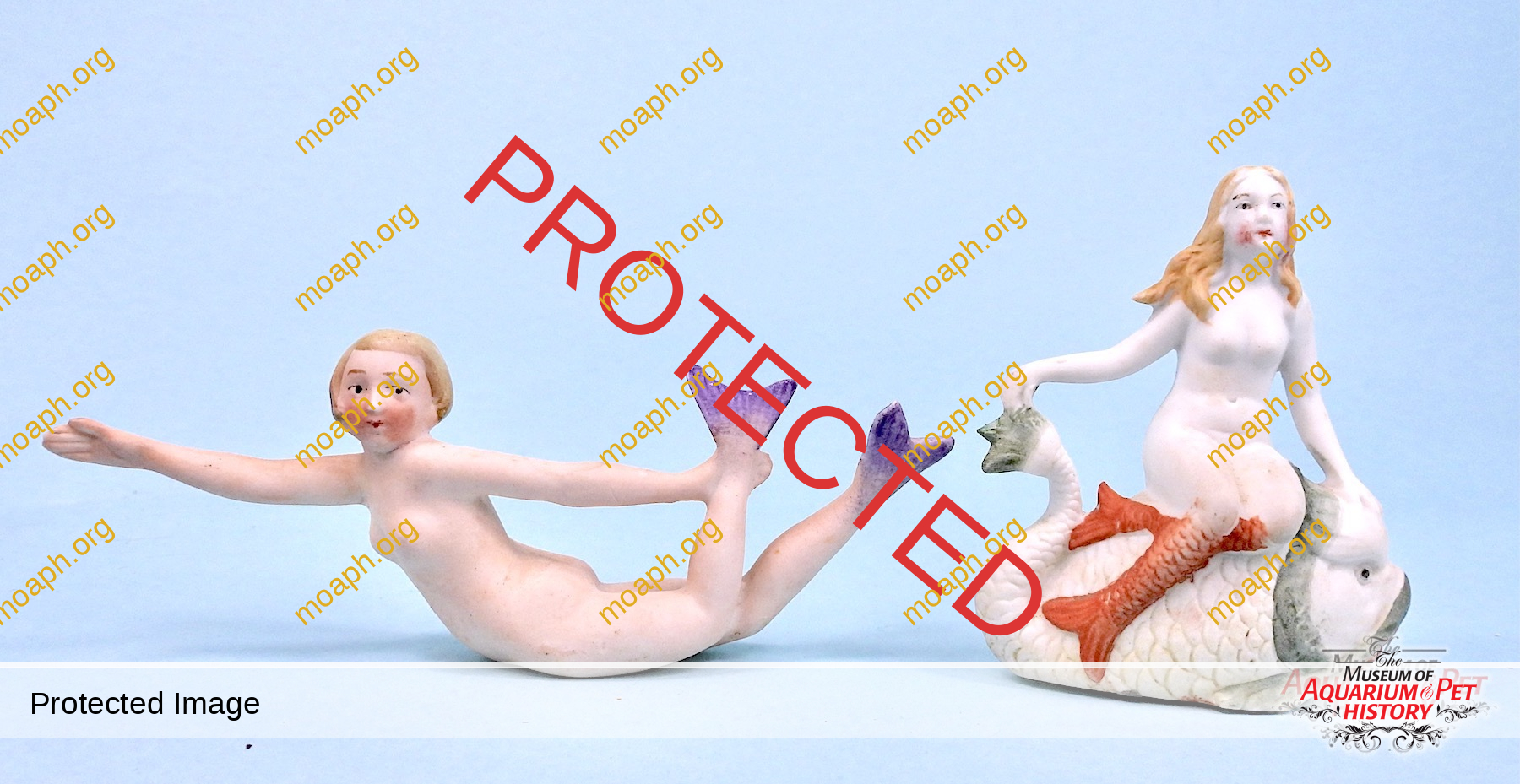
Illustration 4
Illustration 1 is from an original page of a catalog from the German firm of Weiss, Kühnert, and Company, dating somewhere in the 1920s to early 30s. The company was founded in 1891, producing a wide range of bisque and china knickknacks and novelties. During WWII, the German government ordered Weiss to produce material needed for the war and afterwards the company manufactured only utilitarian tableware. Illustration 2 pictures the two pretty mermaid misses in the flesh, or rather bisque. The earliest representations of mermaids in Europe portrayed them with split tails, as women with with scaly legs and fin feet and the Weiss mermaids follow this tradition. The finny-footed miss with a tiara of roses is 3.25 inches long and incised “Germany” and “6244,” which matches the catalog number. Her coquetting companion is 3.35 inches long. Her only mark is a blurred “Germany,” but she is certainly the same siren pictured in the catalog as number 6243. Illustration 3 pictures two more mermaids from the Weiss catalog and Illustration 4 are examples of the actual bisque figurines. The mermaid with purple fin feet appears to be engaging in some sort of undersea yoga and has her hair cut in a fashionable flapper bob. She is 5 inches long and although incised only “Germany,” there is no mistaking that she is catalog number 6923. Her companion sits atop a fish that appears closer to the early European depiction of dolphins with upturned snouts and snaking tails than any fish found in the sea. Three inches high, this unusual siren and her fishy friend are incised “Germany” and “7241,” the number pictured in the catalog. The Weiss figurines have imaginative poses and attractive details, but the actual execution is rather mediocre, with slipshod finishing and decoration. Still, they are unusual and appealing and German mermaid figurines are not too common.

Illustration 5
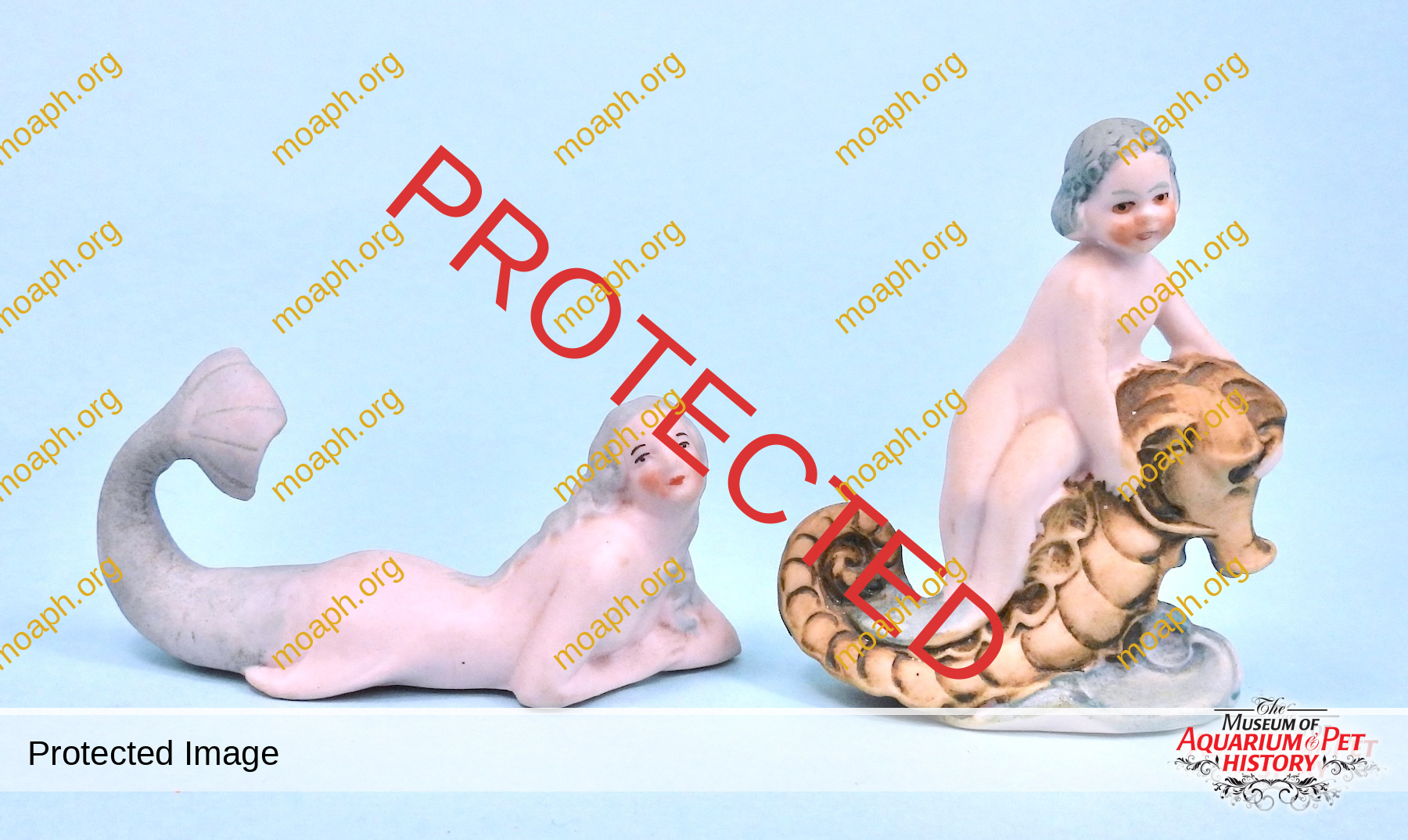
Illustration 6

Illustration 7
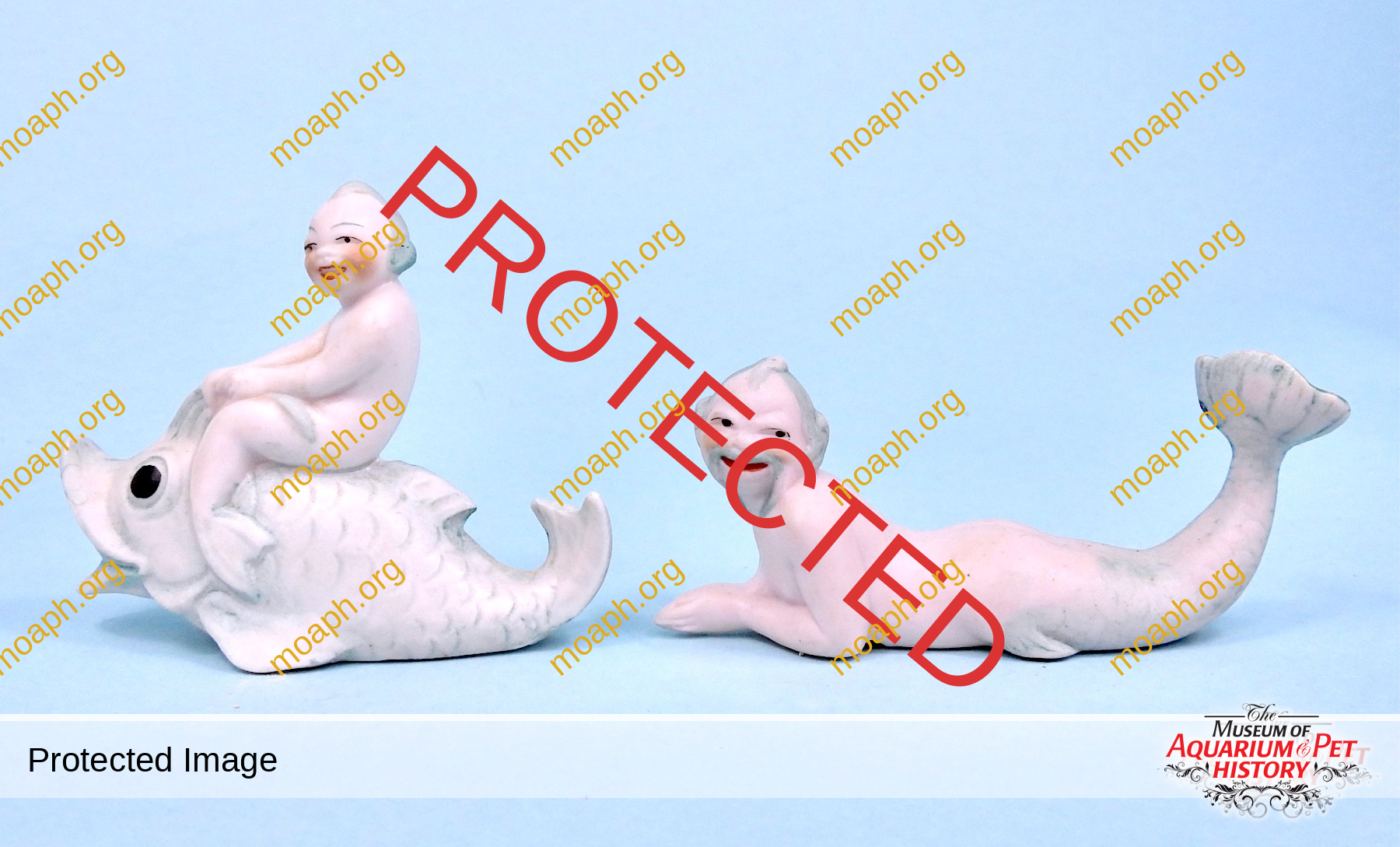
Illustration 8
Illustration 5 is from a poor-quality reprint of a 1930 catalog from the German firm of Hertwig and Company. Founded in 1864 in the town of Katzhütte, Germany, this prolific firm produced everything from fine figurines to utilitarian household goods in bisque, china, and earthenware, until the East German Government seized its factory in 1953. The catalog describes these two pieces as “Aquariumfiguren.” Examples of these aquariumfiguren appear in Illustration 6. Both are made from precolored bisque with decoration that is cold painted instead of being fired in. Originally, German makers used a white clay slip and, after pieces were fired, the complexion and features had to be painted and the figurines re-fired. Around WWI, Hertwig began to use a precolored bisque slip with a pink tone for many of its small bisque novelties. This saved the time and expense of adding a complexion coat and re-firing, but Hertwig often went a penny-pinching step farther by cold painting the features, rather than firing them in. The cold-painted decoration was susceptible to being worn or washed away, certainly far from ideal for an aquarium ornament, and these figurines are often found with their features partially rubbed away or missing entirely. It is a shame, because as these two examples show, when their decoration is intact, these figurines are exceptionally expressive and engaging, despite their small size. The mergirl on her seahorse steed is 2.5 inches high and incised “Germany” and “4280,” while the more mature mermaid is 3.25 inches long and incised “Germany and “4276.” Both numbers match those in the catalog. The mergirl has a spilt tail, but the other has a single fish tail, aligning with the more modern depiction of mermaids. Illustration 7 is picture of three more aquariumfiguren from that same catalog, this time picturing a merboy riding a fish, a mermaid lying on her back with her tail in the air, and prone merman. Examples of the joyful merboy on his grinning fish and the smiling merman with his impressive mustaches are pictured in Illustration 8. Again, these figures are of precolored bisque with coldpainted decoration. The merboy is 2.5 inches high and incised “Germany” and “4279” while merman is marked “Germany” and 4277,” the numbers corresponding to the model numbers in the catalog.
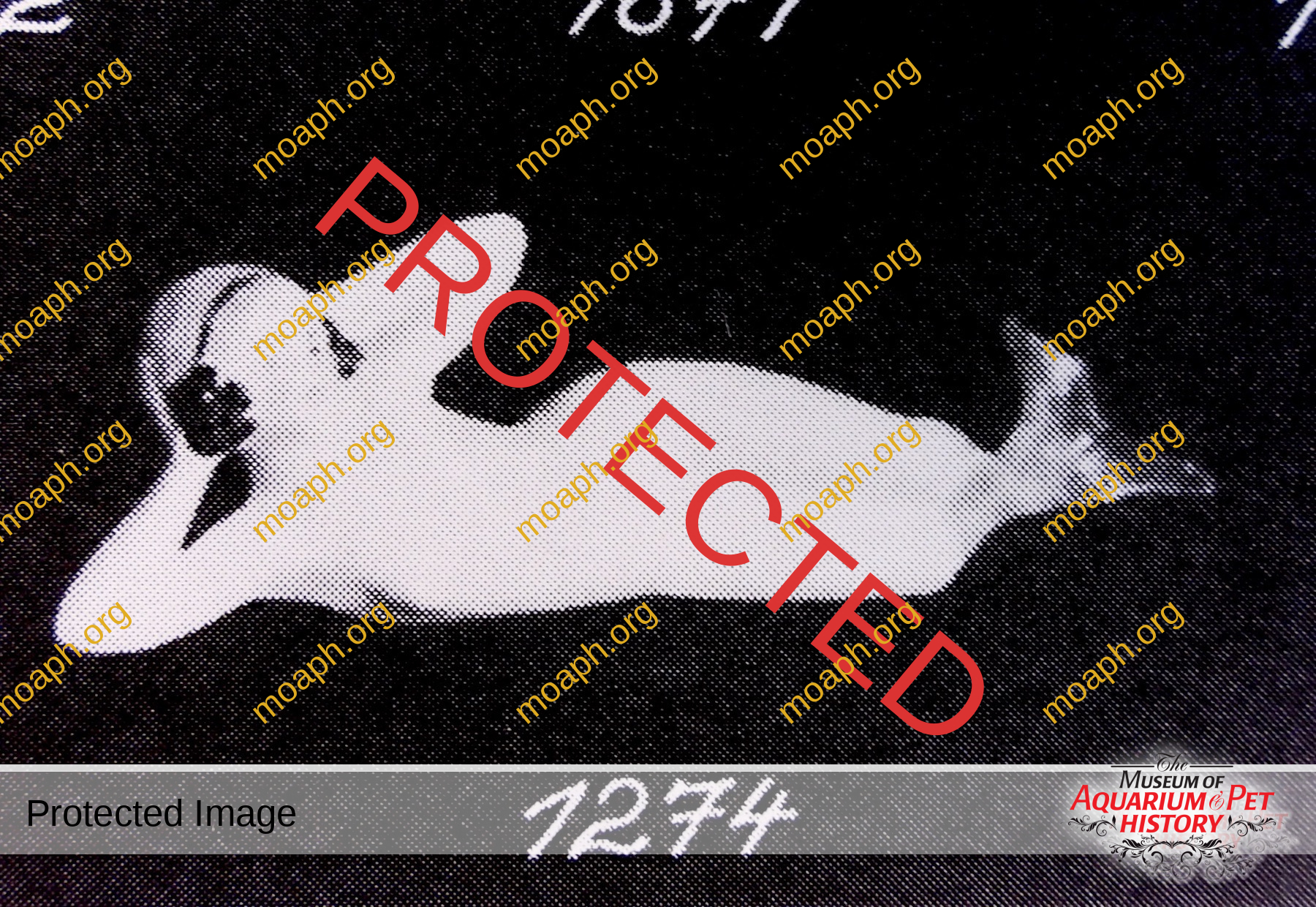
Illustration 9
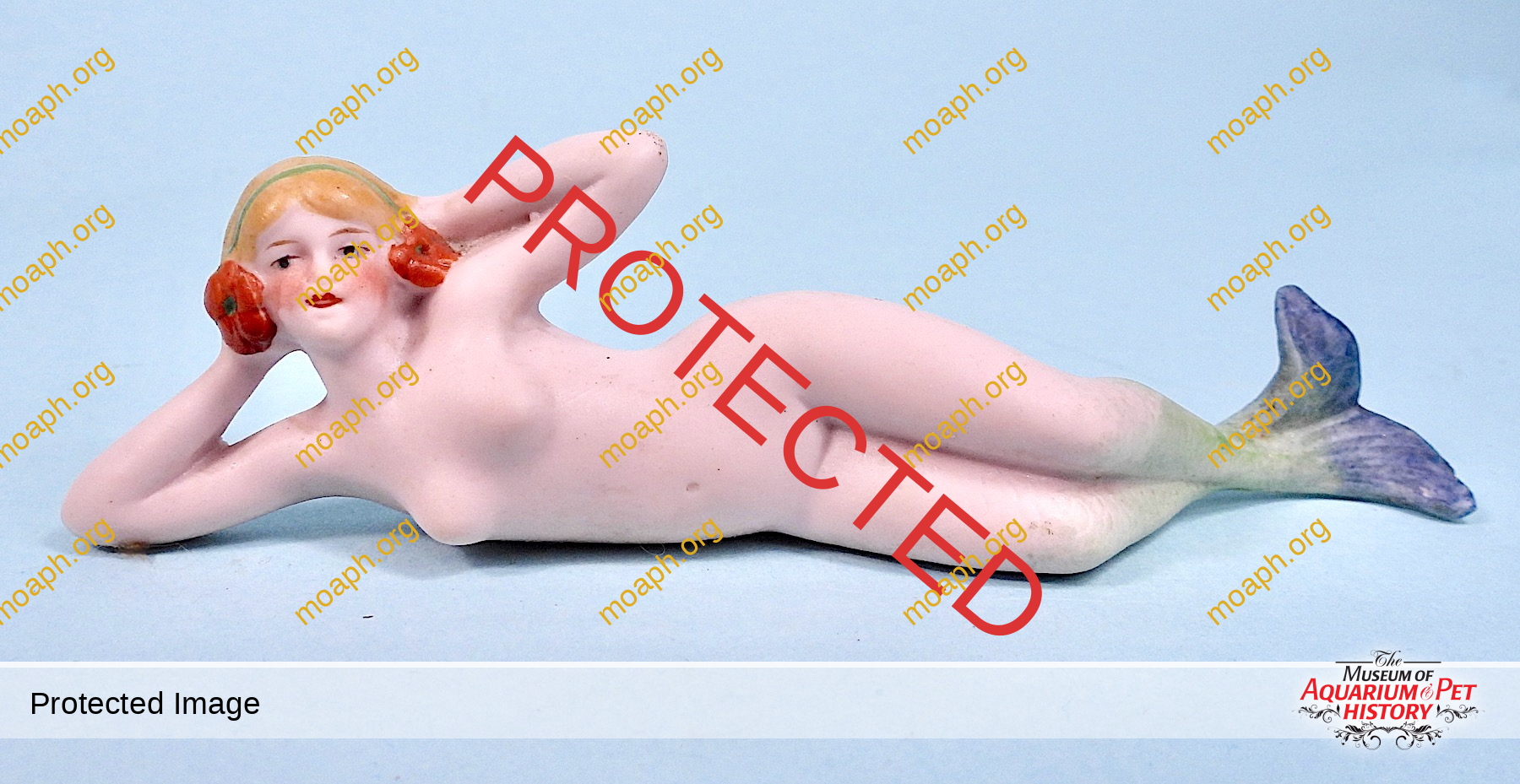
Illustration 10
On January 7, 2001, Theriault’s auctioned off samples from the Hertwig archives. Subsequently, Theriault’s published a book entitled The Ladies of Hertwig, picturing pages from some twenty catalogs found in the archives. Although the catalogs were undated, Theriault’s stated that they stretched from the early 20th century through the late 1930s. Illustration 9 is from one of the published catalog pages, picturing a mermaid with the model number 1274. The mermaid in Illustration 10 is incised “Sp 1274” and “Germany,” indicating that she is the same model pictured in the catalog. Her molded blond hair is pulled into a chignon, held in place by green headband adorned with two bright red blooms, and she had the more traditional split tail. This lovely lorelei is also of precolored bisque, but her features appear to be fired in, making her more impervious to the waters of a fish tank. However, the catalog does not list her among aquariumfiguren, but groups her with “Badedamen” or bathing women. While some in this group are indeed bathing beauties clad in assorted painted swimwear, others, like this nubile nixie, are mermaids.
Interestingly, the “Sp” suffix appears in catalogs of another German manufacturer, Limbach Porzellanfabrik, which also produced bathing beauty and mermaid figurines. However, in 1922, Hertwig took a controlling interest in Limbach, which was suffering from financial difficulties; this would explain why Hertwig’s catalogs and products included figurines with this “Sp” mark.
Many other German companies created mermaids and as more catalogs are uncovered, it may be possible to credit more of these fishfolk to their creators. William Goebel is another German firm that made mermaids, and one of the few who, on occasion, actually branded its creations with its trademark. In a subsequent article, I hope to discuss some of Goebel’ s gorgeous gals.