
Posture Canaries*
*Including the Scotch Fancy, the Belgium, Japanese Hoso, Gibber Italicus, Spanish Gibboso, Melao de Tenerife, the Llarguet Espanol, and the Persian Rasmi.
The name ‘posture’ tends to be utilized to refer to all canaries that are bred more for their shape than for their color or song. For the purposes of this article, I am using the term to refer to a particular group of canaries that are bred for their unusual shape. They include: The Scotch Fancy; the Belgium; Japanese Hoso; Gibber Italicus; Spanish Gibboso; the Melao de Tenerife; the Llarguet Espanol; and, the Perisan Rasmi.

Melao de Tenerife
The human race has throughout recorded history, sought to shape birds and mammals to meet specific needs or, in some cases, whims. The dog family is the best-known example of this. Starting with the taming of the wolf, dogs are now to be found in a multiplicity of shapes and sizes, produced through selective breeding. Canaries, although of less utilitarian value to humans, have similarly undergone selective breeding to produce an array of shapes, sizes, and colors. Most modern examples of canaries have a shape that is not far removed from the wild type birds (as some dogs resemble wolves,) but others have been bred to produce a shape that is unrelated to that of the natural bird.

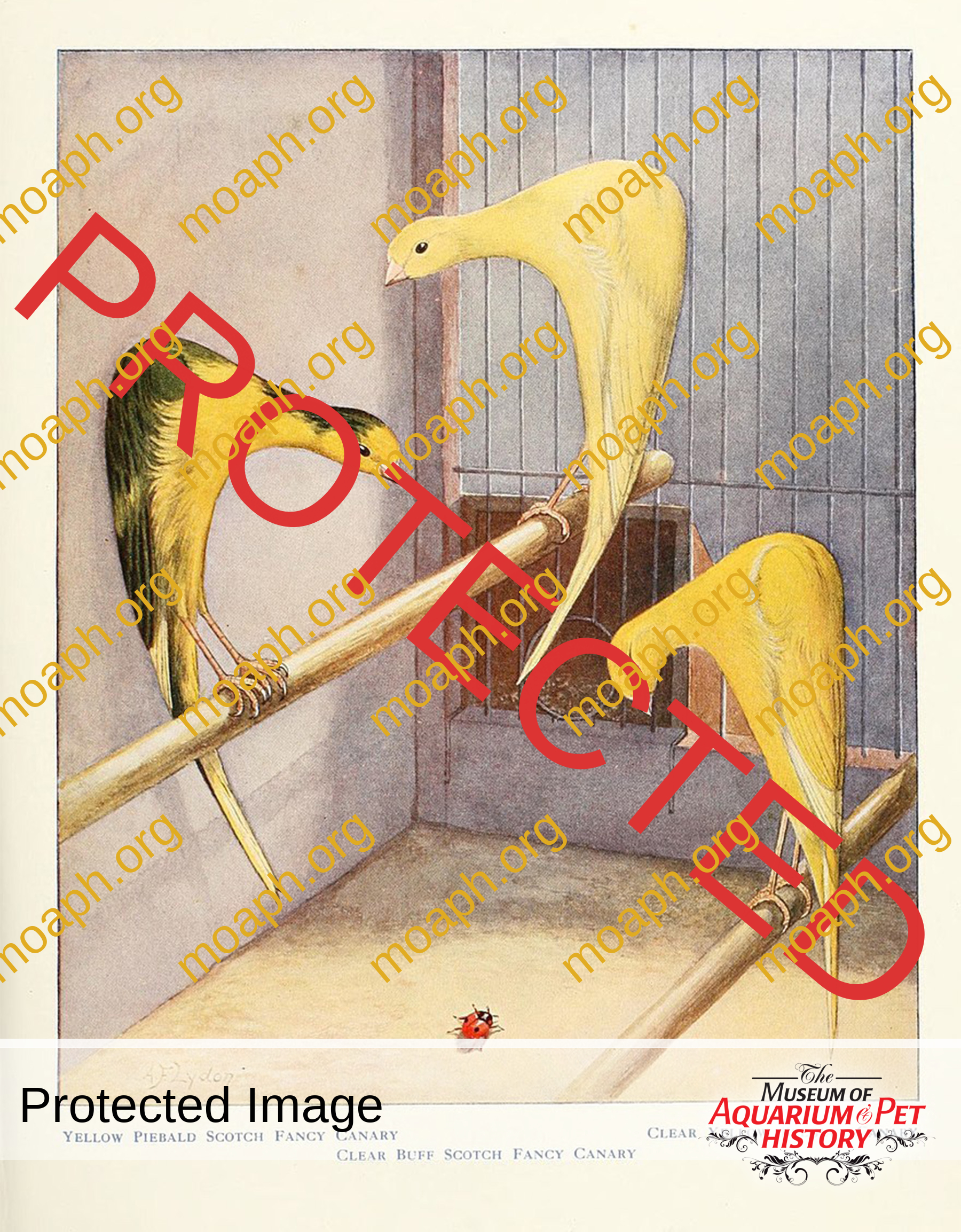
The Scotch (some from Scotland prefer the spelling: ‘Scots’, but that is not the appellation given historically to the bird,) is closely related to the Belgian canary and it is presumed that the latter predates the former and so it is with that bird that I shall first deal.
It is believed that this bird was first developed back in the Seventeenth Century. Its antecedents were possibly Waterslager Canaries, which had been bred for their singing qualities and were traditionally kept by Belgian monks. It is to be presumed that some odd shaped birds emerged as natural mutations, and these were selected for future breeding to produce a strain of these peculiar looking canaries. The main centers for the later development of this breed were the cities of Bruge and Antwerp. These were both cities with strong trading links with the UK and so it seems very likely that some examples of the bird would have crossed the channel and somehow emerged in Scotland to form the basis of the Scotch fancy. However, the sustaining of this breed in its original home country was far from untroubled, especially given the impact on this region of two world wars.

Scotch Fancy Canary

Belgian Canary
Breeders of canaries in the UK were certainly negatively impacted by the wars but to nothing like the extent faced breeders in Belgium. Somehow or other, it appears that some genuine examples of the breed did survive both wars, though there were also attempts to resuscitate the breed by using combinations of other canaries including some Yorkshire canaries.
The Scotch Fancy canary was developed from birds imported from Belgium in the early years of the nineteenth century. For reasons lost in the mists of time, these imported birds found particular favor in an area around Glasgow and were bred to make a bird that was different from the original Belgian stock. It became known as the ‘Bird o’ Circle’ or, alternatively, the ‘Glasgow Hen’ and, for a number of years, was a popular cage bird. Over time, its popularity declined, and it was thought that the limited numbers led to inbreeding, which reduced the birds’ levels of fertility. Imported Belgian birds gave an element of rejuvenation but also led to an alteration in the shape of the exhibition bird such that a considerable amount of selective breeding was required to bring the birds back to what was considered the ideal model for this bird. The two birds look similar to the untrained eye.
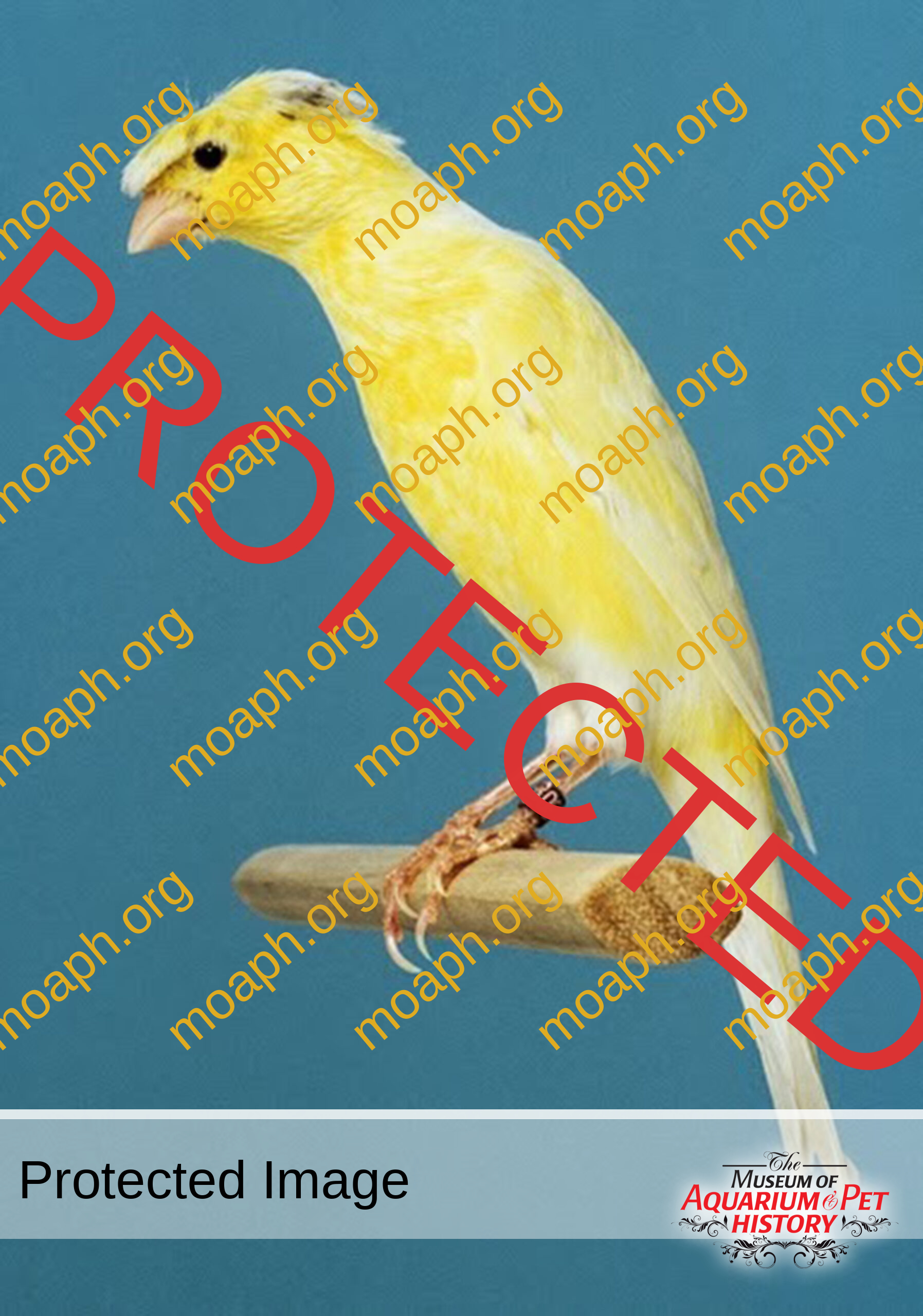
Hosso japones
The Japanese Hoso is thought to have originated from birds taken to the country in the late nineteenth century. Probably Lancashire canaries, these birds were crossed with ordinary canaries, which, over time, considerably reduced their size. Later, examples of Scotch fancy canaries were imported and crossed with these birds. What emerged from these selective breedings was a bird often considered to be a miniature Scotch Fancy or Belgian canary. With their penchant for miniaturizing plants (bonsai) and the emphasis placed on shaping plants, it is perhaps not too surprising that the Japanese should take to producing a canary of this type. There are three types of Hoso bred in Japan, though the differences between each type are minimal. Examples were exported to Europe in the mid nineteen hundreds so that the breed is now also established in the West. At a maximum size (for show purposes) of 11.5 cm, it is one of the smaller canaries and is distinctively so when set against the other ‘posture’ breeds.
The Spanish Gibboso and the Llarguet Espanol are two similar breeds. The show standard for the Gibboso gives a good impression of the required shape for this bird:
- In the shape of a figure “1”.
- In working/show position, the head and the neck form an angle of 45º – 60º with the body. Showing distinctly the areas of frilled and smooth feathering.
- Neck: Very long, slender, smooth, feathered, and projecting downwards.

Spanish Gibboso
Amongst the most bizarre of canaries must be the Gibber Italicus. This, too, is a bird bred to form an unnatural shape but with the added characteristic of a lack of feathers around the thighs. Although the name suggests that the bird originates in Italy, there are some who protest that it was actually developed by fanciers in Switzerland. The bird has been bred not only with sparse feathering but also with a posture such that its body forms a 90 degree angle with very pronounced shoulders. In that manner, it is probably the most extreme example of this type of posture canary. It is thought to have been bred from a combination of Belgian/Scotch fancy canaries and the Dutch Frill.

Gibber Italicus Canary

Gibber Italicus Canary

Gibber Italicus Canary
A much more recent addition to this range of canaries is the Persian Rasmi. This is quite a large bird that is particularly characterised by an exceptionally long tail. The flight feathers are also elongated but this feature does not appear as pronounced as in the tail.
Although this type of canary is kept by a minority of breeders, it is a thriving branch of the hobby, and there has recently, in the UK, been an upsurge in interest in breeding rare and unusual breeds.
