Pet Keeping in 1797 Germany – Chapter 4

This is a historical book written in 1797 about German pet keeping history, including keeping native fish in captivity. This reprint was privately published and edited by Kurt Jacobs, who wrote the seminal work “Livebearing Aquarium Fishes.”
Johann Matthew Bechstein is sometimes called the “father of aquarium and terrarium study.” He was born in 1757 and died in 1822, and during his life he was a pioneer on the front of knowledge in terrariums and aquariums. Closely following in his footsteps was Emil Adolf Rossmassler, who was born in 1806 and died in 1867. Kurt Jacobs wrote this book in 1964, following the origins of terrarium and aquarium science, with a special focus on the lives of these two extraordinary people.
We have hoped to translate this book for several years, but being that it was written in “old-style German,” it was very difficult. MOAPH was fortunate to find our friend Alex, who grew up speaking both German and English in the United States. Alex has translated a small portion of this important book each month.
The Gazebo, 1856, 19th Edition
Taken from pages 252-256 from Emil Adolf Rossmassler whose work, “Der See im Glase” (The Lake in the Glass) is still considered the most popular publication from the early days of freshwater aquaristics:
“Der See Im Glase” (The Lake in the Glass)
In addition to the “Ocean auf dem Tische” (Ocean on the Table), which is now receiving such acclaim in English cities, “Der See im Glase” (the Lake in the Glass) is already an achievement for those living inland. Both are pleasing signs of the daily increasing taste for the natural science hobby, and in addition to the description of No. 38 of last year’s Gazebo by another author who was the first to give information about the aquarium in general in Germany, we will now give a description of it here “Der See im Glase” (the Lake in the Glass) and detailed instructions for setting it up and maintaining it.
When the Ocean on the Table or, as the clever and instructive thing is also called, the aquarium, first became known to the author of these communications from England, he almost wanted to slap his forehead. For he, a natural scientist in the service of generalizing his rich, beautiful science, had not thought of this alternative name before. The events that were immediately initiated to produce sufficient glass vessels and frames have only now, after numerous unsuccessful attempts, led to the desired result, and now, with the return of spring, is also a busy time of filling the vessels1 with life.
The vessel is about 20 inches high and a 15 inch wide glass container is first filled with river sand to a height of about 3 inches. Another requirement that can be borrowed from the Stone Kingdom2 -because all three kingdoms come together in the aquarium- is a number of large and small pieces of limestone, which have long been in use and generally known as a border for garden beds or for miniature rocks on flower frames. This beautiful stone, the product of calcareous springs from the most recent geological prehistory, not only gives the aquarium3 great decoration, but also gives the plants and animals a desired place. The plants drive their roots into the many pipe-like spaces in the limestone center, from which many of them also get a healthy diet, and smaller animals find a place of refuge in these spaces when they are pursued by larger ones.
The porosity of the stone also draws water upwards into this rocky island peak, so that moss and other small plants planted in its crevices and cracks grow happily giving the stone the appearance of a miniature bushy rock. All around the foot of the small mountain, the river bank is covered with small, fist-sized pieces of stone or small stream pebbles. They not only give the bottom the appearance of a rocky seabed, but also prevent the animals from churning up the sand, which would cloud the water.
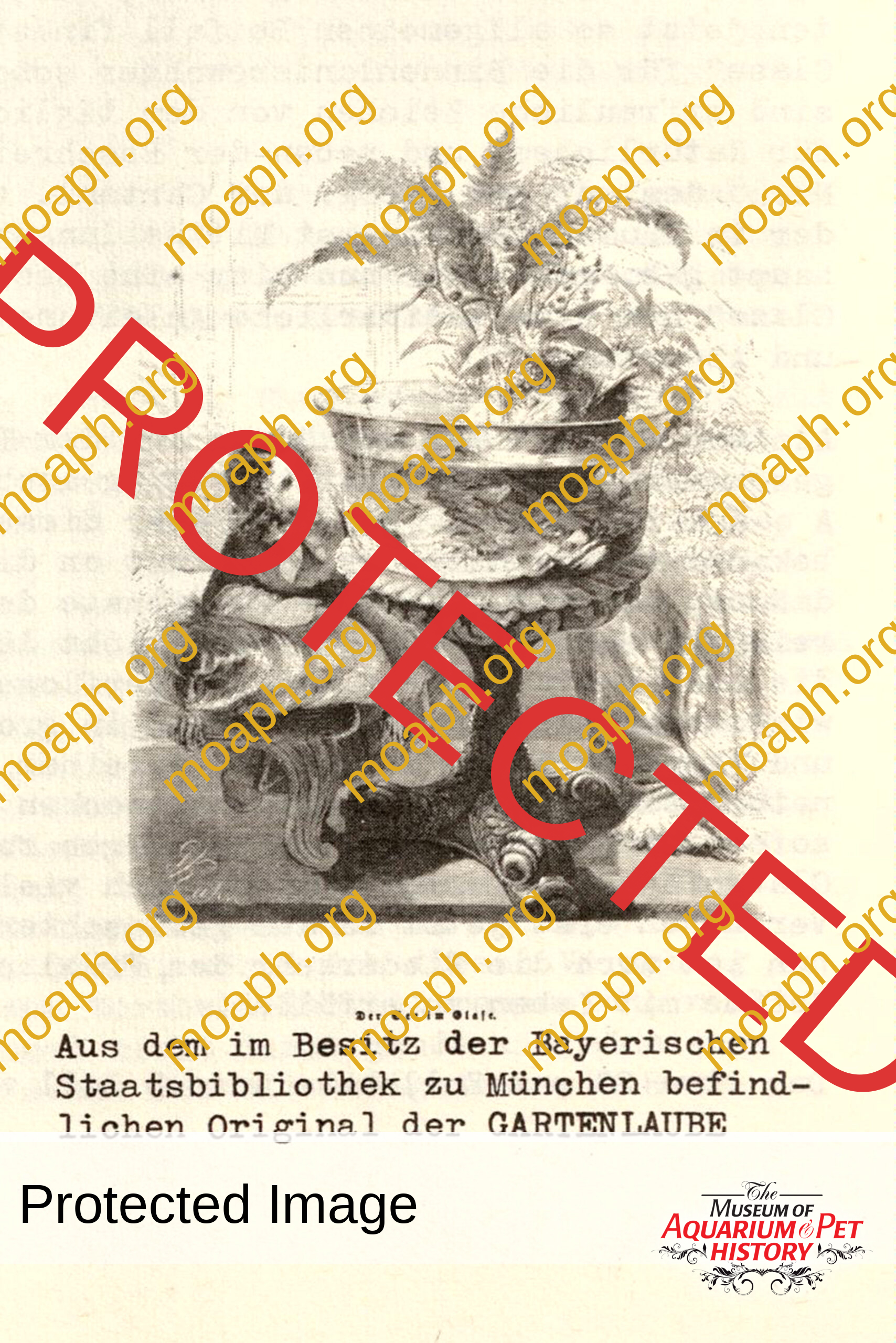
Original photo from the Bavarian State Library in Munich
Before I describe further, I have to ask my readers whether they want to give their aquarium more of a landscape character or whether they want it to look more like a plant celebration.
If we first assume the latter case (according to which the woodcut4 is opened), then a cylindrical basket about 8 inches high and 4 inches wide must be placed in the middle of the vessel, which is widely woven from unsheathed willow rods and placed on its sides (limestone stucco covered). In this job we put some larger aquatic plants with some pond mud, which now seem to rise from the stone rock high above the water surface. The basket is unnecessary if you can build a small crater for the plants out of suitably shaped stones. Without wanting to defend against the love of foreign things, I will only speak of native plants in the following, because I only grant foreigners a right when the homeland proves to be inadequate. And in fact, our swamps and reedy ponds offer enough plants which, when placed in the aquarium, look very good, and which many of my readers will think look foreign because of their sometimes adventurous shape. In addition, these plants can be found wherever the location that suits them is available, which in this case, is everywhere in Germany.
In addition to the taller plants that grow out of the center of the vessel like a bouquet, smaller plants can be planted partly in the spaces between the outer stone lining of the basket and partly in the joints of the stones distributed on the bottom; Yes, one of our most beautiful aquatic plants the Hydrocharis morsus-ranae, swims freely on the water surface by letting its ciliated roots, which are about finger-length, hang freely down into the water.
I would like to mention the following plants as the most suitable ones for setting up this aquarium: 1.) ‘Das Pfeilkraut’ (The arrowhead) or Sagittaria sagittifolia, the yellow and white water lilies are most spectacular, it is undoubtedly the plant that gives the landscape character of our ponds and pools a downright tropical touch. Some people found it hard to believe that the plant with the leaf that looked like an arrow and the strange three-petaled flowers was a common German aquatic plant. 2.) ‘Der Igel Korben’ (The hedgehog butt) or Sparganium ramosum. This reed-like wax with the adventurous flowers also grows in almost every pond and yet is known to very few apart from botanists, fishermen and lake bathers. 3.) ‘Der Frosch Loffel’ (The frog-mouth) or Alisma plantago. In addition to the arrow-shaped and long saber-shaped reed leaves of the previous two, a third leaf shape is offered by this plant that grows in every ditch. Their leaves are elongated and round. Its stem, seeded with many hundreds of three-leaf, rose-red flowers, forms a two-foot-tall, extremely delicate and slightly branched tree. 4.) ‘Das Riedgras’ (The Sedge) or Sedge carex. From this species-rich genus one should always associate these last three with one of their larger species, namely C. stricta, C. limosa, C. vesicaria or C. pseudocyperus. The attractive female blood spikes, which are made up of numerous ascomycetes and arched-over delicate stems, will be seen by many people for the first time, as these beautiful grasses are usually hidden in inaccessible places.
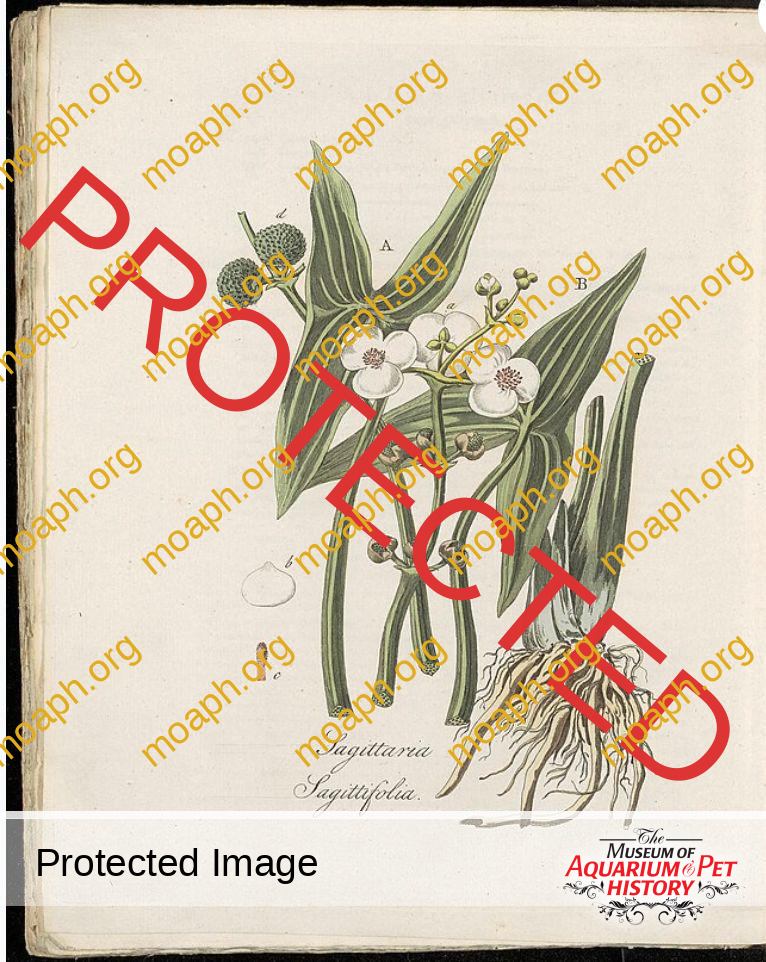
Arrowhead (Sagittaria sagittifolia)
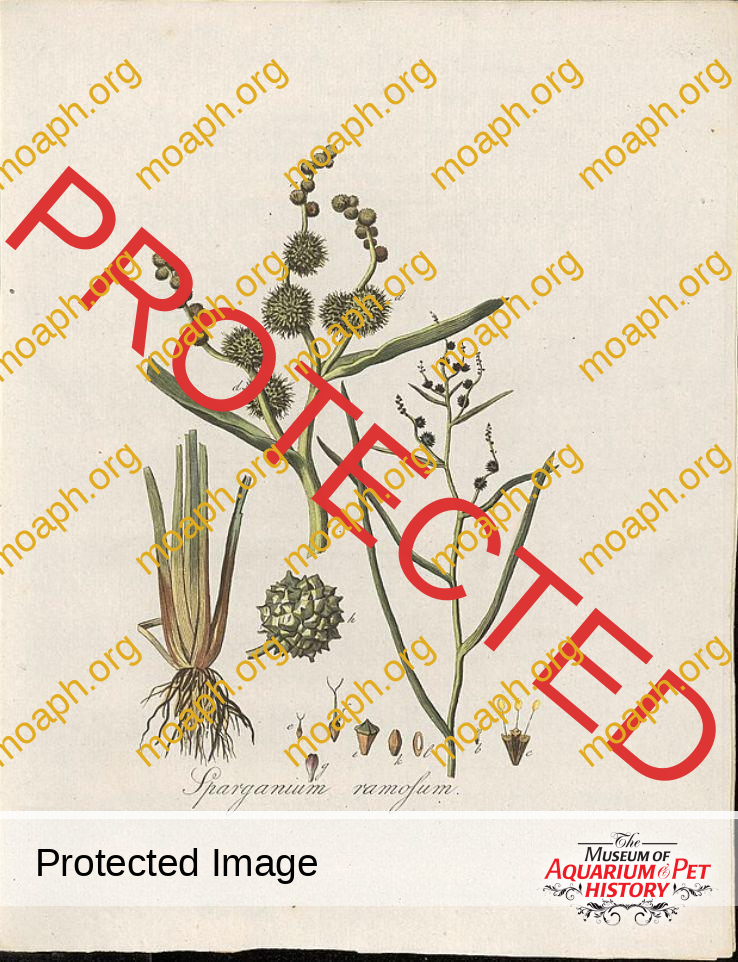
Hedgehog Butt (Sparganium ramosum)
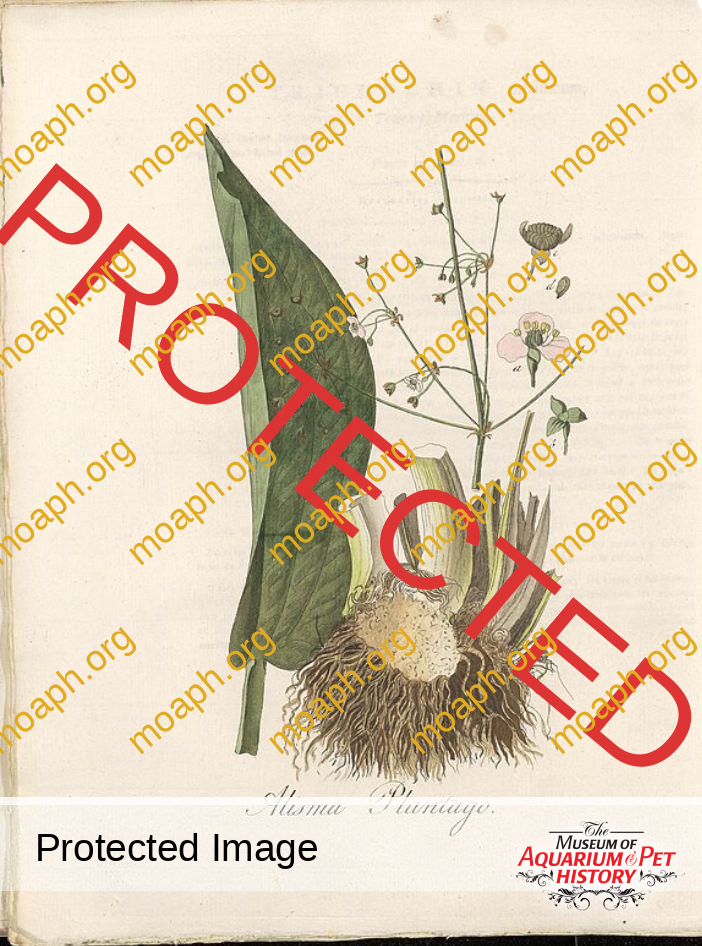
Frog Mouth (Alisma plantago)
These four plants are completely sufficient for a group, but I will name a few that are also suitable. 5.) ‘Die Wasserviole’ (The Water Violet) or Butomus umbellatus. It has upright, band-shaped leaves that are over 1 ell5 long and a number of purple flowers on a high stem. 6.) ‘Das Sumpf-Schlangenkraut’ (Swamp Snakeweed) or Calla aethiopica; remains lower and has heart-shaped leaves. 7.) ‘Die Sumpf Brunnenkresse’ (The Marsh Fountain Crest) or Nasturtium palustre; is recommended for its finely pinnate leaves and can be found in ditches almost everywhere. Not at all or only a little above the water level: 8.) ‘Die Wassernuss’ (The Water Nut) or Trapa natans, forms a delicate rosette of leaves shimmering on the water; 9.) ‘Das Hornblatt’ (The Hornleaf) or Ceratophyllum demersum; 10.) ‘Das Krausblättrige Laichkraut’ (The Curly-Leaved Pondweed) or Potamogeton crispus; 11.) ‘Der Wasserstern’ (The Water Star) or Callitriche verna; 12.) ‘Der Froshbiss’ (The Frog Bite) or Hydrocharis morsus ranae.
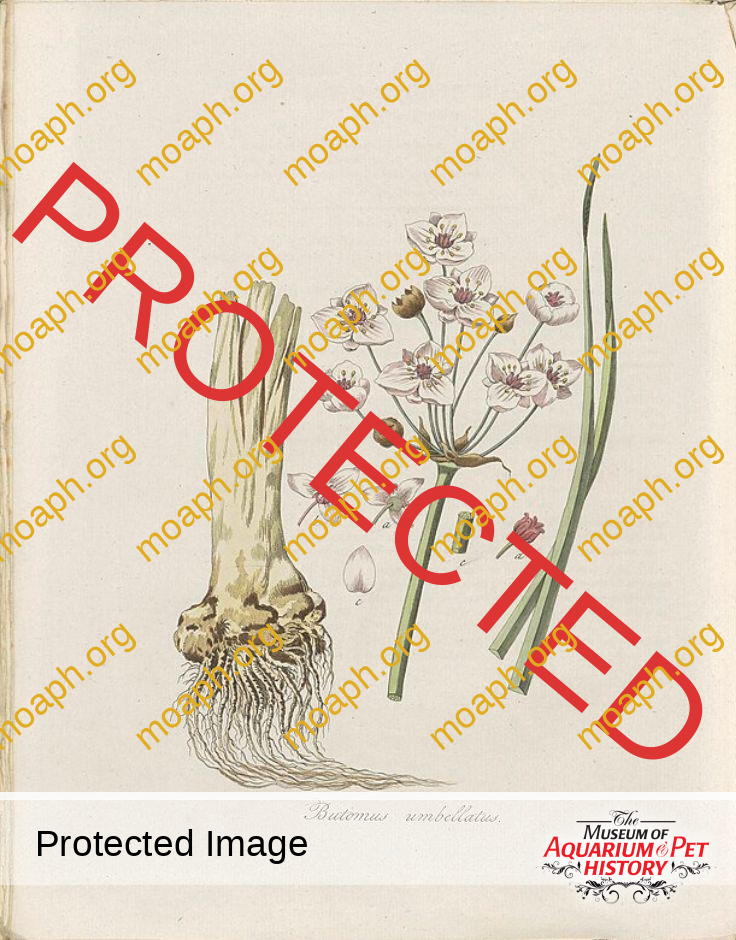
Water Violet (Butomus umbellatus)
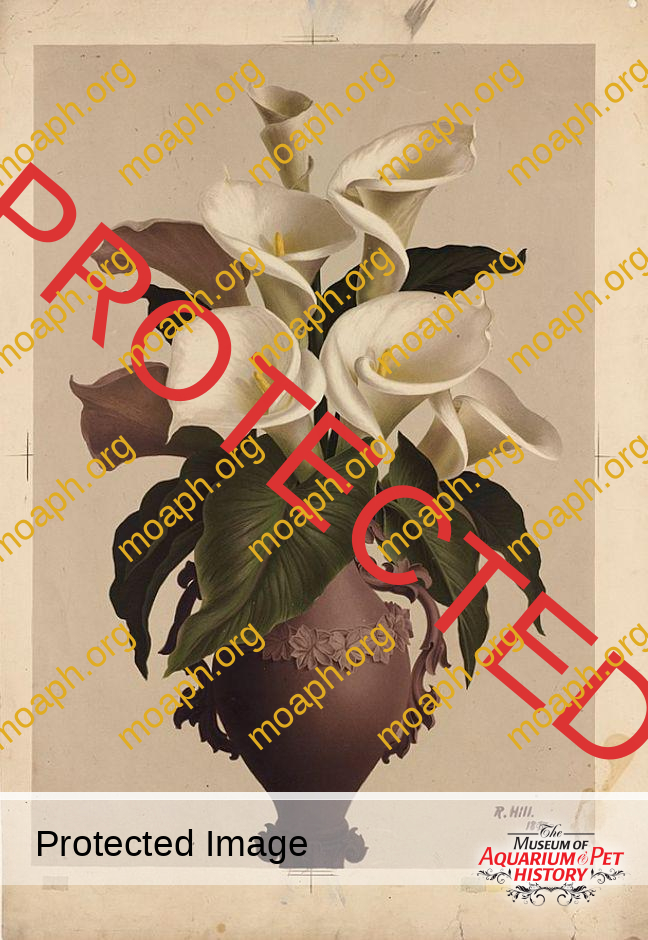
Swamp Snakeweed (Calla aethiopica)
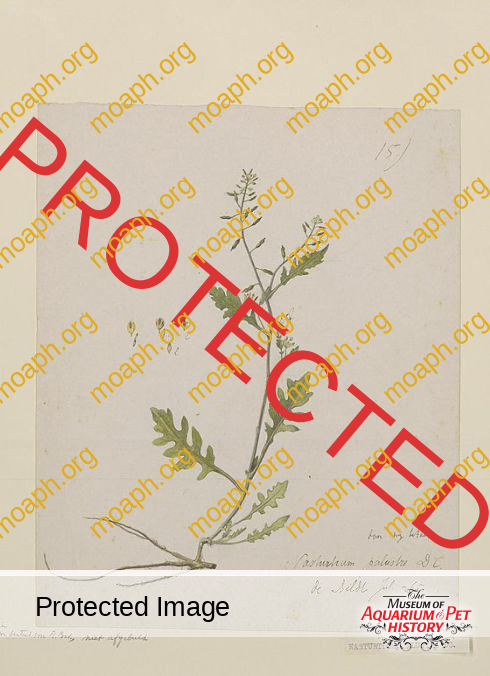
Marsh Fountain Crest (Nasturtium palustre)
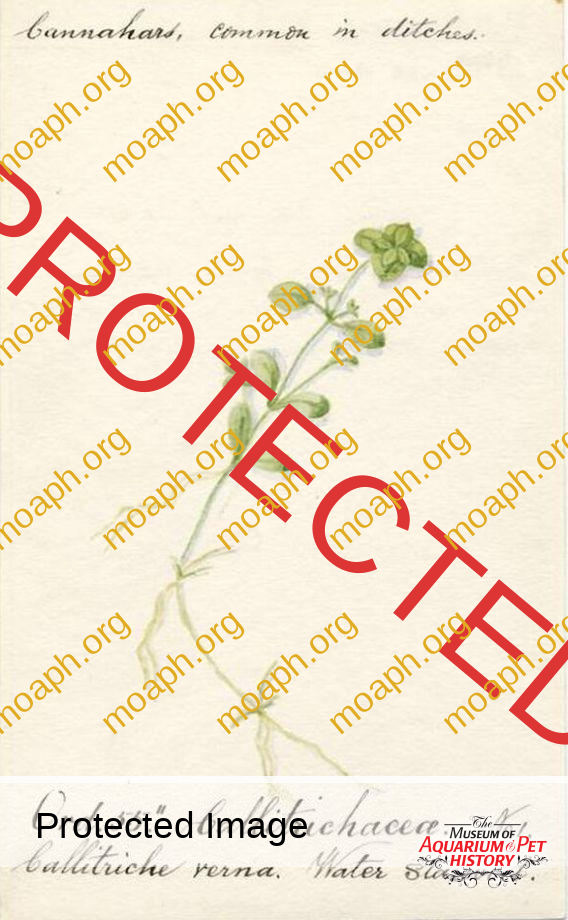
Water Star (Callitriche verna)
If the aquarium should preferably have a small botanical garden island with limited space for the fish at the beginning of the stone bed, for which the limestone sinter offers the perfect opportunity, then choose from the following plants that grow almost everywhere on the German moorland6: 13.) ‘Der Fieberklee’ (The Fever Clover) or Menyanthes trifoliata, one of our most beautiful German plants with a slender stem, which bears hyacinth-like, dazzling white flowers with a delicate beard on the inside; 14.) ‘Das Vergissmeinnicht’ (The Forget-Me-Not) or Myosita palustris, 15.) ‘Der Gagel’ (The Gagel) or Myrica gale, a delicate, already leafy, small shrub. 16.) ‘Die Parnassie’ (The Parnassia) or Parnassia palustris, a beautiful flower; 17.) ‘Die Kriechweide’ (The Willow), Salix repens, a willow bush rich that does not grow too high; 18.) Swertia perennis with dark blue starflowers; 19.) ‘Die Sumptofieldie’ The Swamp Tofieldia, Tofieldia palustris; 20.) Several species of orchids, e.g. Orchis viridis or conopsea, palustris and others; 21.) ‘Die Sumpf Heidelbeere’ (The Swamp Blueberry) or Vaccinium oxycoccos, a tender, creeping shrub with thread-thin stems and rose-colored flowers: 22.) ‘Die Barenwurzel’ (The Bear Root), Meum athamanticum, a thin umbel with hair-thin leaves, worn in thousands of folds; 23.) ‘Die Sieben Fingerkraut’ (The Seven Cinquefoils) or Comarum palustre, with beautiful leaves composed of seven leaves and black-red flowers, 24). ‘Die Rauschbeere’ (The Wild Berry) or Hydrocotyle vulgaris, a delicate plant with circular sunflowers; 27.) ‘Die Borstbinse’ (Bristle Rush) or Scirpus setaceus, an extremely tender plant which forms a variety of dense small lawns. Our aquarium is perhaps also called upon to move our most delicate German plant, which rightly bears its almost common name ‘Sonnentau’ (Sundew) or Drosera rotundifolia, from its almost inaccessible location for those on foot. This charming plant always grows on the water-soaked moss cushions of rotten meadows and was, without a doubt, dug up with a bush of moss at the same time and placed with it in the aquarium, where it thrives and, one can firmly say, causes much amazement. In general, guests are amazed. Usually, for the smaller, mostly delicate plant forms, it is advisable to create a stone-enclosed bed in the aquarium that only rises 1-2 inches above the water level for them7.
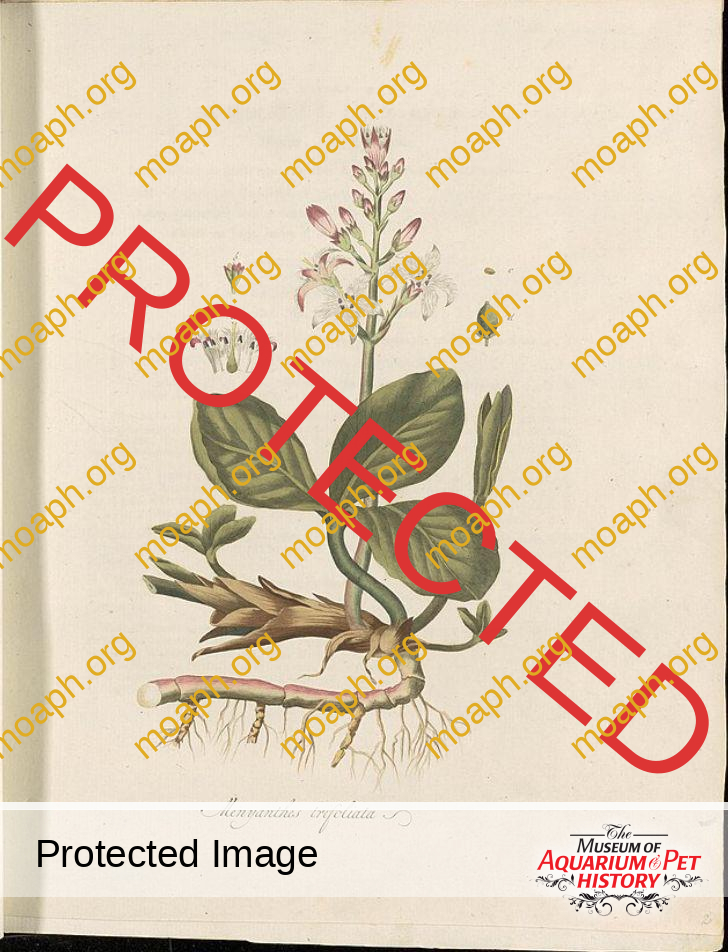
The Fever Clover (Menyanthes trifoliata)
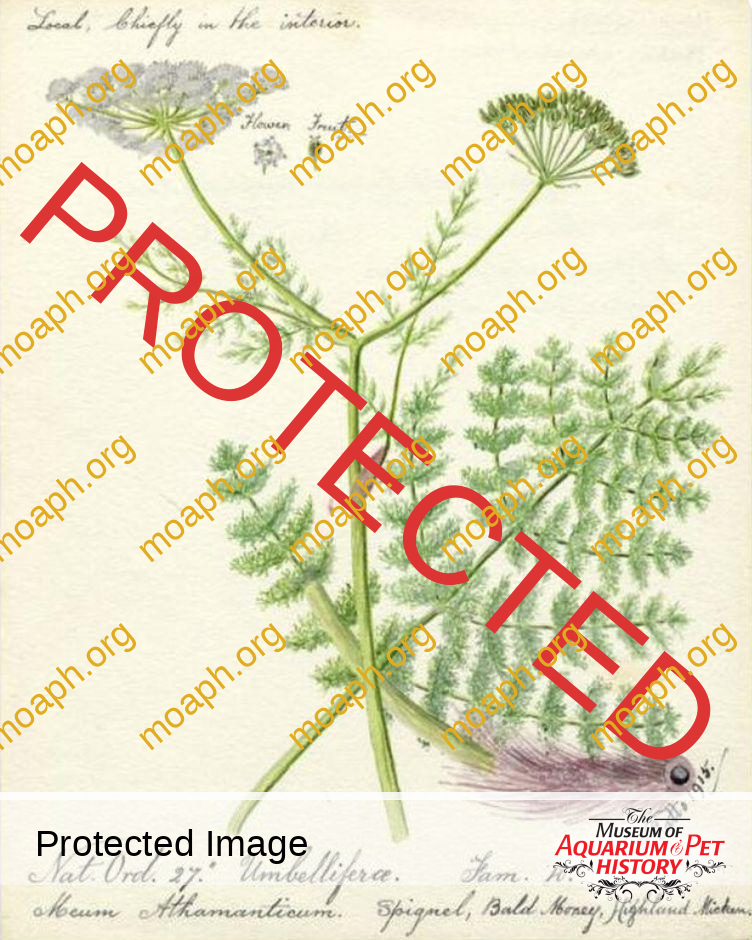
The Bear Root (Meum athamanticum)
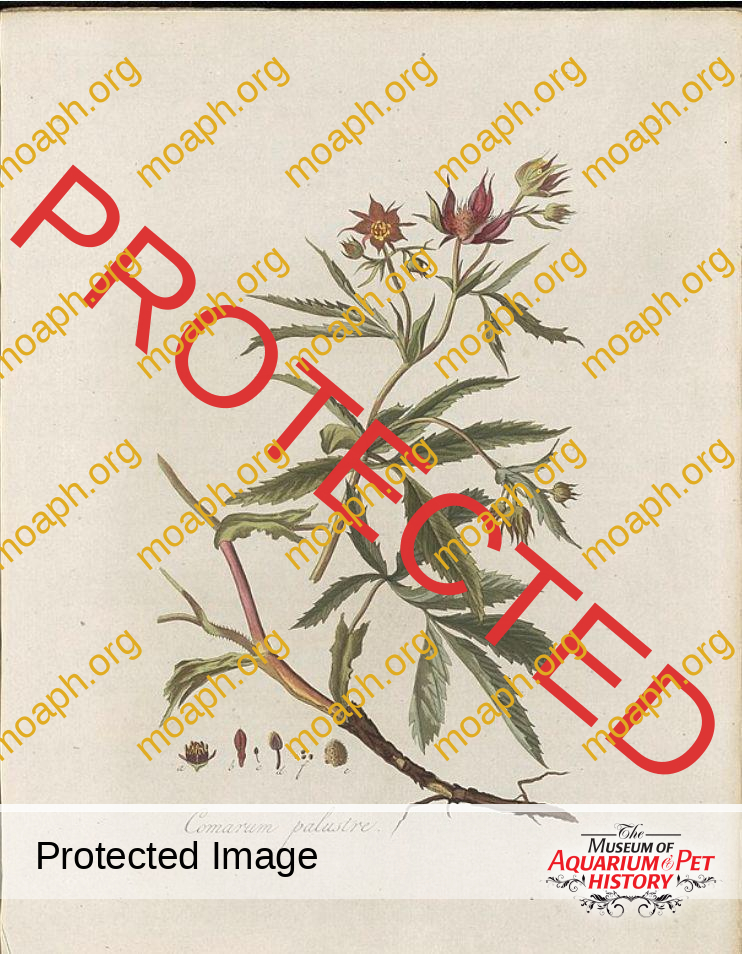
The Seven Cinquefoils (Comarum palustre)
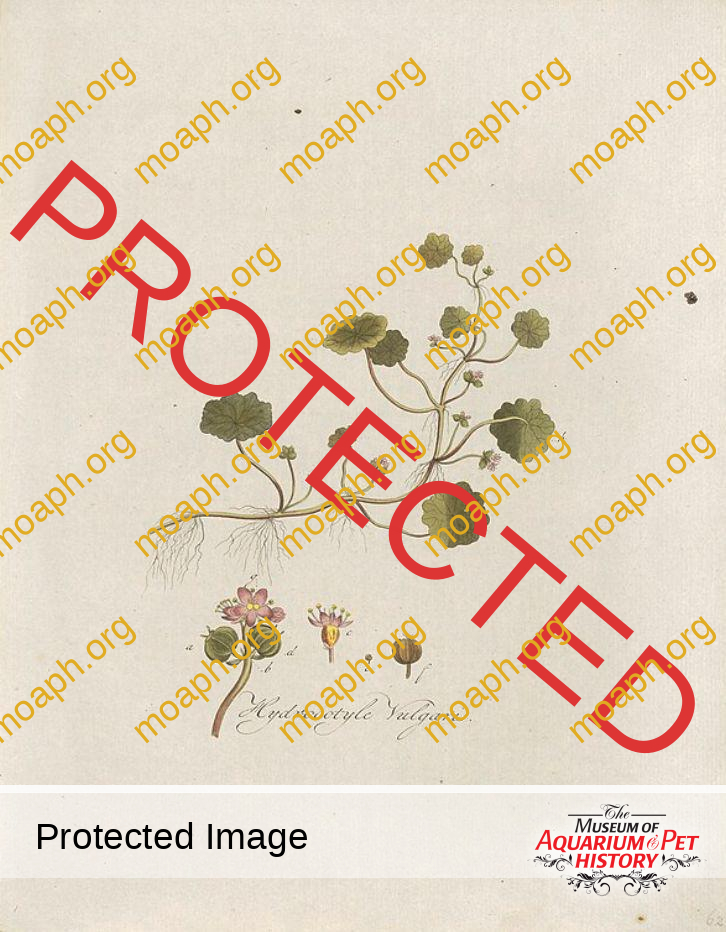
Die Rauschbeere (Hydrocotyl vulgaris)
Finally, there are a few taller plants to add, which adorn the aquarium, especially in spring: 28.) ‘Die Dotterblume’ (The Marigold) or Caltha palustris, which has a strong, full cane with its large yolk-yellow flowers in March and April, gives the aquarium a beautiful decoration. 29.) ‘Die Waldbinse’ (The Forest Rush) or Scirpus silvaticus; 30.) ‘Die Wollgraser’ (Wooly Grazer) or Eriophorum latifolium, angustifolium and vaginatum decorate their location after the flowers have faded with the dazzling white wooly bushes of the fruit spikes. 31.) ‘Die Gelbe Schwertlilie’ (The Yellow Iris) or Iris Pseudacorus.
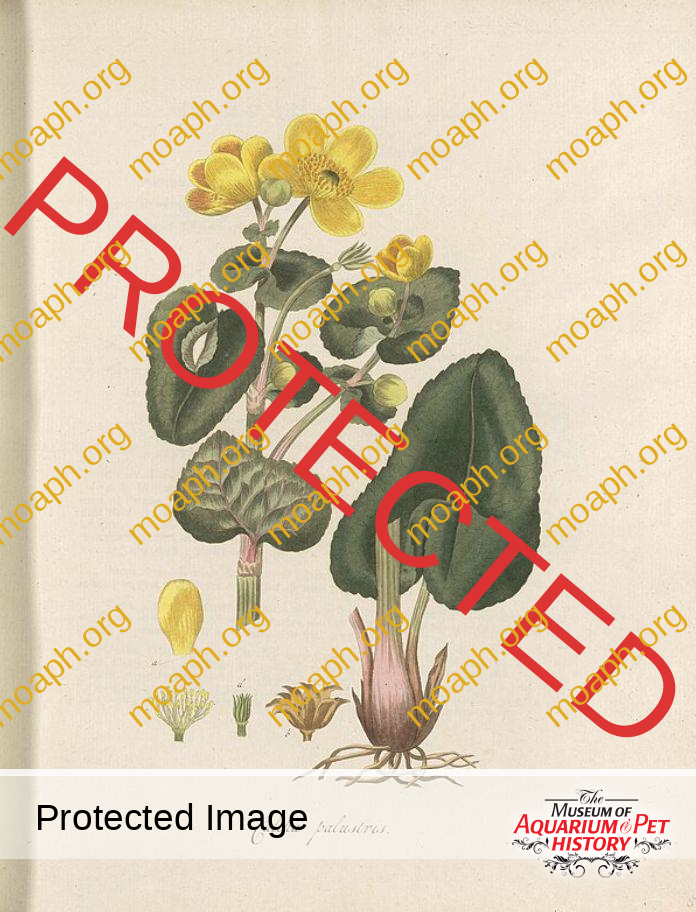
Marigold (Caltha palustris)
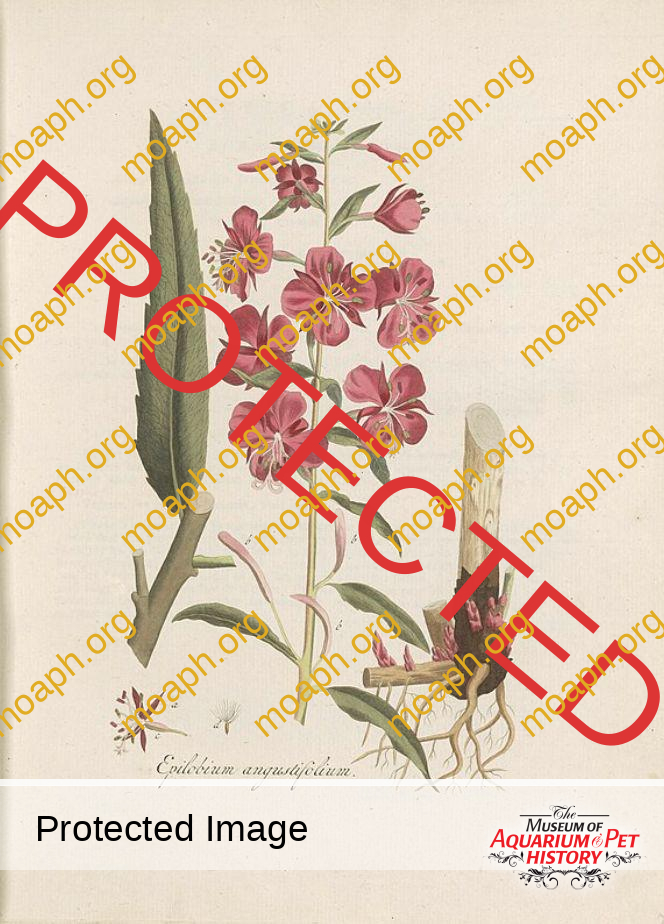
Wooly Grazer (Epilobium angustifolium)
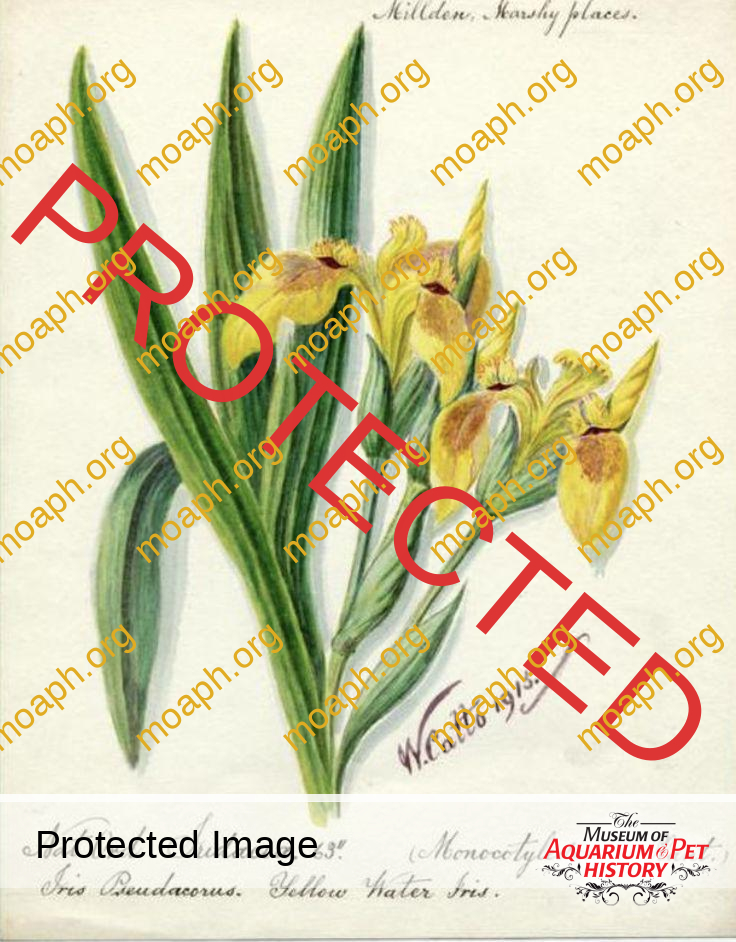
Yellow Iris (Iris Pseudacorus)
Once a selection has been made from the 31 plants mentioned, and these are planted partly on the bottom, partly in the joints of the central rock and in the basket inside this with only a little muddy soil, the container is filled to about 3-4 inches below the edge with river or stream water. In order not to have cloudy water for too long, you should of course pour it in slowly and calmly, if possible, so that it flows against the inner wall of the vessel and flows wide down to the bottom. It is best to use a rubber tube as a siphon when pouring the water in and out.
The lime sinter8 often contains earth and dust in its gaps, especially when the pieces that have not been freshly broken, but have perhaps been lying on the ground exposed to the weather for a long time, which can be washed out beforehand with a brush or a small broom of birch bark. This is necessary so that the water does not become cloudy for a long time as this attached mass only gradually comes off.
If you don’t have river water at hand, you can also use pure well water, the carbonic acid of which will immediately dissolve some of the lime and make the water a little milky for a few hours, but then the very small amount of white lime powder that is formed will settle on the ground. The familiar smell of lime develops very vividly at first, but it soon disappears. After filling with water, the particles float to the surface and are easily removed by dipping your hand into the water, which they will stick to when you pull them out again. You then rinse it off by hand in another container filled with water9.
Plants to avoid and some others to add: We will have to completely leave out plants in the middle, and instead, build up a small rock island, possibly with several crests, in the middle and let it protrude up to perhaps 5-8 inches above the edge of the container. The decisive factor is whether the porosity of the limestone sinter is able to suck the water up so high above the surface, ensuring the stones remain moist, because in the opposite case, the stones would be less allowed to protrude above the water, since they must always be moist throughout.
It is good if one first fills the lower fifth of the height of the vessel, which is the first part of it, with large river sand and only then builds up the limestone sinter rock on top of this, whereby the thing you shouldn’t forget is to cover the entire, now somewhat larger, base area with smaller chunks of lime sinter. If you have a very wide container of about one ell10, you easily have enough room to create a miniature undersea mountain range and sandy plains in between on the sandy bottom. Six inches of water depth is then sufficient so that the small rock areas are not too deep in the water and can be planted with suitable plants on their sides and on the tops.
Some of our German fern plants are particularly suitable for this purpose, as their rhizomes can stand in water, but only so deep that the young fronds11 that form can immediately emerge from the water. Of our ferns the most suitable are: 32/33: ‘Tupfelfarren’ (The two spotted ferns) or Polypodium dryopteris and P. phegopteris; for a place above the water also 34.) P. vulgare, as does 35.) ‘Ceterrach’ or Ceterach officinarum, which occurs in the western parts of Germany; 36.) ‘Der Rippenfarn’ (Ripped Fern) or Bleuchnun spicant; 37.) ‘Mauerrue’ (Wall Rue12) or Asplenium ruta muria and 38.) The beautiful ‘haarfarren’ or Asplenium trichomanes. 39.) ‘Der Zerbrechliche Blasenfarn’ (The Fragile Fern) or Cystopteris fragilis, is particularly recommended (but not brought deep below the water level) due to the delicate separation of the leaves. If you perhaps want to let a large fern bush develop into a beautiful fan out of the rocky area in the middle, then some type of shield fern, such as aspidium, is used for this purpose. 40/41) A. Thelypteris and A. Oreopteris, which also have a deeper depression of their rootstock into the water; the same applies to the (42) ‘Konig Farren’ (King Fern)’ or Osmunda regalis, which occurs on moorlands and in boggy forests in many places in Germany.
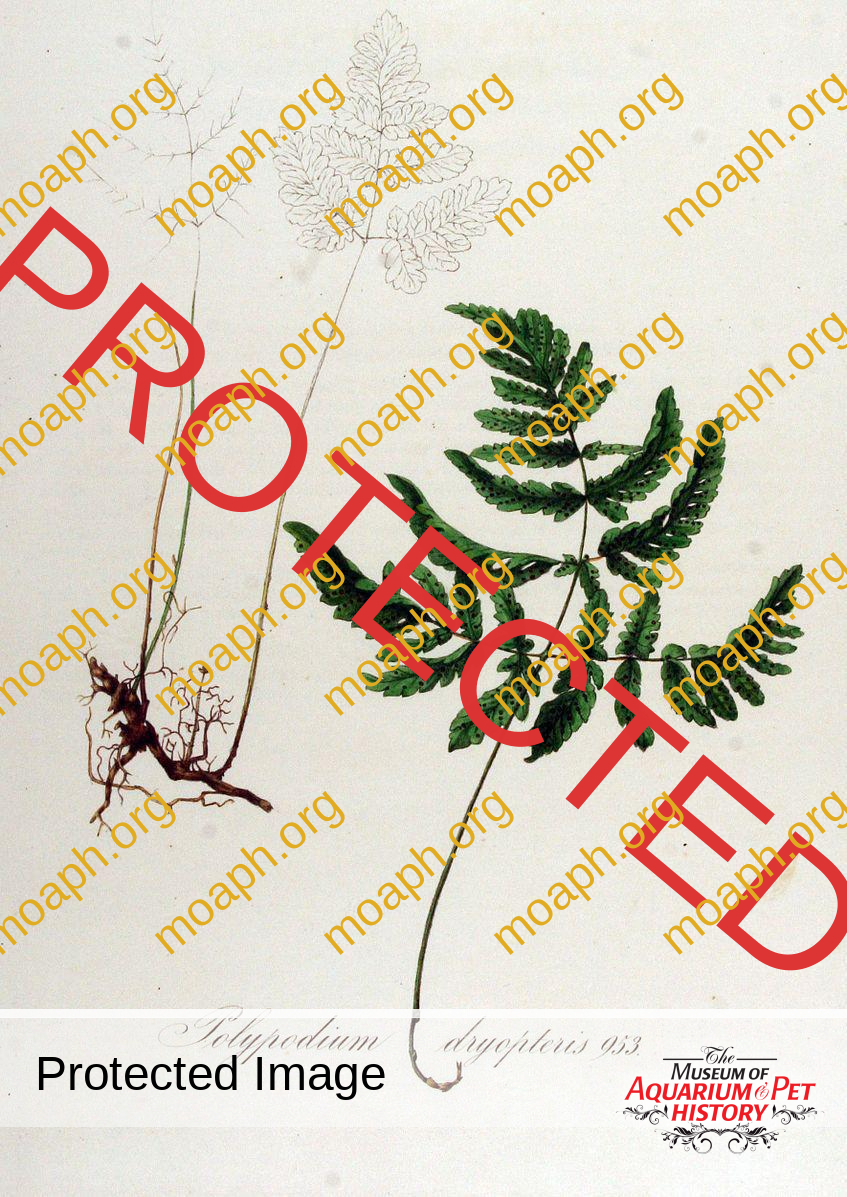
Two Spotted Fern (Polypodium dryopteris)
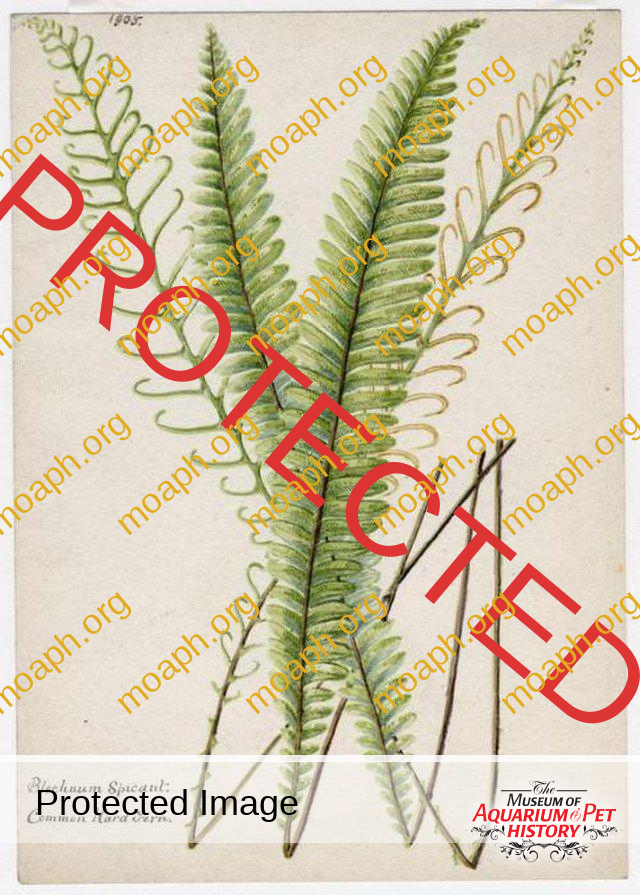
Ripped Fern (Blechnum spicant)
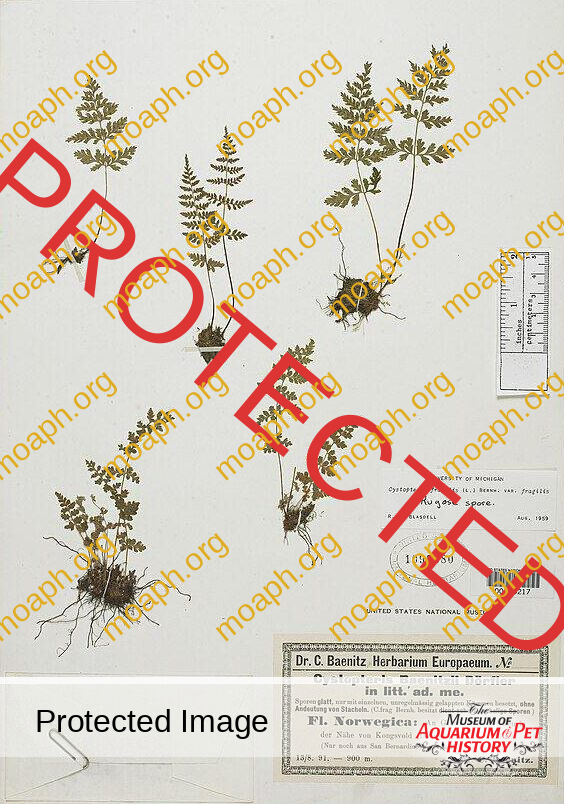
The Fragile Fern (Cystopteris fragilis)
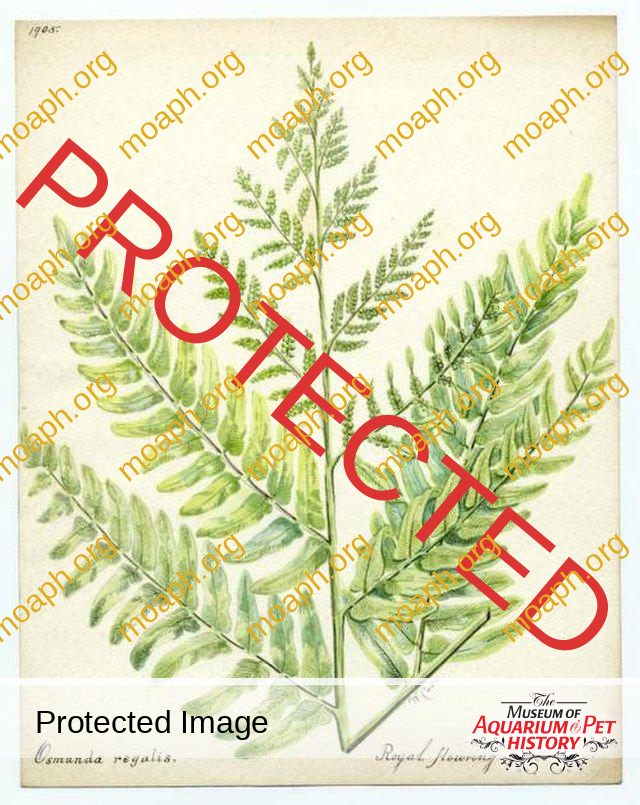
King Fern (Osmunda regalis)
If you also want to distribute some other plants between the ferns, then of those listed, numbers 21, 22, 24, 25, 26 and 27 are particularly recommended.
From all of these plants listed for the landscape grouping, choose small specimens that you can loosely embed with a little soil in suitable pits and crevices between the stones.
But there is still one essential thing to remember: the ‘Wassermoose’ (Water Moss). Quite a few species of our mosses grow either in water, especially in stoney streams, or at least in boggy meadows, and thrive very well in the water of our aquarium. Especially in mountainous forest areas, you will easily find such mosses yourself, which you then collect with the stones to which they are firmly attached and bring them into the container without letting them dry out on the way.
I mention, although a name is hardly necessary here, 44-46 several branch mosses, namely Hypnum riparium, H. palustre and H. alopecurum14 and 47.) the Funaria hygrometrica. Fit into the joints of the damp surface of the stones; 48.) and 49.) the ‘Die Sternmoose’ (Star Mosse), Mnium cuspidatum and M. punctatum, 50.) der ‘Graue Gabelzahn’ (the Gray Forked Tooth), Dieranum glaucum, and 51.) some of the shorter species of the genus Wiederthon and Polytrichum.
Finally, at the end of the plant world, we should mention the algae, those well-known green tufts of threads in streams and river channels. Choose those that are stuck in the water on stones and tree roots, as these have a regular crest-like growth. Old mill wheels will most easily provide a supply.
We now move onto the ‘animal kingdom’ of our aquarium. If we want to let plant decorations predominate in this area, we will have to make do with a few species of animals, naturally avoiding those that live on plant roots and leaves. Above all, everyone belongs there, at least the larger, plant-eating water snails. But since they offer a lot of entertainment and instruction because of their way of life, you can at least take in a few. These large species are the ‘Schlamm Schnecke’ (Large Mud Snail) or Limnaeus stagnalis and the ‘Horb-farbige Tellerschnecke’ (Horn-colored Plate Snail) or Planorbis corneus. Both live together in our ponds. In the spring they lay their crystal-bright gelatinous egg spawn on the glass walls, and you can then use a simple magnifying glass to follow the development of the young snails from day to day. Over a few weeks, the tiny light yellow yolk glob develops into the small snail with the house within an egg compartment in the spawn while the axis rotates slowly.
Our two large swamp snails: Paluvina vivipara and P. fasciata are carnivorous and therefore not harmful to plants. On the contrary, they clean the water from all kinds of animal waste. They bring live young ones the size of peas into the world. The swamp snails can close the mouth of their shell tightly behind them with a horn-like lid. In addition to these large species, most meadow ditches and swampy pools are teeming with a lot of small species of snails and also some pea-sized mussels, many of which can be picked up. The animals, whose delicate shells have very varied shapes, populate the walls of the vessel in a pleasant way. Larger mussels, namely the ‘Teichmuschel’ (Pond Mussels) or Anodonta and ‘Flush Perl Muscheln’ (River Pearl Mussels) or Unio, may only be taken if the animal kingdom is to predominate, because they usually furrow the ground without ceasing, admittedly slowly as the hand of the clock, and therefore stir up the plants.
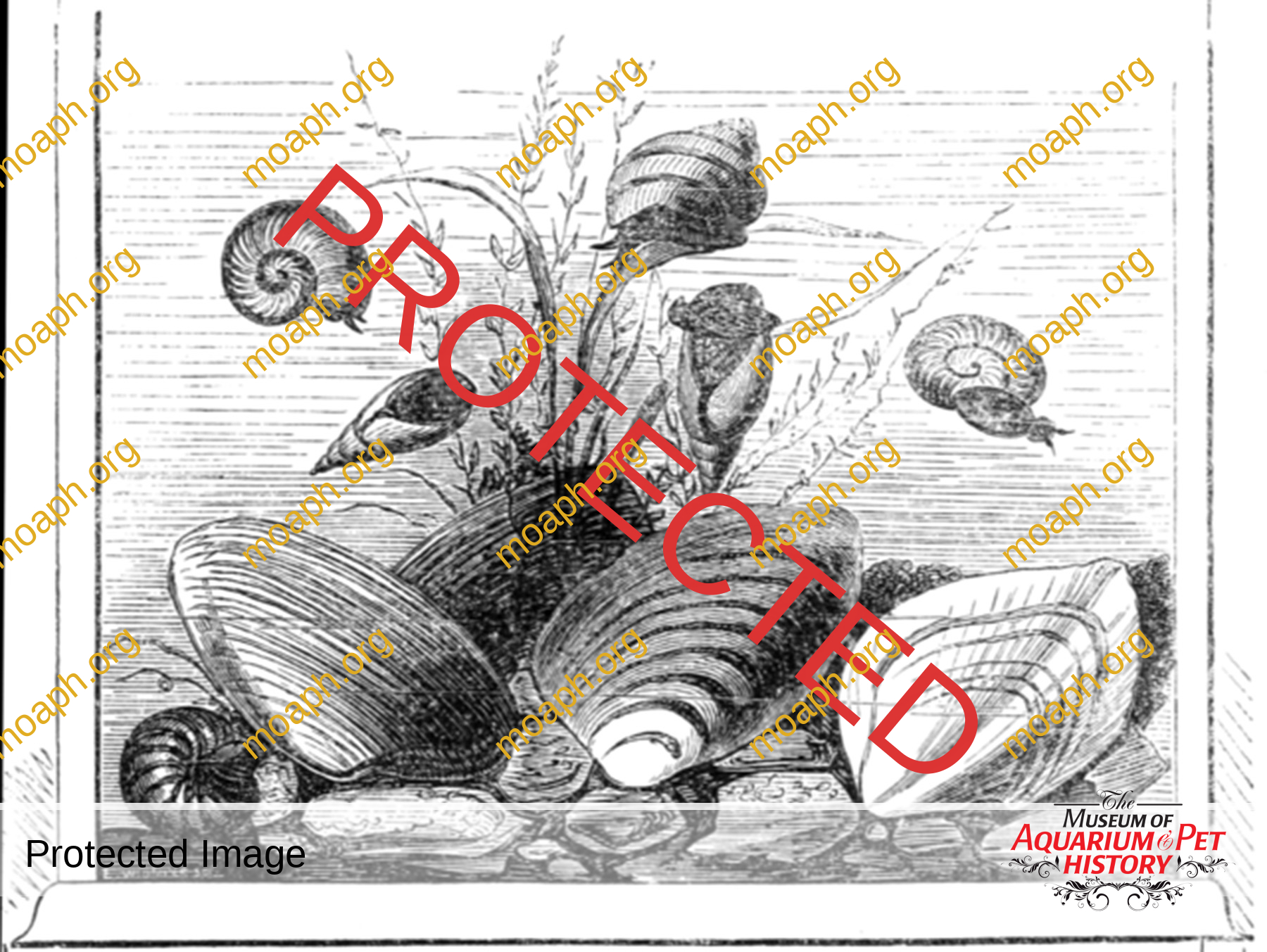
Starting from top left: Planorbis corneus (Horned Colored Plate Snail), Paludina vivipara, Lymnaea stagnalis (Large Mud Snail), Unio pictorum (River Pearl Mussels), and Anodon Cygneus
Here I start the hunt for these little snails and other small aquatic animals. It is nothing less than awkward and time-consuming. They can be carried out in different ways. You go out with a large white so-called sugar or preserving jar and look for a wet ditch, such a pool or swamp, which is full of plants and has a lot of dead leaves at its bottom. With your hand or with a hook you randomly pick up a few lumps of decaying leaves and aquatic plants and pieces of stems that form the bottom and place them in the glass filled with water. After stirring the porridge a little, the animals contained in it are removed. If they are distributed in the water, leaves should be scooped out before they sink to the bottom. The remaining things distributed in the water fall to the bottom, while the snails gradually all gather on the walls of the jar, from which they can be easily removed.
Hunting is particularly productive if you find a ditch in hot weather that has pretty much completely lost its water due to drying out. Then the snails are usually found in large numbers between the still wet leaves, which quite quickly form a rotting puff pastry on the bottom. Then you can depopulate such half-dry lumps at home even if you don’t have the jar at hand. Another way of hunting small aquatic animals is with a butterfly net. In this you wash out the clumps of leaves under water, whereby all the animals at the bottom collect in the tip of the net, while the leaves above are fished out again. The captured animals are taken without water, just wet, in a smaller jar, which is then loosely stuffed with a little moss, and not in a bound, unglued box, which is then warm and rotten for hours on the way home and becomes fatal for the animals.
During this hunt, the person who made it for the first time, without knowing it, also caught a lot of other animals, many of which belong in the aquarium. To list even a part of them here by name would be going too far. The aquarium, if it is primarily aimed at animal life, is a true water management system, which will show the lover of nature a lot of little secrets, animals that have not yet been seen. The ‘Grosse Wasser Kafer’ (Large Water Beetle) (namely Dytiscus marginalis and others) and the bluebirds must be removed from the involuntary prey, because both prey on the larger animals and also on the snails. Such a fishing expedition certainly also provided us with some larvae of the ‘Kocherjungfern’ (Caddis Fly) (Phryganea). Above all, they should be taken into account because they are skilled mosaic workers. Each of them builds a cooker-shaped shell one inch or longer, either from small pieces of bark, wood and leaf suckers, or from small stones or from small empty snail and mussel shells, which they always carry around with them.
Maybe one day there will be a beautiful dragonfly swarming around in our room, which we caught as a baby in the water. The ‘Kocherjungfern’(Caddis Fly) are less winged sisters of the dragonflies.
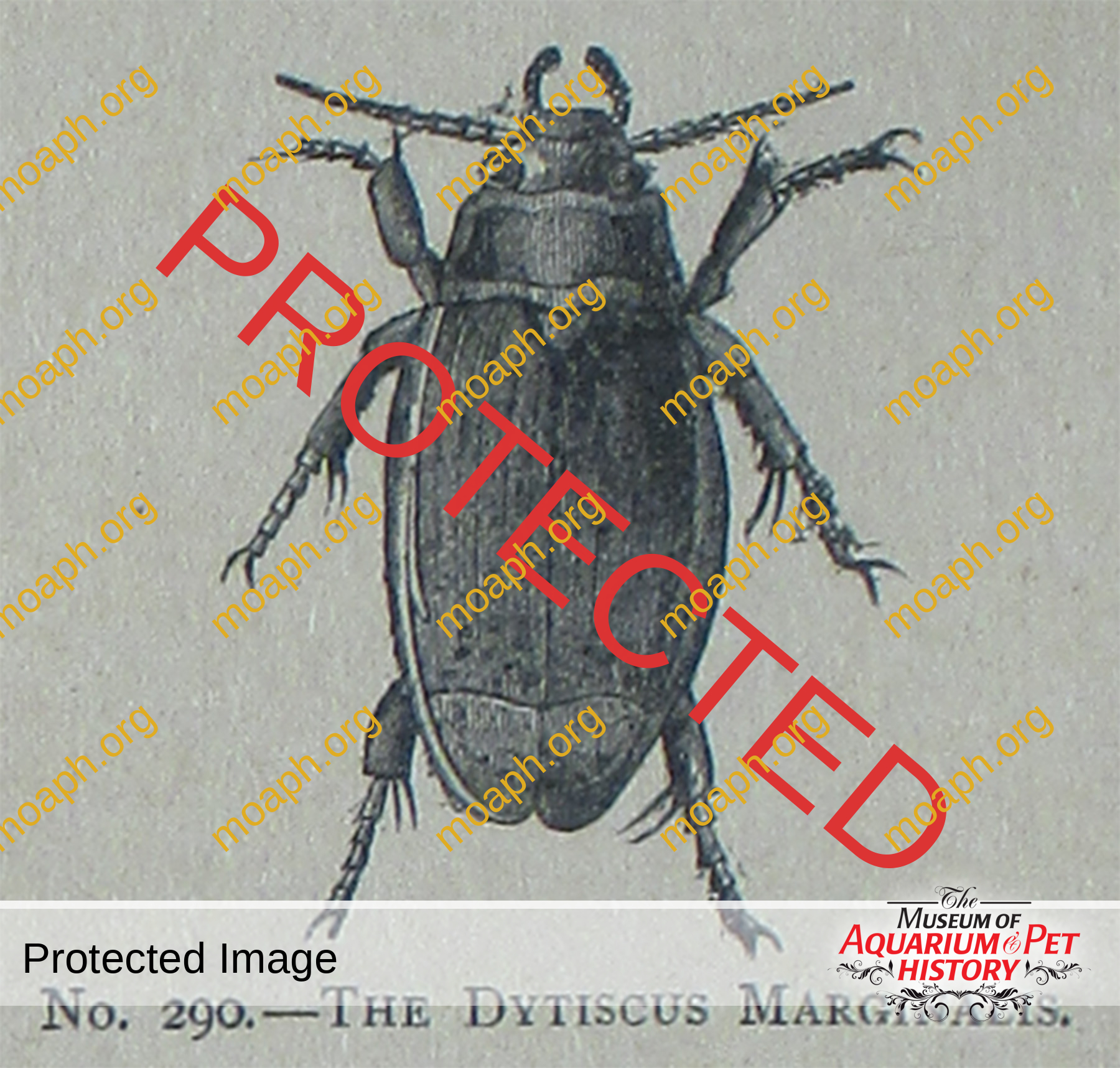
Great Diving Beetle (Dytiscus marginalis)
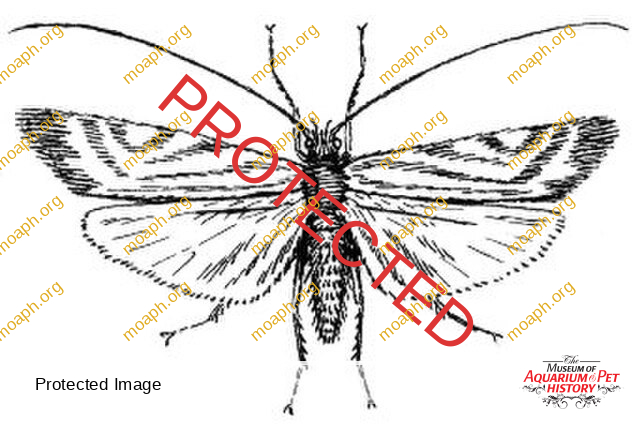
Caddis Fly (Phryganea)
The small crannies, which can accommodate a hundred in a container of the specified size, form a cheerfully milling audience of fish next to the thoughtful Chinese dressed in gold. If we, as weather prophets, bring a “weather fish” or Cobitis fossils into the aquarium, we have to leave a part of the sand free of stones so that it can root around in it.
We now come to the creatures15 of the class Amphibia. Unfortunately, there is a baseless prejudice among people about them, which is only not baseless when it comes to the viper, although I would like to say that I despise the ugly toad, with its load not at all poisonous, not at all lovable. But the harmless newts, especially the small so-called ‘Teichsalamnder’(pond salamanders) or Triton cinereus, with the beautiful ridge of skin over their back and tail, belong in the aquarium16. If the botany, however, is to play the main role in the aquarium, the newts unfortunately have to stay away because they like to climb high on the delicate stems and can then break them.
That would be about it for the life of our aquarium. But will it stay alive there? Won’t it cause us a lot of worry and effort to preserve it? How often do we have to change the water? Answer: never. When the plants in it thrive, their roots absorb all the putrid substances that mix with the water from the animals’ waste. At this moment, next to the work table at which this was written, there has been a large aquarium for 6 months, without the water having been renewed once. Only occasionally do you have to refill what is lost through evaporation. But don’t place your freshwater aquarium near a window that can be exposed to strong, long-lasting sunlight so that the water inside isn’t exposed to too much heat. Larger corpses like dead fish do not escape attention because they immediately lie on their side and float on top, but they can be easily removed before they rot. Nevertheless, there are at least ten larger snails in my aquarium at the specified time that died and rotted, their empty shells now lying on the ground. A fish hasn’t died in it yet. Anything that could endanger animal life is immediately absorbed by the plants as healthy food.
I think I have to attribute the prosperity of my aquarium primarily to the hornleaf (9), which resembles long spruce shoots and can be found in every pond. Because the torn, finger-length stems of the water that were placed in it in October of last year have now grown into long- leafy garlands resembling arm lamps, which continuously let small beads of oxygen escape in the light and thereby, probably through a lively absorption of carbonic acid, keep the water breathable for the animals. The floating Salvinia or Salvinia natans, a very cute water animal that is often found on the water surface of large swamps in some areas of Germany, would undoubtedly do an equally good job.
So may this rich topic, which still leaves enough scope for one’s own thinking and inventing, only partially exhaustive communication, do something to support the joy of nature.
In the home, the aquarium is an effective means of accustoming the children to familiar interaction with nature. Play schools and kindergartens, yes, every good school should use this means. It sharpens the eye and directs the power of observation to an area previously ignored by the world. The history of the development of snails, many insects and frog-like amphibians not only provides pleasant entertainment for the eyes of the child, but also conveys useful knowledge.
Compared to the lake aquarium, ours definitely has one advantage, namely the connection between the animal life frolicking around under the water surface and the joyfully rising ground of the plants, whereas in the lake aquarium, everything has to remain under water.
-E. A. Rossmassler
A note from Kurt Jacobs:
Approximately at the same time as this essay, “The Lake in the Glass” by Emil Adolf Rossmassler, one of the oldest books on hobbyist aquaristics was published in 1856 by the E. Schafer publishing house in Leipzig. In the “General Book Lexicon” by Wilhelm Heinsius, already quoted on page 15, XII. Volume, page 65, says:
“Muller L.(I.), Aquarius,. Instructions to create and maintain such. In addition to a description of the most popular animals, plants, etc., which are suitable for this. (36 pages with 24 illustrations in woodcuts)” Leipzig 1856, E. Schafer.
Despite a lot of effort and exhaustion of almost every conceivable source, the author of this work was unable to find a copy of this book, which was published a year before Rossmassler’s own book on “The Freshwater Aquarium”. For this first edition of the Bechstein-Rossmassler documentation, the reader must therefore be content with the brief note above – it can be assumed with high probability that Rossmassler was familiar with Muller’s little book published in his hometown of Leipzig. But his own manuscript was already at the printer when it appeared.
REFERENCES
1 MOAPH: Alternative name for ‘Aquarium’.
2 MOAPH: ‘Stone Kingdom’ referring to the distinction Rossmassler made of stones, plants and animals all being separate entities that join together in the aquarium.
3 Kurt Jacobs: Fritzsche and Breiter’s glassware shop in Leipzig endeavored with grateful zeal to produce freshwater aquariums according to the author’s instructions, so that now, to our knowledge at least in this high degree of perfection, they were the first to appear in Germany. For Leipzig and the surrounding area, get the aquarium by itself first (see adjacent picture), without the inside contents seen in the picture above.
4 MOAPH: Older aquarium tanks did not all have a piece that was covering the top. A covering woodcut depended on what kind of plants and animals existed inside the tank.
5 MOAPH: One ‘Ell’ is equivalent to 45 Inches
6 MOAPH: ‘Moorland’ habitat found in upland areas, usually a temperate grassland or shrubland biome characterized by short grasses.
7 MOAPH: During this time, it was very popular for pieces of the aquarium to protrude the water line. This was to create an aesthetic look. When Rossmassler describes the stone enclosed bed, protruding 1-2 inches above the water, it is most-likely to create an almost fountain-like piece or to provide a place for plants to rest.
8 MOAPH: Another word of ‘agglomerate’ refers to the process of compacting and forming solid mass from powdered materials.
9 MOAPH: This paragraph is giving a detailed process of removing lime sinter-like residue from the carbonic acid infused well water when river water is not available. By skimming one’s hand on top of the water after the chemical reaction has finished, Rossmassler explains that the particles can be collected thus keeping the water healthy and clear.
10 MOAPH: 1 ell=45 inches
11 MOAPH: A frond is a large divided leaf comprising of ferns and similar plants
12 MOAPH: ‘Rue’ a term referring to the latin genus Ruta which comprises of aromatic herbs. ‘Mauer’ means wall in German, therefore ‘Mauerrue’ means a rue-like plant that grows on hilly or mountainous areas.
13 MOAPH: In this context ‘fruit’ refers to the blossoming of the ferns creating an almost alien-like appearance.
14 MOAPH: now known as ‘Thamnobryum Alopecurum’
15 MOAPH: Rossmassler uses the word ‘Lurchen’ which loosely translates to creatures belonging to class amphibia. We must remember this was written in 1856, so there could be false groupings of animals into the wrong kingdoms.
16 MOAPH: The term terrarium was not widely used, aquarium is the all-encompassing term used during this time.