Molassine Sign Restoration and History of the Company
Restoration
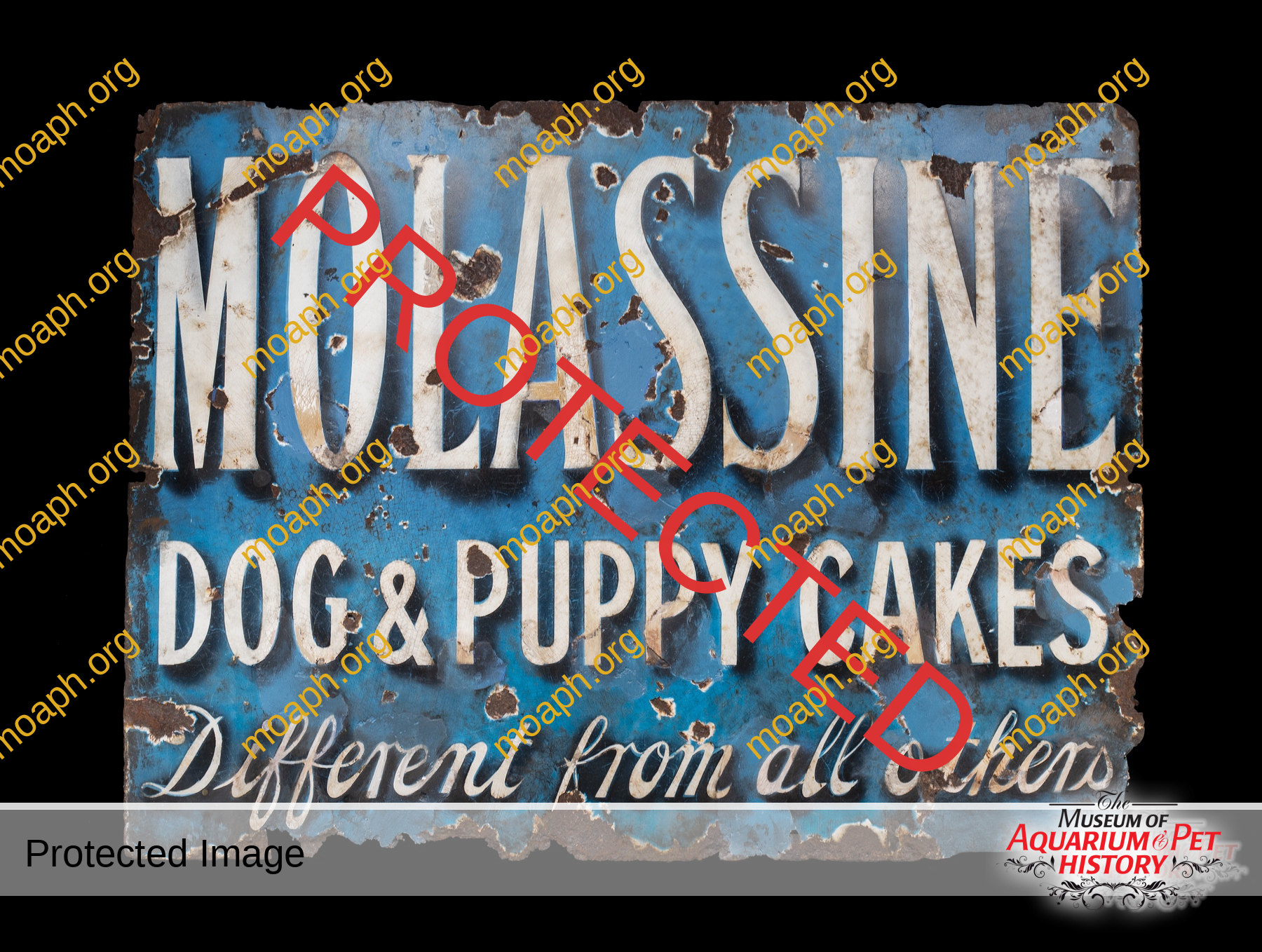
The key to all restoration is “less is more.” In other words, never “over-restore” an advertising sign and lose the antique “feel” or patina of the vintage piece. This Molassine Dog & Puppy Cakes sign had many issues so it was taken to our talented metalsmith, Rick, with instructions to fill some of the rust damage with a bondo material while leaving most of the rust, not affecting the text, alone. From there, the sign went to our artist, Lynn, who inpainted over the bondo repair and matched the color plus even the color of the rust! The finished product took 6 hours of restoration but now is “readable” while still keeping the original vintage feel of the sign.
History
Molassine was created in 1900 by Arthur Stein as a secret formula for animal feed. The first registration of The Molassine Company was in 1908, and the first commercial formula was made by Henry Tate this same year as feed for horses. The original formula consisted of sphagnum moss mixed with beet and cane molasses, with magnesium and calcium carbonate added. During the First World War, this feed was considered an antiseptic, and soldiers used it as a plaster for wounds!
At one point, this England-based company attempted to export its product to Canada, but when the product got wet in transport, it fermented, causing considerable damage to the ship. The dog food part of Molassine was based on a dog biscuit called VIMS. It was made with flour with the addition of aniseed and coloring. The advertising slogan was “Dogs Love Vims”. Two other dog food products were STIMO and Molassine Dog Biscuits. In the 1970s the famous English singer, Petula Clark, was hired to promote their dog food products. In 1971 Molassine was acquired by its parent company, Tate and Lyle LTD., and in 1981 they closed the feed part of the business and sold the company to Rumenco. Molassine Company LTD., lasted over 100 years with the original storage tanks still sitting in their original location in Greenwich, England.
Thanks to the Greenwich Industrial History Blogspot for the above information.
Before:
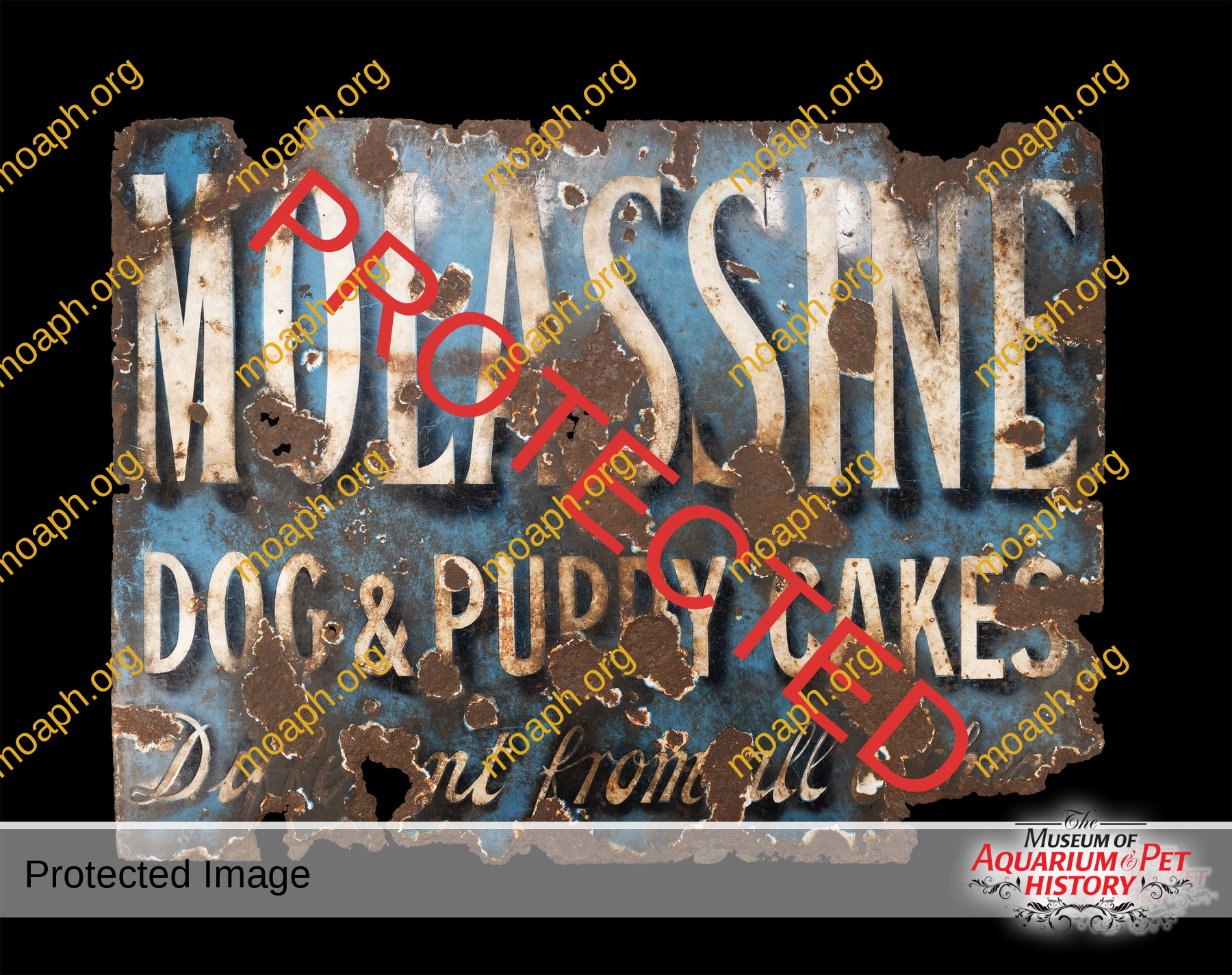
After: