William Alford Lloyd: New Unpublished Letters Unveiled – Part 3
The Zoological Station at Naples and its Aquarium are now fully functional. Dohrn, probably because he is literally overwhelmed with commitments, neglects his friend Lloyd, who, as we will see, appears quite disappointed and annoyed by this behavior.
July 2, 1875.
“The cheque I am sending today to Mr Grant as ordered by you, terminates all present money matters between you and I, and I shall be glad to know that you are satisfied with me. I am quite sure that I have been as careful, if not more so with your money, as with my own, and I have pleased you in the position of an employer, I being for the time your servant, and I have for you worked hard and faithfully during the last three years. I assure you I have had an anxious time in this relation, and the only difference has been that, unlike a servant, I have made no charge for my services.
But I wish you would be more punctual in correspondence. You have not answered the letter I sent you March 16th last in which I pointed out certain business matters which should be attended to. Nor do you send us [the Crystal Palace Aquarium] animals as I could wish, and you have not even said a word about the Sea Anemones I sent you in April last – much less have you sent animals from your parts back to us in the same case, as you might have done. I am not now scolding as I am sure you are unselfish but perhaps if you had undergone the difficulties in life which I have you would be more thoughtful. I have heard that you had a son born, and I beg very sincerely to congratulate you. This, I fear, will hinder Mrs Dohrn [Maria de Baranowska] from accompanying you to England this summer, at which we shall be much disappointed, but you of course will come to see me at home. Pray tell me by return when I may expect you here.
Now that our business is so far ended, I will comply with your request of writing to your wife, in a full manner. […]
The great Aqm [Aquarium] at Westminster, The Royal, it is called, is rising fast from the ground, and is to be opened next Christmas. The Rothesay one (Isle of Bute) will soon have its roof on. Therefore there will be plenty of chances for your sending Italian animals. But you seem only to care about embryology, and not about business.
However, when I see you, I shall tell you everything.[…]
Pray write fully. The promised particulars of your Station haven’t arrived and the press waits. No book of yours came.”
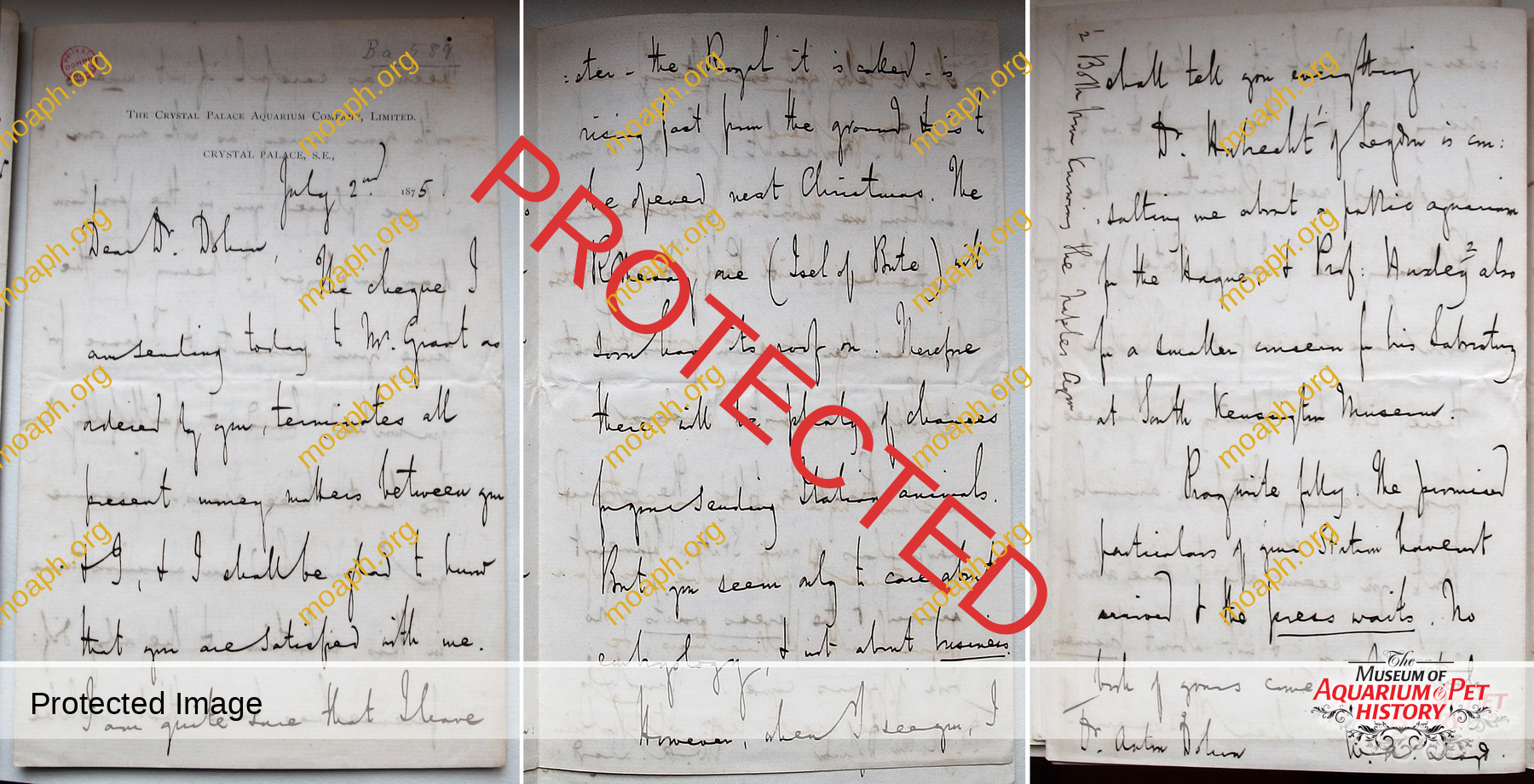
Pages 1, 7, and 8 (last one) of the letter dated July 2, 1875. ©Bayerische Staatsbibliothek.
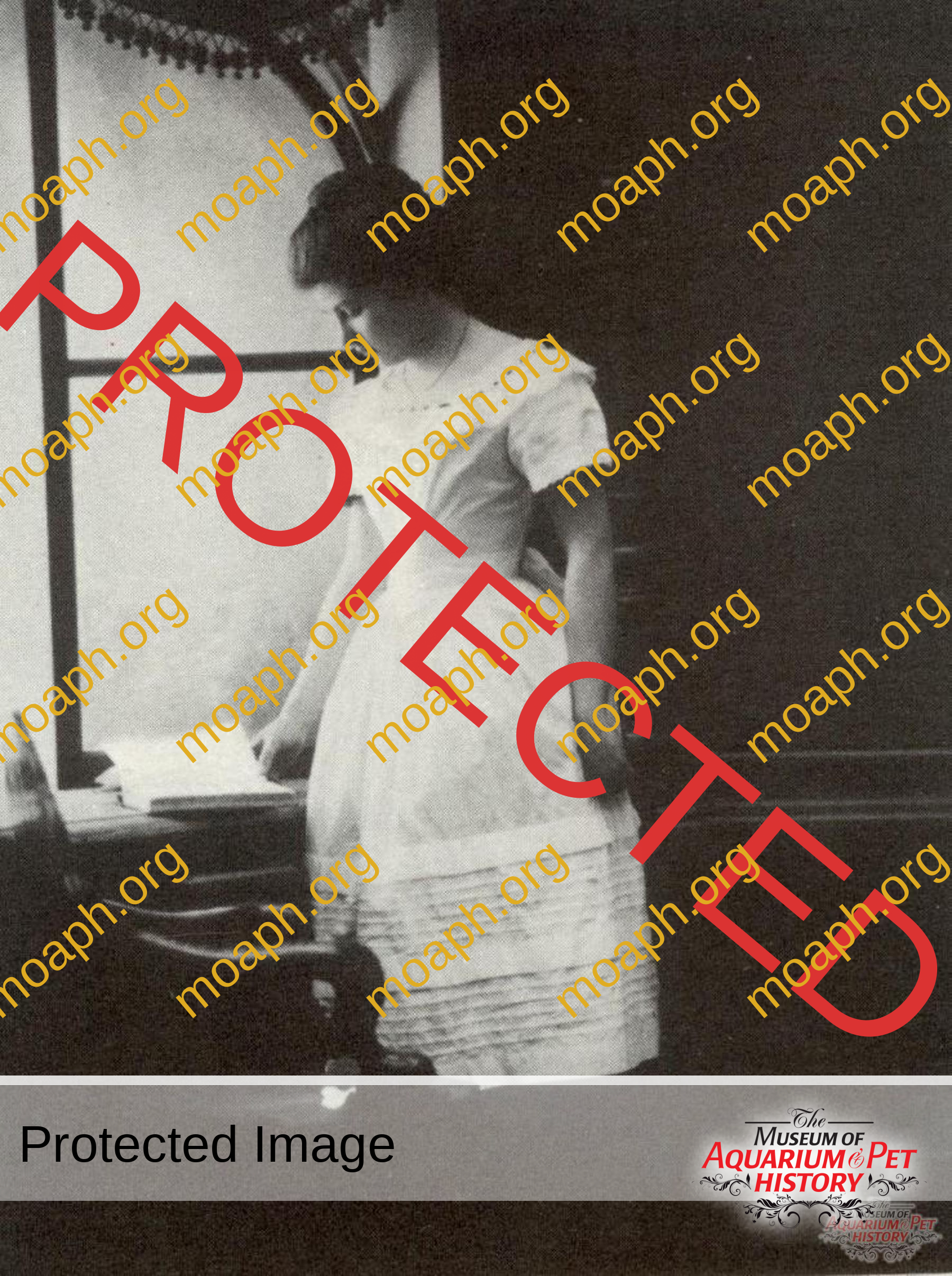
Maria de Baranowska (1856–1918) married Anton Dohrn in 1874.
A year later, everything seems to be back to normal between the two friends.
May 29, 1876.
“I received your letter of some time ago, and have been too busy to answer it sooner. Of course I sent the 31 pots of marmalade for your acceptance. You will remember that when at your Hotel in London you said you were very fond of it. So I remembered that, and as you could not get it at Naples, I sent you some.
I hope Mrs Dohrn also likes it: my regards to her and say how much I should like to see her.
How goes it on your station, and as I call it, your Aquarium? You know, of course, that Dr W. B. Carpenter will on the 29th of next month – in June – deliver a public lecture, on it before the Zoological Society of London. So will you please send him a letter through me, i.e. enclosed in a letter to me, telling Carpenter all I did for you, and how successful it has been, and requesting Carpenter to mention this and me, in his discourse. It is very important for me just now, to be known to be connected with scientific aquaria and with all scientific men generally, because there is a prospect of my being engaged in a Government Aquarium in another country and not in Britain. So be quite sure not to omit doing this, and in time. Do it at once. […]
I have left the Westminster aquarium having voluntarily resigned at Easter because of the atrocious ignorance of the Verwaltungrat [German word for “Board of Directors”] who permitted all manner of gross mismanagement and wrong construction. This led to the delay in getting the tanks ready for animals though the place itself opened. Yet in consequence of this undue haste, the value of the shares fell to one half of their normal price, and in despair, I was asked to get all ready in six weeks from April 13. Of course I said it was impossible, on which W. S. Kent from Brighton Aquarium who has been everywhere else and who succeeds nowhere, undertook to do the work in that time and of course he has not done so, and in fact he has now, though the period is up, got things more behindhand than when I left, because he has done so much which must be undone at the cost of further time. In this way does stupidity cause science to miss its chances. The money of which has been wasted, and which I was powerless to avert, would have erected many stations such as you possess, with a travelling aquarium on the railway for each. But I am taking pupils now, and I trust that the school of young men I am educating for Aqm work, will tend to prevent the occurrence of such disastrous blunders.
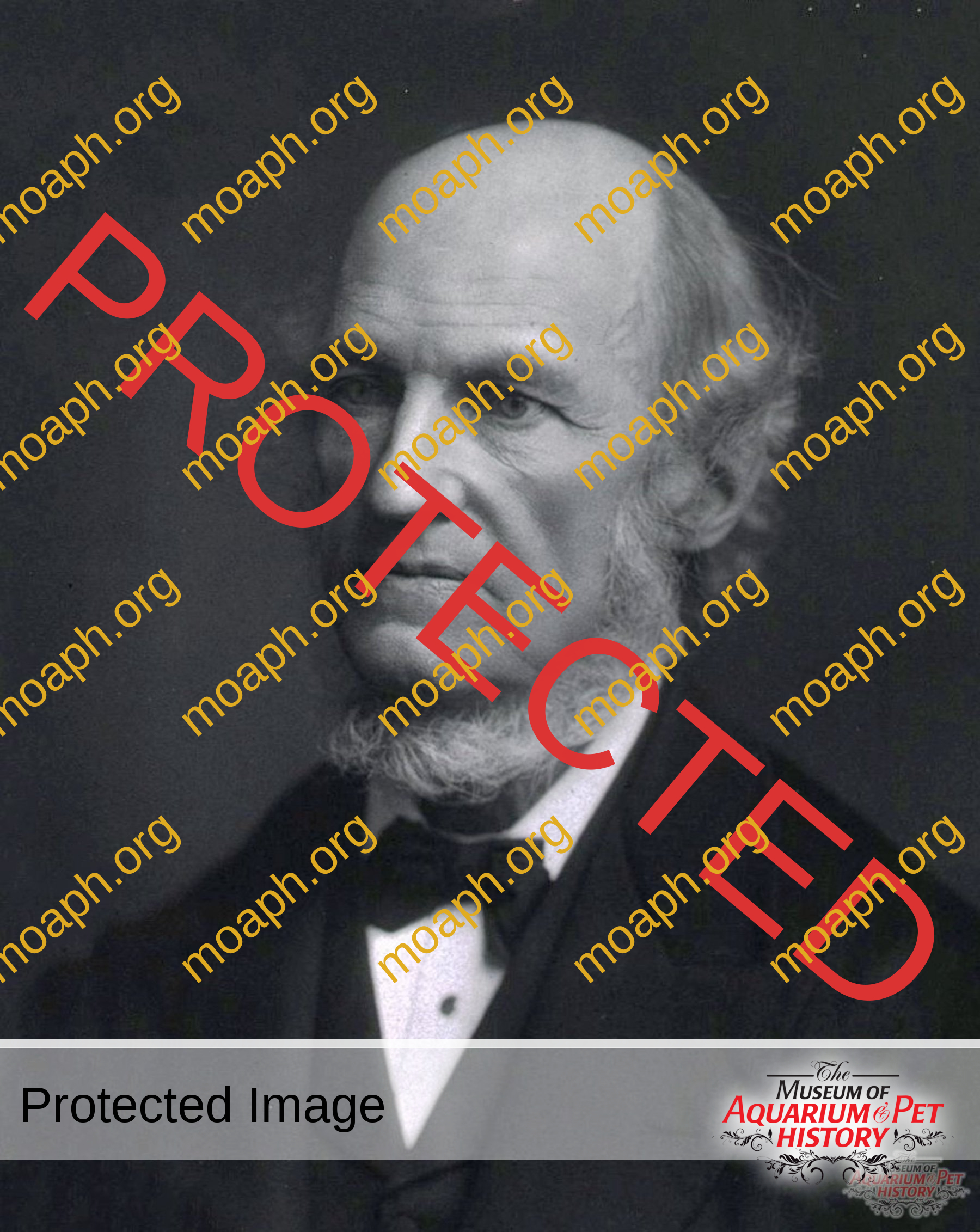
William Benjamin Carpenter (1813-1885) was an English physician, invertebrate zoologist, and physiologist. He was instrumental in the early stages of the unified University of London.

The Westminster aquarium (Royal Aquarium).
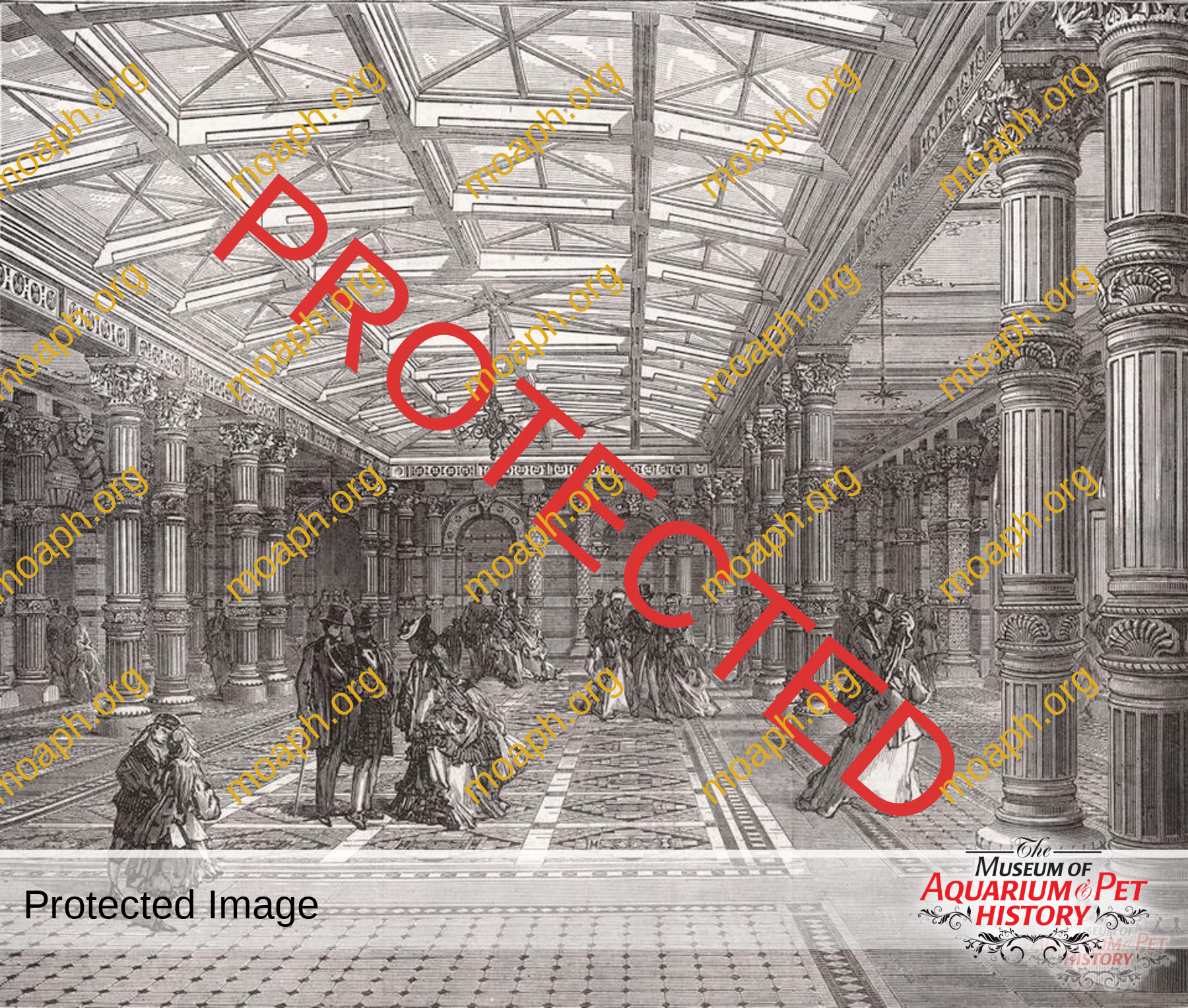
Entrance hall to the Brighton aquarium. The Illustrated London News, 1872.
I want much to see you, but I suppose I cannot do so for a long time. So please send me as long a letter as you can. I fight very earnestly against this sad prostitution of biology for the lust of mere money making operations. It is quite honest to make aquaria for the purposes of lawful trade – but what I despise is the not caring how the work is done so long as a few persons – termed here “promoters” – gain money, and then retire. You remember the Mr W. W. Robertson I introduced to you at the West. Aqm [Westminster aquarium] and who told you he “did not care a – for fish”? Well, he has gone out of the thing, and he did so as soon as it opened. I am told it is being carried on at a loss of £200 weekly. The music costs on an average of £60 and more daily. Mr P. H. Gosse, who is the Father of aquaria but who has not done anything to it for 18 years, is beginning again with my help, and by my example. He asks me to tell you he will be much obliged for any small Italian living animals, as Eels, Actinias, etc.
Now, don’t forget Carpenter, by next post or two, and enclose his letter in mine.”
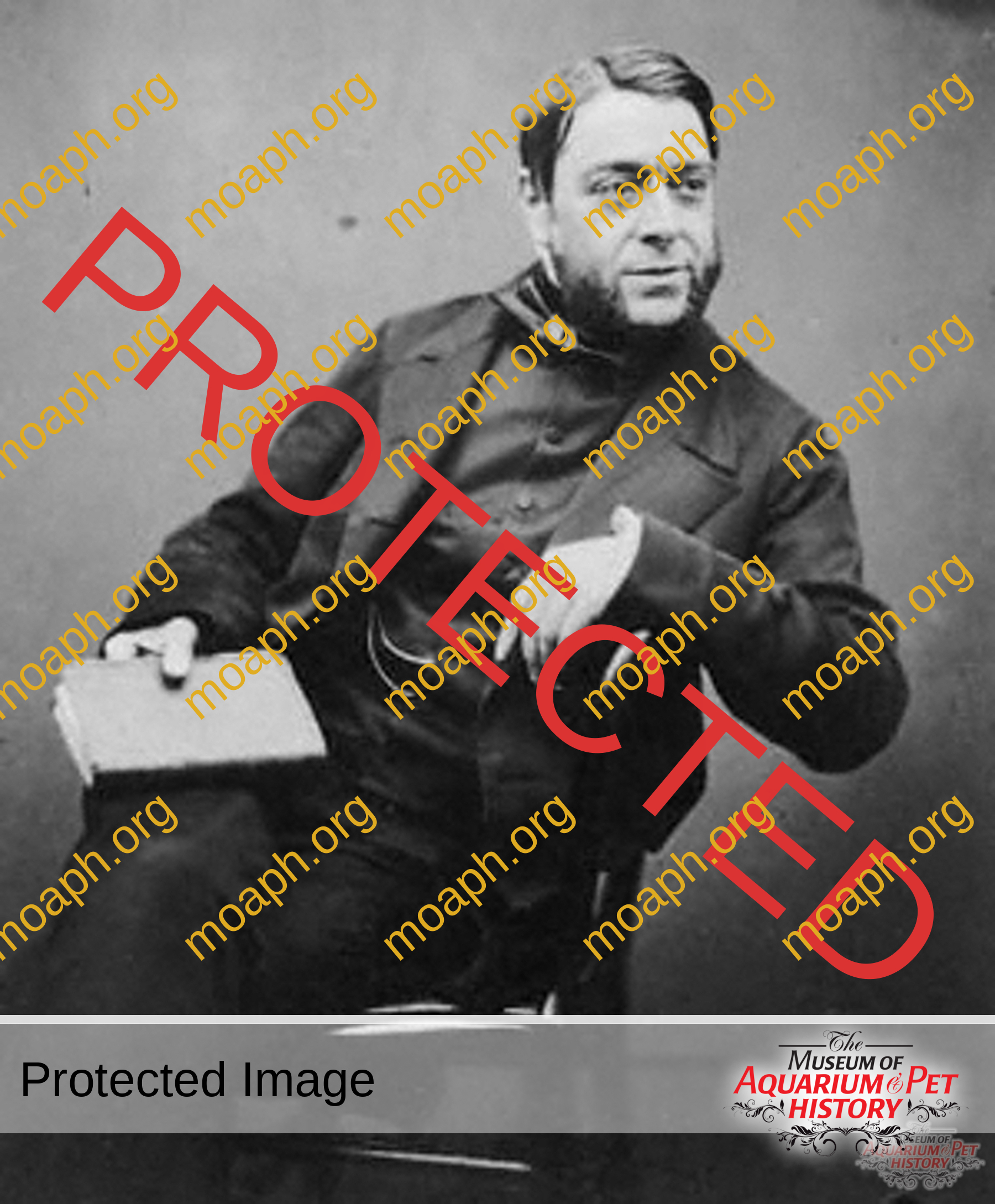
Philip Henry Gosse (1810-1888).
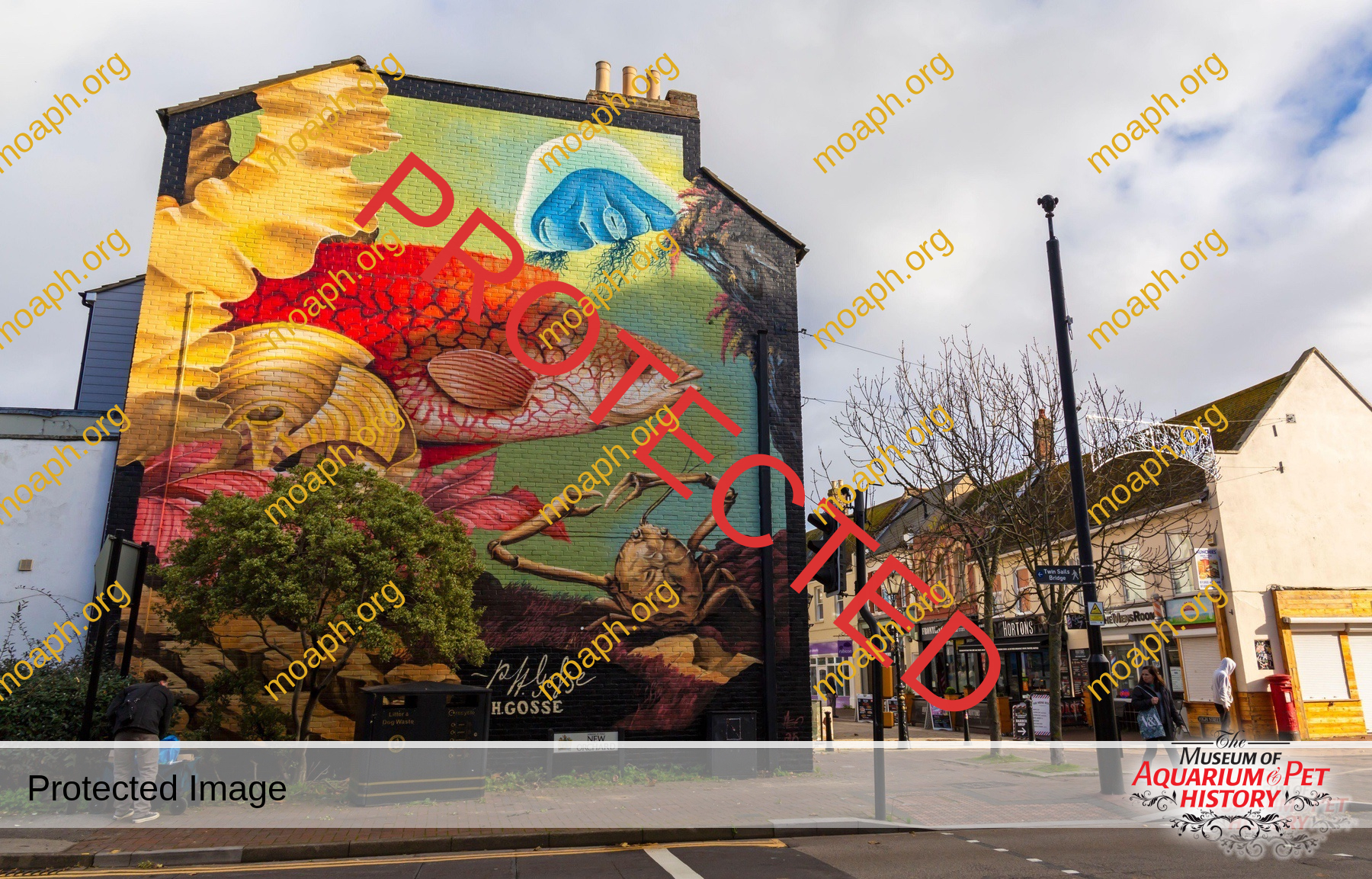
Mural celebrating Gosse’s work and contribution to marine biology. It can be found on 58 High Street, Poole, Dorset (England).

Pages 9, 11 and 12 (last one) of the letter dated May 29, 1876. ©Bayerische Staatsbibliothek.
The Westminster aquarium, or Royal Aquarium and Summer and Winter Gardens, mentioned by Lloyd was opened by the Duke of Edinburgh on January 22, 1876. At the early stages of the project Lloyd was appointed as an advisor, but as we have seen he resigned when they would not follow his advice during the construction works. Saville-Kent, who was already involved in the project together with Lloyd, became superintendent, a position which he will hold until March 1877.
Despite its strategic location in central London, across the road from Westminster Abbey and the Houses of Parliament, the Westminster aquarium will not have the expected success, first of all because of the other entertainments offered by the facility, which will overshadow the fish exhibition made up of 33 freshwater and marine tanks (150,000 gallons in total, towards the 700,000 gallons of the underground reservoirs).
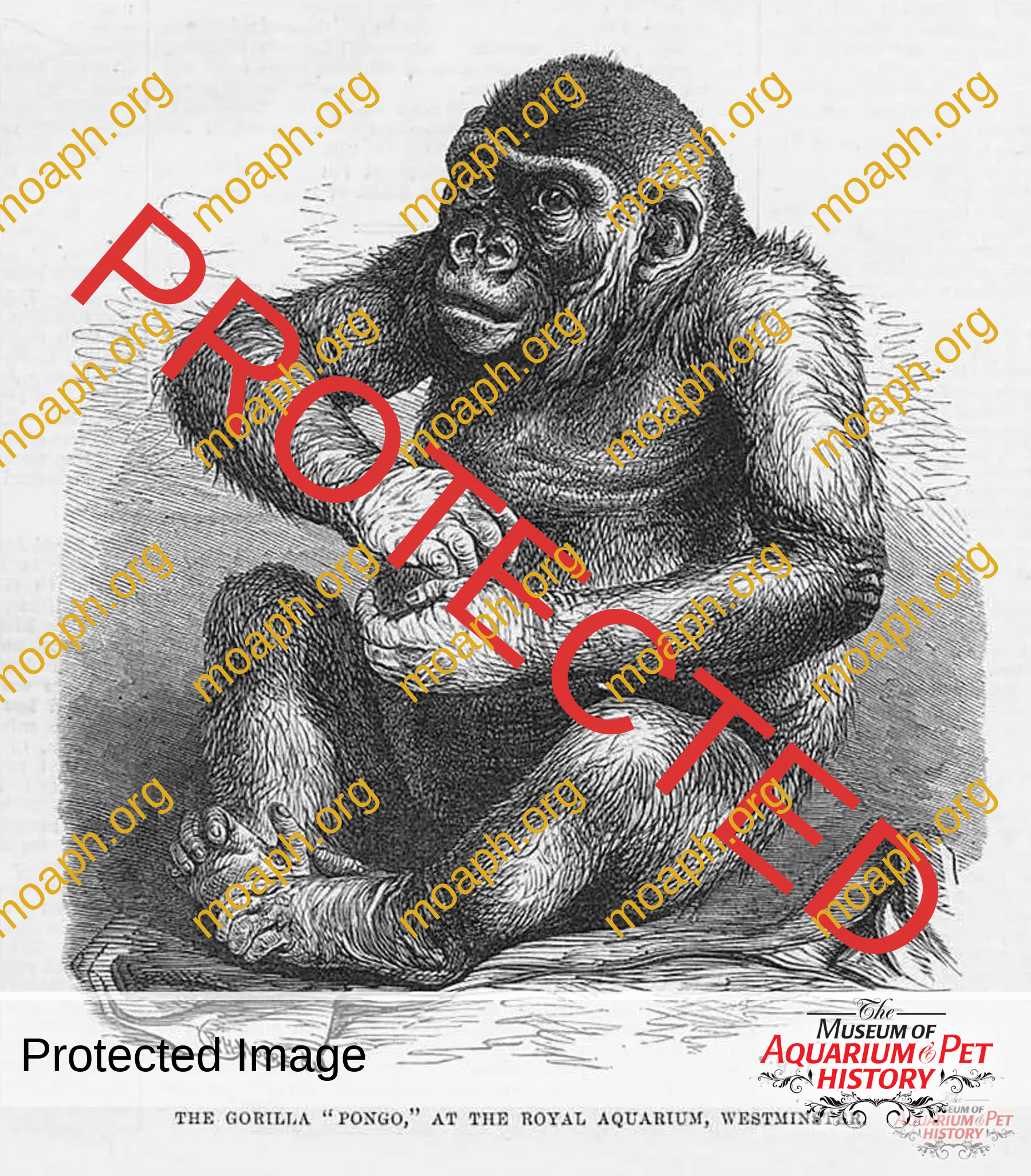
Borrowed by the Westminster Aquarium from the Berlin aquarium, the gorilla Pongo was a true sensation in London. The Illustrated London News, 1877.
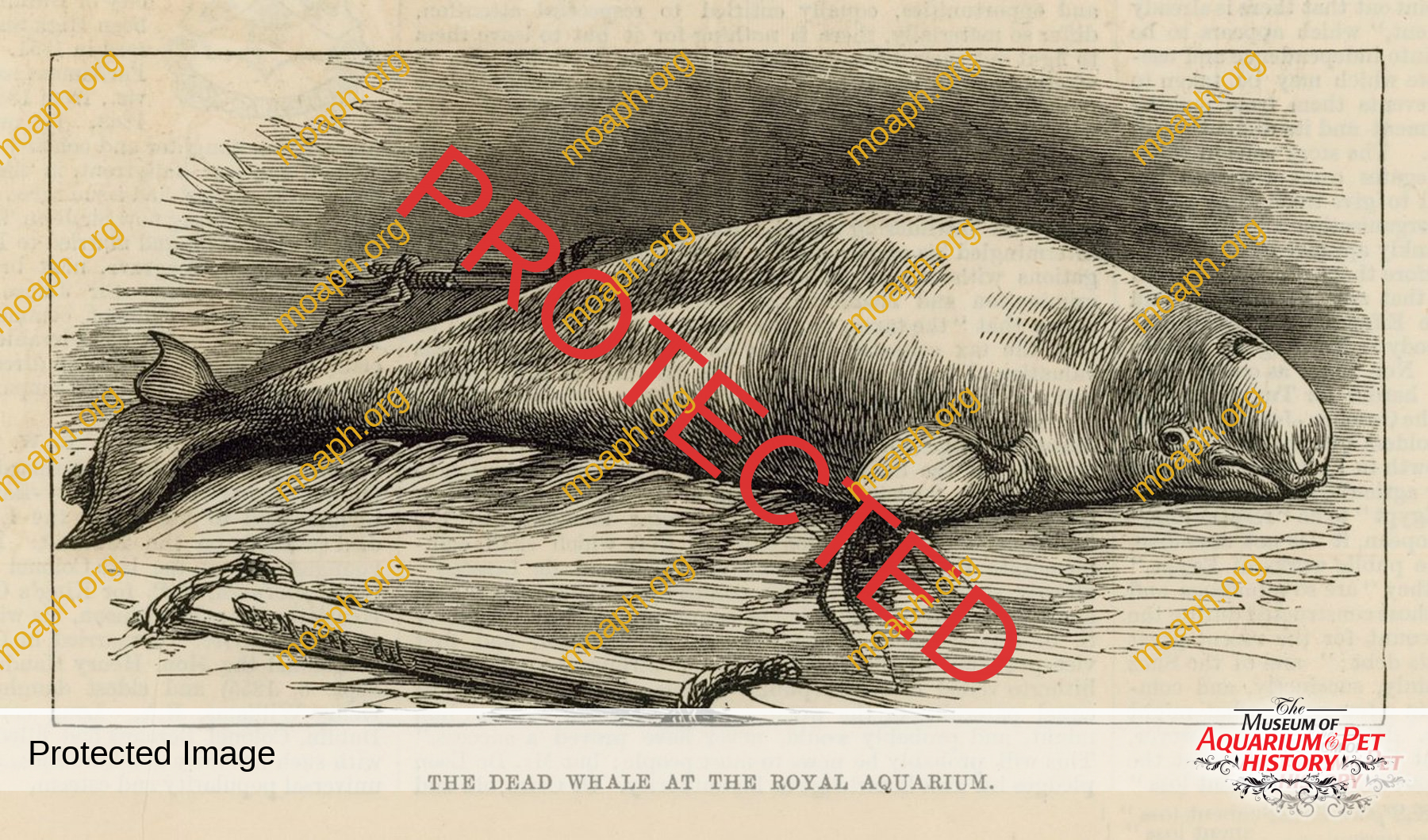
Attempts to get new star animals sometimes sadly failed, as shown by this popular illustration of the dead whale at the Westminster aquarium. The Illustrated London News, 1877.
The Naples aquarium meanwhile continues to attract a plethora of visitors. At the beginning of his venture, Dohrn owned a small sailing boat and four rowing boats. The Tyrrhenian Sea, however, was a wide world yet to be explored, and these boats were unsuitable for carrying out the ambitious “scientific fishing” program he had in mind for his Zoological Station. His crew needed a steamer to be independent of the wind, to have the necessary propulsion to tow the fishing dredges, to operate the bulky air pump of the diving equipment, and to arrange long distance trips. The funds for a steamer were raised thanks to the Berlin Academy of Sciences and the Ministry of Public Education of Prussia. Once again, Lloyd was invaluable to Dohrn, as he acted as a mediator with the British shipbuilder John I. Thornycroft & Company Limited, whose headquarters and shipyards were located in Chiswick, a district in the Borough of Hounslow, West London. He followed the procurement and construction processes, attending personally the launching ceremony on the river Thames and arranging the upcoming transport to Naples. He is very excited about the project, believing that with this new tool his friend Dohrn will be able to collect multiple marine species to ship to the Crystal Palace Aquarium. On this boat, Lloyd also wrote the following article that was published in The Athenaeum Journal on April 21, 1877.
“Several notices have appeared in the Athenaeum about the Naples Aquarium belonging to Dr. Anton Dohrn, who calls it, rather too vaguely, “The Naples Zoological Station.” I have now to state that on Saturday last, April 14, 1877, at three o’clock in the afternoon, was launched at Messrs Thornycroft’s ship-building yard a small iron screw-steamer, measuring about forty-five feet long, specially built for collecting living marine animals in the Mediterranean Sea, for the Naples Aquarium. This Steamer, constructed for the moderate sum of 1,200£, is the noble gift of the Imperial Academy of Sciences of Berlin. The engines, or rather the engine, of the vessel, for she has but one inverted cylinder, is capable of working up to twenty horse-power, and, therefore, there is plenty of surplus force for dredging work, and a grooved wheel is attached to the machinery for the insertion of a rope to haul up dredges, towing-nets, “swabs,” and other apparatus for gathering “the sea’s abundant progeny.” And for maintaining animals alive till the vessel arrives at the little pier close to the Aquarium, which stands, a square white building, on the very edge of the beautiful Bay of Naples, there are in the steamer two tanks, placed respectively fore and aft; these tanks being thus travelling aquaria, with a provision enabling the ship’s machinery to change, or circulate and aerate the water, whether the vessel is driven by steam or wind, for she is provided with sails to economize steam power. Circulation can be carried on, moreover, when the vessel is at rest. A separate arrangement enables a large number of smaller creatures to be conveyed in glass jars of various dimensions. There are also means for doing work with a microscope, and comfortable accommodation for cooking, sleeping, &c. This little vessel will be sent to Naples in the course of a few days, on board a large steamer, so as to arrive in Italy in time for the coming season’s collecting. Mr. Siemens, the eminent physicist, has had something to do with arranging her, though she is designed by Mr. Thornycroft. It is to be hoped that she will do much good service to natural history, and add greatly to the already large and unrivalled collection of living creatures in the Naples Aquarium. There are in Britain already several seaside aquaria, and though most of these possess superfluous belongings, not one of them can boast of a steamer made exclusively for biological purposes, except, I think, at Blackpool [Dr. Cocker’s Menagerie and Aquarium located at the base of the Tower of Blackpool, Lancashire, north west of England]. This should not be.
When this vessel glided into the Thames, stern foremost, and with her steam already up, in readiness for a trial trip, which took place immediately afterwards, and in which she behaved herself in a very satisfactory manner, there was none of the usual ceremonies of a launch. There were not more than a couple of dozen of people present, among whom I, whose privilege it has been to do much in aid of the Naples Aquarium, was the only naturalist. But the event seemed to me, with my usual aquarium seal, more important than the first floating of all the big ironclads of all the navies in the world! She was not even named as she slid down her soap covered “ways,” but I propose to call her “Glaucus,” after the sea-god, and in remembrance of my old and valued friend, the late Charles Kingsley, who, in 1858, produced a book having the same name – ʽGlaucusʼ – which has done much, in Britain and elsewhere, for the furtherance of the study of living marine zoology and botany.
I trust that, in a similar manner, the ship Glaucus will add many treasures to the Crystal Palace Aquarium, through Messrs. Pickernell and Capt. Badcock, who so kindly and constantly bring them from Italy free of cost.”
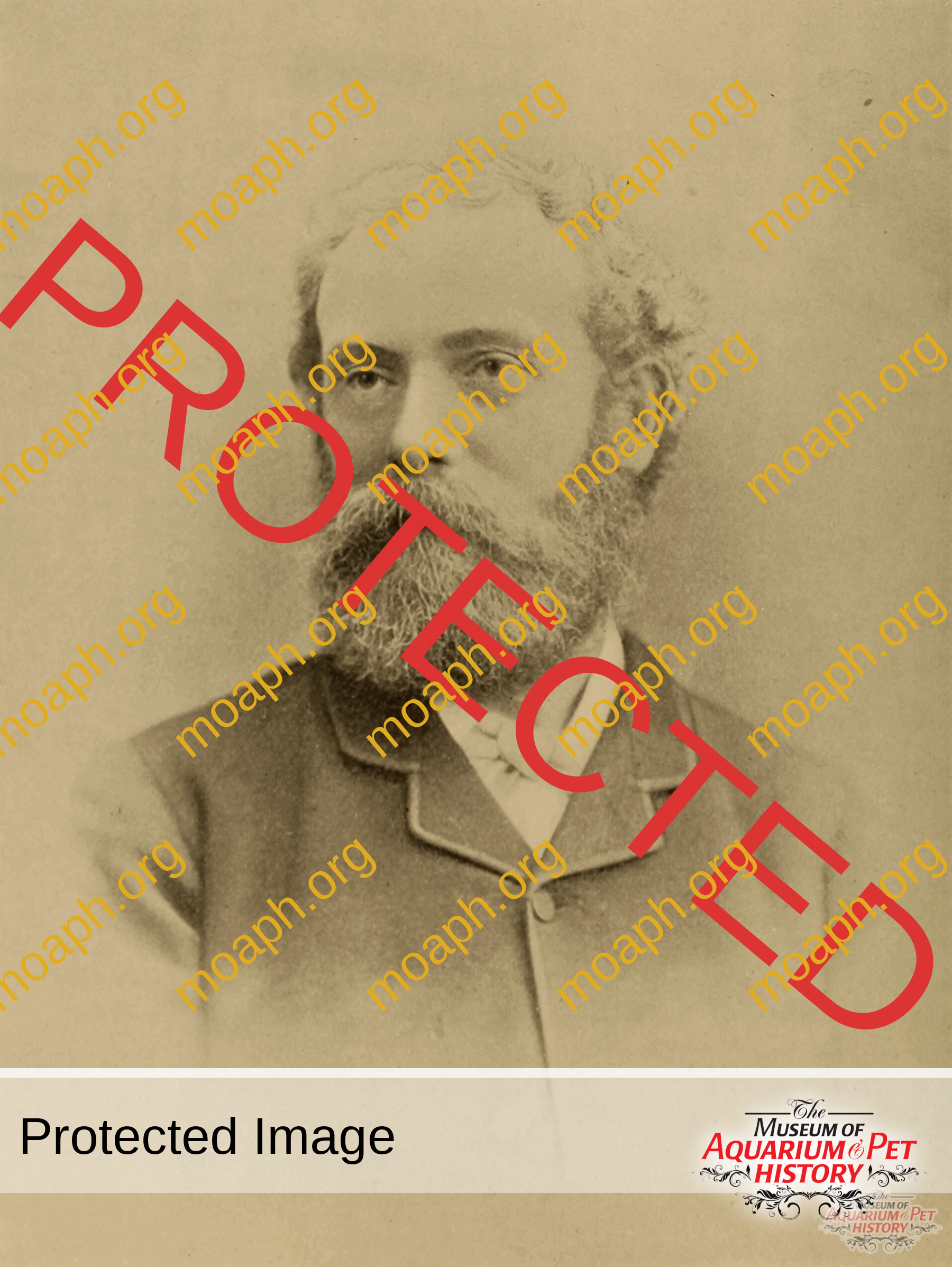
John I. Thornycroft (1843- 1928) founded his shipbuilding firm in 1866. In its first ten years the yard at Chiswick had a very modest production, mostly building steam launches and steam yachts. The breakthrough came in 1873, when the company built the small steel torpedo craft Rap for the Navy of Norway, followed by similar boats for other navies, and by HMS Lightning for the Royal Navy in 1877.
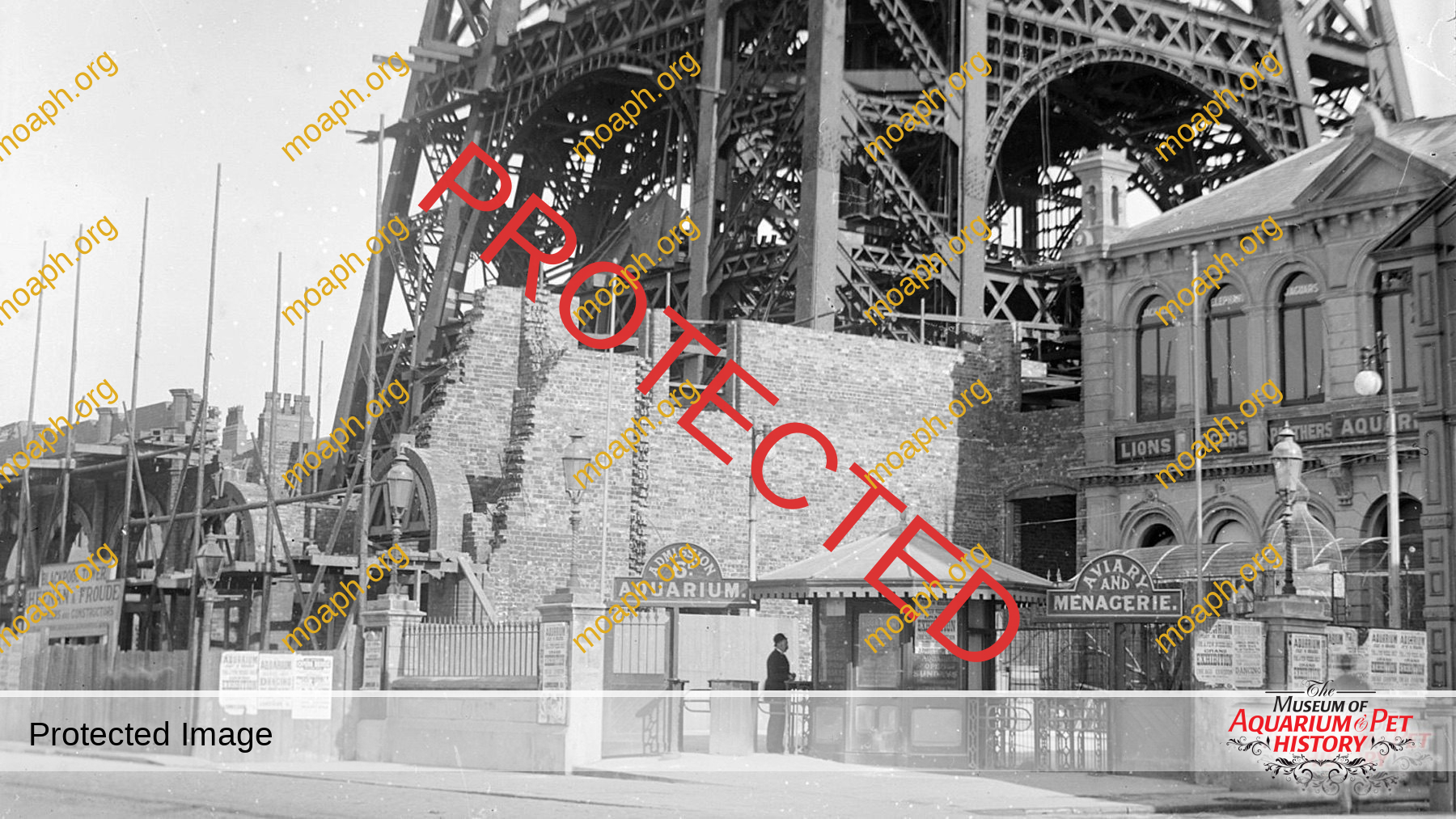
The public aquarium at the base of the Blackpool Tower was opened in 1875 inside the menagerie built by the former medical surgeon William Henry Cocker (1836-1911). Cocker’s first aim was raising funds for the tower construction. The aquarium interior was modeled on the limestone caverns in Derbyshire. It housed more than 50 different species of marine and freshwater fish. The largest tank held 8,500 gallons of salt water. Today, this coastal facility is still in business as a Sea Life Centre.
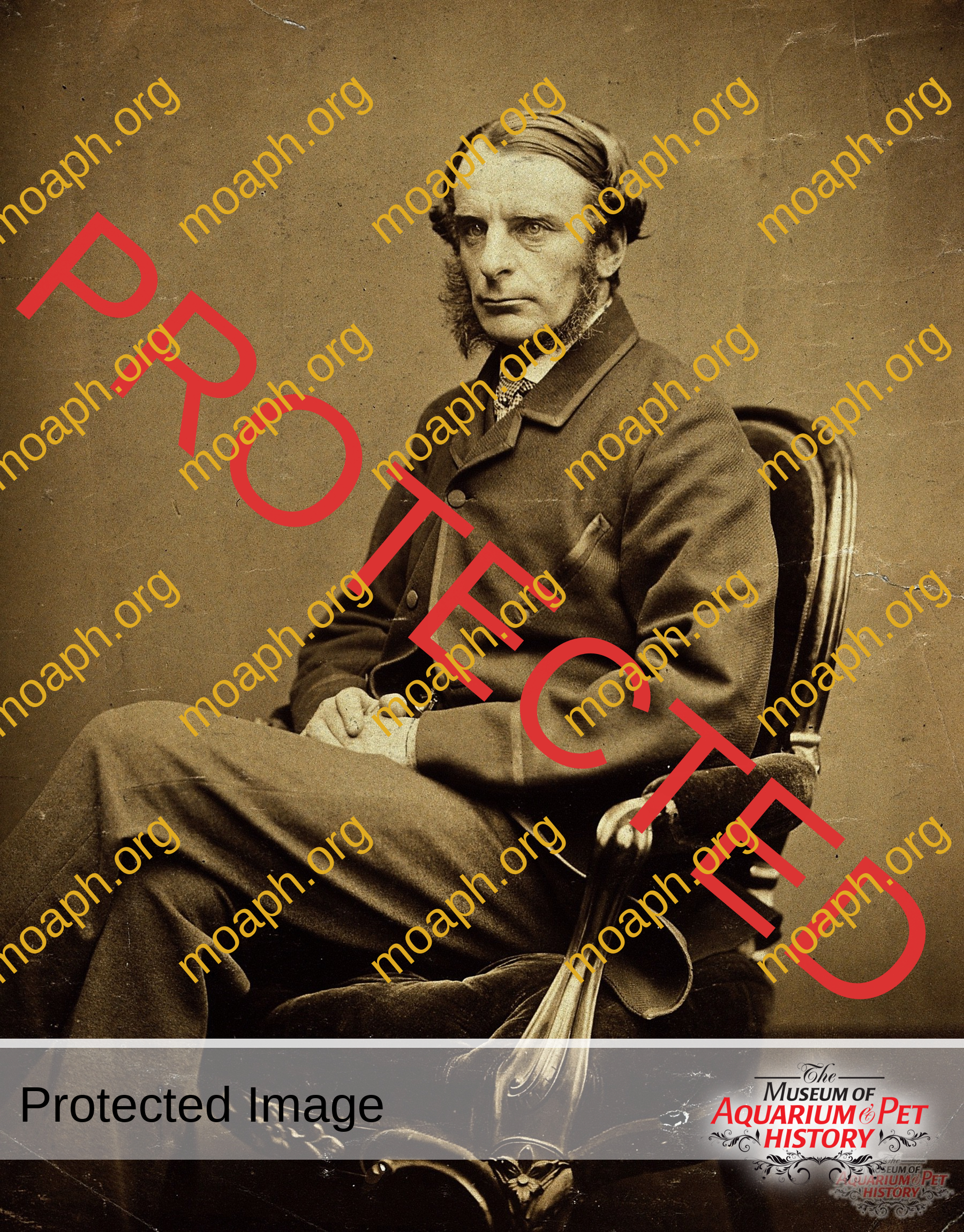
Lloyd’s friend Charles Kingsley (1819-1875) was a priest of the Church of England, a university professor, social reformer, historian, novelist and poet.
The next letter is particularly interesting from a technical standpoint as Lloyd delves into the topic of asphalt as a sealant for aquariums in place of calcareous cements. A crucial topic, since the leakages from reservoirs and display tanks were, together with the glass cracking issues, a real nightmare for the aquarium managers in Victorian times. In the same long document, Lloyd also mentions his pupils and his beloved cat Mim.
April 16, 1877.
“I duly received your letter of the 2nd of this month, but I have delayed answering it till I saw it launched, as I did, at 3pm on last Saturday, April 14 and immediately afterwards Mr Gardiner [Secretary of the Crystal Palace Aquarium], Mr Thorneycroft and I steamed a few miles up the river in her, and she went well, both with and against the tide. She will be quite ready to leave for Italy in a week or ten days, and I have given your orders to Thorneycroft about having her placed on board one of Pickernell’s larger boats, and as to losing no time.
As you kindly permit me to offer suggestions, I will repeat what I have said to Thorneycroft to the effect that I do not much like the tanks fore and aft to receive living animal as you collect them, to be made of iron, as even if they are internally lined with asphalt, the iron is not right, and the asphalt which is very brittle will chip away and leave the metal to be rusted by sea water and become poisonous. I should have preferred even wood, or still better slate. Then, too, I fancy these tanks are too inaccessible in situation and too much covered-up. They should be in a cool open place where air can get to the water, and where light may act to cause vegetation. They should be travelling aquaria, with all the apparatus of aquaria. No provisions have been made to cause a stream of sea water to pass through these tanks both when the launch is under steam or sail, or when she is standing still. I spoke to Thorneycroft on all these things, and he said he would think of them, and I have today written to him about them, and if necessary I will again go to Chiswick to see to them, as I am very anxious for you to have the best arrangements possible. You might do great things with this vessel. In answer to your questions, I have to say that all aquaria now being made are lined with asphalt as being the most impervious material known, at a reasonable cost. We are gradually reconstructing our place with it. All calcareous cements – as Portland and Roman – are more or less porous to water. We are still annoyed by our glasses cracking, and I have tried soft india-rubber in one tank, but there has been not time enough for a fair trial. At Southport, soft rubber is everywhere used with success. At Yarmouth no rubber, but perfectly flat and rigid iron frames, and with equal success. I believe that no glasses will crack where no leaks exist to cause softening of foundations and settlements, and when that is the case the glasses only need to have flat and even bearings with or without india rubber. […]
I am very anxious indeed to see your printed list of animals, and I will gladly do all I can in assigning the English names to them. When may I expect the list? In my coming large book on aquaria, there will be very much about you and your station, and all you may publish on it […]. If I can afford the cost, I will run-over to Naples to see your place with my own eyes before I publish.
The Rothesay Aqm was not done so well as I could desire. I name this because the Marquis of Bute [John Patrick Crichton-Stuart, 3rd Marquess of Bute], whom you name, was or is, or should be interested in it, it being on his own island of Bute, where he has a castle. But it amazes me much to think that because he never paid you a visit. And yet one should not wonder at anything that a Catholic does, and he is one. Yet do not repeat this, for it is not the act of a gentleman to offend people by reference to their creed. And yet what a curious thing does Romanism appear to a Darwinist, who believes only what he can understand! All creeds seem to me to be superstitions, i.e. things not governed by accepted natural laws.
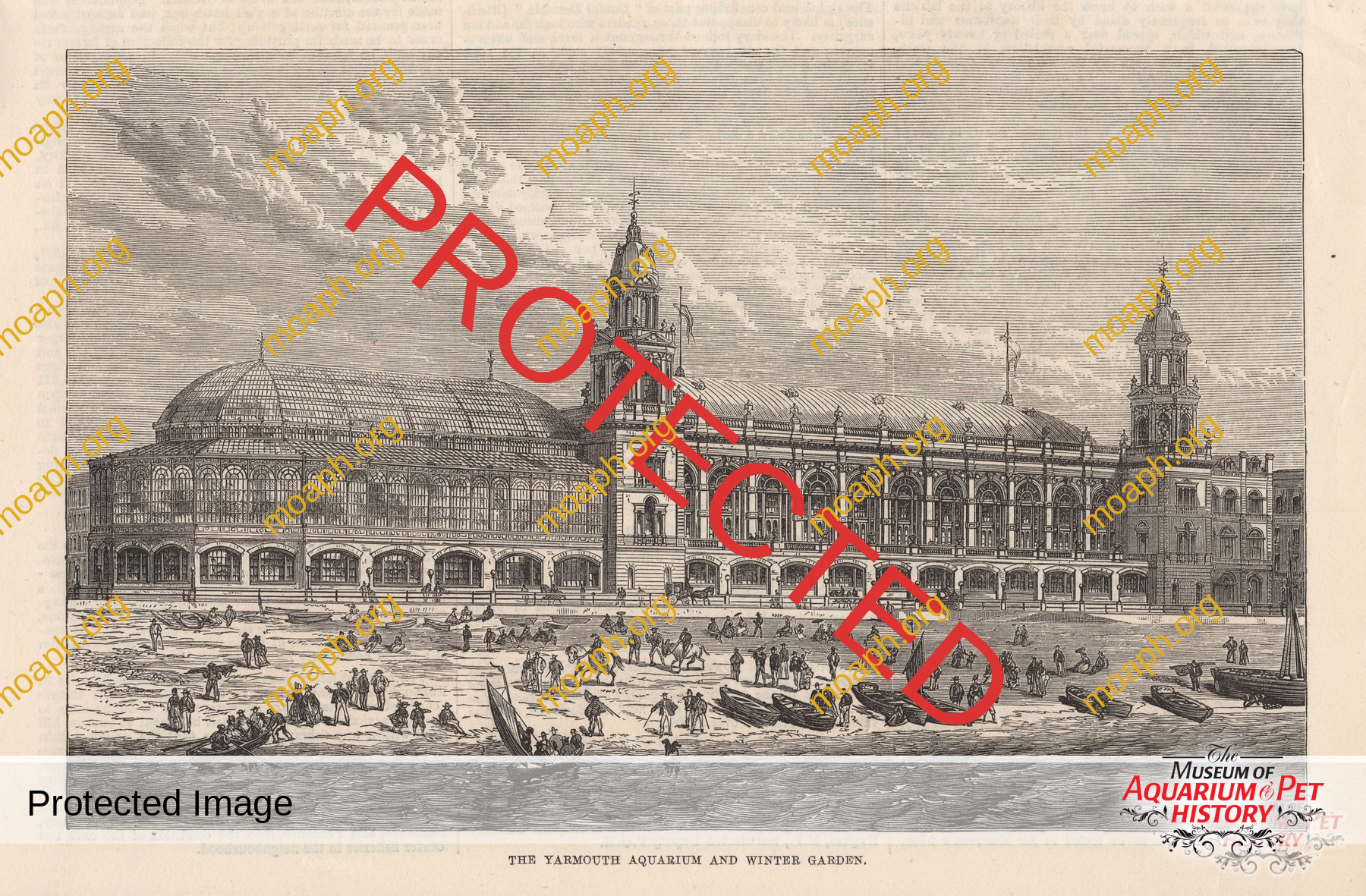
The Great Yarmouth aquarium and winter garden, Norfolk. The Illustrated London News, 1876. Lloyd worked for this establishment as a paid advisor, while Saville-Kent was aquarium curator. The latter soon resigned to pursue the dream of establishing a marine research station on Jersey.
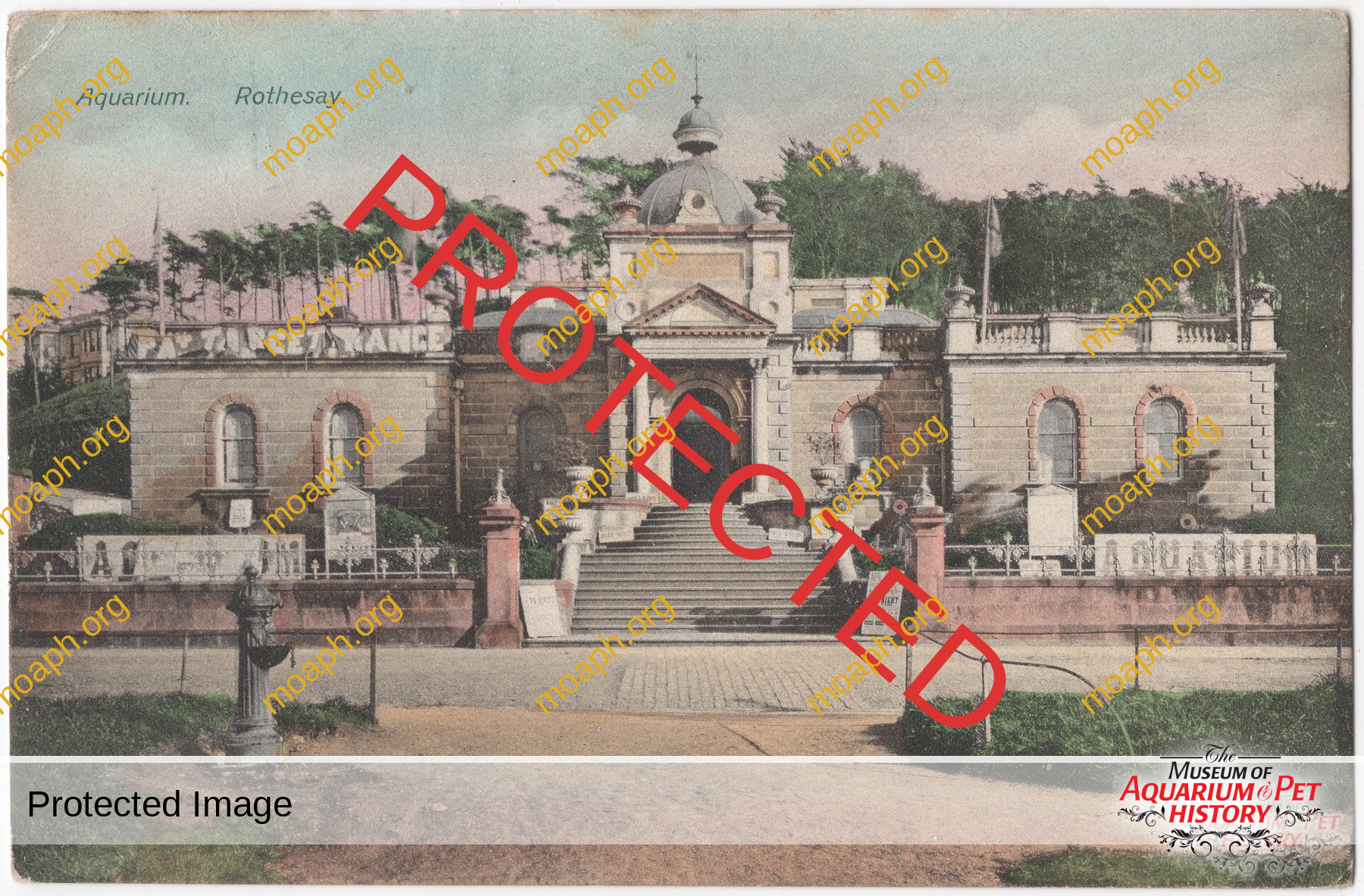
The design of the Rothesay aquarium was based on Lloyd’s continuous circulation system. For the construction of the tanks, marble has been greatly used in place of bricks and mortar.
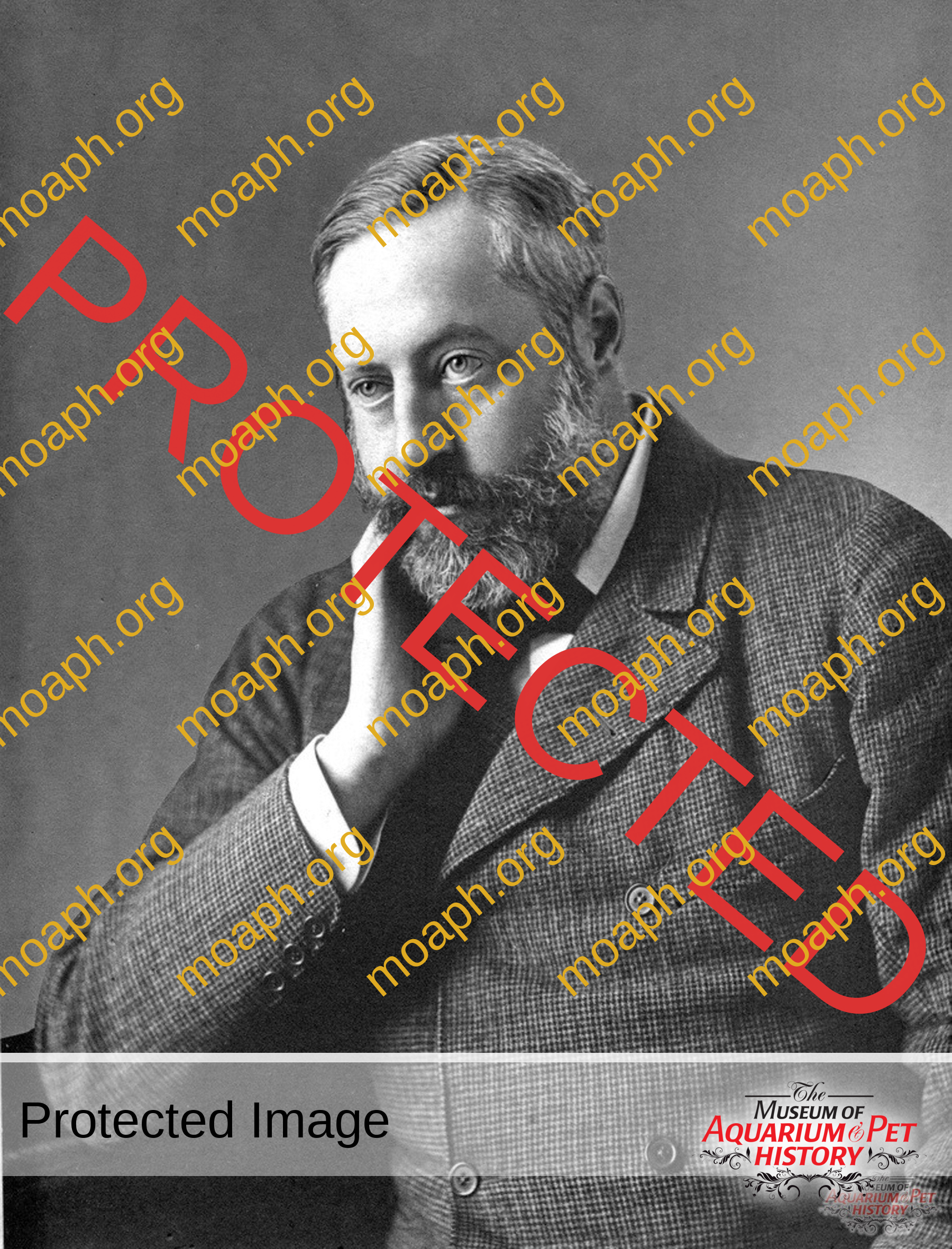
John Patrick Crichton-Stuart (1847-1900), 3rd Marquess of Bute, was a Scottish landed aristocrat, industrial magnate, antiquarian, scholar, philanthropist, and architectural patron. He succeeded to the marquisate at the age of just six months, becoming thanks to his vast inheritance one of the richest men in the British Empire.
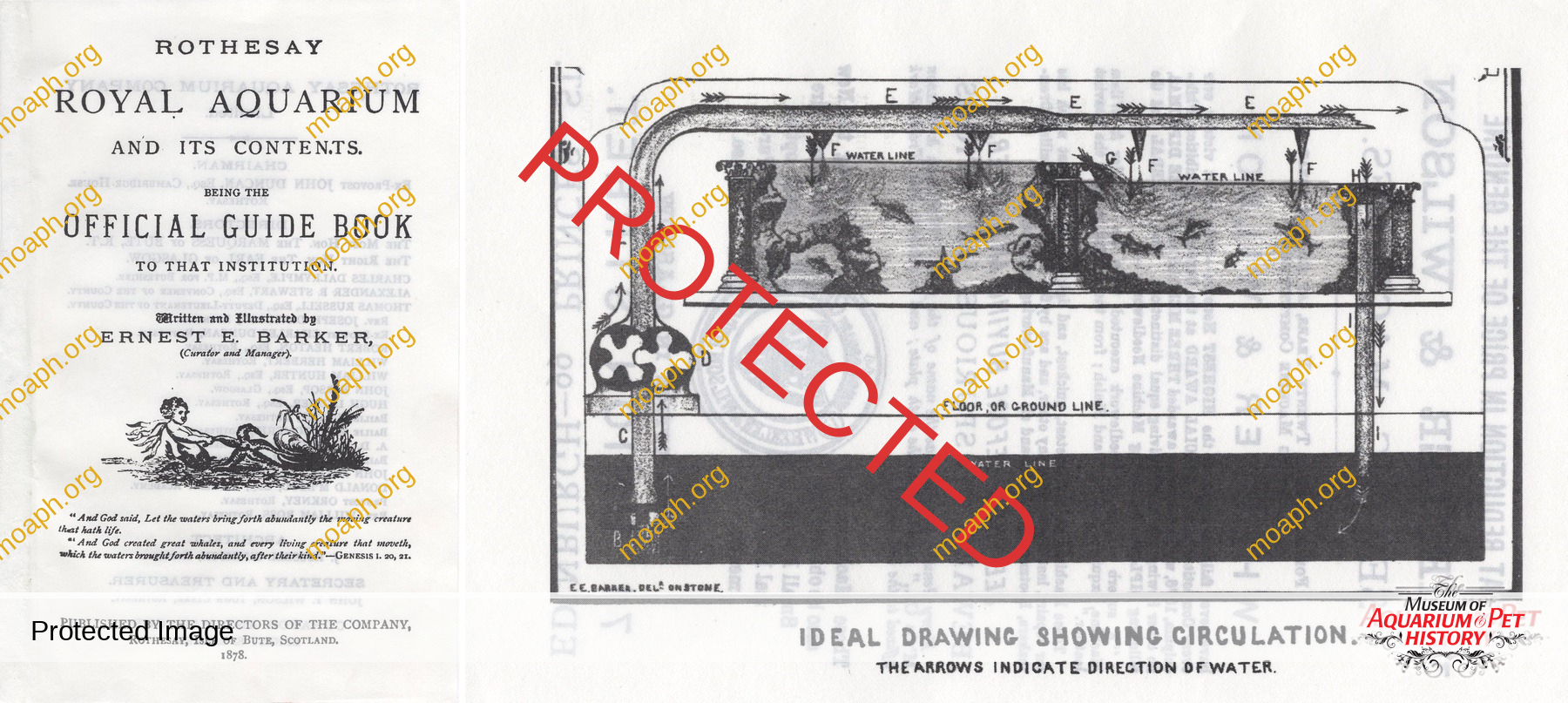
Written and illustrated by Lloyd’s pupil Ernest E. Barker, the first official guide to the Rothesay aquarium will be published in 1878.
But I much glory in the Naples station (or, as I prefer calling it, an Aquarium) it being a Temple set up for the worship of the Doctrine of Evolution, right in the midst of the tenets of Rome. But don’t tell the Pope, please.
I suppose you never could conceive W.A.L. thus giving his opinions of theology.
You don’t exactly say in what manner you intend applying the figures which your excellent artist is painting. Are they for publication, finally? Please say.
Captain Badcock was here the other day and he told me what I am sorry for – that you have had much aqm mortality because of cold last winter, as you have no means of heating your building. […] Cannot you use your waste stream for warmth in winter after it has passed through the engines? You can pass it elsewhere in summer.
I am looking forward to seeing Mrs Dohrn next year, with much interest. Give my kindest regard to her and to your two Slavo – Teutonic – Italian children, whom I also want to see in the flesh, or in photography, or in both. My wife and daughter are quite well, and send their kindest regards to you all. But you have not this time named my favourite cat, Mim, who is quite well and handsome. We celebrated her 17th birthday on Saturday the 7th of this month. My study-table at home is her favourite place to repose. On our walls at home we have framed four views of your station, and two of yourself, so you see you are well represented in Lower Norwood and that we all take a lively interest in you and your affairs.
I more and more find-out how hard it is to find a friend in the world who is not selfish and who is faithful, as well as clever.
Kent, of whom you heard unfavourably at Brighton, had to leave the Aqm at Westminster on Monday March 3 (last month) at an hour’s notice, and my pupil Carrington was out in his place, on the same day. That Aqm will be I fear a failure. Kent, since 1872 has been at Aqm’s at Brighton, Manchester, Yarmouth and Westminster. Deceit and pride, and ingratitude, such as he possesses, joined with incompetence, ought not to prosper. But if he reforms, I will still be his friend, as I have been.
I have had three pupils, of whom Barker is at Rothesay, and Carrington at Westminster. The third – Birchall, is not yet in a post, but expects to go to Tynemouth, now being built. Now I think I have told you all I can think about, and I must say goodbye. Write again soon and long to send the list, and tell me all you can. When the launch has actually gone I will again write. How is your brother. I recently heard a most splendid performance of Beethoven’s 7th Symphony.
I see by the contract made between Siemens and Thorneycroft that the cost of transport of the launch to Naples is to be borne by the maker and therefore any influence I might have exercised in getting the freight reduced would only favour him, and not you. Consequently I need not trouble further on that point.
I wish […] by the aid of this launch you may success in keeping in your Aqm the Paper Nautilus (Argonauta argo). Why not? It is only an Octopod. The Decapods are harder to keep in captivity than the Octopods, and yet, last year I kept three Sepia officinalis here from Sept to May. One lived three, another six, and one nine months, and in the Field of Sept 2 last (1876) I illustrated and described them, and Owen tells that these figures are the only accurate ones known to him in any English book, of a living decapod. I believe that if one can get alive into a sufficiently large and healthy aqm any cephalopod, and can get it to feed, then it can be kept for long periods. Carpenter, in his lecture on your place, gave a very erroneous account of the motions of Loligo [Loligo vulgaris] which he saw in your tanks. It thus often follows that biologists who are not mechanicians, are wrong in their deductions. And yet every animal and plant is but a more or less complex machine – hence physiologists and anatomists, and even naturalists who deal only with the externals of organic beings, should be engineers. But I never separate any naturalists into classes. We all work to one end, and the terms “species man” and “physiological man” applied to biologists, are idle.
[Note written sideways on page 13]
The mud in our reservoir in darkness are thousands of minute tube-worms – like Sabella – all alive and growing. Hooray!”
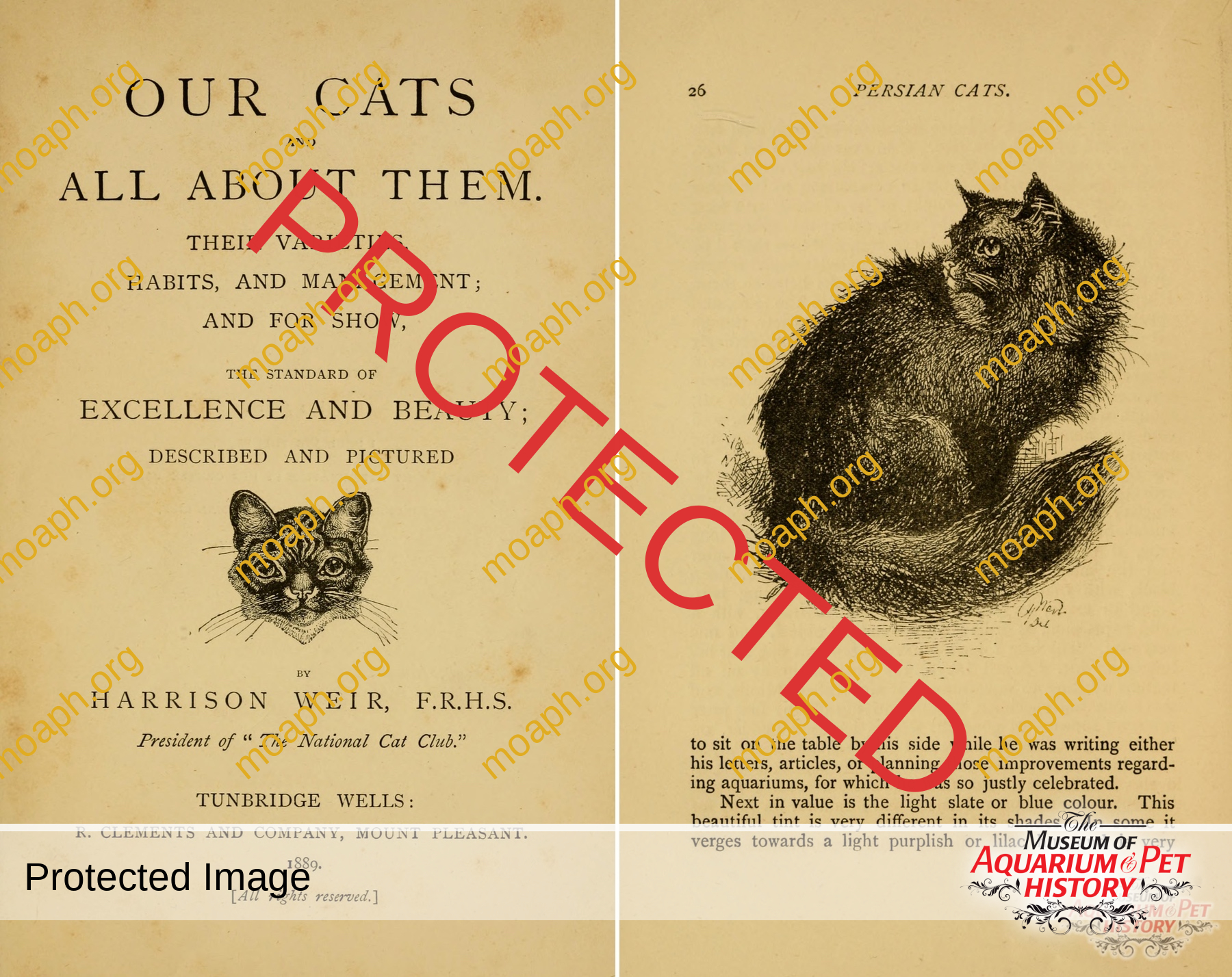
Lloyd’s Angora cat Mim depicted in Herrison Weir’s 1889 book Our Cats and All about Them.
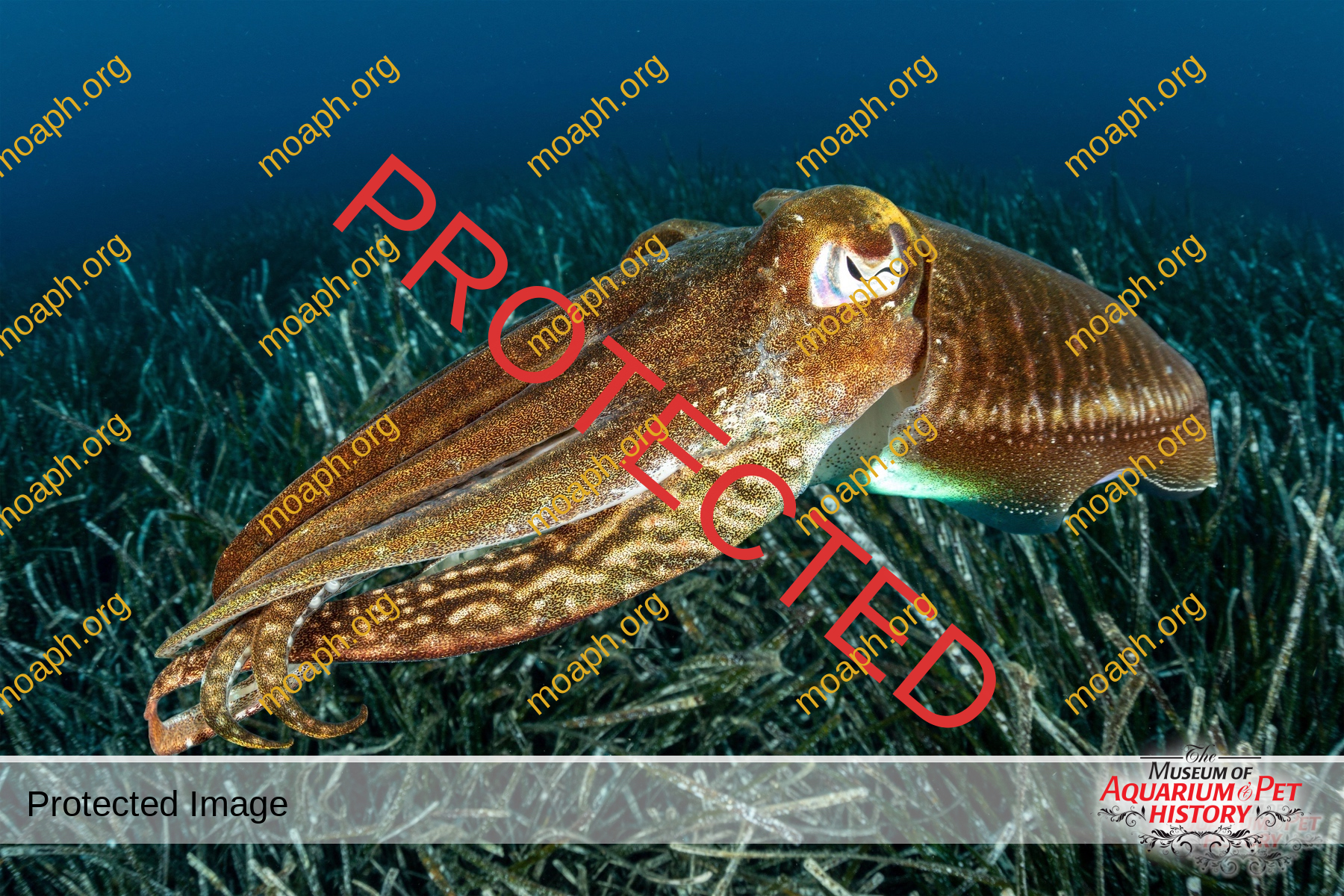
The common cuttlefish Sepia officinalis was a regular guest of the tank No. 19 of the Naples aquarium.
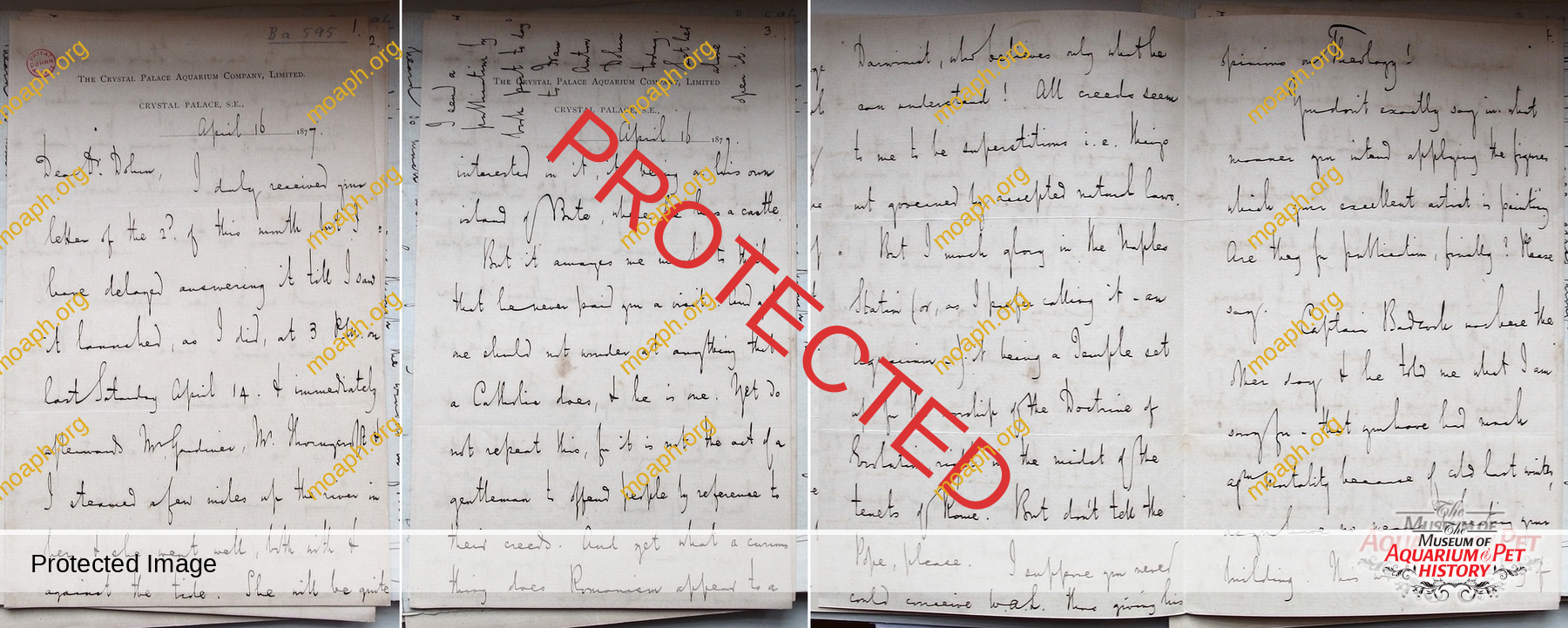
Pages 1, 9, 10, and 11 of the twenty-page letter dated April 16, 1877. ©Bayerische Staatsbibliothek.
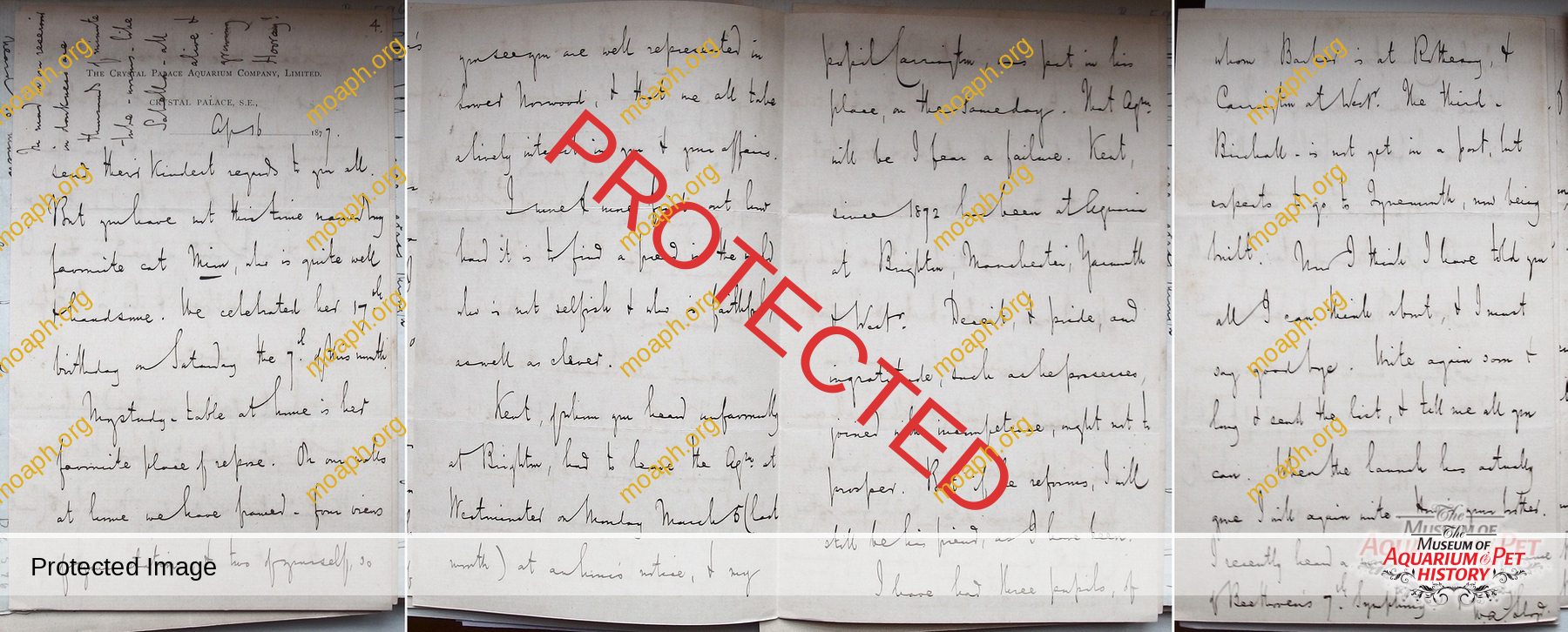
Pages 13, 14, 15, and 16 of the letter dated April 16, 1877. ©Bayerische Staatsbibliothek.
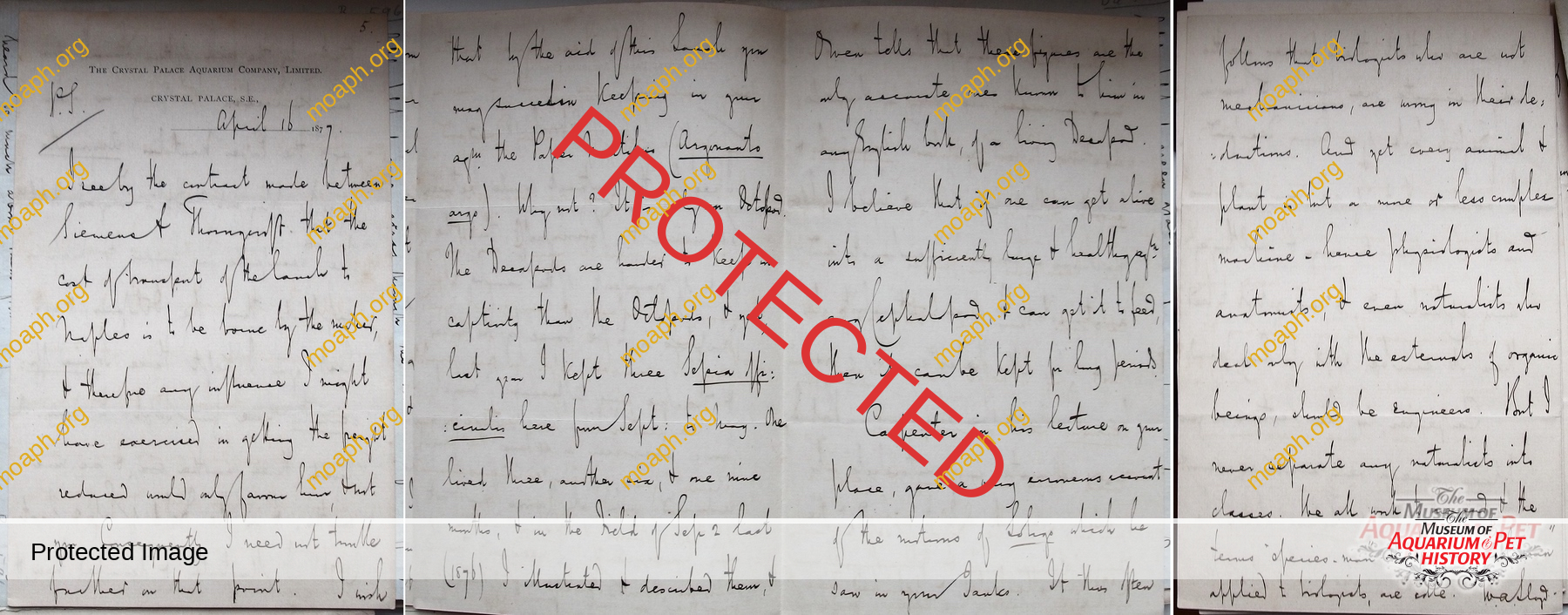
Pages 17, 18, 19, and 20 (last one) of the long letter dated April 16, 1877. ©Bayerische Staatsbibliothek.
As seen, the dispute between Lloyd and Saville-Kent during these years becomes increasingly heated. In a letter to his friend and patron Richard Owen, Lloyd will write:
“Poor Saville Kent, you will be sorry to know, is still in the same state as that which you describe of him to me two years ago, – namely “tossing about in troubled seas”. He made a dreadful mess of the Westminster Aquarium after I voluntarily left it, and then he blundered dreadfully in the Regent’s Park one. Since he left the British Museum for aquarium work in 1871, he has been in five public aquaria, and has done no good, and has not made any reputation, in any. He is now in Jersey, trying to get up an Aquarium costing £3000 or £5000, in £1 – shares, but I fear for his success, and I think he has mistaken his vocation, as it wants a man to be a good deal more than a mere naturalist to be a good aquarium maker and manager.
He should never have left the British Museum for an occupation needing much and dirty hard work, and where Kid gloves and chimney-pot hats have not place.
I have helped him in a most disinterested manner, with money and work, and influence, but he seems to have a curious facility for separating from his friends, all round.”
Among the multiple letters preserved at the Bavarian State Library in Munich, I found and deciphered also the following one sent by Lloyd to Maria de Baranowska (1856-1918), Anton Dohrn’s wife.
May 7, 1877.
“…The little steamer is now on her way to Naples on board the large steamer […] and I trust she may safely arrive, and be found very useful for aquarium purposes. She also will, I doubt not, be used for other trips than those of service in an around the pleasant Bay of Naples, which I have so often longed to see. Dr Anton Dohrn is yet young and is a pleasure to follow, and his wife is still quite young, and is very pleasant, so, when she in this boat sits in the fore-part, and he sits in the aft-part, it will be as our English poet Gray says in his “Bard”:- “Youth on the prow, and pleasure at the helm”.
I am very hard at work on this work, which I have been fondly contemplating for nearly a quarter of a century, and I have a whole room-full of all manner of materials for it, literary and artistic. I labour at it in all my spare moments in my study in my house near the Crystal Palace. My own room is underground and is situated so that while I can see a little plot of green grass through the window in front of me, yet nothing passing-by can interrupt or distract me. On my study table always sits my favourite old black Angora cat, Mim, as she has sat for the last seventeen years. We held her 17th birthday on the 7th of April last. Dr Dohrn has not enquired for her of late. Perhaps he thinks her dead, but she is as lively and as handsome as ever, as regards her face, at any rate, and she sends her love to Dr and Mrs Dohrn, she having heard so much about them from being in her master’s company so much.
[Note at the center on page 1]
These are just two short contributions to the Athenaeum journal of April 21 and 28, 1877.
[Note at the right hand side on page 1]
The book [Lloyd had been working for years on an aquarium book, which unfortunately will never be published due to his untimely death in 1880] will be in octavo or small quarto from 800 to 900 closely printed pages with about 450 words to a page, exclusively of illustrations […]
[Note at the left hand side on page 1]
Mr Dohrn will be sure to name the vessel “Glaucus” to oblige me.”
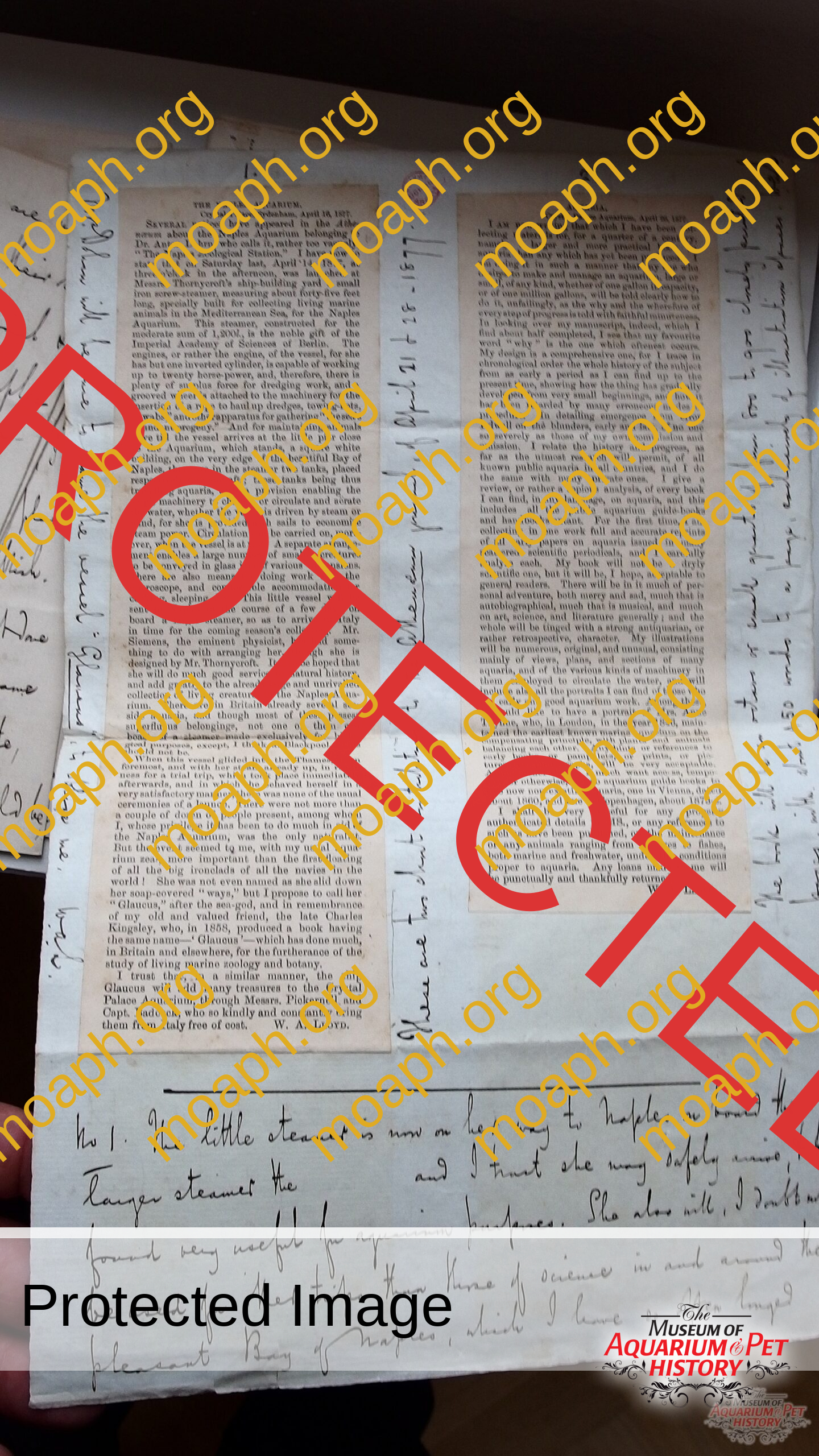
First page of the letter addressed to Dohrn’s wife and dated May 7, 1877. ©Bayerische Staatsbibliothek.
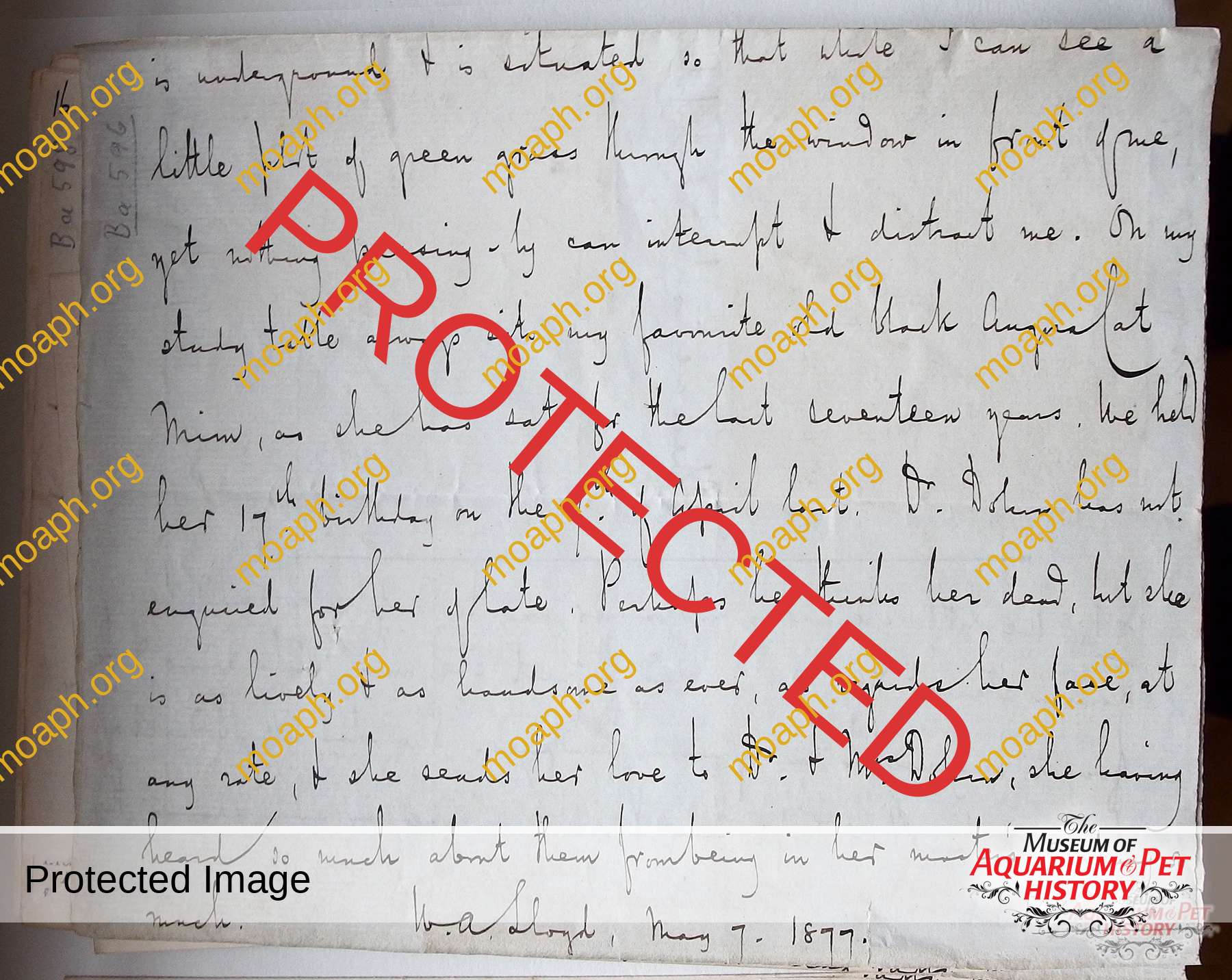
Last page of the letter addressed to Dohrn’s wife and dated May 7, 1877. ©Bayerische Staatsbibliothek.
May 8, 1877
“Your little steamer is now on her way, on board another and larger boat, to Naples, and I trust she will arrive safely, and be of good aquarium service to you. You will see by the enclosed extract from the Atheneum which I sent to your wife [as fun], that the English people know of your vessel. I wish, however, that she had better accommodation for natural history purposes. The two tanks should not be of iron, as seawater corrodes that material, and I have no faith in permanent protection of the metal by any covering material known to me. Asphalt will not adhere, nor do I find asphalt varnish will. Slate would have been better, or even wood – well seasoned.
And then, I think it is ill to place these tanks in almost inaccessible and dark places, especially when covered-over and not exposed to air in a warm climate. But I shall be glad to have your opinion and experience on the matter.
A little while ago I sent you a long letter in answer to yours, about new technicalities relating to aquaria, and named asphalt etc, etc. I have not yet had any answer. I am always glad to give information – all in my power. Kent, who got my place in the Westminster Aqm by miserable intrigue on Apr 15, 1876 had to leave suddenly before his year was up, on Mar 5, 1877. What do they think of this man as far as you know or can hear? Tell me in confidence as he has issued a printed letter and circular addressed to British naturalists to get up a Company with a capital of £20,000 with an alternative smaller scheme for £12,000 to erect a zoological station at Jersey, one of our Channel Islands, and having a very rich fauna and flora (marine) in avowed imitation of your station at Naples which he mentions in his prospectus.
But, as far as I can hear his scheme has met, up to now, with no encouragement. People have no confidence in him, as he quarrels with everybody. He has even quarrelled with me, in a most ungrateful manner. I having been to him a good friend, in lending and advancing him money, and in giving him influence, and taking his part when I thought him wronged, etc, etc. Then I fear he sadly over-rates his own abilities. Since 1870 he has been in the following places, leaving each with no good character:- 1 Coll:Surgeons Museum, 2 British Museum, 3 Brighton Aqm, 4 Manchester Aqm, 5 Yarmouth Aqm, 6 Westminster Aqm.
All this is in confidence as he has threatened law proceedings against me, and then withdrawn them.
Reverting to the launch, I have taken a good deal of trouble over her, and so trust you will be able to send us some good things as the result of her collecting. We shall all be very glad to see you and Mrs Dohrn and your children, whenever you bring them yourself. But don’t be a “whirlwind” too much when you come!
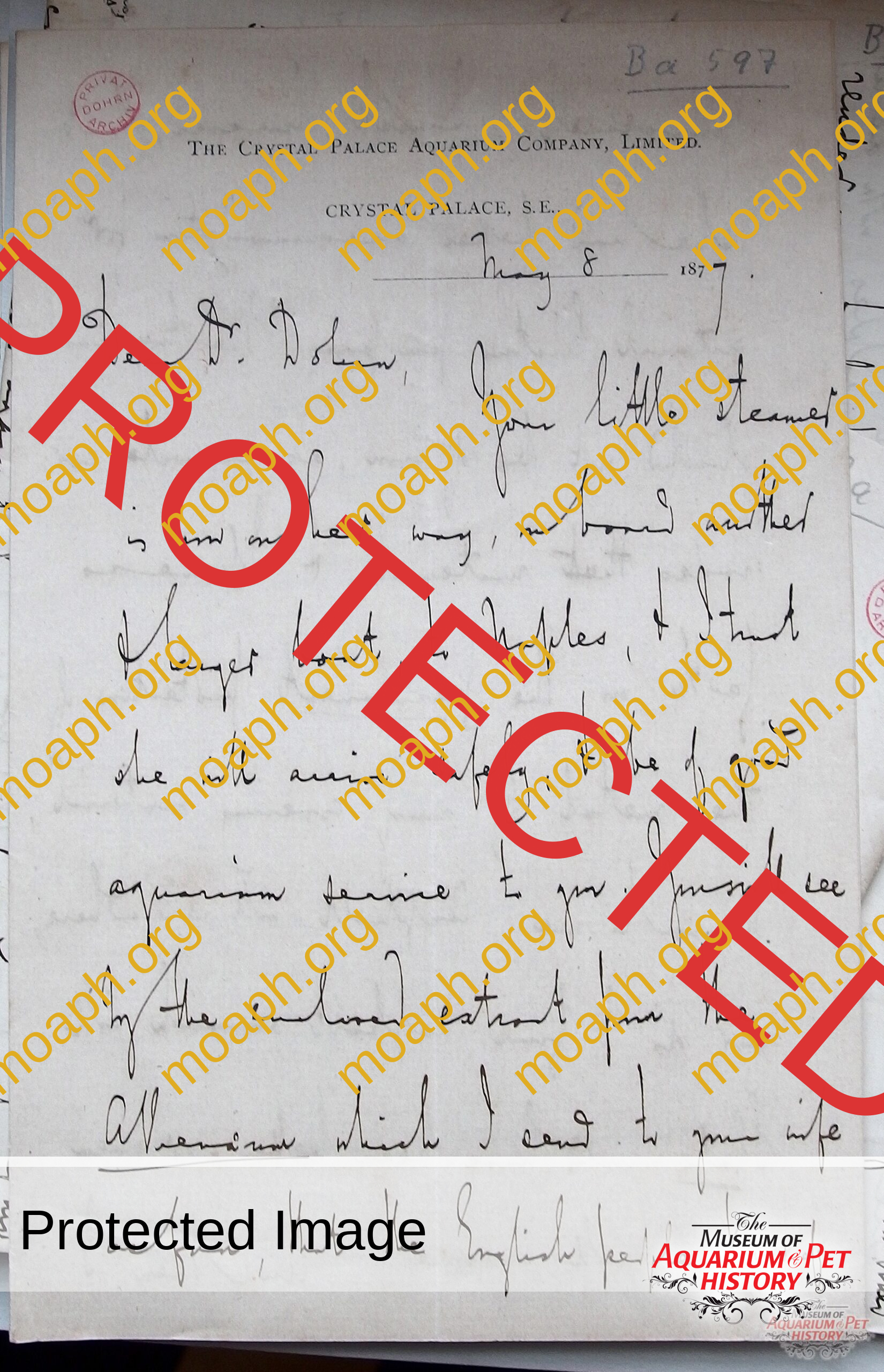
First page of the eight-page letter dated May 8, 1877. ©Bayerische Staatsbibliothek.
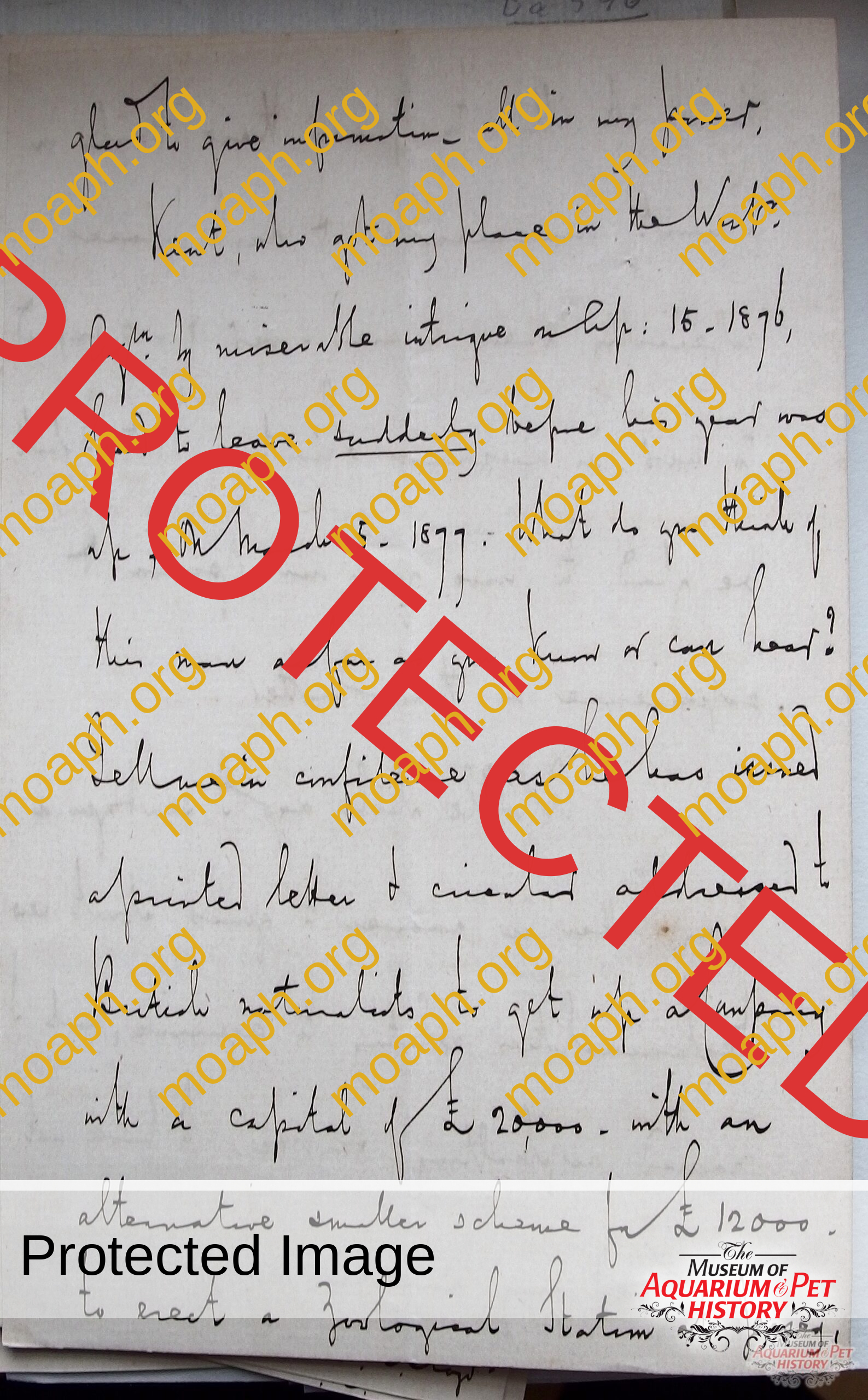
Page 4 of the letter dated May 8, 1877. ©Bayerische Staatsbibliothek.
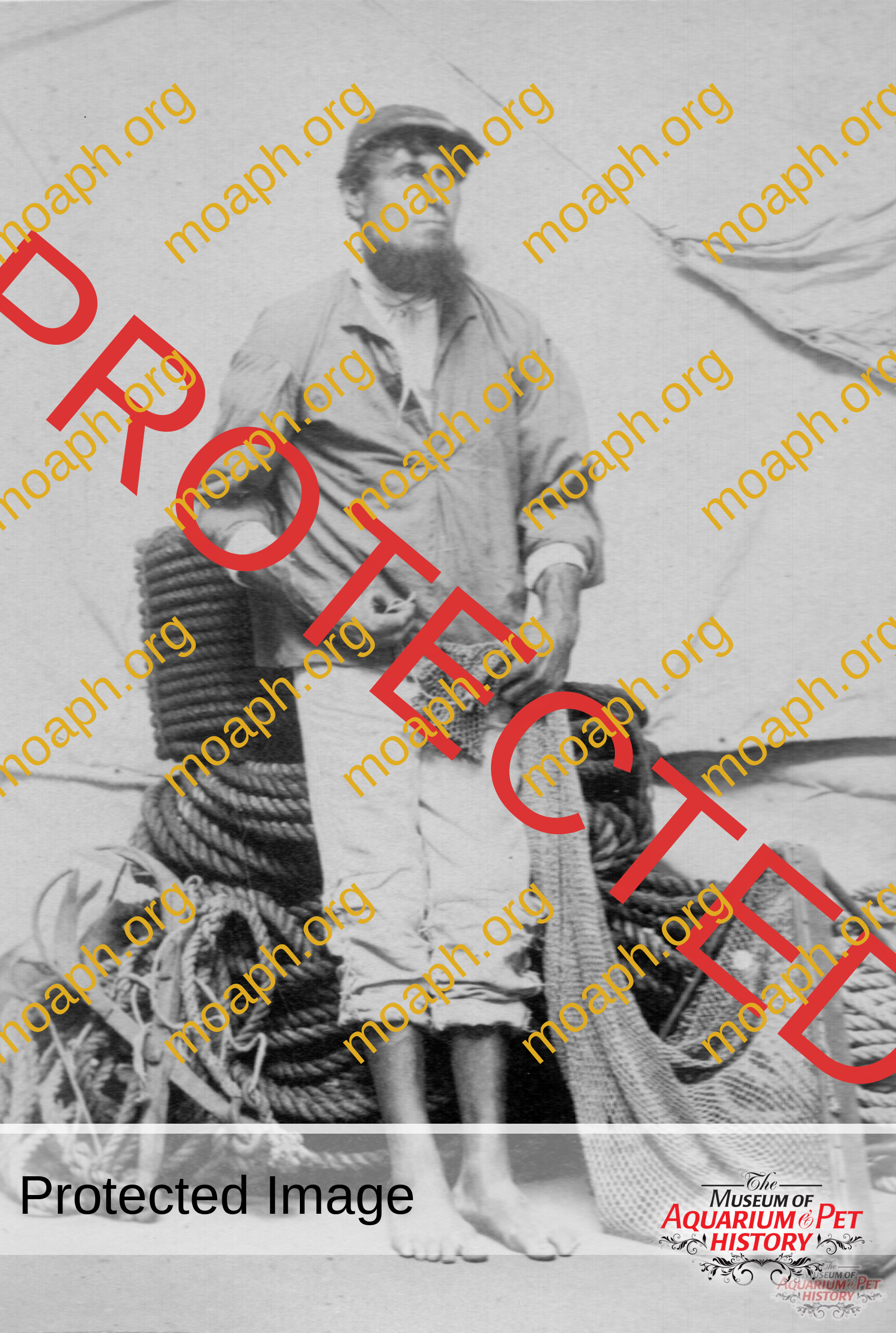
Aniello Fontanarosa, fisherman and head of the Zoological Station’s fleet, posing with a fishing dredge in the 1880s. ©Stazione Zoologica Anton Dohrn, Archivio Storico (ASZN, 1.La.129.10).
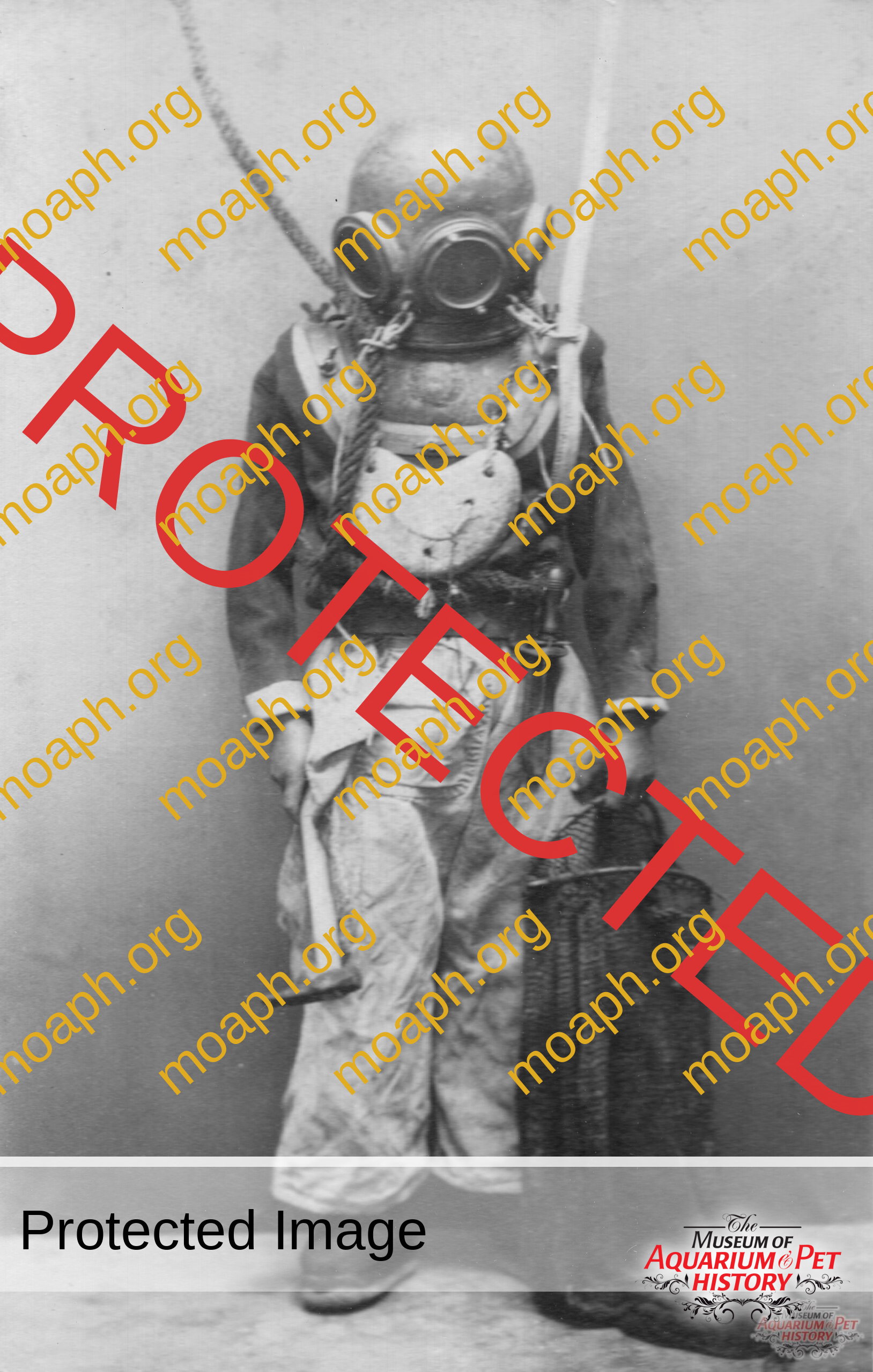
The diving equipment which Dohrn will procure from the Italian Royal Navy will allow the exploration of shallows, grottos and many other underwater environments. Dohrn’s divers will bring to the surface multiple sessile and benthic animals in perfect condition. ©Stazione Zoologica Anton Dohrn, Archivio Storico (ASZN, 1.La.129.9).
I saw Darwin the other night and told him of the launch and he seemed glad.
I wish we could have managed the proposed travelling railway aquarium, as then I could have hoped to afford to visit you. But now I cannot I fear. To meet our much diminished Aqm marine at the C.P. we have all had to retrench costs, and I accepted £200 a year instead of £400 as before, and now I am obliged to work very hard at my pen to make up the balance. Your station will be engraved and described in my work, and Glaucus also. Can you give me any Aqm information for the book?”
Unfortunately for Lloyd, who suggested to both Dohrn and his wife to use the name Glaucus, the steamer will be named Johannes Müller after the great physiologist and pioneer of marine biology.
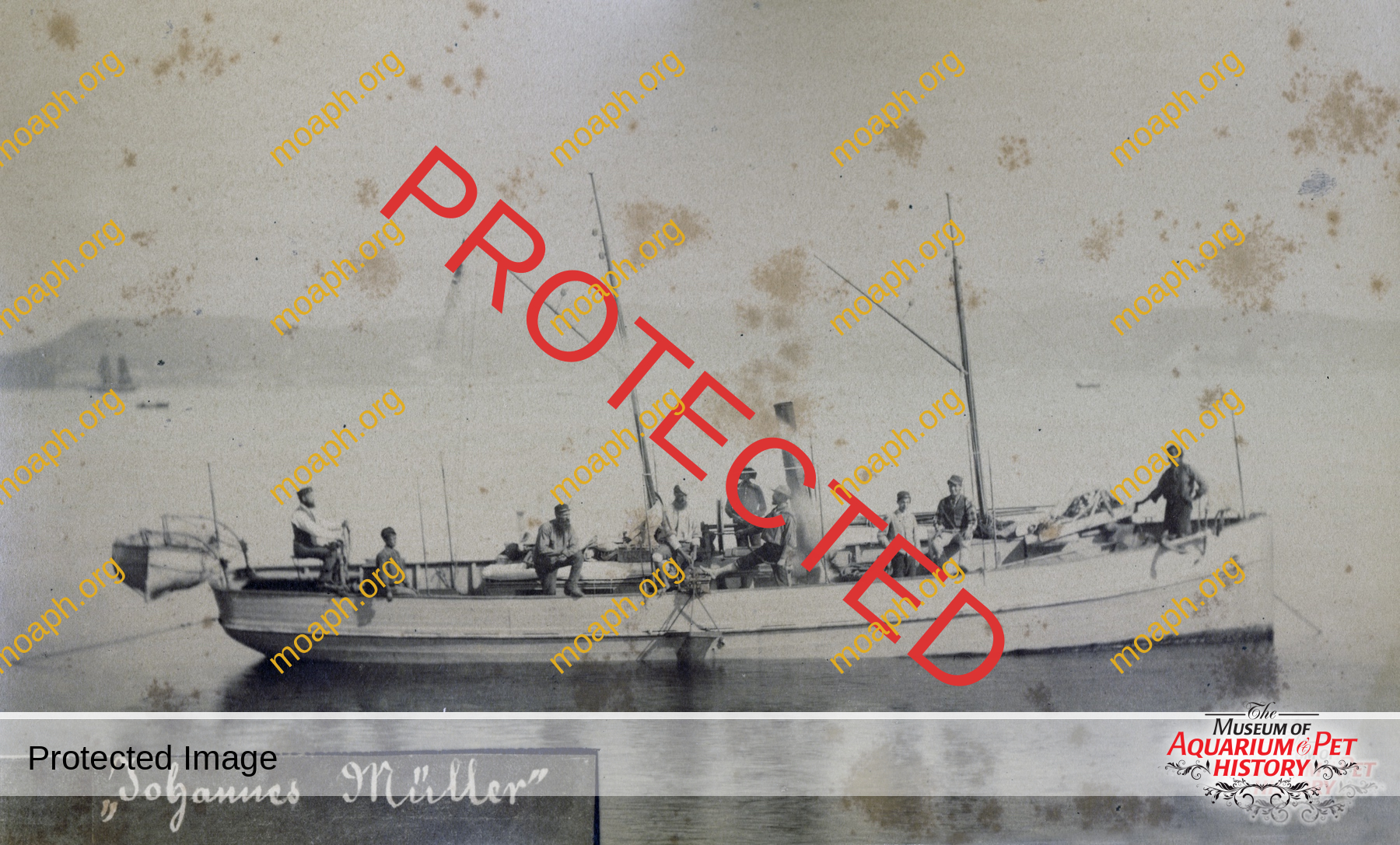
The iconic steamer Johannes Müller in 1877. ©Stazione Zoologica Anton Dohrn, Archivio Storico (ASZN, 1.La.125.12).
End of part 3.
Acknowledgements
Thanks to the following parties for their assistance: Andrea Travaglini – Archivio Storico Stazione Zoologica Anton Dohrn, and Maximilian Schreiber – Bayerische Staatsbibliothek.