
The Most Valuable Fishbowls Ever
One of the many things I love about antique aquariums and fishbowls is that, even today, you can purchase them at relatively affordable prices. This is because they’ve always been a fairly niche market, made up mostly of amateur fishkeepers or professionals from the aquarium industry who, at some point in their lives, developed an interest in the history of the hobby.
There are, however, a few exceptions. These are the finely-crafted pieces made by well-known firms and artists. They inevitably cross over the borders of the hobby, drawing the attention of art collectors, who are typically wealthy buyers that usually don’t mind the price.
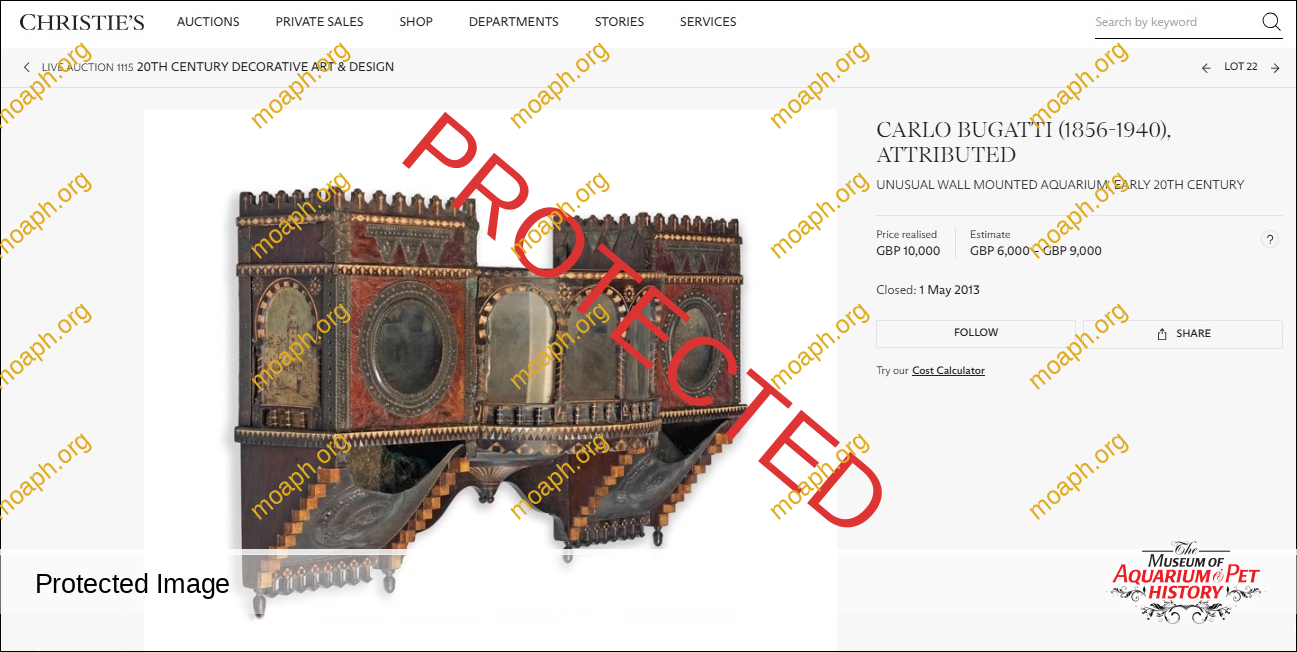
Early 20th century wall mounted aquarium attributed to Carlo Bugatti, father of the famous auto maker Ettore Bugatti. Stained beech, embossed copper and leather; the central tank interconnecting with two flanking tanks, the sides with arched panels painted with Moorish townscapes; above angled copper removable panels, each enclosing a detachable tin liner for food. Size: 25¼ in (64.2 cm) high; 40 in (101.5 cm) wide; 14 in (36 cm) deep.
The fishbowls attributed to the French designer Édouard Lièvre (1828-1886), and manufactured in the late 1870s to the early 1880s by the bronzier Ferdinand Barbedienne (1810-1892), are without a doubt the most striking example of those I have referred to.
Parisian opulence
Édouard Lièvre was among the early artists of his time who rose above the craftsmen guild system to become an independent designer. Like some of his foremost contemporaries, such as Carrier-Belleuse, Constant Sévin, Emile Reiber, and Froment-Meurice, Lièvre utilized the latest technologies of the day, learning to express his talent and creativity through several art forms such as drawing, ébénisterie, lithographic printing, metalwork, painting, and sculpture.
His luxury furniture and ceramics in the neo-Renaissance style, now valued at astronomical prices, made him famous throughout Europe. Several Parisian craftsmen engaged Lièvre to provide designs for furniture and decorative objects, including the ébéniste Paul Sormani, the silversmith Christofle, many marchands-merciers such as Escalier de Cristal, popular bronziers like Maison Marnyhac, and the aforementioned bronze fondeur Ferdinand Barbedienne.
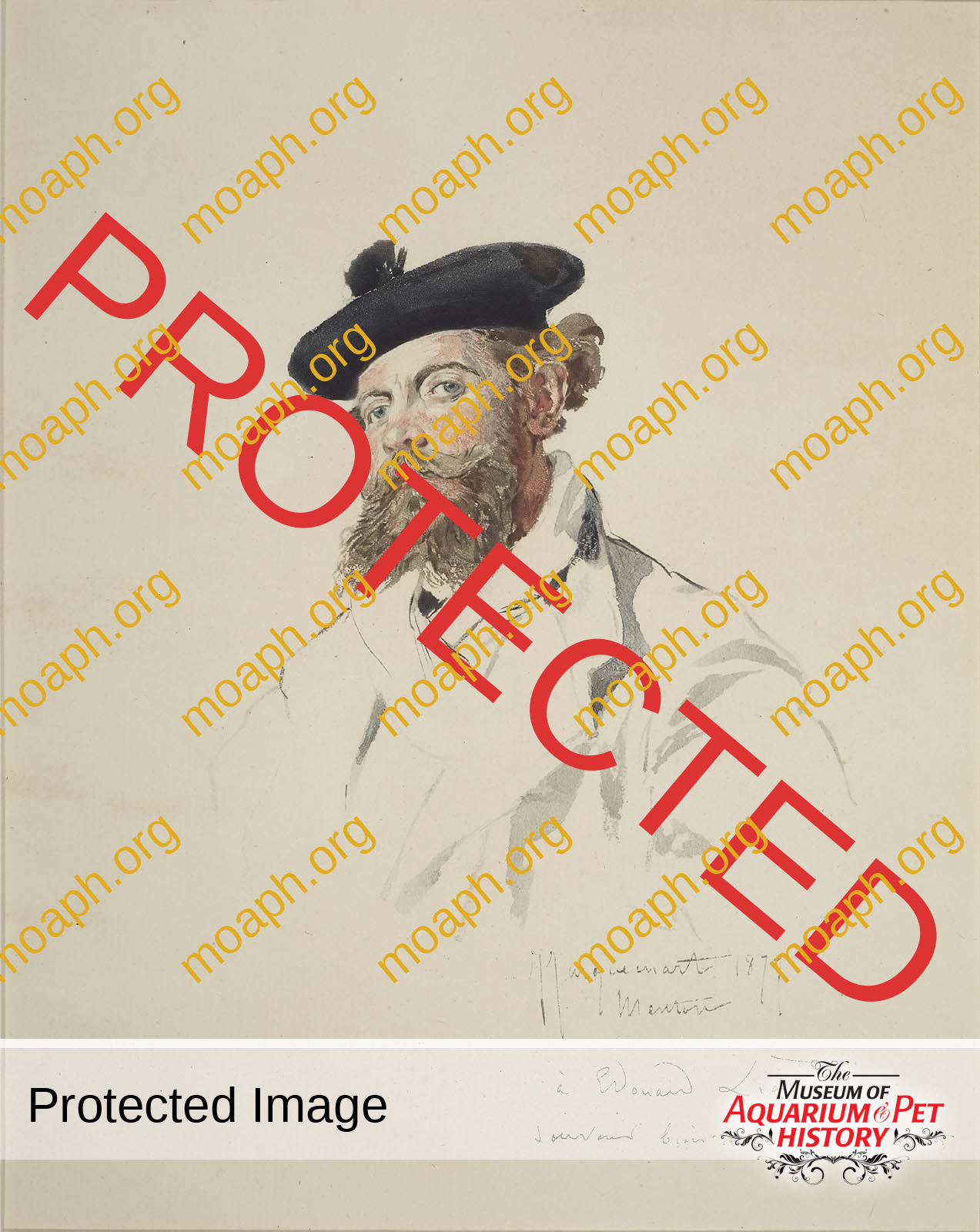
Portrait of Édouard Lièvre by Jules Ferdinand Jacquemart. Boston Museum of Fine Arts.
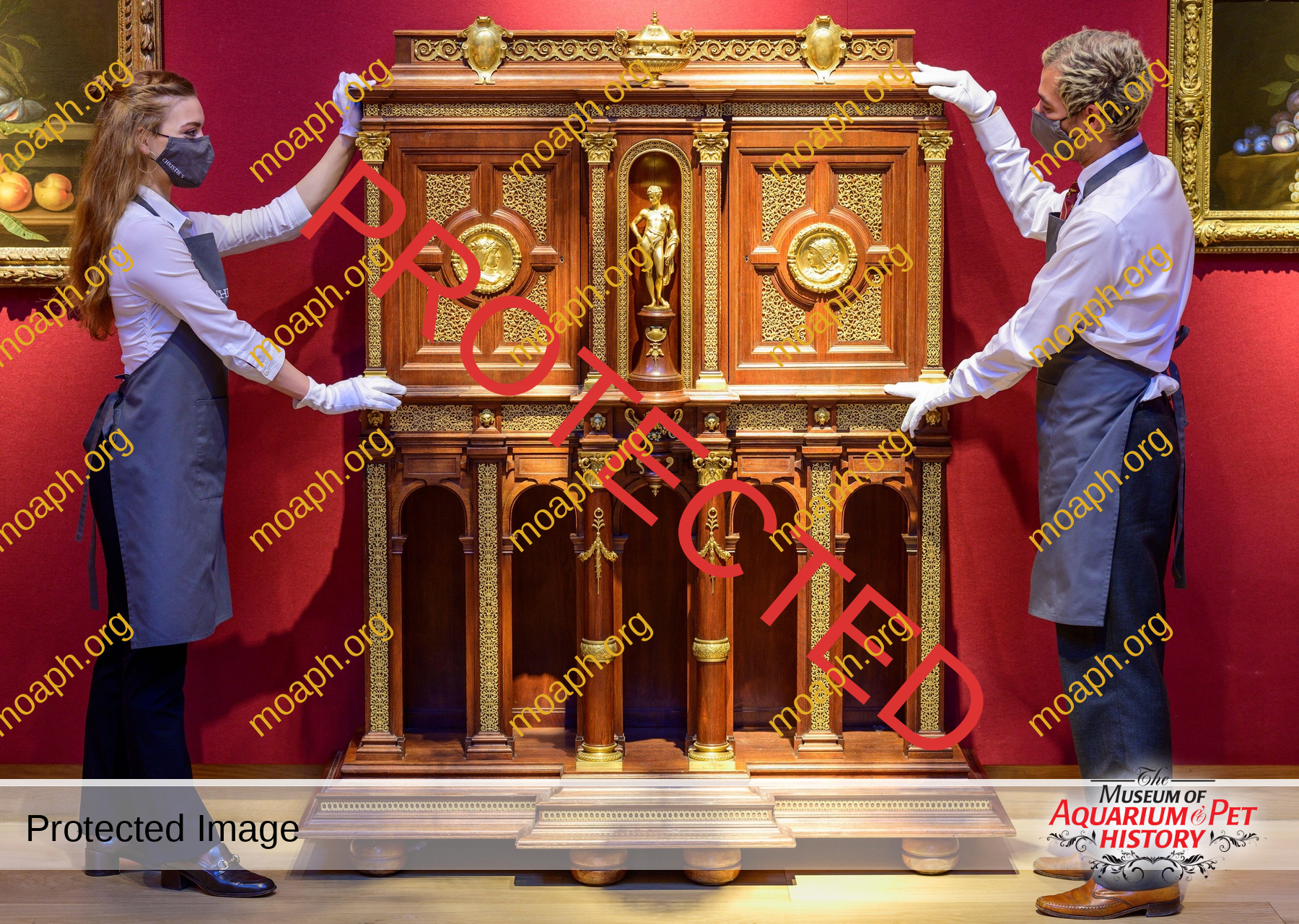
Gilt bronze mounted walnut and mahogany two-door cabinet on stand. Masterpiece attributed to Paul Sormani (1817-1877), and designed by Lièvre. Neo-Renaissance style, late 1870s
Illustrious private clients often turned to Lièvre directly, including the Rothschilds, the Vanderbilts, the actress Sarah Bernhardt who asked for an impressive cheval mirror, and the courtesan Louise-Emilie Valtesse de la Bigne. For the latter, Lievrè designed a stunning bed, now on display in the Musée des Arts Décoratifs in Paris.
Lièvre was a polymath, visionary, and prolific designer who, in the later part of his life, began producing works heavily influenced by the Far East in terms of stylistic choices. To better understand what happened in those years, some information on the historical context might be helpful.
Japan and japonisme
In the mid-nineteenth century, Japan was still affected by the strict isolationist policy introduced in 1641 by the Tokugawa shogunate. Known as sakoku, this policy almost completely forbade trade, cultural exchanges, and diplomacy with other countries. In 1853, however, Commodore Matthew Perry of the United States Navy arrived with a fleet of ships in Edo (now Tokyo), laying the groundwork for the signing of the 1854 Convention of Kanagawa, which led to the opening of two Japanese harbors to trade with the United States. It didn’t take long before other European countries, including France, followed the Americans’ lead.
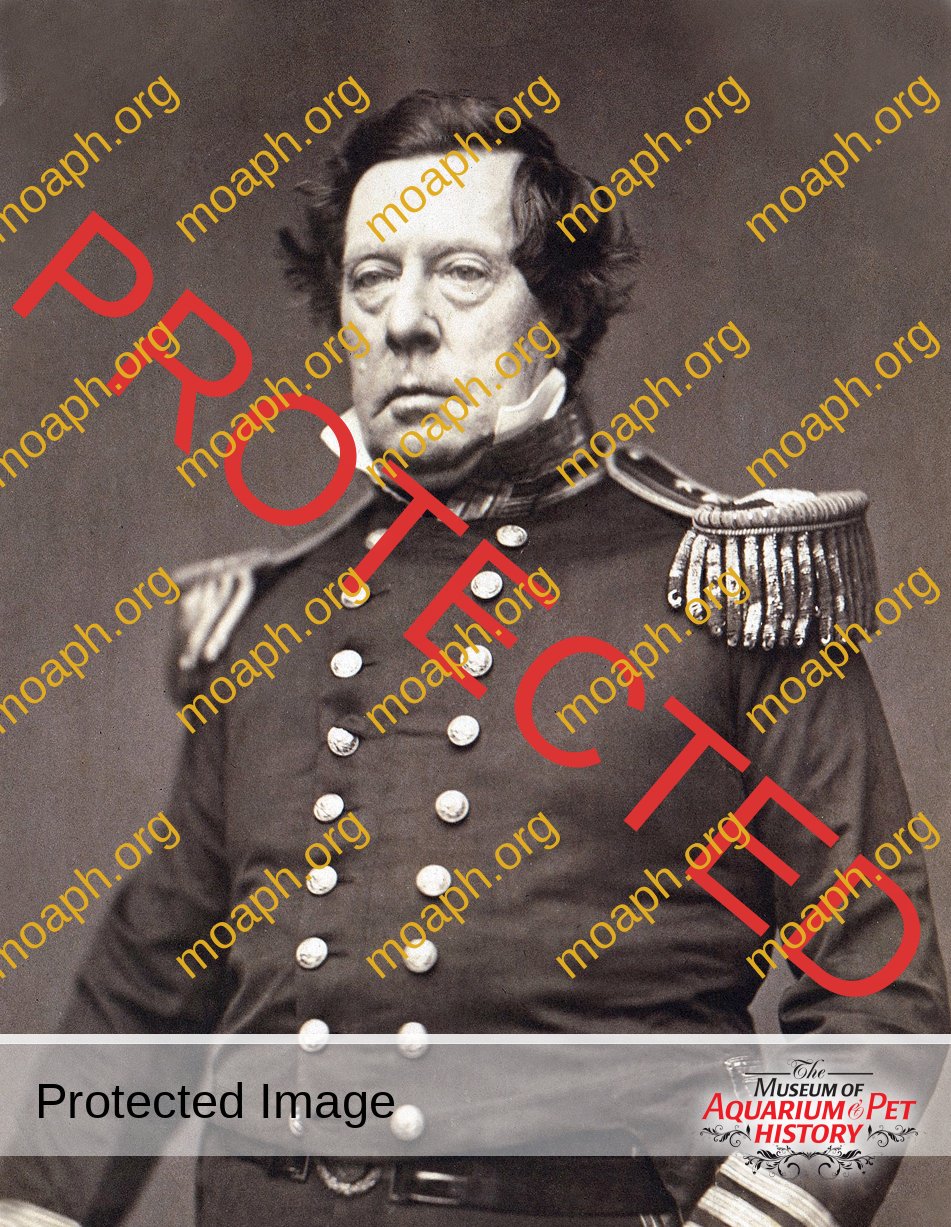
Commodore Matthew Calbraith Perry.
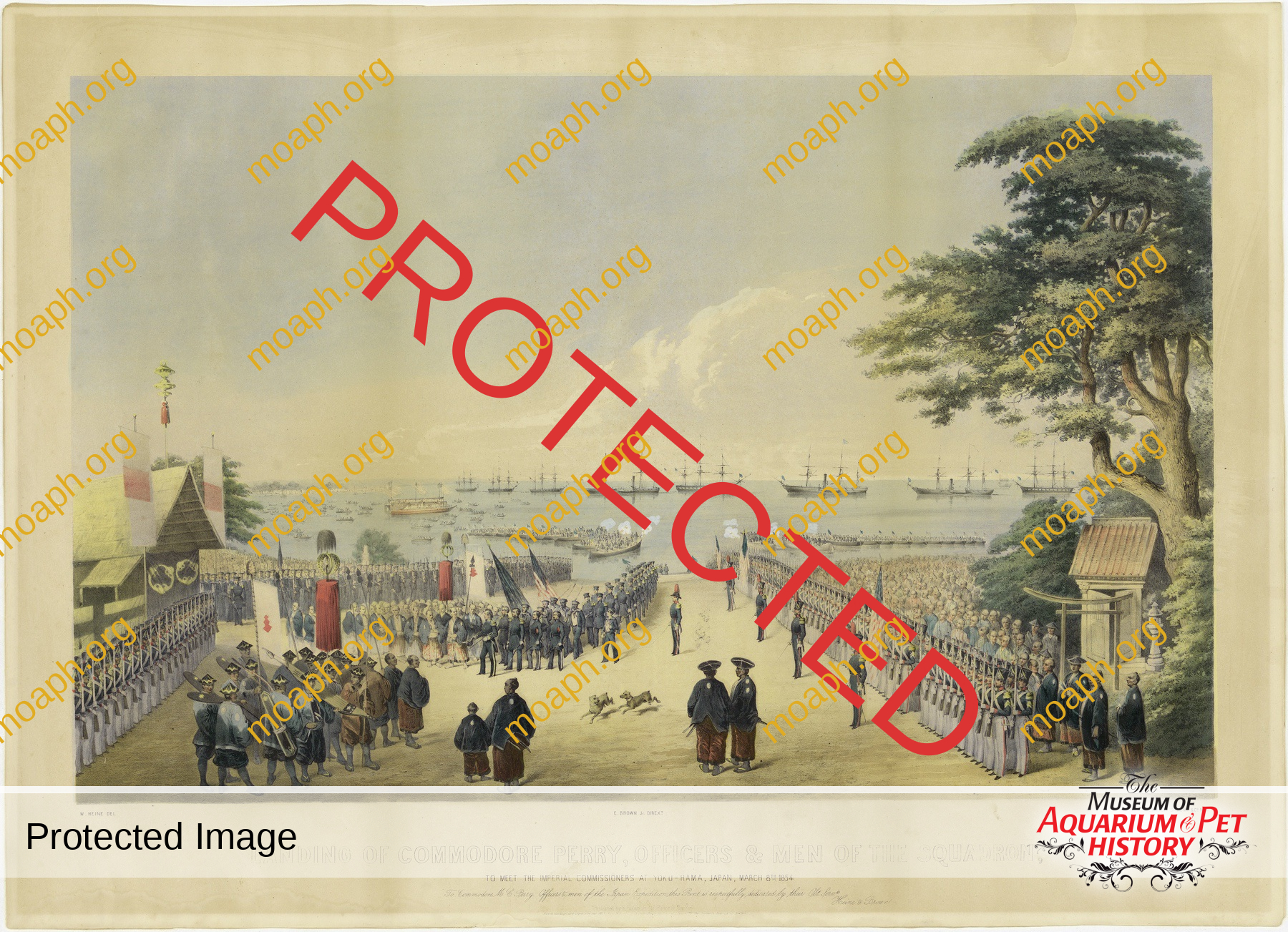
Landing of Commodore Perry, officers and men of the “squadron” to meet the imperial commissioners at Yoku-Hama, Japan. March 8, 1854.
Japan’s opening to the West expanded from the 1868 onward, as the shogun was overthrown, and Emperor Meiji started to lead the country. New policies ensured that Japan joined the most important international exhibitions, proudly promoting its products and showing to Western artisans new designs and techniques. In France, to describe the strong influence of Japanese culture and art on Western art and fashion of the time, the term japonisme was coined.
Lièvre was fascinated by the stylistic elements of the artworks coming from Japan, as well as from Chinese decorative arts. After studying them carefully, he developed his own new style, which was essentially a lavish blend of the West and the Far East.
The director of Bordeaux’s ceramics manufactory, Albert Vieillard, was one of the many rich people to develop a deep interest in Japanese culture and art. Towards the late 1870s, he commissioned Lièvre to produce a phenomenal suite of neo-Japanese furniture. The gorgeous Cabinet japonais, currently preserved in the Musée d’Orsay (Paris), was part of it.
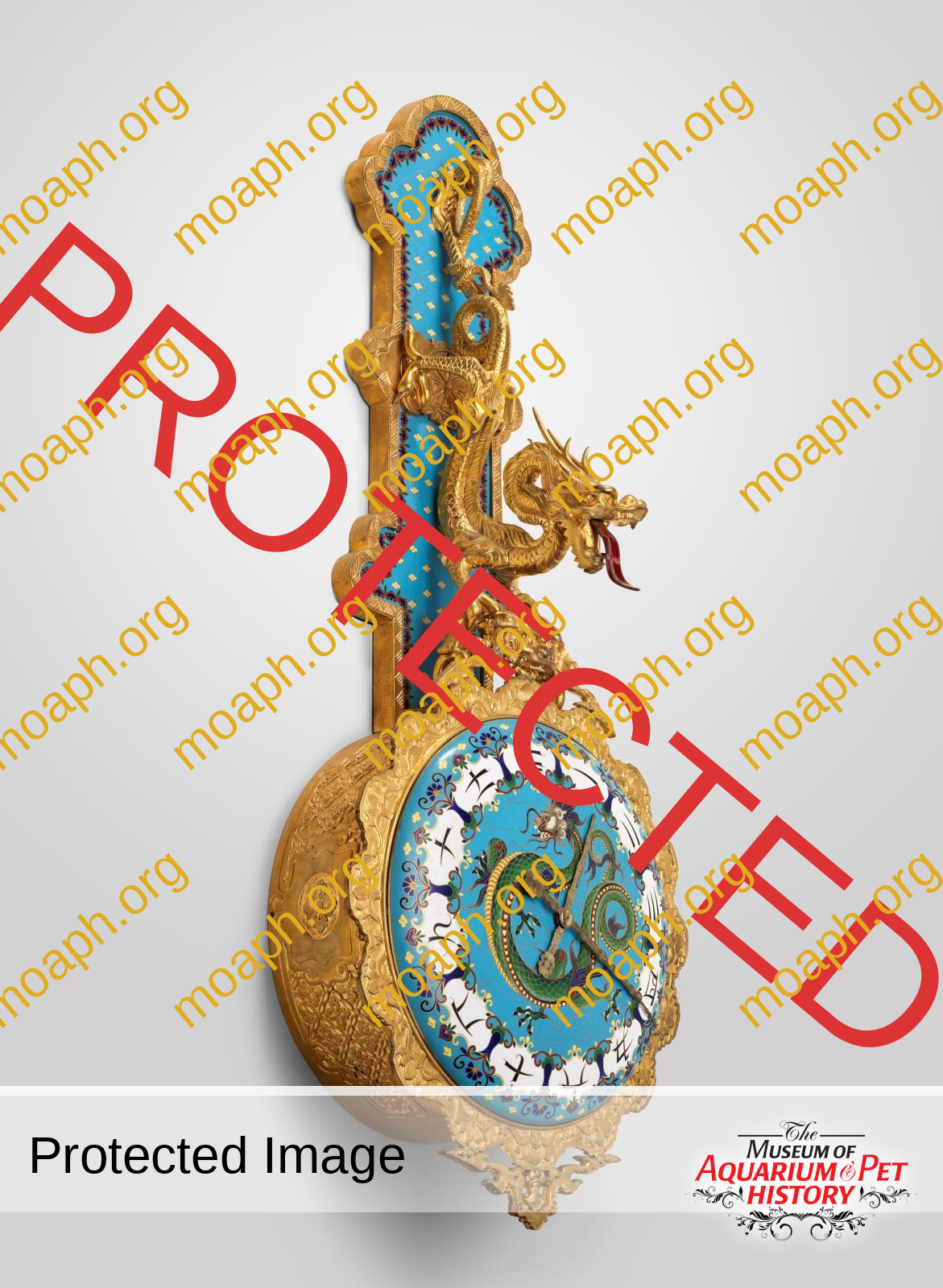
Early 1880s wall clock with gilt bronze case, cloisonné enamel dial and upper portion, attributed to Lièvre and retailed by L’Escalier de Cristal. Either this clock, or a nearly identical piece, hung in the Japanese style parlor of the Vanderbilt home at 640 Fifth Avenue in New York.
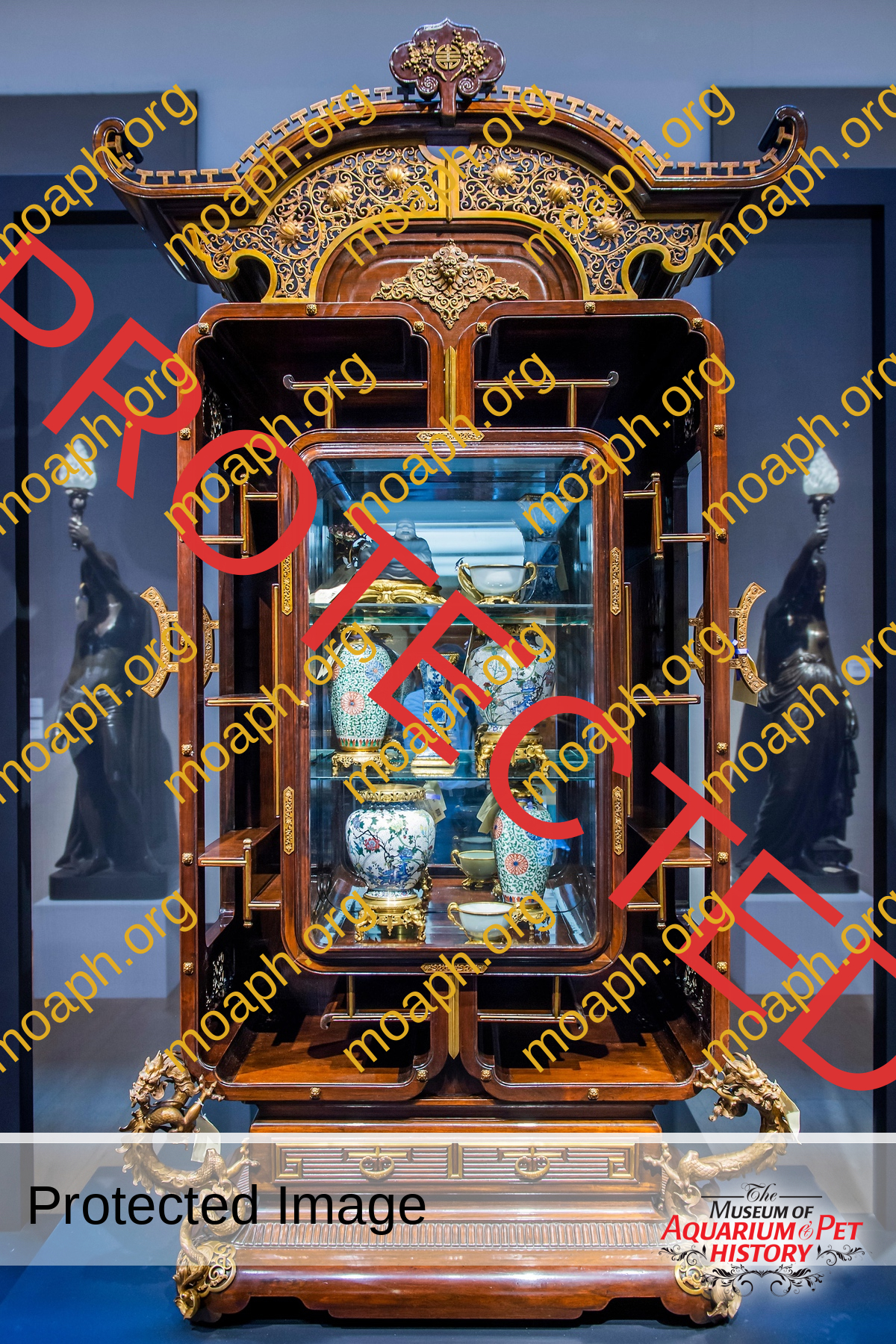
Amazing cabinet by Lièvre.
As already mentioned, Lièvre always collaborated with top-tier French craftsmen. One of them was Barbedienne, who manufactured for Lièvre a very limited series of fishbowls with floorstands, now known by the French name Aquarium japonisant.
Ferdinand Barbedienne
Just like Lièvre, Barbedienne came from humble origins. The son of a small farmer, he grew up in the Calvados region of northwest France and moved to Paris at the age of twelve to become, within a few years, a wallpaper manufacturer.
In 1838, he was introduced to the inventor Achille Collas, who a couple of years earlier built a pantograph-like machine to reproduce sculptures in different scales and materials. The two started a company together, the Société A. Collas et Barbedienne, for the production and marketing of reduced copies of popular antique sculptures in different materials ranging from plaster and wood, to bronze and ivory.
From 1843, becoming equipped to perform fine metal cutting, bronze mounting, marble work, turning, enamel decoration, and crystal engraving, the company extended its scope by reproducing works of living artists under a publishing contract with them, thus laying the legal foundations for a new industry.
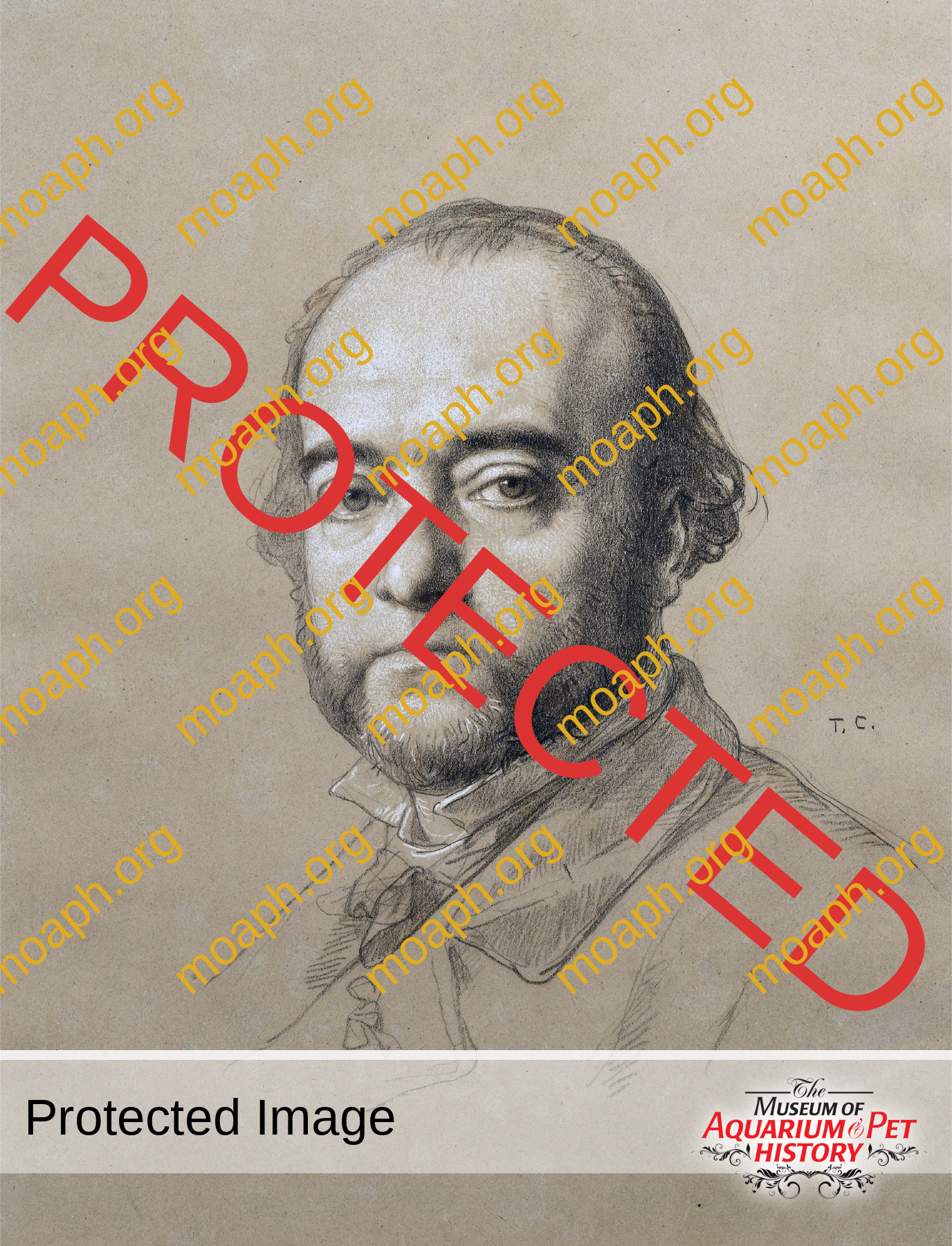
Portrait of Ferdinand Barbedienne by Thomas Couture.
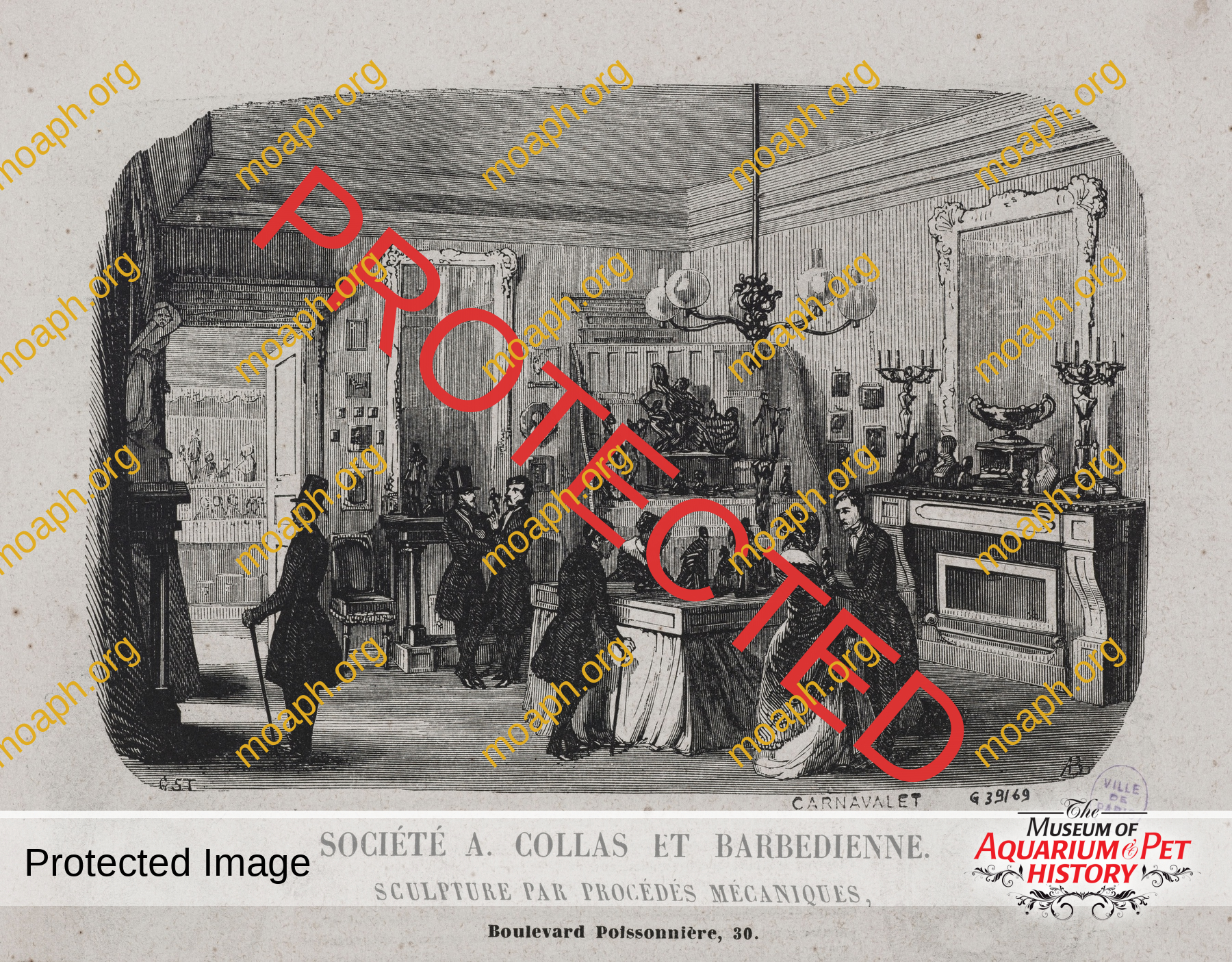
Advertising illustration of Barbedienne and Collas’ company.
Upon the death of Achille Collas in 1859, Barbedienne – already known by then as the “Gutenberg of statuary” – became the sole owner of the foundry, which at the time employed 300 workers. In 1865, he was appointed president of the French bronze industry committee, a position he held until 1885.
With the outbreak of the Franco-Prussian war in 1870 the firm briefly had to switch to cannon manufacturing. The original business restarted after the war, and much of the production was destined for export. Over 1,200 pieces were produced each year. Barbedienne’s fame grew year by year, and in 1874 he was awarded the prestigious title of Commandeur de la Légion d’Honneur.
Another major recognition came in 1878 at the Paris Universal Exhibition, where the maison Barbedienne won a gold medal by presenting a monumental clock in neo-Renaissance style, decorated with enamel by Alfred Serre.
The silvered bronze model
To focus on the multiple, gorgeous details of an Aquarium japonisant, I’ve chosen an example in silvered bronze auctioned and sold by Christie’s in July 29, 2020 for 350,000 GBP ($452,300).
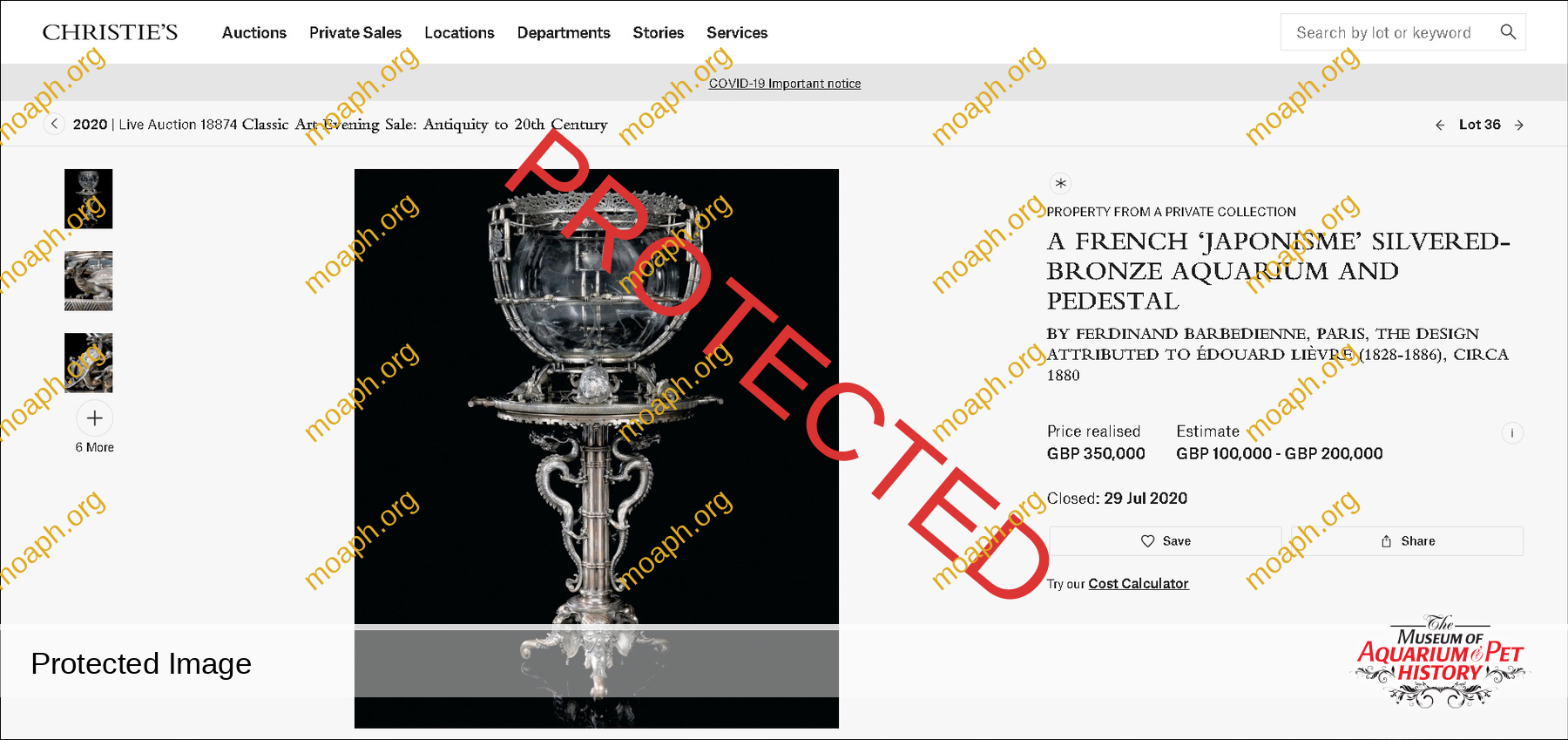
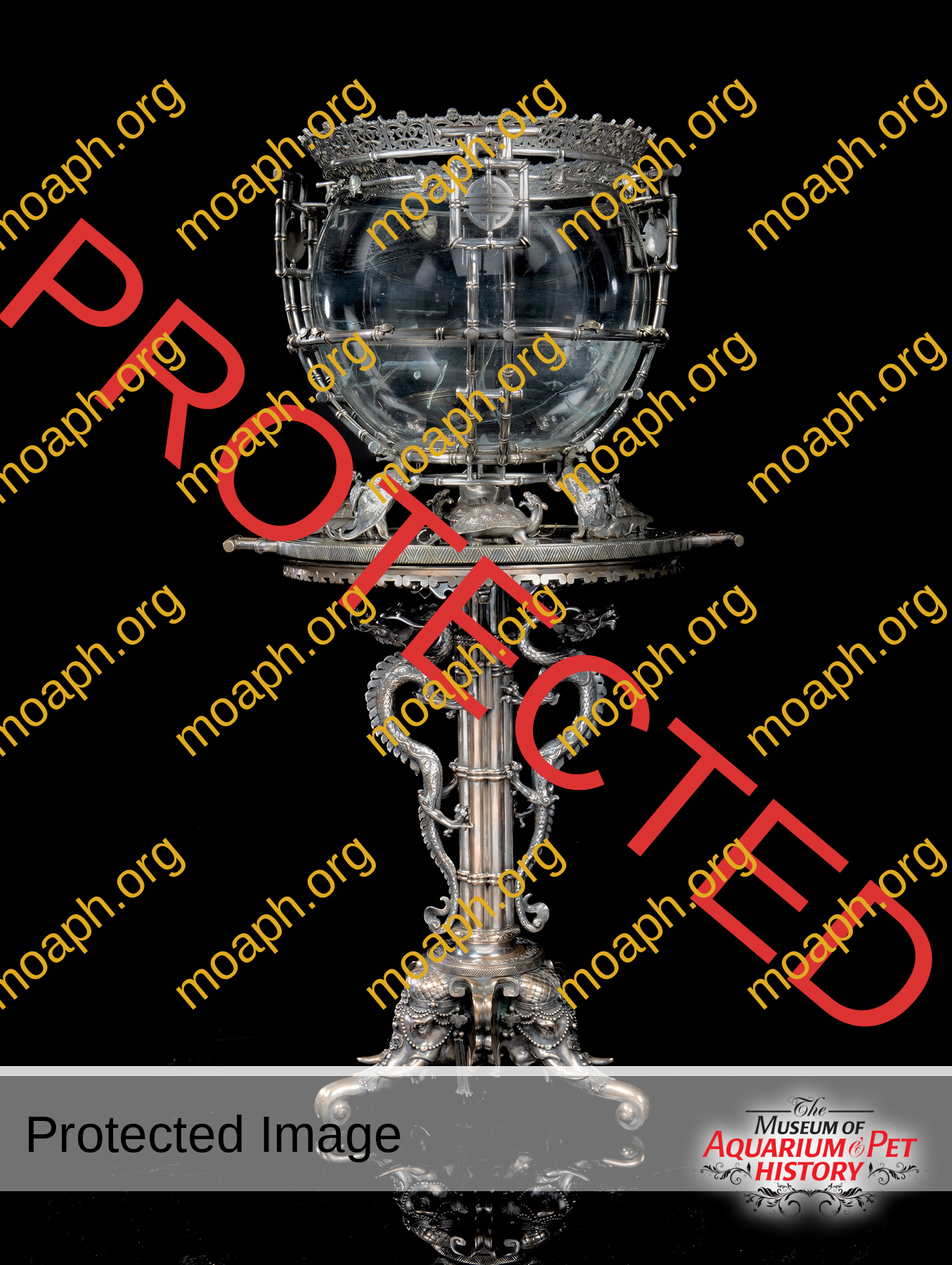
The silvered-bronze Aquarium japonisant sold by Christie’s in 2020.
The official description of this piece provided by the renowned auction house reads as follows: “The spherical glass bowl within a silvered bronze bamboo frame modelled with miniature turtles and surmounted by a pierced foliate rim supported by three bamboo trellis handles centered by Chinese-character shou [symbol of prosperity] roundels, raised on three dragon-headed (bixi) turtles [symbol of longevity and wisdom in the Far East, considered in China as an allegory supporting the world, detaining the secrets of the sky and the earth] carrying baby turtles on their backs […] the pedestal with circular top flanked by two geometric bamboo-form handles and ornamented with four bixi […] the columnar central support modelled as rope-tied bamboo flanked by climbing mythical dragons on three bejeweled elephant head feet [in Far Eastern culture, the elephant symbolizes wisdom, luck, patience, and determination] signed to the base ‘F. BARBEDIENNE’ and stamped ‘BB’ […] the original glass bowl with inclusions in the making, cracks and chips.
56 ¼ in. (143 cm) high, overall
22 ¾ in. (57.7 cm) high; 23 1/3 in. (60 cm) diameter, the aquarium
33 ½ in. (85 cm) high; 29 ½ in. (75 cm) wide; 24 ½ in. (62 cm) deep, the stand
Provenance. Private collection at the Cartier Mansion; New York, USA, by the late 1980s.
Sold from the Cartier Mansion [Property of a Private Foundation]; Sotheby’s, London, 27 September 1991, lot 23.”
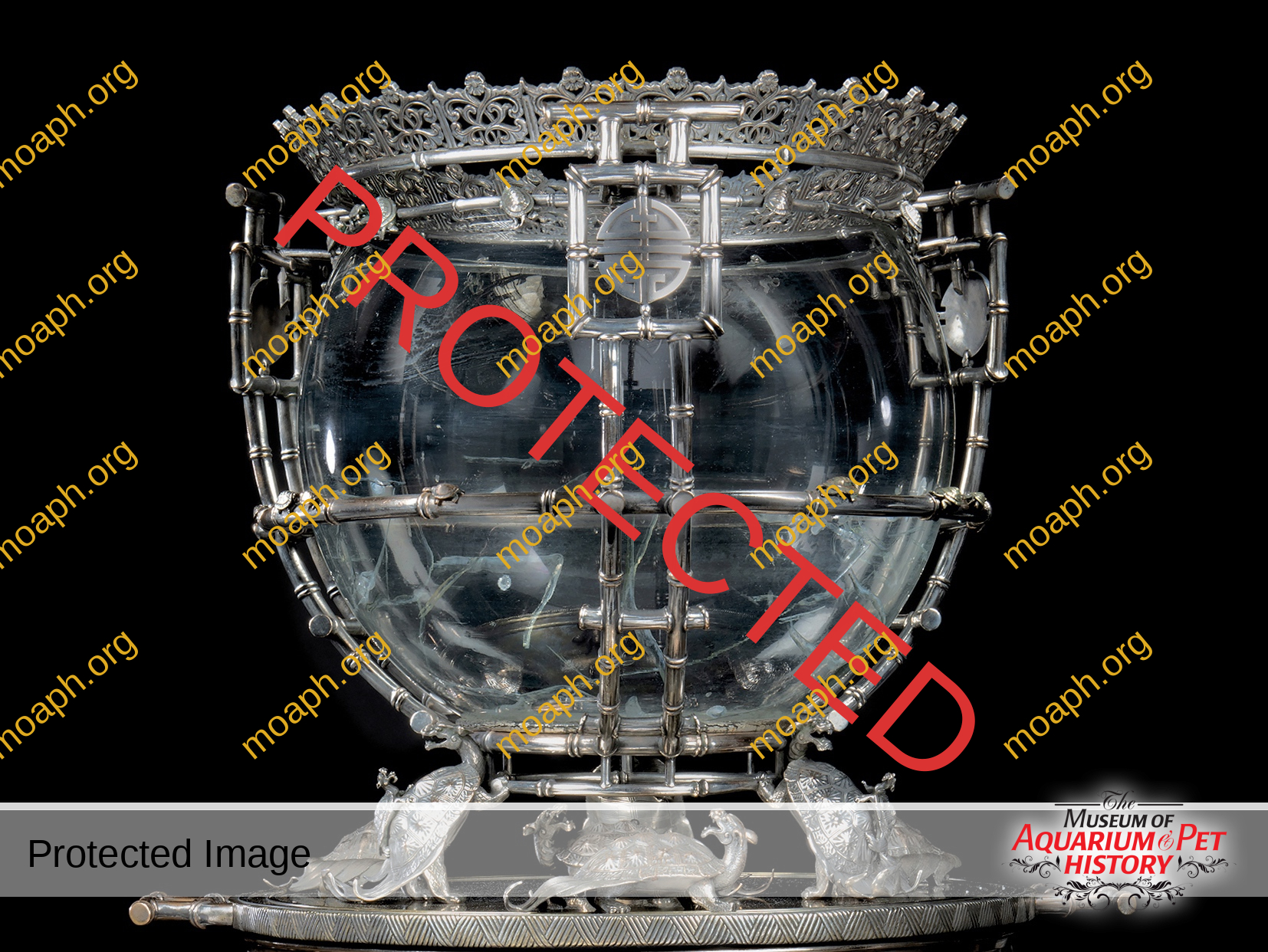
The glass bowl with its bamboo rope-shaped frame. Notice the shou sign, and the multiple small turtles climbing on the frame. The bowl, to be completely honest, has seen better days and might be a replacement piece.
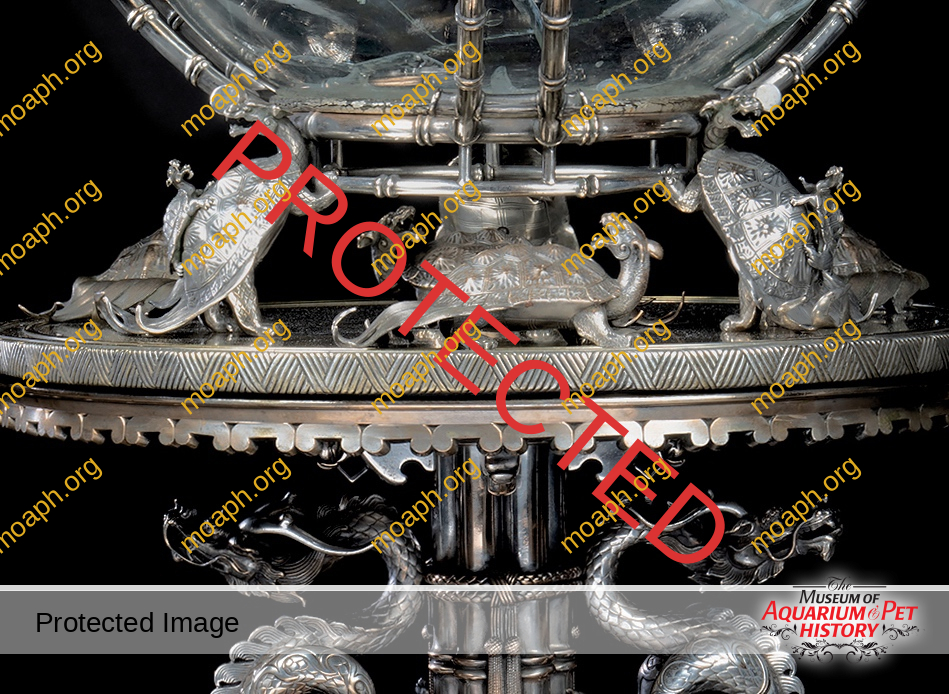
The glass bowl is supported by a group of mythological turtles with dragon heads called bixi in the Chinese culture. The attention to detail is breathtaking.
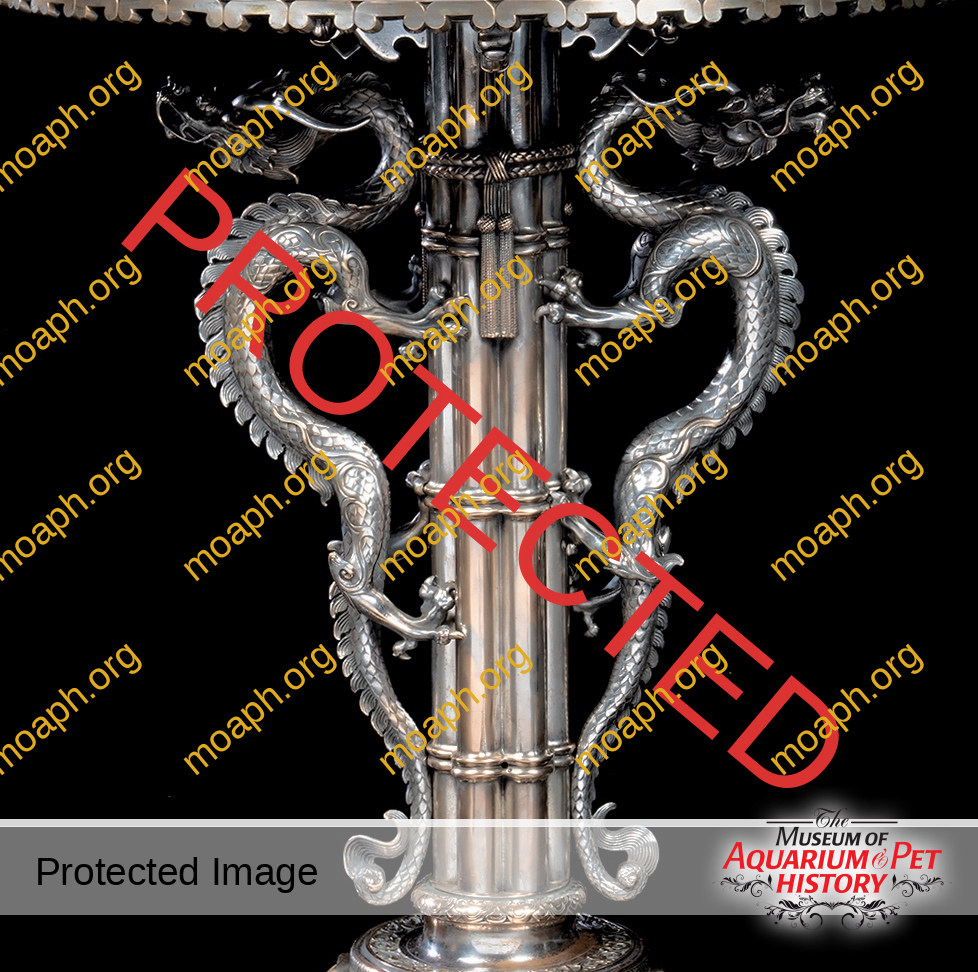
The gorgeous pair of dragons climbing the bamboo bundle-shaped stand and facing each other.
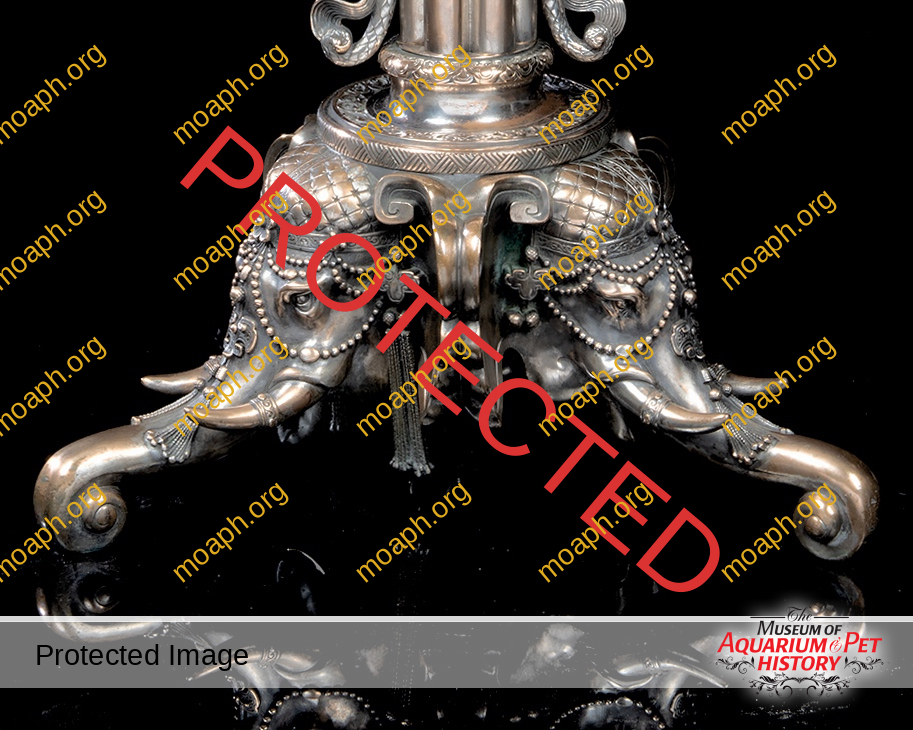
The trilobate base feature of highly decorated elephant heads.
It’s interesting to note that some stylistic elements of all the Aquarium japonisant were used by Lièvre and Barbedienne in other works made before and after their famous fishbowls. The same design of the stand, for instance, can be found in the pair of Chinese Qing dynasty cloisonné enamel vases sold by Christie’s in 2018. The shou ideogram has been used, instead, for the stunning “planter adorned with dragons” signed “F. Barbedienne” and preserved at the Phoenix Art Museum, as well as for an ormolu-mounted palisander centre table by Lièvre, which was sold by Christie’s in 2023.
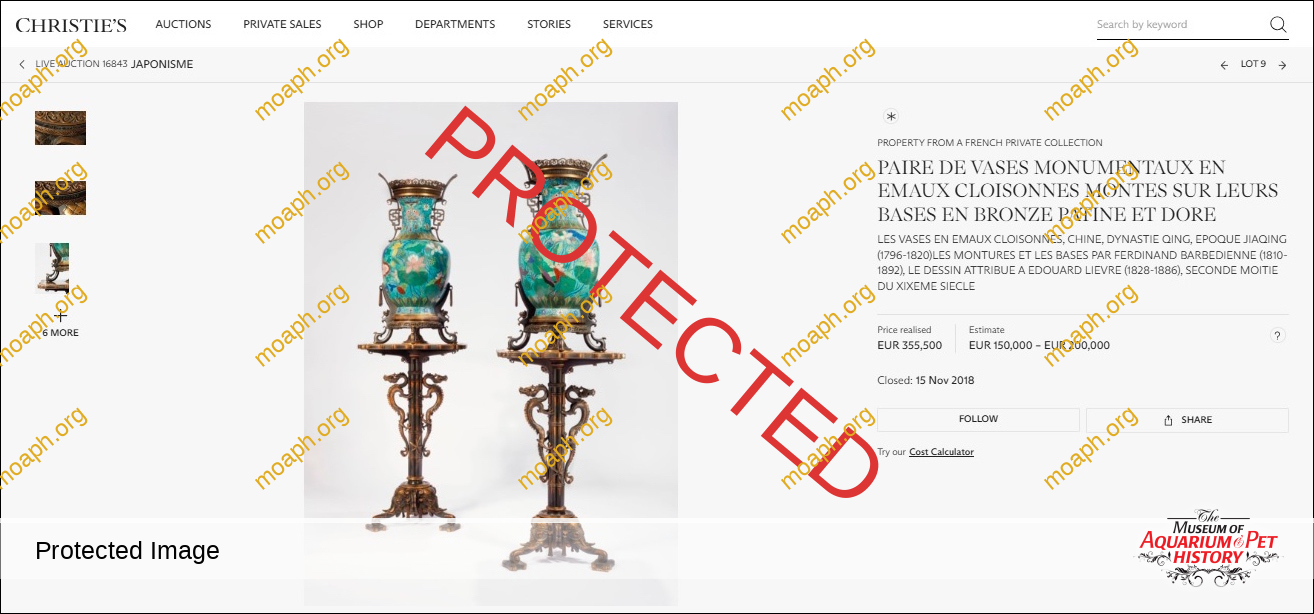
The stunning pair of Chinese Qing dynasty vases sold by Christie’s in 2018. Hammer price: € 355,500 ($ 401,715)
The world of art…
Between 2018 and 2021, two more examples of Aquarium japonisant were put up for sale by Christie’s. The price at which the model in gilt bronze and champleve enamel on its pedestal was sold in 2018 remains unknown, as the piece was withdrawn from the auction before it began. This was likely due to a very enticing offer that came in ahead of time and was accepted by the owner of the fishbowl. The estimated value for this piece was between $115,000 and $230,000.
The second fishbowl, a chiseled, patinated and vieux ton or gilded bronze version, was sold in July 8, 2021 for 437,500 GBP ($603,750).
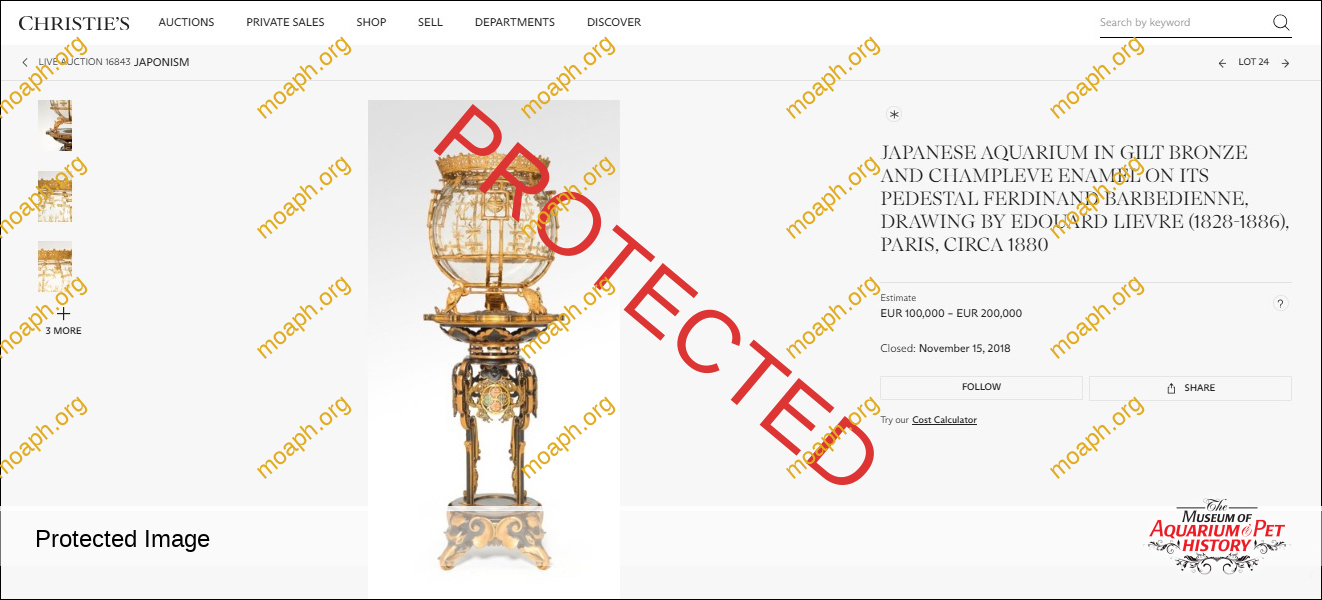
Gilded bronze Aquarium japonisant. Notice its peculiar stand.
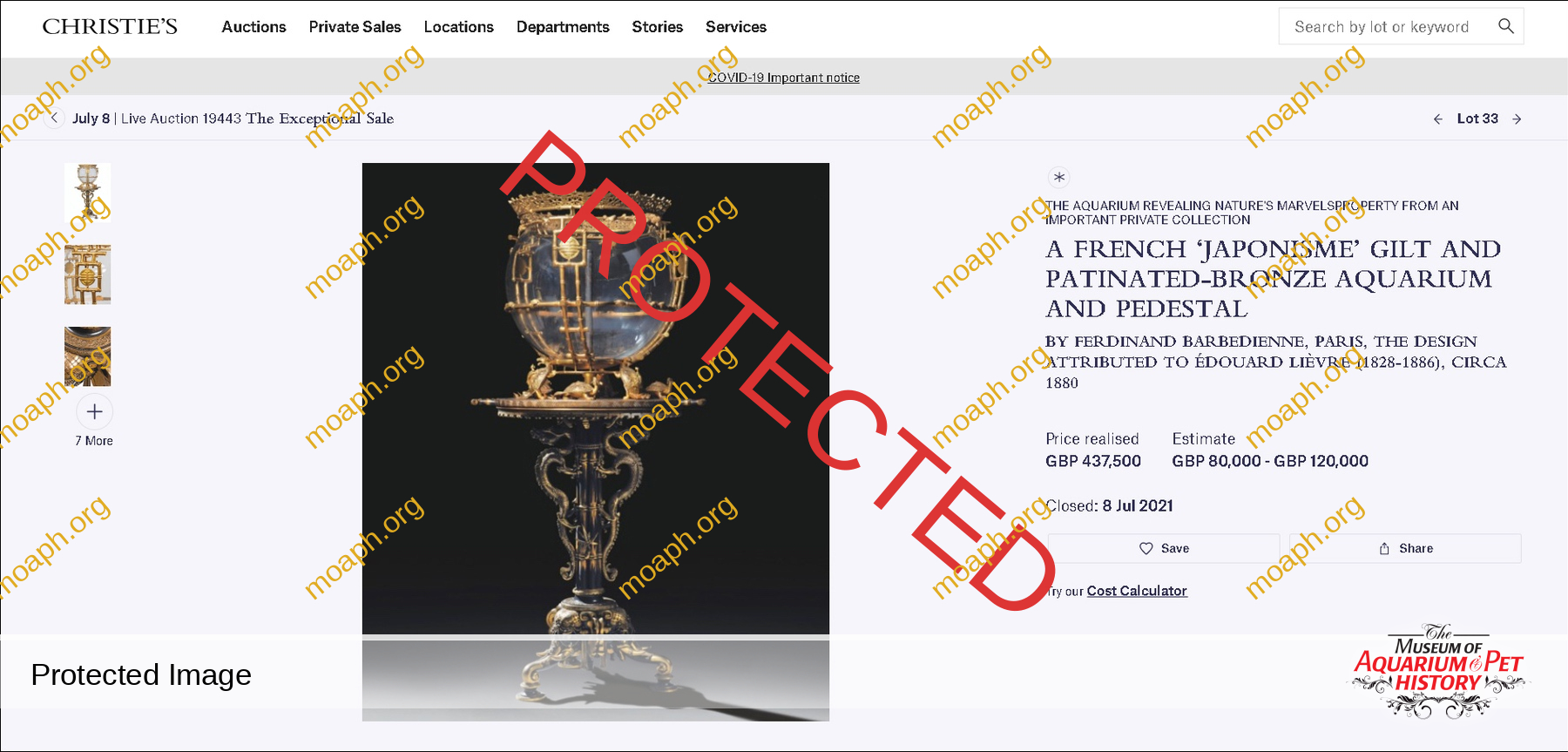
Gilt and patinated bronze version of the fishbowl.
More recently, another example of Aquarium japonisant has been put up for sale in Paris by the Steinitz Gallery. This renowned antique dealer is offering the piece at a significantly higher price than the hammer prices achieved by Christie’s, indirectly confirming the strong, ongoing interest that collectors have for the works of Lièvre and Barbedienne. The first owner of this well-documented fishbowl was Alice Tahl, known as Madame de Lancey (mistress of the rich banker Nissim de Camondo), who purchased it for her lavish hôtel particulier in Paris.
I read that another gilded-bronze Aquarium japonisant is housed in the Topkapi Palace of Istanbul, which was the official residence of the Ottoman sultans. Unfortunately, I haven’t yet found any image of that piece.
Despite considering myself a highly motivated hardcore collector of aquarium antiques, I’m fully aware that I will never own an Aquarium japonisant. In the 1980s, one of these fishbowls with stand was auctioned off for less than $20,000, which means less than $60,000 in today’s currency. Since then, their value has skyrocketed, and continues to grow exponentially.