
The History of German Frog Houses
Leafing through my German-language aquarium and terrarium catalogs printed between the late 1800s and the early decades of the 1900s, I notice some unique enclosures which are almost completely absent from catalogs published in the same years in countries other than Germany and Austria. These are the so-called “frog houses” (Froschhäuser or Froschhäuschen in German), which can easily be distinguished from the classic terrariums of the time. This is because they were typically depicted with an accessory inside, once considered essential: a small ladder made of wood or, more rarely, tin.
Main features
The entry-level models of frog houses were glass jars with a lid fitted with a wire mesh or simply covered with a breathable fabric on top.
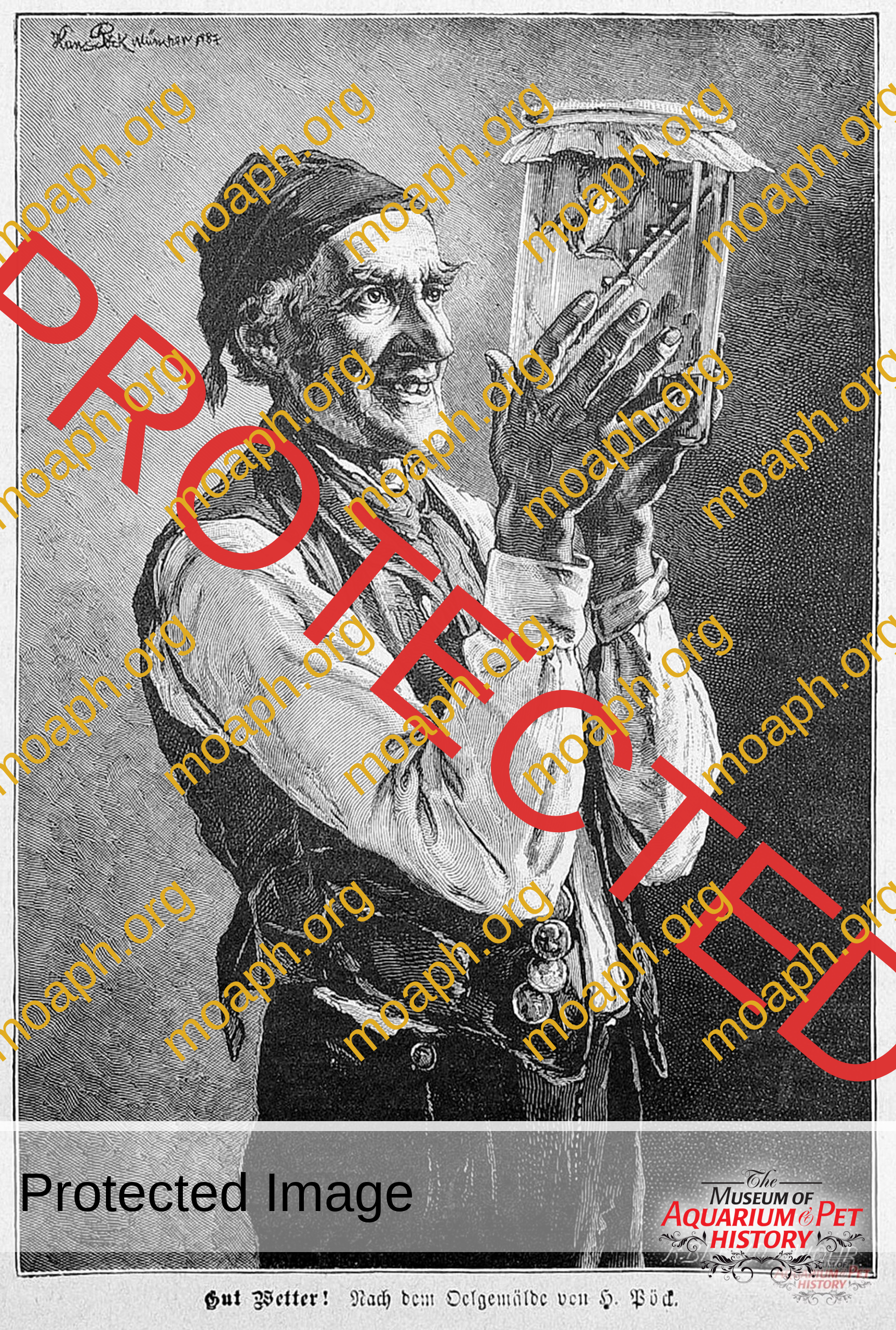
Etching after a painting by Hans Pöck. Die Gartenlaube magazine, 1887.
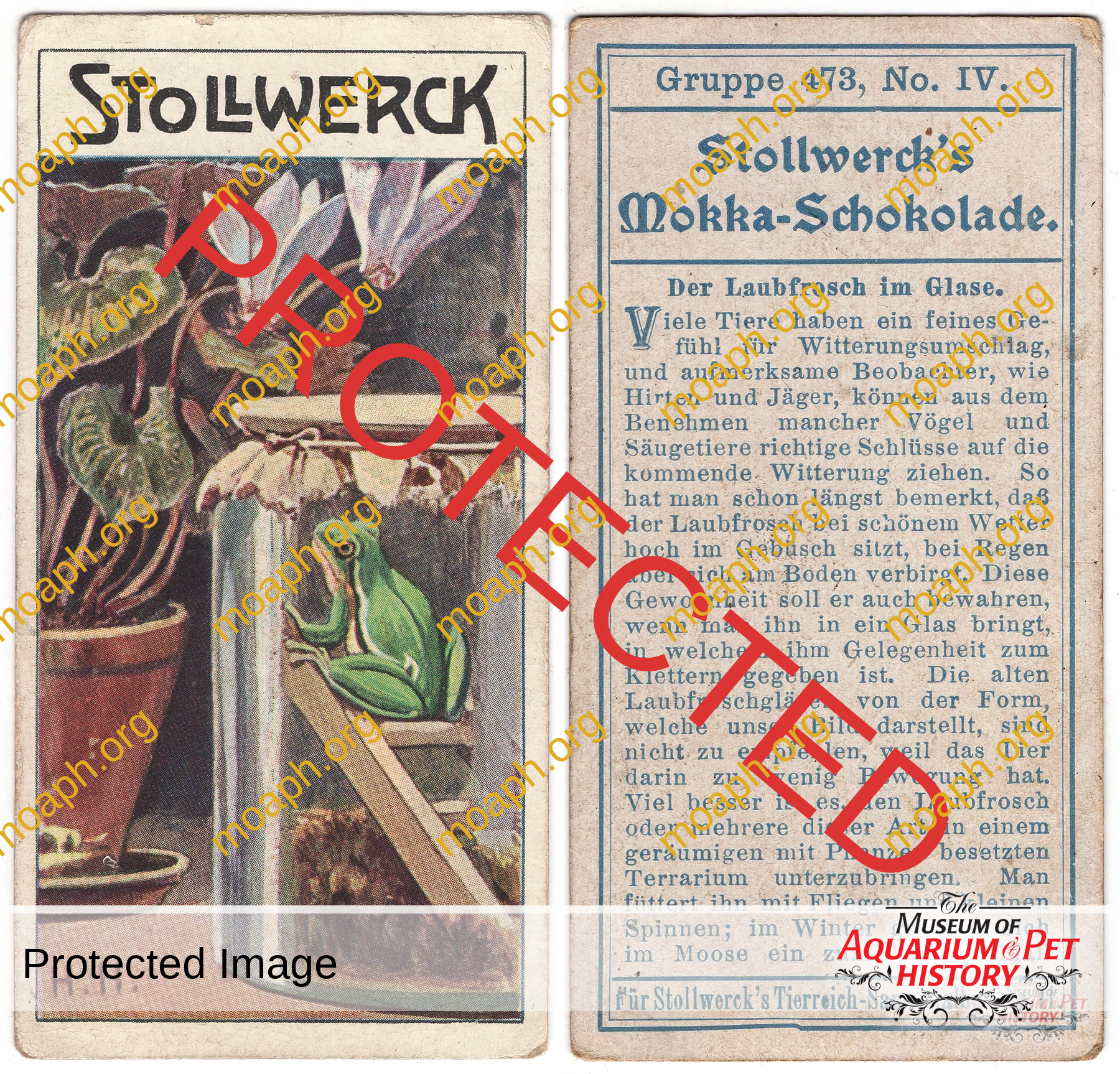
Trade card issued in 1910 by the German cocoa and chocolate manufacturer Stollwerck.
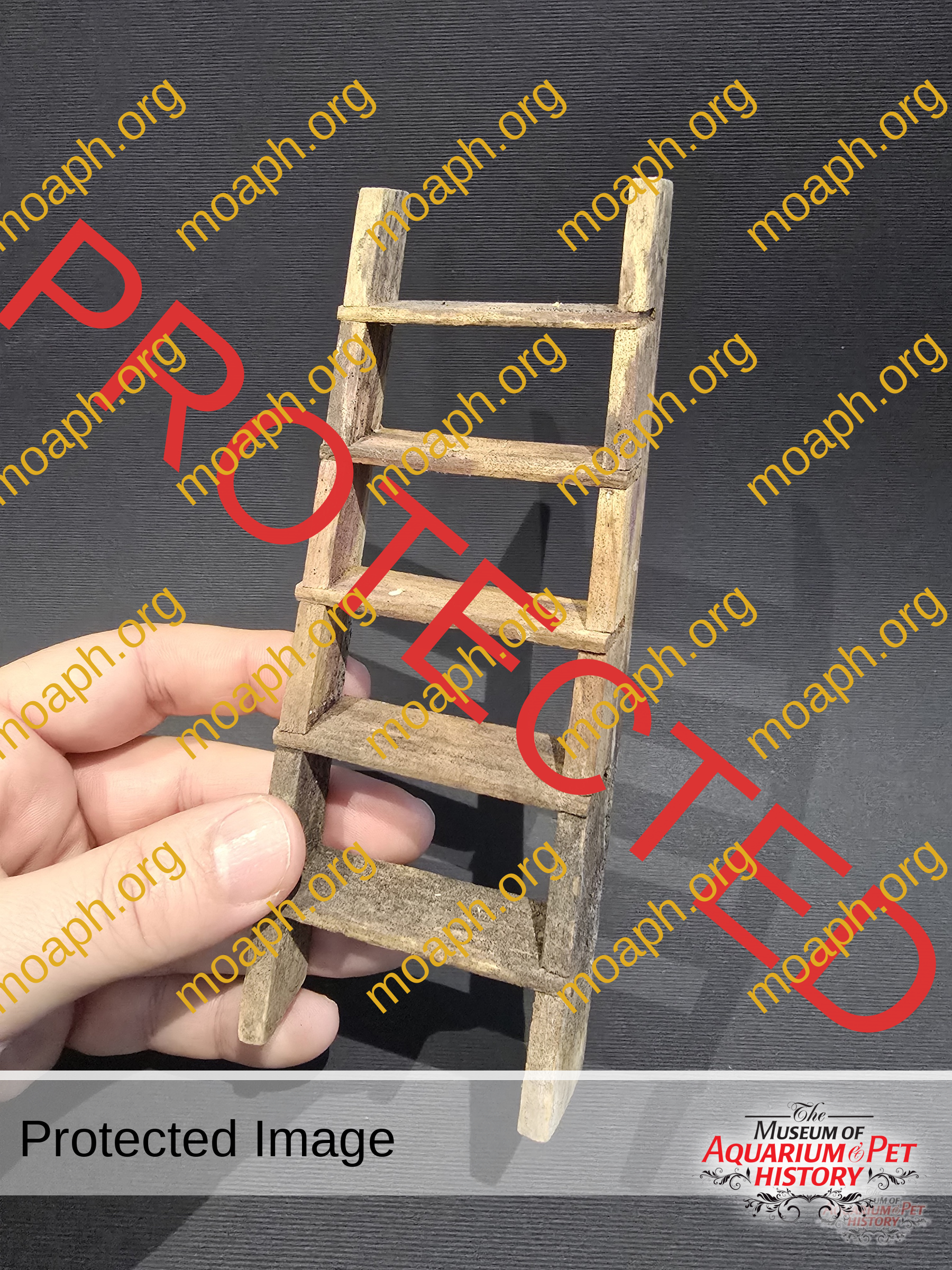
Old wooden ladder.
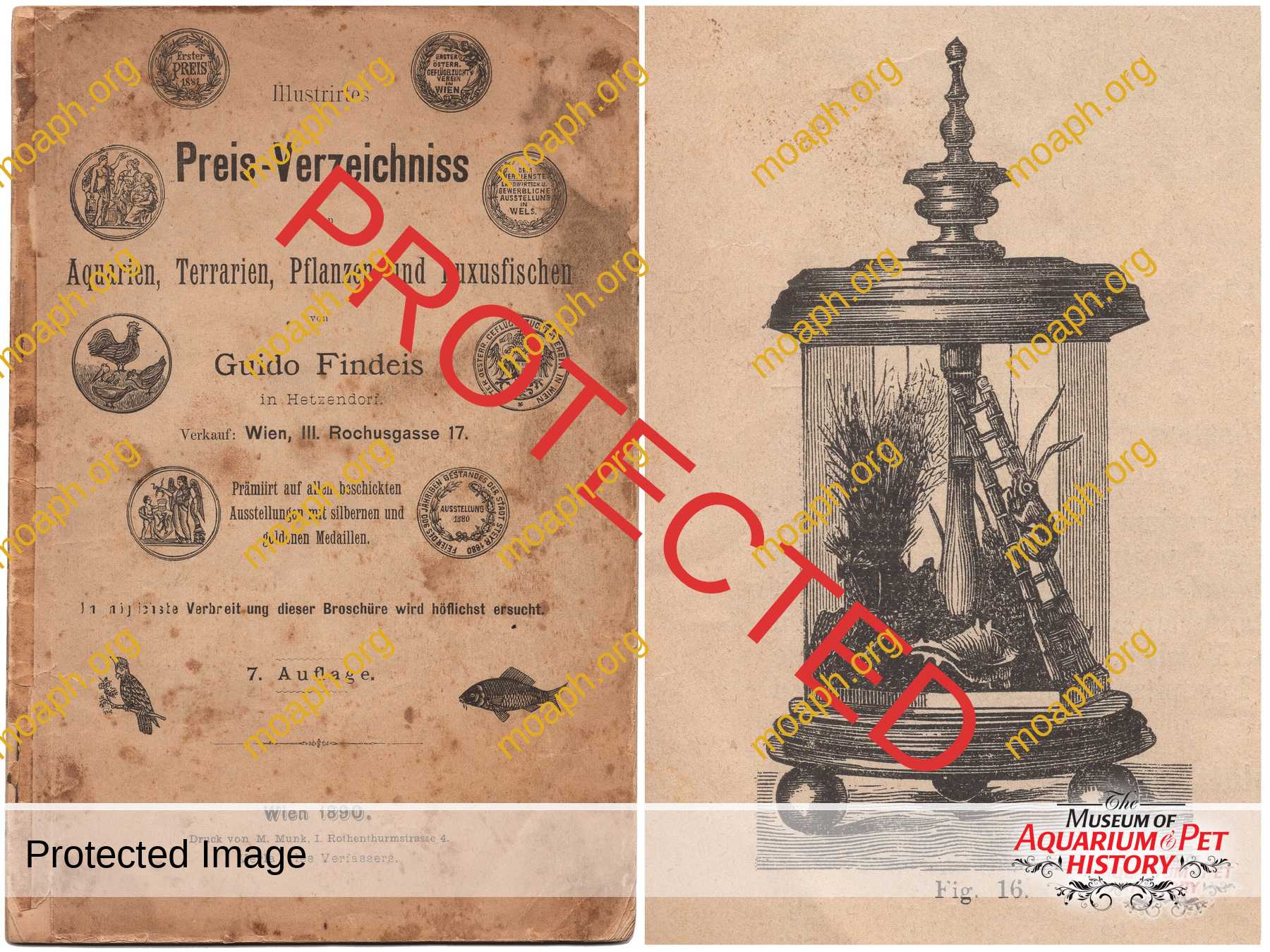
Rare example of frog house with base and lid made of wood. Guido Findeis catalog, Wien, 1890.
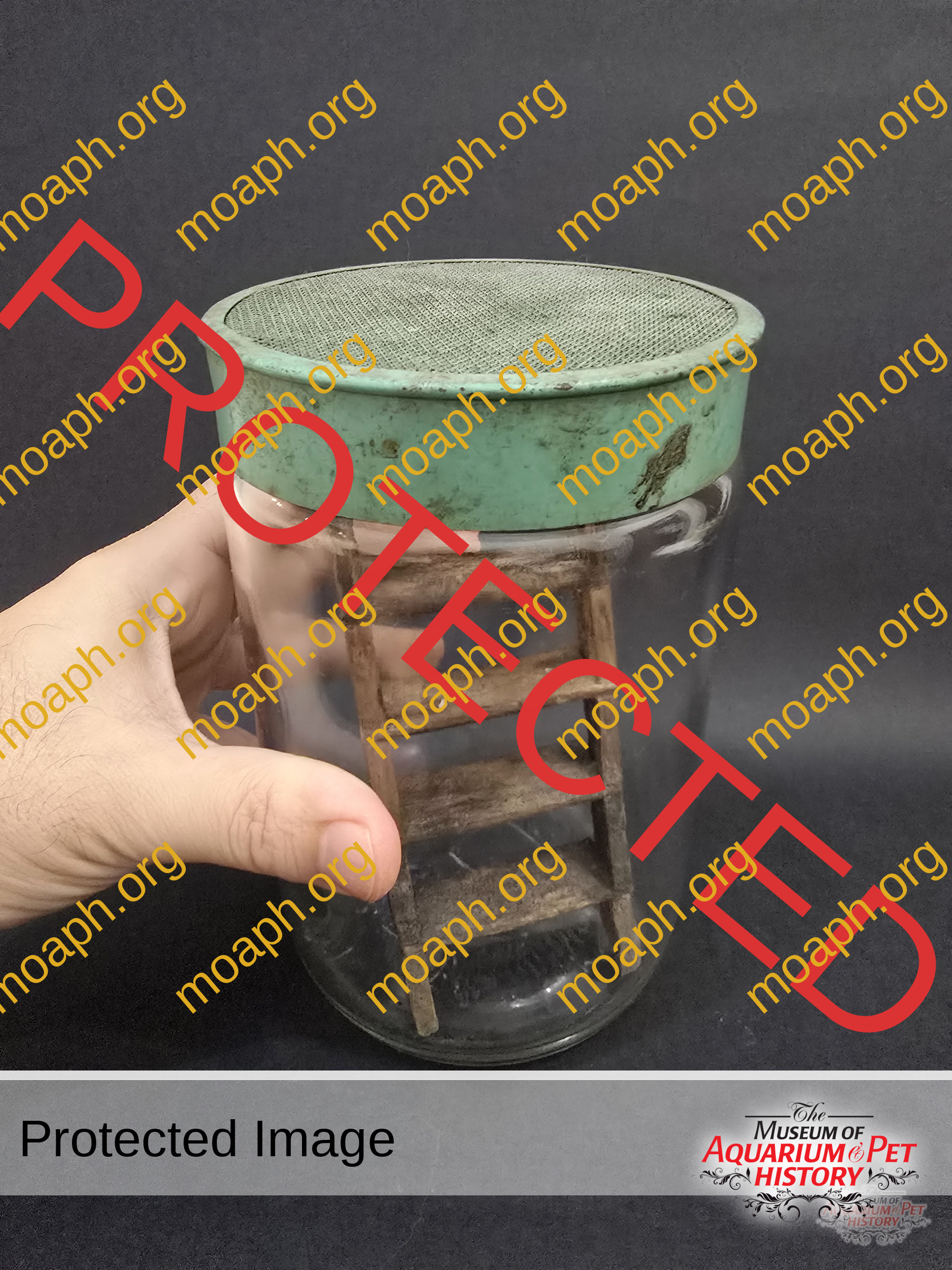
Entry-level frog house.
The more iconic ones, however, had the following features:
- a shape developed with more height than breadth
- a framework made of tinplate (either exposed or lacquered) or polished brass
- a square or hexagonal base
- decorative feet
- glass walls, sometimes charmingly painted with naturalistic-themed designs
- Chinese temple-style lid made with a metal framework and wire mesh, adorned with a finial and equipped with a rotating flap covering a feeding hole (mostly for flies).
A few models, very hard to find nowadays, also featured a glass or metal fly trap, which can be considered as one of the early automatic feeding systems! Others were sold in combination with a terrarium.
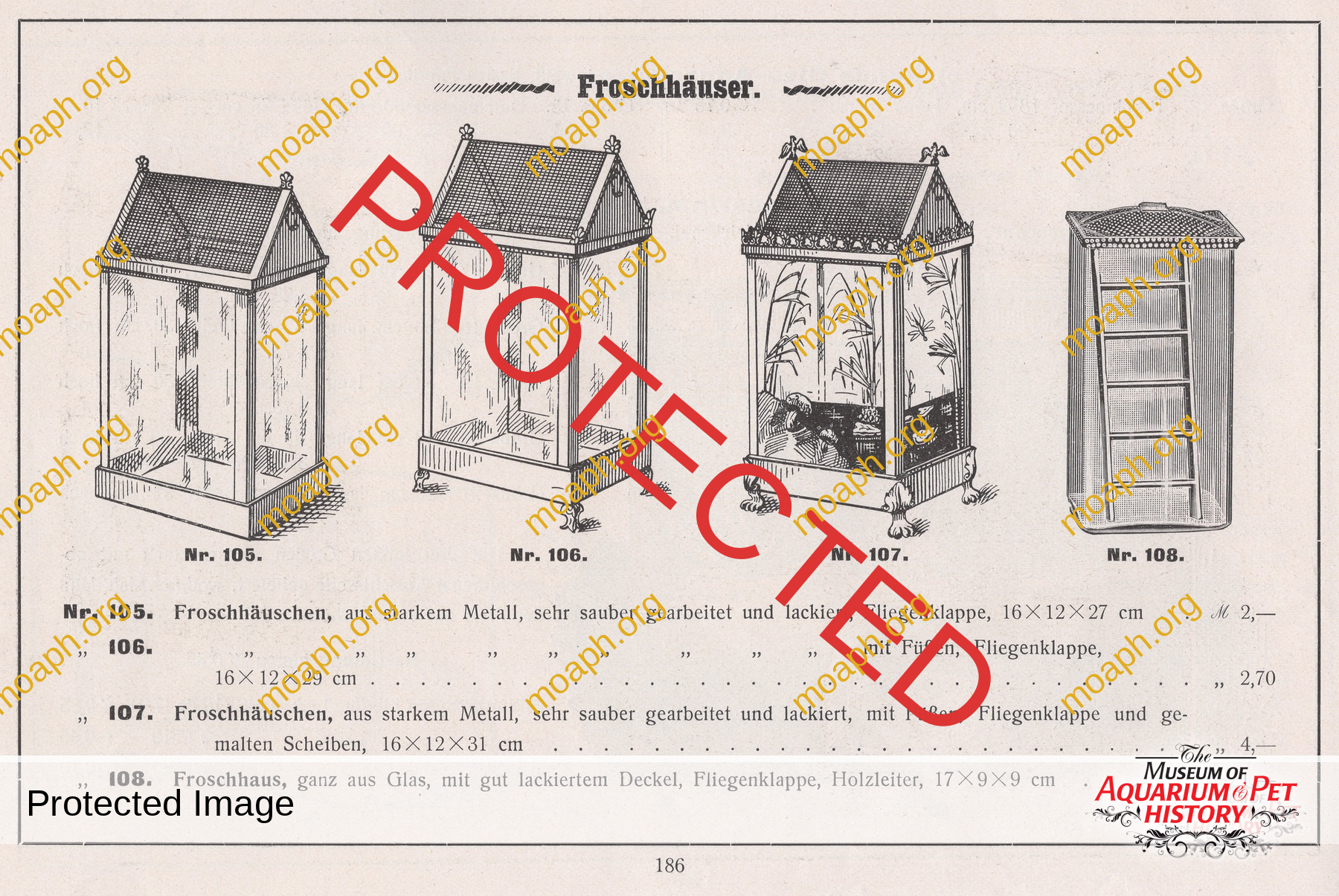
Scholze & Pötzschke catalog, 1908.
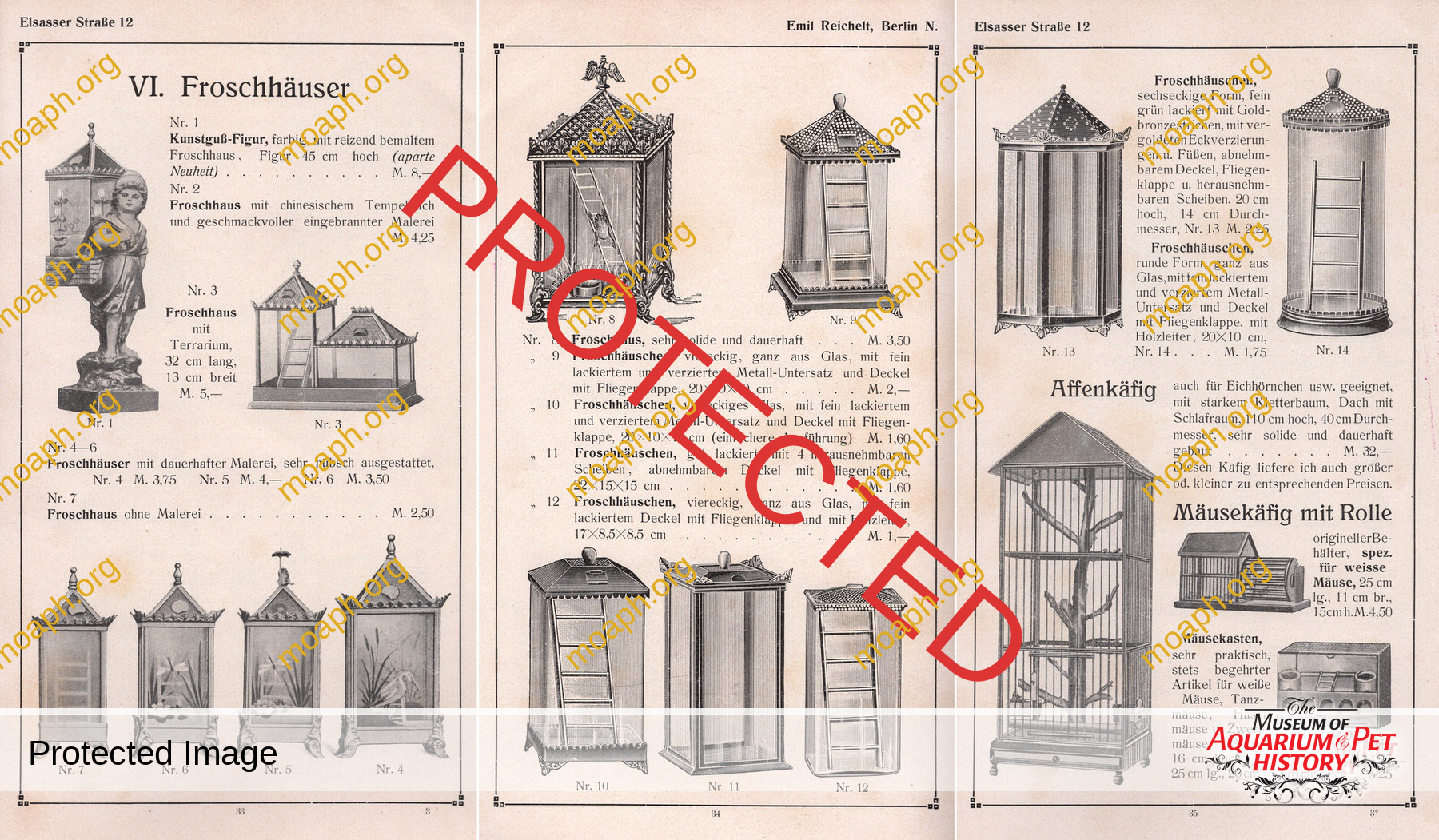
Emil Reichelt catalog, 1909-1910 edition.
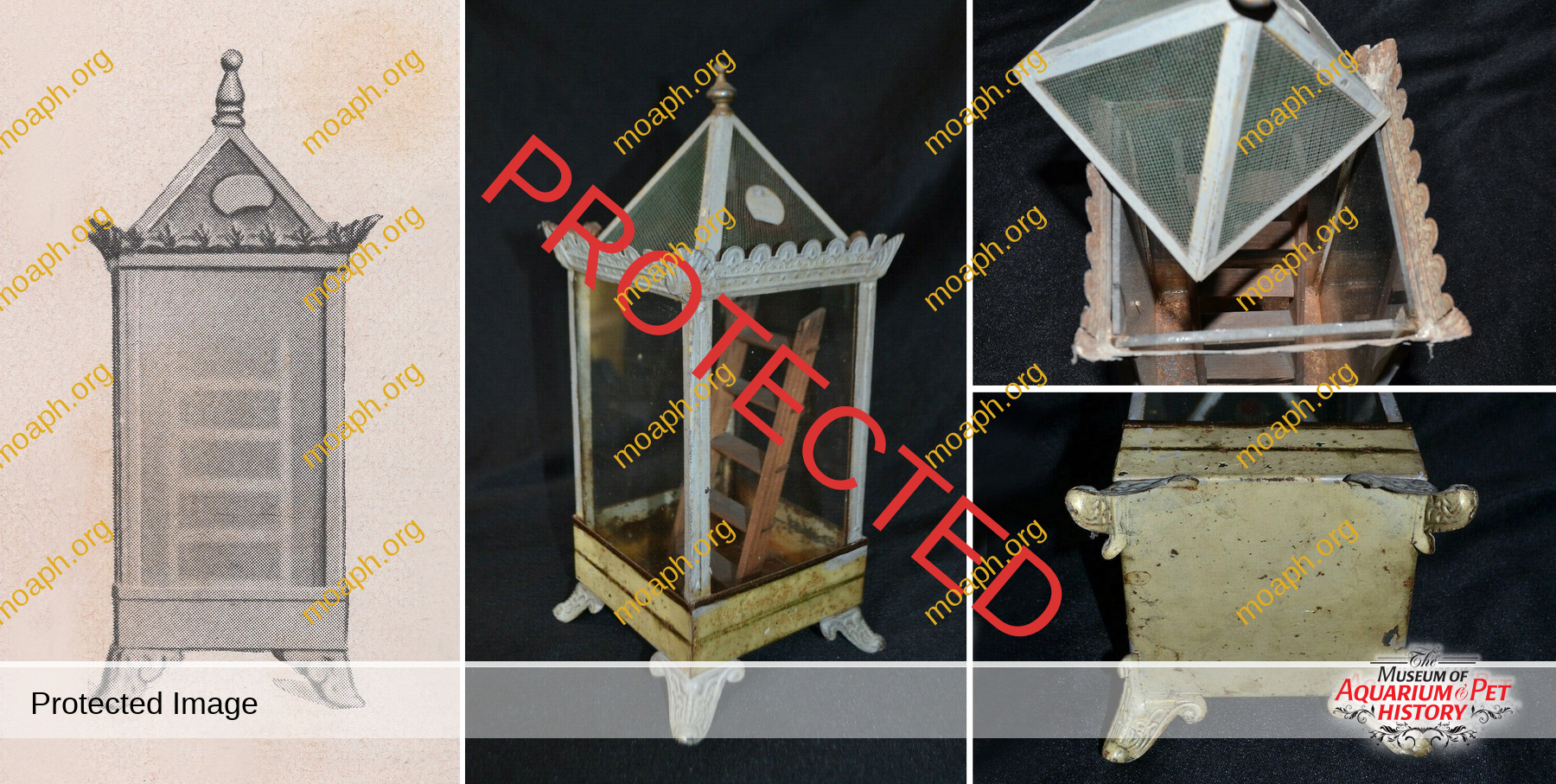
One of the more successful models. Courtesy of Eckhard Jäger (German collector).
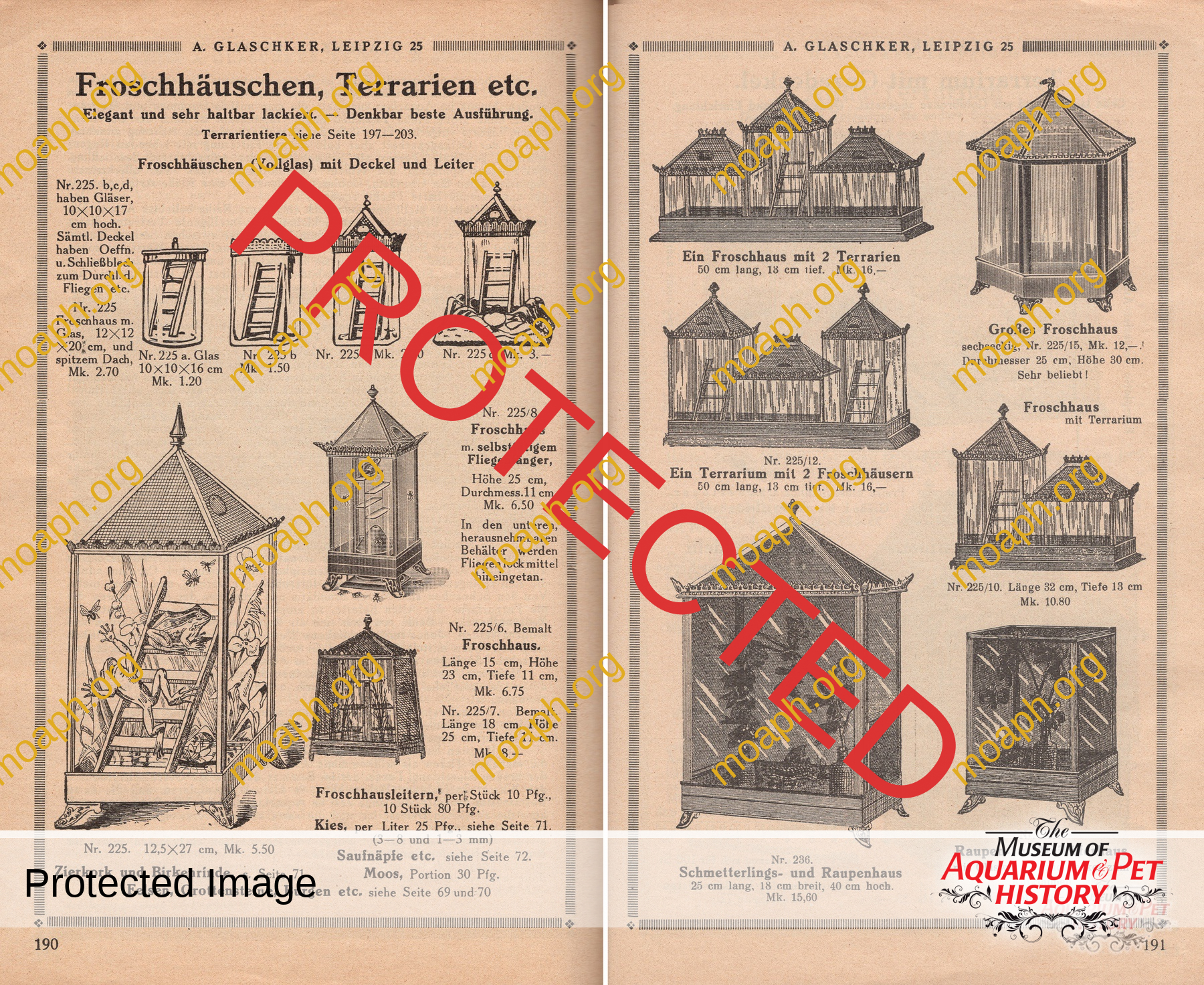
A. Glaschker catalog No. 29, 1925.
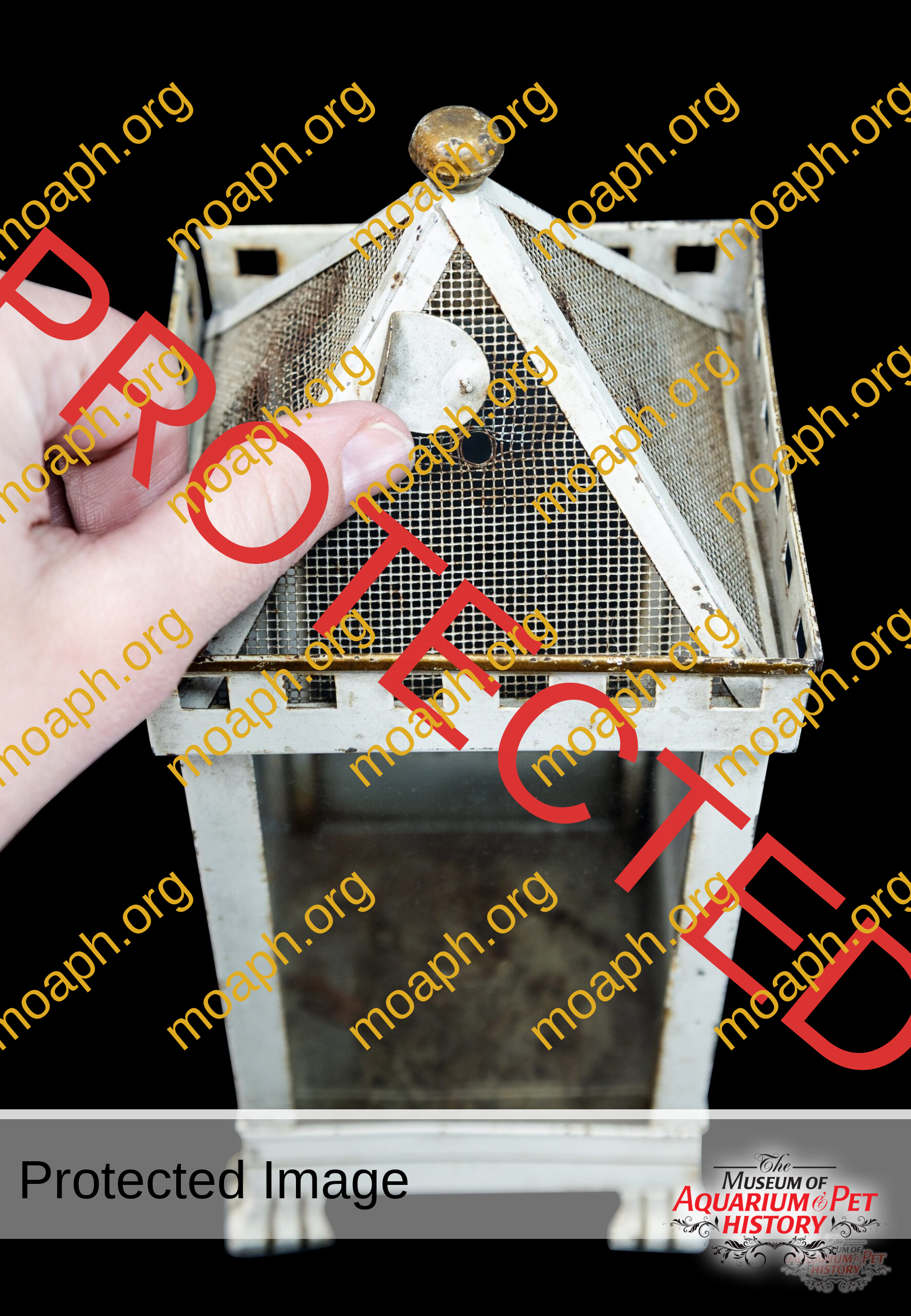
The feeding hole in the wire mesh of the lid. Notice also its rotating cover. Courtesy of MOAPH.
The weather-forecasting frog myth
The most common inhabitant of frog houses was the Laubfrosch (leaf frog), known in English as the European tree frog (genus Hyla), to which many Germans once attributed the ability to predict the weather, effectively using it as a living barometer. The myth of the Wetterfrosch (weather-forecasting frog) was based on the natural instinct that leads these amphibians to climb plants during sunny weather in order to catch flying insects that hover higher when it’s warm.
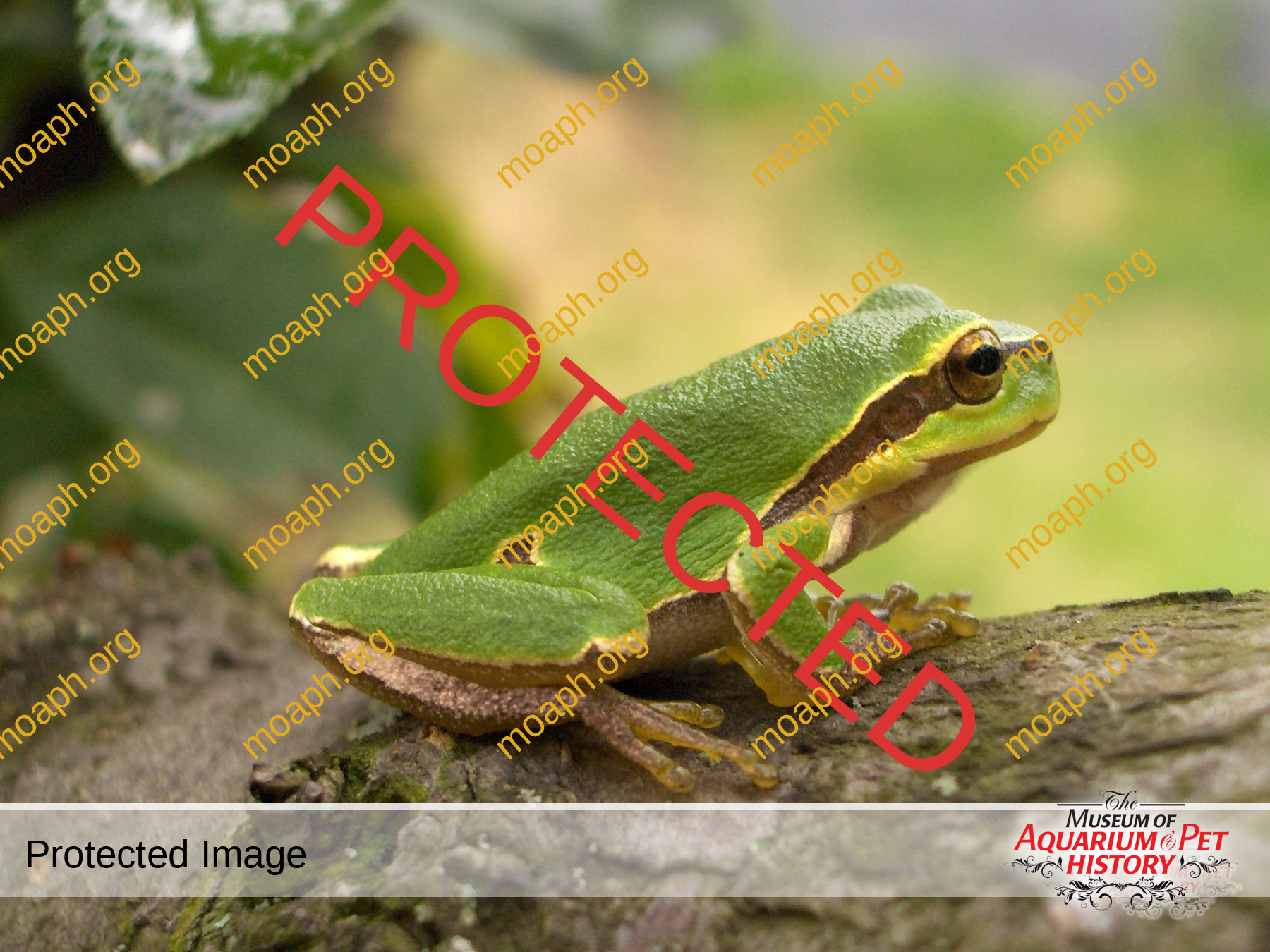
Hyla arborea was a common species of tree frog in Germany.
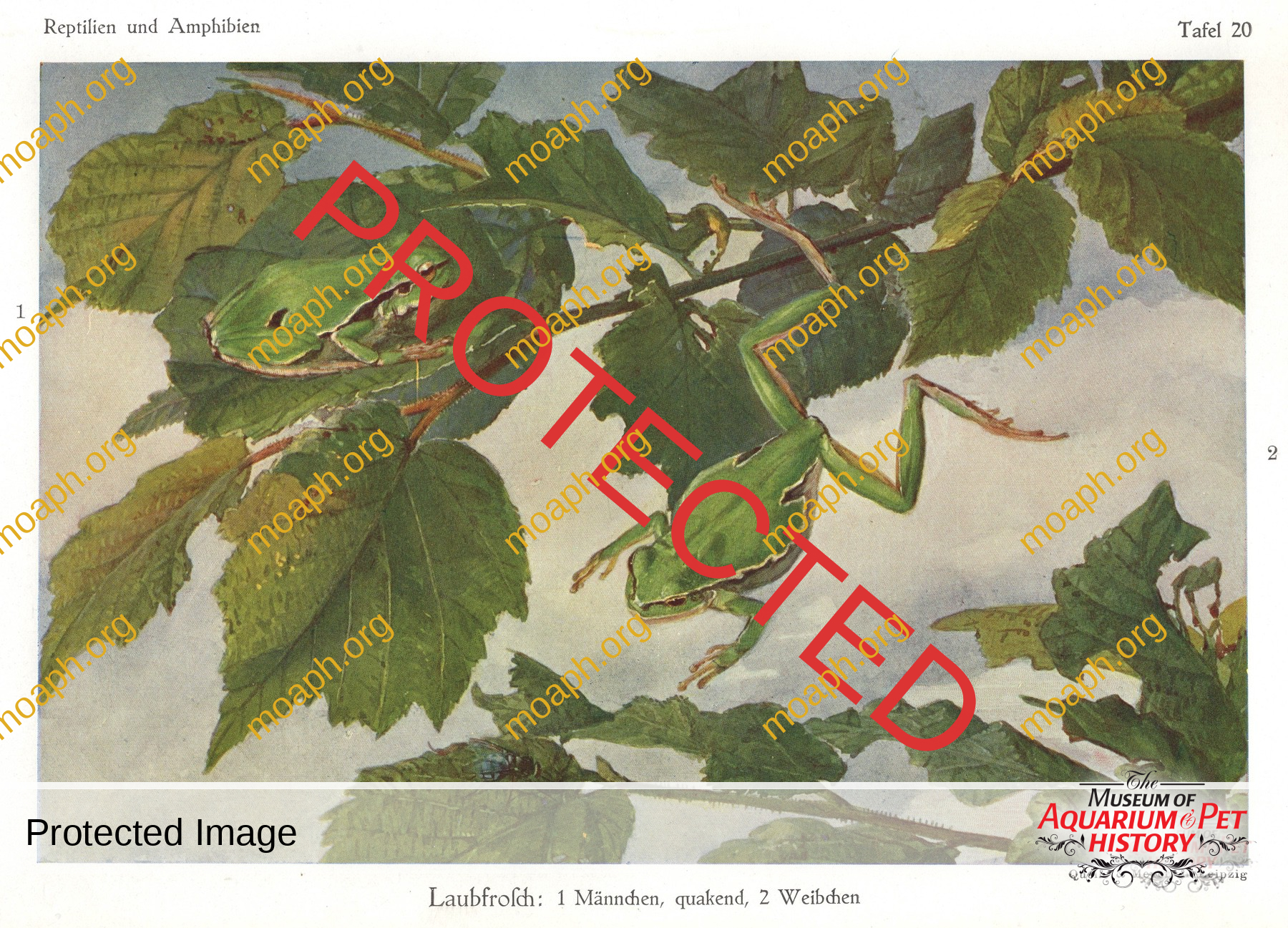
Old color illustration depicting two European tree frogs.
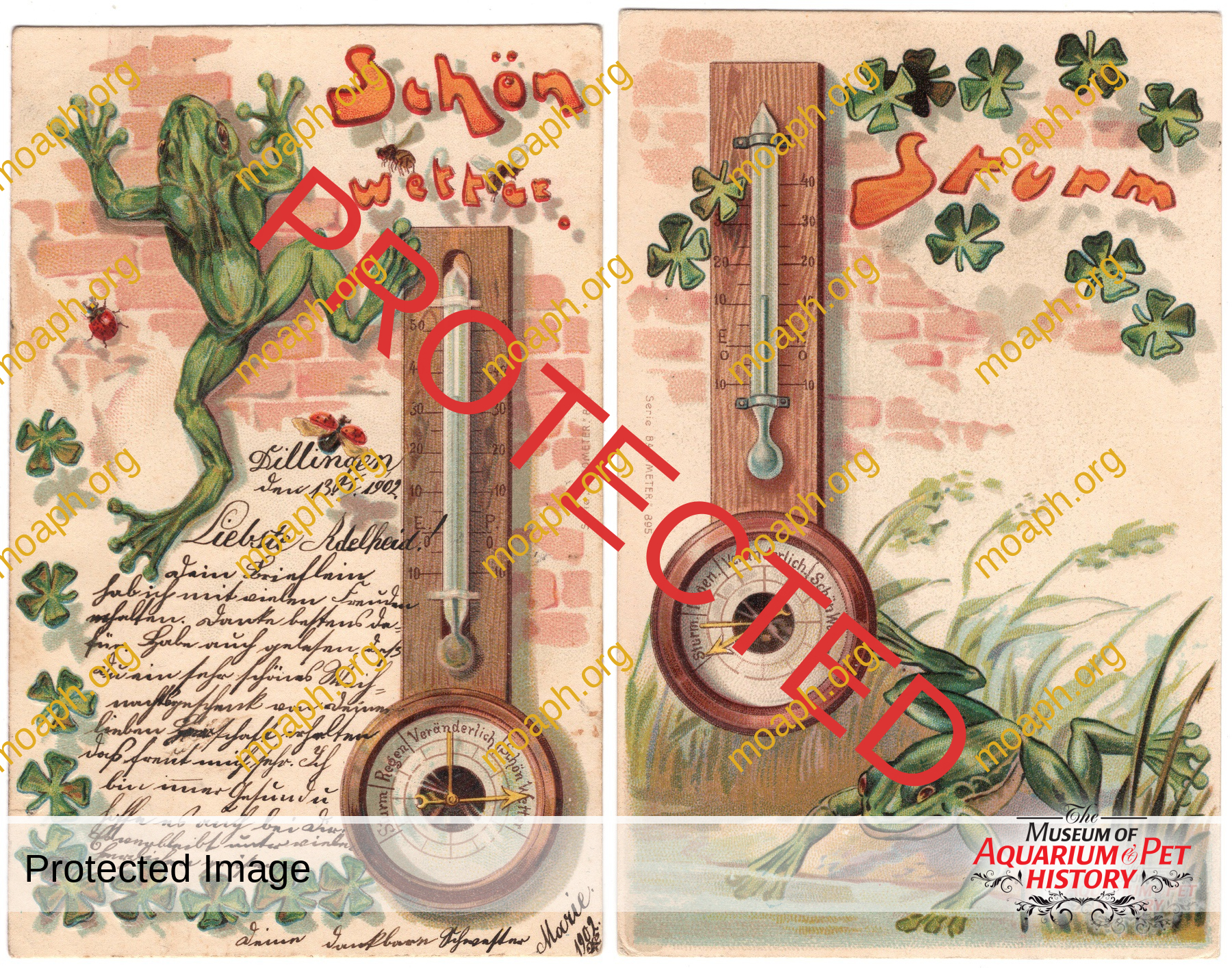
Pair of early 1900s postcards showing a tree frog “synchronized” with a barometer. The German words schön Wetter and Sturm mean respectively fair weather and storm (or bad weather in the wider sense).
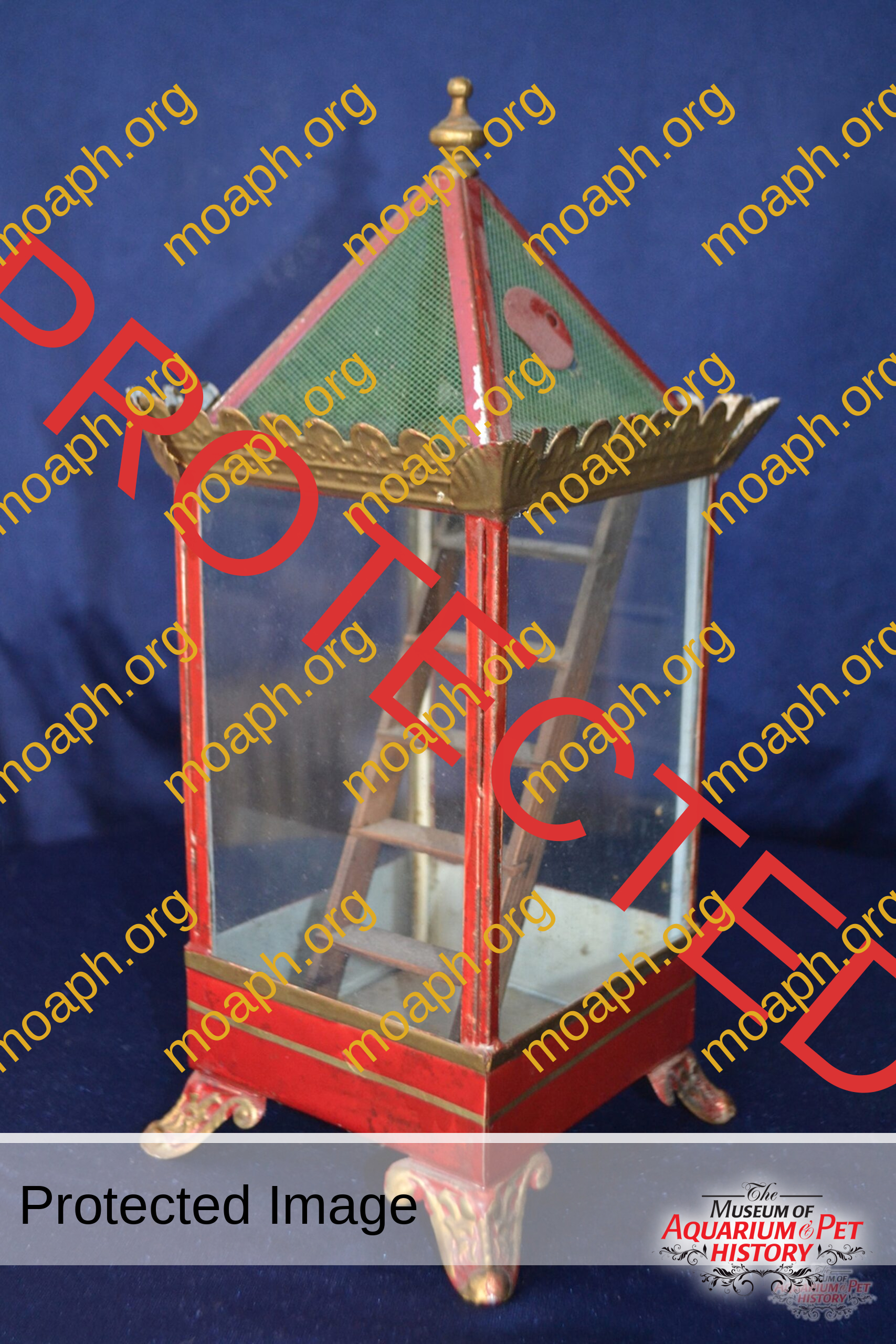
Red and gold laquered frog house. Courtesy of Eckhard Jäger.
This explains the ladder provided in their “bespoke” terrariums. If the frog climbed the ladder and stayed up there, fair weather was expected. If the poor amphibian, instead, remained at the bottom of the enclosure, it was assumed that bad weather would follow.
The belief that tree frogs acted like barometers contributed to the popularity of the frog houses, leading German suppliers of the time, such as A. Glaschker (Leipzig), Emil Reichelt (Berlin) and Scholze & Pötzschke (Berlin), to offer a wide range of models.
Built by companies specializing in tin toys, like the historic Märklin, frog houses however were clearly too small. Suffice it to say that most of the models didn’t exceed 10 inches in height (excluding feet and lid). All of this sadly reminds us of what happened for a long time, and what sadly still happens today, with goldfish bowls.
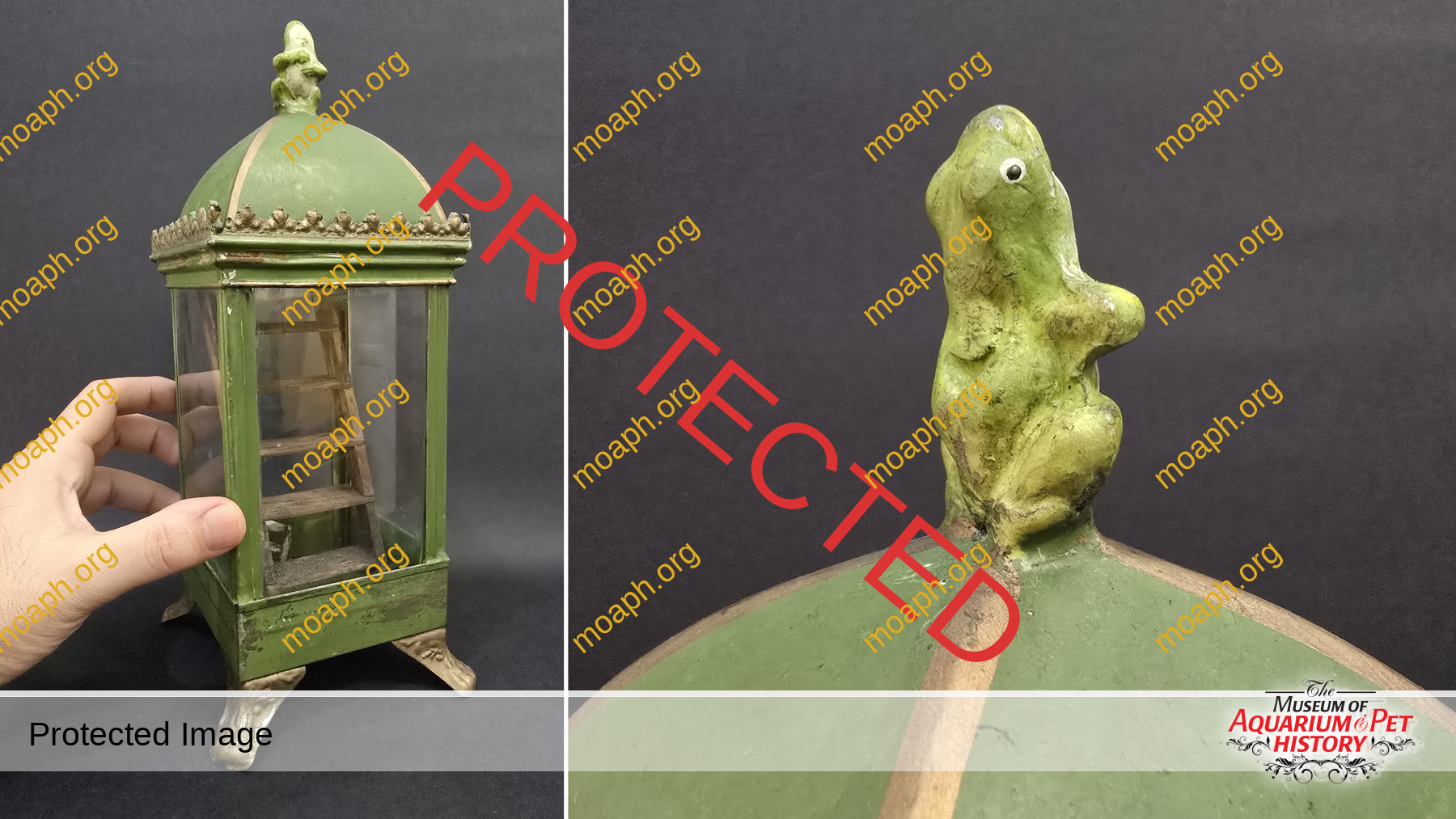
Tiny Froschhaus built by the toy manufacturer Märklin. Notice the finial, a lead tree frog which originally had a little umbrella.
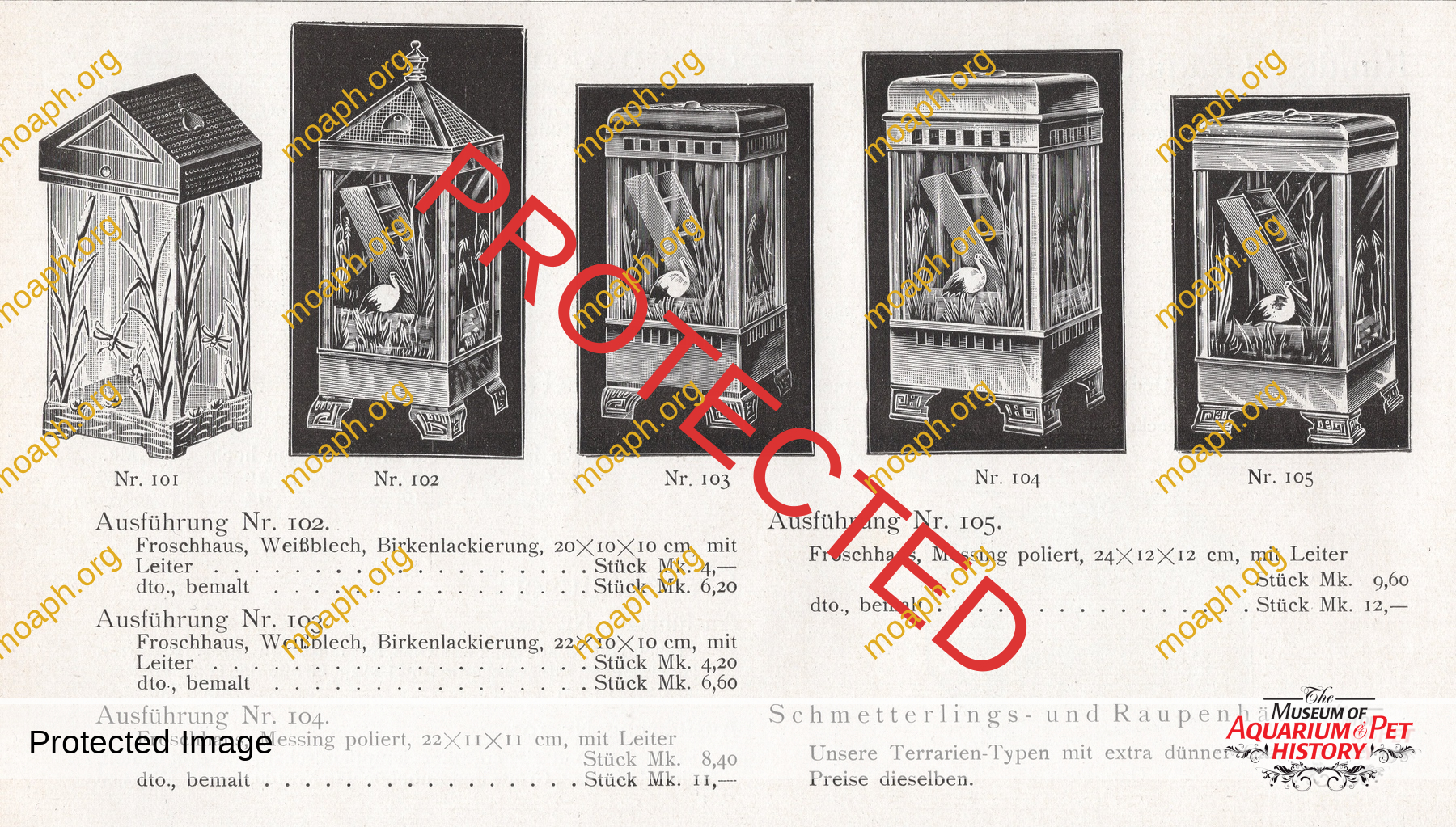
Scholze & Pötzschke catalog, 1930.
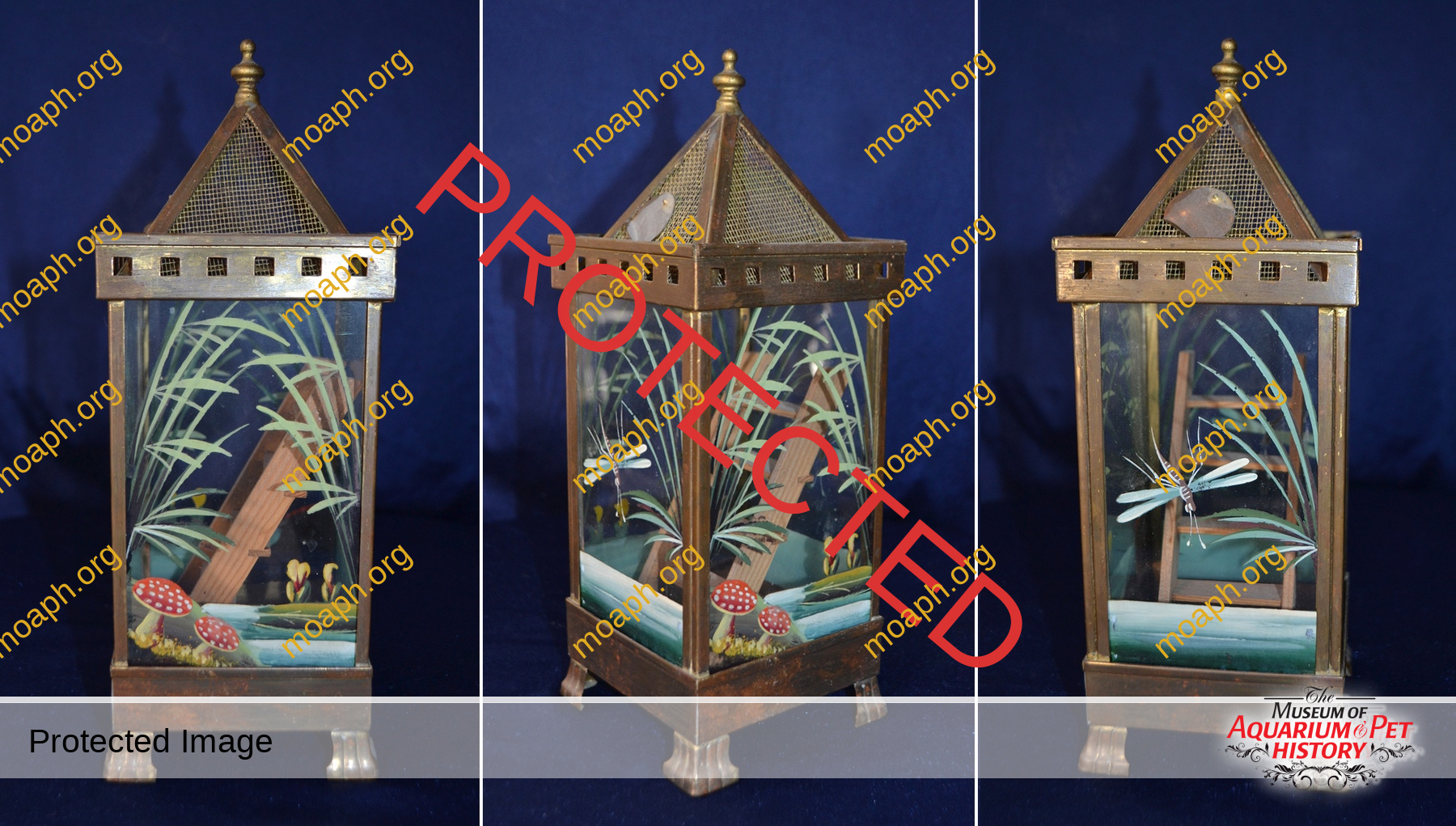
High-end frog house. Notice the painted glass panels. Courtesy of Eckhard Jäger.
Basic setup
The myth of the Wetterfrosch was deeply rooted in the popular culture of the time. Luckily, more experienced German hobbyists knew well that it was just a folk belief. In the wild, frogs undoubtedly sense weather changes and react to them in various ways. But, when they are kept in such small, artificial environments, they quickly abandon most of their natural instincts, climbing the ladder just to find a way to escape or to catch a fly, rather than to say: “Hey, today’s going to be a sunny day.” This topic was already addressed multiple times in the early 1900s by Blätter für Aquarien- und Terrarienkunde. In this interesting magazine I also found some details about how frog houses were typically set up. The substrate was medium to large gravel, on which a small terracotta bowl (or a sea shell) filled with water and a tiny dish for mealworms were placed. Finally, a generous amount of moss, which frogs used as a shelter during brumation. By keeping the Froschhaus near heat sources, and placing it in rooms of the house particularly exposed to sunlight, frogs usually skipped the winter dormancy, thus staying active throughout the year.
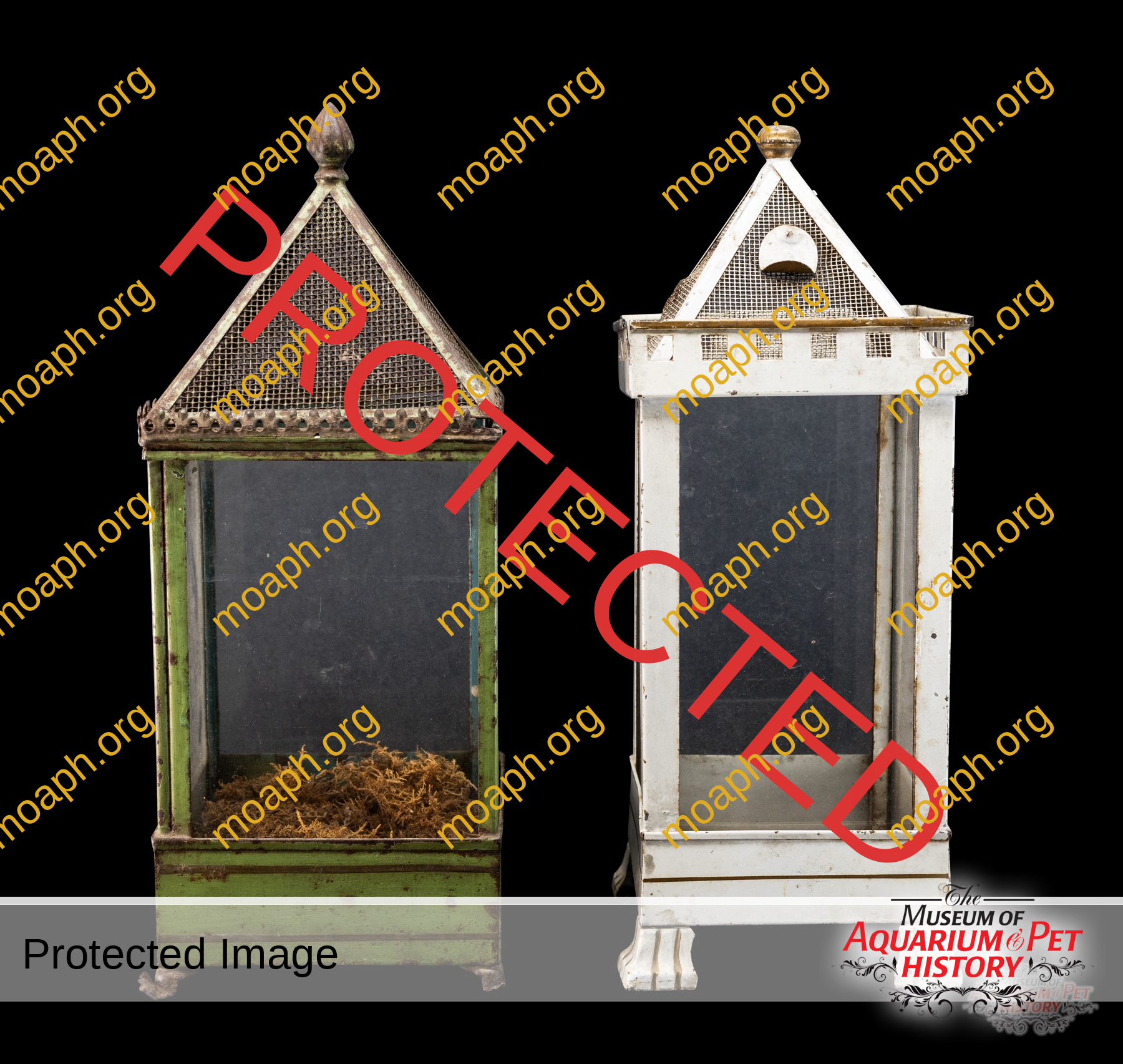
Frog houses from the Museum of Aquarium and Pet History
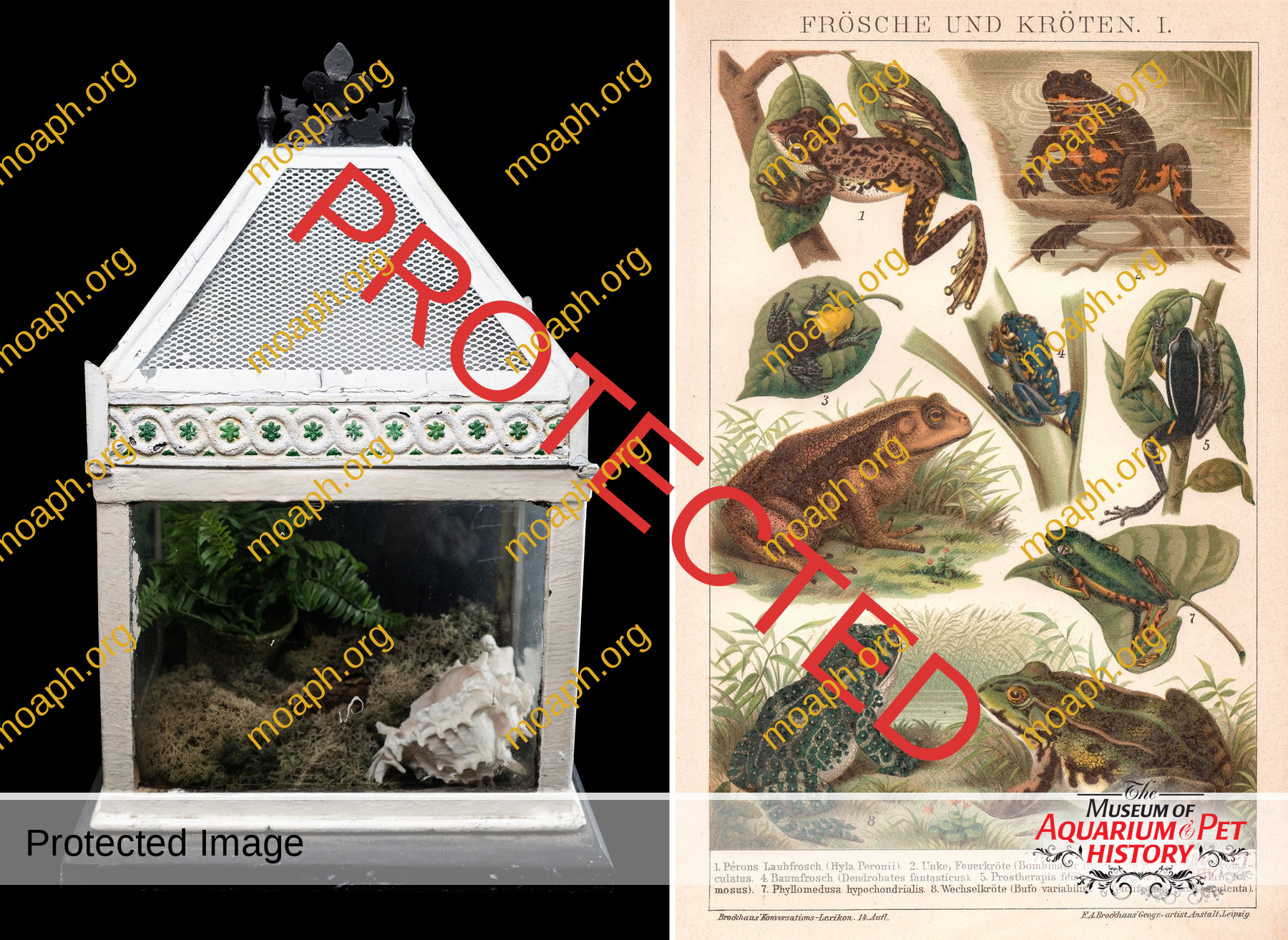
German terrarium for frogs preserved at MOAPH.
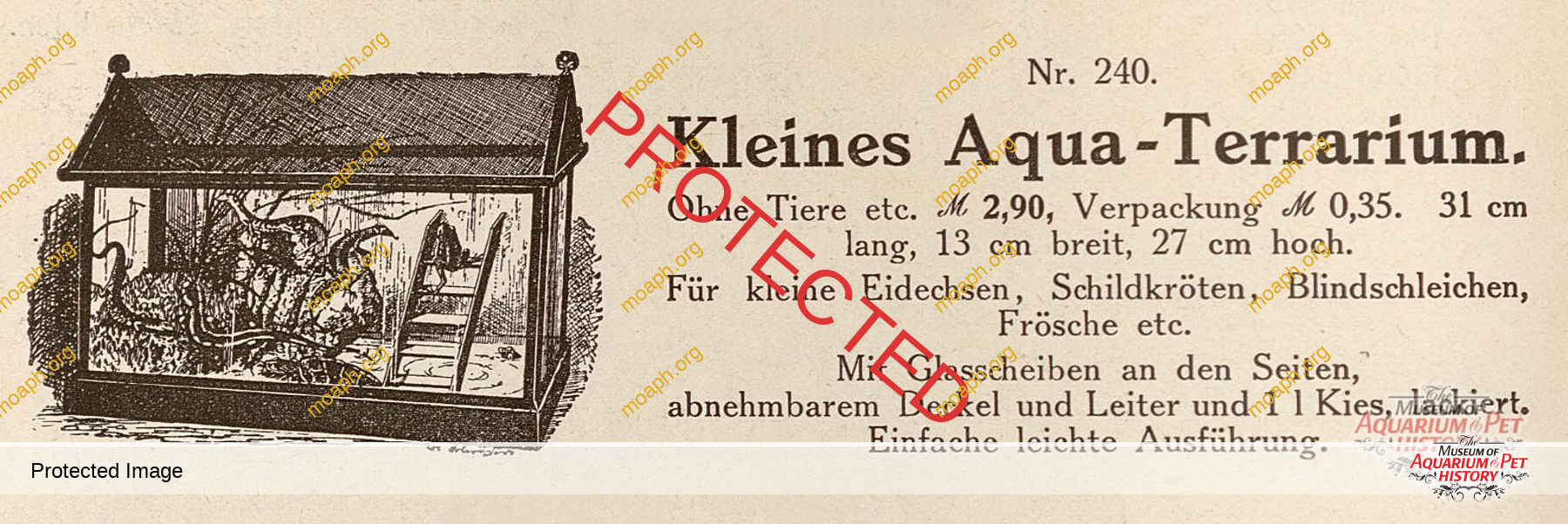
Small paludarium for frogs, lizards, turtles and common slow worms. A. Glaschker catalog, late 1920s.
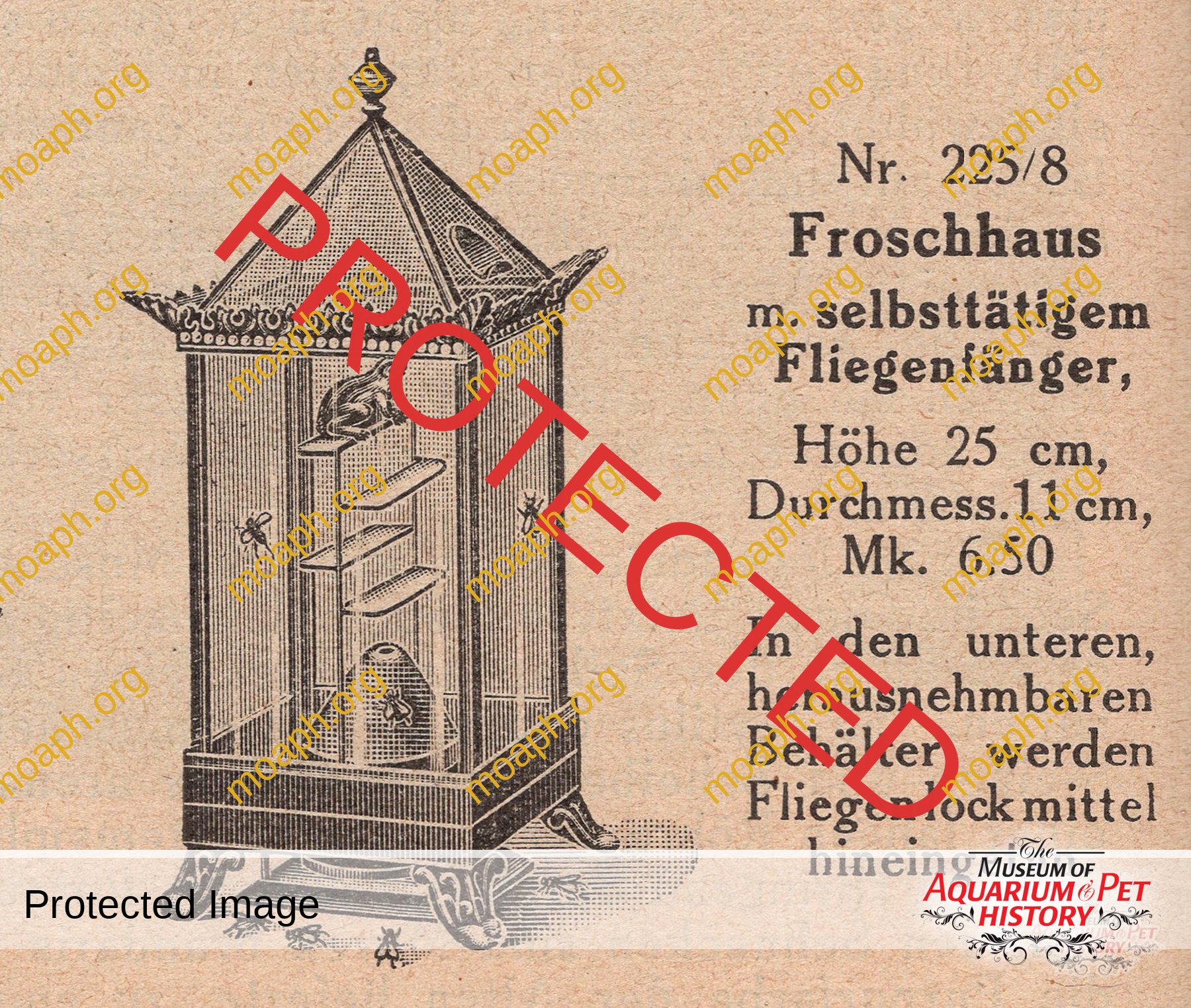
Frog house equipped with a flycatcher. A. Glaschker catalog No. 29, 1925.
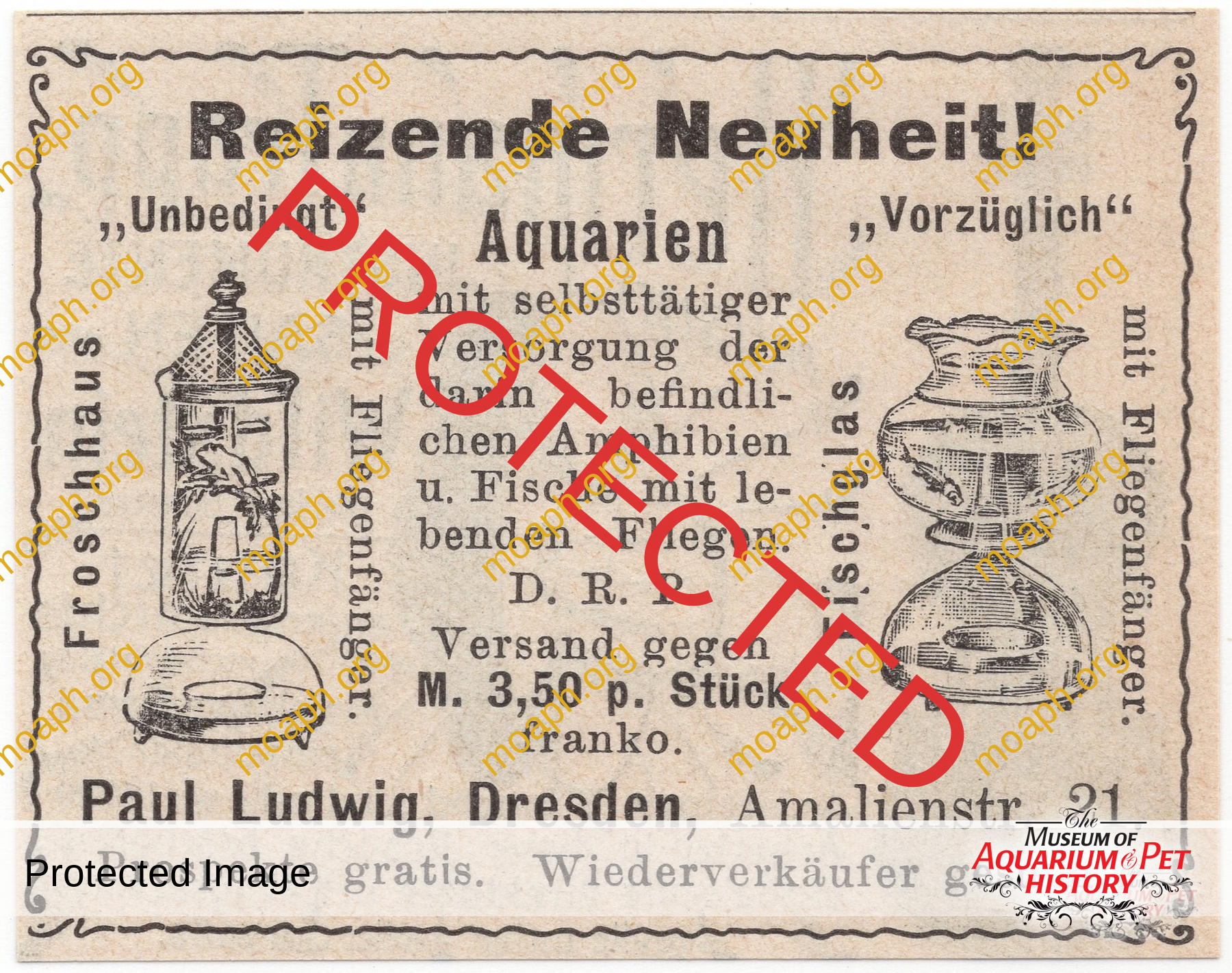
Advertising of a frog house and a fishbowl both equipped with a glass flycatcher, 1907.
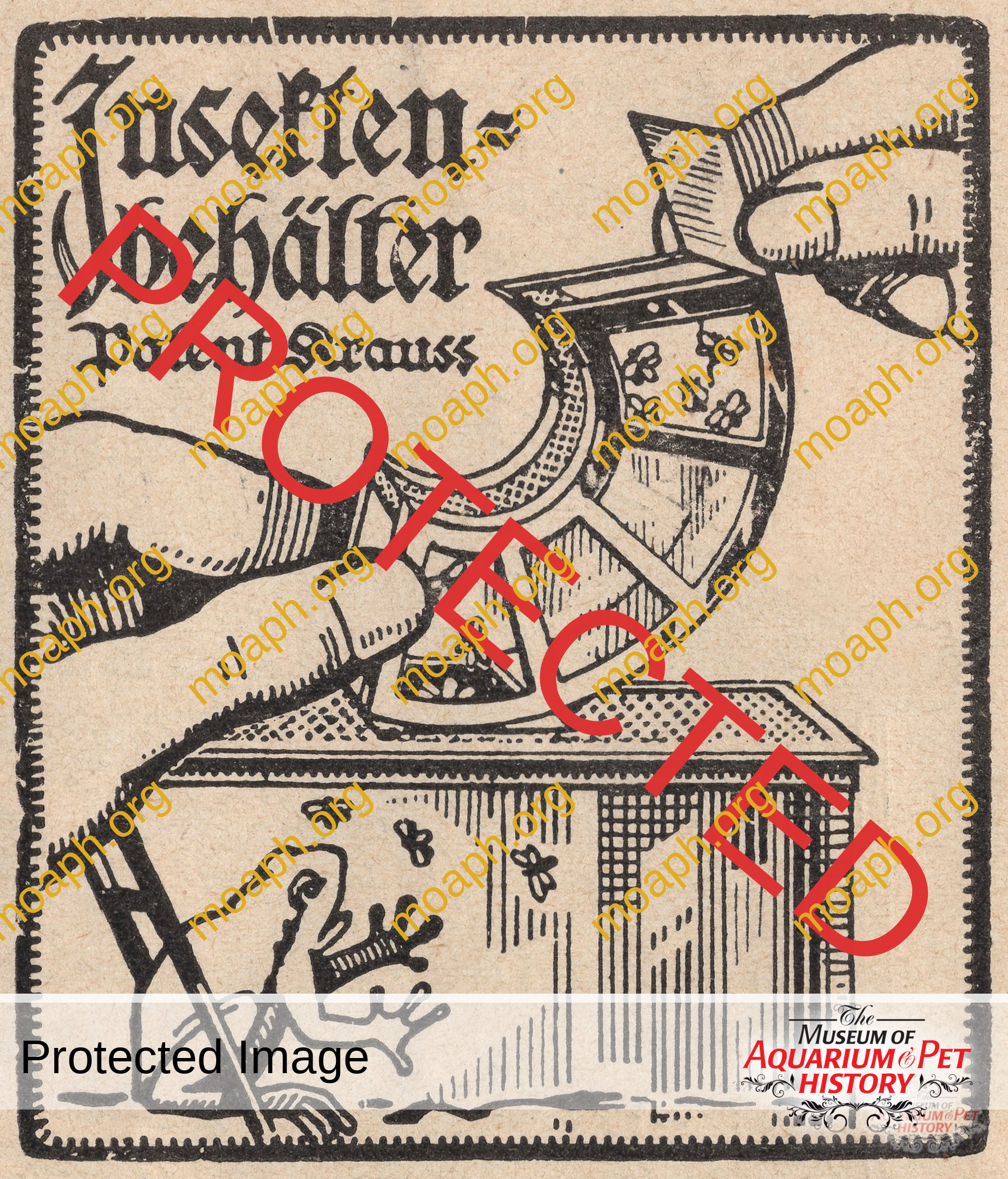
Old insect trap designed to feed live flies to frogs.
Today
The myth of the weather-forecasting frogs, which also spread back then to some border regions of present-day Switzerland, Austria, and the Czech Republic, is now long-forgotten. The image of a frog on a ladder, however, is still recognized as hope for a lucky and sunny day, as well as a synonymous with weather forecast.
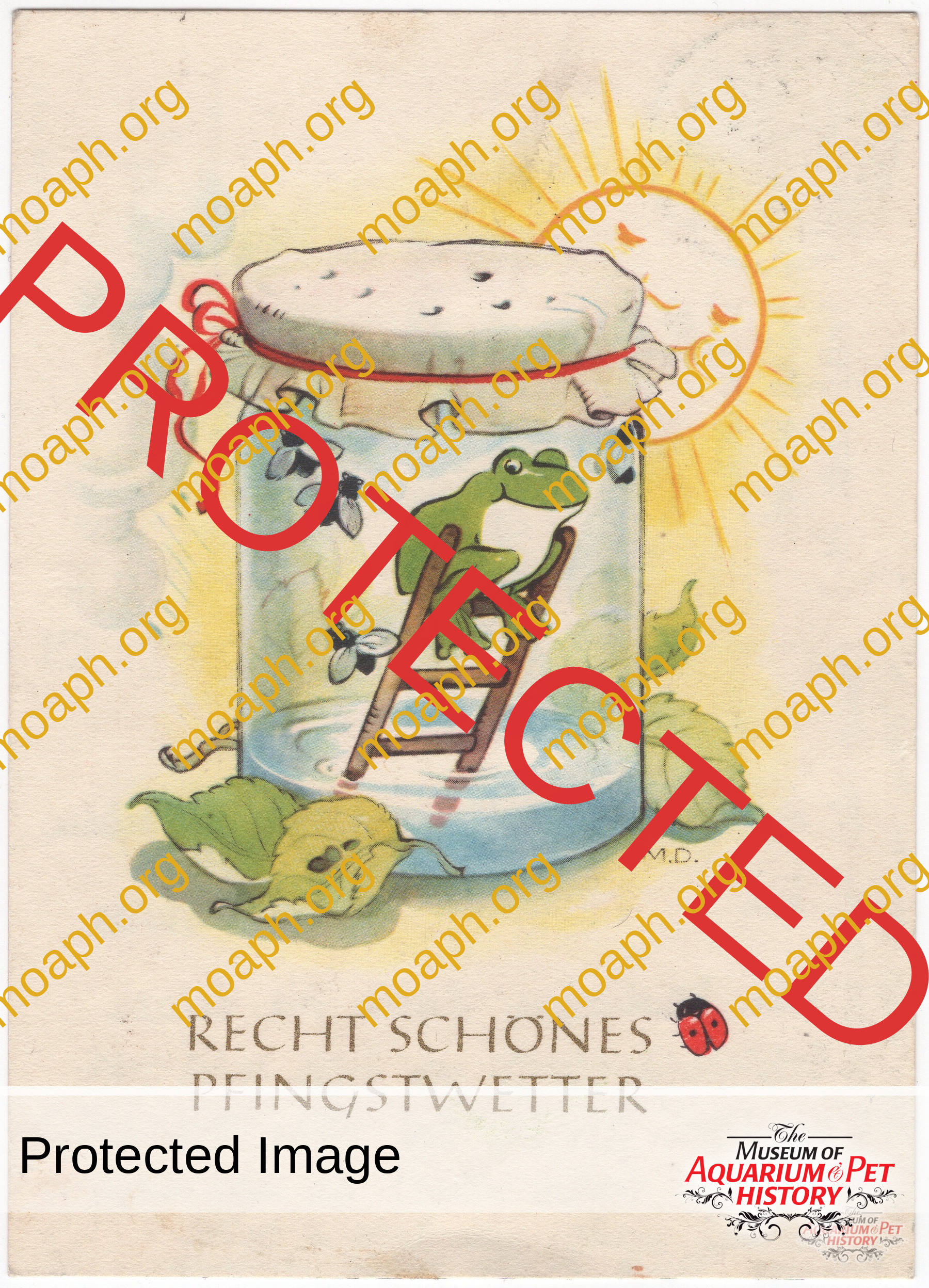
Wetterfrosch-themed vintage postcard.
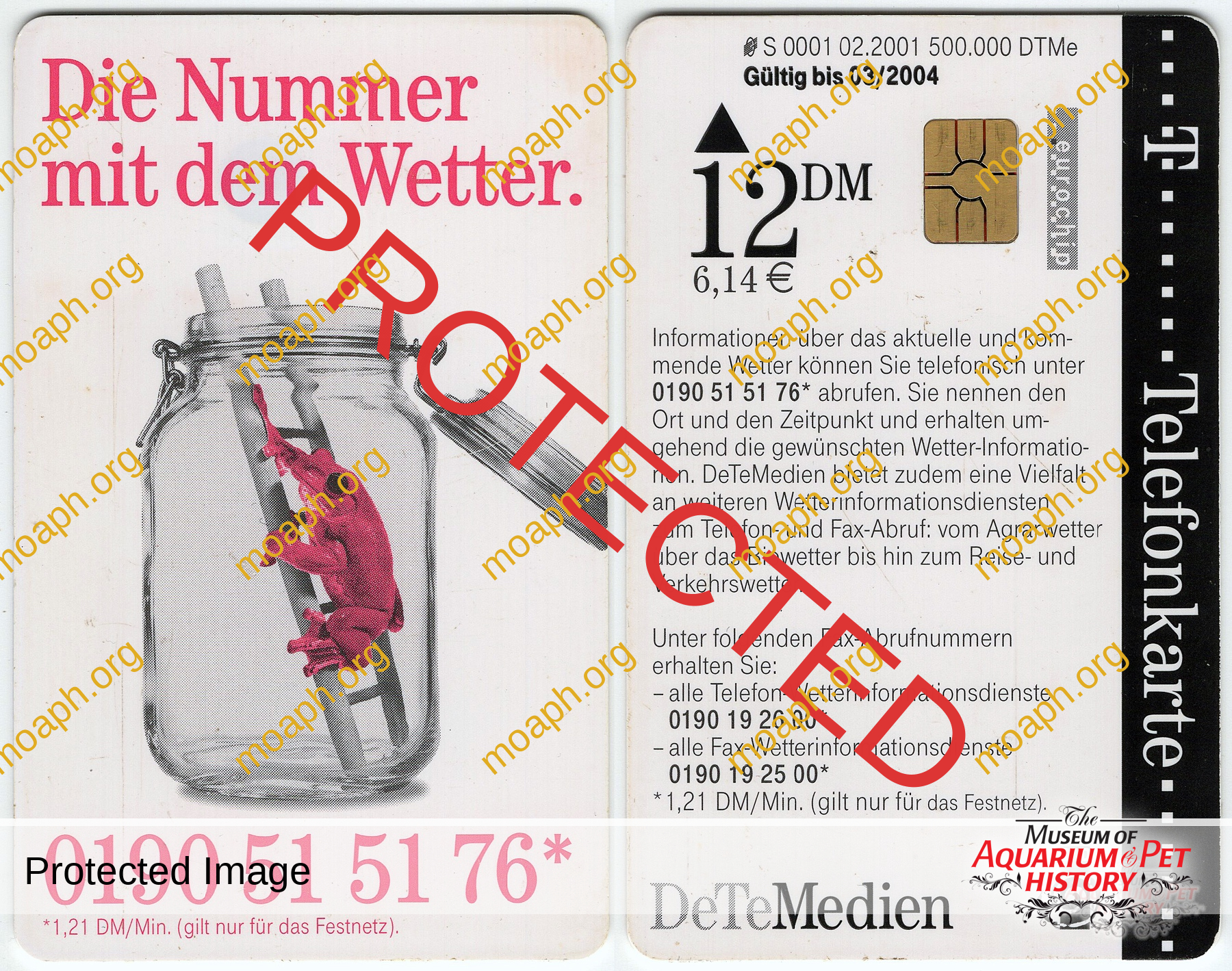
Vintage prepaid phone card advertising a telephone service for weather forecasts.
The frog houses that have survived to this day rest in the collections of German oldtimers and in a few European museums. When, on rare occasions, they come to light and are put up for sale online, they always attract great attention and sell at fairly high prices. Thankfully, as far as I know, nobody uses them anymore to keep live frogs.