From the Wardian Case to the Terrarium: The History Behind the Development
Translated by Alex Haro

Cover Translation: The Terrarium – Animal and Plant Life in Your Home
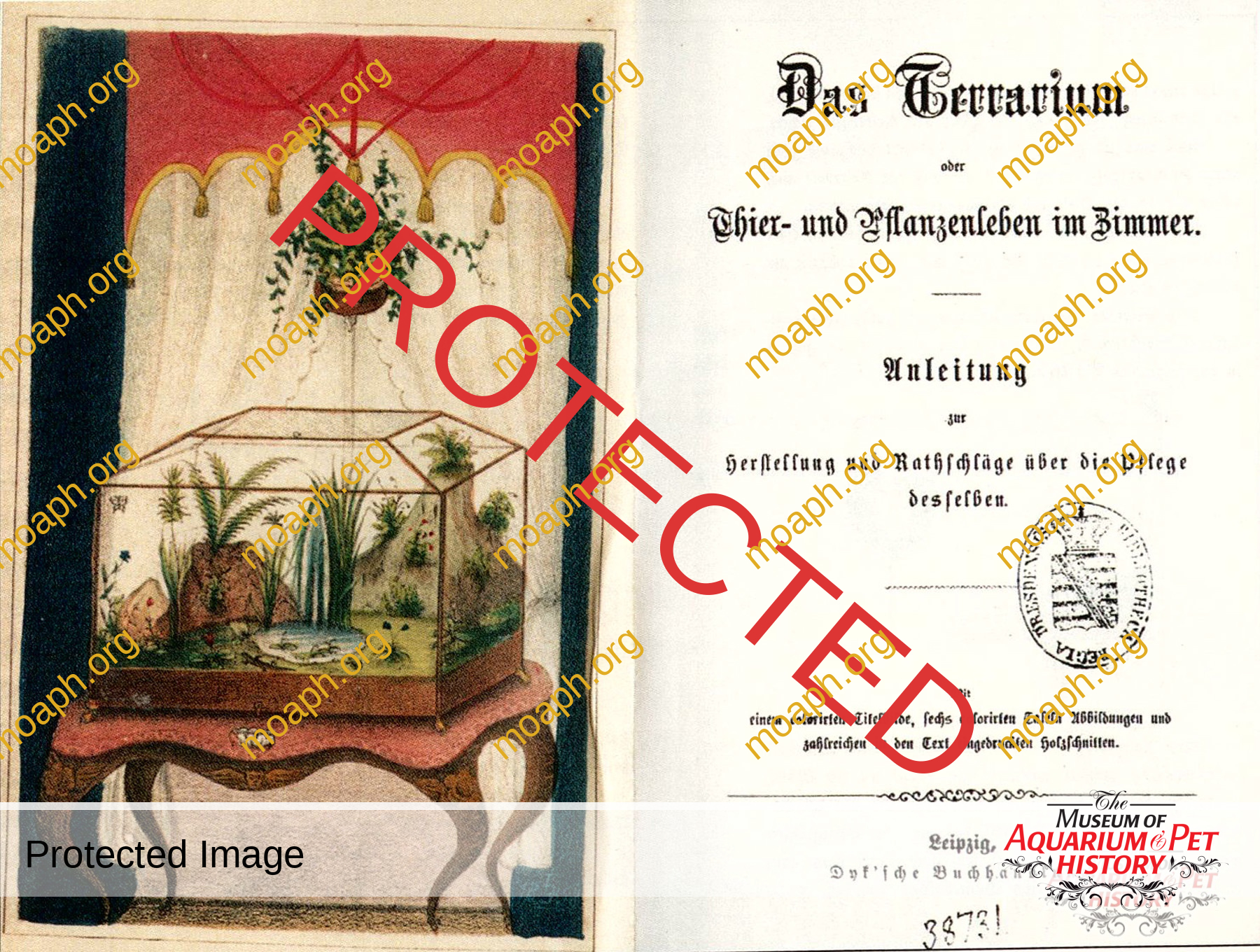
Manuel – Use and Advice on How to Care for Terrariums
Since the 1880s, a completely or partially glazed container for keeping or caring for reptiles, amphibians, invertebrates and plants has been called a terrarium, not only in the German-speaking world. However, the term “Terrarium” was already used in the first half of the 19th century, albeit in a slightly different context, namely as a synonym for the “Wardian Case”: small or indoor greenhouses designed for the care of ferns and tropical plants.
In the 1830s, a fashion developed in Victorian England, which was later mockingly referred to as “Pteridomania”, “Fern craze” or “Fern madness”, the collecting, cultivating and tending of fern plants, often tropical or subtropical species. Indeed, specifically the two British colonies, Australia and New Zealand, with their rainforest areas, had a rich fern flora. It’s no coincidence that the Silver Fern, Cyathea dealbata, is New Zealand’s national plant. However, transporting living plants from these colonies back to the mother country was extremely difficult, often impossible. The journeys by ship took several months. During transport on deck, the plants had sufficient light but were exposed to salt from the sea air and bad weather. Besides, the British sailors were not gardeners. They lacked both the knowledge and the time to deal with the care of plants during the crossing.
In light of this context, the English physician, amateur botanist, and hobby entomologist Nathaniel Bagshaw Ward (1791-1868) made a discovery. It would later prove immensely valuable for transporting tropical plants and also laid the groundwork for the advancement of modern aquarium and terrarium science. Around 1829/30, Ward placed a caterpillar in a wide-necked glass bottle with some moist soil and some leaves and sealed it. After the metamorphosis was complete, the butterfly proved to be a relatively uninteresting species and was released. The bottle was, however, closed again, placed on a windowsill, and initially ignored. After some time, Ward found that under the particular climatic conditions, two plants had germinated, a male fern, Dryopteris, and a sweet grass of the Poaceae family. Both thrived excellently and kept for several years without the addition of water. Ward had more or less intentionally created a “closed system” in which the water that evaporated from the earth condensed on the glass and dripped back into the earth.
These boxes, known as Wardian Cases, served as “indoor greenhouses” for nurturing even the most delicate tropical plants. Additionally, equipped with handles, they were repurposed as transport containers, functioning as portable greenhouses.. In 1833, Ward started an experiment by handing over two containers he had constructed and planted to his friend the ship’s captain Charles Mallard, so that he could take them on a voyage of several months from England to Australia. The experiment succeeded, and although the plants were transported on deck and exposed to the harsh weather, they not only survived, but grew and thrived. They have been donated to the Sydney Botanic Gardens. For the return journey, the two boxes were replanted, and some particularly sensitive Australian plant seeds, which had so far failed to be imported, made their way to England for the first time.
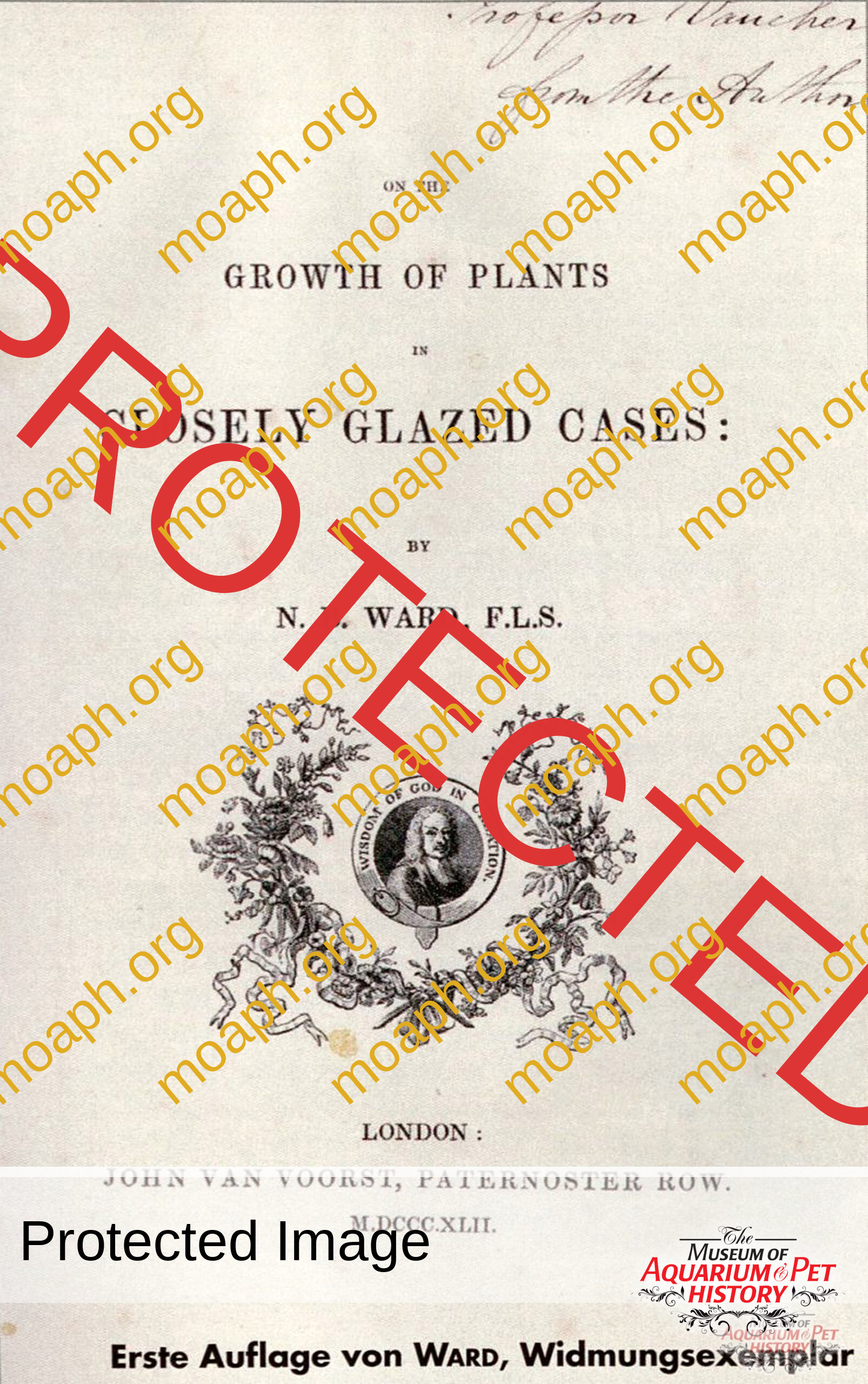
Bold Text Translation: First Edition from Ward, Dedicated Copy
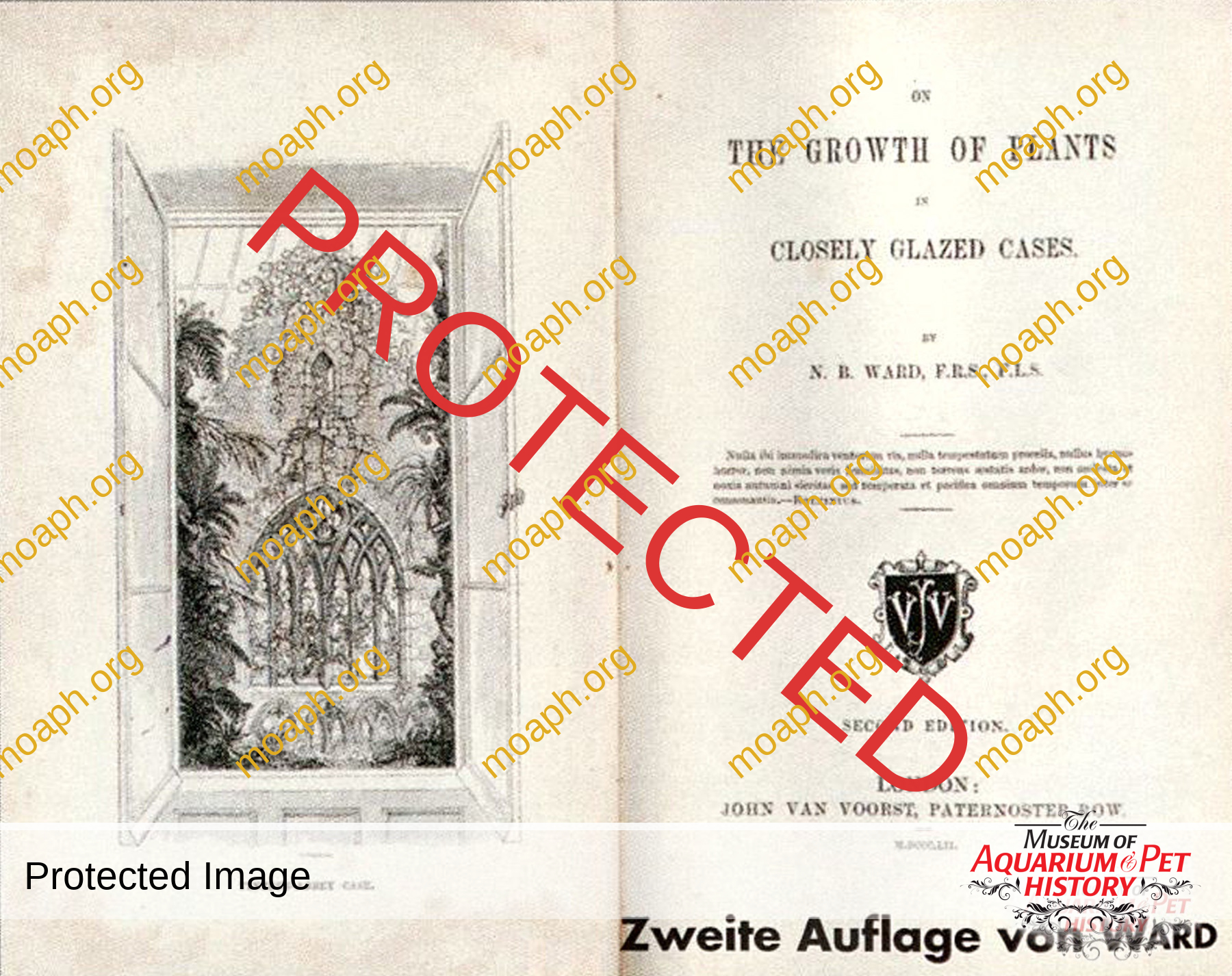
Bold Text Translation: Second edition from Ward
Ward first published his discovery and the results of his experiments in the form of small articles that appeared between 1834 and 1836 in specialist journals such as the Gardeners Magazine, the Transactions of the Society of Arts, and the Companion to the Botanical Magazine. The first edition came out in 1842 under the title “On the growth of plants in the closely glazed cases”, a second edition followed in 1852.
The “Wardüm Case” or “Wardsche Kasten1”, later named after its inventor, revolutionized the transport and care of tropical plants. As transport containers, not only ornamental but also useful plants such as hemp, rubber, cinchona, exotic fruit plants and, above all, tea found their way around the world. In 1848 the Scottish gardener and plant collector Robert Fortune traveled to China by ship on behalf of the British East India Company and successfully transported 20,000 tea plant seedlings to India in Ward’s boxes. They were cultivated in the Darjeeling2 region and crossed with the tea plants that grow wild in the Assam3 region.
MOAPH1: Named after Nathaniel Bagshaw Ward, the inventor
MOAPH2: Darjeeling – A region in northern India
MOAPH3: Assam – Northeastern region in India
“Wardian Cases” found their way into countless Victorian salons as a “greenhouse”. Since they were easy to produce and relatively inexpensive, they soon occupied the living rooms of the elites and the workers. The “Wardian Case” was not only a revolution in plant transport and the indoor culture of exotic plants, its invention was also the basis for modern aquariums and terrariums . The “Wardian Case” is the common ancestor of today’s indoor aquariums and terrariums. However, the development of aquariums and terrariums did not run parallel.

Plants have been transported across countries using two main methods: keeping them dormant, or maintaining their growth during the journey.

Vegetation in cities and mining areas suffer due to limited light and polluted air, both of which hinder essential plant functions.

Inspired by Linnaeus, my lifelong passion for botany began with the humble dream of owning a wall covered in ferns and moss.
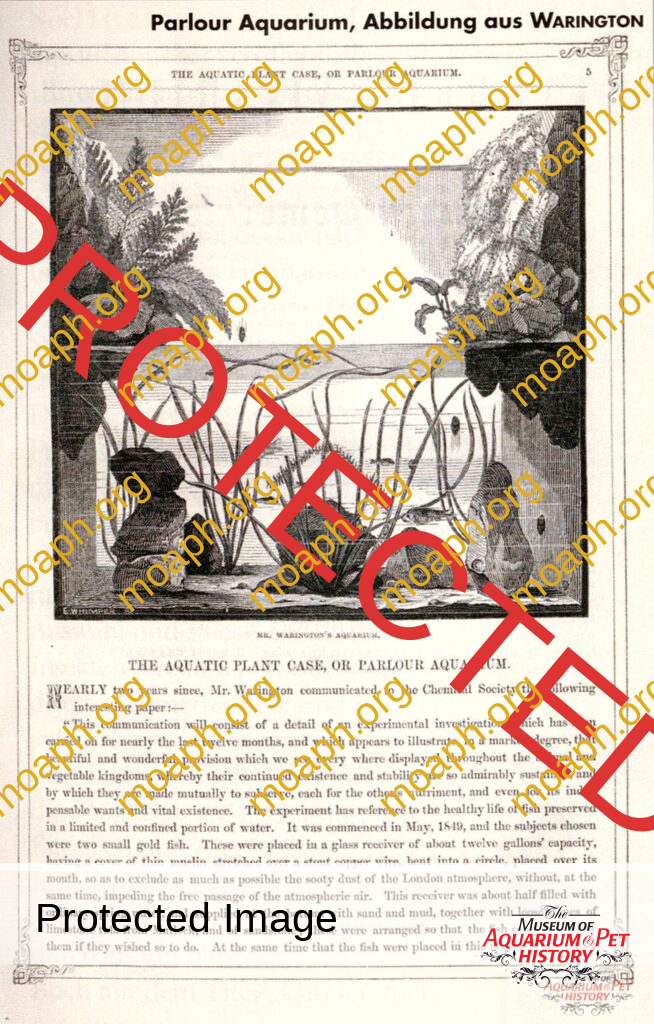
Bold Text Translation: Parlour Aquarium, picture from Warington
At the beginning of the 1850s, the British chemist Robert Warington (1807-1867) published the results of his experiments, which he had begun in 1849, with the joint keeping and care of aquatic plants and fish in “Wardian Cases” filled with soil and water. His experiments differed of those of his predecessors and contemporaries in that he intended to create an aquarium that was as easy to maintain as possible, i.e. that functioned over the long term without major effort and external intervention Warington was therefore trying to establish a balance in terms of gas exchange: the plants consume the carbonic acid excreted by the animals and in turn supply them with the oxygen they need.
If the first attempts failed because dead plant parts clouded or contaminated the water, the additional occupation of the container with water snails finally brought a satisfactory result. Warington had created the “Balanced Aquarium”. Numerous authors therefore credit Warrington with the merit of being the father of the modern aquarium. Unfortunately, the part that Ward played in this development is often not appreciated.
In contrast to terraristics4, the almost rapid development of aquaristics was greatly favored by another factor. From about 1845, sections of the upper middle and upper classes in Britain began to take an increasing interest in nature studies, particularly marine life forms.
MOAPH4: Terraristics: Reptile Keeping
Inspired by numerous popular science books, during “Sea-Side Holidays” on the British coast, people collected various marine life forms such as seaweeds, crabs, shrimps, starfish, anemones, and other invertebrates from the tide pools and ponds left behind at low tide. Soon, efforts were made to bring these collected specimens back home alive, and they were kept in more or less suitable containers, often with considerable effort, in an attempt to sustain them for as long as possible. The breeding ground for Warington was therefore already prepared and his findings were quickly accepted.
Phillip Henry Gosse published his work “The Aquarium” in 1854, the world’s first book that dealt exclusively with aquariums. He is still credited with coining the term aquarium in its current sense and establishing it in general usage, Shortly thereafter – in England the “Aquarium Navy” had already broken out – other English aquarium books appeared, such as the works of Hibberd, Humphreys, Sowerby5 and others. The year of publication of the first German aquarium book, which was penned by Müller, was 1856. Just one year later, the first edition of what is probably the best-known and most popular German aquarium book, Emil Adolf Rossmassler’s “Das Susswasser aquarium” (The Freshwater Aquarium). Around the same time, the first American aquarium books were published, which were soon followed by works in France, Italy, Spain, Sweden and other countries. The terrarium initially couldn’t benefit much from this development, despite its potential. It seems logical in retrospect that one would consider the idea of utilizing a Wardian case, already filled with soil, moss, and plants, not only as a greenhouse but also as an excellent container for keeping animals. Wouldn’t such a use have been more logical than filling it with water?
MOAPH5: George Brettingham Sowerby author of “Popular History of the Aquarium”
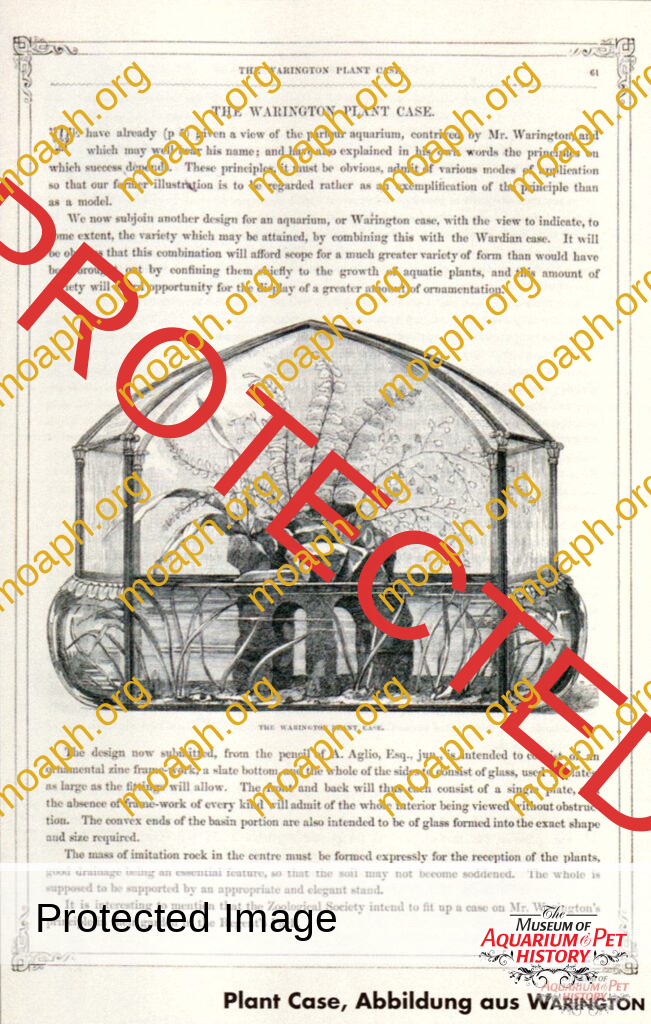
Bold Text Translation: Plant Case, picture from Warington
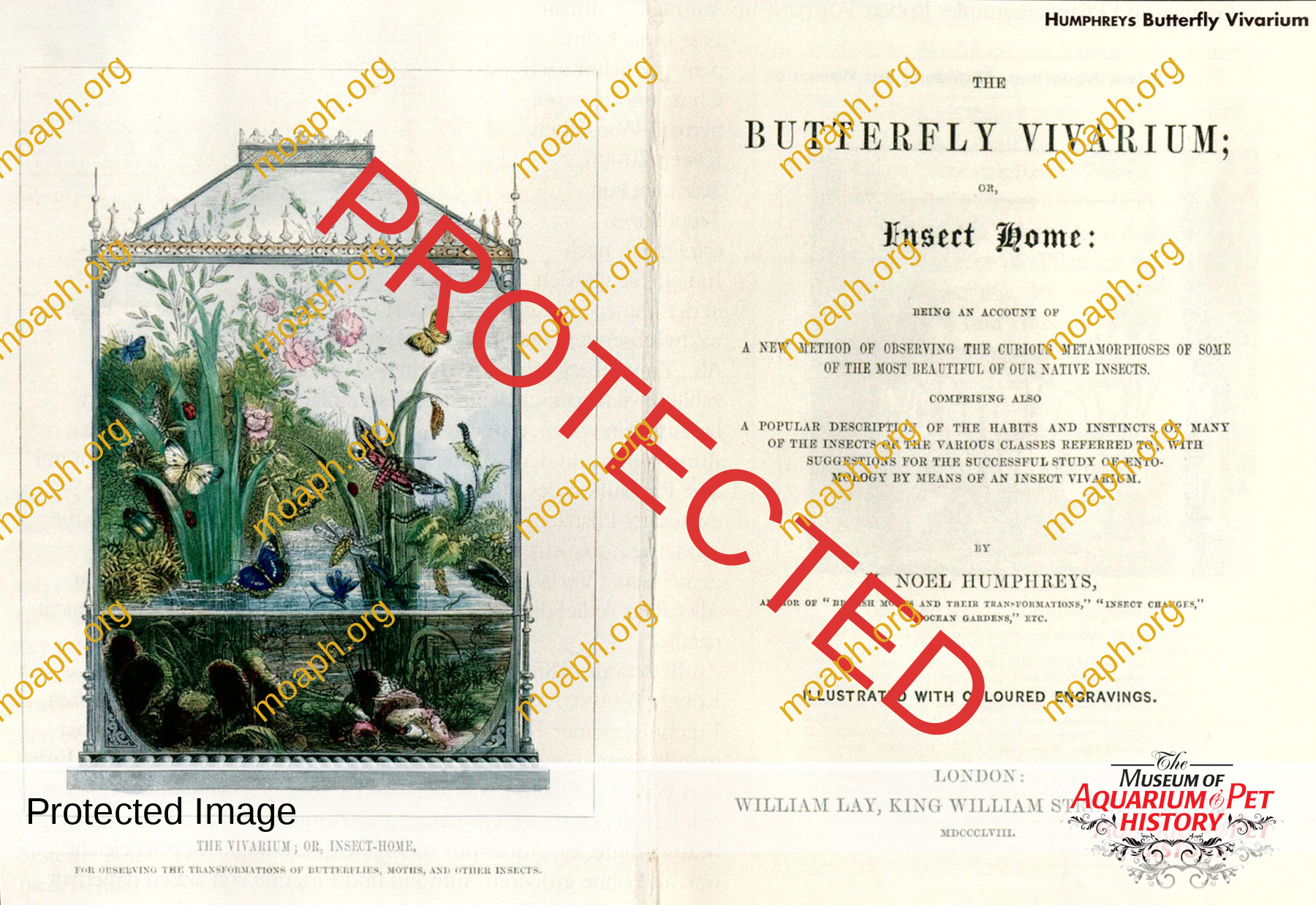
So, the terrarium had already been invented; it’s just that no one seemed to recognize it as such. Although the keeping of aquatic amphibians was also described in the first aquarium books, the primary aspect was and remained the keeping and care of fish as well as aquatic and marsh plants. The British author Noel Humphreys had already published two aquarium books in 1857, ‘Ocean Gardens’ and ‘River Gardens’; in 1858 another work appeared from him – “The Butterfly Vivarium; or Insect Home: being an account of a new method of observing the curious Metamorphoses of some of the most beautiful of our native Insects.”, in which an insectarium for keeping butterflies, dragonflies and other insects is described for the first time.
The marvelous, hand-colored frontispiece depicts a container that today would be referred to as a Paludarium. The text is devoted to making and setting up such a container, as well as selecting and caring for suitable insects. Other color plates show various butterflies and dragonflies, but no vertebrates; In the text, too, one finds no reference to the possibility of keeping reptiles and amphibians.
In 1871, a small book with only 48 pages but very well illustrated was published in Sweden titled “Om terrariereller små växthus för boningsrum” (About Terrariums or Small Greenhouses for Living Rooms). The author is the well-known Swedish naturalist Gustav Retzius the work various forms of indoor greenhouses, i.e. “Wardian Cases” and the cultivation of tropical plants. More than 30 years after Ward’s invention and at least almost two decades after the first aquarium book, the possibility of keeping animals in the terrarium remains completely unmentioned.
Only in 1884 did the publisher Mahlau & Waldschmidt in Frankfurt. “The Terrarium, its Planting and Population” by Baron Johann von Fischer (1850-1901). The supposedly first German-language and also the first book worldwide that exclusively deals with the terrarium and terrarium science in the sense commonly used today. von Fischer’s work is undisputedly a milestone in the history of terrariums, but is it really the first terrarium book?
During my literature research on early aquarium books, I happened to come across an entry in the most extensive of all monographic bibliographies of zoological literature, Otto Taschenberg’s “Bibliotheca Zoologica II”, that was completely unknown to me at the time. This fact is actually not that unusual, unless, as in my case, you have worked intensively for more than 35 years as a collector and as a book antiquarian with the historical literature on aquarium and terrarium science.The entry in Taschenberg is in volume 1, I on page 243 and reads: , “Terrarium, the, or animal and plant life in the room. Instructions for the production and advice on the care of the same. With colored title pictures, 6 colored plates and numerous woodcuts printed in the text. Leipzig, Dyk, 1860. 8° Vlll , 80 pages of woodcuts and 7 plates, lith. and color M-2.”
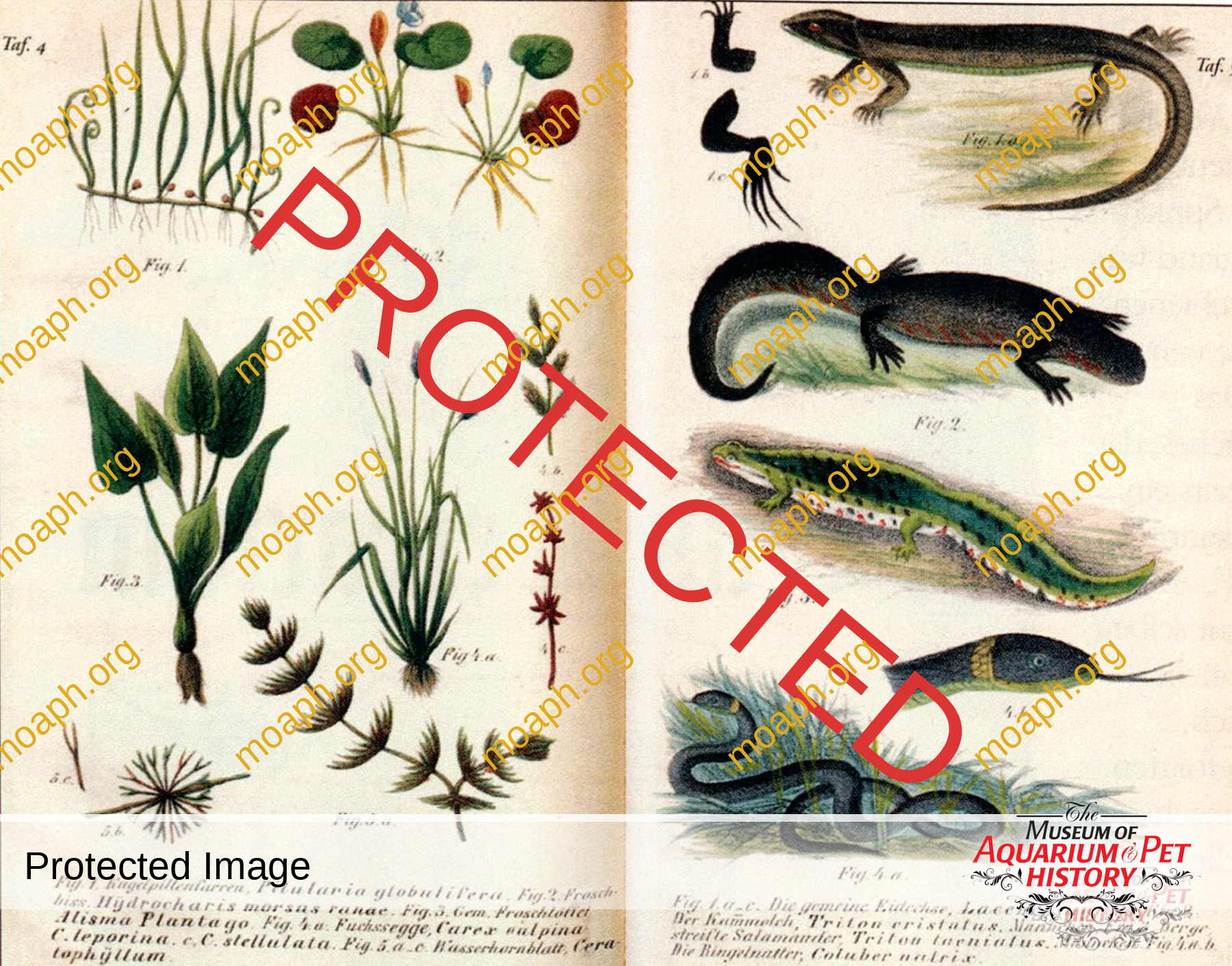
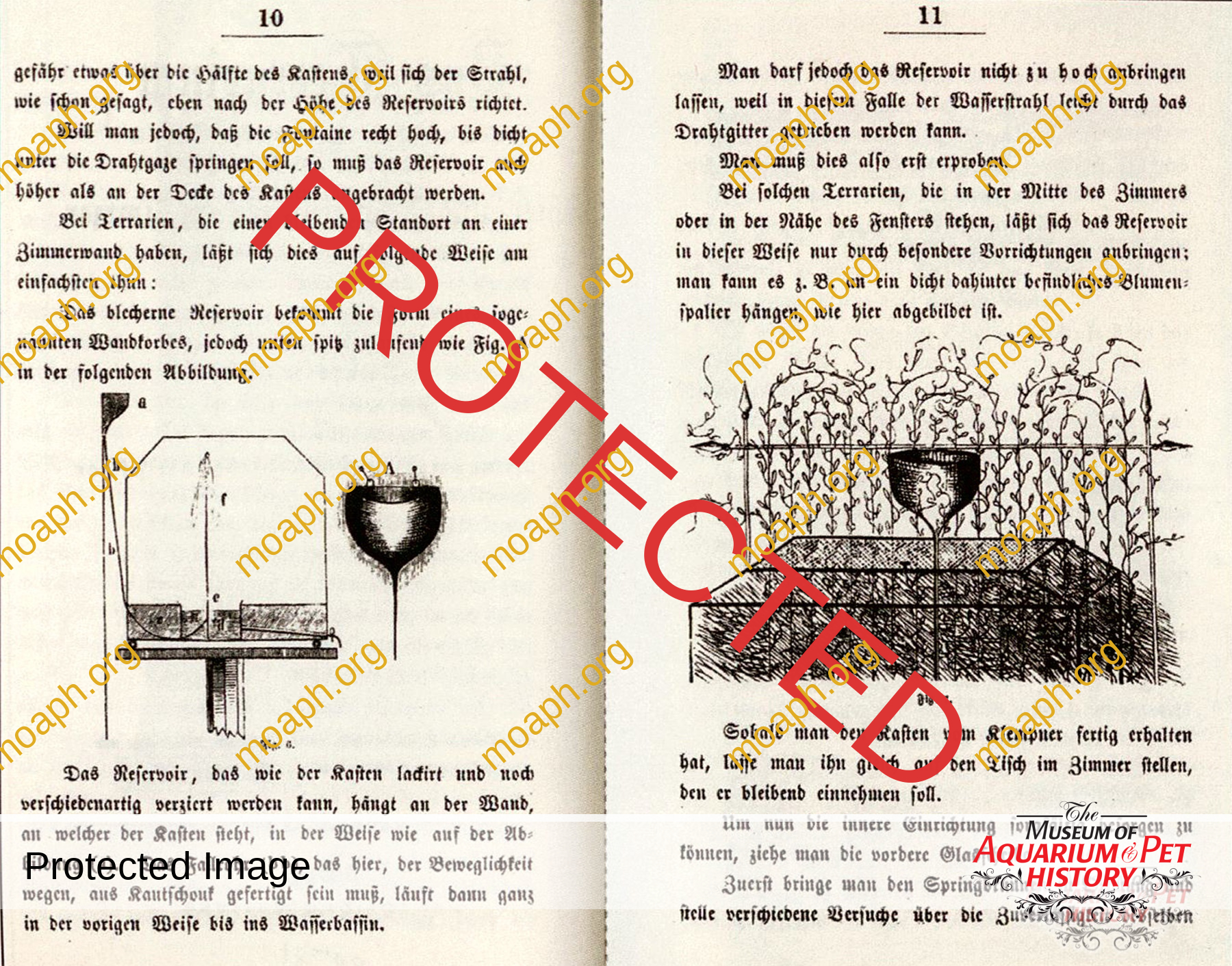
Page 10 explains how to install a water container for a terrarium placed near a wall. Shaped like a tapered wall pot, the container is mounted on the wall and connected to the terrarium basin via a rubber tube. Its height directly affects how high the fountain sprays.
Page 11 explains how to hang a reservoir for freestanding terrariums using a decorative holder and stresses testing the fountain first to avoid water spraying through the mesh before setting up the interior.
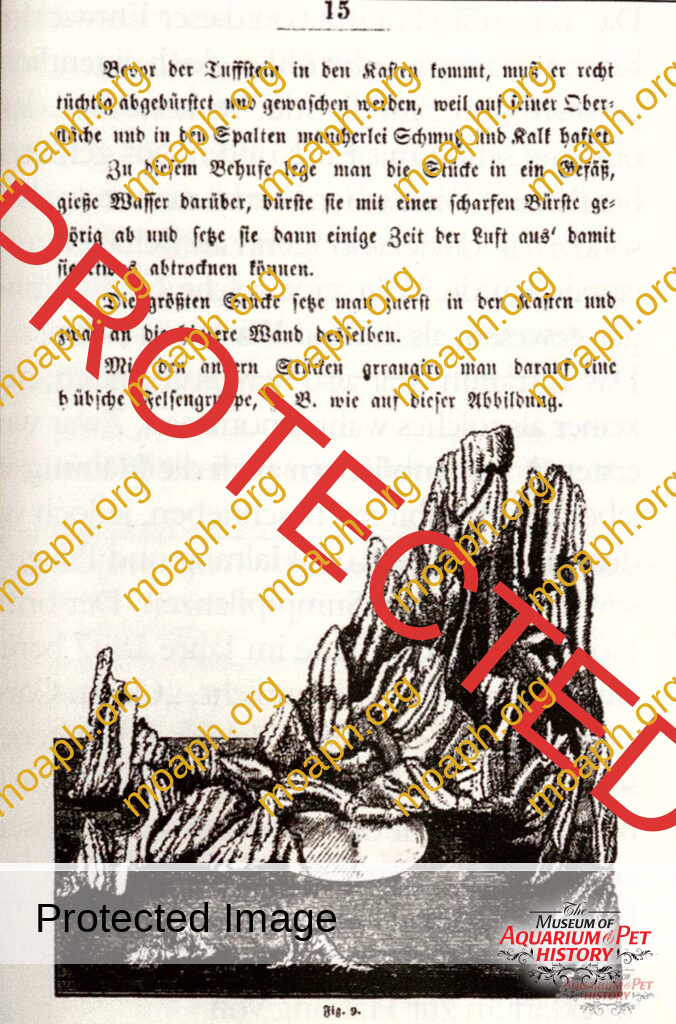
Text Translation: Airstones must be thoroughly cleaned with hot water and a brush before use to remove dirt and lime. After drying, they are arranged in the tank, starting with the largest pieces to create a decorative rock formation.
Back to the 1860 release year: is that really possible? So far, the work of Johann von Fischer was considered the first book on terrariums, and it was published in 1884. Could it be that this “rediscovered” book was published almost a quarter of a century earlier?
For many decades, the first edition of Rossmassler’s “Das freshwater aquarium”, published in 1857, was regarded as the first German aquarium book. Until recently, a seemingly lost little book by L. Müller titled, “Das Aquarium: Gesichte, Bau und Einrichtung des Wasserglas-Kastens” (The Aquarium: History, Construction, and Furnishing of the Glass Water Box) resurfaced. Its publication in 1856, a year prior to Roßmaßler’s work, caused quite a stir among collector circles. This discovery sparked discussions, prompted several publications, and initiated an intensive search for an original copy.
It’s worth noting that the two aquarium books were published within just a one-year time difference, whereas the terrarium books had almost a 25 year gap. How is it possible that a book, not a small brochure, but a properly printed little book published by a regular publisher and even equipped with colored plates, completely escaped notice and fell into obscurity? During an internet search I found a reference to a short book review in the 8th year of the magazine “Die Natur” (The Nature), published in 1859. So the otherwise reliable Taschenberg was wrong this time about the year of publication and there is actually a complete quarter of a century between the “rediscovery” and the work of J. v. Fischerman.
I kept looking, but even looking through all the old terrarium books didn’t bring any results. The “new discovery” is not mentioned in the bibliographies (if available) or anywhere else. During several conversations with fellow collectors of old aquarium and terrarium literature and colleagues, I was shown interest, astonishment and even a little enthusiasm. But nobody knew the book, had ever seen it or even held it in their hands.
A renewed search on the Internet via KVK6 and WorldCat only found three copies in libraries worldwide. One in Basel, a second in Strasbourg and fortunately also one in a German library, the SLUB in Dresden. Unfortunately, interlibrary loan is not possible, but after a few phone calls and filling out a few forms, a digital copy was made and permission was granted for a reprint or facsimile.
MOAPH6: KVK stands for Karlsruher Virtueller Katalog (Karlsruhe Virtual Catalog). It is a powerful metasearch engine that allows users to search multiple library catalogs around the world simultaneously, including national libraries, university libraries, and specialized collections.
Now, this gem in terrarium literature is finally available again in printed form, offered in two different editions. It is accessible once more for those interested in historical terrariums as well as for bibliophilic collectors. I deliberately refrain from providing information about the content of the work or making an already subjective assessment of its quality. Nor do I wish to speculate as to the possible identity of the author, the reasons for its extreme rarity, or the reasons why the book could have been overlooked or forgotten for so long. I would like to leave that to the collectors and hopefully also to the readers of the reprint. I look forward to discussions about this. Anyone interested can purchase “The Terrarium or Animal and Plant Life in the Room” from the Antiquariat Castellum, Gabelsbergerstraße 11, 60389 Frankfurt/M., Tel. 069-26490569.