
Embracing Italian Opulence: C.G. Capelletti’s Luxury Aquariums
If you ask an American collector of antique aquariums to show you his want list, you will notice that almost certainly one of the top spots will be reserved for one of the artistic aquariums crafted from the late 1920s through the 1930s by the Jewel Aquarium Company. It’s also likely that the coveted piece will be the fancy six-sided dolphin tank with seahorse legs.
The Chicago-based company founded in the mid-1920s by the German immigrant Hans Jensen produced only a handful of tanks with this design, fewer than 10 according to most estimates. That’s a small number compared to the multiple aquarists and collectors captivated by the charm of these “modernistic” aquariums which also doubled as works of art. Among the admirers of Jewel products there was also the Chicago antique dealer Sam Robin, who in the mid-1980s purchased the molds from the original factory and started a limited production run of replicas. Today, one of those replicas in unused condition can command a much higher price than an original Jewel dolphin tank with seahorse legs in need of a complete restoration.
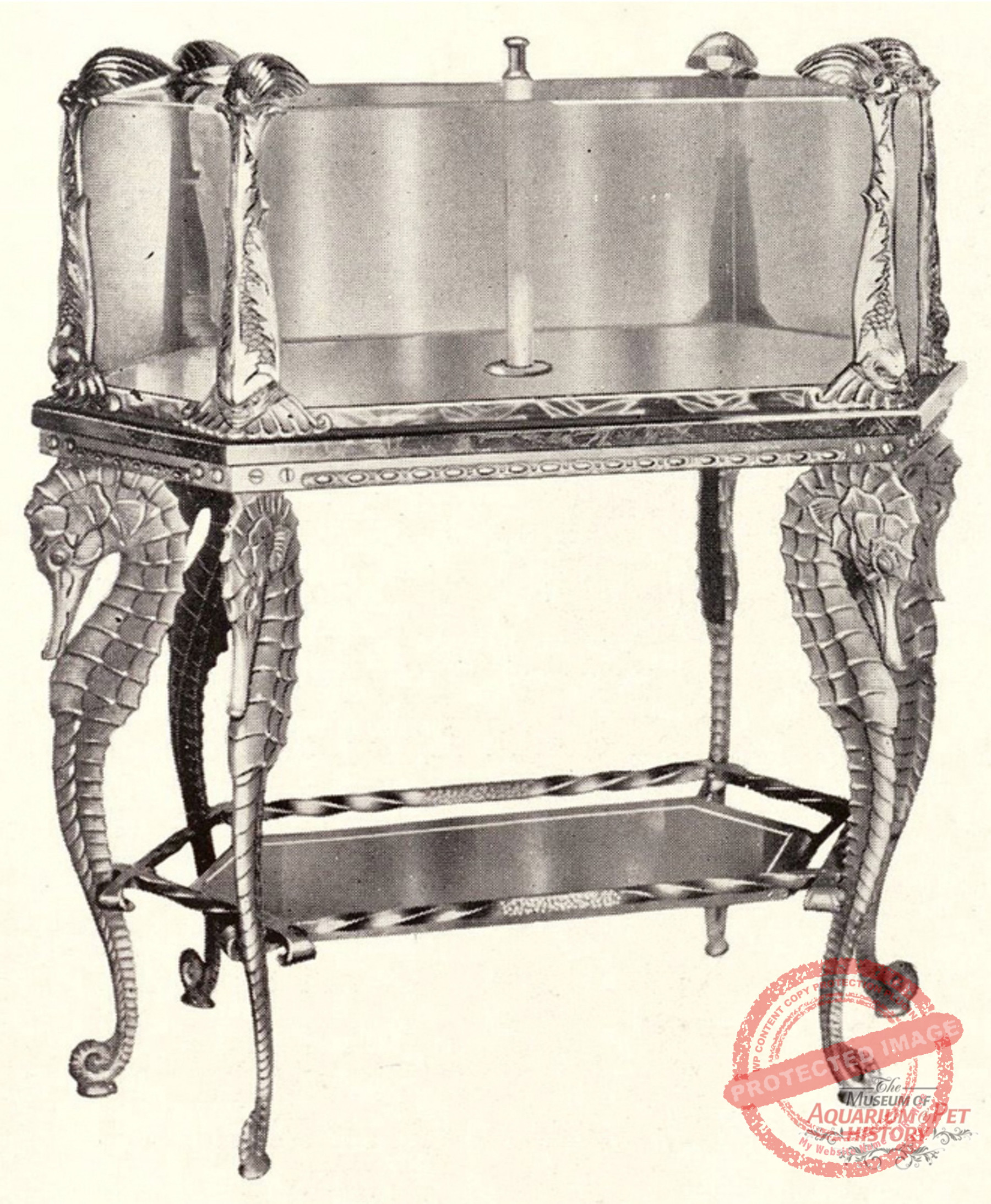
Illustration from the September 1st 1937 Jewel catalog. Courtesy of MOAPH.
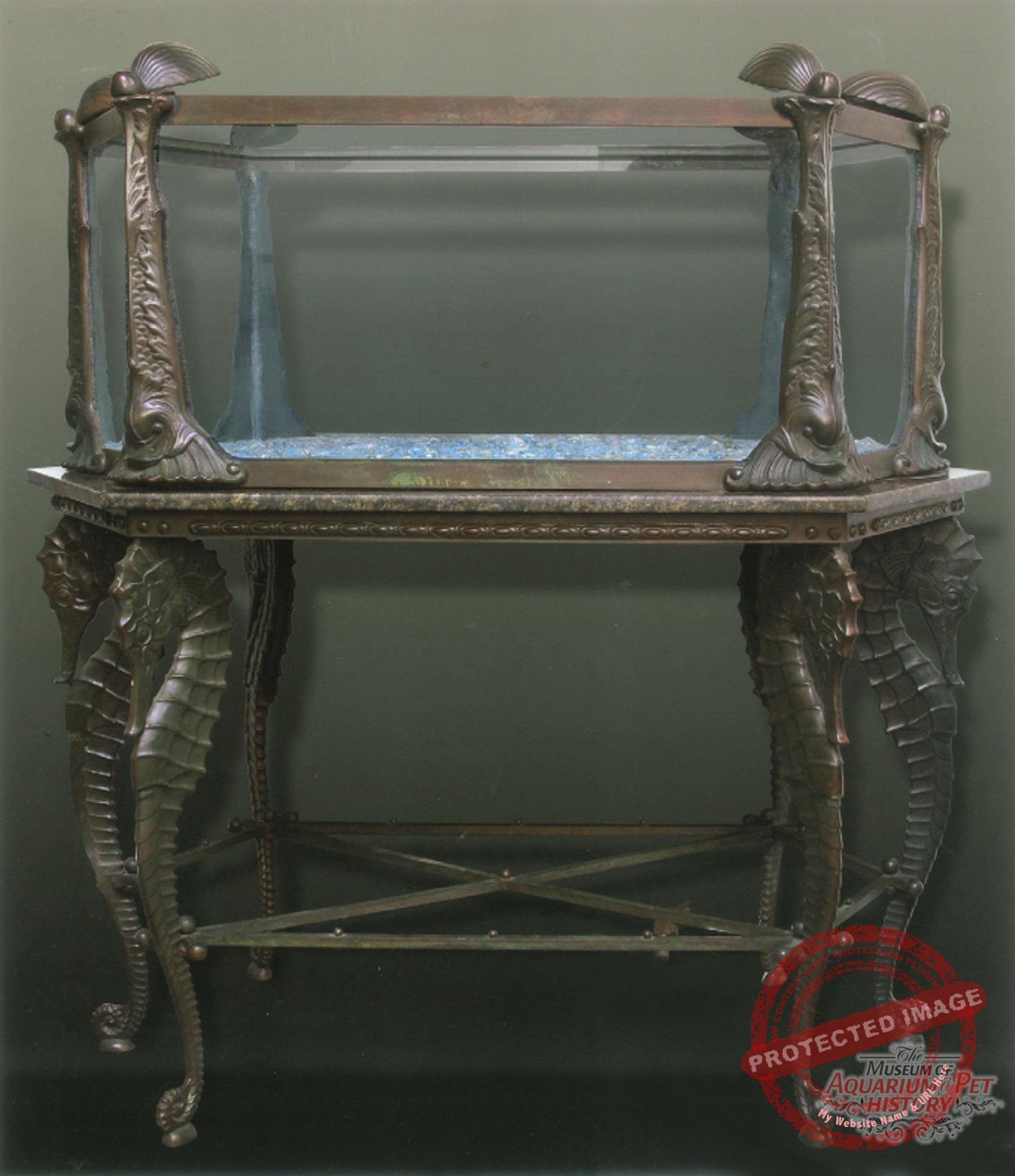
Original six-sided dolphin tank with seahorse legs by the Jewel Aquarium Company. Photo courtesy of MOAPH.
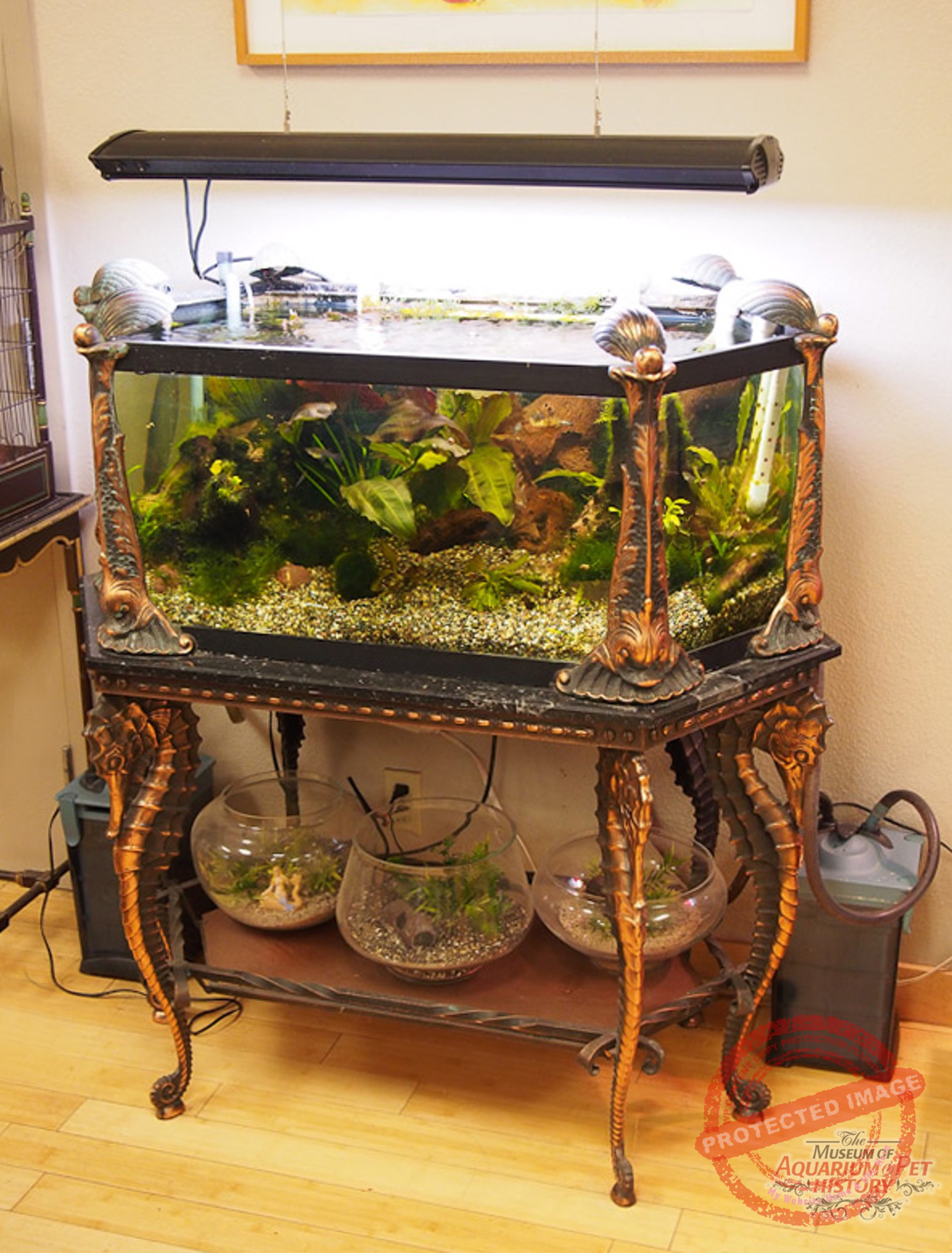
Sam Robin’s custom re-creation of a Jewel six-sided dolphin tank with seahorse legs. It was made from bronze with a copper oxidized finish. According to some sources, Robin produced 24 replicas. Photo courtesy of MOAPH.
They are not Jewel aquariums!
Robin’s venture wasn’t the only business and labor of love inspired by the timeless design of that Jewel floor model. In fact, in the early 1980s the distinguished American art collector Robert Carter Slack developed the idea of creating an exclusive line of luxury aquariums for the wealthy and sophisticated clientele of his auction gallery in Atlanta. This time, however, the project wasn’t about producing replicas. Each aquarium had to be designed with distinctive features that would set it apart enough both from Jewel products and from the other tanks which would have been part of the same production run. The goal was to ensure that every piece could rightfully be regarded as a one-of-a-kind artwork.
A few images of a couple of these mysterious aquariums have been found on the internet over the years, but they are accompanied either by very little information or by the wrong details on manufacturer and production period. In the past, someone even considered them as pieces manufactured by the Jewel Aquarium Company itself. Clearly, then, the truth behind these fancy aquariums slowly faded over time, presumably because they are not marked or stamped. I have therefore decided to go deeper into this interesting topic, hoping that my article might one day prove helpful to antique dealers, auction houses, and collectors.
Masterful Italian craftsmanship
To return to Slack, when it came time to choose a manufacturer, he focused his search on Italy, and in particular on a region of northern Italy known as “Brianza”.
Located between the city of Milan and Lake Como, this area is world-famous for its luxury furniture tradition which started to develop in the 18th century. Here, generation after generation, local artisans and family-run companies built a hub of Italian design and craftsmanship, a true stronghold of artisanal passion where luxury furniture is a religion more than just a business.
Eventually Slack chose C.G. Capelletti, an atelier founded in 1861 by the skilled craftsman Antonio Capelletti. Luckily for me, and for all who love high-end furniture, the Capelletti family is still in business and proudly accepted to provide all the information I needed, as well as the several, largely unpublished photographs which embellish this work.
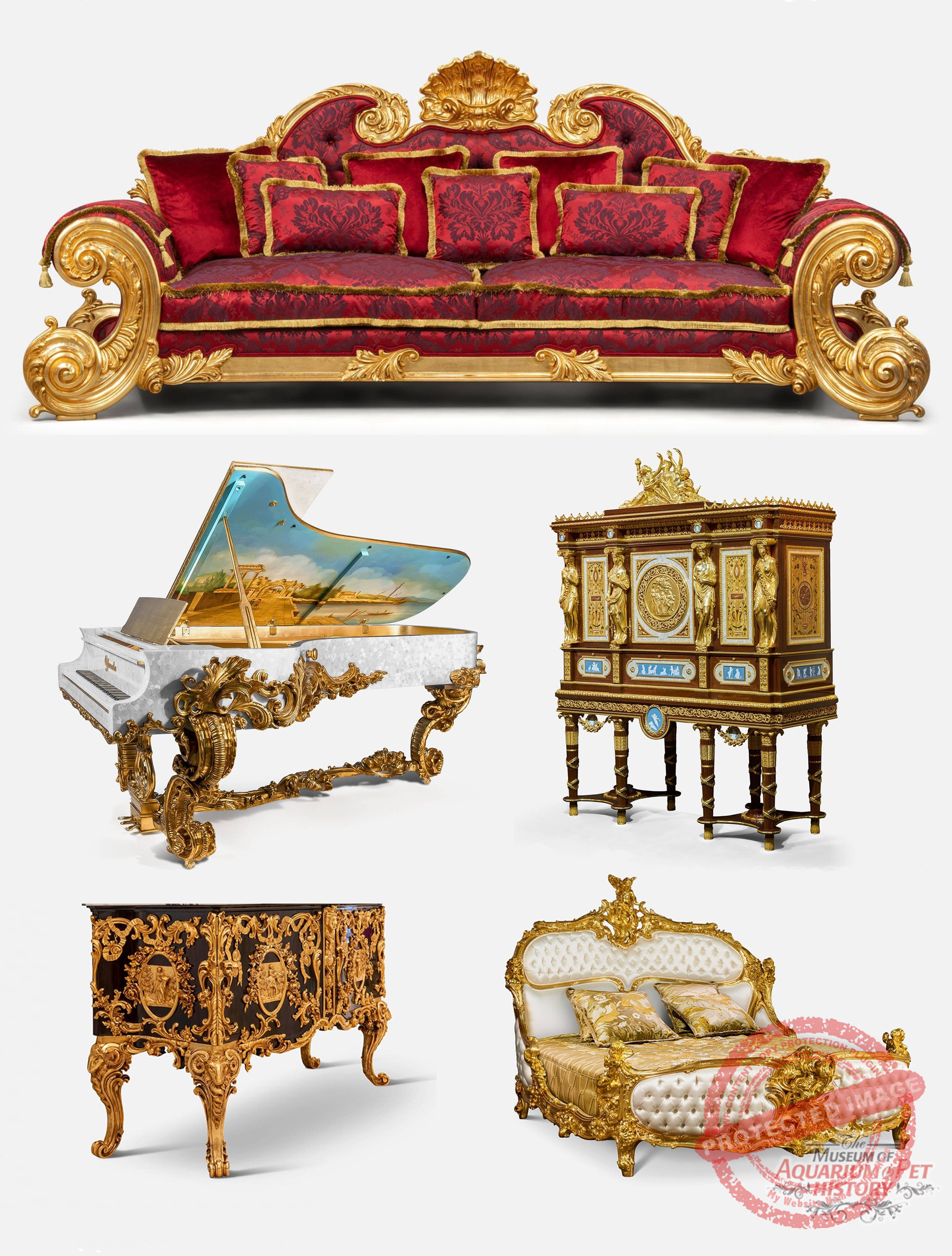
Masterpieces by C.G. Capelletti. Photo courtesy of C.G. Capelletti.
All the aquariums commissioned by the American art collector were handcrafted by the artisans of C.G. Capelletti from 1985 to 1997. Looking at the images of the finished pieces, it’s clear that Slack was aiming for something opulent, elaborate, with dynamic and flowing forms, and lavishly decorated. The choice naturally fell on the Baroque style.
Time-honored techniques and fine materials
The C.G. Capelletti aquariums most familiar to collectors due to the aforementioned images available on the internet belong to the Model 913. Produced in less than 10 units, it was developed in four versions: gold, silver, bronze, and bronze with round base. All these versions share the following features: 4 seahorse-shaped legs, mythological dolphin uprights with clamshell lights at the top, and an ornate filter box (with wooden or fabric walls) suspended beneath the tank. All the sculptural elements are made of bronze and were cast using two different artisan techniques: lost-wax casting for the seahorses, and sand casting for the other parts, which were then hand-chiseled. These same traditional techniques were also employed in the other designs commissioned by Slack.
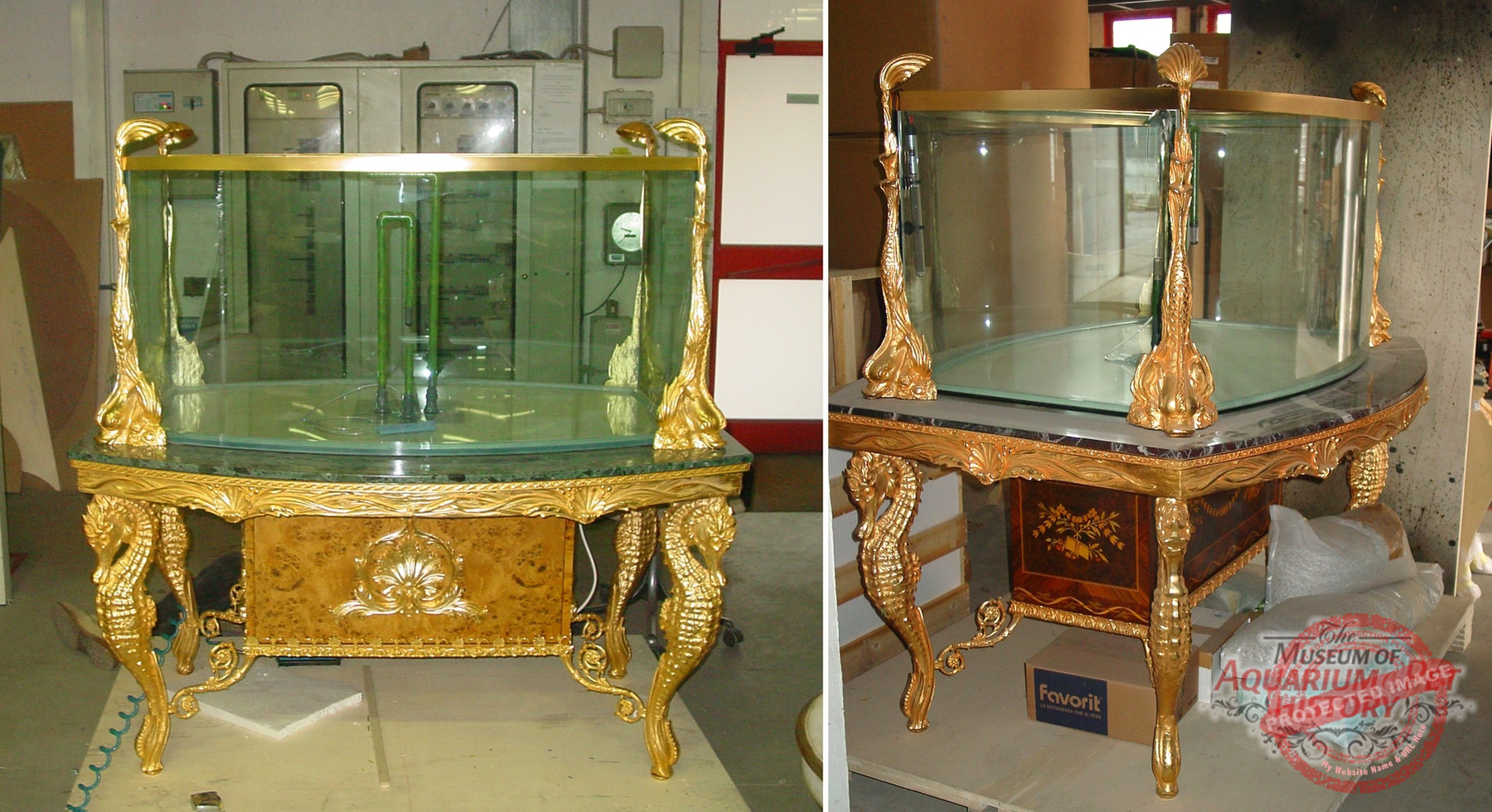
Model 913, gold version. The green marble used for this aquarium is quarried only in the western Italian Alps and known as “marmo verde Alpi”. This expensive and sturdy stone was selected back then by C.G. Capelletti for its brilliance and durability. Photo courtesy of C.G. Capelletti.
The seahorse legs support a finely crafted iron frame decorated with raised marine motifs. They also hold up the previously mentioned accessory box which houses pumps and filters.
On the iron frame is placed a slab of high-end Italian marble. The tank, which in most of the pieces made has bow glass on both the long sides, rests directly on this base.
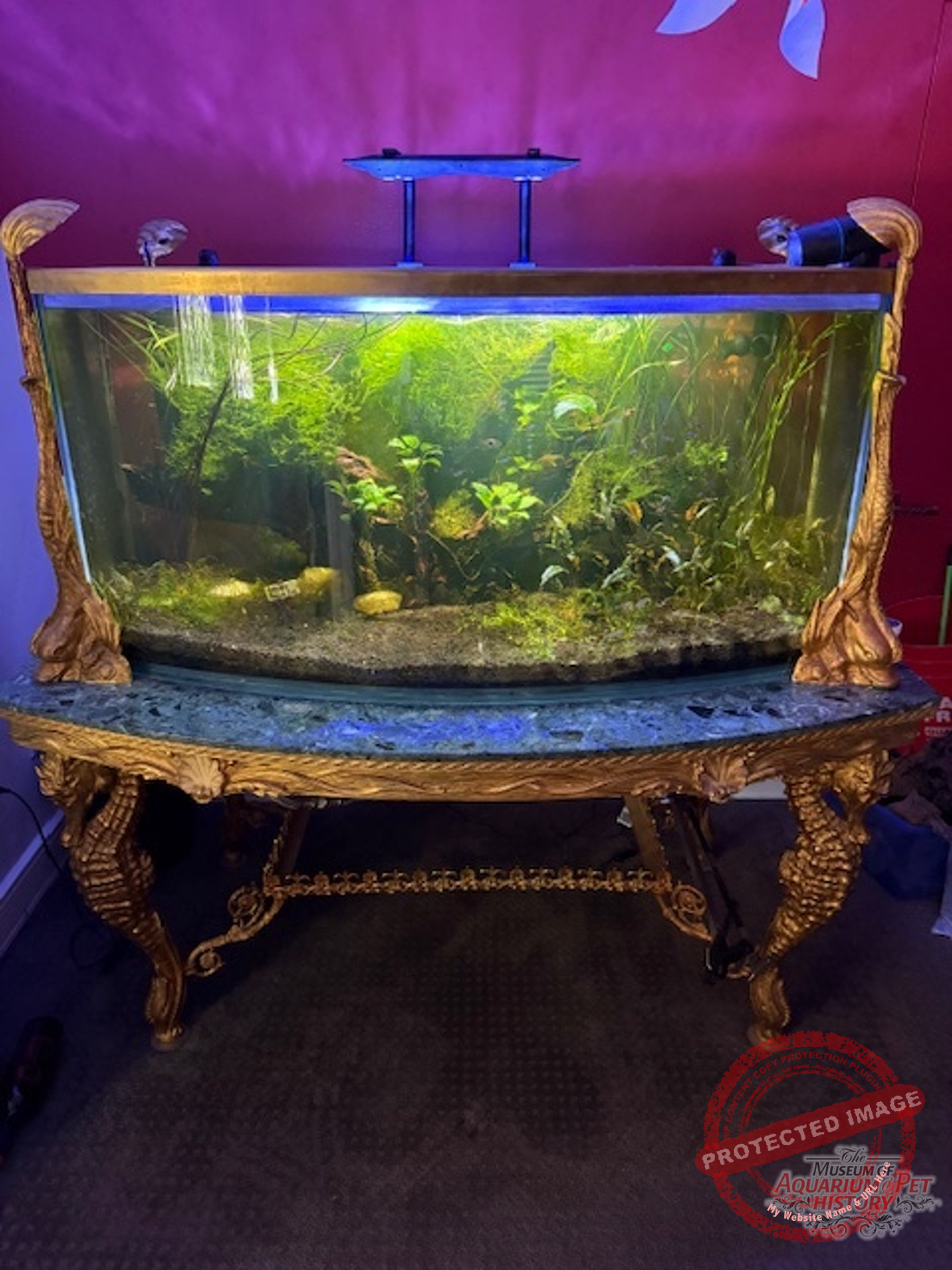
Model 913, gold version. Photo courtesy of Bob Lee.
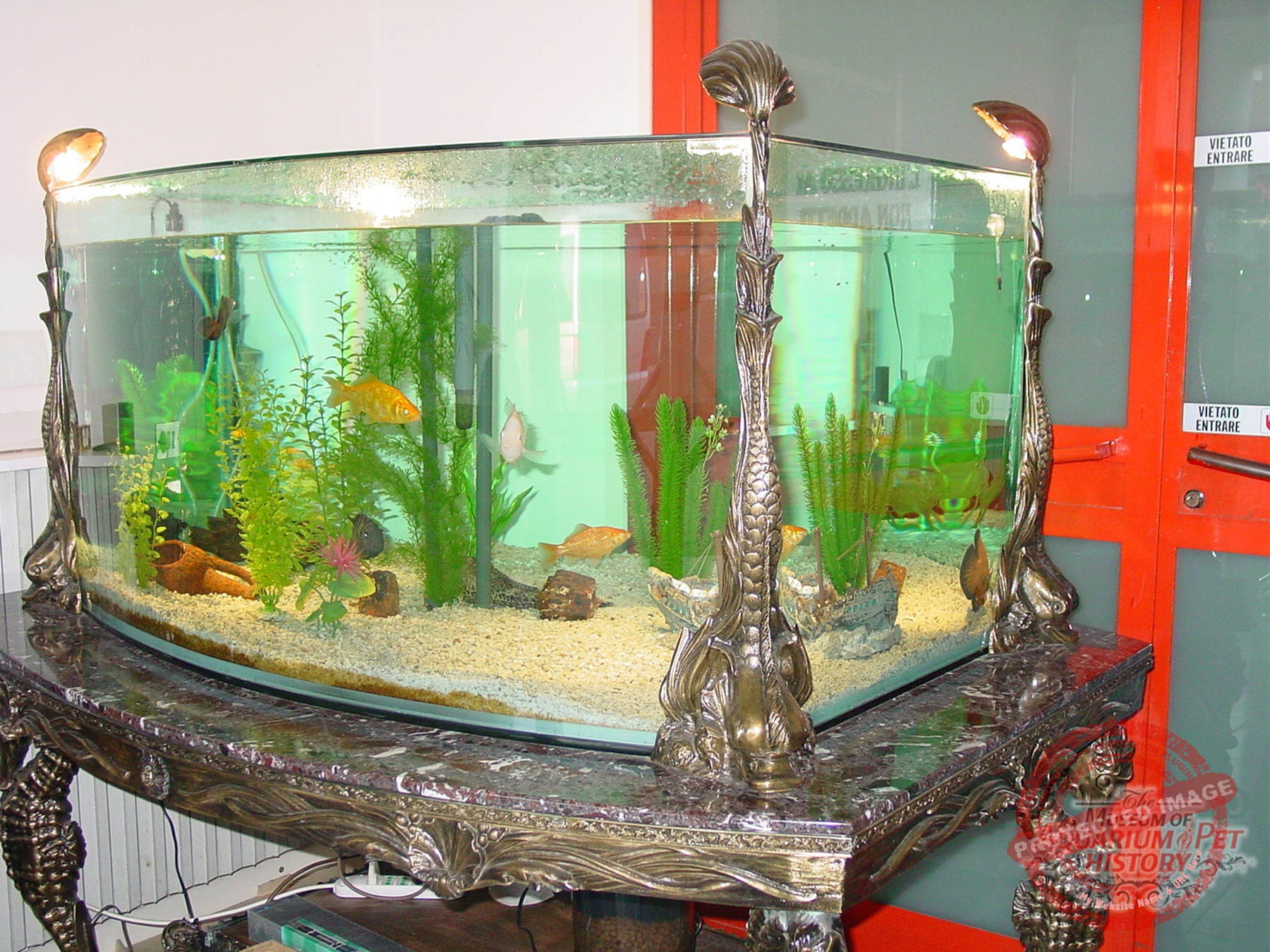
Model 913, silver version. Photo courtesy of C.G. Capelletti.
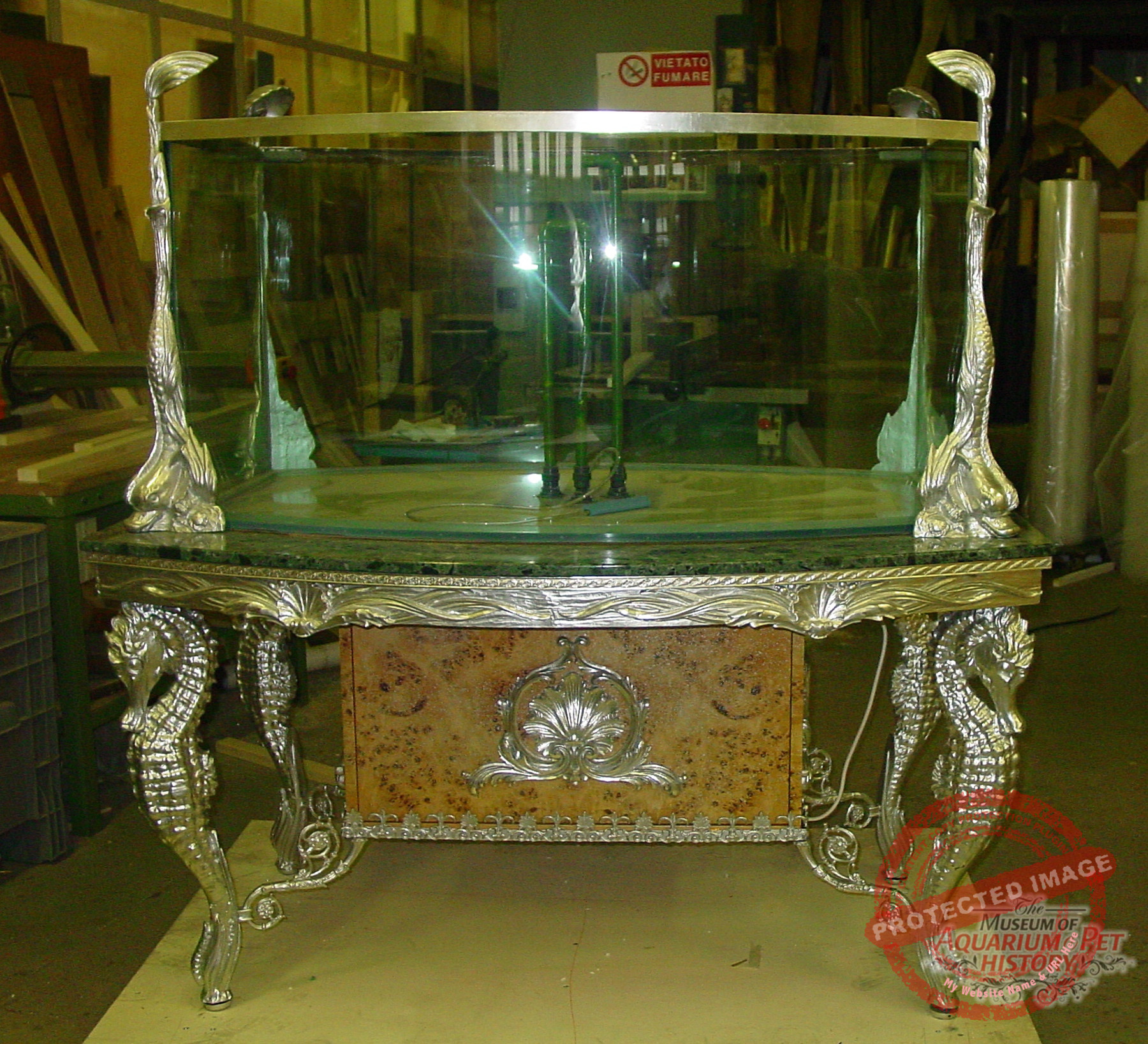
Model 913, silver version. Photo courtesy of C.G. Capelletti.
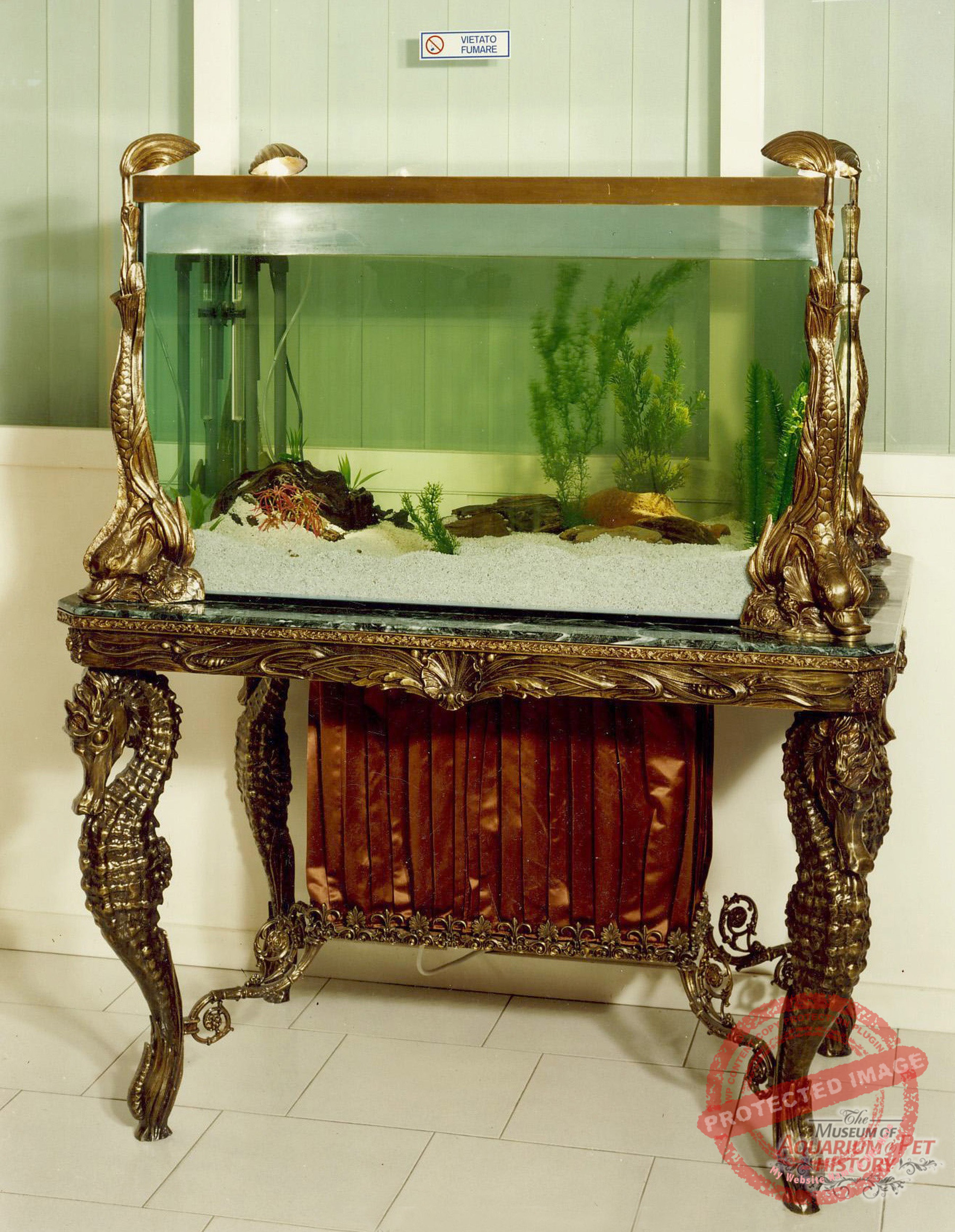
Model 913, bronze version. Photo courtesy of C.G. Capelletti.
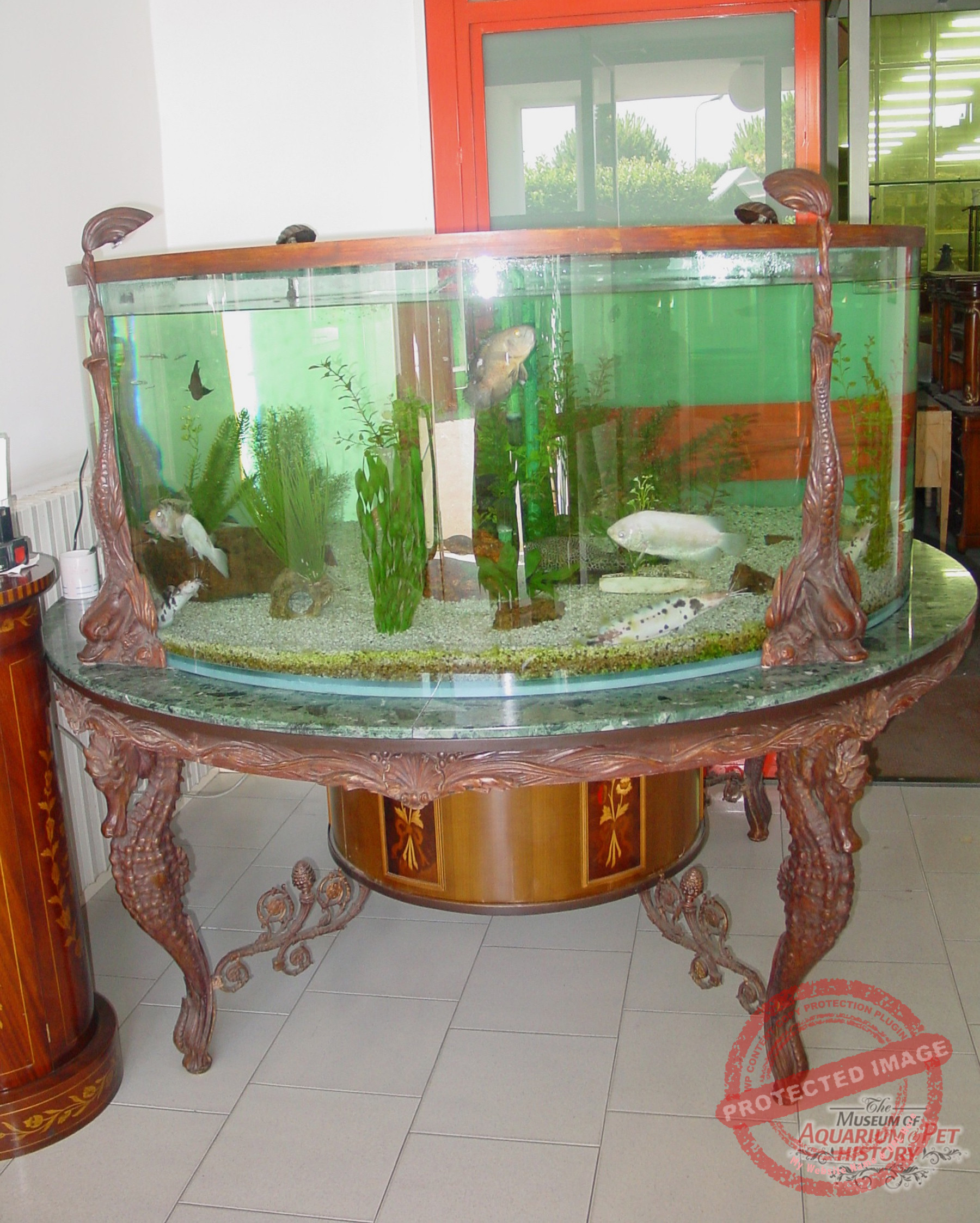
Model 913, bronze version with round base. Photo courtesy of C.G. Capelletti.
Realistic dolphins and seaweed for the Model 875
The Model 913 came in at least two sizes, each offering a different capacity. Finished with 24-karat gold plating, its gilded version is literally breathtaking, and definitely my favorite. C.G. Capelletti made at least 2 gold-plated 913, and one of them is currently preserved at the Museum of Aquarium and Pet History.
The Model 875 appears even more opulent. Also plated in 24-karat gold, it features realistic dolphin-shaped legs and tank frames resembling long seaweed moving in the current. Only 8 units based on this design were handcrafted from 1985 to 1997. These 160x100x155 cm aquariums are notable also for their technical box, which is manufactured from fine wood, rests on the ground and is entirely hand-painted.
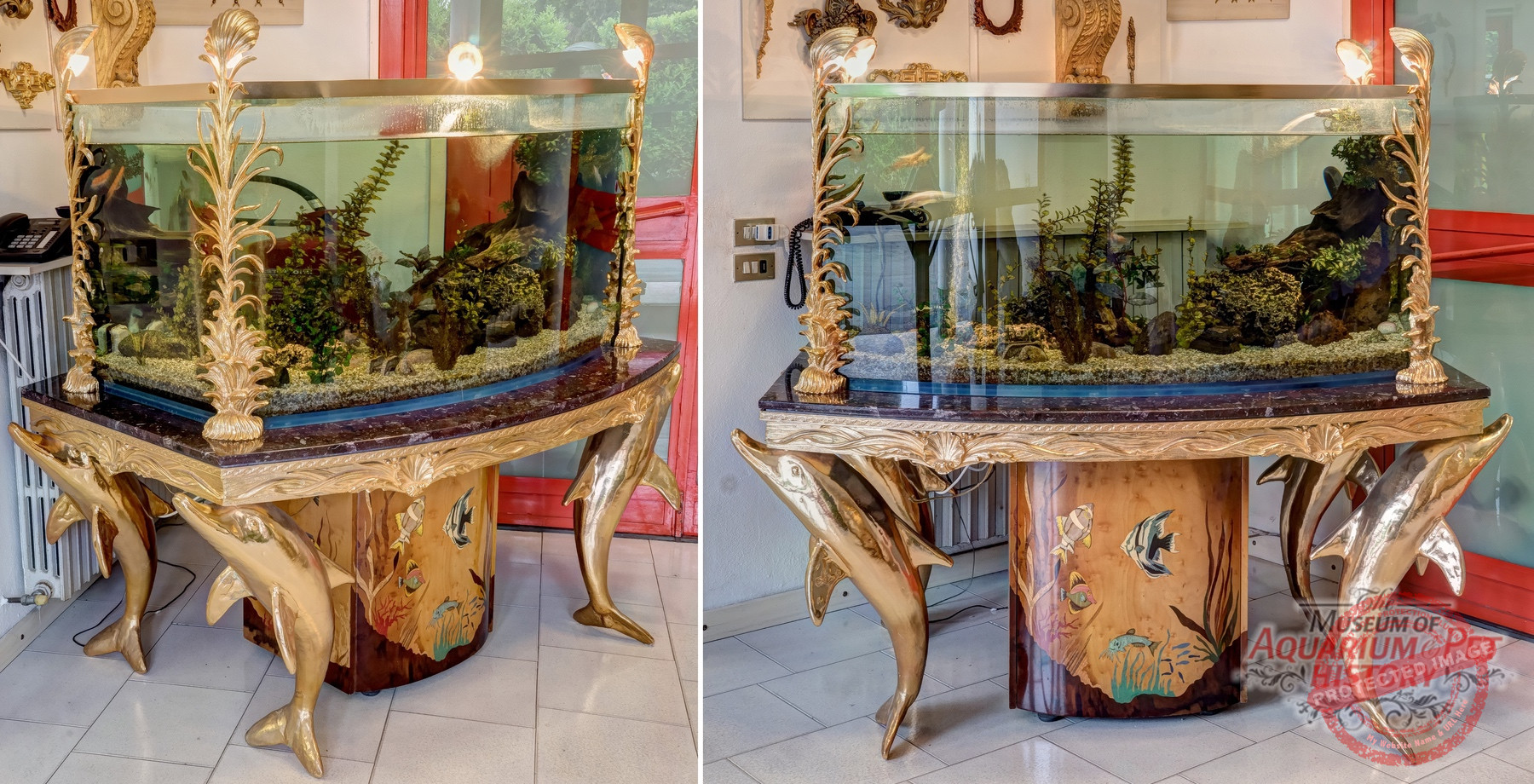
Model 875 in all its dazzling beauty. Photo courtesy of C.G. Capelletti.
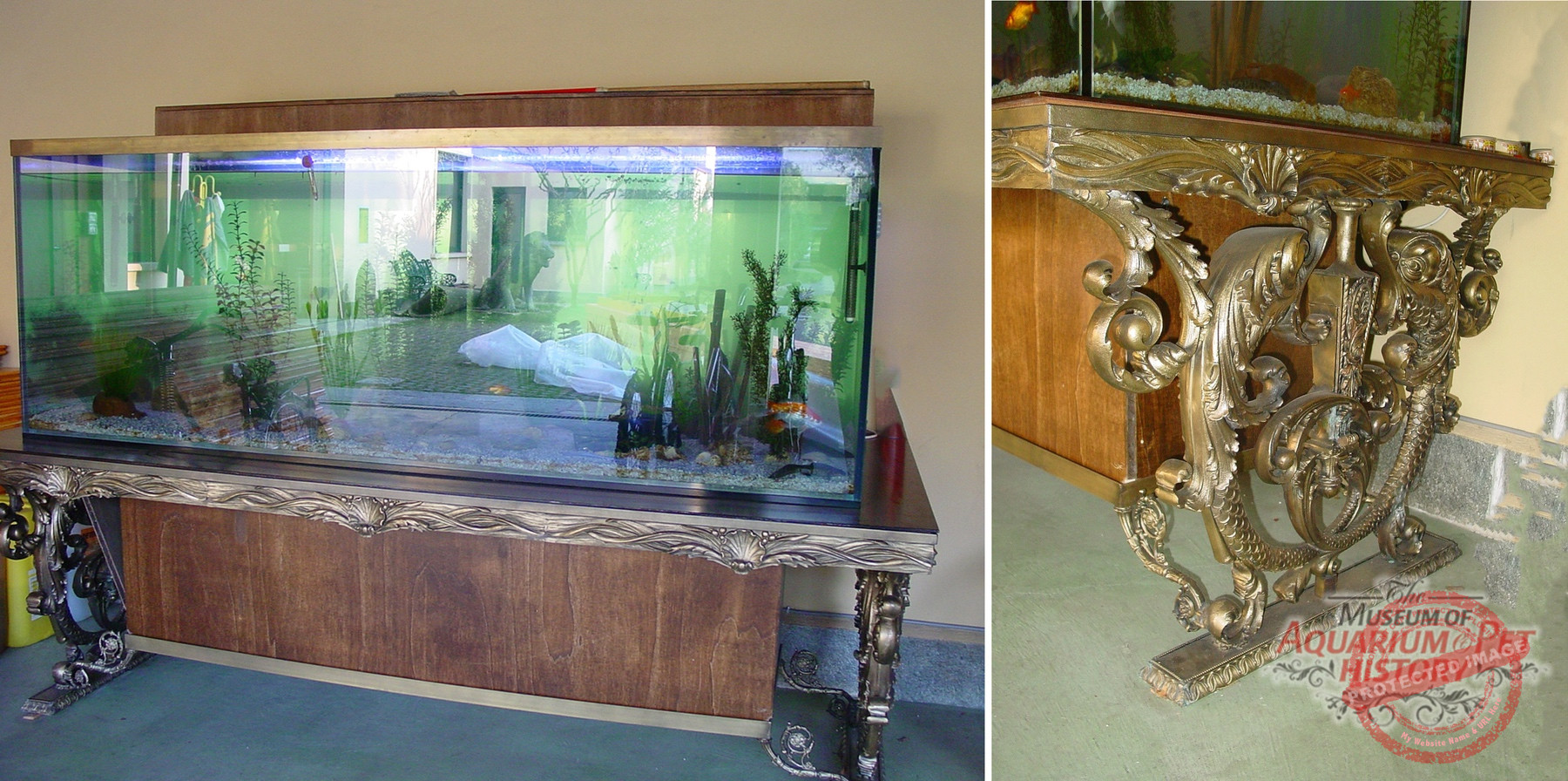
Another design developed at the C.G. Capelletti atelier in the 1980s. Photo courtesy of C.G. Capelletti.
After the death of Slack in 2000, C.G. Capelletti designed one final luxury aquarium: the Model 748, which was artisan-made in 2002 as a one-of-one piece. Standing 70×70×185 cm, it is distinguished by a tall 500-liter hexagon tank, multiple 24-karat gold-plated sculptural elements, and the upper section of the wooden base made up of frosted glass with backlighting.
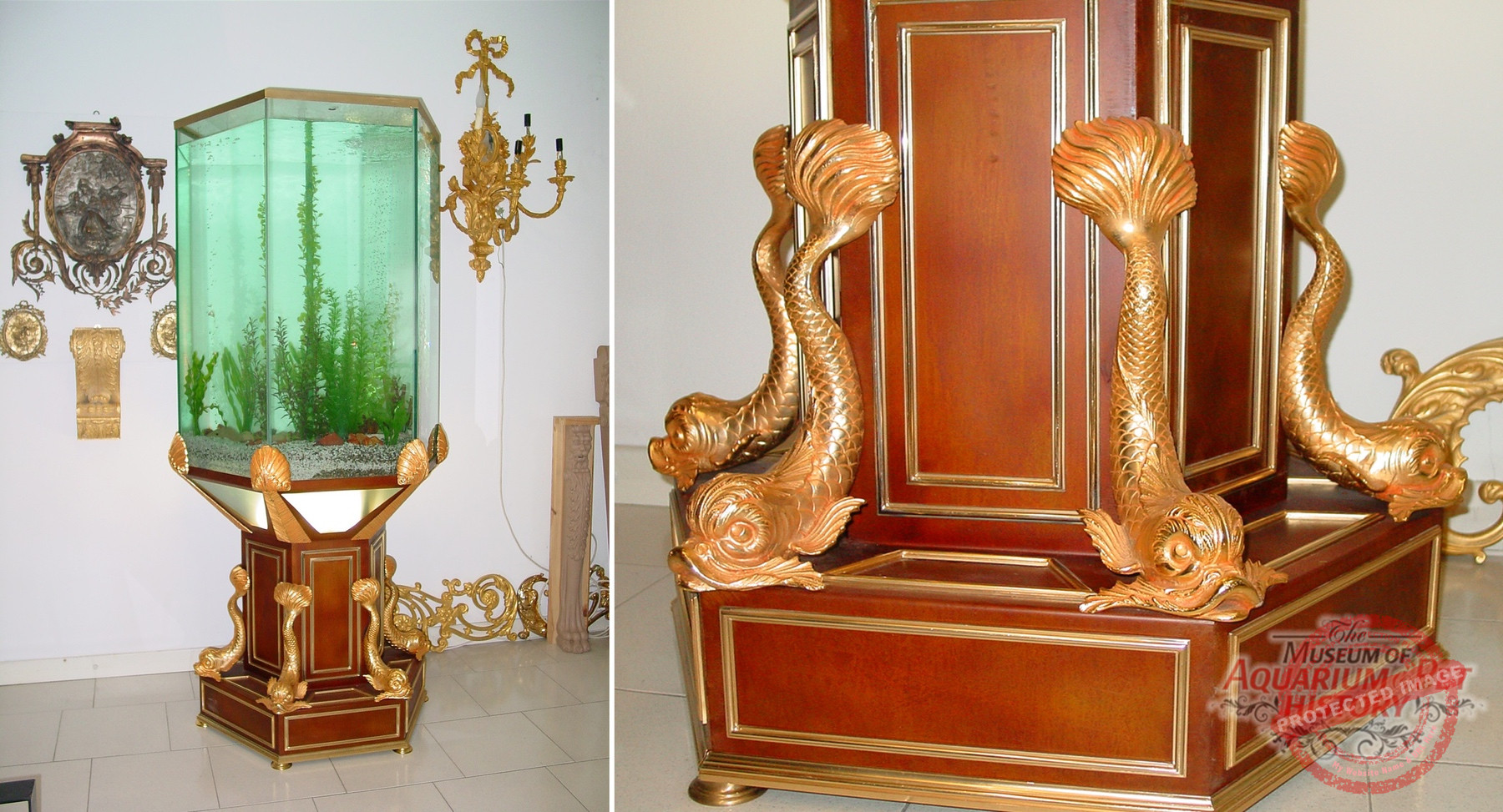
Model 748 from 2002. Photo courtesy of C.G. Capelletti.
When I look at them…
In conclusion, let me say that these masterpieces are the proof of what can happen when the aquarium hobby merges with the world of art and luxury, and vice versa. Far removed from the minimalist design of today’s mass-produced tanks, they keep collectors’ dreams alive and evoke a time when many types of parlor aquarium were made as elaborate frames for amazing living pictures.
The aquariums commissioned by Robert Carter Slack are a legacy of beauty and fine Italian craftsmanship. Rich and bold, they cheekily challenge the ethos of “less is more”.