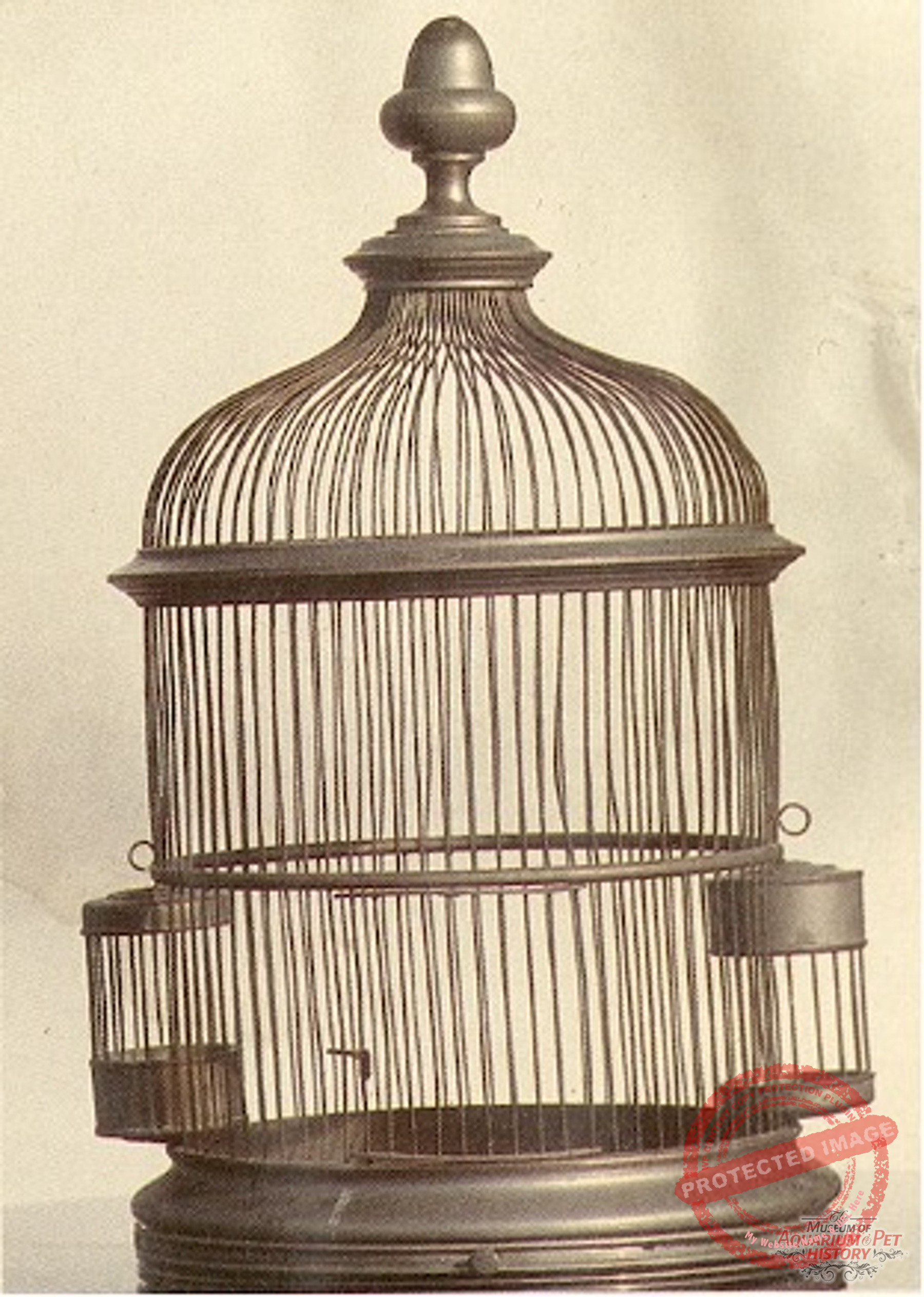
The German Birdcage Museum in Walsrode Bird Park
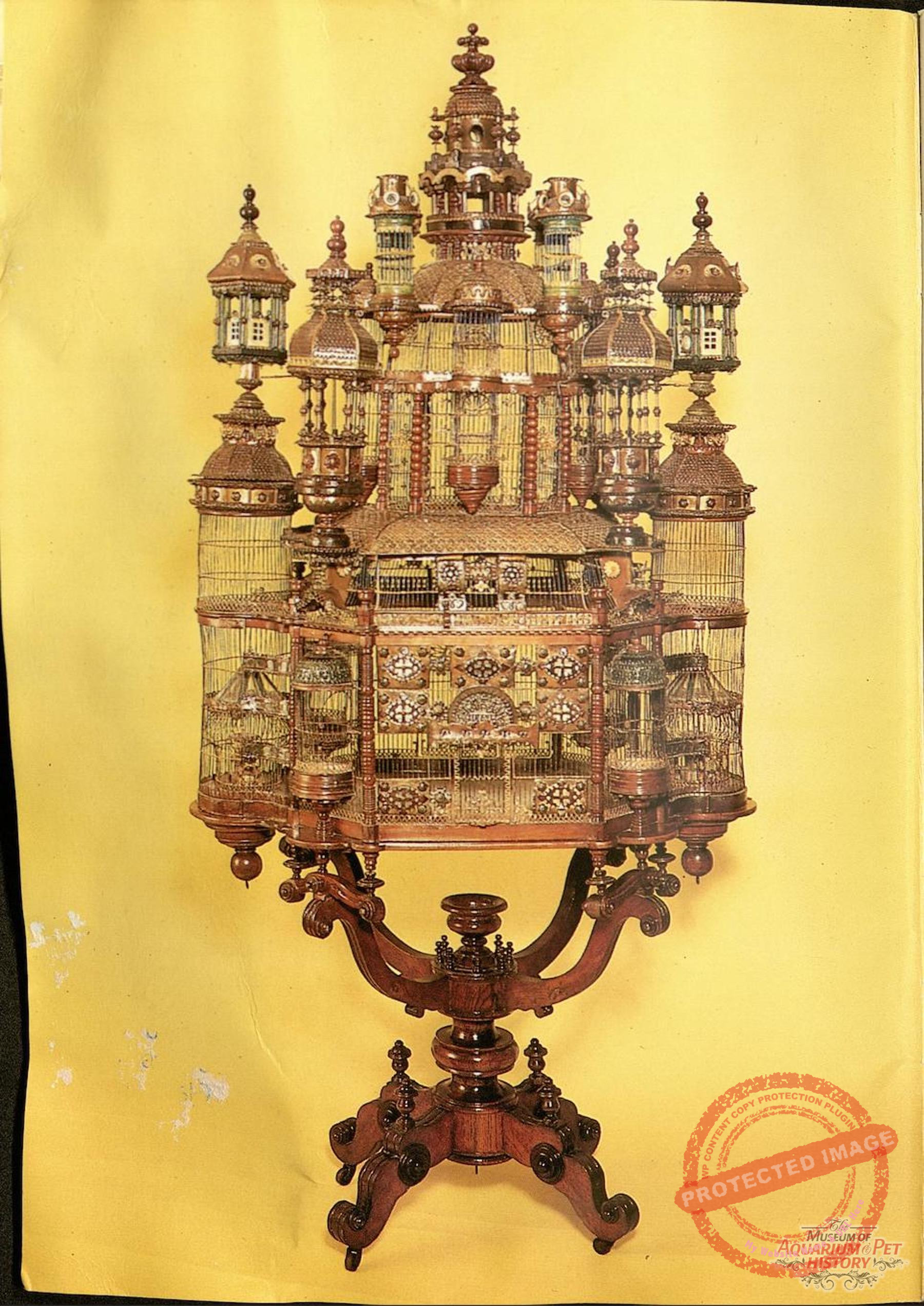
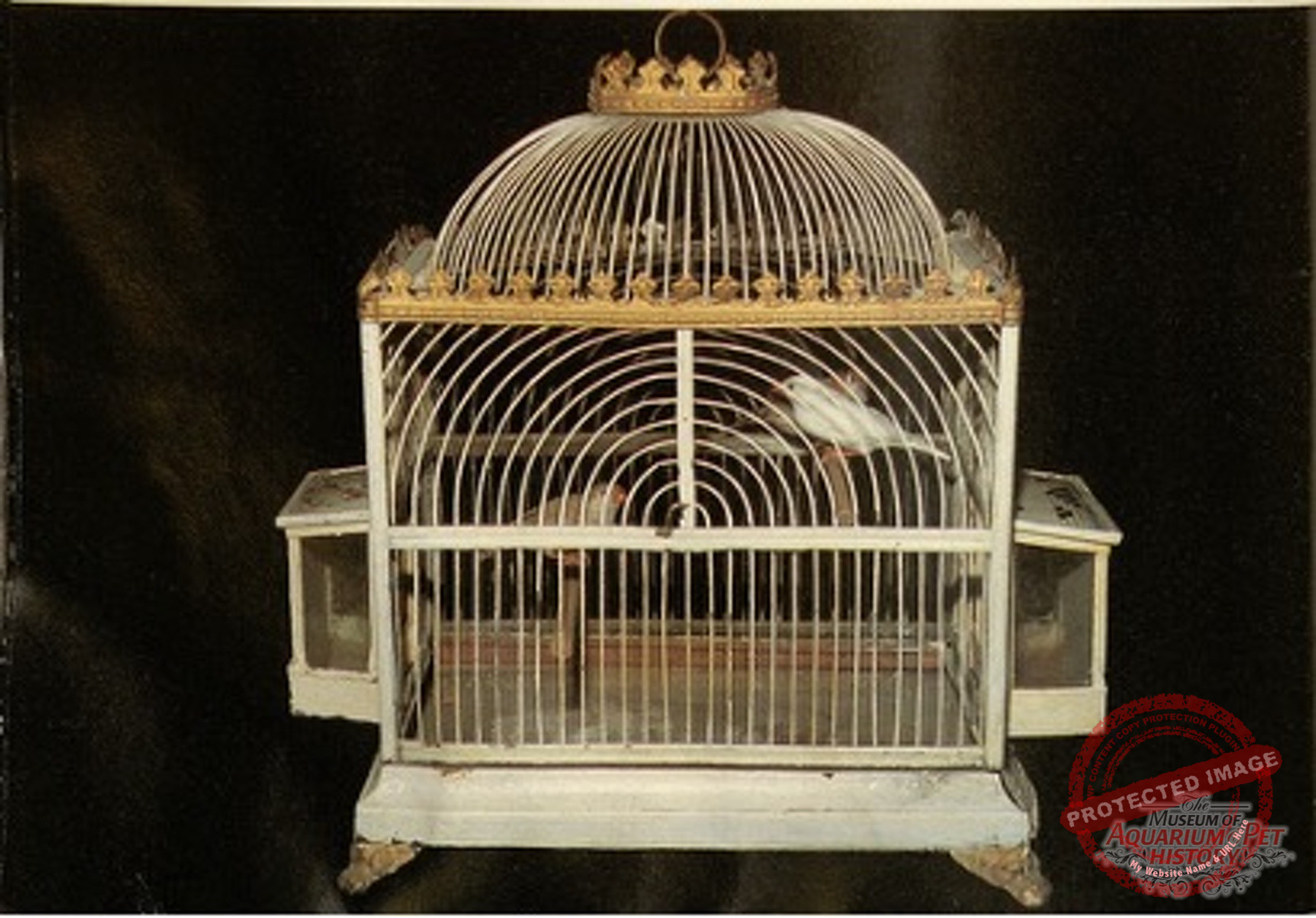
Indoor aviary; France, 1869 (signed J. Beau 1869)
The creation of the German Birdcage Museum is the story of love at first sight. Sometime in the early 1960s, the entrepreneur Josef Voss from Arnsberg discovered an unusually crafted birdcage during one of his travels, which captured his full attention. It depicted a miniature cathedral from the 19th century. The birdcage changed hands and sparked an extraordinary passion for collecting. By 1965, the collection had grown so extensive that a museum was established by Josef Voss.
To help restore, organize, and continue growing the collection, a museum expert was brought in for advice. Over time, the collection grew to include not just birdcages but also many other items related to keeping pet birds. In 1986, because there was no longer enough space to store everything, the collection was sold to the Walsrode Bird Park. This move made the unique and historically important collection available to more people. The Bird Park also had the space to properly display the beauty and importance of the objects.
The museum is located in a historic timber-framed house1 from 1717. The building was carefully taken apart at its original site and rebuilt in the park using the original materials. Inside, visitors can explore a one-of-a-kind collection that covers 400 years of history. Along with birdcages from Europe, Asia, and America, the museum also features paintings, small sculptures, tiles, and decorative items—all focused on the theme of keeping pet birds.
MOAPH1: A timber-framed house is a building made with a wooden framework where the wooden beams are visible as part of the exterior or interior design.
The German Birdcage Museum is the world’s first and only institution dedicated exclusively to the history of pet bird keeping. It appeals not only to cultural enthusiasts but especially to those who appreciate the timeless artistry and craftsmanship of bird keeping collectibles.
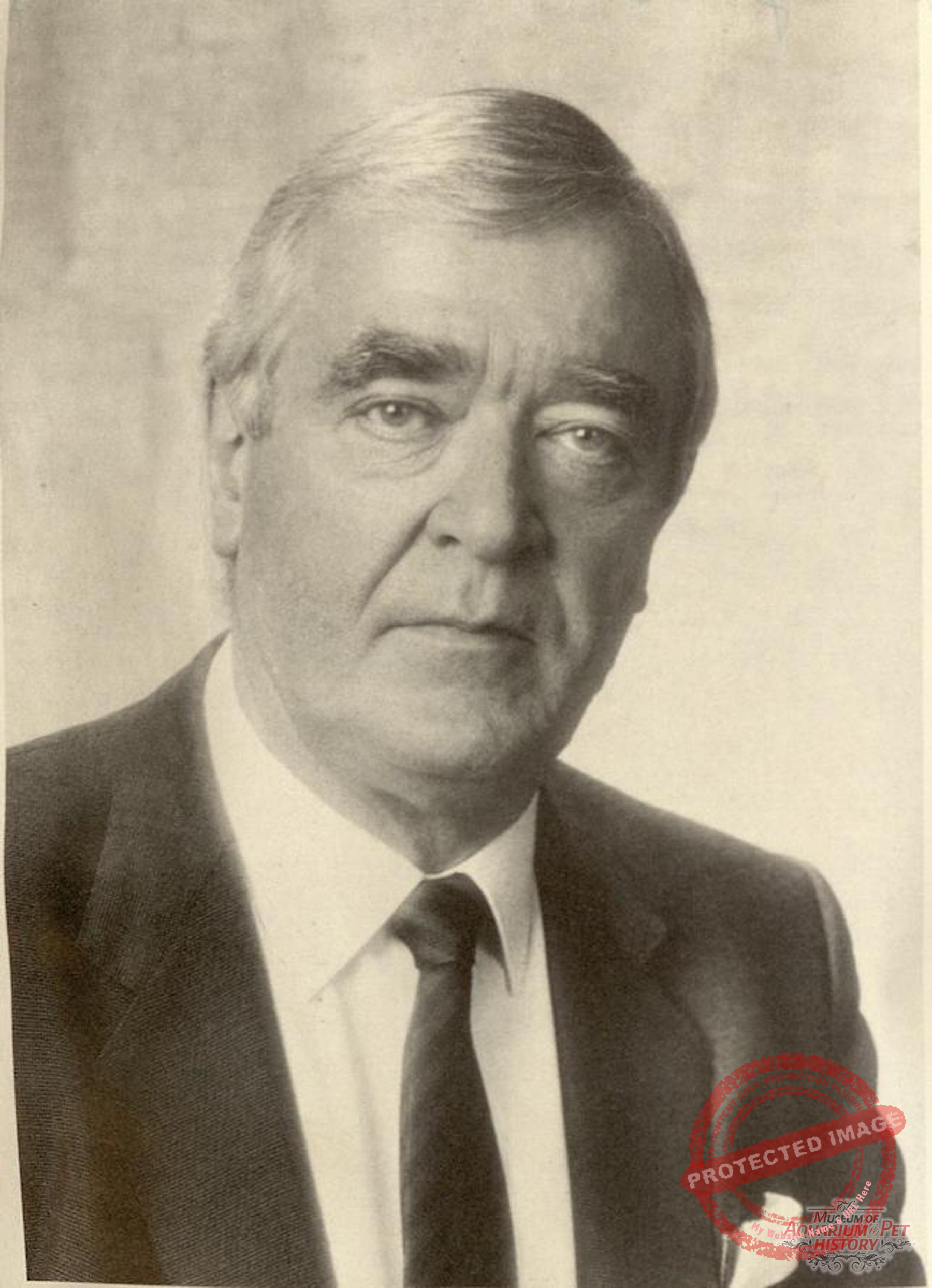
The founder of the Birdcage Museum, Josef Voss from Arnsberg.
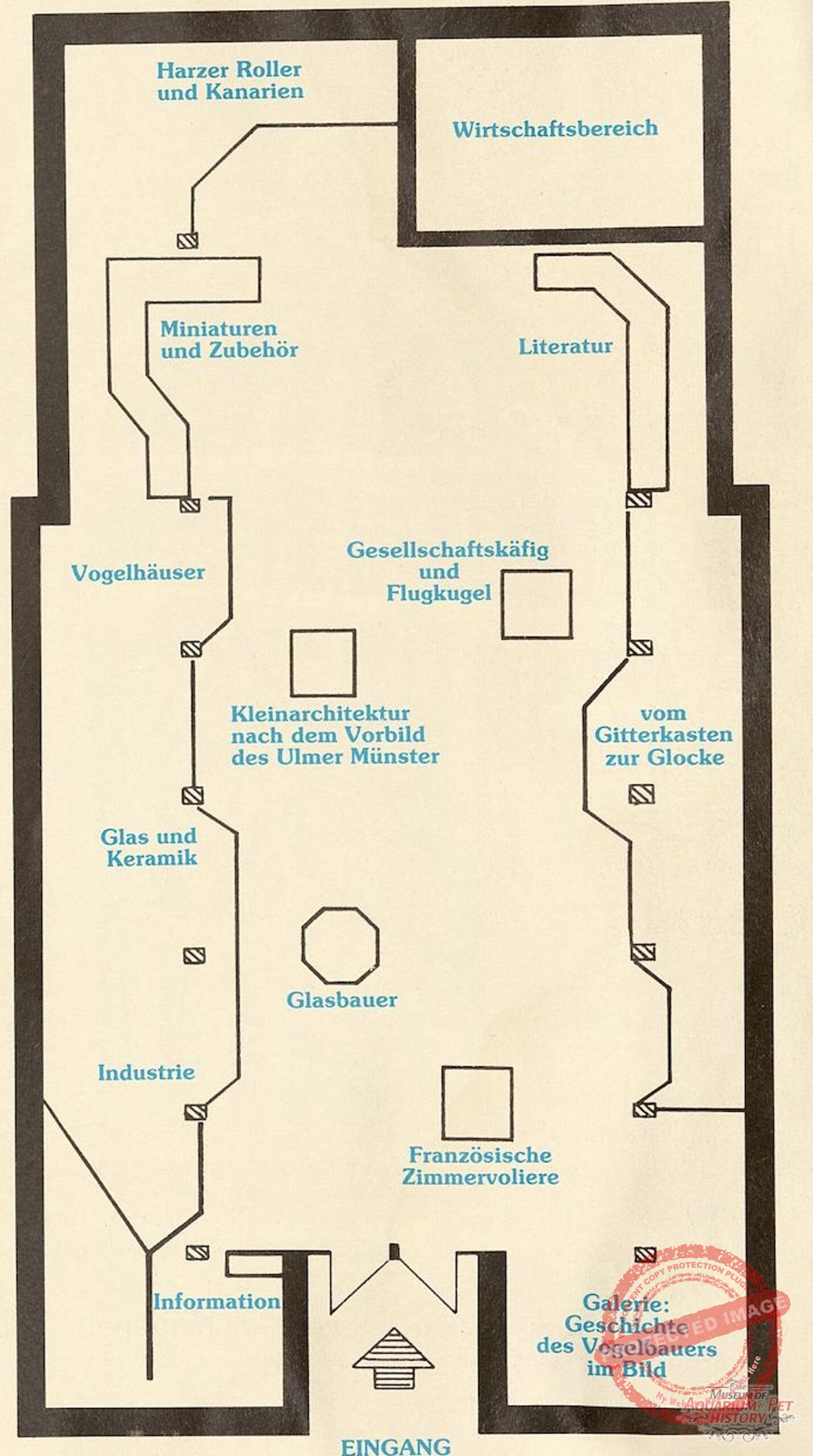
The Museum Plan
Early Evidence
The dove that Noah released from the ark—and which returned with an olive branch as a sign the flood had ended—has long been regarded as a bird of special significance. Over the centuries, doves have been valued not just for their symbolism, but also as pets. The laughing dove2, in particular, is still commonly kept in cages today because it is easy to care for and makes a gentle, pleasant companion in the home.
MOAPH2: Spilopelia senegalensis.
Some birds became popular as pets because of their special traits. The peacock, for example, was admired early on for its beautiful feathers. In the Bible, the Book of Kings says that King Solomon received peacocks as gifts from a place called Ophir. During the time of Pericles3 in ancient Greece, people brought peacocks to Athens just to admire them. The writer Antiphon mentioned that a pair of peacocks could cost as much as 1,000 drachmas4. By around 100 B.C., a man named Markus Aufidius Lurko even started a peacock breeding program. And he wasn’t the only one—many others followed.
MOAPH3: Pericles (c. 495–429 BCE) was a prominent and influential statesman, orator, and general in classical Athens during its Golden Age. He led Athens during much of the 5th century BCE and helped shape its democratic institutions, cultural life, and imperial power.
MOAPH4: Anywhere from $60,000-320,000 today
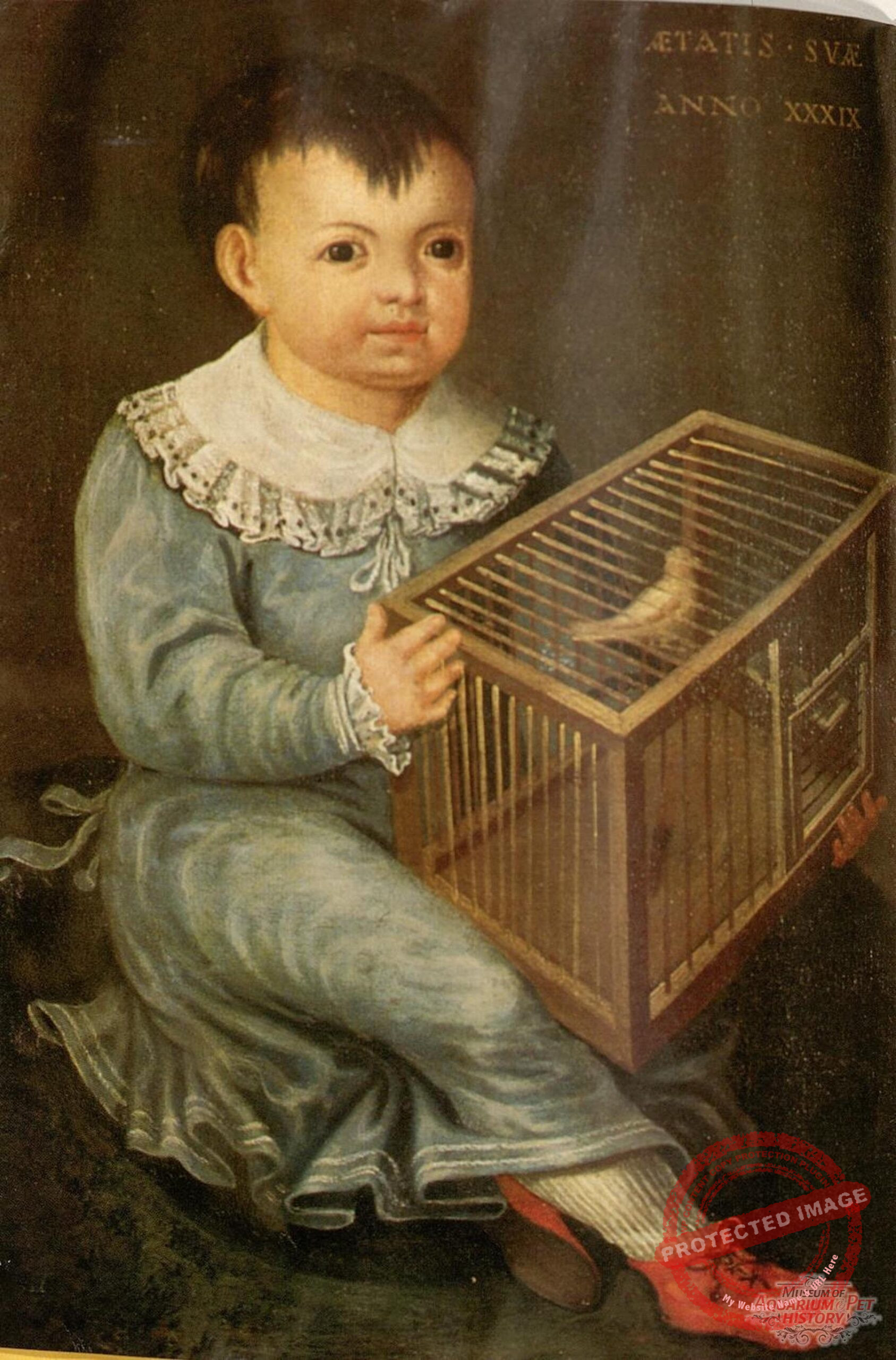
Boy with Birdcage, oil painting by Anton Graff, 1775. Anton Graff (1736–1813) portrays a boy, holding in his hands, a barred box cage with a sliding door. The bird appears to be one of the very popular canaries of that time.
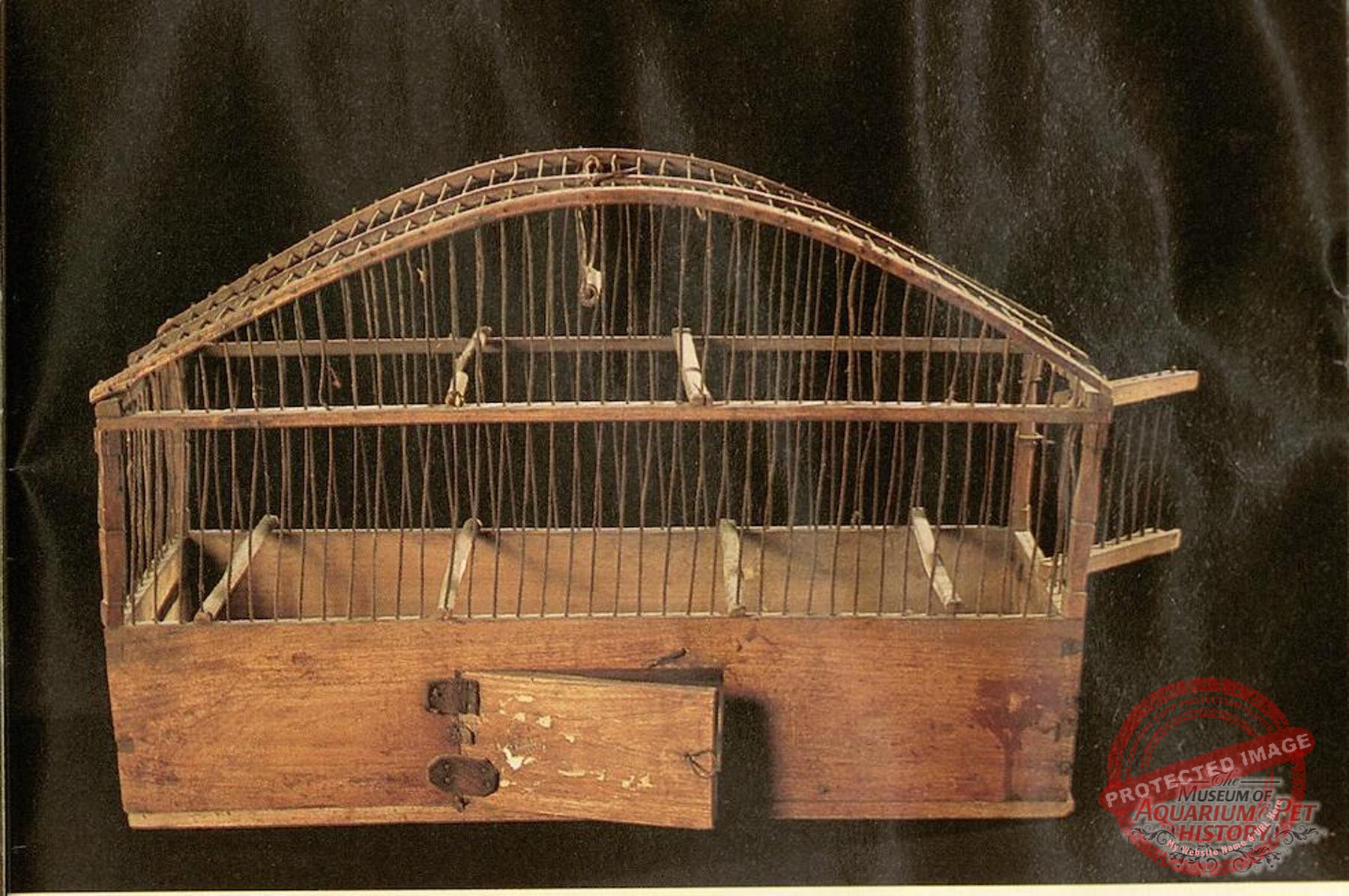
Wall cage, Central Germany, around 1850. The type of simple barred box is occasionally varied by an arched, extended roof. This fundamentally ancient style of enclosure was especially widespread in the 19th century.
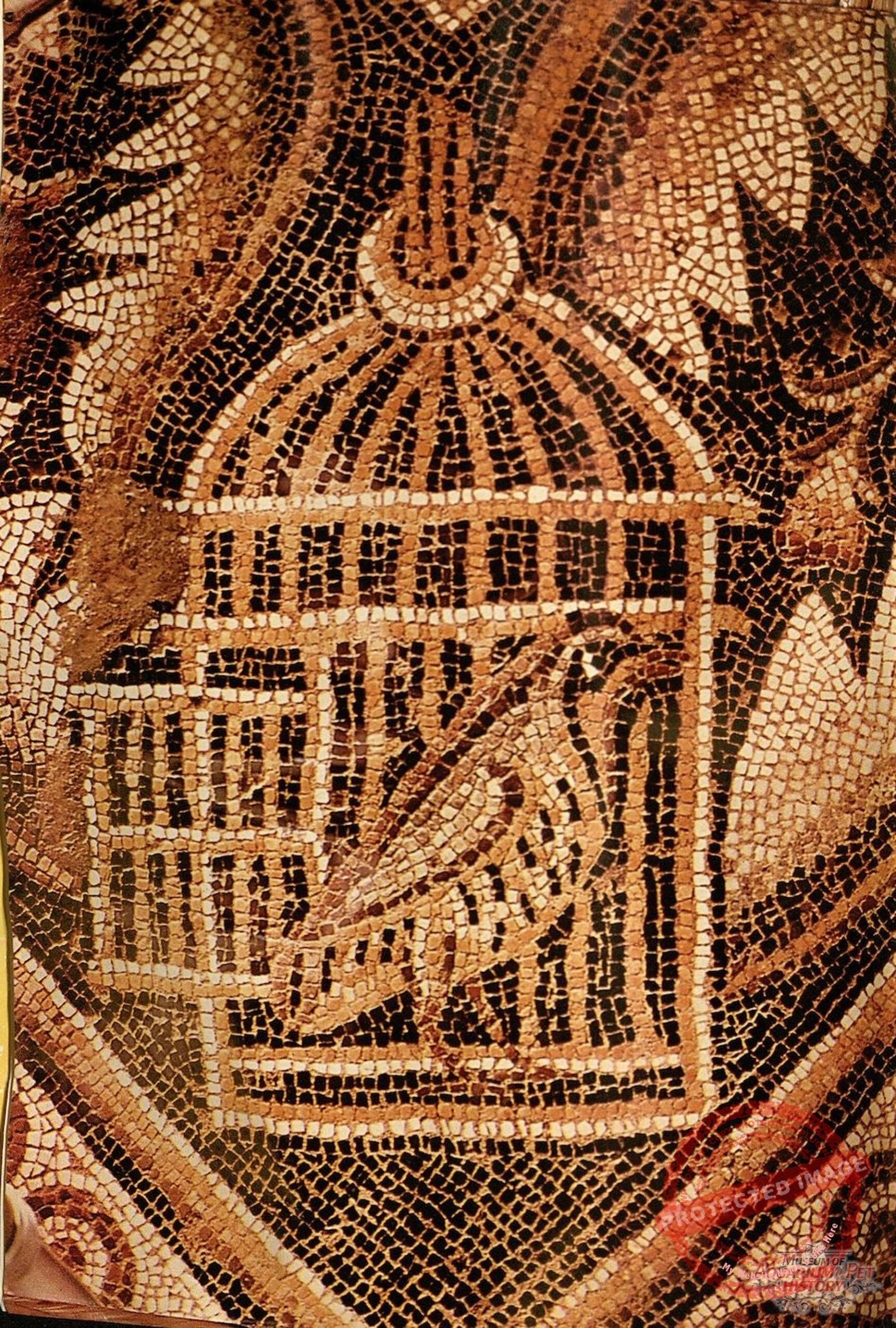
Bird and Cage. Floor mosaic (detail) from the Martyr Basilica of Misis Mopsuestia in Cilicia (Turkey), 4th century A.D. The fl oor of the basilica, excavated by German archaeologists, is dedicated in part to the biblical story of Noah and at the same time serves as a remarkable illustration of early bird keeping. This example shows that the bell shape—especially popular in the 17th and 18th centuries—has a very ancient tradition.
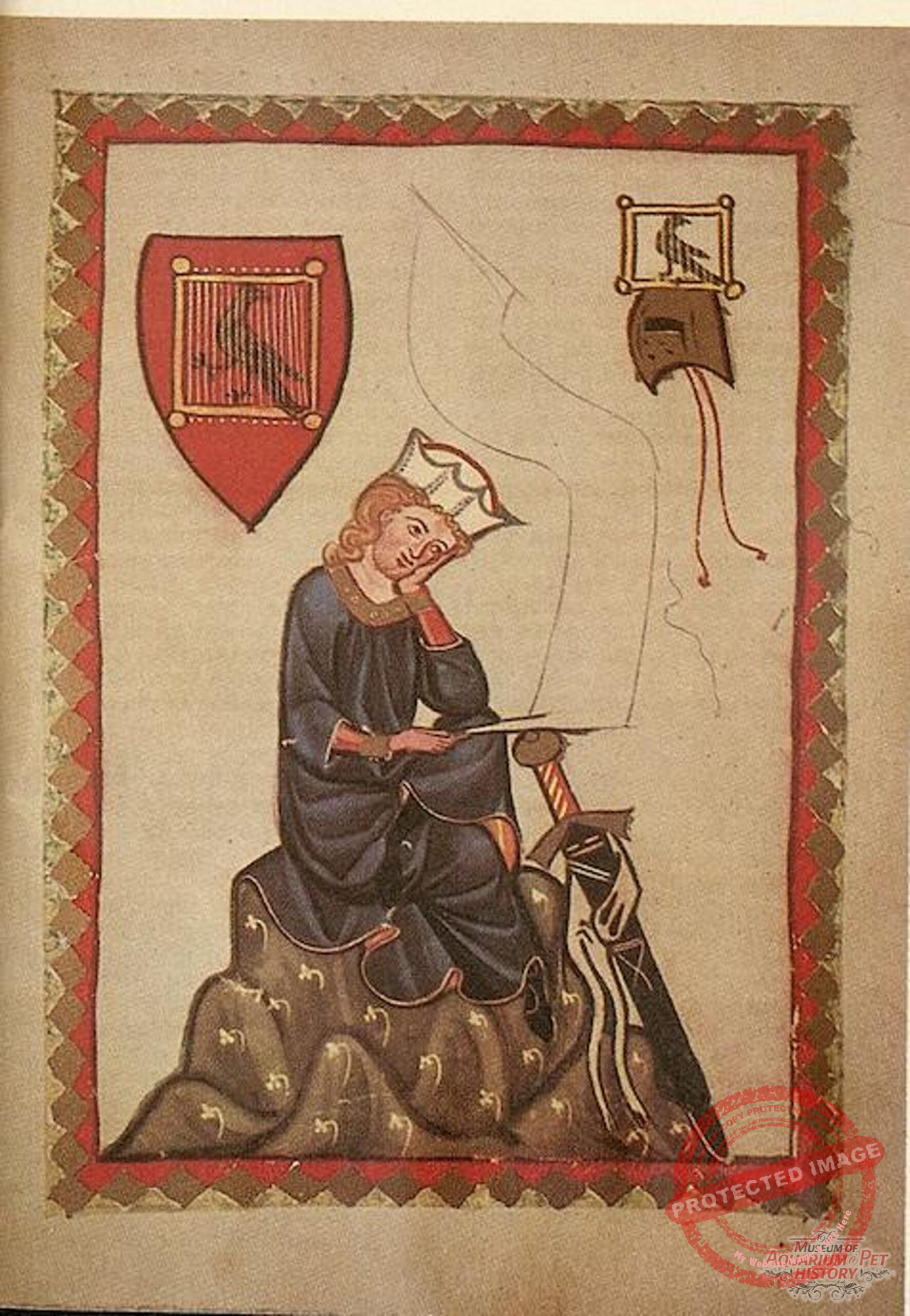
Walther von der Vogelweide. Reproduction from the Great Heidelberg Song Manuscript (Manesse Manuscript5), created between 1300 and 1340 in Zurich. The minstrel6 is depicted with a birdcage as a coat of arms and helmet ornament.
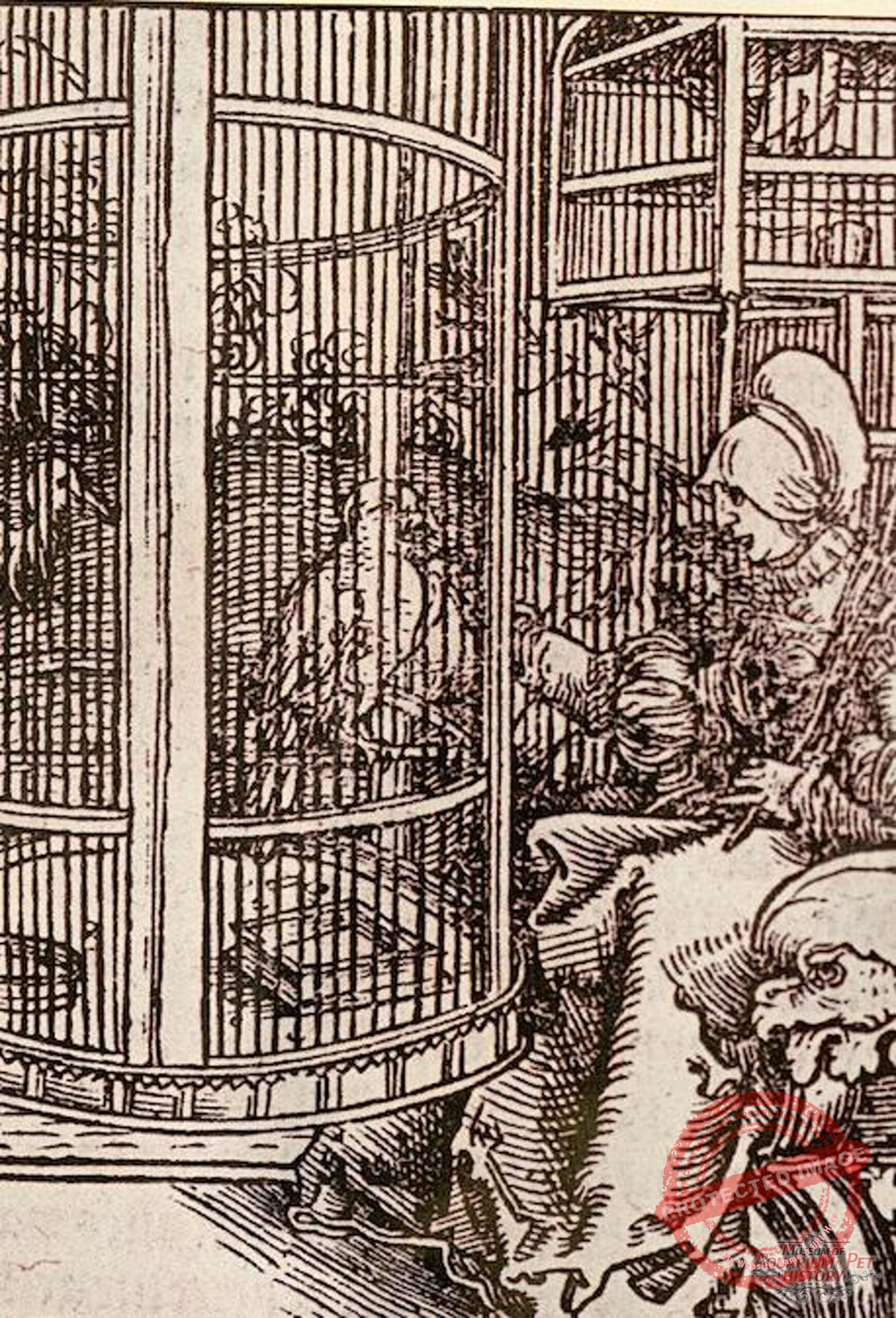
Woodcut by Hans Weiditz the Younger, Strasbourg around 1530. The book illustration depicts the widespread Renaissance-era passion for bird keeping. A lady and gentleman are shown feeding birds; in various barred cages of different types and sizes, doves, magpies, peacocks, and parrots are housed.
MOAPH5: The Great Heidelberg Song Manuscript, also known as the Manesse Codex or Codex Manesse, is the most comprehensive collection of Middle High German lyric poetry, compiled in Zurich between 1300 and 1340. It contains richly illustrated portraits of poets and is a key source for understanding medieval German literature and courtly culture.
MOAPH6: A minstrel was a medieval entertainer, often a singer, poet, or musician, who performed songs that told stories—usually of chivalry and courtly love.
A Brief History of the Birdcage
Birds as pets seem to be more popular today than ever. The budgerigar is the favorite and has challenged the canary for the top spot, although many other species—from lively finches to magnificent parrots—also have many admirers who welcome them as companions in their homes.
However, this fondness is by no means just a trend of our time. The interest in and joy of the ‘feathered world’ in general can be traced far back—indeed, all the way to biblical times.
Birdcages were kept; various reports state that these animals primarily populated gardens and courtyards—and in some places were even shown on promenades. It is quite certain that there were enclosures where especially valuable birds lived. And when Pliny reports that Agrippina, the wife of Claudius, owned a talking blackbird, we may assume that such a rare bird was entrusted to the care of a special space—indeed, a birdcage7.
MOAPH7: This account is found in Natural History by Pliny the Elder (Book 10, Chapter 43), where he describes various birds capable of mimicking human speech. Agrippina the Younger, mother of Nero and wife of Emperor Claudius, was known for her influence at court; the mention of her owning a talking blackbird suggests the bird’s exceptional status and likely specialized housing.
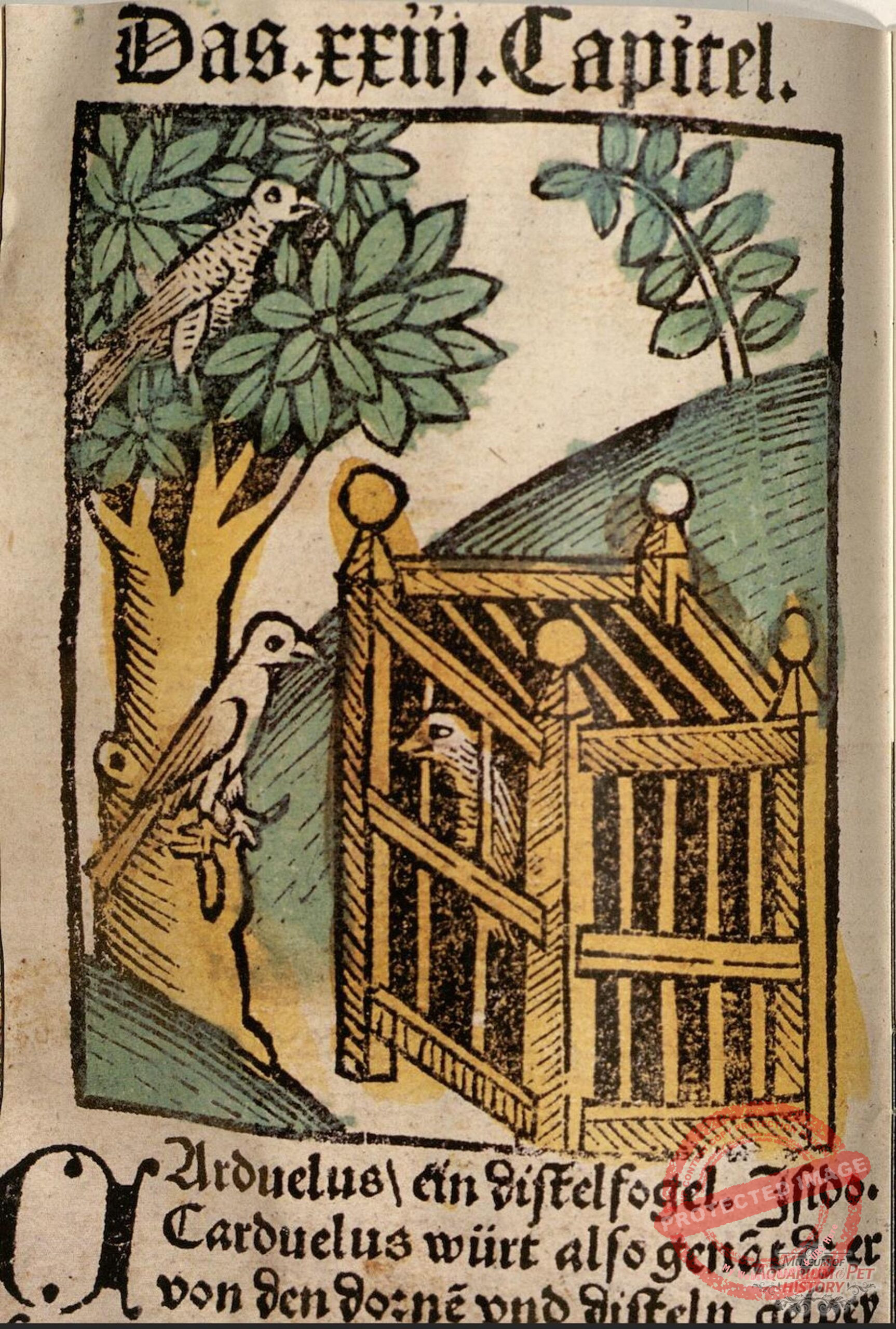
Woodcut from the work Garden of Health, Strasbourg 1493. The book reports, among other things, “about birds” and in Chapter 23 describes the goldfinch (distelfogel, distelzweig). The depicted cage is of the simple barred box type, but the four corner rods are already accentuated with special ornamentation.
Birdhouses for Poultry
Writers provide only a few accounts of special enclosures, so we must rely on speculation and inference rather than take the presence of an isolated example of a birdcage in a specifi c form as general proof of its widespread use. Detailed descriptions by ancient authors instead focus on a diff erent kind of shelter for feathered creatures: birdhouses intended for keeping poultry.
Here, the evidence is much richer. Every respectable Roman, says Varro8, had his “ornithon,” his birdhouse. These enclosures were large enough to accommodate thousands of starlings, blackbirds, buntings, and quail at once. Such birdhouses were already known to the ancient Egyptians.
MOAPH8: Varro is likely being referenced for his work ‘Rerum Rusticarum Libri Tres’ (Three Books on Agriculture), written around 37 BCE. In it, he discusses Roman farming practices, including animal husbandry and bird keeping.
A very early example of a birdcage—likely used for a cherished pet bird—can be found in a mosaic from the Martyr Basilica of Misis Mopsuestia, in the historic region of Cilicia in Asia Minor, dating from the 4th century AD. It appears to depict an enclosure for one of the prized talking birds. Unfortunately, the representation offers little detail. There is no way to definitively confirm the design of this cage; however, it is likely that the material of the piece, which is over 1,500 years old, was a flexible wood that allowed for a domed shape.
The Romans were known for turning bird keeping into a symbol of luxury and excess. Some even considered birds a gourmet delicacy—peacock and parrot tongues reportedly appeared on the table of Emperor Elagabalus9. The famously extravagant Lucullus10 had live birds flying in his banquet hall, only to later serve them at dinner. These examples show how birds, in Roman culture, were both admired and consumed, often in extreme ways.
MOAPH9: Elagabalus (r. 218–222 CE) was a Roman emperor notorious for his eccentric behavior and lavish lifestyle
MOAPH10: Lucius Licinius Lucullus (c. 118–57 BCE) was a Roman general and statesman renowned for his opulent banquets and luxurious lifestyle, which became a byword for excess in ancient Rome.
These enclosures, which served solely for storing edible birds, can be excluded from our discussion. The development of such facilities followed purely utilitarian and technical considerations, and even when they were adorned with precious metals and stones as a display of luxury, they had nothing in common with the design of birdcages meant as living spaces for beloved human companions.
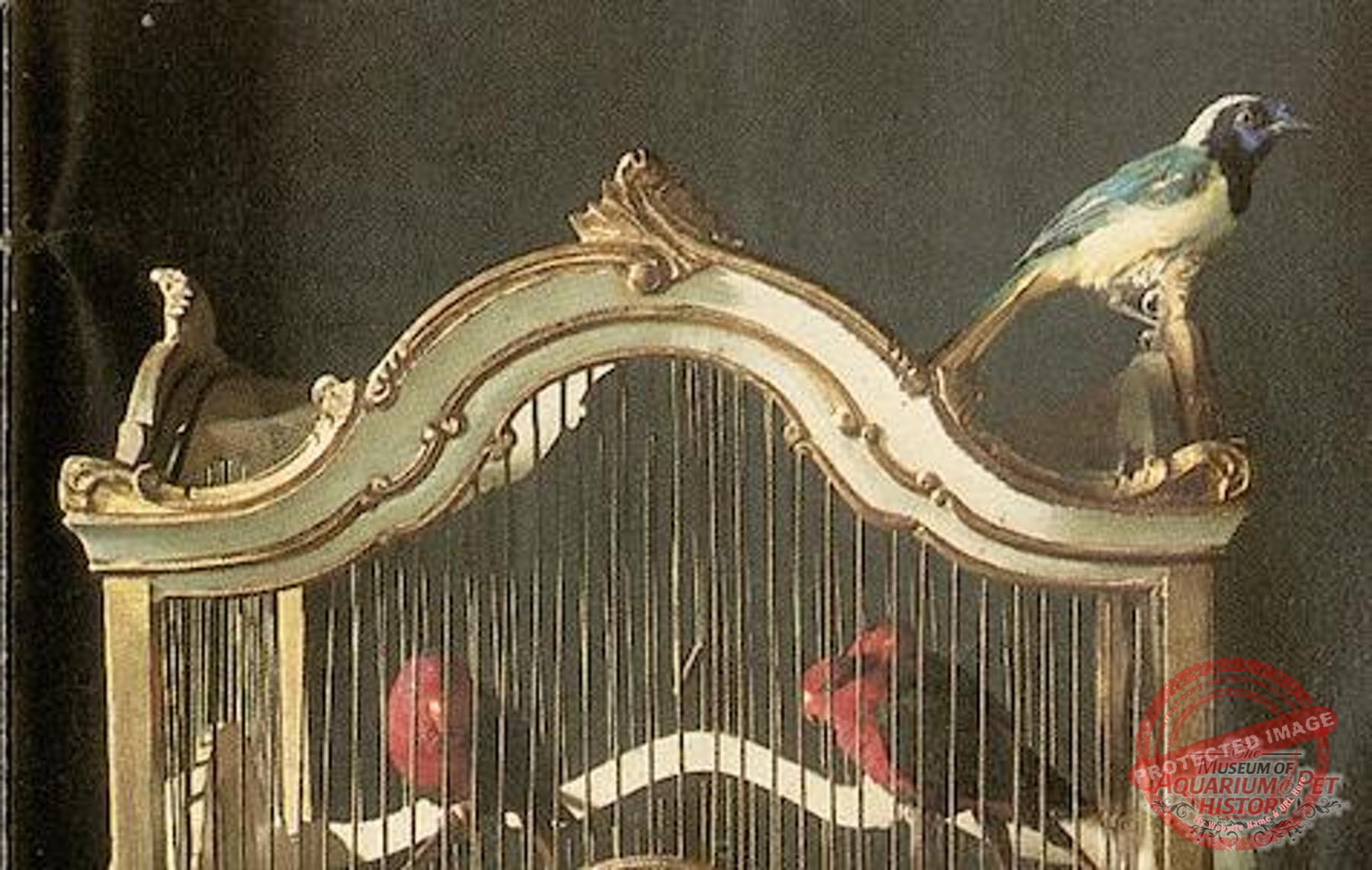
Floor and Hanging Cage, Germany. Newly crafted based on the model of Baroque furniture.
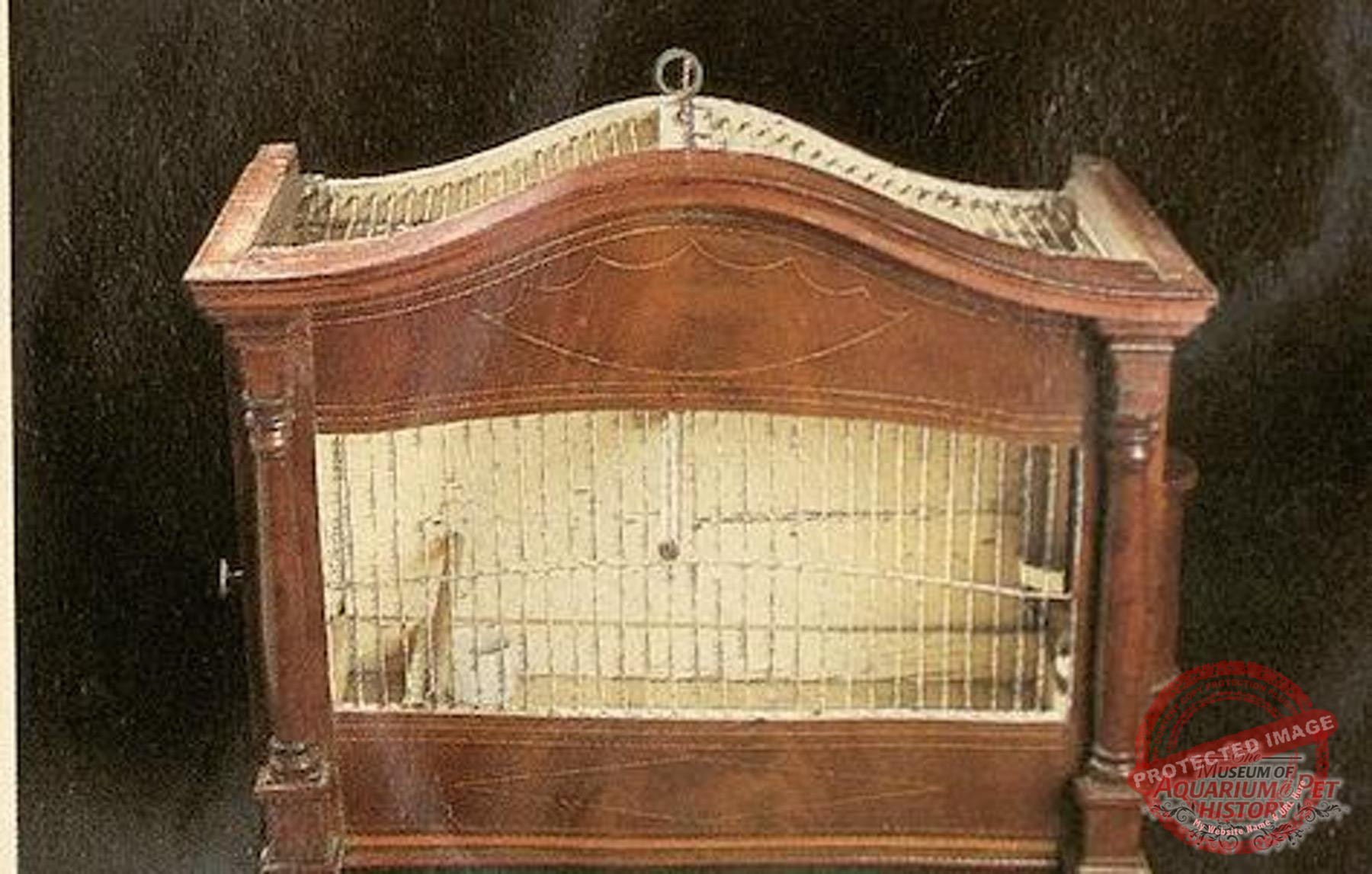
Wall cage, Germany, around 1830. The barred box is designed after the style of contemporary furniture and thus fully integrates into the room’s interior design.
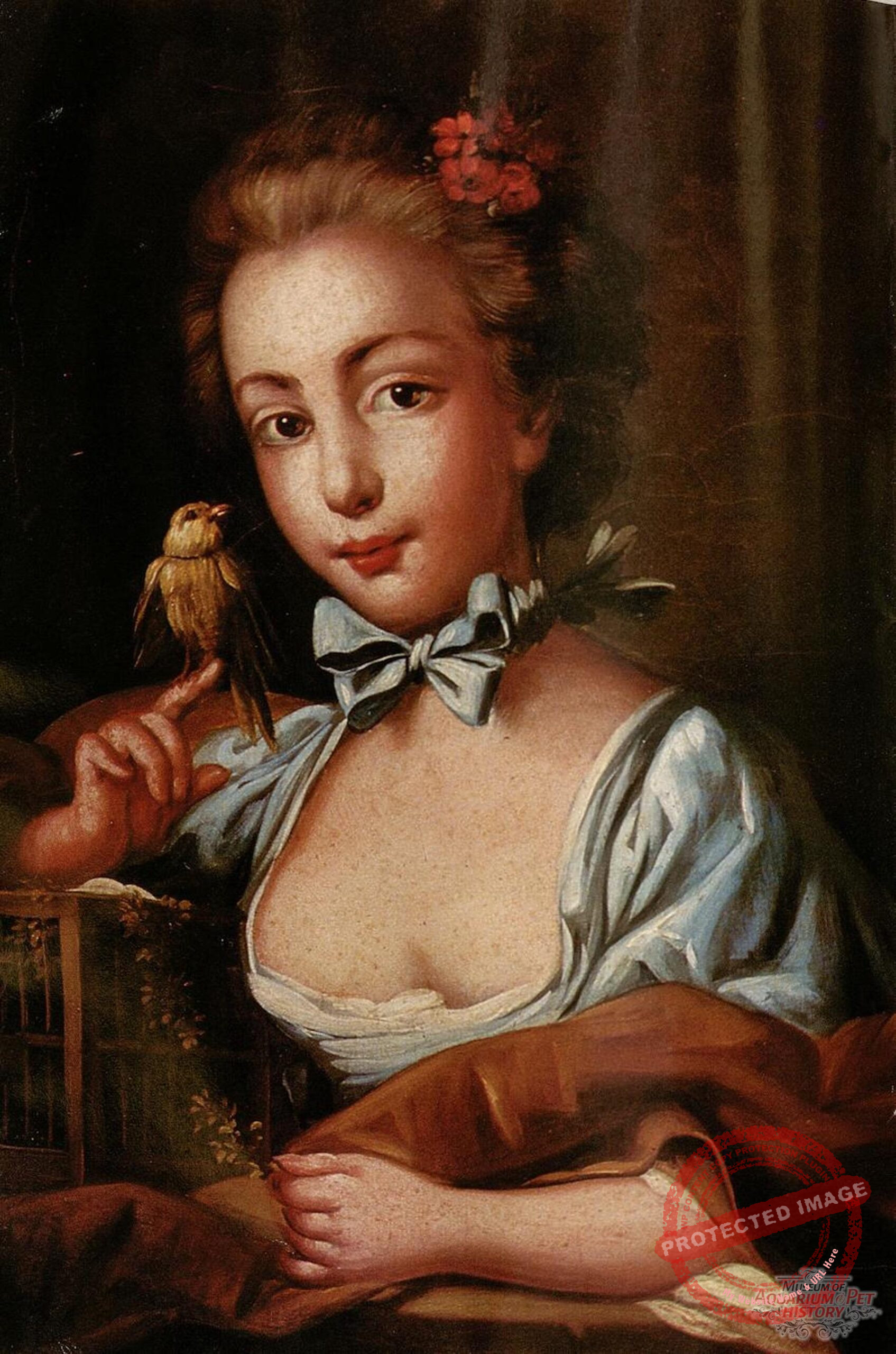
Lady with Canary; Oil painting, copy after François Boucher (1703–1770). Originally in the Galerie Cognac-Jay in Paris.
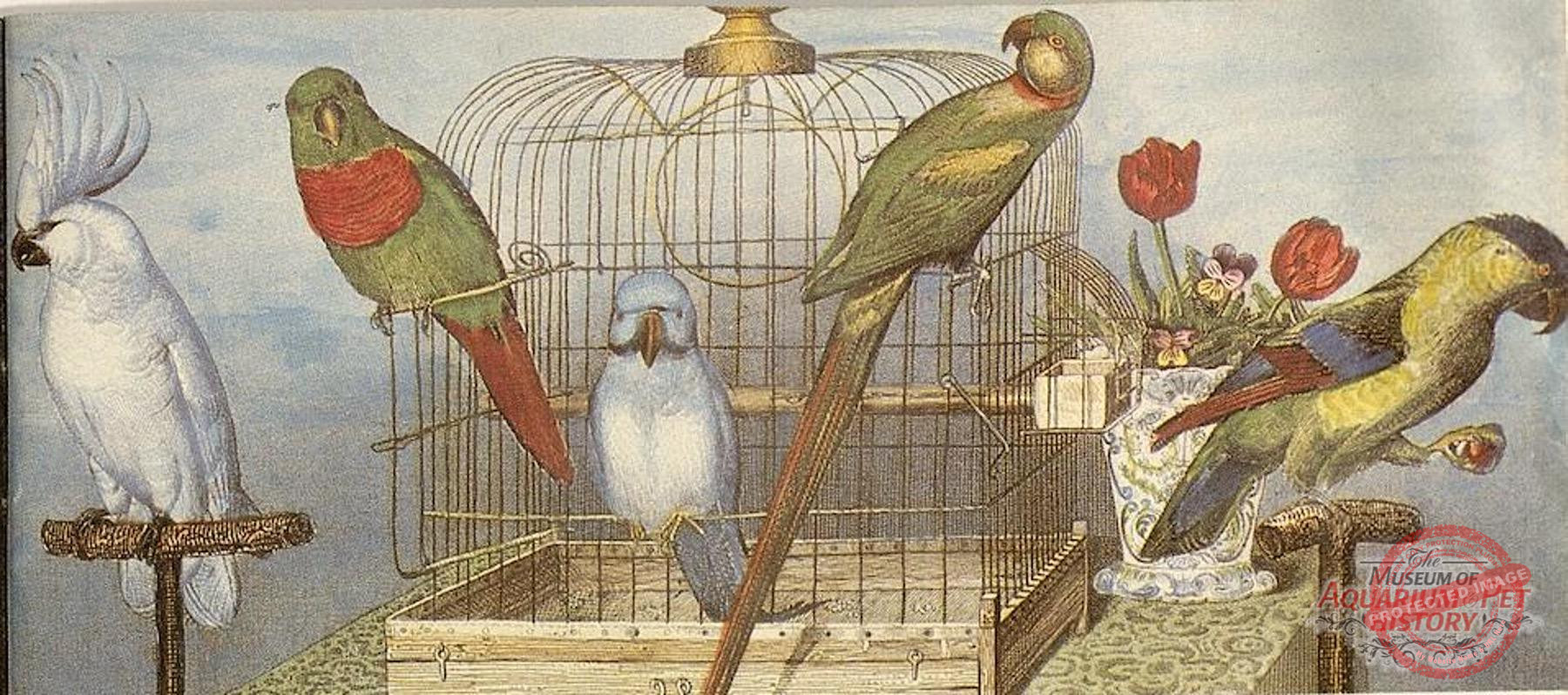
Exotics at the Cage; Colored wood engraving, Berlin 1840. The page clearly comes from a book on bird keeping, with instructions on which cages are suitable for which species.
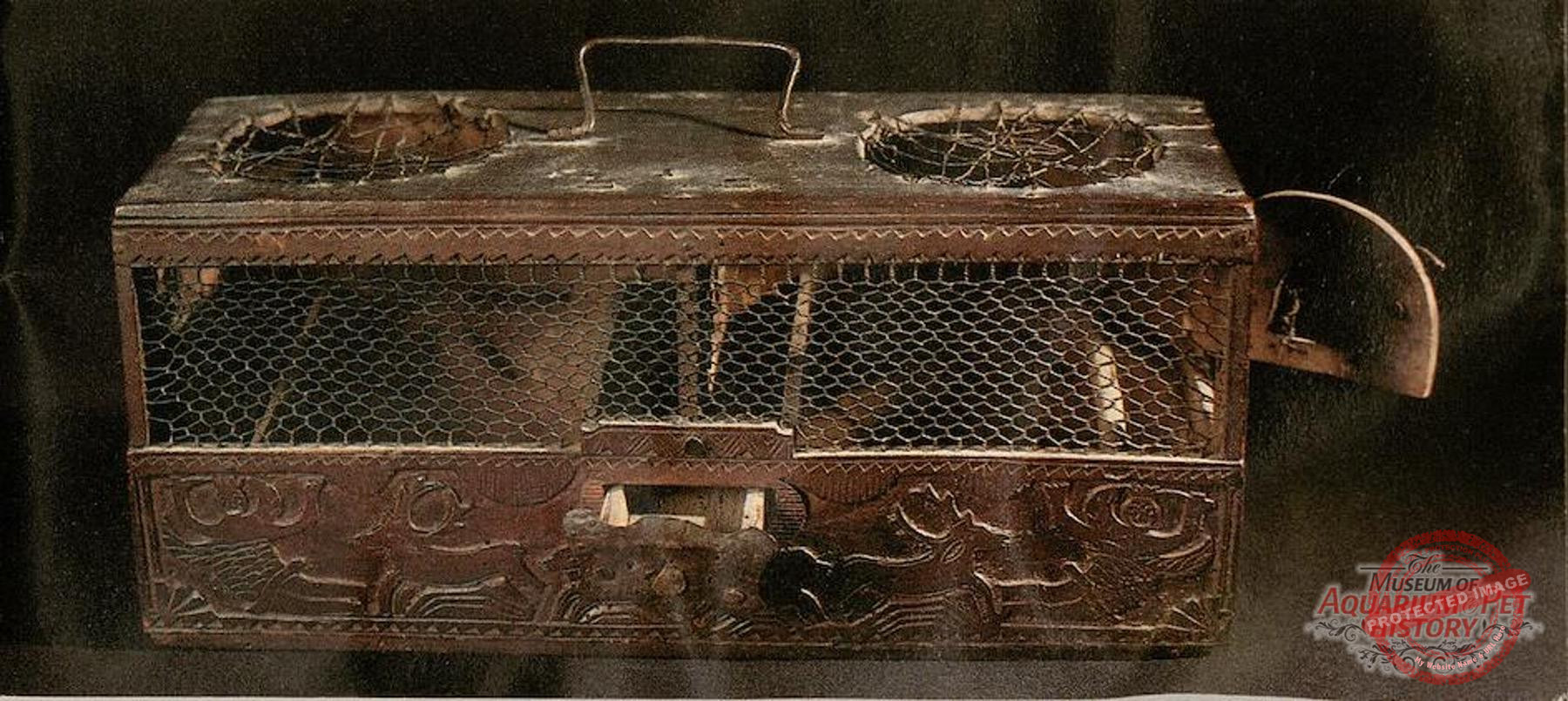
Carrying cage; Hesse, 18th/19th century. The cage was likely used to transport decoy birds to the bird trap.The depiction of a hunting scene in relief carving is also a popular theme in folk art.
The Beginning of Ornithology
Interest in birds—and in keeping them not just for the table—along with the scientific pursuit of ornithology, began quite early.
Ornithology has been a science since Aristotle (384–322 B.C.), who considered it
“the detailed study of birds to be a pursuit worthy of a philosophical mind.”
Following his example, naturalists since the High Middle Ages have again engaged with this discipline. The study of Aristotle’s writings, which became widespread in scholarly circles at the start of the Renaissance, encouraged the effort to follow his example and to newly classify the species he had mentioned.
His History of Animals includes accounts from earlier authors as well as his own observations on the distribution, diet, nesting, and care of birds by bird catchers, fishermen, and farmers. Of course, these early accounts mix truth with legend and must be read with caution. However, it is fascinating to consider how early birds were studied and described in detail.
It’s also important to tell the difference between real researchers and writers who just repeated existing reports, added to them, or made them more exciting—often by using their imagination in questionable ways.
These early writings still deserve attention, as they are often the only records we have of ornithology’s beginnings. However, they rarely describe the type or design of birdcages. That’s not surprising—many of the authors likely kept birds themselves, much like monks and hermits, who often trained forest birds for companionship or entertainment. Even high-ranking church officials were known to enjoy keeping birds. Many medieval writers and chroniclers who recorded stories about birds—such as Gervasius of Tilbury, Caesarius of Heisterbach, and Thomas of Cantimpré—came from religious backgrounds.
One interesting example comes from the Manesse Manuscript, the largest collection of medieval German love songs and a masterpiece of book illustration. When the illustrator didn’t know the coat of arms of a poet—especially common with wandering minstrels—they would sometimes replace it with a symbolic image based on the singer’s name.
People often say that bird cages were beautifully decorated to make up for the birds’ loss of freedom, but this is more of a romantic myth. It’s more likely that humans simply enjoyed decorating things, even small everyday objects.
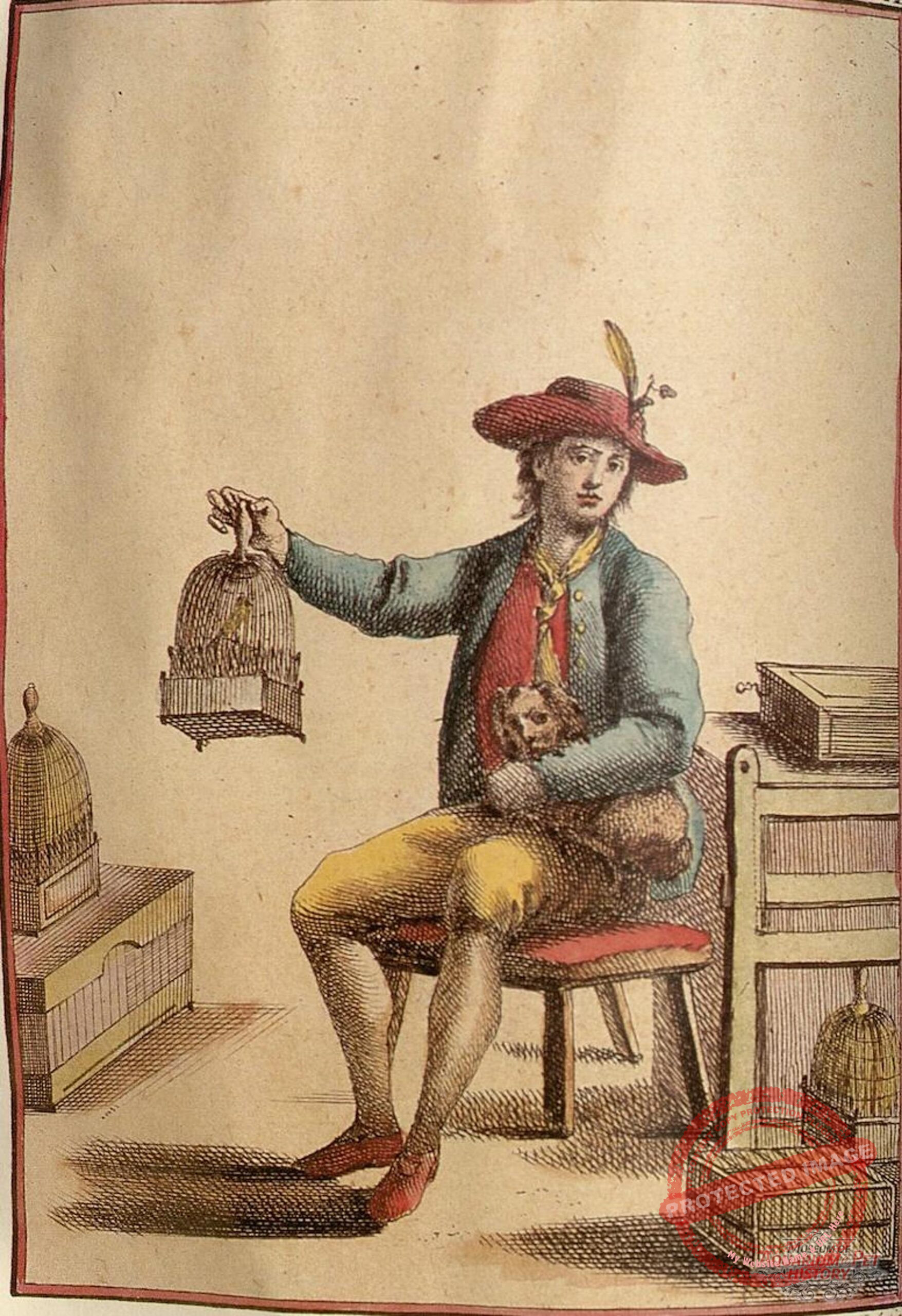
Bird Seller / Marchand d’Oiseaux. Colored copper engraving, 1760. The depicted cage types include barred boxes and small bell-shaped cages. On the table-like stand to the right is a music box with a crank, which was used for training birds to sing.
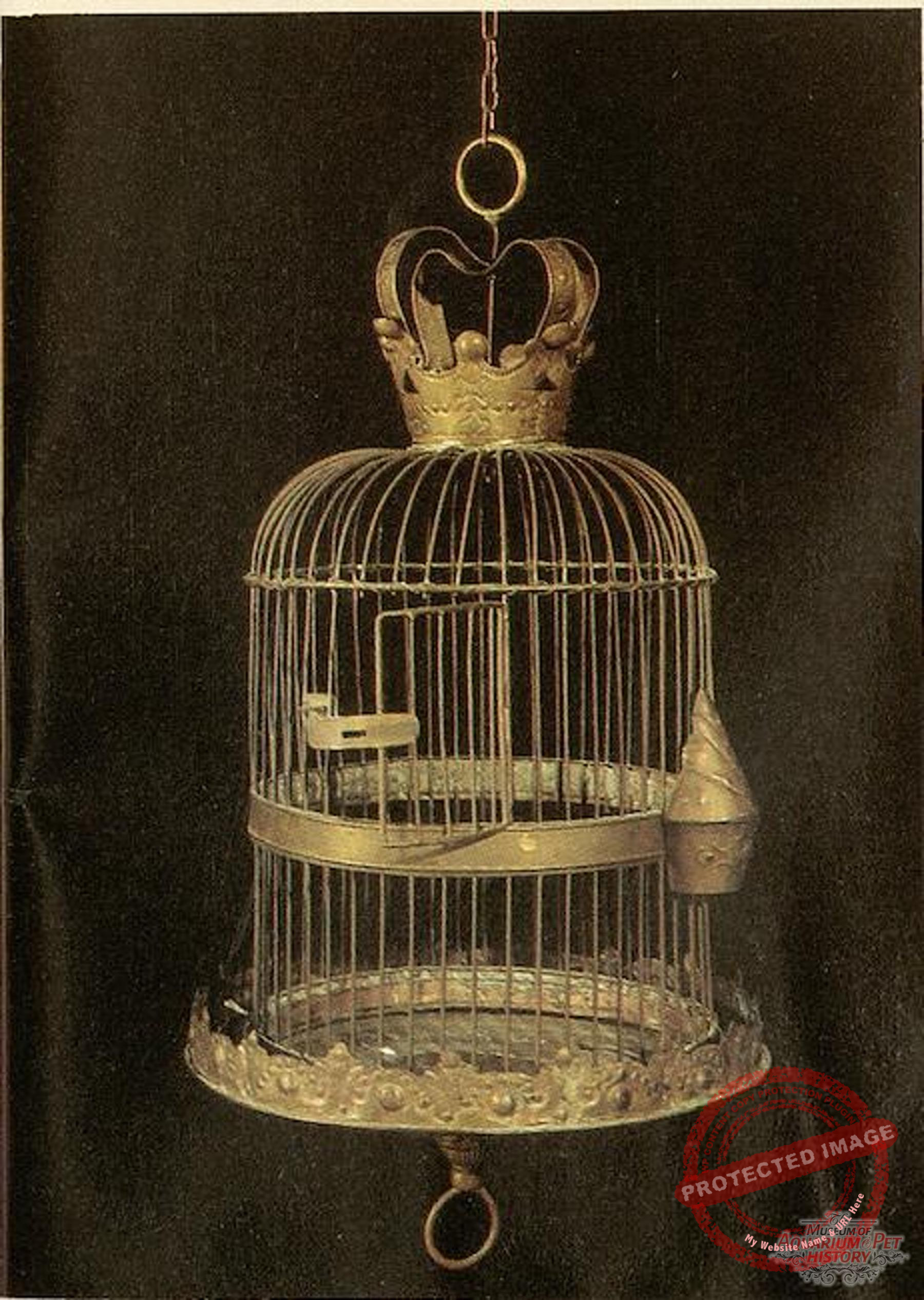
Hanging bell cage; replica based on an original from the 18th century.
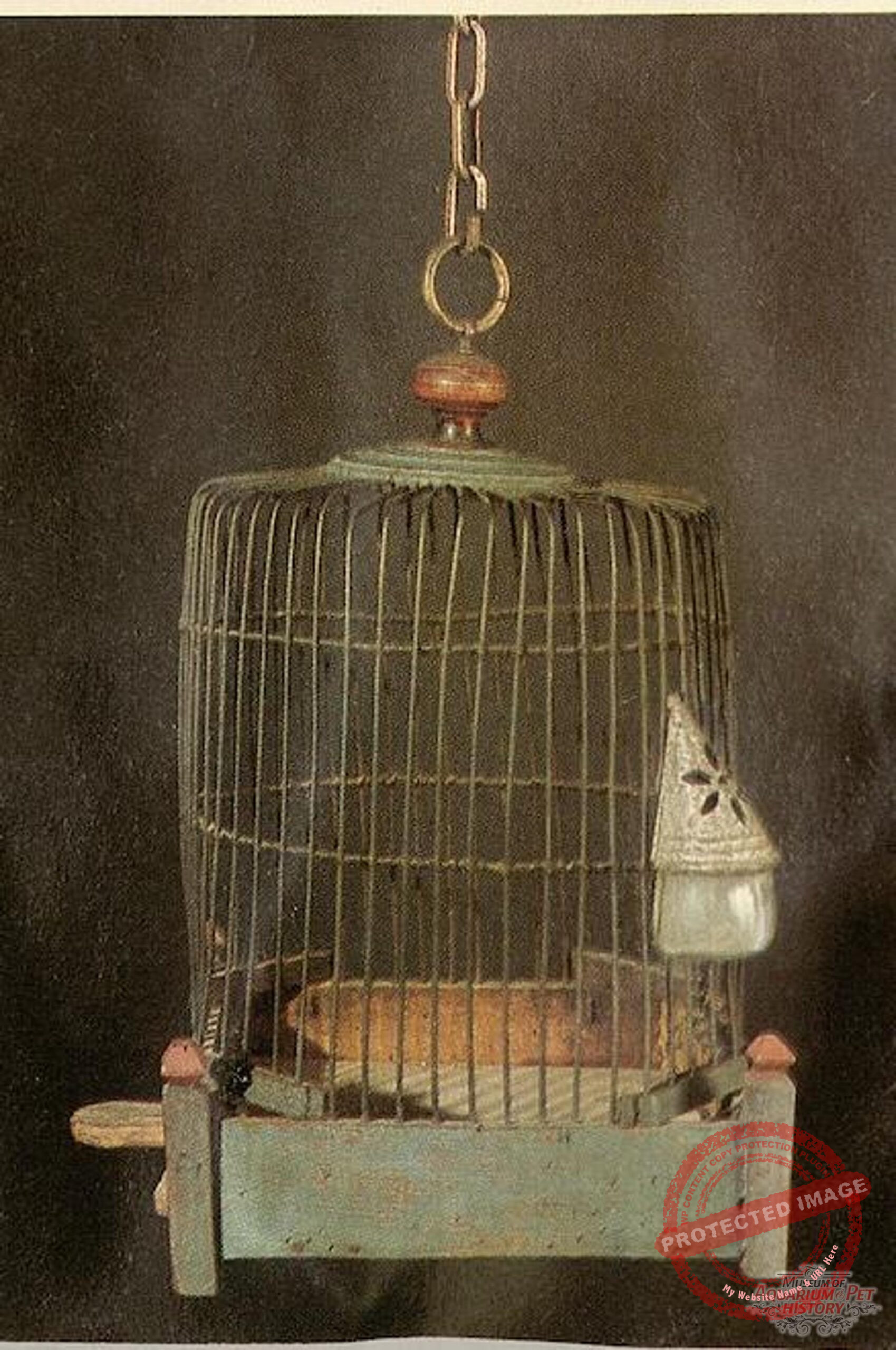
Floor and Hanging Bell Cage; Bergisches Land, 18th century. The cage displays a simple combination of a square base frame with a removable bottom board and a cylindrical wire enclosure. Noteworthy is the original drinking vessel.
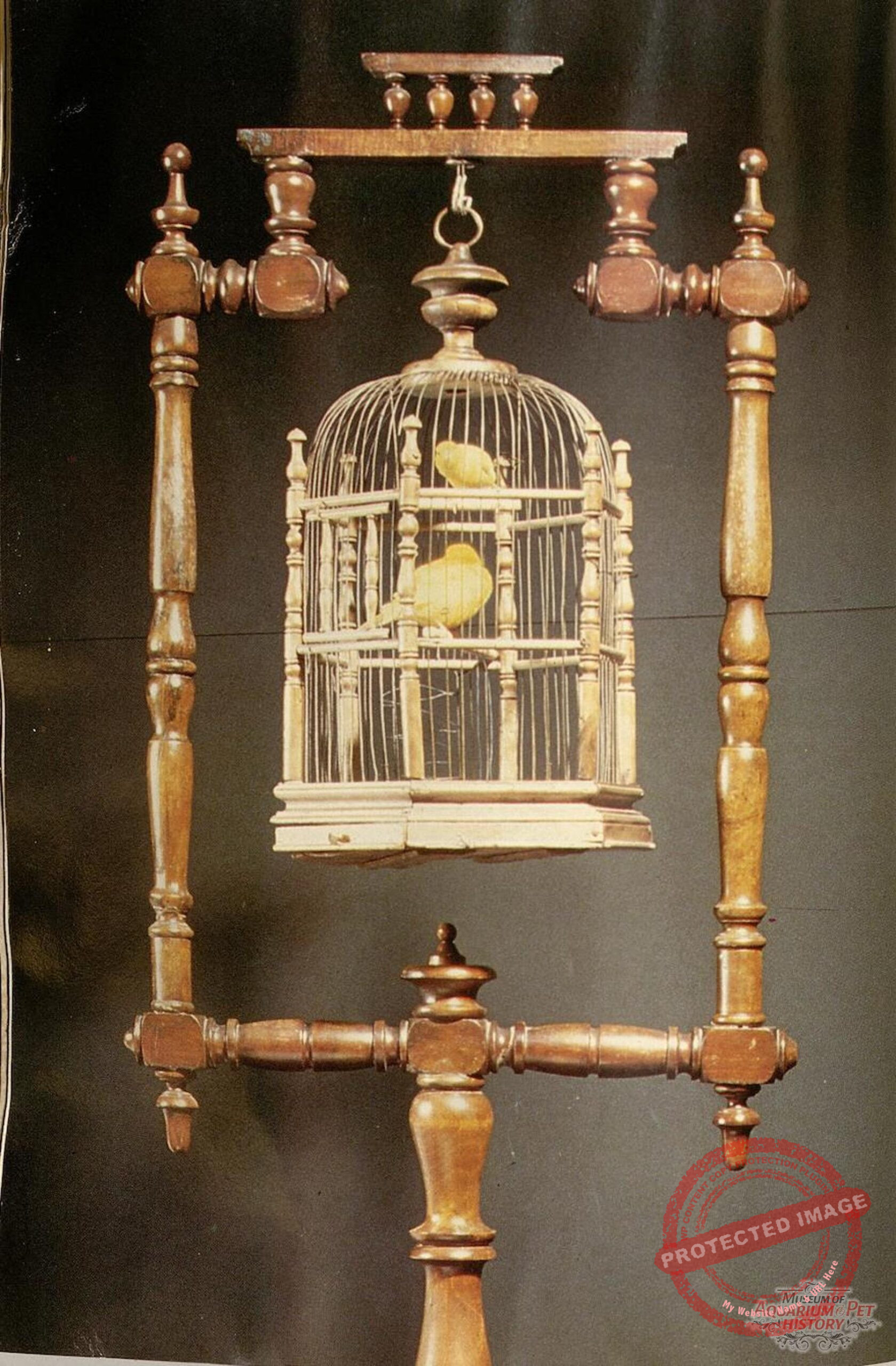
Hanging bell cage with stand; Germany, 1920.
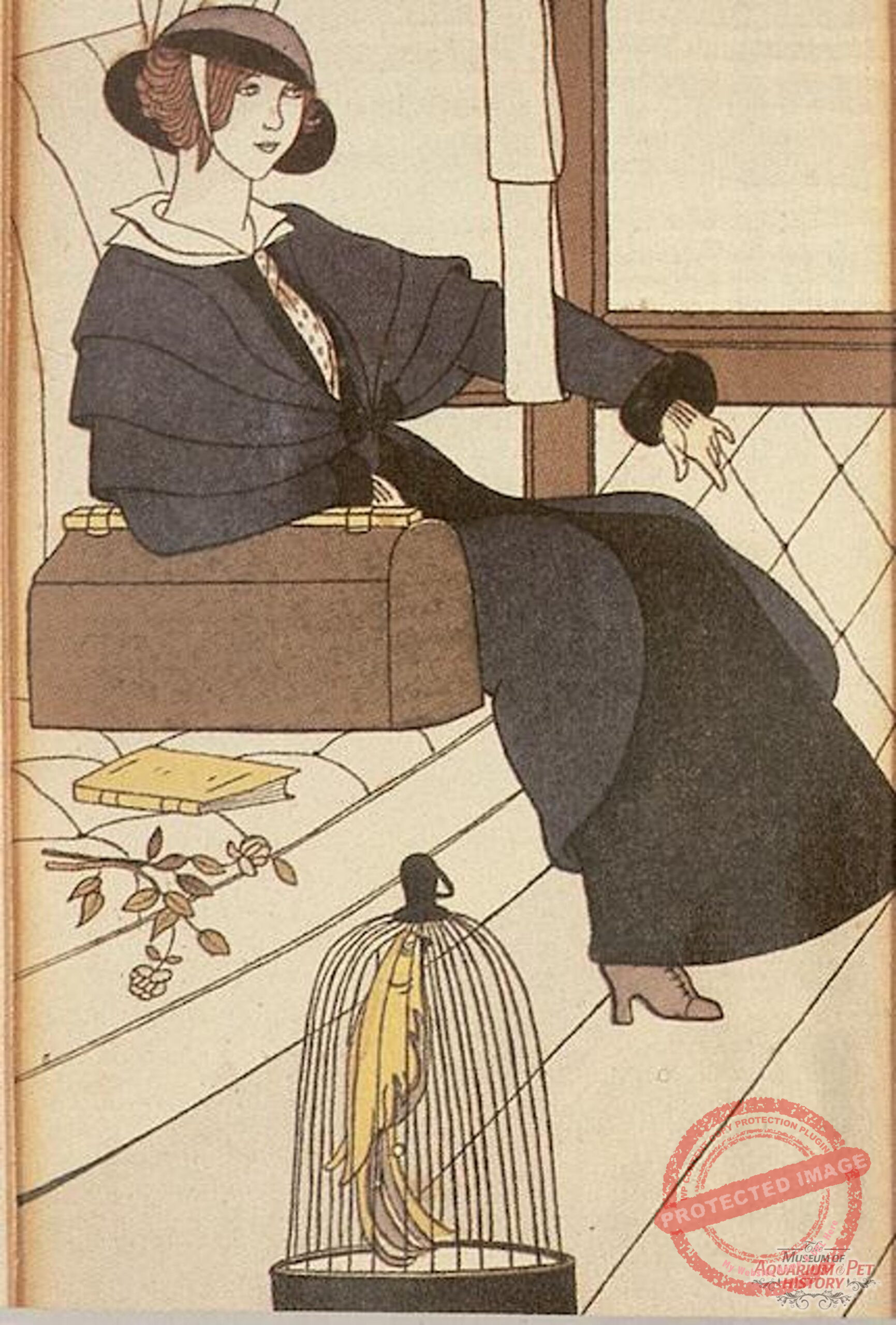
Lady with Birdcage in a Train Compartment. Color lithograph, Munich, around 1890. This fashion plate provides detailed information about the travel attire of women at the time, as well as about accessories such as handbags and the bell-shaped travel cage.
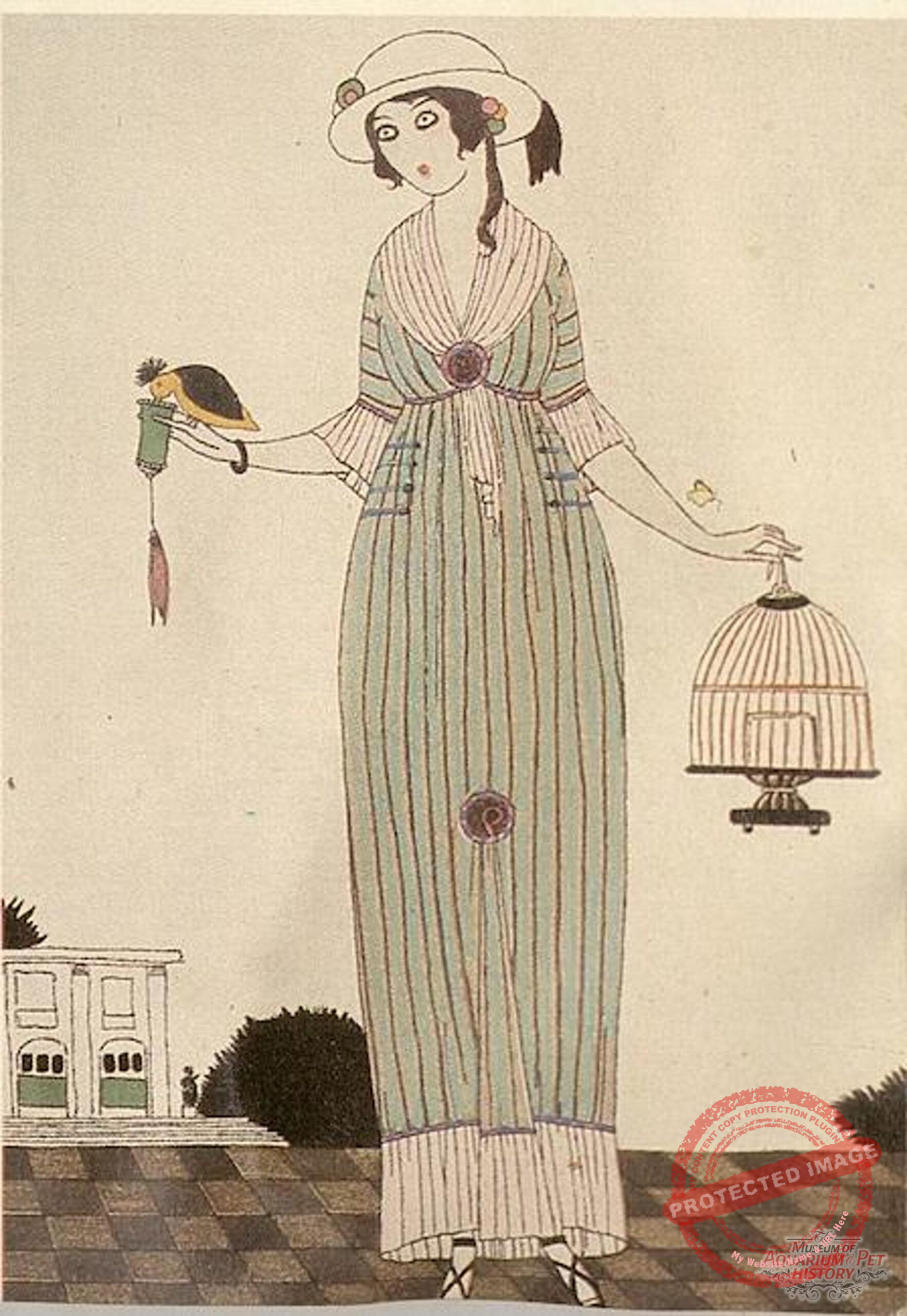
Costumes Parisiens. Color lithograph, Paris 1913. Naturally, the robe described in the accompanying text as Robe de linon rayé is the main focus of the image, but it also illustrates the fashion of bird keeping. While the bird perched on the lady’s right hand reflects artistic imagination, the cage she holds corresponds to a type that was actually common at the time.
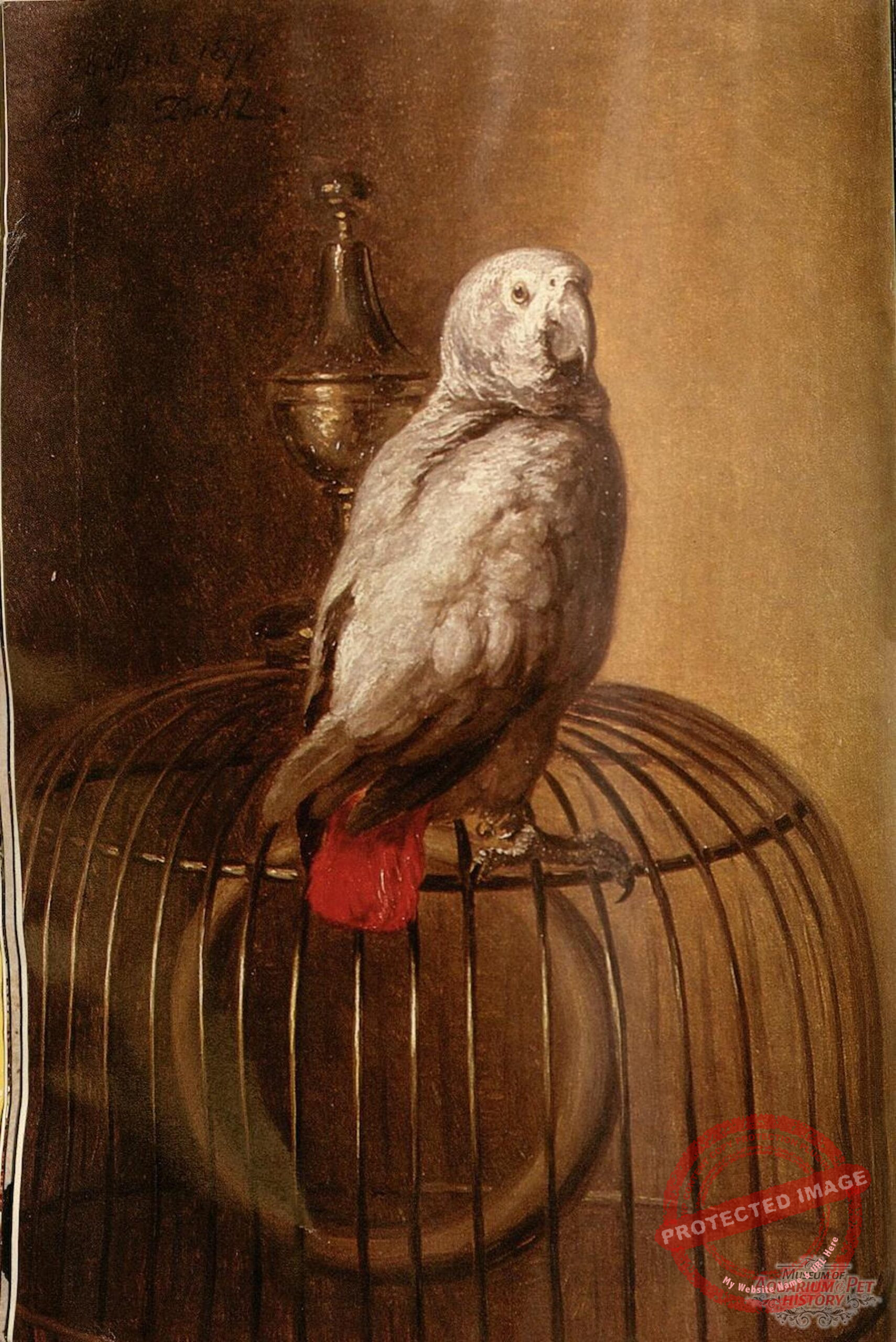
African Grey Parrot. Oil painting by Siegwald Dahl, 1871. Johann Siegwald Dahl (1827–1902), known as an animal painter not only to experts, depicted an African grey parrot perched on the roof of its spacious enclosure.
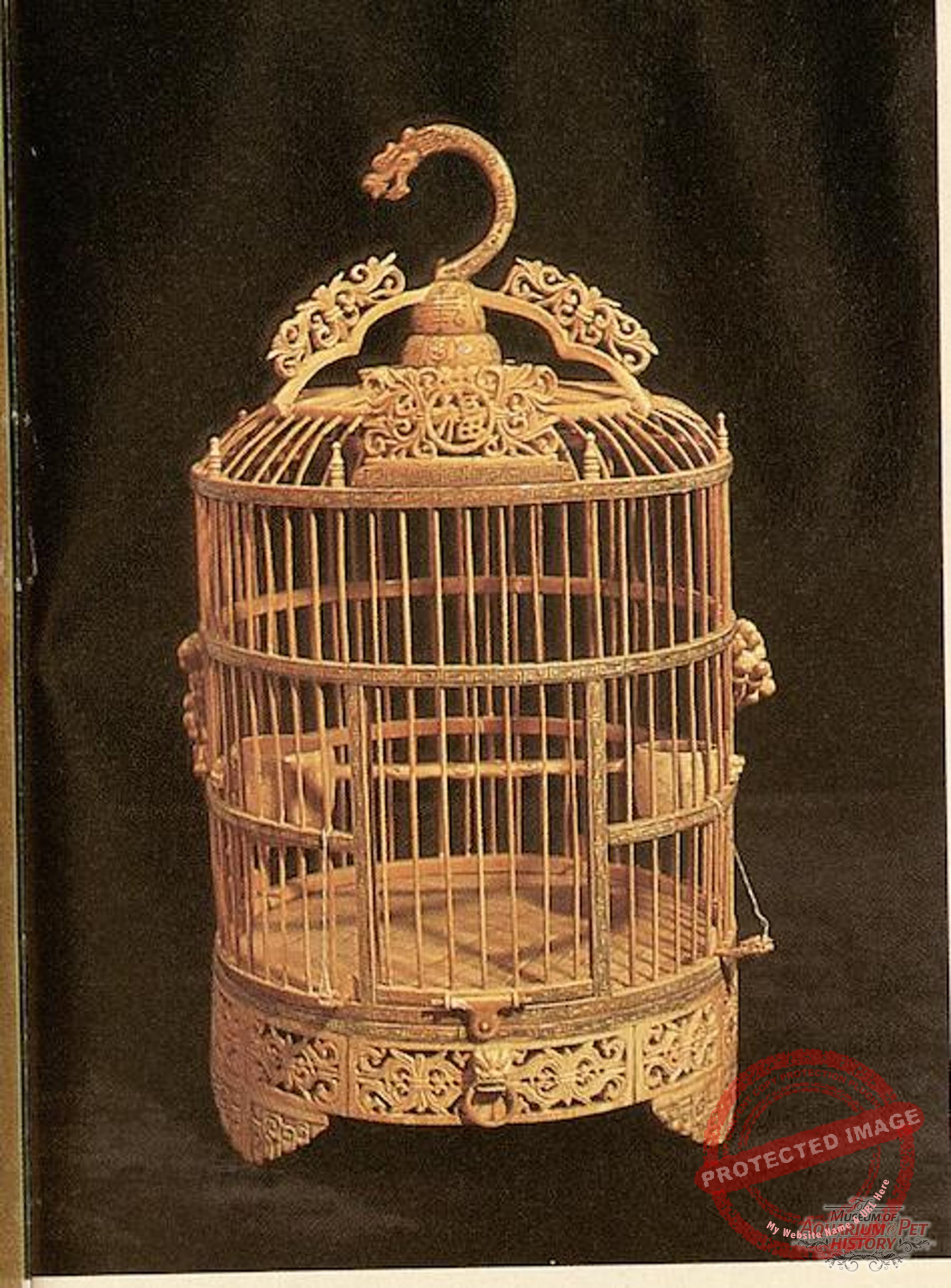
Floor and hanging bell cage; East Asian craftsmanship.
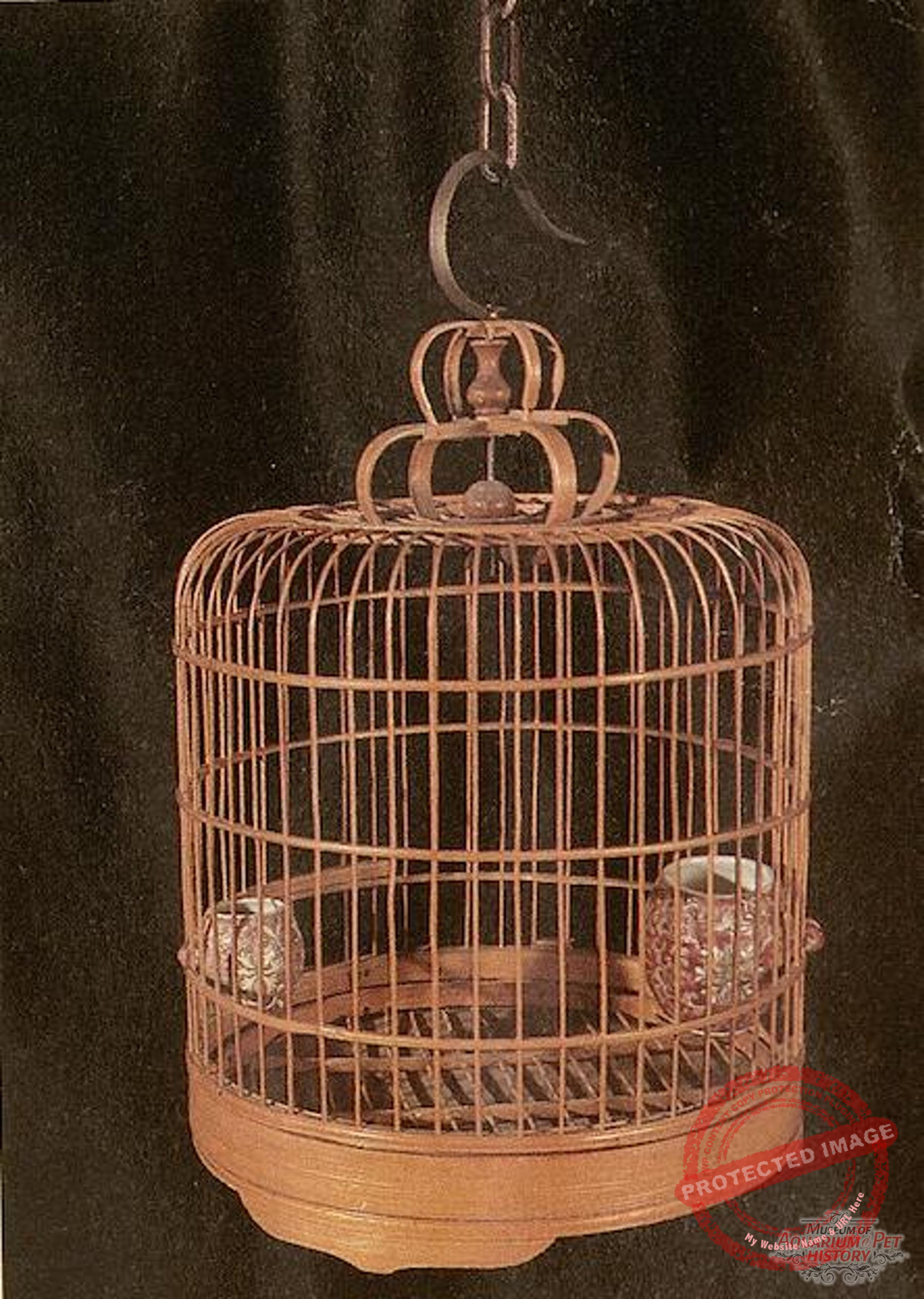
Floor and hanging bell cage; Hong Kong, available on the market in 1970.
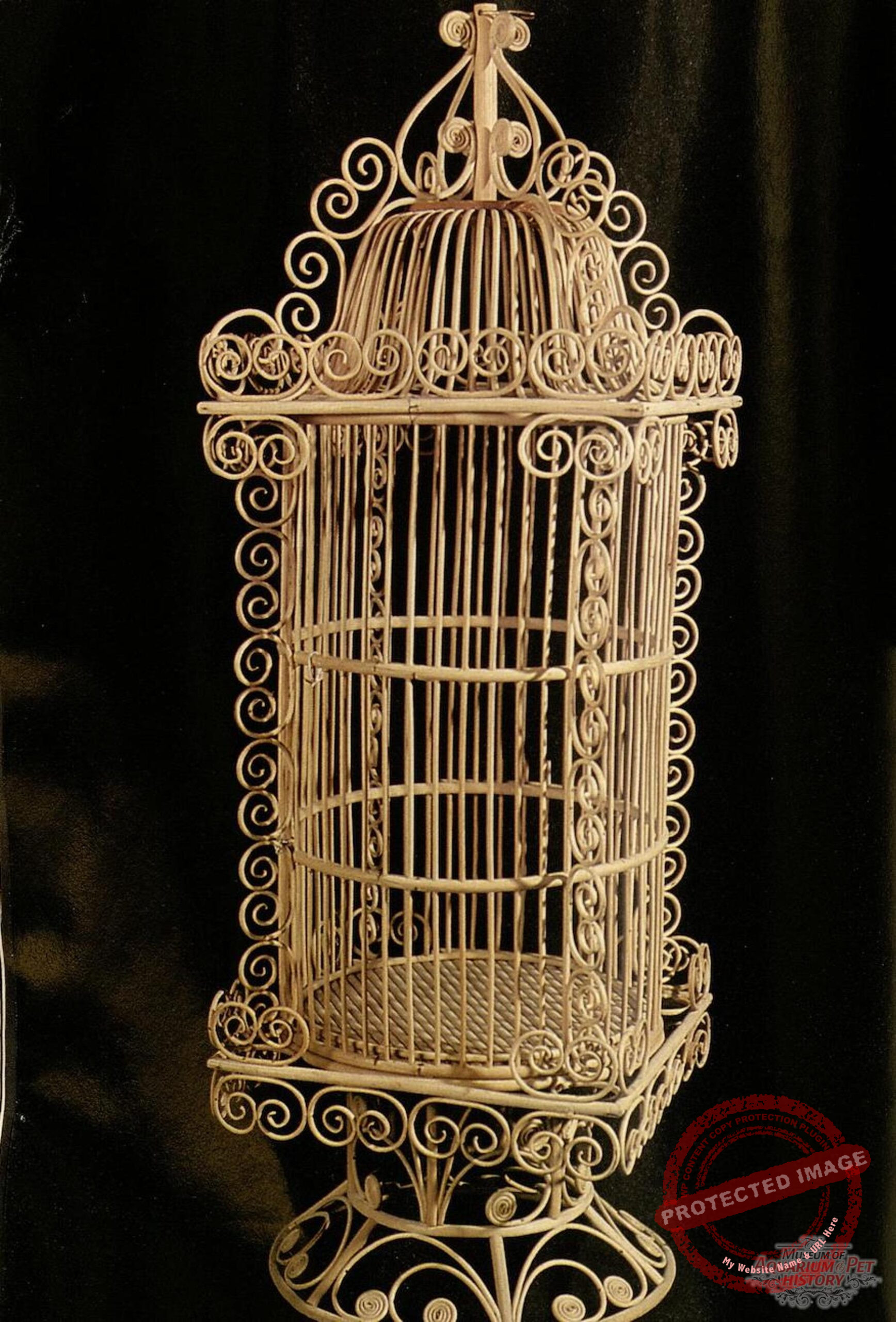
Birdhouse made of rattan; China, available on the market in 1970.
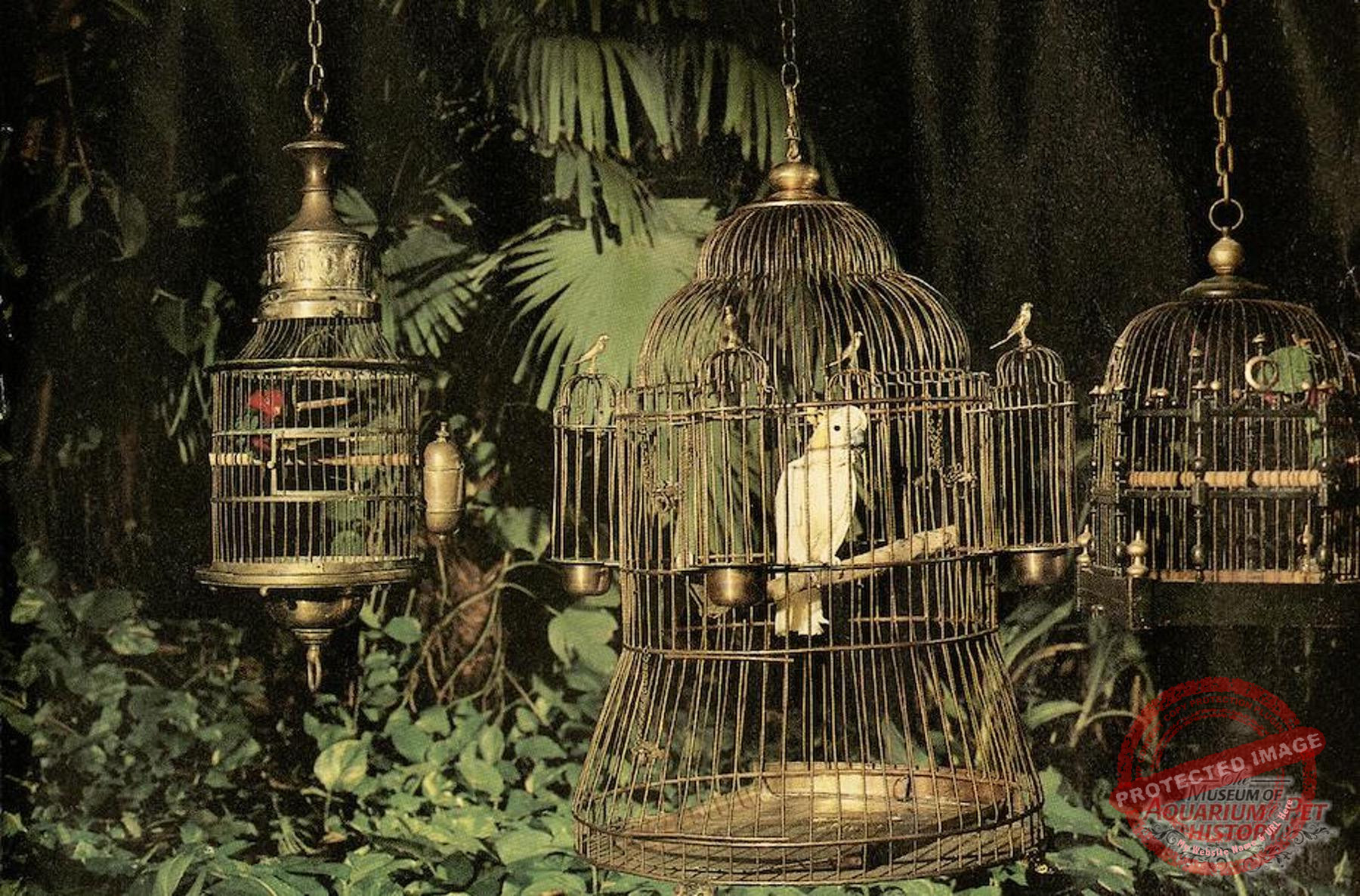
Hanging bell cages from three eras: from left to right — Art Nouveau, 20th century, and 17th century.
Emperor Frederick the Ornithologist
A nature observer and scientist of nearly modern character can be found in Emperor Frederick II (1194–1250). He owned several menageries11 and brought them along on his many travels. A large vivarium was constructed near Foggia12 : a system of swamps and ponds regulated by walled water channels. Here, the emperor kept pelicans, cranes, herons, wild geese, and rare marsh birds. He created a lasting legacy of his scientific interest in birds through his work “De arte venandi cum avibus” (On the Art of Hunting with Birds), which covered far more than just hunting and remained exemplary in some fields into modern times.
MOAPH11: A menagerie is a collection of wild or exotic animals kept for display, often by royalty, aristocrats, or wealthy individuals before the modern concept of public zoos existed.
MOAPH12: Foggia is a city in the Apulia region of southern Italy, historically known for its agriculture and traditional craftsmanship, including woodworking and decorative arts.
Medieval Household Inventories
Medieval household inventories, often preserved in the form of flyers, rhymes, or humorous poems, frequently list the birdcage as a notable piece of furnishing. The Nuremberg Meistersinger13 Hans Folz (1435/40–1513) compiled a verse titled “Of All Household Items” listing what was necessary for a bourgeois home, including:
“First, one needs a bedroom, with bedding for both night and day. Then come the essentials: a chair, a bench, a table, a dresser, a cupboard, a cradle, and the doorframe. And for the parlor—a birdhouse, a birdcage on the wall—because that is considered proper parlor decoration.”
MOAPH13: A Meistersinger (German for master singer) was a member of a guild of amateur poets and musicians in medieval and early modern Germany, especially active between the 14th and 16th centuries.
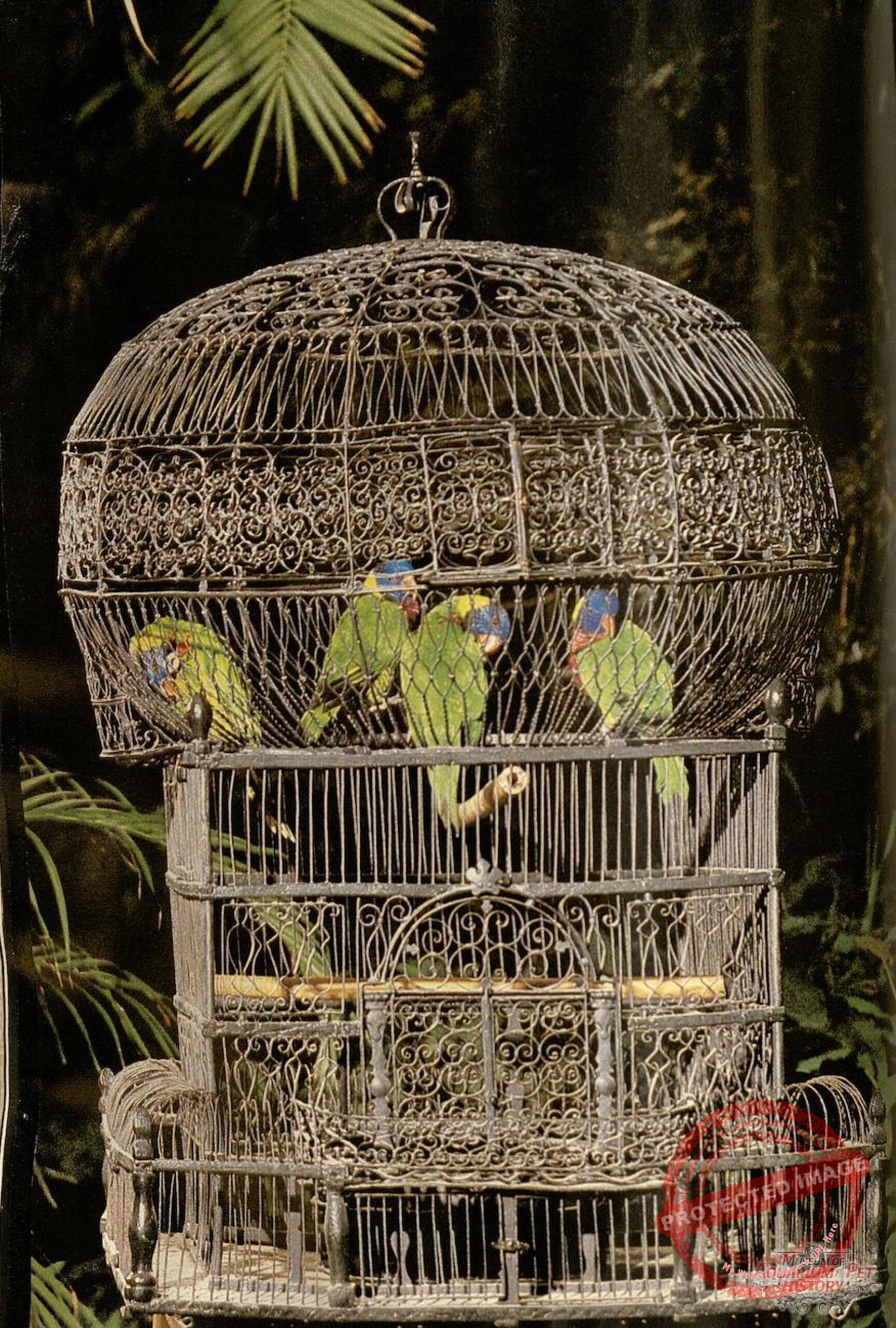
Floor cage; Southern France, 17th/18th century. This decorative indoor aviary consists of three sections: a cube-shaped barred box with an edge length of 50 cm is surrounded by a 15 cm high gallery and supports a fl ight sphere with a circumference of 230 cm.
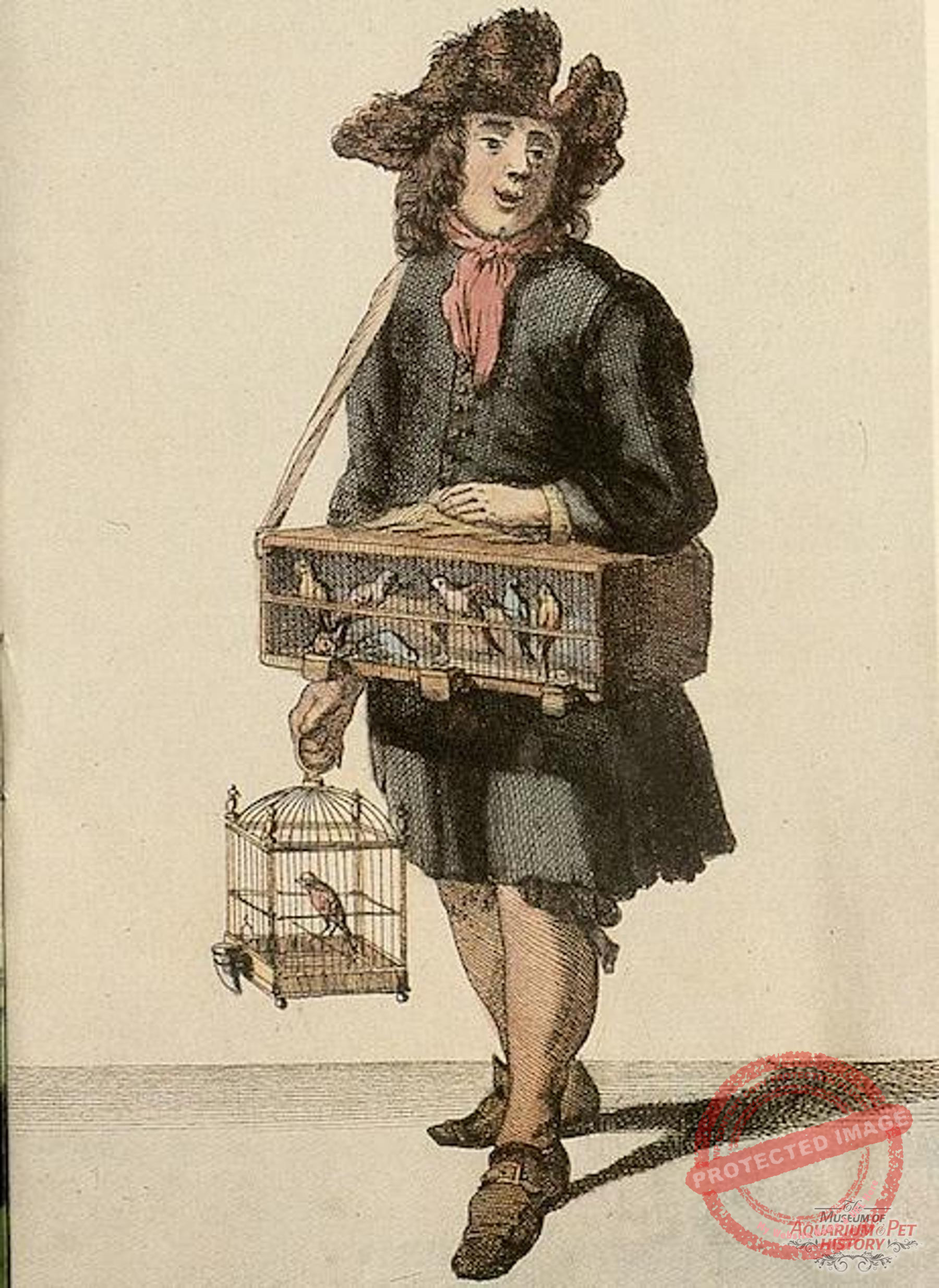
Bird Seller. Colored copper engraving, England, 18th century. The seller carries a barred box with several birds slung over his shoulder, and in his right hand holds an elaborately crafted cage with decorated corner columns and a domed roof. The caption repeats the sales call “Buy a fine singing bird” in both French and Italian.
Talking Birds
The speech abilities of parrots, in particular, inspired many to tell curious tales. The parrot—sometimes also the starling or the magpie—was described as a messenger who could conduct full conversations, posing questions and giving responses.
The magpie, often a talking bird in cottages and farmhouses, is frequently mentioned. It is often said that its talent was used for deception and betrayal. The motif of a woman’s infidelity being exposed by a magpie is found in Le Roman des sept sages, in an Arabian tale from One Thousand and One Nights, and in a medieval jest book14. In those, it is told that a rightly jealous husband secretly wants to observe his wife and, for this purpose, buys a magpie. Upon his return, he questions the bird, and “it tells everything it has seen / of the lover and the lady.” What is particularly interesting for us is the woodcut accompanying this account, which shows the cage of the feathered spy: a large box with criss-crossed bars, standing on its own little table.
MOAPH14: The phrase “jest book” refers to a book of jokes, witticisms, or humorous anecdotes.
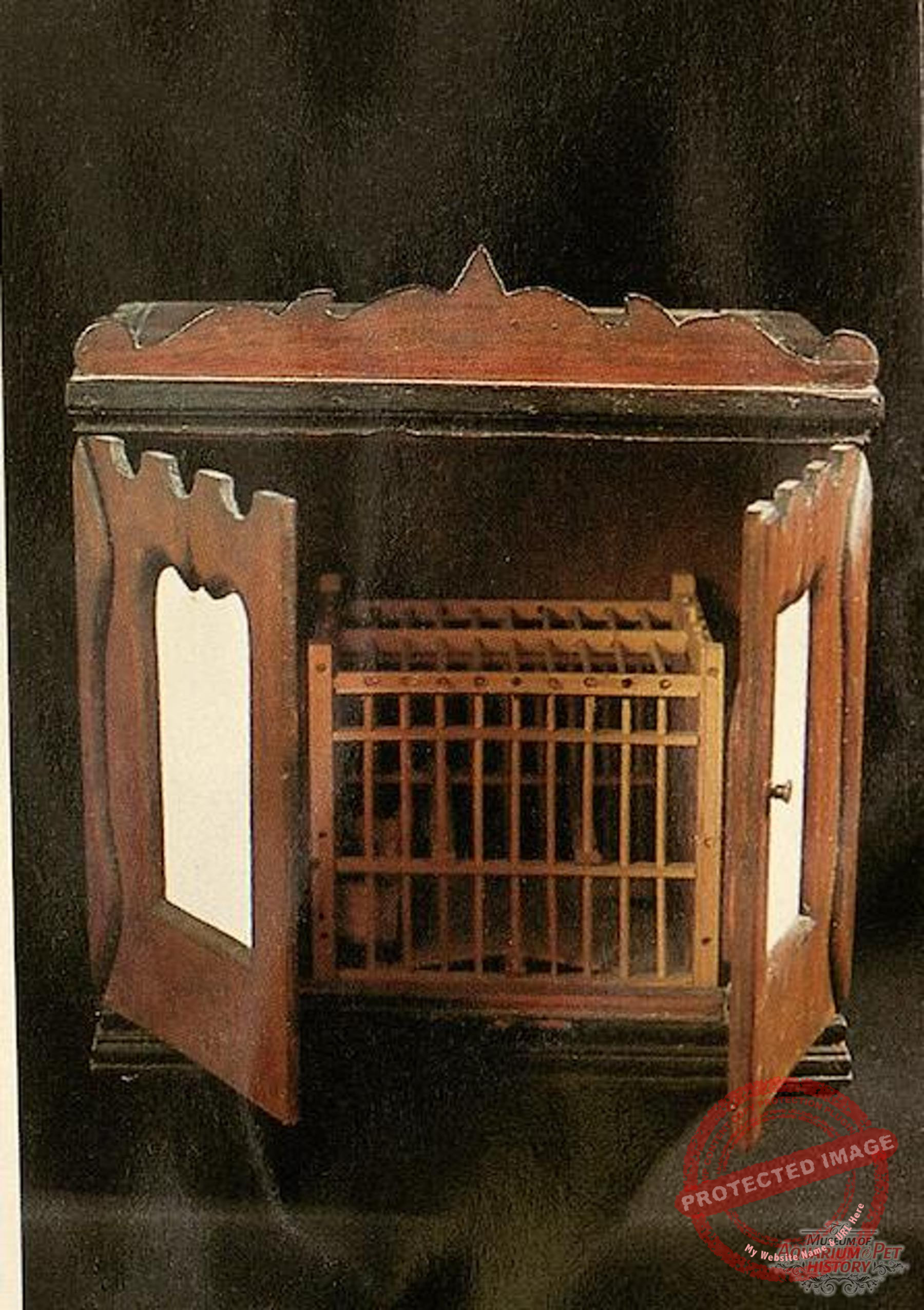
Singing box for Harz canaries with insertable cage; St. Andreasberg/Upper Harz, 1890–1930. The ‘Harz darkening box’ was used in the vocal training of canaries. The insertable cage containing the bird was placed for a certain time into a wall or floor cabinet that could be completely or partially darkened using doors.
It was common to keep various birds in artistically crafted cages in rooms, some of which could be opened to allow the birds to come and go freely. Unfortunately, the type of cage is not described in detail—only the word “artistic” is used. Contemporary illustrations, however, show that in addition to the simple barred box, there were round cages topped with a pointed cone or a domed roof. Dutch cages, typically suspended from the ceiling by an adjustable chain or pulley, already showed ornate details in their vertical bars, with wood carvings or embossed metal. We may assume that the term “artistic” refers to even more elaborate models.
A fitting example appears in a page from the Book of Hours of Catherine of Cleves (around 1450); this manuscript is now held in the Pierpont Morgan Library in New York. There, we see a box-shaped cage with decorated corner columns.
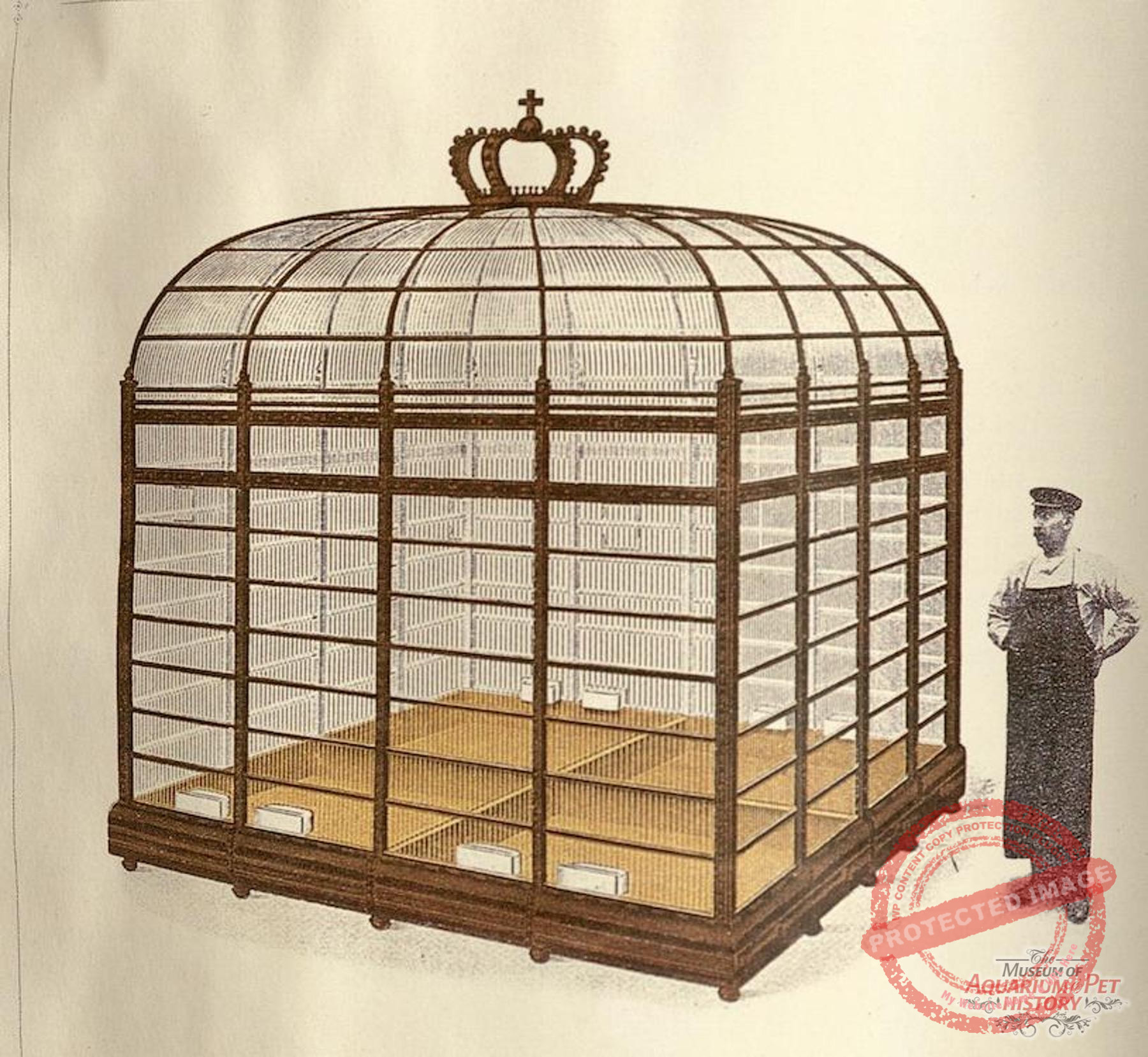
Page 24 of a factory catalog: “Brass cage for canaries, highly polished, size 2 x 2 meters. Value: 800 marks. Delivered to the court of the Prince of Thurn and Taxis, Christmas 1912.”
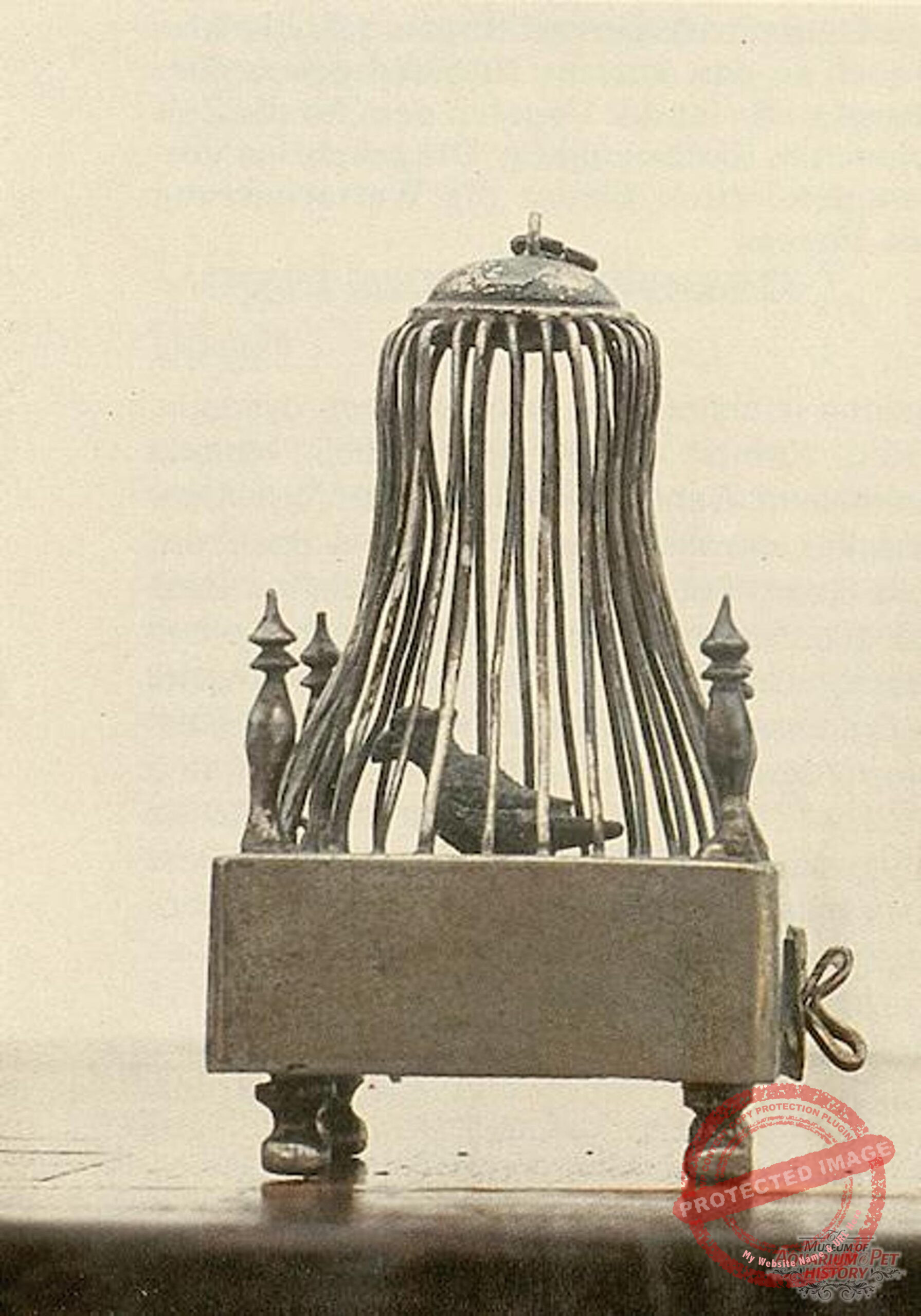
Miniature cage made of silver, Amsterdam 1776 (7 cm tall).
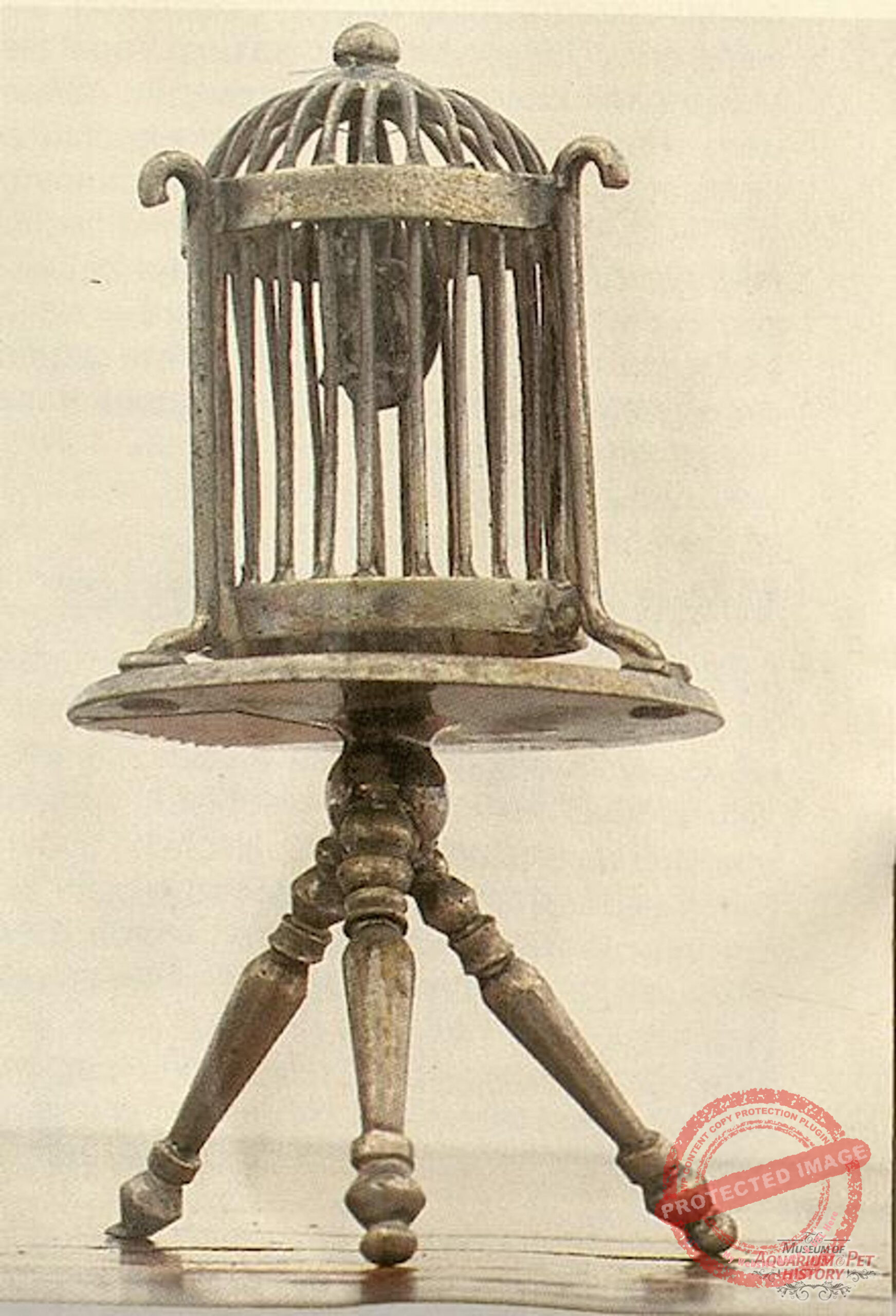
Miniature cage made of silver, Brabant, 1835 (9 cm tall).
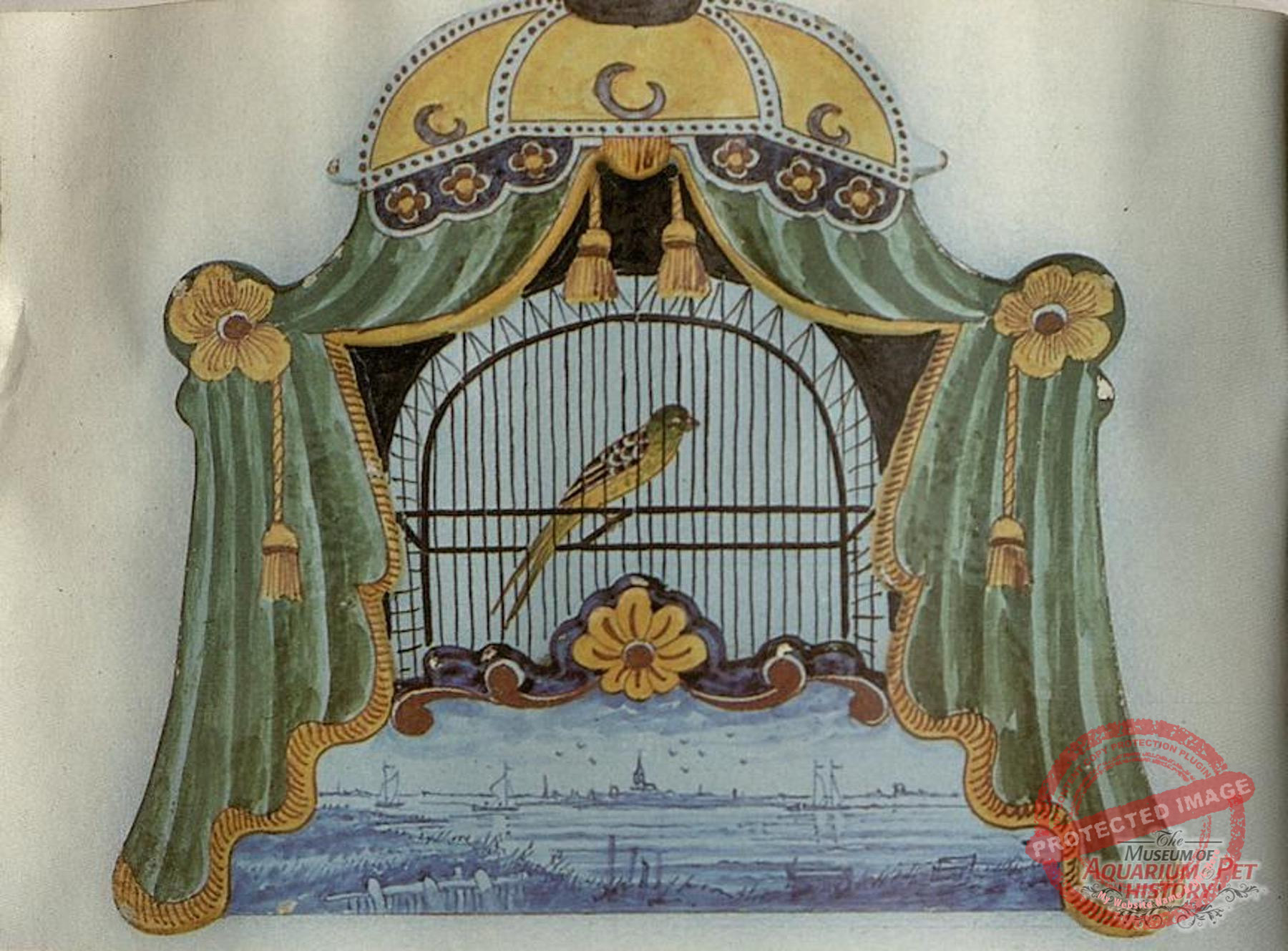
Molded tile; Netherlands, 18th century. The tile follows the tradition of popular landscape depictions, though here the scene is placed along the lower edge of the image. The central motif is a bird in a canary cage typical of the time. The ornate curtain decoration emphasizes the bird’s value and appreciation.
Further Development of Ornithology
The intellectual revival of the Renaissance, which began in 15th-century Italy, soon spread across Europe and fostered a more critical and independent spirit of scientific inquiry. This shift also extended to ornithology, which increasingly attracted the attention of both scholars and dedicated hobbyists.
A long line of early ornithologists contributed to the field’s development. Among the first was William Turner, followed by figures such as Gilbert Longolius, Pierre Gilles, and Pierre Belon—whose 1555 work L’histoire de la nature des oyseaux (The Natural History of Birds) became influential. Konrad Gesner (1516–1565), one of the period’s most significant naturalists, published Historia Animalium, with Volume III (1555) devoted entirely to birds. His work was illustrated with the help of artists like Lucas Schan in Strasbourg and Georg Fabricius in Meissen, who collaborated closely with him. Contributions also came from John Kaye in London and Professor Ulisse Aldrovandi in Bologna.
A German edition of Gesner’s bird volume was published in Zurich in 1557, and by the 17th century, two further German editions had appeared. For more than 200 years, Gesner remained the foundational reference for ornithologists—both scientific and amateur.
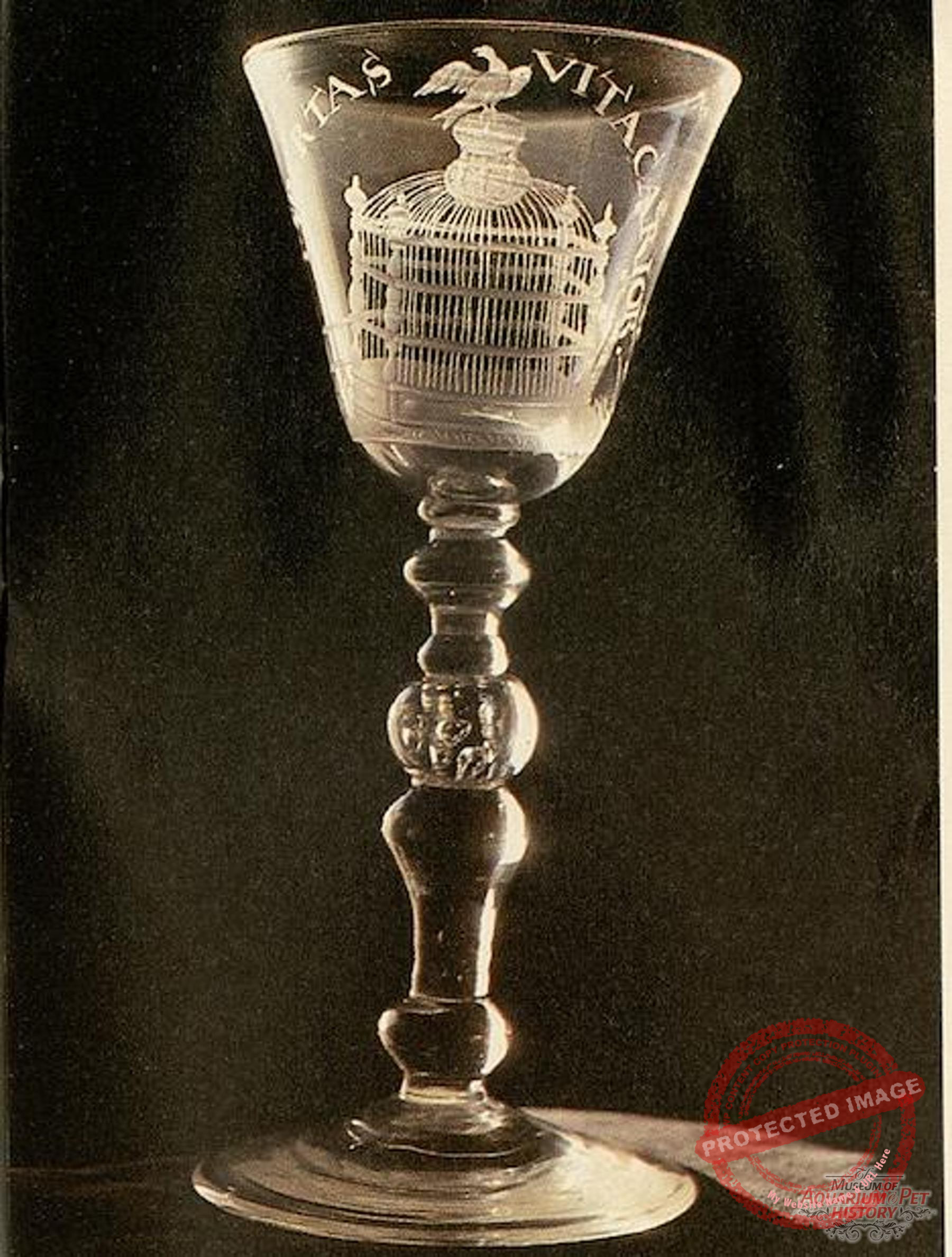
Drinking glass with birdcage depiction; Germany, 18th century. Etched into the bowl of the glass in a matte finish is a round cage with richly turned vertical bars.
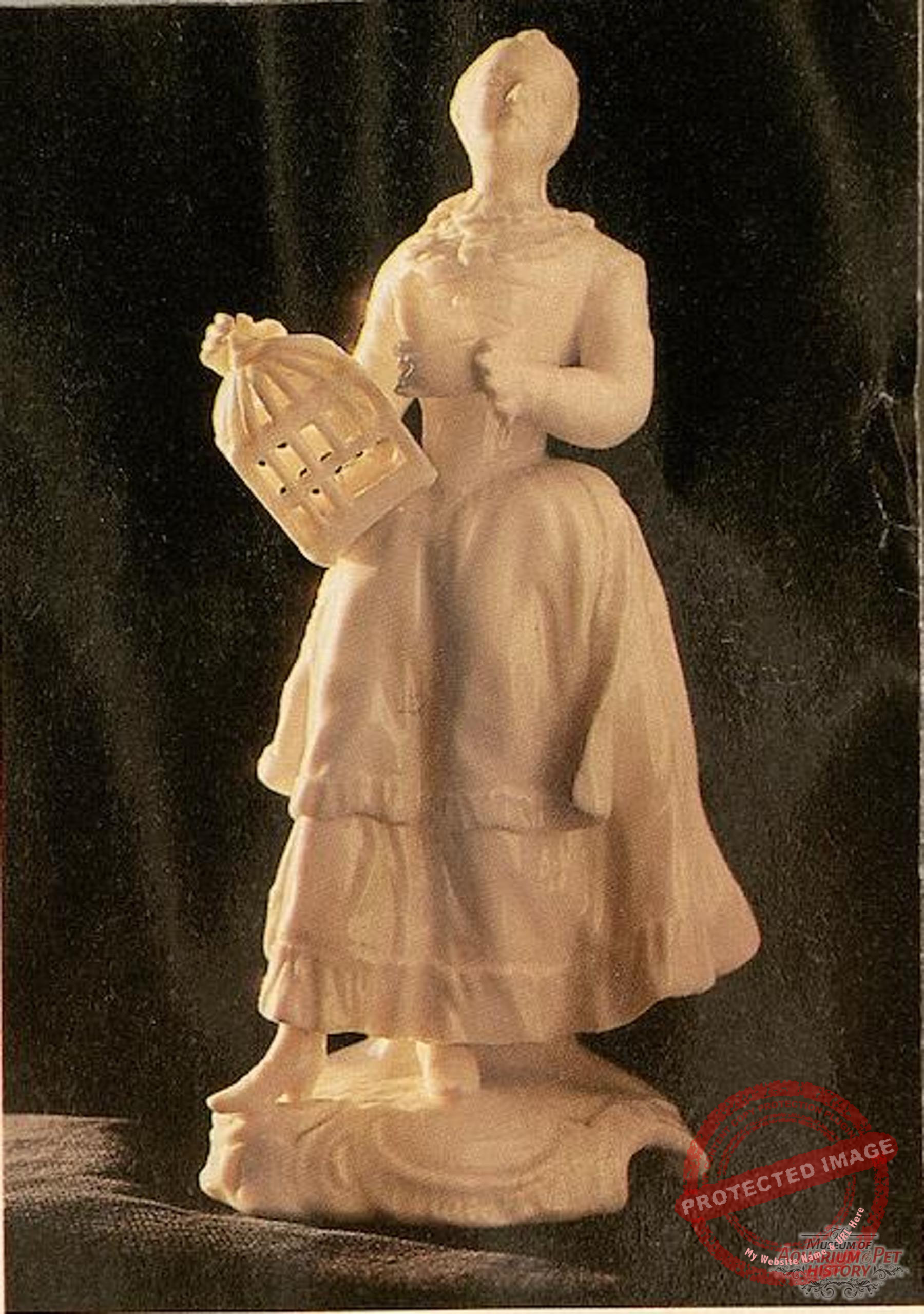
Lady with Bird and Cage. Porcelain figurine, Nymphenburg Manufactory, 18th century
Birds from the New World
After the major works of this kind—especially those by Gesner and Aldrovandi—had seemingly conveyed everything about the birds of the Latin-Germanic region, and the general public had gained sufficient insight through their own experience in bird keeping and care, a new interest emerged: the birds from the Americas.
The first American seafarers brought animals that aroused curiosity and admiration. During his grand entrance into Barcelona in 1493, Columbus himself displayed brilliantly colored parrots, and Spanish ships soon followed with not only parrots but also useful birds like turkeys and Muscovy ducks, which were quickly and successfully bred in Europe.
Parrots—once kept and regarded in antiquity as Indian parakeets—disappeared and reappeared, first sporadically in the 15th century, then more widely in the early 16th century. The Breviarium Grimani, produced in the Netherlands around 1500, already depicted a New World parrot. A 1518 image by Burgkmair shows a Cuban Amazon, and in 1571 Aldrovandi observed live macaws at the court of Mantua15. Around the same time, Lukas Cranach16 painted African grey parrots from the Guinea coast.
MOAPH15: The court of Mantua, ruled by the Gonzaga family during the Renaissance, was a prominent cultural and political center in northern Italy, known for its patronage of the arts and its role in European diplomacy
MOAPH16: Lukas Cranach the Elder (1472–1553) was a German Renaissance painter and printmaker known for his portraits, religious works, and allegorical scenes. A contemporary of Martin Luther, Cranach was also court painter to the Electors of Saxony.
Even before the sea route to India was opened, parrots had made their way to Europe via land. Frederick II owned a white cockatoo, and in 1496 Mantegna painted a similar bird. However, parrots did not become widespread until the rise of Portuguese maritime trade, which brought them in larger numbers to the Malaysian archipelago; parrots remained relatively rare. In 1599, Aldrovandi encountered a cockatoo in the possession of Prince Alessandro Farnese.
Keeping these rare and valuable animals naturally presented a major challenge. Without effective methods to combat mites and other pests, caged birds often died quickly, and the bird skins—prepared for display starting around 1550—were eaten by moths. Bird keeping, at least when it involved exotic birds, became a luxury only the wealthy could afford due to the high mortality rates.
This luxury was, of course, reflected in the design of the cages themselves. In a satire from his widely read book Pantagruel, François Rabelais (c. 1494–1553) describes birdhouses on a mythical island as
“large, magnificent, precious, stately, rich, and of wondrous architecture.”
The luxury of bird keeping was not only seen in the high purchase prices of the birds but also in the design of the cages, which were furnished and decorated to match the value of their avian inhabitants.
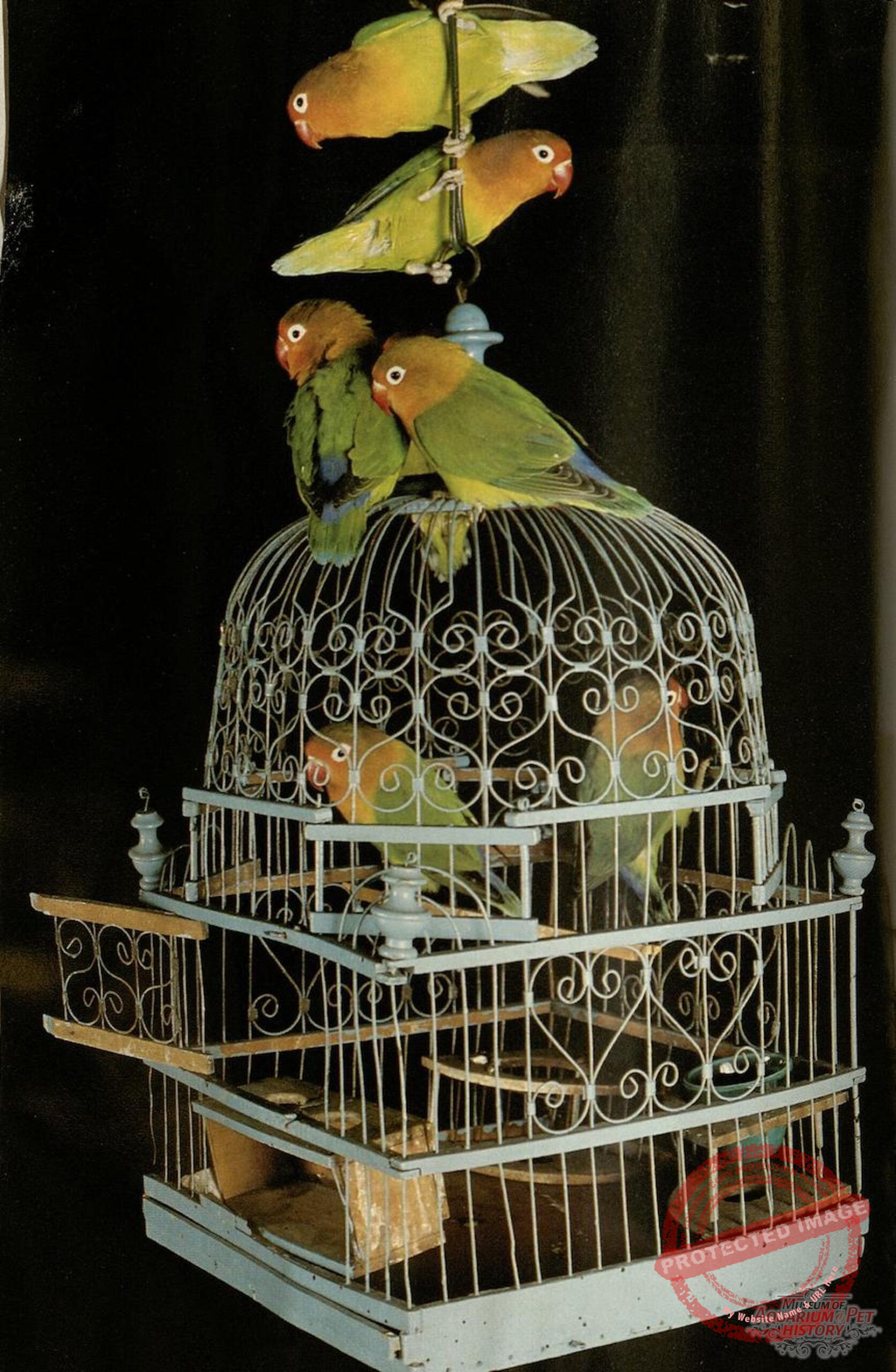
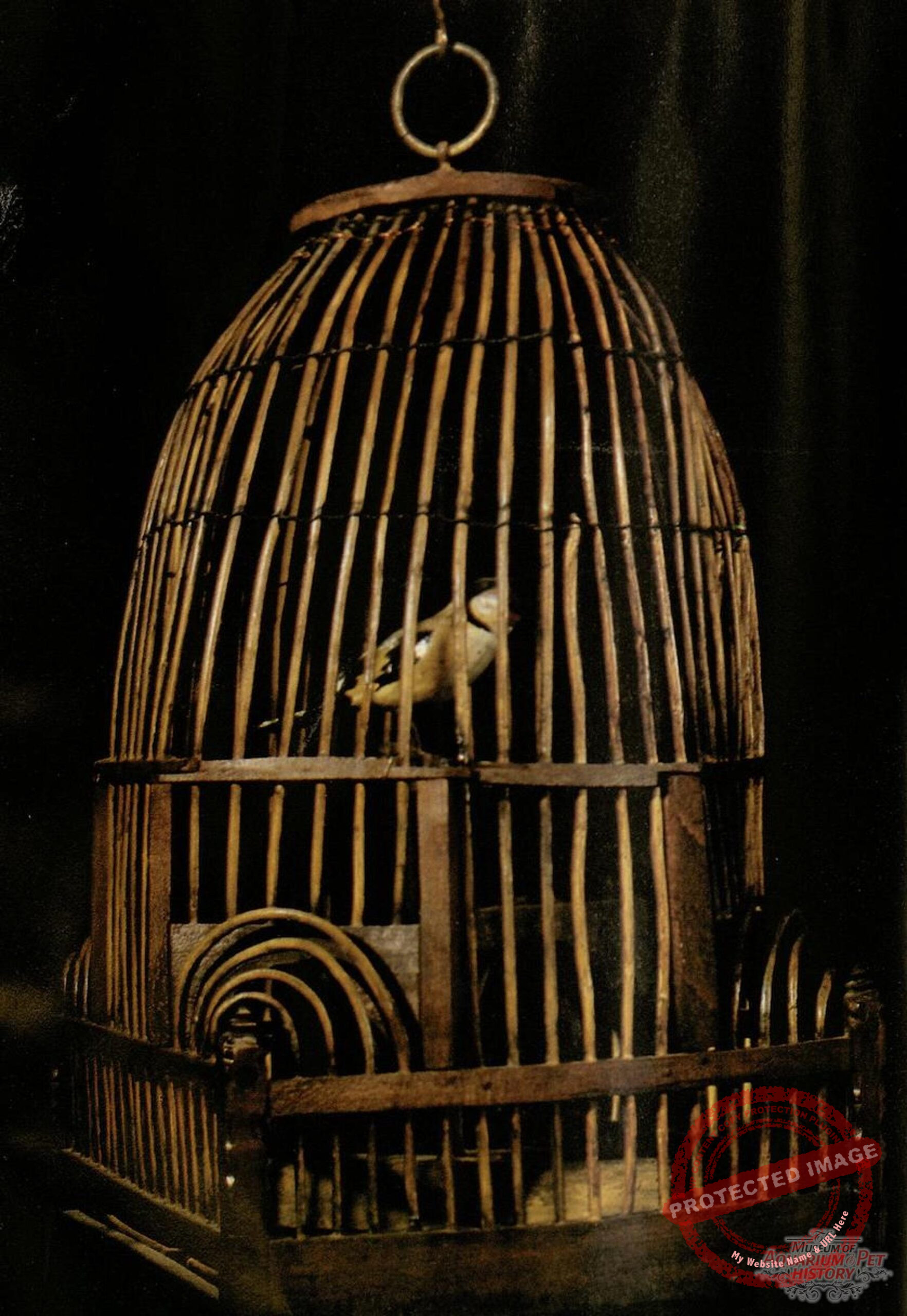
Floor and Hanging Bell Cage; Bergisches Land, 18th century. This cage is an example of careful and skillful rural craftsmanship. The entirely wooden structure is built on a square frame with an octagonal center section, above which a bell-shaped dome made of willow rods arches.
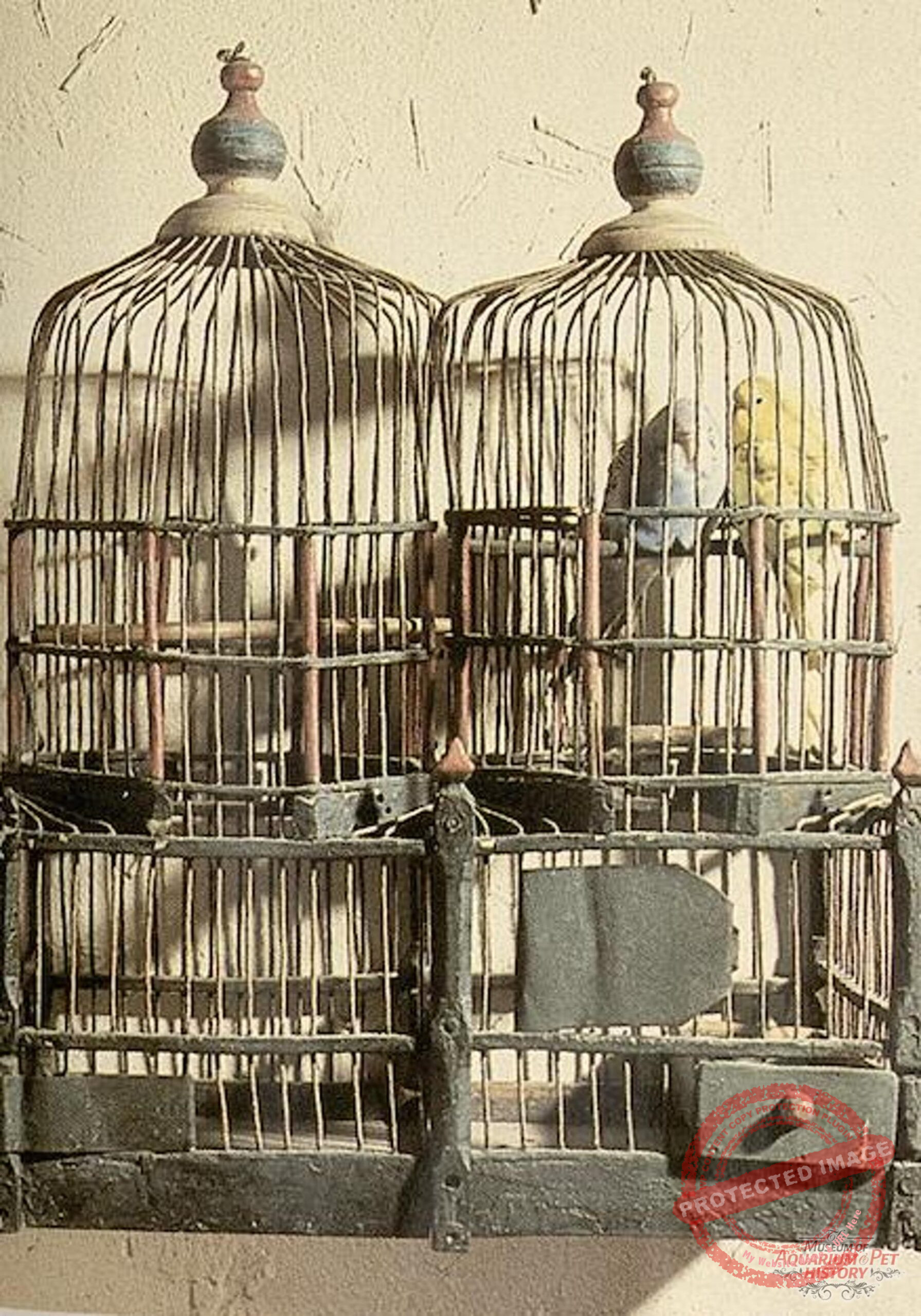
Floor cage, a combination of two bells over a barred box; Switzerland, around 1870.
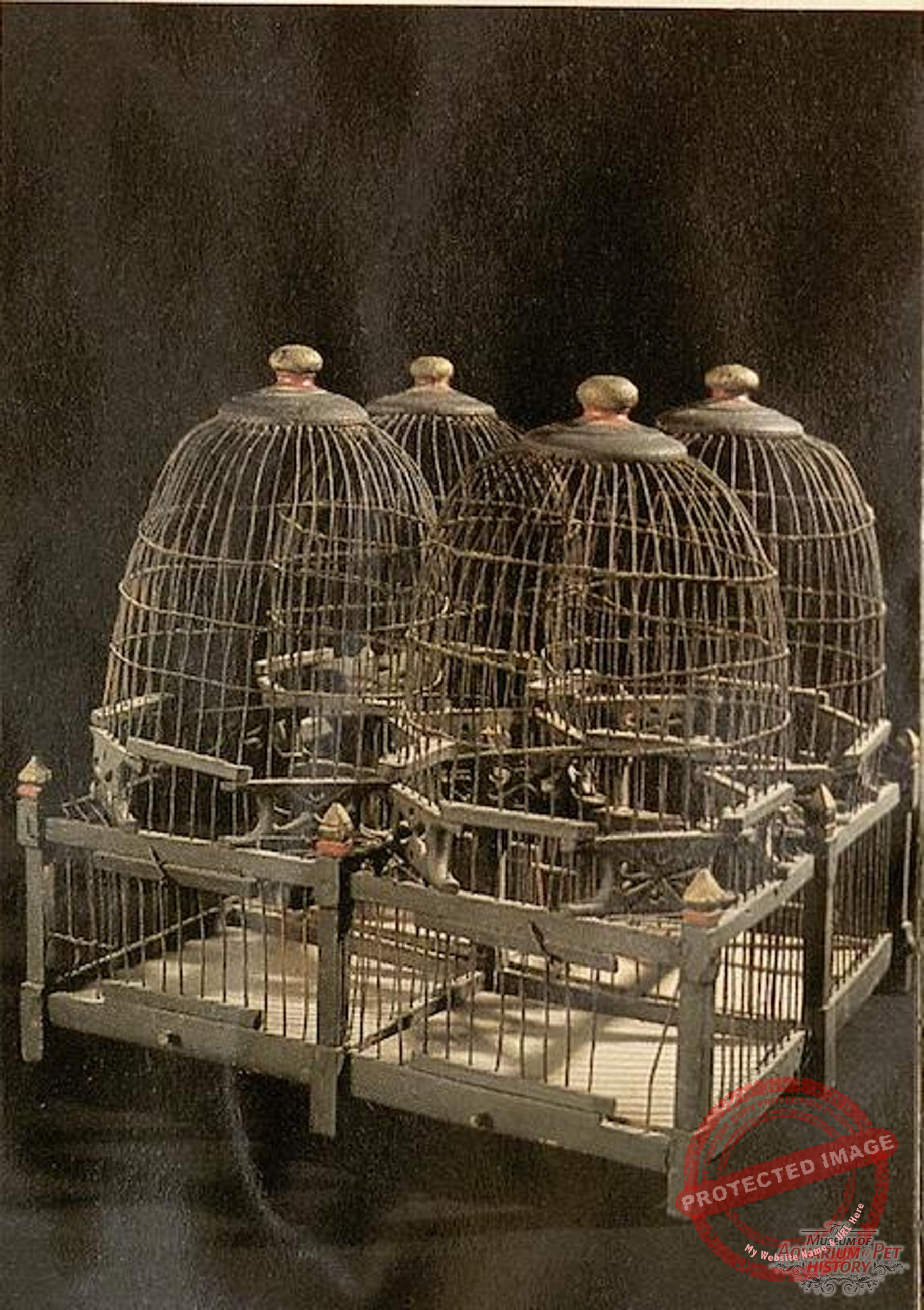
Floor cage; Switzerland, around 1870. The combination of four wire bells over a shared square base frame is decoratively appealing, but it also enlarges the interior space and may have provided the opportunity to gradually acclimate different birds to one another after initially keeping them in separate compartments.
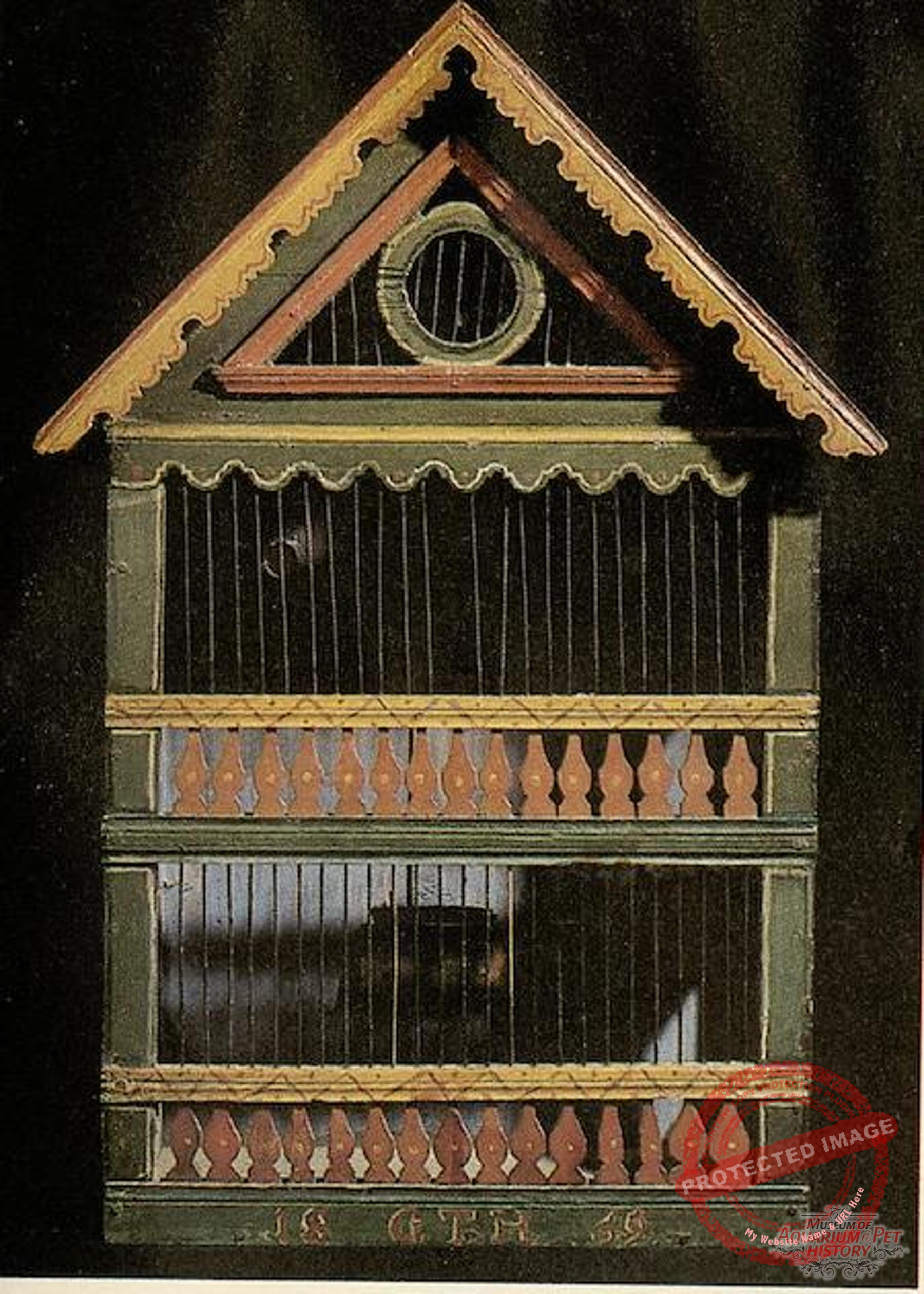
Wall cage; Austria, 1859.
Hanging and floor cage; Switzerland, 19th century. The combination of barred box and bell-shaped housing has taken many forms; in this case, the design transitions from a square base frame through a polygonal middle section into a rounded bell top.
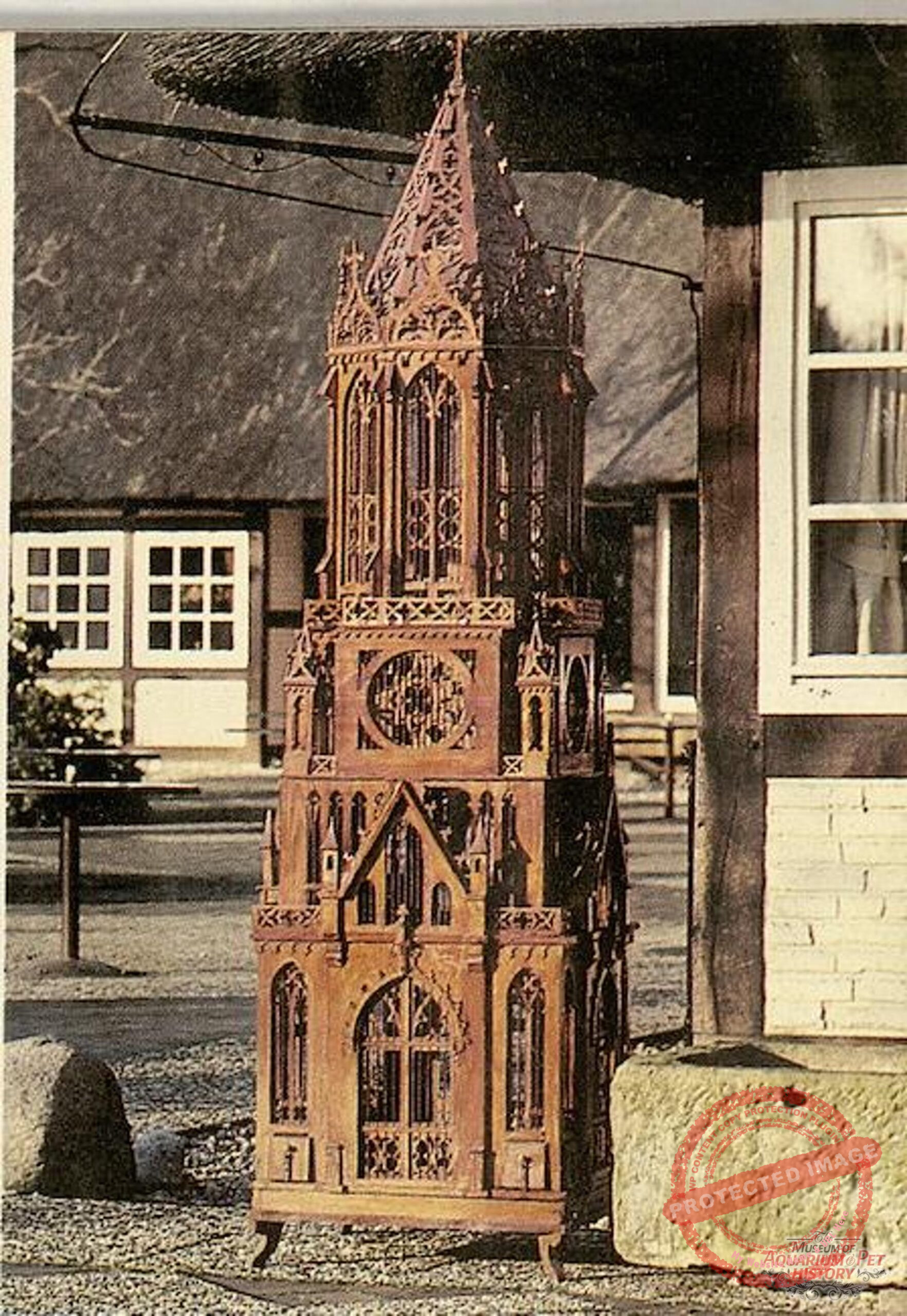
Miniature architecture modeled after the Ulm Minster tower; Germany, 1926–1928. Inspired by the concept of the birdhouse, human architectural forms have often been used as models for aviaries. This 240 cm tall structure is one such example, although it hardly meets the functional requirements of a proper bird enclosure.
This enthusiasm—particularly strong in Italy—became so widespread that by 1622 it was said that few princes could resist adding a uccelliera (aviary) to their collections of courtly luxuries.
In the final decades of the 16th century, the importation of rare exotic animals increased significantly. This surge was largely driven by the rise of lavish cabinets of curiosities—collections of natural wonders and artifacts—such as those assembled by the Neapolitan apothecary Ferrante Imperato, the Belgian collector Jacob Plateau, and Emperor Rudolf II (1552–1612), who also kept a private menagerie.
Further evidence is provided by paintings from the court painter Georg Hoefnagel (1542–1600) and his son Jacob (1575–1630). Most of the aforementioned rare birds arrived through Dutch intermediaries. The shrewd Dutch merchants quickly recognized the market potential, and the first returning ships already carried birds that were sold at considerable prices. For instance, the first living Moluccan lory is said to have cost 170 guilders, roughly equivalent to 20 talers17.
MOAPH17: Since both conversions align closely, it’s reasonable to conclude that the first living Moluccan lory cost roughly $8,000–$12,000
Illustrators of domestic life often included birdcages with exotic birds in their scenes. Most commonly shown are hanging bell-shaped cages with vertical bars and a square base, although there are also examples with both vertical and horizontal bar patterns.
Cages were typically placed under the ceiling, in the corners of living rooms, and often set into window arches and niches.
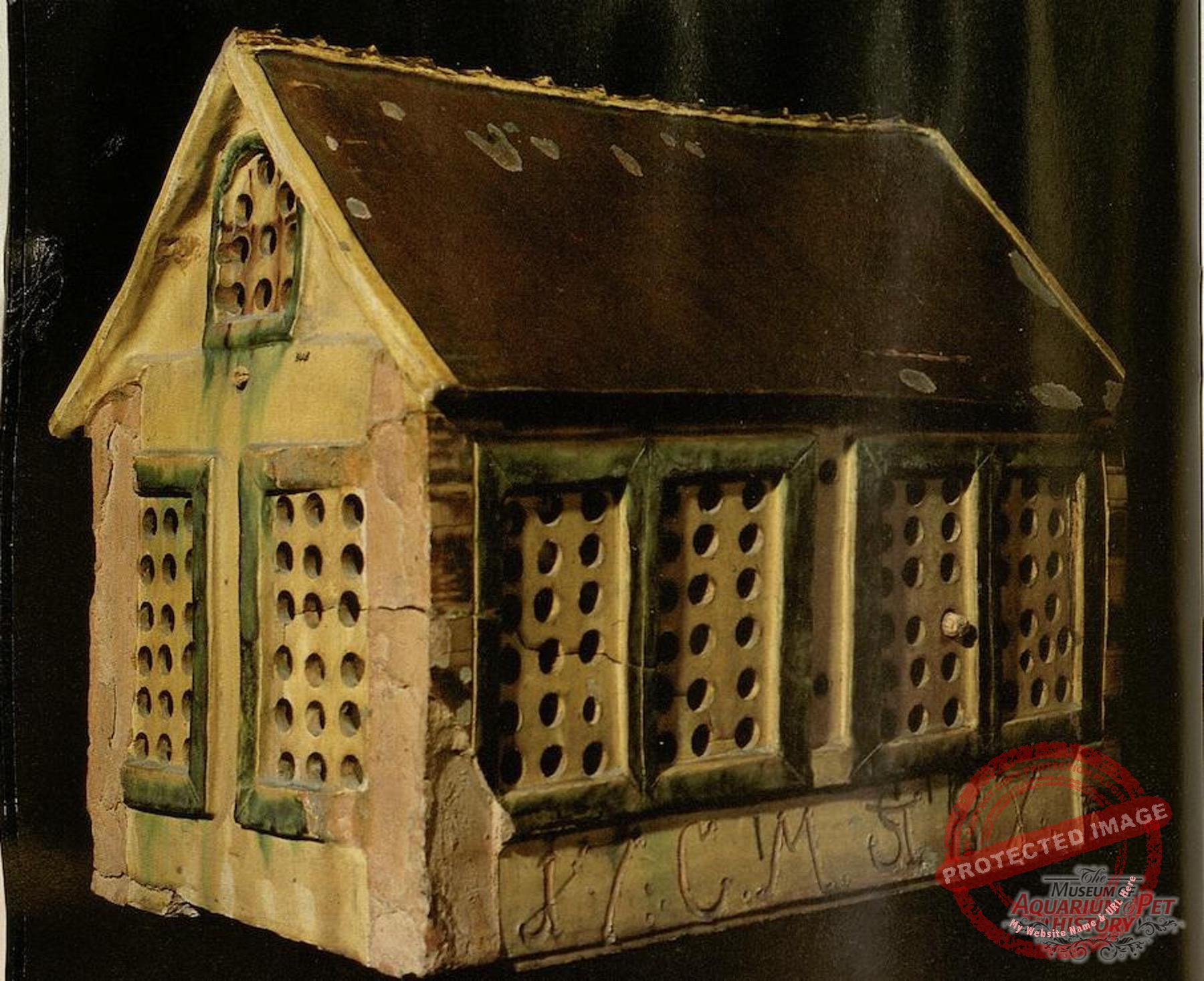
Birdhouse; Hesse, 1787. This cage, made of color-glazed clay, bears the year 1787 and the initials C M S T. The very rare piece concealed the bird from view, suggesting it was likely intended as a singing or nesting cage.
The Triumph of the Canary
The 18th century marked the triumph of the canary. As this bird grew increasingly popular, the design and structure of birdcages naturally evolved. Originally, the bird was named in Latin after its origin from the Canary Islands, and in German, the term “Zuckervögele” (little sugar bird) arose, inspired by its fondness for sugar and sweet foods. As early as 1600, a work published in Bologna discussed the green ancestors of today’s canaries.
Initially, keeping canaries was limited to the homes of the wealthy elite—it was a luxury due to the birds’ high mortality rates. As the canary became a decorative item, it even found a place on the side table of the lady of the house during receptions, as old family portraits show.
However, breeding of the “little sugar bird” didn’t initially occur in cages, since the Spaniards, who controlled the Canary Islands, strictly protected their monopoly by withholding female birds. Around the mid-17th century, a number of canaries escaped captivity after a transport shipwreck and settled on the island of Elba. From there, Italian breeders began to commercialize canary breeding.
In 1711, a book titled Nouveau Traité de Serins de Canaries by Monsieur Hervieux appeared in Avignon, dedicated exclusively to canary breeding, care, and housing. It included a detailed chapter on cages: Des cages et cabanes propres aux serins (On cages and houses suited for Canaries). A German translation followed in 1747, reflecting the growing interest in Canaries.
In a different section of the German translation, the author discusses birdcages more generally, noting:
“These types are now more widely known; still, a few words on them may not hurt.”
He goes on to describe the many forms cages could take:
“These birdcages, birdhouses, and enclosures are made in many ways. Some are like a wire ball, with a ring, as seen with parrots, crowned birds, and siskins. Some are half-round, arched; others long with three or four sections, as used for nightingales. Some are tall and narrow, with a small wooden platform in the middle, about the size of a double thaler or small plate, often with a double-layered cloth. Some cages are quite narrow, some open throughout and only enclosed by narrow slats. Some have perches even on the sides, and others are shaped like canopy beds with four columns surrounding them, featuring wide crossbars at the top and bottom, and a roof formed of a single wide plank.”
The observation that bird cages were becoming more mainstream seems confirmed by the fact that they were apparently standard fixtures in the interiors of contemporary homes. This is also shown by dollhouses of the time, which were faithful models of large residences complete with utility, storage, and living rooms, and often included birdcages in locations depicted in period interior scenes by painters and illustrators: hanging from the ceiling, bedside tables or on special stands, and even on small wall-mounted shelves.
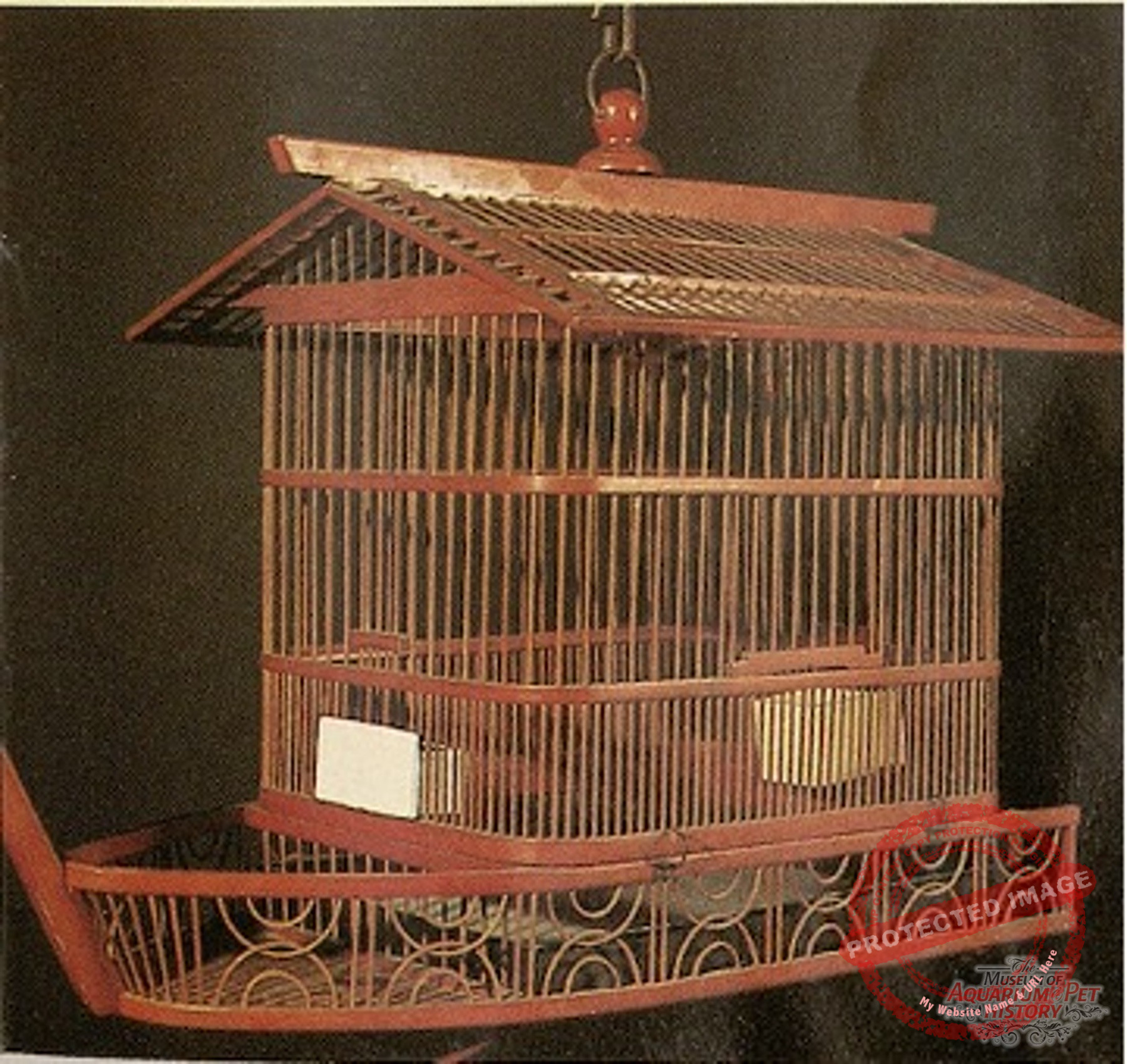
Floor and hanging cage, Java, around 1950. Asian birdcages are often characterized by simple elegance; in this case, the effect is further enhanced by the fact that the house is mounted on a ship-shaped base.
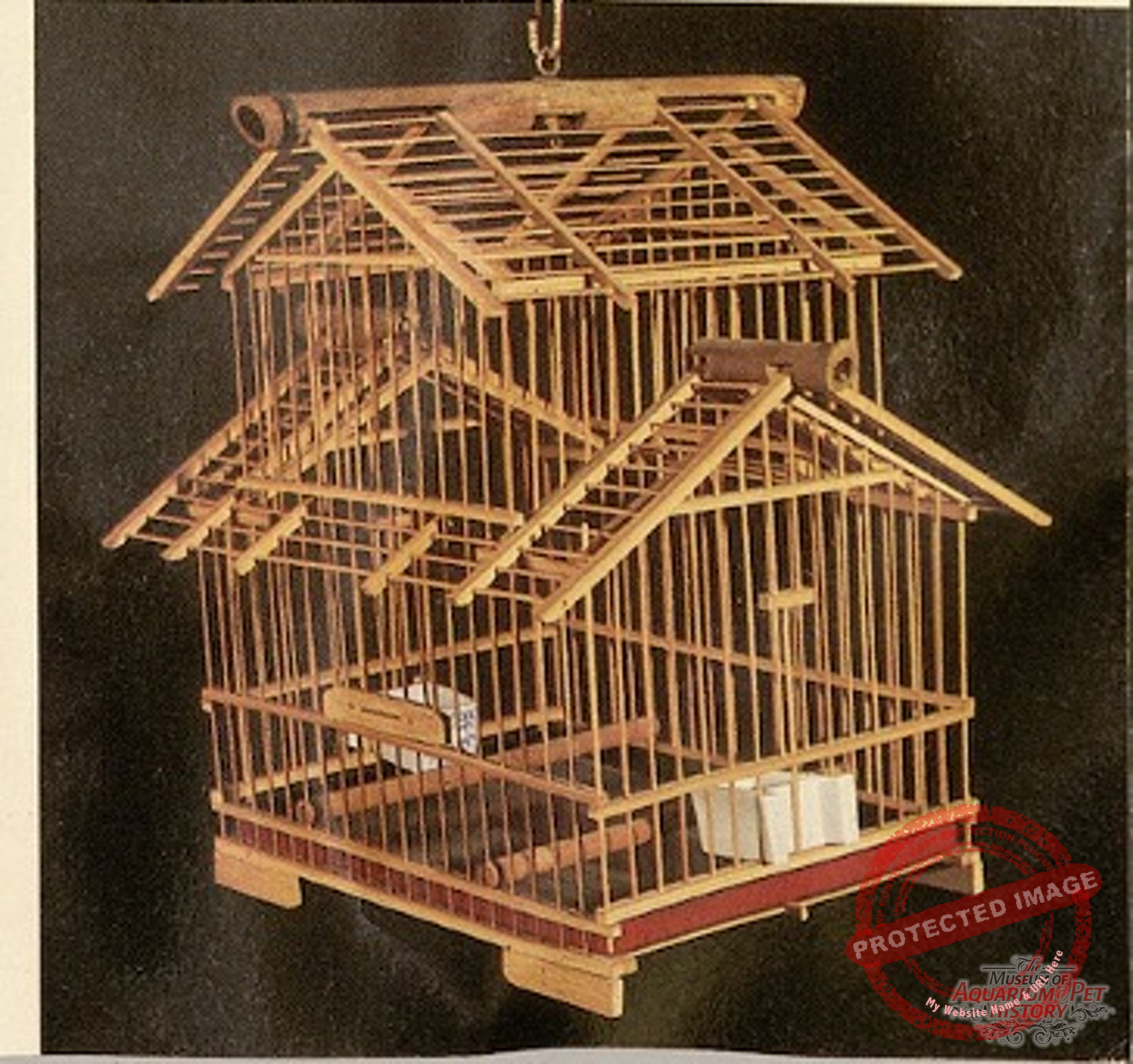
Birdhouse made of bamboo and wood; Japan, available on the market in 1970.
Birdhouse, Tirol. 1900
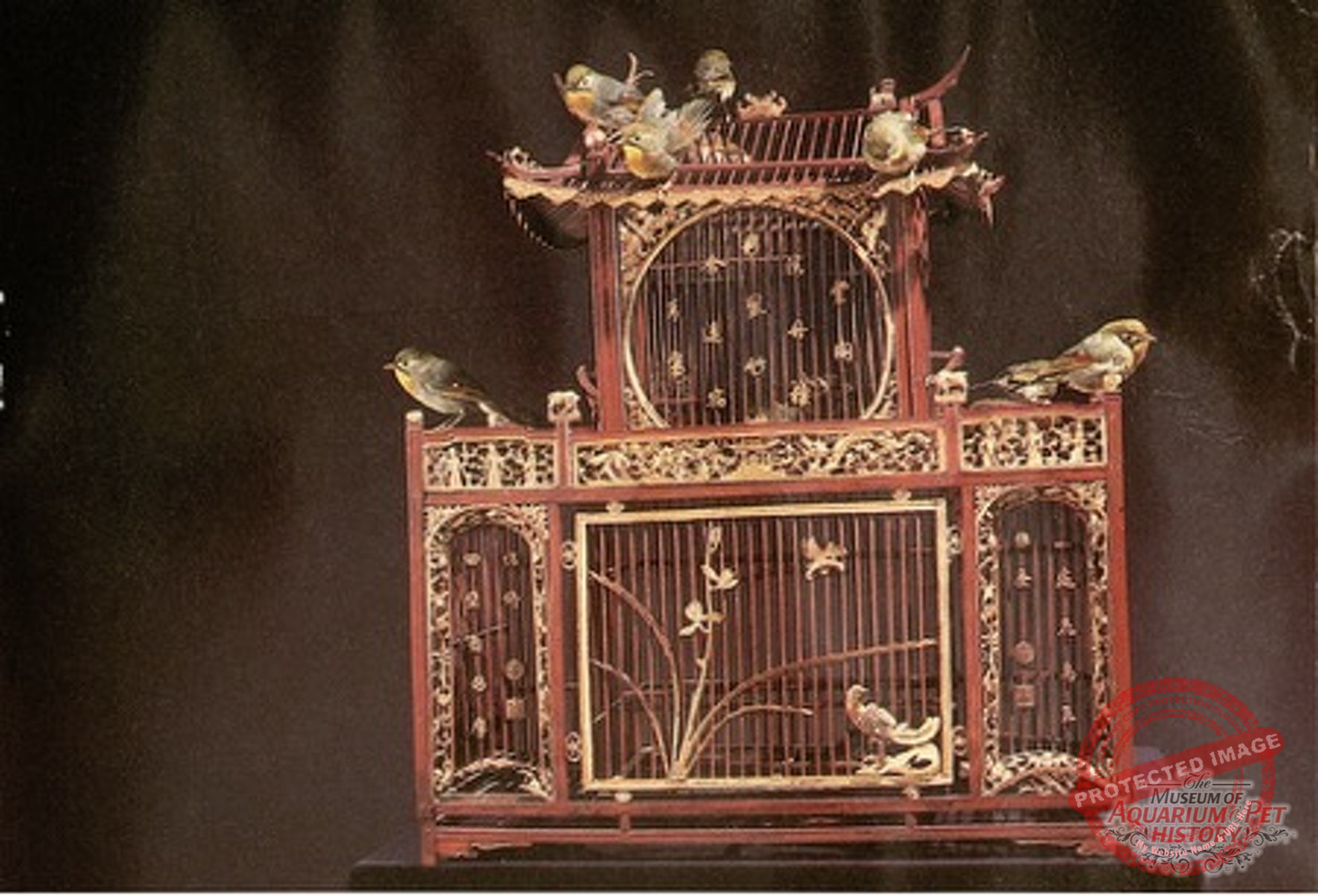
Birdhouse, China, 1900
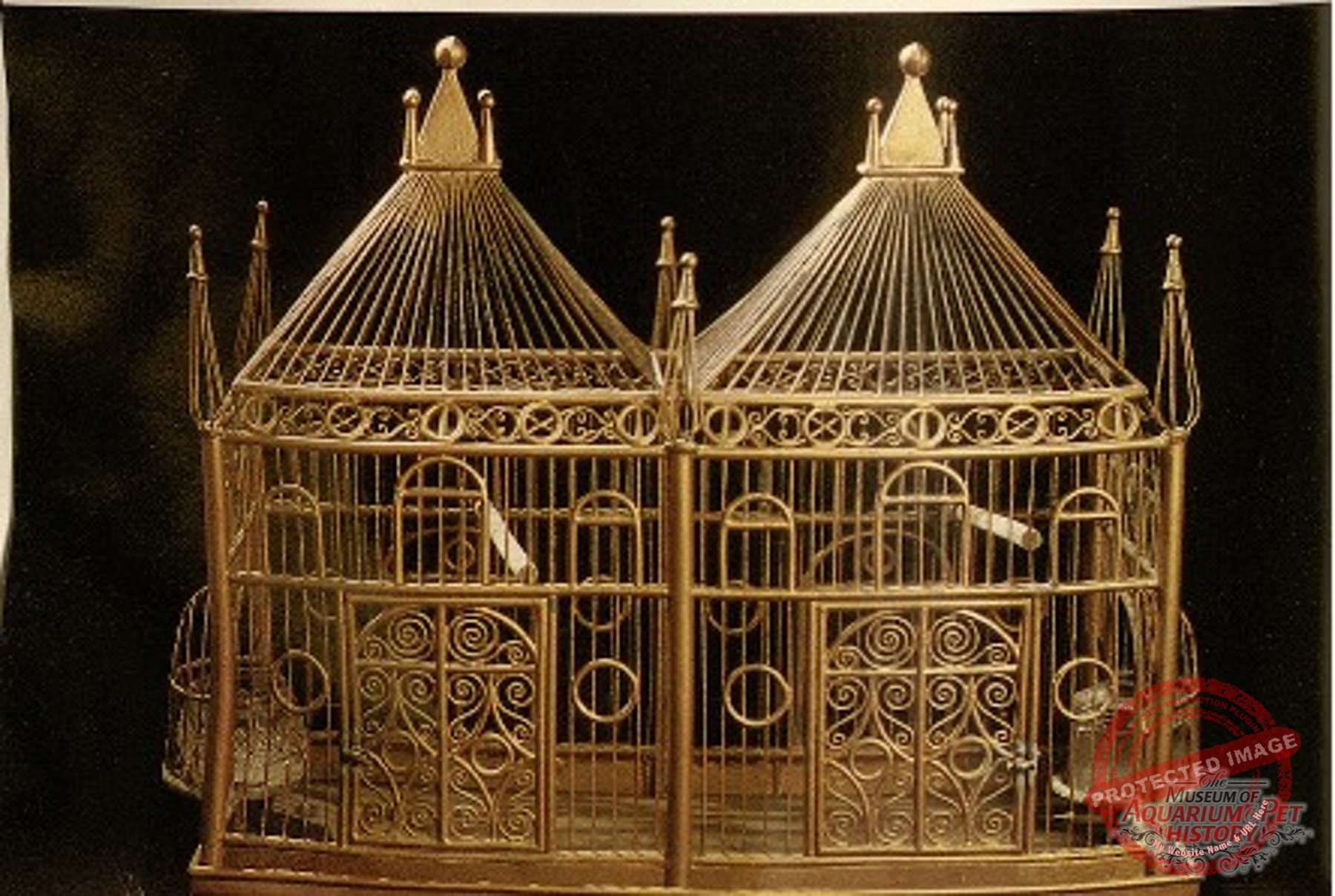
Wall and floor cage; Rhineland, around 1900. The carefully crafted cage, made of bronze wire with ornate barred doors and side-mounted food and water glasses, was designed and produced by a die-cutter.
Birdcages as Automata and Symbols
The housing of pet birds also captured the interest of automaton18 makers. The birds’ ability to sing, the splendor of their plumage19, and the creative potential of cage design inspired the construction of music boxes and flute clocks in the form of birdcages. These were often lavishly decorated, with the artificial birds inside housed in richly adorned enclosures, feathered attire, and intricate mechanisms and flute works gave them movement and voice. These automatons were especially popular in the 18th and 19th centuries as sought-after and purchased attractions.
MOAPH18: Automata are mechanical devices designed to mimic the movements and behaviors of living beings.
MOAPH19: Plumage refers to the layer of feathers that covers a bird’s body
In 18th-century art, the birdcage often carried symbolic meaning. It appears in the paintings of Jean-Antoine Watteau, Nicolas Lancret, and François Boucher, as well as in the porcelain figurines created by Johann Joachim Kaendler. These works typically show elegant scenes set in gardens or pastoral landscapes, with birds and cages used as important visual elements.
One example is the so-called ‘crinoline group’: a young woman kisses a gentleman who is seated on a birdcage, or a shepherd offers a bird to a shepherdess, who responds by pulling back an empty birdcage. In such scenes, the bird and its cage serve as metaphors for romantic or erotic themes.
The cages shown in these artworks are usually rectangular with long vertical bars. Some are bell-shaped—like those designed by Kaendler—while others have flat roofs, as seen in many paintings. Even small details, such as sliding doors and food or water dishes, are carefully included, reflecting the attention to realism and symbolism in these representations.
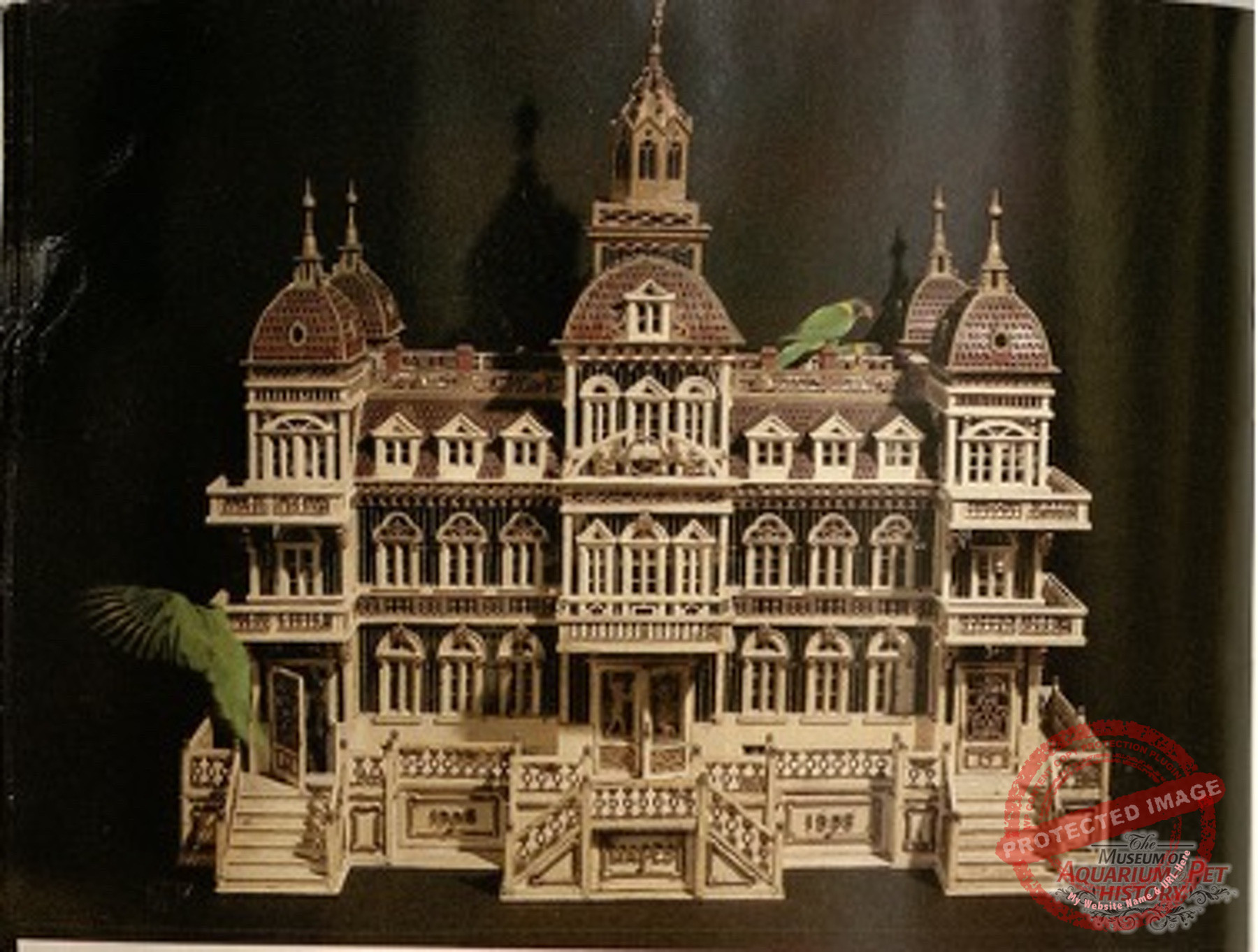
Miniature architecture modeled after the Hotel Pupp in Karlsbad/Czechoslovakia; 1905–1908. This detailed model, identifiable as a birdcage by its barred door and window openings along with feeding and cleaning features, stands on a base of 125 × 58 cm and reaches up to 100 cm in height.
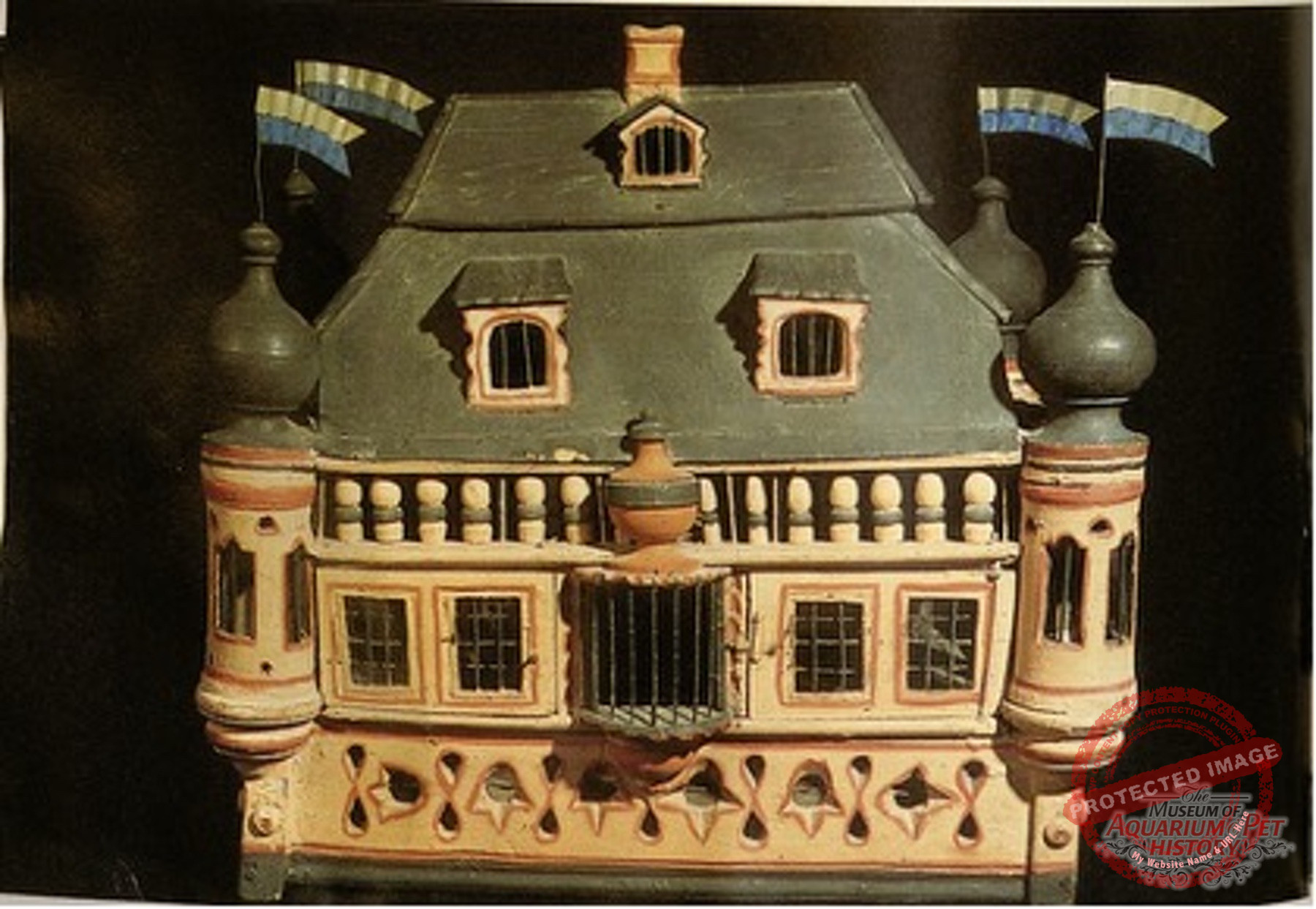
Birdhouse, allegedly modeled after a Franconian castle, early 19th century.
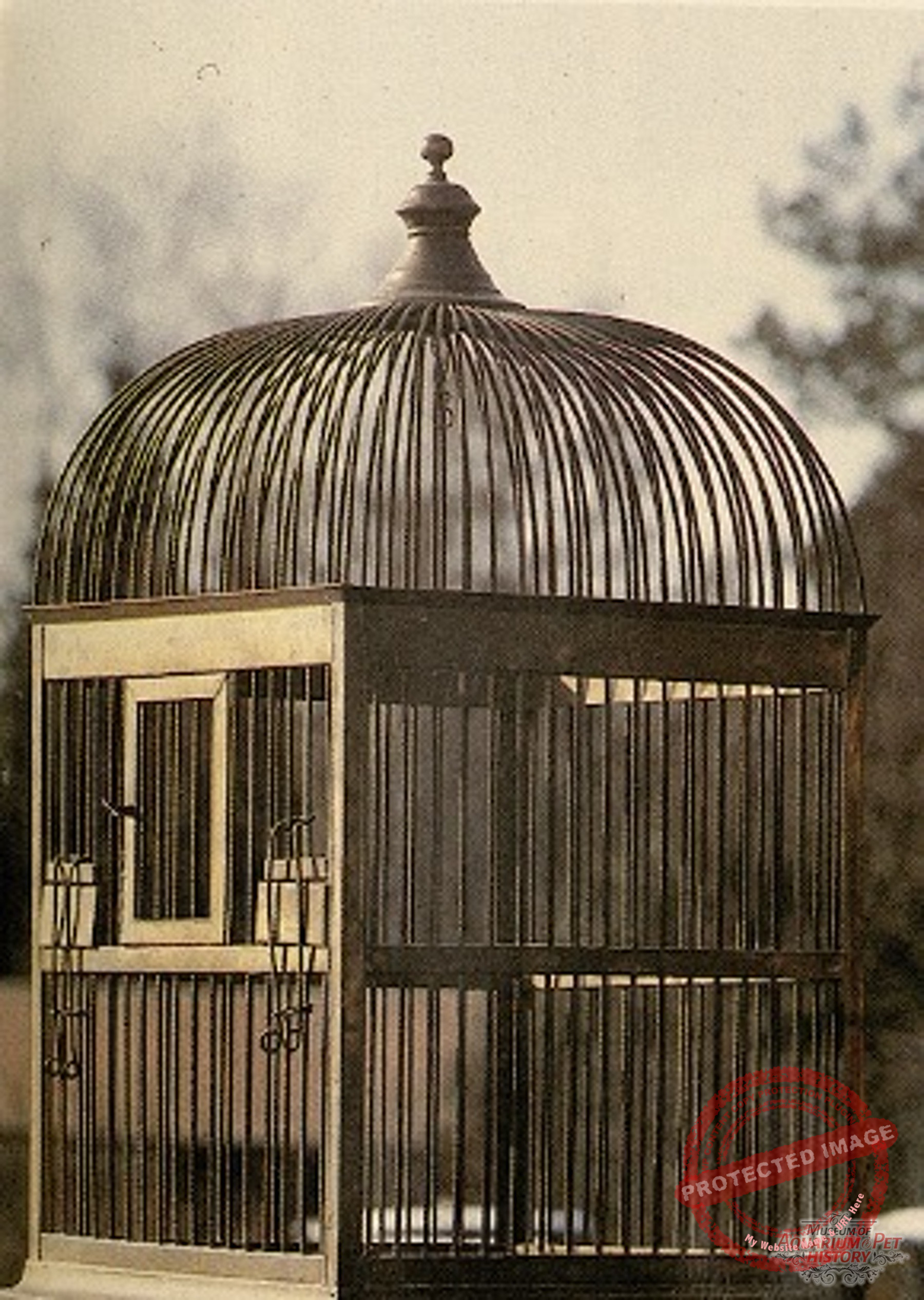
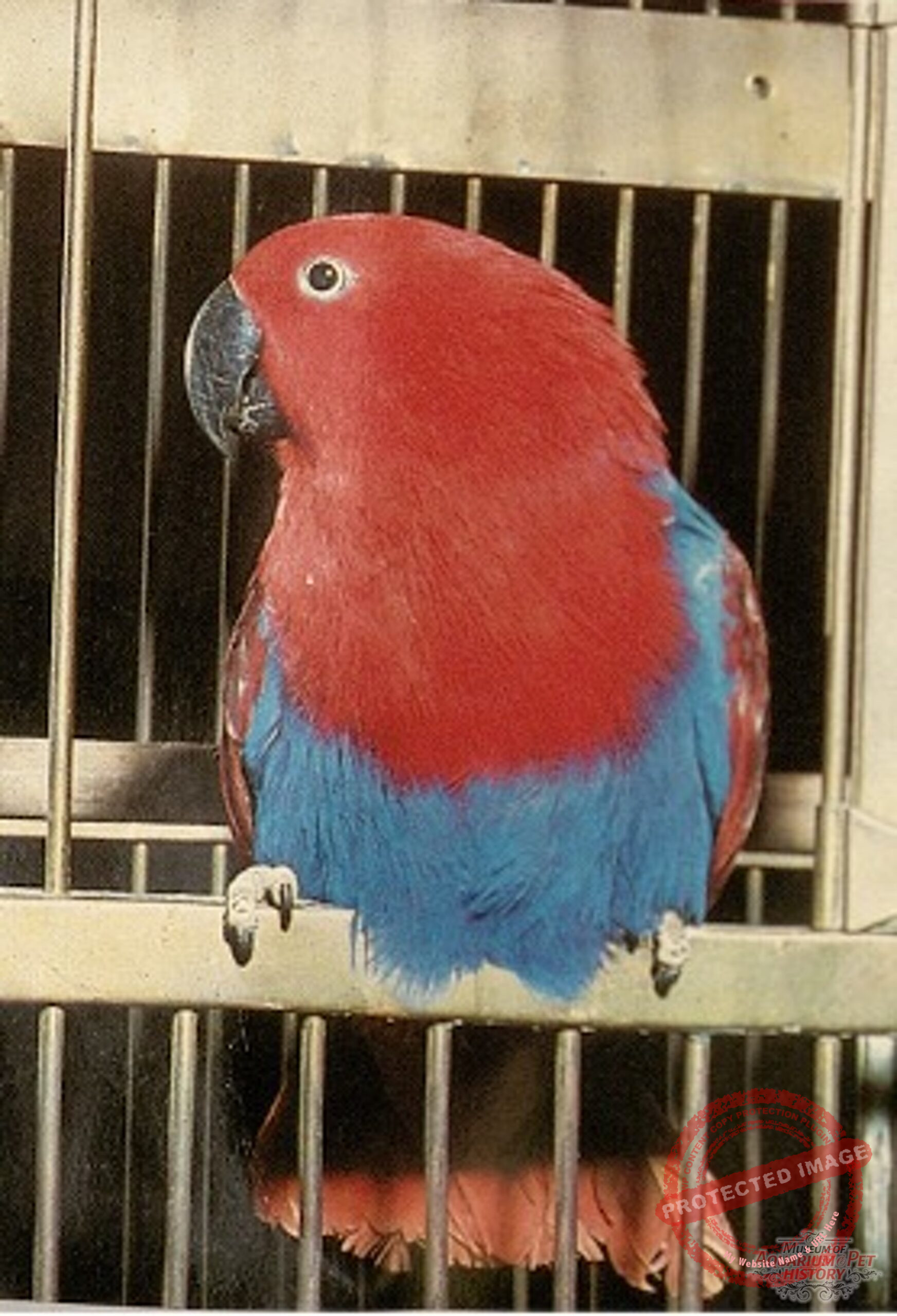
Floor cage for a parrot; Northern Germany, around 1870.
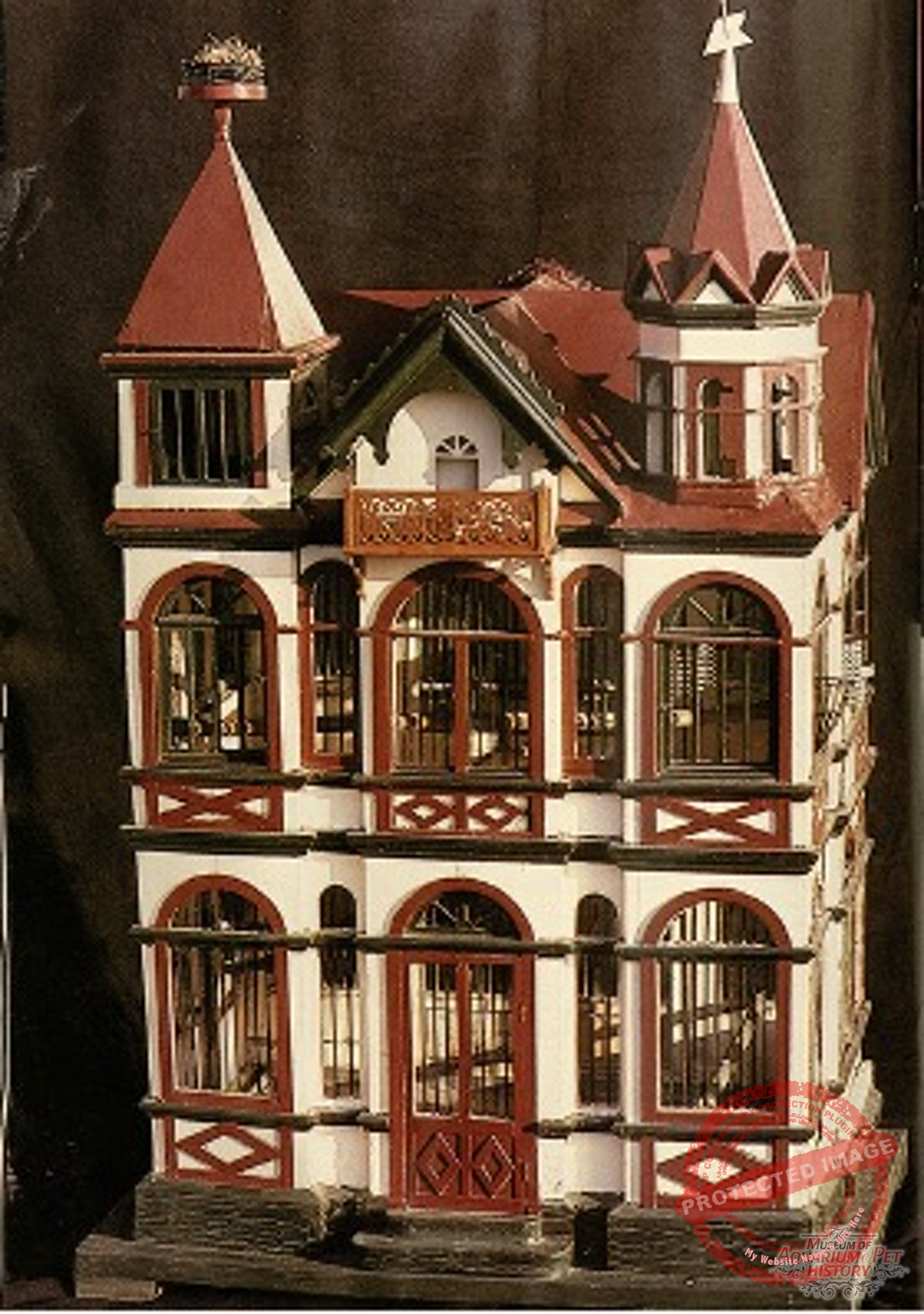
Miniature architecture in the style of a country villa; Southern Germany, around 1900. While the exterior features architectural details of a human house (towers with stork nests or weather vanes, gables, balconies, cornices, windows, and doors), the interior is a single room equipped with perches and feeding drums for bird keeping. The house has a height of 110 cm.
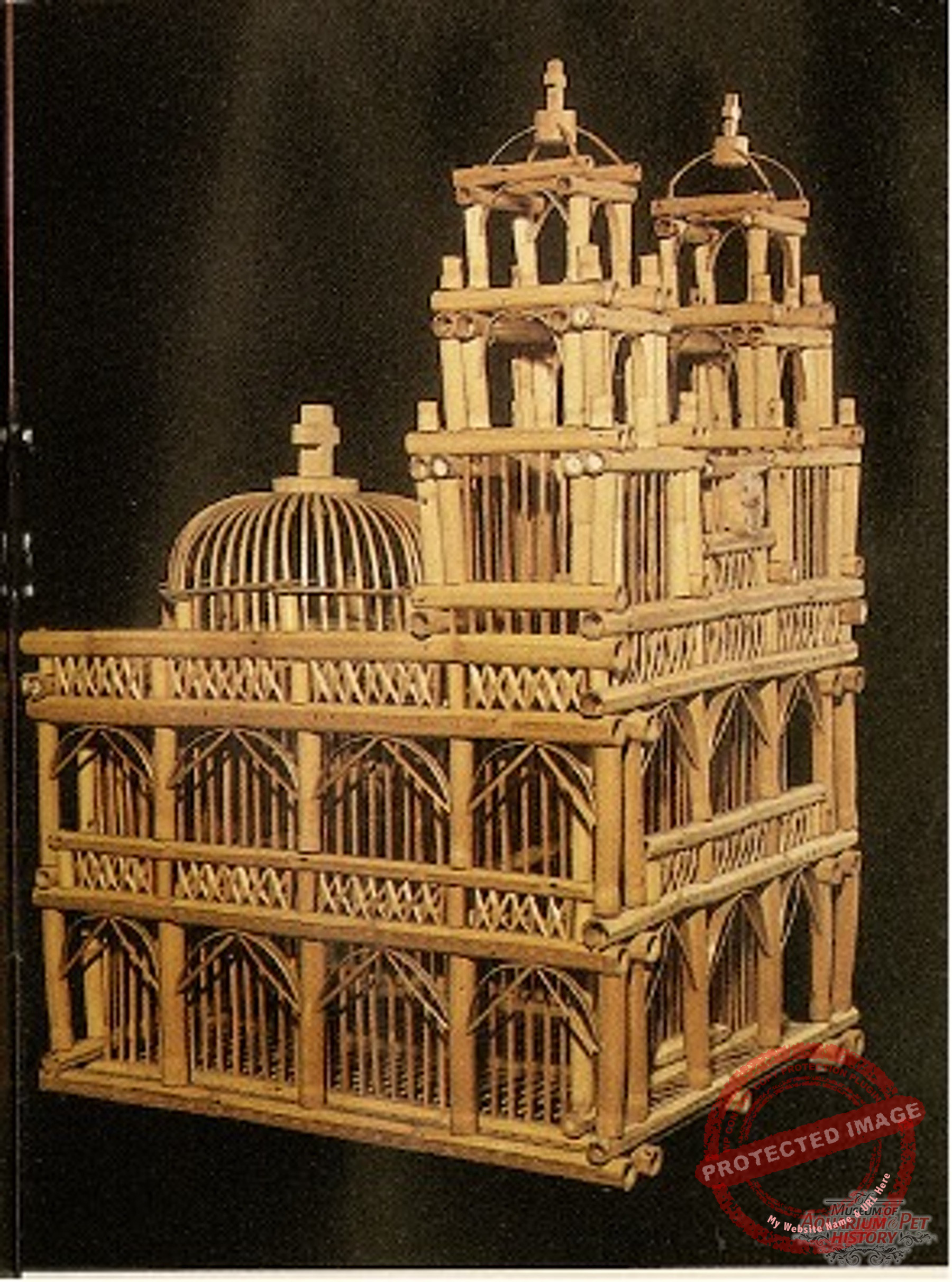
Birdhouse modeled after the Cathedral of Mexico City; around 1960.
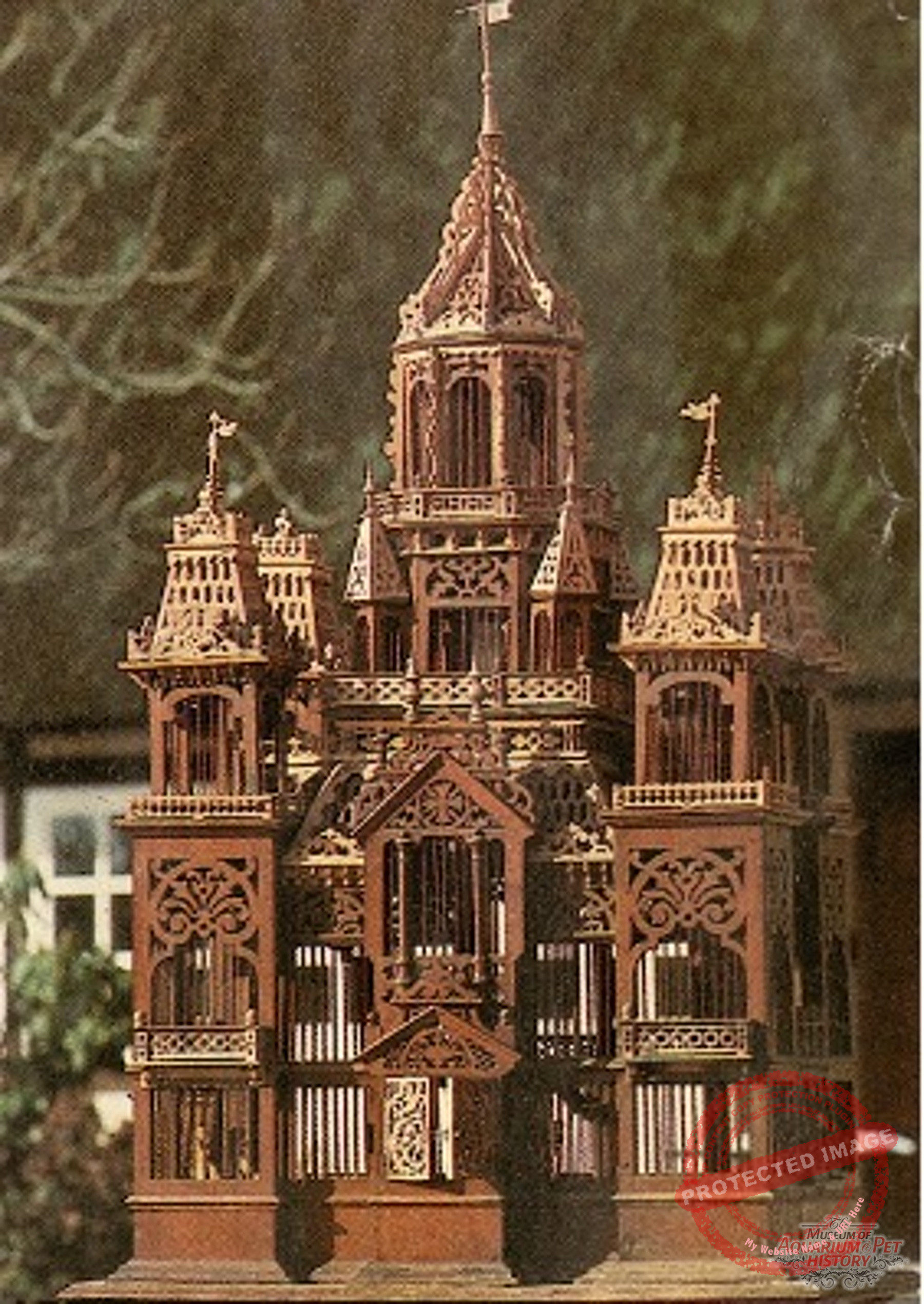
Miniature architecture; Southern Germany, around 1890.
The Birdcage in the Lexicon
By the mid-18th century, public interest in pet birds had grown so much that George Heinrich Zincken devoted significant attention to the subject of birdcages in his General Economic Lexicon, published in Leipzig in 1753. His entry goes far beyond a simple definition—“birdcage, cage, aviary, birdhouse, is a small enclosure made of wire or wood”—and instead offers a detailed discussion of the various cage types available at the time. He also provides advice on how to choose the appropriate cage based on the specific needs of each bird species.
Interestingly, the types of cages Zincken describes closely mirror those found in an earlier work translated from a booklet by Hervieux20,
“Bird cages or little bird houses are made in all sorts of ways. Some are round, like a ball made of wire mesh, and have an iron ring—these are for parrots, greenfinches, or hook-billed birds, siskins, and goldfinches. Some are half-round and arched, others long; some include jumping spaces, as for nightingales; some are wide and tall… others are very narrow, like those for siskins and similar birds.”
MOAPH20: Nicolas Hervieux de Chanteloup was a 17th- and early 18th-century French aviculturist whose manual Nouveau traité des serins de Canarie (New Treatise on Canary Birds), first published in 1709, became an influential guide on bird breeding and cage construction. His work was widely translated and disseminated across Europe.
Starting in the early 19th century, a wide variety of designs emerged that reflected the period’s fascination with historical styles. While the true bird enthusiast focused on practical improvements to tried-and-tested designs, the bourgeois desire for play and ornamentation created houses, castles, towers, and palaces in all possible variations—some with bay windows, verandas, galleries, and niches—intended for the unfortunate occupants, but serving as anything but proper bird homes.
These distortions were quickly condemned by breeders and enthusiasts and cited in textbooks as cautionary examples. The opinion of Alfred Brehm may have spoken for many when he wrote in 1867:
“A poorly designed cage is a dungeon; a well-furnished one a home for the pet bird”
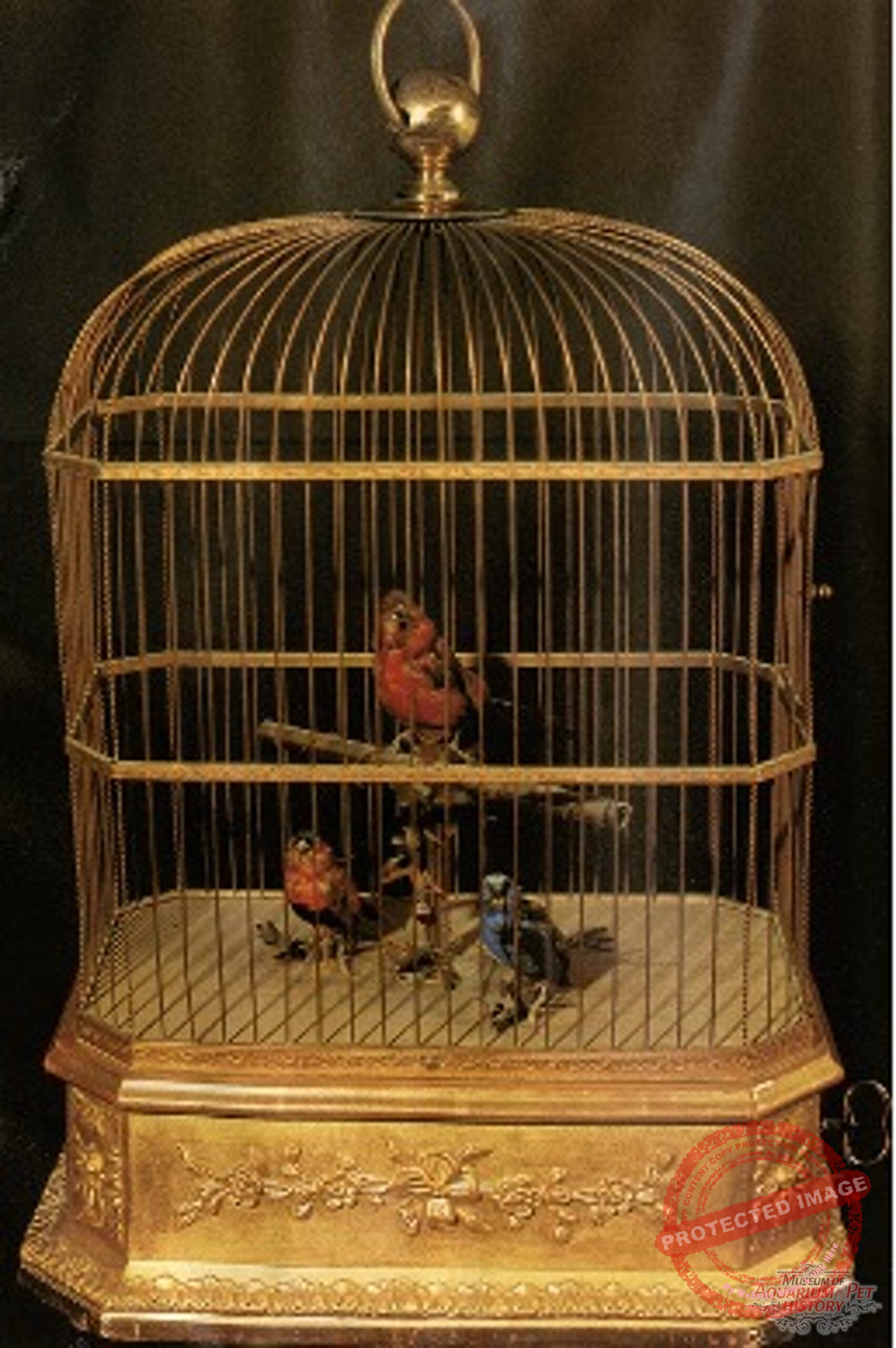
Birdsong Automaton; France, around 1800. In the gold-bronzed base is a clockwork-driven mechanism that gives voice and movement to the three artificial birds in the cage: they turn their heads during their song and move their tails and wings.
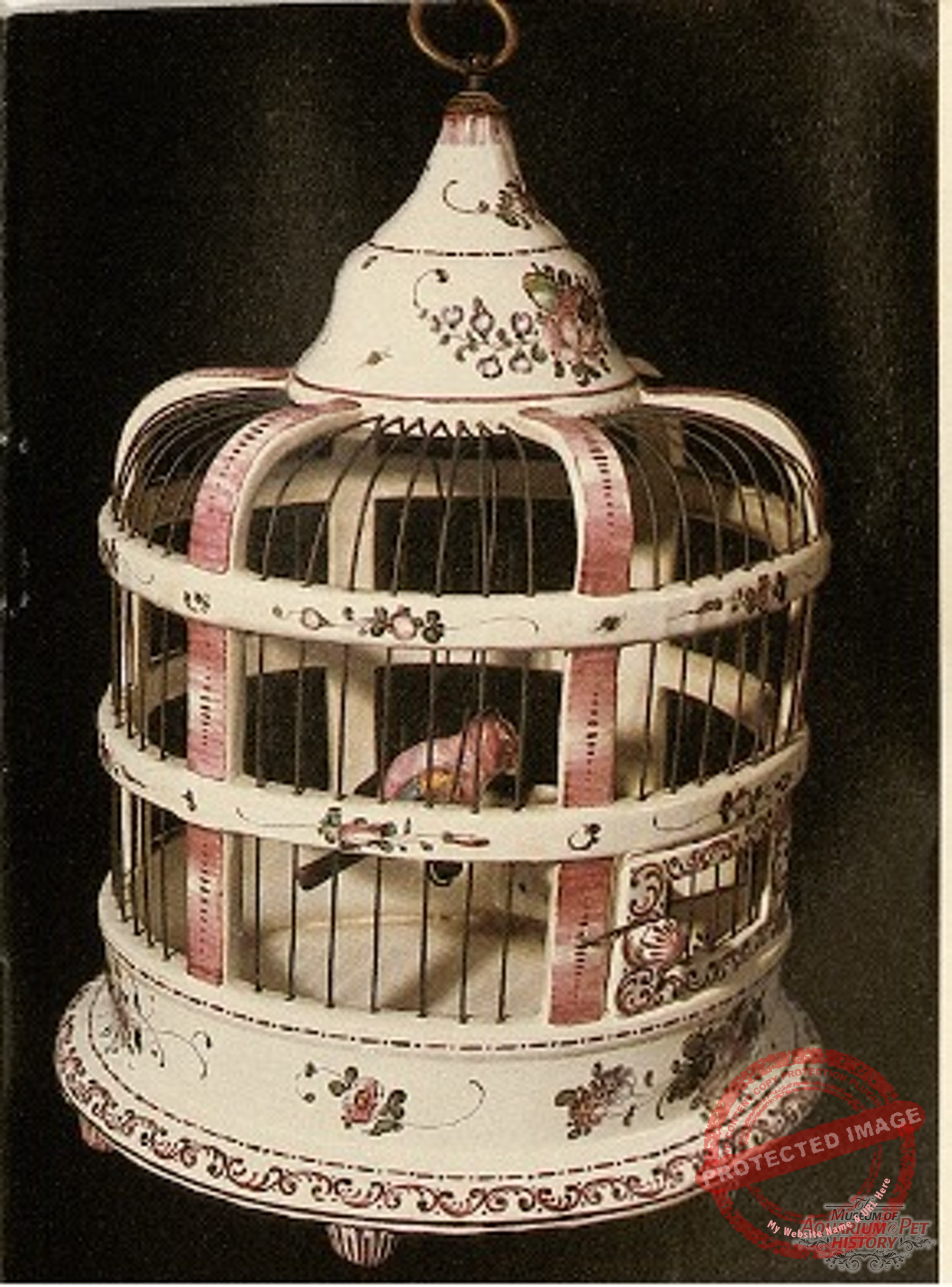
Standing and Hanging Bell; a replica of an original from the 18th century. Bird Cages made of ceramic are almost always decorative objects due to their ornamental potential, often including a modeled bird inside, as is the case here.
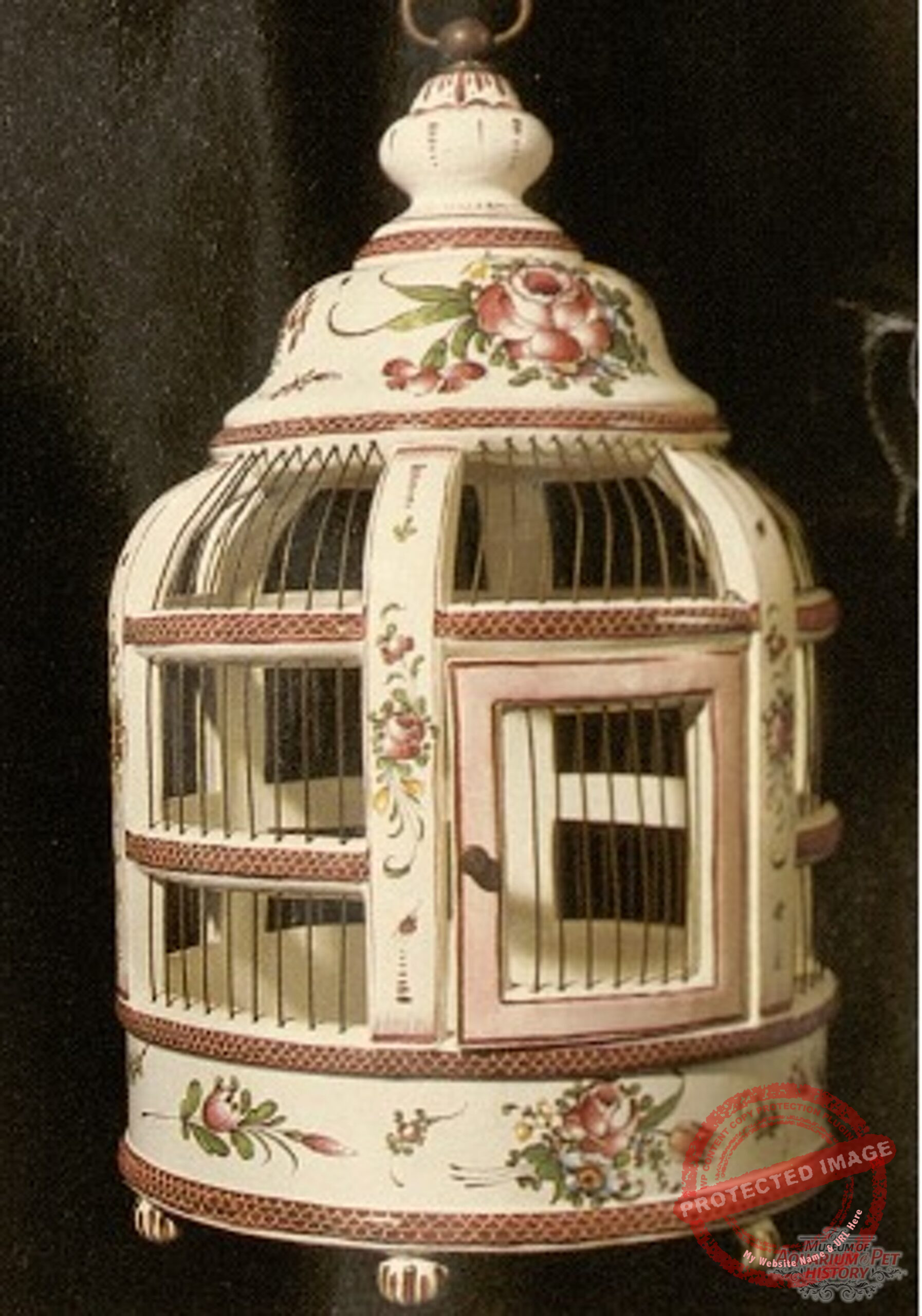
Standing and Hanging Bell; replica of an original from the 18th century. Faïence, manufactured by Massou Frères, Desvres/France.
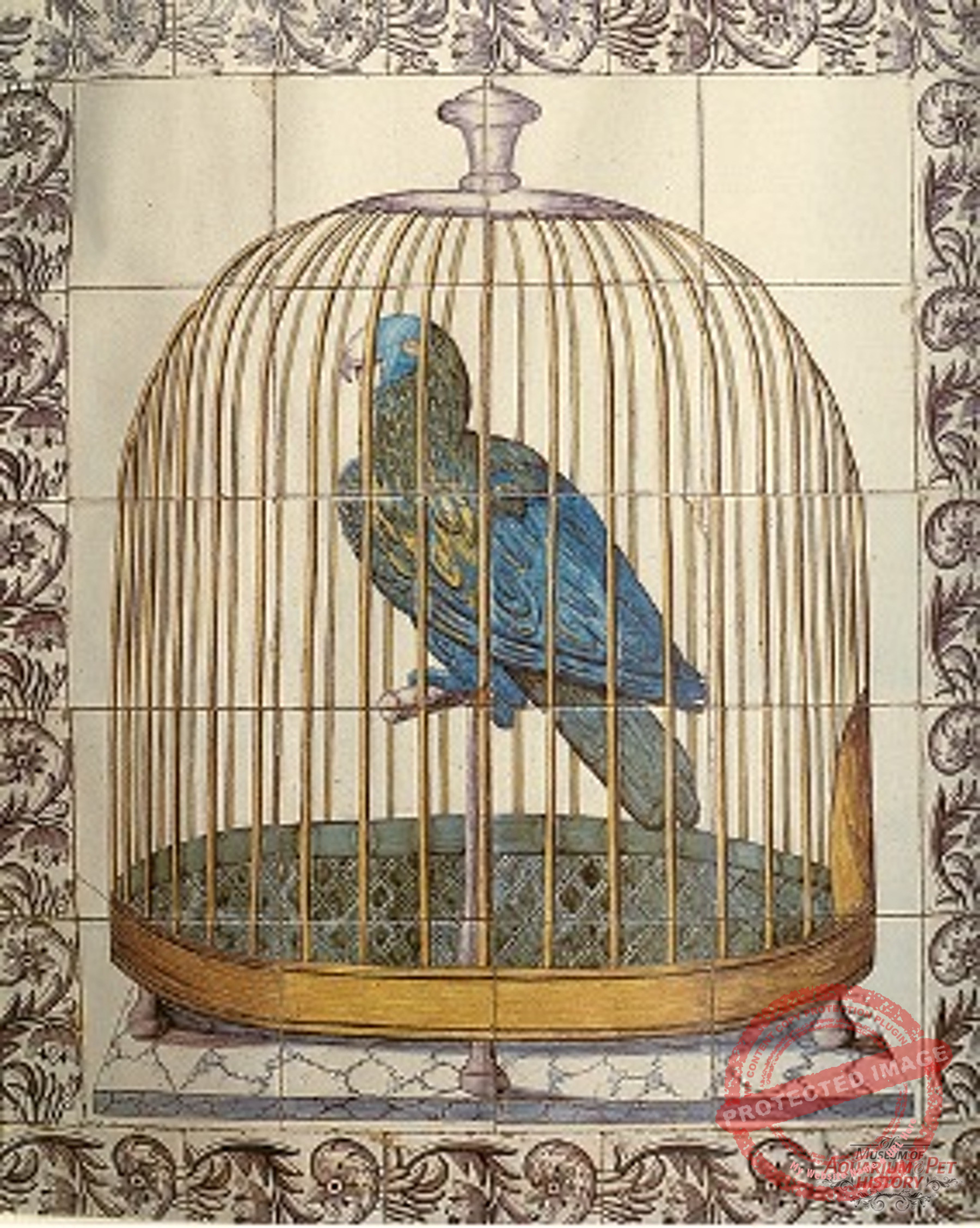
Parrot in a Cage; Tile Panel, Netherlands, 17th/18th century. This image of a parrot in a bell-shaped cage is composed of forty individual tiles. The enclosure is a standing cage with four rounded feet, vertical bars, and a side door.
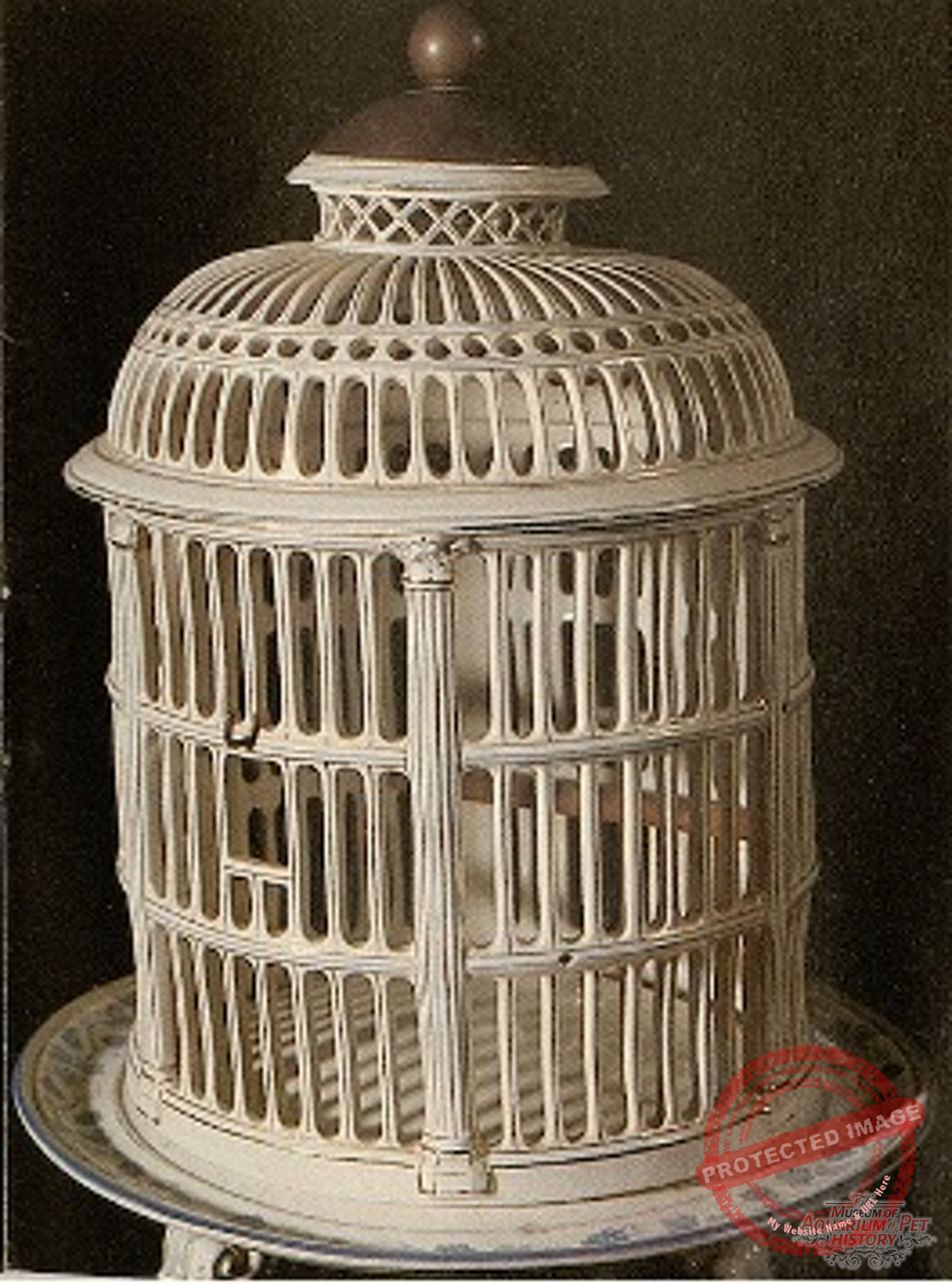
Standing Bell; Northern Germany, 1820. This porcelain cage, for which no manufacturer’s mark provides information about its origin, appears to have actually been used for keeping birds.
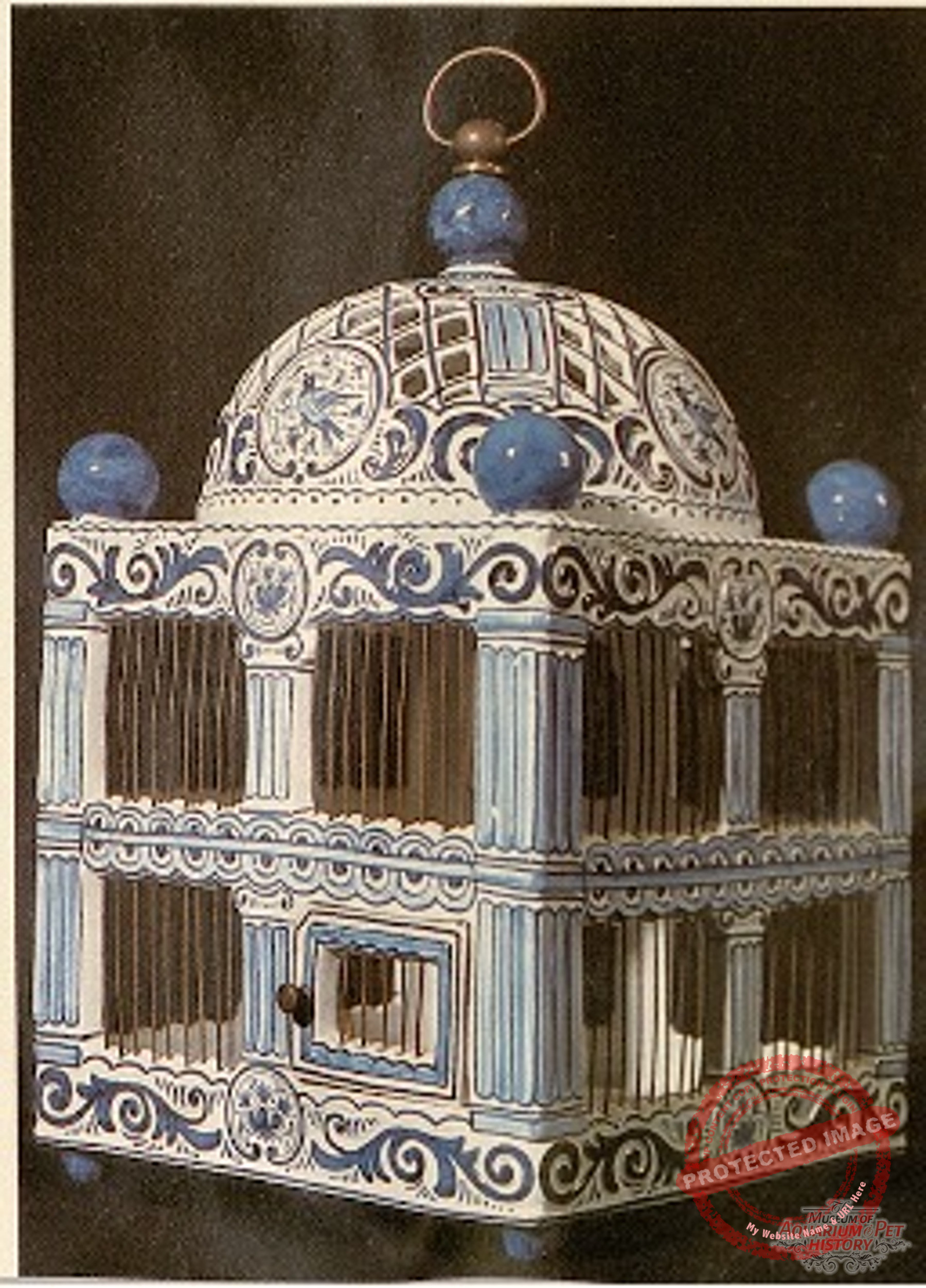
Standing and Hanging Box; a replica of an original from the 18th century. Faience, manufactured by Masse Frères, Desvres/France.
19th Century and Present
The types that recur again and again in the diversity of forms are the well-known hanging bells and standing or hanging boxes, produced in various styles—sometimes rich and magnificent, sometimes poor and simple, sometimes carved and painted, sometimes adorned with metal fittings or ornaments, and occasionally assembled in an amateurish way from wood, wire, and sheet metal.
Alongside the ever-growing supply of factory-made goods, contemporary lexicons began to discuss birdcages in great detail. A distinction was made, for example, between cages made by unskilled persons, carpenters, and basket makers as well as those built by professional wire workers. The dimensions and furnishings were described with great precision, providing wide audiences with guidance and inspiration for keeping pet birds and for building or purchasing birdcages.
The basic form of the birdcage has remained remarkably consistent over the centuries. While certain changes have reflected advances in bird care and evolving standards for proper bird keeping, the design has generally resisted trends in architecture and interior decoration—though there are exceptions. This simplicity allowed the birdcage to take on many forms: sometimes it became a lavish aviary, other times a modest and affordable object.
As bird keeping evolved—from a princely pastime to a widespread hobby—birdcages appeared in many styles. In some settings, they served as decorative showpieces; in others, they were purely functional. They could resemble miniature architectural structures, complete with battlements and turrets, or take the form of a plain wire box.
Regardless of form or setting, the birdcage remains a symbol of an age-old human fascination. It stands as both a practical tool and a charming artifact of natural and cultural history.
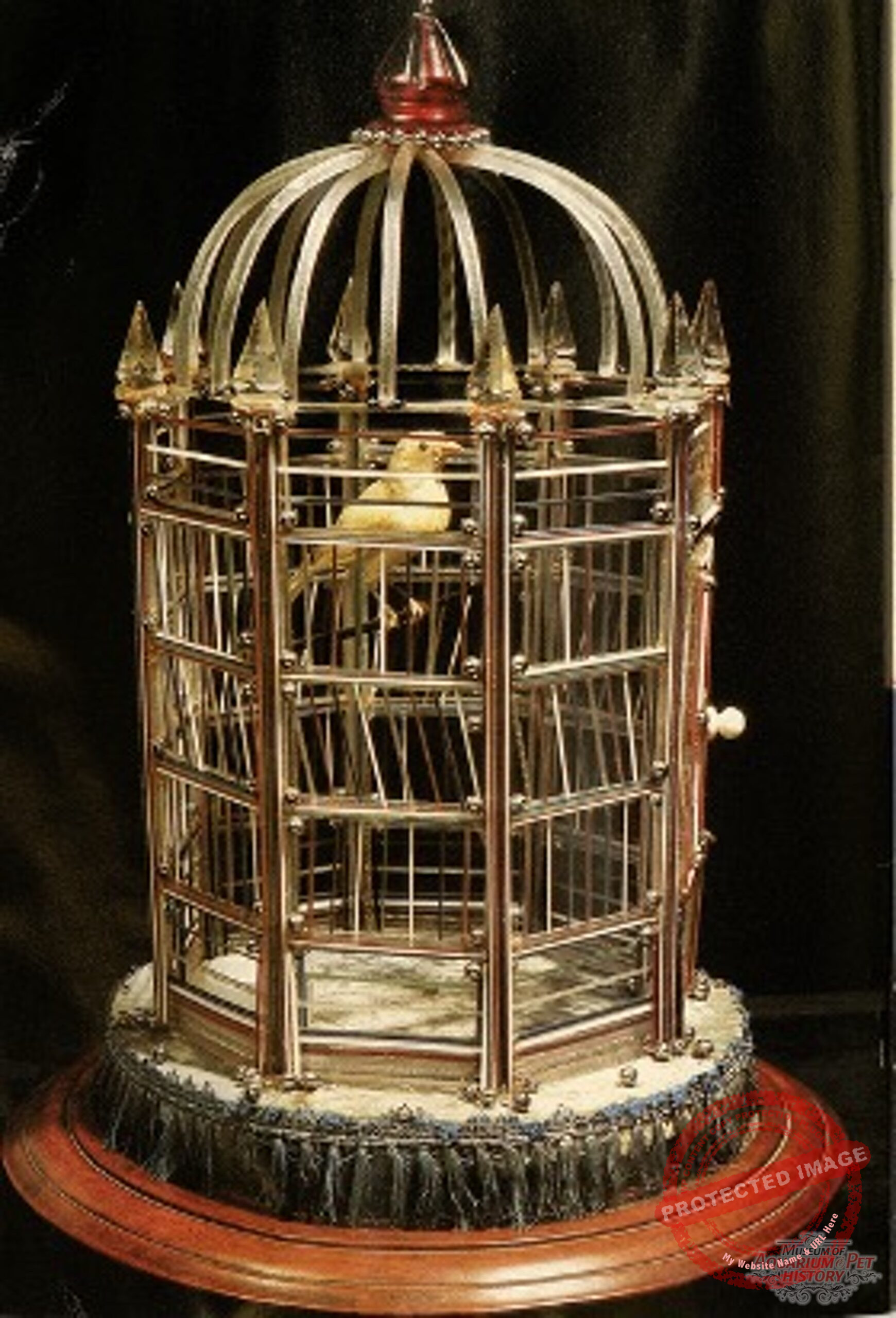
Display Cage; Germany, 1850. The cylindrical base, mounted on a polished wooden plate and covered with blue velvet, supports a cage made entirely of glass, which of course was never used for keeping birds. The piece was awarded a prize for glass art at the 1851 World Exhibition in London.
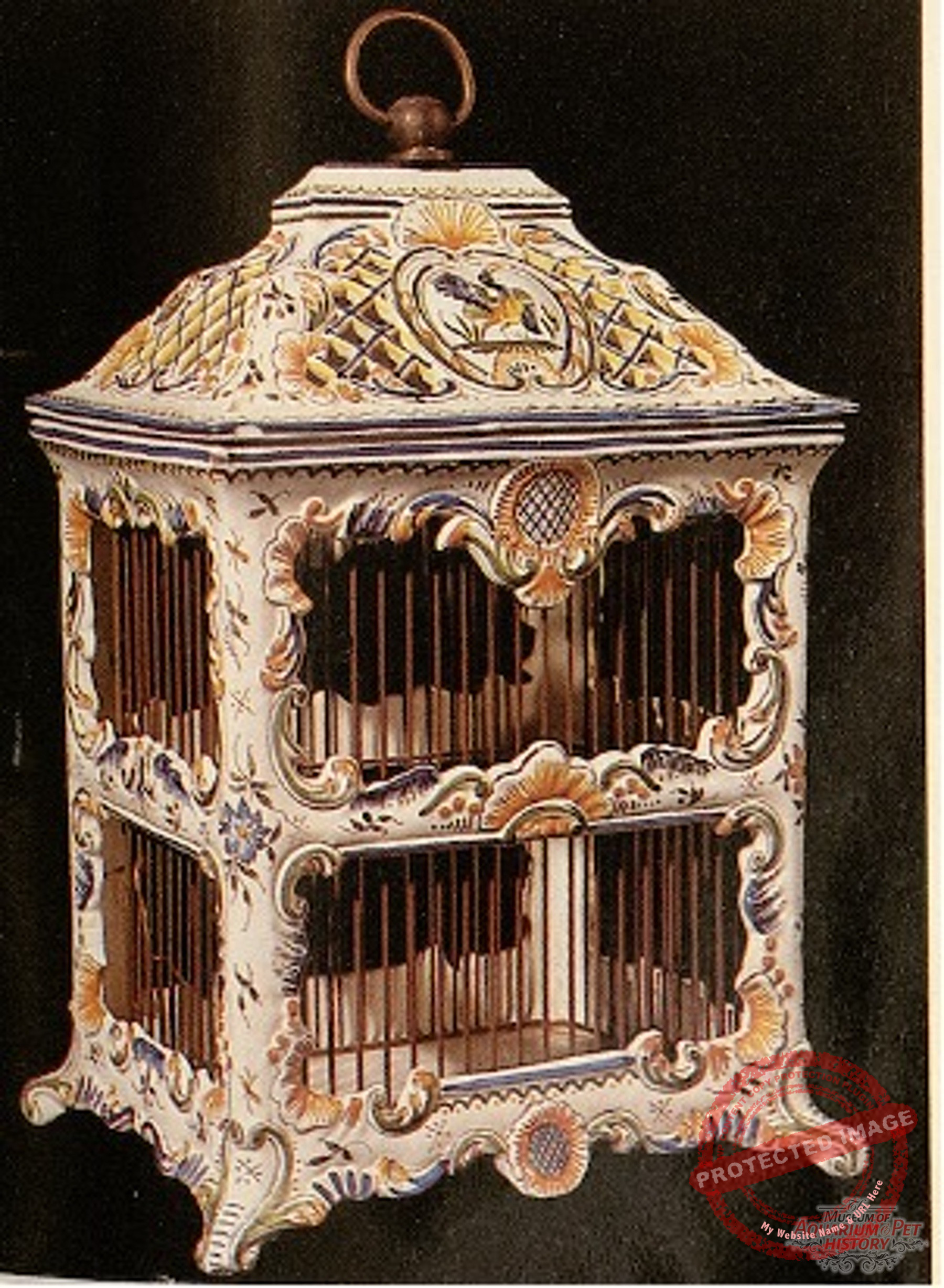
Standing and Hanging Cage; replica of an original from the 18th century. Faïence, manufactured by Massou Frères, Desvres/France.
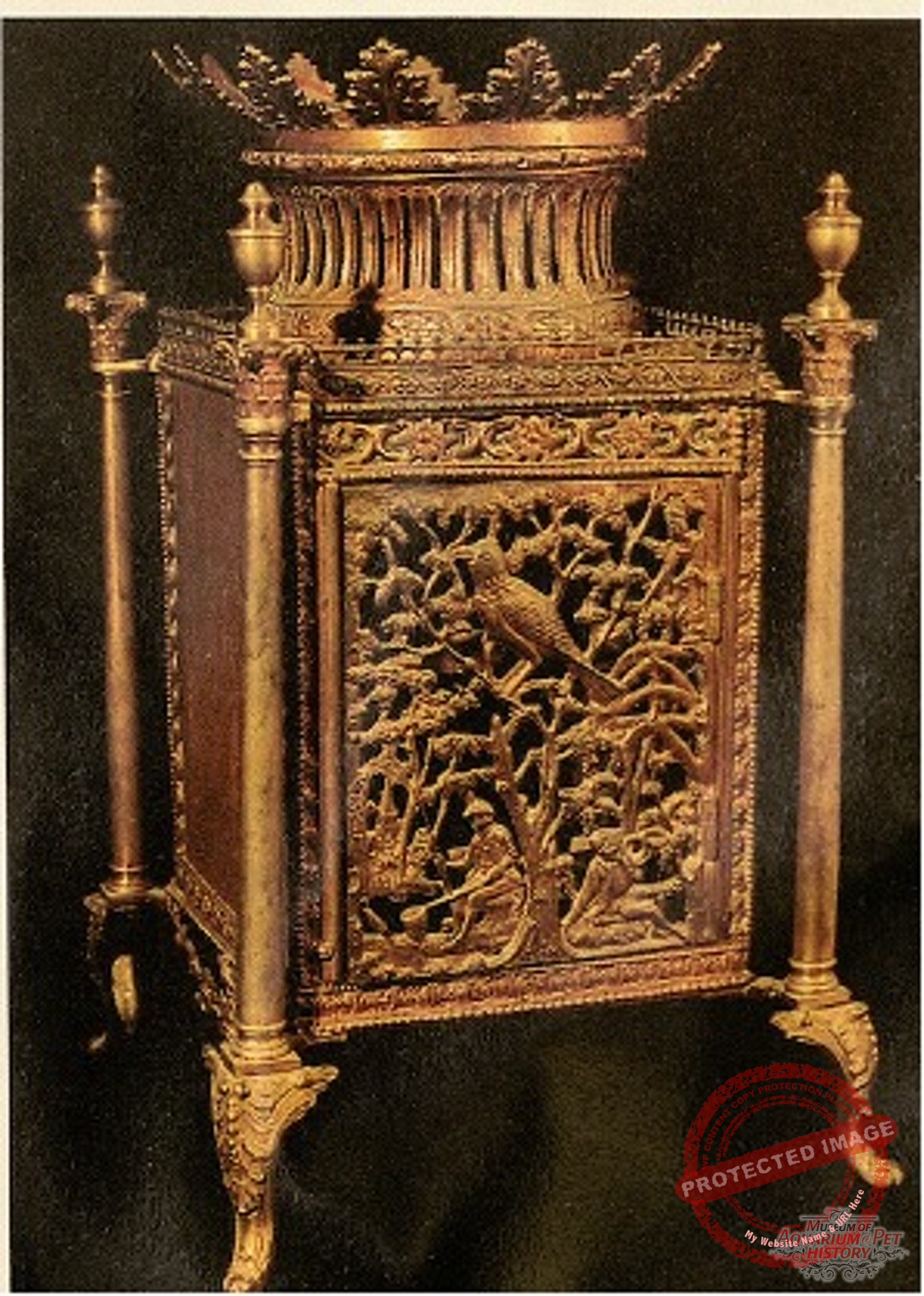
Standing Cage; France, around 1780. This object, made of fire-gilded bronze, was not necessarily originally used as a birdcage, but rather as a lantern, as suggested by the open crown at the top. The richly decorated display side, designed as a door and featuring hunting and fishing motifs—especially the large bird in a tree—points to another intended use. However, the wooden panels later added to the other three sides of the box suggest that it may have later been used as a songbird cage.
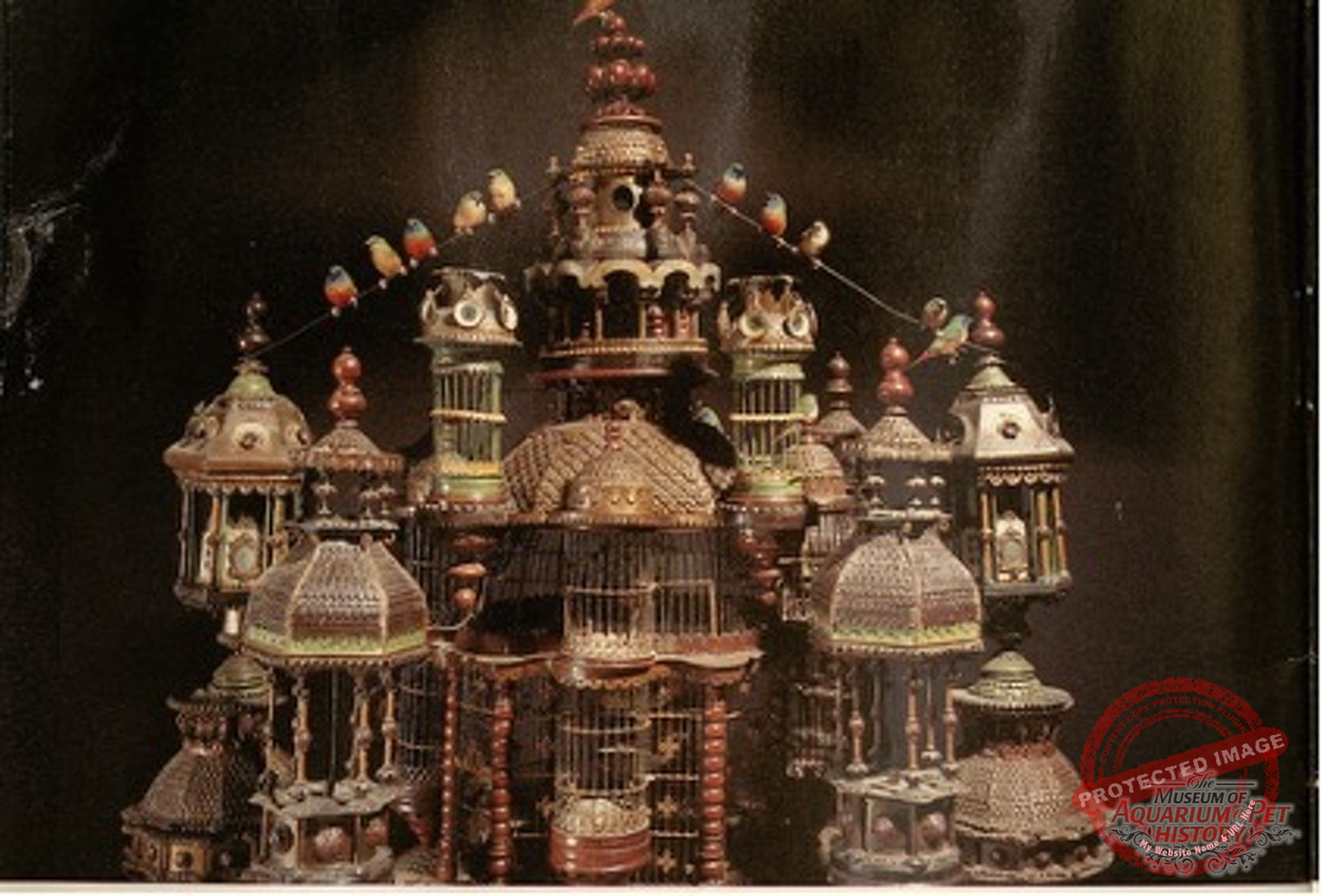
Indoor aviary; France, 1869, signed J. Beau 1869 (Detail)
Hanging and standing cage. Industrial product, Germany, around 1900.