Stars of the Silver Screen
Artwork courtesy of the author.
These animal actors attracted huge global audiences of many millions, and made fortunes for their movie studios, but they have since become largely forgotten today, except amongst film buffs. However, nowadays, the internet has opened up a whole new path for pets to achieve stardom.
Rin Tin Tin was the most famous dog of his generation, and earned a fortune of over five million dollars from his career in films. He made his screen debut nearly a century ago now, but his early life before he achieved stardom was anything but secure. He had been lucky to survive when he was rescued as a puppy during 1918 by an American airman called Lee Duncan from a battlefield in France, at the end of the First World War.
Rinty, as he became affectionately known, was taken back to California by Duncan, and struck up a close rapport with his adopted owner. He soon mastered not only basic training but started to learn more elaborate tricks as well.
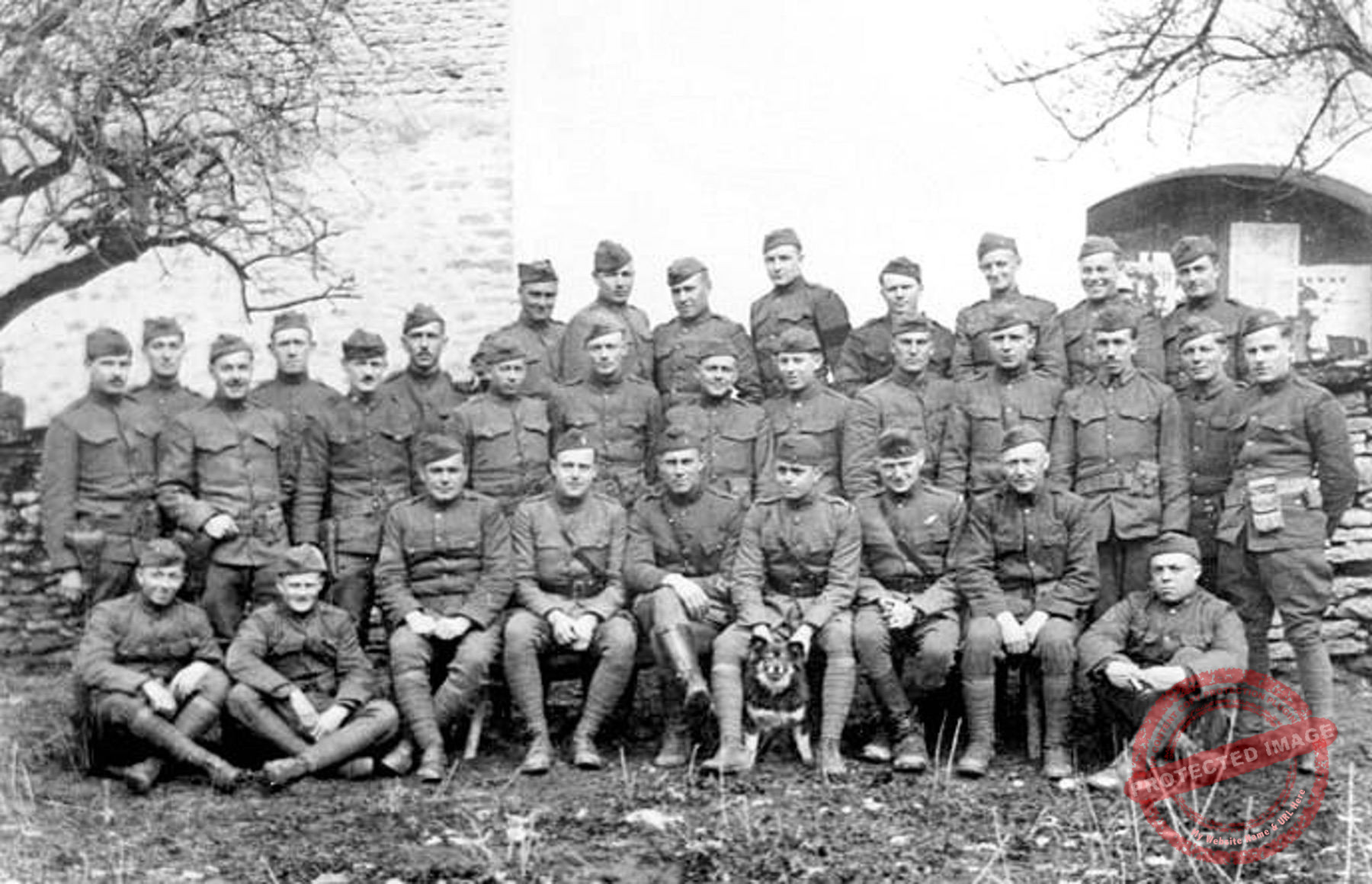
Rin Tin Tin as a puppy in France during 1918, shortly after being rescued. He became the mascot of the US Army’s 35th Aero Squadron, before being taken to the USA. Photo courtesy PD-US.
His first role
When Lee heard that a film studio was looking for a well-trained dog to play the part of a police dog, he took his pet along for an audition. Rinty, a German shepherd dog, not only showed the right aptitude for the role, but also looked the part.
In 1923, he achieved instant fame when the resulting movie, which was entitled Where the North Begins, was released by Warner Brothers. The film starred Walter McGrail and Clare Adams, but it was Rin Tin Tin (as he became known to cinema audiences) who stole the show, and the studio immediately realized that it had discovered a major star.
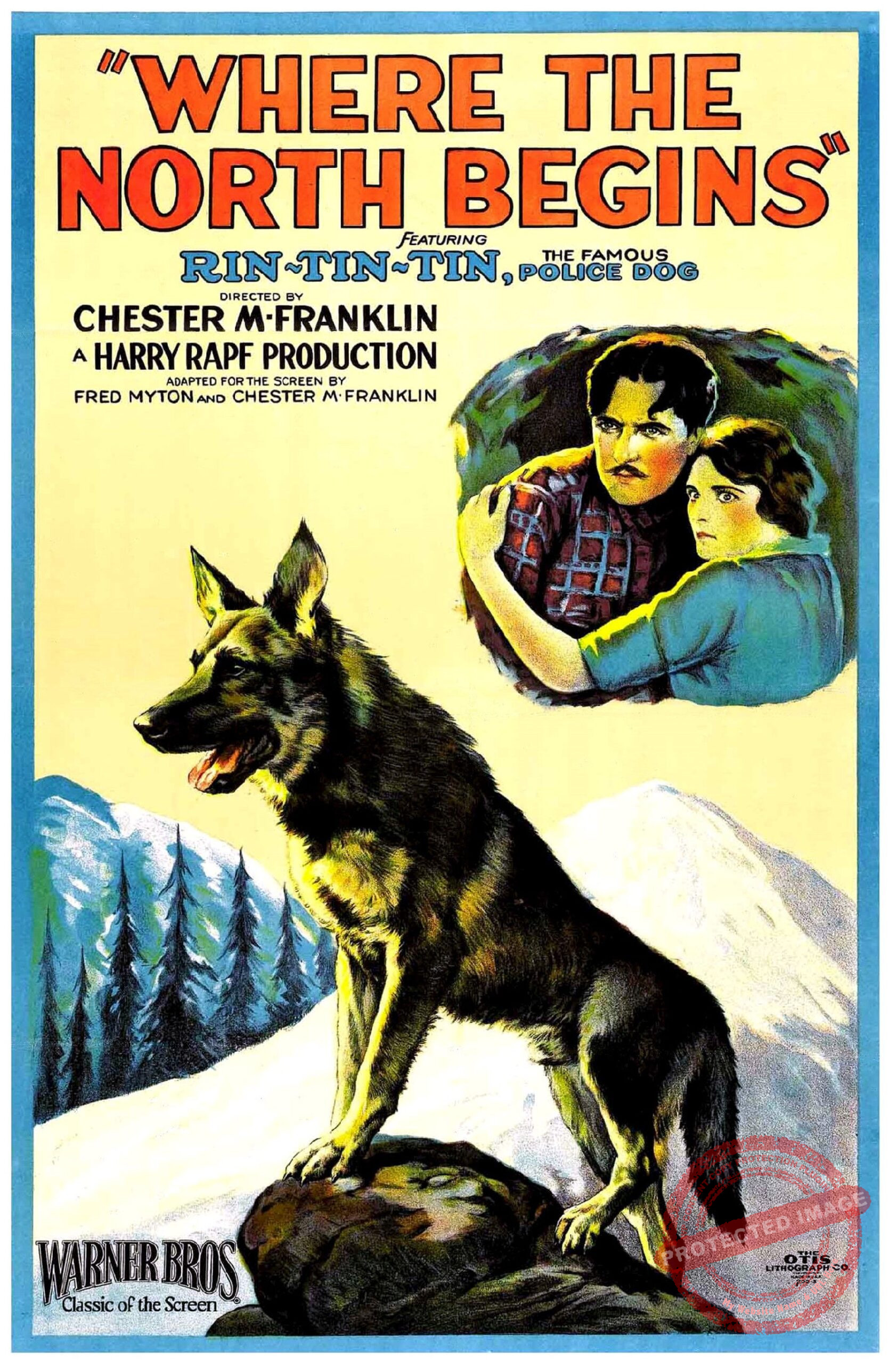
A poster for the film that first brought Rin Tin Tin to the public’s attention. Source PD-US.
As his career developed, so Rinty became surer of his own ability, needing less guidance from his owner and trainer. His next film, Find Your Man was another major hit in 1924 and, during the following year, Rin Tin Tin appeared in no less than four separate feature films, all of which confirmed his star status in the silent movie era.
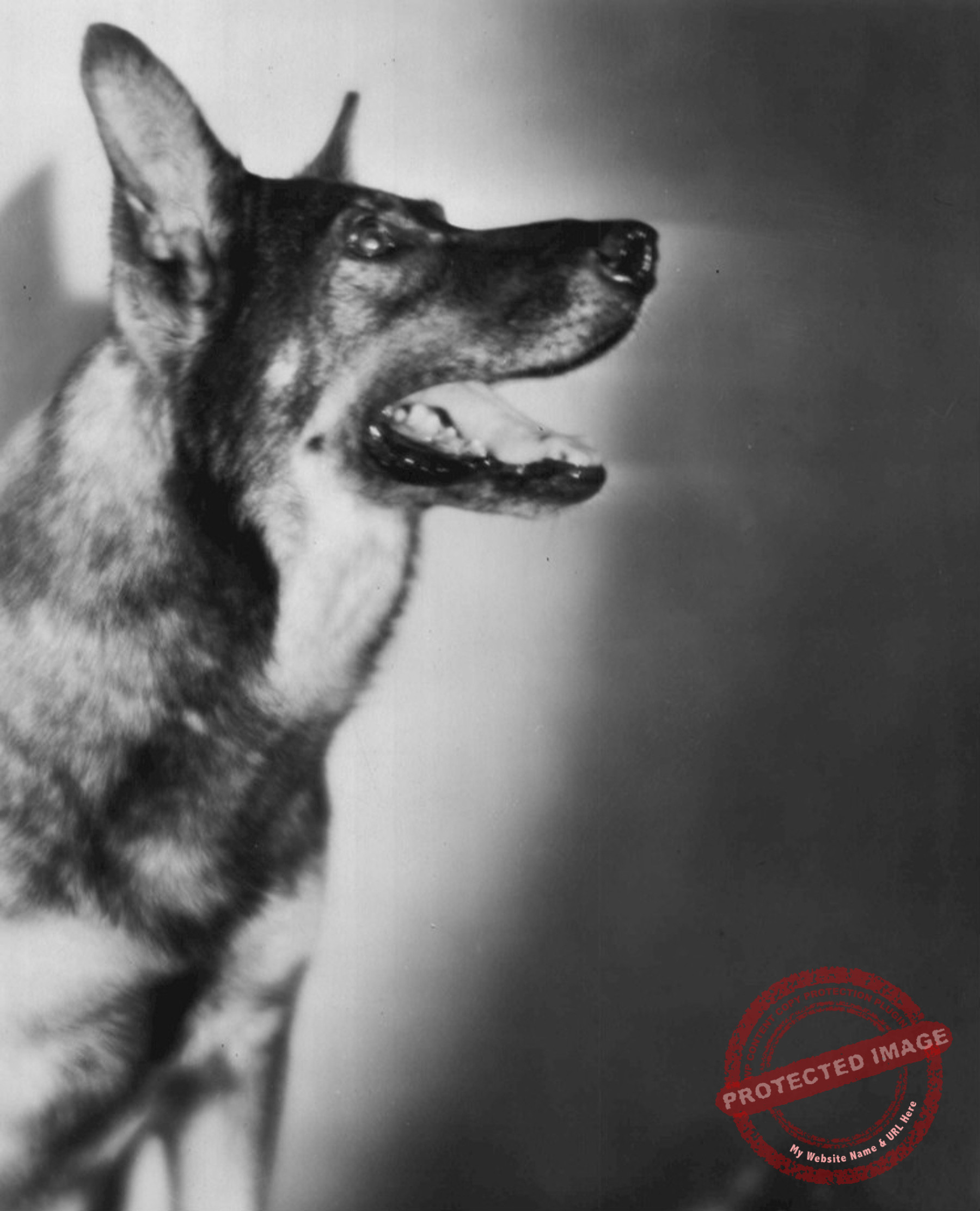
Rin Tin Tin in one of his later screen roles – the film Frozen River, released in 1929. Source PD-US.
Not everyone was enchanted with his progress however. William Collier, Jr, who appeared with Rin Tin Tin in Lighthouse by the Sea, complained to studio bosses that he himself was only being paid $150 a week, whereas his canine co-star was earning $1,000!
Temperamental shortcomings
Behind the scenes though, Rinty was starting to show signs of developing the rather temperamental behavior that can be characteristic of some film stars. While his performances on screen remained flawless and were often captured in a single take, he was sometimes rather short-tempered towards his fellow actors. It required the calming influence of Lee Duncan to keep the peace on more than one occasion, enabling the studio to continue promoting their star’s bold, friendly image very successfully to his adoring public.
Warner Brothers were delighted with Rinty’s success, and in fact, it brought much-needed security for the studio. In the days when talking pictures were just starting, it was widely rumored that without Rinty’s contributions to their profits, the company would almost certainly have folded.
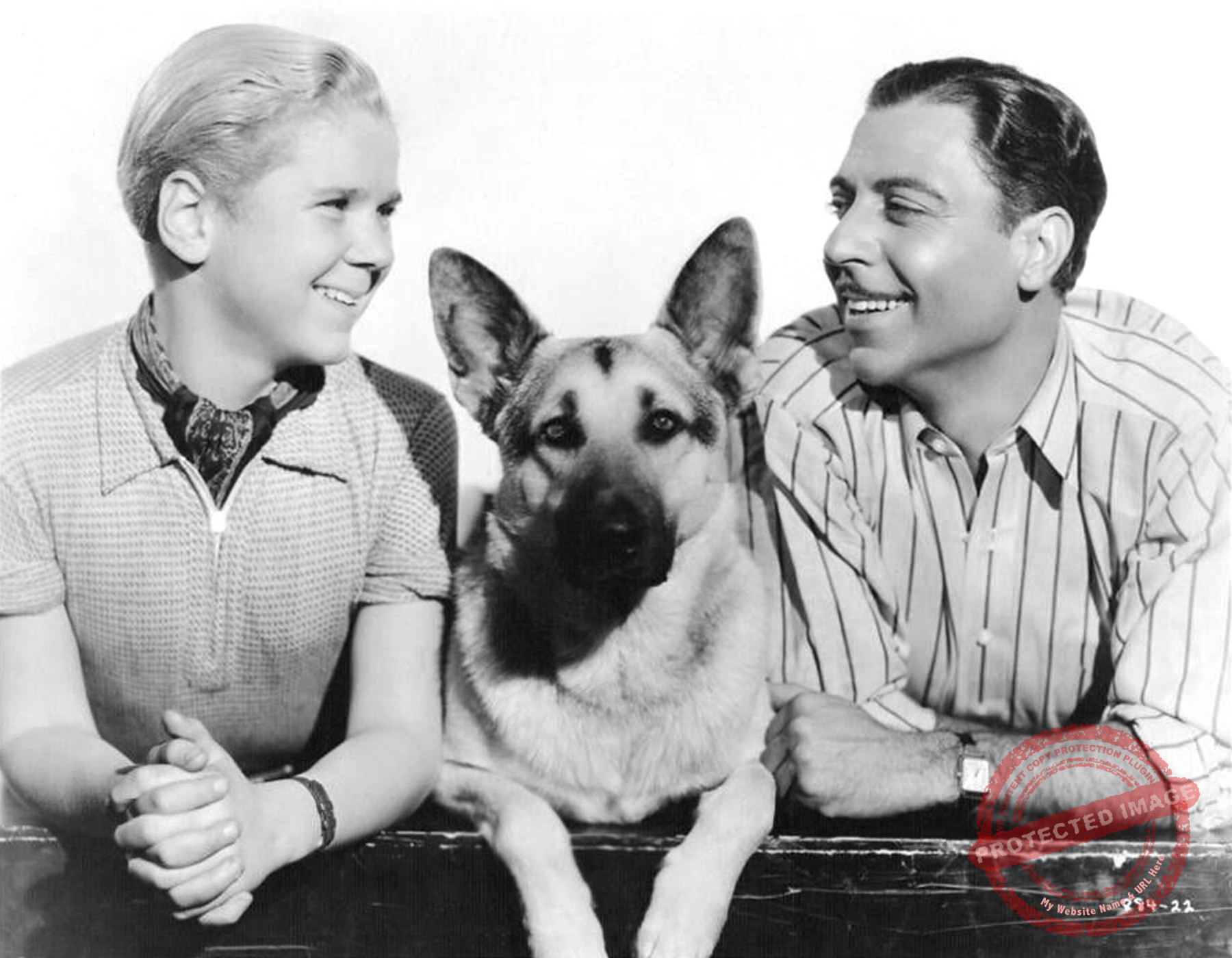
Rin Tin Tin Jr starring in the film Tough Guy, released in 1936, alongside Jackie Cooper and Joseph Calleia. PD-US.
The studio insured him to cover every eventuality and had 18 understudies available, although none possessed his distinctive talents. He was rewarded accordingly. Aside from his massive salary, Rinty was also provided with a special orchestra by Warner Brothers to keep him in a calm and happy frame of mind. He was pampered with servings of chateaubriand steak, and wore a diamond studded collar, as befitted his status as an international film star.
Unrivaled talent
While the transition from silent to talking pictures swept many actors into oblivion, Rinty thrived on the challenge. His barking had a particularly dramatic quality, well-suited to his roles which often revolved around him rescuing and helping the hero of the movie.
Other Hollywood studios tried in vain to sign a star like Rin Tin Tin. In total he made 19 features, before moving to Mascot Pictures and appearing in weekly serials, starting with Lone Defender, a story divided into a dozen parts, which began in 1930. By this stage, Rinty was already 12 years old and at an age when many dogs would have settled for a far less strenuous lifestyle, but he appeared happy to continue playing the active roles which had made him famous. His last screen appearance was in Lightning Warrior, when he battled to reveal the identity of the mysterious Wolf Man.
Rin Tin Tin passed away peacefully in 1932 but his name lived on through his sons, although in reality, his relationship to them may not have been that close! Rin Tin Tin Jr. starred in a number of westerns over the next six years, but he never achieved his father’s status. It was the particular ability of Rinty to convey emotion that ensured his appeal to audiences worldwide, more so than his athletic prowess which could obviously be matched by others of his breed.
The German shepherd dog, which was also known for a period as the Alsatian, is generally accepted to be one of the most intelligent and responsive of all breeds. They are loyal, trusting and fearless dogs by nature, with this range of qualities being embodied in Rin Tin Tin’s movie roles.
A talented feline performer
The cat that became the original feline superstar of the age of cinema was also discovered by chance, like Rin Tin Tin. Director Max Sennet, who created the Keystone Cops in the days of silent movies, was entranced when a bluish-gray cat appeared in a scene, having gained access to the film set through a loose floorboard.
When the actors walked off as the scene drew to a close, the cat followed them without any hesitation. Sennet realised the appeal to audiences of having a cat involved in some films, and immediately adopted this stray, whom he christened Pepper. She ultimately worked with most of the leading stars of the early days of cinema, including Charlie Chaplin, and was insured for what was then the huge sum of $5,000.
Her professionalism meant that her meeting with Frederich the Mouse passed without incident, and she struck up a very close relationship with Keystone Teddy, a Great Dane, with whom she appeared in a number of films. After his death at the end of the 1920s, acting subsequently seemed to lose its appeal for her though, and she retired soon afterwards.
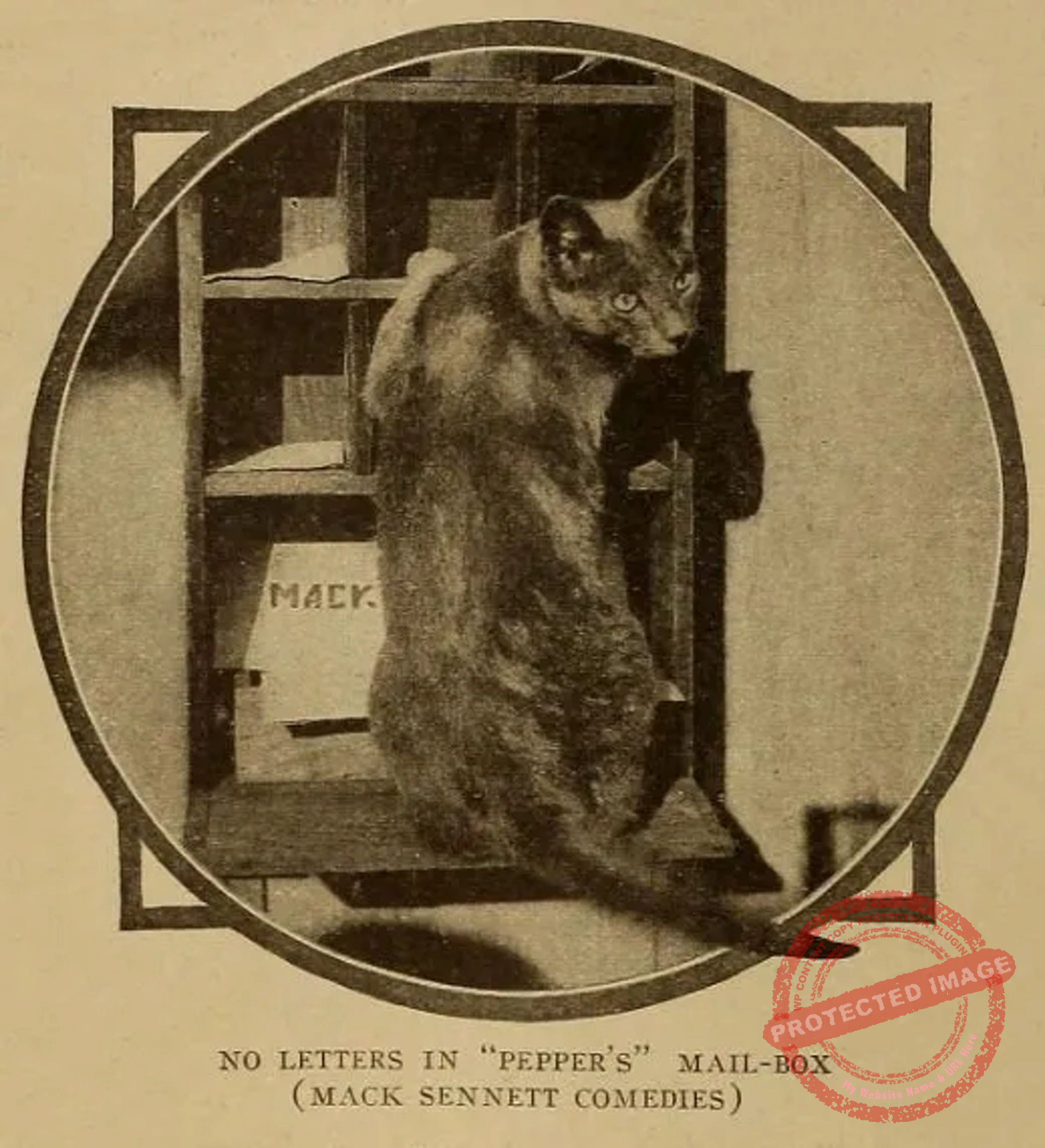
Pepper, in a photo originally published in the May 1918 issue of Motion Picture Magazine. Source PD-USA.
A career at the top
It was to be a long time before any other feline actor achieved such prominence. Then in 1951, a red tabby cat called Orangey starred in the movie Rhubarb, as a cat left a fortune and a baseball team by an eccentric millionaire who took him in off the streets as a stray. The success of Orangey in this role meant that he was then given a regular part in the television comedy series Our Miss Brooks.
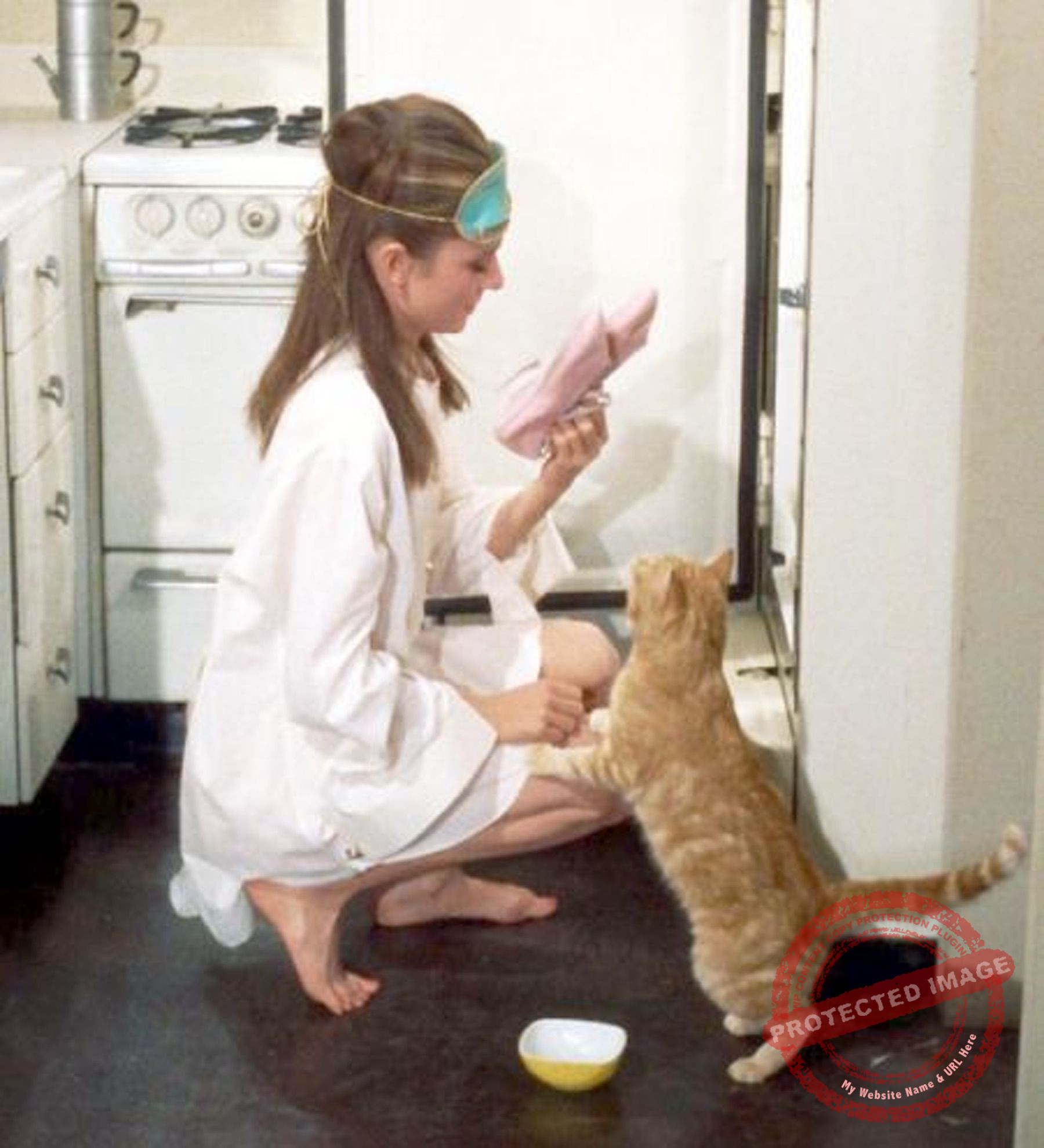
Cropped screenshot of Orangey with Audrey Hepburn in the film Breakfast at Tiffany’s. Source PD-USA.
He went on to star in a number of other films, including The Incredible Shrinking Man in 1957, although his most famous part was probably playing opposite Audrey Hepburn in Breakfast at Tiffany’s, released during 1961. He won a second Patsy for this performance, to go alongside his previous award, given for his role in Rhubarb.
Orangey remains the only cat to have scooped two of these awards, which are the animal equivalent of an Oscar, with Patsy being an acronym for “Picture Animal Top Star of the Year”. His last big screen appearance was in Village of the Giants, which premiered in 1965, following a career that had spanned 14 years in the film industry.
Problems posed by feline actors
Another orange tabby called Milo came to prominence in a Japanese film, starring alongside fawn pug called Otis in Koneko Monogatari, which translates as A Kitten’s Story. This was released in 1986, but was then radically reworked to emerge in an English-language version three years later, as The Adventures of Milo and Otis.
Milo is rescued from drowning by Otis, and the pair then embark on a series of adventures together. Shooting the film itself was a mammoth undertaking, which took four years, and the final cut was assembled from nearly 176 miles (122 kilometres) of footage obtained over this period.

Orange tabbies tend to be the most highly sought-after feline actors. Photo courtesy Brunohitam/www.shutterstock.com
One of the reasons that cats are not such recognized stars in the film world as dogs or indeed horses is obviously the difficulty in training them to carry out specific roles. Producer and director Armado Acosta faced this problem with Romeo-Juliet, a highly creative film based on Shakespeare’s play, which was released in 1990, and ended up with a highly complex editing job.
The actors in this case were largely a group of feral cats living in New York, Venice and Ghent, with their voices being provided by various leading contemporary actors. The basic storyline of the film revolved around an eccentric lady, played in this case by the late John Hurt, who decides to sail from the port of Venice to the New World with an eclectic range of stray cats.
Impact of the internet
Over recent years, many cat videos have drawn large online audiences, but the first real feline internet star emerged unexpectedly following a tragic event. His name was Frank, and he was living in the English city of Cambridge with his owner David Donna. After a car accident in 2002, Frank was left with a broken pelvis and facing a long period of recuperation indoors. David decided to test some software and set up a website allowing people to monitor Frank’s progress, complete with three webcams.
The site was revolutionary at that stage, and attracted two thousand hits within five minutes of launching! By the time that Frank recovered, more than five million people worldwide had logged on to check on his progress. They included the anonymous local couple who had helped Frank immediately after he had been hit by the vehicle, arranging the veterinary care which ultimately saved his life. They contacted David, having seen Frank on the web, and were able to monitor his pet’s ultimate recovery at first hand.