Chapter 17: Zoological Rarities – Wilde Tiere Frei Haus (Wild Animals/Free Delivery)
Translated by Alex Haro
Starting in September 2024, the Museum of Aquarium and Pet History (MOAPH) started releasing a chapter a month on the translated autobiography Wilde Tiere Frei Haus (Wild Animals Free Delivery) by Hermann Ruhe.
Firma Ruhe (the Ruhe Company) was the name of an animal trading company based in Alfeld, Germany from 1860 until its official closure in 1993. During this time, they were world renowned for their importation and exportation of exotic animals and birds from all across the globe, even supplying many zoos as well as circuses. Having survived both world wars, Firma Ruhe continued to dominate the world of animal trading until the mid-20th century and is a testament to true determination and leadership.
Wilde Tiere Frei Haus (Wild Animals Free Delivery) also documents the plethora of adventures, failures and successes endured by all those a part of Firma Ruhe. Through Hermann Ruhe’s great storytelling, we are able to visualize and understand the world from the perspective of animal collectors navigating through some of the most difficult situations, often not knowing whether or not they would ever return home. His recollections provide a vivid portrayal of the challenges and triumphs faced by the company, and give readers a glimpse into the world of animal trading.
A telegram arrived from Africa regarding an offer of twin baby gorillas that had been captured near the native village of Doume, in a remote swamp area of French Gabon, and were already on their way to Marseille.
I immediately sent a confirmed order back to New York, but redirected the young animals via Paris to Hannover first, as Heinz in New York likely wouldn’t have had the necessary caretakers readily available who were suited for the delicate rearing of such sensitive young creatures.
The gorilla father, who had destroyed the capture nets, had escaped, while the mother of the two young apes had apparently perished, as the youngsters were offered to me without her.
Mr. Glenewinkel, who was staying with us for some time again, received the animals in Paris.
Josephine Baker1 tried to buy the two baby apes in the French capital; however, that would have been a mistake, as without specialists, such animals—which were also much smaller than we had expected—simply cannot be raised. In honor of the artist, the two young gorillas were initially named Josephine and Baker.
MOAPH1: French dancer and singer
It was relatively cold in Paris when the baby apes arrived. Glenewinkel had brought a special crate, which had been thoroughly warmed with hot water bottles even before the arrival of the plane that was bringing the two animals from the coast. In addition, he bought little shirts and sweaters for them from a baby supply store.
From Paris, Glenewinkel traveled with the animals, also by plane, directly to Hannover.
We picked him up, and soon we were all gathered around the heated crate: Inspector Eiffert from the Hannover Zoo, the commercial director Gürke, Mr. Glenewinkel, and myself, while Rasche opened the door of the car, which was waiting next to the airplane, wide to welcome the crate with the new arrivals.
Someone else had come along: a young lady named Andrée Wienecke, who was a nurse by profession. Under the guidance of a pediatrician, she was to take over the rearing of our two precious new arrivals. The animals were about six months old, thin, and almost hairless, but otherwise in fairly lively condition.
Paul Eipper performed the renaming of the two young gorillas in Hannover, giving them their final names: Bobby and Pauline. Since determining the sex of gorillas is only possible at a much more advanced age, we deliberately avoided being too specific about the gender of the two young animals. Bobby and Pauline—and that’s how it stayed.
We chose the name Bobby because not long before, a huge gorilla with the same name, which I had delivered to Berlin years ago, had passed away.
Bobby had caught a severe cold, hardly ate anything, and died. Not only did the entire Berlin population mourn this over 500-pound magnificent specimen, which had lived there for years to everyone’s delight. I believe hundreds of thousands of people deeply regretted the death of this beloved animal.
And now there was a new Bobby. But soon, there was also trouble. Nurse Andrée took our gorilla twins for a walk in a wide baby carriage while wearing her nurse’s uniform. These outings had already become the talk of the town, attracting many visitors, including a number of her colleagues.
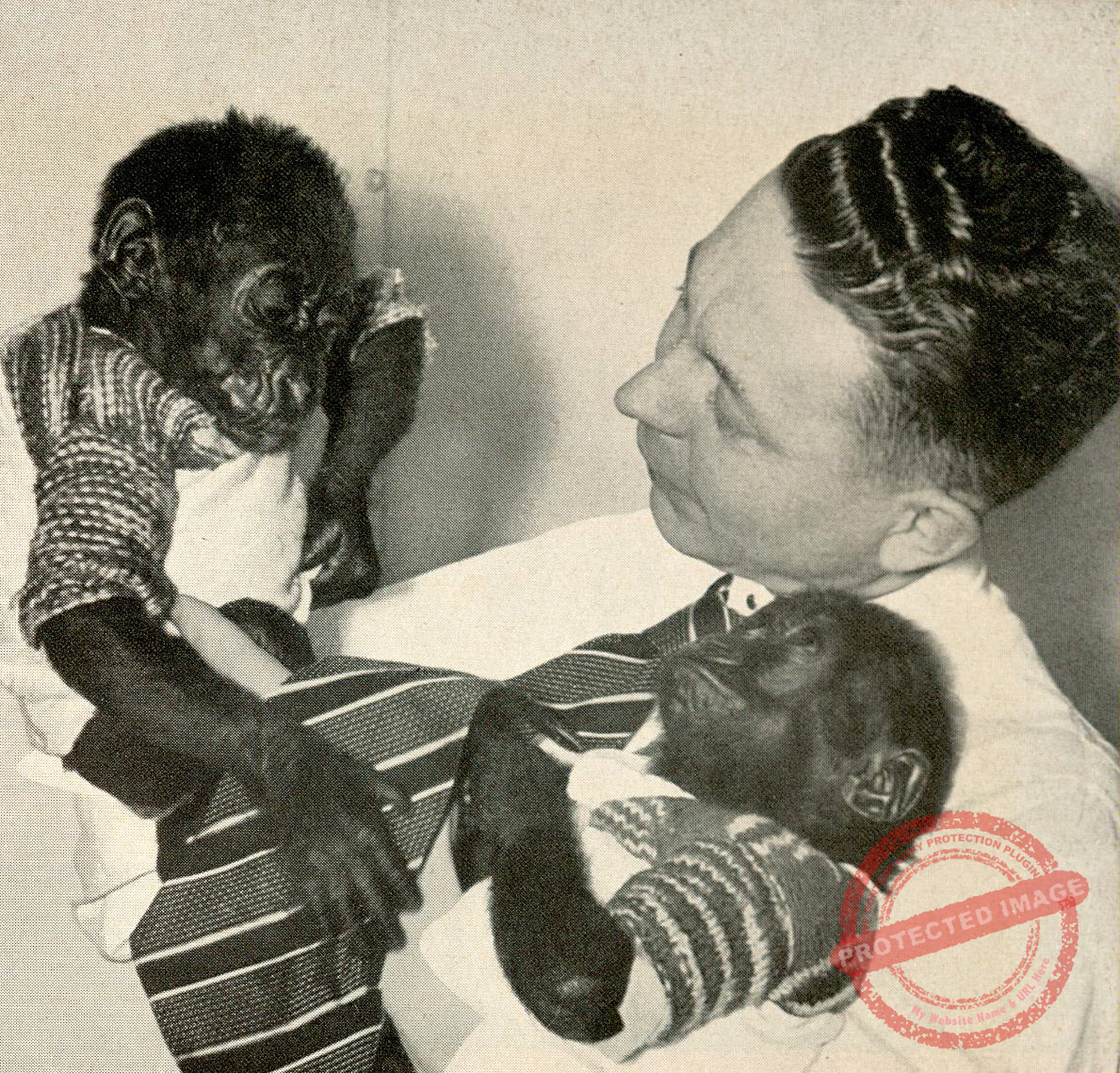
Alfred Glenewinkel with the gorilla twins Bobby and Pauline, brought from Paris, who died six months later from a contagious cold.
The result was an outcry of indignation from the Hannover Deaconesses2, and a head nurse wrote me an angry letter. She felt that it was a mockery of the nurses’ professional ethos that Andrée, as the caretaker of two gorillas, wore her official nurse’s uniform in public!
MOAPH2: A group of women, typically of the protestant denomination, who serve their community through nursing, education, and other social services.
No one had thought to interpret things this way. For the gorilla babies, exactly the same was required as for any infant: impeccable hygiene in every aspect. Therefore, Nurse Andrée had worn her spotless professional attire.
However, it truly had not been intended as a mockery; but since it was perceived that way, we immediately made changes. From then on, Andrée wore white coats or light, neutral washable dresses, and instead of the nurse’s cap, she simply wore a white headscarf. The effect—namely, maintaining the required hygiene in raising these extremely sensitive animals—was still achieved with these changes.
All of this was of no use. When Pauline was about a year old, in the spring of 1938, she began to fall ill. She hardly accepted any food, became thinner and thinner, and lay apathetically in her resting bed. The pediatrician worked tirelessly, but even he could no longer help. Pauline, struck by a contagious cold, died—and a few days later, her twin brother Bobby, infected by the same disease, also passed away!
It was a heavy blow. The animals had not only been incredibly valuable, but they had also been a major attraction for the public at the Hannover Zoo. Andrée was deeply saddened, but neither she nor the pediatrician could have helped the two animals at that time. Perhaps—if it had existed—penicillin might have been effective, but it did not exist yet.
At that time, I was asked by members of the public why young great apes were supervised by a pediatrician and not by a veterinarian.
The answer is relatively simple. Great apes, including gorillas, share many of the same diseases as humans. Therefore, a pediatrician, who must also be familiar with tropical diseases, is typically responsible for young great apes. Newly imported apes often bring with them a whole collection of parasites, and combating these is one of the primary tasks of the attending physician.
For example, a young chimpanzee we imported was once plagued by a Loa worm, a parasite that also afflicts the native people of West Africa. It burrows tunnels under the skin, causing an irritating itch.
In the case of our chimpanzee Karin, the worm moved under the skin of her foot’s sole. The skin hardened over the worm’s tunnels. To soften this callused skin, the pediatrician prescribed foot baths with warm soapy water.
Karin found this to be a dreadful idea and showed great fear of the footbath. However, it didn’t take long for the chimpanzee to understand that it was meant to help her.
She now voluntarily remained still when the zookeeper tried to remove the softened callused skin after each footbath—a sometimes quite painful procedure for Karin, which she endured patiently. After about eight days of this treatment, the worm was finally caught, and Karin was freed from her tormentor.
Nutritional disturbances are not uncommon in young imported great apes. These urgently require treatment by a specialist doctor—but without a zookeeper who knows how to properly handle the great apes, all the medical expertise can often be powerless. This is because the mental state of the animals plays a significant role in the acclimatization of great apes, especially gorillas. They need someone who engages with them intensively—and that person is usually the zookeeper.
At the Hannover Zoo, I had placed a huge giraffe bull named Petrus. He had come from East Africa a year and a half ago. The Hellabrunn Zoo in Munich was interested in this particularly large animal, which measured nearly five meters in height.
I had a giraffe transport wagon built, which could be pulled by a tractor or loaded onto a railway low-loader. The wagon cost nearly 20,000 Marks, but it paid off. Its roof could be adjusted to different heights. Petrus, who I believe was the largest giraffe bull in Germany at the time, weighed almost 900 kilograms (about 1,800 pounds) and was just under eleven years old when he was delivered to the Hellabrunn Zoo in Munich. He had the so-called vine leaf pattern, like all giraffes from Tanganyika3.
MOAPH3: An animal holding facility in German colonial Africa, now in Tanzania.
When one looked at the impressive length of his neck, it was astonishing to realize that even such a gigantic giraffe, just like humans, has only seven cervical vertebrae.
Two giraffe caretakers accompanied the journey to southern Germany, and the giraffe transport wagon proved to be extremely practical. The interior walls and doors of the animal compartment were well padded so that the animal could not injure itself, even in the event of a sudden jolt or stop by the train or tractor. Additionally, the wagon had a small cabin for the accompanying caretakers. It was heated, and they could comfortably settle in and even stretch out to sleep.
From various intermediate stops, where there were layovers, I received reassuring travel reports by telegram, and Petrus arrived safely in Munich. At the freight station, the giraffe wagon was lifted off the low-loader by a crane, hitched to a tractor, and taken the last short distance to the Hellabrunn Zoo.
The giraffe bull was intended for breeding. His chosen mate was already waiting for him—and she found him very handsome. The breeding successes that the zoo achieved with the two animals were also excellent. For years, the young giraffes, born one after the other in the zoo, were a major attraction for numerous visitors.
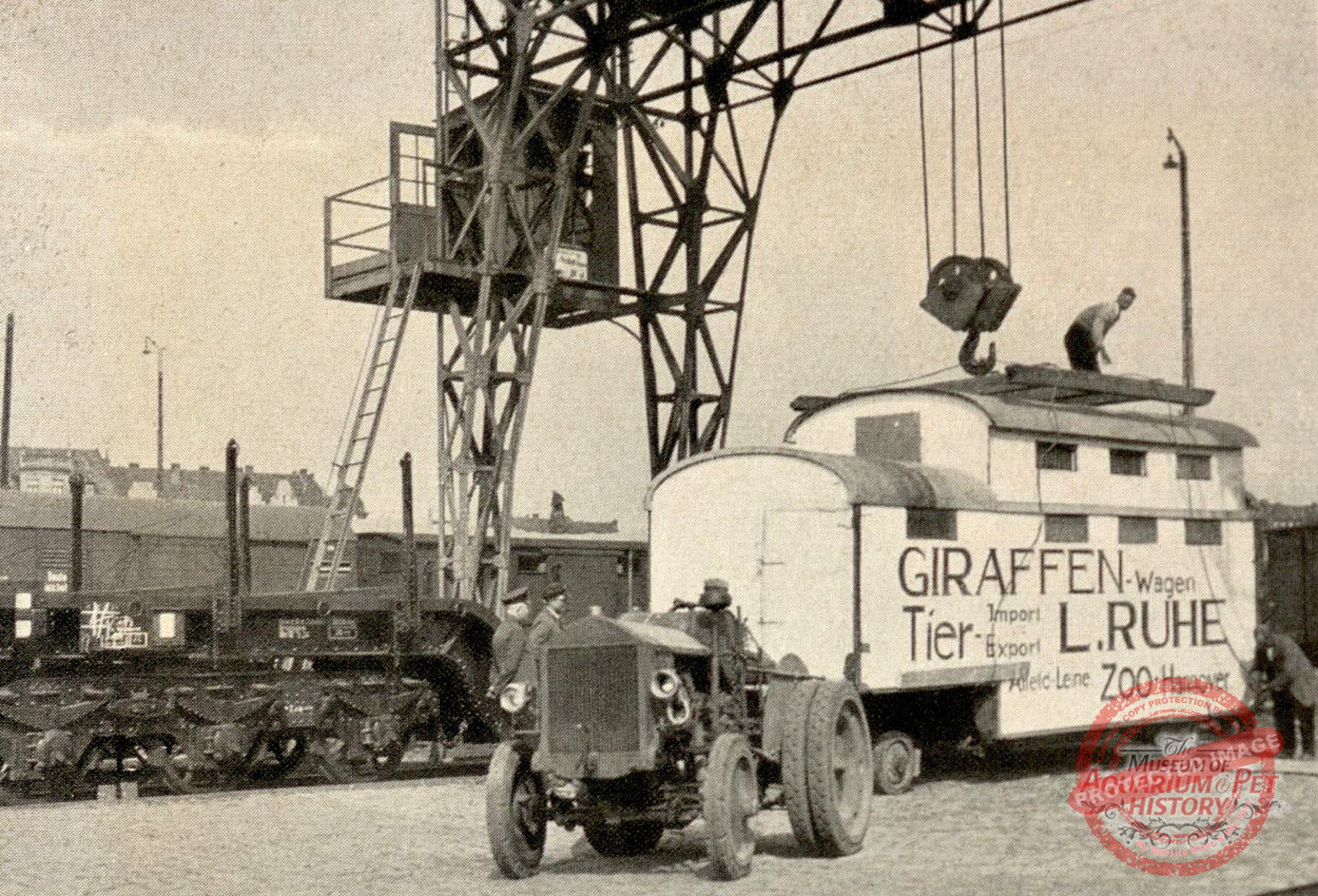
The giraffe wagon with Petrus ‘on board’ is being lifted by a crane onto a low-loader of the railway.
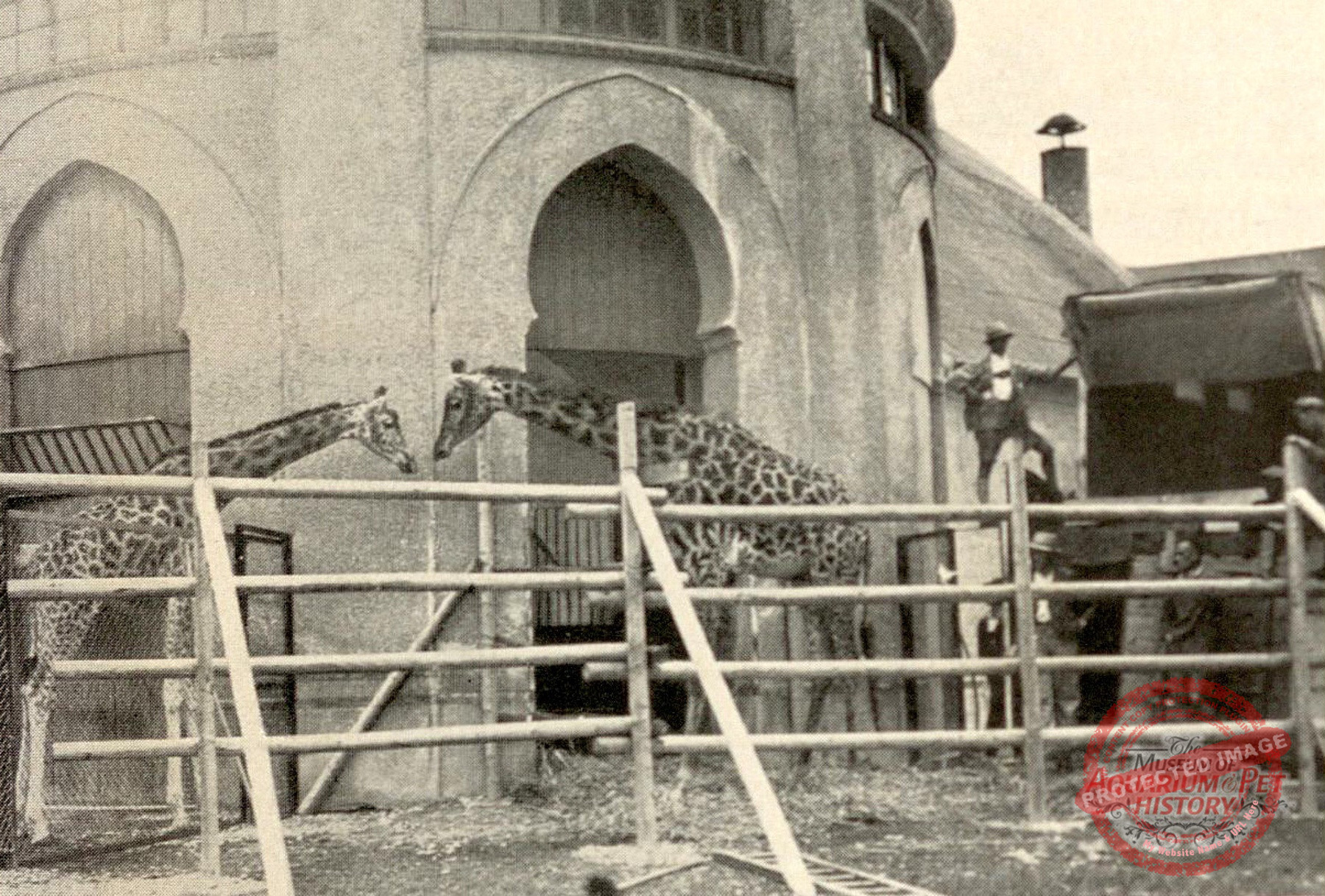
Petrus, having arrived safely at the Munich Hellabrunn Zoo, greets his new mate.
In the mid-1930s, my company once again arranged a first import for Germany; this time, one of the rarest animals there is—a bamboo bear (panda)!
Its native land was Tibet, and to properly feed it, we planted bamboo in advance at the Hannover Zoo. Additionally, we fed the animal with grasses, tree bark, willow branches, and very wet, cooked rice porridge, to which a raw egg was added each time.
Due to their rarity, bamboo bears are protected in Tibet. I had acquired the animal through the recently founded company Ruhe & Fockelmann in London. The St. Louis Zoo in the USA expressed its interest in the animal by telegram; however, since I first wanted to showcase it in various European zoos, I finalized the sale to St. Louis only a few months later.
I arranged with the directors of the zoos in Berlin, Frankfurt, Leipzig, and Nuremberg to take the bamboo bear on a tour, which was successfully carried out without any incidents. The zoos announced the animal, which had been named Happy, to the public for several days with large promotional campaigns and enjoyed quite high visitor numbers.
A few months later, the bear began its journey to St. Louis and arrived there in excellent health.
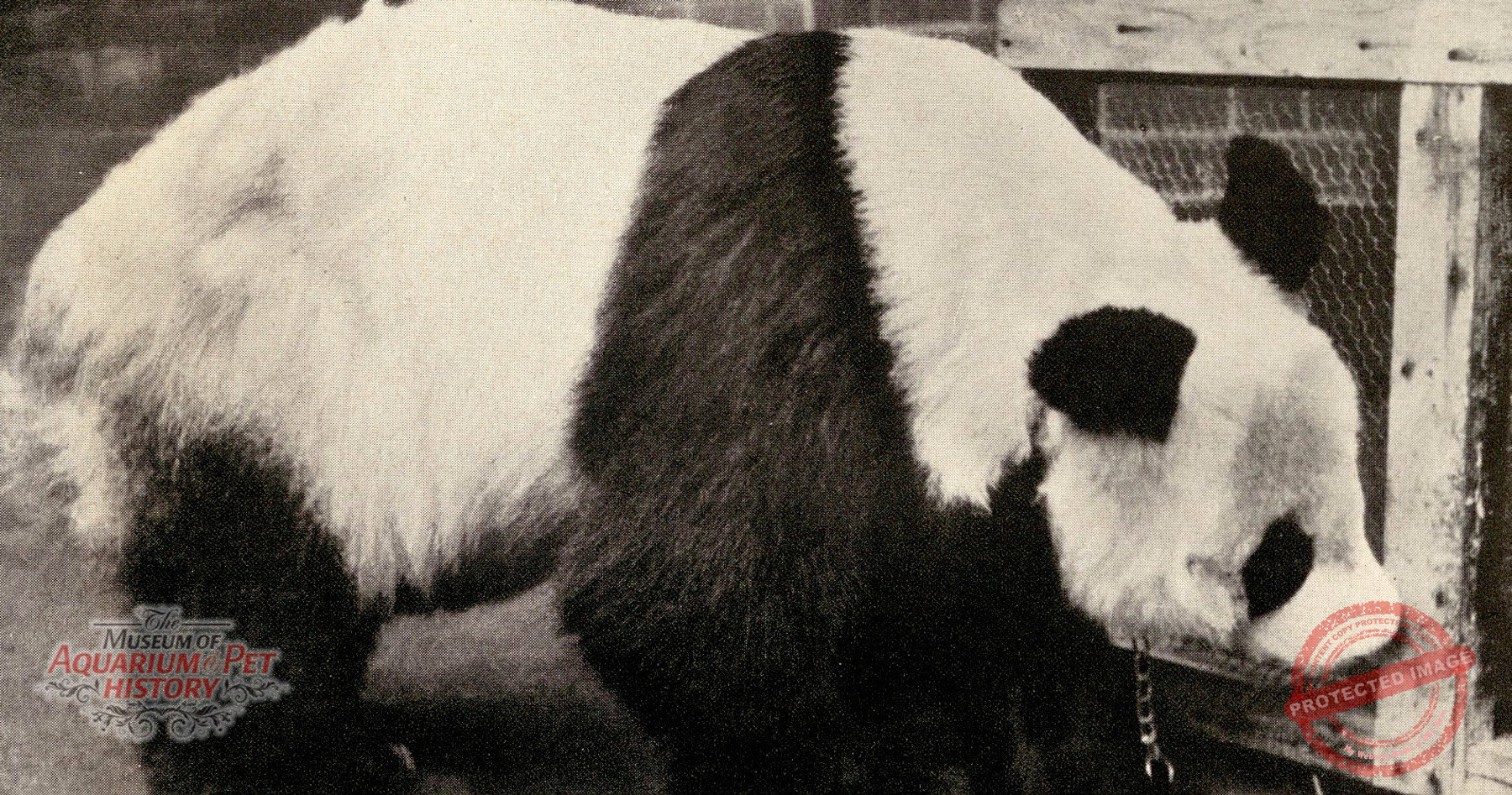
A zoological rarity: The panda, which was procured in London by the company Ruhe & Fockelmann and later sold to the USA, whose species is under nature protection in Tibet.
I was informed by telegram that my then-technical director at the Hannover Zoo, Freiherr von Redwitz, known as Sigi, had made a rare catch: an elephant seal!
Sigi, who was in Argentina to pick up a transport of animals, had—with the help of some assistants—managed to throw strong nets over the large animal and bring it ashore.
The big fellow was to be added to our transport, and we hoped that the freshly caught animal would survive and make the journey in good condition.
The elephant seal was first transported by truck to Buenos Aires and then brought aboard the steamship Alwaki. The transport of the giant was a challenge. The team had a huge iron tub built, in which the elephant seal fit. Along with the bathtub and a substantial amount of water, the elephant seal was lifted aboard by crane.
At the same time, a number of llamas, guanacos, alpacas, and various black-necked swans and flamingos were also loaded, along with several kangaroos that had been traded in Montevideo.
By chance, the two steamships Alwaki, arriving from South America, and Uhenfels of the German Hansa Line, met near Hamburg. The Uhenfels had come from Calcutta. On board was Kreth, with a large animal transport from British India. On board were several young elephants, along with Malayan bears, snakes, and monkeys.
Upon arrival in Hamburg, the ordered wagons and special hollow glass wagons (wagons with particularly rounded, high roofs) rolled up to the dock. Cranes lifted the animal crates, filled with their valuable contents, into the freight cars. This time, the transport arriving on two ships was so large that a special train had to be assembled to take everything to Alfeld, where the quarantine period could be completed.
Only Seppl, the elephant seal, was an exception. Since he was not subject to quarantine regulations, the veterinarian gave the go-ahead for his direct transfer to the Hannover Zoo, where he moved into the new elephant seal pool.
The Berlin elephant seal Roland had died a few months earlier, as had our Hannover elephant seal named Goliath, who had weighed 3,000 kilograms (6613 lbs) and consumed 60–80 pounds of fish daily. Goliath had reached a length of 5.40 meters and had even been exhibited in a rubber pool at the Munich Oktoberfest. For the transport to Munich, the Reichsbahn had provided one of its special wagons at that time.
We were happy to be able to show such a valuable and attractive animal in Hannover again with the arrival of Seppl, who was then renamed Neptun.
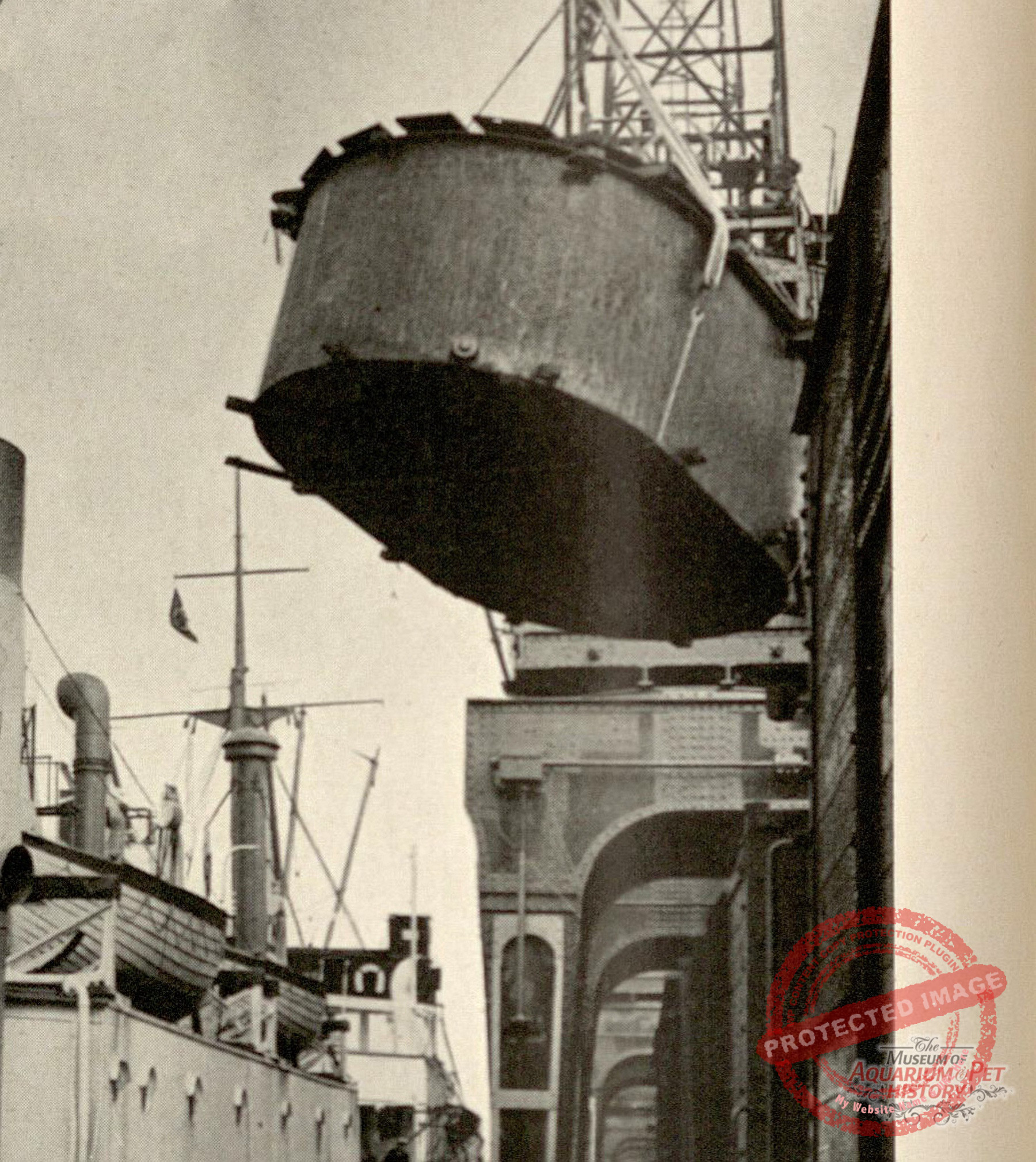
The elephant seal Seppl is being lifted in Hamburg, along with his transport bathtub, from the ship to the special animal train bound for Alfeld.
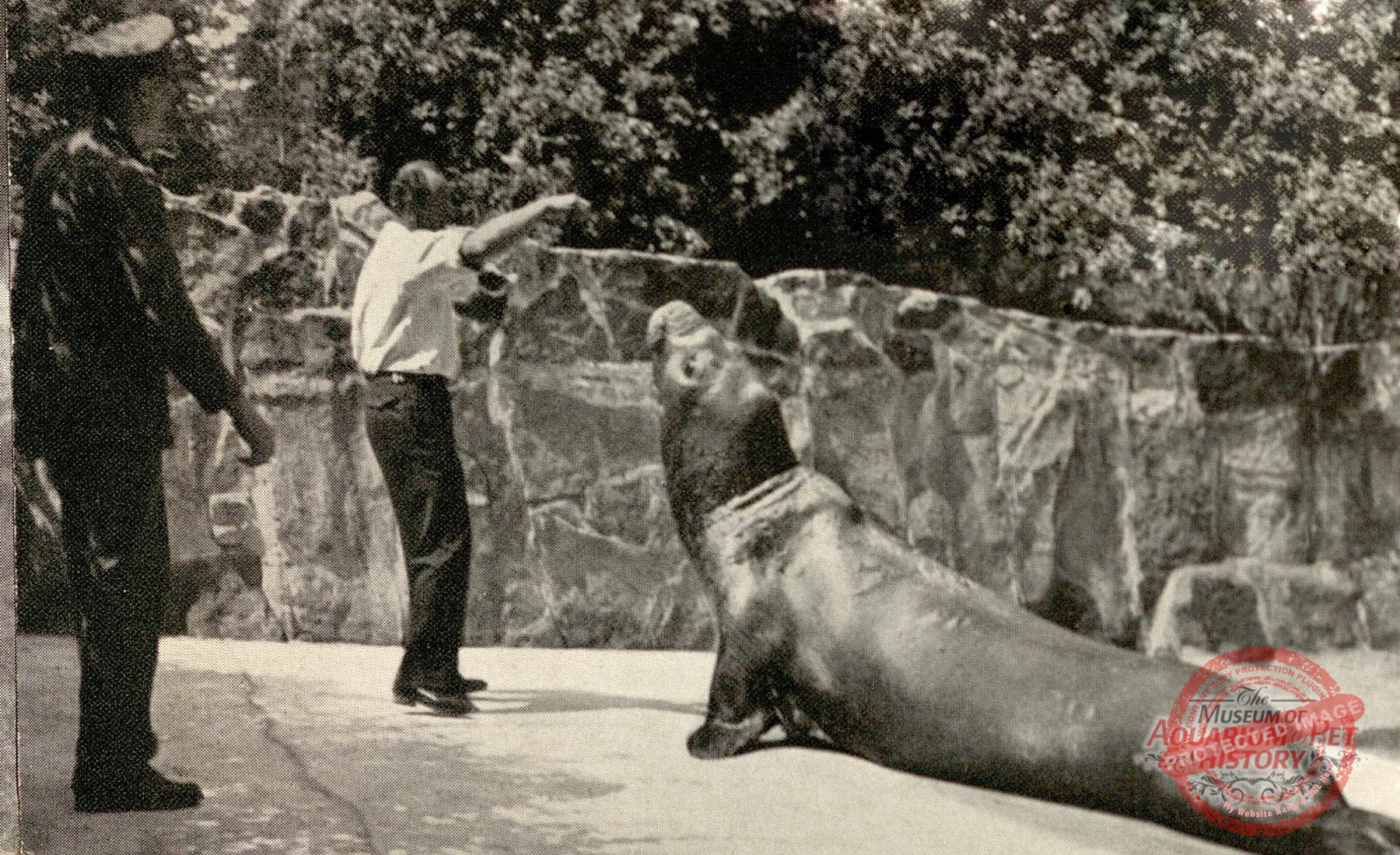
In the Hannover Zoo, ‘Sigi’ von Redwitz feeds his ward Seppl, whom he caught himself on the coast of Patagonia, with fish.
During this time, the authorities—after several years of frustrating back-and-forth—finally granted us special permits to use foreign currency!
This gave me the freedom to maneuver again, something that had not been possible for years. A huge weight was lifted from my shoulders!
In the spring of 1937, I was asked by the city of Nuremberg to assess a new site for their zoo. The previous Nuremberg Zoo, which my father had fully supplied with animals for its original opening, had to be dissolved, as the land at Dutzendteich was to be used for other purposes.
I chose the site at Schmausenbuck. Together with the building department of Nuremberg, we worked on a plan for the new zoo. Additionally, I was commissioned to repopulate the new zoo, partly through an exchange of animals from the old zoo, for nearly half a million Marks.
In the winter of 1937, I suddenly received the news that the agreed opening date of April 1, 1938, could not be met and that the opening would have to be postponed by a year.
No outsider can understand what it means to have to hold on to a large, diverse collection of animals worth half a million Marks for another year! When I negotiated with the city of Nuremberg about this, I was given permission to sell some of the animals in the meantime—as long as all sold animals would be replaced by new ones by the newly scheduled opening date. This provided some relief from the burden of costs and personnel that had suddenly fallen upon me.
I housed the animals intended for Nuremberg partly at the Hannover Zoo, partly in Alfeld, and also in other zoos in Germany.
Finally, in 1939, the construction of the new Nuremberg Zoo was completed, and my animals could begin their journey there; it took an entire train!
Some time later, I received a letter from the mayor of Nuremberg, which I still have today. It is a testament to that time:
“…The old Nuremberg Zoo had to be relocated because of its location in the middle of the Reich Party Congress Grounds, at the request of the Reich Party Congress Association of Nuremberg. According to the instructions of the highest authorities, a new zoo was to be created, particularly to offer rest and relaxation to the many guests attending the Reich Party Congresses. This new zoo was therefore to be located, at the Führer’s request, in close proximity to the Reich Party Congress Grounds. Overcoming the first difficulty involved finding a site suitable for such purposes. The city of Nuremberg therefore asked for your assistance in advising the city administration in the selection of the site and helping with the drafting of the plans, as you are familiar with all the zoos, both domestic and foreign. You did this selflessly and contributed to the fact that the new Nuremberg Zoo is widely praised and was described by the Führer as the most beautiful zoo. The second challenging task for you was to populate this zoo, which had been constructed according to entirely new guidelines, with animals. Procuring the most diverse animals in such a short time and in such numbers, which would not be usual even in normal times, posed another extraordinary difficulty for you. Only by using all your connections in the interest of the Nuremberg Zoo, which had not been voluntarily relocated, and possibly not being able to fully supply other good customers, was this difficult task successfully carried out to everyone’s satisfaction.
The best proof of this is likely that various prominent personalities expressed high praise for this well-executed work and conveyed their best wishes for the continued development of the new zoo.
All of this prompts me to express the most sincere thanks to your company, particularly to Mr. Hermann Ruhe, for the valuable help, advice, and delivery of the animals, all of which have adapted well so far.”
When I received this letter, political events were already escalating: it was August 18, 1939! Only about two weeks separated us from the devastating reality: war!
Although I had gained the impression during my many foreign travels that sooner or later a military conflict was to be expected, I—like many other Germans—was surprised. I was relieved that years earlier, my brother Heinz and I had already taken all necessary steps to transfer the assets, which had previously been in my mother’s name, to my two brothers, Heinz and Ludwig, who were American citizens. As the saying goes, A burnt child dreads the fire. I had high hopes that the American assets would not be confiscated a second time.
I had been satisfied with the development of my business in Alfeld during the 1930s, even though the canary bird business, which had previously accounted for around 40% of sales, had dropped to just under 17%. This decline had been more than compensated for by the animal trade.
For the New York company, this decline was more noticeable. The canary bird trade increasingly took a back seat. While we still delivered tens of thousands of canaries per season, this no longer compared to the heyday of this branch of trade at the end of the 1920s, when we exported so many birds per season that their numbers reached six figures!
The years of U.S. presidential elections had always been bad sales years—and we also felt every downturn on Wall Street. The crisis years in America since 1931 were likely the decisive factor for the poor business conditions in the U.S., even in our peculiar export sector.
In New York, Heinz had made significantly more sales in recent years with large animals than with canaries, so the company was still doing quite well.
Alfred Hävemeyer, one of my new animal traders, was caught by surprise by the outbreak of the Second World War in Buenos Aires, while another, Johann Johannisson, who was just setting off on a journey, got stuck in Irun, Spain.
Hävemeyer managed to make his way to New York, where he stayed until the end of the war; Johannesson returned to Germany a few weeks later by plane, via Italy and Switzerland.
The import possibilities from overseas were over!
Unfortunately, this also marked the end of the recently founded company Ruhe & Fockelmann Ltd. in London, which had been established as an office for brokerage transactions. Mr. Fockelmann’s partner was my brother Heinz.
Apart from the G. B. Chapman company, there had long been no serious competition in England, as the old, reputable bird businesses, such as John D. Hamlyn, no longer existed.
After the First World War, we maintained good business relations with Chapman, and he delivered many quality animals. Unfortunately, Mr. Chapman died relatively early, and until the founding of Ruhe & Fockelmann Ltd., there had been no significant animal trading company in England.
Fockelmann, who also sourced the bamboo bear, had revived the canary trade. He supplied English canaries and also bought up whatever animals arrived at British ports.
When the war broke out, Fockelmann didn’t hesitate for a second—he returned to Germany to stay in Hannover and Alfeld. Thus, the London office’s brief existence sadly came to an end.
The hardest time that the old L. Ruhe company in Alfeld ever had to endure had begun.
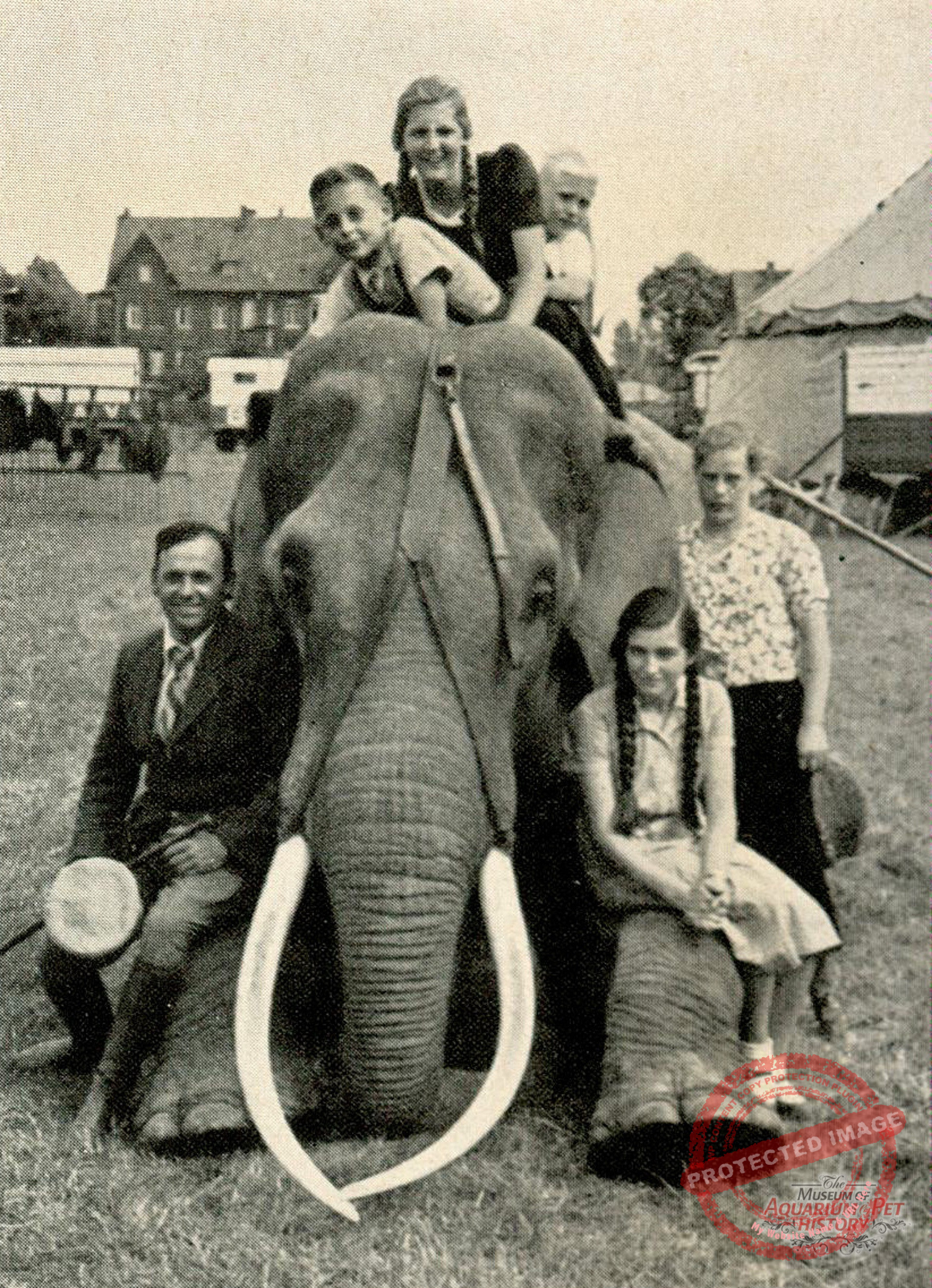
Jose Smaha and his trained elephant bull Bhutan. On the neck of the elephant is Hermann Ruhe Jr. behind him is his sister Christel in the dark dress.
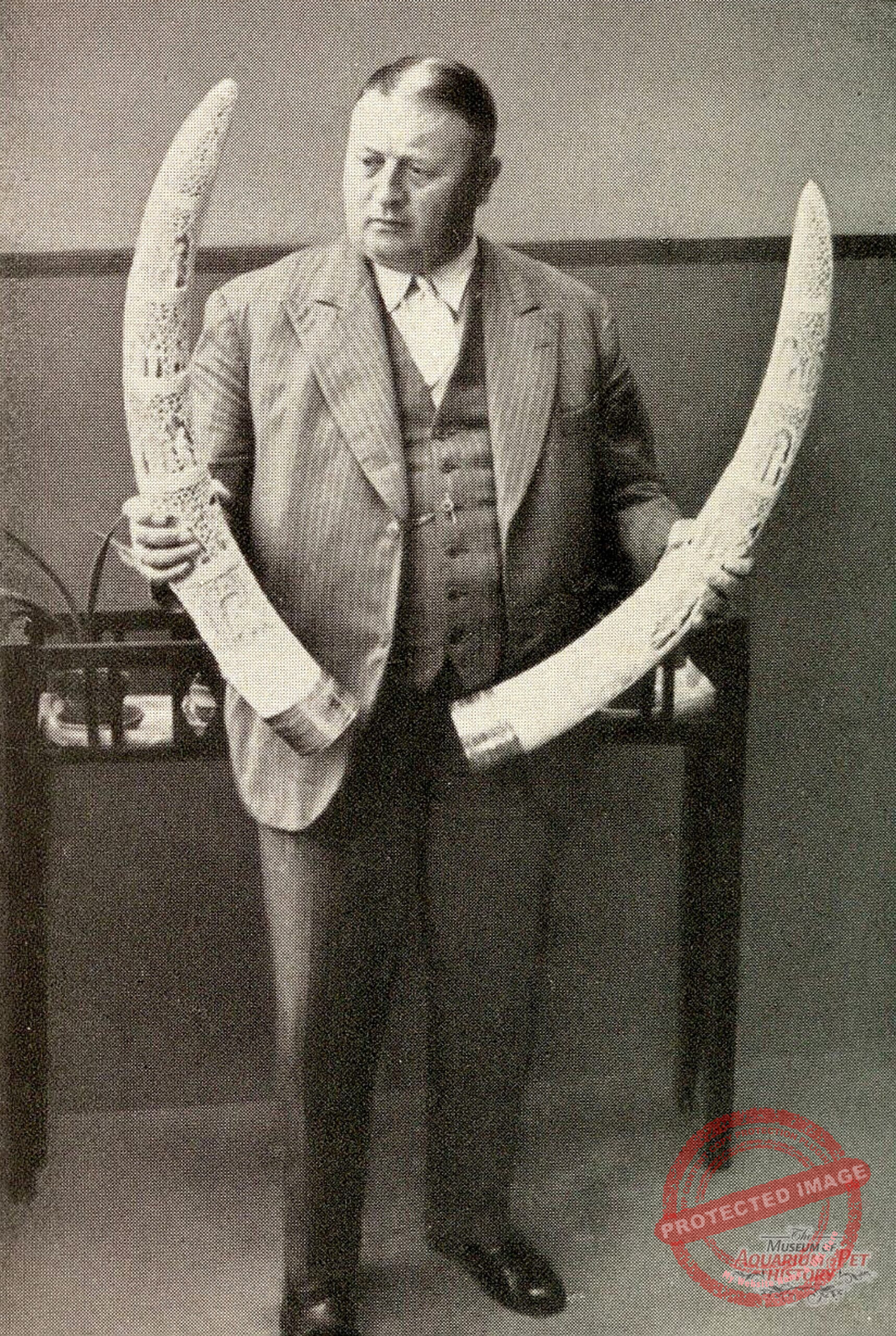
Albert Meems, a long-time animal traveler for the company specializing in India and Sumatra, brought back two magnificently carved elephant tusks from one of his journeys (bottom left).
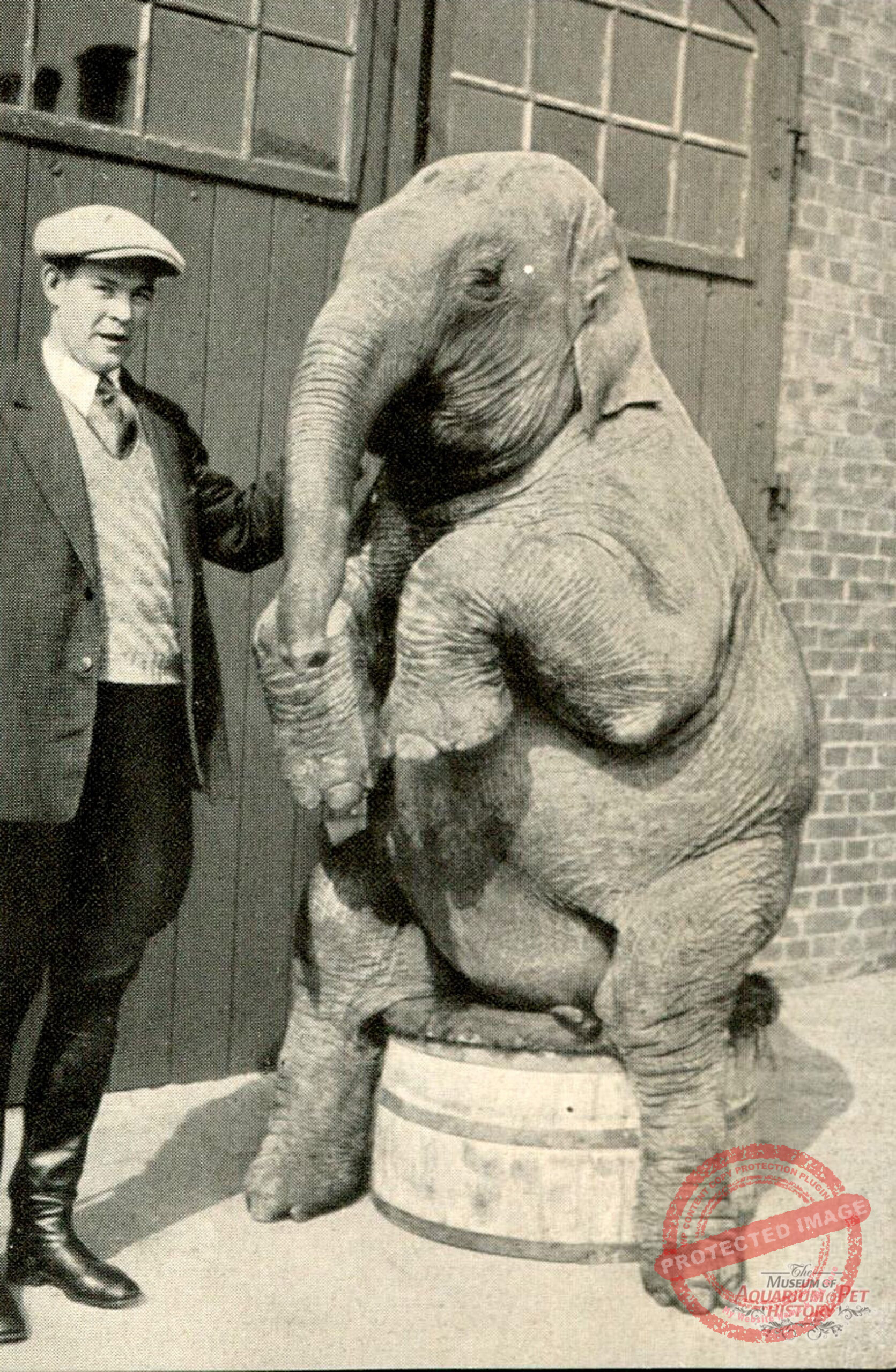
Charly Sembach, whom hundreds of thousands know today and whose name is inseparably linked with Circus Krone, in 1931 as an animal trainer of the White Earth.
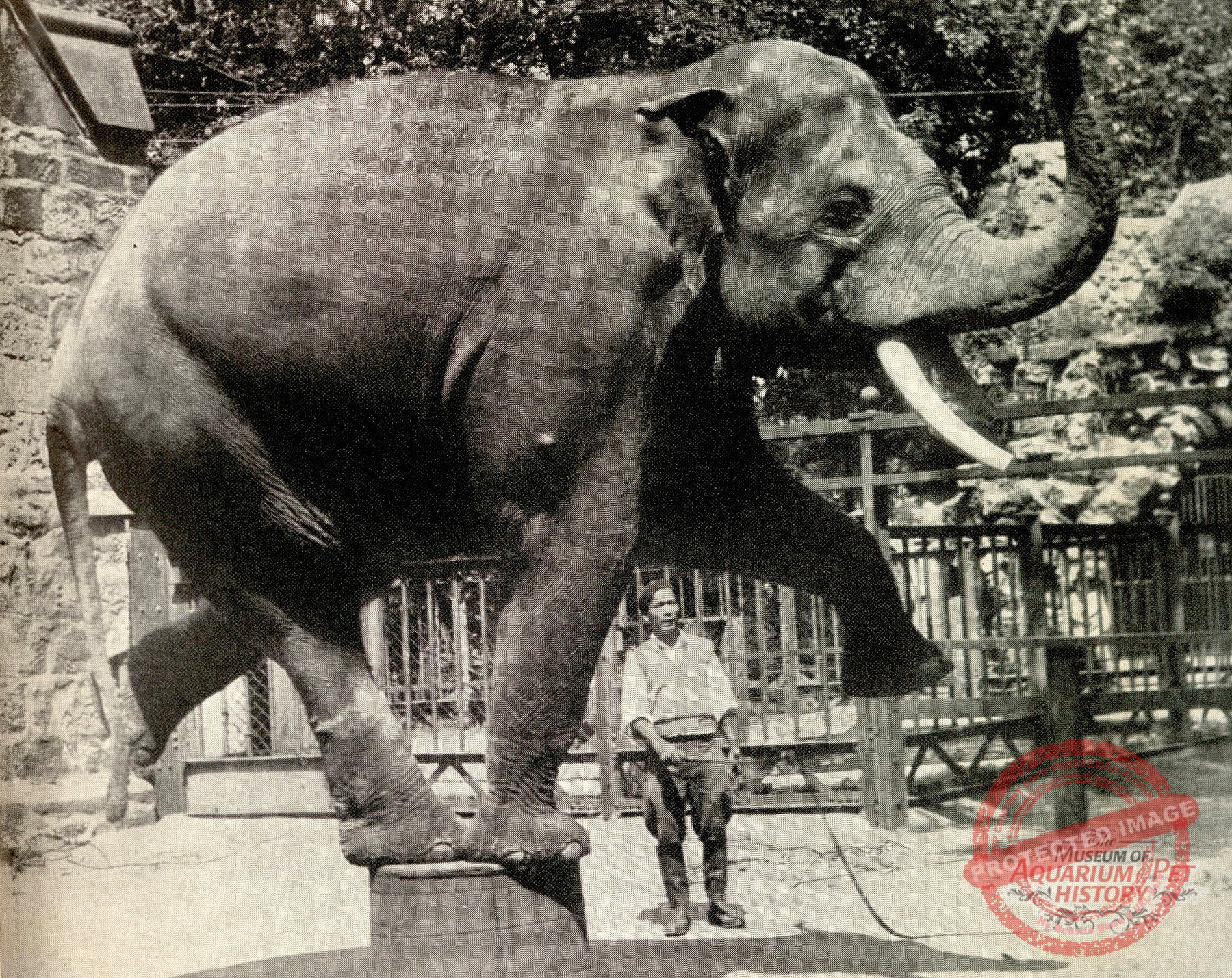
The elephant bull Omar with his caretaker Sukla, a photograph from the Hannover Zoo, taken a few weeks before Omar’s tantrum, which the Indian caretaker fell victim to.
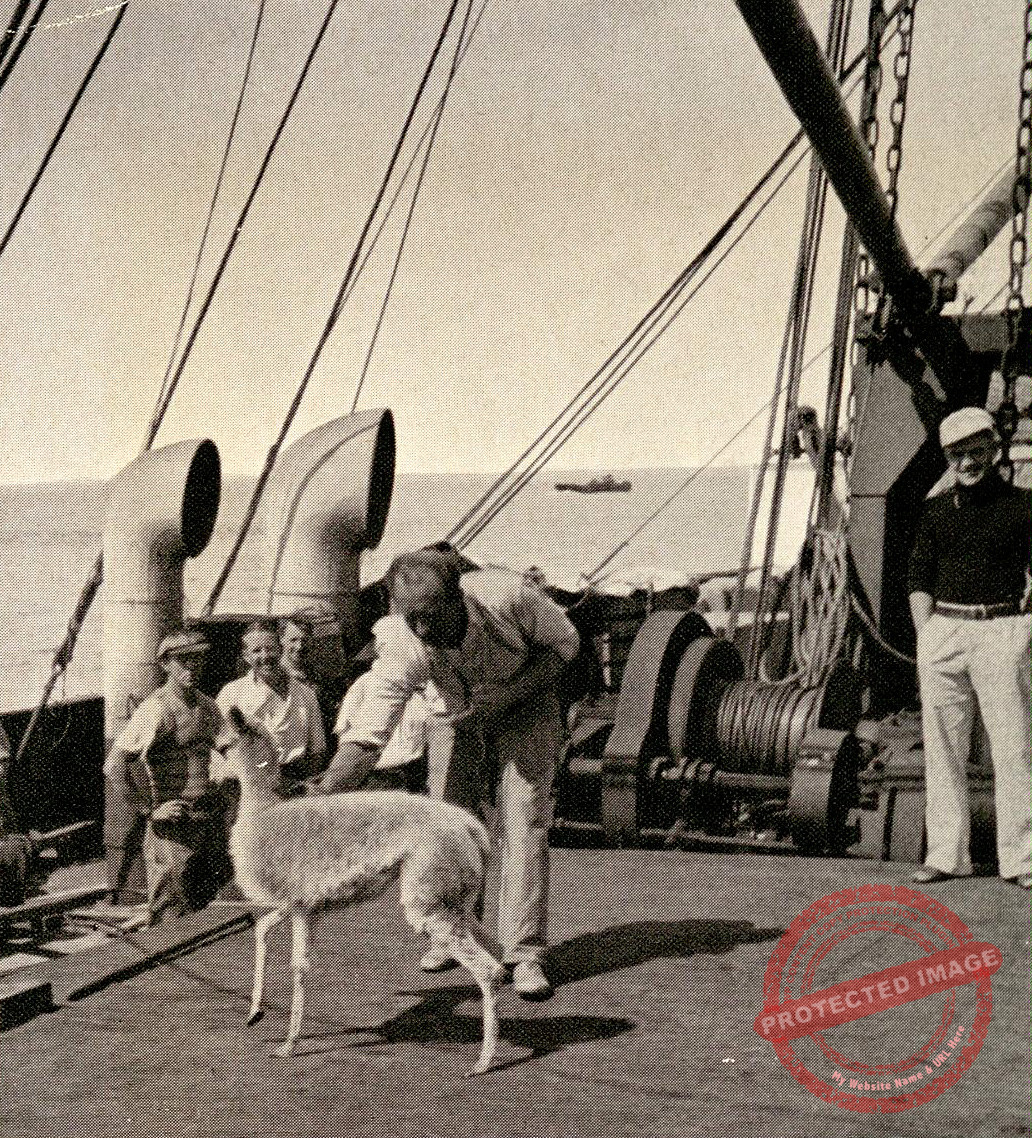
Baron von Redwitz, called ‘Sigi,’ returns to Germany with a South American transport. On the deck of the steamer ‘Awlaki,’ he is occupied with a young vicuña.