Chapter 18: From the End to the Beginning – Wilde Tiere Frei Haus (Wild Animals/Free Delivery)
Translated by Alex Haro
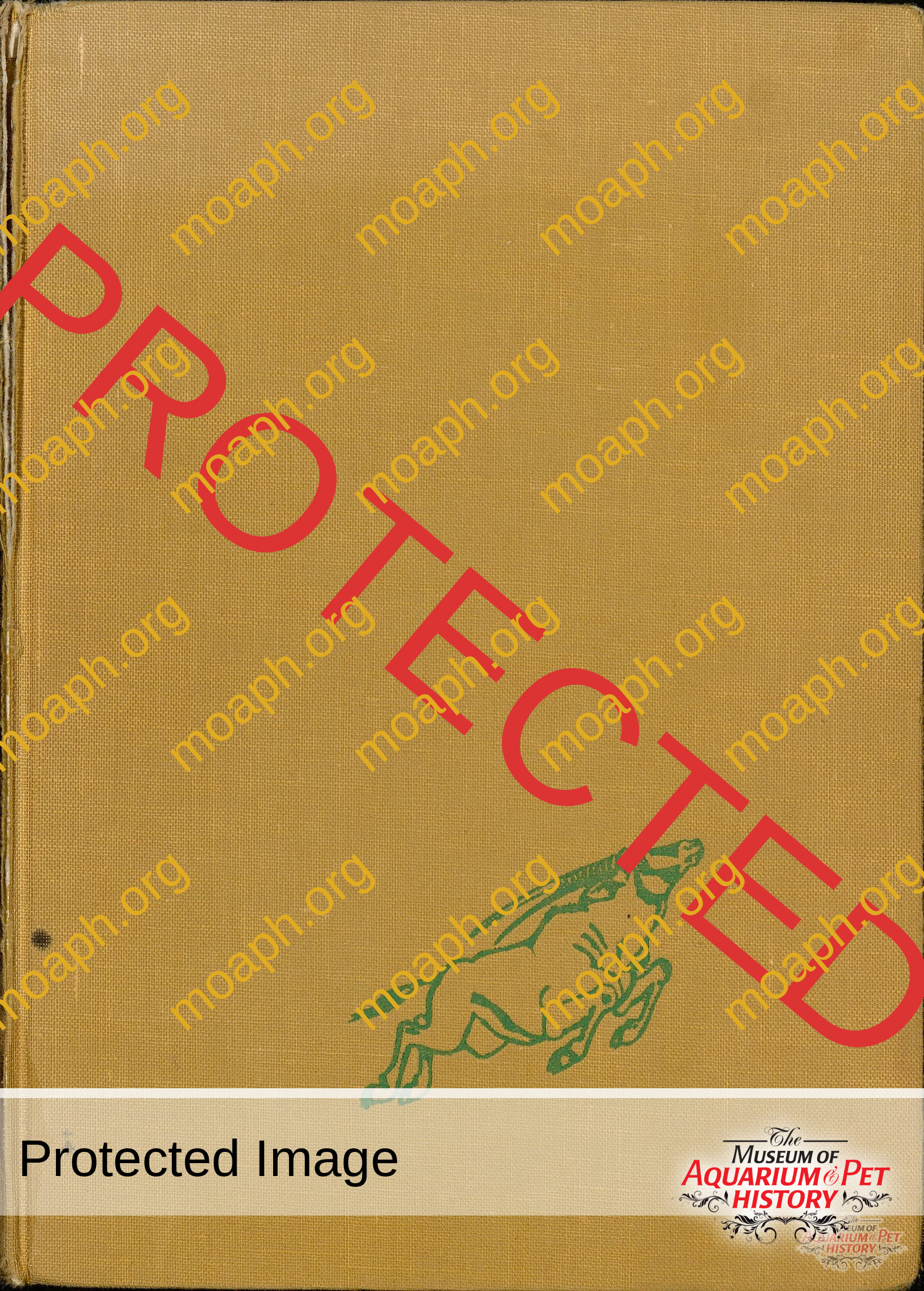
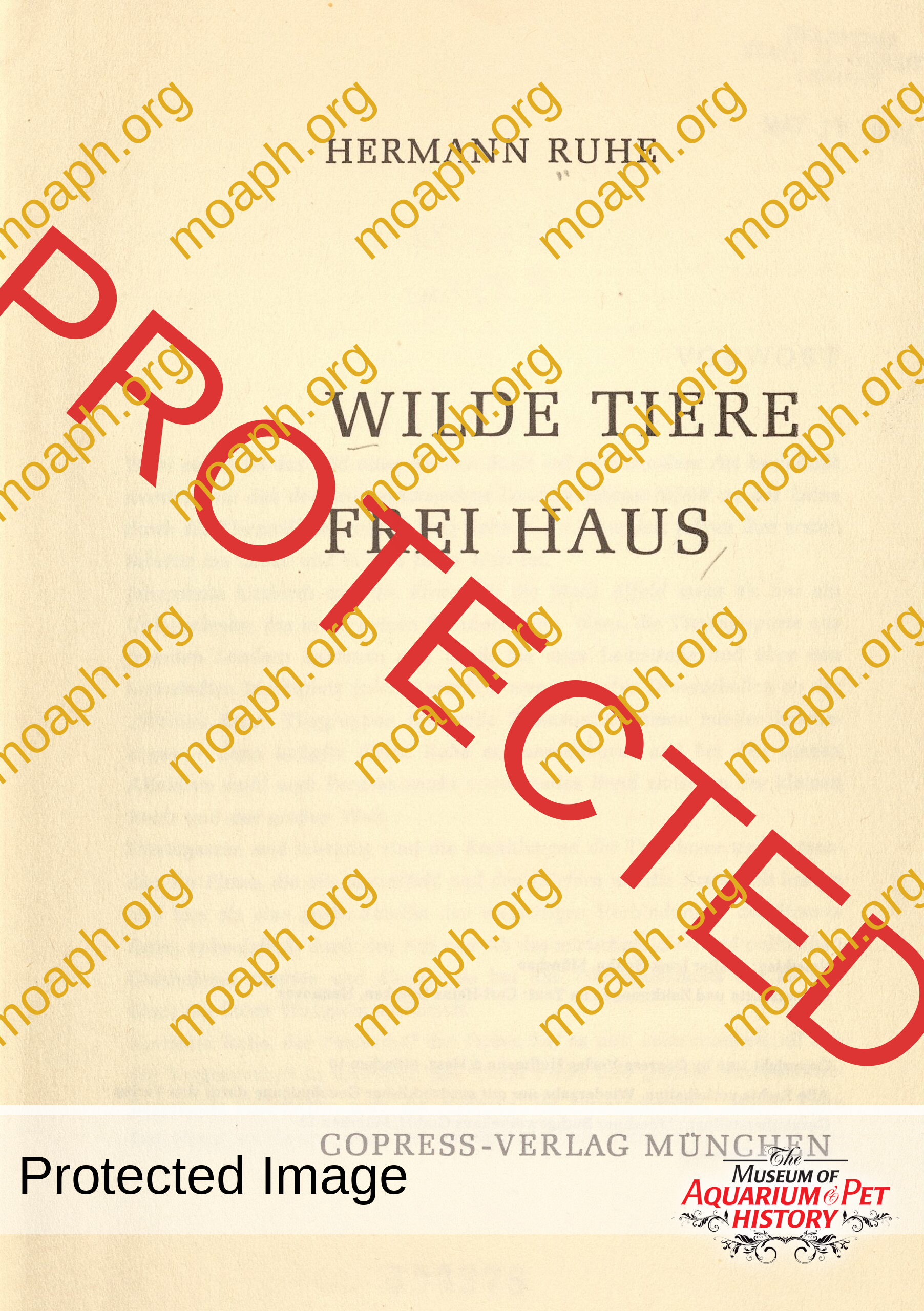
Starting in September 2024, the Museum of Aquarium and Pet History (MOAPH) started releasing a chapter a month on the translated autobiography Wilde Tiere Frei Haus (Wild Animals Free Delivery) by Hermann Ruhe.
Firma Ruhe (the Ruhe Company) was the name of an animal trading company based in Alfeld, Germany from 1860 until its official closure in 1993. During this time, they were world renowned for their importation and exportation of exotic animals and birds from all across the globe, even supplying many zoos as well as circuses. Having survived both world wars, Firma Ruhe continued to dominate the world of animal trading until the mid-20th century and is a testament to true determination and leadership.
Wilde Tiere Frei Haus (Wild Animals Free Delivery) also documents the plethora of adventures, failures and successes endured by all those a part of Firma Ruhe. Through Hermann Ruhe’s great storytelling, we are able to visualize and understand the world from the perspective of animal collectors navigating through some of the most difficult situations, often not knowing whether or not they would ever return home. His recollections provide a vivid portrayal of the challenges and triumphs faced by the company, and give readers a glimpse into the world of animal trading.
As a reserve lieutenant, I was immediately drafted by the General Command in Hildesheim and took part in the Polish campaign.
In Alfeld and Hannover, the ranks of the care and administrative staff thinned out. In January 1940, the district president secured my exemption for the Zoo in Hannover.
Normal zoo operations could still be maintained. It was much more difficult in Alfeld. The conditions for balancing my animal business, and thus the old company of my grandfather and father, through the times were minimal. I doubled my efforts to make progress.
Darnedde junior, who had handled my trade deals with Russia, had been drafted. However, Russia was the only country with which contact regarding the animal trade remained possible.
So I had to travel by myself. In August, September, and October 1940, and finally in the spring of 1941, I traveled to Moscow to conclude major trade deals with Soviet Putschina1. It still proceeded quickly and easily: such and such a number of elephants, giraffes, antelopes, etc., in exchange for such and such a number of Siberian tigers, camels, deer.
MOAPH1: The Soviet Putschina were an organization involved in animal exchanges with foreign partners in the 1940s.
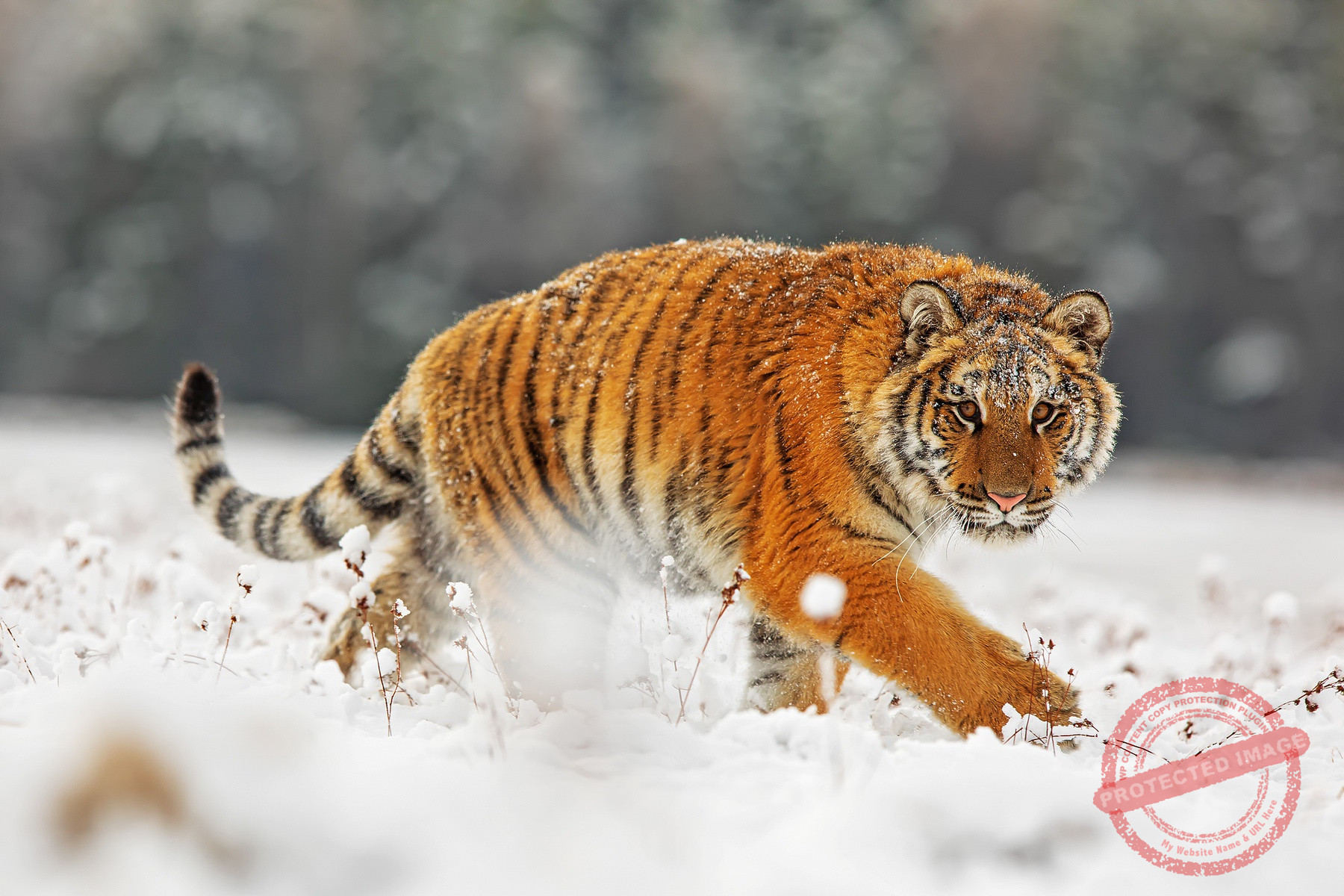
Young male Siberian tiger.
The last trip remains particularly vivid in my memory:
One of the gentlemen from Soviet Putschina picked me up at the airport and took me directly to one of the enormous hotels in Moscow. That evening, I spoke with the director of the zoo. An hour before midnight, we said our goodbyes. I went to my room and went to sleep.
At around 3 a.m., the phone rang:
“We need to finalize the deal with the animals!”
Good God! In the middle of the night, freshly pulled out of bed, the negotiations began, lasting until around 10 a.m., but they were concluded to everyone’s satisfaction.
The next day, I was invited to visit an agricultural exhibition, which I gladly attended, especially since I was told that all the provinces of the vast Soviet empire had contributed to the exhibition.
Accompanied by several gentlemen and a number of interpreters who spoke five or six languages, I went to the exhibition, which was indeed highly interesting. Before we were allowed to enter any of the halls, we had to put on white coats and step over thick disinfectant mats.
The most beautiful part of the exhibition for me was the magnificent horses from all parts of the country, some of which had been ridden to Moscow over weeks-long journeys. The first prize was awarded to a Cossack who had traveled more than 1,000 kilometers on horseback to reach the exhibition.
What I found particularly remarkable was the sheer number of horses and their excellent condition, despite the grueling journeys.
I didn’t stay long in Moscow; once all the transport details had been thoroughly discussed and finalized, I returned to Hannover.
That was the last international business deal I was able to complete. After that, it was over for good. The war with Russia also broke out, which ended any further possibility.
One of the first bombs to hit Hannover fell on the office building of the zoo, where we lived.
The apartment could be replaced, especially since no lives were lost, so that was bearable. But the destruction of my archive, with many old documents and records, was a heavy blow. Gifts and mementos from my many travels, which had been brought to me from all over the world—including an entire train of Indian elephants carved from precious exotic wood—were destroyed.
Photos, paintings, old family notes, letters—all gone!
Only a few photo albums and an insignificant part of the records escaped destruction and could be saved. Who could have imagined that a bomb would hit the zoo’s office building?
The events couldn’t be changed, and I had to endure the war and everything else that followed. The monkey house was bombed. The surviving monkeys, recaptured from the surrounding treetops, were transported to Alfeld. Most of the old caretakers had been drafted; untrained helpers stepped in as best they could and struggled to care for the remaining animals.
Strangely, I had premonitions.
One afternoon, I ordered, “Bring the Siberian tigers to Alfeld!”
“When should we do that, Mr. Ruhe?”
“Now—immediately!”
Shaking their heads, they followed the order, put the tigers in crates, loaded them onto trucks, and brought them to Alfeld.
That night, a bomb fell on the outdoor enclosure where the tigers had been kept!
Shortly afterward, I said, “Go—go! Get all the remaining animals out of the predator house and off to Alfeld!”
No one questioned me anymore; they hurried to evacuate all the predators as quickly as possible.
One day later, an incendiary bomb scored a direct hit on the empty predator house, which burned to the ground completely. All that remained of the interior were half-melted cage bars.
Everyone who could lend a hand did so. Even Waldvogel, the office man, helped out wherever he could.
There was only one thing we couldn’t change: the great apes had to stay in Hannover where they were. It would have been impossible to arrange for their proper accommodation and care in Alfeld. One of the reasons that made their evacuation impossible was that we had no coal for the enormous heating system in Alfeld.
Everything went fine with the monkey house until January 1945, but then an air mine fell hard next to the house in the zoo.
Strangely enough, I had received a large order (that I could not fulfill) in 1943 right in the middle of the war, to reorganize the Rotterdam Zoo (which had been severely damaged by the fighting) and to replenish its animal population…who was thinking about that in 1945?
All business had long since collapsed, and it was only about the bare survival of humans and animals! By the end of the war, there were hardly any travel possibilities for people, let alone transport space for zoo animals!
Alfeld had become a Noah’s Ark for evacuated animals—and a prison camp for humans! The large predator training hall and a few other animal houses were requisitioned to house a number of prisoners of war working in Alfeld.
The immense misery that prevailed in Germany had not spared the property at Weiße Erde (White Earth).
I still remember the emotions we all struggled with when the news came:
The war is over!
The first thing that happened at Weiße Erde (White Earth) was the liberation of the prisoners of war who had been living with us for months.
The second was that we rolled up our sleeves and freed our animals from their confinement. Now that space was available again, we could house them as we had before.
How everything looked after these years, in which there hadn’t even been a nail, let alone fresh paint or new wood! But the repairs had to wait; the first priority was the Zoo in Hannover.
Everyone pitched in to at least get things in temporary order so that we could eventually think about bringing the animals back from Alfeld and reopening the zoo.
What a challenge it was to feed our animals, whether they were in Alfeld or Hannover! Rasche was almost constantly on the road with Inspector Eiffert, procuring oats and hay, horse meat for the predators, or fruit for the monkeys. Had it not been for a few landowners I was friends with who helped out, I believe some of the animals would have starved.
The first business I could do again was selling a few ponies to small transport companies. Then a well-known circus company came nearby, and the director negotiated with me to get an elephant.
His payment: an old car, two barrels of wine, 2,000 cigarettes, several kilos of raw tobacco—and such and such amount of Reichsmarks2, which were useless for buying anything.
MOAPH2: In this case the exact value of Reichsmark is unknown. Therefore the author uses the term ‘such and such’ as a place holder.
We used the wine, cigarettes, and tobacco to barter again for hay, oats, fruit, or horse meat for our other animals.
An alligator was ordered and was supposed to be delivered to a well-known fairground showman. But how? We didn’t have a drop of gasoline to get a vehicle running.
Hary von Rautenkranz, an old acquaintance from Celle, stepped in. While someone sat in the back of the car to hold the thrashing tail of the alligator—the animal wasn’t too big, but it was of considerable length for a normal Volkswagen—Harry, who was at the wheel, constantly felt the reptile’s breath on the back of his neck.
“Did you really tie its snout tightly?” he asked once, when things got a little too damp near his collar.
We were quite relieved when the animal was delivered to its destination.
“I won’t forget that trip anytime soon,” said Harry von Rautenkranz, and later we laughed about it whenever that strange journey came up.
So the sales trickled along, while purchasing was completely at a standstill.
To make matters worse, because I had served as an officer at the beginning of the war, I ended up in the officer prisoner-of-war camp in Attichy, France.
For several months, I couldn’t focus on rebuilding the zoo in Hannover or on the restoration of the business in Alfeld.
Only after my release was I able to acquire breeding animals from a few German zoos, which I paid for in part and traded for other animals in part. But that, too, came to an end soon enough.
Then—a miracle happened: we were approached regarding an animal transport from Italian Somaliland.
Not for us, of course; no, we weren’t that far along yet. It was destined for an Italian business associate, Signor Molinar in Milan, who operated an animal shop and a small zoo. We had worked together before the war and, among other things, supplied giraffes for the World Exhibition in Naples in 1938.
Our former business partner from London, Fockelmann, was a great support to me during this time. Shortly afterward, he went to Milan and found a new line of work with our business associate.
Molinar had difficulties due to the strict veterinary regulations in effect in Italy, which prevented him from bringing the animals arriving from Somaliland ashore. He had to send them on to Marseille—and there they were, not knowing where to go.
“Can you take over the animals and have them undergo quarantine in Alfeld?” came the inquiry from Milan.
In West Germany, there were no such strict veterinary regulations. I sent a caretaker to Marseille, and my son Hermann, who fortunately had survived his military service unharmed, met them halfway at the border in Kehl.
On this trip, my eldest son gained his first practical experiences. When he returned, he told me what he had encountered along the way. In the wagon, he had to sleep between two zebra crates because there was no other space. His bedding was just some straw.
“Suddenly, towards morning, something kept brushing over my face, like a gust of wind!” he told me.
“A strange, shadowy movement flickered over my face, quick and unsettling. When I fully woke up, I stayed still—and thank goodness I did! One of the zebras had toppled over in its crate. You saw those crates when we unloaded them, Dad it was complete amateur work!”
We had never seen such poorly constructed animal crates as those in the Italian transport. The zebra crates, for instance, were made with wide gaps between them, reaching all the way to the bottom.
“Unfortunately,” my son continued…
“While lying down, the zebra had stuck one of its legs through the gaps and couldn’t get it back out because it was stuck. That leg was swinging right over my face. If I had quickly lifted my head, it could have been bad. So I just layed still and waited for the right moment. Then I grabbed the leg and, with quite a bit of force, slowly but surely pushed it back into the crate. The animal was able to stand up again.”
That was my eldest son’s first experience with the unexpected things that can happen during an animal transport.
Meanwhile, the repair work at the Hannover Zoo was progressing, although everything could only be restored temporarily due to a lack of materials and manpower.
We had a wood gas-powered truck, but it wasn’t enough to transport all the food and materials we needed to bring in.
Three Belarusian families were assigned to us as workers, and they brought something that proved very useful to us: a few working camels that were accustomed to pulling a wagon. The camel wagon was probably one of the most unusual refugee vehicles to have moved westward at the end of the war!
These working camels were now fed in Hannover and, like obedient Haflinger horses, were used with their wagons in our transports.
In May 1946, the day finally arrived that we had worked towards for months: the Zoo could open its doors to the public.
Rarely have we experienced such a grateful audience as we did in those difficult times. In the remaining months of the year, we were able to welcome 460,000 visitors to the zoo. In 1947, it was even over three-quarters of a million!
My brother Heinz, who had spent the war with the American army, though not in Europe, needed a little help—just like Uncle Bernhard after the First World War—to get the American business back on its feet. Since the animal trade was still completely stagnant, I tried to revive the canary breeding business, which had suffered a total collapse for the second time after this war.
Once again, oilseed for the average consumer was unavailable. The breeders, however, couldn’t start until they had it. Through the military government, I got the necessary permits—and thus, after some time, Alfeld once again became the saving angel for the American business through the supply of canaries!
But this good business didn’t last for decades, as it had once done. We faced extremely strong competition from the Dutch and—from the Japanese. Something else also began to undermine our business in this respect, as paradoxical as it seems: modern air travel.
Everything became quite different. Retailers in America no longer needed us. Airmail to European or Japanese breeders was enough—and the canaries, in feather-light cages of 50 birds, would arrive at their destination via air freight in a matter of days. A dollar check sent by mail—done!
Of course, this development didn’t happen so clearly right after the war. It took several years. But the signs that this branch of business would inevitably slow down were already evident.
For the time being, we supplied rape seed to the breeders, received canaries, and shipped them to New York—where they sold like hotcakes.
It didn’t matter how we started; the main thing was that the business got up and running again.
Finally, the currency reform came, and our money became worth something again. But that didn’t get us much further. I traveled around and tried to obtain offspring from the few zoos that I, as a German, was allowed to visit again. There wasn’t much to be had!
It was on a Sunday morning in the summer of 1948, shortly after the currency reform. We were in Alfeld on our tennis court next to the Weiße Erde (White Earth), engaged in a heated battle over the ball.
The set wasn’t finished yet when Mr. Plawitzky came over:
“Mr. Ruhe—do you have a moment? There’s a man from near Gelsenkirchen who wants to speak with you.”
“What does he want?”
“He wants to buy a few monkeys,” Mr. Plawitzky said.
“Monkeys?” I said. “Good God—what an idea! Tell him I’m sorry; monkeys are scarce. We don’t have any.”
Plawitzky, who had already told the stranger the same thing, returned to the visitor.
After about fifteen minutes, he came back to the tennis court: “He would really like to speak with you personally, Mr. Ruhe.”
“Alright,” I said, putting the racket aside and going with him to the office in the birdhouse.
The visitor was an innkeeper from near Gelsenkirchen, recently returned from captivity. He used to run a small zoo with a few monkeys, raccoons, and birds at his restaurant, which was a popular destination.
“I understand you can’t sell me any monkeys,” he said. “That’s too bad! Well, maybe soon. But I wanted to make you aware of something, Mr. Ruhe.”
“Yes?” I said.
“I heard that negotiations are underway in Gelsenkirchen. I recently spoke with an acquaintance who works at an authority. Gelsenkirchen wants to establish a zoo.”
I listened with interest. After my few recent trips abroad, where I had noticed a certain reserve towards me as a German in the formerly familiar countries, I had already been considering whether it might be a good idea, given the situation, to establish and run a second zoo in another city.
A zoo in the densely populated North Rhine-Westphalia should be successful!
The Cologne Zoo was completely destroyed; only the Zoo of Wuppertal was still standing, along with the smaller zoo in Duisburg. Gelsenkirchen would be ideal!
I arranged another meeting with our visitor, and while he went to the hotel, I didn’t waste a minute and asked Mr. Glenewinkel, who had arrived a few months earlier and was still without work in Alfeld, to come over so I could discuss his previous experiences in Duisburg with him. He had worked there as the zoo inspector for an extended period before the war. Glenewinkel was enthusiastic about the prospect—and immediately took charge of the situation. The very next morning, I sent him to Gelsenkirchen to make contact with Dr. Wendenburg from the city’s reconstruction department.
Two days later, Glenewinkel called me: “It would be worthwhile for you to come to Gelsenkirchen yourself, Mr. Ruhe!”
I went there right away. The negotiations in Gelsenkirchen were ongoing, and after several days and many discussions, a rough draft contract was created, based on my contract with the city of Hannover, which made the process much easier. I returned to Hannover with this draft to review it thoroughly.
To avoid wasting any time, Mr. Glenewinkel stayed in Gelsenkirchen and took part in a site inspection with the city officials.
“The Bismarckian has proven to be suitable,” Glenewinkel said over the phone.
The Bismarckhain, an old and beautiful city park, had suffered heavily during the war. On top of that, it had been used as a site for makeshift refugee barracks, and the remaining space had been repurposed for vegetable cultivation.
The city of Gelsenkirchen was very generous in its planning. The refugees were relocated to other accommodations—and by autumn, we were able to conduct the first site visit together with Chief City Director Zimmerman and Dr. Wendenburg.
From that point on, things moved almost at lightning speed, and I have rarely seen such a large project grow so quickly.
In the following months, I also moved my own residence to a hotel in Gelsenkirchen. Too many things needed to be considered and often had to be dealt with on-site right away.
Where would we get the animals? Is securing a loan possible? Who will run the zoo? How much staff can I free up from Hannover and Alfeld to train new personnel in Gelsenkirchen?
I remembered the zoologist Dr. Hermann Steinmetz, who had worked for many years as the first assistant to Geheimrat Ludwig Heck and later Dr. Lutz Heck in Berlin. Just before the end of the war, I had spoken to him and said,
“Doctor, if you ever don’t know where to go when it’s all over—come to Alfeld!”
But Steinmetz was far too modest to take advantage of such an offer: he went to Stellingen as a simple animal keeper!
I met with him in Hamburg, and Steinmetz, who had no serious commitments in Stellingen, enthusiastically came with me to Gelsenkirchen to take over the directorship, while Mr. Glenewinkel assumed the role of business manager.
Gradually, the thousands of problems were resolved. The terrain of Bismarckhain was laid out according to very modern principles. The leadership of the Gelsenkirchen Parks Department was open-minded and readily accommodated our technical requests regarding the animals. The paths had to be widened to avoid congestion, and beautiful park areas were created.
The construction work was handled by the city’s construction office. There was no talk of bureaucracy; everything ran smoothly! We continuously acted as consultants—and most of our suggestions were taken into account.
As unbelievable as it sounds: by Easter 1949, just six months after starting work in the devastated park, the Ruhr Zoo, as we named it, was opened!
The Ruhr Zoo was completely different from the traditional model. It consisted of magnificent open areas; the animal houses, which were kept as small as possible, nestled into the trees and the landscaped areas. Very few cages were used, and were supplemented by many water features and plantings
“One of the most modern zoos in Europe from a technical standpoint!” was the verdict when the zoo was opened to the public.
The hard work had paid off. The zoo was meant to grow gradually, year by year, with new facilities and new animals being added.