Britain’s Pioneering Bird Farm
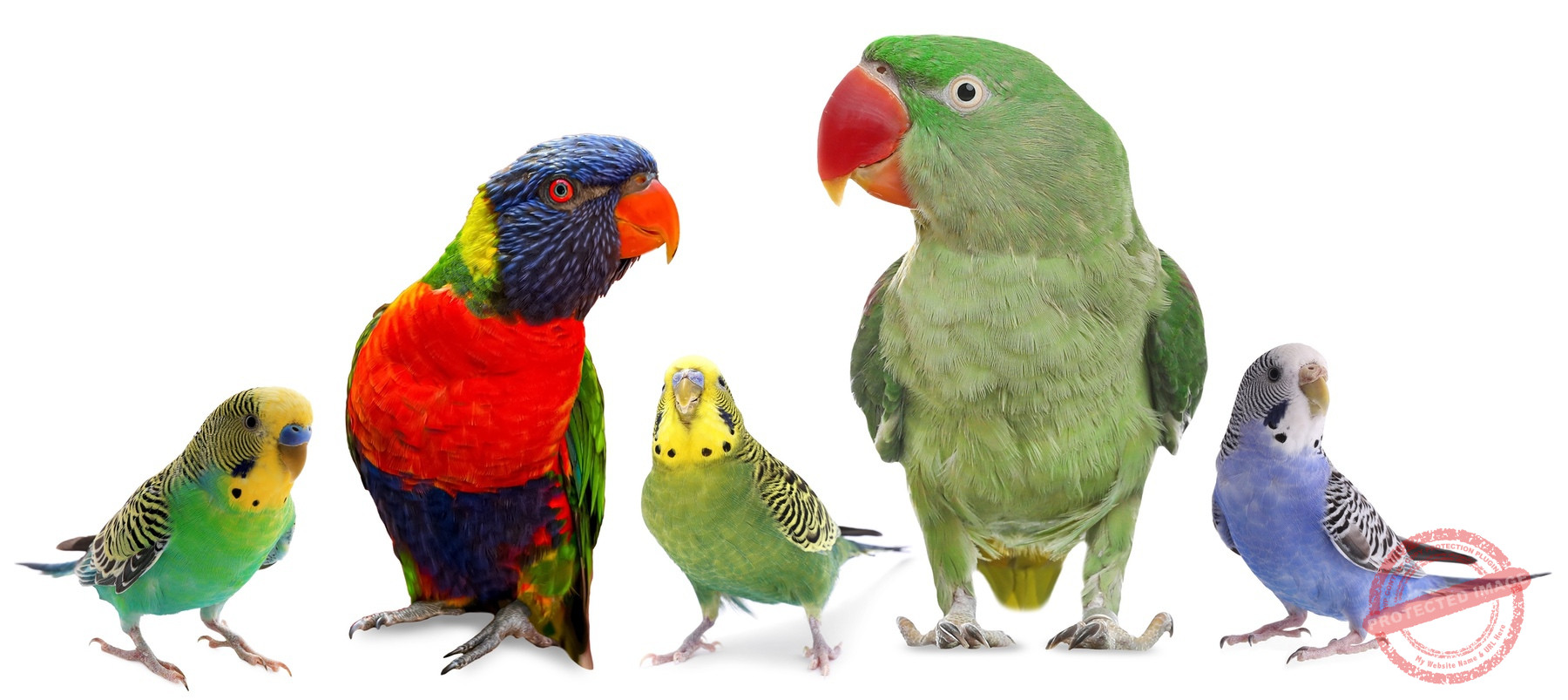
A small selection of the psittacines bred at Keston—budgerigars, Trichoglossus lorikeets and the Alexandrine parakeet. Photo courtesy New Africa/www.shutterstock.com
In the rolling countryside of Keston, Kent—now part of the London Borough of Bromley but historically a quiet rural enclave—stood one of the most influential yet now largely forgotten institutions in the history of bird keeping: the Keston Foreign Bird Farm. Founded in 1927, this commercial bird breeding operation became internationally known for its success and innovation in the rapidly-developing world of aviculture.
Specializing in “foreign” birds (a term encompassing everything from parrots and macaws to finches and softbills), the farm not only imported exotic species but, crucially, mastered their captive breeding at a time when wild-caught imports dominated the market and survival rates were low. Its story spans over four decades, bridging the golden age of aristocratic bird collections and the modern emphasis on sustainability in aviculture. Through pioneering techniques, regular reports in the Avicultural Magazine, and publications issued under its own imprint, Keston helped to shift the hobby away from simply keeping such birds to introducing scientific insights into their care and breeding.
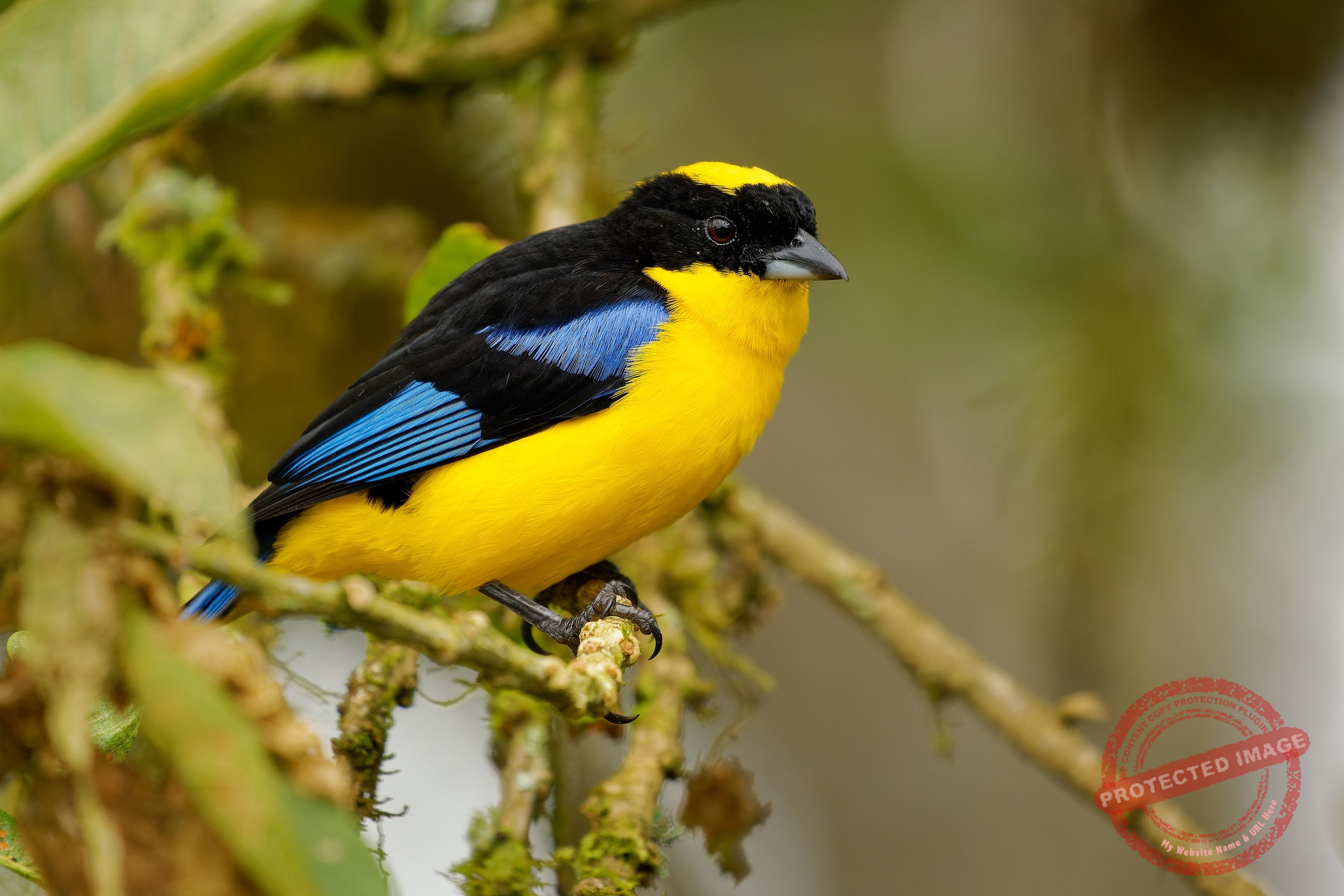
The first breeding of the Blue-shouldered Mountain Tanager (Compsocoma somptuosa) occurred at Keston, a success credited to W.D. Cummings, who penned an account of the event for the Avicultural Magazine in 1963. Photo courtesy Martin Pelanek/www.shutterstock.com
Furthermore, it served as a training ground for many who would go on to have an influential impact on aviculture in the UK and abroad. Staff included notable figures such as Donald H.S. Risdon, who worked at Keston before and after the Second World War, prior to opening the Tropical Bird Gardens at Rode near Bath in 1962. Risdon carried Keston’s ethos of hardy outdoor breeding into his own public collection. Similarly, W.D. Cummings who was Keston’s General Manager for many years through until the 1960s, then emigrated to South Africa where he ran his own bird farm at Barberton before overseeing the aviaries at Mitchell Park Zoo in Durban, Natal. There he continued experimental work with color mutations, hybrids and public displays integrating birds with compatible plantings for improved welfare and visitor appeal.
Today, the legacy of the Keston Foreign Bird Farm still lives on in the mutations that it established, and the species whose breedings were documented for the first time, allowing others to build on these pioneering experiences. Indeed, in many ways, Keston was ahead of its time, serving to shape modern attitudes amongst aviculturists.
The founders
The farm’s origins trace directly to two visionary figures: Edward Jeffrey Boosey (1902–1969) and Alec Grantham Sagar-Musgrave-Brooksbank MC (1898–1967). Boosey, born in Bromley to a family connected with the renowned music publishers Boosey & Hawkes, brought business acumen and a lifelong passion for natural history to the venture. He had previously worked with the Duke of Bedford’s celebrated collection at Woburn, gaining invaluable experience with rare parrots before striking out on his own, at the property known as Brambletye on Westerham Road—where the business operated.
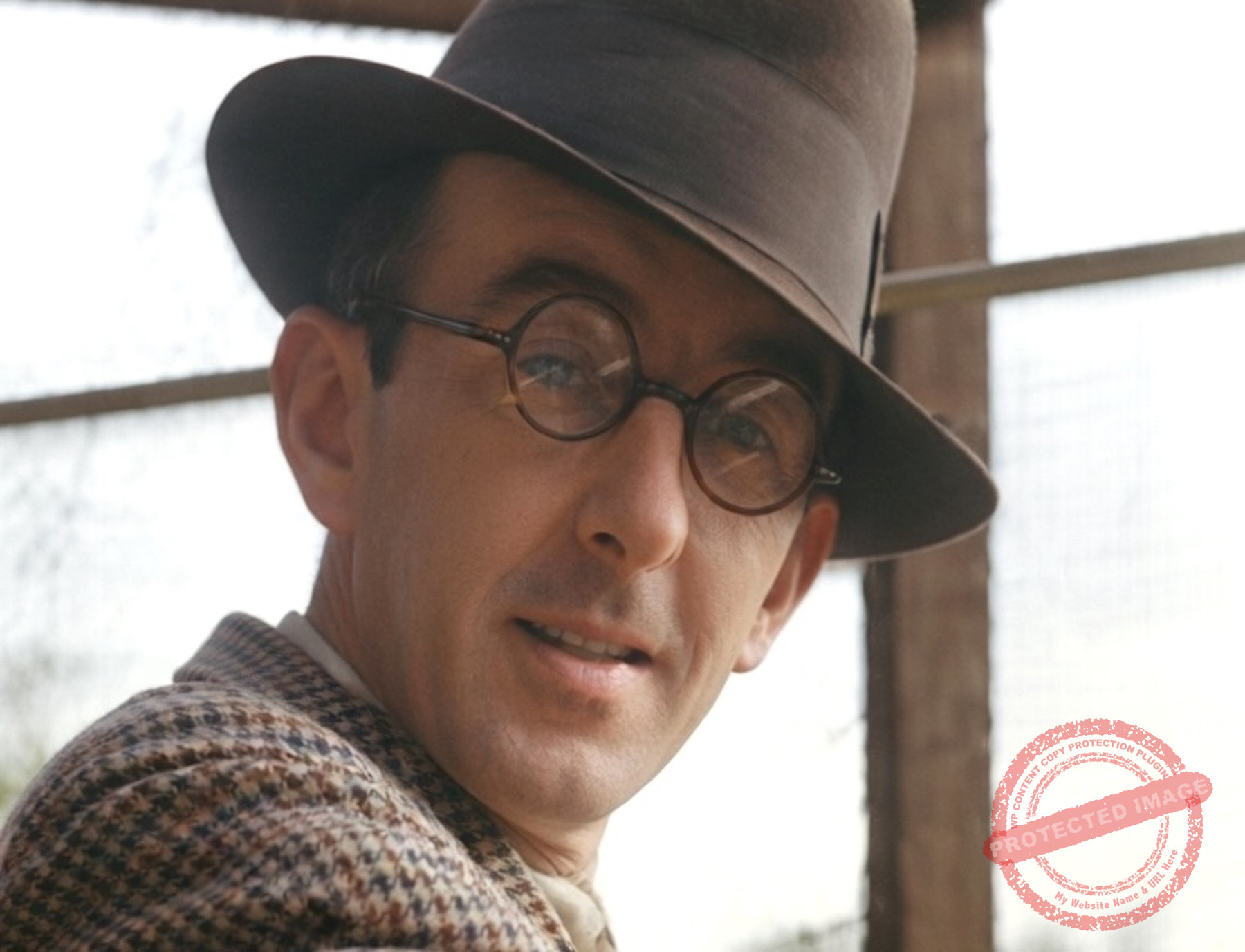
E.J. Boosey in one of the flights at Brambletye, at the age of 32.
Brooksbank, a decorated First World War veteran, complemented Boosey’s practical expertise. It also appears that he was a keen photographer, using his skills to capture previously unseen color images of the birds in Keston’s care. Together, they established the operation on a south-facing hillside sheltered by woodland: an ideal microclimate for acclimatizing tropical birds to Britain’s frequently damp, temperate conditions.
Early successes recorded
The 1932 breeding season exemplified Keston’s early triumphs. Boosey and Brooksbank reported detailed breeding results in an article published in the Avicultural Magazine. These included a pair of Brown’s Parakeets (Platycercus venustus) rearing eight young (five in one clutch, three in the next), contributing to 25 offspring exported over three years to France, Belgium, Germany, and California. This species, also known as the Northern Rosella, is almost unknown in collections today. Newly imported Stanley’s Parakeets (Platycercus icterotis), sometimes also described as Western Rosellas, from Australia produced five young almost immediately.
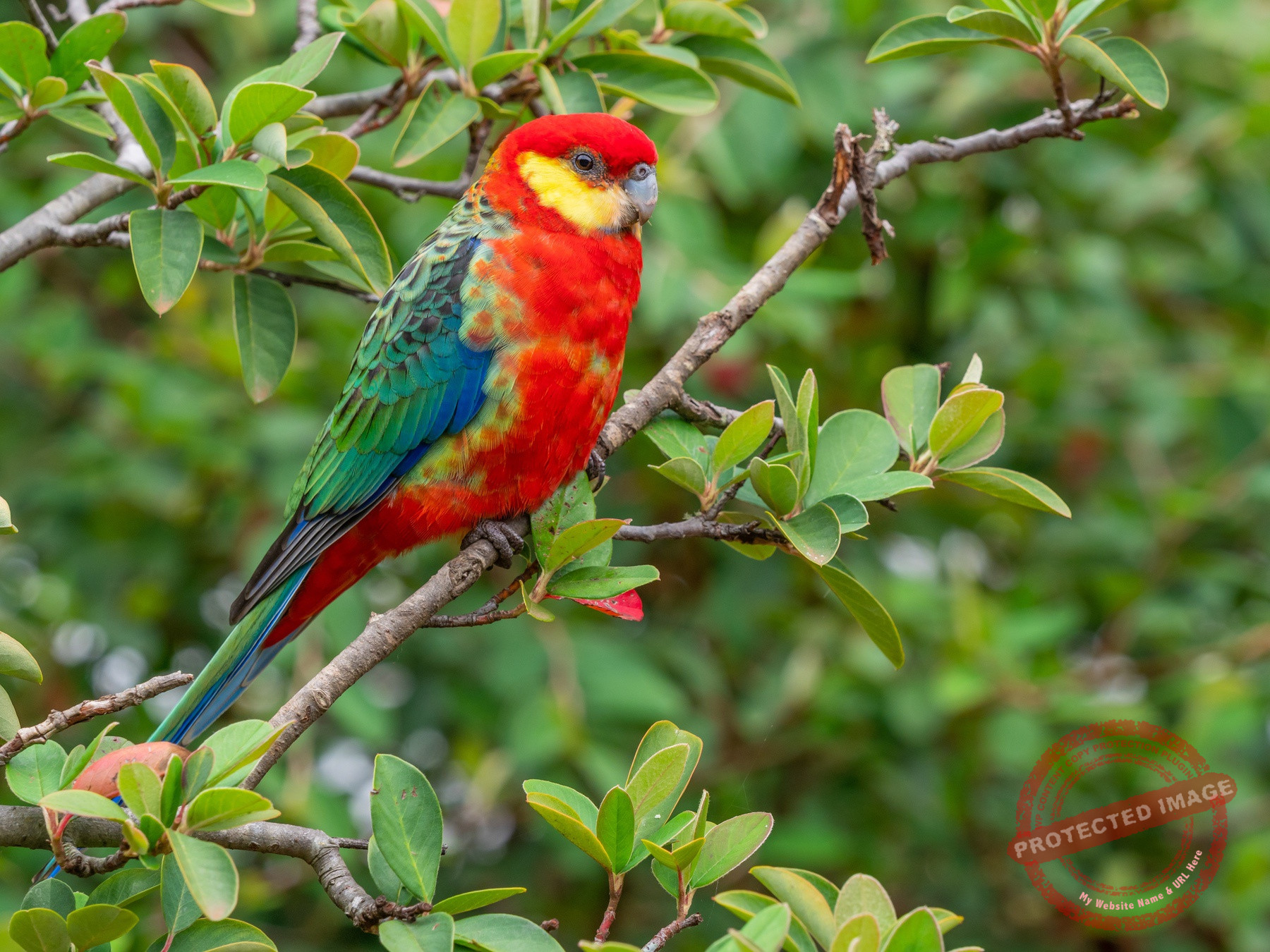
Stanley’s Parakeets or Western Rosellas (Platycercus icterotis). Photo courtesy of Wiki Commons.
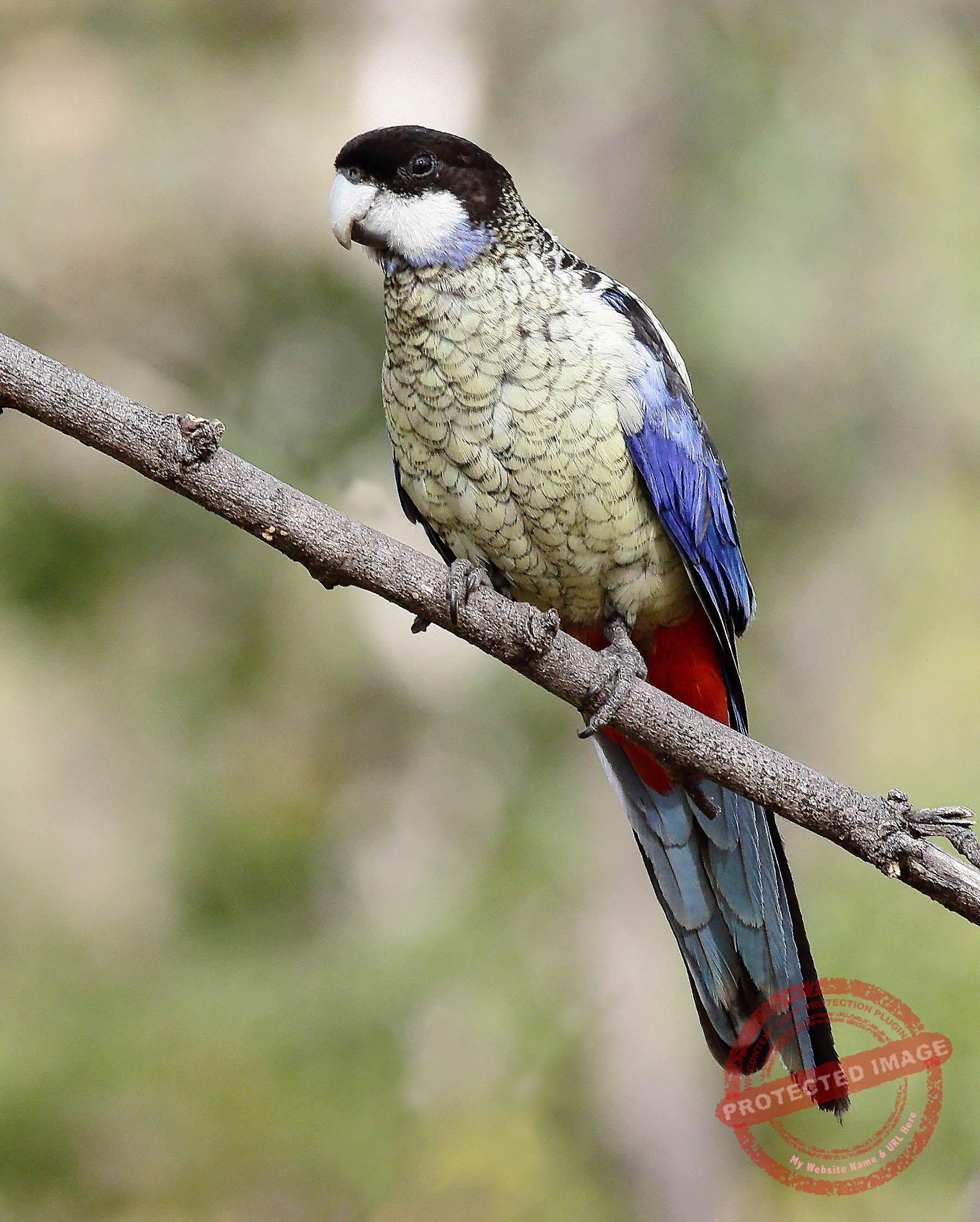
Brown’s Parakeets or Northern Rosellas (Platycercus venustus). Photo courtesy of Wiki Commons.
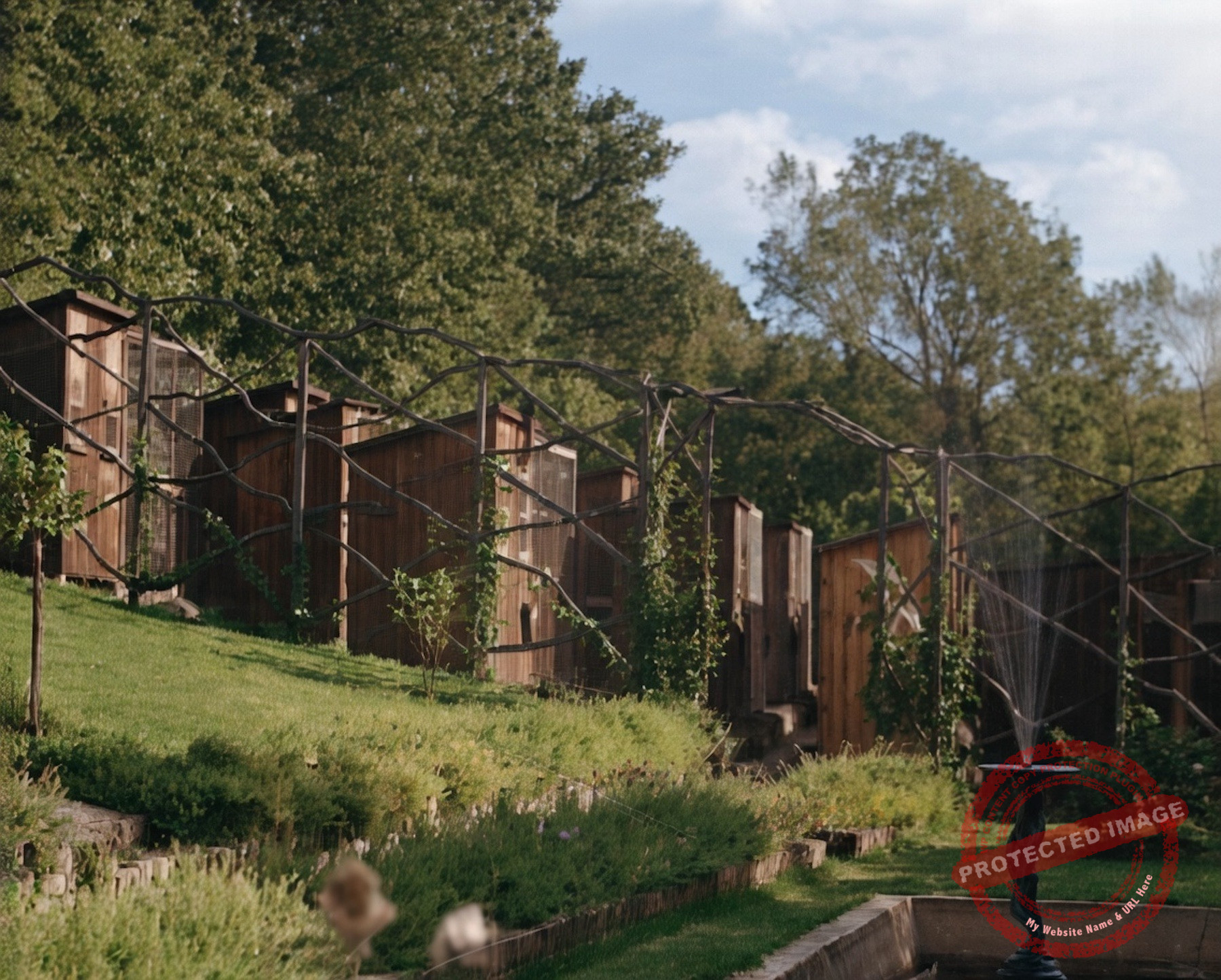
Some of the well-designed aviaries that were used at the Keston Foreign Bird Farm.
Barraband’s (Polytelis swainsonii), Many-coloured or Mulga (Psephotellus varius), Bourke’s (Neopsephotus bourkii), and Elegant Grass Parakeets (Neophema elegans) all bred successfully, as did Swainson’s Lorikeets (Trichoglossus moluccanus), not to mention Red-collared Lorikeets (Trichoglossus rubritorquis) which nested year-round, Peach-faced Lovebirds (Agapornis roseicollis), and a staggering array of finches—500 young from 45 pairs of Zebra Finches (Taeniopygia castanotis) alone, plus 43 Rufous-tailed or Star Finches (Emblema ruficauda) from just five pairs also featured on the list of Keston’s successes that year.
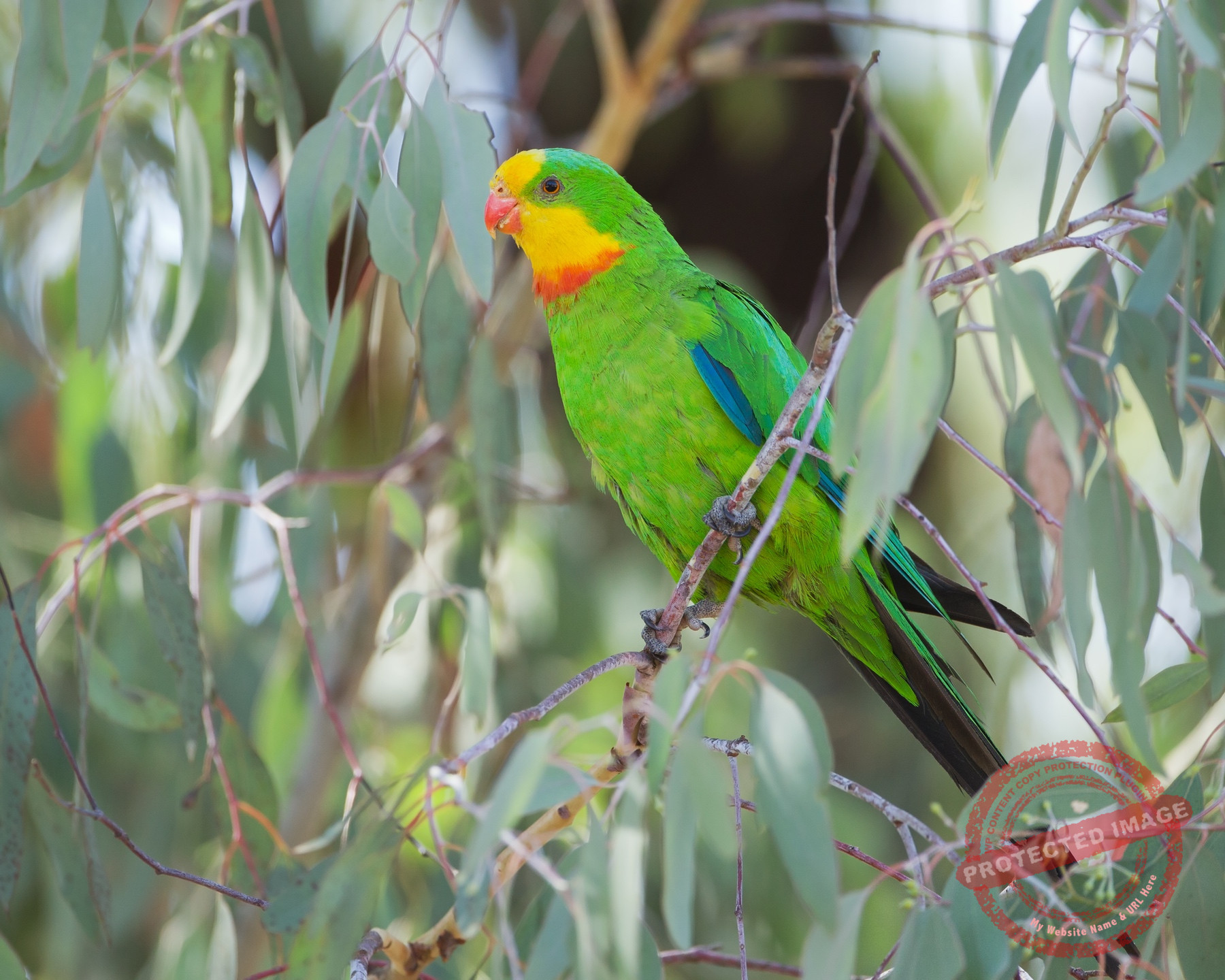
Barraband’s Parakeet (Polytelis swainsonii). Photo courtesy of Wiki Commons
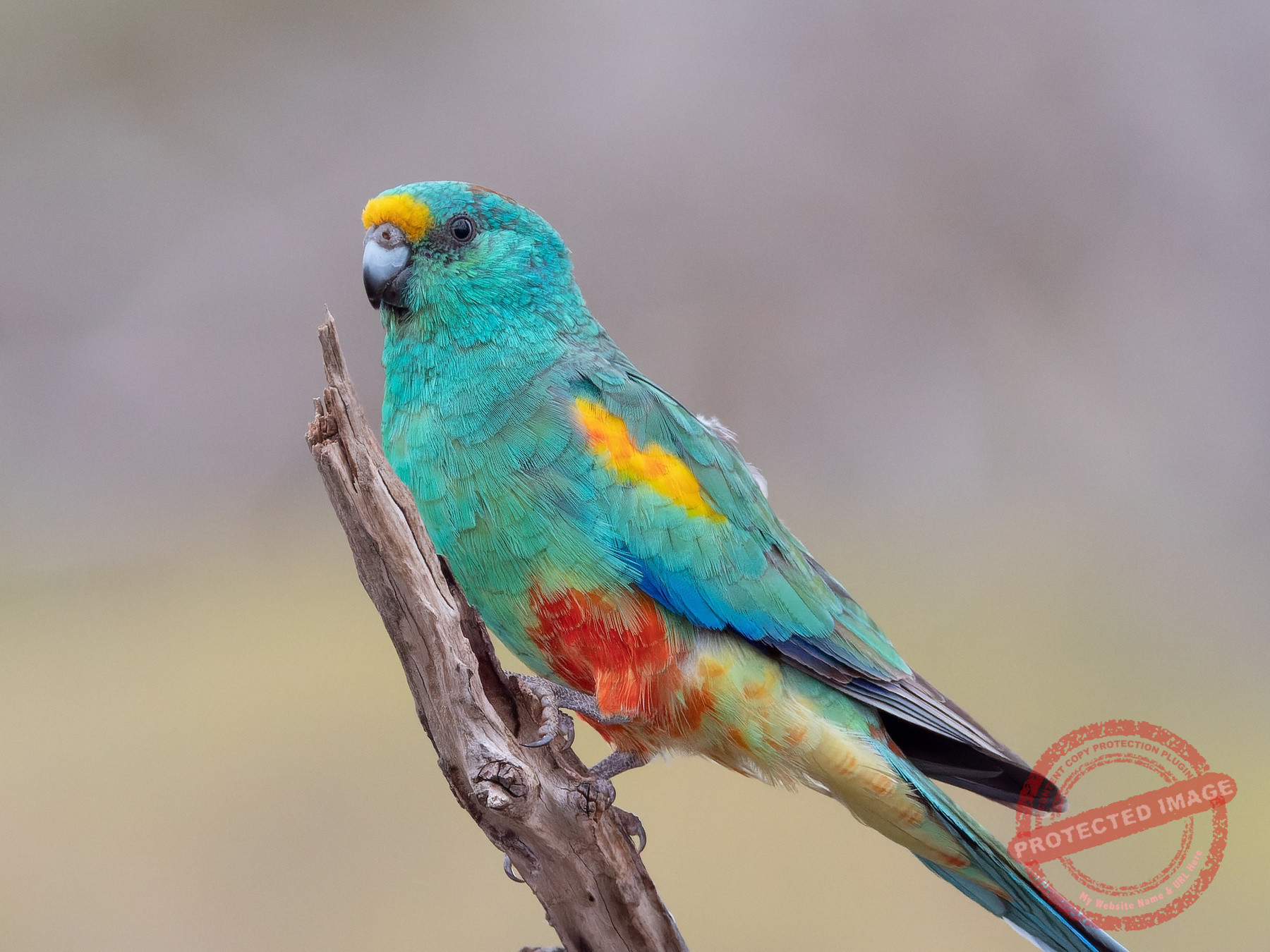
Many-coloured or Mulga Parakeet (Psephotellus varius). Photo courtesy of Adobe Stock.
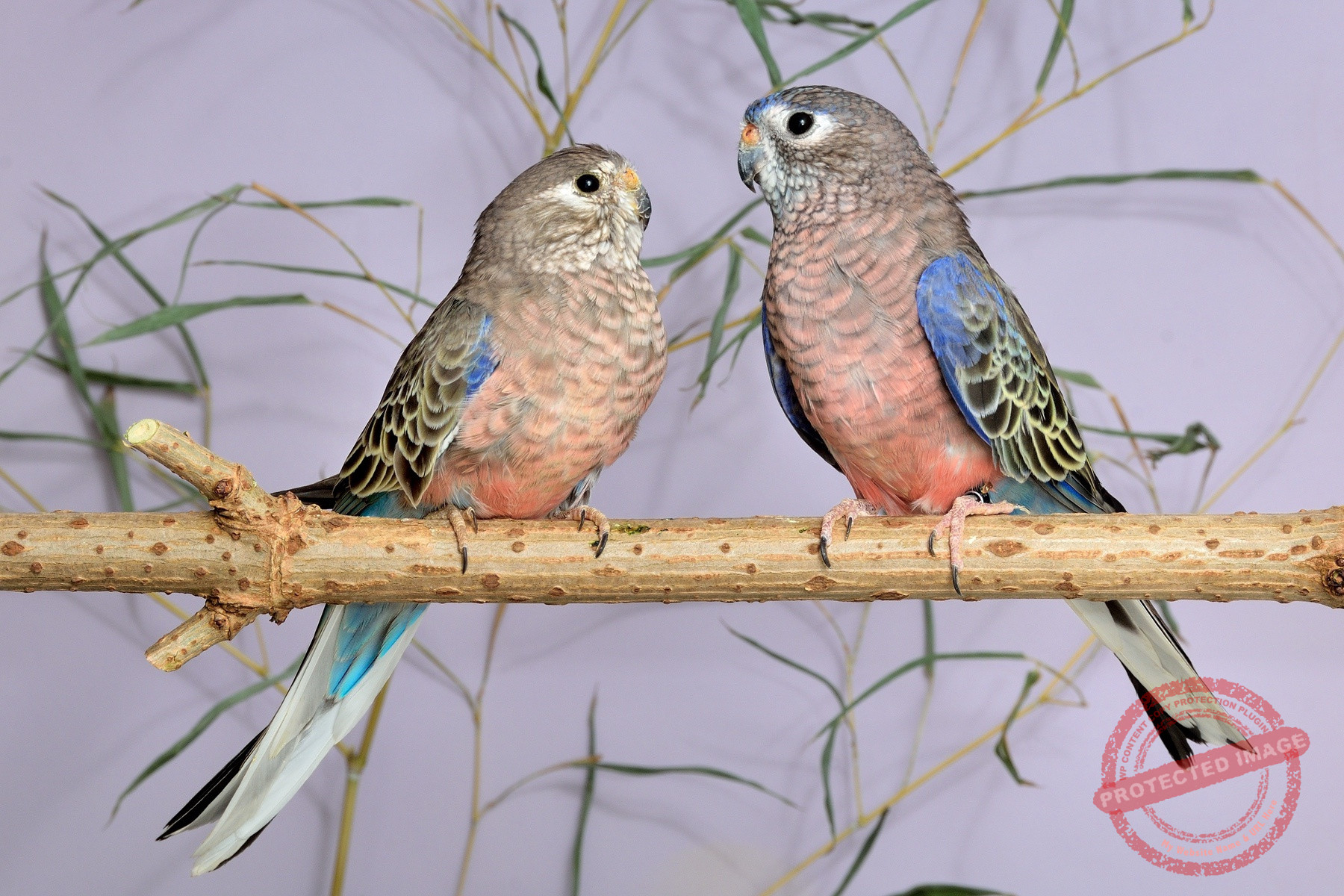
Bourke’s Parakeets (Neopsephotus bourkii). Photo courtesy of Adobe Stock.
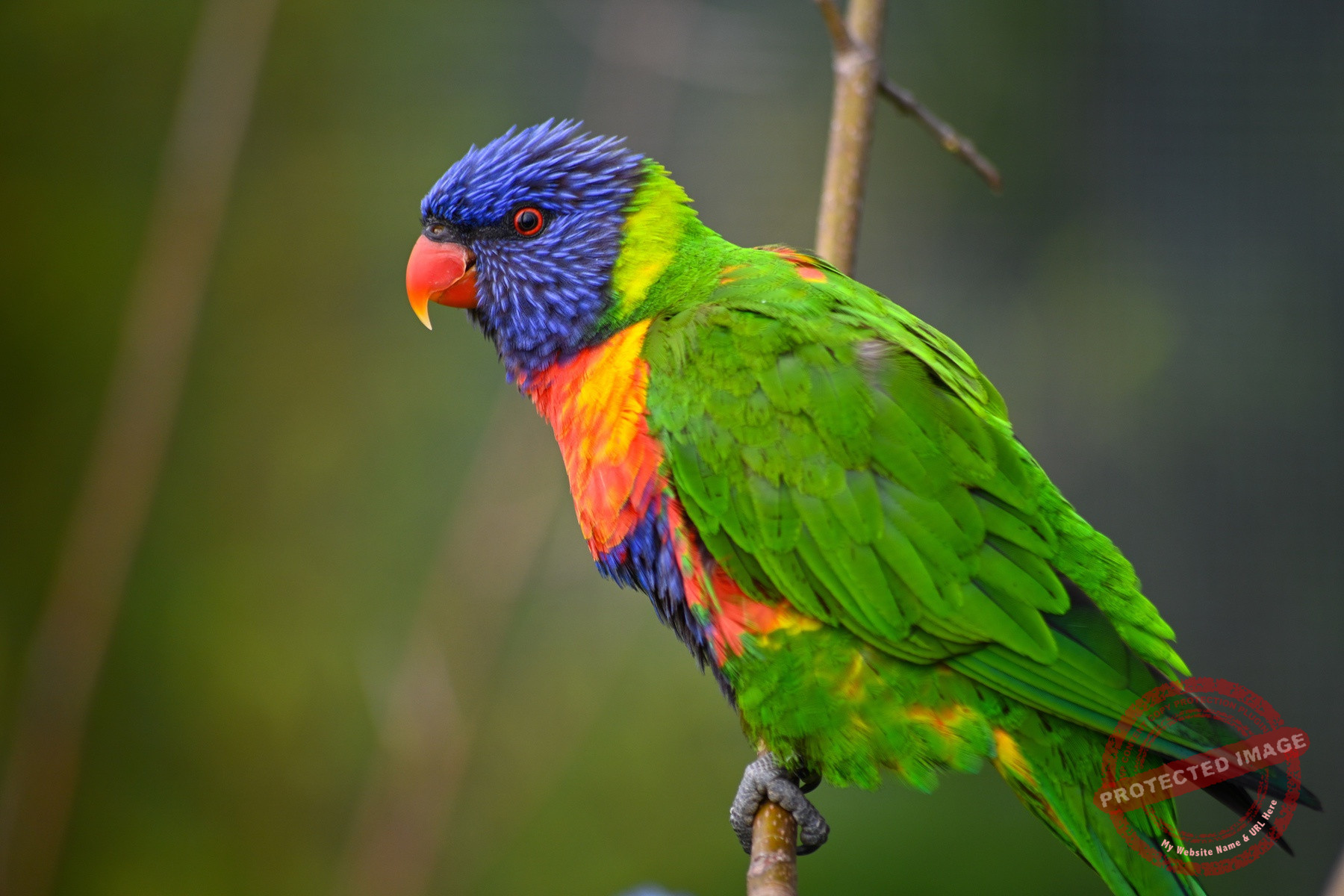
Swainson’s Lorikeets (Trichoglossus moluccanus). Photo courtesy of Adobe Stock.
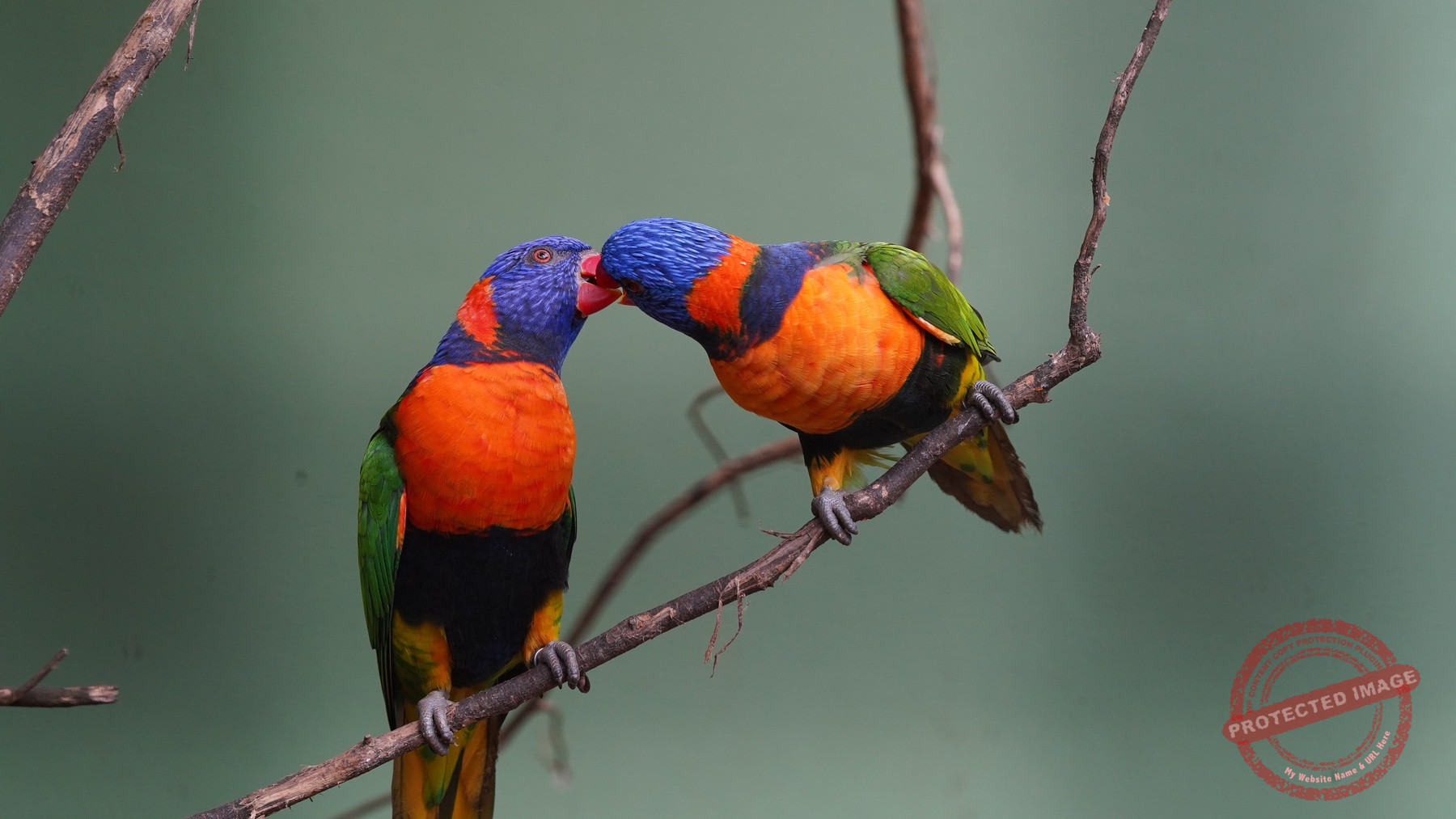
Red-collared Lorikeets (Trichoglossus rubritorquis). Photo courtesy of Adobe Stock.
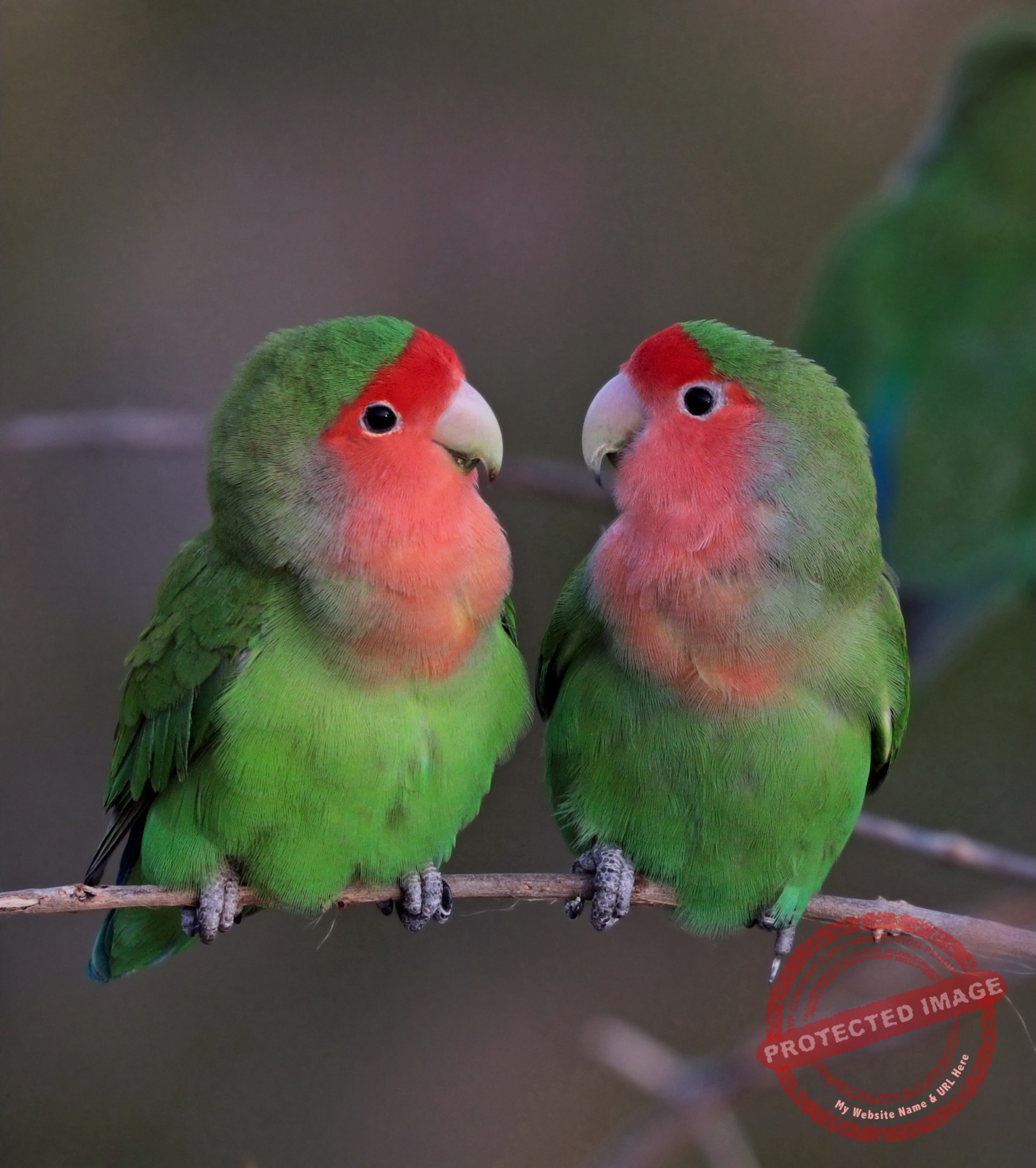
Peach-faced Lovebirds (Agapornis roseicollis). Photo courtesy of Wiki Commons.
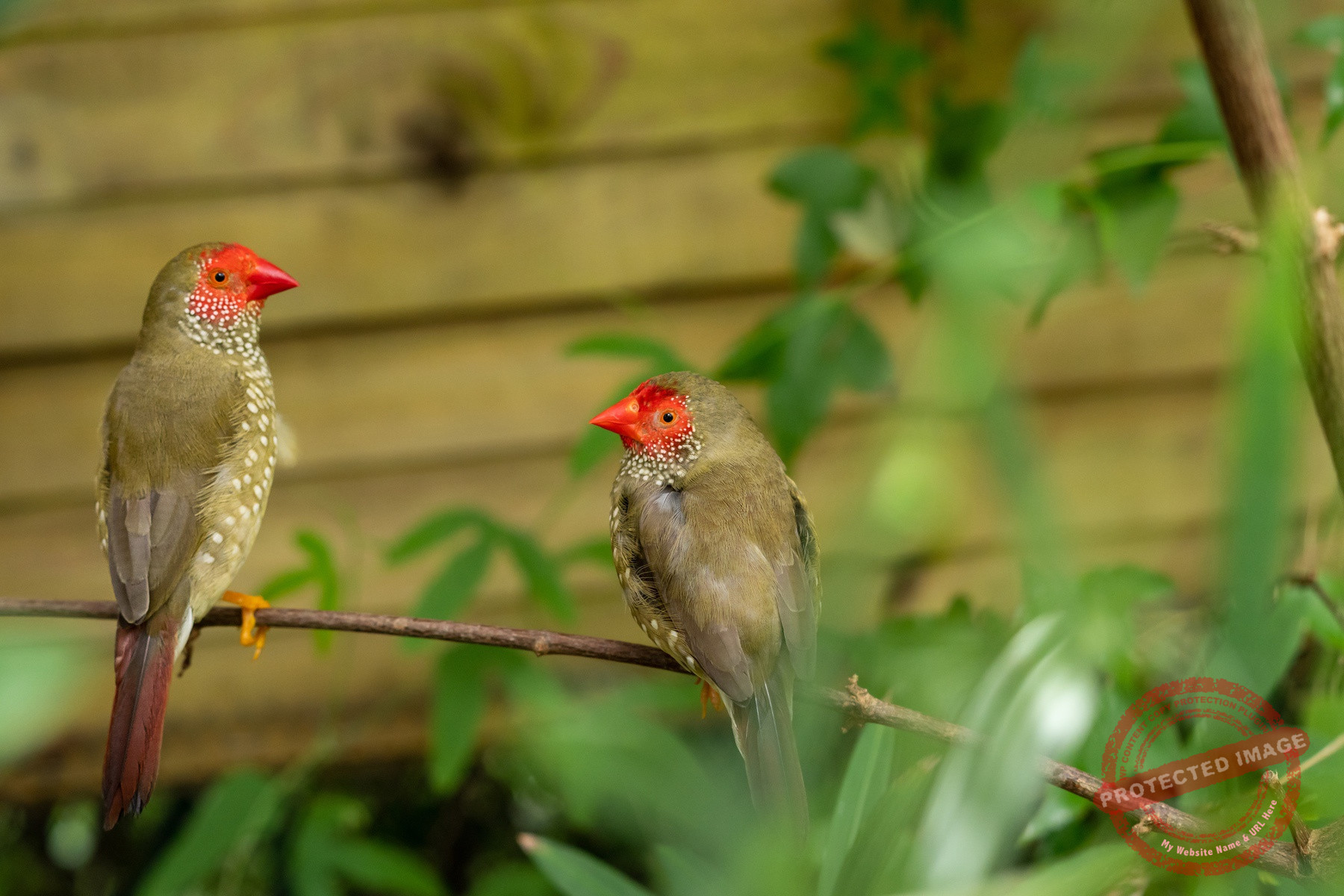
Rufous-tailed or Star Finches (Emblema ruficauda). Photo courtesy of Adobe Stock.
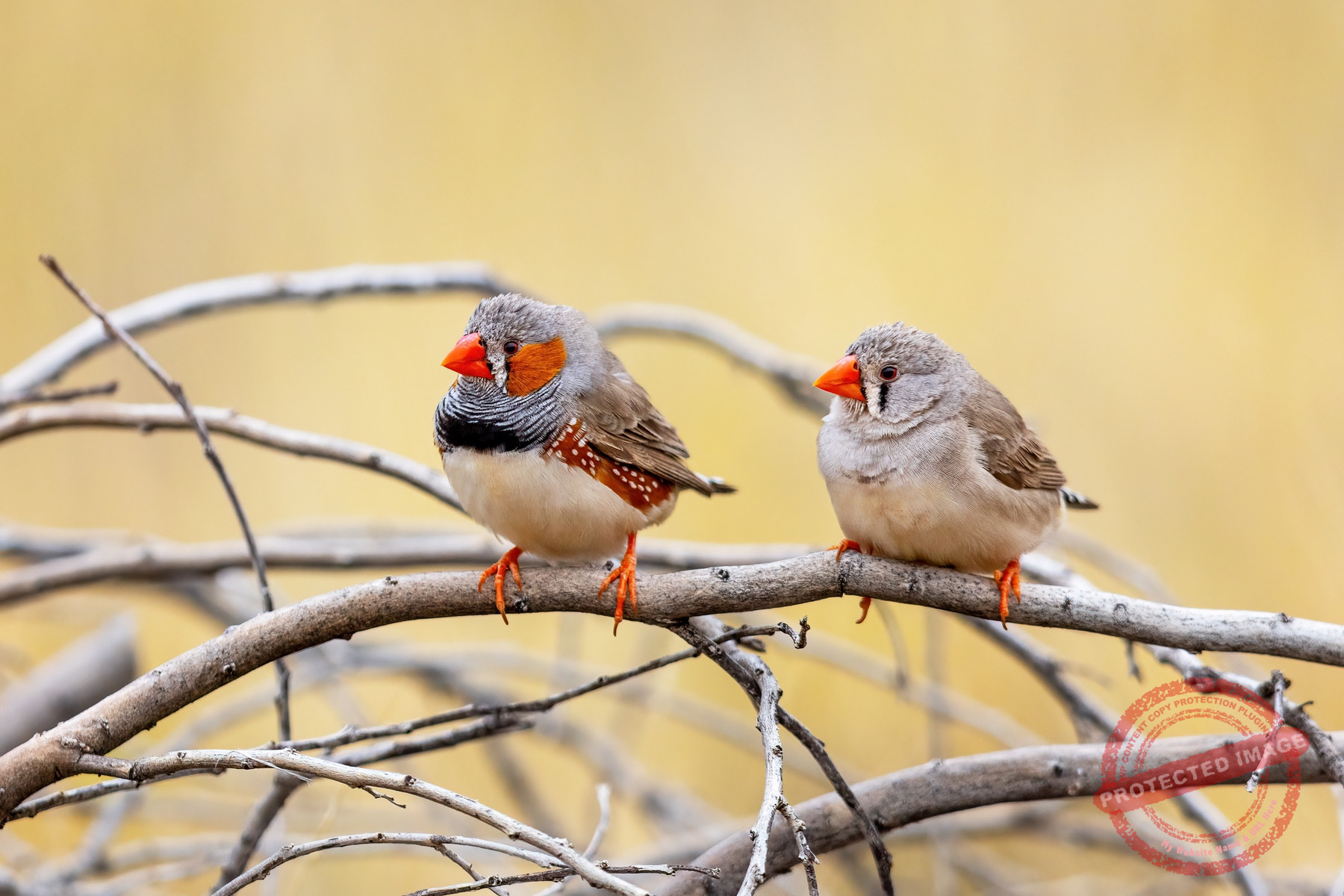
Zebra Finches (Taeniopygia castanotis). Photo courtesy of Wiki Commons.
The bird farm maintained a large number of budgerigars, typically housing around 2,500 on site, including rare yellow varieties. It was also instrumental in breeding a strain of the blue mutation from a single wild-caught budgerigar of this colour brought from Australia, although it had cropped up previously in domesticated strains.
There were also other areas of investigation that were carried out. Experiments with birds at “liberty” in the garden (such as Fire finches (Lagonosticta species), Cordon-bleus (Uraeginthus species), and others) allowed for better breeding, by permitting the birds to forage for crucial live food that was not (with the exception of mealworms) then commercially available. Hybrids, such as Red-rumped × Hooded parrakeets, also appeared. These results were not mere luck; a thoughtful diet, secluded nesting opportunities, and observation of individual pair preferences underpinned Keston’s successes.
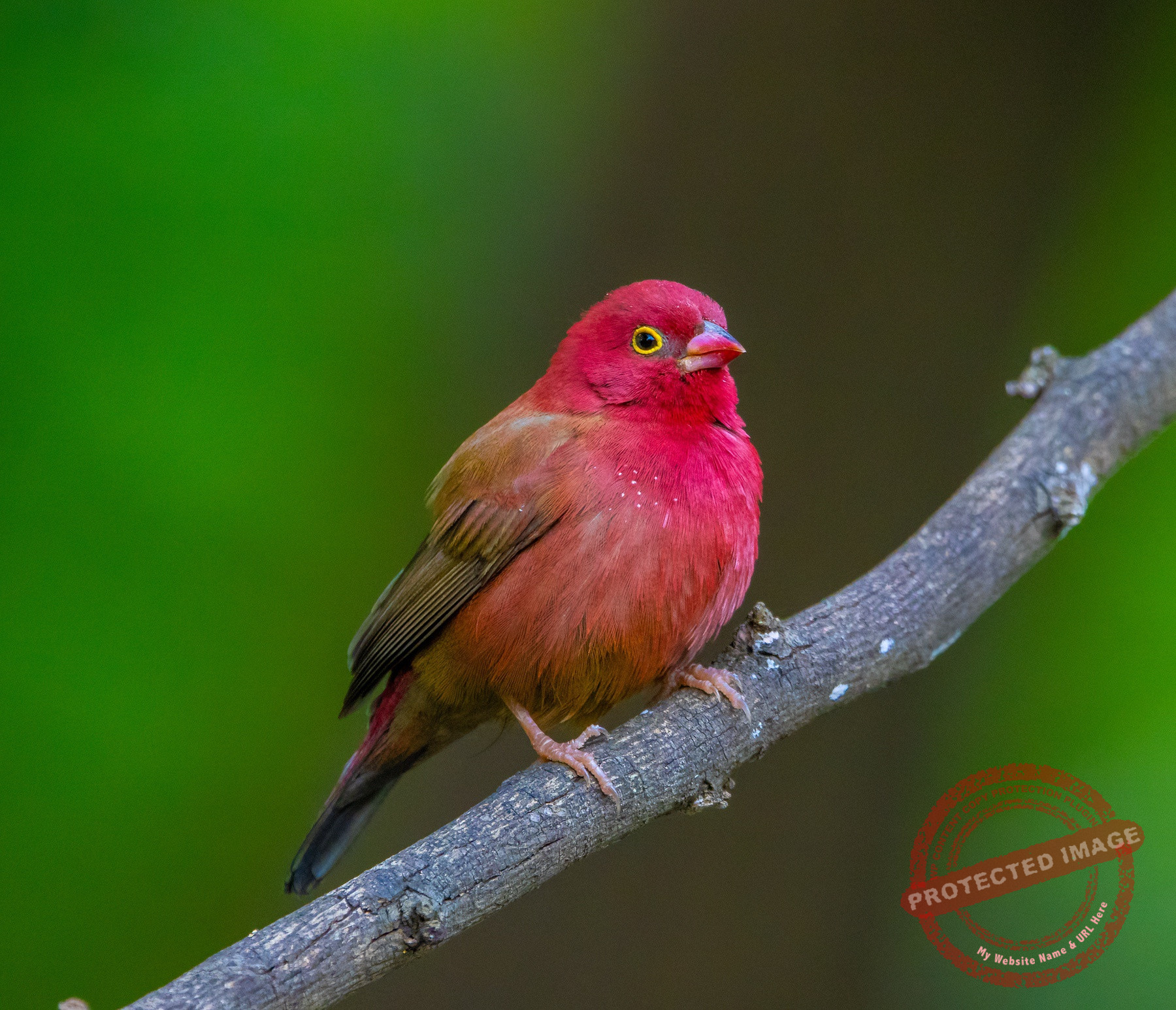
Red-billed Fire Finch (Lagonosticta senegala). Photo courtesy of Adobe Stock.
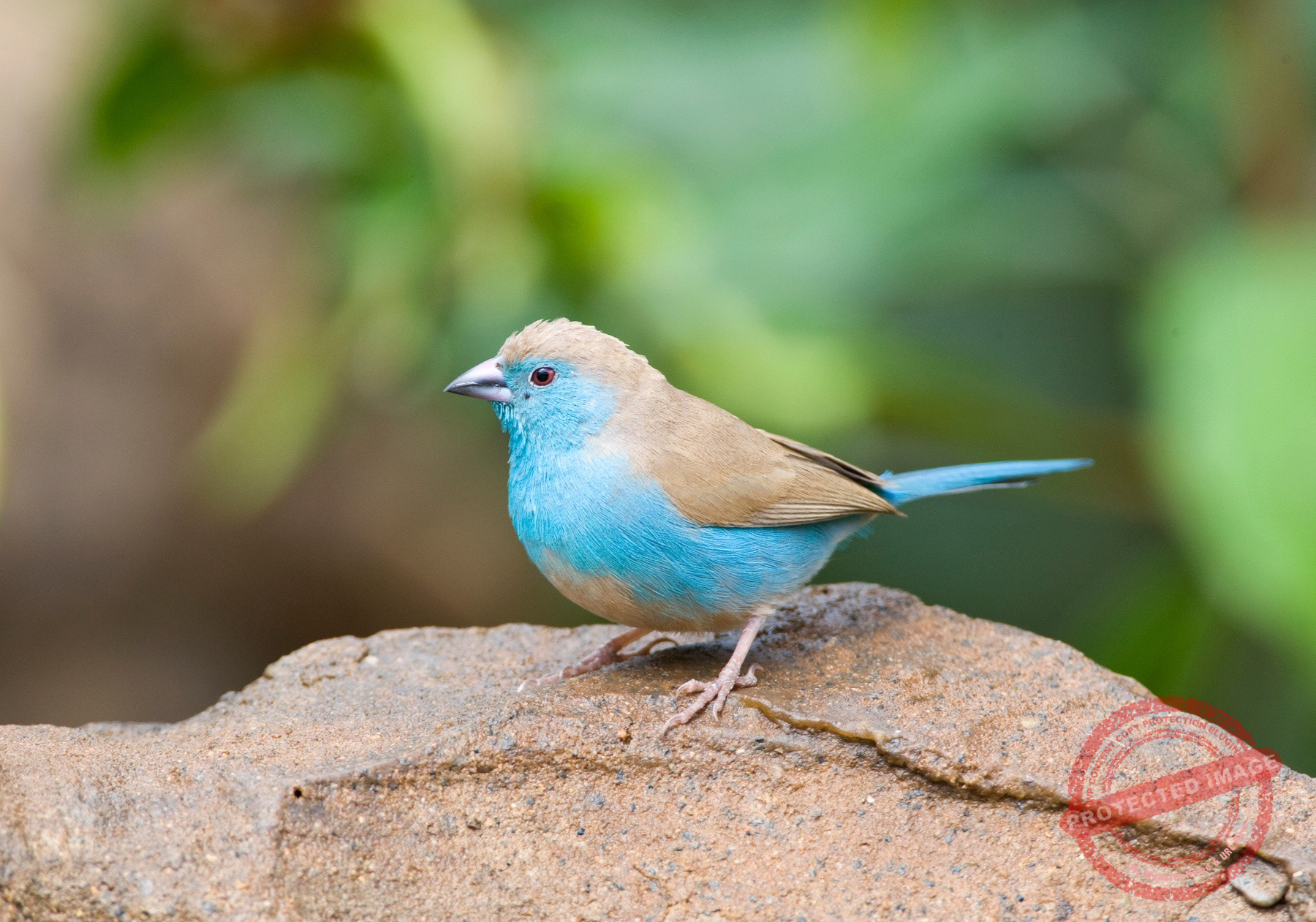
Southern Cordon-bleu or Blue Waxbill (Uraeginthus angolensis). Photo courtesy of Adobe Stock.
Reaching a wider audience
By 1934, the farm was already becoming acclaimed, with a British Pathé newsreel from that year, entitled The Bird Farmer!, conveying the farm’s public face. In the Avicultural Magazine of that year, which still publishes today, editor David Seth-Smith (who was Curator of Birds at London Zoo) penned an article entitled “The Keston Foreign Bird Farm: A Successful Experiment”, praising its rapid growth.
What began modestly had by now expanded to 46 terraced aviaries dedicated to parakeets. These were movable structures, with rat-proof mesh floors, attended from the outside to minimize disturbance. They were designed partly in this way to combat intestinal worms, to which Australian parakeets are particularly susceptible, owing to their habit of seeking food on the ground. Whereas today, effective prophylactic medication is available for these parasites, that was not the case back then.
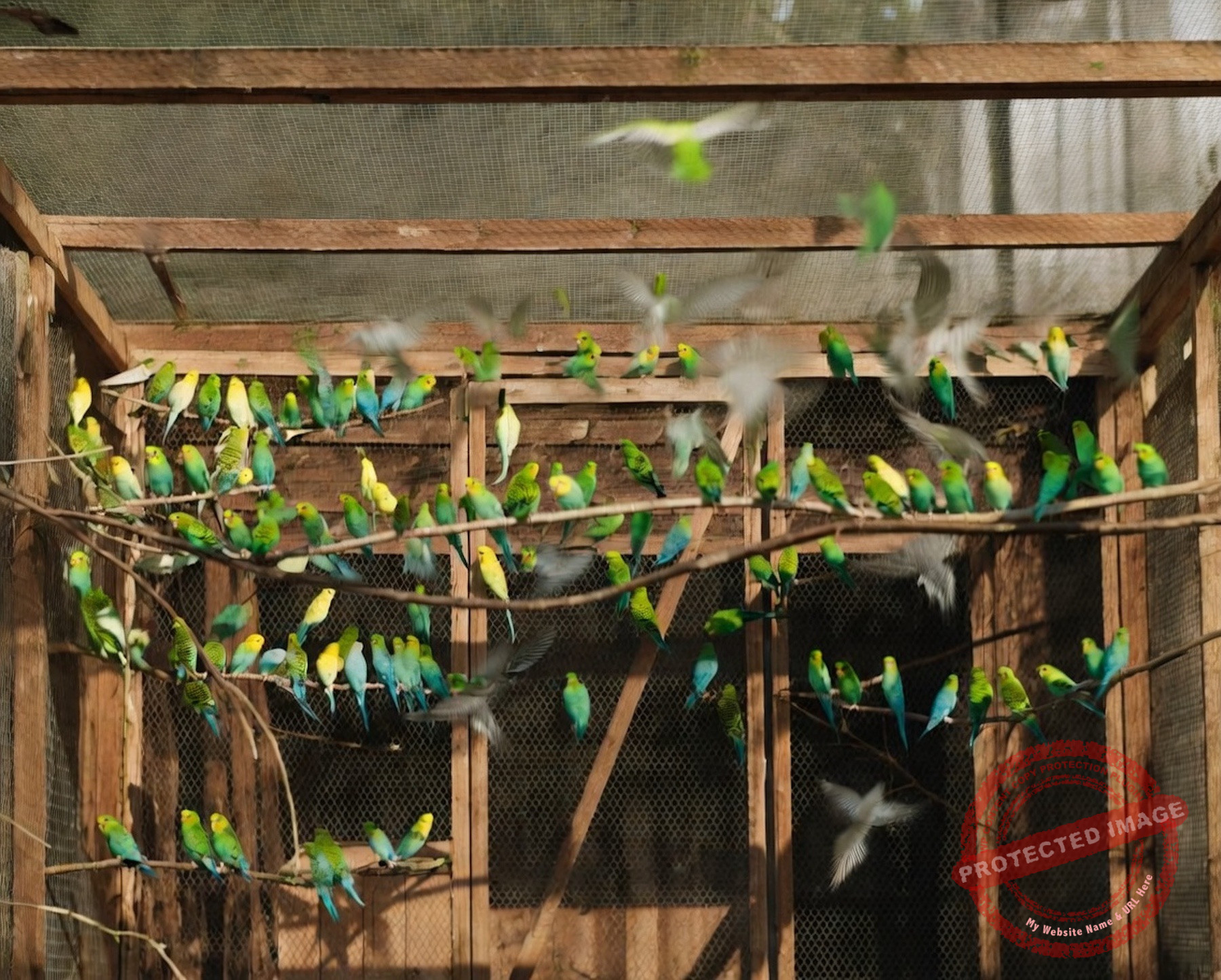
One of the flights housing budgerigars at Keston.
There were also more than 200 additional flights for budgerigars, finches, and waxbills. A heated glass-roofed Acclimatisation House measuring roughly 36 by 30 feet (11 x 9 m) helped newly-arrived birds adjust, dramatically cutting mortality. A separate “Bengalese House” used domesticated Bengalese (Lonchura domestica), better-known as Society Finches in the U.S., as foster parents for rarer Australian species, such as the breathtakingly beautiful Gouldian Finches (Chloebia gouldiae). The entire setup emphasized outdoor planted aviaries with sheltered access, which at that stage was a forward-thinking design that allowed birds to thrive year-round with minimal artificial heat.
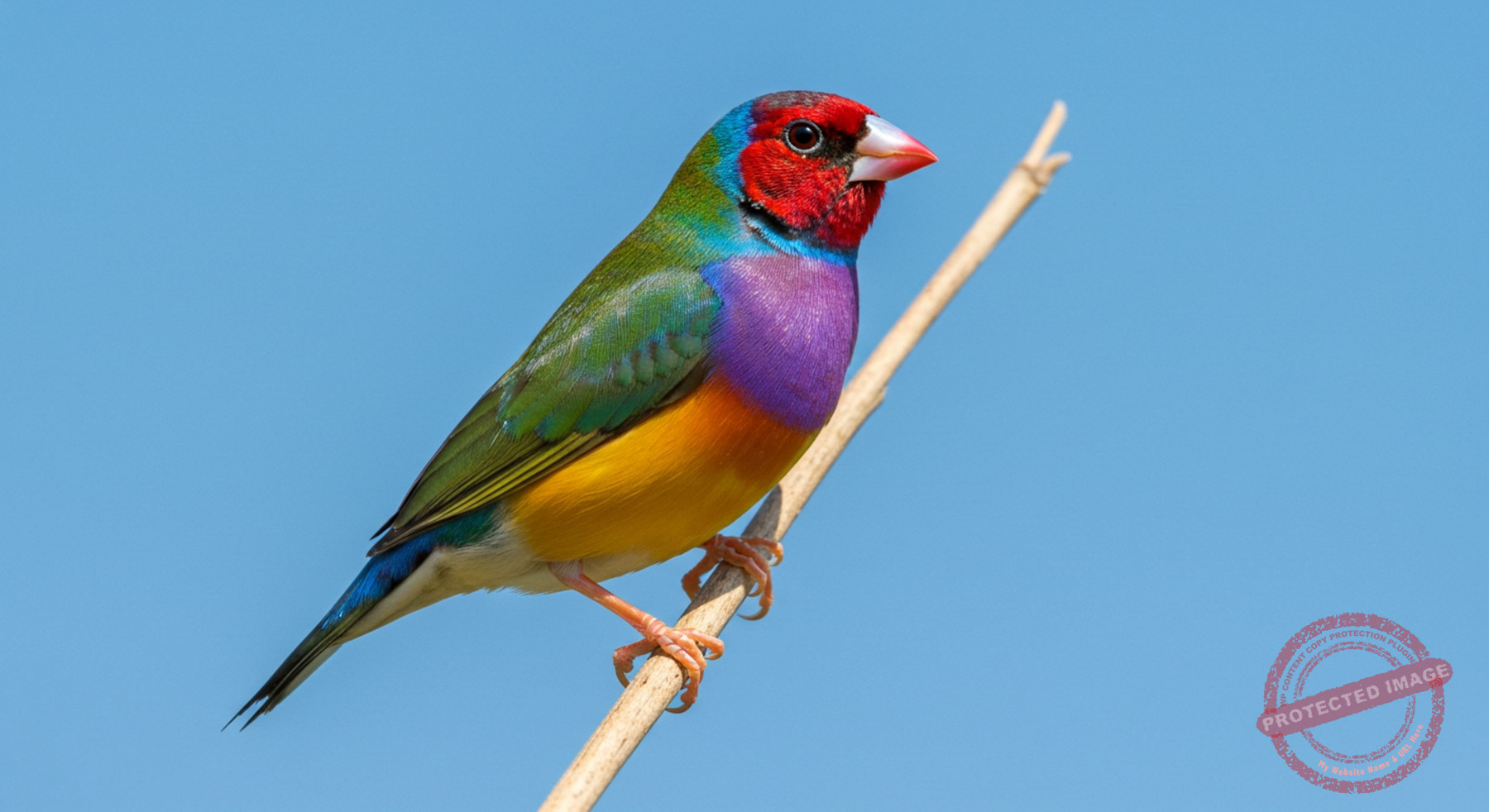
The spectacular red-headed form of the Gouldian Finch (Chloebia gouldiae). Photo courtesy Synclines/www.shutterstock.com
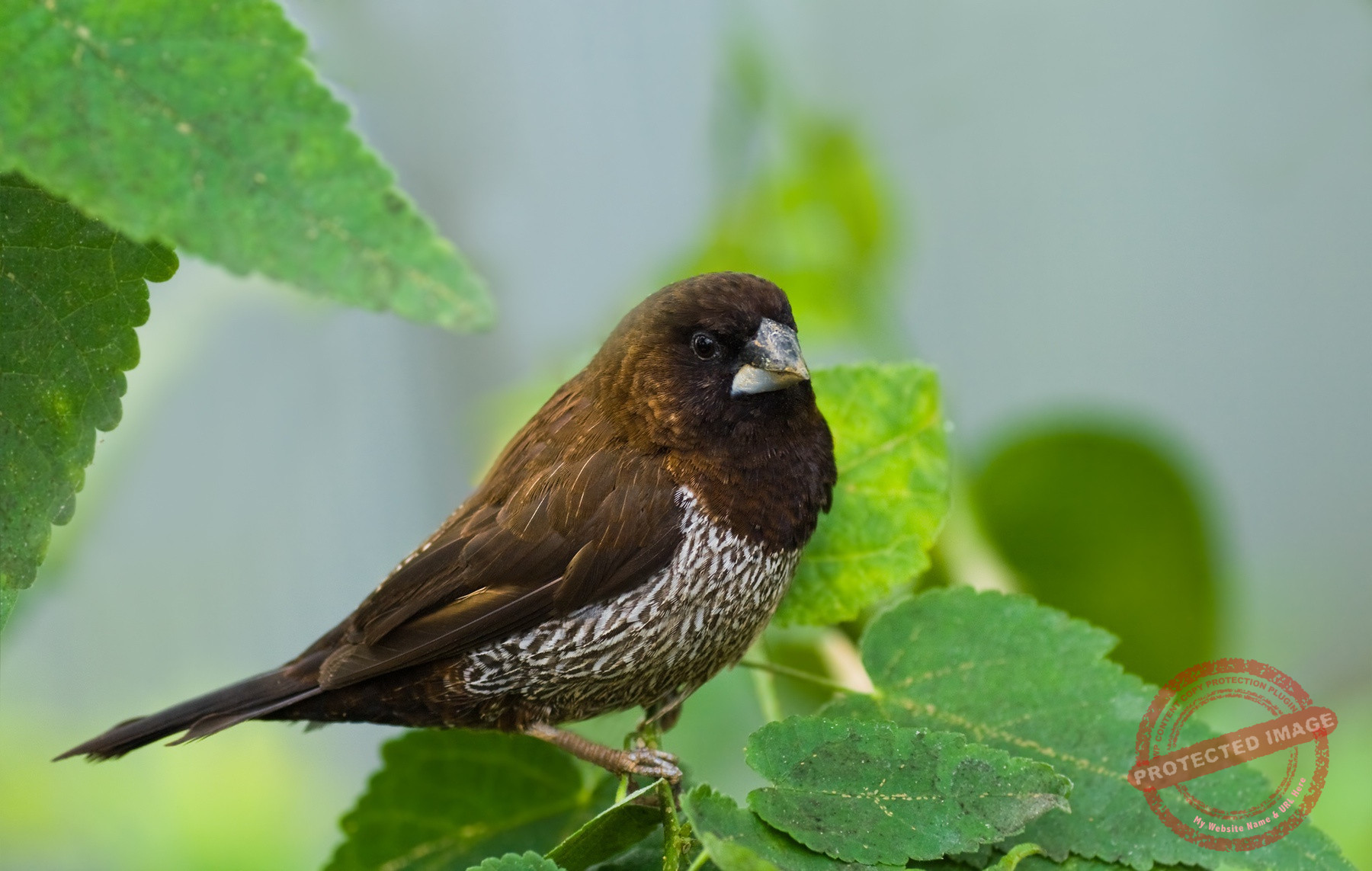
Bengalese or Society Finch (Lonchura domestica). Photo courtesy of Adobe Stock.
Royal recognition
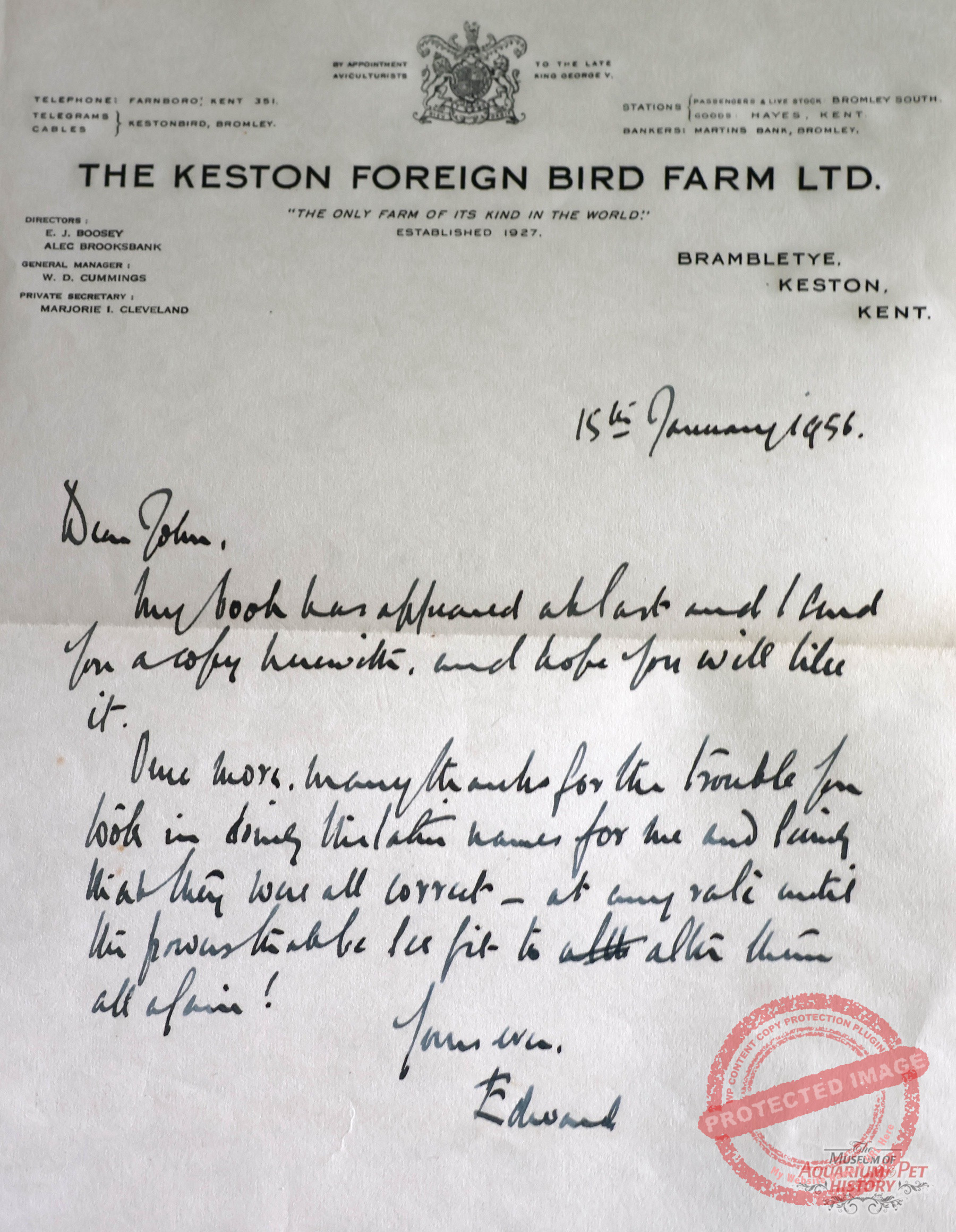
As its notepaper highlights, Keston Foreign Bird Farm received the prestigious Royal Warrant, being styled as ‘Aviculturists “By Appointment to” King George V’ sometime between its founding in 1927 and the King’s death in January 1936. This most likely took place in the early-to-mid 1930s, although the exact date does not appear to be recorded officially, notably in the London Gazette, or in contemporary avicultural publications.
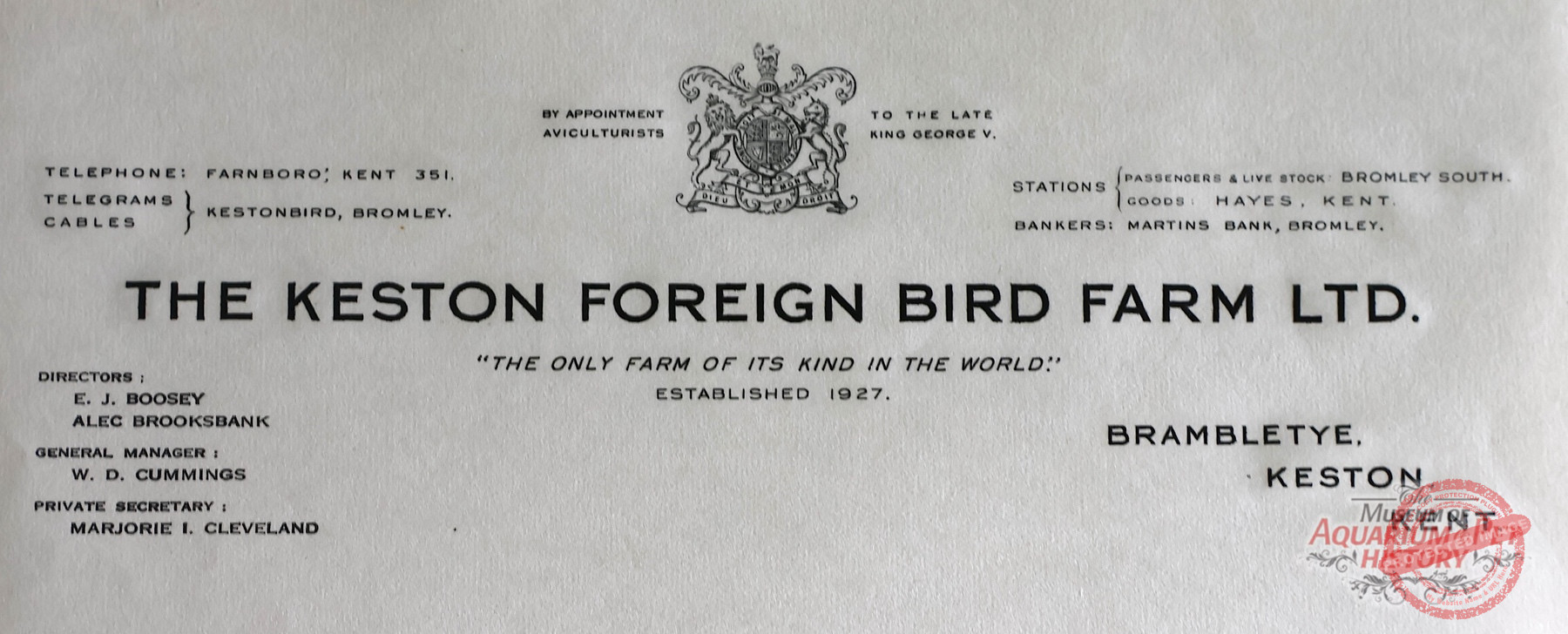
The Keston Foreign Bird Farm letterhead, bearing the Royal Warrant. Photo courtesy David Alderton.
This timing, however, fits the farm’s documented work with the royal collection. E.J. Boosey personally advised on the housing and care of Splendid Grass Parrakeets (Neophema splendida) gifted to the King from Australia; the King also lent a Bourke’s Parakeet cock to Keston for breeding from his collection, which was maintained at Royal Lodge, Windsor Great Park, near Windsor Castle. Boosey’s 1934 article in the Avicultural Magazine records the first European breeding of these parakeets at Keston, showing the firm was already closely involved with the royal birds before the mid-1930s. The King clearly valued the team’s input and advice, as did the Marquess of Tavistock (later the Duke of Bedford), for whom Boosey had worked in his early days.
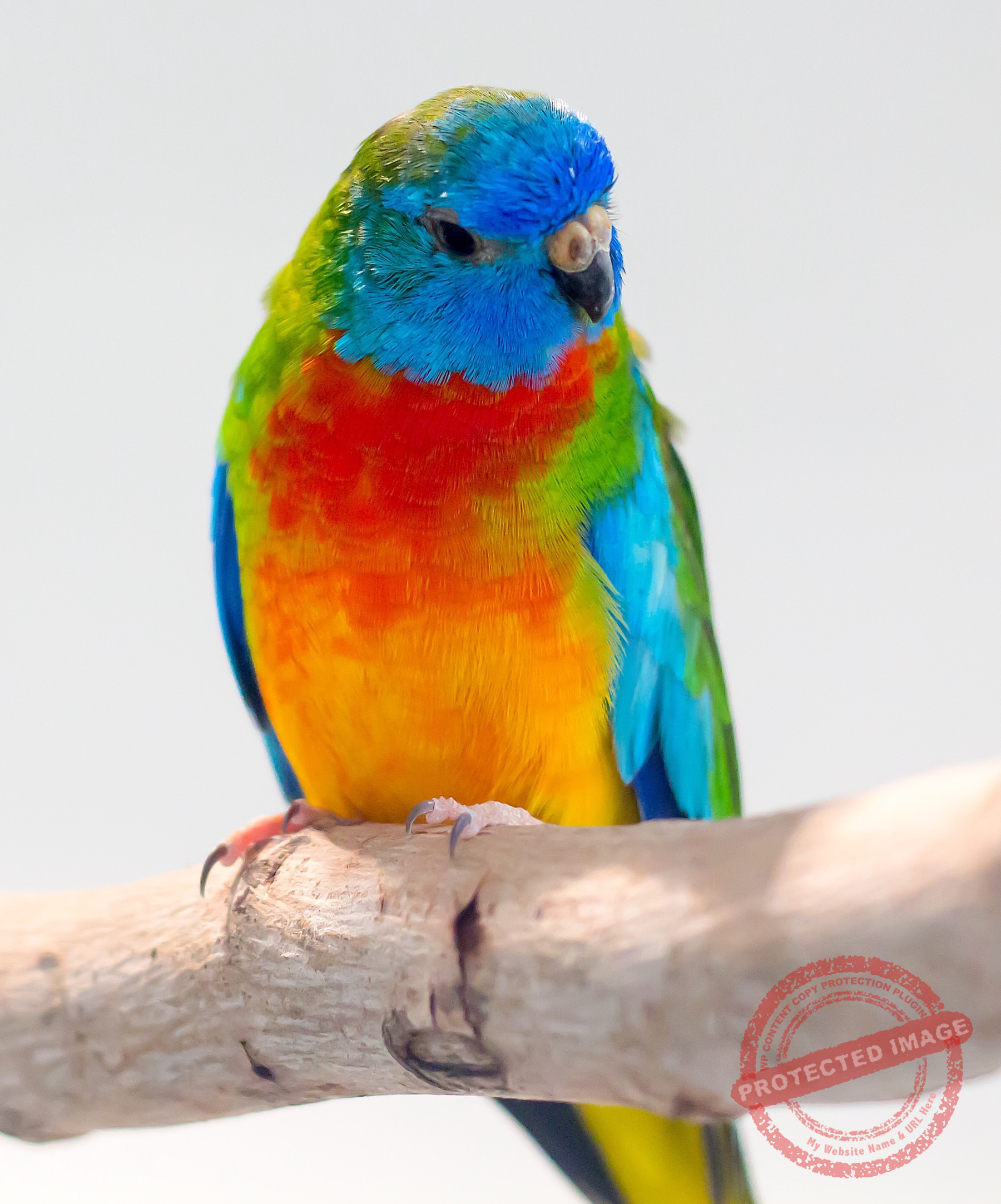
A male Splendid Parakeet (Neophema splendida). Photo courtesy Monarexx/www.shutterstock.com
Wartime survival
The farm’s resilience shone during World War II (1939-1945). While imports halted and many collections collapsed as seed and other bird foods became virtually impossible to obtain, Keston managed to keep its Elegant Grass Parakeets (Neophema elegans) breeding continuously.
Boosey later reflected: “Elegants are among the most satisfactory of the Grass Parakeets in confinement. I have kept and bred them regularly for the last sixteen years or so, and they were the only species of Grass Parrakeet we managed to keep going at Keston all through the war.” This continuity preserved bloodlines that would subsequently repopulate postwar aviaries.
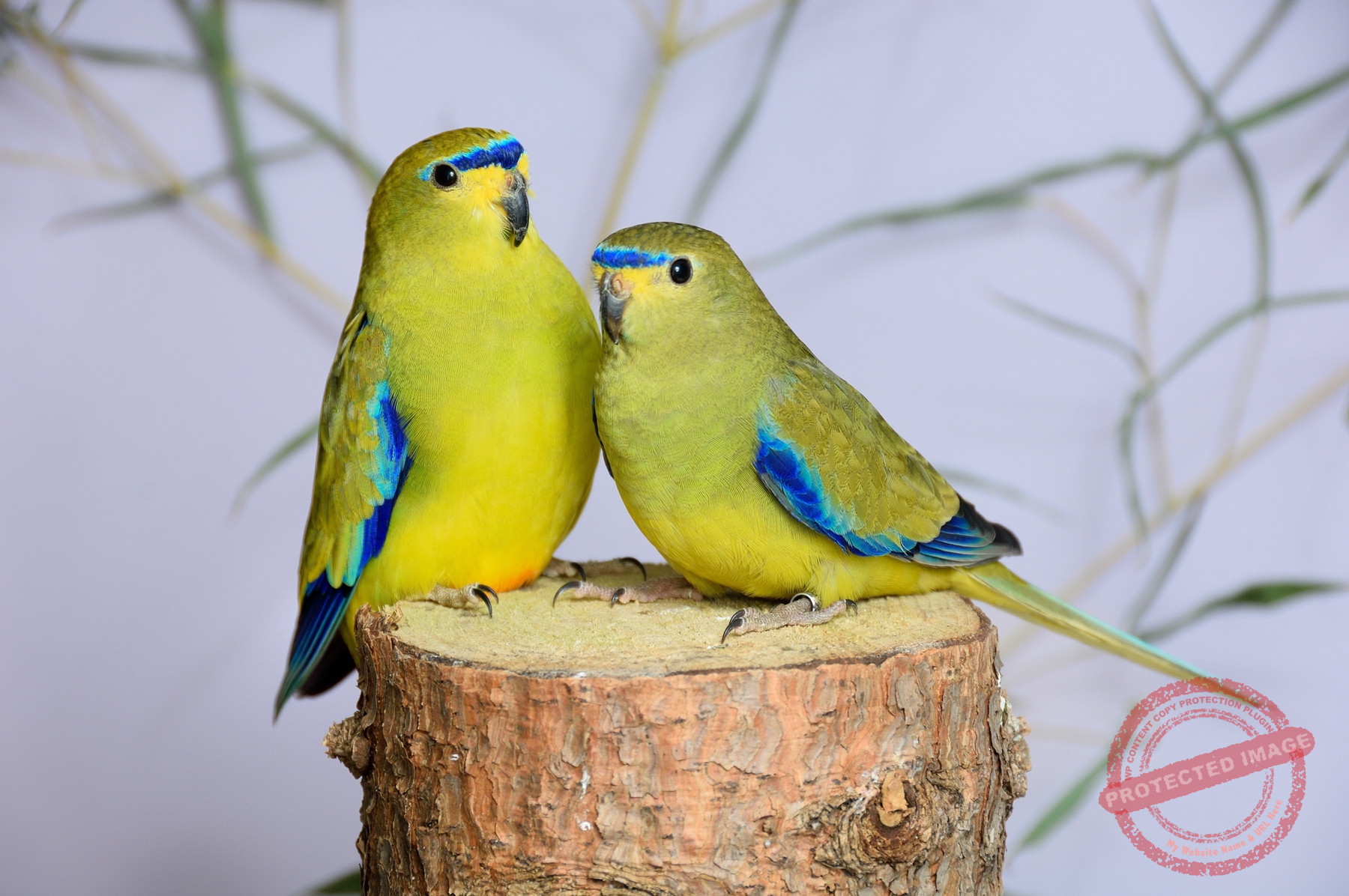
A pair of Elegant Grass Parakeets (Neophema elegans) — possibly descended from those bred at Keston. Photo courtesy Eckhard Lietzow/www.shutterstock.com
A new era
After the war, Keston continued to break new ground with numerous first breedings. During 1955, Boosey reported the first UK successes with the Chestnut-and-Black Warbling Finch (Poospiza nigrorufa) and the Yellow-hooded Marsh Bird or Blackbird (Chrysomus icterocephalus). The Greater Hill Mynah (Gracula religiosa) followed in 1957—the first successful breeding in Britain. In 1960, despite indifferent weather, the farm produced three young from a pair of African Grey Parrots, and continued breeding Blue-fronted Amazons, with the initial UK breeding dating back to 1939 at Keston, not to mention various rosellas, Splendid (Neophema splendida) and Turquoisine (N. pulchella) Grass Parakeets, more Bourke’s, assorted lovebirds, Western Bluebirds (Sialia mexicana) which produced up to seven young per pair, Crimson Finches, and even a novel mutation: the “Keston Orange Fire-Finch.” The farm also pioneered the development of lutino mutations in Alexandrine (Psittacula eupatria) and Indian Ring-necked (P. krameri) Parakeets, also acquiring the Duke of Bedford’s original blue mutation stock after his tragic death in 1954, safeguarding its future.
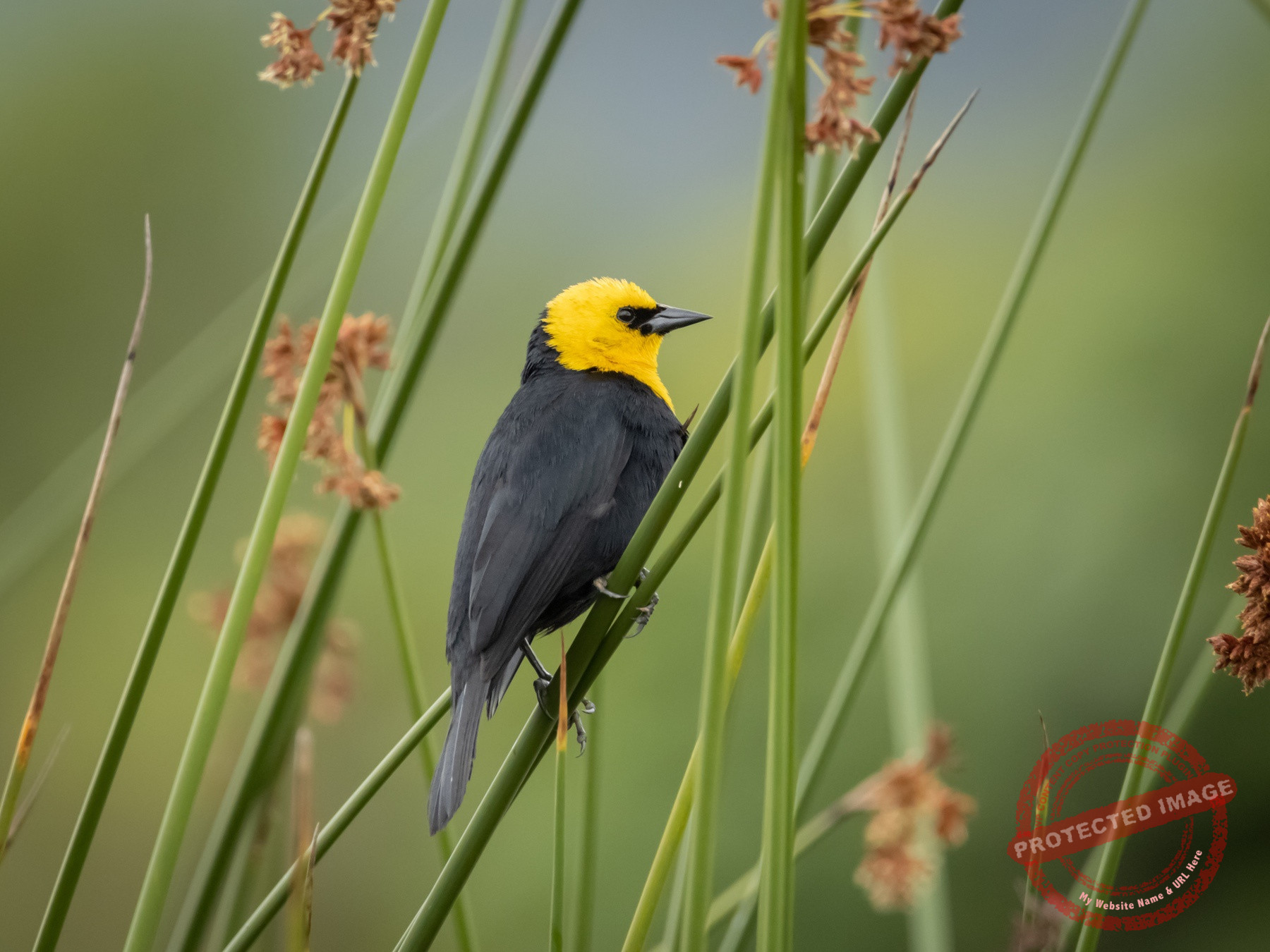
Yellow-hooded Blackbird (Chrysomus icterocephalus). Photo courtesy of Adobe Stock.
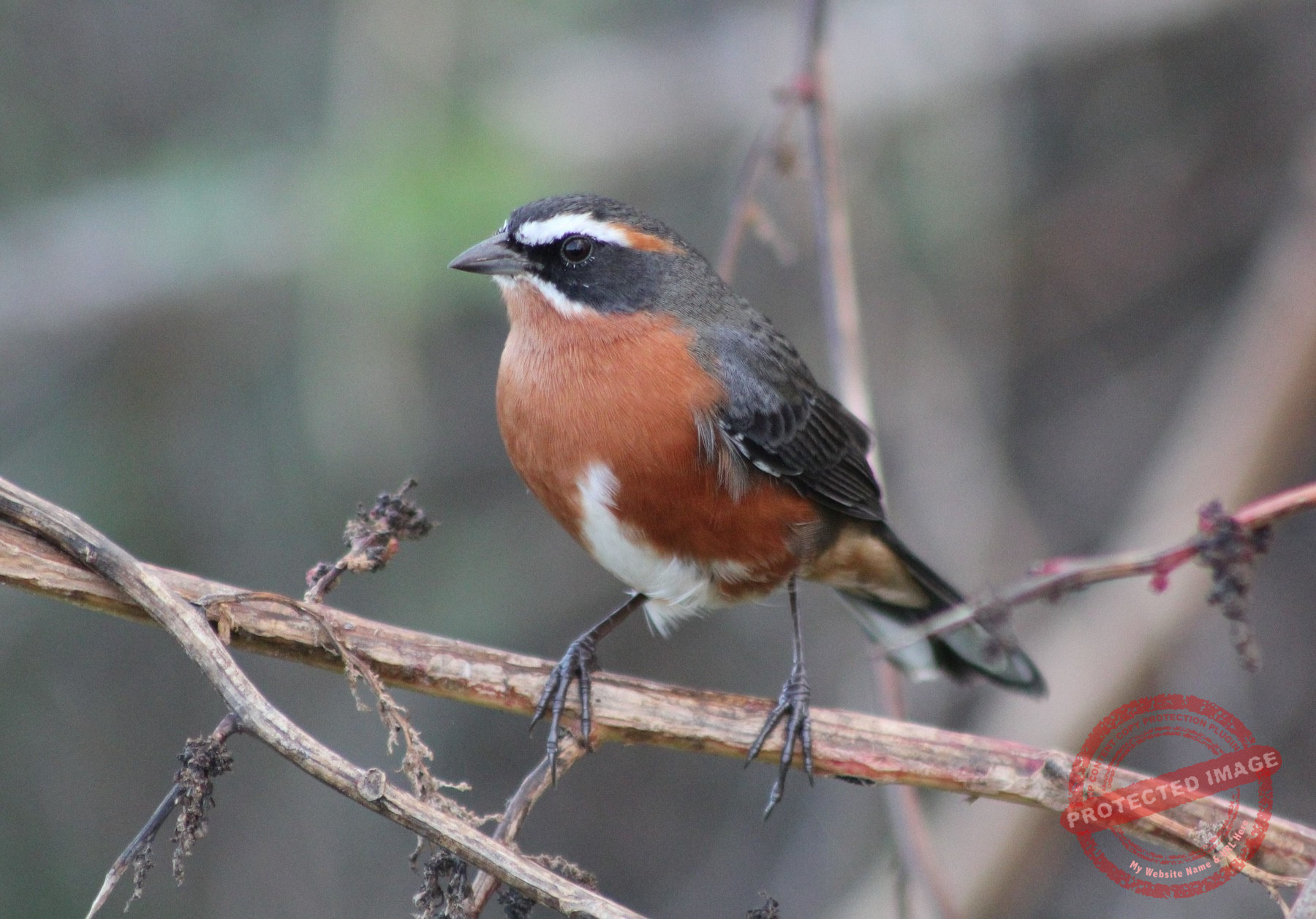
Chestnut-and-Black Warbling Finch (Poospiza nigrorufa). Photo courtesy of Wiki Commons.
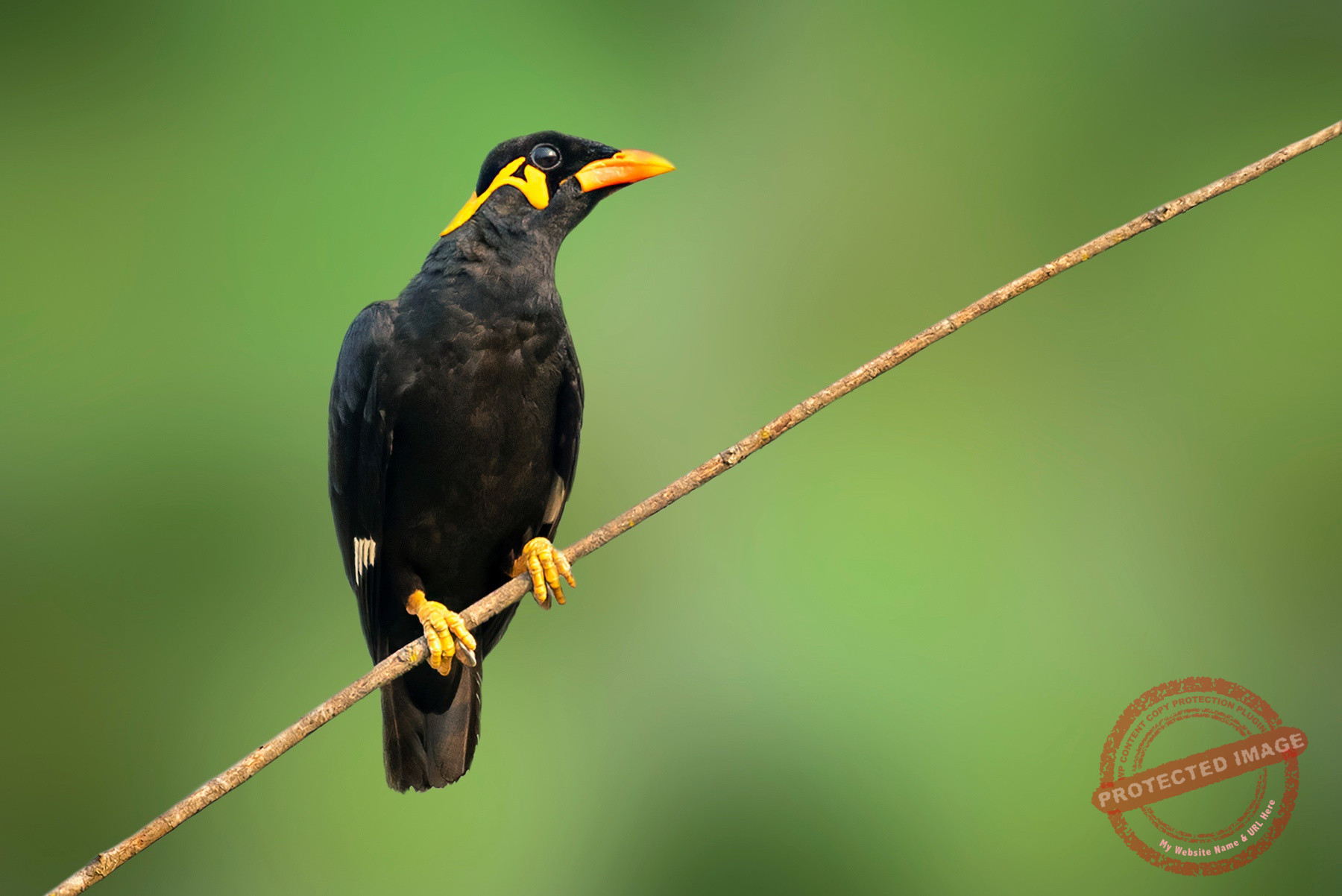
Greater Hill Mynah (Gracula religiosa). Photo courtesy of Adobe Stock.
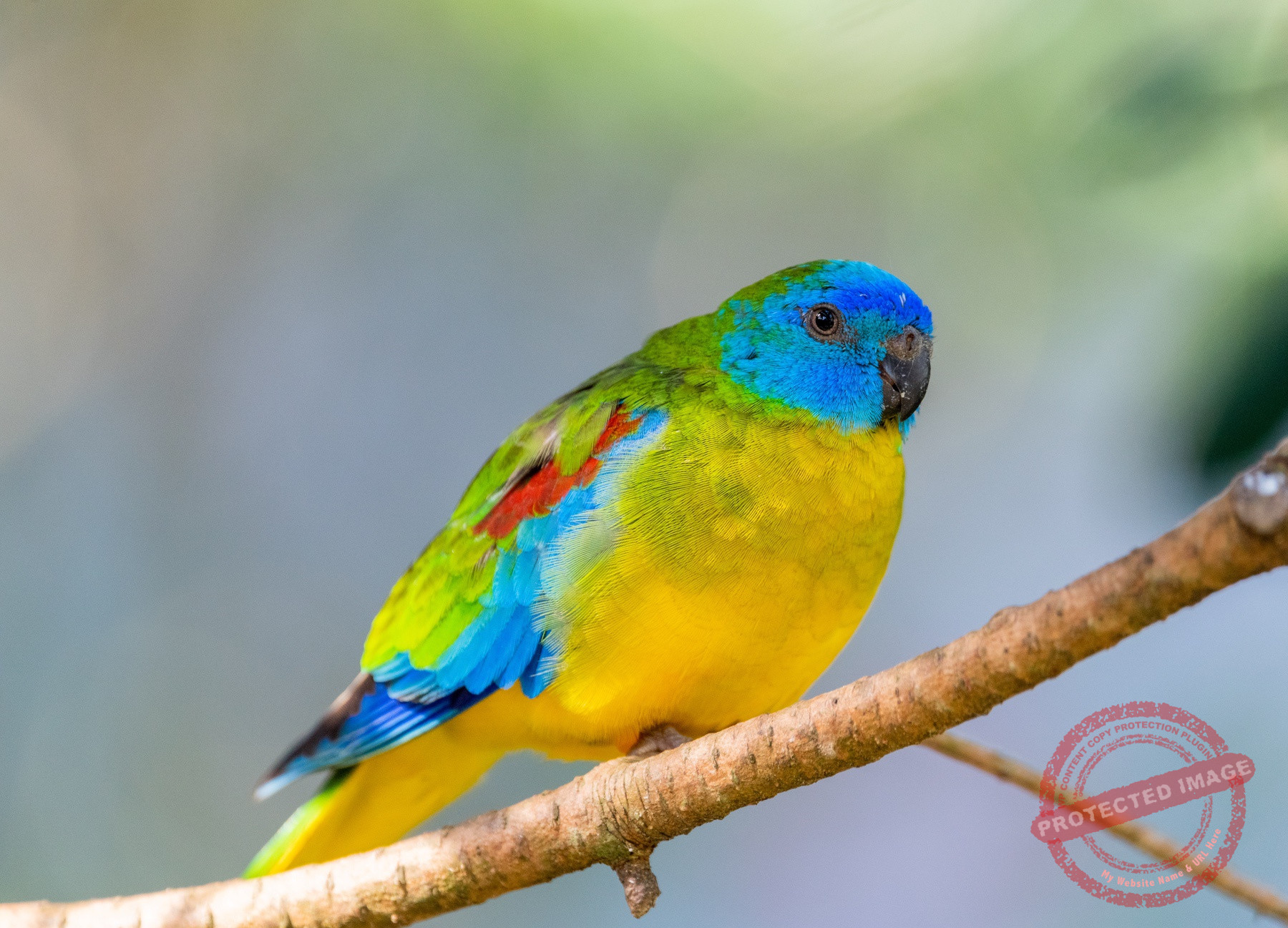
Turquoisine Grass Parakeet (Neophema pulchella). Photo courtesy of Adobe Stock.
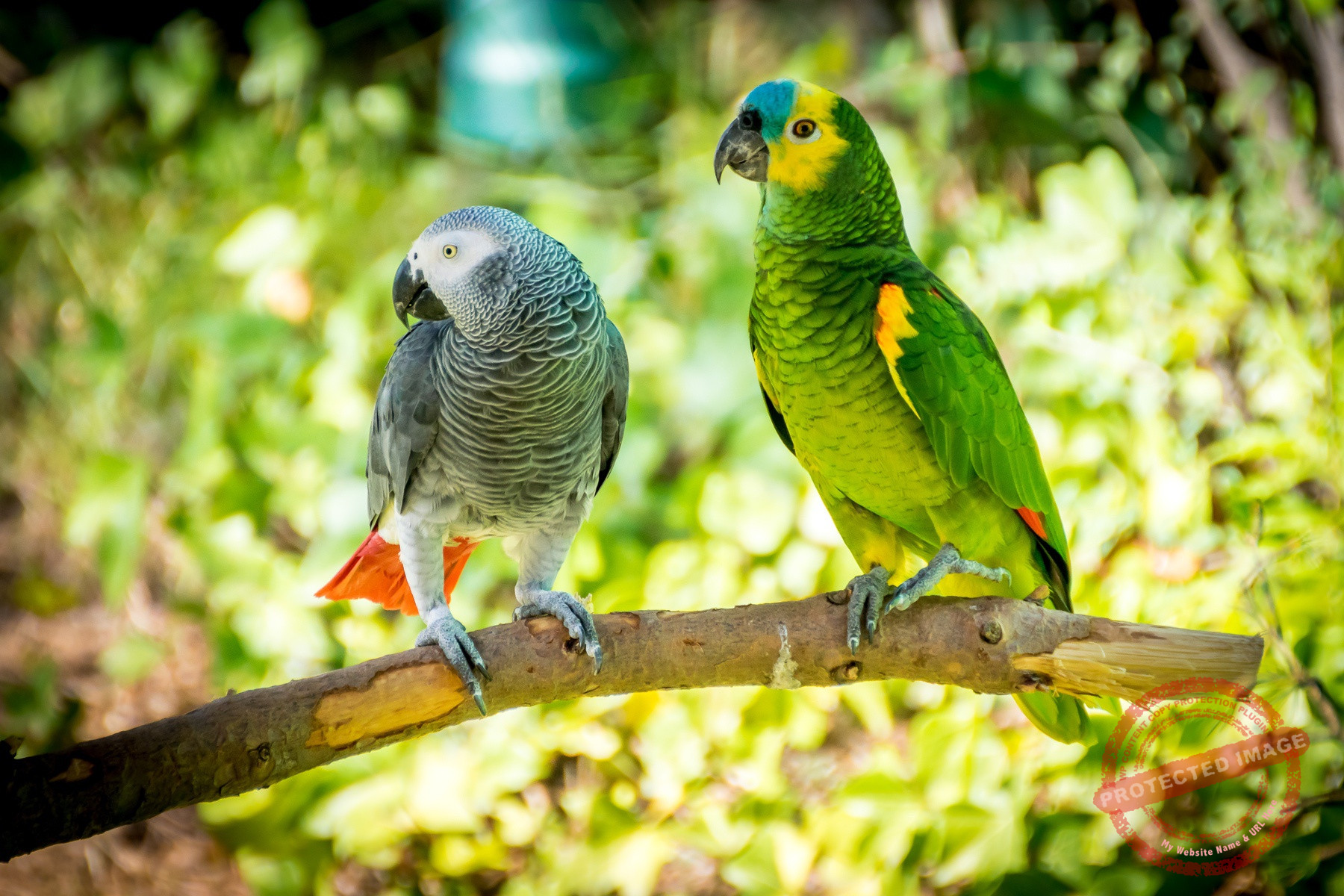
African Gray Parrot (Psittacus erithacus) on the left and a Blue-fronted Amazon (Amazona aestiva) on the right. Photo courtesy of Adobe Stock.
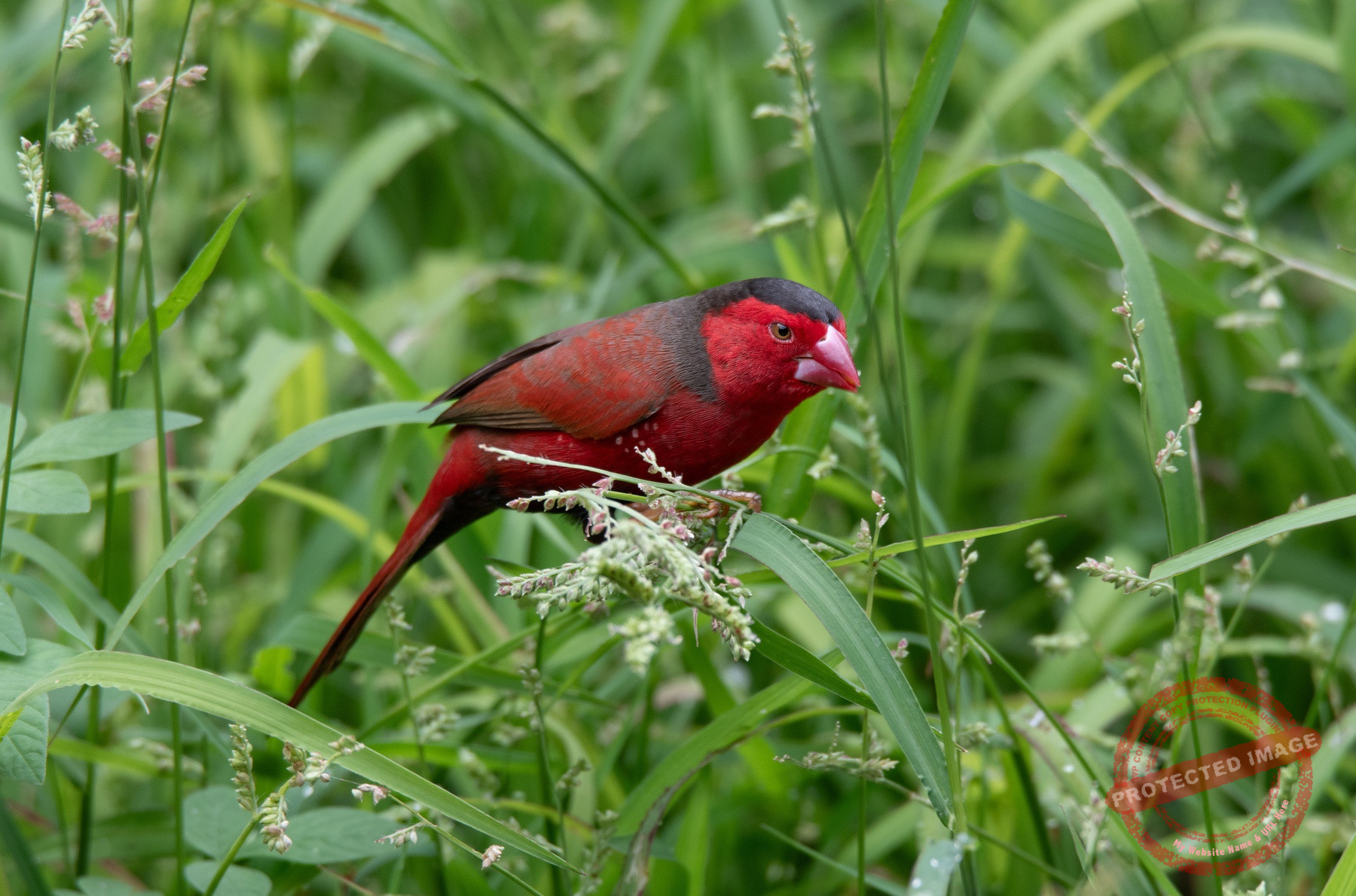
Crimson Finch (Neochmia phaeton). Photo courtesy of Adobe Stock.
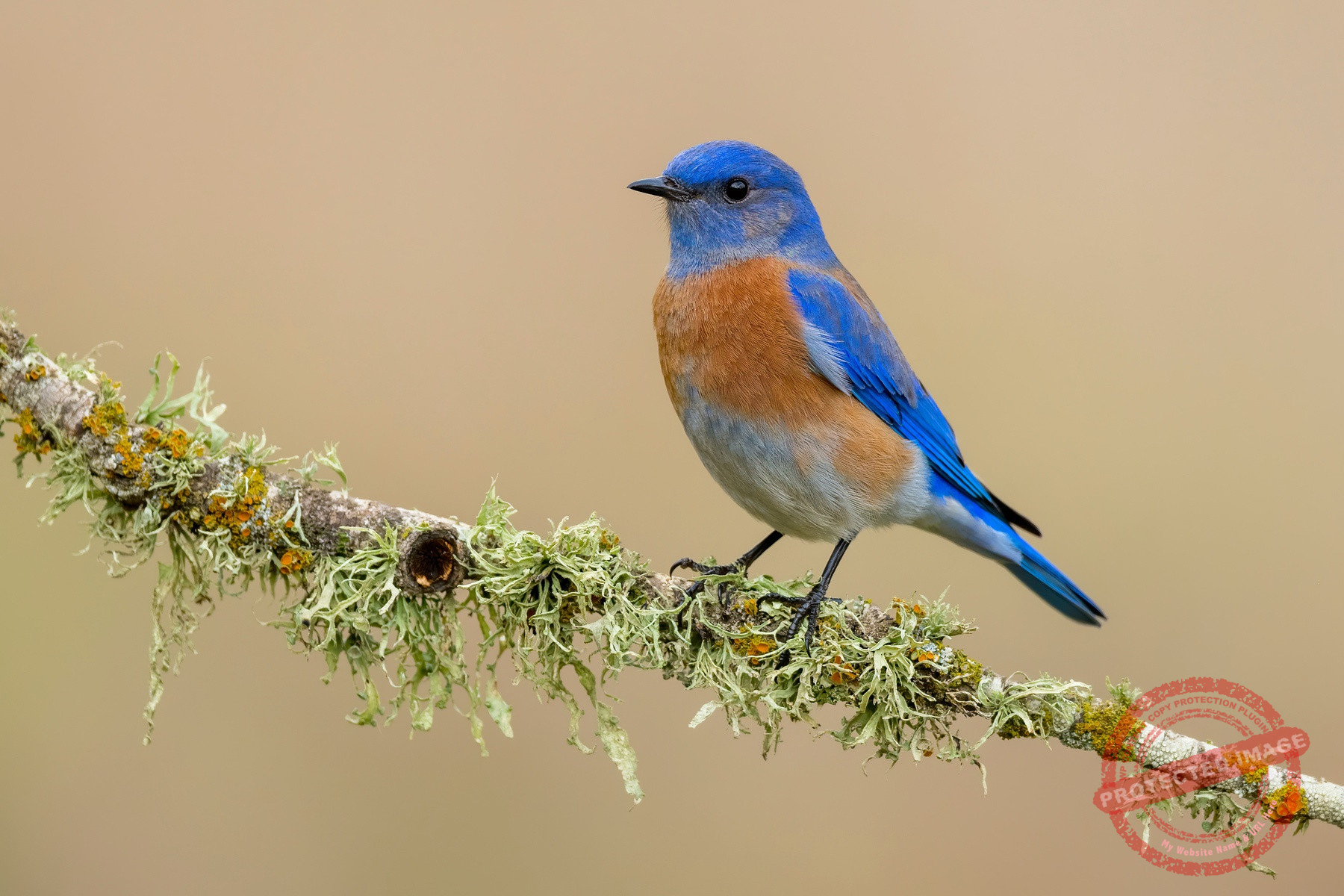
Western Bluebird (Sialia mexicana). Photo courtesy of Adobe Stock.
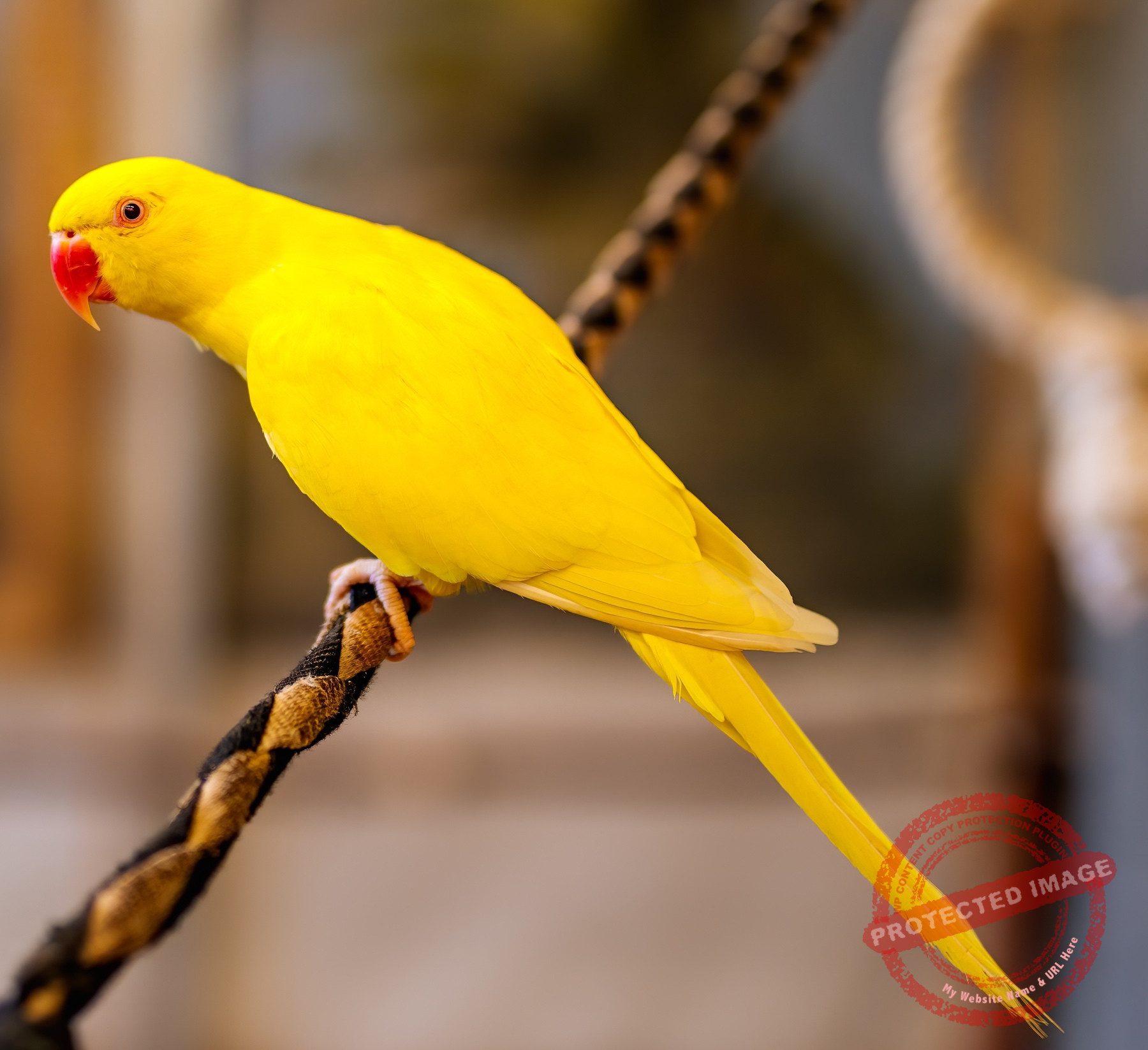
The spectacular lutino mutation of the ring-necked parakeet. Photo courtesy Dawid K Photography/www.shutterstock.com
A lasting legacy
Perhaps the most enduring legacy in terms of colour breeding, however, has been Keston’s contribution to the field of budgerigars. The farm bred, coined and commercialized the so-called “Rainbow” variety—a composite mix of Australian opaline, clearwing/whitewing, and yellowface mutations that resulted in birds of extraordinary multicolored beauty. These were sold widely, and influenced exhibition lines worldwide. The farm also originated the Yellow Red-rumped Parakeet (Psephotus haematonotus) mutation. Such planned breeding demonstrated a shift from opportunistic imports to deliberate genetic management.
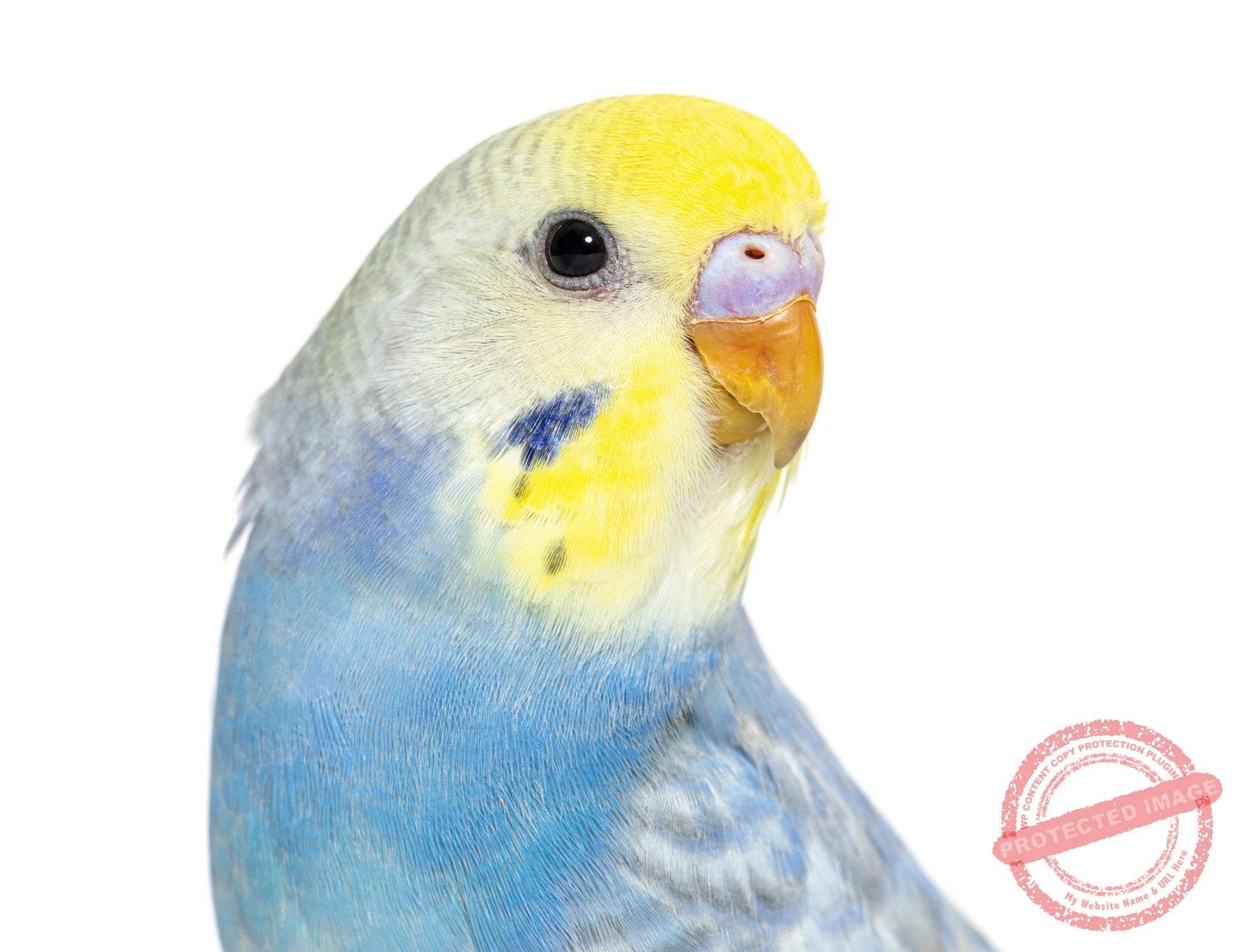
A young rainbow Budgerigar seen in close-up. Photos courtesy Eric Isselee/www.shuttersock.com
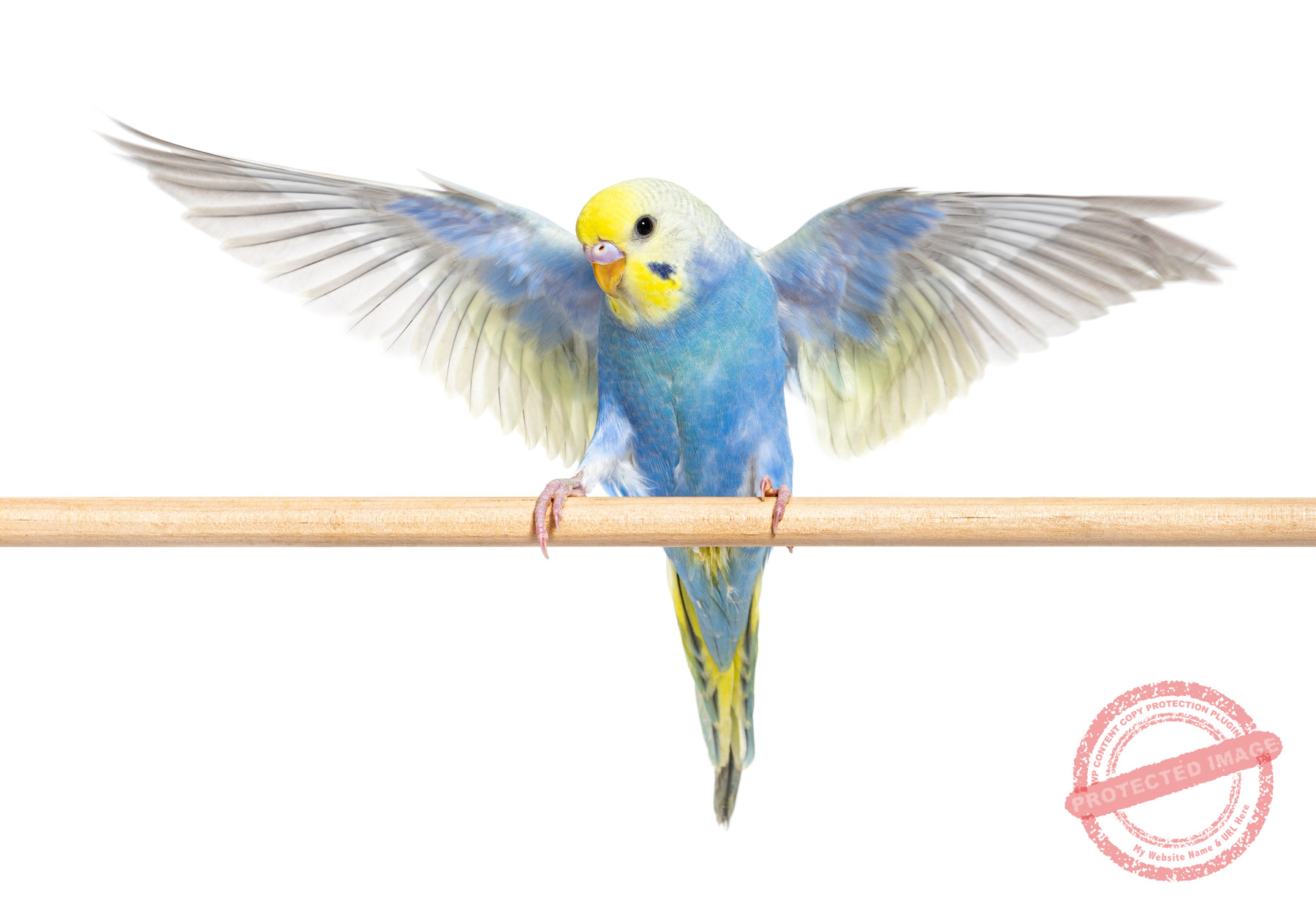
The stunning rainbow variety of the Budgerigar, created and developed originally at Keston.
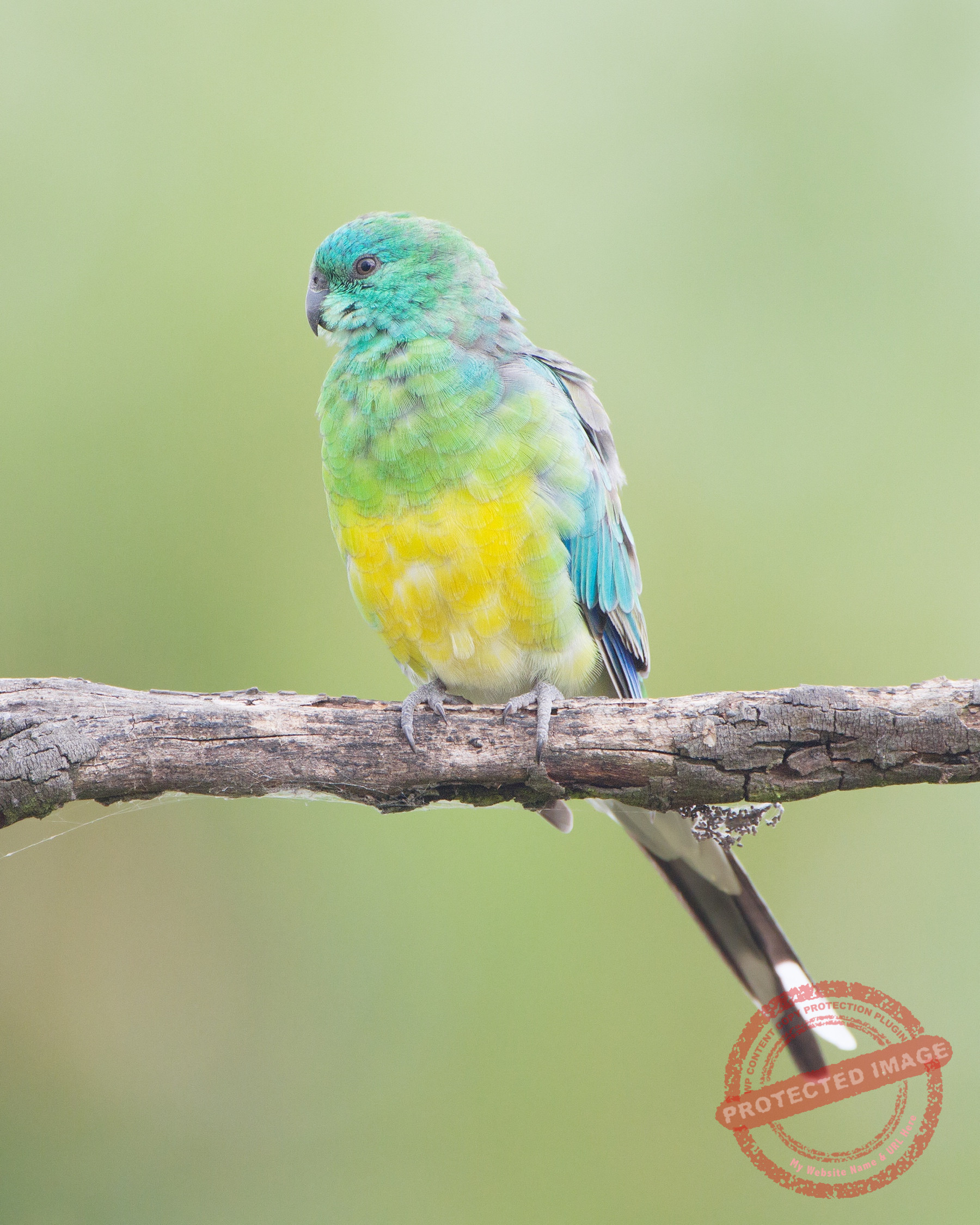
Yellow Red-rumped Parakeet (Psephotus haematonotus). Photo courtesy of Wiki Commons.
Keston’s influence extended far beyond its aviaries through its publishing activities. Between 1934 and 1938 (with a scarce sixth volume in 1939), the farm itself issued The Foreigner: A Practical Guide to the Keeping, Breeding and Showing of All Kinds of Foreign Birds and Budgerigars. This multi-volume set featured colored plates, bound in blue cloth embossed with a gilt cockatoo. Written with input from leading aviculturists, it offered hands-on advice on everything from aviary construction to disease prevention.
Boosey followed up with his best-known and most personal work, Foreign Bird Keeping: Forty Years’ Experience in Their Breeding and Management, published in January 1956, as well as Parrots, Cockatoos and Macaws which appeared in the same year. As well as collaborating with his partner in the production of these publications. Alec Brooksbank also produced a number of his own. They included various articles, including an account of the first breeding of the Varied Lorikeet (Psitteuteles versicolor) in 1936 at Keston, as well as a book entitled Foreign Birds for Garden Aviaries, which again featured his own photographs, although not in colour on this occasion. These works, alongside dozens of Avicultural Magazine articles, served to disseminate Keston’s methods to a global audience. Keston even published in Sydney to cater for the Australian market, underscoring its international reputation.
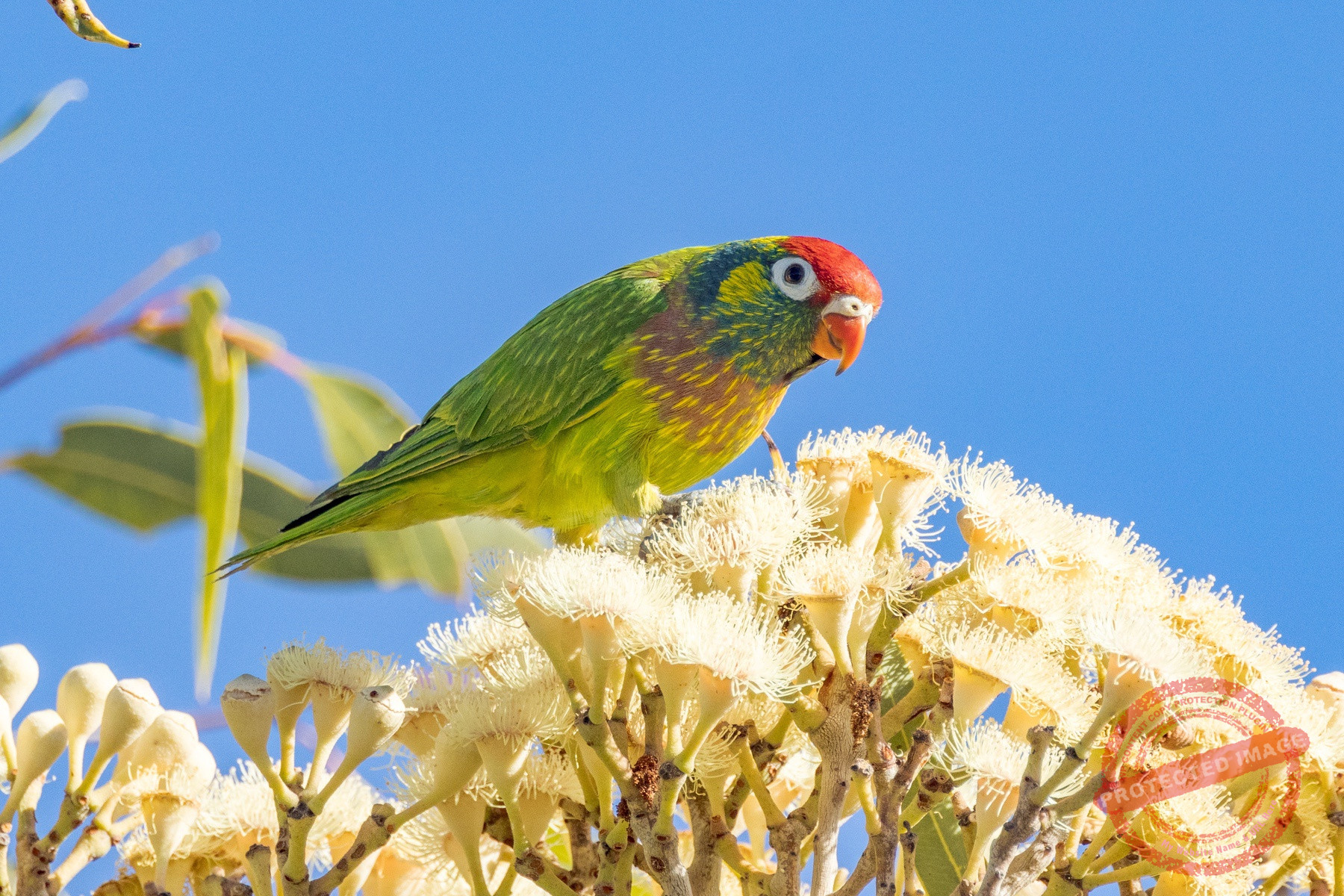
Varied Lorikeet (Psitteuteles versicolor). Photo courtesy of Adobe Stock.
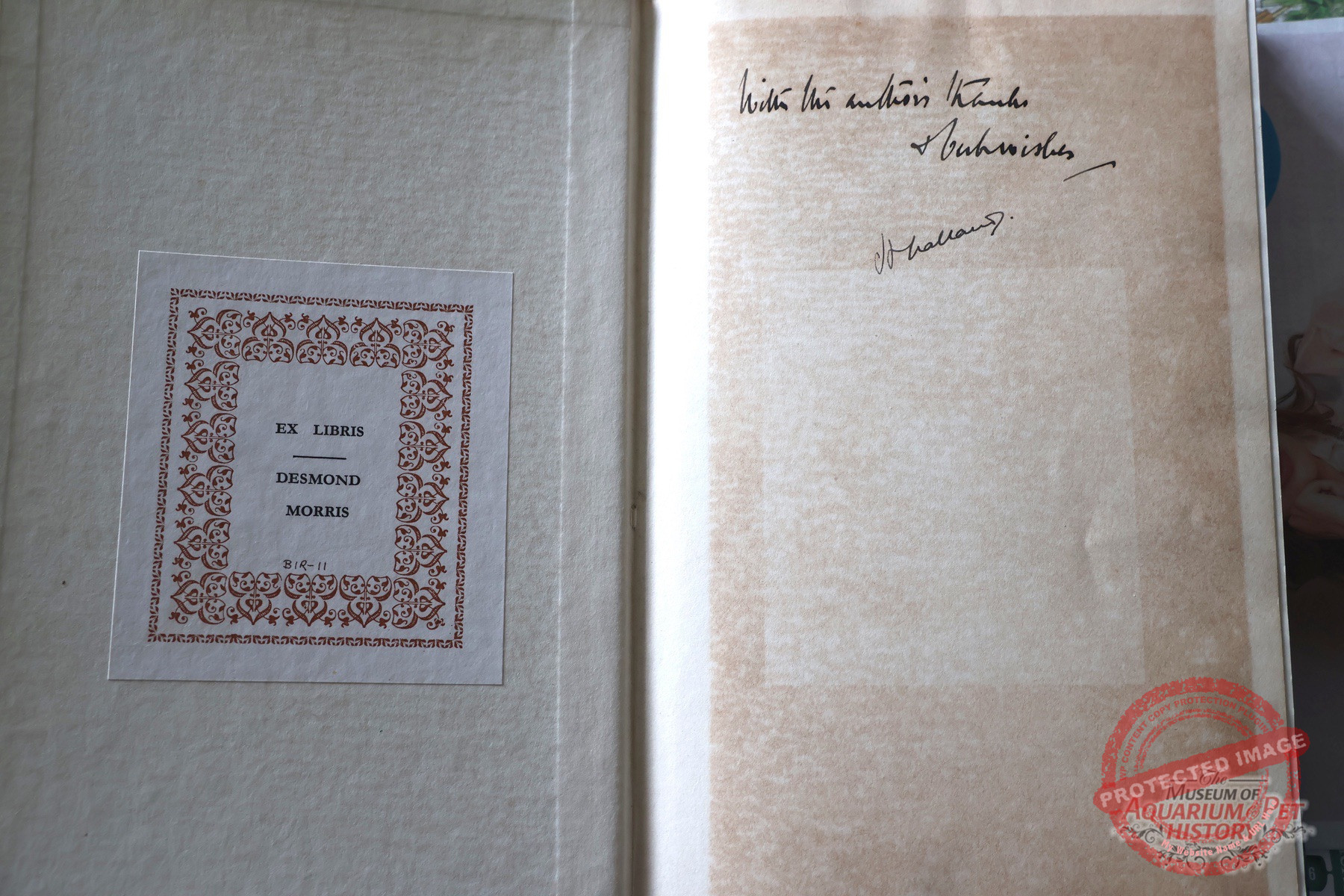
A presentation copy of Boosey’s book Foreign Bird Keeping, given originally to J.J. Yealland, who was by then Curator of Birds at London Zoo. His signature can be seen below the dedication. After Yealland’s death, this volume passed into the library of the famous zoologist Dr. Desmond Morris, who, coincidentally was Curator of Mammals there, with his bookplate visible here as well. Their tenures in their respective roles at the zoo overlapped between 1959 and 1967. Photo courtesy David Alderton.
Branching out
The late 1950s marked the start of what has been described as the Budgerigar Boom. There was a huge upsurge in demand for these colorful parakeets as pets at this stage, and Keston was struggling to meet demand. What began as a satellite operation concentrating on the breeding of budgerigars let to the creation of an associated company, which, by 1962, had become known as Southern Aviaries and Keston Foreign Bird Farm Limited. Based near the town of Uckfield in the neighbouring county of Sussex — about 30 miles (50 km) from Keston — it was run by Max Sanderson and his wife Susan, who was a close relative of Alec Brooksbank.
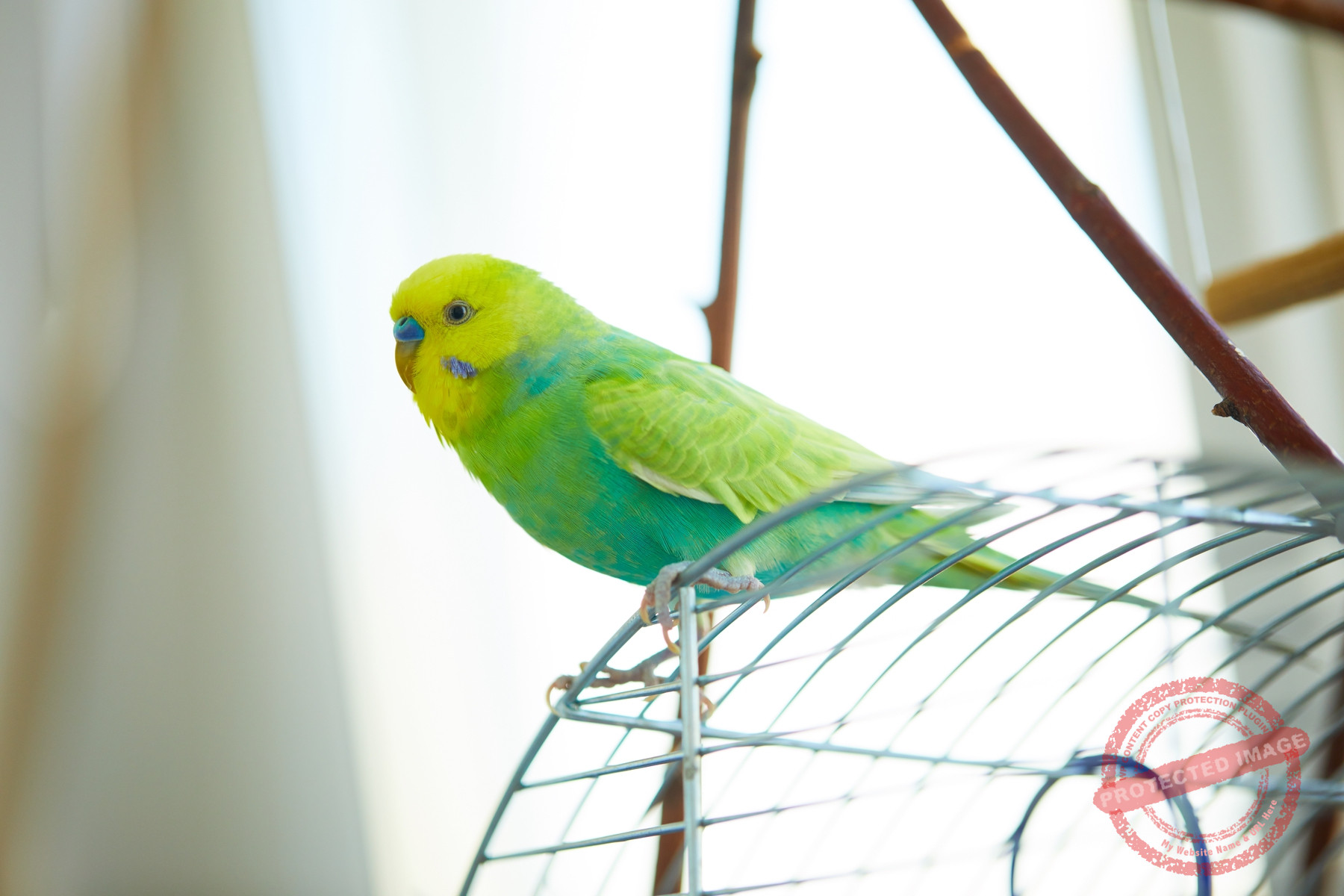
Colorful bugerigars were much in demand in the late 1950s shutterstock_1488857954
The end of an era
It appears that the business ceased its operations in Kent after Boosey’s passing on 7th May, 1969, with Alec Brooksbank having predeceased him two years earlier. Today, Boosey’s home at Brambletye on Westerham Road still stands, but evidence of the aviaries in the garden and other traces of this remarkable enterprise have long disappeared. Meanwhile, Southern Aviaries continued trading up to 2008, cutting back over time on its budgerigar breeding activities and broadening out to become a highly-regarded general bird supply business before its owners retired. Max Sanderson passed away during 2025.
In conclusion
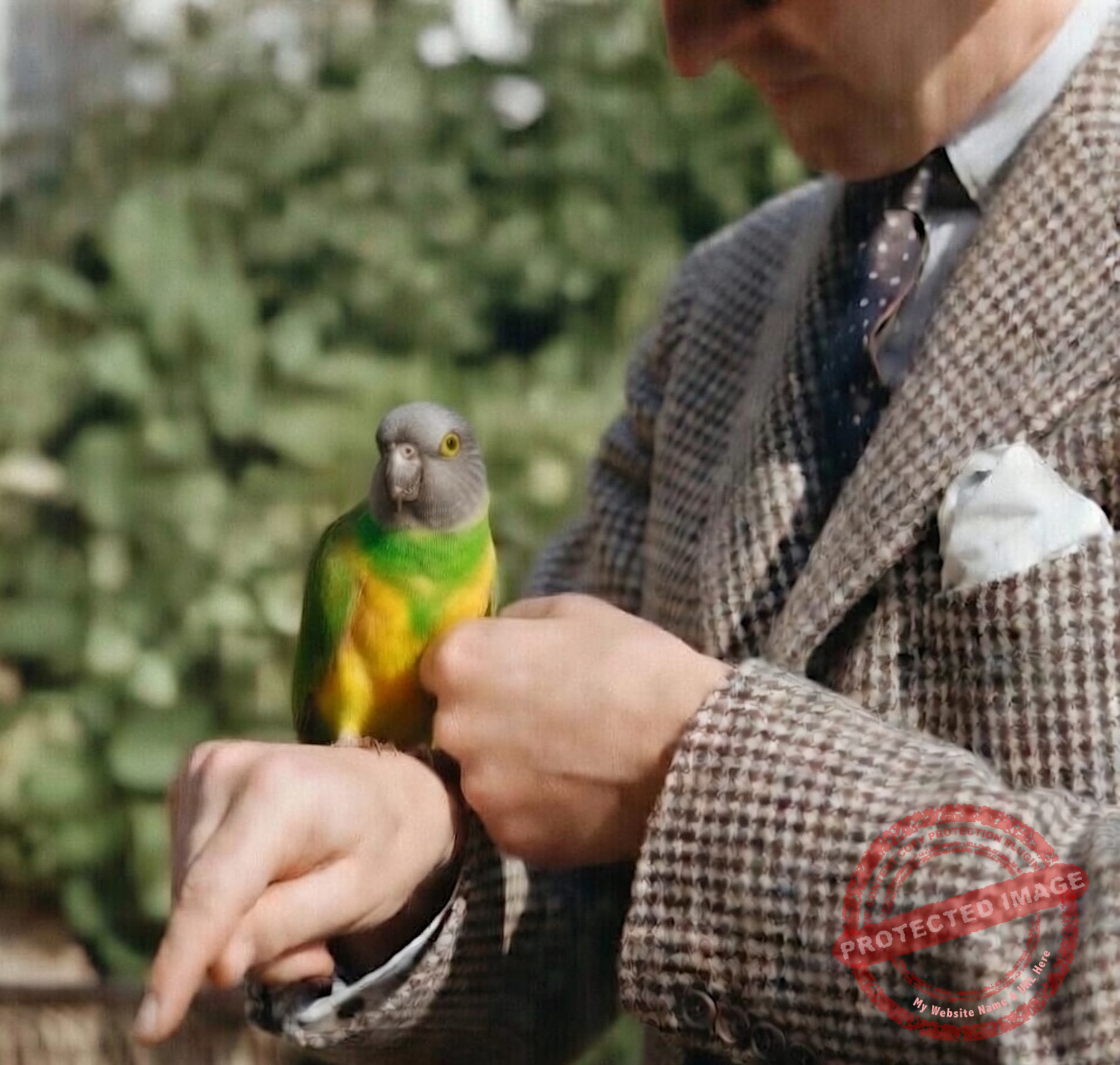
Edward Boosey with a tame Senegal Parrot (Poicephalus senegalus) that he acquired from a sailor.
Nevertheless, Keston’s impact still endures today. It firstly demonstrated that rare parrots and softbills could not only survive but thrive and reproduce in the British climate with thoughtful management. A wide range of species once considered impossible to breed—embracing psittacines, softbills and finches—thrived and did so repeatedly in Keston’s care. Mutations developed in the collection there are now represented in aviaries throughout the world today, while its emphasis on captive-bred birds over wild-caught imports anticipated modern conservation ethics.
Keston Foreign Bird Farm was more than a business; it was a innovative establishment where passion met practicality. Edward Boosey’s decades of thoughtful, hands-on experience, shared through word and print, inspired generations. Though the aviaries may have gone, descendants of the birds that Keston bred still fly and bring much pleasure to people in collections worldwide today. The farm’s story reminds us that true aviculture is not about ownership, but stewardship: breeding tomorrow’s flocks from today’s stock by means of dedicated observation and care. In the annals of avicultural history, Keston deserves its place as Britain’s most successful bird farm.