Book Review: Aquarium Buildings. Construction and Design Manual.
Edited by Jürgen Lange and Natascha Meuse. Forewords by Theo B. Pagel and Philippe Vallette. Further contributions by Peter Chermayeff, Claudia Luxbacher, Motofumi Tai and Dieter Balkow. DOM Publishers, Berlin, 2023. Format: 23 x 28.5 cm. Hardcover with elastic strap, 464 pages, 900 images. ISBN 978-3-86922-756-6 (English edition).
The subject of this review is a niche book published in 2023. According to the official website of DOM Publishers in Berlin, the main goal of this lavishly illustrated publication “is to provide architects and their clients, zoologists, and operators of large aquariums with planning parameters and quality criteria to help them design a sustainable aquarium.”
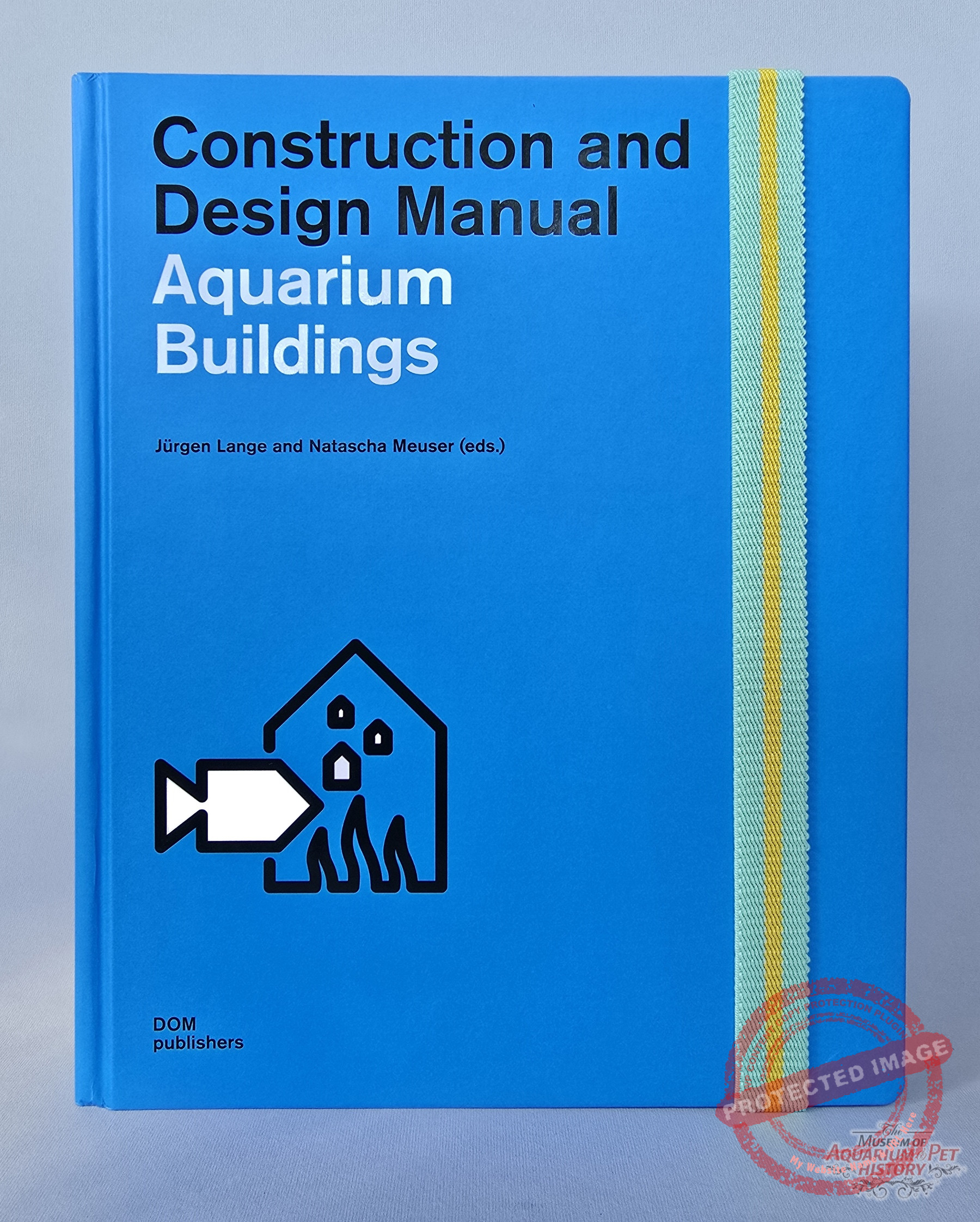
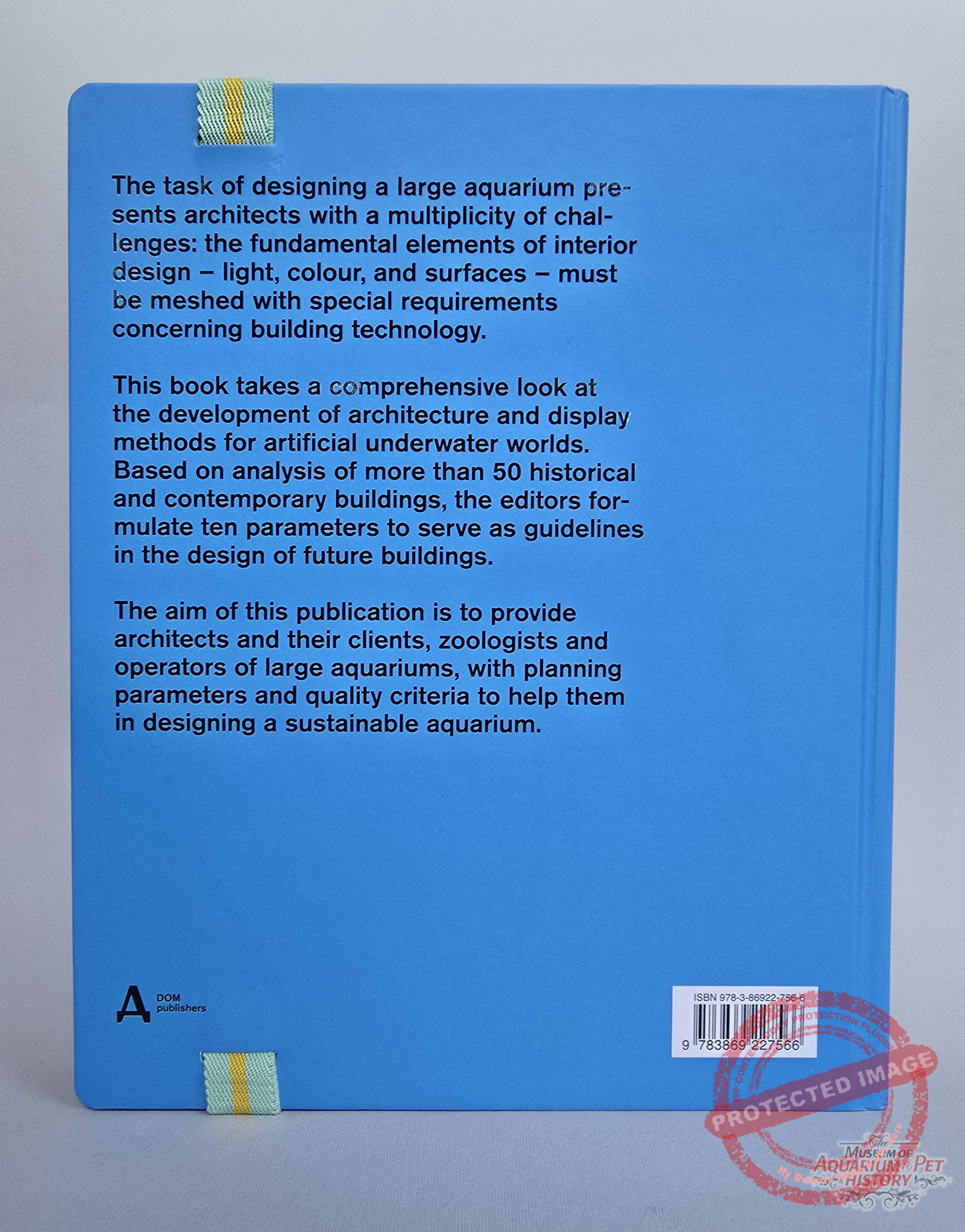
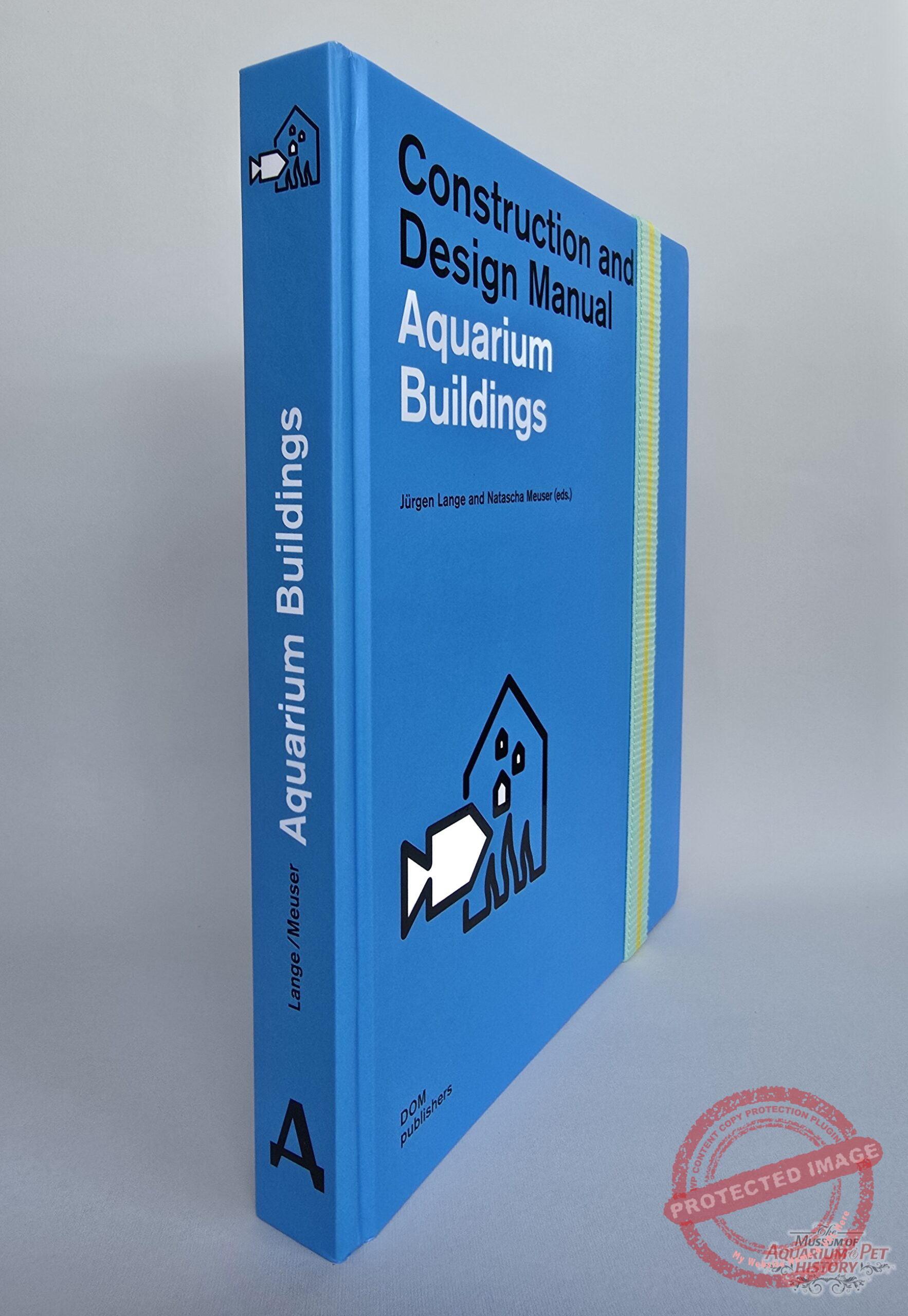
At this point, you might wonder why so many aquarium history enthusiasts have already bought a copy. The reason, certainly, is not to be found in the title, which gives no hint that the book deals with the history of aquariums. More generally, the cover is hardly inviting for old-school readers like us, who have always been drawn to antique illustrations of fish and aquariums; its overall look feels poorly conceived, a real missed opportunity to make this work more appealing and, as a result, more marketable. Let’s take a closer look at the only image featured on it, for example. I am aware that the “less is more” ethos is fashionable in many fields these days, and I can imagine what the editors intended the illustration at the bottom to symbolize, but something in the process clearly went wrong.
To be completely honest, here’s what I see at first glance: a missile or a bazooka rocket round striking a house that is on fire, while house-shaped debris falls from the roof.
Anyway, let’s move on to the content itself. As mentioned earlier, we are dealing with a bold publishing venture aimed at a very niche audience. It is, in fact, the latest in a very small number of books published to date on this subject. Among them, I fondly recall L’Architettura delle Idee – la Stazione Zoologica Anton Dohrn di Napoli by Riccardo Florio (2013, 560 pages), a monumental work that traces the architectural history of the Zoological Station at Naples and its public aquarium.

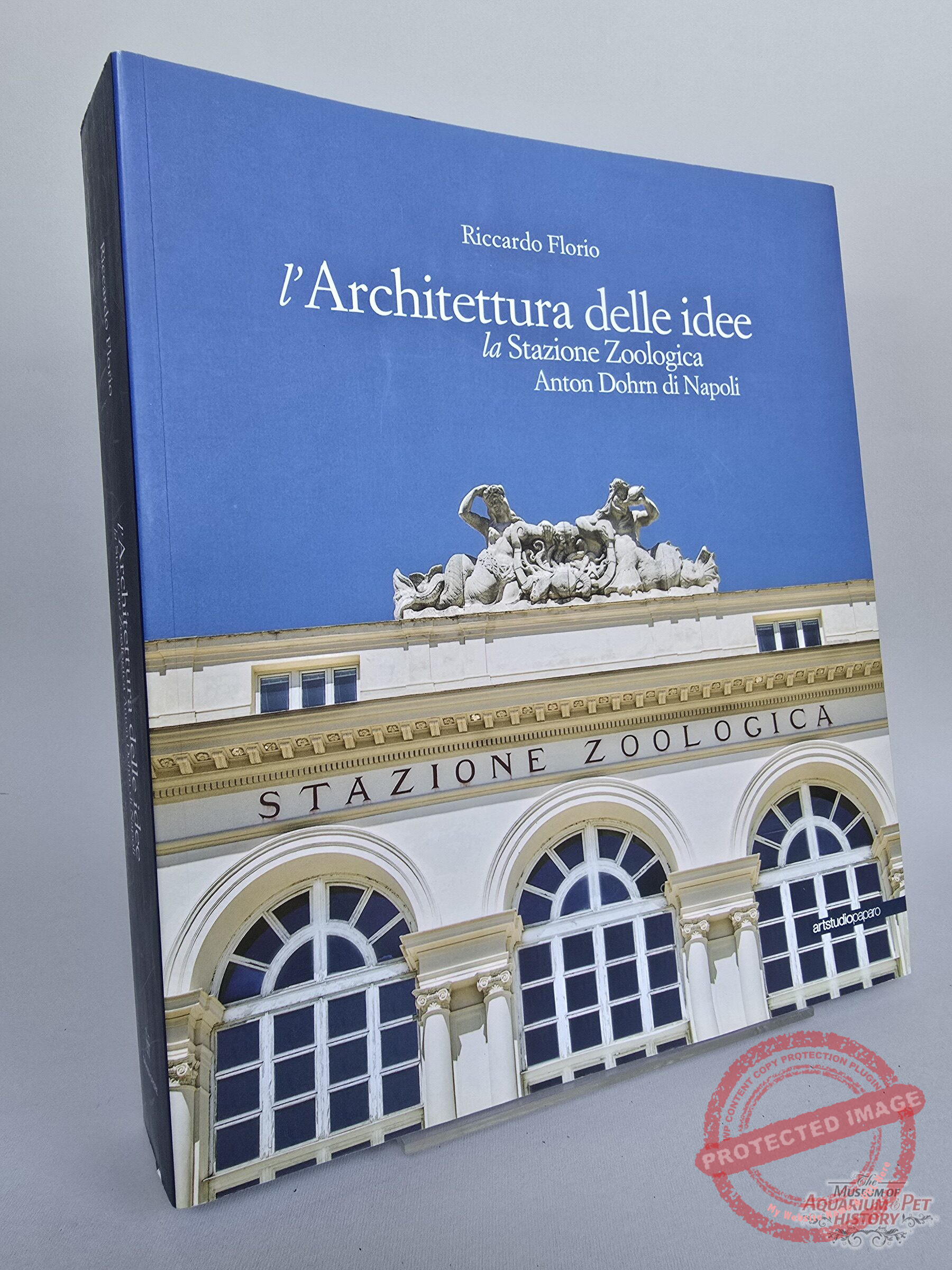
The latter, however, is not something I would consider particularly suitable for the average enthusiast of aquarium history, whereas Aquarium Buildings certainly is. I have already recommended it to many fellow collectors, consistently receiving positive feedback.
From page 104 to page 187, in fact, the manual offers an overview of both well-known and lesser-known public aquariums inaugurated between 1853 and 1932, providing concise information along with a rich selection of engaging illustrations, photographs, historical maps, documents, and architectural plans. Here is a list of them:
The Fish House, London (1853)
Aquarium de Paris (1861)
Hamburg Aquarium (1863)
Aquarium de Paris (1867)
Berliner Aquarium Unter den Linden (1869)
Crystal Palace Aquarium, London (1871)
Brighton Aquarium (1872)
Aquarium at the Prater, Vienna (1873)
Manchester Aquarium (1873)
Stazione Zoologica Anton Dohrn, Naples (1874)
Aquarium in the Zoological Garden, Frankfurt (1877)
Natura Artis Magistra Aquarium, Amsterdam (1882)
Acquario Romano, Rome (1887)
New York Aquarium (1896)
Aquarium de Paris (1900)
Belle Isle Aquarium, Detroit (1904)
Acquario Civico di Milano (1906)
Aquarium in Leipzig Zoological Garden (1910)
Oceanographic Museum, Monaco (1910)
Aquarium in the Zoological Garden, Berlin (1913)
Mappin Terraces Aquarium, London (1914)
Steinhart Aquarium, San Francisco (1923)
John G. Shedd Aquarium, Chicago (1929)
Aquarium Tropical, Paris (1931)
Qingdao Aquarium (1932)
I particularly liked the multiple period maps and bird’s-eye views highlighting the locations of these old Aquariums. Many of them are moreover in color, an excellent addition that enriches this work.
As for the text itself, I cannot fully agree with everything presented. There are a few inaccuracies throughout, although I would challenge anyone to produce a book of this kind without making at least some mistakes along the way.
Before and after this historically dense section, Aquarium Buildings turns to the topics it was originally conceived to address, while also surveying a further 35 public aquariums built from the mid-20th century onwards. Included among them is the notoriously tragic AquaDom in Berlin, the giant free-standing cylindrical aquarium which burst on December 16, 2022, releasing around a million liters of salt water and hundreds of tropical fish into the surrounding streets.
In conclusion, if you love aquarium history, want to broaden your knowledge of public aquariums, and believe in the saying “wear old clothes and buy new books,” then this title is certainly for you.