An Interesting Tobacco Card
It is often said that we are a society of collectors (along with ravens among others). I plead guilty. Of things that I like, and collect, Victorian trade cards dealing with goldfish, fishbowls, aquariums, pet shops, etc. rank high. As of late some other pet and/or history related cards have also been finding a home among my collection. Oh well. Fun is fun. With this in mind, I would like to present the following.
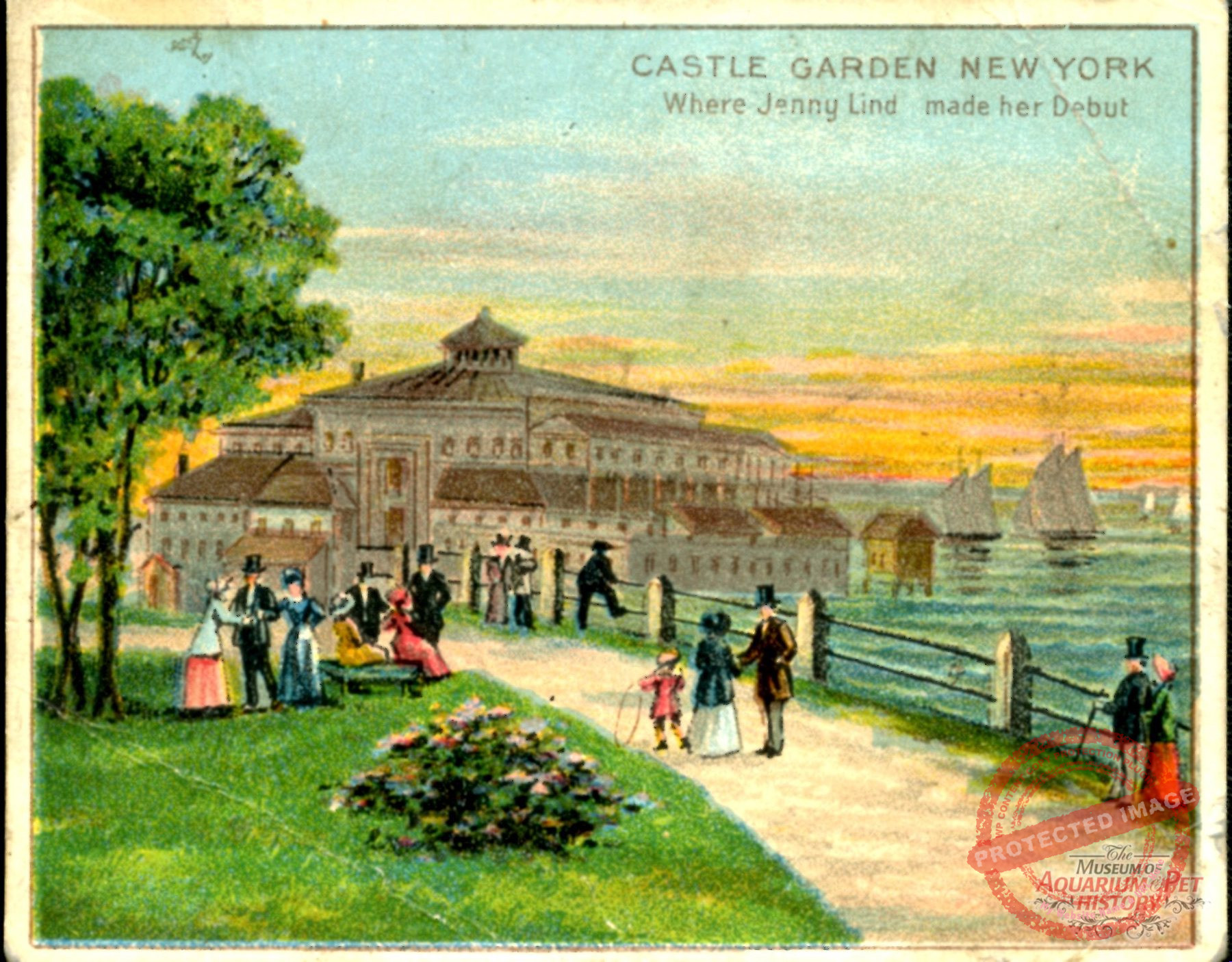
The card discussed, and illustrated, here is technically not a trade card. It is a tobacco card. And, while the overall purpose was the same (offer an attractive color illustration, sometimes with some pertinent information, and provide some product advertising) collecting norms do divide these two groups as separate entities. The delivery method for these cards was one in each container of a product, be they cigarettes or cigars. With that said:
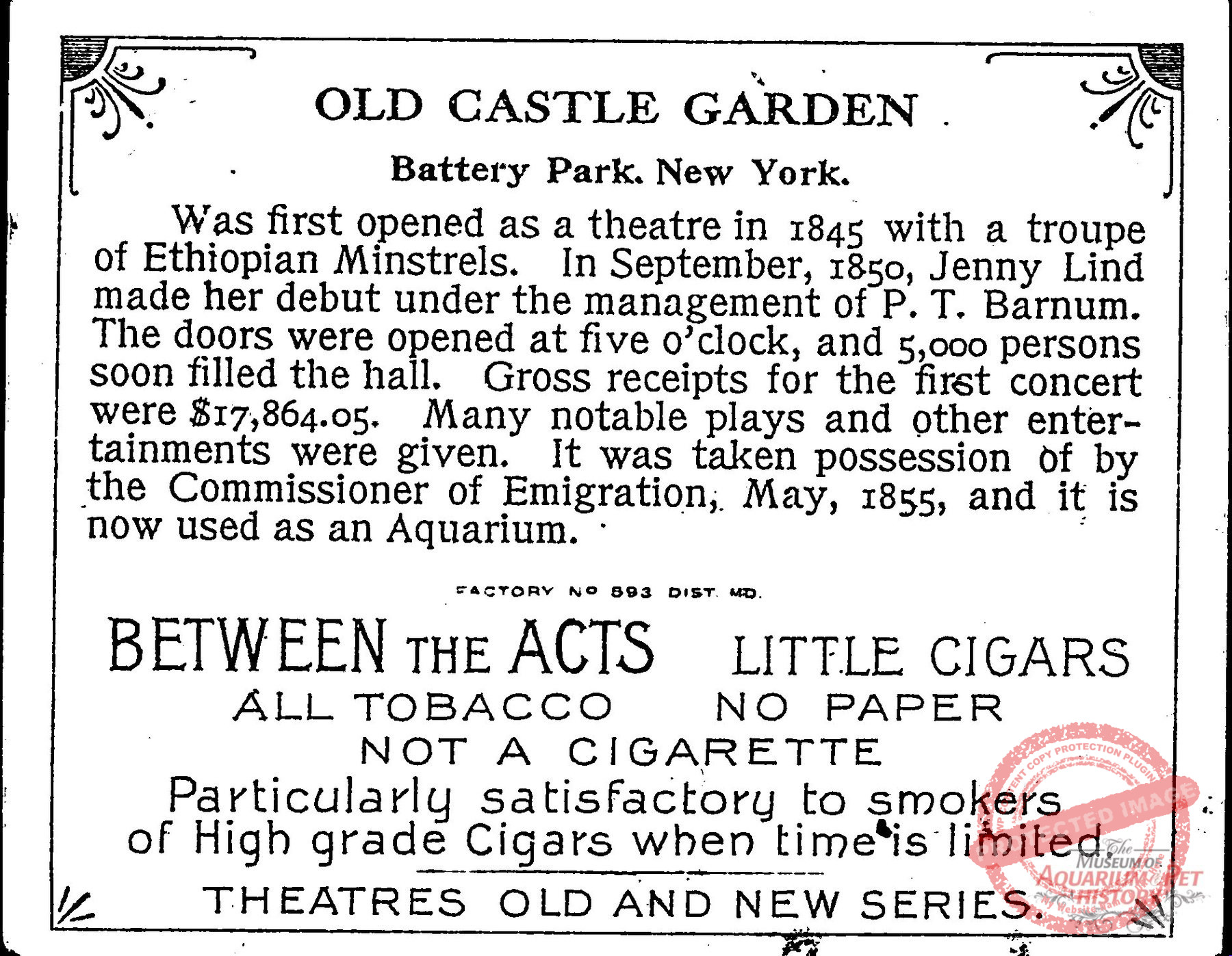
The card shown here is one of a group of 50 which were published by the American Tobacco Company under the series name “Theaters Old and New.” Two brands of little cigars contained the cards: Between The Acts and Lyceum. The latter is considered to be the scarcer of the two. The theaters covered were all American institutions with an emphasis on New York. The size of these cards is 2 1/2 by 3 1/8 inches and they are considered to have most likely been published between 1910 and 1912.
For our purposes of presenting the card herein two contributing factors can be seen on the reverse of the card. The first is the mention of P. T. Barnum who was quite important in the early American aquarium hobby and the second is the Castle Garden building of Battery Park, New York City itself, which became a major world class public aquarium in the latter half of the 1890s. There is one other of this series of cards that is of interest here…Barnum’s American Museum…and we’ll take a look at this at a future time.
Suggested Reading
American Tobacco Cards – Price Guide and Checklist by Robert Forbes and Terence Mitchell. 464 pages. This 1999 book serves as a well-illustrated guide to the topic.