1900 to Early 1922 – Founding of the Next Society: Gothaer Aquarien und Terrarienfreunde
The jubilant celebrations around the turn of the century, 1899–1900, were prepared and held with great enthusiasm in Gotha as well. The new era had brought with it many novelties, which aquarists, too, could now increasingly employ and explore. Photography had improved, and the first moving pictures were entering the realms of both culture and science. It was during this period that the earliest instructional films appeared—particularly those dealing with subjects that could be revealed through careful observation.
Whereas earlier one had to rely on spoken accounts of the mating and brood-care behavior of aquarium fishes, photography and film now made it possible to document what had been observed, and thus, in a sense, to prove it. One example is the reproductive biology of the bitterling, Rhodeus amarus, which deposits its eggs via an ovipositor between the shells of a freshwater mussel. Such findings and observational records helped biology capture the curiosity of an ever-widening public. Since Darwin’s theory, most people had become convinced that human beings, too, were biological creatures with animal ancestors—and they longed to learn more about their kinship, however remote.
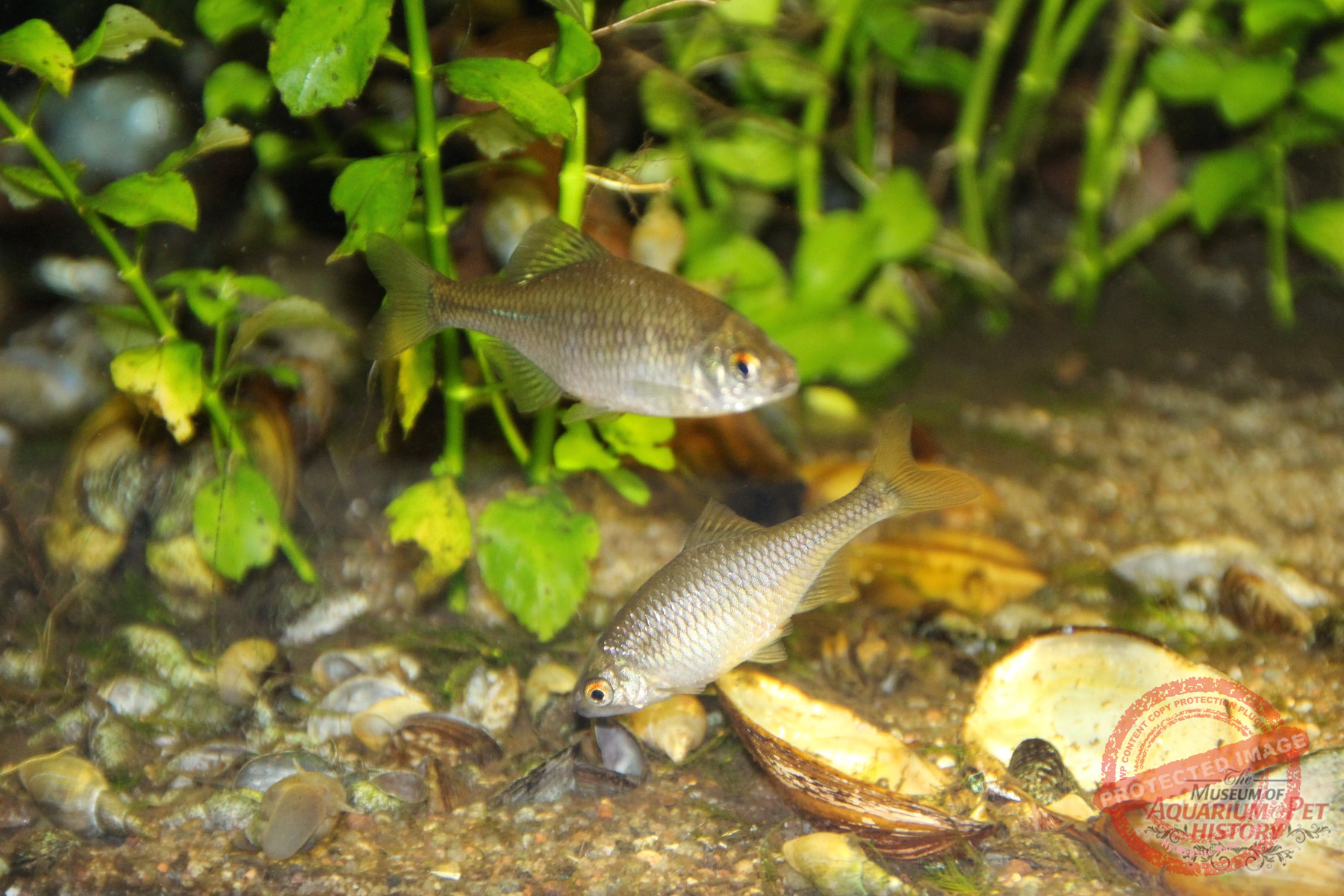
The reproductive biology of the bitterling, Rhodeus amarus, was documented for the first time through aquarium observations.
But only a small fraction of the population (and today an even smaller one) had direct contact with animals or plants, particularly with their intimate ways of life. At best, those working in agriculture were familiar with them, though from the farmer’s perspective: livestock and crops were business assets necessary for survival, cared for only with the goal of one day being slaughtered or harvested. That, too, required skill in breeding and practical biological insight—but I would say that a farmer’s heart beats differently for animals than does an aquarist’s.
The essential difference was that the hobbyists active in vivaristics sought to maintain their charges under conditions as natural as possible. Anyone who succeeded in breeding a species felt proud, for reproductive success proved that the enthusiast had managed to recreate the conditions of nature convincingly. And since one could peer through the aquarium’s glass front into the family affairs of fishes—including their nurseries—particularly intimate behavioral observations became possible, ones that had previously been unimaginable. From that time to this day, private animal keepers have been the most important observers and contributors to discoveries in behavioral biology. Sadly, this is now somewhat swept under the rug and not sufficiently appreciated.
Accordingly, it was in those years that the first significant specialist publications in our field emerged. In addition to the well-known books, these included the Blätter für Aquarien- und Terrarienkunde and the Wochenschrift für Aquarien- und Terrarienkunde. The articles published there by Gotha’s aquarists around the turn of the century attest to their pioneering role in this regard as well.
By that time, the Gotha society Aquarium had reached the height of its activity—recognized both internationally and regionally. In 1900, its membership list included sixty citizens of Gotha and several corresponding aquarists from elsewhere. Among the members were fifteen teachers and fifteen businessmen, craftsmen, and civil servants—those who provided the society’s financial cushion. The other half consisted of thirty workers and their wives.
During the 1910s, members of the courtly nobility and the officer corps increasingly joined the Aquarium. It had become fashionable to be an aquarist—a sort of trend during the waning years of the slowly crumbling monarchy. Though the society’s organizers initially welcomed the influx of prominent members, they soon realized that the structure of the organization was changing. The original idea of vivaristics—true, knowledge-based interest—was slipping into inflation.
At the same time, fatigue set in among the society’s founders and the caretakers of the once-famous, well-developed outdoor aquarium facility. The society’s work stagnated, yielding no significant new results—neither in the scientific realm nor in exhibitions or events. Elsewhere in Germany, newly founded aquarium societies had surpassed Gotha, both in technical and breeding expertise and, likely, in the size of their catchment areas.
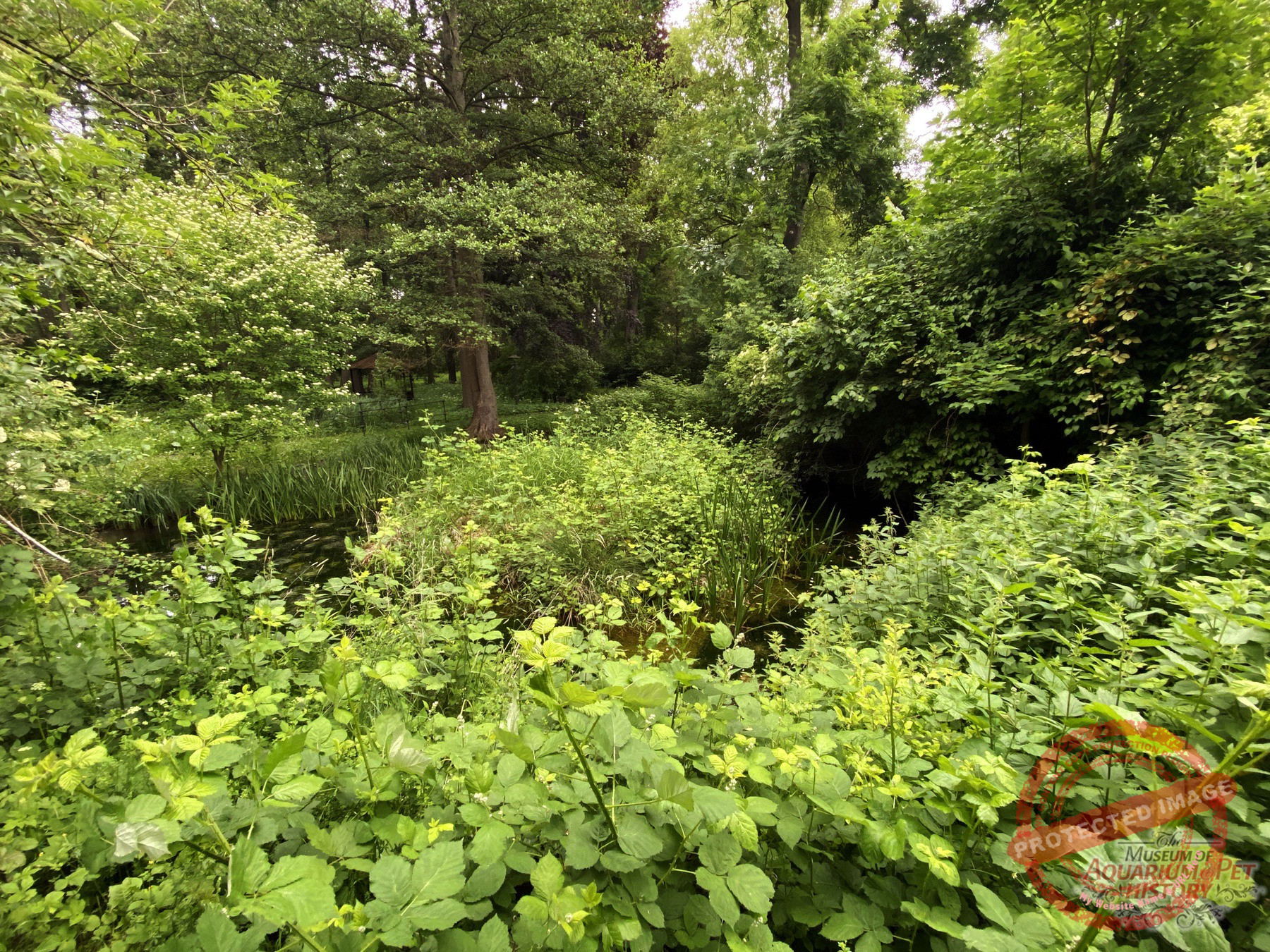
The outdoor aquarium at the Uelleber Ried continued to draw large crowds.
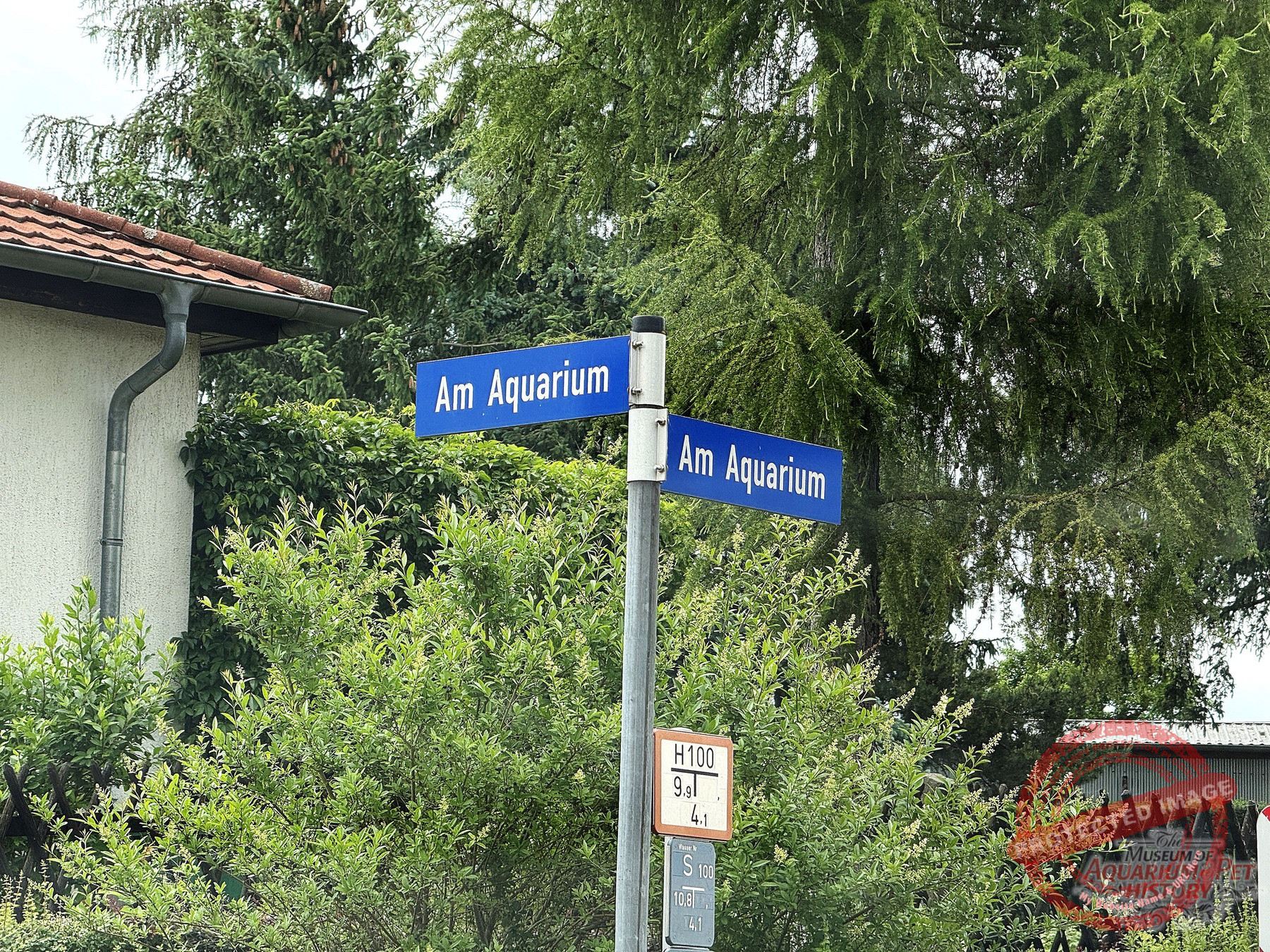
Around it developed a small residential settlement; the street directly beside the aquarium even took its name from it.
Just before the turn of the century, the first tropical aquarium fishes were imported and soon bred successfully. This became possible because manufacturers of technical heating and lighting systems—taking advantage of the rapidly expanding electrical grid—had begun catering to the growing aquaristic market. Electric heaters steadily improved, the first air pumps became available, and the long-term lighting required for tropical species during winter could now be achieved.
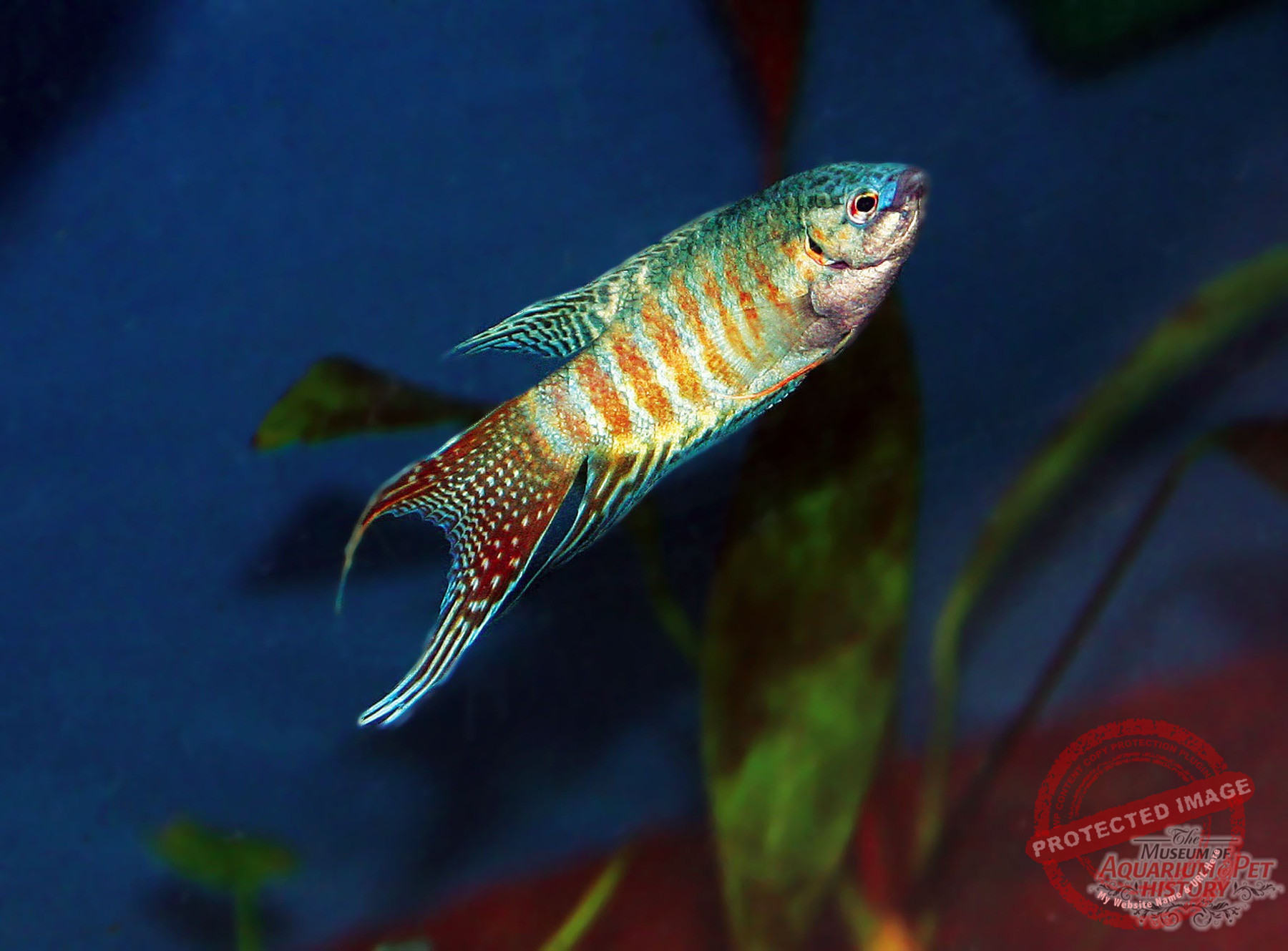
The first subtropical aquarium fish was the paradise fish, Macropodus opercularis, introduced for the first time in 1869.
The catfish species Corydoras paleatus had first been introduced in France in 1876, bred there, and then imported to Germany in a filial generation after 1893. Among the labyrinth fishes prized at the time for their tolerance of poor aeration, the paradise fish (Macropodus opercularis, known since 1869) was followed in 1896 by the Siamese fighting fish (Betta splendens) and, in the same year, the three-spot gourami (Trichogaster trichopterus). As early as 1889, subtropical fishes known as Chanchitos (Australoheros facetus), from the southernmost tip of South America, had arrived in Germany, where they were successfully bred in aquaria and ponds.
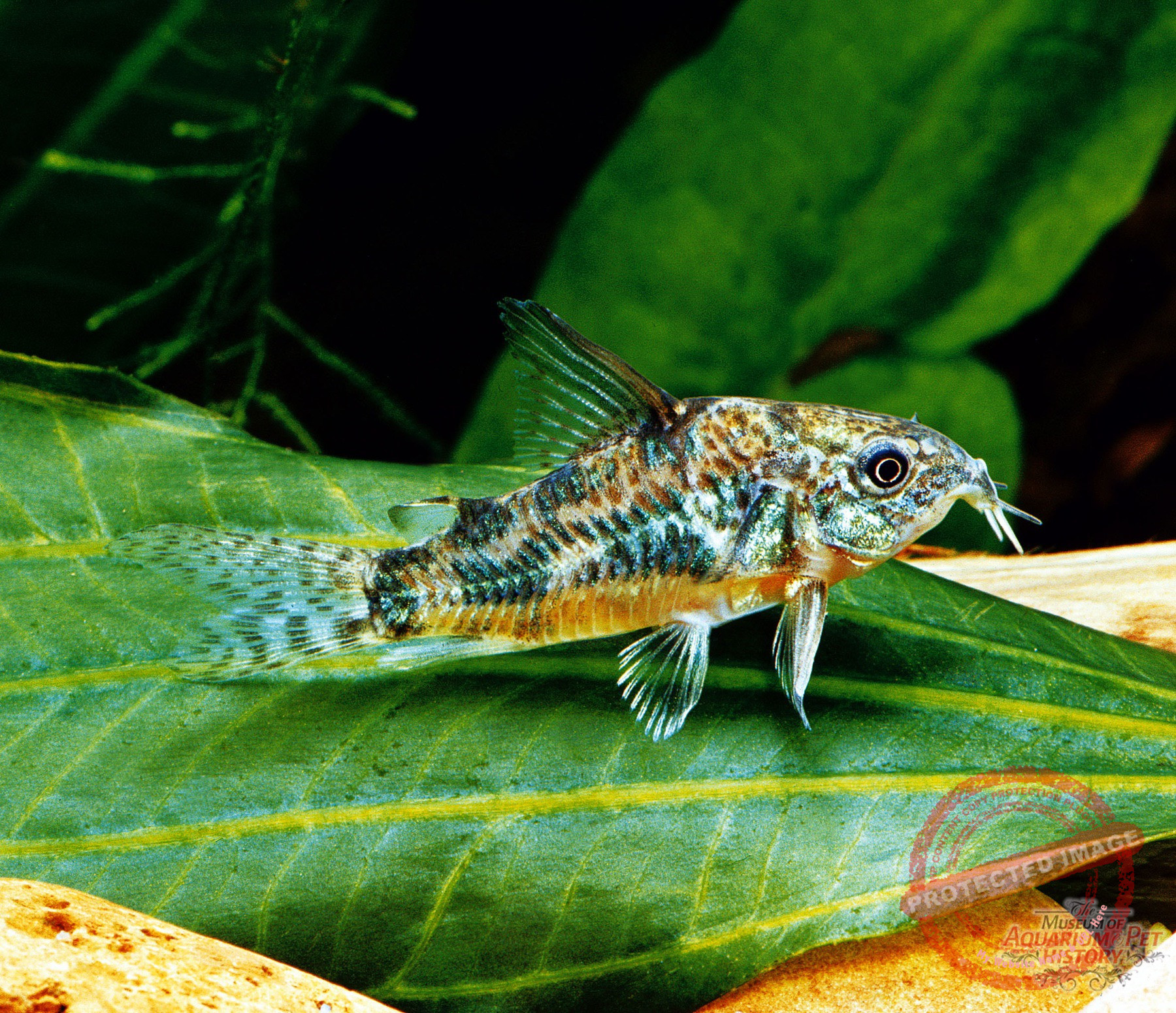
Since 1893, the spotted corydoras, Corydoras paleatus, had also been available in Germany.
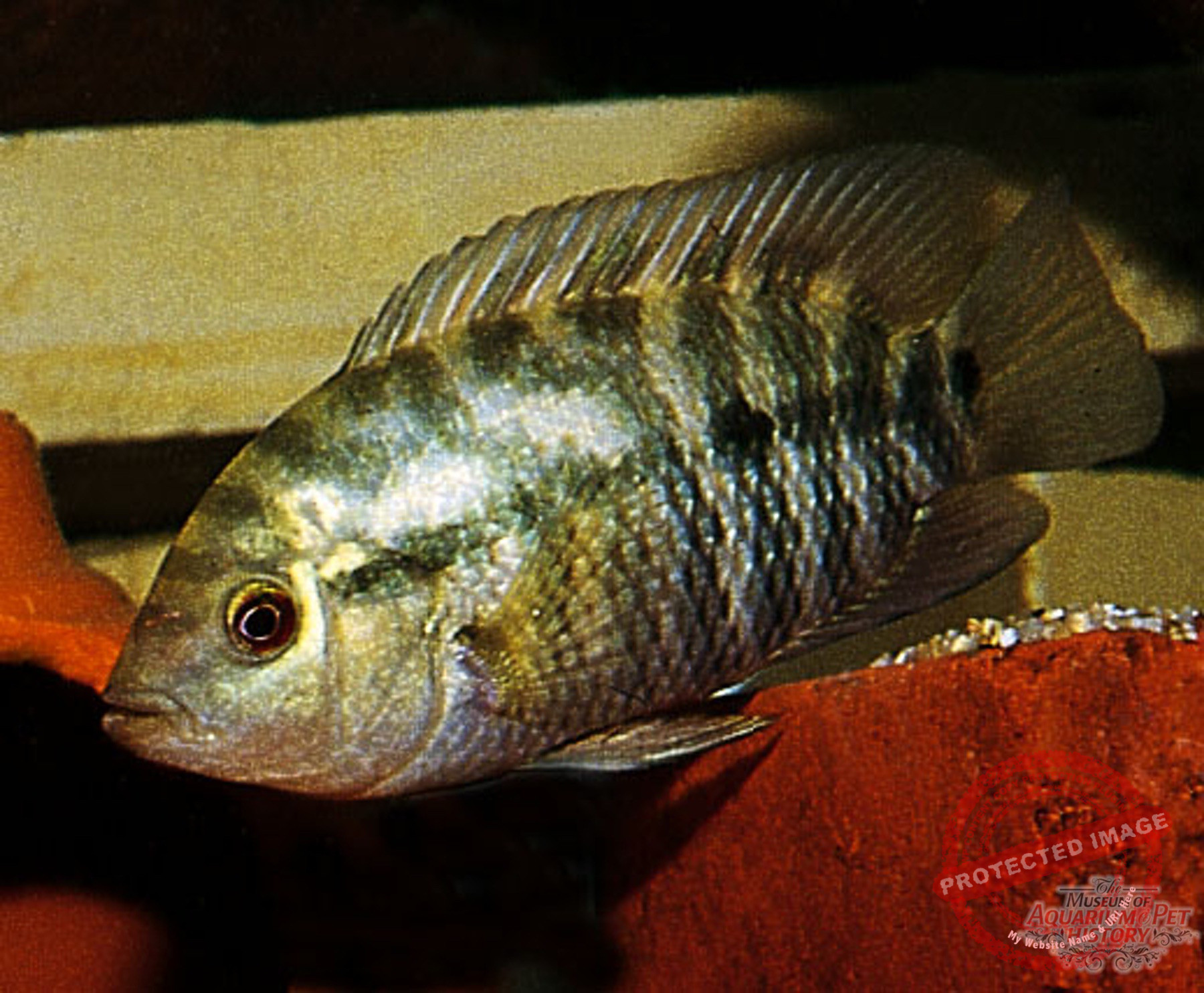
The chanchito, Australoheros facetus, a subtropical cichlid, appeared in aquaria as early as 1889—preceding the introduction of tropical species.
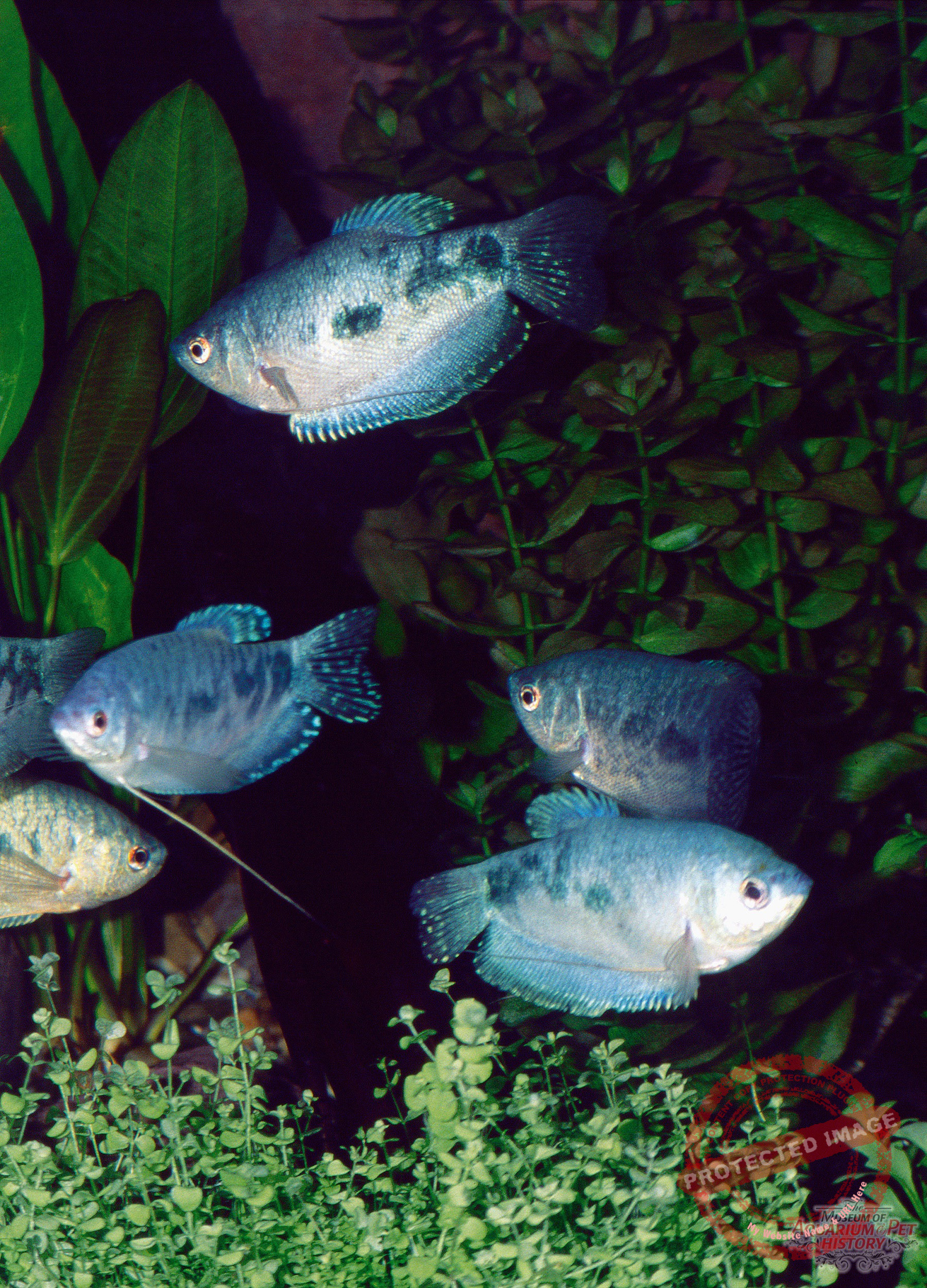
Beginning in 1896, the three-spot gourami, Trichogaster trichopterus, appeared in aquaria.
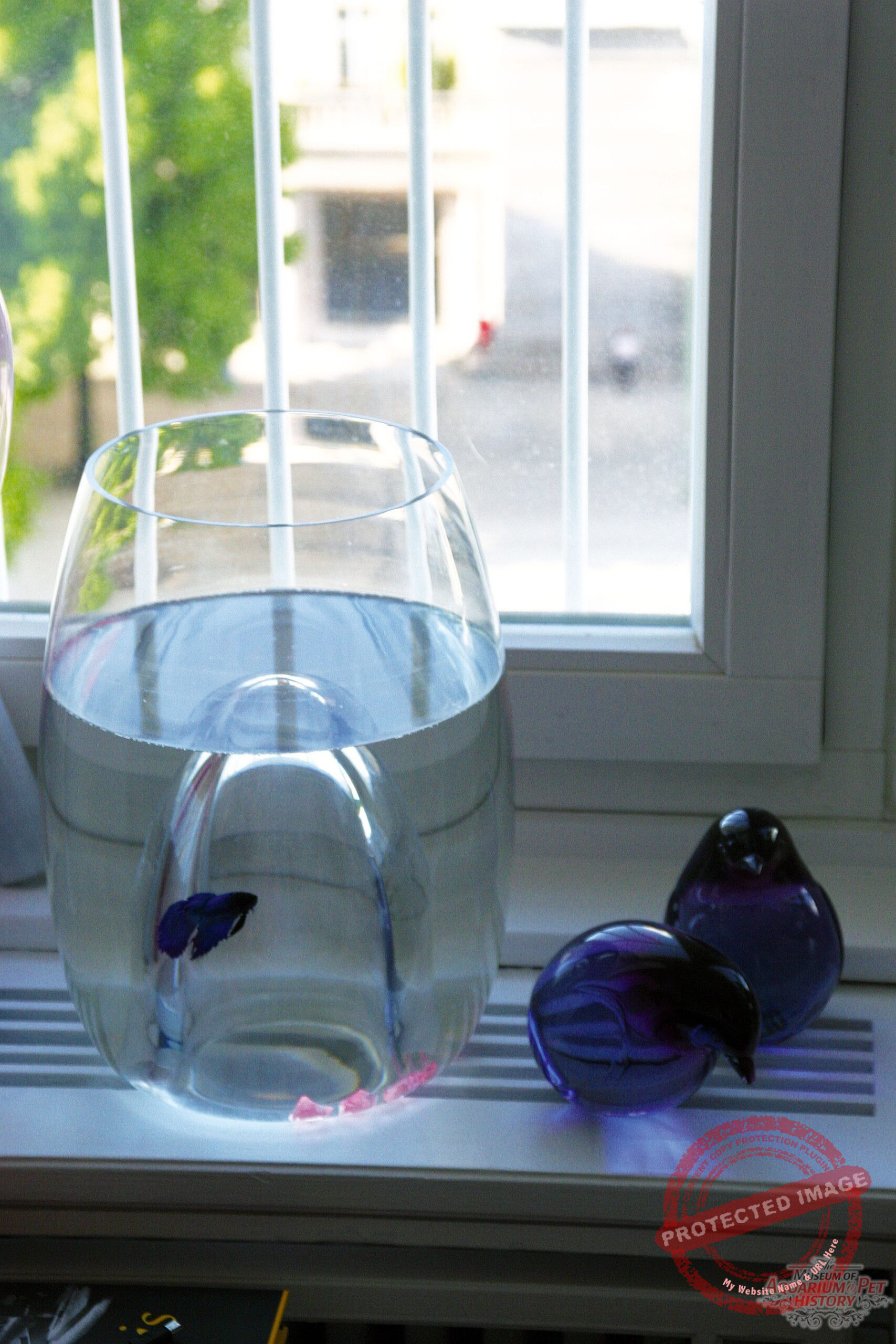
In that same year, Siamese fighting fish, Betta splendens, were added—sometimes kept in glass bowls similar to those used for goldfish. Thanks to their labyrinth organ, which serves as an additional respiratory structure, these fish could survive reasonably well in such small vessels.
In 1898, the Berlin aquarium fish breeder and dealer Paul Matte imported the first livebearing toothcarp for the hobby, the species Phalloceros caudimaculatus. Fishes that continuously gave birth to young were a sensation among aquarists. It is true that since 1881, the Iberian toothcarp Valencia hispanica—caught within Europe—had already been kept and bred. Yet overseas fishes, and livebearing ones at that, represented an entirely new quality. Thus new objects of aquaristic desire appeared—challenges through which enthusiasts could prove themselves.
Due to the increasingly elitist composition of Gotha’s society members, those who wished to engage seriously with the new species and their breeding challenges found themselves ignored. Most of them were humble yet intelligent working-class people, denied higher education, who saw in aquaristics not merely another item in a fashionable list of club memberships but one of their dearest and most meaningful pursuits beyond the hardships of daily labor.
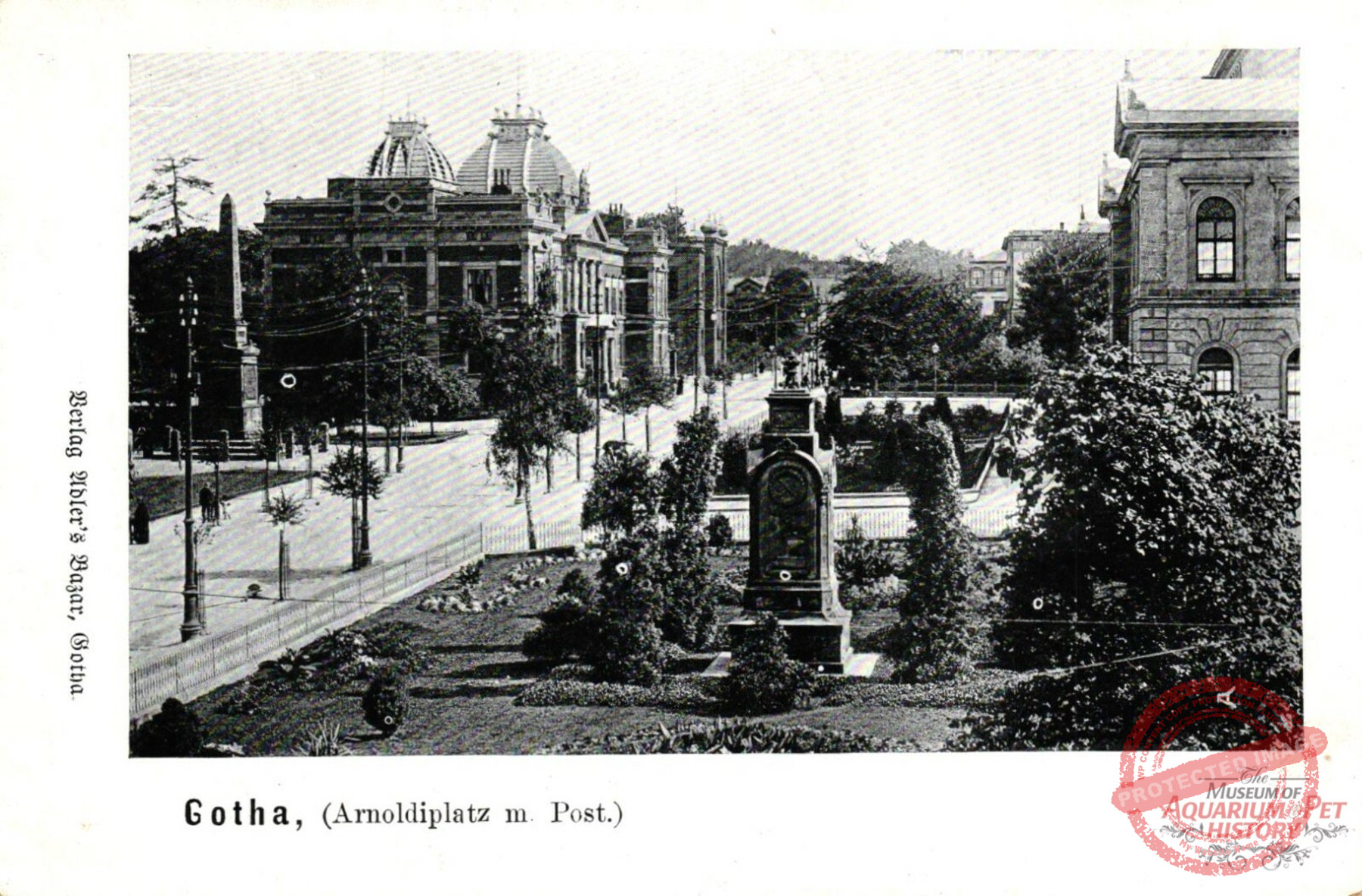
Postcard of Gotha around the turn of the century.
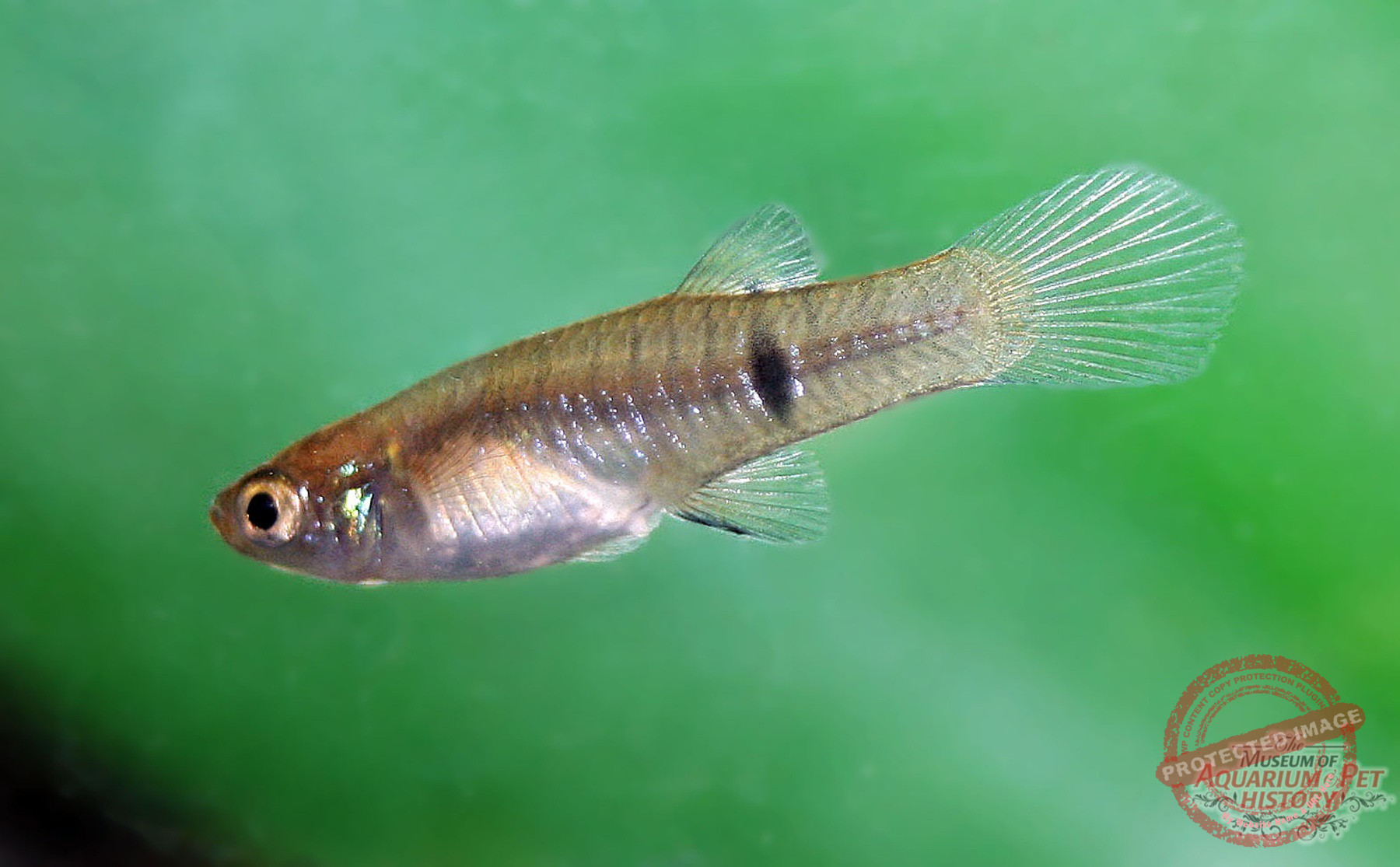
An aquaristic sensation occurred in 1898 with the import of the first livebearing toothcarp species, Phalloceros caudimaculatus.
The society’s leadership, however, began hiring paid workers to maintain the outdoor aquarium, seeking independence from the devoted volunteer practitioners who had previously tended the facility. It was no longer considered proper to dirty one’s hands with mundane maintenance work. Expenditures for such external services were now recorded: in 1904, according to the society’s cashbook, 218 Reichsmarks were paid to a laborer. Later, new “service sources” were added—by 1908, the Gotha prison administration received 73.50 Reichsmarks for pond work performed by inmates, with similar payments later made to the local reformatory.
The conservative elite of the society also insisted on remaining traditional with regard to their animals. They looked down upon those who succeeded in breeding newly introduced species. Even many of the younger hobbyists—drawn to aquaristics through the excellent biological education provided by the Gotha Aquarium—turned elsewhere, as they found no acceptance or support from the “old guard.” Schäffer, the society’s founder, became embroiled in tensions, apparently because he failed to separate sufficiently between his private use and the society’s interests regarding the pond island within the aquarium grounds.
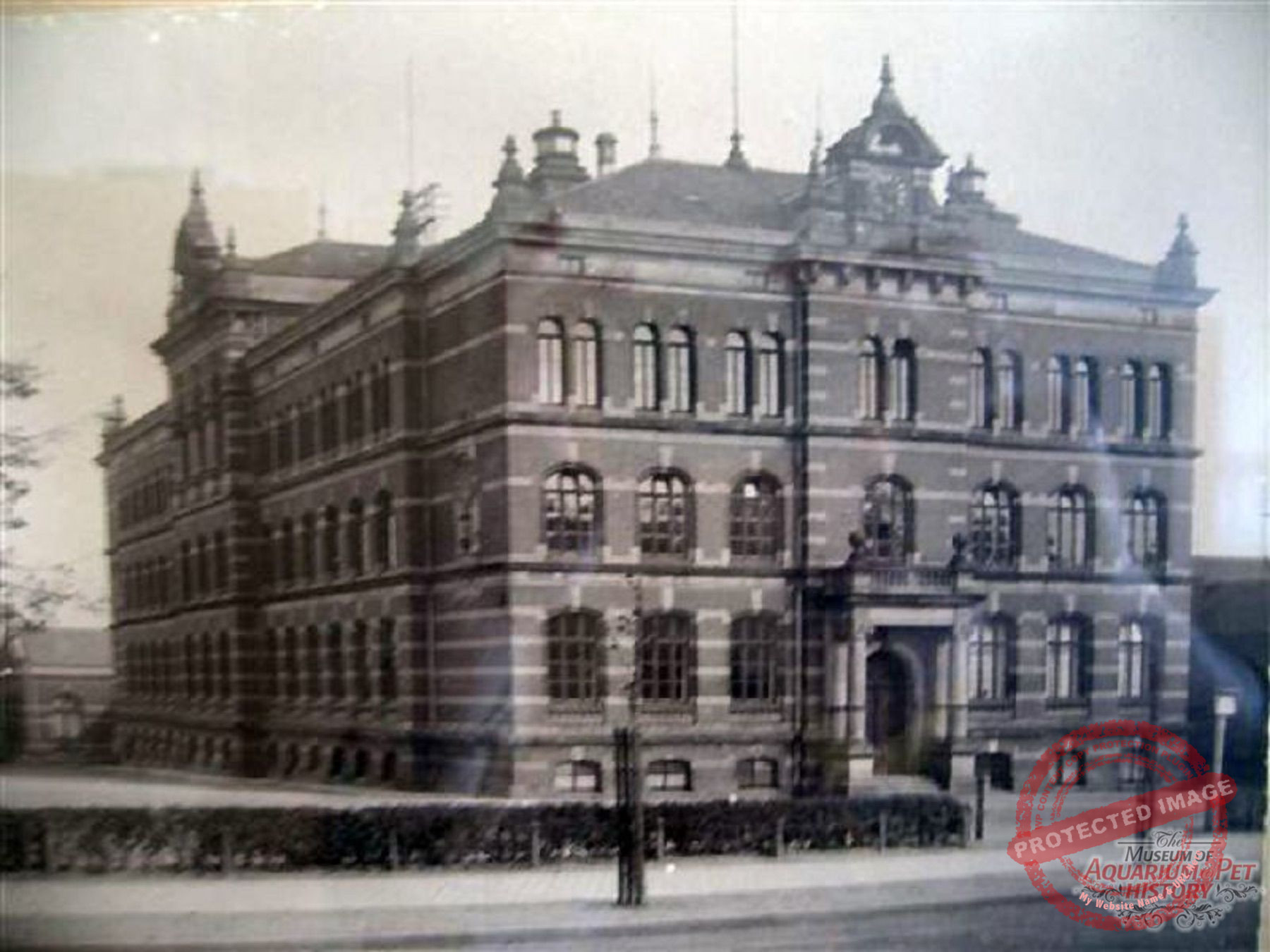
The Reyher School in Gotha was the final place of work of “Aquarium” founder Jacob Schäffer.
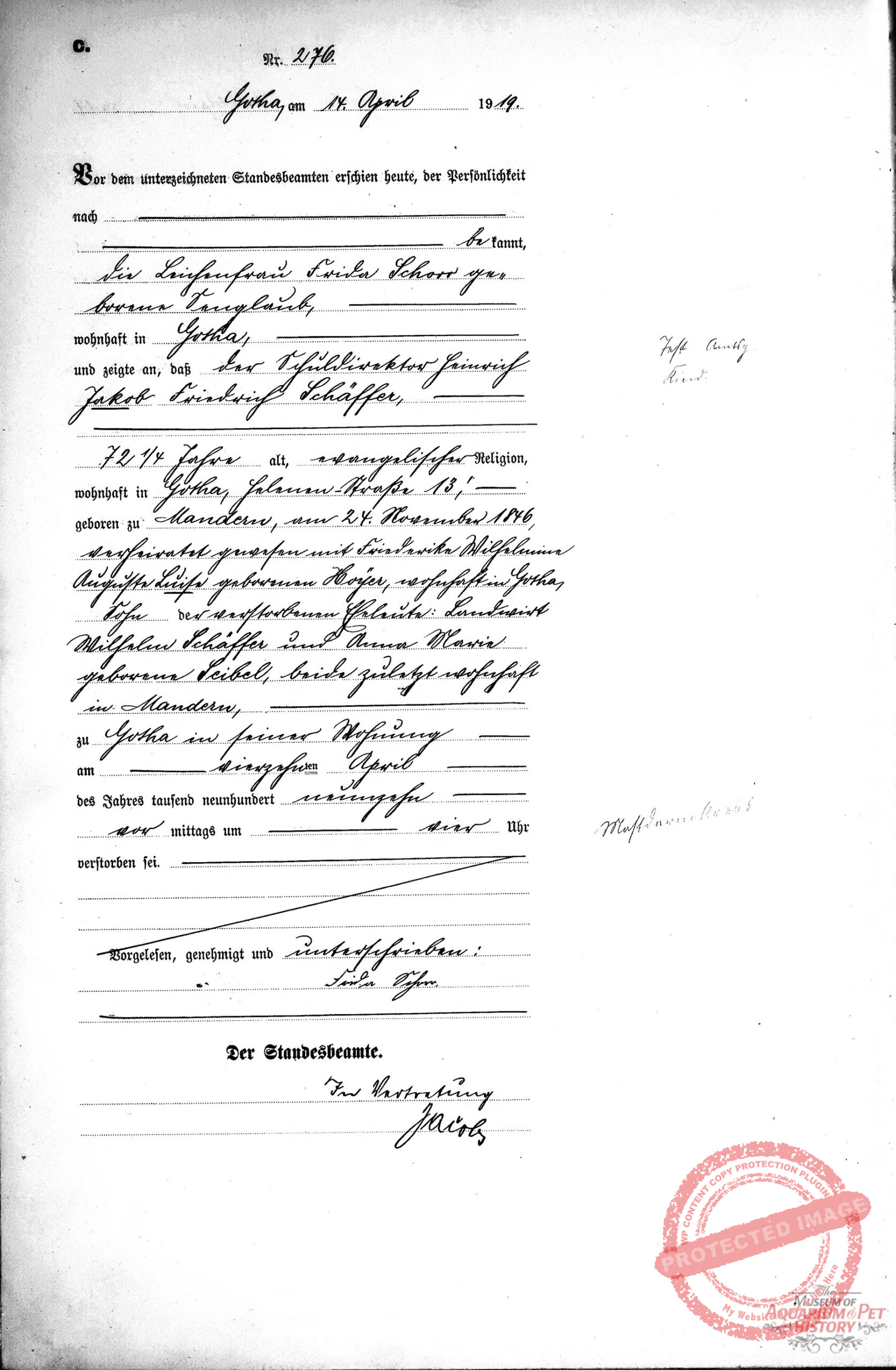
Schäffer’s death certificate, dated April 14, 1919.
Thus, a division increasingly emerged between the archaic cold-water aquarists—content with their own self-congratulatory elitism—and the practical enthusiasts who had long since adopted modern technology for heating, aeration, and lighting, and who proudly reported numerous first breeding successes.
Between 1900 and 1910, several dozen new tropical fish species were imported to Germany, among them such now-standard aquarium inhabitants as guppies (Poecilia reticulata), various Xiphophorus species, zebra danios (Danio rerio), the jewel cichlid (Hemichromis bimaculatus), and the rosy barb (Puntius conchonius). The true aquarists were curious, eager to prove themselves, and driven by the pursuit of knowledge. This group of progressive warm-water aquarists gradually separated from the Aquarium society and formed an informal gathering called Paludarium. Though its participants technically remained members of the parent society, they had little to do with the conservative gentlemen of the founding era.
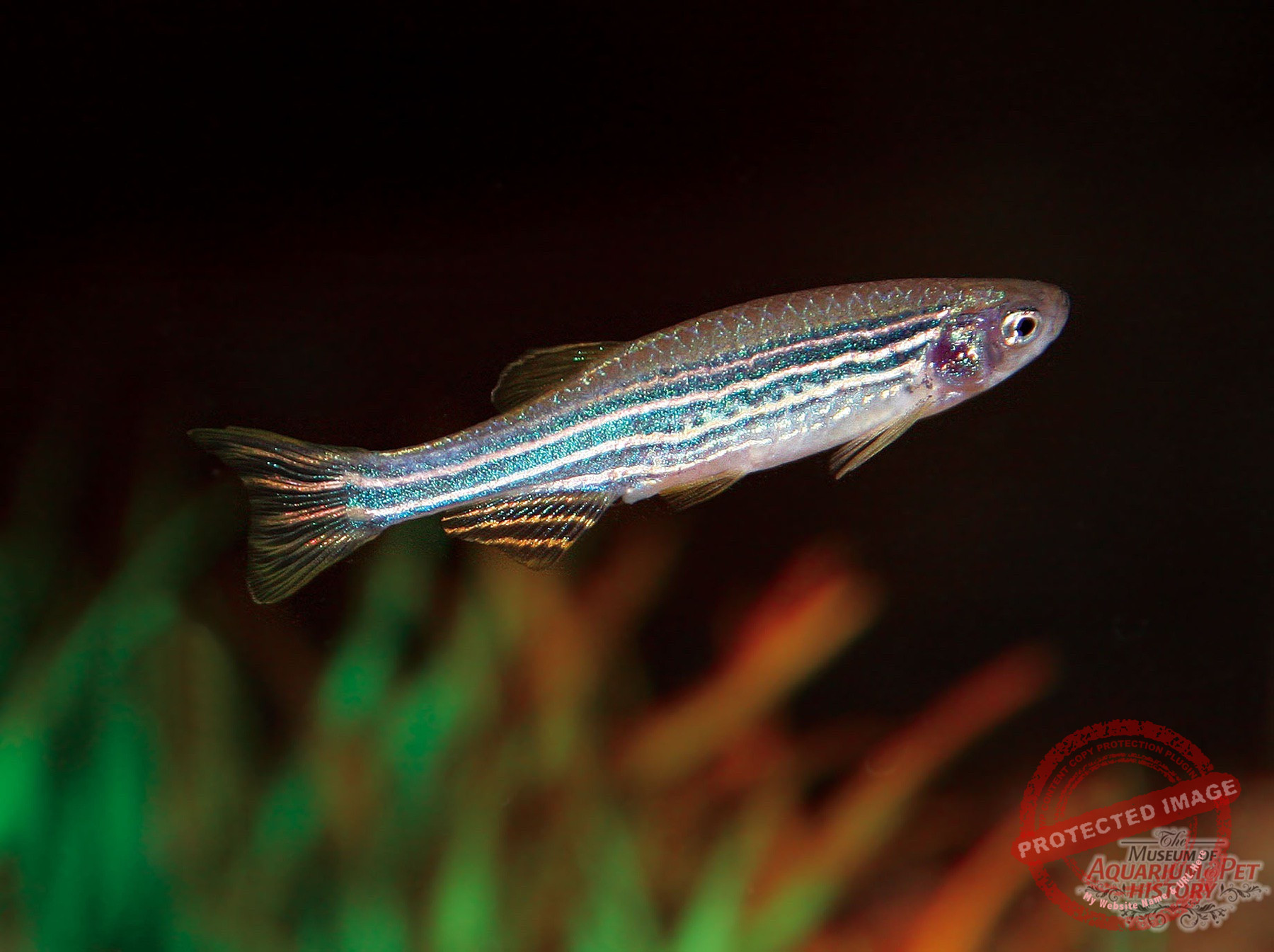
During the first two decades of the past century, more tropical aquarium fishes were introduced and successfully bred, among them the zebra danio, Danio rerio.
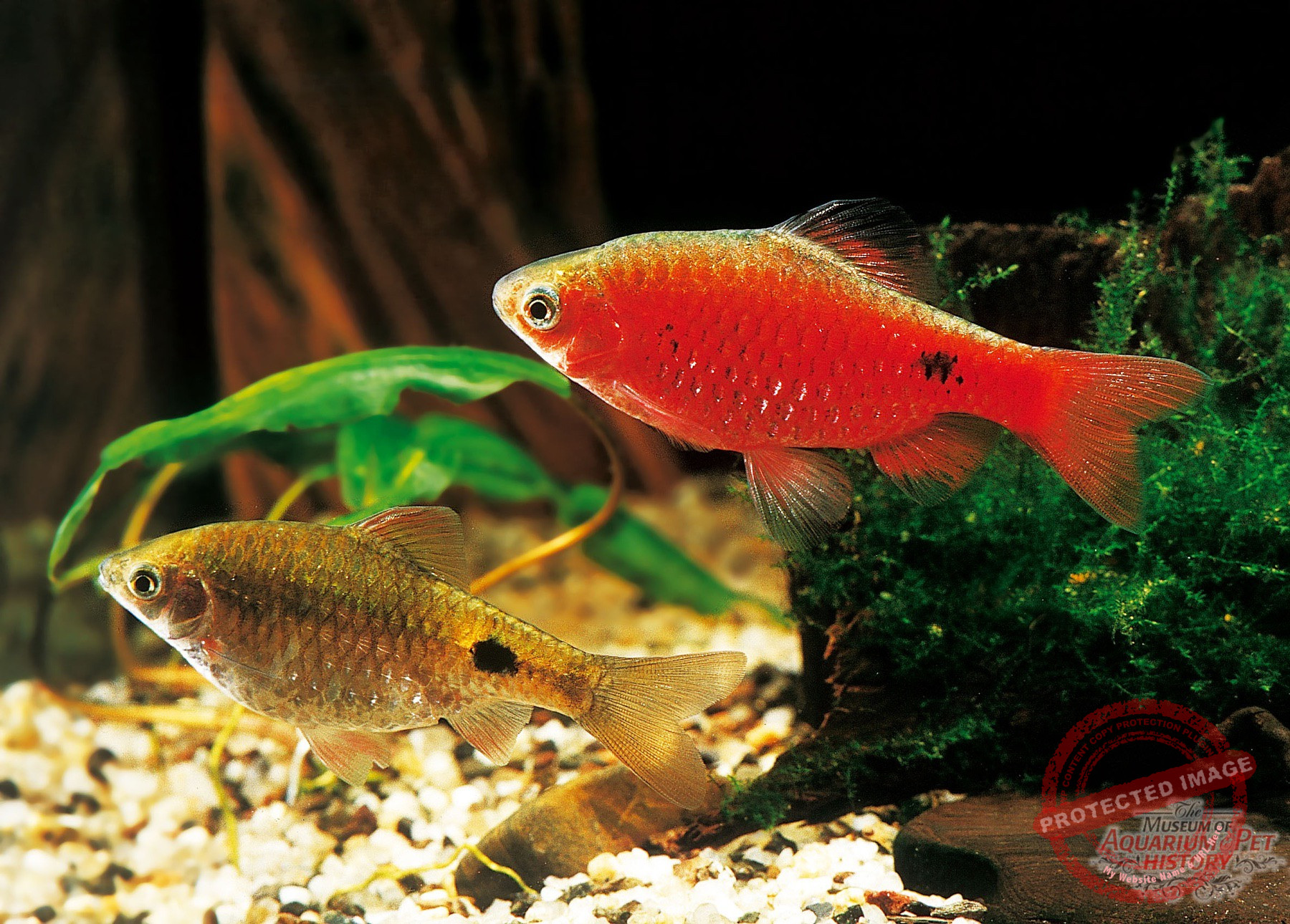
The rosy barb, Puntius conchonius, also arrived from Asia and found its place in home aquaria.
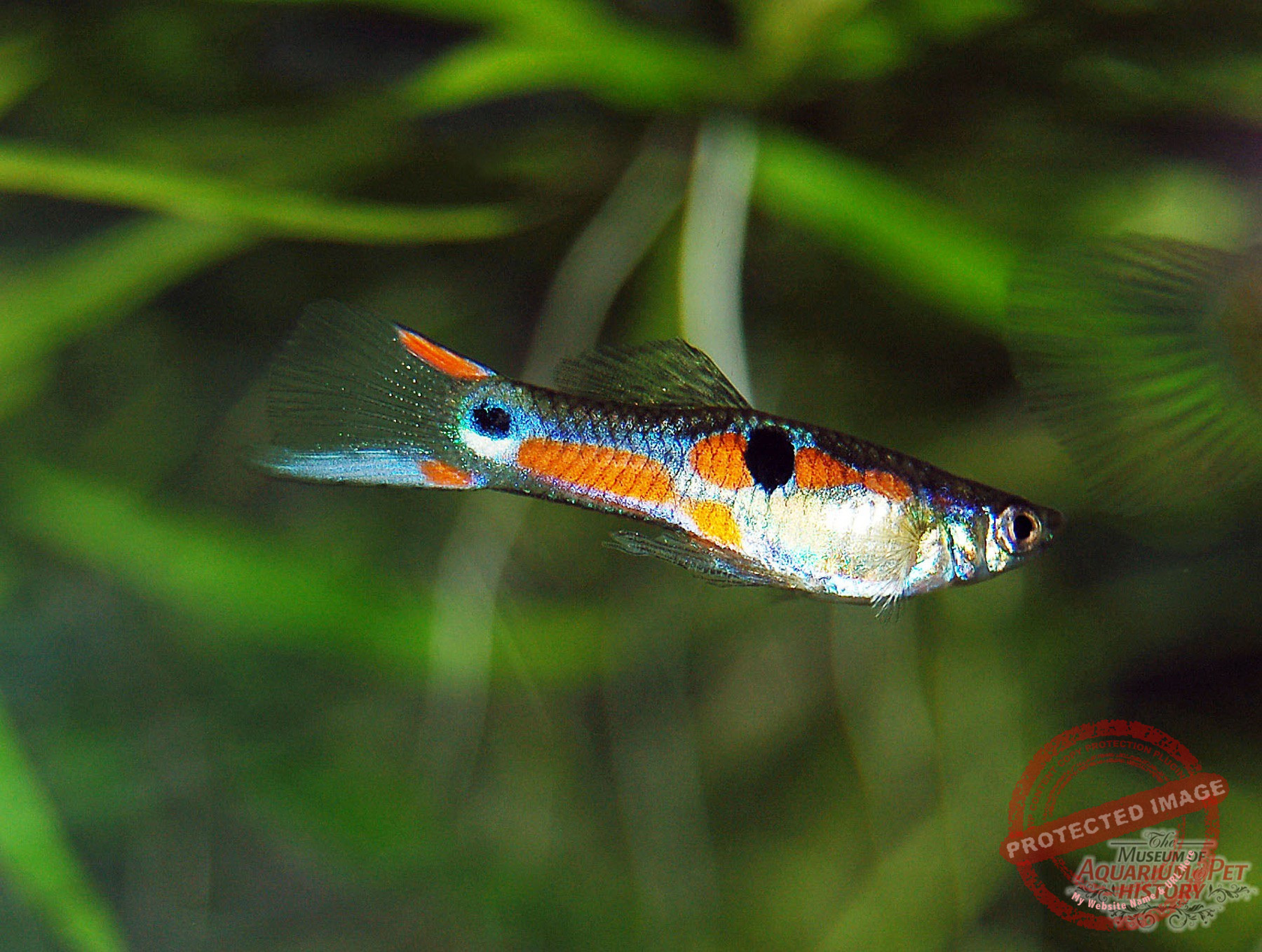
Soon, additional livebearers followed—among them the now world-famous guppy, Poecilia reticulata.
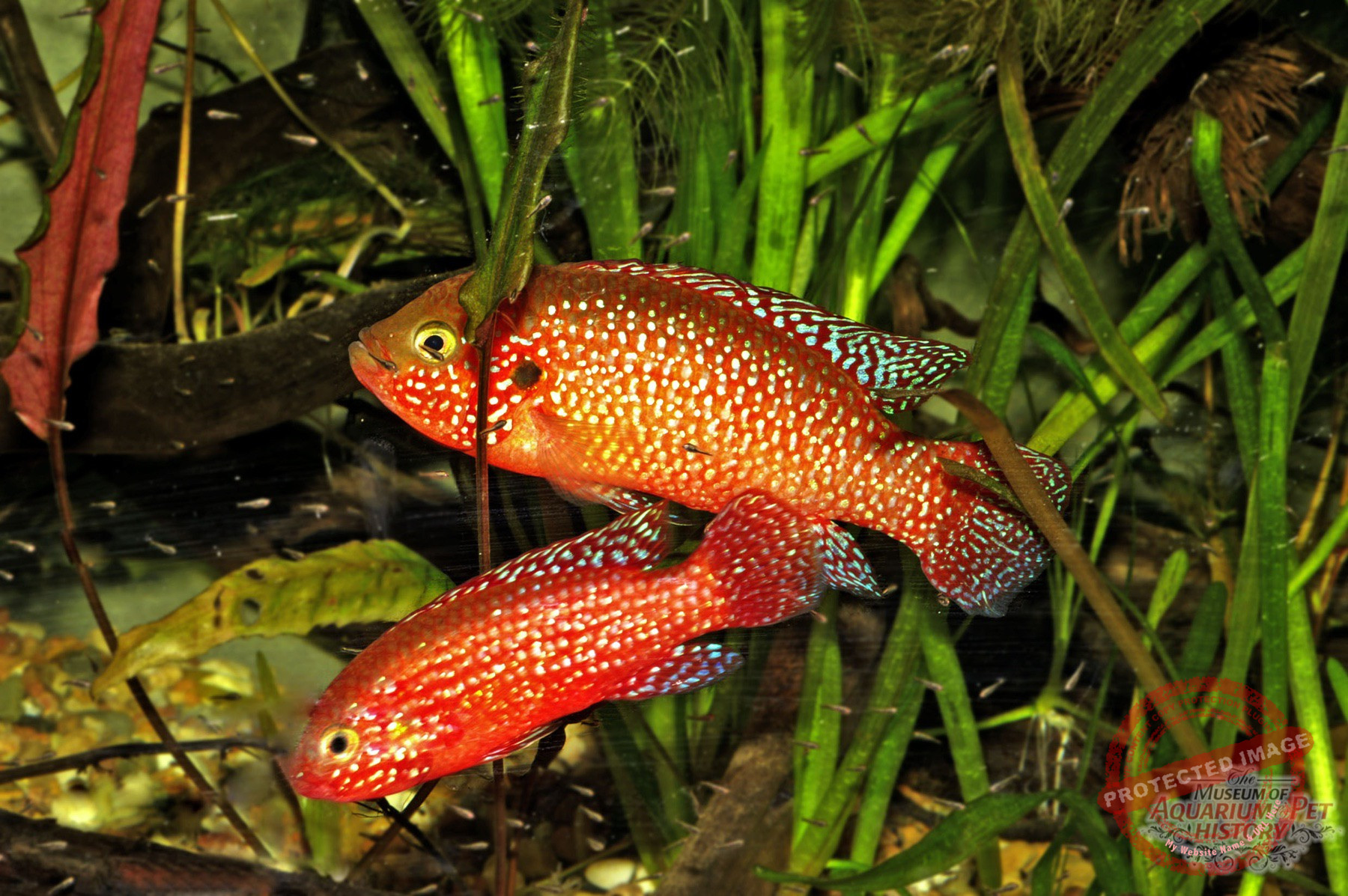
Red cichlids of the African genus Hemichromis quickly established themselves in aquaria; their attentive brood care made breeding remarkably easy.
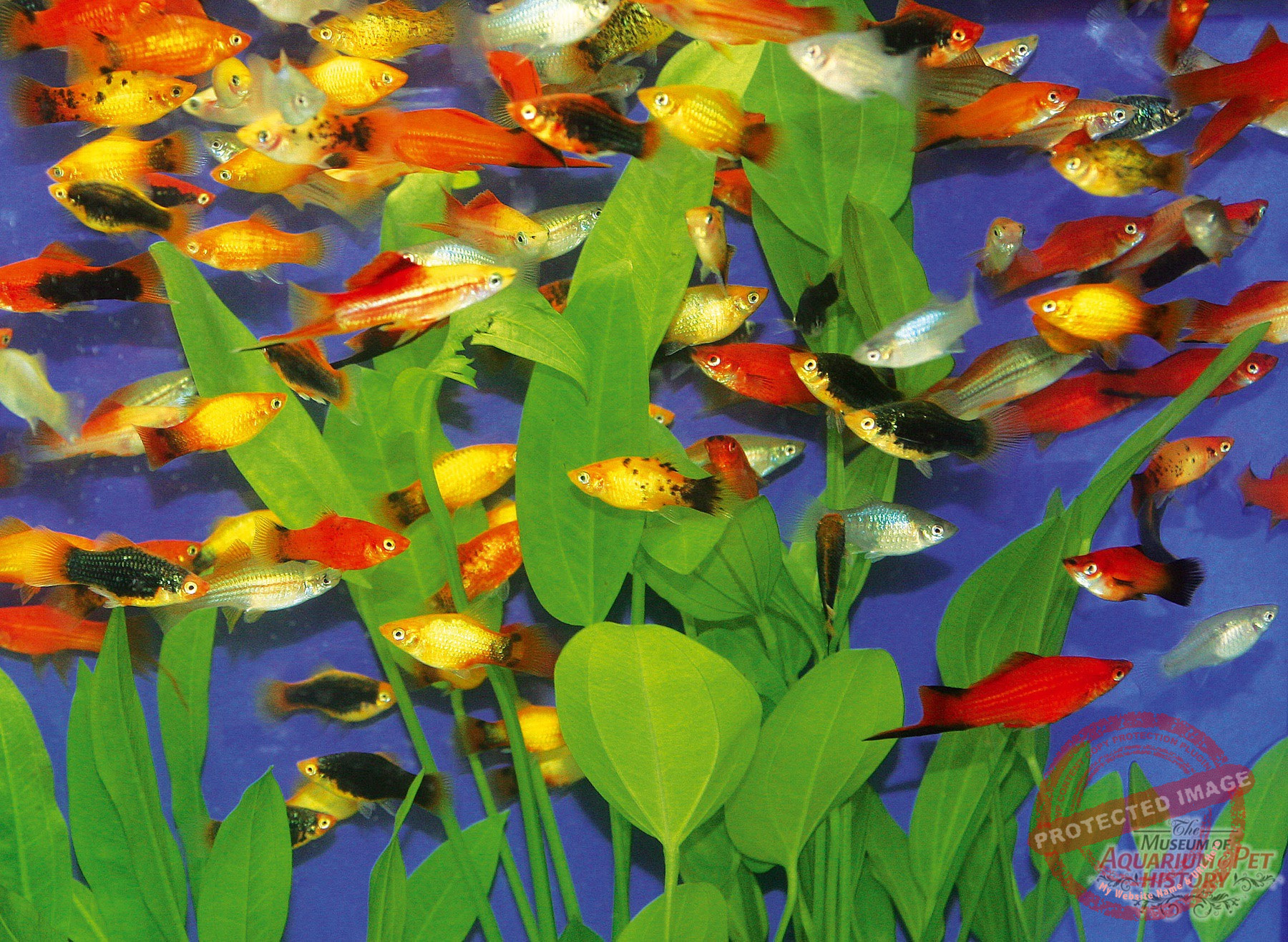
In combination with two other early-imported species, Xiphophorus maculatus and Xiphophorus variatus, crossbreeding and selective breeding produced breathtaking cultivated varieties.
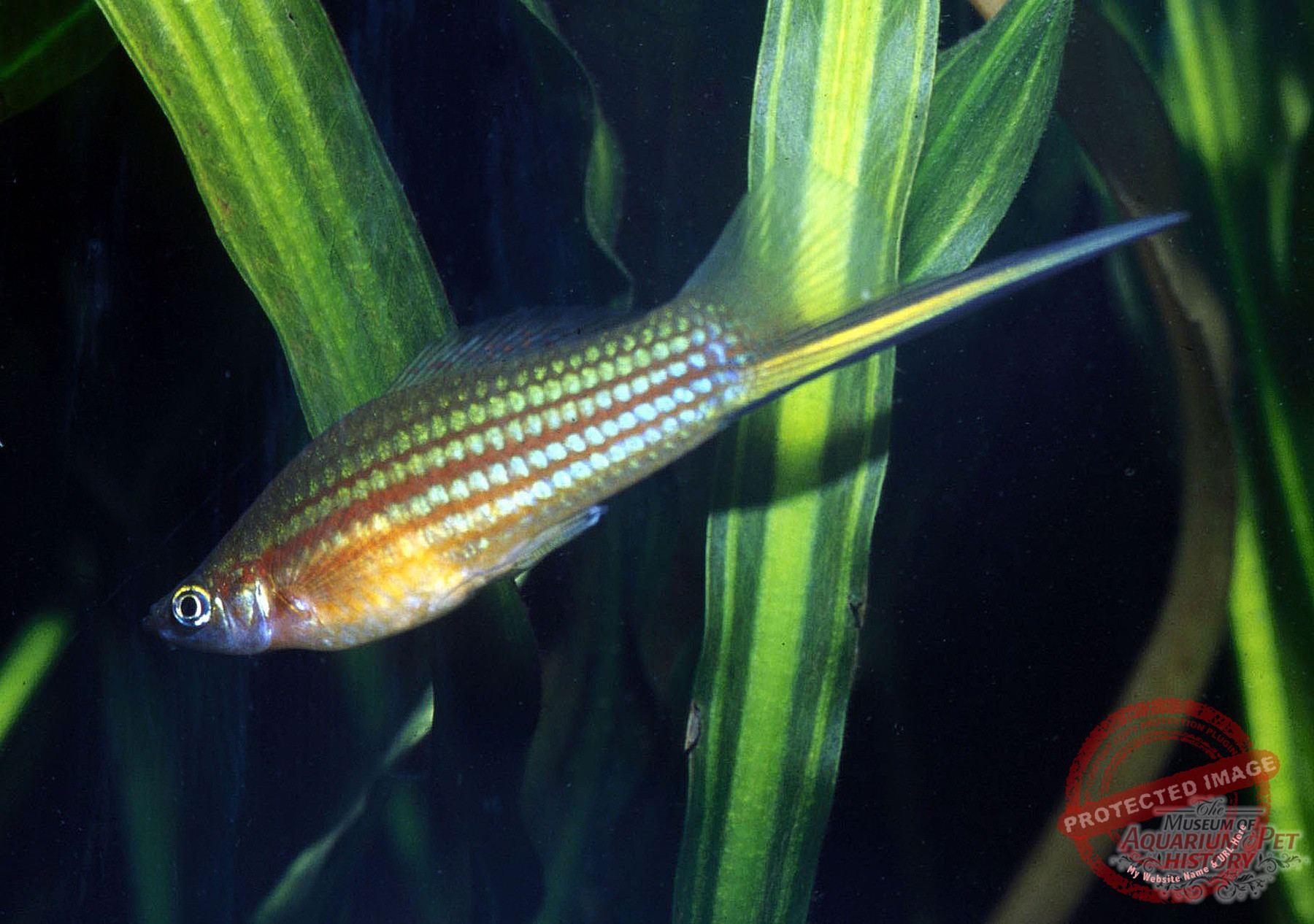
Swordtails, Xiphophorus helleri, in their wild form displayed greenish to orange hues—excellent material for aquarists to begin selecting and developing color varieties, which they quickly achieved.
When the Gotha bird breeders organized a canary exhibition in 1912, the warm-water aquarists participated under the name Aquarien- und Terrarienfreunde—a title that would later become their new society’s official name. The exhibition catalog duly listed the fashionable new aquarium fishes that drew public admiration:
“Macropodus opercularis, Betta splendens, dwarf gourami, Chanchito, mouthbrooders, red cichlids, Girardinus caudimaculatus and its variety reticulatus, guppy, swordtail, platy, Gambusia, Panchax species, Barbus fasciolatus and conchonius, Danio rerio, Badis badis, peacock and diamond cichlids.*”
The exhibition’s success and the influx of new young aquarists and terrarium keepers into the Paludarium group—by now including keepers of tropical amphibians and reptiles—led to the founding of a new society, the Verein Gothaer Aquarien- und Terrarienfreunde, on September 4, 1913.
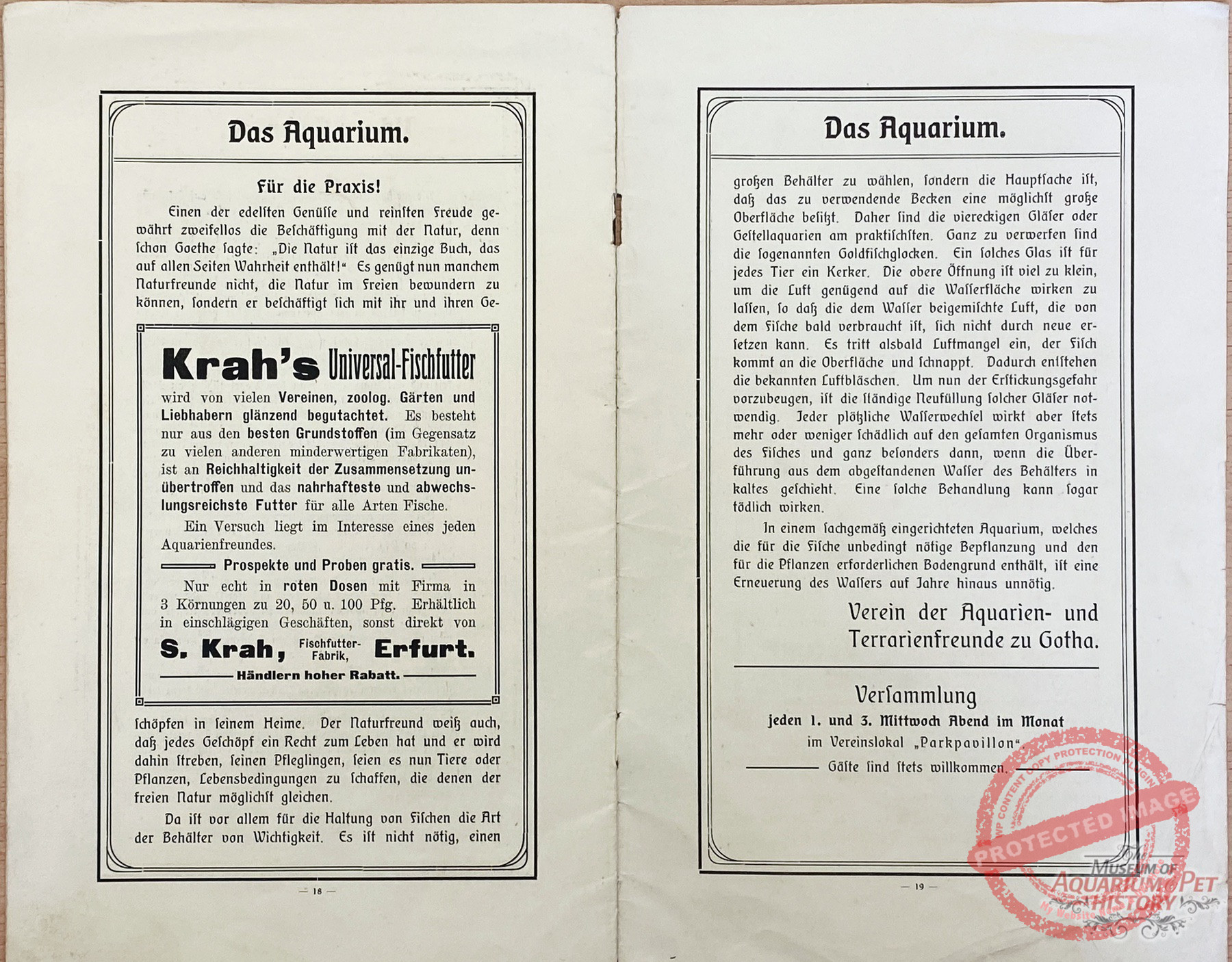
The newly founded “Verein der Aquarien- und Terrarienfreunde zu Gotha” (Society of Aquarium and Terrarium Enthusiasts of Gotha) met in the park pavilion near the Natural History Museum.
The start was promising: in May 1914, the society held another large and successful exhibition of aquaria and terraria. The new organization had become a true rival to the old Aquarium society. But then, on July 28, 1914, the First World War broke out and brought all positive developments to an abrupt end. The loss of fathers and sons in the trenches, hunger, and misery were the terrible results of the defeated war.
By 1918, the German monarchy had fallen, and the Treaty of Versailles demanded crushing reparations from Germany as the alleged aggressor. People were impoverished; their former rulers had sacrificed everything they held dear to their own thirst for power. Those who had to worry about food, coal, and clothing for their families could hardly concern themselves with heated aquaria and tropical fishes—at least not the few who had survived from among the once-hopeful founders of the new society.
As always in wartime, it was the ordinary people who lost the most—through death, poverty, and the destruction of their livelihoods. The more educated classes, such as the teachers of the Vereinigung Gothaer Aquarien- und Terrarienfreunde, fared better. They were the first, after the war, to regain the strength, interest, and financial means to resume their vivaristic pursuits.
On April 1, 1919, the society became active again, adding the epithet Nymphaea (after the water lily genus) to its name—an emblem that would become its hallmark. On April 17, 1919, the seventeen remaining members elected a new board. At the same time, the old Gotha society Aquarium counted only ten members.
Because the development of Nymphaea can be traced so well, a few excerpts from the years 1920 to 1922 may illustrate its vitality. Led by L. Kintzenberg, the society had grown to thirty-eight members and regularly held high-quality professional meetings, with an average attendance of twenty. These gatherings dealt directly with topics of animal care and breeding in aquaria and terraria. The following lectures and presenters are recorded:
- Keeping of the Dragon Fishes (Kintzenberg)
- Winter Dormancy of Aquatic Plants (Matthes)
- Memories and Experiences as a Developing Aquarist (Kühmstedt)
- On the Migrations of Plants (Kintzenberg)
- Questions of Heating (Eberhardt)
- The Love Life of Plants, with Lantern Slides (Kintzenberg)
It is worth noting that prominent members of the old Aquarium society were evidently sympathetic to the new one and thus delivered lectures there—among them Studienrat Fritz Matthes, after whom one of the ponds in the old outdoor facility had been named.
Eventually, the dwindling remnants of the old Gotha Aquarium resolved to dissolve the society altogether. The once-renowned outdoor facility fell into neglect and disrepair. Those genuinely interested among the remaining members joined Nymphaea, bringing with them the society’s library and archives. Thus, Nymphaea may rightly be considered the legal successor to the world’s first aquarium society.
Yet, as so often in turbulent times—shaken by near–civil war conditions, a fragile democracy in the Weimar Republic, and growing financial crises—neutrality was difficult even within a vivaristic society. Once again, the well-to-do clashed with those who lacked means.
During this period, the breeding of aquarium fish became a welcome source of income. Unemployed factory workers bred fish intensively and sold their offspring for as high a price as possible. They had to feed their families—and to bring at least a little comfort into their bleak lives. Vacations in warm climates were unimaginable, so they brought the tropics into their homes through the glowing colors of their tetras. Watching the enchanting fish swim became a small consolation for tight family budgets and uncertain futures.
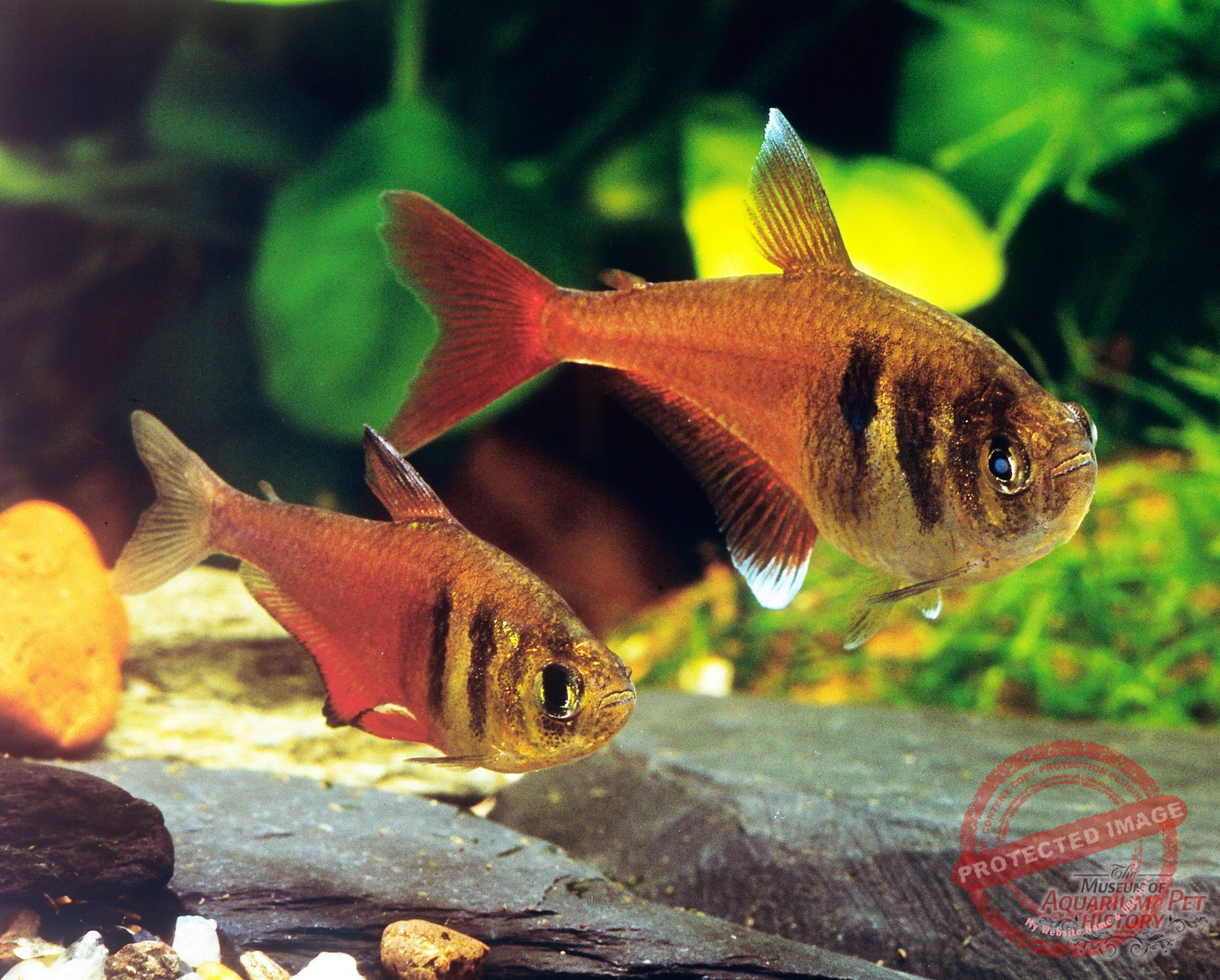
Starting in 1920, characins were imported into Germany. As most of them required soft water, Gotha’s aquarists possessed ideal conditions for successful breeding, which soon followed with many species—among them the Flame Tetra, Hyphessobrycon flammeus, introduced and established in 1924.
These hobby aquarists, of necessity, became skilled specialists and ingenious breeders, familiar with every trick required for success. The intellectuals, by contrast—mostly civil servants—did not depend on such earnings. They led Nymphaea and had little understanding for their working-class members’ sideline incomes.
Everyone wanted to display their convictions; even at society meetings, political sympathies were openly shown. The minutes of the Nymphaea meeting on May 17, 1922, record a motion that political insignia should no longer be worn during society events. The motion failed to gain a majority, and several members—apparently those from less privileged groups—felt marginalized.
It was a time in Germany when three major political movements stood almost irreconcilably opposed: conservative and nationalist groups, far-left communists, and the emerging National Socialists. Among the aquarists, too, there were representatives of each. Thus, it was only a matter of time before the next rupture occurred. I shall not conceal the fact: August 19, 1922, would become the birthday of Gotha’s third aquarium society.
Before I close this chapter, however, I wish to mention a side effect that vividly demonstrates the cultural significance aquaristics and the Gotha societies had at the time. The park-like, freely accessible grounds of the old Aquarium remained a local attraction and popular excursion destination. Today, one might say it laid the foundation for the cultural infrastructure of southern Gotha.
And when a popular attraction inspires another—proposed, planned, and developed in its wake—it is usually a meaningful sign. The outdoor aquarium inspired the Gotha Workers’ Swimming Club, in October 1920, to propose building a new swimming pool in Gotha-South, modeled after Leipzig’s Luna Park.
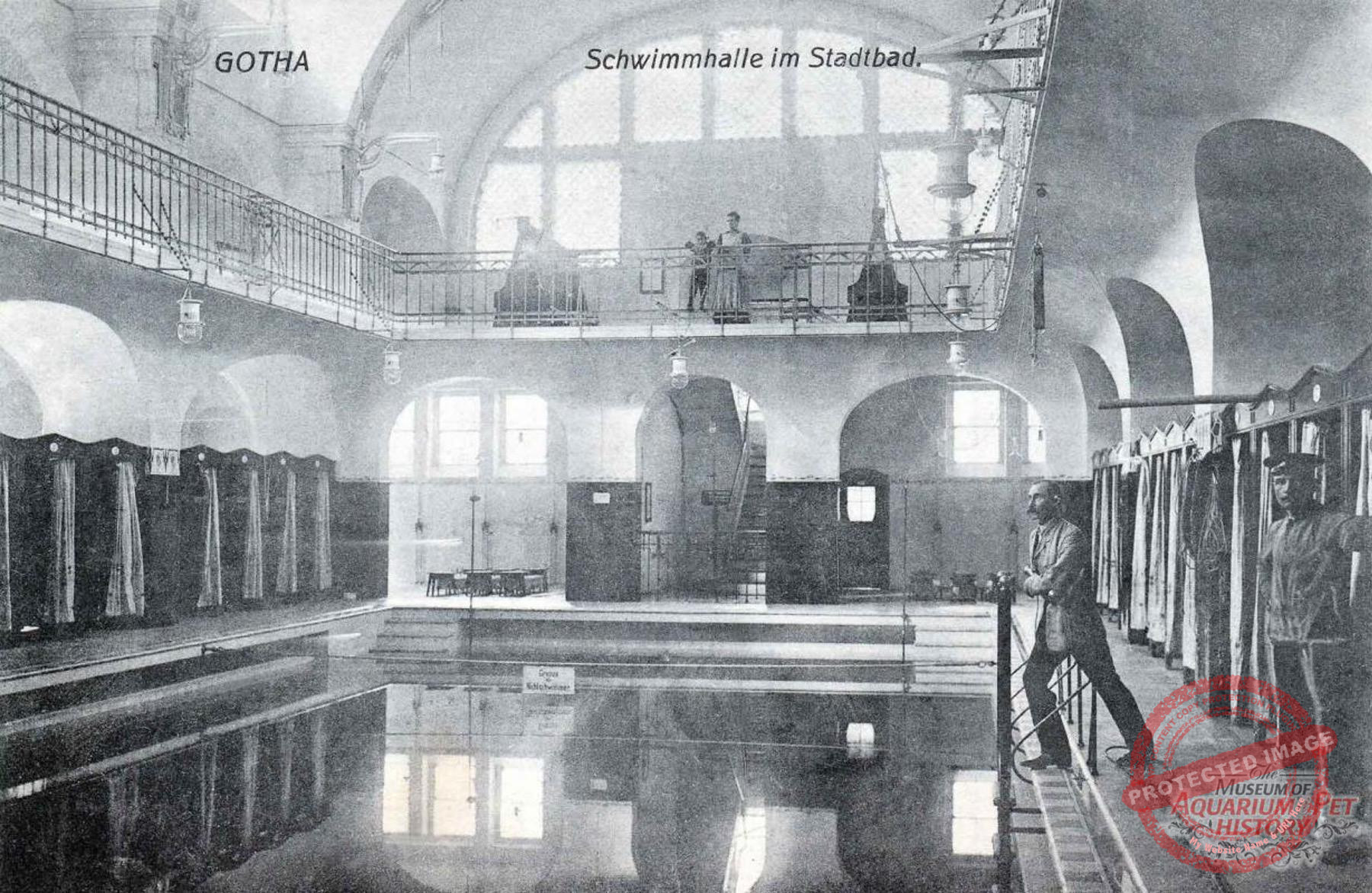
The municipal swimming pool of Gotha was opened in 1908; shown here is a photograph from 1920.
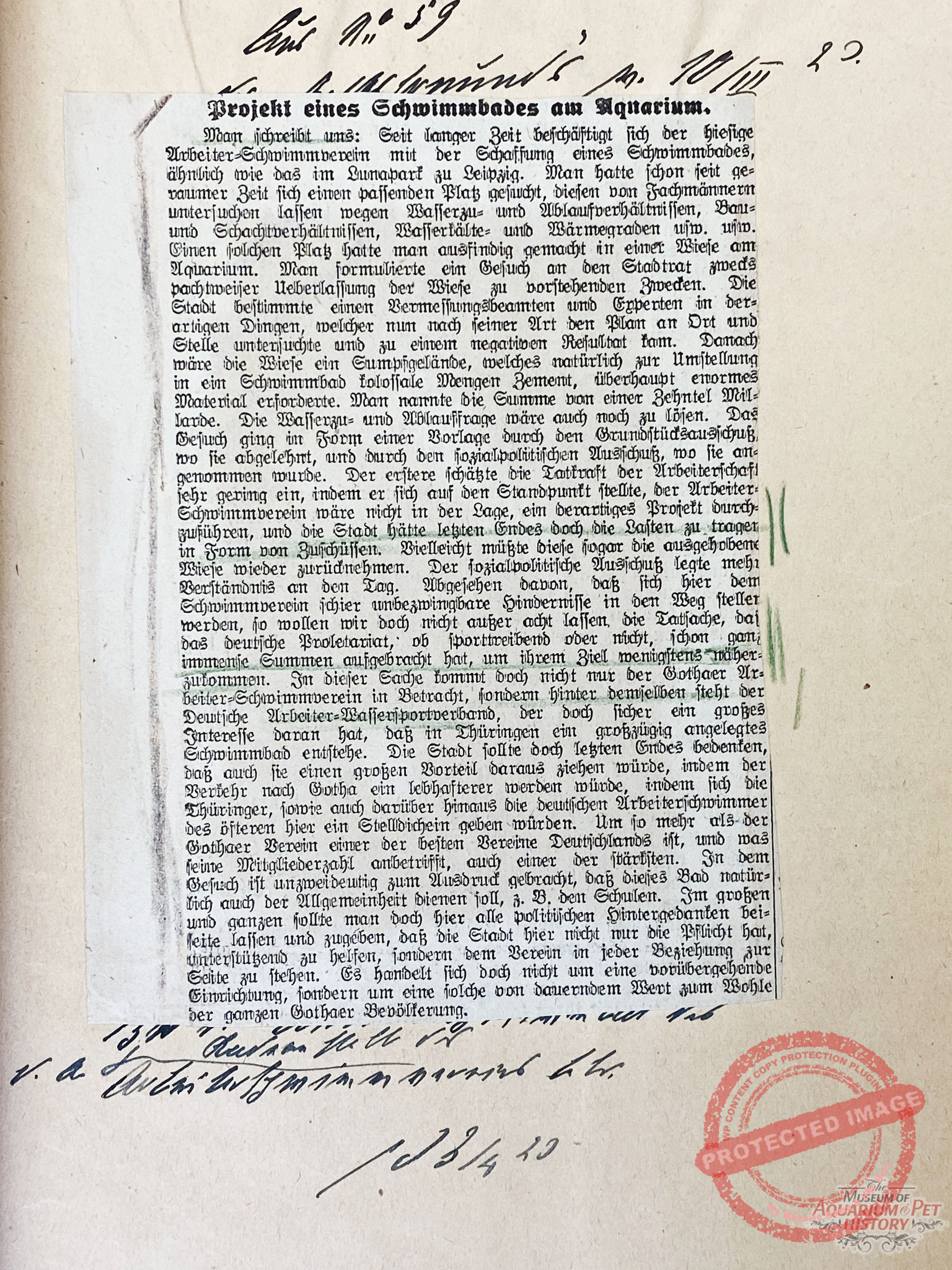
The workers’ swimming club also sought to build an outdoor pool—attracted by the steady stream of visitors to the nearby aquarium. Shown here: a newspaper article covering these activities.
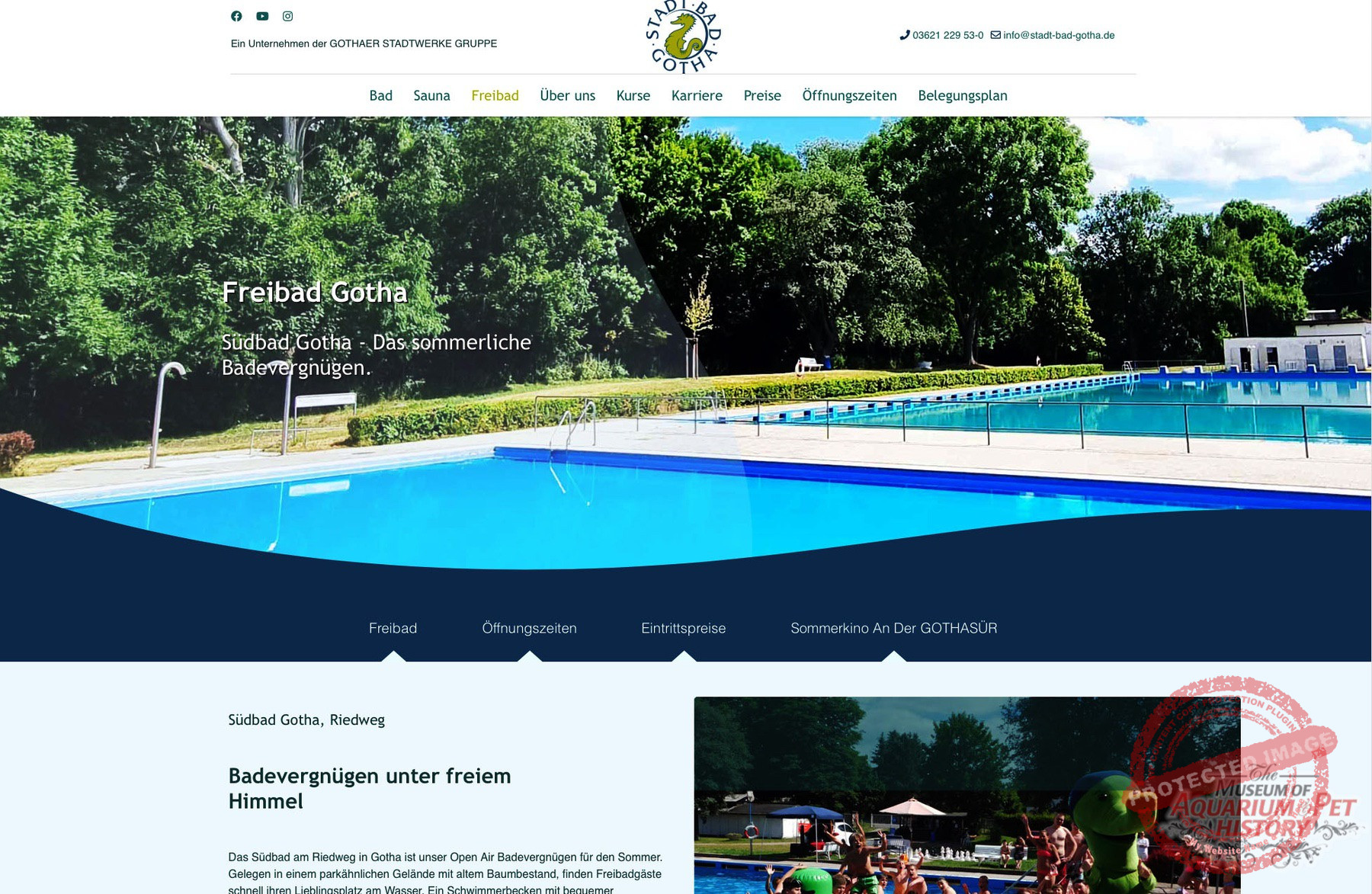
Despite the city council’s initial hesitation, construction eventually proceeded. The outdoor pool remains an attraction to this day; shown here is its modern website.
A Gotha newspaper from those days reported:
“For some time, a suitable site had been sought, examined by experts regarding water inflow and outflow, soil and excavation conditions, water temperatures, and so forth. A location had been found—a meadow near the Aquarium.”
The article then recounts the debates in the various municipal committees. History vindicated the swimming club’s choice: the so-called Südbad was built beside the Aquarium, south of the stream Ratsrinne, and, like the aquarium’s ponds, was originally fed by its waters. Both facilities complemented each other—and continue to do so today.
Thus, in its very early years, aquaristics gave rise to other institutions that, in their significance, would eventually outgrow their origin.
Acknowledgments:
My heartfelt thanks go to my family members (Charly Fuchs), friends, and colleagues in Gotha—especially Uwe Heustock, the current chairman of the Gotha Aquarium Society—as well as to Dr. Julia Beez and Dorett Sagner of the Gotha City Archives, for granting me access to their documents, allowing me to scan and photograph them, and for sharing many preserved photos, records, and original artifacts.