Aquarium de Paris (1900): An Immersive Aquatic Theater Part-2
The vestibule (“foyer”) of the Aquarium de Paris was designed to resemble the caves and cliffs found along the Breton coastline in northwestern France, where mica-rich shale rocks are abundant and known for their unique brilliance.
To achieve this effect, rather than using artificial rocks as was typical in grotto-style aquariums of the time, actual rocks were gathered from the Breton coastline and transported by train from Port-Bara.
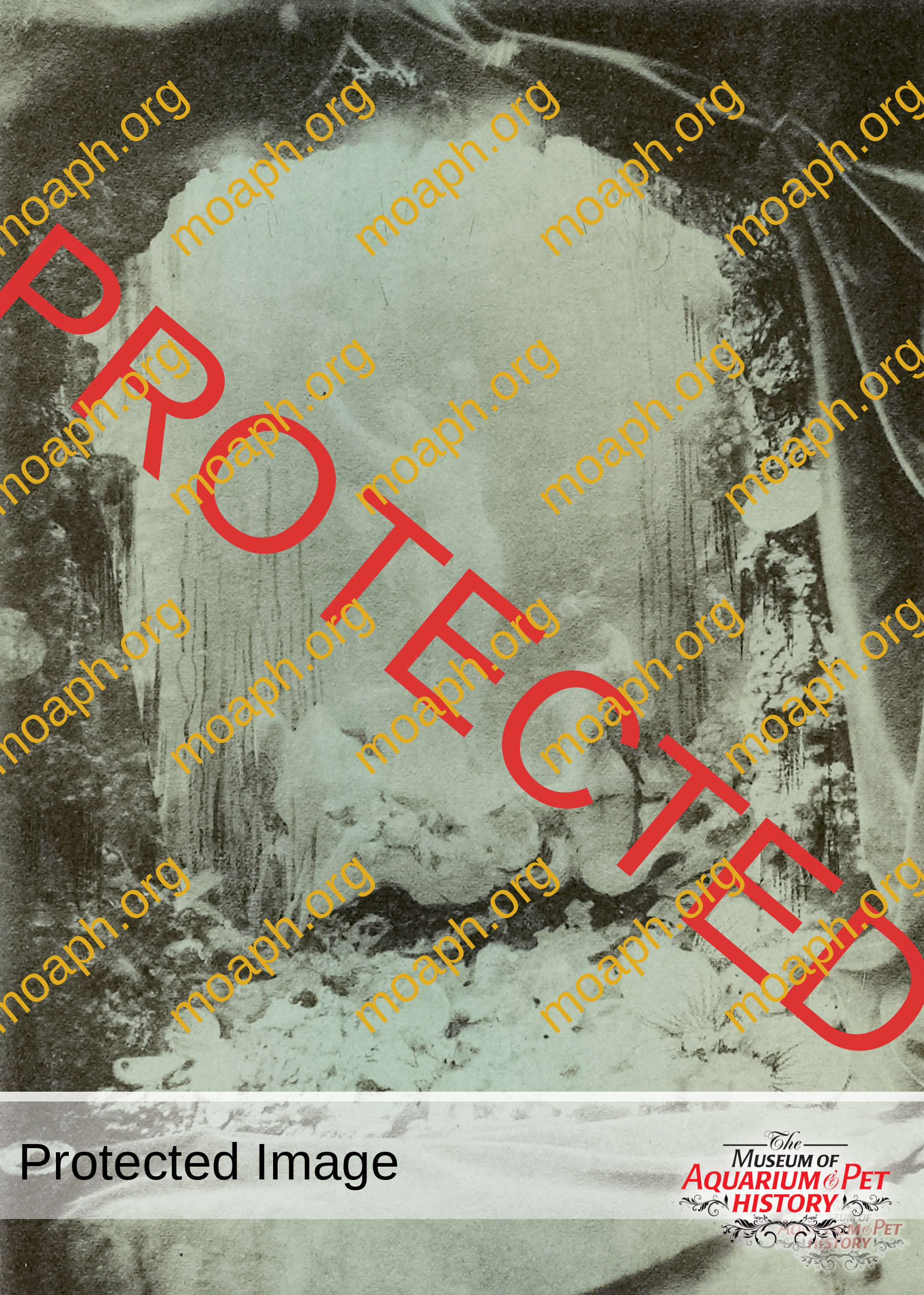
The first tank of the Aquarium was placed in this space. Inside it, alongside fish, invertebrates, and seaweed, the sea-themed sculptural group Le Triomphe d’Amphitrite (“The Triumph of Amphitrite”, queen of the sea and consort of Poseidon in Greek mythology) was permanently installed.
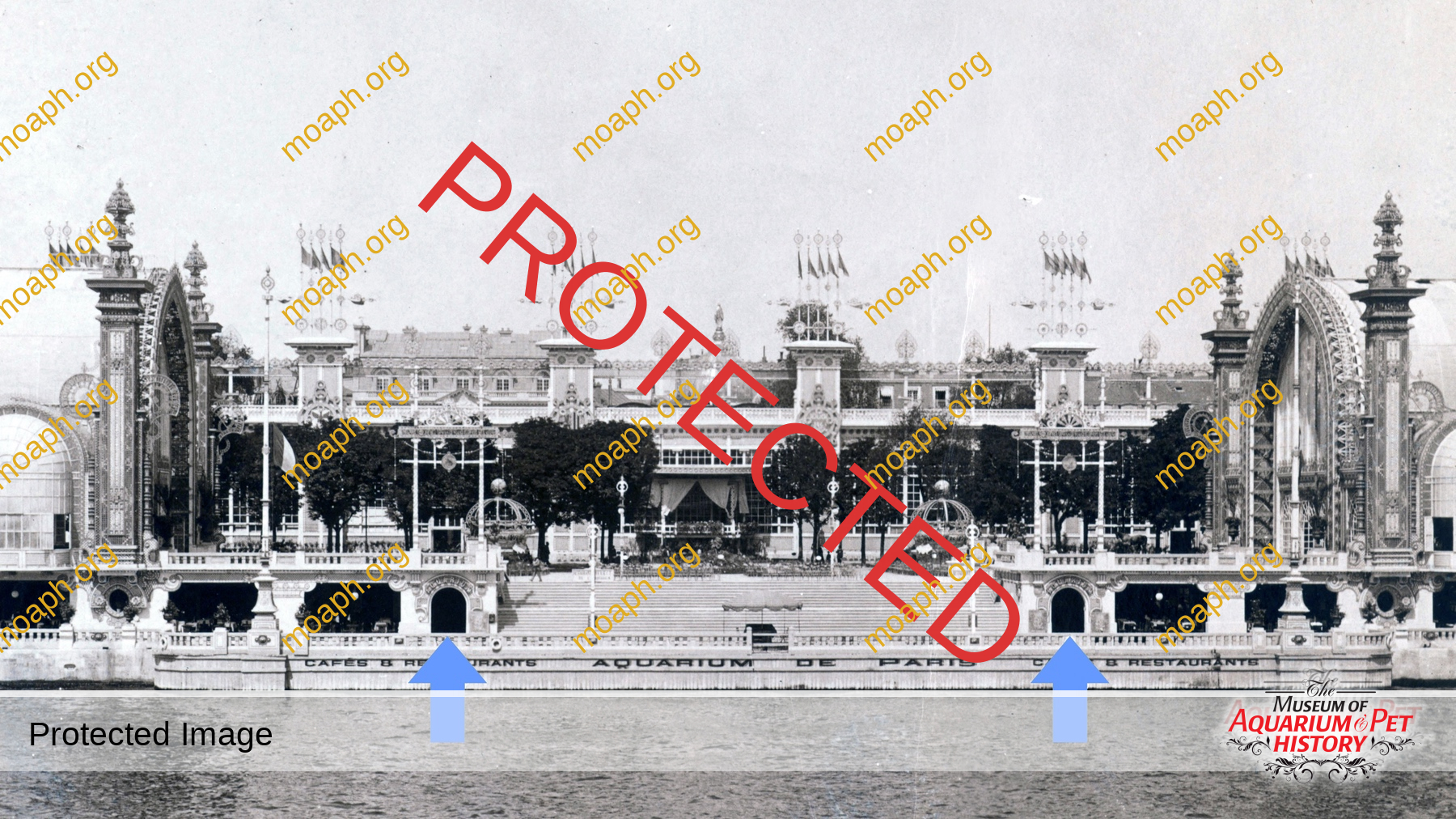
The two entrances to the Aquarium foyer. CC0 Paris Musées / Musée Carnavalet, Histoire de Paris.
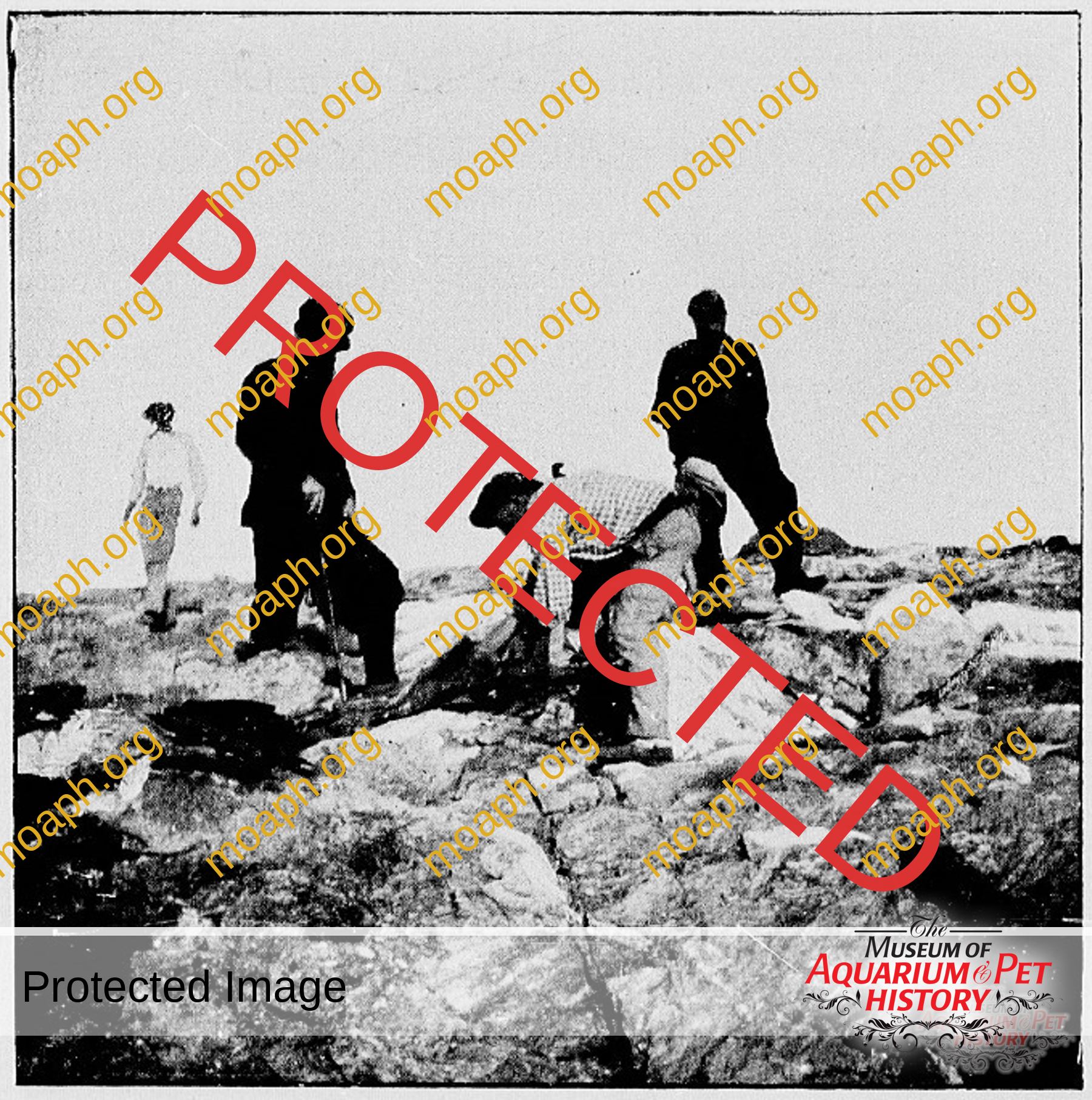
The Guillaume brothers selecting the finest rocks on the Quiberon Peninsula. Guide-souvenir de l’Aquarium de Paris, 1900. Source: gallica.bnf.fr / Bibliothéque nationale de France, département sciences et techniques.
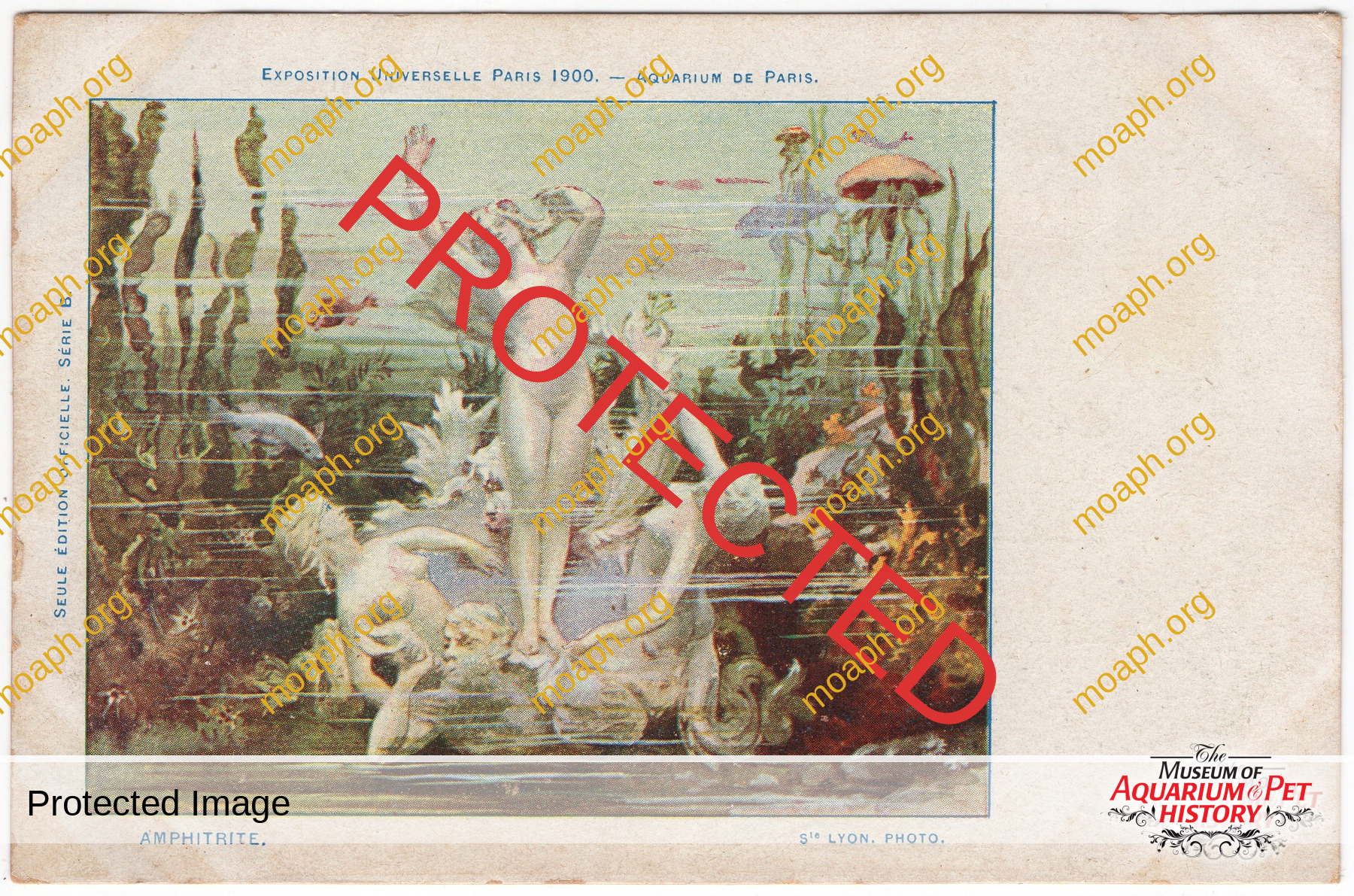
Old postcard depicting the iconic tank placed in the foyer. Henri Guillaume had already collaborated with the sculptor Henri Gauquié in the past, for example on the creation of the monument to Watteau erected in the Luxembourg Gardens in Paris.
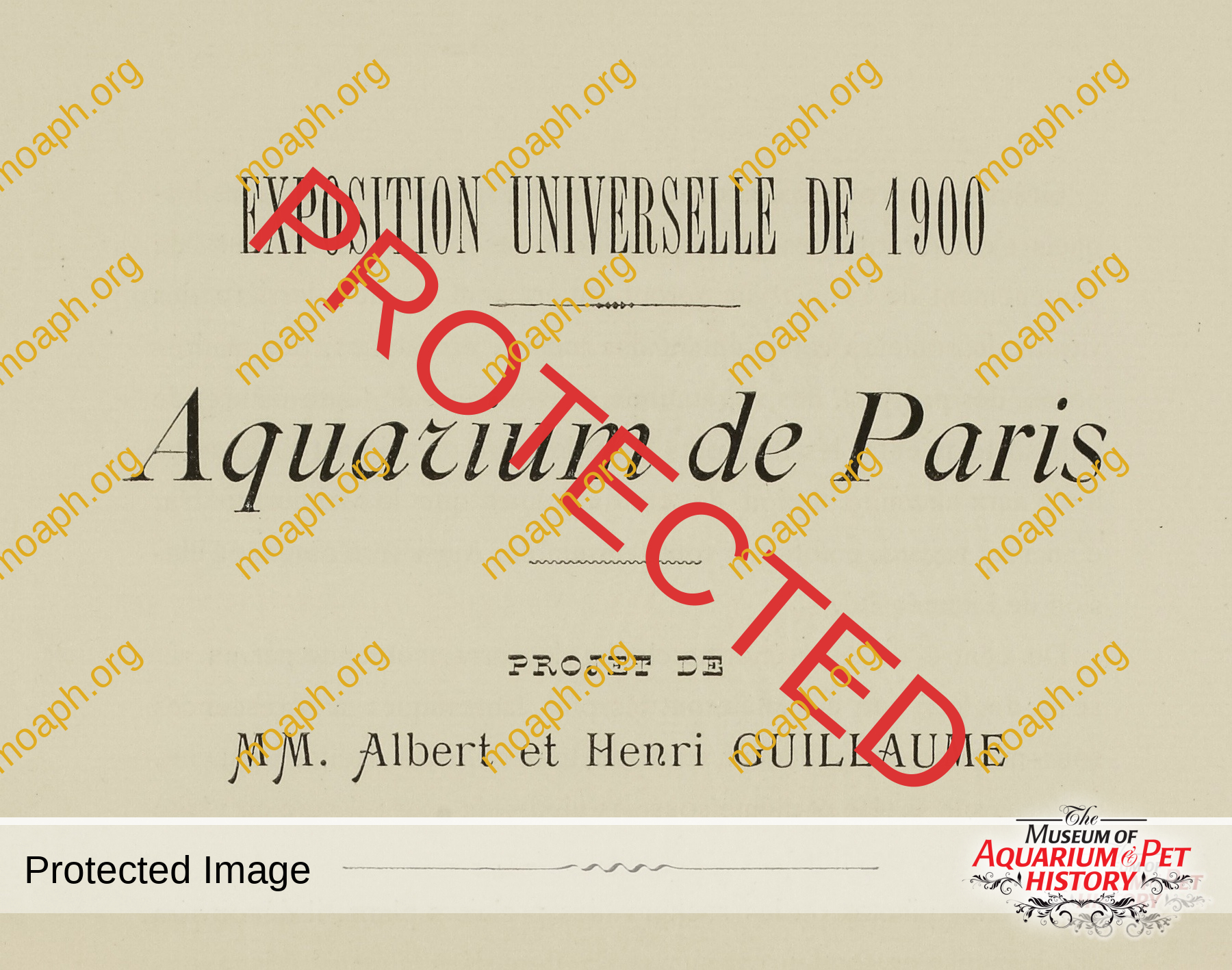
Heliotype by Buirette & Cie printing works from the avant-projet of the Aquarium de Paris. CC0 Paris Musées / Musée Carnavalet, Histoire de Paris.
The exhibition hall with its velum
To the right of the viewers admiring it, there was the short entrance tunnel leading to the large elliptical exhibition hall which measured 25.5 meters by 13 meters. The exit tunnel was on the left. Both passageways featured vaulted ceilings covered with the same rocks used in the foyer.
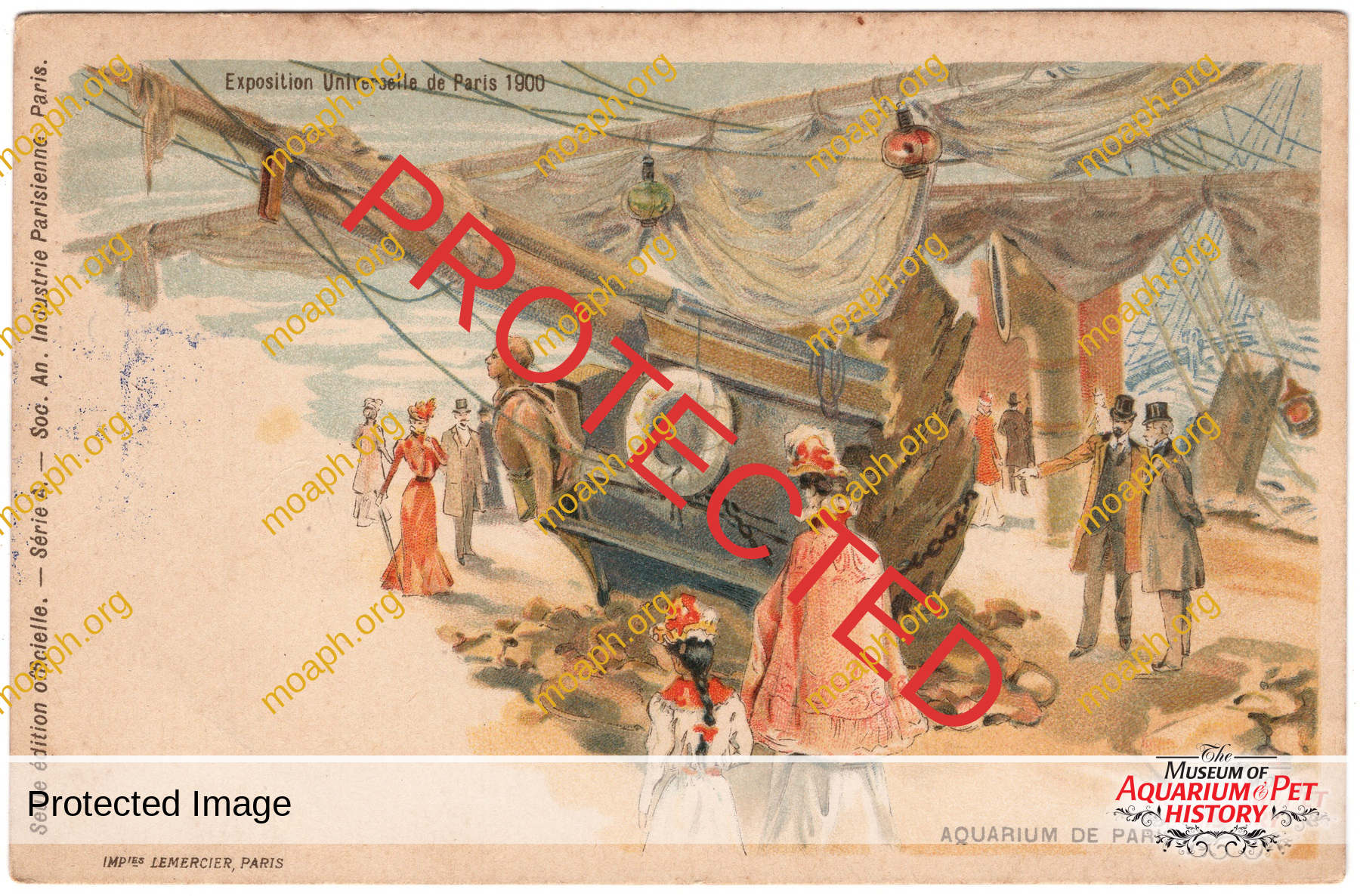
According to the safety standards of the time (almost non-existent!), the exhibition hall could welcome up to 500 visitors at once. It was lavishly decorated with rocks, seashells, gorgonians, hanging seaweed as well as many other dried marine-sourced materials. The most striking and iconic decoration, however, was a real shipwreck. The bow of the remains of this vessel greeted visitors at the start of the exhibit, while the hull extended in a continuous perspective into the tank No. II, which was one of the two largest basins of the Aquarium thanks to its 18,500 gallons (70 cubic meters) capacity.
To keep visitors at a proper distance from the tanks, an elegant railing was installed in front of them. According to the Guide-Souvenir de l’Aquarium de Paris, it was made of cast iron and designed to resemble intertwined seaweed. In the famous illustration of the Aquarium de Paris published in the French magazine La Nature, this railing is clearly visible but, interestingly, it appears to have a faux bois (“fake wood”) look, a style that back then was all the rage in France.
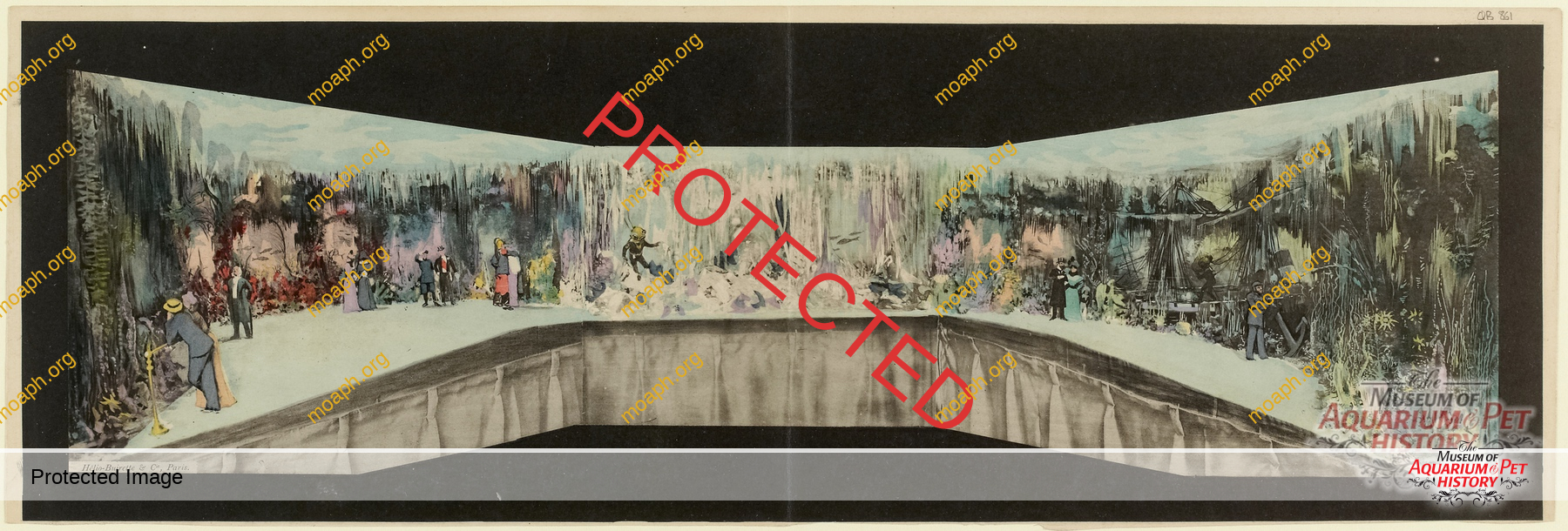
Double-page heliotype from the avant-projet of the Aquarium. CC0 Paris Musées / Musée Carnavalet, Histoire de Paris.
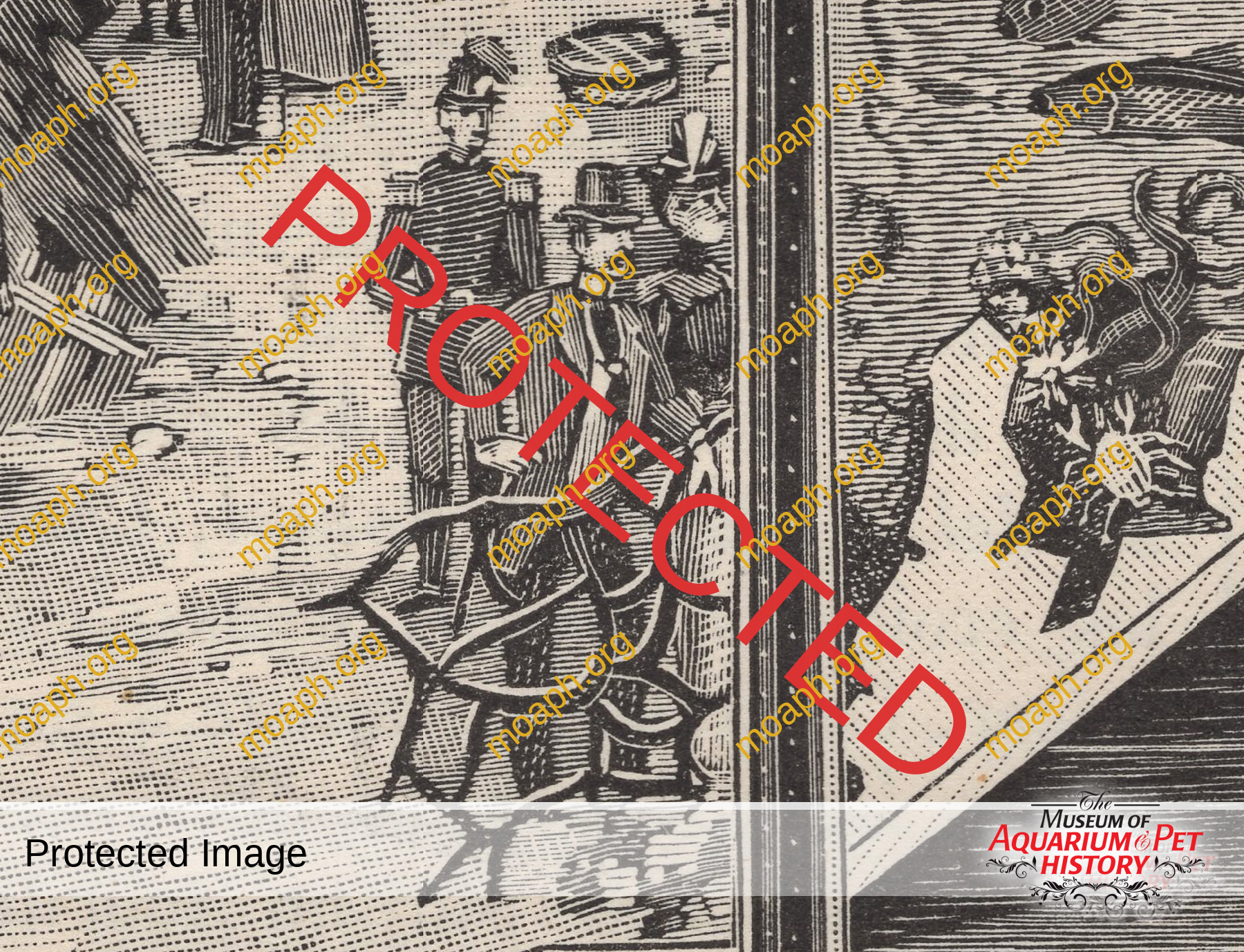
Close-up from the iconic illustration of the Aquarium de Paris published by La Nature – Revue des sciences et de leurs applications aux arts et à l’industrie (Vol. 28, No. 1425, September 15, 1900, p. 253). Notice the railing.
The ceiling of the exhibition hall was particularly captivating. The goal of the Guillaume brothers was to craft an immersive experience for the public, a true walk on the sea floor. To accomplish this, they employed a variety of stage tricks and optical illusions, including the projection of the silhouettes of live marine animals onto a large, semi-transparent canopy (the Aquarium guide calls it velum) that stretched over the ceiling. Above the canopy, they placed a few tanks with glass bottoms, each housing fish, crustaceans, mollusks, and seaweed. When illuminated from above with arc lamps, the enlarged shadows of these creatures, as well as the mesmerizing ripples of the water, were cast down onto the fabric below, creating a dreamlike, ever-changing tableau for the spectators beneath.
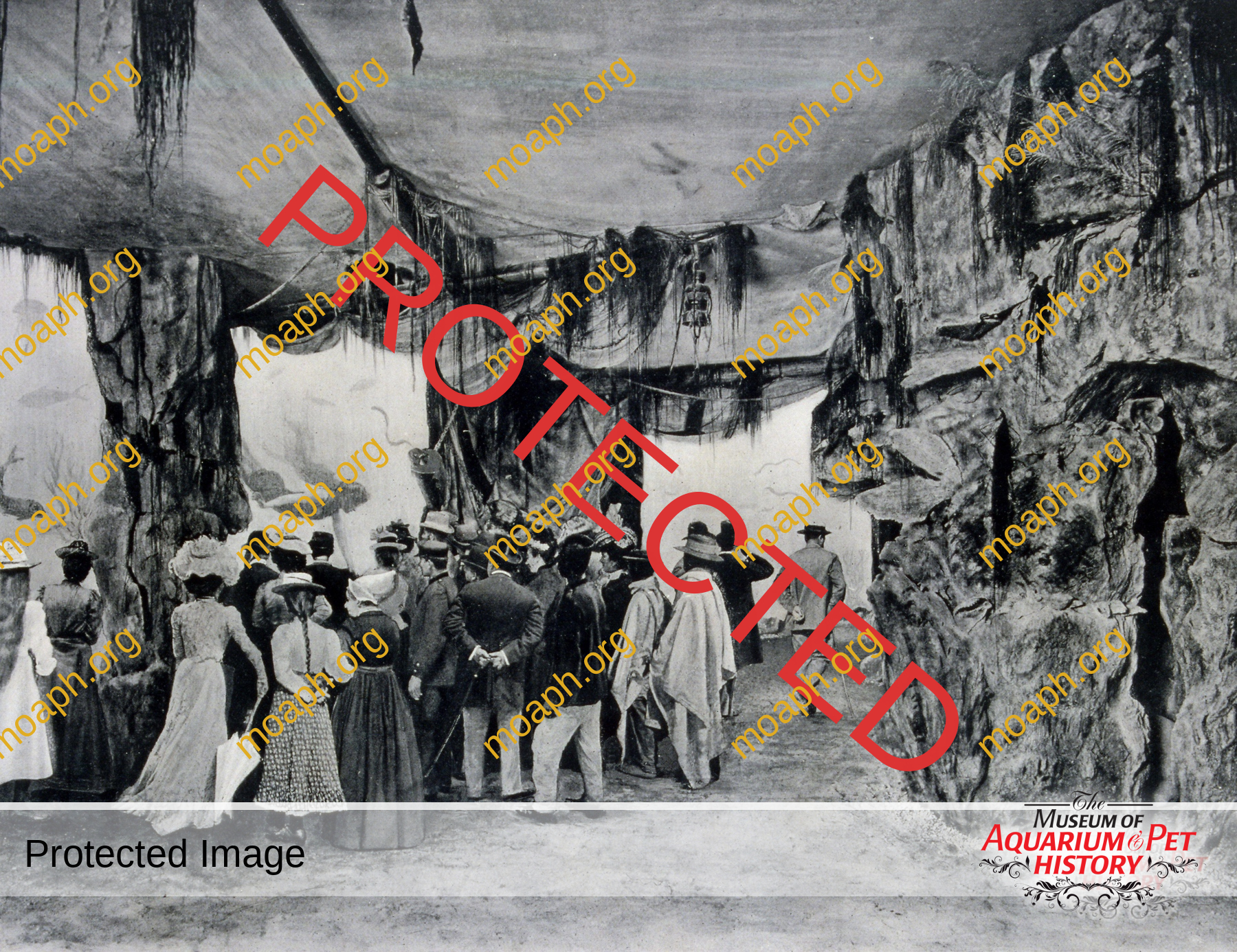
This illustration from Le Panorama (nouvelle série, No. 20, L. Baschet editor, no date) clearly shows the velum on the ceiling.
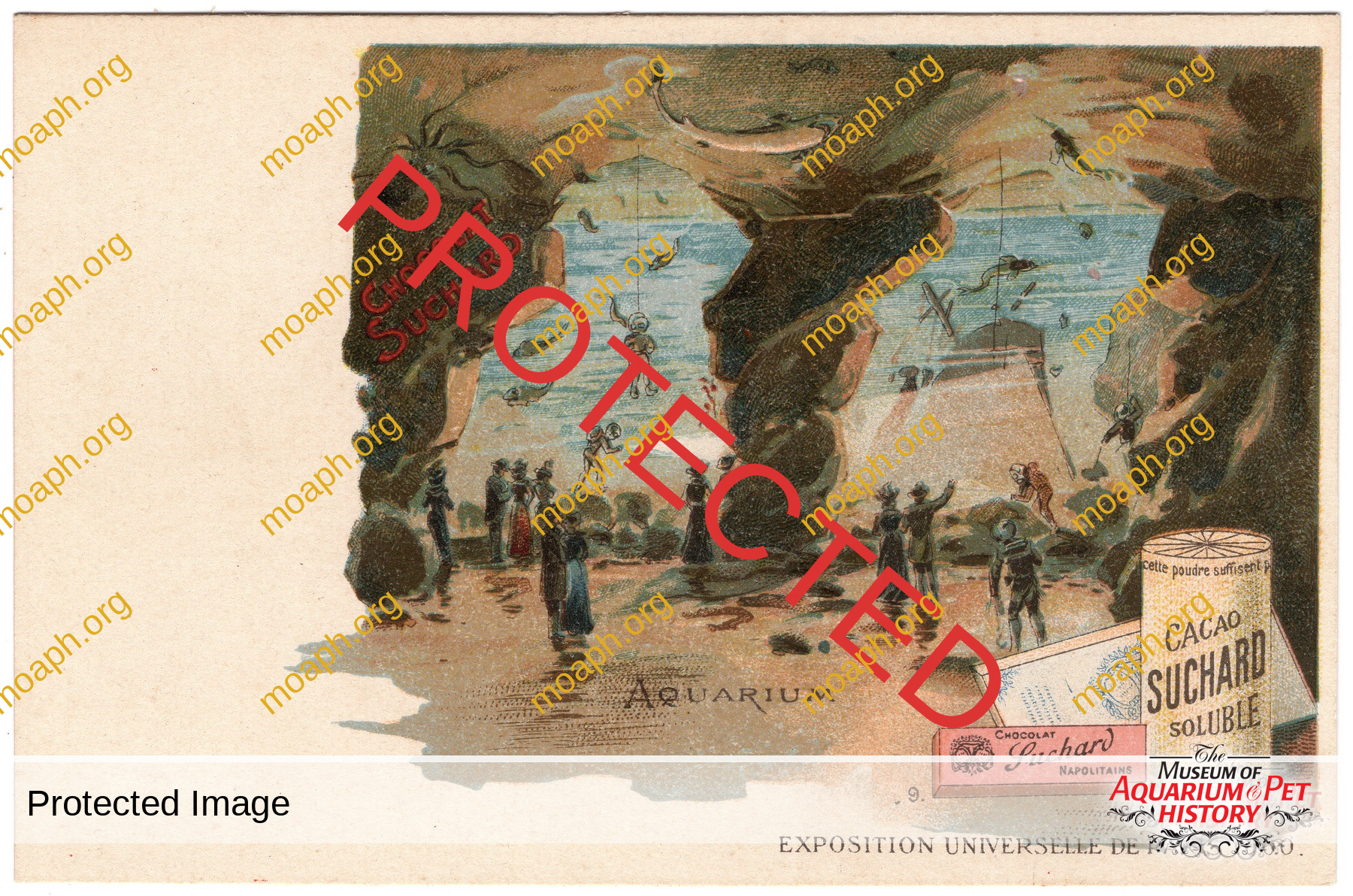
Old postcard showing tank No. II and the silhouettes of marine animals projected on the velum.
Exploring the tanks while enjoying live music
Adding yet another layer to this underwater reverie, visitors were serenaded by the live music of a symphony orchestra. Conducted by Pierre Kung, the musicians were cleverly concealed behind the so-called “pebble tank,” a particularly popular display which featured curious-looking species such as seahorses.
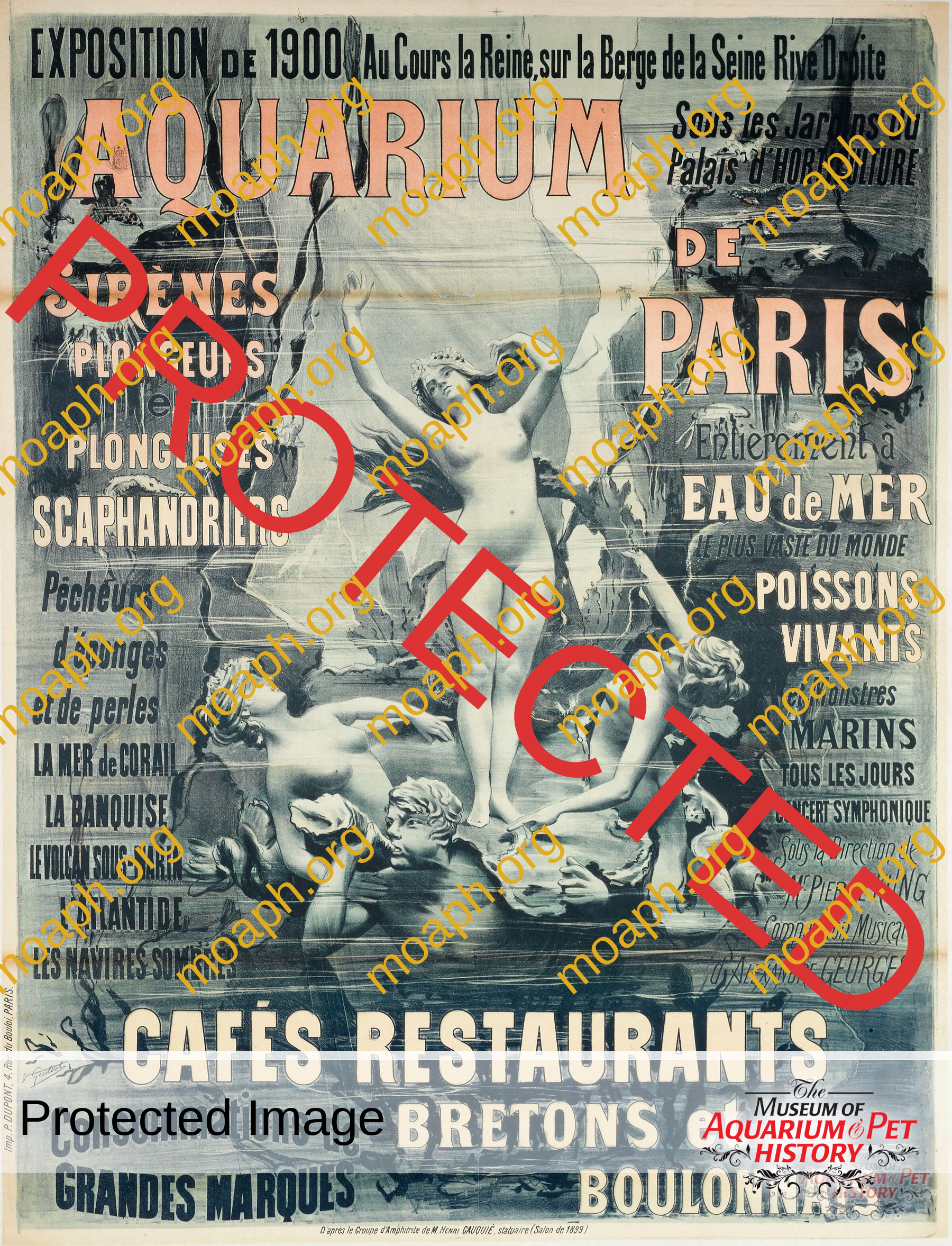
Before we turn our attention to the fish exhibition, imagining ourselves on a tour of this Aquarium 125 years after its grand opening, I have to point out that the sequence an the total number of tanks described in the avant-projet (“advanced plan”) for the Aquarium de Paris filed by the Guillaume brothers before 1900 do not perfectly match those described in the Guide-souvenir de l’Aquarium de Paris. Practical constraints must surely have forced Albert, Henri, and the Aquarium director Boucheraux to modify some of the original plans. For example, the avant-projet refers to the first tank simply as poulpes (“octopuses”) indicating the marine animals it was intended to showcase. According to the Aquarium guide, however, the first tank was actually the one inspired by the legend of Atlantis and set up with artificial underwater ruins. Speaking of this latter, it must have been especially evocative, as the Guillaumes faithfully recreated some of the underwater ruins of the ancient temples of Neptune (actually a thermal bath complex), the Nymphs, and Serapis (known today as Macellum, it was in reality a marketplace) located in the Italian city of Pozzuoli, on the Gulf of Naples.
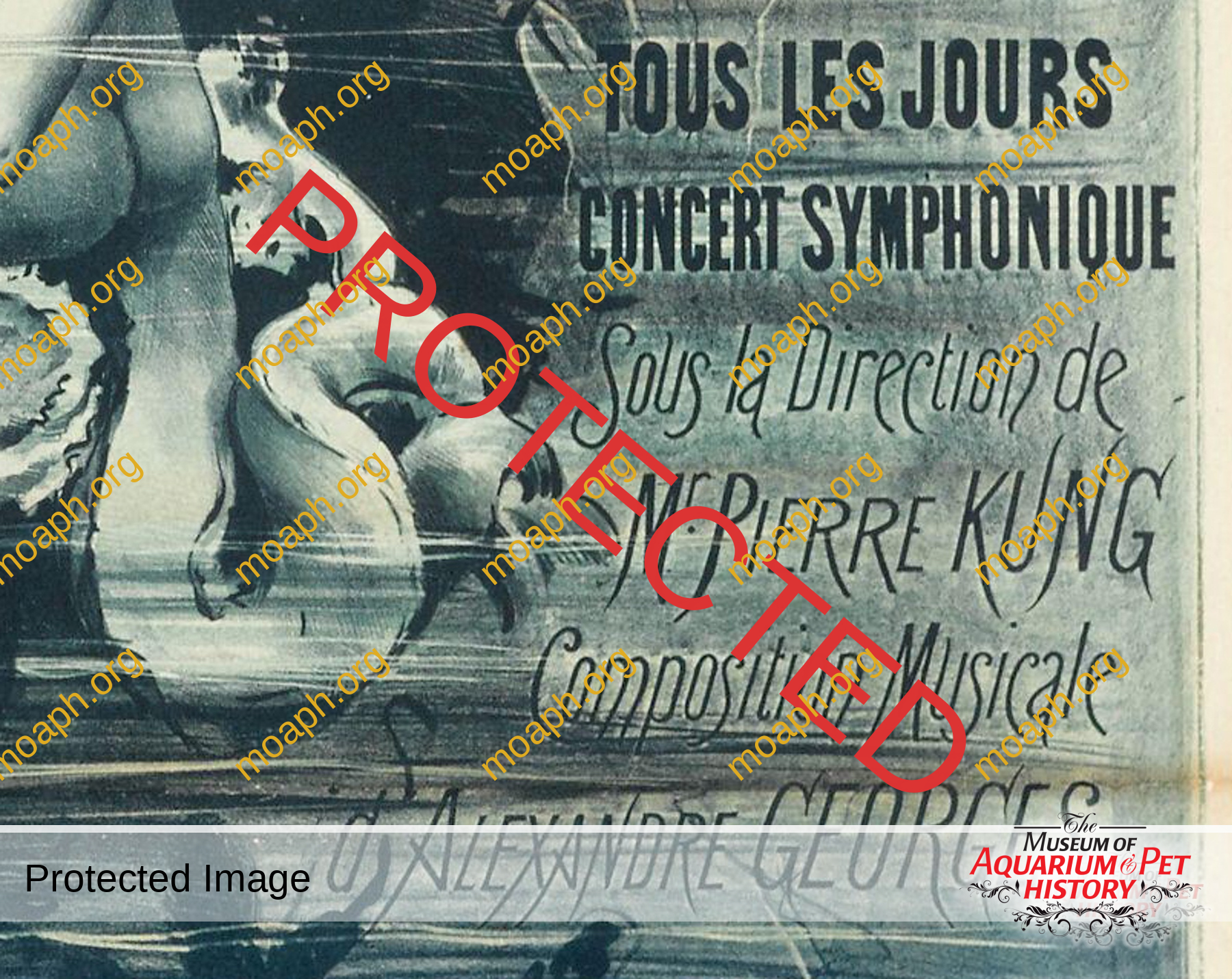
Close-up of the stunning advertising poster of the Aquarium designed by V. Guillet and printed by the Paul Dupont company. CC0 Paris Musées / Musée Carnavalet, Histoire de Paris.
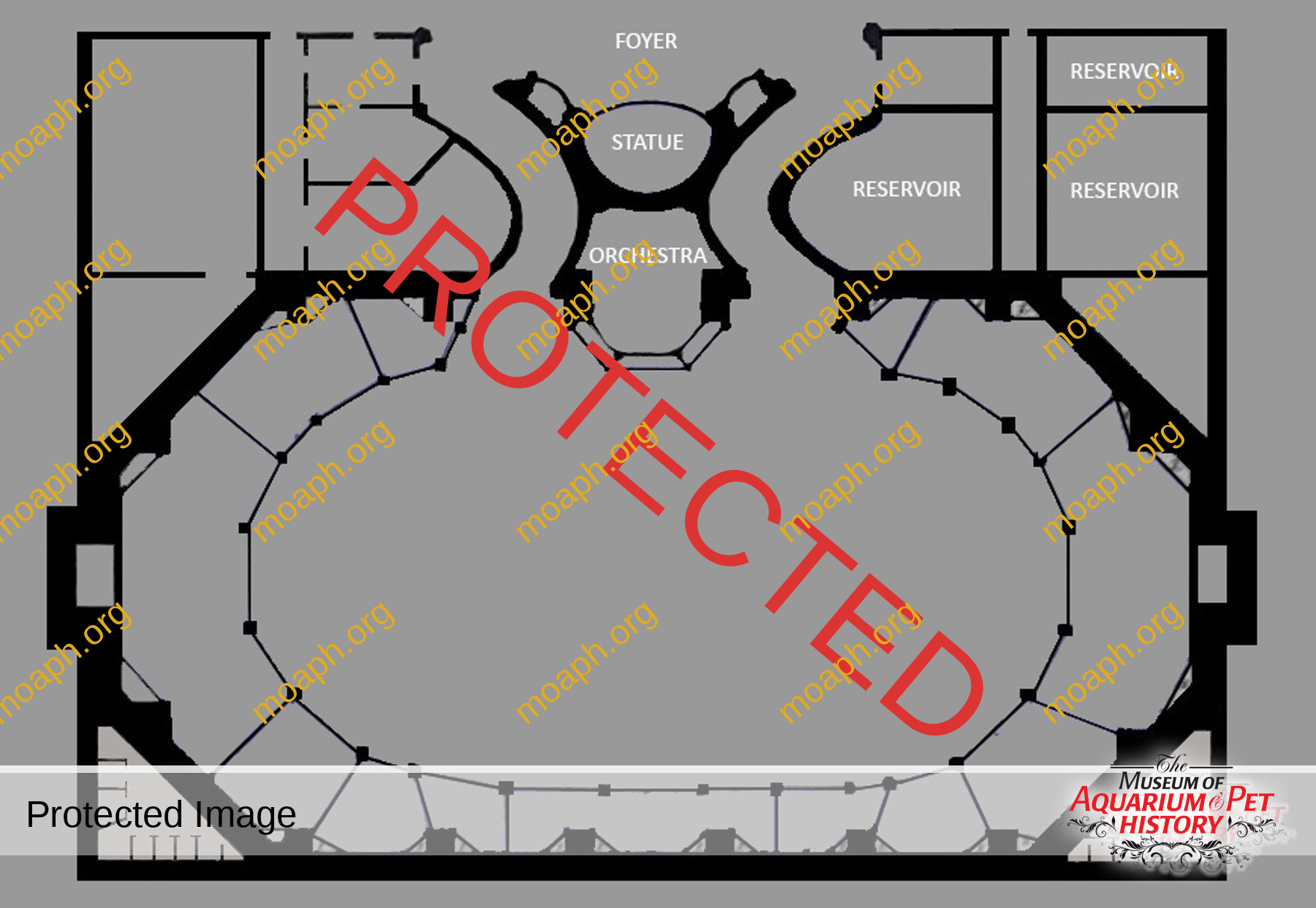
Plan of the Aquarium.
The next section of the exhibition featured the iconic tanks themed around sunken shipwrecks. Tank No. II delivered an especially powerful visual impact thanks to the presence of a genuine portion of a sailing ship’s hull, whose bow as mentioned earlier extended dramatically into the main hall of the Aquarium. This vessel had been discovered in the roadstead of Cherbourg (Normandy), where it had sunk just outside the harbor after a collision with a steamer. Recovered from the sandy seabed, every piece of the sunken ship was transported to Paris and reassembled as faithfully as possible.
Underwater shows
Because of its remarkable capacity, tank No. II was chosen as the stage for one of the Aquarium’s celebrated diving shows. Real divers, clad in heavy diving suits and shining copper helmets, entered the water, descended to the bottom, and explored the ship’s interior before emerging triumphantly with its treasures.
Tank No. III was also dedicated to shipwrecks, and displayed a section of the very steamer that had caused the sinking of the sailing vessel!
Alongside these massive decorations, both tanks housed large marine species such as rays, electric torpedoes, young sharks, moray eels, and sea turtles. Schools of smaller fish and a variety of scavenging crustaceans filled out the underwater scene, adding constant movement to the layout while also serving as live prey for their larger aquarium companions.
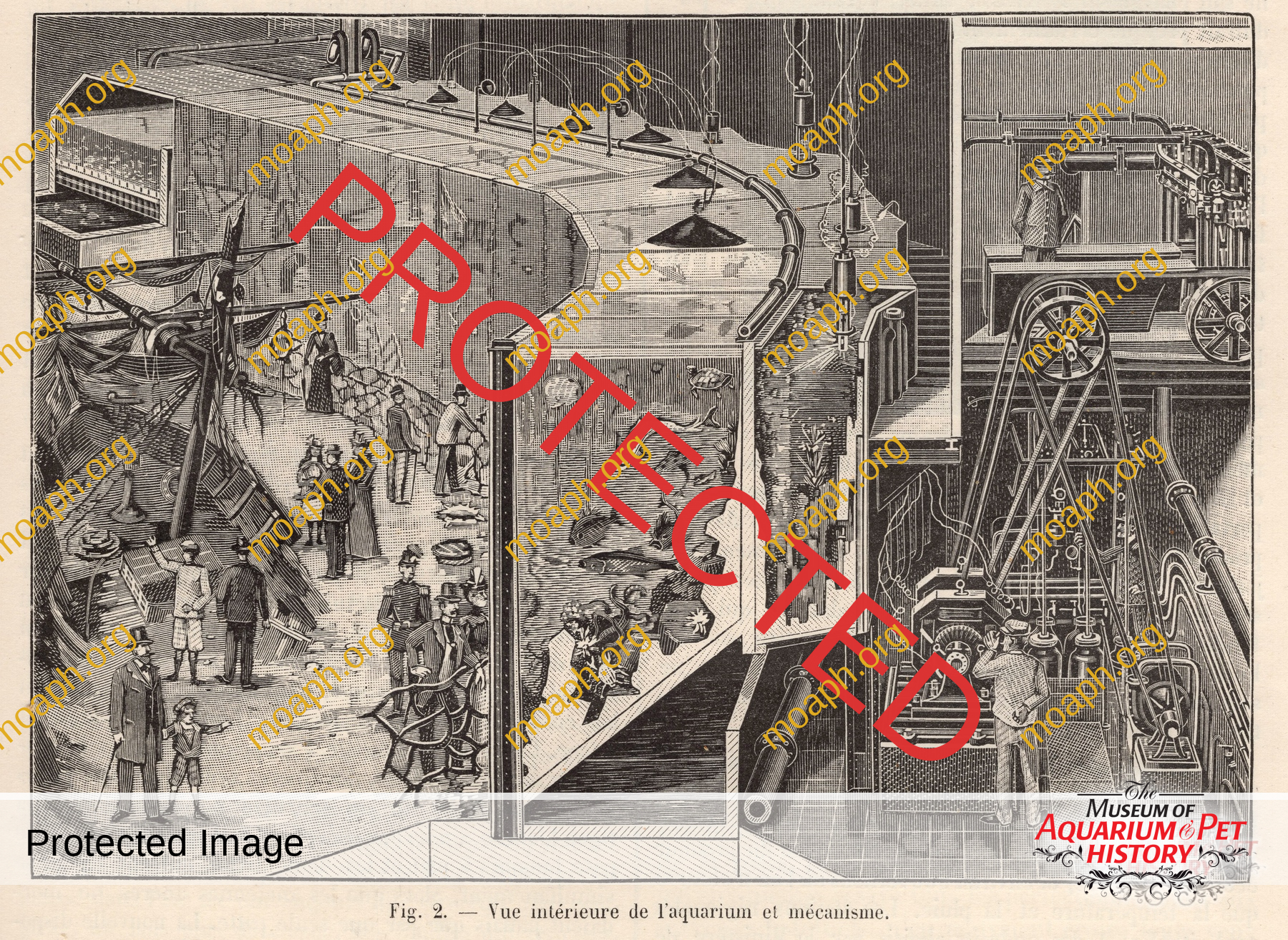
The French artist Louis Poyet gifted history with this magnificent technical illustration of the Aquarium de Paris, published for the first time in La Nature – Revue des sciences et de leurs applications aux arts et à l’industrie (Vol. 28, No. 1425, September 15, 1900, p. 253). Also featured in other magazines such as Scientific American, the drawing includes some remarkably accurate details as well as others that are clearly altered in terms of spatial geometry. Poyet devoted his career to science and technology, and was active from the 1870s through the early 1900s. In 1877, he began working as an illustrator and engraver for La Nature, operating from his studio in Paris. He was also the illustrator for the catalog of the 1889 Paris World’s Fair, a work that earned him gold and silver medals. The extraordinary level of detail in his illustrations remains breathtaking even today.
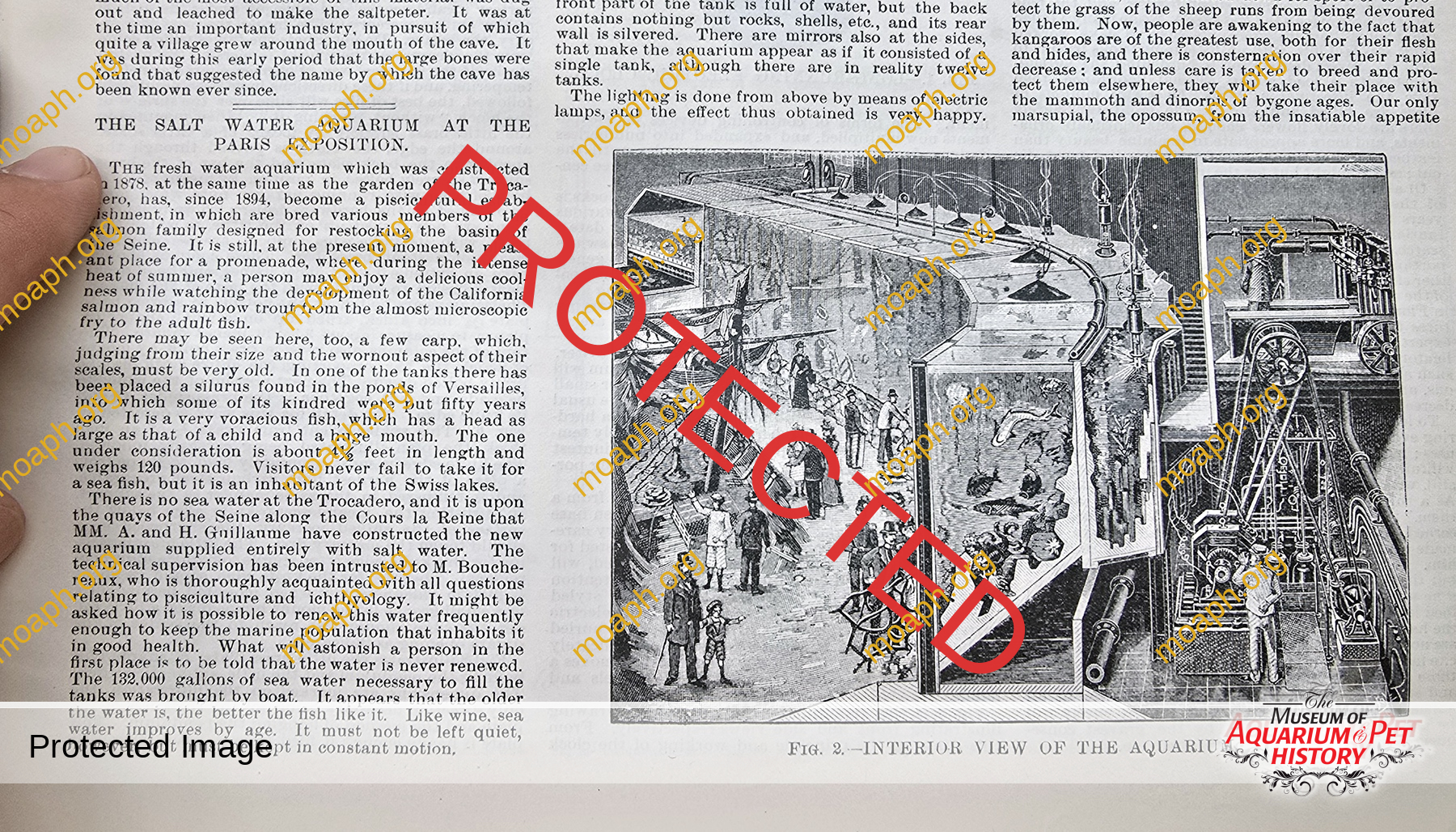
Article on the Aquarium de Paris published by Scientific American, Supplement No. 1300 (December 1, 1900).
Midway through the exhibition, visitors encountered a display inspired by polar landscapes. Striking for its light color palette and atmospheric backdrops, this large diorama featured both submerged and above-water fake ice blocks, stalactites, and stalagmites. Fittingly, the tank was stocked with cold-water fish species native to northern seas.
The next tank of the exhibit focused on jellyfish and sea anemones, which were displayed together with octopuses, cuttlefish, squids, and lobsters. Like most of the basins of the Aquarium, this one also teemed with tireless schools of small silvery fish.
Another highlight of the exhibition was the basalt-themed tank. Decorated with realistic reproductions of these volcanic rocks, it offered visitors the thrilling sight of a simulated submarine volcanic eruption. To create this effect, the Guillaume brothers installed at the bottom of the tank the outlet of a powerful aerator, which sent up a massive column of bubbles illuminated by a deep red light source.
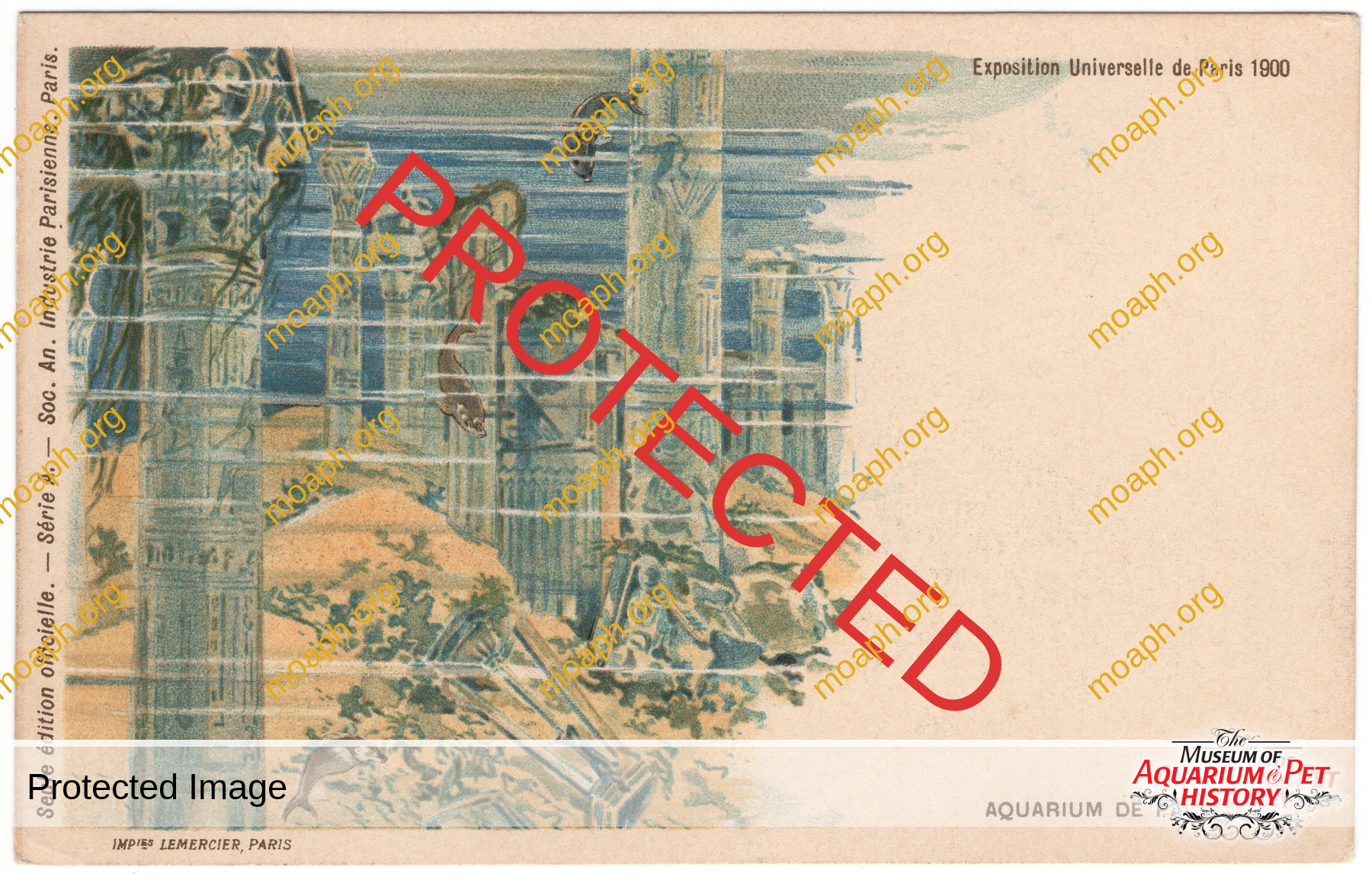
Old postcard depicting the tank inspired by the legend of Atlantis.
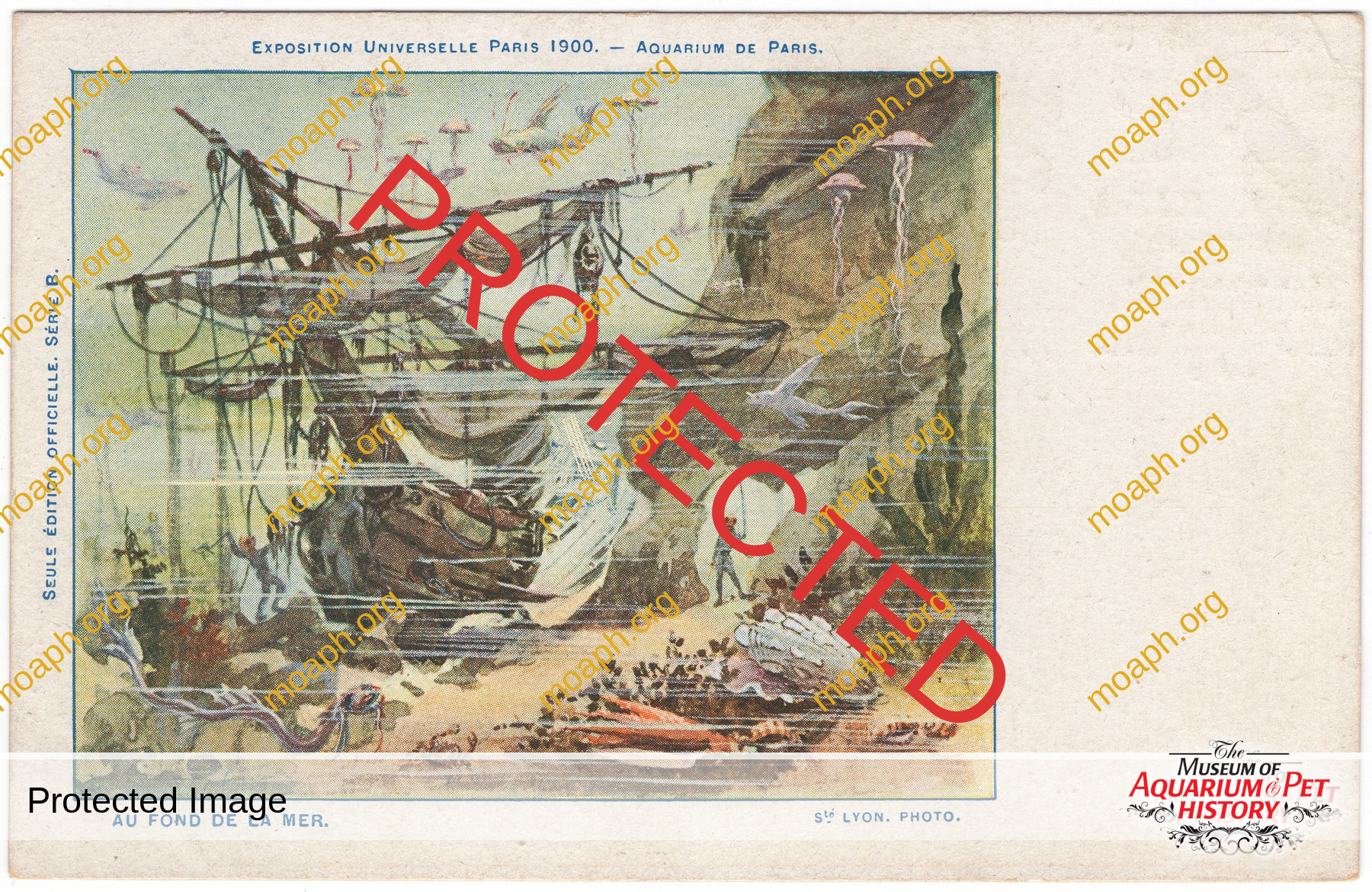
Old postcard showing the divers at work in tank No. II.
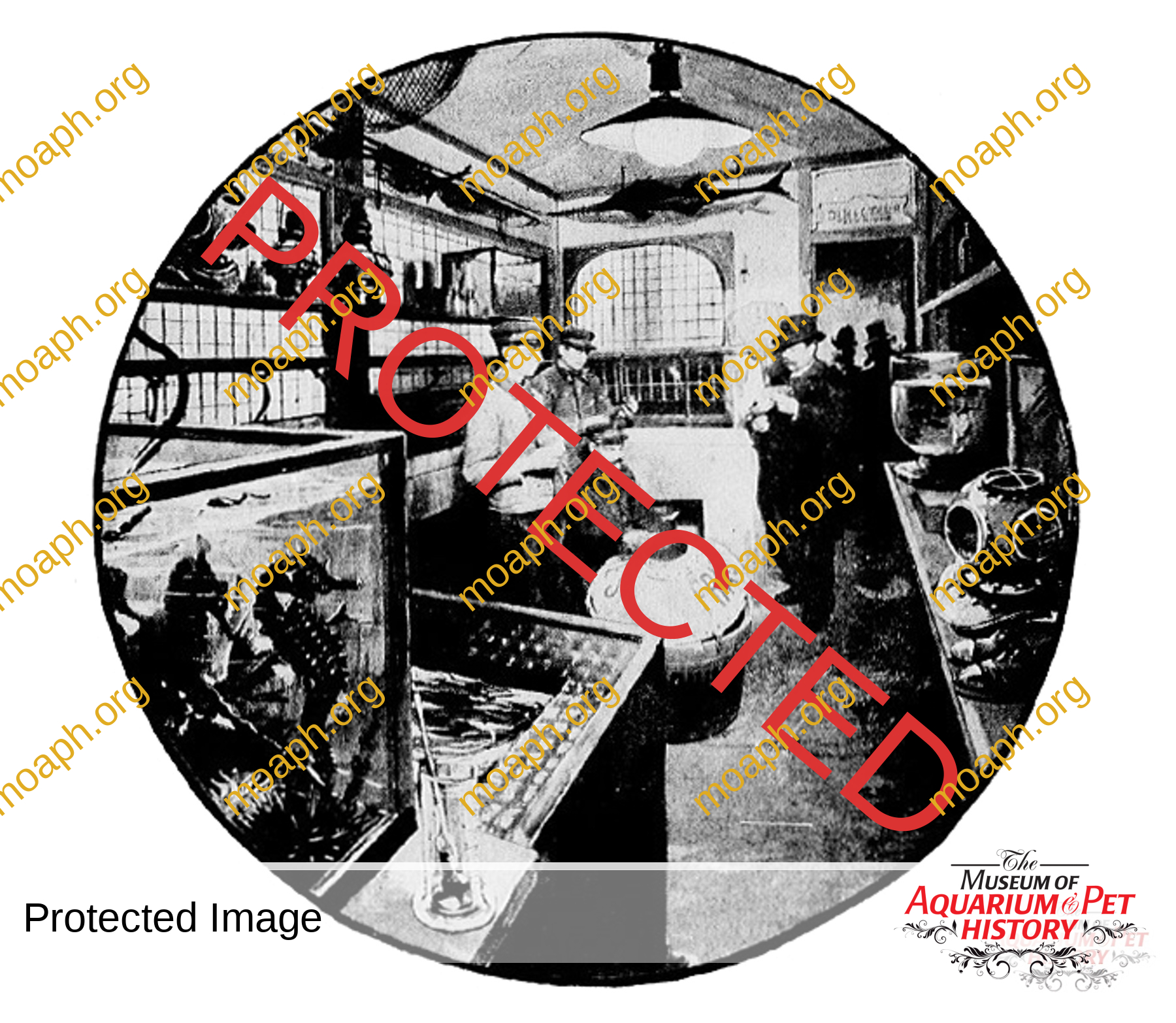
The small laboratory of the Aquarium. Notice the shipping can on the floor, and the diving helmets on the shelves. Guide-souvenir de l’Aquarium de Paris, 1900. Source: gallica.bnf.fr / Bibliothéque nationale de France, département sciences et techniques.
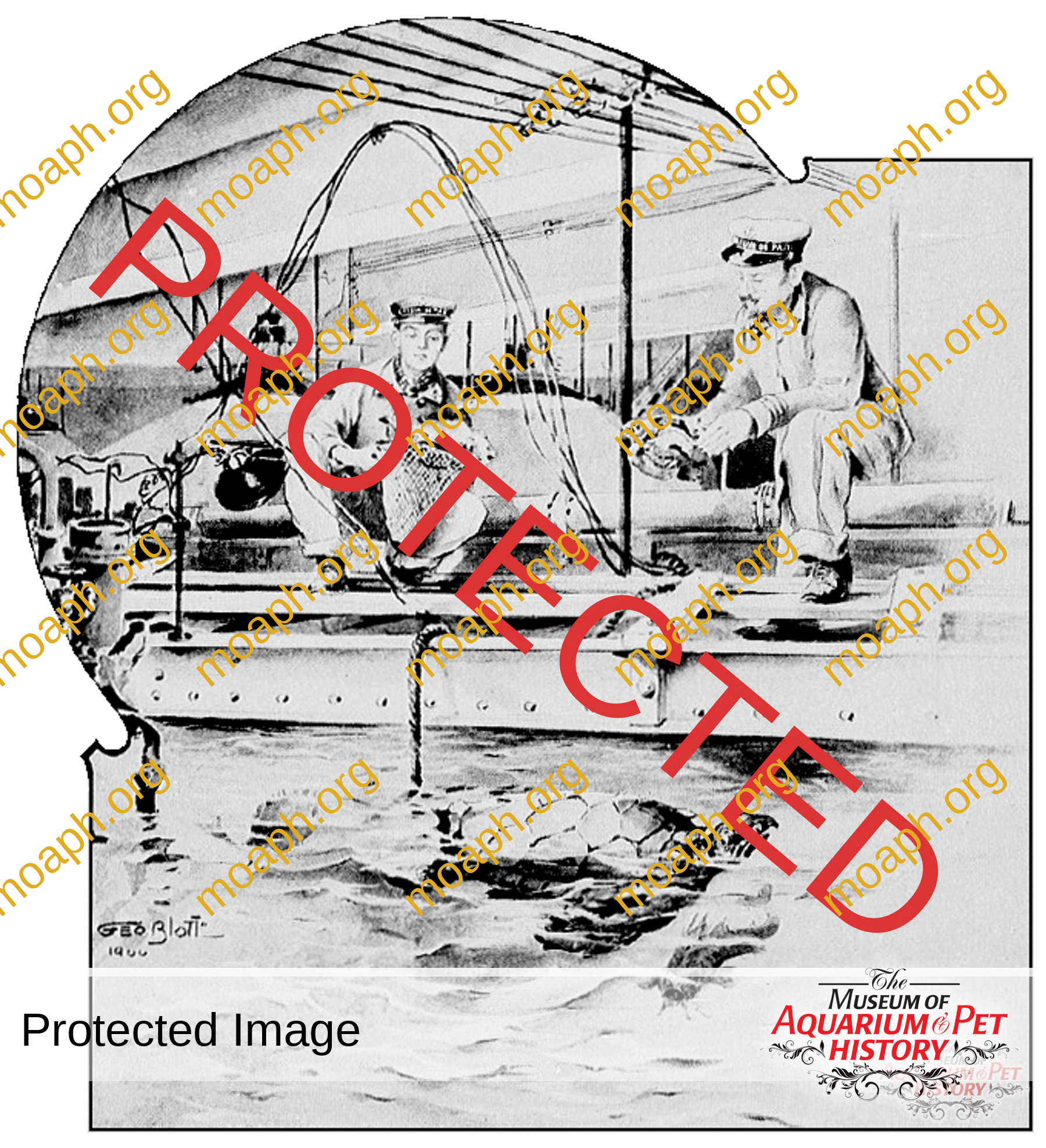
The Aquarium guide offers valuable insights, though at times slightly romanticized, into the plethora of marine species housed in the tanks. A closer reading reveals that the stocking choices often paired species that were incompatible with each other. Illustration from the Guide-souvenir de l’Aquarium de Paris, 1900. Source: gallica.bnf.fr / Bibliothéque nationale de France, département sciences et techniques.
Mermaids and mirrors
The final section of the Aquarium promised even more dazzling spectacles. Here, every evening from 5 to 7 pm, and from 9 pm to midnight, visitors could watch live performances by freedivers who reenacted the daring feats of Sri Lankan pearl fishers. The entire show unfolded in a magical setting filled with real sponges, corals, gorgonians, and enormous bivalve mollusks. Besides, enchanted spectators here were even treated to the vision of alluring mermaids with flowing hair.
The actresses playing the mermaids, however, were not actually in the water. They lay gracefully on a well-lit “carpet” placed in the backstage. It was actually a large, endless conveyor belt which, kept in constant motion by a powerful electric motor, carried the performers the full length of the tank. A second conveyor belt running alongside and in the opposite direction returned them to their starting point, ready for their next “ethereal swim”. Visitors saw them as if they were floating beneath the water thanks to an ingenious system of mirrors and reflections.
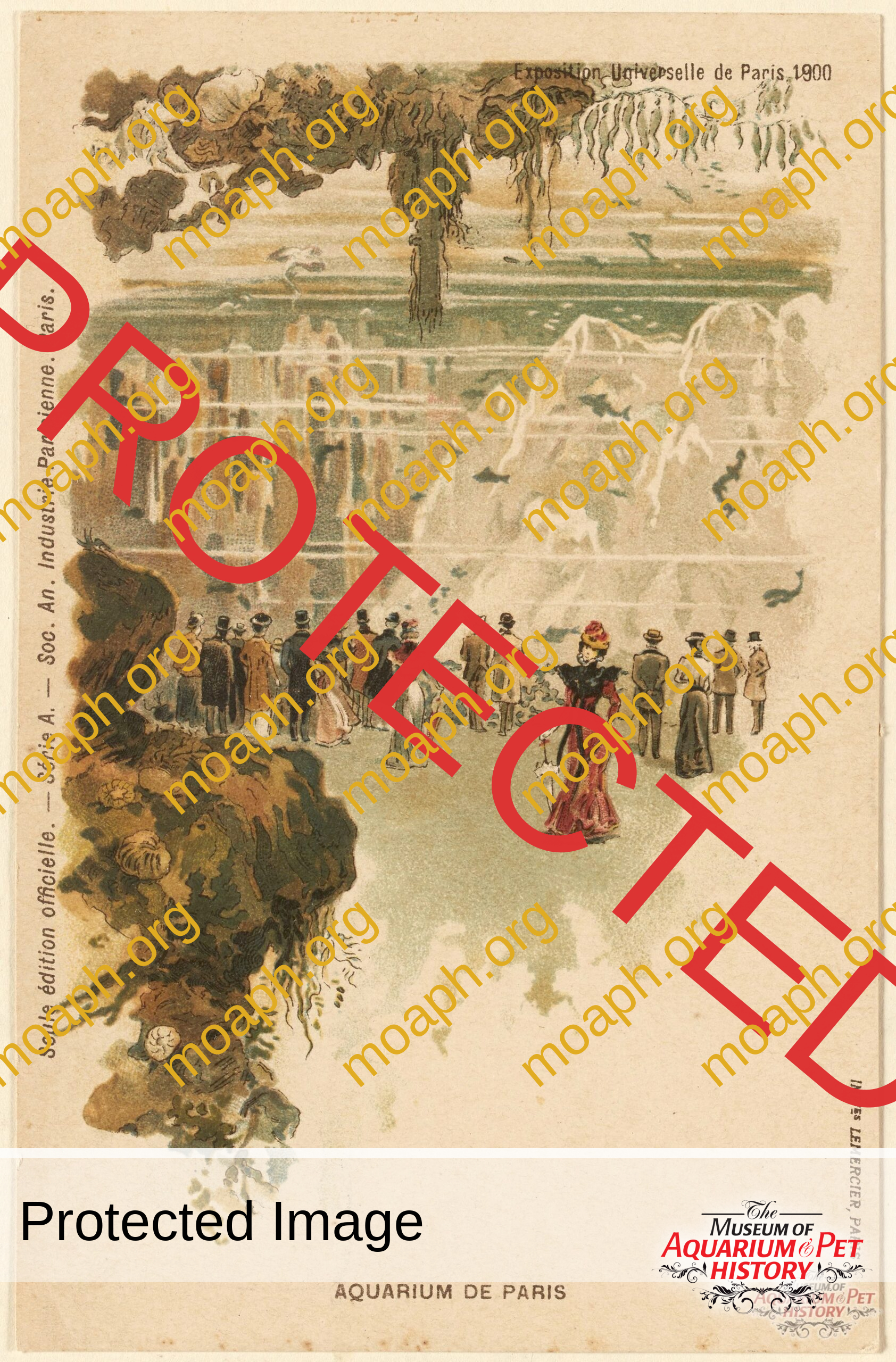
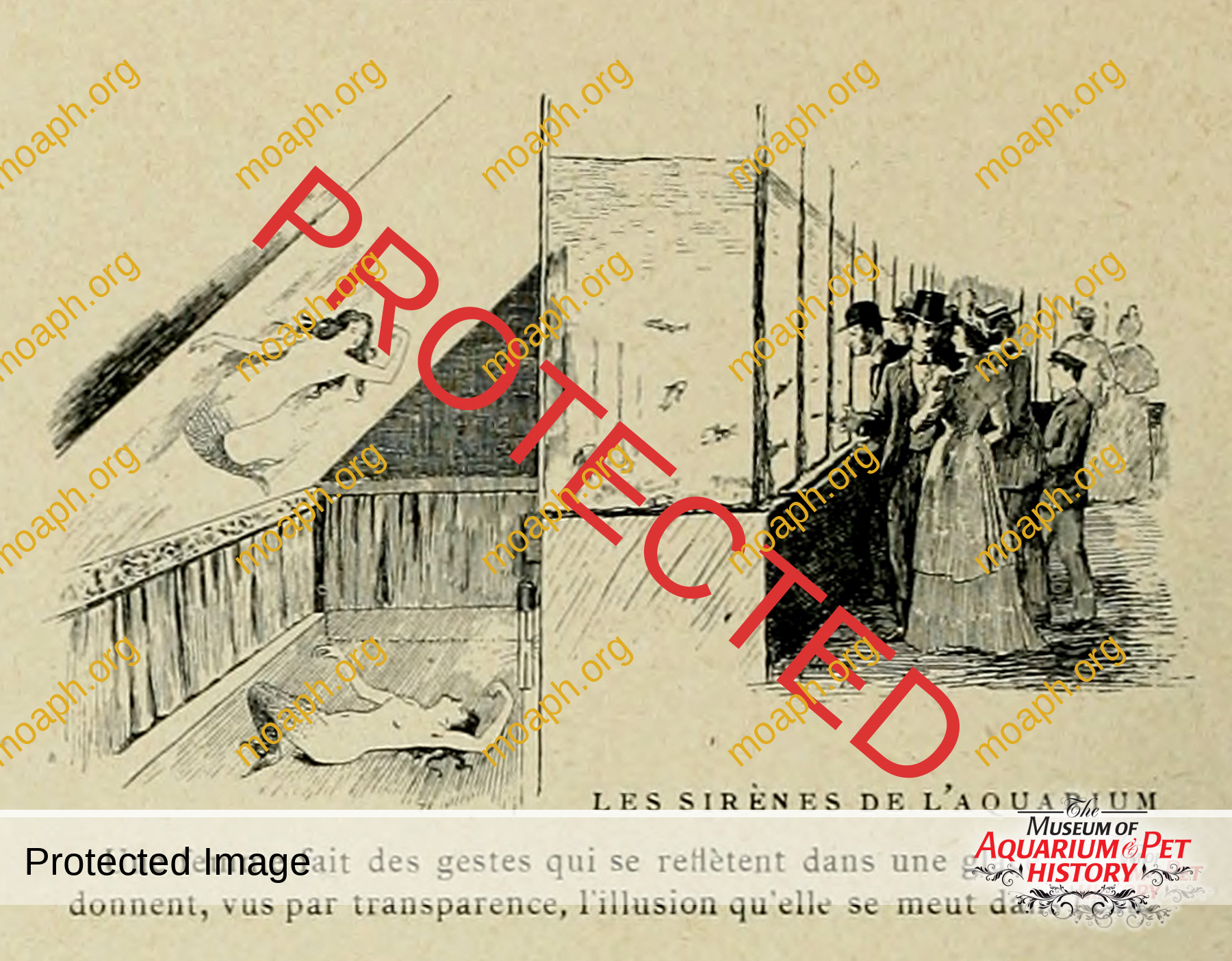
Mermaid at work in the backstage. Illustration from Le Monde Modern.
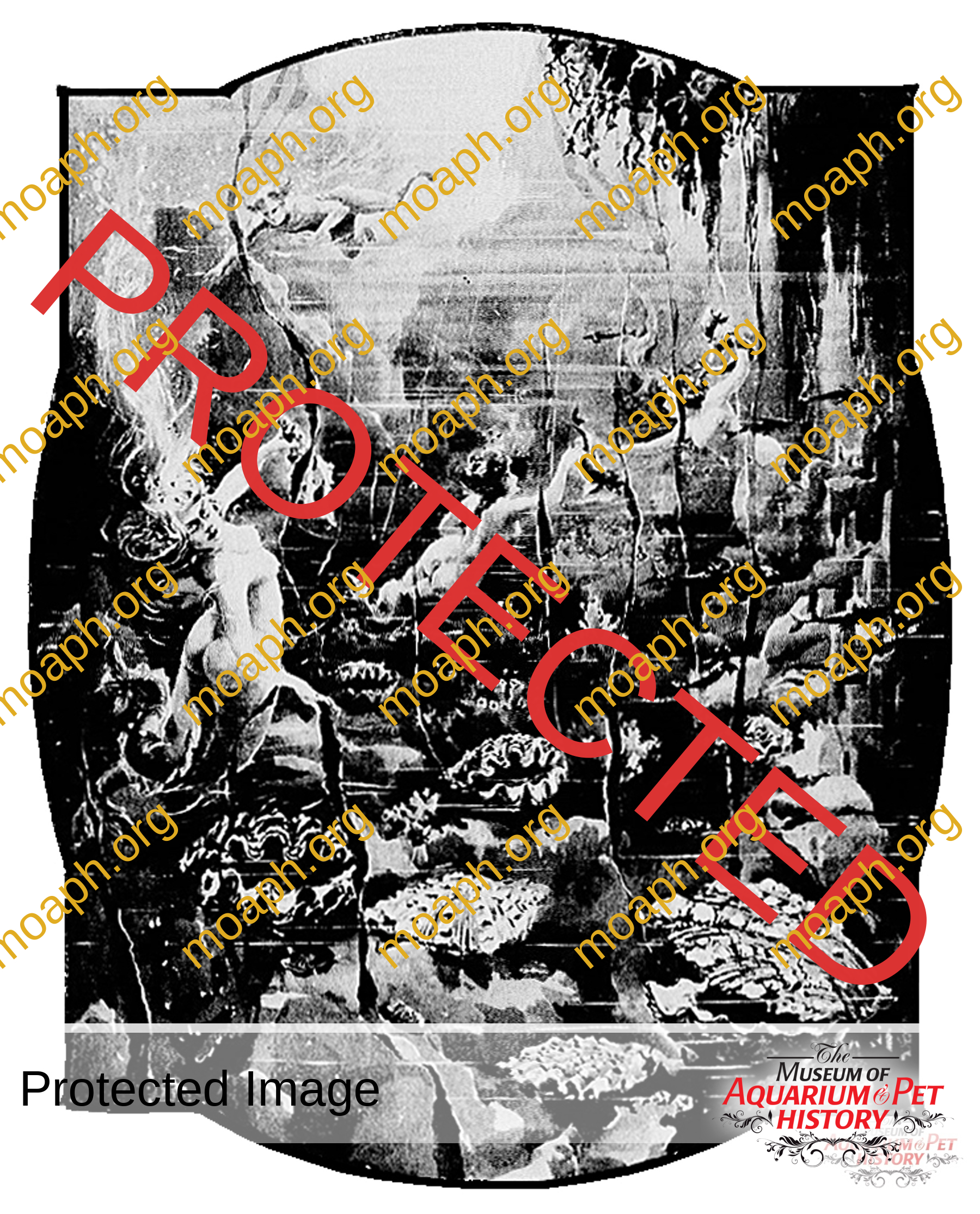
The enchanting mermaids of the Aquarium. Guide-souvenir de l’Aquarium de Paris, 1900. Source: gallica.bnf.fr / Bibliothéque nationale de France, département sciences et techniques.
What the Aquarium guide refers to as tank No. VIII contained an impressive collection of sponges of multiple species. The display was further enhanced by crustaceans, horseshoe crabs, sea hares, small fish such as wrasses, and juvenile specimens of spotted catsharks, angel sharks, sawfish, and hammerhead sharks.
Closing remarks
We’ve reached the end of this imaginary tour of a public aquarium that has long since disappeared. It was certainly a place where no one could ever grow bored. From my perspective, it might surprise and captivate a contemporary audience as well.
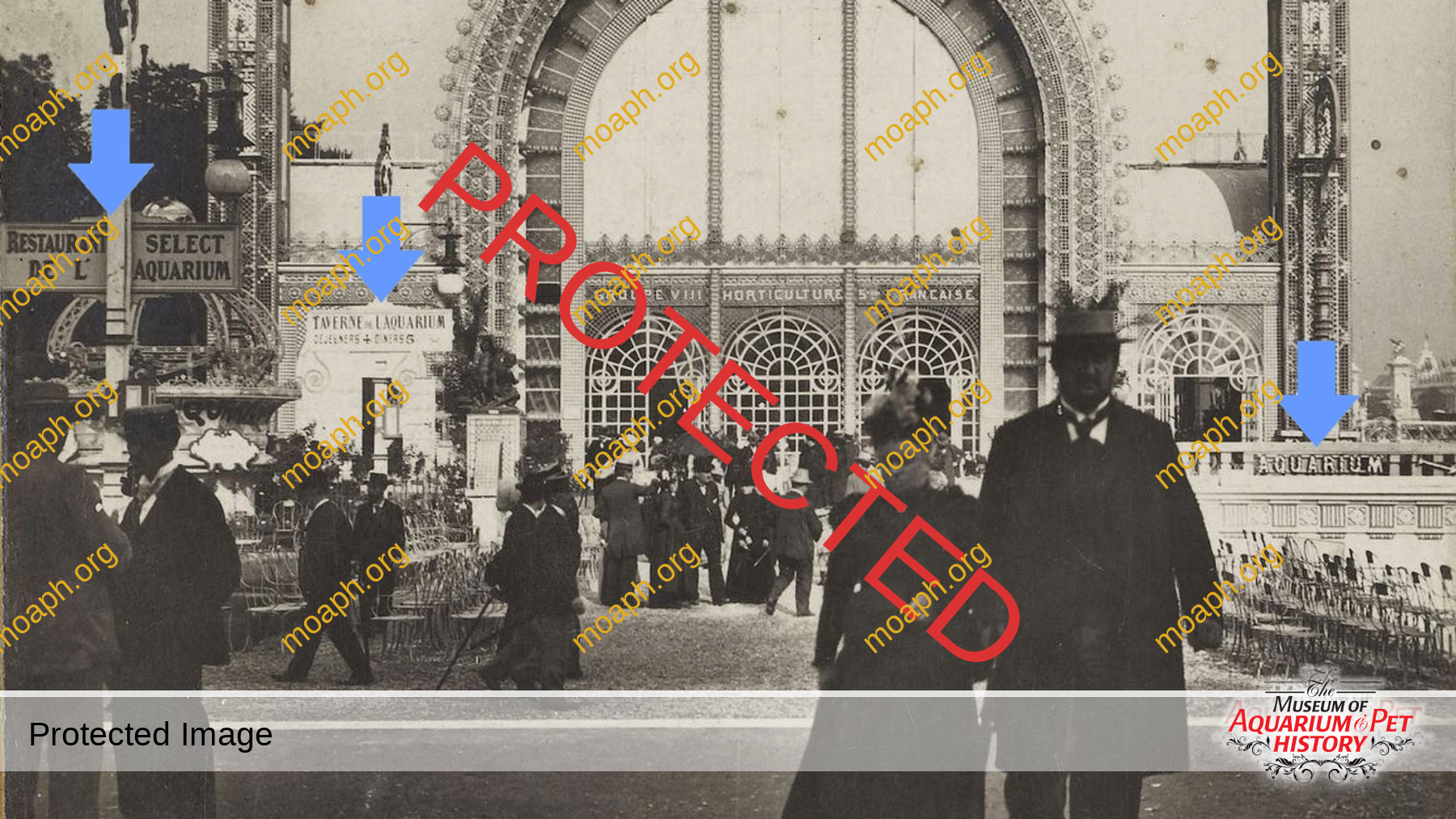
The Guillaume brothers had truly thought of everything. At the end of their fairy-tale aquarium journey, in fact, astonished visitors could relax and replenish themselves at themed café-restaurants designed to evoke “the homes of Breton fishermen” and “the dwellings of Boulogne sailors”. CC0 Paris Musées / Musée Carnavalet, Histoire de Paris.
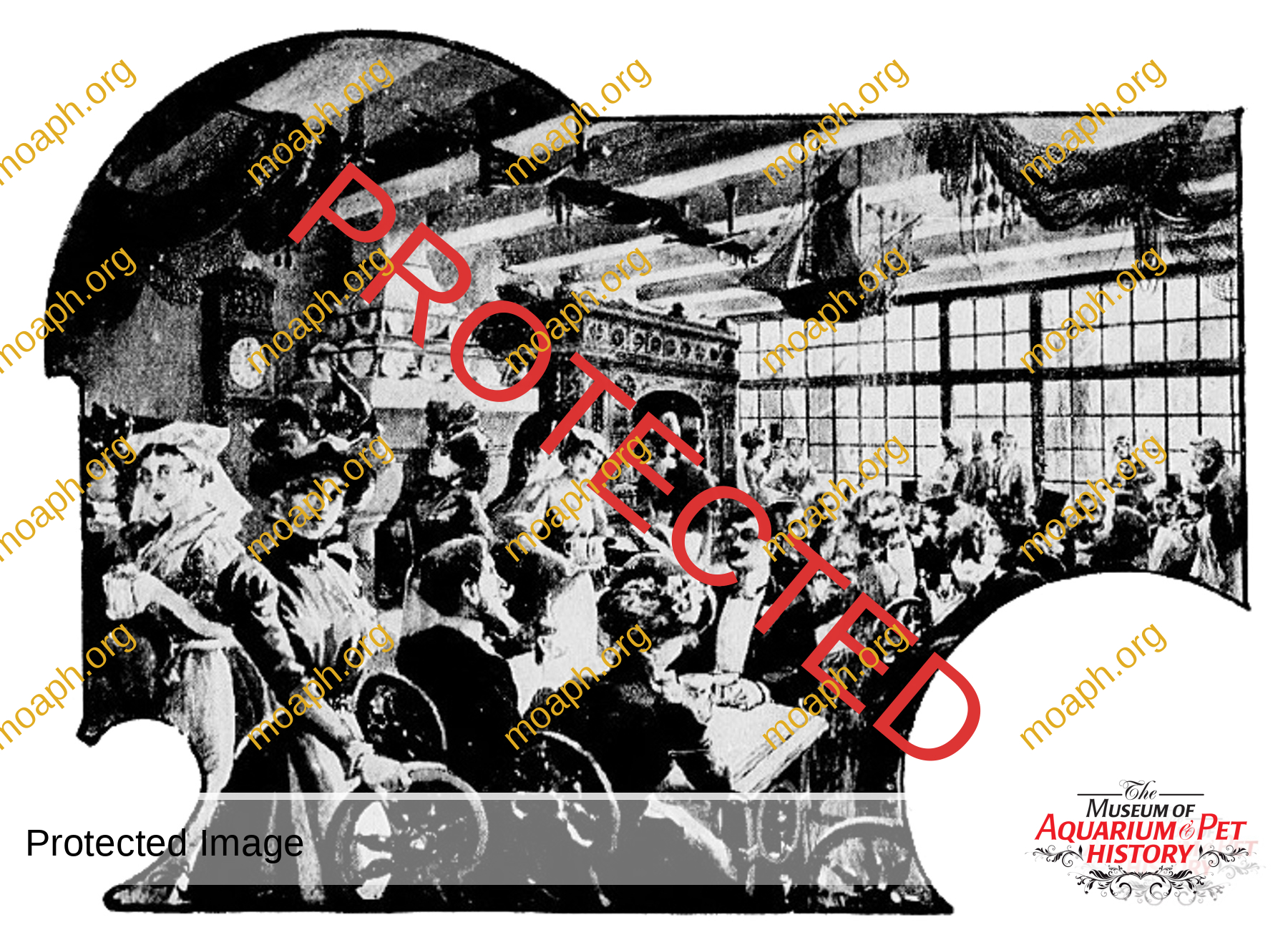
One of the restaurants located near the Aquarium. Notice, among the many sea-themed decor elements, the chair backs shaped like ship wheels. Guide-souvenir de l’Aquarium de Paris, 1900. Source: gallica.bnf.fr / Bibliothéque nationale de France, département sciences et techniques.
Sadly, I haven’t been able to find out whether the great Jules Verne ever visited this facility. If he had managed to do it, despite the serious health issues that afflicted him in his last years, I assume he would have been deeply struck by the many parallels between the displays designed by the Guillaume brothers and the adventurous tales he wrote. There’s little doubt, in fact, that his novels served as a major source of inspiration for the construction of this aquatic theater. At the Aquarium de Paris, specific choices in terms of design and set up were clearly made to ride the wave of popularity of that literary genre, made famous by Verne himself, which so often explored the mysteries of the deep sea and futuristic technologies.
During the research for this article, I couldn’t help but notice how rarely Albert and Henri Guillaume are remembered nowadays as the visionary conceivers and designers of this Aquarium. It’s a real shame, because they demonstrated a great entrepreneurial spirit and a level of creativity out of the ordinary.