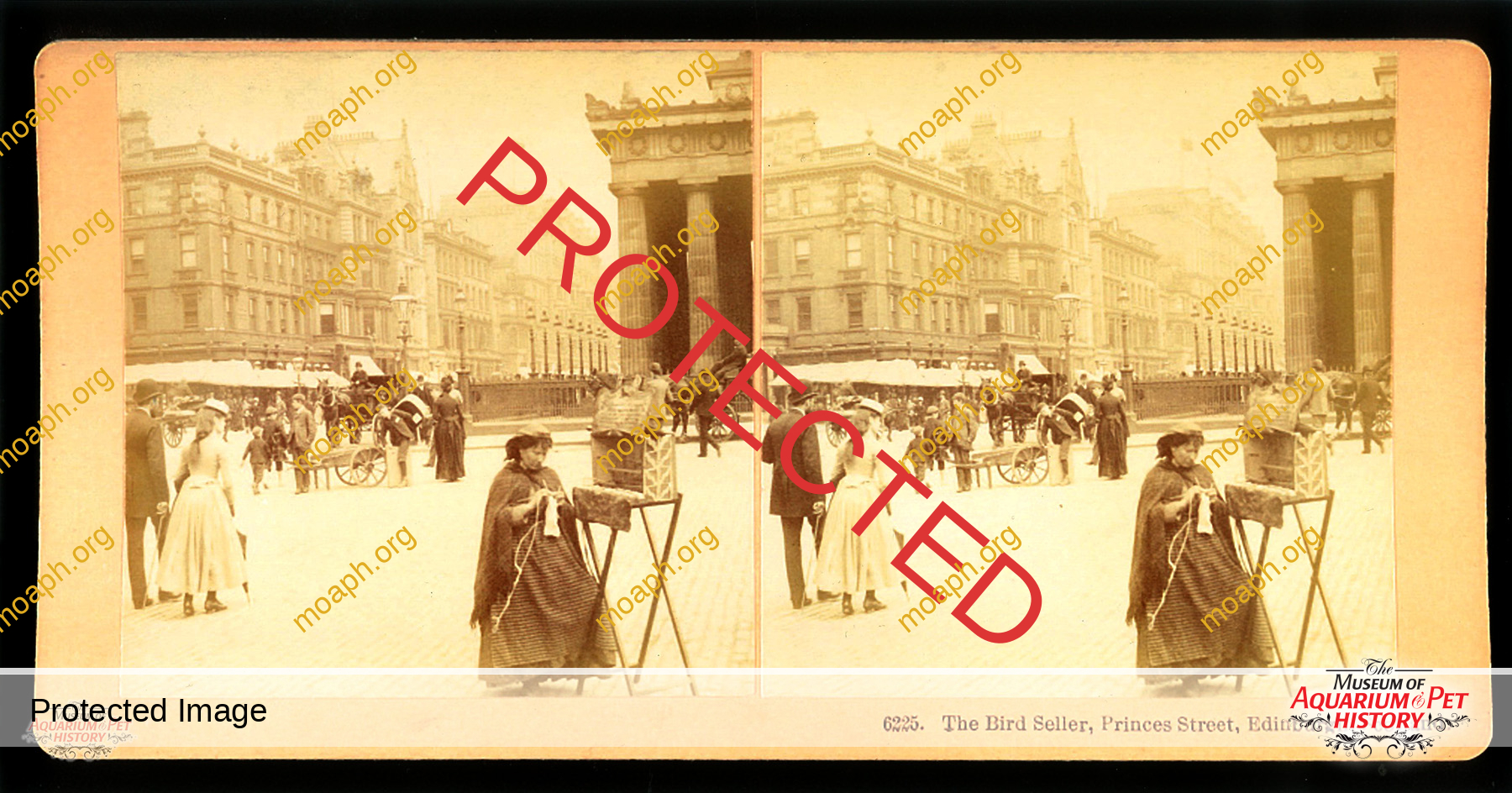
Catching Pet Birds for a Living – 100 Years Ago
This is a great new article from a lifetime bird keeper and bird breeder. This article is about how his grandfather trapped and sold native pet birds in the UK to support his family.
MOAPH is grateful to have David Urmston of the UK as a future bird hobby writer for us. Watch for his next article on Bird Singing Contests!
With the onset of the Industrial Revolution in the UK, there was a relatively rapid migration of people from the countryside into the towns. There were several reasons for this, but the consequence for the keeping of pets of various sorts was substantial. When living in the countryside, the workers would often have access to pieces of land that enabled them to supplement their income by the growing of fruit and vegetables and through keeping livestock. This could be a single house cow, or more likely a pig, but would also include chickens, ducks and rabbits. All of these animals would be selected for their utility in providing food for the family.
It can be argued that this tendency to cultivate land and domesticate animals is part of an intrinsic human drive; part of a genetic survival mechanism. It is my contention that it is this drive that has led to the keeping of pets into the modern age.
In some of the poor countries of the world, it is still possible to see this tradition of farm animals kept in towns. In India for example, it is not at all unusual for cows to be confined in small areas behind town houses. In the UK, the houses built to provide for the needs of families during the industrial revolution tended to be small and lacking gardens. Some had a ‘back yard’ which is not like the ‘yard’ of an American home, but usually a small, paved area behind the house. One of the ways in which this wish to keep livestock was subsumed, was for working men to keep pigeons. The other drive, competitiveness, then found its form in the racing pigeon.
Cage birds had been kept for many centuries before the onset of the Industrial Revolution. Primitive rural societies today often have a tradition of cage bird keeping. With the move to towns, one way in which the country traditions could be maintained was through the keeping of small songbirds, either in the home or in a shed in the back yard or garden. Competition was introduced with the onset of singing contests and bird exhibitions.
I grew up in the industrial north of England in a small town that had several cotton mills and a large railway workshops. Many of the workers’ houses had been built by the mill-owners or the railway company. They were largely small, terraced houses with little or no garden. So, although this was the 1950’s, the living conditions were not far removed from those experienced during the industrial revolution.

Common Redpoll (Acanthis flammea)
My introduction to bird keeping came at a very early age, as my paternal grandfather was a bird breeder. He gave me my first birds (a pair of redpolls) when I was about ten years of age. He was a man of few words, but he did enjoy telling me some of the stories of his experiences in past years. His work was that of a drain layer. A great deal of new housing had been built between the Wars much of it municipal estates, and he was employed to dig ditches and lay the drains for these houses. He would be paid only on the days he worked and with a family to feed, he required an alternative source of income, particularly in the winter when the ground froze, and it was not possible to dig into the ground to lay the drains.
He was able to augment his pay by two means: He bred rabbits which he sold for meat, and he caught and sold birds. The birds would have been caught in the winter and consisted, in the main of various types of finch. In particular, he would catch redpolls, siskins and goldfinches, but also chaffinches, bramble finches, linnets and greenfinches. He used different methods for catching the different species. It should be emphasised that when he was doing this he was not in breach of the law. The catching of wild birds for the cage bird trade only becoming illegal in the UK in 1954.
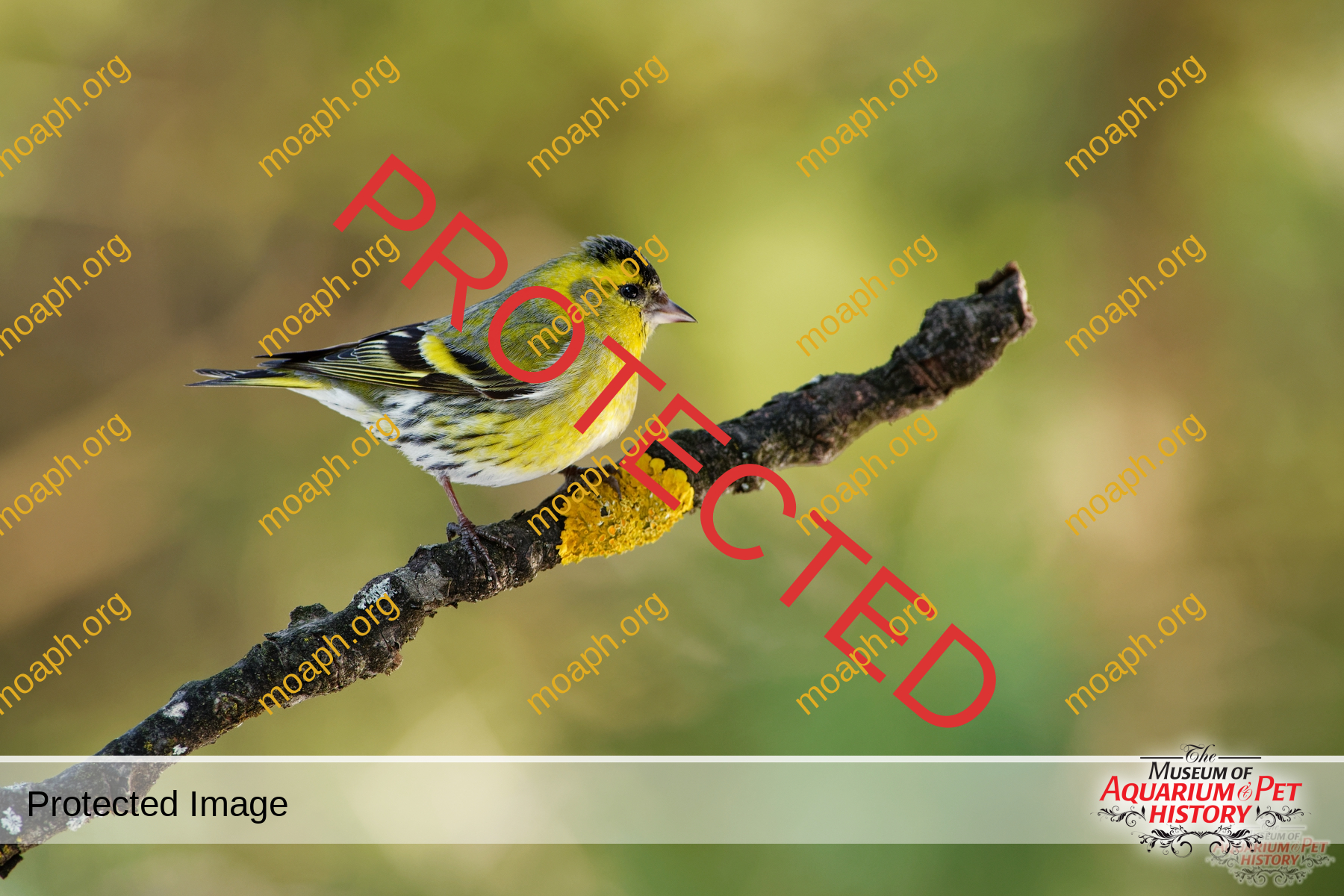
Eurasian Siskin (Spinus spinus)
He sold the birds (and rabbits) from a market stall which he rented on a casual basis on some Saturdays.
In order to illustrate some of his stories he explained the techniques he used to catch the different birds. In some instances, he also constructed some traps to illustrate what he was talking about and demonstrated how they would have been used.
The siskins and redpolls were generally caught along the banks of a local river where alder trees grew, their seeds providing winter food for the birds. He explained that a long slender pole would be used the end of which would have been split to produce several thin strands of wood. To these thin filaments would be applied what was known as: ‘birdlime.’ This was a very sticky substance that did not go hard like most glues. The birds, oblivious to the risk to their freedom would be quietly feeding whilst, with some stealth, the pole would be guided towards them until the birdlime could be applied to their back. Often in their attempts to escape, the birds would also entangle their wings making escape impossible. My grandfather would always carry with him a small tin and a cloth. Within the tin would be some petrol and this was used to free the birds from the pole and remove as much as possible of the bird lime. They would then be put into a small cage for carrying home. On a good day, he would catch twenty to thirty birds in that way.

The other finches could be caught by one of two other ways:
A call bird (a finch that would call to birds flying overhead and lure them), would be housed in the lower section of a trap cage. In the upper section, a simple yet ingenious mechanism worked the trap. Two rubber bands would be strung across the cage at either end, a perch was then fitted between the rubber bands; a notch would have been made in this perch and into that was fitted a vertical short piece of wood that would just manage to hold open the spring-loaded door. As a bird landed on the perch, the door would be released and the bird trapped. Clearly, only one bird at a time could be caught this way, but my grandfather claimed that often birds would readily follow others into the trap lured by the calling bird.
To catch several finches at once, a spring-loaded trap was required, but this too was made in a very simple manner. First of all, he would prepare the ground by regularly putting seed on the ground at the same place for several days having first discovered that a flock of birds were feeding nearby. He would then lay out his trap, but not use it for another few days to allow the birds to become accustomed to the presence of the trap.
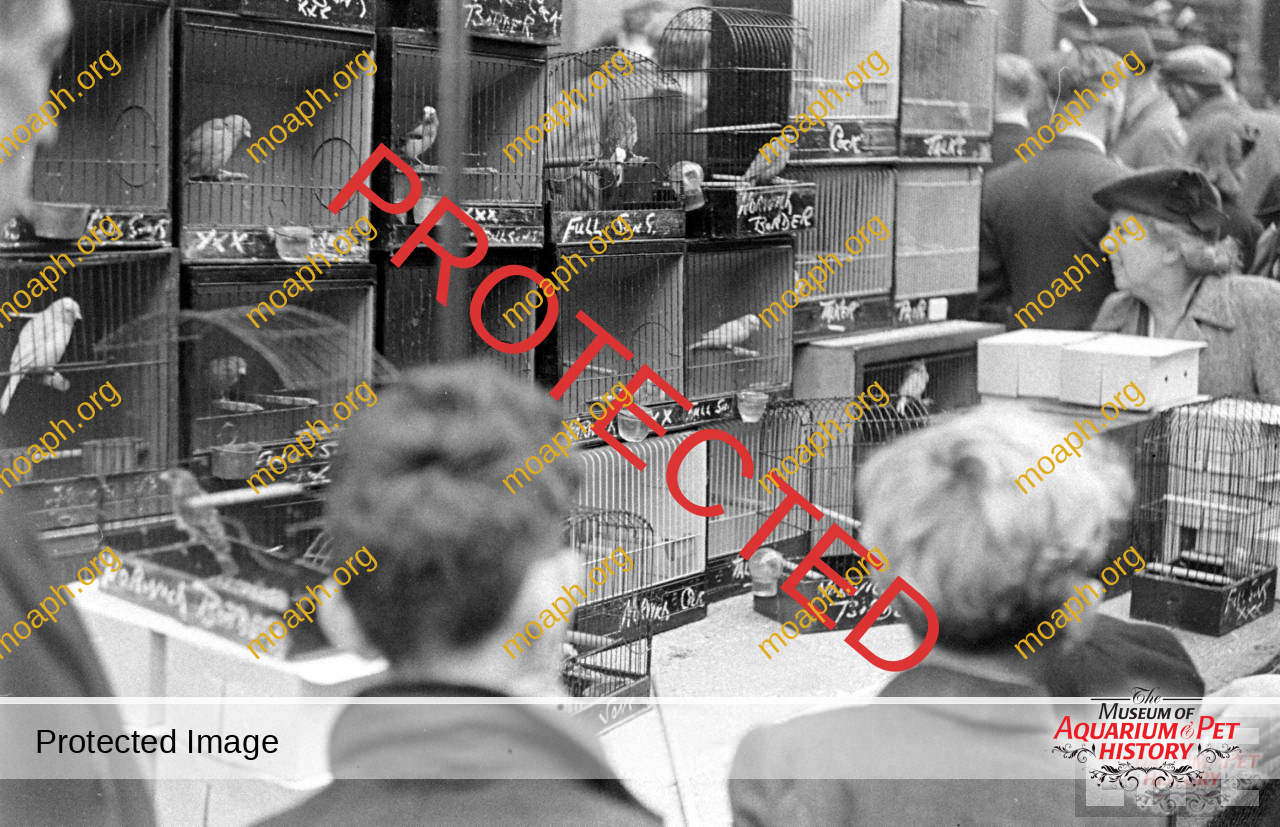
The Shoreditch Live Animal Market, 1946.
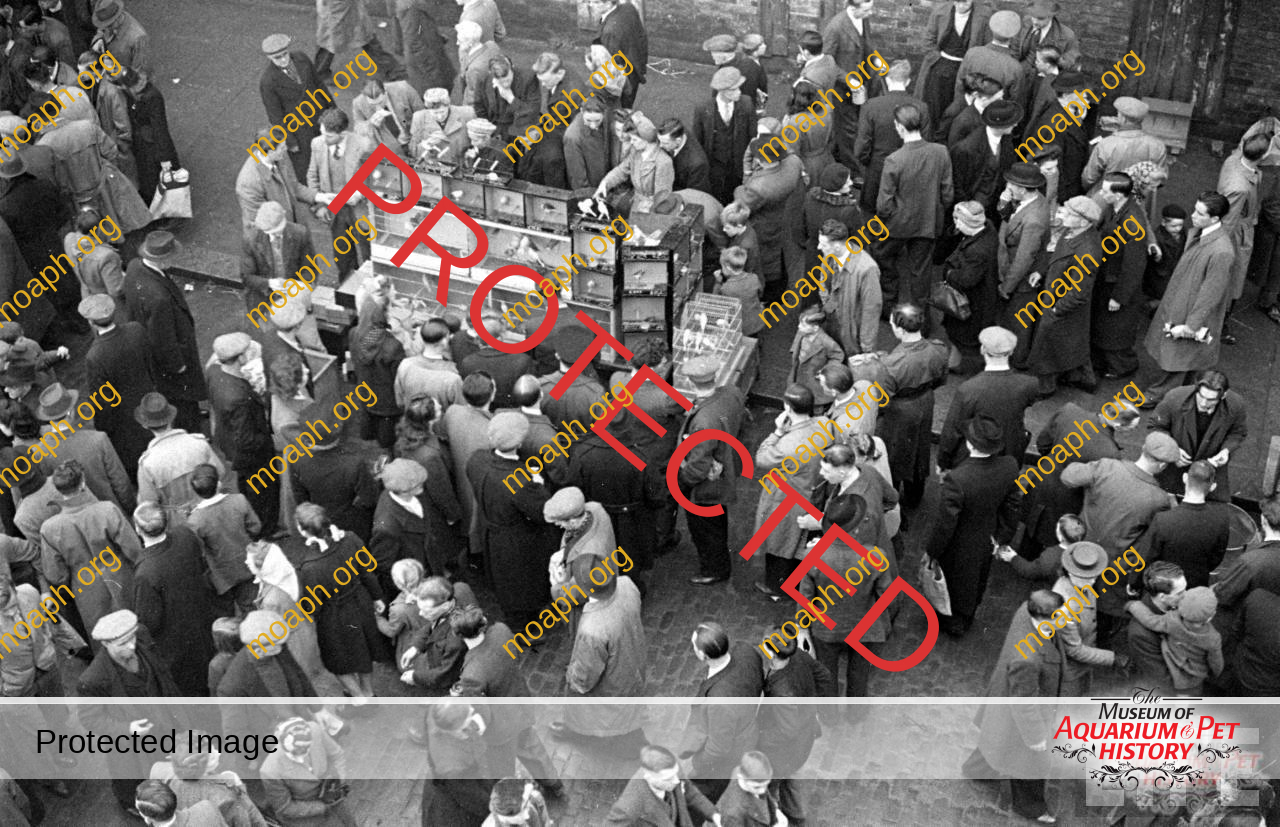
The Shoreditch Live Animal Market, 1946.
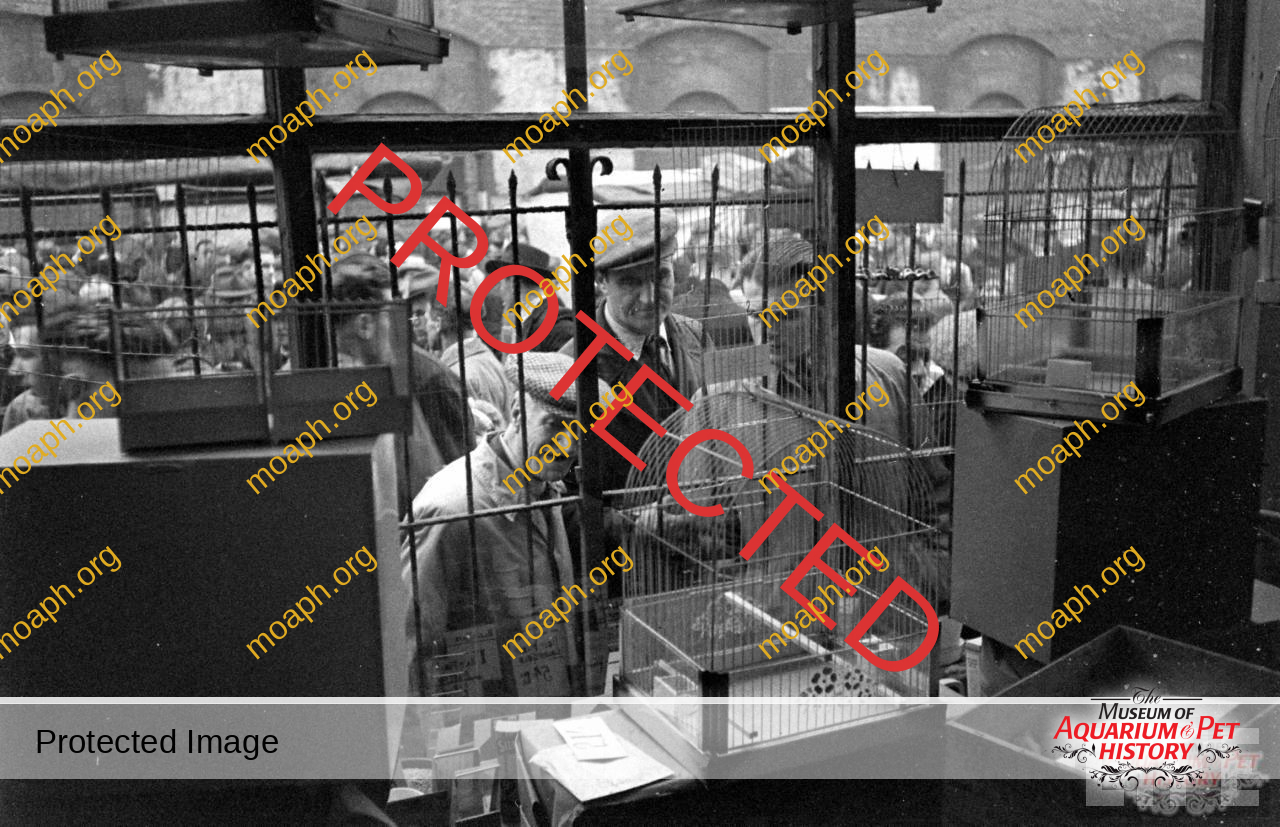
The Shoreditch Live Animal Market, 1946.
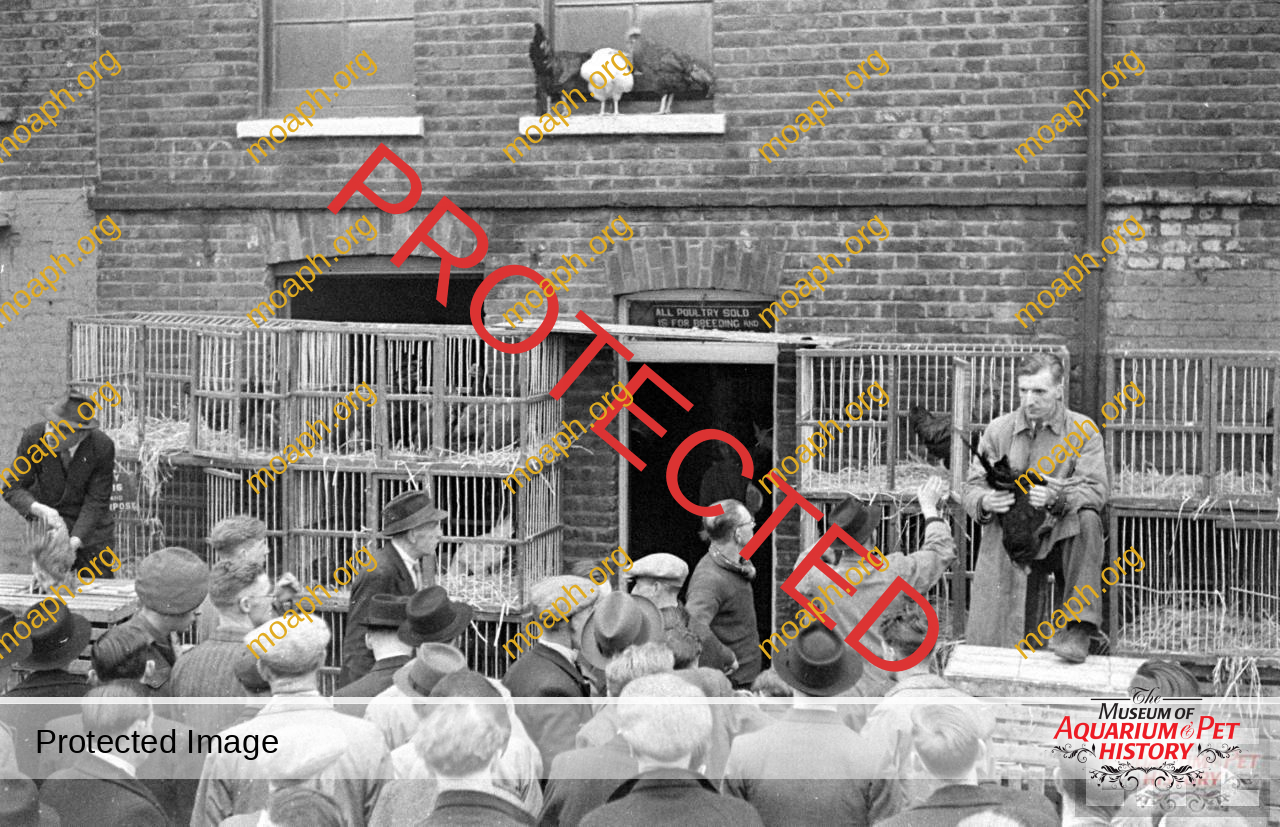
The Shoreditch Live Animal Market, 1946.
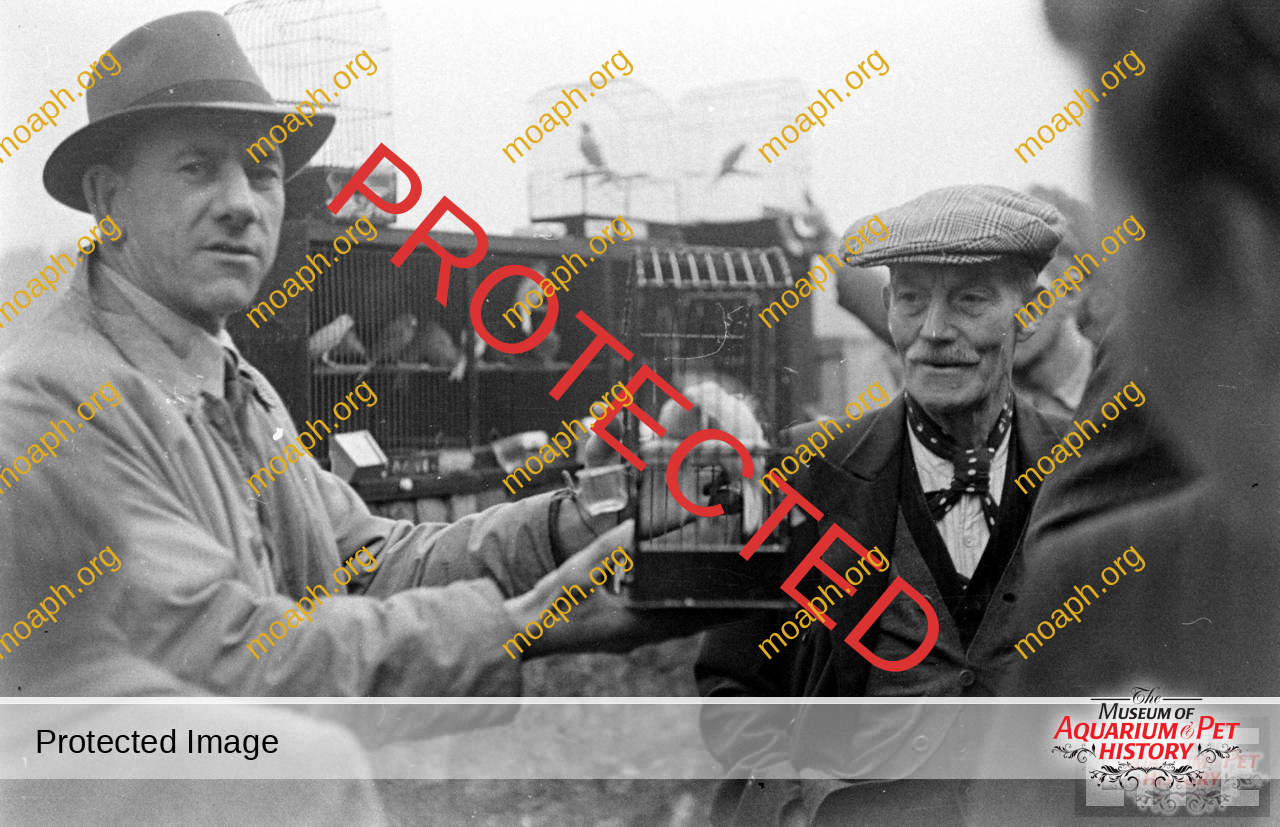
The Shoreditch Live Animal Market, 1946.
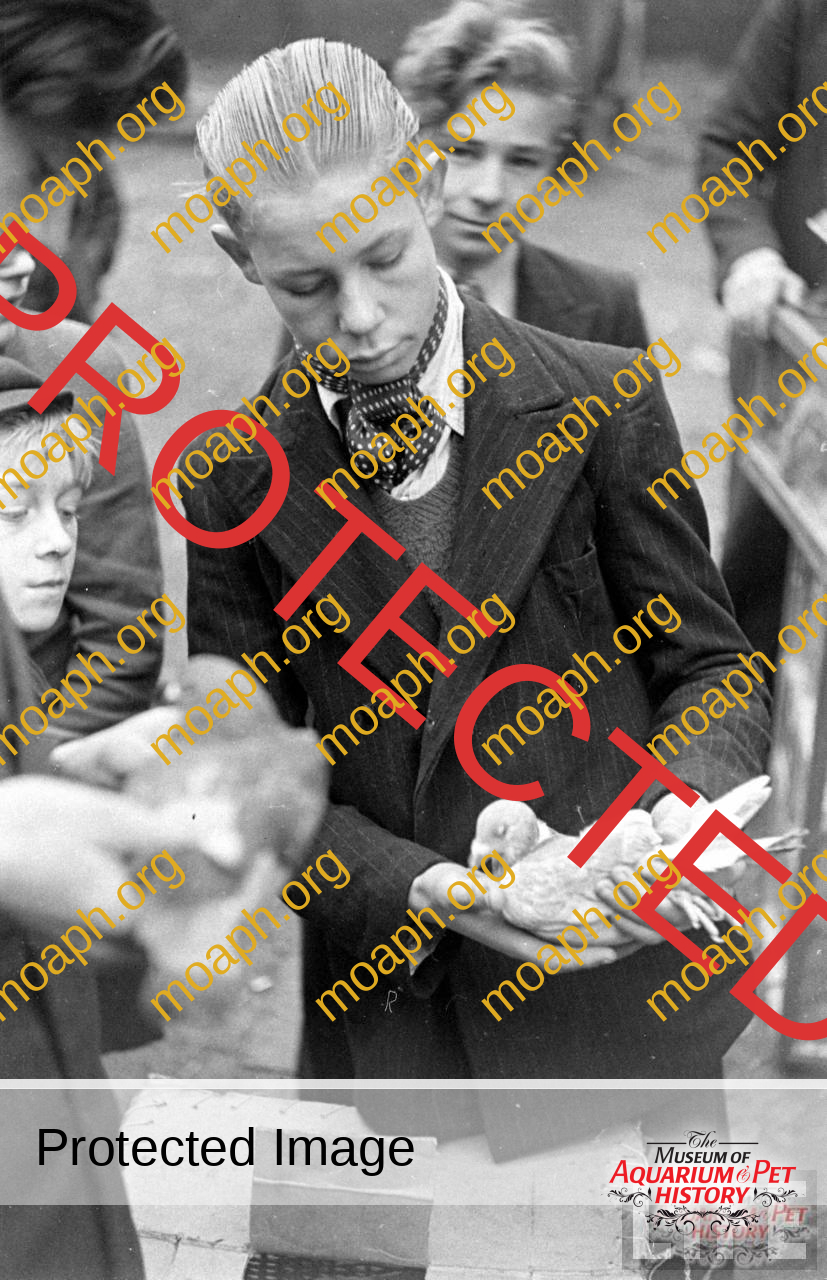
The Shoreditch Live Animal Market, 1946.
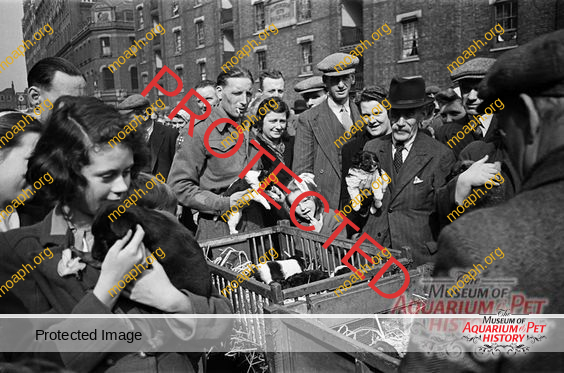
London Pet Market, 1930s era.
A net would be threaded with strong string or twine and this would be fixed to a peg at each end that was driven into the ground. A long stick with a fork in one end, would then be loosely attached to the string. The length of the stick was crucial to the effective use of the net. Another peg would be fixed into the ground and the stick placed against this. A long rope would then be attached to the twine that ran through the end of the net. The end of the net without the twine, would then be pegged to the ground. A sharp pull on the rope would see the net rise up, caught as it was on the stick and come down to trap any birds beneath it. Although, a good few birds could be caught by this means, it required a great deal more patience that the previous methods as the trapper had to wait hidden from the birds in order to spring the trap.
One other method used by my grandfather was to observe a flock of birds at twilight to see where they roosted. Often finches will roost in quite low shrubbery. Two methods could then be used to catch the birds. One required more than one person as a net was carefully draped over one side of the hedge whilst other people then beat the bushes to scare the birds into the net. One man alone could catch a few birds by taking a torch and momentarily blinding the birds, which could then literally be plucked from their roost by hand.
I recall my mother telling me how ashamed she was to be given a pair of shoes by the Church so that she could attend school, so you see, the extra income my grandfather earned by these means was essential to put food into the mouths of their five children in the coldest months of the year.