Chapter 11: Circus Business – Wilde Tiere Frei Haus (Wild Animals/Free Delivery)
Translated by Alex Haro


Starting in September 2024, the Museum of Aquarium and Pet History (MOAPH) will be releasing a chapter a month on the translated autobiography Wilde Tiere Frei Haus (Wild Animals Free Delivery) by Hermann Ruhe.
Firma Ruhe (the Ruhe Company) was the name of an animal trading company based in Alfeld, Germany from 1860 until its official closure in 1993. During this time, they were world renowned for their importation and exportation of exotic animals and birds from all across the globe, even supplying many zoos as well as circuses. Having survived both world wars, Firma Ruhe continued to dominate the world of animal trading until the mid-20th century and is a testament to true determination and leadership.
Wilde Tiere Frei Haus (Wild Animals Free Delivery) also documents the plethora of adventures, failures and successes endured by all those a part of Firma Ruhe. Through Hermann Ruhe’s great storytelling, we are able to visualize and understand the world from the perspective of animal collectors navigating through some of the most difficult situations, often not knowing whether or not they would ever return home. His recollections provide a vivid portrayal of the challenges and triumphs faced by the company, and give readers a glimpse into the world of animal trading.
In this chapter, Hermann Ruhe shares how a failed animal sale inspired an employee to start a circus!
One of my next trips took me to Dresden1 and then to Magdeburg2 to the circus construction site Blumenfeld. The Strassburger Circus Brothers were performing there. I arrived late and could only talk to Director Tendera and one of the Strassburger brothers after the evening show. Once we were somewhat familiar with each other, the two gentlemen accompanied me to the circus restaurant, which we had to pass through to reach the exit.
MOAPH1: A city located in eastern Germany
MOAPH2: A city located in eastern Germany
As I passed by, I saw Willy Hagenbeck, an outstanding animal trainer, sitting at a table, but he was talking animatedly and didn’t see me.
The next morning, I was about to leave at nine o’clock when I looked out the window and saw Willy Hagenbeck coming toward me at the train station.
“I must apologize a thousand times, Mr. Ruhe,” he said. “I didn’t see you last evening when you walked by. I only just heard of your presence. I’d very much like to talk to you at length.”
“Well, then it’s about time,” I said, “the train leaves in two minutes!”
“I know,” he said, “it’s just terribly stupid that it has to go like this. Maybe you know that I am out of work right now. I wanted to ask you if it is possible that I might work for you in Alfeld.”
I interrupted him: “Now listen—you know I can’t take you to Alfeld as an employee!”
“Why not?” he asked. “We could do it on a commission basis—or you could engage me with animals so that I can go on tour again with a new act. You don’t have to hire me permanently!”
At his last words, the train whistle blew. “I wish you good luck,” I said, and as I stood by the train, “I’ll write to you!”
There was no time to think, maybe Hagenbeck was right. “Come next week to Alfeld,” I said, “and then we’ll talk about it. See you soon!”
The train pulled out of the station, Willy Hagenbeck remained standing, and waved goodbye.
He had bad luck. Mr. Strassburger had told me that Willy Hagenbeck had recently lost his last elephant in a performance in Riga, Latvia. After his financial dispute with his brother Carl, Willy had received a few elephants as severance. However, one of them soon died, and the second followed shortly after.
So I thought about whether or not Willy Hagenbeck could start working with me. Before I left the circus construction site in Magdeburg, I wanted to perfect the business in Dresden with Circus Sarrasani, and it occurred to me that the group for which I had commissioned elephants was also intended for them. Since we did not have any elephant trainers available in Alfeld at that time, I left Dresden without finalizing the business perfectly. But what if I now carried it out with Willy Hagenbeck?
A few days later, Willy Hagenbeck came to Alfeld, and we had a detailed discussion. He suggested, both verbally and in writing, that since he was a first-class animal trainer, it could only be a gain if he could assemble and train an elephant group in Alfeld.
My visitor assured me that he could train the elephant group within a few months, and since Herr Stosch-Sarrasani had given a delivery date, he wanted it to be finished in time. Furthermore, he wanted to work on various other groups—also wild animals—that were ordered by the Russian state circus.
We came to an agreement, and Willy Hagenbeck began, without losing any more time, to carry out his work in the training halls.
He was also an excellent animal caretaker. Before he started putting together a new number, he did not need a dozen animals to choose from, as some of my other trainers did. He went by the eye of the animal and its whole species. His ease in dealing with quadrupeds3 eased the selection process. Out of a few animals, he quickly found the right ones.
MOAPH3: Animals with four feet
He was wholeheartedly devoted to the matter and assembled the trained groups so well that they could be internationally displayed. Also, the group of six elephants commissioned for Circus Sarrasani was soon ready, and the delivery of the animals to the circus, which was located in Frankfurt at the time, went smoothly. At the same time, Willy Hagenbeck was paid the agreed purchase price for the group by Director Stosch-Sarrasani.
This was the usual way of doing things. In this case, however, I found it especially important because I remembered a curious story my father told me about the circus director before World War I:
One day, my father, along with our veterinarian, Mr. Lies, was invited to Berlin by Director Stosch-Sarrasani to do business. The travel expenses for the veterinarian were to be covered by the director.
While the work in Berlin was being done, Director Stosch-Sarrasani, who was a genius in devising clever advertising tricks, entertained my father, veterinarian Lies, and a number of other gentlemen for dinner at a large Berlin hotel.
At the table, Director Stosch-Sarrasani suddenly tapped his glass and finally announced that he had a brilliant idea. The waiters stood by, and all nine men—whom the director counted—were bald, including my father.
The director suggested that each of the men should have a letter of the circus name painted on their head—and then they would walk through Berlin on foot as “walking advertisements.”
At this point, both my father and the veterinarian and several other gentlemen became very sensitive. They stood up—and left.
Thus, the story, though quite amusing, did not end here. A few days later, after his return, my father received a bill from the Berlin hotel for the entire dinner of all participants. Moreover, Director Stosch-Sarrasani refused to pay the veterinarian’s travel expenses. The business connection with my father was immediately broken off.
Admittedly, the whole matter was fundamentally irrelevant, yes, perhaps even amusing to me—but it did warn me to be somewhat cautious.
Willy Hagenbeck then left with the elephants. I wasn’t surprised when, on the following day, clearly upset, he called me.
“I’ve been waiting for three hours to see the director,” he said, “do you think he might be avoiding me?”
“Let them know,” I said, “if they haven’t received you by 1pm, you have orders to return with the elephants to Alfeld.”
It didn’t take long before Hans Stosch-Sarrasani himself called me: “I don’t understand what’s going on, Mr. Ruhe? The elephants are not standing where they should; what does this mean? Mr. Hagenbeck will only release them if he immediately receives the payment. I must say, this is…”
“Don’t get worked up,” I interrupted him. “Payment on delivery was agreed. You didn’t want the group without a trainer, and why shouldn’t you immediately have the money ready for the animals?”
Herr Stosch-Sarrasani became very agitated, but I replied calmly, “If it doesn’t work,” I said, “then Mr. Hagenbeck will return the animals to us. It’s really not that tragic; I already have another order for the Moscow State Circus for such a group. Then the animals will go to Russia”.
In short, Director Stosch-Sarrasani accepted the trained group and paid for it. Willy Hagenbeck returned with the money.
Why has it been so difficult? I think it was a little revenge for my father’s lack of humor regarding his baldness and the falling out the two had. But it really wasn’t tragic, and I hoped the same for Hans Stosch-Sarrasani. I was very satisfied with my elephant group, which turned out to be a great success for him.
One of the elephants that Willy Hagenbeck trained in Alfeld was called “Aida,” a female who was very obedient and even learned to beat a drum with her tail. I handed over ‘Aida’ to Circus Sarrasani, who had no intention of building his fortune on a single elephant, and had also assembled a magnificent tiger and an ice bear group, which we delivered punctually.
A few weeks later, my Russian customers sent me a telegram. Mr. Hinzler came with the task of ordering more animal numbers in Alfeld and, in addition, a whole ‘side show’ consisting of kangaroos, antelopes, and similar animals.
“Can I get the entire list of your order for the State Circus?” Hinzler asked me after I had already counted off my entire order.
“Of course,” I said. It was a large order, even a very large one. However, I was convinced that the order, especially the training group, could be delivered on time with Willy Hagenbeck’s help.
From Alfeld, Mr. Hinzler went to Hanover, visited the Waggonfabrik Buschbaum & Co., which had set up a division for the construction of circus wagons, and ordered several special wagons for the animals. The wagon order alone was worth 120,000 Marks4.
MOAPH4: $504,000 USD today
They were fantastic wagons: stored low, running on ball bearings, with spacious animal apartments and fold-down flaps for the antelopes. These enclosures could be assembled for the animals, and the wagons were to be delivered by mid-April, 1928.
In good time before the departure of the State Circus, everything was set up in Alfeld so that the loading and transfer to the wagons could be completed in time, and the animals could be accustomed to the cages for transport.
“Mr. Ruhe, would you be so kind as to pay Mr. Buschbaum in advance?” asked Mr. Hinzler. “We have the money here for the departure; you know, it’s the State Circus, and everything is going according to plan.”
There was nothing to argue against that.
“I have just one special request,” he continued. “Could you please advance the 120,000 Marks to Buschbaum? Then we’ll have a nice round sum to pay you.”
Since this was a solid government order and everything had gone smoothly so far, I had no reservations about also taking on the wagons from the wagon factory and paying for them in cash.
The wagons came to Alfeld. It was exactly one week before the Friday on which the departure was scheduled.
Around noon, a telegram arrived from the Moscow State Circus. Without thinking, I opened the form. But then I had to sit down. “Hinzler suddenly stops order canceled”
Rarely in my life have I experienced a moment like this. The air just got sucked out of me with shock! But that was just the first reaction. The second was: It must be handled immediately! What way out is there from this stupid situation? I thought not only about the animals but also about the paid wagons! It wouldn’t have been so tragic, because the well-trained numbers and well-conditioned animals could have been sold almost anytime. But what should I do with the already paid wagons?
I called Mr. Buschbaum in Hanover: “Have you received any news from Moscow?”
“From Moscow? No—why?”
I briefly described the unexpected situation caused by the news from Moscow.
“Don’t worry about the wagons, Mr. Ruhe,” said Buschbaum. “Do what needs to be done. We’ll take the first steps, and we’ll find a way. I can certainly sell the wagons soon.”
Now I had to tell Willy Hagenbeck about the changed situation, for he had partly trained and partly conditioned the animals and was ready to proceed with the delivery as soon as the animals were purchased.
I let him speak in the middle of the conversation as soon as I handed him the telegram. His face was a study! Then his reaction was the second surprise of the day. “Wonderful!” he beamed. “Now I don’t have to give up my animals!”
I frowned. “You know, Hagenbeck, that’s the very least of it.”
“Oh well,” he said good-naturedly, “It’s not that bad. I’ll make you a proposal: Now that you’ve invested so much anyway, how about you, well, start your own circus?”
“Well, slow down,” I said.
But Hagenbeck couldn’t be stopped: “There’s so much money involved; now an extra 100,000 Marks more or less doesn’t matter, Mr. Ruhe. If you sign on with the Tränker & Würkner company in Leipzig, I’ll definitely get a loan for a tent there. I’ll buy the wagons from you along with my beautiful animals; then you won’t lose any money. I’ll pay you exactly what the Russians would have paid you!”
Now I had to laugh. “With what, if I may ask, Mr. Hagenbeck?”
But Willy Hagenbeck waved the question away: “I haven’t got a penny, Mr. Ruhe—you know that as well as I do. But the way I could build up the circus would be a great business!”
I lit a cigar, which I had forgotten in the ashtray, and took another drag.
“Fine, Hagenbeck, let’s do it! But I won’t just leave it at that. I have no intention of handing over everything, and when you don’t pay your installments, I’m sorry, you’ve got no leverage. But I’m confident that you’ll agree with me—this must be written down, and the property remains mine until the full amount is paid. We’ll secure everything legally. You know we’ve always had trust between us. Agreed?”
Hagenbeck beamed. “I fully agree, Mr. Ruhe!”
“Good,” I said. “We have to formulate this so that your business dealings aren’t restricted. We’ll decide everything, and nothing will be claimed that isn’t yours. I’ll also pay Mr. Plawitzky in Hanover for the tent immediately, so we don’t sit in the dry. If you don’t meet the payment deadlines, you have to return the tent—if only as a last resort. We’ll discuss everything in a fair way.”
Hagenbeck smiled. “I fully agree, Mr. Ruhe!”
“Good,” I said, shaking his hand, “agreed!”
And with that, Hagenbeck had not only a tent factory at his disposal for his business but also my trust. We’d worked together well in the past, and this was to our mutual benefit.
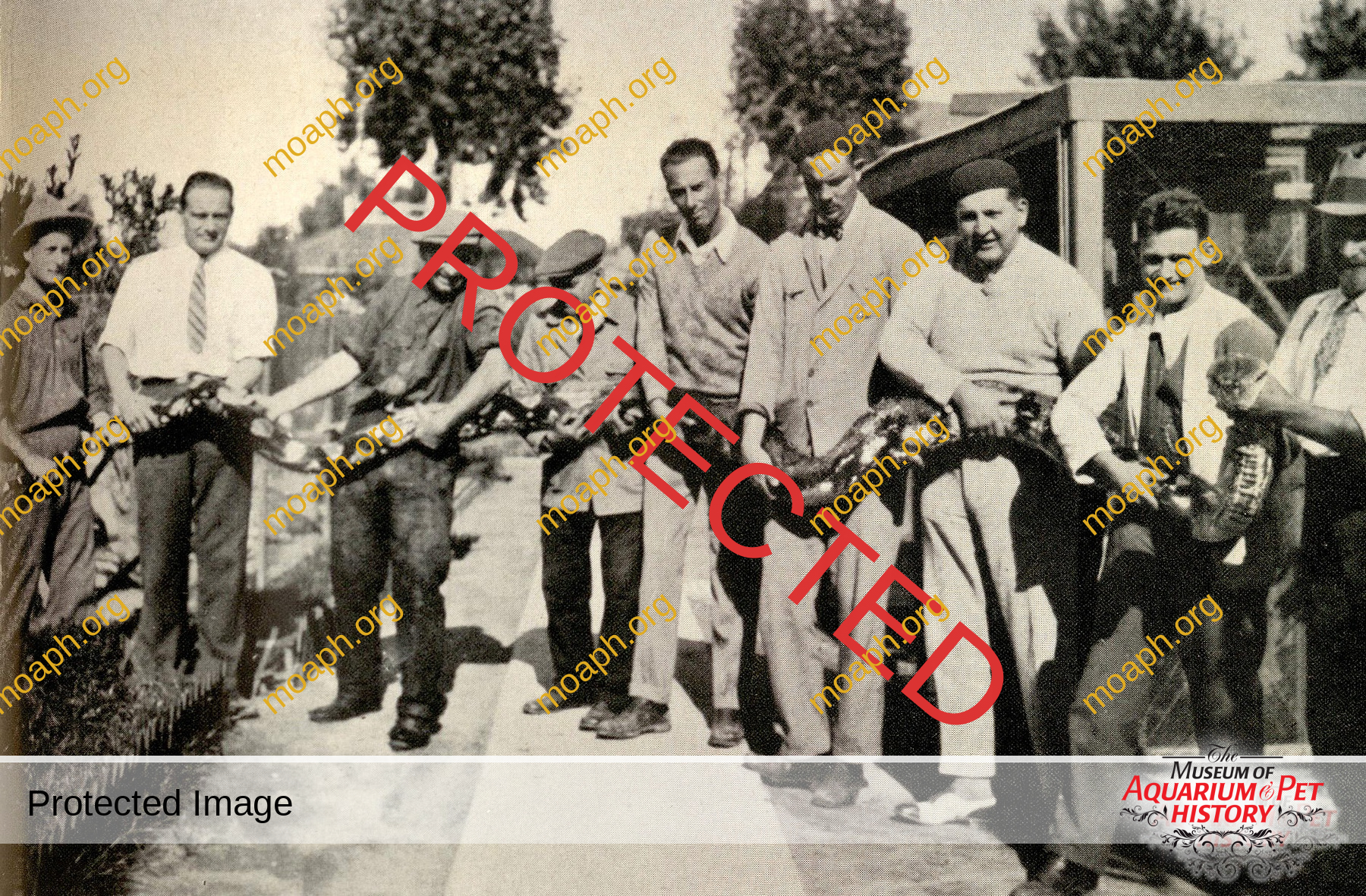
A roughly 6-meter-long Indian reticulated python has arrived in Cros de Cagnes. Its head is held by Karl Kreth, followed by Fritz Tegtmeyer, Hermann Ruhe, Carl Eiffert, George Basilewsky, Fritz Risch, an animal keeper, zoo secretary Guggisberg, and finally the traveler Steininger.
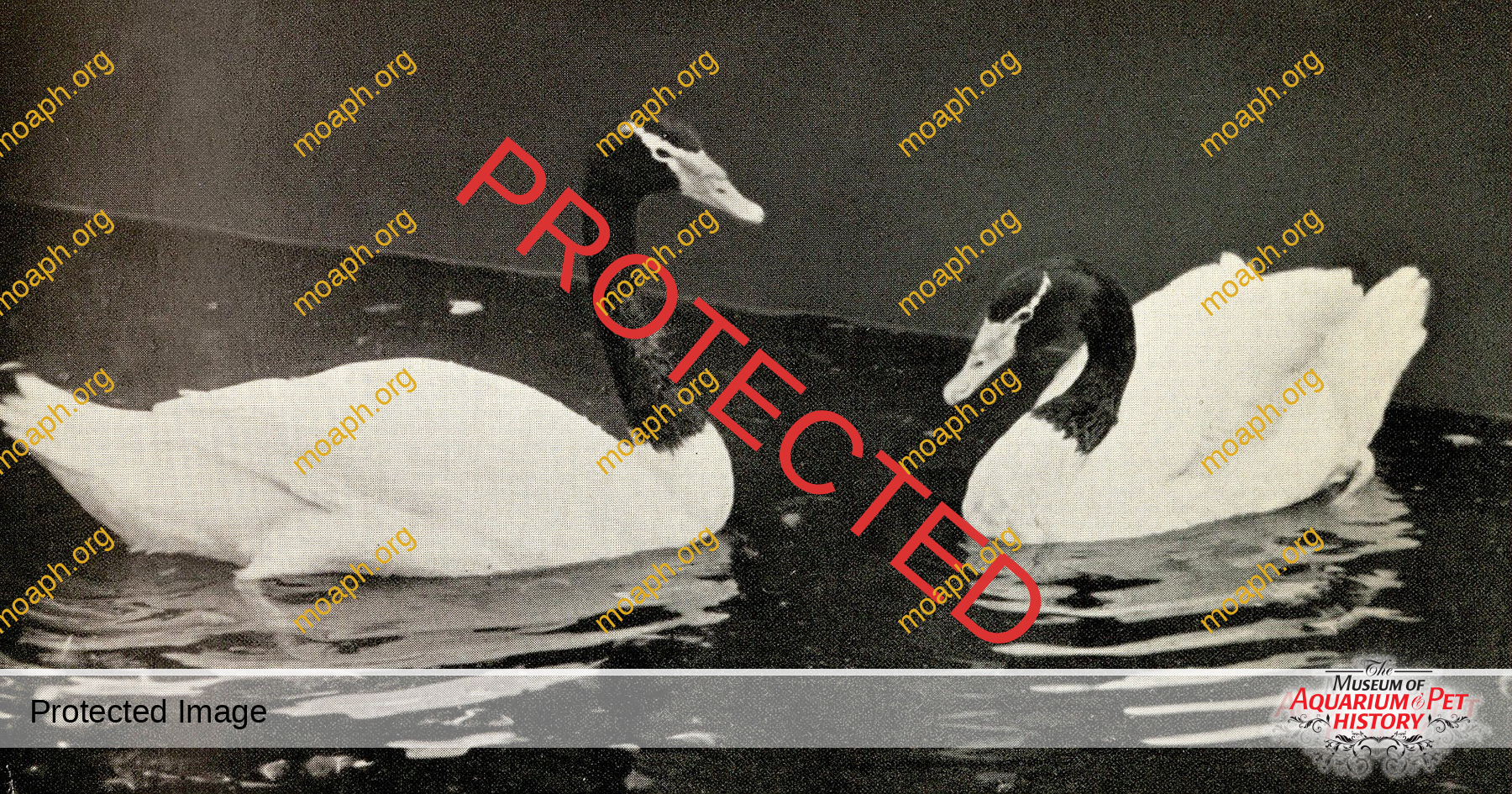
Two black-necked swans from Madame Rothschild, who acquired a similar pair for the park of her villa, called them ‘headless birds’ when she discovered them at dusk.
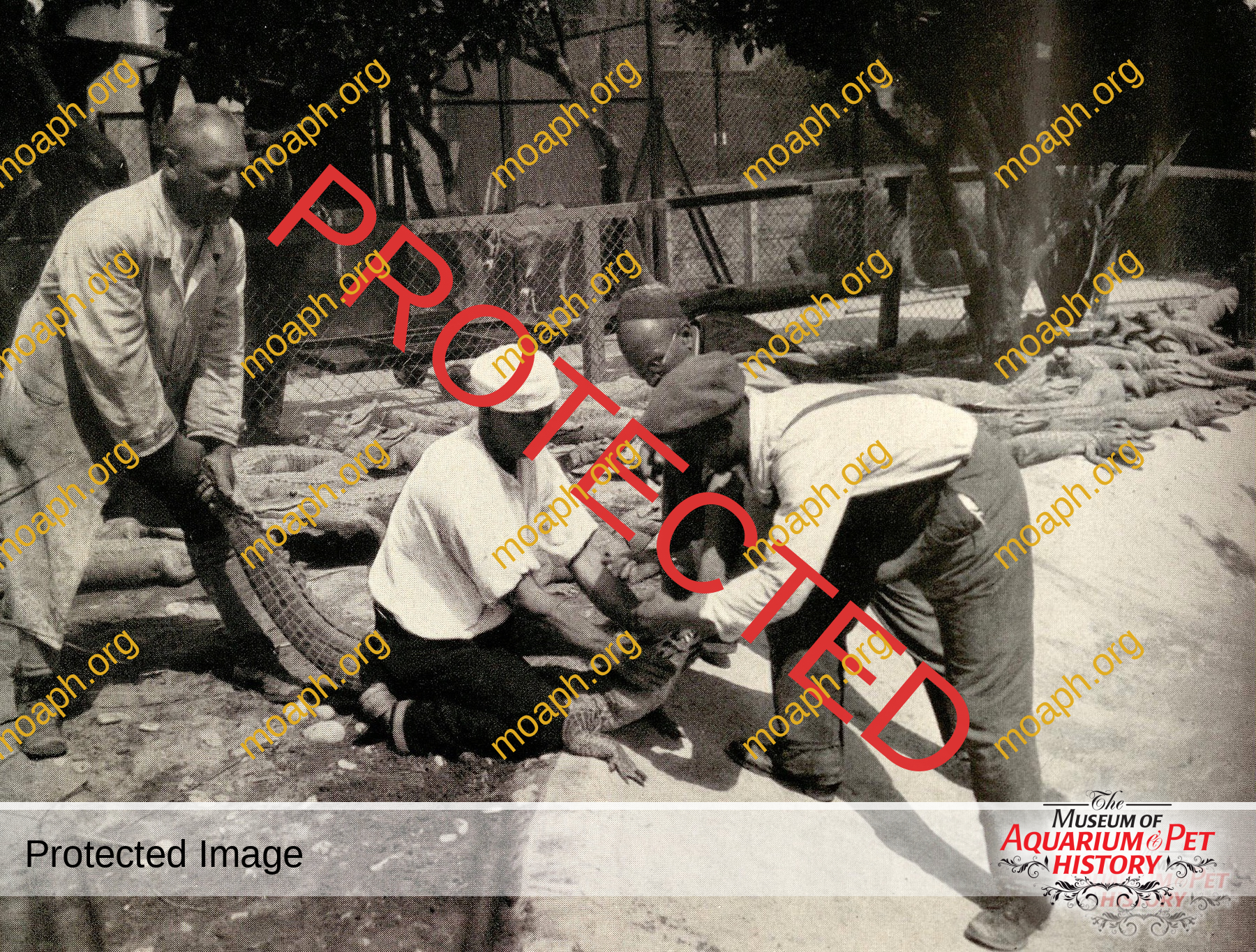
The ‘Show of 1000 Alligators’ spends the winter in Cros de Cagnes in an enclosure with a heated water pool. Walter Hennecke (left), the emigrated Russian Abacheff (with the dark cap), and keeper Knackstedt (right) have developed a special method for dealing with the biting and tail-whipping beasts.
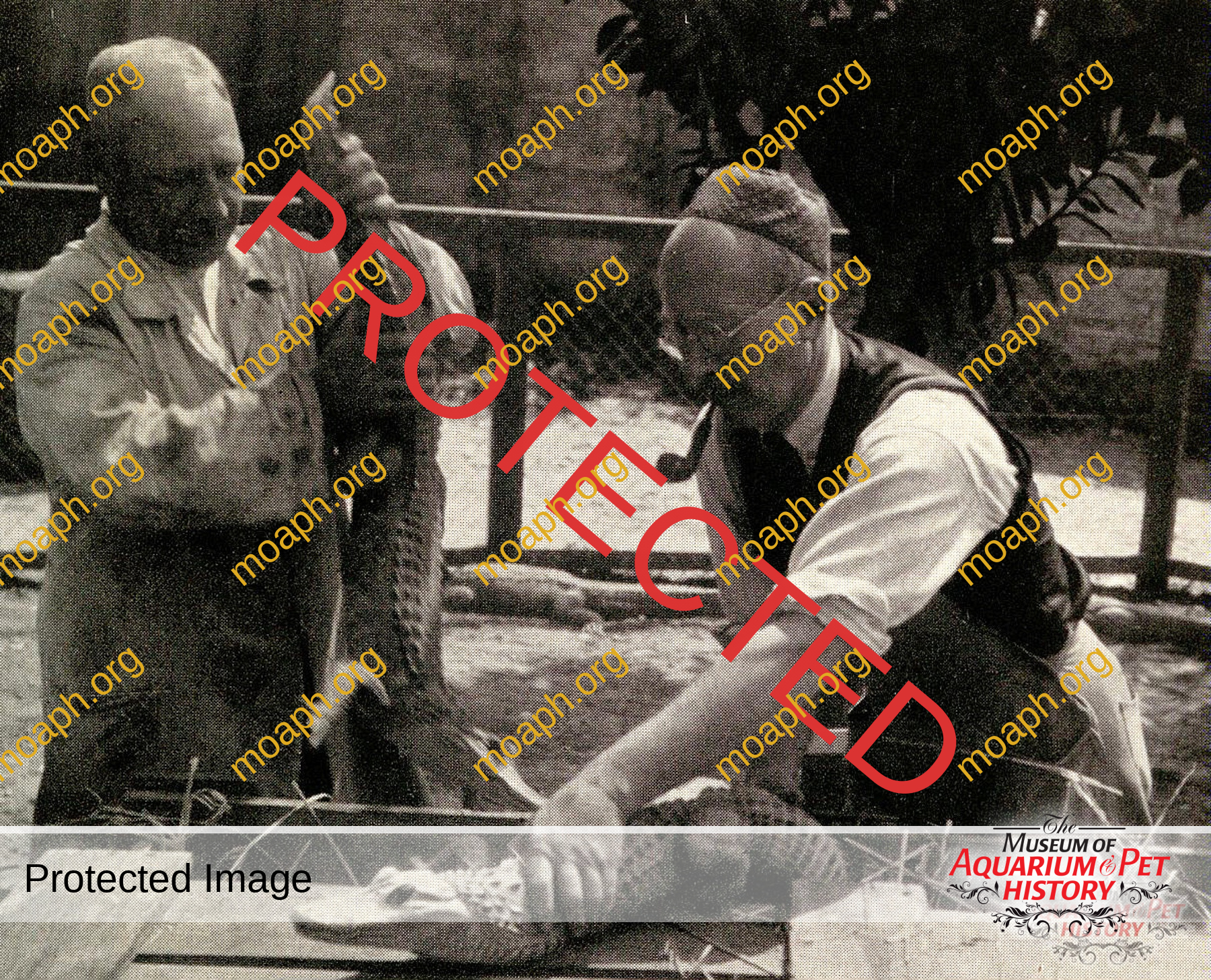
Animal keeper Hennecke as well as Mr. Abacheff knew exactly how to properly handle the reptiles of the show, shown here are two Mississippi alligators being packed into crates.
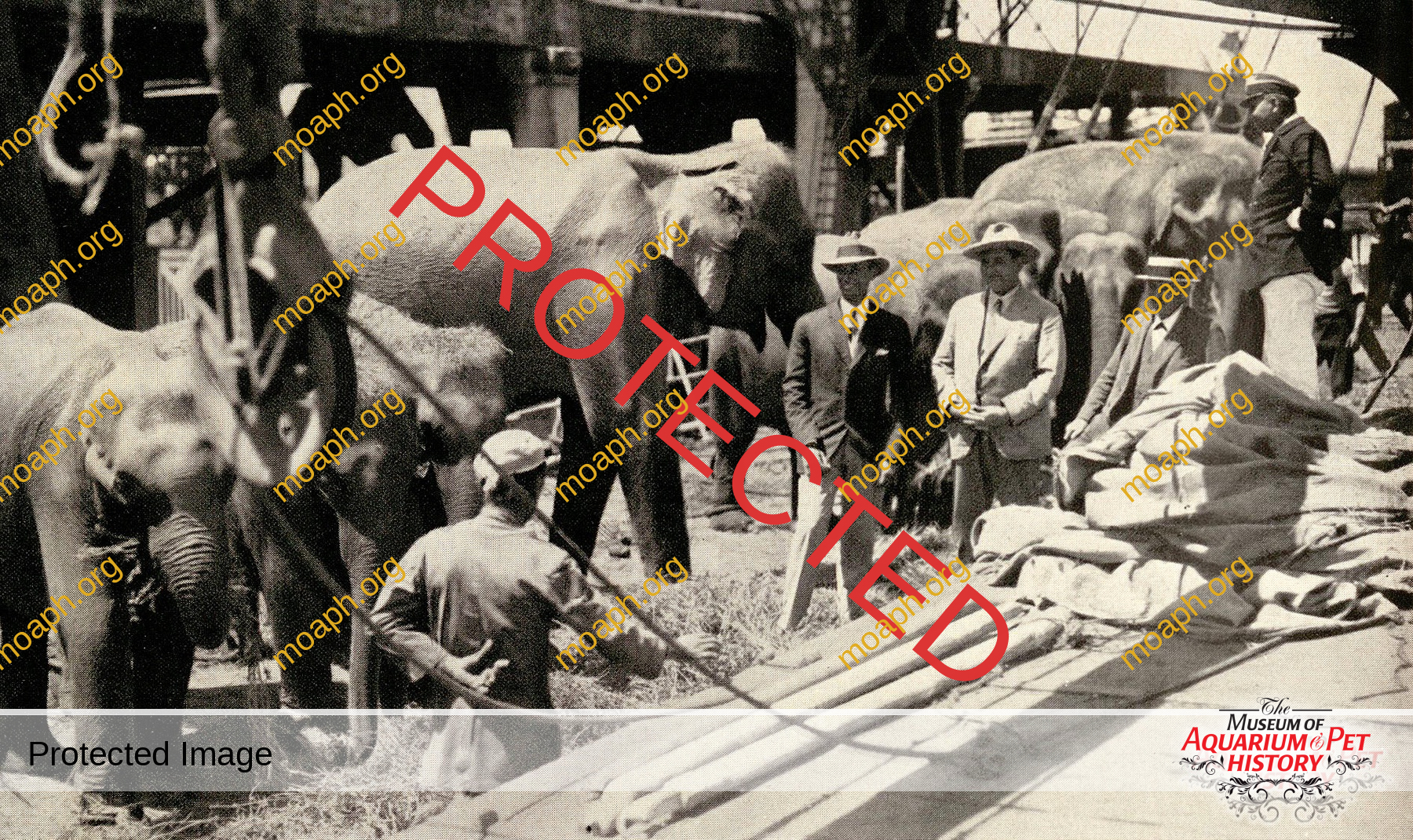
A shipment of Indian elephants has arrived in Marseille. George Basilewsky, Hermann Ruhe (center), and Director Wendnagel from the Basel Zoo (on the right with a straw hat) were already inspecting the animals at the port.
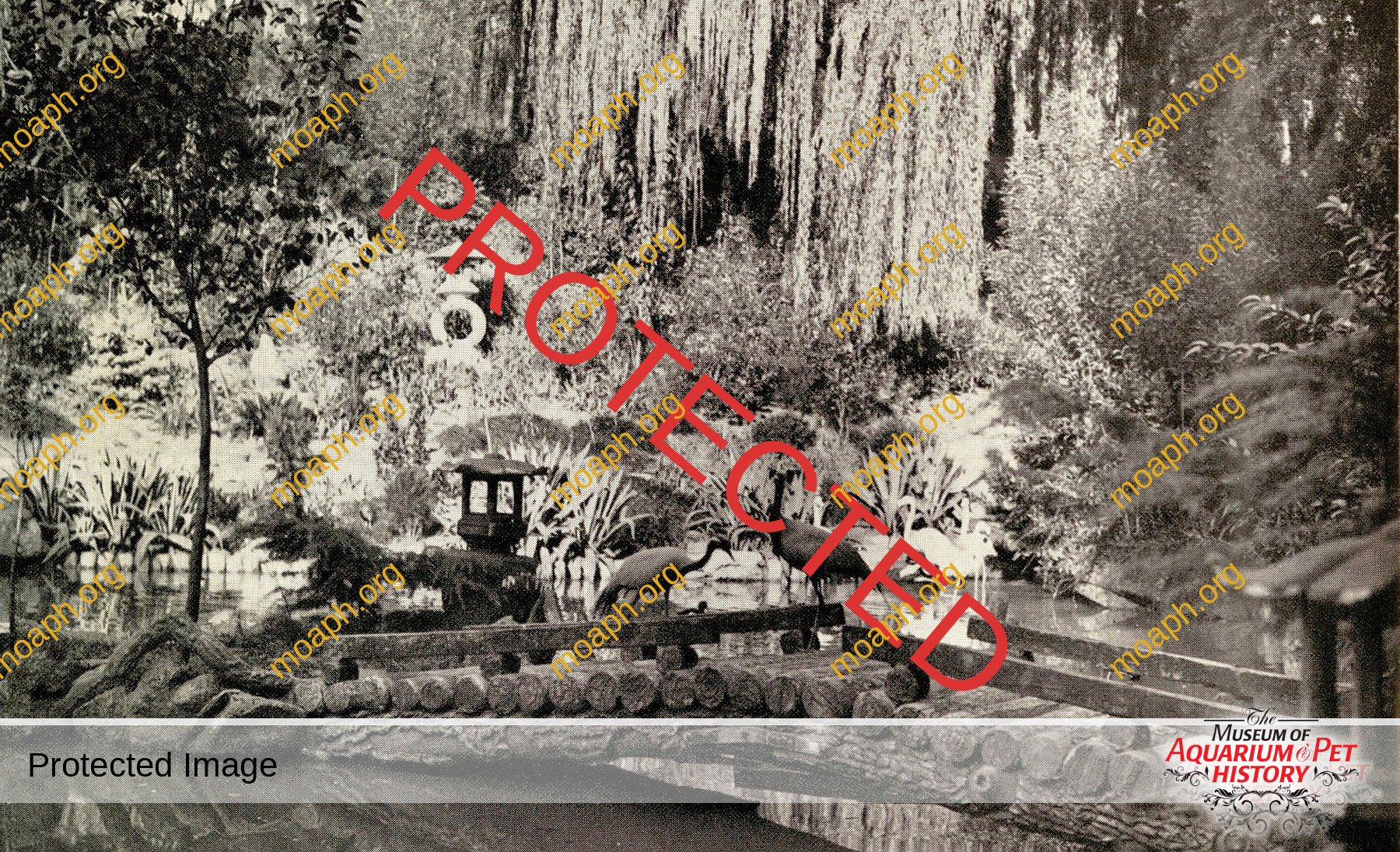
Along the Côte d’Azur, there are beautiful private estates whose parks are enlivened by ornamental and aquatic birds. The ‘Jardin Zoologique de la Riviera’ in Cros de Cagnes purchased some, such as these demoiselle cranes, who could hardly wish for a more beautiful new home.
A circus led by Willy Hagenbeck, with the acts he had trained in Alfeld before my eyes and with my animals, was bound to be a success. After my years of working with circuses, I could afford to make this judgment.
Only one thing puzzled me: Willy Hagenbeck was apparently not superstitious, as our discussion indeed took place on a Friday. The superstition prevalent among circus people sometimes took forms that were hardly comprehensible to a layman. For example, some circus directors would rather forgo a large daily income than hold an opening performance on a Friday. Similarly, there were experienced performers who never debuted on a Friday. Once the circus was set up, great care was usually taken that no broom was carried across the ring before the premiere. It was said that this would bring bad luck. This also explained why the sawdust-filled ring was not swept but raked. It was said that sweeping with a broom would sweep the luck out of the circus. Furthermore, one was not allowed to open an umbrella in the circus; that, too, was believed to bring bad luck.
A particularly curious belief was that money dropped on the ground should never be picked up until one had stepped on it with the right foot. But that was not all. If a funeral procession came near where the circus was set up, or even passed its entrance, the cashier immediately closed his window and shook his cash box.
Finally, it was customary to spit three times into the ring before the first performance…
And so, I also thought: Well then, good luck!
Mr. Hagenbeck took on the task with such energy that I could only marvel. Within a few weeks, the first performances began.
And we were right! Hagenbeck’s shows were so sold out that not even a mouse could squeeze into the tent. Entire crowds had to be sent home without tickets—no matter where he went. Within three months, I had already recovered most of my money.
The new circus toured around. The business flourished as well as it could. Soon, Willy Hagenbeck had not only fulfilled his obligations to me but also to the tent factory.
At Buschbaum in Hanover, he ordered new wagons, and then he came back to Alfeld: “Mr. Ruhe, I would like some orangutans; can you procure some?” A few weeks later: “Mr. Ruhe, a number of tigers, please…”
And I granted him another large credit—
Unfortunately, luck did not remain as faithful to him as it had seemed at first. He got into quite a difficult economic situation and, especially during a guest performance in Italy, was downright plagued by bad luck. To top it off, a tiger from his magnificent predator group escaped and had to be shot because it was impossible to capture it. I got a number of animals back from him, and so I managed to avoid a loss…