Chapter 13: Express Goods – A Tiger – Wilde Tiere Frei Haus (Wild Animals/Free Delivery)
Translated by Alex Haro
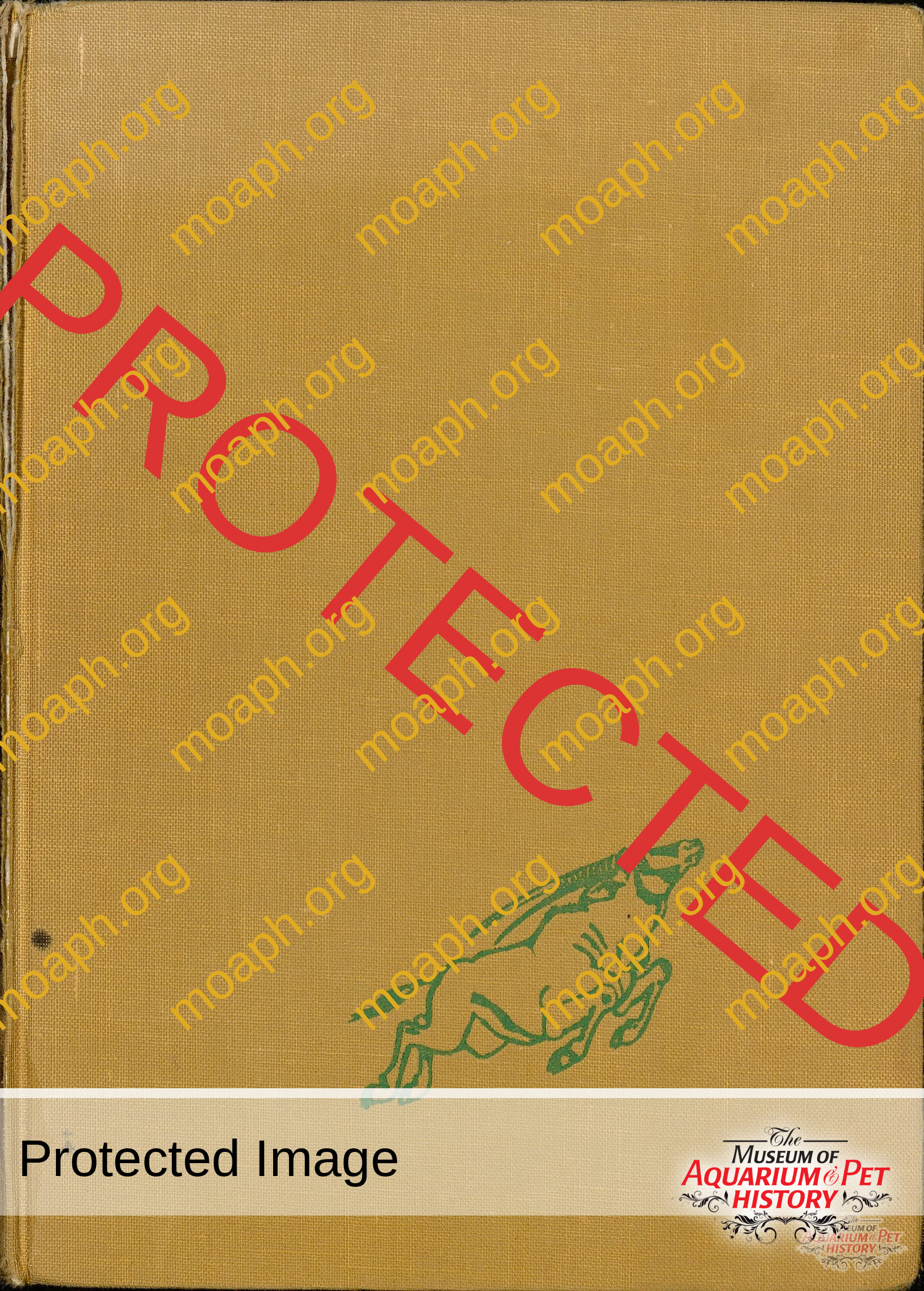
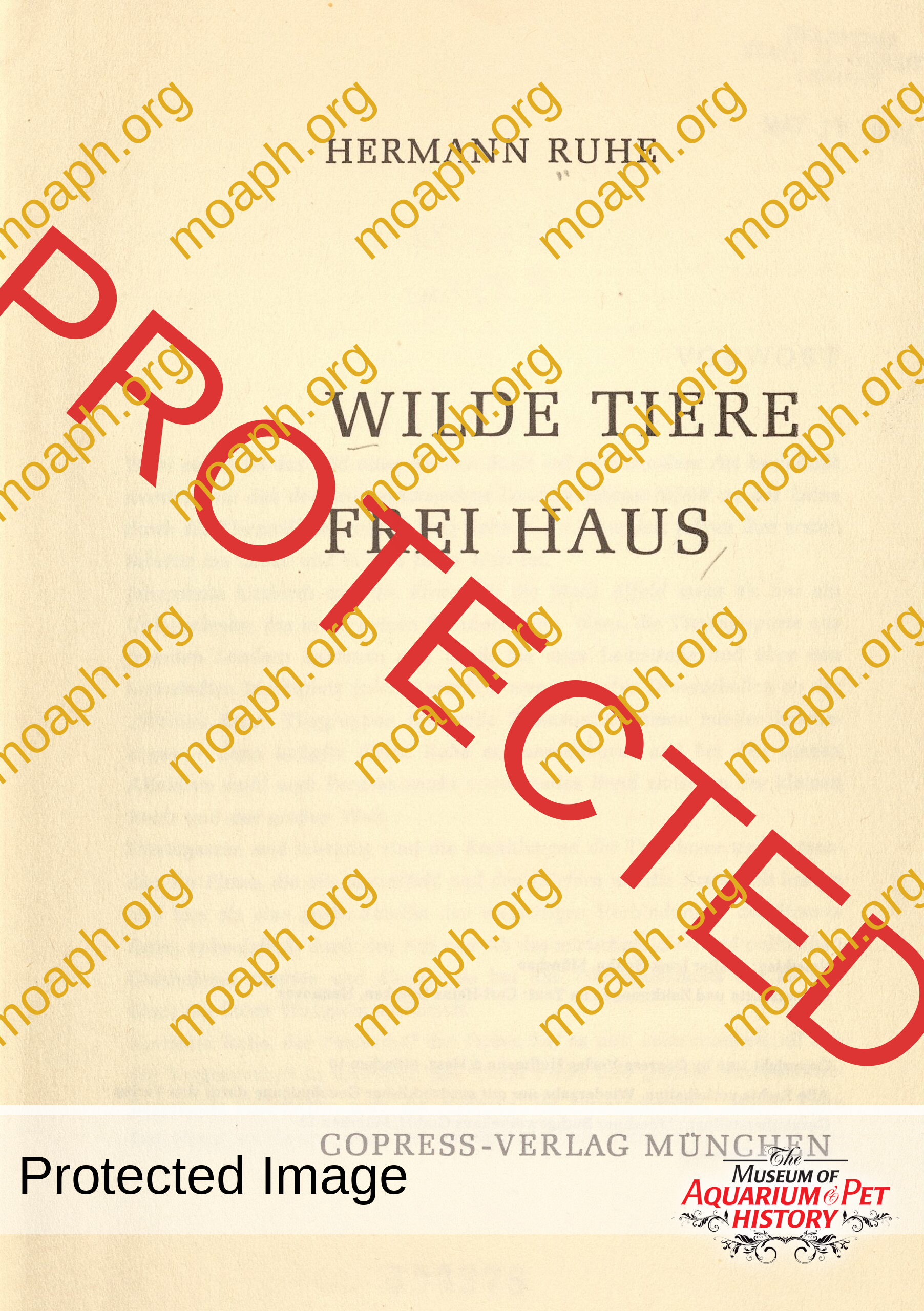
Starting in September 2024, the Museum of Aquarium and Pet History (MOAPH) will be releasing a chapter a month on the translated autobiography Wilde Tiere Frei Haus (Wild Animals Free Delivery) by Hermann Ruhe.
Firma Ruhe (the Ruhe Company) was the name of an animal trading company based in Alfeld, Germany from 1860 until its official closure in 1993. During this time, they were world renowned for their importation and exportation of exotic animals and birds from all across the globe, even supplying many zoos as well as circuses. Having survived both world wars, Firma Ruhe continued to dominate the world of animal trading until the mid-20th century and is a testament to true determination and leadership.
Wilde Tiere Frei Haus (Wild Animals Free Delivery) also documents the plethora of adventures, failures and successes endured by all those a part of Firma Ruhe. Through Hermann Ruhe’s great storytelling, we are able to visualize and understand the world from the perspective of animal collectors navigating through some of the most difficult situations, often not knowing whether or not they would ever return home. His recollections provide a vivid portrayal of the challenges and triumphs faced by the company, and give readers a glimpse into the world of animal trading.
Alfred Glenewinkel, who had been overseeing our West African collection in Dakar for some time, came with a transport to Alfeld. During the same week, I was visited by Professor Holmberg from the University of Buenos Aires, who was also the director of the Zoos in the Argentine capital. Holmberg was half-Argentinian; his father was from Vienna. Professor Antonius, the director of the Schönbrunn Zoo, had recommended to his colleague Holmberg from Buenos Aires to make a detour to Alfeld and take a look at my animals. He had bought several antelopes, including blue wildebeest, as well as a number of ‘Bennett’s wallabies’ that he wanted shipped to the Buenos Aires zoo.
The following afternoon, I pulled my animal collector Glenewinkel aside. “Tell me,” I asked, “would you be interested in handling the transport for Professor Holmberg to Buenos Aires? It would be something different for you.”
“What a question, Mr. Ruhe,” said Glenewinkel, who, in his open-minded manner, was always interested in everything. “Of course, I’m interested.”
Despite my initial reservations, I found that Glenewinkel could hardly be any more useful. Therefore, I also gave him a significantly more extensive task: to oversee the delivery of the transport to the Buenos Aires Zoo and to visit a few South American zoos thereafter. Glenewinkel did so promptly and thoroughly. First, he shipped the animals by boat on a journey of about thirty days to Argentina. Then, he traveled to the zoos of Cordoba, La Plata, Montevideo, and Rio de Janeiro. Everywhere he was warmly welcomed as a representative of my well-known firm.
It turned out to be extremely beneficial that Glenewinkel made these visits, as it greatly tightened the contact with the zoos in South America, and subsequently, I was able to establish very good business relations. These weren’t merely about sending animals, as I also had Glenewinkel deliver them personally to the Jardin Zoo in Montevideo, Uruguay, where he was warmly received. The director, Señor Juan Scasso, had two prominent German collaborators: Max Branner and Josef Wald. The latter showed Glenewinkel the great pride of the zoo, a pair of Grevy’s zebras, which had been bred from stock that dated back to my father’s time and had been delivered from our New York branch to Montevideo. A Uruguayan, Capatas Basilio Siri, the practitioner of the zoo in Montevideo, particularly befriended Alfred Glenewinkel. Eventually, he even went with him to St. Catharina for a seal hunt in the Gulf.
Over this period, Glenewinkel made several trips to South America. The transports he brought back to me were so varied that I sometimes marveled at them. They included dwarf antelopes, giant armadillos, spectacled bears, capybaras, agoutis, maned wolves, tapirs, anteaters, honey possums, flower pickers, hummingbirds, flamingos, condors, Brazilian guans, dwarf and giant parrots, black and bald jaguars, silvery lion tamarins, giant otters, coatis, raccoons, yacare caimans, giant snakes, and even the infamous stink animals such as skunks, were not missing.
A transport from South America to Alfeld contained over a hundred boxes of animals, birds, and reptiles! Unfortunately, Mr. Glenewinkel then had to leave my company to spend several years as an inspector at the Genf Zoo.
“Small birds to very large!” said Mr. Plawitzky, smiling as he presented me with the compilation of animals I had sold in the first six years since inheriting the now 70 year old business. It was the summer of 1930. I believe it is a proud feeling for any businessman to see on a sheet of paper before him the revenues his firm had made over a few years, especially when the total sum, as here for the years 1924 to 1929, forms a significant mark in the ledger!
“Forty percent of the sales are thanks to canaries,” said Mr. Plawitzky. “If they said I was crazy—it would no longer be an insult to me, but rather an understatement!”
My gaze passed over the sales figures for the animals. What an immense amount of human labor, effort and joy, concerns, and hopes were hidden behind the matter-of-fact and detached words:
‘They were sold.’
- 5 Rhinoceroses
- 118 Elephants
- 14 Hippopotamuses
- 115 Lions
- 93 Tigers
- 127 Leopards
- 28 Black Panthers
- 14 Jaguars
- 36 Pumas
- 23 Leopards
- 142 Polar bears
- 191 Brown bears
- 174 other Bears
- 79 Hyenas
- 150 Sealions
- 100 Dromedaries
- 127 Camels
- 166 Llamas and Guanacos
- 31 Giraffes
- 371 Antelopes
- 50 Buffaloes
- 3 Bison
- 39 Zebus
- 203 Deer
- 54 Reindeer
- 30 Tapirs
- 163 Zebras
- 144 Kangaroos
- 49 Chimpanzees
- 112 Orangutans
- 5 Gorillas
and many other animals as well as exotic birds.
These animals had allowed me to greatly expand my business to include exhibition shows. How my father would be surprised to see how far the company had grown.
In Paris, I showcased my ‘Exhibition of 1000 Alligators.’ We maintained an interesting bird exhibition in large aviaries throughout the year. My later inspector, Mr. Tegtmeier, was stationed in Paris for years to handle all the commercial tasks and to settle accounts with Director Hertel.
Before I set off this time for my scheduled trip to New York to review business with Heinz, I had a little talk with my eldest, Hermann, in Alfeld:
“Listen here, my friend—when I’m not around, you are not to go anywhere near the property. Understood?”
“Yes, Papa,” replied the little rascal. “But man, that’s a shame…”
“Understood…?” I said, raising my voice.
“Yes, Papa,” came the sheepish response.
Hermann, six years old, sometimes really worried me. Like a flash, he would climb over some wall or dash so quickly around a corner that you often wouldn’t notice him until some animal became noticeably restless. The boy showed a little too much entrepreneurial spirit for his age, and I gave strict orders that under no circumstances was he to be allowed on the property with the animals, especially since he sometimes brought friends along. If something happened, there would be hell to pay.
“Bye, Papa!” echoed behind me as I got into the car that would take me to Hamburg to board the ship. For my family, it was hardly any different from me taking a trip to New York than it was to to Hannover.
On the steamer I was on, was the famous caricaturist and draftsman Paul Simmel and his wife. Before we even met face-to-face, he was already informed that a shipment from Ruhe-Alfeld was on board. He sought out the captain and asked if he could view the animals to sketch a few studies. The captain naturally had nothing against it. I knew nothing of Simmel’s presence on board, but he had already scouted out the Hapag steamer to look for the animals on the right side. Heinrich Knoke from Alfeld, a reliable and stout transporter, accompanied the shipment as the escort.
As the transport overseer, the Alfelder Alfred Knoke was a simple man from the countryside. As Conscientious and reliable as he was, he had already been annoyed by an order from the captain: he was not allowed to lock the animal enclosure!
When I went down, I discovered a few passengers wandering between our cages and transport crates. I became worried that something could happen: either to the passengers—or to the animals.
In short—I didn’t like the situation! “When you go to eat, Knoke,” I said, “lock it up. I’ll discuss it with the captain. This won’t do. I don’t like the fact that anyone can just come down here. First, there’s the rhinoceros, then the monkeys, and someone could easily slip them something inappropriate, and besides that, all the canaries… So, close it all up!”
Knoke locked it up, and not just while we ate, but also whenever he himself was with the animals.
When Captain Paul Simmel and his wife personally came to see the animals, they consequently found a locked door. He knocked: “Hey, open up!”
“Why should I open up?” Knoke asked gruffly.
“Well, I’m the captain here!”
“I don’t care whether you’re the captain or not,” came the calm and stubborn response from behind the door.
“I am the captain of this ship—keep that in mind! Open up immediately!”
“And I am the captain of the birds…” came the relaxed reply.
The captain laughed so hard that he couldn’t be angry. Without getting anywhere, he left again with Mr. and Mrs. Simmel.
At lunch, the captain said to me: “You’ve got a fine fellow, that old man down there, Mr. Ruhe!”
Paul Simmel came only once to see my animals. Knoke was instructed to let him in from now on. But suddenly, the artist disappeared and remained out of sight.
It wasn’t until the Statue of Liberty appeared in New York that I saw him again.
“So, where were you, Mr. Simmel?” I asked. “What’s going on? Such a wonderful crossing, and you were nowhere to be seen!
“Oh, Mr. Ruhe, Paul suffered so much,” replied Mrs. Simmel on his behalf. Paul Simmel had become terribly seasick.
From then on, Knoke was only ever called ‘the Captain of the Birds’ by me and the Alfeld animal caretakers.
After my return from America, I had to dismiss my old chauffeur. Now, I was racking my brain over where I could quickly find another one.
The saving idea came when my best friend, our family doctor Dr. Schinkel, appeared at the villa to treat one of my children’s upset stomachs. As I walked across the street, I saw a taxi from Wiegand’s car rental service, which often provided transportation for Dr. Schinkel.
At the wheel was August Rasche, whom I had known since my childhood. As a boy, he had helped with the construction of various wild animal cages at the Weiße Erde (White Earth).
Rasche would be well-suited for the now vacant position. I called his boss and asked Mr. Wiegand to allow me to have August Rasche as my driver, which he finally did, considering the fact that I was a good customer of his company.
Rasche, who is still with me today—after 30 years—soon started his work.
He was not only to drive my personal car but also take over truck deliveries, which were becoming more and more common, as they greatly simplified the shorter transports: At the Weiße Erde (White Earth), the goods were loaded, and at the recipient’s, so to speak, unloaded directly at their doorstep. This spared the animals, as the double loading required for railway transport was eliminated.
Rasche, a ‘Jack of all trades,’ quickly found his way into the work and enthusiastically involved himself wherever something was happening. I remember one day the train station from Hannover called. There had been utter confusion at the Hannover freight station. The inspector, who was on the phone, already revealed through his tone that he was quite agitated.
“Please,” he said, “may we send a wagon to Alfeld?”
“A tiger, having broken out, is rampaging. The zoo referred us to you because they said you have the experts there and that you should also have capture cages.”
“That’s correct,” I said, as I happened to be on the phone myself. “Send the wagon over. When will it arrive?”
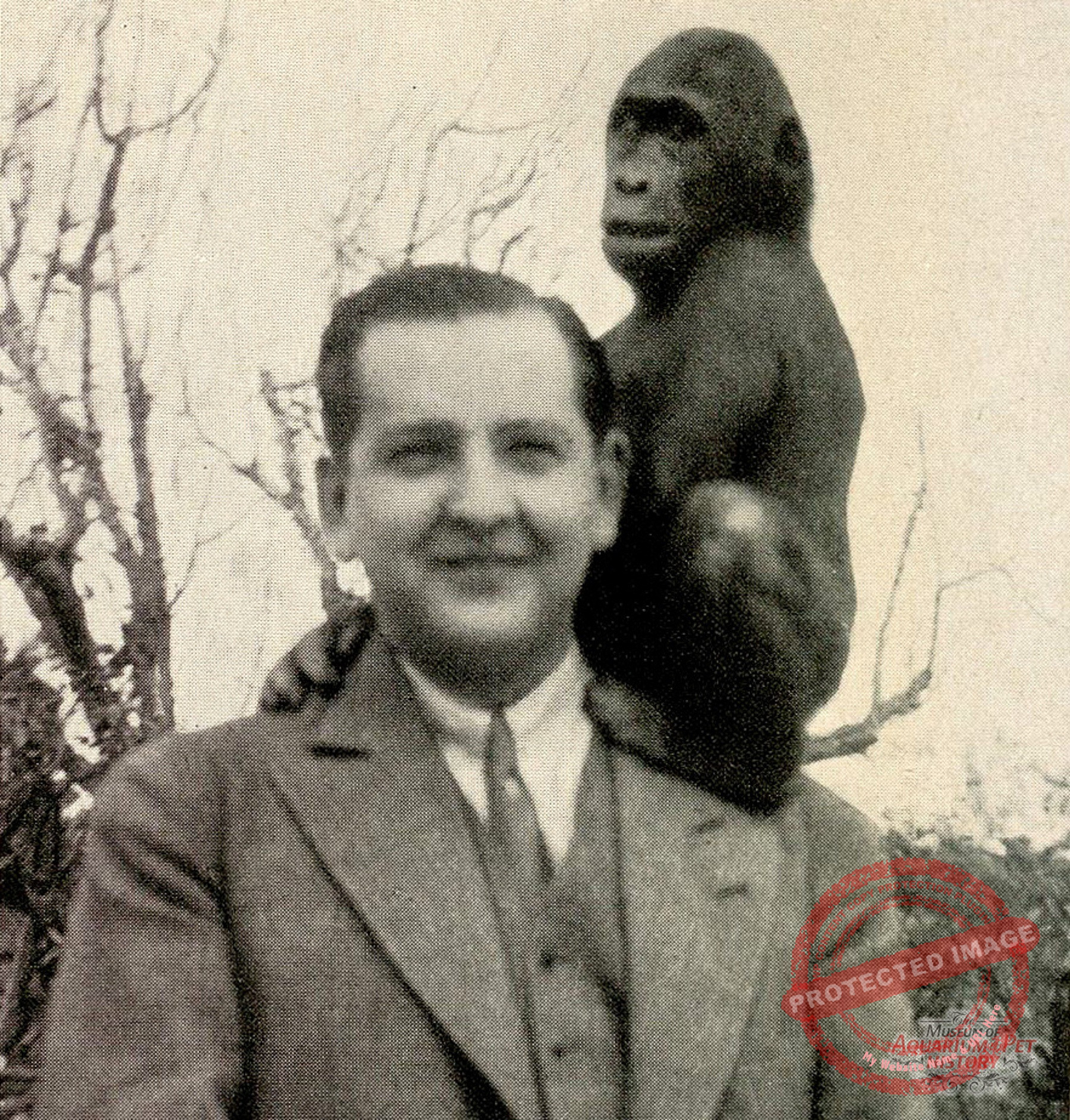
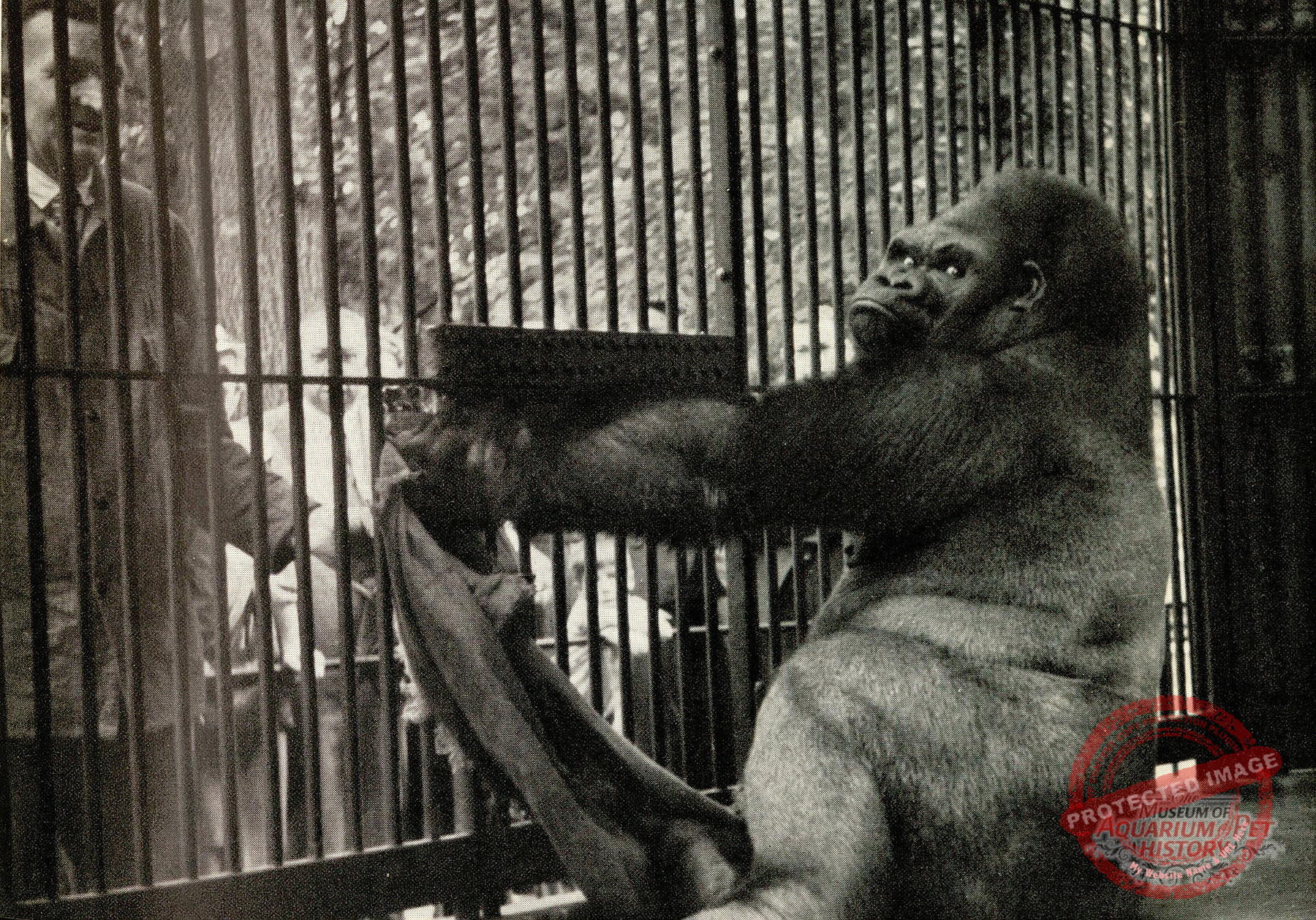
The same Bobby, now enormous and weighing over five hundred pounds, in the Berlin Zoo, with his caretaker Liebtreu, to whom he passes a blanket through the bars for a game of tug-of-war—distracted by the photographer.
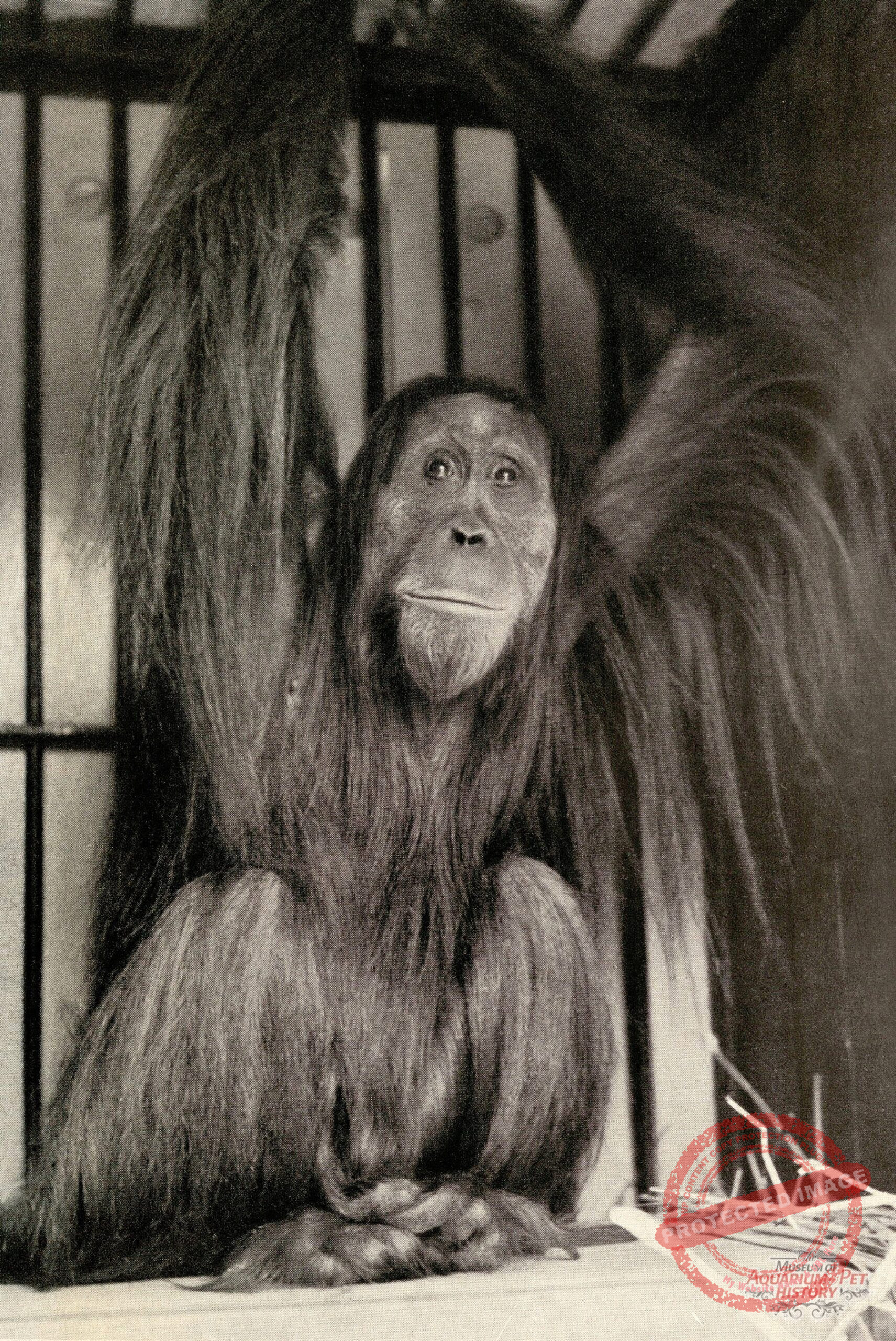
Looking at this female orangutan, one understands why Paul Kipper said, upon the arrival of an entire shipment of orangutans in Alfeld: “The animals look at you.”
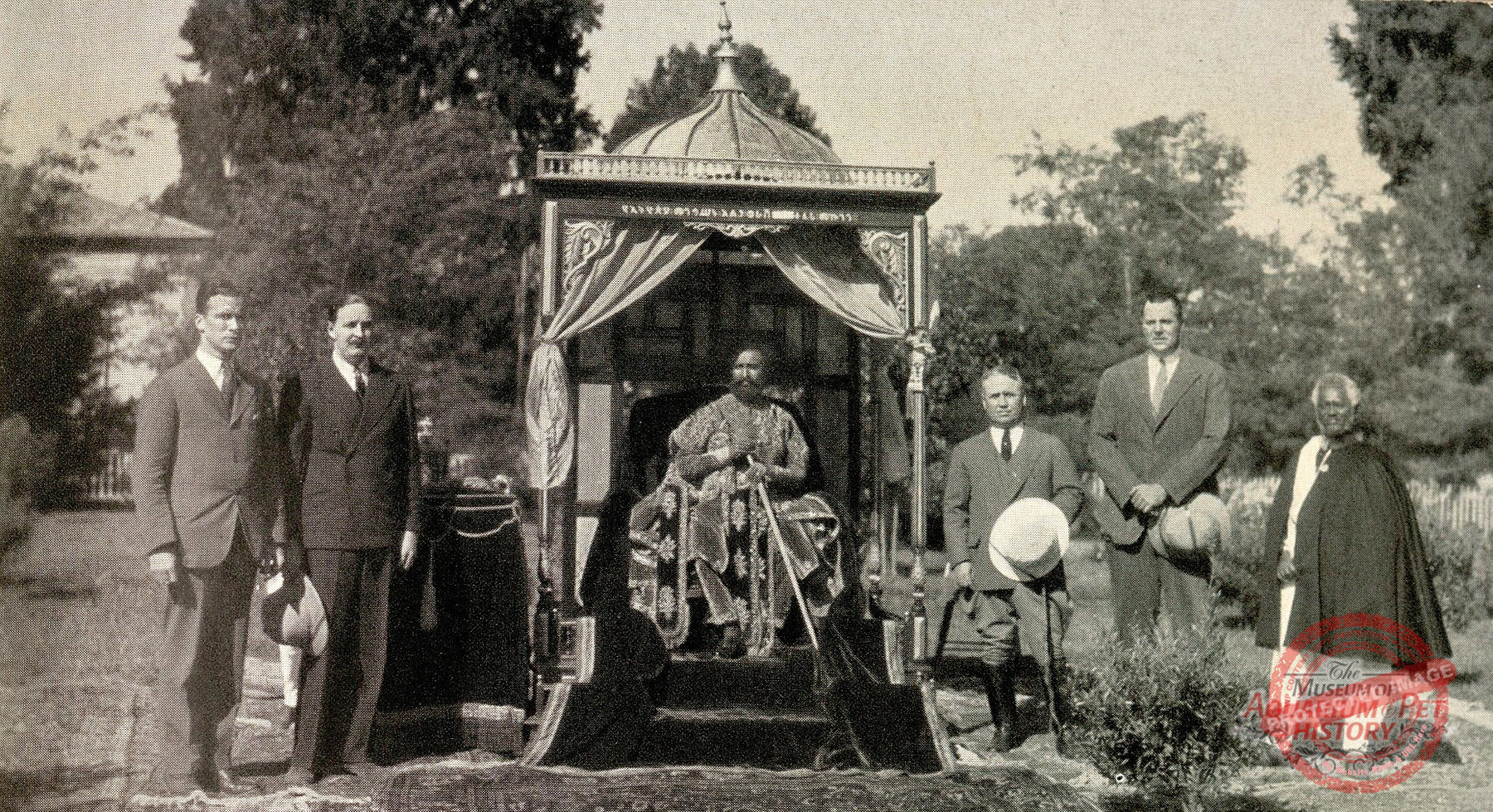
Emperor Haile Selassie of Abyssinia during an audience in the garden of the Gibi, the imperial palace in Addis Ababa.
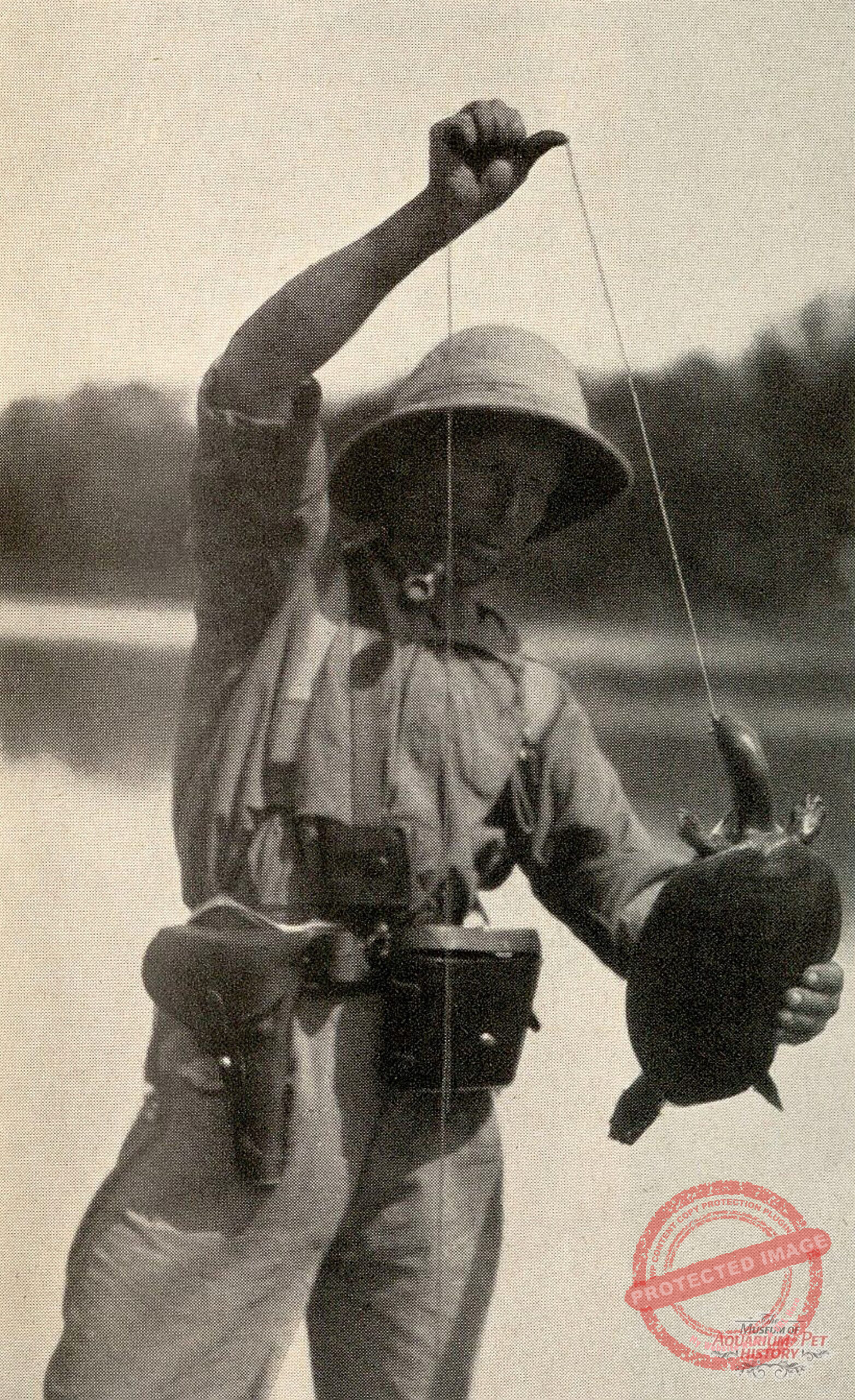
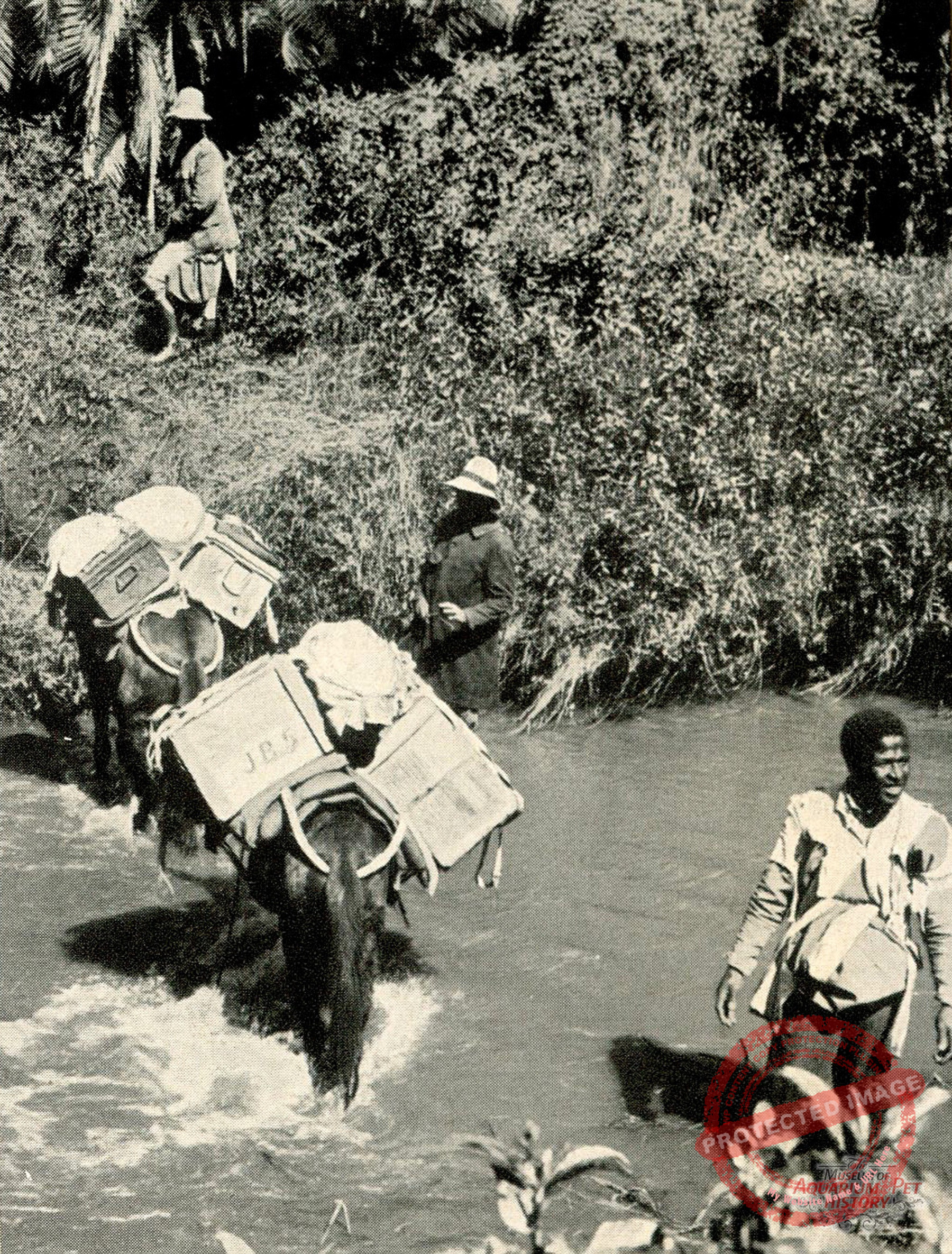
An expedition member caught an ‘African three-claw,’ an Abyssinian softshell turtle (bottom left). Members of an expedition from the Ruhe company during their crossing of the Kaffa jungle in Abyssinia.
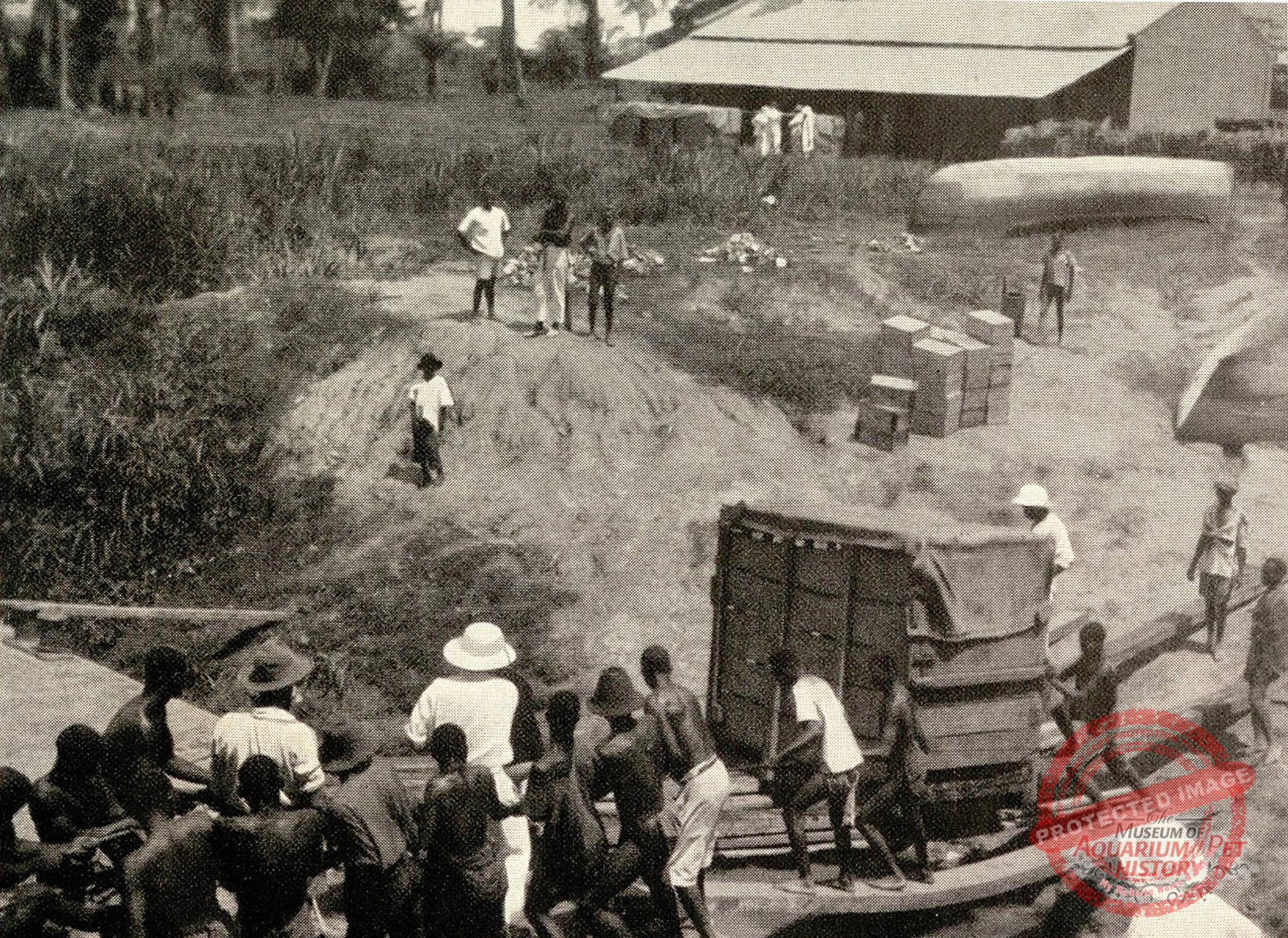
The return journey begins, and the animal crates are loaded onto the river steamer in Bangui. A crane is a luxury—here, only human muscle power can help.
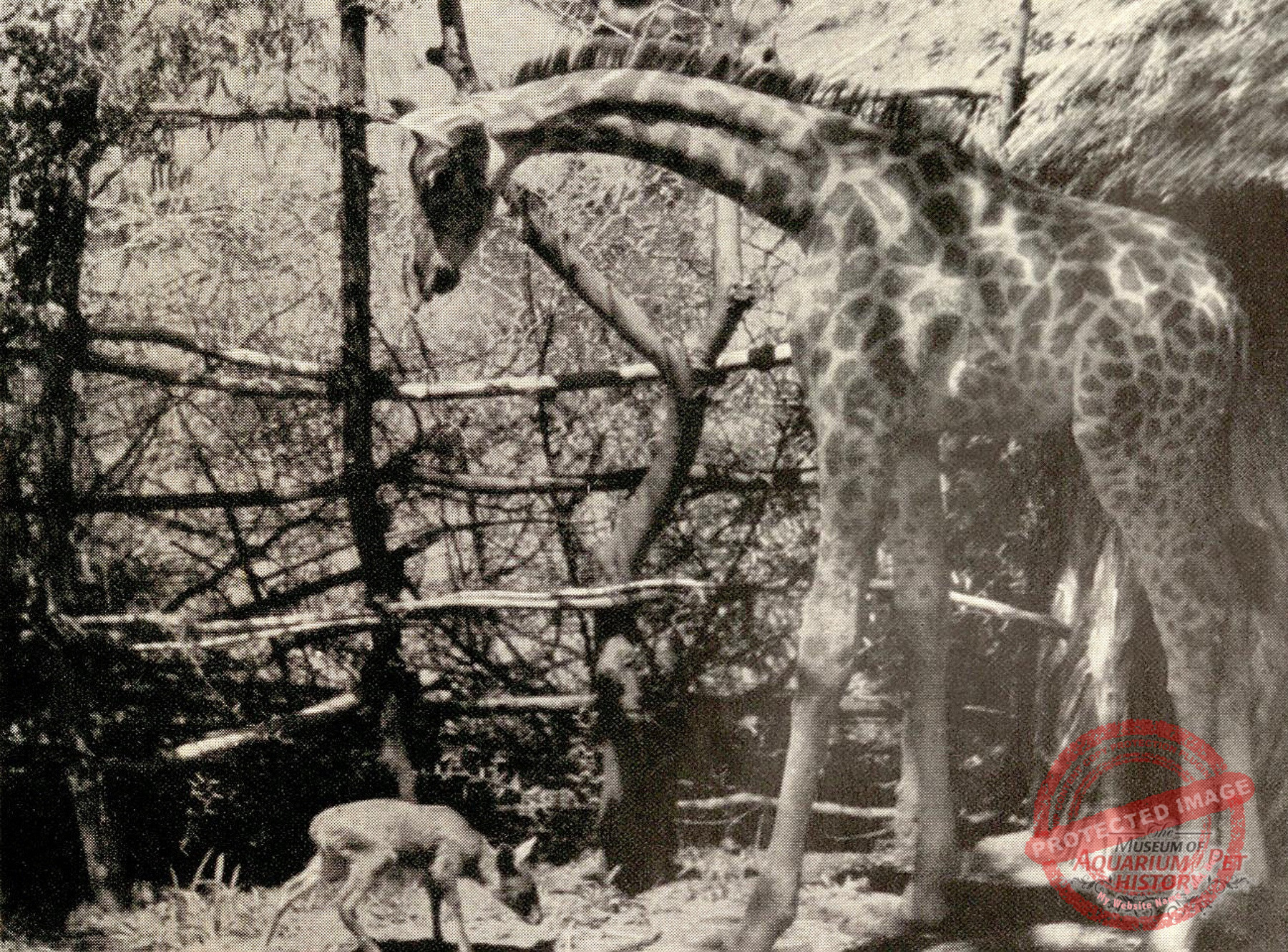
This Chad giraffe, called Giraffa camelopardalis peralta, befriended a young dik-dik during the expedition in the camp.
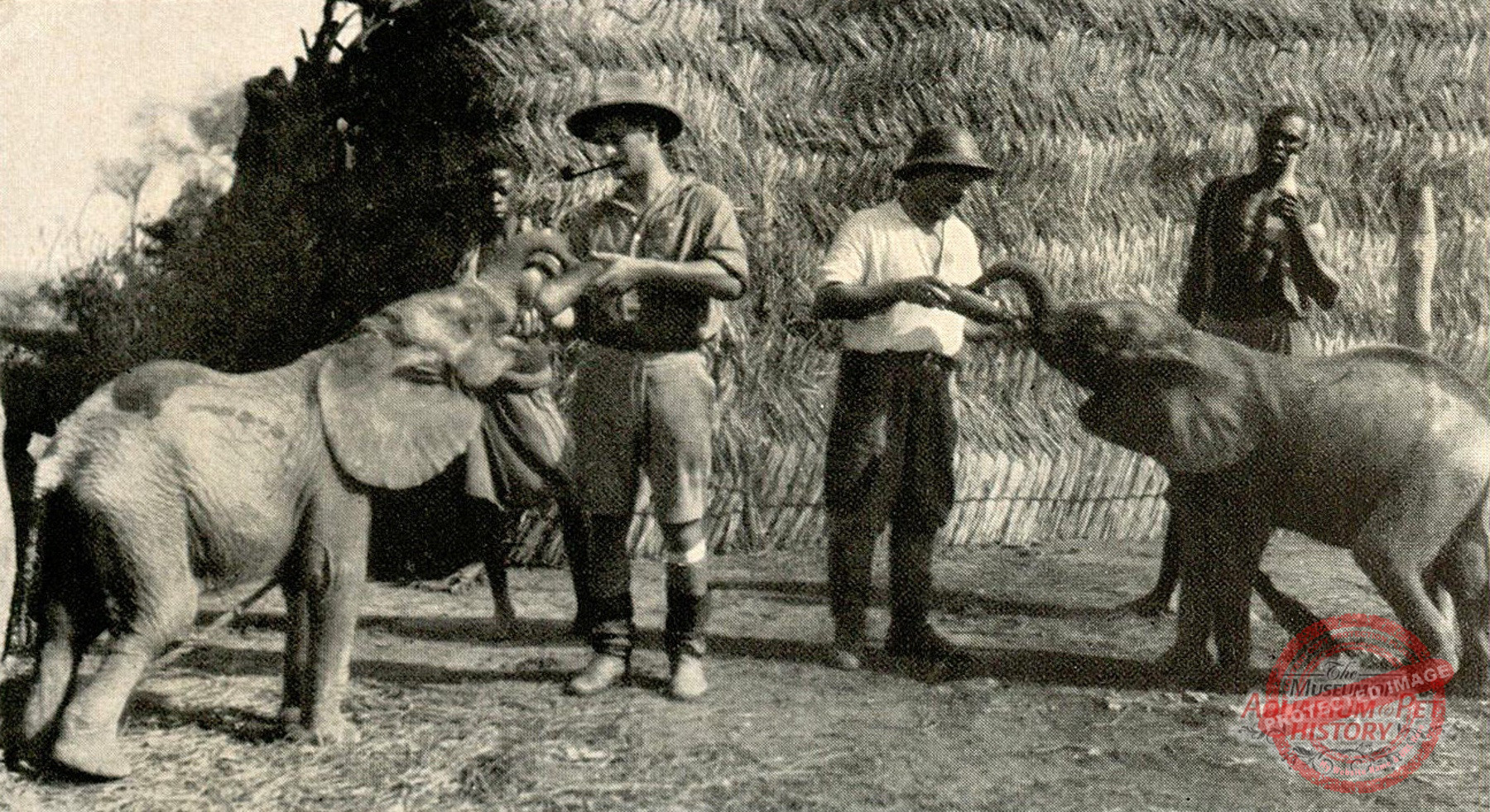
Carl Steininger and Karl Kreth in a camp of the Chad Expedition in 1930 with two young, freshly caught elephants, being fed oatmeal porridge from a bottle.
“We’ll try to get it done within two hours,” he said. “Make sure that the Alfeld train station calls us when the wagon is there,” I concluded.
Meanwhile, I was instructed to prepare the necessary equipment on one of our trucks and selected some people to manage the action at the train station, which we had no further information about.
A few hours later, the flatbed truck was at the station, driven by Rasche, loaded with equipment, a capture cage, and some animal handlers to the gate. Fortunately, the railway officials in Hanover had noticed in time that the crate wouldn’t be on the platform for long and quickly transported all the packages that had been in the wagon out. Then, the doors were locked. A few minutes later, the tiger was roaming free inside the wagon.
My team slightly opened the door of the flatbed truck and peeked inside. The crate was indeed broken, but the interior of the wagon was not visible. It wasn’t as straightforward as it seemed.
First, Mr. Tegtmeier, the experienced animal handler, had a thick, sturdy wire mesh brought in, which was pushed into the wagon like a shield, allowing someone to climb in and inspect where the tiger might be without overlooking the inside of the wagon. However, the tiger was not in its crate; the only other place it could be was inside the small restroom compartment often found in such wagons, as indicated by the tip of its tail sticking out.
The whole process was tedious. Gradually, the corner where the tiger was located was sealed off with the wire mesh and sliding doors, allowing the handlers to approach without risking immediate danger. Finally, positioning the capture cage with the sliding door open was possible, but it was a heavy task that also needed to be carried out as quietly as possible to prevent the tiger from bolting prematurely.
Eventually, the crate was maneuvered to the toilet door, ensuring only a narrow escape route for the tiger remained: the cage. The men began to make a significant noise. The tiger, agitated by the noise, charged towards the sound.
— and it landed in the crate. The slider slammed shut — he was in! The problem was resolved. It’s understandable that all involved, who had worked hard, needed to wipe the sweat from their brows. Each animal, even large predators, travels alone by train but always without a companion. Predators are often sent as express goods in a crate, but only if the journey is short. During such transports, the predators don’t require food. In every zoo, for health reasons, predators are fasted once weekly, usually on Mondays, when the animals are fed less.
For all cases, a feeding instruction for such live express goods ensures that the animals always have enough to drink. If the transport takes longer, food is provided, and the railway employees care for the animal impeccably. To prevent any issues, these transport crates have special feeding troughs that allow an officer to feed the animal without any danger.
After our team repaired the broken transport crate of the tiger and it was secured so that nothing could go wrong, it was set back on track and handed over to the railway for further transportation to its destination.
Rasche, as Tegtmeyer told me, was very skillful throughout the entire operation and was quick to assist. However, he tended to be a bit too assertive, and I avoided praising him too much to prevent him from becoming overconfident, which could lead to mishaps, as occasionally happened with our newcomers at the Weisse Erde (White Earth) when they did not take lessons to heart.
Rasche had much to do. More than ever, I now undertook many of my intra-European trips by car; it was faster and more practical. Moreover, Rasche had become a very reliable driver, and it was enjoyable to travel with him.
Since I sometimes had to send the car to the train station without going myself to meet the arriving clients in Alfeld, I mounted a non-overlookable figure on the radiator of my car — a bronze oryx antelope. There was no guest who didn’t immediately understand that this was the vehicle meant for their pickup…