Chapter 2: The White Earth – Wilde Tiere Frei Haus (Wild Animals Free Delivery)


Starting in September 2024, the Museum of Aquarium and Pet History (MOAPH) will be releasing a chapter a month on the translated autobiography Wilde Tiere Frei Haus (Wild Animals Free Delivery) by Hermann Ruhe.
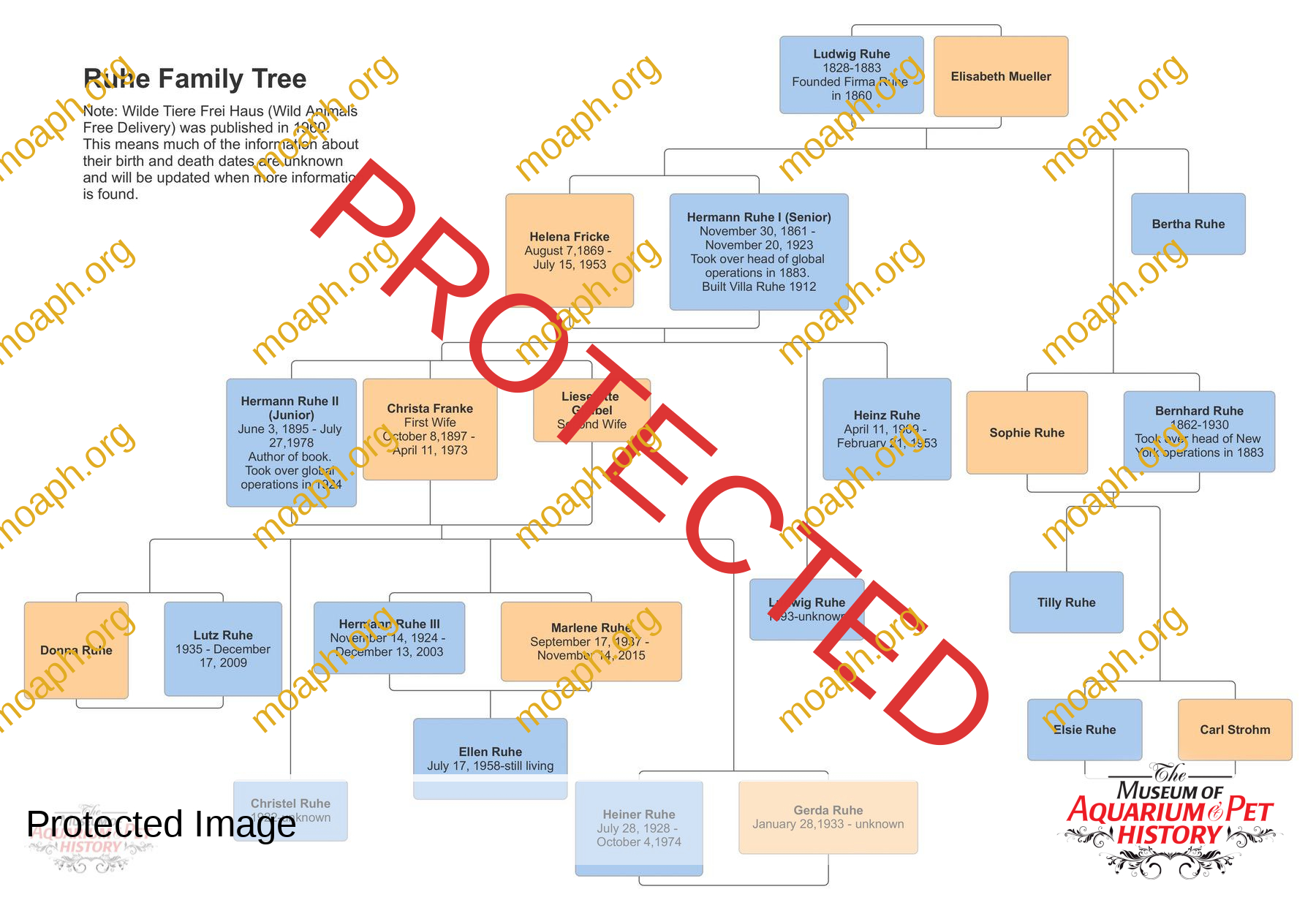
Firma Ruhe (the Ruhe Company) was the name of an animal trading company based in Alfeld, Germany from 1860 until its official closure in 1993. During this time, they were world renowned for their importation and exportation of exotic animals and birds from all across the globe, even supplying many zoos as well as circuses. Having survived both world wars, Firma Ruhe continued to dominate the world of animal trading until the mid-20th century and is a testament to true determination and leadership.
Wilde Tiere Frei Haus (Wild Animals Free Delivery) also documents the plethora of adventures, failures and successes endured by all those a part of Firma Ruhe. Through Hermann Ruhe’s great storytelling, we are able to visualize and understand the world from the perspective of animal collectors navigating through some of the most difficult situations, often not knowing whether or not they would ever return home. His recollections provide a vivid portrayal of the challenges and triumphs faced by the company, and give readers a glimpse into the world of animal trading.
There was a more logical reason for why my seven year old self had such an interest in sea lions.
A few months earlier, my father had ordered a large water basin from the plumber, which was installed in the backyard of our house. A cage was built right next to it.
To my curious questions, I received no exhaustive answers; just a reassuring smile and a few words like, “You’ll see soon enough!”
Soon after, my uncertainty was relieved when a very elegant Englishwoman arrived in Alfeld to stay with us. Before her arrival, a concerned group from our American branch for sea lion care had also come. The Englishwoman, Mrs. Judge, had plans to train sea lions with us!
This satisfied the first part of my curiosity (of why there was a large basin in our yard), but not the second part of how they planned to teach the sealions. I took advantage of every unguarded moment to slip into the yard, hide behind a corner, and watch the training sessions.
“Herman,” she pronounced my first name, “you may come…” she said on the fourth day when she promptly discovered me.
The sympathy I felt for her seemed mutual, for I was the only one she allowed to watch the difficult training sessions. Most of the time, I sat on an overturned crate at a respectful distance.
Mrs. Judge usually began the training sessions two hours after the sea lions had left the water basin in which they were frolicking. The animals needed this time to calm down and follow the training instructions. That this was a prerequisite for all work with sea lions, I did not realize at that time.
Mrs. Judge had not come alone. Although she took care of the actual training, her husband was always there and intervened when necessary.
Gradually, the training routine took shape. The sea lions became increasingly tame, more eager to learn, and more adept at performing tricks like catching balls or doing a handstand in their own way. And always, upon completing a task, they were rewarded with a small fish. Large quantities of fish were needed to complete this training routine. If there was ever something to criticize, Mrs. Judge would give a gentle slap as a reprimand.
The unique charm that these hours spent in our yard held became apparent to me only later in my memories. The commands and loud exclamations of the woman were sometimes drowned out by the growls of a black panther (which had been in Alfeld for a few days before being resold) or by the chatter of a few monkeys. This almost constant background noise, combined with the multi-voiced singing and chirping of the canaries, added to the lively atmosphere.
Our property on Alfeld’s marketplace resembled a “Schlauch” (a narrow, elongated space). The front of the house was only one side, with a large gate to the left leading into the yard and from there to the back of the plot, which extended far. The entire yard buildings were visible on the right as you entered. First, there was the purchase room for canaries, followed by an open space where vehicles could turn around. Then came my father’s office, followed by the laundry, the horse stable, and the so-called Gartenhaus (garden house), a large room for boxes and similar items. This was also where the panthers, monkeys, and other animals were housed.
Next to my father’s office, a very steep staircase led to the first floor of the back building, where a long, narrow corridor housed five or six bird rooms, in which the canaries were kept. As the plot sloped slightly upwards towards the back, this corridor was interrupted by a few steps that led upwards.
At the very back, the yard and back building ended with a pretty garden with old trees.
Near the sea lion basins, there were usually a dozen goldfish cans in the yard, rectangular, large tin aquariums with perforated lids for air supply. These cans were opened for a while every day.
In the cans used by the bird keepers for transporting canaries to America, there were 50-60 goldfish each.
Mrs. and Mr. Judge stayed with us in the backhouse until 1903. Then their sea lion act was finished, and the couple took an engagement abroad and left. The sea lion basin disappeared from the yard, but not too far. It was transported to the outskirts of the city to our large new property on the Weisse Erde (White Earth), which had been under construction since 1902. This new building was completed in 1904, with the gable facing the weathervane that had long been familiar.
Our house on the marketplace had provided a place for all kinds of animals that had come to us from all over the world, either via foot, car or directly from the Alfeld train station.
When the property on the Weisse Erde (White Earth) was put into operation, I was nine years old.
My father’s office moved from the marketplace and was relocated to the new bird house, the large front building on the White Earth. Next to it, a new listening room was set up, and opposite was the room that Mr. Darnedde, the manager of the Weisse Erde (White Earth), had taken over from my father when he took over the business. Since taking over, Mr. Darnedde had become my father’s right-hand man and was a skilled bird expert, although he did not like to sit behind a desk. He was one of the few who could quickly determine the gender of canaries by just holding them in his hand and gently blowing on their feathers—he could tell: male or female! Mr. Darnedde was rarely wrong.
The canaries were usually arranged “in batches,” ten rows of farmers, and first, their singing quality was assessed in the “listening room.” There were breeders who showed their best birds at exhibitions of breeder associations and received many awards and recognitions. For example two birds named Stamm Seifert (Seifert Line) and Roller aus Klingenberg (Klingenberger Roller) remained memorable. With birds from such and similar breeds, one could always expect first-class quality.
When examining the birds, chalk marks were placed on the cages by the farmers to indicate their singing quality. Based on this classification, the birds were assembled into a shipment destined for America!
Uncle Bernhard had lists of breeders in New York, which, together with our descriptions, provided information about the delivered birds and set appropriate prices, allowing the traders to make exact purchases.
By today’s standards, the technical terms for the singing qualities of canaries are quite amusing. There was the high trill, which at the time was considered inferior: “Tschüp-tschüp-tschöp” – a term that should not be confused with later breeding terms1. There was the water trill, the hollow and bell roll, the trill, the whistling, the clucking trill, the steel trill, and the reverberating roll.
MOAPH1:During the early 1900s, canary bird trainers classified a variety of sounds (referred to as trilling) from their birds. Sounds that were inferior during that time are not necessarily still considered so today. In this case the sound “Tschup-tschup-tschup” was a supposedly inferior noise made by canaries compared to the higher quality sounds of the water trill, the hollow and bell roll etc.
As early as 1890, retail prices in Germany for canaries varied between 10 and 25 Marks2, depending on the singing performance, with private buyers being assured of “warranties of value” and arrival guarantees in newspaper advertisements.
MOAPH2: 10-25 Marks would be equivalent to $92.98 (being 10 Marks)-$232.45 (being 25 Marks) USD today.
Even after the turn of the century, transport still took place in reffs3. The reff had since been enlarged by 40 to 50 breeders and contained a total of 210 birds in rows bound together, with seven bird cages each. Ten rows of seven were stacked, and the resulting vertical layers were joined together with “spill”4. For feeding and cleaning, the Reff had to be disassembled down to the rows of seven, which were always joined together. The breeders were so organized that the drinking bowls were attached to one side and the feeding bowls to the opposite side, so that each row of seven could be cleaned in one pass.
MOAPH3: ‘Reffs’ are large shelves that are meant to be used to hold and transport canaries. They are constructed in rows, therefore making it easy to disassemble and reassemble them.
MOAPH4: ‘Spill’ likely refers to a substance to fill in gaps together.
For watering, the bird keepers used specially designed nozzles, which shot water in a jet with enough pressure to simultaneously clean the drinking bowls of dirt that had settled.
During the entire transport, all birds (each keeper supervised ten reffs) were fed and the cages cleaned twice a week.
For this, the keeper first disassembled the entire reff into rows of seven, took the first row with seven cages in his left hand, and quickly ran a large knife over the bottoms of those bird cages with his right hand to loosen the dirt. Then the row of cages was turned upside down, emptied into a large tub in which the dirt, drinking water, and feed remnants all fell out. It was a small miracle that each newcomer, in the rush to get everything done, only occasionally injured a bird while cleaning the floor. It took a lot of practice to shake out the birds with one swift motion so they would lift their feet off the ground when the cleaning knife passed over, as the birds didn’t always sit on their perches.
The newcomer, called Grune (Green), needed some practice time until he had mastered the process and henceforth earned no more reprimands from the old bird keepers.
Even Grune (Green) worked hard. Our transport companions, who accompanied the birds to the USA, were mostly construction workers, masons, or carpenters who used the work-free winter to earn money here. And they could make quite a bit of money doing it!
Once they even received a fixed wage, but beyond that, they earned daily wages in dollars as soon as they were in the USA. After staying at our New York branch, they didn’t have to pay for accommodation, saving a lot of money. Over the years or decades, many of our old transport companions even built their own houses!
Mr. Darnedde was the esteemed and at the same time revered ‘king’ of the whole operation. He decided whether a caretaker might make a third trip across the ocean in one season. Everyone tried their best to deliver impeccably cared-for birds, hoping to catch Uncle Bernhard’s attention and possibly earn a word of praise from him.
Proctor Darnedde and Uncle Bernhard made every effort to maintain the highest possible fairness. Not everyone had birds of the highest quality to transport; it could happen that one or the other bird died or was unhealthy. In such cases, a stamp indicating export liability was placed on the shipment, waiting for the next transport. Another export caretaker might refuse the shipment if the weather was too bad for the crossing, fearing that canaries would get sick and die. Even the caretakers of such bird transports could earn a reward for their careful work, even though the losses had been greater than what Uncle Bernhard had told my father—much to Mr. Darnedde’s liking.
In addition to the incentive of being able to earn a lot of money by crossing the ocean several times per season, there was a second incentive. The people learned English—some better, some worse. They became adept at helping each other smoothly whenever something unusual arose.
Gradually, it turned out that those who were resilient, adaptable, and resourceful in unforeseen situations—those who had what it took—were destined to become animal transporters!
From the ranks of the canary transport companions, my father selected those men who, it could be assumed, were best suited to the demands of the profession of an animal transporter. Although, at that time, more and more larger animal transports arrived in Alfeld, the canary bird export initially remained the main business of the company Ludwig Ruhe for years.
During the season, the Vogelhaus (bird house) on the Weisse Erde (White Earth) was often packed full to immediately fulfill all the demands from America. This made a far-reaching separation of the birds possible—in contrast to the rooms at the marketplace, which were somewhat too small.
This separation was particularly important to limit the risk of up to 600 to 800 birds being endangered in the event of an outbreak of the snapping disease5.
MOAPH5: Atoxoplasmosis or ‘Snapping disease’ is an infection leading to an irritation in the birds mouth and causing a snapping twitch movement.
The original term Schnapper (snapper) has a very serious background. It refers to a dreadful, contagious disease, the cause of which could never be precisely determined, and whose cure has rarely been successful.
Canaries affected by the snapping disease start opening and closing their beaks with a snapping sound, and thus struggle to breathe. It is a disease of the respiratory tract, which can easily lead to Diphtheria6.
MOAPH6: Diphtheria is a bacterial infection that creates sores around the mouth and throat in canaries and can be extremely contagious.
Later, my father had a lamp installed to make his rounds through all the bird rooms to check for birds affected by the snapping disease and remove them as quickly as possible. This usually occurred in October or November, during rainy, humid, foggy weeks, when the disease could break out. If he saw a bird sitting dejectedly on its perch, with its beak open and making a pitiful noise, my father would say, “Damn it—now we’ve got it again!”
He immediately tried to save what could be saved. The healthy-looking birds were sorted and separated early in the morning. The sick canaries were taken for a walk, hoping the fresh air would do them good.
The room where the sick birds had been was immediately sealed off, fumigated, and disinfected. Anxious weeks followed, as the birds sent to America at this time were closely monitored. Sometimes they were actually healthy, but it could happen that Uncle Bernhard received a telegram: “Snapper disease has broken out!” Then the disease had spread to another bird during the journey and infected it again.
Once, back at the marketplace, the snapping disease had spread to a fairly large room, and the damage my father suffered was considerable.
Now, on the Weisse Erde (White Earth), he could keep the loss due to strong segregation in small rooms to a minimum.
The season began in early September and reached a peak in October with rising prices. During this time, there had to be enough Lagervogel (stock birds) available to meet all the demands before and after Christmas. The Lagervogel (stock birds) were occasionally called upon a few weeks before their dispatch and sometimes suffered from the Bauer Krankheit (Farmer’s disease), which was caused by a lack of movement and poor ventilation. Most of them were aviary-raised birds accustomed to movement. Only the very sensitive Rollers7 were allowed to stay in stock for a long time.
MOAPH7: Rollers are a term for the German Roller or Harz Roller Canary.
It was discovered—twenty years later—that the Bauer Krankheit (farmer’s disease) could be largely avoided by using larger wire cages, in which a three-way flight for the birds was possible, and invested a small fortune in this innovation.
Special attention was also paid to the bird’s diet, which proved to be correct. Uncle Bernhard advised New York to always feed the birds as lean as possible; he emphasized, “The birds are getting too fat! The birds are lazy and are not molting properly. Make sure they get enough exercise!”
Equally interesting as the breeding, development, and care of the canaries up to their shipment was the role of the trained Dompfaff (bullfinch). Good bullfinches were significantly more expensive than canaries. The training of young birds was closely linked to skilled trades. Most of the trainers were craftsmen such as shoemakers or tailors who trained the bullfinches.
While the master tailor sat at his table sewing, the bird keeper stood with the young bullfinch within reach, covered with a dark cloth. If the master was musical, he whistled the song himself—repeating it tirelessly. If not, he used a small, precisely tuned whistle.
As soon as the bullfinch imitated the first notes, it was rewarded by being uncovered for a short time. Then it disappeared under its cloth again, and the process repeated. Gradually, it learned the first notes, the first bars, and finally to sing the entire song. Particularly popular were the well-known German folk songs, such as: Grad aus dem Wirtshaus komm ich heraus (Just coming out of the Inn), or Blau bluht ein Blumelein (Little Flower Blooms Blue), or Annchen von Tharau (Little Anna from Tarau).
Once the bird understood that it had to sing to be freed from the annoying dark cloth, it learned the lesson relatively quickly. Of course, things got complicated if the bird was very irritated. If the master was only partially musical, he would still whistle himself and often hit the wrong note, which made the bird unsure.
The trained birds were kept together with canaries. The trained bullfinch was never kept with another bullfinch that might sing a different song or in a different tone.
In addition to this, there were the sorgenkinder (problem children). However, these were not sick birds, but stumpers (blunderers)—bullfinches whose singing ability was insufficient to complete a song correctly. Trained bullfinches were never kept in the same room as these blunderers as the good singers could be ruined by them and could themselves become botched. However, these blunderers were sold as “trained bullfinches of inferior quality” at lower prices.
These birds were transported to a sales site, namely to our branches in New York, where there was a dedicated canary bird room for them; in the middle of the reff8, surrounded by 209 twittering and singing canaries. It was impossible for the good bullfinches in the vicinity to hear them and possibly adopt their bad habits.
MOAPH8: ‘Reff’ is a large frame made into small columns and rows used to hold canaries during transport.
In Alfeld, the bullfinches were also always kept alone: one was in my father’s office, one in my grandmother’s kitchen at the market, one in her living room, one in my mother’s living room—and so on.
The new large property on the Weisse Erde (White Earth) located on Kalandstraße offered my brother Ludwig and I more than enough exciting things. It would have been a wonderful terrain for our games. Unfortunately, overseer Siegfried was far too strict to allow any extracurricular activities. Almost more than Siegfried, we feared Mr. Darnedde, who tolerated no jokes. If we wanted to explore the property and the stables, it had to be done with my father’s express permission.
This property on Kalandstraße was considerably wider than the one at the marketplace. In terms of area, it had a substantial expansion.
All the buildings and walls were built using the unplastered red bricks customary in Lower Saxony. Next to the birdhouse, which was located on the street, was the large gate that led to the first yard, where the wagon sheds and part of the pheasantry were grouped. To the right, behind the birdhouse, was the laundry, then came a large building housing the training hall for horses and elephants with stables.
On the first floor, further back, doors on the right led to rooms with crocodile and hippo enclosures as well as to the monkey house; on the left were rooms for snakes and the predator house. These two sections were connected by a transverse building, on the roof of which the weather vane turned. Below, a gate led into a passage, closed off by a smaller door, leading to what was called the Wirtschaftshof (farmstead), which was reached at the end by a driveway for the wagons around the property.
In this second yard, right and left, were the bear enclosures and further monkey cages as well as large aviaries—next to the slaughterhouse and cooling house. There was also a second central heating system, which supplied the heating for the birdhouse and the grouped stables or cages of the first yard.
The second yard ended with a large transverse building, the upper floor of which was occupied by 16 canary bird rooms and a hayloft. Beyond that stretched the large hall for predator training as well as a second, somewhat smaller training hall.
Behind all of this, the antelope stable stretched out with enclosures—dozens on both sides and in the middle—extending to the rear end of the property. The antelope section on the left was so narrow that it was named Kegelbahn (the bowling alley).
From the street, a long meadow led from the Kegelbahn (the bowling alley), and on the flanks of the property were several flamingo ponds and the sea lion basin.
This large terrain with its many yards, corners, and angles would have been ideal for playing cops and robbers, but that wasn’t allowed and was made clear to my friends and me.
What we were not allowed to do on the Weisse Erde (White Earth), we were permitted to do on the grounds of the Alfeld Brewery. Mrs. Brewery Director Fricke, whose youngest son was my classmate and friend, who had taken a special place in my heart and could rarely say no. On a June day in 1905, she regretted not forbidding our games.
I was part of the robber group. A ‘cop’ was chasing me. I ran across the brewery yard to the loading ramp, where a large team had just finished transporting some barrels. An ideal hiding spot! I quickly disappeared under the wagon. To escape my friend’s view, I moved to the side and squatted between the large wheels and the loading ramp. Suddenly, there was a thundering rumble above me. A large dark shadow moved over me: an empty beer barrel. Its edge hit my head.
When I came to about a quarter of an hour later, I was lying in the parlor on Frau Director Fricke’s sofa. A cool compress was on my forehead.
“Oh dear God, Hermann, what are you doing?” lamented the lady of the house, bending over me. “The doctor will be here soon”.
I protested, “No—no!” She gently pressed me back into the cushions. “Don’t get up, Hermann!”
“Please, Frau Fricke—no doctor!” I pleaded. “Papa said those damn bills for me are always so expensive”.
About half a year ago, I had broken an arm during gymnastics, and three months ago, in my eagerness to catch a prize, I fell into a kettle of boiling water when my brother Ludwig was there. A year ago, one of my legs had been in a cast after I had fallen from the new high wall on the White Earth property. And now the beer barrel!
But the doctor came anyway and diagnosed a solid concussion.
Eventually, my mother appeared, and with her—Papa. His face seemed, as always, immovable, when he carefully lifted me up, carried me down the stairs, and took me home.
“Papa, please, please don’t be angry. I told Frau Fricke that she shouldn’t get a doctor, but the doctor came anyway. I will get well quickly so it won’t cost so much again”
“Now just keep your mouth shut and lie still,” said Father. Then my mother took care of me in her calm and natural way—only for a few days.
Then she took Ludwig, who had vacation time, to Norderney while I still had to lie in bed and recover. The concussion and the hole in my head were more painful than I could have anticipated! Ten valuable days were lost before I could go back to work with my father.
But that was by no means all that happened to me. One experience remains unforgettable and is the reason why I still avoid coming close to an adult elephant from the side. The animals that were on the Weisse Erde (White Earth) came from many different parts of the world: camels and dromedaries9, lions, tigers, black panthers, leopards, hyenas, huge numbers of rhesus monkeys10 and other apes, as well as ostriches, llamas, and antelopes, and yes, even many elephants!
MOAPH9: Dromedaries or Arabian camels are a unique species as they only have a single hump on their back.
MOAPH10: The rhesus monkey or Macaca mulatta is an old world monkey species from south to southeast Asia who are medium sized and have a unique reddish brown coat with a pink face.
Karl Kreth, our Indian animal collector who brought elephants to Alfeld, had the reputation of being particularly calm and peaceful.
Mr. Kreth, who had become one of our best bird companions and now an animal handler, allowed me to sit on the elephant. Proudly, I perched on the young animal’s neck.
In the business yard, just when the boxes for the large monkey shipment were being loaded, one of the boxes slipped, making a loud noise as it hit the cobblestones of the yard. The monkeys screeched indignantly, but that wasn’t what startled the elephant; he was used to that from the jungle—it was the unusual noise from the falling monkey box that scared him.
The elephant was standing right next to it, with its head turned towards the door leading to the first yard. The door was wide open. Startled, the animal moved and rushed toward the open door.
“Let yourself fall—let yourself fall!” Kreth shouted desperately.
The boards above the door were already close to my eyes when I let myself fall sideways—faster than I thought possible. I landed softly on the ground but sprained my left hand. The bruises on my body appeared only a day later.
“Boy, that could have gone wrong,” said Kreth when he helped me to my feet. “Is everything intact?”
I nodded with a pained expression. Kreth was already running after the broken-out elephant that had just slipped through the door. Seven men, quickly gathered, joined the chase. Indeed, they returned half an hour later with the once-again docile young elephant.
Towards evening, I was summoned to my father’s office, where he used to give me his scoldings in private. He knew that I was already somewhat receptive to reasoning up to a certain point.
“Well, Hermann, did you finally get it, with your recklessness? You were lucky rather than smart! The elephant could have smashed your head if you had stayed on it.”
I bit my lower lip and thought about the pain I had escaped with my whole body from the fall. A thrashing would have added to it, and I would have been restless enough.
“Please, don’t be angry, Papa,” I said defensively. “Mr. Kreth allowed me to sit on it. I wouldn’t have climbed up on my own!”
“Kreth already got an earful for that!” he remarked dryly.
It was clear to me that I was not to blame, but Mr. Kreth’s charming stories of his travels to India made me reluctant to upset him.
“But it is still my fault,” I said quickly. “I begged him until he allowed it.”
Maybe my father smiled; it was hard to tell under his mustache. “When do you think you will climb on an elephant again?” he asked.
“Not anytime soon, Papa, you can count on that. I’ve had enough. Such a beast! The boards of the door were so close to my head”. Recalling that terrible moment, I had to swallow a lump in my throat.
“Then we are in complete agreement”, said my father contentedly. “I take it, you give me your word?”
“Yes!” I shook his hand firmly.
With that, my father once again attempted a lesson in discipline—and he succeeded. From a young age, I was used to keeping my word, even in small matters. Only later would I realize how great a service this upbringing had rendered for my career.
Overall, my father increasingly endeavored to prepare me for my role as an animal exporter and importer.
So it happened that I was gradually allowed to spend more time on the property on the White Earth—except during the unthreatening time before exams. Then Father would say: “Now it’s about time you get serious, or I’ll whip you into shape! You can still learn enough about business later. Now focus a bit less on the animals and a bit more on your essays!”
It was a punishment not to be allowed near the animals, but sitting still was even worse; then school would have been even more unbearable! It took longer to achieve a passable grade with endless and devilish effort. Thus, I often ended up bringing home a report card with the note only saying the word Versetzt (Promoted).
When Ludwig and I misbehaved, there were no house arrests and no beatings. Was there anything more terrifying than the ban from entering the Weisse Erde (White Earth) for a certain period? To me, it was the height of punishment.
Once, at a time when there was neither a ban nor exams, a transport from India arrived early in the morning, having been transported from the train station to Kalandstraße on multiple trips. Among the animals was a reticulated python, an extraordinary record specimen of Python reticulatus. The python was estimated to be about seven and a half meters long. However, by noon, after I had returned from school and eaten, it had not yet been unpacked, let alone measured. There simply hadn’t been time. First, the more sensitive animals had to be unpacked, housed, fed, and watered.
My father, who was still occupied with the freshly arrived tigers in the predator house, allowed me to look around a bit. “But be careful, Hermann! And don’t be reckless! You know—the fresh animals must first be left alone.”
I wandered here and there. Eventually, I noticed that the keepers also came to unpack the interesting python. When large shipments arrived, everyone had to help, even the newly trained staff and even the bird keepers. Only the more delicate tasks were handled by the experienced animal keepers themselves. Here, for the python, senior keeper Siegfried needed a whole team of helpers.
The senior keeper had formerly been a canary bird keeper—at least in the winter. In summer, he pursued his profession as a carpenter. My father had selected him after determining his suitability for the responsible position of a senior keeper. He stayed with us entirely and hung up his carpenter’s profession. Albert Siegfried, a medium-sized man of about 30 years, gathered his men in the snake house and gave them instructions: “You must be damn careful! Snakes are unpredictable. I’ll grab the head, the next one about half a meter further down, the next one at the same distance, and so on. Hold on! Under no circumstances let go—did you hear me?”
The newcomers nodded reluctantly, for the situation was incredibly serious. The older keepers, experienced with handling snakes, were assigned to grab the head; the younger, inexperienced ones had to grab the not-so-powerful hind body of the snake.
“And you, Hermann, you disappear now!” said Siegfried to me.
“May I at least watch?” I asked. “I will definitely stay behind the door!”
“Okay,” he said, “You must promise: stay far away and keep the door closed in any case!” I promised, but my curiosity was stronger than my desire to leave the snake house immediately.
Further back, the python lay in a large sack padded with hay.
I stayed a meter away at the door. The snake began to move as the senior keeper started to open the sack. Taking many precautions, he reached in with the catcher, a leather loop on a stick, fished out the head, held the snake firmly, and passed the catcher to his neighbor to hold. Then he grabbed the head with a firm grip. He had the head!
The next one dropped the stick and grabbed behind the senior keeper, the third grabbed behind him, then the fourth man.
Slowly, the huge snake body emerged from the sack. When Siegfried and five other men had secured the snake, they began to work it out of the sack. One of the newcomers, a bird keeper, grabbed too far back, but a good third of the python was now free. The man flew into a corner. Then the next one shouted and let go. “Hold on!” Senior Keeper Siegfried shouted to his frightened helpers. But it was already too late. The snake thrashed about so wildly that the fourth, the third, and finally even the second man let go right behind the senior keeper from the slippery snake body.
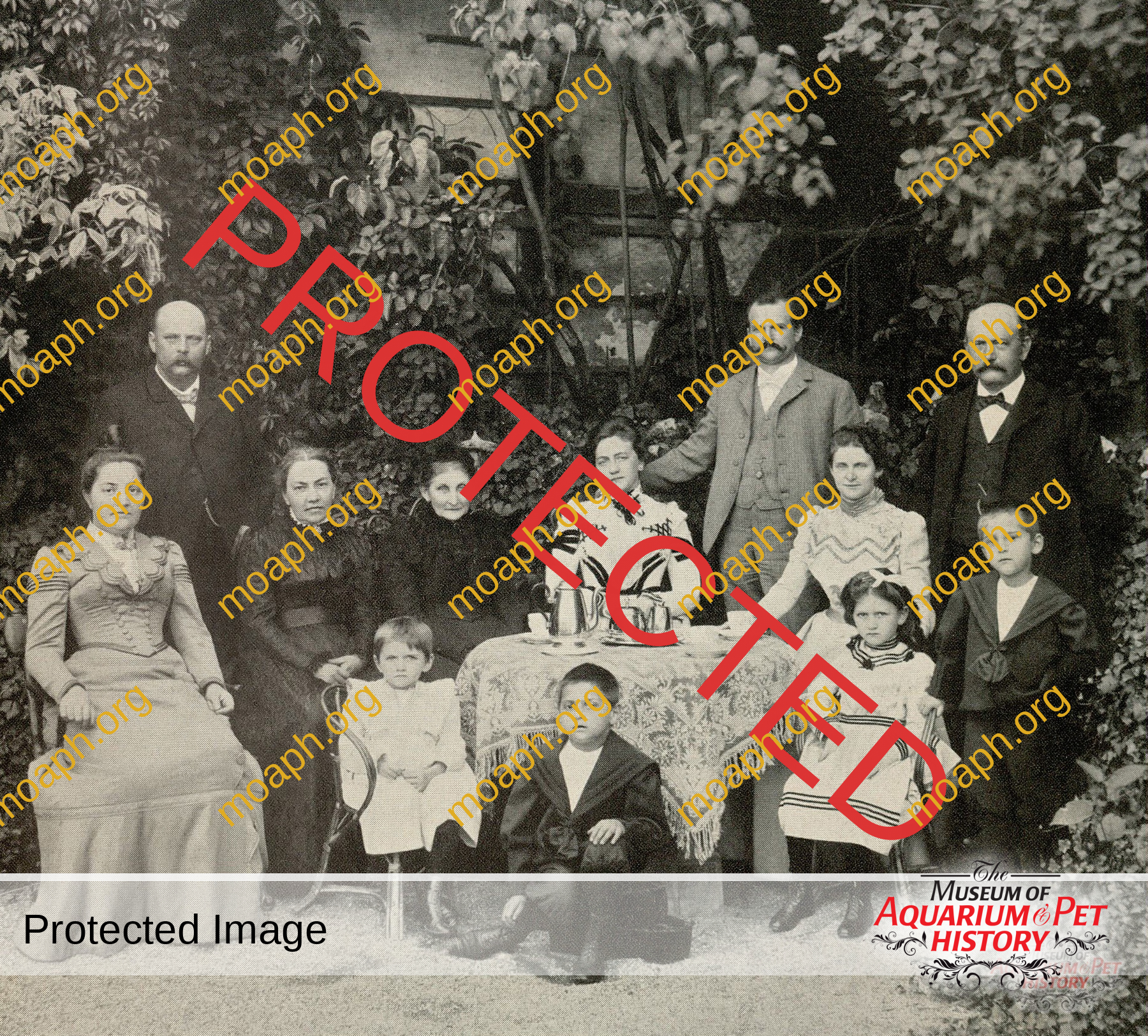
Family Gathering in 1902 in the Garden of the Alfeld House at the Marketplace.Top row from left to right:Hermann Ruhe, Bernhard Ruhe from New York, and his father-in-law. Seated: The author’s mother, her mother, Grandmother Ruhe (widow of the founder of the company), Sophie Ruhe (wife of Bernhard), and Bertha Ruhe (sister of Hermann Ruhe). Children from left to right: Bernhard’s daughter Elsie, Ludwig Ruhe (the author’s brother), Tilly (daughter of Bernhard Ruhe), and Hermann Ruhe Jr, the author.
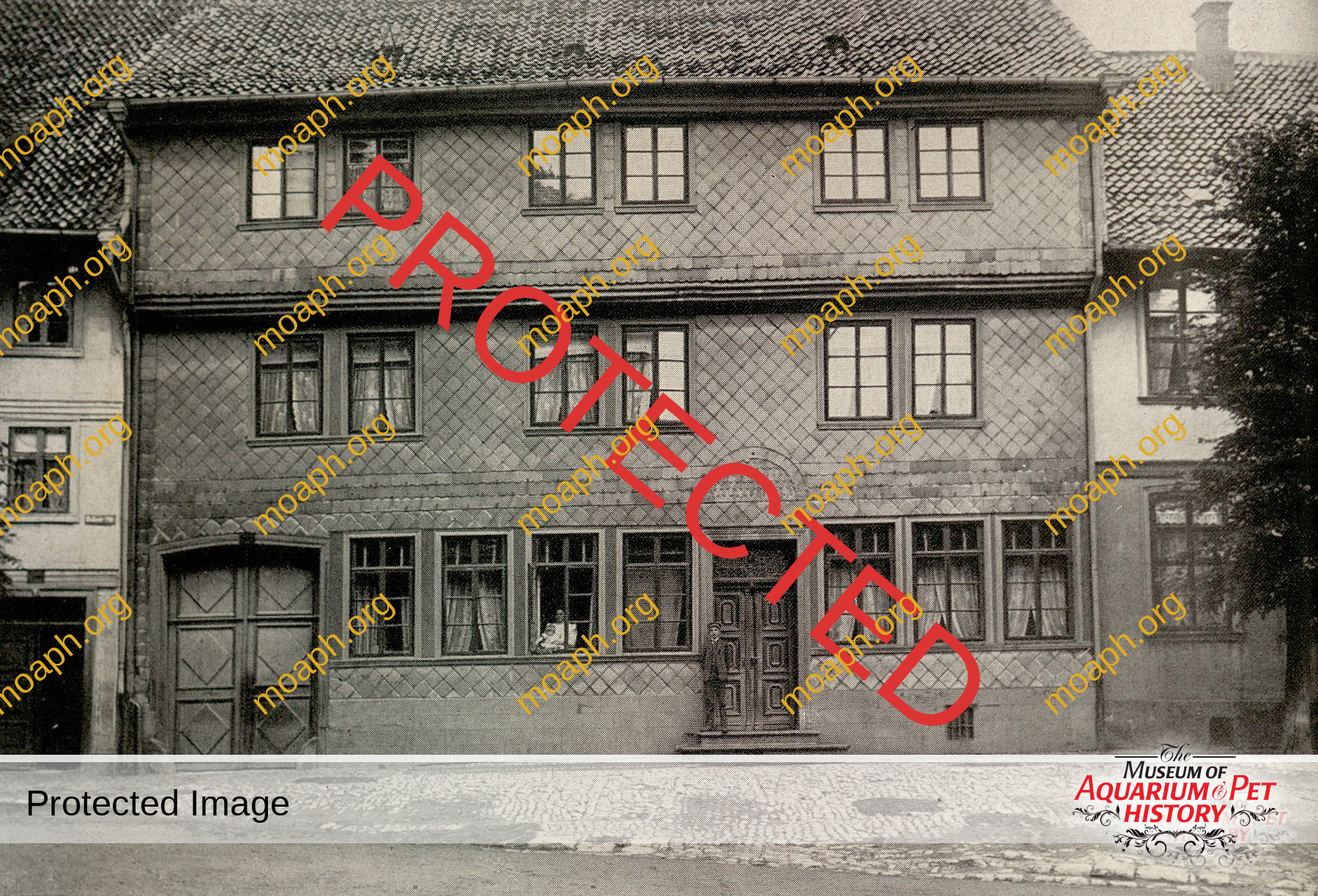
The house on Alfeld Marketplace. Left is the gateway entrance to the courtyard and back buildings.
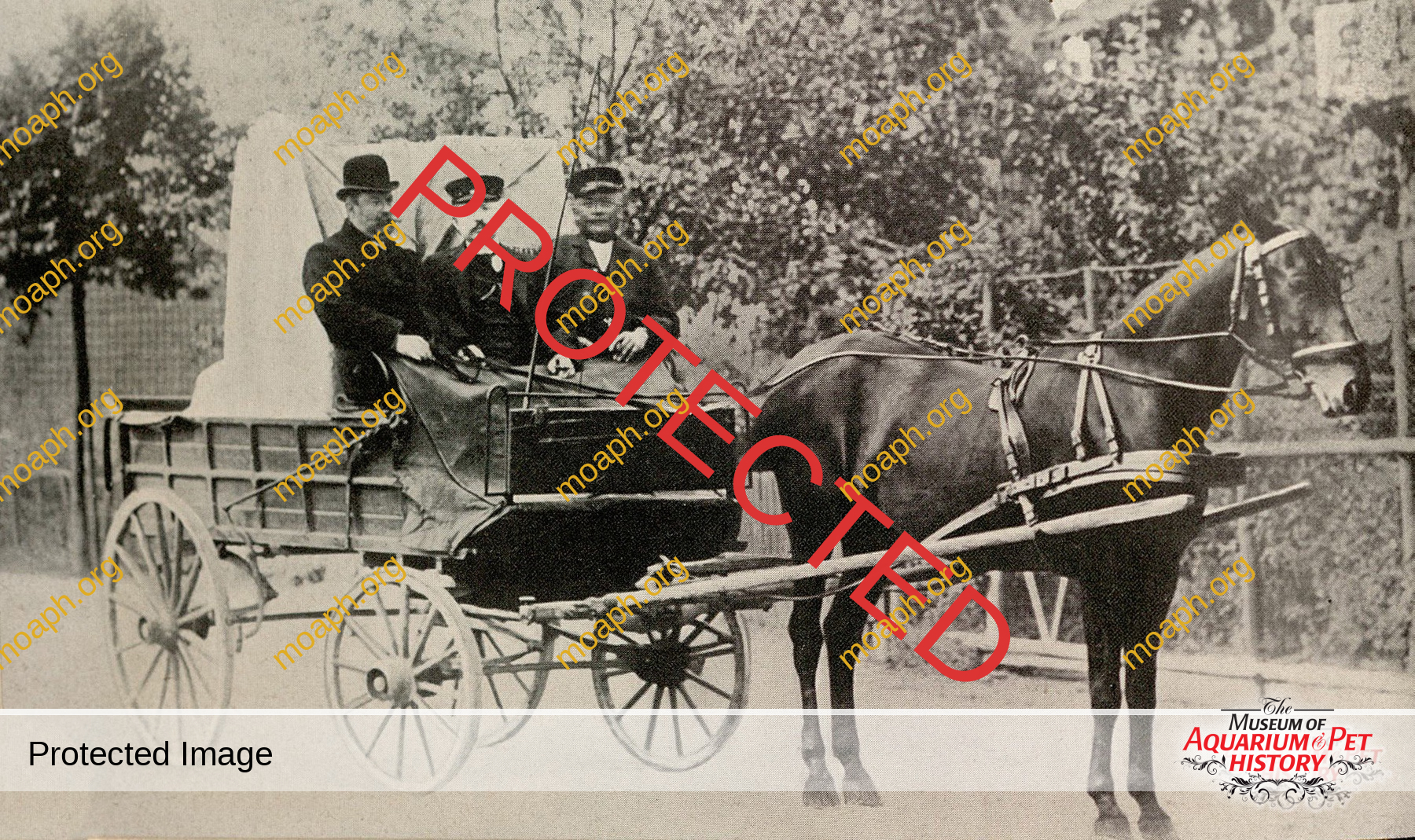
Carl Dernedde (left), next to his brother and the Canary Buyer Carl Butehorn, come with a newly bought Canary Reff.
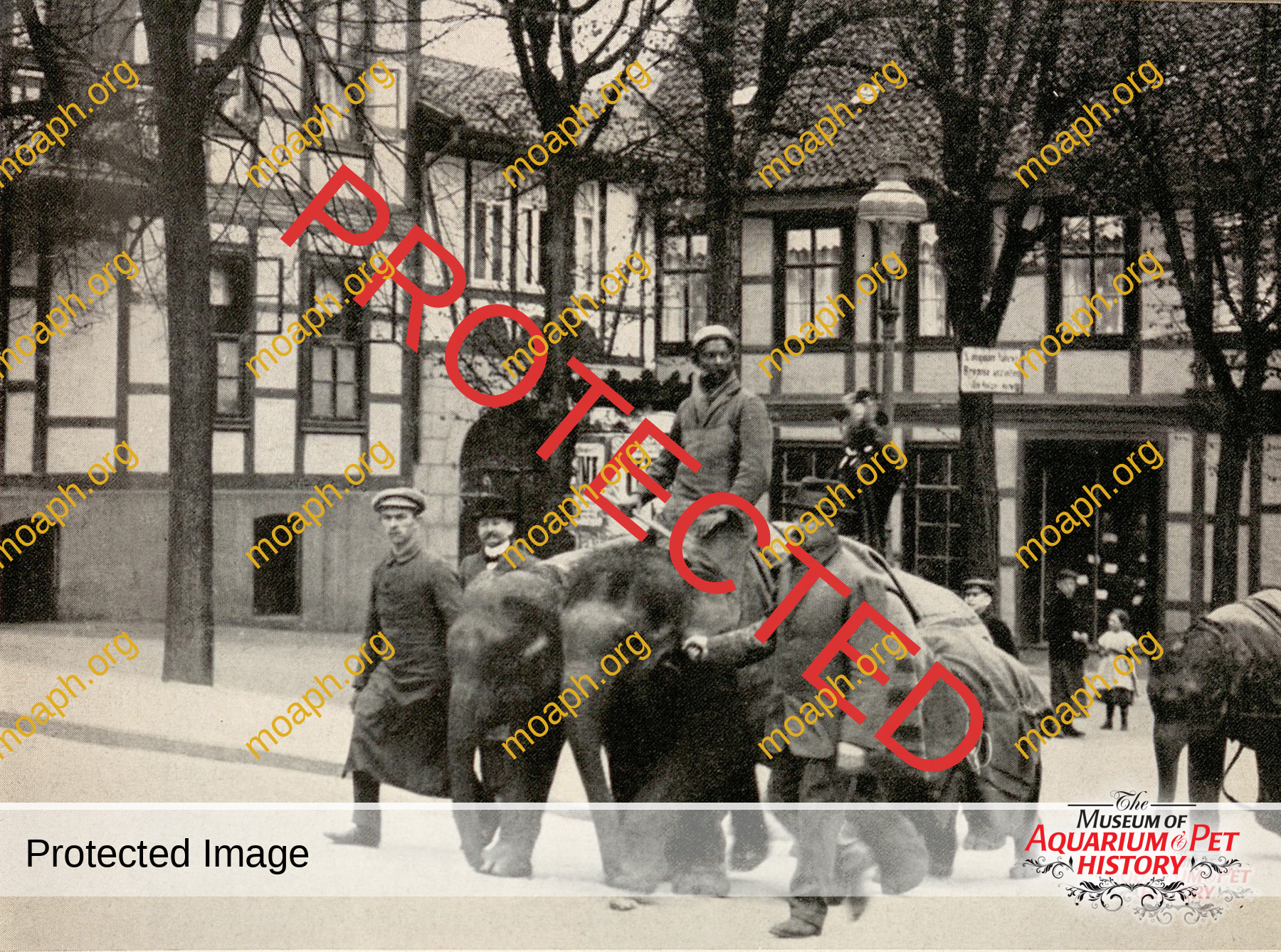
Karl Kreth from India brought Elephants through Alfeld. Reitend, half covered, is Fritz Thiemeyer, who later had an accident in Sumatra.
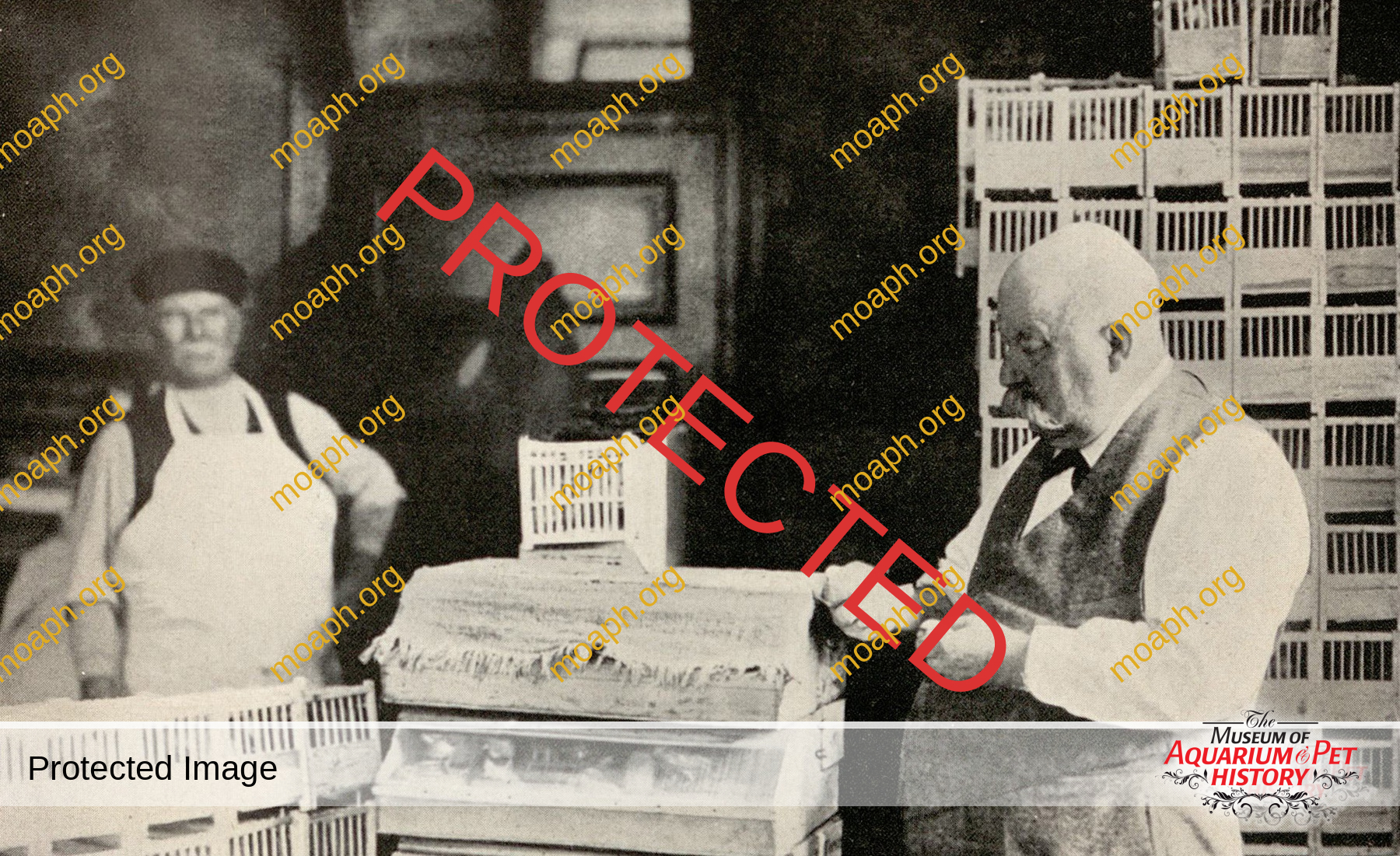
Darnedde sorting through canaries in the background is the bird caretaker Ernst Campe who was nicknamed ‘the count’ due to his meticulous and excellent work.
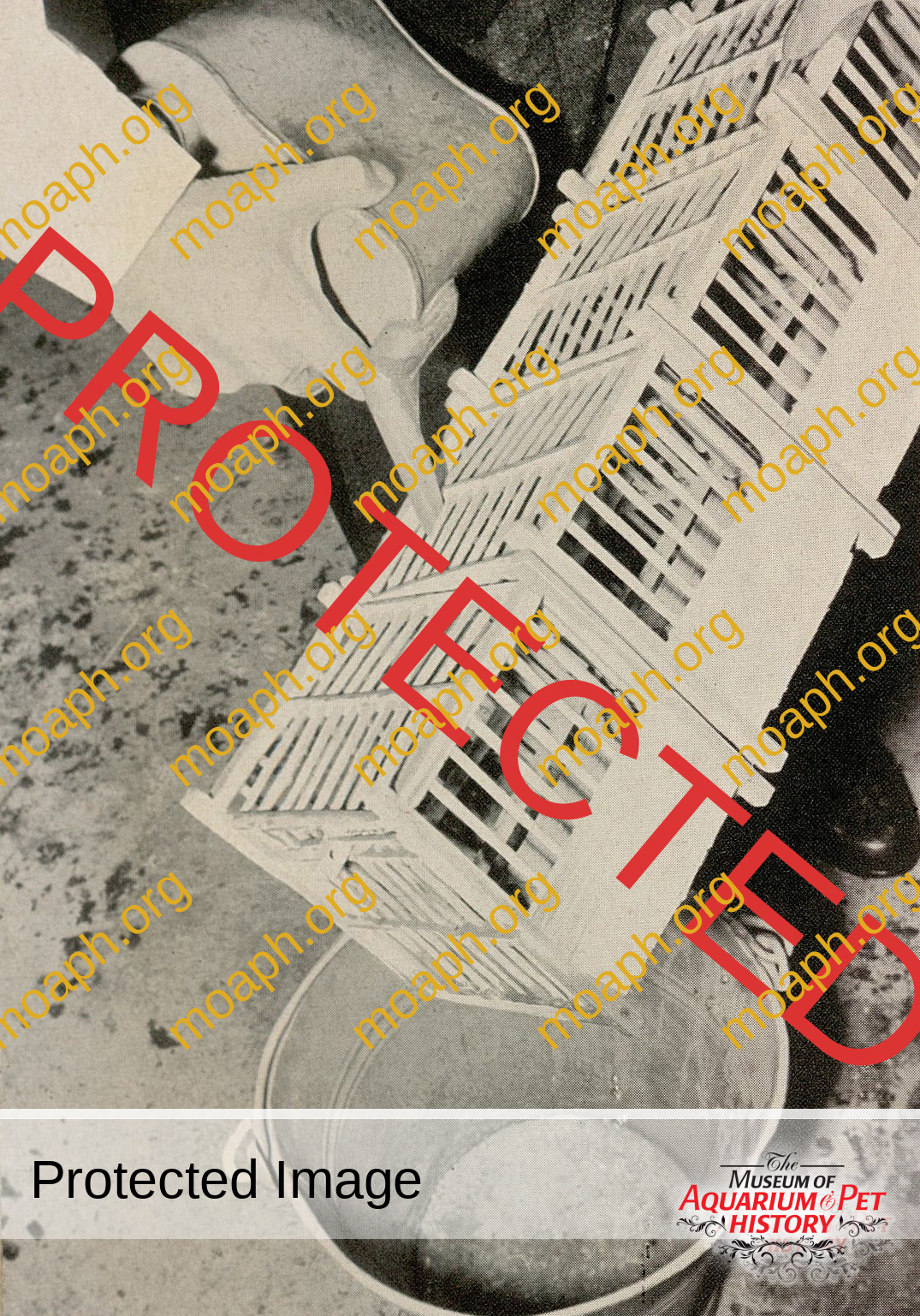
The drinking bowls of a row of seven Harzer canaries are simultaneously cleaned and freshly filled with the sharp stream from the spout of a watering can.
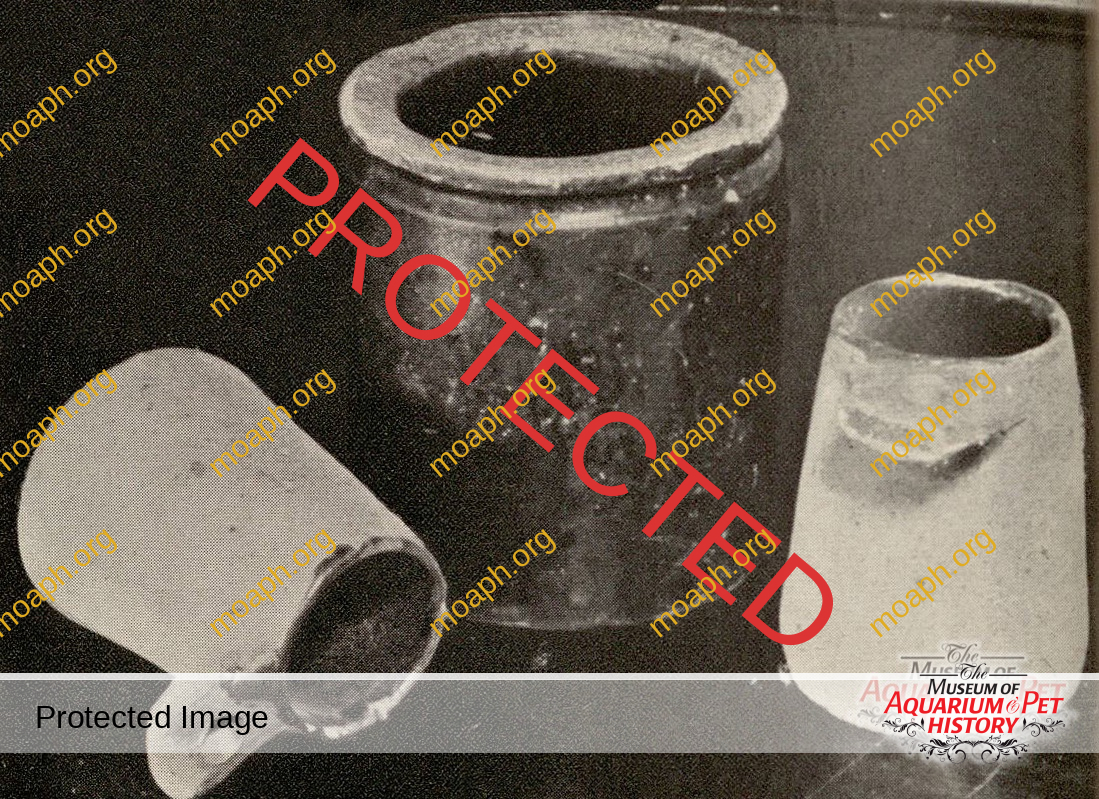
The light-colored drinking bowls, called “Pingel,” about 5 cm high, are secured in the Harzer canary cages with wooden sticks. The darker, slightly larger bowl is a Pingel for soft food eaters.
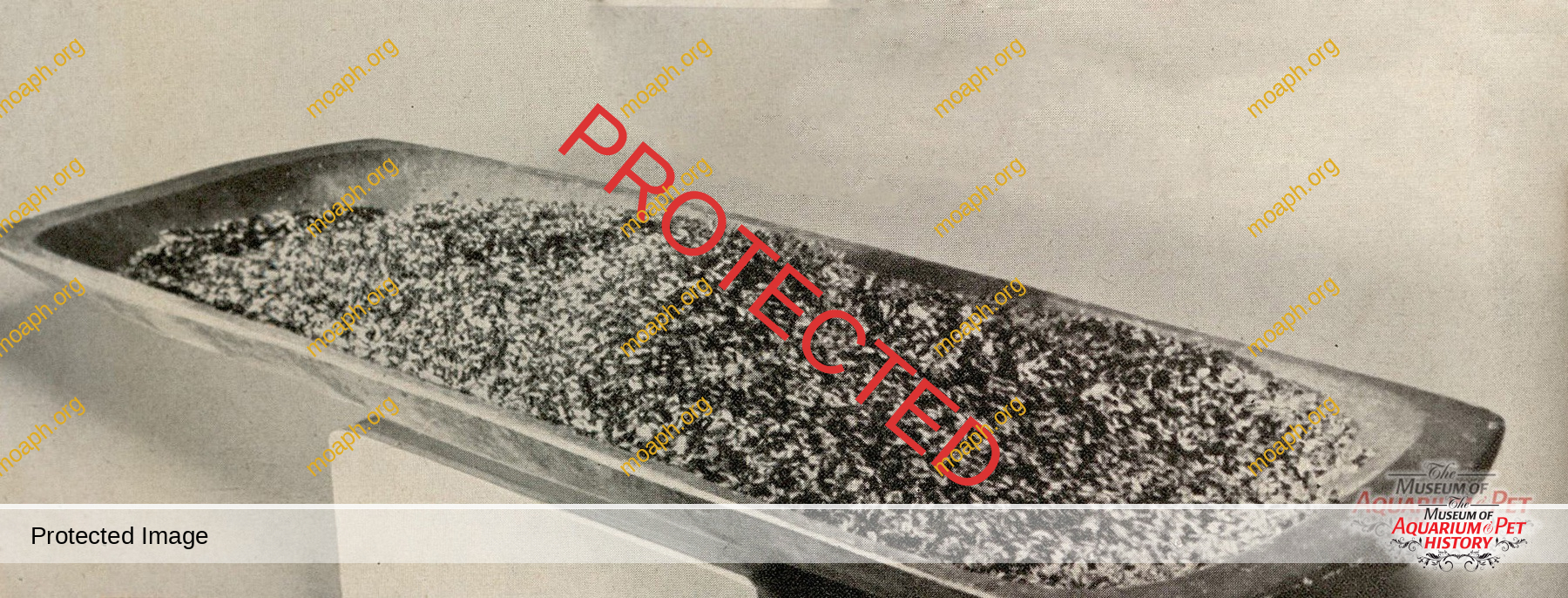
In such feed bowls, the mixing of seed feed for canaries is carried out.
The veins on the senior keeper’s forehead swelled thick with effort. He held the animal’s head firmly, his face contorted from the exertion. Everything happened terribly fast. When the python threw its first coil around the senior keeper’s body, I jumped into action.
Like a flash, I slipped out the door, holding it firmly behind me, and screamed at the top of my lungs: “Papa—Papa—the snake is out!”
My father was just talking to an antelope keeper from the interior regions. He quickly grasped the situation. Already running, he pulled out his large pocket knife, which he always had with him. “You stay outside!” he called to me—then he was behind the door, where incredible noise prevailed.
The snake had wrapped its body in a double coil around Senior Keeper Siegfried, who was now holding the head firmly under his arm. Three, four men clasped their hands over their hearts, jumping in to try and reduce the deadly embrace of the python around Siegfried’s arms and chest to lessen the strength of its grip.
The senior keeper, first dark red, then turned blue and slumped. Finally, the men managed to loosen a coil after several minutes and threw the still-writhing body of the snake into the open snake cage.
As the men stepped back, the previously encircled senior keeper, who had been unconscious for minutes, slipped to the ground—caught by one of the men.
“Hurry, get the doctor!’ Father ordered, and one of the men dashed off, while the injured man was meanwhile placed on the now only hay-filled snake sack.
The senior keeper remained unconscious for hours, and the doctor diagnosed broken ribs and bruises.
“Once again, the necessary caution was neglected,” Father said unwillingly to Mr. Darnedde. His best animal keeper would probably not be needed for weeks. Luckily, the snake hadn’t crushed his upper body beyond repair!
The snake had wrapped around his hips—so thankfully, there was no pelvic fracture. On top of that, the valuable python was killed! Snakes of this size were rarities, not seen every day.
Naturally, this exciting event awakened my interest in snakes, and I learned about the various snake species that my father dealt with—or did not deal with.
Father was a principled opponent of the venomous snake trade. Why this was the case became clear to me through the mishap with the senior keeper. How much more dangerous it must be to handle venomous snakes!
The python species are non-venomous. An African python rarely grows longer than five meters. The Indian python, however, Python reticulatus, the reticulated python, can grow up to ten meters long. Additionally, there is the Python molurus, or rock python, often used by dancers for performance acts. All these species are non-venomous and dangerous only due to their strength, as they warm up and find opportunities to throw their coils around a victim.
The python, which had to be killed, had already been lying for hours in the unpacked snake bag. If it had been subjected to a cooling process again, it would have let everything happen and would have been slowly pushed into its cage tail first.
“Was the reticulated python expensive?” I asked my father when, a few days later, the conversation at the table again turned to the accident with the senior keeper.
“Of course, it was expensive,” said Father. “But you must never forget that a human life is worth more than anything else. This is not about money, but about the injuries to a human and the unnecessary death of an animal. The senior keeper was not blameless in the accident. He should have known that the snake was not cold enough!”
END OF CHAPTER TWO