Chapter 21 – A Pair of White Rhinoceros – Wilde Tiere Frei Haus (Wild Animals/Free Delivery)
Translated by Alex Haro
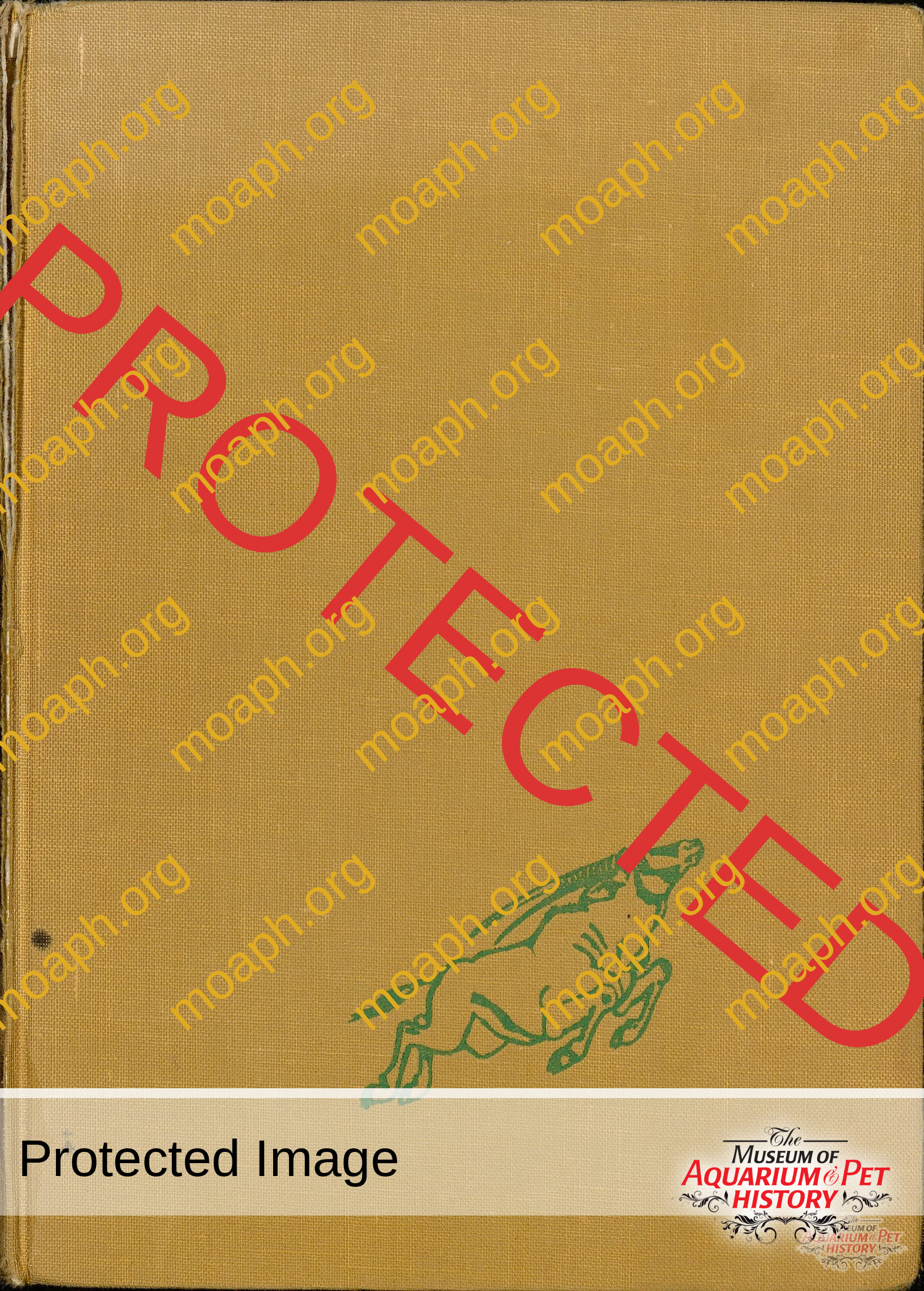
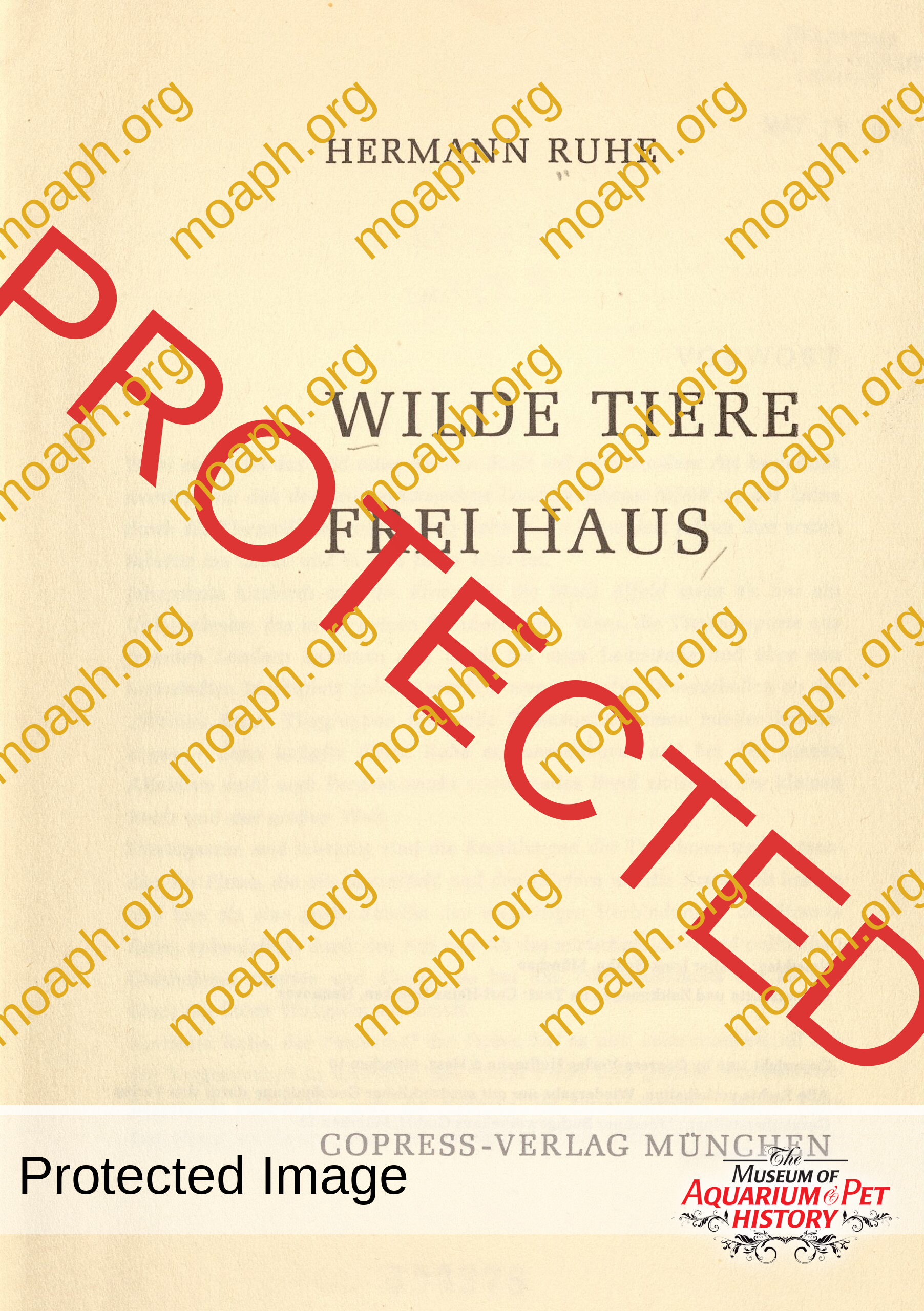
Starting in September 2024, the Museum of Aquarium and Pet History (MOAPH) started releasing a chapter a month on the translated autobiography Wilde Tiere Frei Haus (Wild Animals Free Delivery) by Hermann Ruhe.
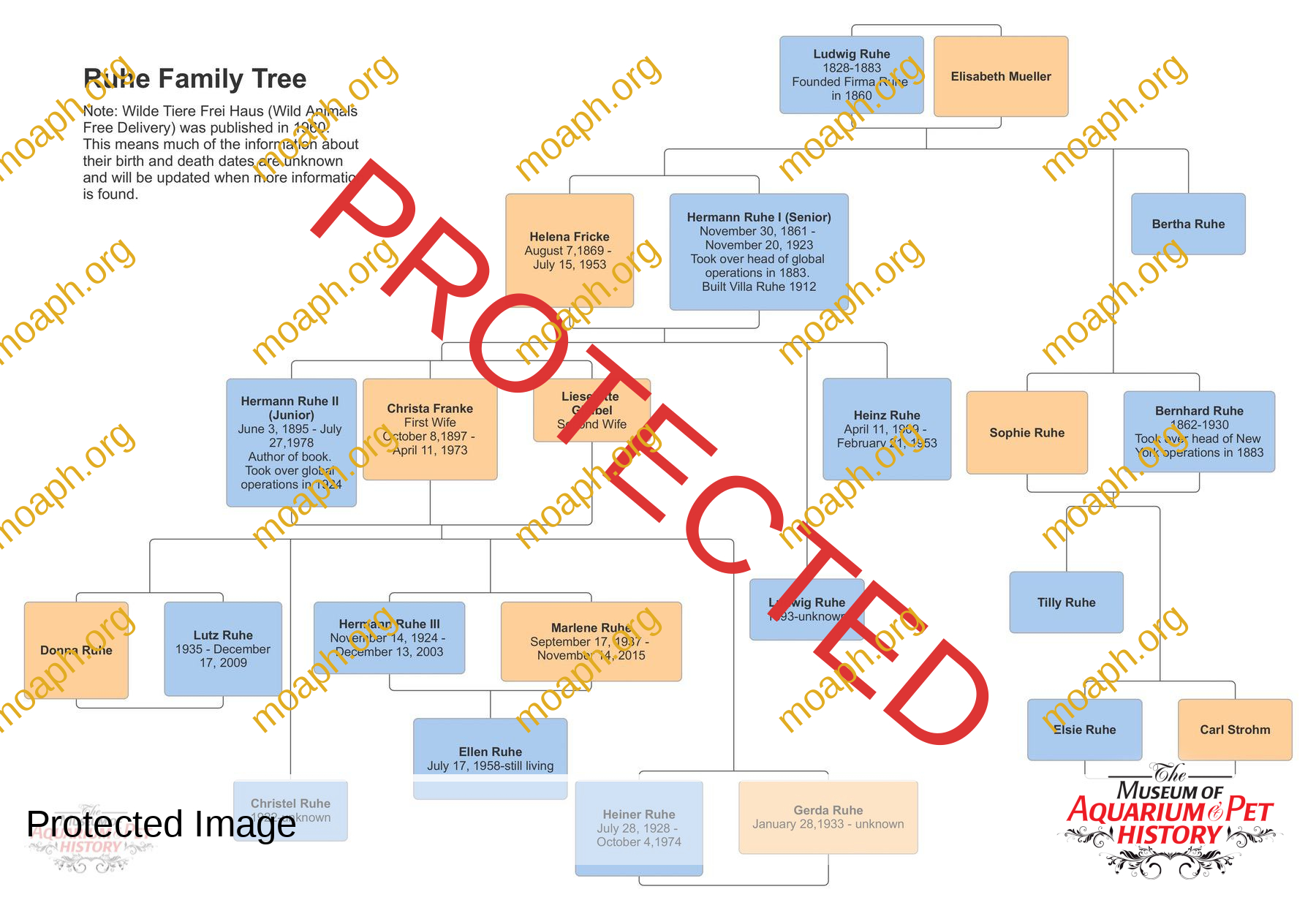
Firma Ruhe (the Ruhe Company) was the name of an animal trading company based in Alfeld, Germany from 1860 until its official closure in 1993. During this time, they were world renowned for their importation and exportation of exotic animals and birds from all across the globe, even supplying many zoos as well as circuses. Having survived both world wars, Firma Ruhe continued to dominate the world of animal trading until the mid-20th century and is a testament to true determination and leadership.
Wilde Tiere Frei Haus (Wild Animals Free Delivery) also documents the plethora of adventures, failures and successes endured by all those a part of Firma Ruhe. Through Hermann Ruhe’s great storytelling, we are able to visualize and understand the world from the perspective of animal collectors navigating through some of the most difficult situations, often not knowing whether or not they would ever return home. His recollections provide a vivid portrayal of the challenges and triumphs faced by the company, and give readers a glimpse into the world of animal trading.
The work began on the part of Willy de Beer’s farm that “Tanganyika Game Ltd.” had taken over. A model facility was to be created that met all the requirements of animal care and acclimatization.
Building materials are very expensive in Africa. It was cheaper for me to ship a large portion of it to Arusha: 200 large rolls of wire mesh and 2,000 sheets of corrugated iron for the roofs! In addition, I shipped a complete workshop setup, including a planer, saw, electric drill, and grinders. I also shipped a tractor with a trailer and a capture truck to East Africa.
My youngest son, Lutz, who had previously volunteered at the Basel Zoo, also took part in building the farm. Hermann was already there, of course.
Slowly, the camp took shape—a small zoo of sorts, with grassy areas in the center, trees where parrots roosted, and a delicate flamingo enclosure.
Along one side of the wide area were the stables and enclosures for zebras, wildebeest, and various antelope species, as well as the bird aviaries. On the second side were the stables and enclosures for elephants, rhinoceroses, and hippos—along with the crate storage shed. The third side featured the bird enclosures for bustards, secretary birds, and crowned cranes, followed by the ostrich enclosure, and finally, the large giraffe enclosure with a shelter and high feeding racks in the corner. The fourth side was occupied by the quarters for the Africans who were being trained as animal caretakers, and—as was common practice—lived there with their families. Additionally, the essential workshop was built here.
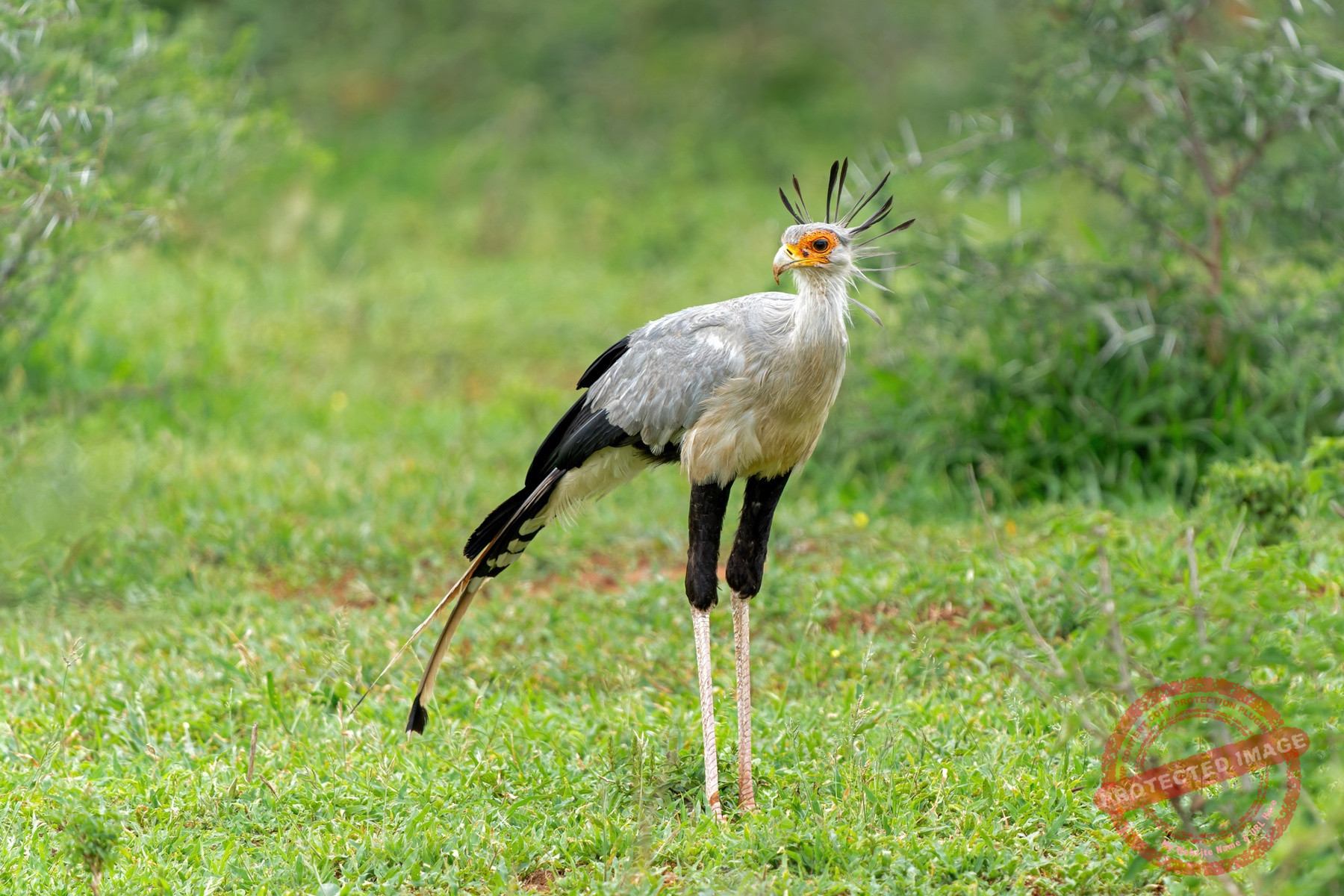
Secretary Bird (Sagittarius serpentarius)
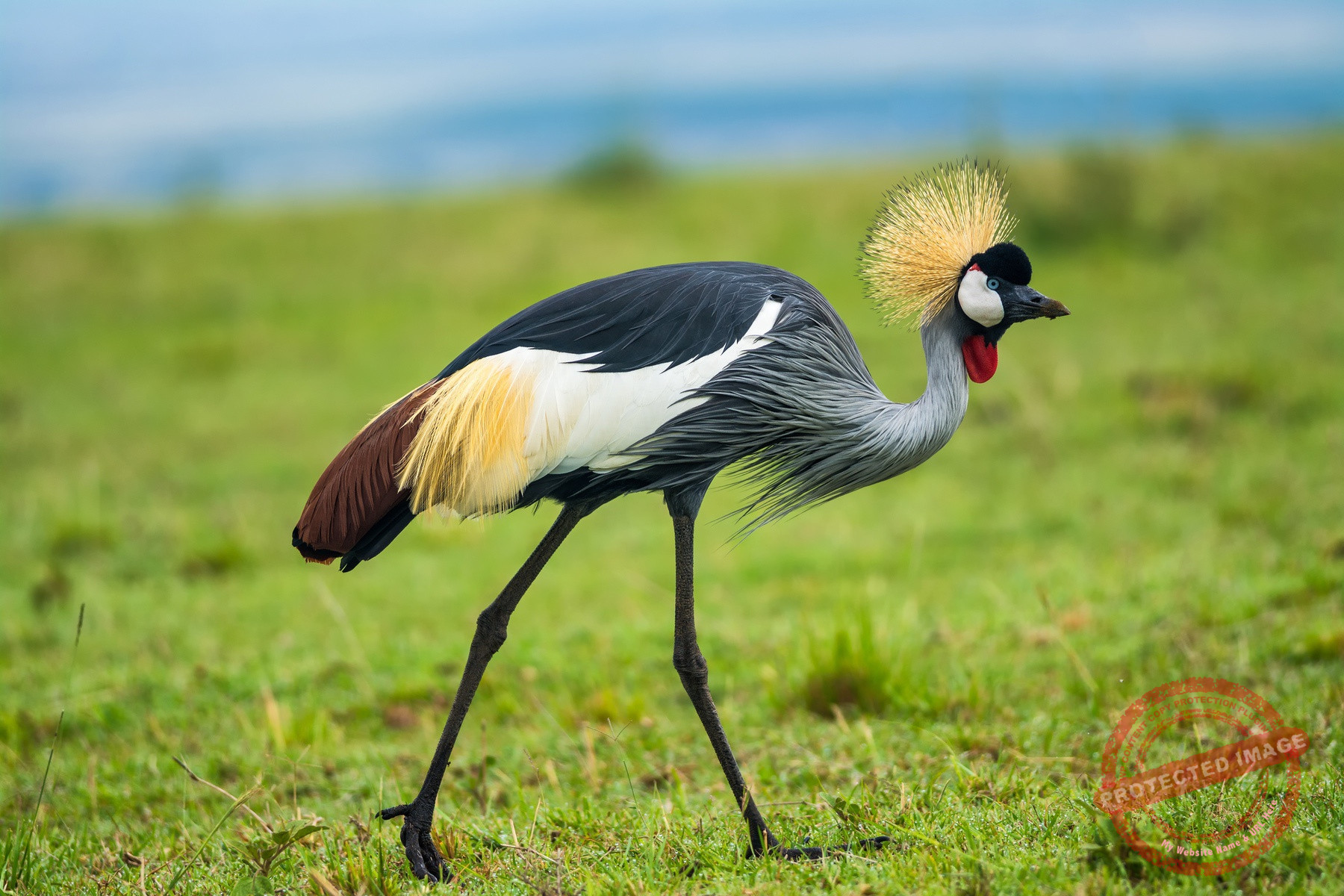
Grey Crowned Crane (Balearica regulorum)
In the past, Willy de Beer had hired African teams to carry out the woodwork for the transport crates. Directly behind our camp lies Mount Meru, a former crater whose walls on the opposite side, where the Momella Farm is located, collapsed thousands of years ago. Its remaining western side, which stretches for many kilometers, stands about 5,000 meters tall! The primeval forests on its slopes and flanks are under government control. Forestry officials in their respective districts designate the trees that are allowed to be felled.
An African team felled these trees, roughly cut into blocks on-site, hauled to the farm with a few oxen, and then cut into boards using a simple belt-driven bandsaw. During our first transports with such crates, my travelers had quite the shock. The freshly cut, soaking wet wood warped as soon as it dried. The sliding doors swelled and could no longer be opened.
We only learned that processing wet wood was the only possible method with such primitive means when we discovered that once the wood dried, it became so iron-hard that you couldn’t drive a nail into it without pre-drilling!
Our new ‘camp’ proved to be a practical, functional setup. We caught the animals ourselves, so we knew exactly what costs they incurred instead of paying a purchase price. Moreover, I had found a way to handle all of my barter and sales deals with India without detouring through Europe, saving a lot of transport costs.
At our station near Arusha, the freshly caught animals were gradually acclimated and brought to feed. Any animals that seemed unlikely to survive transport were simply released again. The camp was located on the main Nairobi-Arusha road, right on the edge of the Masai steppe. The animals only had to walk a few hundred meters to be ‘back home.’
Releasing the animals had its challenges. Sometimes it involved animals that had already been in the camp for a few weeks and had grown accustomed to their regular meals. For example, once two zebras were released, and they galloped off towards the steppe. The animal handlers were left speechless when, by evening, right on schedule for feeding time, the zebras were back at the gate, insisting on returning to their enclosure.
Initially, people tried to protect themselves by insuring the animals. That worked well until around 1952. But then the insurance companies had had enough of the enormous compensation costs, and they raised the premiums for animal transport. As a result, transport insurance became so expensive that it was hardly worth taking out anymore.
When the old company L. Ruhe, Alfeld was once again able to deliver on a large scale, many of our loyal old customers breathed a sigh of relief.
Hermann, my eldest son, got married. His young wife accompanied him on a business trip to South Africa—afterward, the two of them stayed on the farm in Arusha. Willy de Beer and Hermann became the managers of Tanganyika Game Ltd., and while our partner handled the trapping safaris, Hermann took charge of running the animal station.
One shipment, intended for Louis Ruhe Inc. in New York, was assembled in Arusha and brought to the USA by my youngest, Lutz.
Lutz had only been en route from Mombasa to America by ship for a few days when Mr. de Beer made a rare catch: a baby elephant barely 90 cm at the shoulder! The animal was snatched up immediately by a telegraphic offer in America and was to be sent to the USA immediately—by airplane!
That was a problem! Transporting such a small, freshly caught elephant across climate boundaries to another continent is a huge risk and a difficult task. Hermann took charge of the transport himself, as a precaution.
But on this journey, it seemed as though everything was conspiring against him. The crate, which had been built very lightly due to air freight costs, broke during transport to Nairobi Airport. In a frantic rush, boards had to be found, practically in the middle of the steppe! This delayed the transport so much that the load arrived at the airport just a quarter of an hour before the plane was scheduled to take off.
During the layover in hot Khartoum, Hermann had only one option: to push for the plane to take off as quickly as possible. The heat was far too harmful for the animal. The plane finally began to taxi to the runway—but then returned to the main building of the airport: an instrument malfunction. Takeoff was impossible!
Telegrams flew back and forth, trying to obtain the instrument. There was no suitable one at any of the nearby airports—not even in Nairobi. It was said that one would arrive tomorrow on a plane from London.
“By then, my elephant will be dead!” said Hermann. “Something has to be done immediately! Or is your company willing to cover the loss if the animal dies here?”
The airline definitely didn’t want that, so Hermann and the elephant were quickly sent on another plane to London.
In London, there was no connecting flight. The elephant was first moved from the freezing cold of the airport to a side room of a large kitchen, which was warm enough for him.
Once again, the phone calls began to figure out what would happen next. The rescuers in this difficult situation turned out to be the pilots of an American military plane, who were returning some crews to the USA. Hermann, along with his elephant crate, was loaded into the belly of the cargo plane. For the Americans—there were three pilots, each with a co-pilot—this elephant transport became a matter of pride and honor.
Once the elephant was taken care of and seemed content, Hermann lay down for a few hours to catch up on lost sleep. When he woke up, he couldn’t believe his eyes: all of the pilots and co-pilots were peacefully sleeping next to him.
Although Hermann knew that the autopilot could fly the plane on its own, he didn’t have the same nerves as the aviators. He was sweating blood until finally, one of them woke up and casually went to the cockpit just to check.
The plane landed safely in New York. Hermann delivered the elephant to the designated zoo and then returned to New York to meet Lutz, who had already been there for a few days.
The execution of the rhino capture safari, which I had planned on Carr Hartley’s farm, was not possible until the spring of 1955. Tanganyika Game Ltd. had negotiated with the British and obtained permission to capture the animals—however, in the meantime, Sudan had become independent.
Equipped with our new capture truck, Willy de Beer’s son and nephew, along with an animal trapper named Piet, a young Boer, set off by land, while Hermann and de Beer themselves flew ahead to deal with the formalities that were once again required in Khartoum.
The Sudanese, who had since replaced the Englishmen we knew, claimed to know nothing and caused difficulties before finally granting permission to capture the animals under the same conditions previously agreed upon with the British: one pair of rhinos for our company and one pair for the Sudanese government.
The small expedition started after the exact route they were allowed to take was prescribed. A government department provided maps showing roads or paths ‘believed to exist.’
As it turned out, most of these roads did not exist.
The expedition finally reached the area where, according to reports from animal trapper C. Hartley, white rhinos were supposed to be found. Civilization was long behind them. The men of Tanganyika Game Ltd. were probably some of the first white people, besides Hartley, to ever venture there. It felt to them as though there were no living creatures at all—let alone white rhinos! Everything seemed deserted.
The heat was unbearable: fifty degrees Celsius in the shade! Everyone breathed a sigh of relief when a group of natives was located, and they had to communicate using sign language since no one—including the accompanying boys—spoke the local Sudanese dialect. Nevertheless, they managed to learn that there were indeed rhinos nearby, surprisingly in entire herds!
After 14 days of fruitless searching, the first herd was located: 11 rhinos in one spot! Two young animals were captured—and after several more days, a second pair.
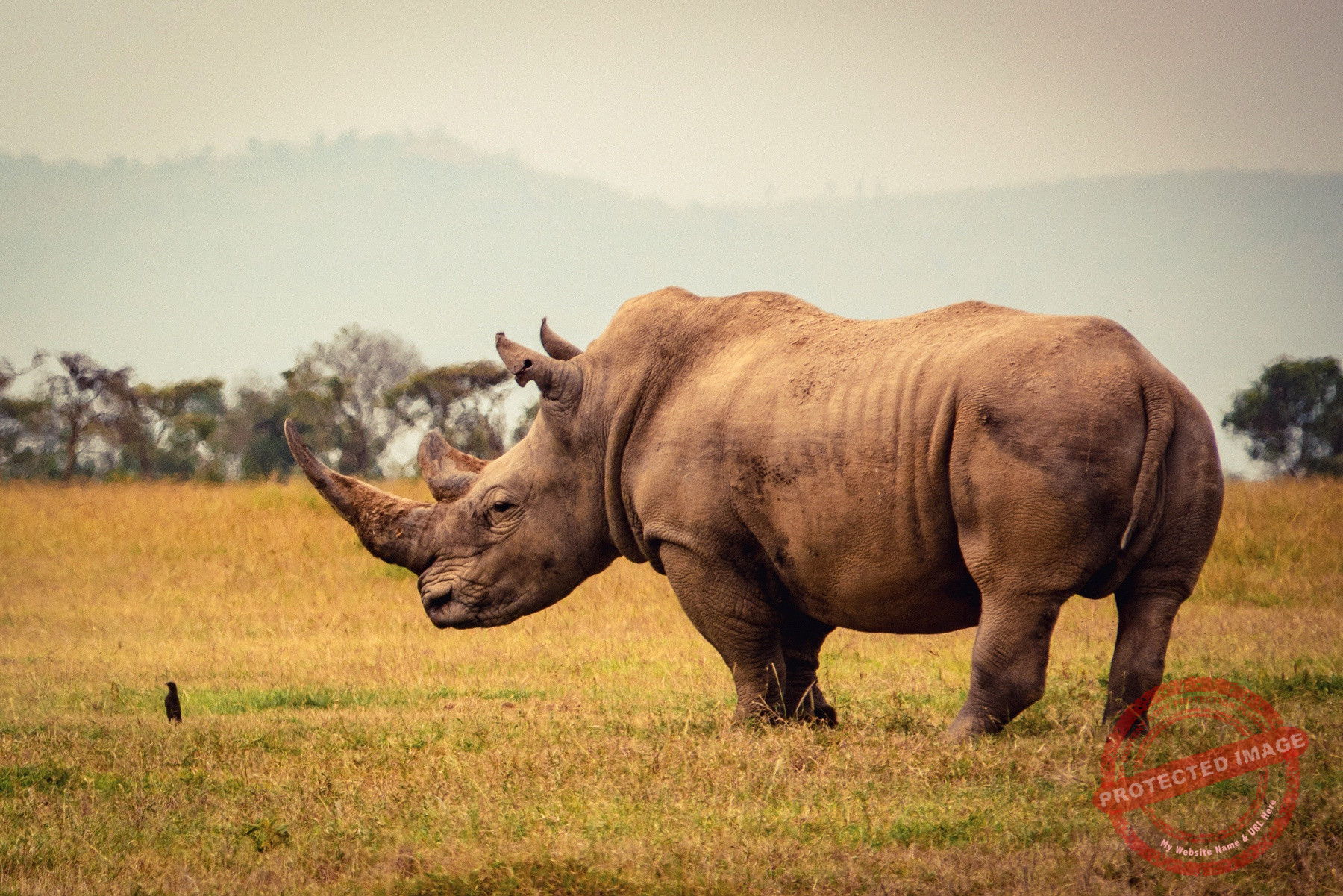
White Rhino (Ceratotherium simum)
It sounds easy, but it was not. Above all, the health of the white men suffered greatly under the unhealthy climate.
Mr. de Beer suffered a severe malaria attack and had to be brought back immediately. His nephew followed with the same symptoms, while Mr. Piet sustained a broken collarbone. Only Willy de Beer’s son held out. Hermann had already had to leave the expedition before the second pair of rhinos was caught in order to load a shipment in Mombasa.
Upon the return of the trucks, carrying the heavy transport crates with the rhinos, the Sudanese government suddenly created export difficulties. A plane chartered for the transport had to return empty. Only after further lengthy negotiations were we able to bring our own pair of rhinos to Arusha by truck, while the second pair, which by agreement belonged to the government, remained in Sudan.
I was immediately informed that the animals had arrived safely in Arusha and sent out my offers to America. The St. Louis Zoo purchased both animals, but requested a six-month delay in delivery because space had to be created for the rhinos. They were to be housed in a building at the St. Louis Zoo, which was still under construction.
Hermann, supported by our travelers Vepy and Günther, meanwhile brought in a new shipment to Germany, which arrived in April and was particularly remarkable for its variety: 5 giraffes, 4 rhinos, 1 elephant, 7 zebras, 2 warthogs, 10 mongooses, 7 eagles, 10 ostriches, 5 adult lions, 1 young lion, 1 impala, 2 leopards, 3 servals, and 3 noisy birds1 . Most of the animals had been caught by Willy de Beer himself, while a smaller portion had been purchased.
MOAPH1: A term likely indicating birds such as Cockatoos, Macaws or Aratinga Conures.
Despite all our business successes, 1955 also brought us considerable bad luck: My wife and I were involved in a car accident that initially looked quite serious, with the car overturning. My wife was thrown out and, fortunately, only sustained minor injuries as she landed in a hedge. I wasn’t so lucky; with bruises, cuts, and a few broken ribs, I had to remain bedridden for a few weeks.
It was during this time that a guest from overseas arrived, and I was unable to attend to him as much as I would have liked. Nevertheless, I had recovered enough to personally advise him in selecting animals. The visitor, a retired general covered in scars from the Mexican civil wars, was Señor Xavier Ordonnez, the director of the Mexico City Zoo.
Chief Inspector Eiffert from the Hannover Zoo took on the task of transporting the animals to Mexico and stayed for a few months as a consultant at the Mexico City Zoo. Not only Eiffert’s reports from Mexico but also the fact that I could hardly attend to the guest during his visit prompted me to take a trip to Central America with my wife in the winter of 1955/56.
We traveled on the ‘Vulkan,’ a ship that had previously transported our animals to Mexico. As beautiful as our previous trip to Mombasa had been, this crossing was stormy. In the Atlantic, my wife and I were still the only passengers dining with the captain; all the other passengers were seasick in their cabins.
The sea was so rough that I didn’t want to shave. For over ten days, I let my beard grow because both hands were constantly needed just to hold on.
During a stopover in Havana, Cuba, we went ashore to look around a bit before the ship set off again, through the Gulf of Mexico, toward the Mexican port of Veracruz. There, a large American car picked us up to take us to Mexico City to meet our friend, Director Ordonnez.
“Oh,” Señor Ordonnez said, surprised when he saw me, “you look very distinguished, Mr. Ruhe!”
“Thank you,” I replied. “I think I’ll have to ask my wife if I should keep the beard after all.”
“A bit trimmed and groomed—why not?” Liselotte suggested.
The beard stayed—and it’s still there today!
Mexico City is a charming city. I can hardly imagine anything nicer than a Sunday morning walk through Chapultepec Park, where the zoo is also located.
Mexicans—both gentlemen and ladies—ride in full dress, a colorful and lively sight. The spurs they wear are incredibly long, with large, coin-sized wheels for decoration. If I were thirty years younger, I believe I would have moved my business and home to Mexico, it’s so beautiful there!
Just like in Africa, there was no need for heated shelters for the animals here, as the pleasant climate only required shade structures to protect the animals from the sun. The most expensive aspect of European zoos is always the permanent buildings and large heating systems. All of that is saved here!
After spending several days in Mexico City, we had to say our goodbyes. We still had many plans ahead and flew on to Venezuela in the north of South America. There, an old acquaintance who had once lived in Germany and now ran a horse breeding operation awaited us. He took on the task of driving us through half the country: I wanted to see if there might be a place to establish a zoo. My thinking was, where there’s oil, there must also be money—but we had no luck.
In Maracaibo, we visited the small zoo, which was equipped with native animals. We saw jaguars that were almost the size of fully grown lionesses and very large, sleek pumas, as well as a wide variety of monkey species native to the northern part of South America. After a few days, we returned to the capital.
Barely had we left Caracas to fly to New Orleans in the USA when yet another revolution broke out in Venezuela, which we narrowly escaped in time.
The president of the country, along with all his friends and relatives, was removed from office, including the director of the Maracaibo Zoo, whom we had just visited. Unfortunately, his successor did not recognize the business agreements made between him and me.
At the airport in New Orleans, my son Heiner was waiting for us. I wanted to get to know the city where my grandfather had founded the first branch of our company nearly 90 years ago! The old shop could no longer be found, only the street where it once stood still existed.
I was also very interested in the New Orleans Zoo, which housed a rare treasure—a Kodiak bear, which, when standing, reached a height of almost three meters! Kodiak and Alaskan bears are the largest of their kind.
Incidentally, many zoos in the United States differ fundamentally from the zoos we know in Europe. For example, the St. Louis Zoo does not charge any admission fee to the public at all, while the Bronx Zoo only charges admission on certain days of the week. Only a few zoos still follow the practice common in Europe and charge admission fees consistently.
In the ‘free’ zoos, which you definitely don’t enter on foot—everyone drives through the grounds in their own car—this is offset by not-so-cheap parking fees. Additionally, there are a number of ‘snack bars,’ where even a drink is more expensive than usual. So, while the management of a ‘free’ zoo still covers its costs, they also cater to the convenience of the public, who don’t like standing in line at ticket booths or walking on foot.
The size of American zoos is rarely comparable to that of European zoos. There are vast areas that you could not possibly walk through in a single afternoon. Moreover, the zoos are very modern and set up according to high standards, often showing that the Hagenbeck concept of open enclosures has been adopted here in an almost ideal form. One must admit, however, that American zoos have considerable financial resources, much of which is contributed by wealthy patrons and benefactors.
A testament to this was the visit of several patrons of American zoos, who traveled to Tanganyika Game Ltd. in Africa to participate in trapping safaris themselves and personally select the animals they wanted to donate to their zoos.
The entire American animal business cannot necessarily be judged by our standards. For example, there are significantly more private buyers than in our part of the world, purchasing animals for all sorts of purposes.
Heiner just told me about one such story. A young woman had called our New York office: she was a performer and wanted to know if we had any tame wild animals that were suitable for her act.
Heiner told her that we currently had two panthers on the farm. Would she like to see them?
At the agreed time, she arrived in person—a striking woman, well-groomed, with flowing red hair. Heiner took her to the farm’s predator house and showed her the two panthers.
“May I choose one?” she asked, and when he nodded, she, without batting an eye, climbed into the cage and played with the two animals. Heiner could only watch in amazement. The panthers behaved as tame as house cats. The young woman was clearly experienced in handling wild animals.
She bought one of the animals, paid $1,200 for it, and later had the panther picked up.
For two days, nothing happened; then she called: “Come and take this beast back!”
Heiner and Dr. Roth, one of our travelers, brought a transport crate and retrieved the animal. It was sitting, frightened and angry, in the lady’s bathroom!
In tears, she explained that she had just tried a trick with the panther, but…
The lady was a burlesque dancer. She performed a striptease, and as a sensational novelty, the panther was supposed to tear the clothes off her body. When she tried this ‘game’ with the animal, the panther, who seemed to enjoy it, struck a few times—only a few millimeters deeper than intended!
I could only shake my head at this story. People sometimes come up with the strangest ideas!
How can an animal know whether to strike a millimeter more or less if it’s already striking? And she had chosen a panther for this!
Heiner immediately took the animal back and, as is customary in such cases in the USA, refunded her half the purchase price.
One night, a Hollywood actress also showed up at the farm to buy a cheetah! Since she couldn’t make up her mind right away, she requested the animal be brought to her the next morning at the Waldorf-Astoria, where she was staying. Dr. Roth brought the cheetah to the hotel by taxi, on a leash.
The actress was Mae West! Dr. Roth presented the animal in her apartment. The completely tame cheetah obediently lay down in a corner as instructed by our employee and remained still.
Mae West was disappointed. She had wanted a ‘wild animal’ that her friends and acquaintances would be afraid of. This cheetah, she thought, behaved more like a well-trained German Shepherd.
As a result, the deal with the actress didn’t go through, and offering her a panther instead wouldn’t have been advisable.
America is certainly not Europe. There, even a wild animal dealer encounters the strangest things!
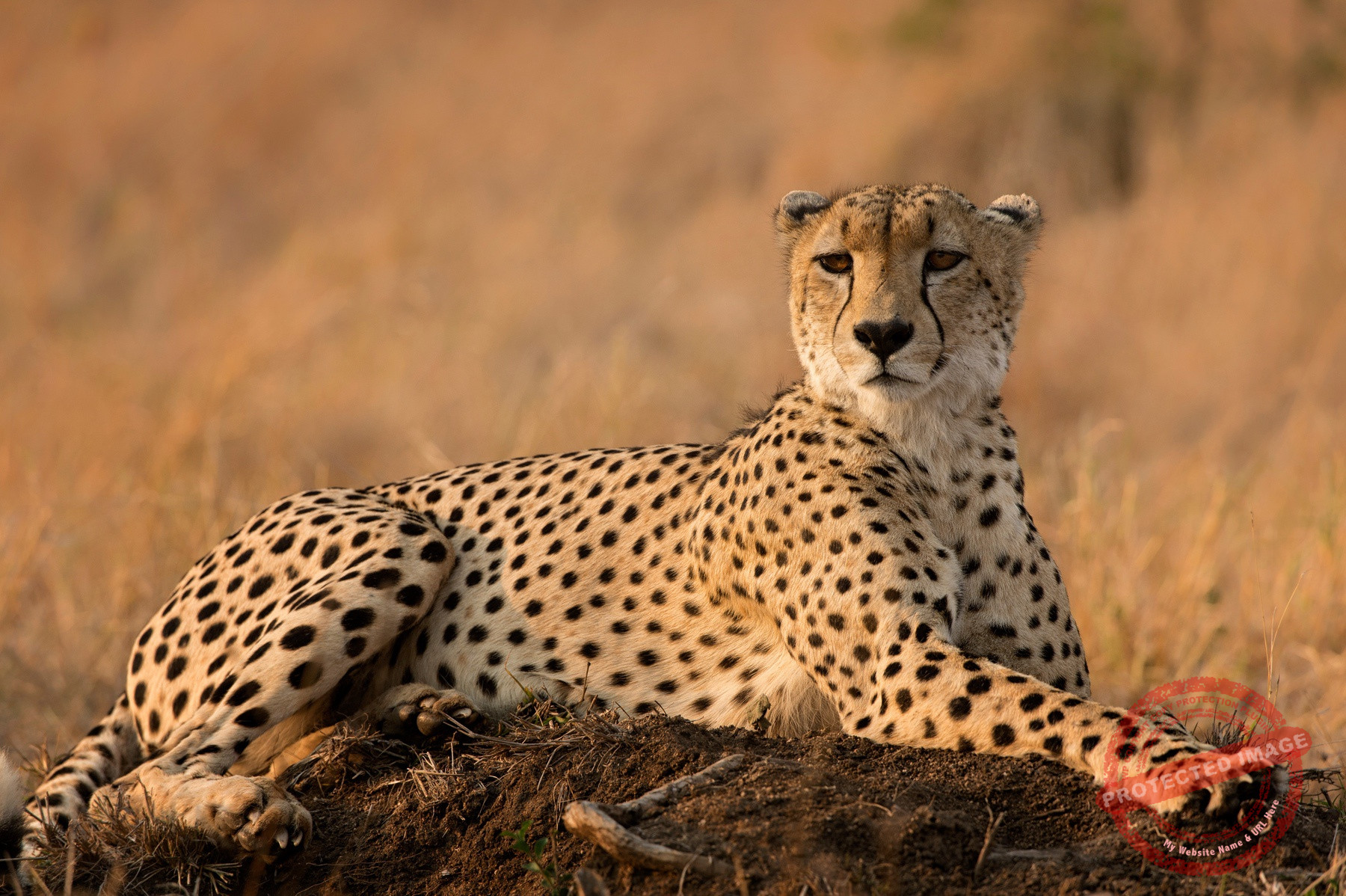
Cheetah (Acinonyx jubatus)