Chapter 23: Elephant with Small Steps — Wilde Tiere Frei Haus (Wild Animals Free Delivery)
Translated by Alex Haro
Starting in September 2024, the Museum of Aquarium and Pet History (MOAPH) started releasing a chapter a month on the translated autobiography Wilde Tiere Frei Haus (Wild Animals Free Delivery) by Hermann Ruhe.
Firma Ruhe (the Ruhe Company) was the name of an animal trading company based in Alfeld, Germany from 1860 until its official closure in 1993. During this time, they were world renowned for their importation and exportation of exotic animals and birds from all across the globe, even supplying many zoos as well as circuses. Having survived both world wars, Firma Ruhe continued to dominate the world of animal trading until the mid-20th century and is a testament to true determination and leadership.
Wilde Tiere Frei Haus (Wild Animals Free Delivery) also documents the plethora of adventures, failures and successes endured by all those a part of Firma Ruhe. Through Hermann Ruhe’s great storytelling, we are able to visualize and understand the world from the perspective of animal collectors navigating through some of the most difficult situations, often not knowing whether or not they would ever return home. His recollections provide a vivid portrayal of the challenges and triumphs faced by the company, and give readers a glimpse into the world of animal trading.
I deeply mourned the death of the Duke of Harrar, whom I had come to know as a kind man, and I had to reluctantly give up the project.
Meanwhile, in Hannover, the new tropical house was nearly completed. The modern facility, designed according to the latest standards, was now ready to open to the public, showcasing gorillas, orangutans, chimpanzees, South American monkeys, reptiles, sloths, and more. As expected, it was met with great enthusiasm.
After the festive inauguration of the new house, I traveled to Prague to finalize some trade agreements with the local zoo. At the same time, I reconnected with an old client, the Schönbrunn Zoo in Vienna. Slowly, the old good collaboration with Paris was also being revived.
Alfred Glenewinkel, who had been working in Gelsenkirchen for many years, traveled to Cairo to collect the 100 flamingos I had ordered during my visit there.
I was still working alone at the Alfeld firm; Hermann was in Africa, Heiner was managing the affairs of the Louis Ruhe company together with my brother Ludwig, who was permanently residing in New York. Lutz, who had somewhat recovered from his accident but still needed to be cautious, returned from America. I sent him to Gelsenkirchen to assign him some lighter duties at the Ruhr Zoo.
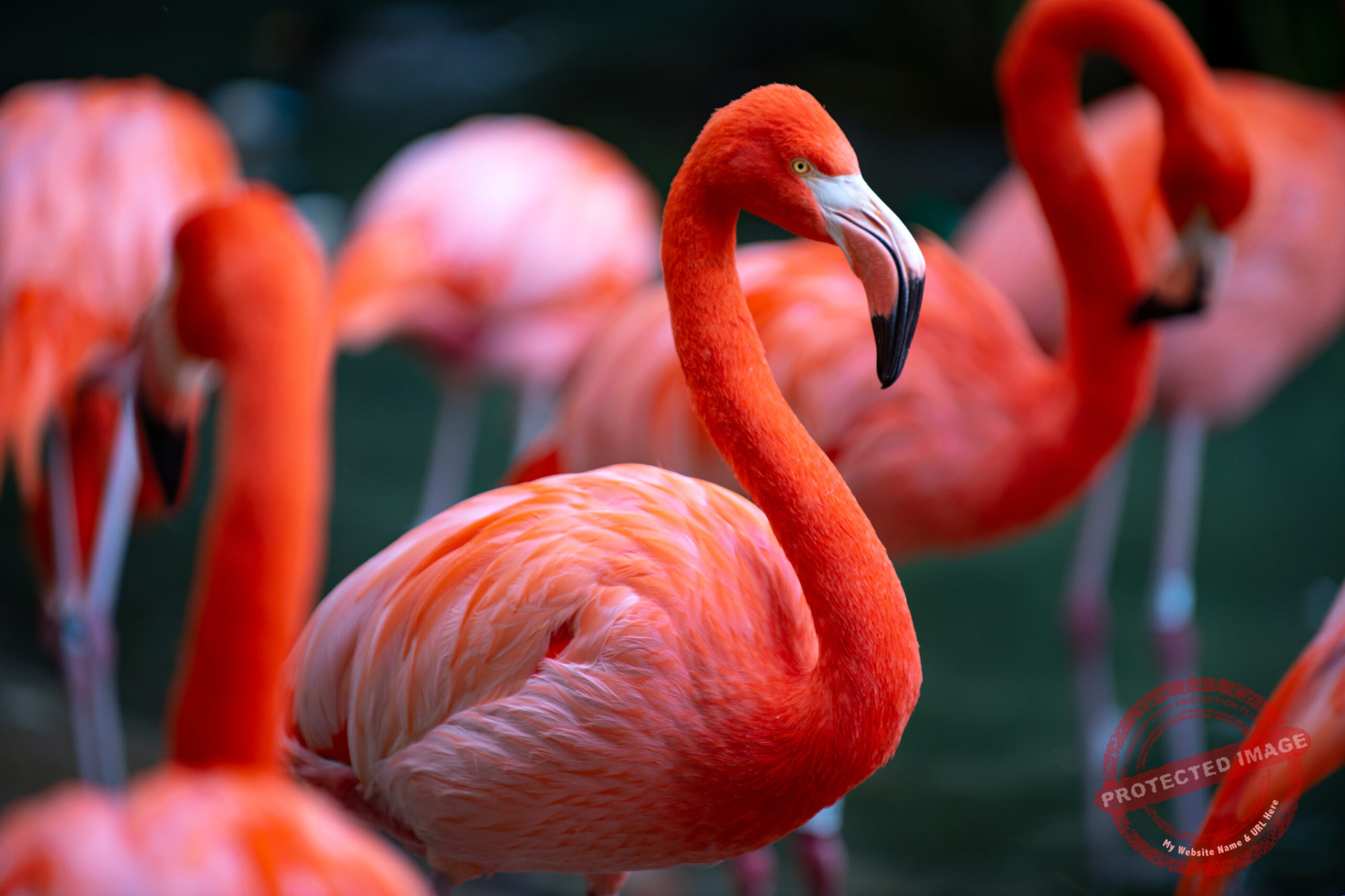
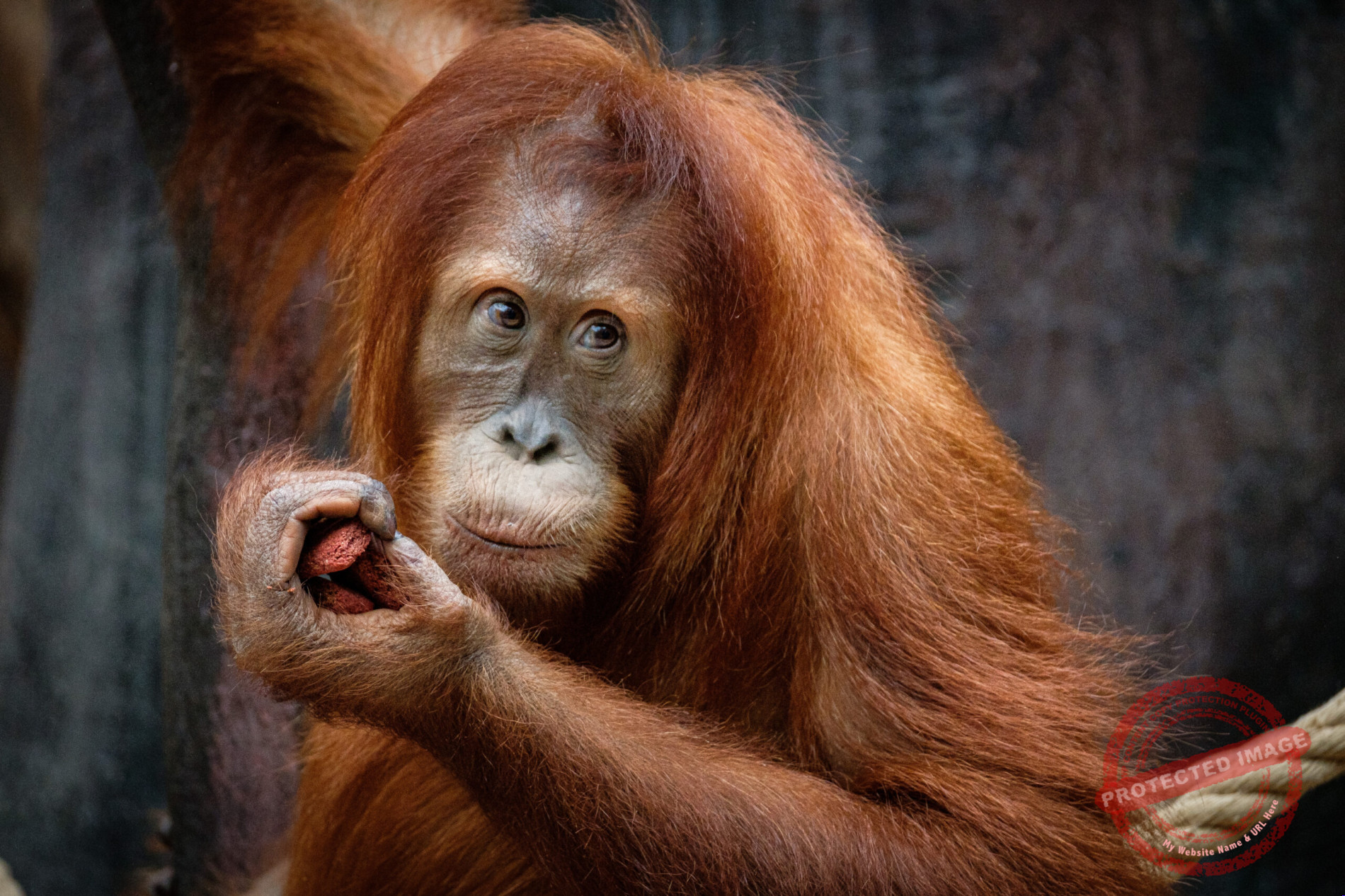
Orangutan (Pongo sp.)
Our business friend from Singapore accompanied us on a trip to the Sultan of Johor, whose estate is located at the southern tip of the Malay Peninsula. The Sultan’s zoo, which housed several animals whose export to other countries was prohibited, was of great interest to me.
Unfortunately, I couldn’t close a deal with the Sultan, but he proved to be a gracious host. My wife was even allowed to tour the upper floor of the palace, where she discovered a peculiar feature: the Sultan’s “shoe room,” containing about a hundred pairs of shoes in a disorganized jumble. On the long shelves stood patent leather shoes alongside slippers, mountain boots next to modern slip-ons, and all kinds of footwear imaginable.
Another amusing aspect of the Sultan’s mansion was located in one of the courtyards: around 30 garages, more than half of which were filled with a car collection! Four old Mercedes race cars stood next to a 1925 limousine, and there were also two or three old Horch cars, as well as ancient American Ford models.
The many cars were never used, but each one, no matter how antiquated, had its own caretaker! The cars looked as if they were washed twice daily, with their metal parts polished to a shine.
I couldn’t resist asking the Sultan why he kept so many old cars.
“Why?” he said with a smile. “It’s simple: I just can’t part with them; I’m attached to the cars!”
From Singapore, we flew to Bangkok. Initially, I had intended to establish my youngest son, Lutz, here for a while. However, after his accident, I abandoned that idea. Instead, I planned to send Dr. Roth and his wife to Bangkok for a few months to put together a large transport.
We continued our journey through Calcutta, where we met with Mr. Meems, and then on to Madras to visit the local zoo, which, unfortunately, had little to offer.
Each animal on display carried a tarp on its back, with its catalog number clearly painted on it. The interested buyers sat on a grandstand, like at a horse race, to get a clear view of everything. The elephant auction catalog contained information on around 120 animals, detailing their gender, age, size, and origin.
The animals were presented one by one, starting with number one and continuing to the last. The mahouts, who sat on the elephants’ necks, showcased their charges as if in a horse show. Each elephant had to turn and move in all directions so that it could be carefully inspected. Then the mahout demonstrated what the elephant could do: knocking down trees, hauling, standing still, aligning, or gently lying down.
The auctioneer first offered the respective minimum price, followed by a bid from the government, which always sent representatives to these auctions. Only then did the interested parties, mostly representatives from logging companies that needed the elephants for work, begin to bid. As with any auction, there were intense bidding battles for particularly desirable catalog numbers.
A few years earlier, Hermann had purchased nine female elephants at such an auction. The Indians had driven up the prices so high that it brought tears to his eyes. As soon as they noticed he was interested in a particular female elephant, they wouldn’t relent until the price became too expensive—and then they left him hanging at that high price. Hermann was forced to turn the tables and started bidding on bulls as well, until the Indians no longer knew what he was genuinely interested in. They became more cautious after he let some of them hang a few times. In the end, the overall purchase turned out to be quite favorable.
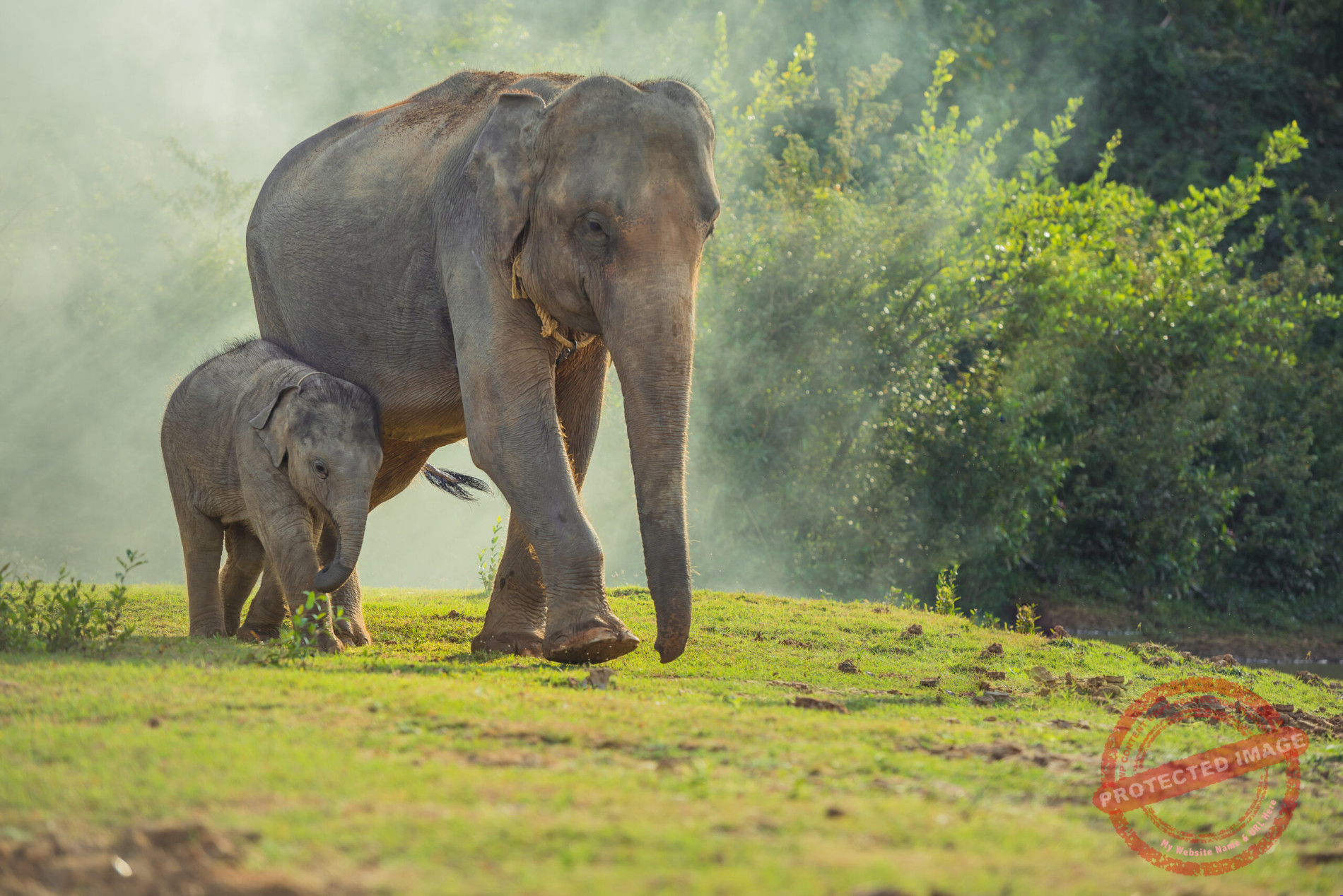
Afterward, we had another stroke of luck and found the opportunity to visit an elephant station near Bangalore. With the help of the director of the Mysore Zoo, I was able to arrange a trade deal for young elephants, which were later brought to Alfeld by Mr. Meems.
Upon arriving at the station, we heard that a freshly captured, approximately 18-year-old elephant would be arriving in an hour. The camp director, a native former non-commissioned officer in the British Army, was on his way to collect the large animal.
Finally, word came from the camp: “They’re coming!”
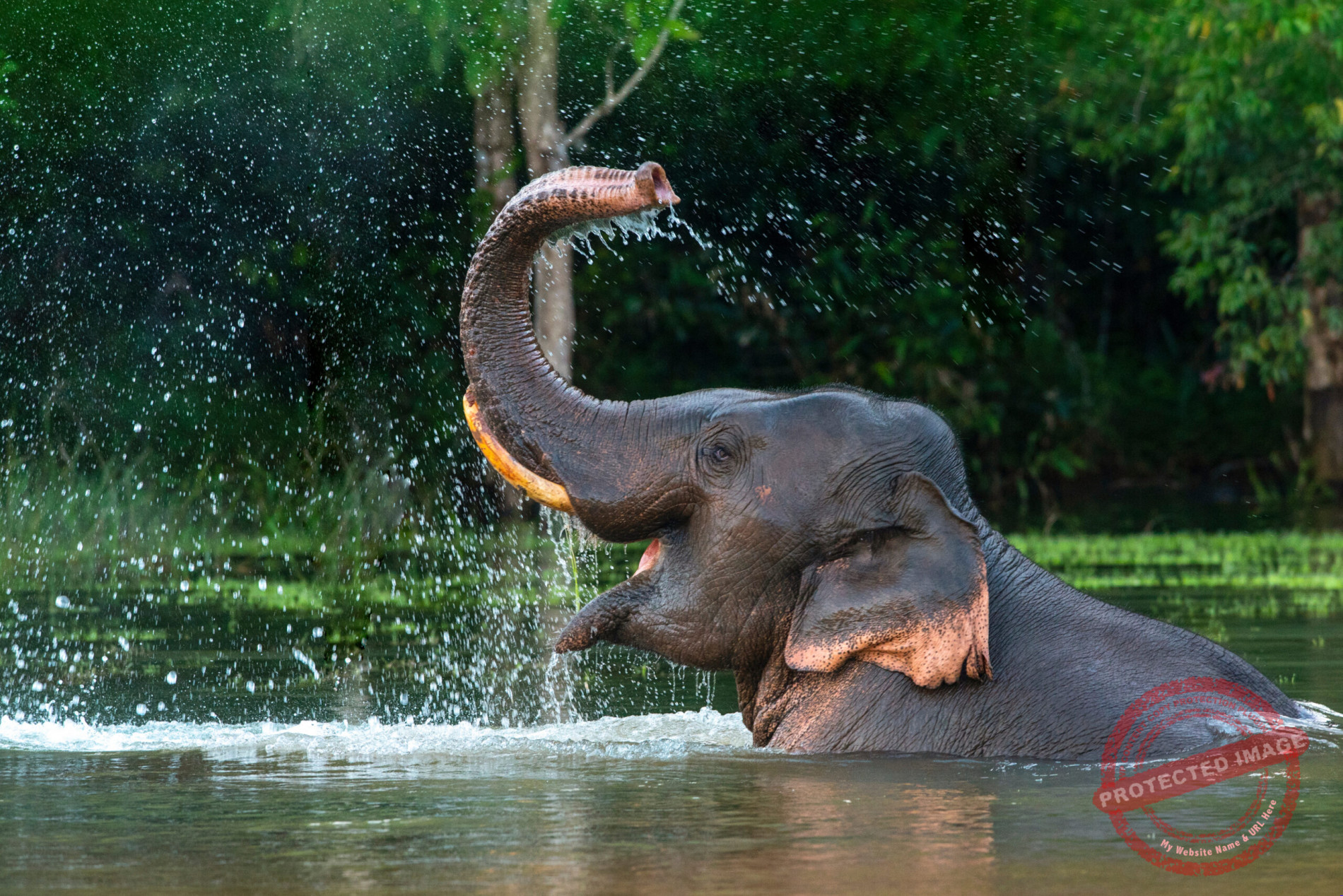
Trained working elephants—six bulls and two cows, with mahouts1 on top—brought the freshly captured elephant, who had his legs bound and had to move with tiny steps, into the camp. The “newcomer,” a bull2 of quite considerable size, was raging.
Two tame bulls, with their mahouts, led the procession at a distance of about three meters, holding the newcomer with thick ropes carried in their mouths. Two more bulls marched behind the group, while the fifth bull dragged the captured elephant, and the sixth bull, along with the two cows, remained in reserve.
The freshly caught elephant used a tree in the camp as a barricade, hiding behind the trunk and holding onto it with his tusks and trunk.
We didn’t understand the mahout’s command, but suddenly the largest bull turned around and gave the newcomer a powerful headbutt, sending him flying backward and forcing him to submit to being pulled along.
At the command “Halt,” all the elephants with ropes tied to their mouths or necks stepped on the slack rope lying on the ground. No matter how much the newcomer pulled and tugged, he couldn’t move an inch. Only after the command “Move” did the procession start again, heading toward the small corral where the new elephant was to be acclimated.
Just before reaching the corral, the elephant threw himself to the ground and began to rage once more.
In response to a few short commands, two of the bulls marched up to him and pushed him with their tusks—completely without sympathy. The newcomer sprang to his feet and no longer dared to move, let alone continue his tantrum.
The corral was about the size of a large room. With skill, and without any of the handlers needing to lift a finger, the newcomer was pulled inside by the lead bull and then wedged in from behind by two following female elephants, who pressed firmly against him. Since the female elephants didn’t have long tusks, they couldn’t seriously injure him in the process.
“What do you intend to do with this large elephant?”
“He will become completely tame,” the man said and explained what would happen to the animal in the coming days.
We witnessed some of it ourselves right away. Along the way, the elephant had sustained a number of small skin injuries, which were now being dabbed by some boys with cotton swabs attached to long sticks to speed up the healing process. The elephant expressed his gratitude for this service by angrily charging at the beams.
“The animal must be kept constantly moving,” said the head overseer, “until it gives up its stubbornness.”
The bamboo sticks with cotton swabs weren’t just for healing the wounds; they were also meant to accustom the elephant to constant touch.
After three weeks, the elephant would be taken out of the corral for the first time, and the process of maneuvering him back in, with the help of the working elephants, would be rehearsed again.
“In no more than six months, he’ll be as tame and hardworking as all the others,” the overseer emphasized.
What surprised us the most was that the trained elephants showed absolutely no solidarity with the wild, freshly captured elephant. On the contrary, it almost seemed as though they were determined to teach the newcomer some sense as quickly as possible.
“How about a reptile exhibit, Dad?” Lutz asked me once I was back home.
“Not a bad idea,” I said. “Alright then—get to work!”
Lutz, whom I had tasked with coming up with newsworthy attractions to draw visitors, set to work with enthusiasm.
At the Ruhr Zoo, several outdoor display cases equipped with thermostats for automatic temperature regulation were installed.
Our particular pride lay in the fact that nothing had ever gone wrong in Gelsenkirchen. No predator had ever escaped, no monkey had ever gotten loose. No elephant had ever harmed its keeper, and no birds of prey had ever flown away. But soon, we would face a more serious mishap…
As for the reptile exhibit plans, I gave Lutz free rein, and he handled the task with care, taste, and expertise.