Chapter 4: Difficult Years – Wilde Tiere Frei Haus (Wild Animals Free Delivery)
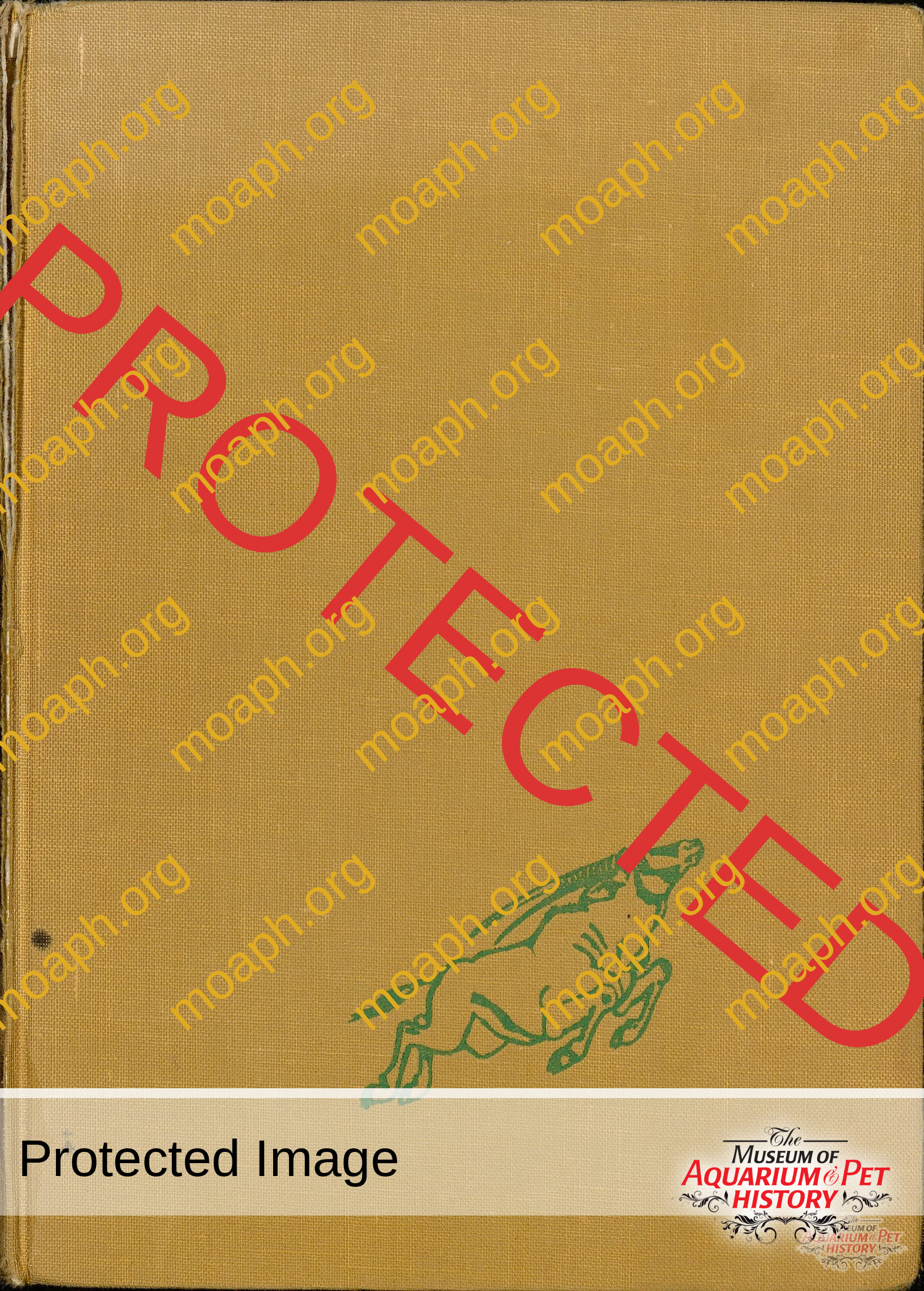
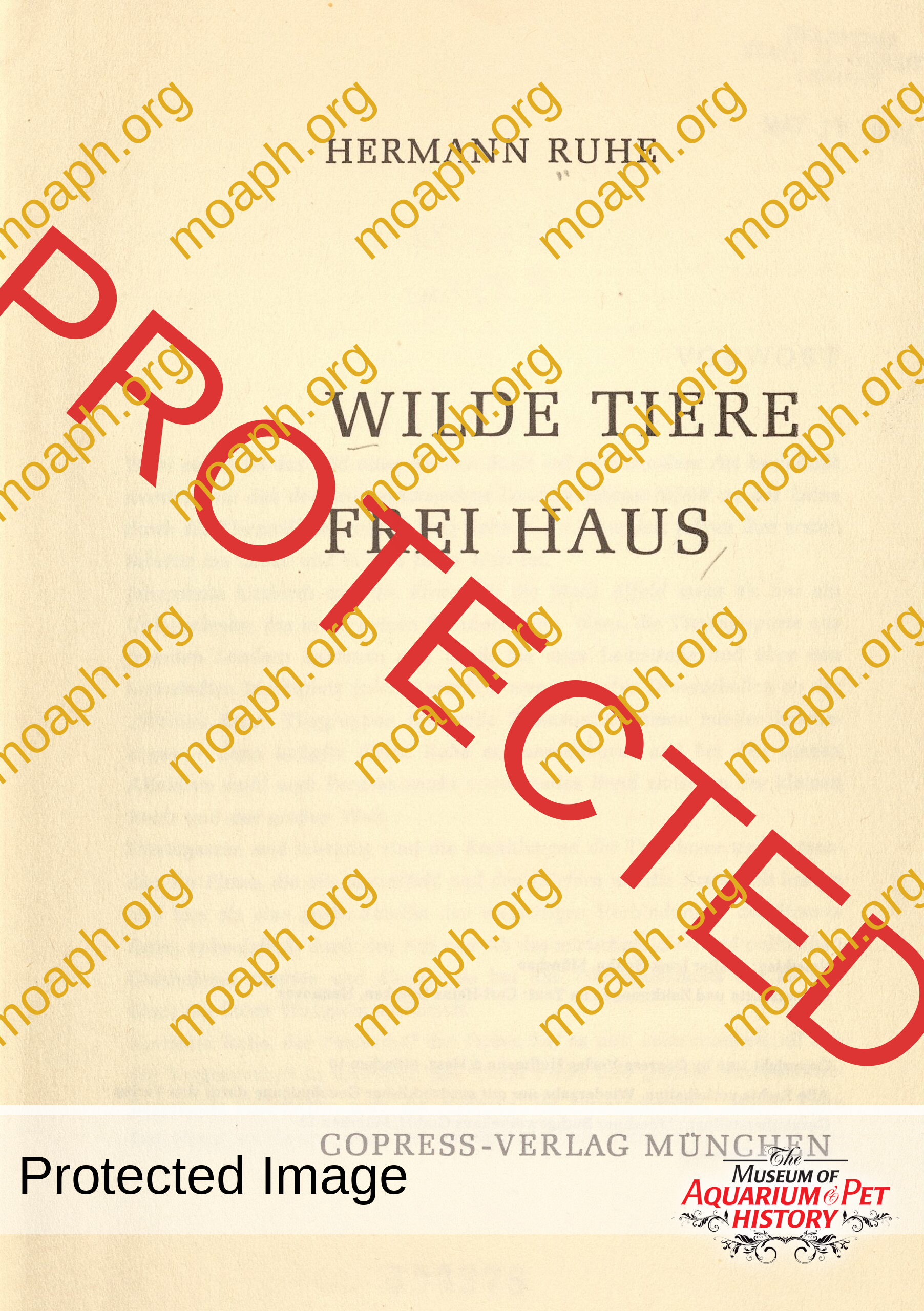
Starting in September 2024, the Museum of Aquarium and Pet History (MOAPH) will be releasing a chapter a month on the translated autobiography Wilde Tiere Frei Haus (Wild Animals Free Delivery) by Hermann Ruhe.
Firma Ruhe (the Ruhe Company) was the name of an animal trading company based in Alfeld, Germany from 1860 until its official closure in 1993. During this time, they were world renowned for their importation and exportation of exotic animals and birds from all across the globe, even supplying many zoos as well as circuses. Having survived both world wars, Firma Ruhe continued to dominate the world of animal trading until the mid-20th century and is a testament to true determination and leadership.
Wilde Tiere Frei Haus (Wild Animals Free Delivery) also documents the plethora of adventures, failures and successes endured by all those a part of Firma Ruhe. Through Hermann Ruhe’s great storytelling, we are able to visualize and understand the world from the perspective of animal collectors navigating through some of the most difficult situations, often not knowing whether or not they would ever return home. His recollections provide a vivid portrayal of the challenges and triumphs faced by the company, and give readers a glimpse into the world of animal trading.
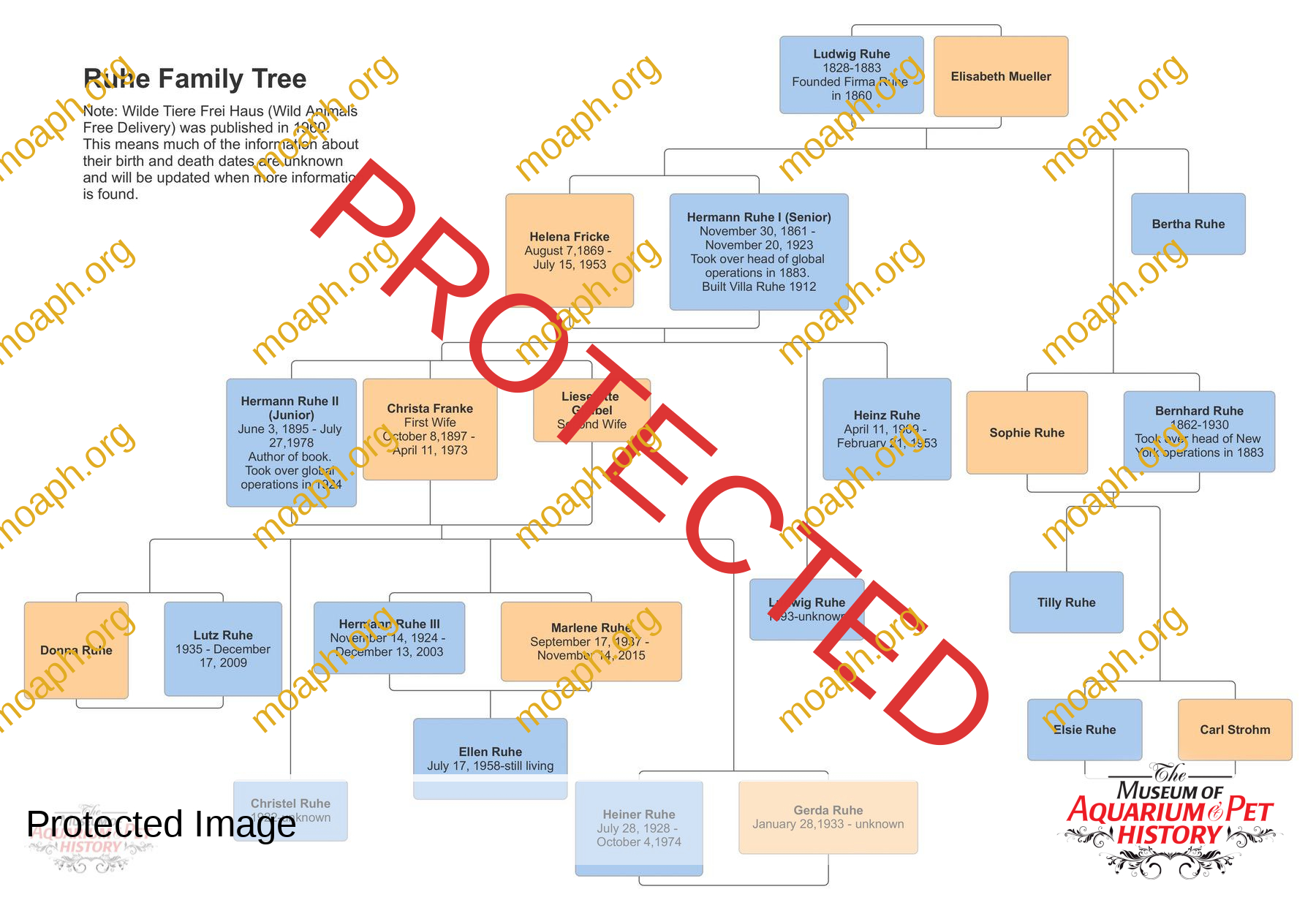
My 19 years did not protect me from receiving a resounding slap from my father one morning when it turned out that I had forgotten to send an important business letter. It was the summer of 1914.
“But Papa,” I said, completely astonished, grabbing my cheek.
“Nothing but!” he said angrily. “I hope that’s enough to make you remember that something like this simply must not happen! A businessman who wants to achieve something will never forget such a thing; remember that for the future!”
Father was not resentful. An hour later, he was already giving me various instructions again, this time calmly and concisely, as it should be.
Just around this time, my father made a big deal with the Russian circus Lorebeerbaum, in which I was now fully involved. Since 1913, two experienced animal trainers worked in our dressage hall: the couple Charles and Lucie List, two recognized and experienced animal trainers who worked with tigers, lions, and bears.
These acts, now finished, were sold to the Lorbeerbaum Circus, and the List couple went with them to Russia. Father initially concluded a down payment contract with the new Russian circus, which Lorebeerbaum strictly adhered to when the war broke out.
I immediately volunteered and received my deployment order for the Western Front in September 1914. My father, mother, and our new animal collector, Meems, a Dutchman my father had hired to oversee bird transports via Holland to New York, accompanied me to the train to bid me farewell.
As the Alfeld station disappeared in the distance and I could no longer make out my parents and Mr. Meems, the seriousness of life had finally begun for me.
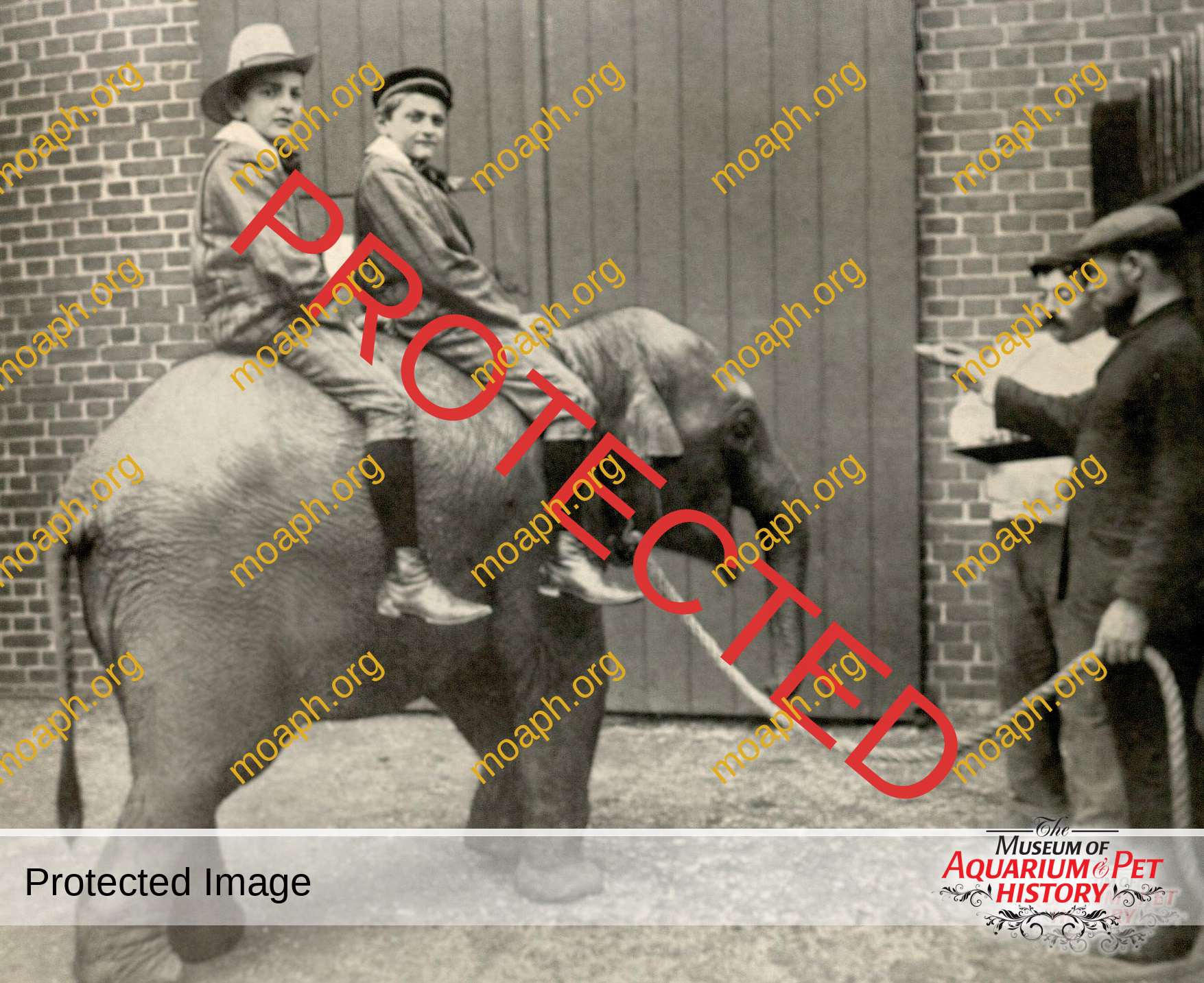
In 1905, Herman Ruhe and his brother Ludwig (with the flat cap) are riding a young elephant at the Weisen Erde (White Earth). Siegfried is wearing a light jacket, and next to him is Karl Kreth.
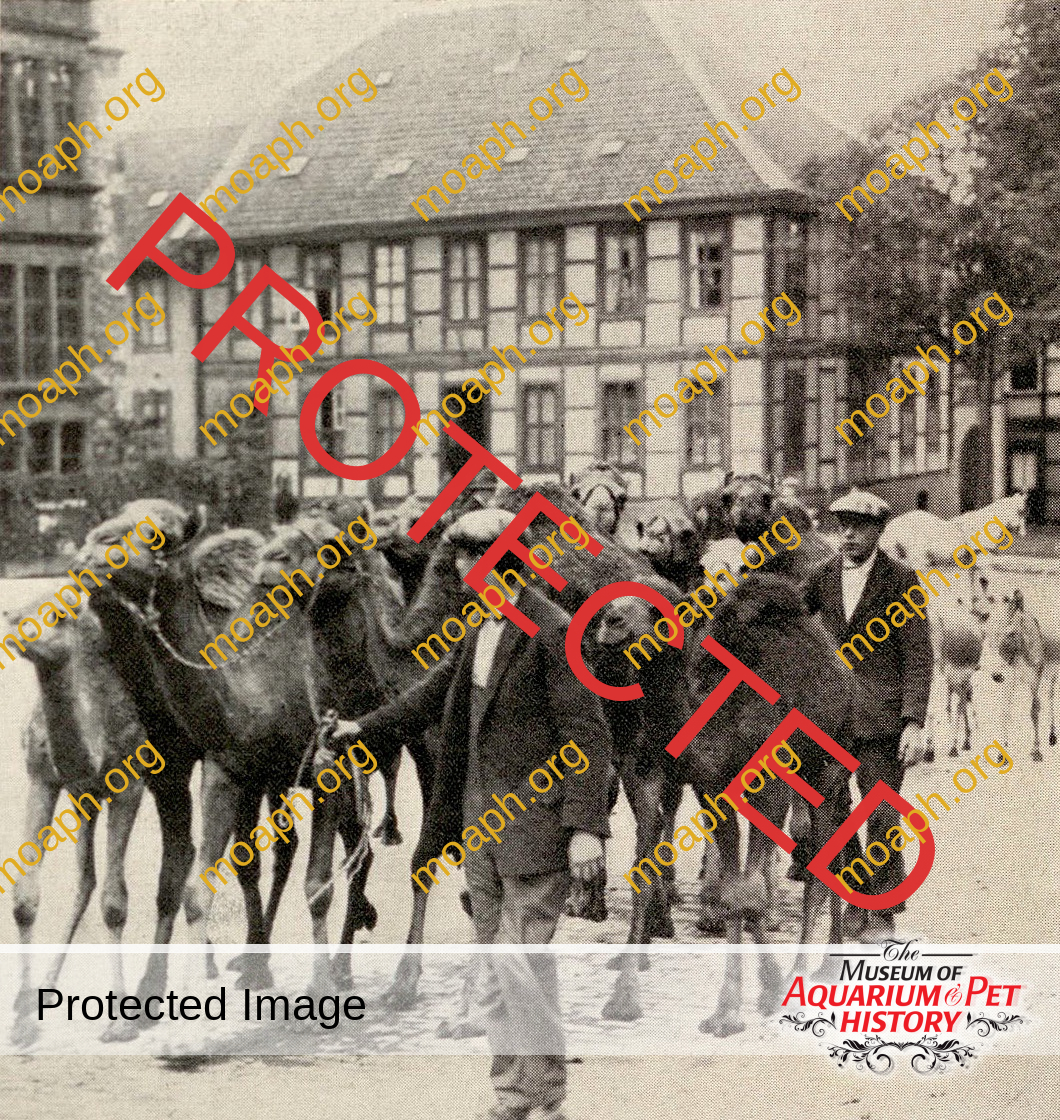
A transport consisting of dromedaries and Sudanese donkeys has arrived from Africa and is being led through the market to Weiße Erde. In the foreground is Fritz Tegtmeier, who later became an inspector at Hannover Zoo. Behind him is the animal keeper Hillebrecht.
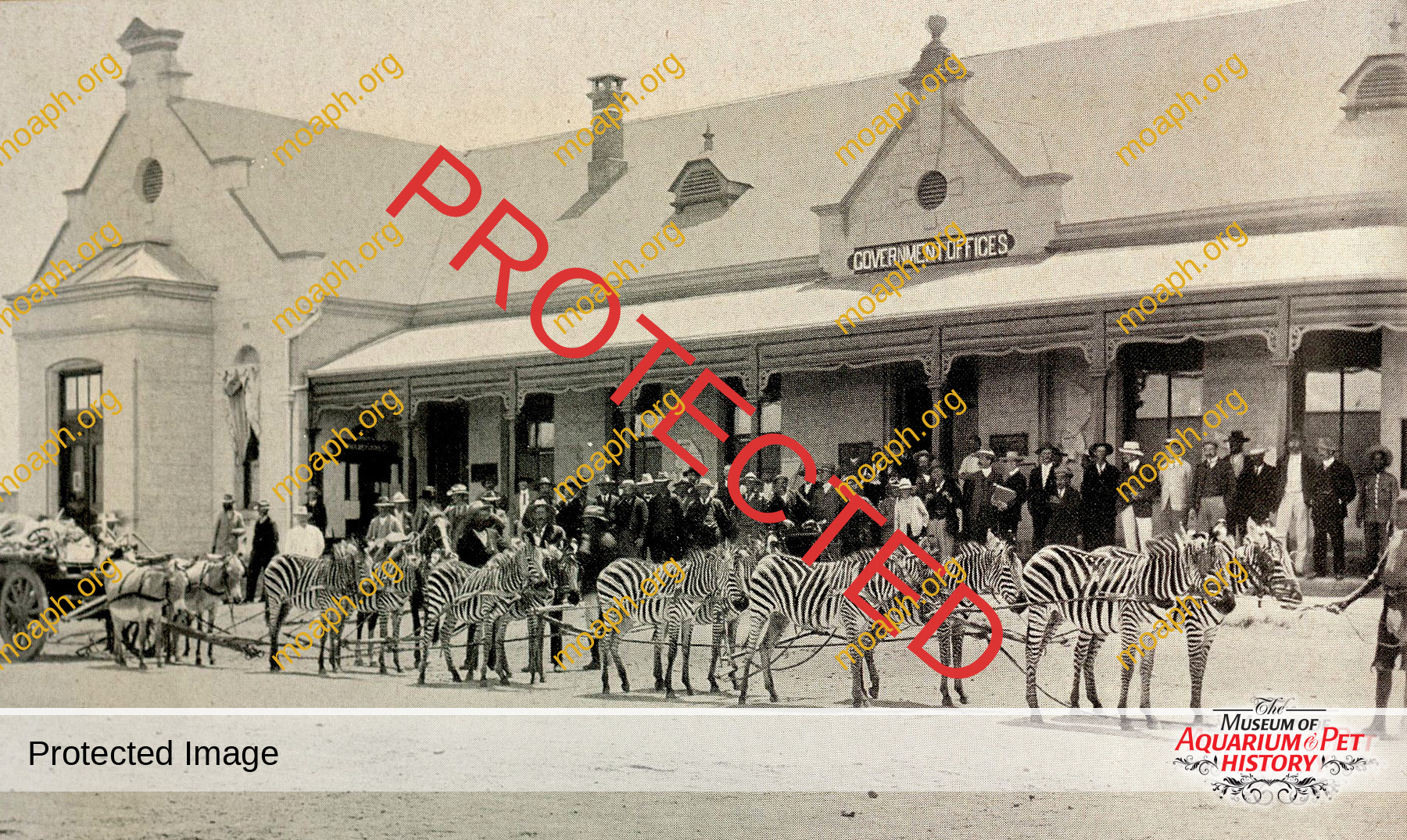
Chapman’s zebras in Southwest Africa were harnessed to a wagon loaded with trophies—a sight that was nothing unusual for Hermann Windhorn or Fritz Krueger.
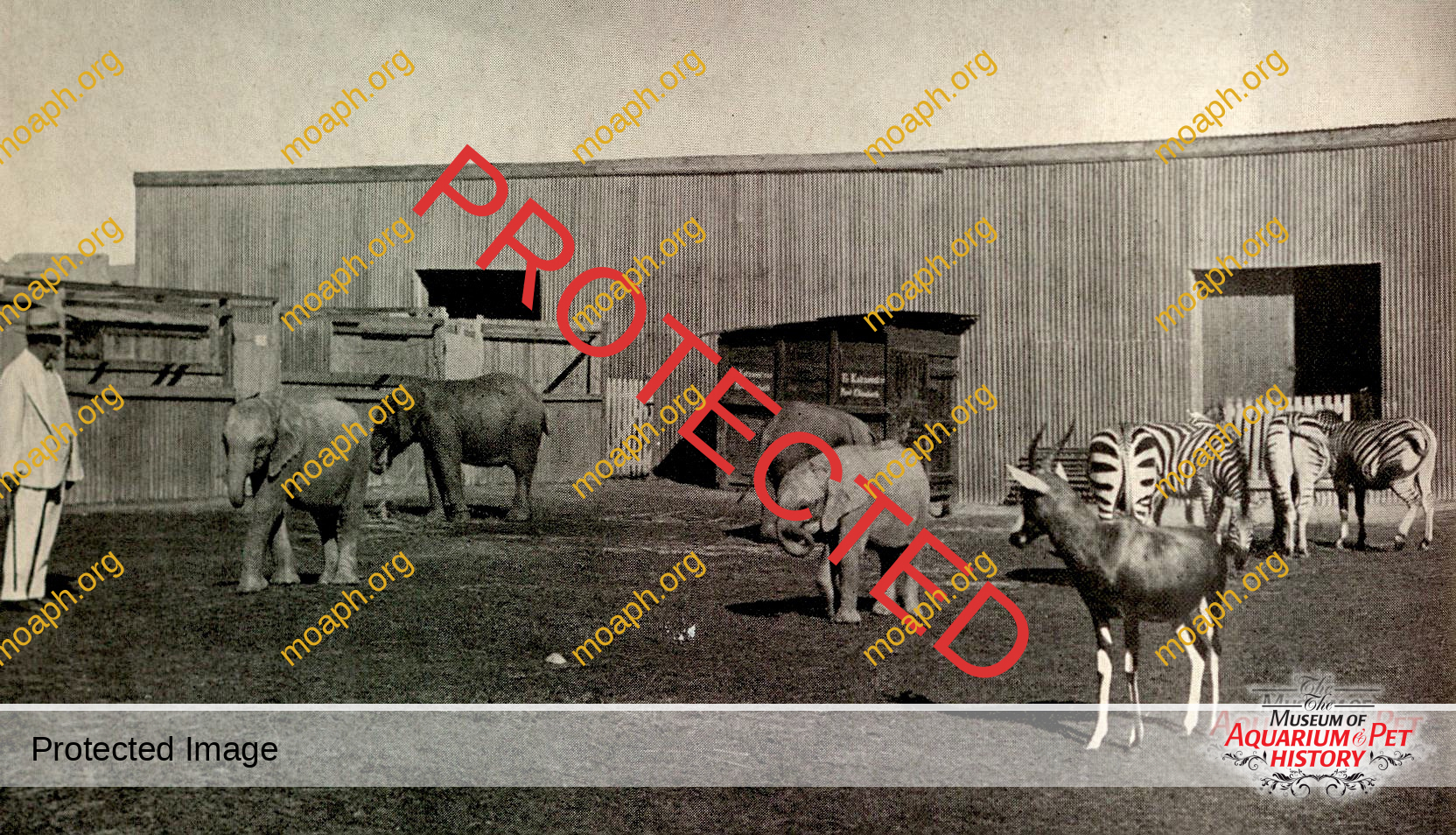
Animal dealer Katzenstein at his South African collection camp in Port Elizabeth with African elephants, Chapman’s zebras, and a blesbok antelope.
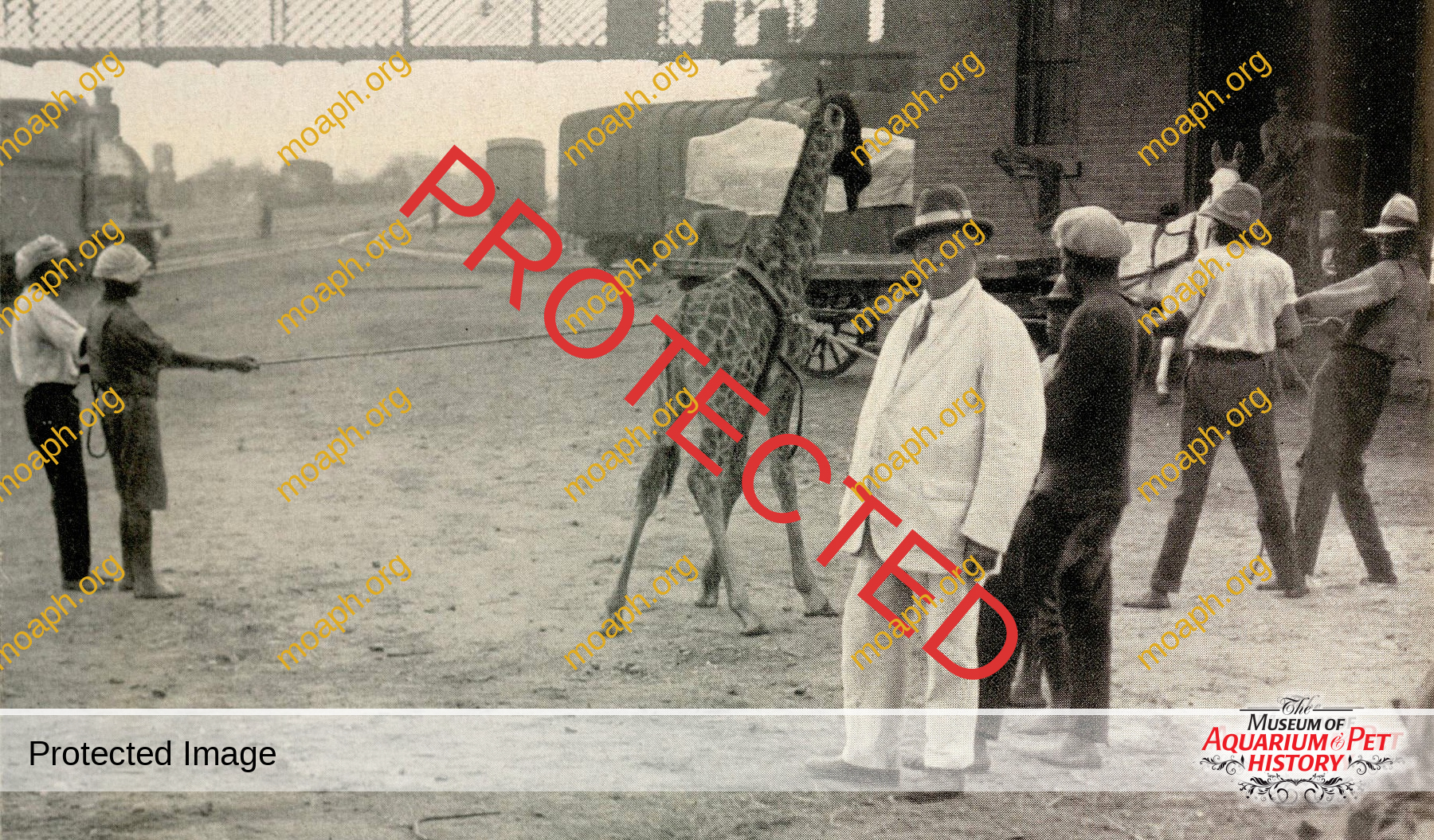
Fritz Krüger supervises the loading of a giraffe in Pretoria. Giraffes remain calm once their eyes are covered; for this reason, a “face mask” was traditionally placed over them during loading.
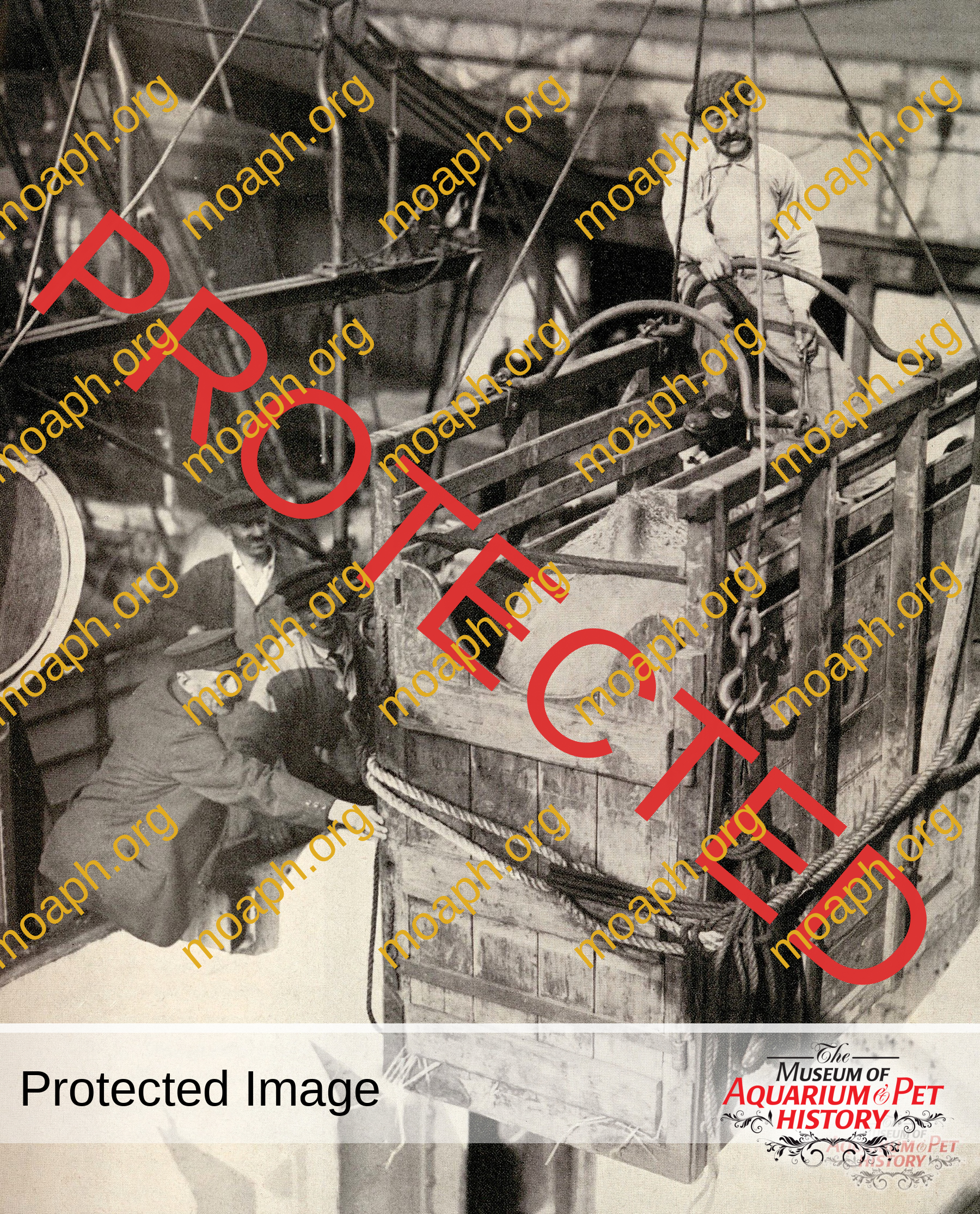
Mr. Thiesemann, once a coachman and later a bird and animal caretaker, is guiding an elephant into the ship’s hold, where it will be loaded for transport to New York. A few crew members assist, ensuring the crate doesn’t swing against the edge of the hatch.
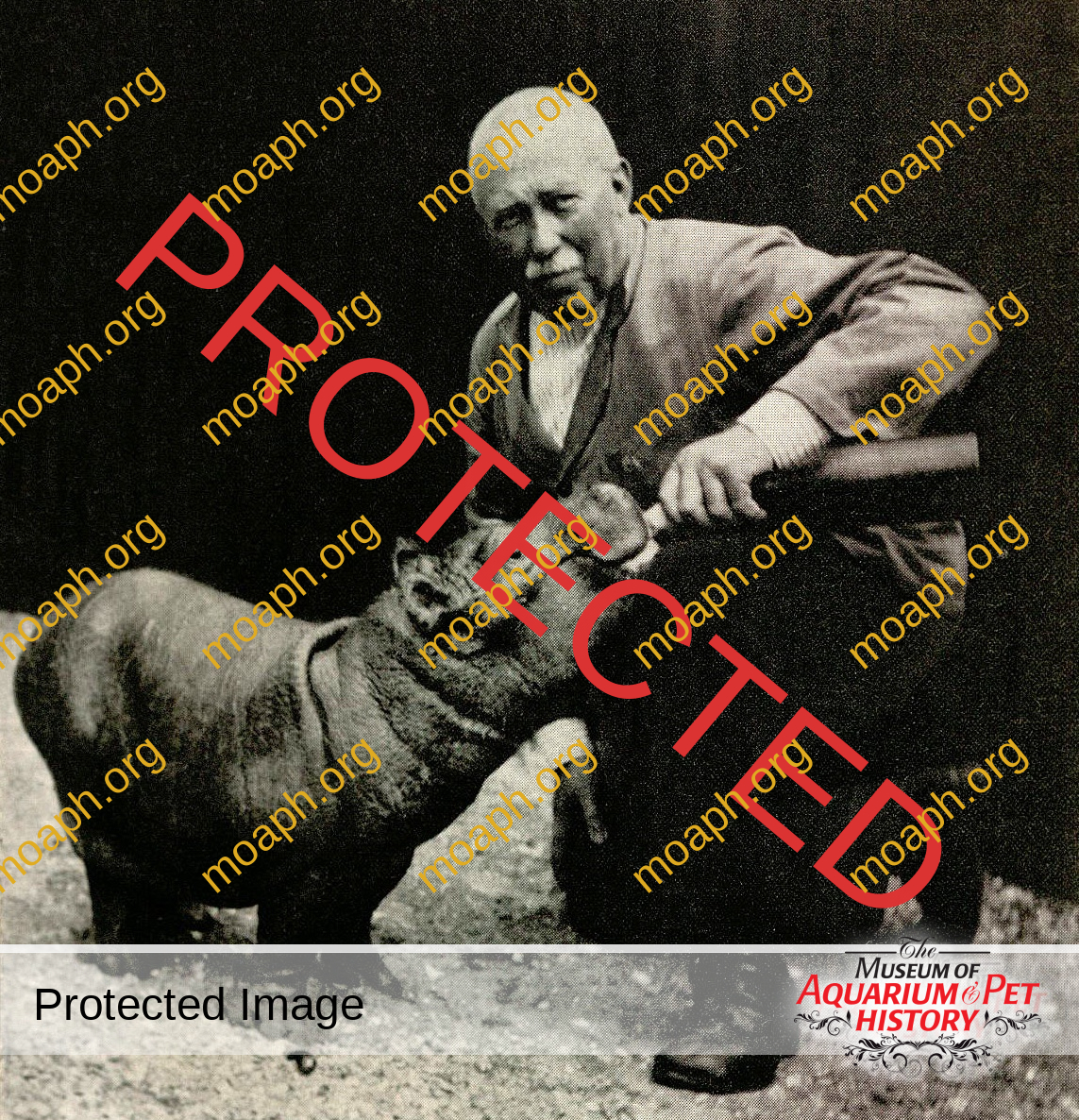
Even in Alfeld, the animals that brought transports didn’t rest. Fritz Krüger is seen feeding a young hippopotamus with a bottle.
The letters that reached me from Alfeld initially sounded optimistic and confident. But the longer the war lasted and the more bitterly the battles raged, the clearer it became to me that even at home, the struggles for existence became increasingly difficult. Nevertheless, my father’s confidence seemed unbroken. Only from my mother’s letters did I sometimes glean a little worry that she concealed between the lines.
By 1917, my father had revived the canary export to New York, although a “business detour” had become necessary. My father delivered the birds to a Dutch dealer, who then transported the canaries on Dutch steamships to the USA and sold them to Uncle Bernhard. The New York branch was fully occupied at this time despite the war.
Albert Meems was involved in these transports to the USA until the war with America broke out. He was in New York at the time and initially stayed there to work with Uncle Bernhard.
During the war, I served in the 1st Guards Reserve Field Artillery Regiment, was promoted to lieutenant, and had to participate in the fighting. Meems, being Dutch and thus able to travel freely, immediately set off for Sumatra to collect all the animals that Mr. Kreth, who had spent the war in Sumatra, had managed to gather there and bring them to America. These included 12 elephants, Malayan tapirs, monkeys, cockatoos, and black panthers—treasures after the war.
While I was deployed in Berlin, I received a letter from my father. In it, he wrote to me that Baron Friedrich von Falz-Fein was in Berlin and staying at the Hotel Continental. He had written to him and asked for a visit from one of his sons. My father asked me to visit him as soon as possible.
When I was granted leave one evening, I visited the Baron in his suite opposite the Hotel Continental. The Baron, who was just 55 years old, was heavily aged; deep furrows ran across his face. However, I recognized him again through his cosmopolitan manner. He chatted with me about the heavy past years, which, like a good play, had been full of infinite excitement and hardship. Nevertheless, I soon grasped the extent of the tragedy.
After his release from imprisonment, the Baron managed to escape to Russia with the help of a few friends and had enough wealth to last him a lifetime. However, his beloved property, Askania Nova, and many of his magnificent animals, to which his heart was attached, were lost to him. Years passed before one learned that the new rulers were attempting to preserve the zoo park and botanical gardens of Askania Nova.
During the dinner the Baron invited me to, we chatted about our experiences. However, he did not reveal the purpose of his letter to my father until the end of the evening.
Only when we were about to say goodbye did he say: “One moment, please, Mr. Ruhe,” he said, “I still have something to hand over to your father.”
The Baron sought out his room and came back a few minutes later to the dining room to hand me an envelope: “This is from Mr. Lorebeerbaum for your father, as contact with Germany has broken off.”
I thanked the Baron, stowed the envelope, and said goodbye.
A short time later, as I returned to Alfeld, I handed my father the envelope, trying to hide my emotion: the envelope contained the entire outstanding payment of the Lorbeerbaum Circus!
Those were men of honor! Did Lorebeerbaum really need to deliver the sum to the Baron in the middle of a war between Russia and Germany? And did the Baron really need to burden himself with this additional task, even though he was ill and already had more than enough of his own worries to deal with?
This was one of the bright spots in this difficult time. Father, irritated and nervous from many worries, now seemed often tired. His entrepreneurial spirit seemed to have diminished.
Together with our procurator, Mr. Darnedde, who acted as a district buyer for slaughter cattle in Holland, he took up this opportunity to continue working for the time being.
A slight comfort and a return to the old business was, in a sad way: the Hellabrunn Zoo in Munich was closed, and father took over the animals to continue selling them.
Now, an extensive report from Mr. Kreth in Alfeld arrived – together with our collector Thiemeyer, a young man who had rushed back from a purchasing trip in Palembang to Sumatra due to the war. The two men, though Germans, enjoyed a certain freedom and were even able to bring animals to New York. Both were good hunters and animal trappers, known and popular with the authorities and obtained the necessary permits.
Thiemeyer had tried in 1917 to return home. Shortly before, he had declared himself willing to accompany some Dutch engineers on a hunting expedition to Sumatra. This all went well until the return, when the hunting party, in the best of spirits, had ventured onto a boat. Thiemeyer had recklessly allowed his legs to dangle over the boat’s edge into the water. As it happened, the river was full of crocodiles.
Before anyone could intervene, a crocodile grabbed the man by the leg and pulled him into the water. Nobody dared to shoot; on the third day, they found the completely disfigured body. “He is buried over there,” Mr. Kreth concluded his report. “And I mourn his fate and struggle with my fate. How unnecessary his death was. What went through the minds of the engineers? Why didn’t they intervene?”
This is how my father lost one of his best men. Kreth had already been on numerous trips with Thiemeyer before the war – especially in India. The two men had even captured elephants, often putting themselves in life-threatening situations when they were attacked by the young ones’ mothers.
Sometimes, it was a close call when an elephant cow charged at the two men. There was no cover, so they had to shoot. “You take the right eye, Karl,” Thiemeyer had said in such a case, “and I’ll take the left. We’re shooting at the same time.” It was their good fortune that they were such excellent marksmen. It happened that the cow fell on their feet – so close was the escape.
Nevertheless, Thiemeyer could not escape his fate, and he had to die through a crocodile!
Another animal handler of my father’s, Albert Funke, had also been claimed by the war and death. He had tried to return to Europe from America. He did not succeed; he was intercepted by the English and drowned in the Channel during an escape attempt.
Life slowly returned to normal, and only gradually did the impressions of the last difficult years fade away. My father resumed his work, but the exhausting activity of the past years and, above all, the uncertainty about the future contributed to his health deteriorating. He rarely mentioned his complaints—at least not to his sons!
I finally wore civilian clothes and threw myself into the business with renewed energy. Heinz attended high school, and Ludwig was still in New York.
My respect for my father grew even more when I realized how he had built up a worldwide business by the time of the war, which initially had to be dragged through the mud and slowly redeveloped from modest beginnings.
As soon as I had time, I leafed through old documents to refresh my knowledge, especially about the extent of our canary bird business. Purchasing had taken place throughout Germany. The so-called “land birds” were mostly bred by farmers who initially saw canary breeding as a sideline to earn extra money. Often, they raised them in attics, where they received their light through glass roofs. However, these rooms were cold, which slightly affected the singing quality of the canary birds.
In addition, some breeders in the big German cities conducted their business purely as a hobby and had to save on feed for their pets, sometimes almost sparing it from their mouths. Their breeding results were surprisingly good, especially since they mostly kept the birds in heated rooms.
Many of my father’s buyers were on the road for weeks and months to bring back sufficient supplies for the season.
Our buyers also traveled abroad, to Holland and Belgium, Austria and France, Switzerland, Hungary, and Denmark.
Previously, I had assumed that our exports went only to England and the United States. Now, I had to be taught otherwise: although the United States had been the main export area, deliveries had always been made to Russia, England, South America, Japan, India, Australia, and Africa.
My father, as I knew, had over 40 transport escorts. These were people who had already crossed the ocean fifty times or more to accompany canaries! And from these men, who had learned languages on their trips, especially English, my father chose the most suitable ones to send as animal handlers to the whole world. All these men enjoyed my father’s full trust and were almost considered family members.
With their help, my father developed an even stronger and more extensive import and export business for animals and birds—which grew, despite the war—most animal dealers on Earth would consider an exaggeration: he handled everything from poisonous reptiles to marine animals with very special and complex care.
Sometimes, we even received requests for animals from zoos and circuses. My father had already considered training exotic animals; the construction of the dressage halls proved, by the start of the war, that he had already allowed two performances: from Mrs. Judge and her husband with sea lions and from Charles and Lucie List with their mixed predator groups, which went to the Russian circus Lorebeerbaum.
When I sat over the business ledgers or read old letters, I sometimes felt an inner restlessness. Surely, there must have been much more that could have been done? One had to.
When I said something about my ideas to my father, he stopped me: “Slow down, Hermann! A business must grow from its foundation, and a scaffolding must be as solid as the other! For now, we have other worries—with America and with money. Now, we must first see how we can continue!”
That sounded rather sad. My father had every reason to be depressed; the war had thrown him back incredibly!
I remember once, in a quiet moment, he handed me a volume of Brehm’s Animal Life.” There—read!” he said. In 1915, during the war, the Bibliographic Institute in Leipzig and Vienna published it.
The fourth edition of the famous work appeared. Father pointed out a few passages related to our company. “We’ve come a long way!” he said bitterly, and I began to read:
“The first round-eared elephants from Cameroon were received by the Berlin Zoo in 1899 through Major Dominik, who caught it in the district of Jaunde with great effort and manpower and, with even greater efforts and difficulties, brought it to the coast across raging rivers and other obstacles. Unfortunately, the animal did not live long, but it has now been replaced by a successor, the female Kribi, who was given as a gift by the imperial governor of the coast to the Alfeld Zoo. It has found its rest in Alfeld among animals purchased from the area, probably the first elephant in Europe, as it comes from as far south as South Africa…”
A few pages further, it was printed:
“Due to the lack of Indian elephants on the European animal market, the Alfeld animal dealer1 tries every year to obtain several transports, and one can still, e.g., in the Alfeld Zoo, purchase animals that are not inferior to those from India in robustness and usability.”
MOAPH1: the Ruhe animal firm
I was very impressed to find our name mentioned twice in this great work. And yet, hardly any visitor to the many zoos we had supplied with animals from all over the world knew of our existence—a fact that would later become more and more significant for me. In the public’s eye, one knew above all a few German animal dealers: Hagenbeck—doubly famous for the Hagenbeck Free Park near Hamburg and through the world-famous circus.
Between our families, there was always a good relationship. One of the Hagenbeck brothers, Wilhelm Hagenbeck, founder and owner of the Wilhelm Hagenbeck Circus, had two sons: Carl and Willy. At that time, I did not yet suspect that I would one day work with Willy Hagenbeck. I also probably did not yet know that Circus Wilhelm Hagenbeck was one of my father’s biggest customers.
But now, with the war, even the best customer could not receive anything in Alfeld. The takeover of the animals from Hellabrunn remained the only major animal dealer business in Alfeld. My father did everything possible to get the canary business going again as quickly as possible.
Here, too, my father encountered considerable difficulties. Above all, the necessary quantities of canary birds were not available! The breeders, farmers, craftsmen, and miners had been soldiers and stood at the front. Many of them had fallen. The women had other worries than breeding canary birds.
In the end, it was the old Roller breed. Now, as I could help myself, everything was upside down. Even the taste in terms of the birds’ song changed!
Birds, which used to be considered third-rate, so-called “Choppers,” became almost “modern” overnight.
My mother just shook her head, but my father stood his ground: “Better Choppers than no canary birds at all!”
Father worked as a seed importer and obtained seeds through the free port of Danzig Rubsaat, which he had paid for with dollars from America. These imports were duty-free, although canary seed was under olive oil confiscation.
Thus, he managed to encourage old, loyal breeders who no longer had money to support them by providing canary seeds so that they could resume breeding in large numbers. At the same time, my father maintained a delivery capacity. He also tried to encourage the more sensitive roller birds, which made it easier to breed them again.
The efforts to get the business running again were in full swing when the phone rang one late afternoon in my father’s office. It was a long-distance call from Frankfurt am Main.
I heard, “Mr. Krone? Yes, how are you?”
“Mr. Ruhe,” said Director Krone shortly after the greeting, “I’m finished. I can’t get out of Frankfurt anymore. It’s not even enough to return your animals to you so you don’t lose your money…”
“Don’t do that, Mr. Krone,” said my father. “I’ll be with you in Frankfurt tomorrow. Wait for me.”
If I remember correctly, my father delivered animals from our last stocks to Circus Krone, which were to be paid for in installments. In turbulent times, very few people saw the sense in visiting a circus; in desperate efforts to survive, huge sums were spent on maintenance. In Frankfurt, everything went wrong; the company’s funds were exhausted.
At the crack of dawn, my father set off and arrived around noon at Director Krone’s.
The conversation didn’t last long. “What do you need to get out of here, and where do you want to go?” my father asked.
“I wanted to go to Munich,” said Mr. Krone.
“And what do you need for that?” repeated my father.
“At least enough so that I can bring the circus to Munich and set up the tent again there.” Director Krone mentioned the amount.
“Anyone can have bad luck,” said my father. “I’ll call my bank now; you’ll get the money, and then you can go. You can’t just let everything fall apart! And my animals still belong to you. Payment as soon as you can.”
The sealing of this simple contract was a handshake between two good buyers.
Circus Krone traveled to Munich, set up its tent on the Theresienwiese, and—sold out its first performance!
It didn’t take long before the first large sums flowed back to Alfeld, and within a few weeks or months, the animals were paid off, and the credit to the bank was refunded! The circus flourished as it had never done before. Carl Krone even began the great stone-built stables in Munich a few years later, adding a large wing to the existing circus building. The entire great era of Circus Krone began.
Undoubtedly, my father could have sold many animals or even whole animal groups to the circus in the following time, but—we had nothing!
The canary purchase also didn’t work out as well as we had hoped. The stock, which we could send to New York in the fall of 1919, consisted of 15,000 birds. It was just a fraction of the birds we had delivered in the earlier season.
“You are going, Hermann,” said my father. “But not just for caretaking; for that, there are enough people. It is more important to me that you carefully open your eyes on the way and look at the people. And then you stay with Uncle Bernhard for a while and help out there!”
Before that, however, I got engaged. At a hockey ball2, I met a young lady, the daughter of a professor from Hannover. But I was not allowed to get engaged yet—I could get engaged, but I could not marry her yet.
MOAPH2: A sport very similar to modern day Field Hockey. It was played predominantly by schoolchildren.
“You will wait a couple of years, Hermann,” my father said. “You’re still much too young to get married! First, have a little look at the world—then we will see.”
Nothing was to be done; my father wouldn’t allow any discussions.
Here is the translation of the provided text from German to English in the order of the page numbers:
In November, I traveled to New York on a steamship, the Rotterdam. The weather was miserable. I got to know the ‘big pond3’ from its worst side and became horribly seasick. When I set foot on the ground in the United States, I felt as if I had barely survived the crossing, so miserable was my condition. How could I have known that I would take the same route back dozens of times?
MOAPH3: a term for the ocean
The huge city impressed me greatly. Even back then, one could hardly compare New York with a major European city! Uncle Bernhard had told me about his only visit here, which he had made years ago when I was still in school. I still vividly remember it.
But first there were a lot of new things for me to take in, so I didn’t spend too much time thinking about it.
The house that Uncle Bernhard had bought and remodeled just before the war on the Bowery, with its many floors and countless rooms centrally located in the city, seemed to be slowly coming into its own. The Bowery itself would never rise to become one of the most prestigious streets of New York — this was where the sales department of the house was located.
From the basement to the roof, it was all dedicated to sales. In the window displays, in the salerooms on the ground floor, there were probably a hundred bird cages, plus the counters, the shelves with “Ruhe’s special made fish food” and bird food special mixtures, with zwieback flour, summer and winter fodder. The ground floor was intended for the buyer from the general public. Here, anyone could pick out which bird they wanted to take home as a feathered house companion.
The uper floors were reserved for other things, mainly for wholesale. The canary section was on the first floor, where the dealers made their selections. The second floor served as a sorting area and for listening to birds; no customers came here.
On the third floor were the weavers and seed-eaters, as well as European songbirds like goldfinches, as well as exotic birds like Perokiten (Parakeets), a parrot species that our animal collector Lürich brought twice a year from South America — without ever having encountered a single case of the notorious parrot disease!
The fourth floor was finally filled with cages. Here, monkeys and snakes were for sale. Dancers came to pick out snakes suitable for dancing, and circus people or other handlers appeared to buy monkeys.
From my father’s stories and Uncle Bernhard’s letters, I knew roughly how the house on the Bowery was laid out, but it was interesting for me to see it with my own eyes.
And then the “farm!”
I could hardly imagine anything other than a large farm when it was mentioned that various cages and aviaries were newly constructed for our purposes. Now, I saw this facility for myself.
The farms, which had been quite remote in 1905, had meanwhile begun to disappear and give way to modern business premises as Queens Boulevard increasingly became the main thoroughfare of Long Island.
The “farm” had an office building, stables, predator and monkey cages, and open spaces for exotic animals.
Everything was built using the same skilled and conscientious work I was familiar with from Alfeld. Our canary breeder, a master builder, had continued to work diligently over the years, always ensuring that shipments arrived on time so that the cages were ready for shipping back home.
But the cages and enclosures were empty!
The shares my father held in the Louis Ruhe Inc. in New York had been seized by a decree of confiscation. Uncle Bernhard, who had been a partner for many years and had become a citizen of America, was unable to change the situation.
Once again, my father took the initiative to save the ailing New York branch. He severed the direct connection between the Alfeld headquarters and the New York branch. He initiated the founding of Louis Ruhe Inc., an independent American joint-stock company with shares and stocks. Uncle Bernhard and my father each took over 50 percent of it.
“Uncle Bernhard apparently couldn’t get back on his feet,” my father wrote in a letter. “He thinks the world is going under because hardly anything can be delivered anymore. But with resignation and pessimism, nothing will be achieved. It is better that we all roll up our sleeves and see that we get back on our feet as soon as possible.”
With that, my father spoke straight to my heart. I would have loved to start right away with my new ideas—but my father wasn’t keen on that.
“Slowly, Hermann,” he replied to one of my written suggestions. “Ideas alone are not enough now; we must again create substance before we dare to take on new ventures.”
But the substance of the German headquarters was dwindling — and my father stood by, just as powerless as the millions of people in our homeland. The looming inflation became more and more horrifyingly apparent.
In 1920, the canary business with the USA picked up again. As long as the payments for bird exports to New York were transferred to my father in Alfeld, he received banknotes but saw no dollar at all. Instead, he was paid paper money, which was not enough to purchase new goods for export, let alone to make a profit. Although sales to buyers continued to be good, prices rose, rose, rose…