
Collecting Vintage Plastic Aquariums
My career as a fishkeeper started when I was just a baby. It happened thanks to a plastic “aquarium”. Actually, it was an educational toy that my father secured to one of the sides of my crib, a leakproof pouch of transparent vinyl filled with water, iridescent nuggets, and live goldfish! Every now and then, my parents still recall how I instantly became hooked on that pouch of goldfish.
That’s why vintage aquariums and fishbowls made of plastic have always held a special meaning to me, and take up a constantly growing section of my collection.
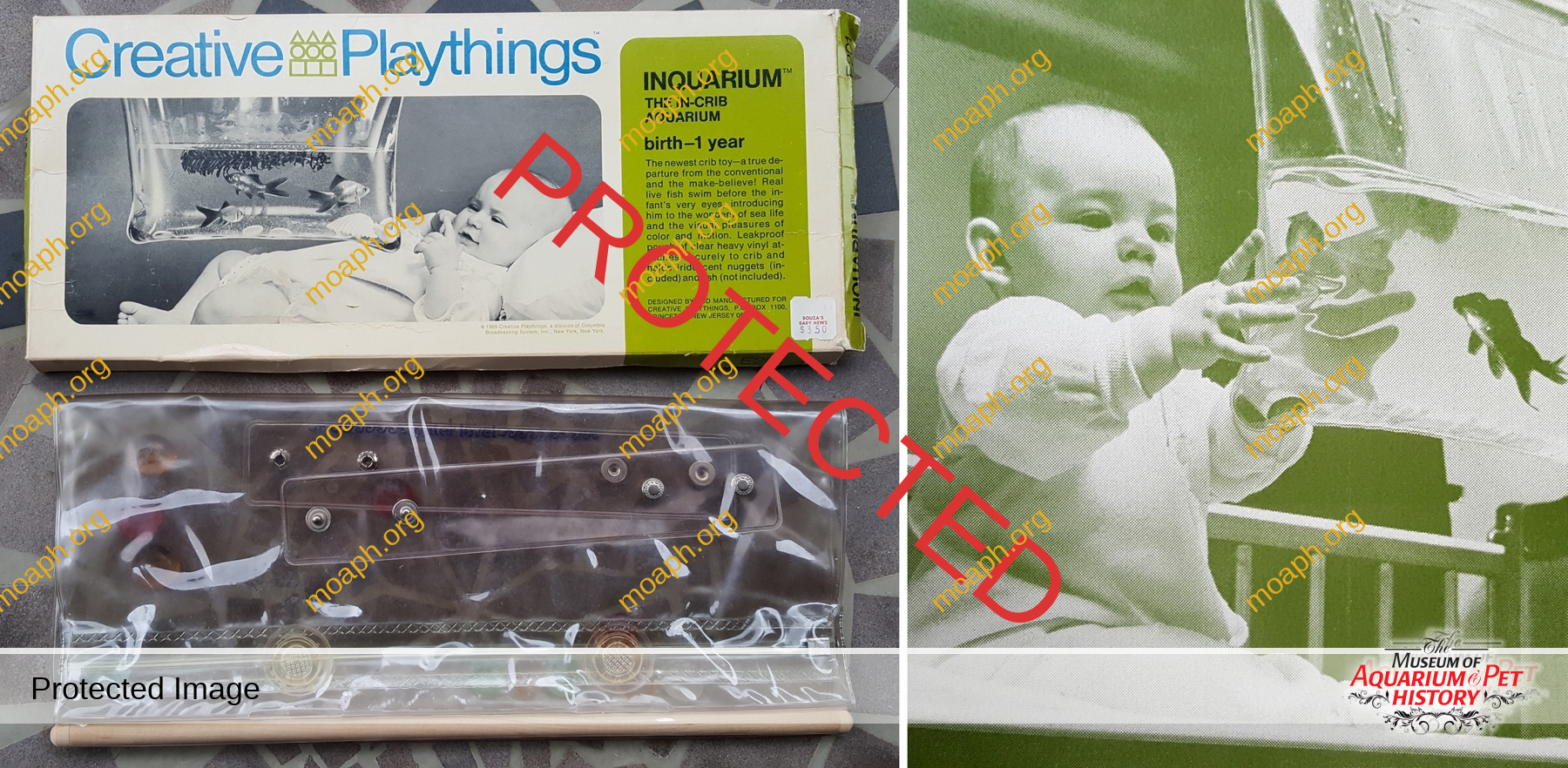
A rare example of the crib toy “Inquarium” released by Creative Playthings (New York, NY) in 1969.
Early models
Plastic aquariums made their debut in the United States in the late 1940s, becoming in a way the joining link between the toy world and the aquarium hobby. In addition to being colorful and lightweight, they had a modern design, all features that made them a perfect gift idea as well. Even though they were mostly just starter aquariums for goldfish and bettas, they undoubtedly had the merit of having introduced a plethora of children to our hobby.
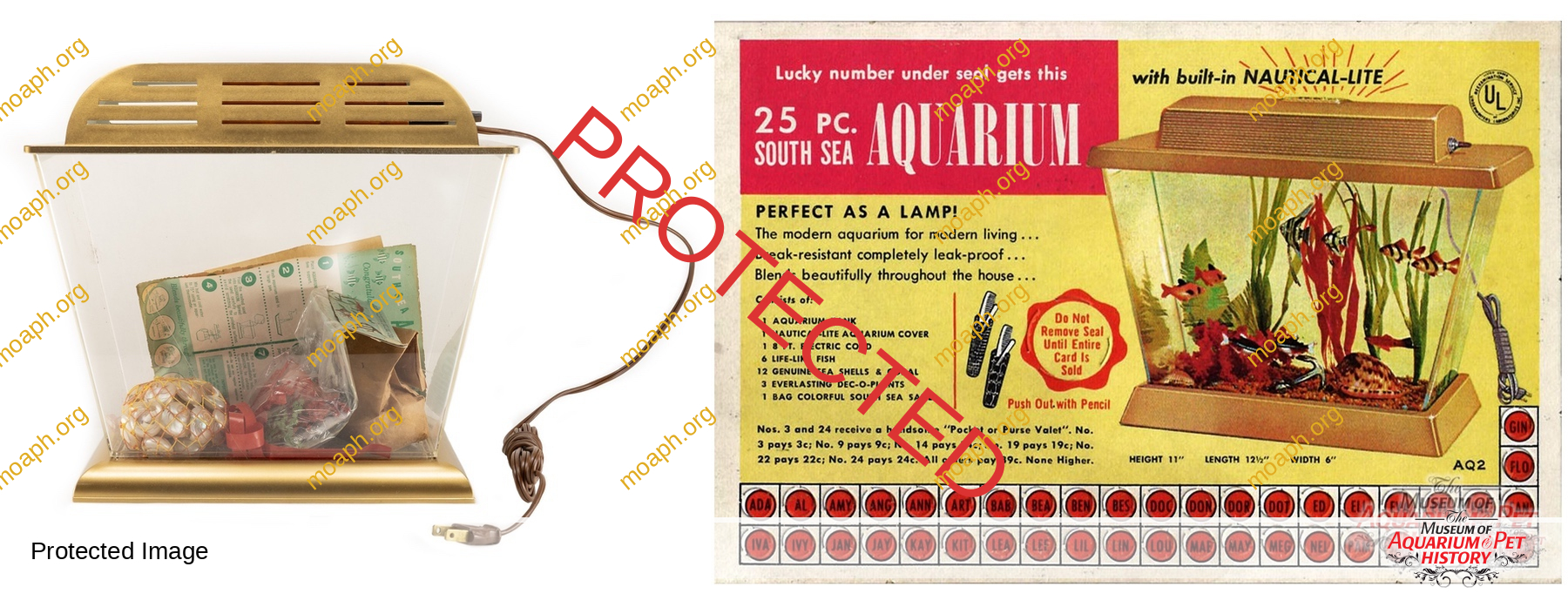
Used as a promotional give-away, the “South Sea Aquarium” was one of the earliest plastic tanks. This modern design led to Will-Nes making similar plastic aquariums in the same shape. Also, Pemco, Blaise and Metaframe made an angular metal-frame tank in this shape as well. MOAPH’s archive.
The more iconic vintage plastic aquarium is doubtless the Aqua-Flair by Wil-Nes (New York, NY). Complete with an electric full hood, this angular tank was originally available in six colors, and complemented with a line of specially designed accessories. This was a long-lasting design, since it remained largely unchanged both when Wil-Nes merged with Metaframe and Gro-Well in 1961, adopting the Metaframe company name, and when in 1969 Metaframe was sold to Mattel, which introduced the “Living World” brand. Today, the Aquaman’s Supersea Aquarium made under license by Living World in 1974 is one of the most sought-after Aqua-Flair’s versions.
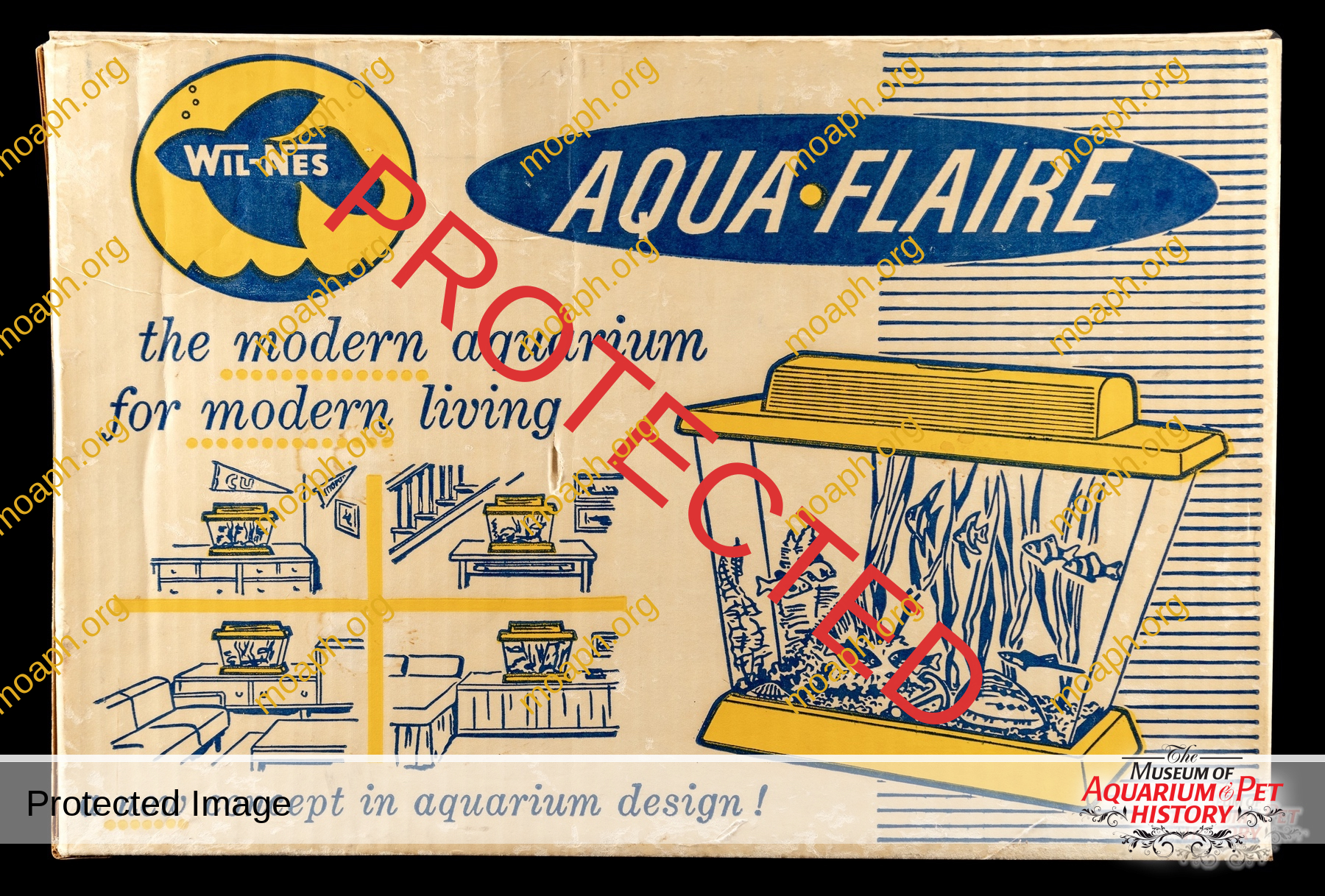
The iconic box of the early Aqua-Flaire made by Wil-Nes.
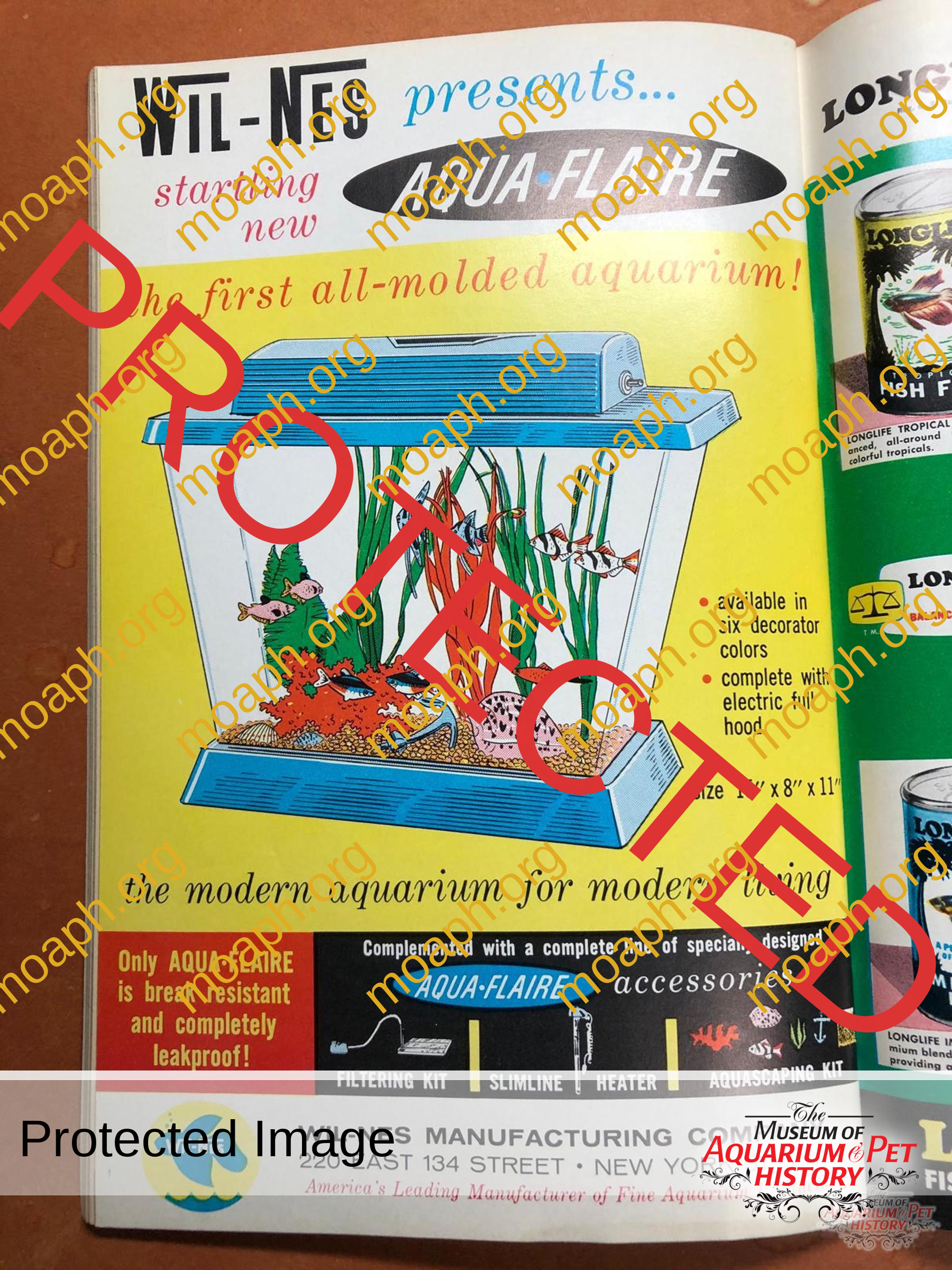
Aqua-Flaire advertising on the magazine Tropical Fish Hobbyist. Courtesy of Joseph Ferdenzi.
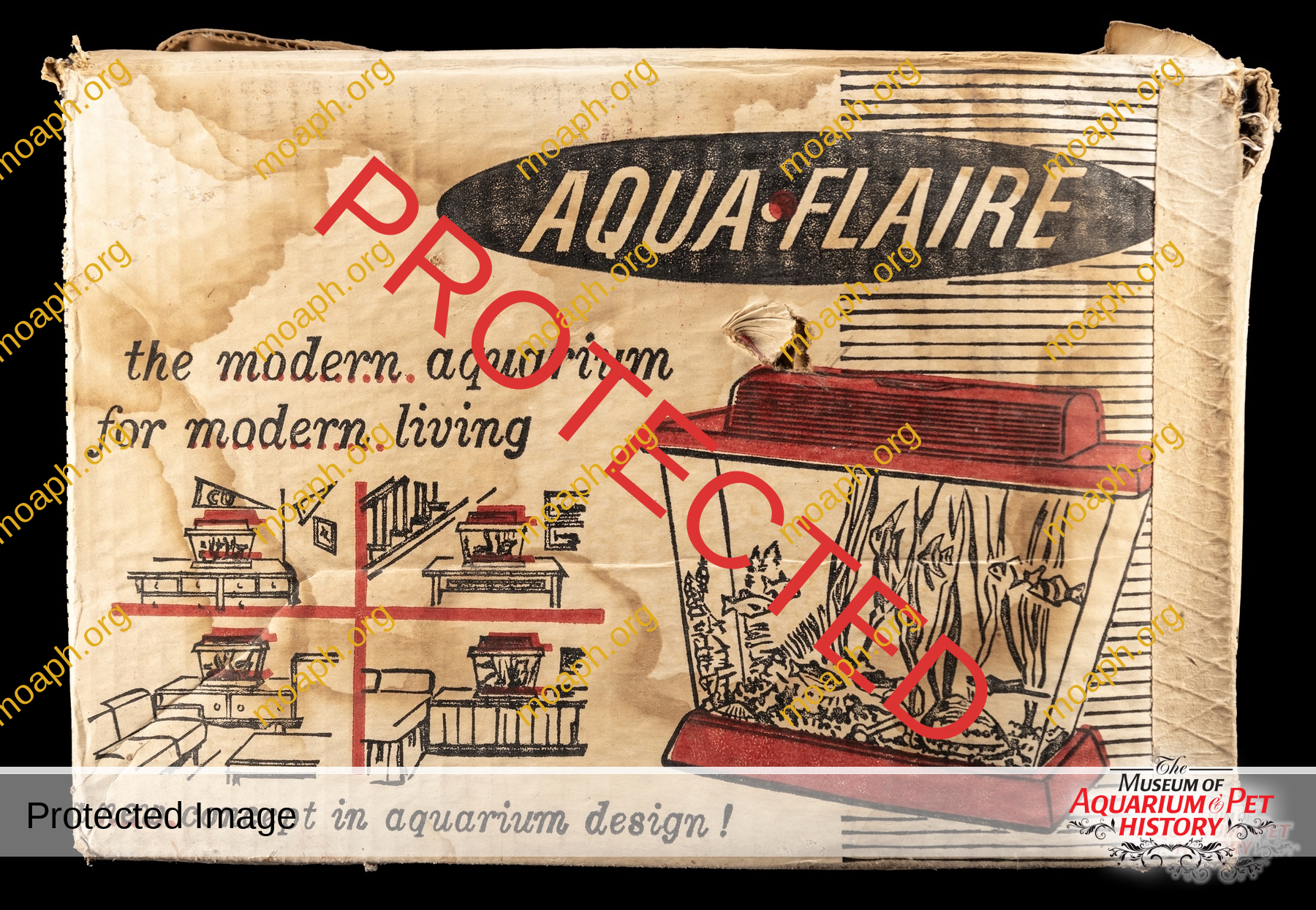
The original box of a later model of Aqua-Flaire manufactured by the Aquariums Incorporated company.
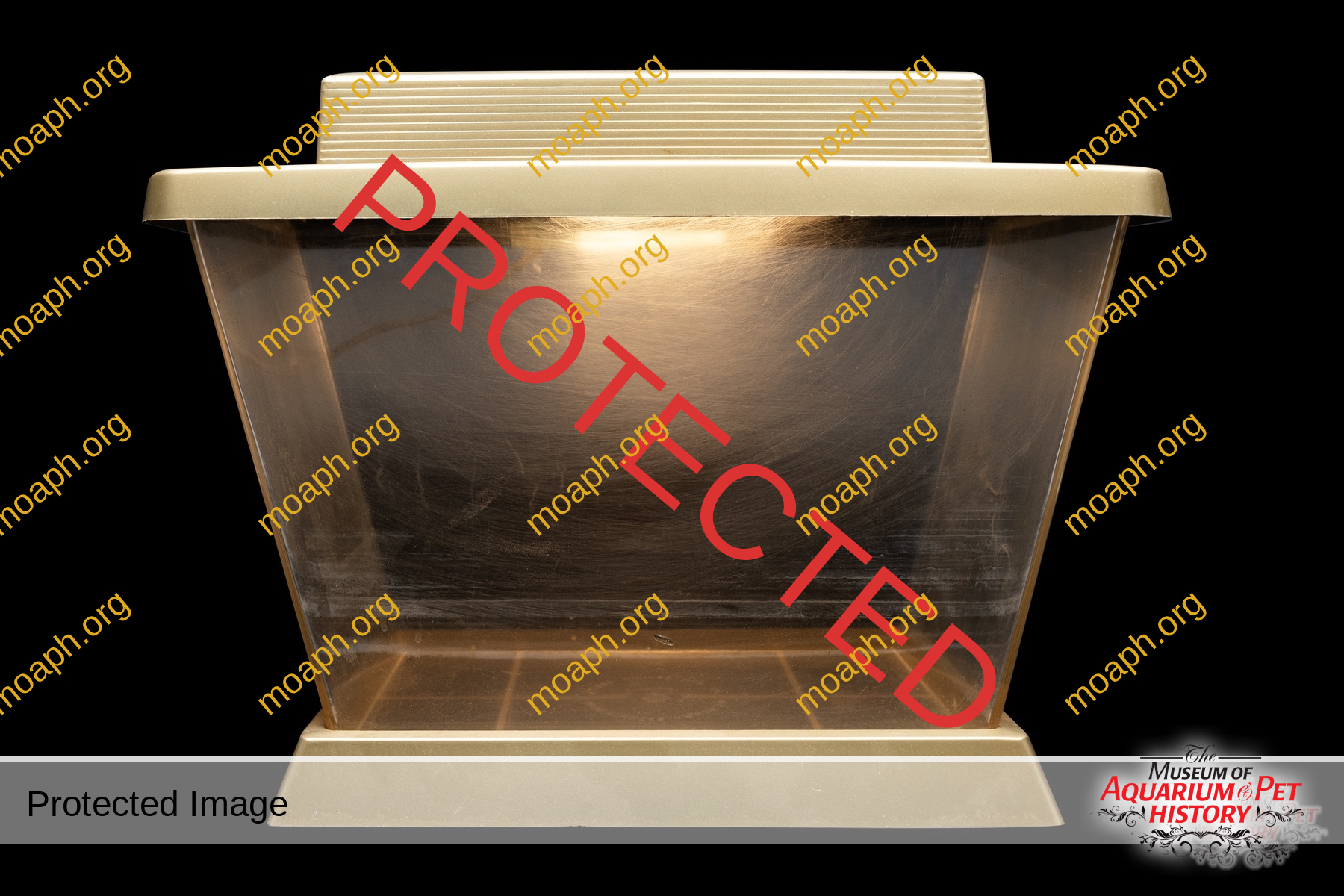
Gold frame Aqua-Flaire from the 1960s.
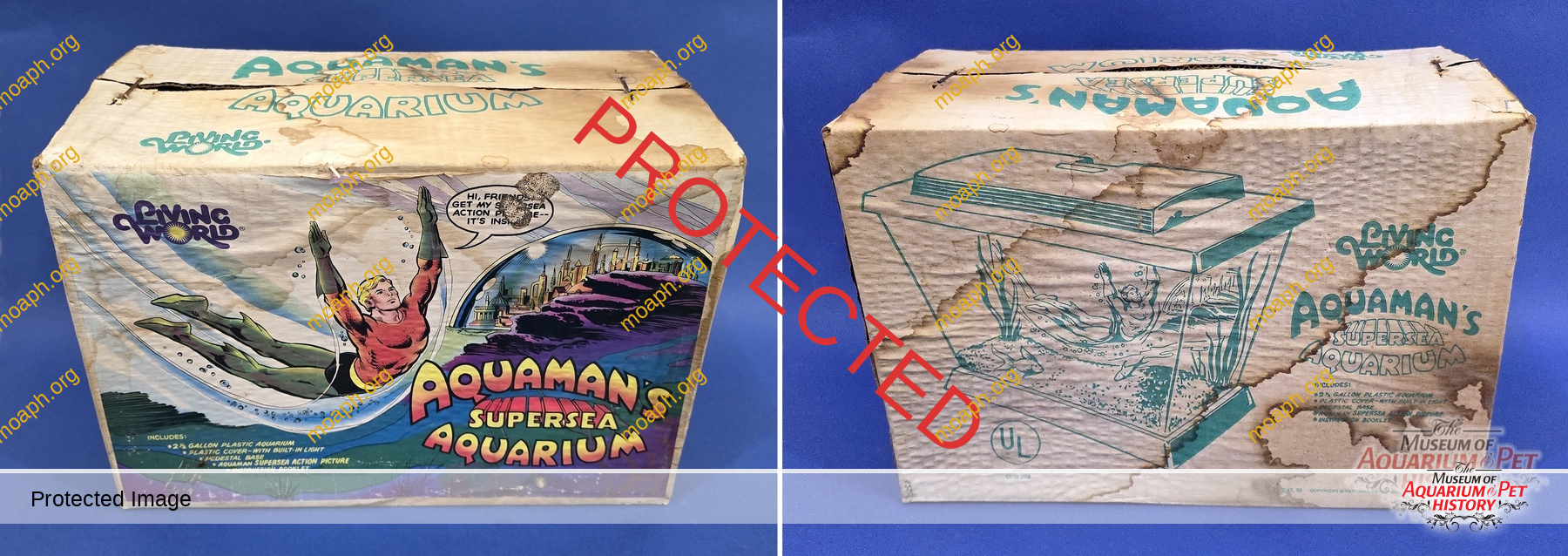
A factory sealed Aquaman’s Supersea Aquarium.
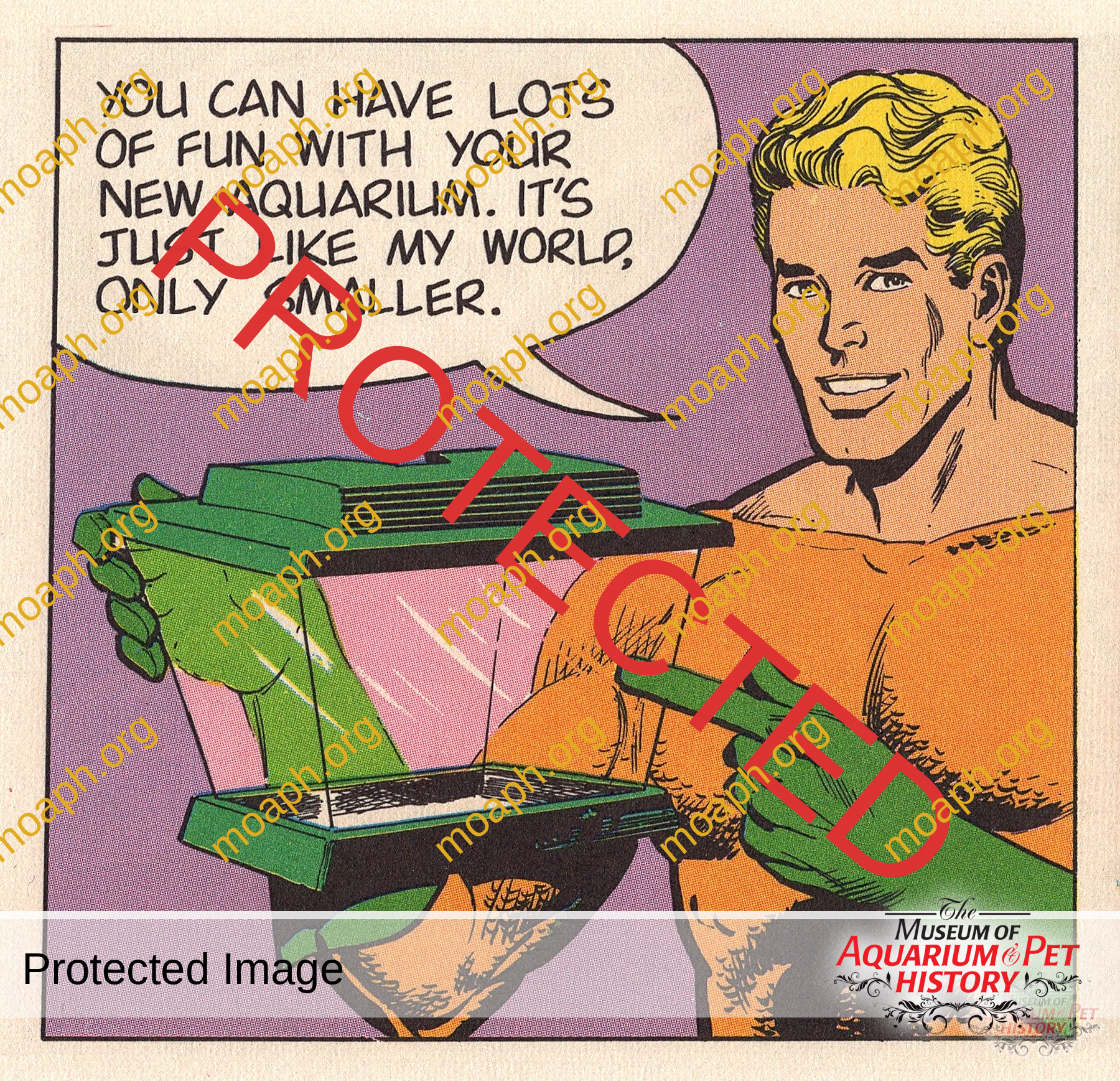
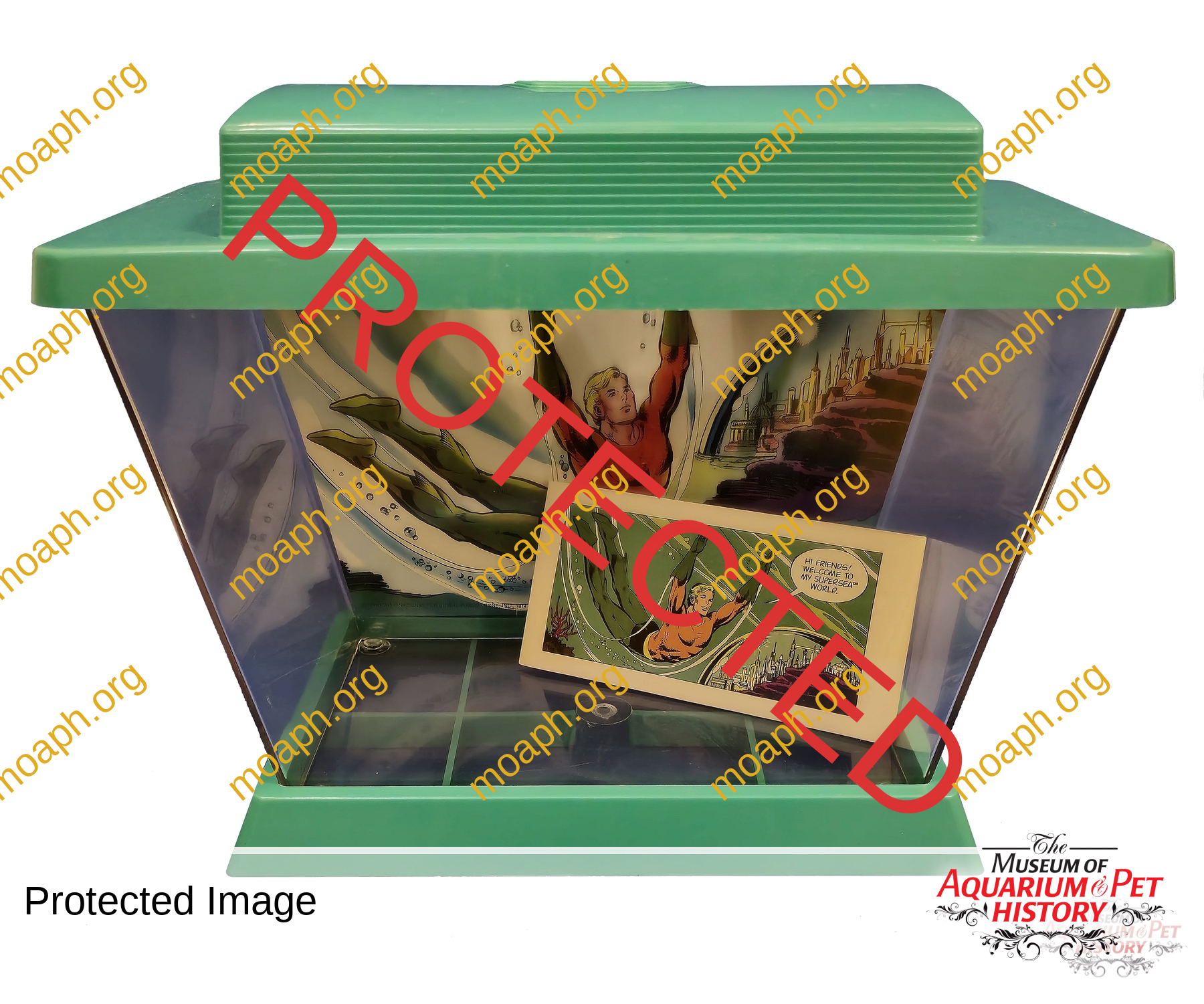
The Aquaman’s Supersea Aquarium was a 2½ gallon tank. It came with a plastic hood with built-in light (light bulb not included), paper background, pedestal base and instruction booklet.
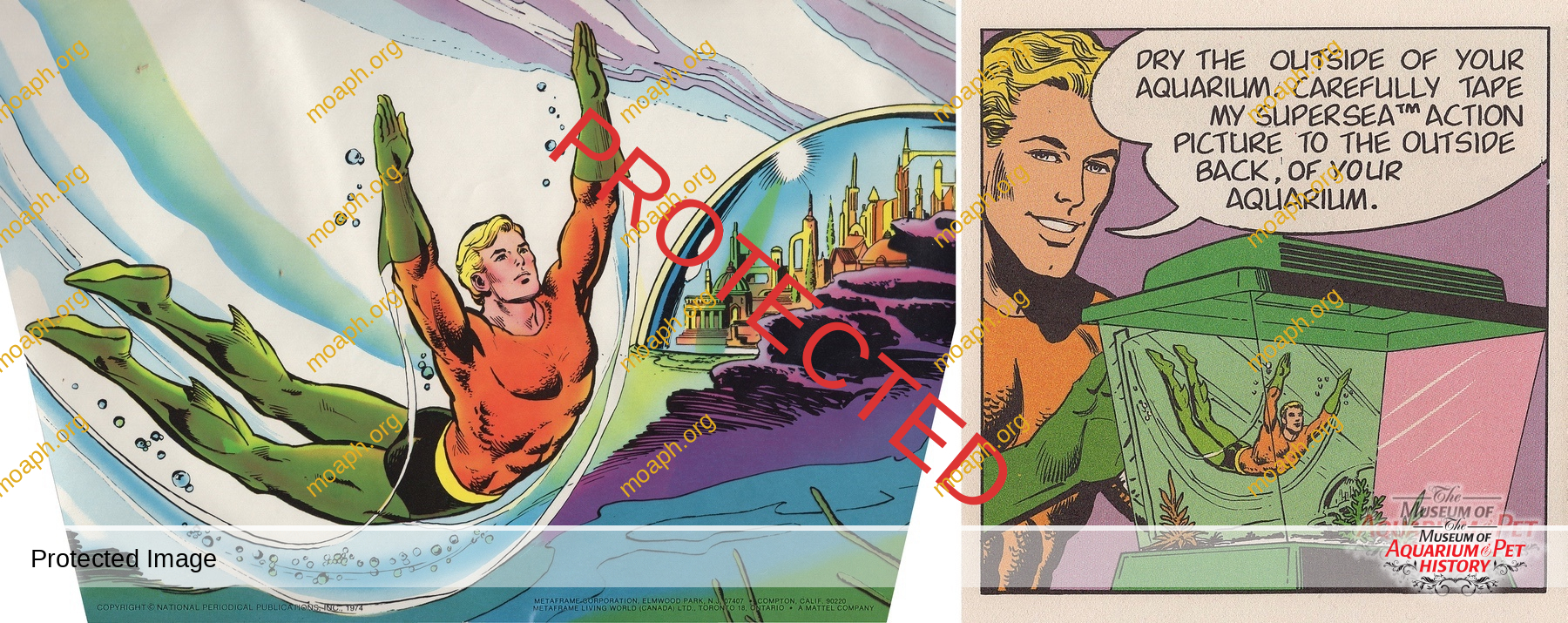
Background of the Aquaman’s Supersea Aquarium.
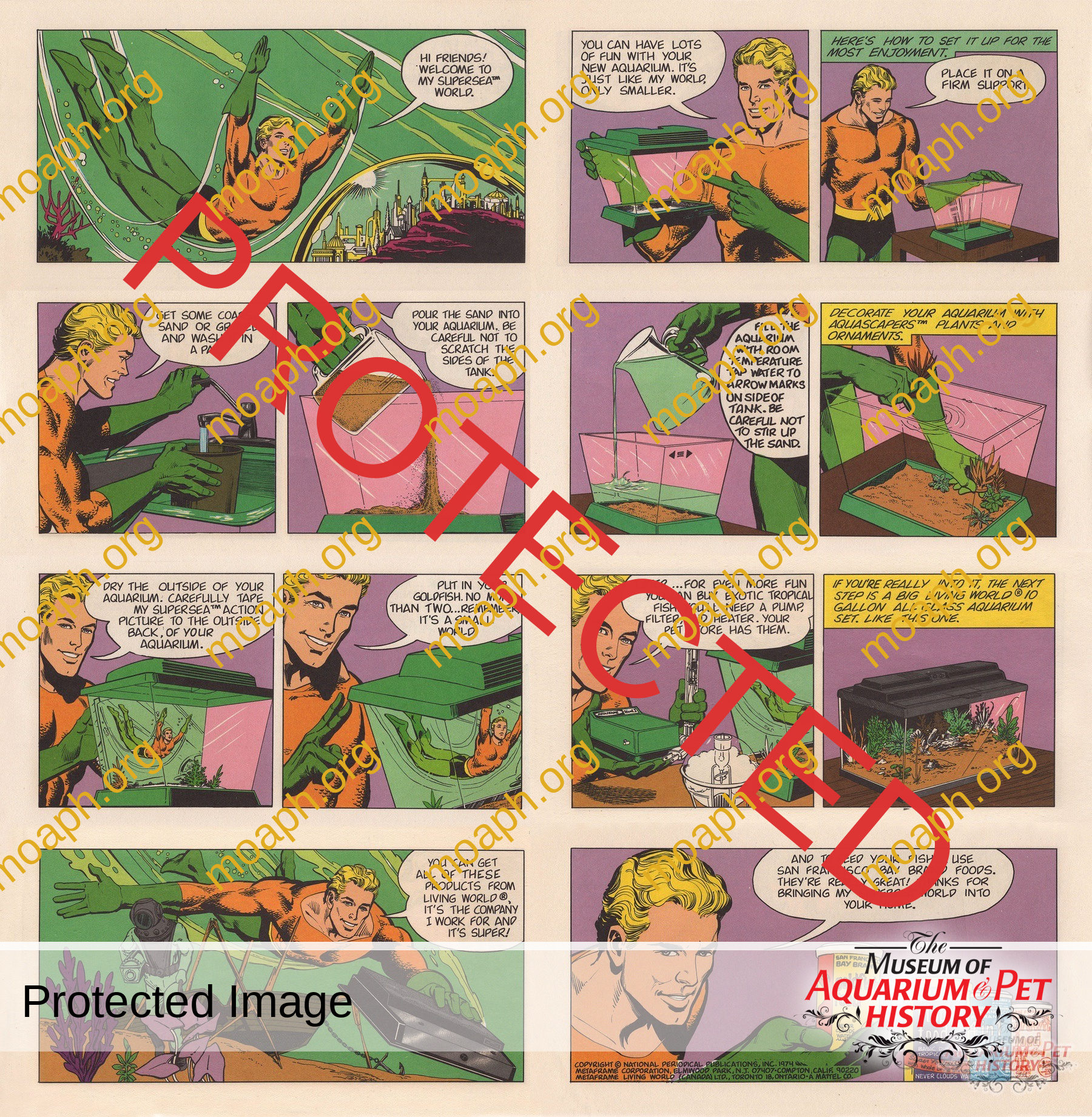
The amazing instruction booklet of the Aquaman’s Supersea Aquarium.
Quirky fishbowls
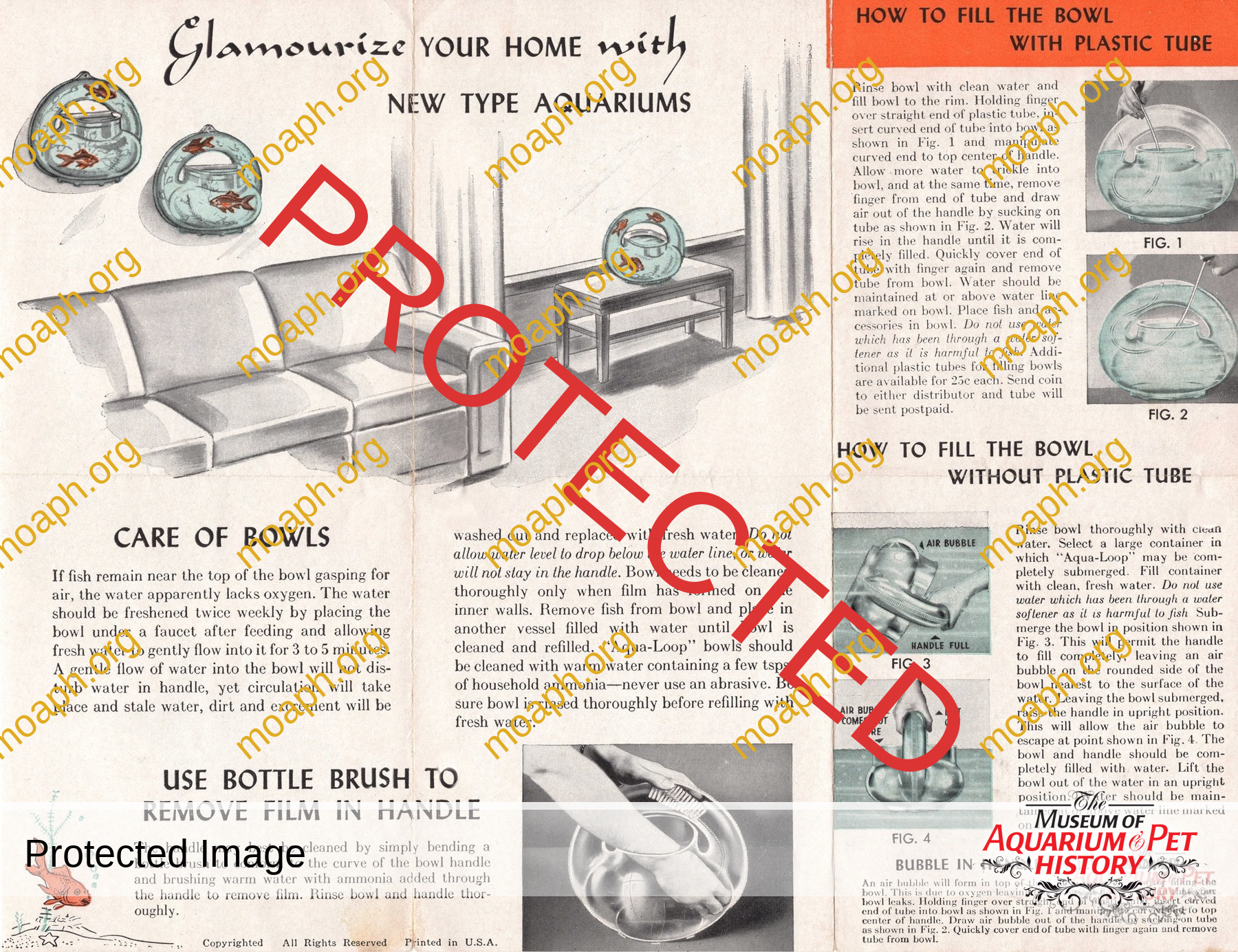
Speaking of plastic fishbowls, it’s almost mandatory to mention the quirky Aqua-Loop in its tabletop and wall versions. This novelty was a brainchild of the goldfish farmer Earl A. Rice, who filed three patents between 1950 and 1953 for this hollow handle fish globe design. Before being an inventor, Rice was a seasoned goldfish expert. He, in fact, got his start growing goldfish in the early 1900s, and from 1923 to 1958 he managed Mt. Parnell Fisheries, his own company in Mercersburg (Franklin County, PA).
These weird fishbowls were manufactured by the well-known company Nosco Plastics (Erie, PA), and distributed from 1949 by both the latter and Mt. Parnell Fisheries. The Aqua-Loop creatively dusted off the concept of a swim-through/cross-over fish bridge which fascinated American inventors since the 1920s, and that would later be seen in other plastic aquarium designs like the Fishville Super-quarium launched in 1975 by Vistron Corporation (Florence, MA).

Earl A. Rice and his wife Helen.
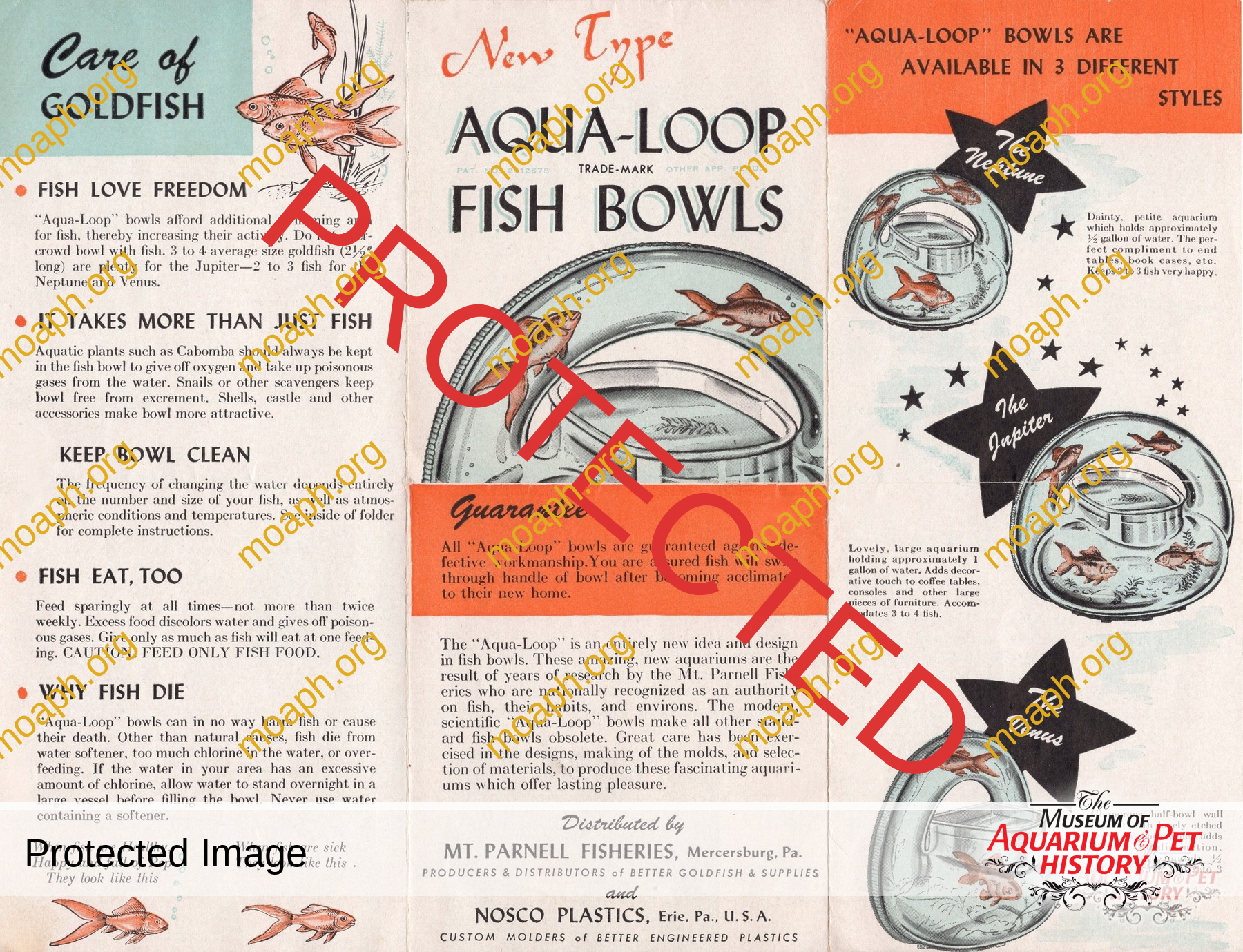
The tabletop Aqua-Loop was available in two different models: “The Neptune” (half gallon) and “The Jupiter” (1 gallon).
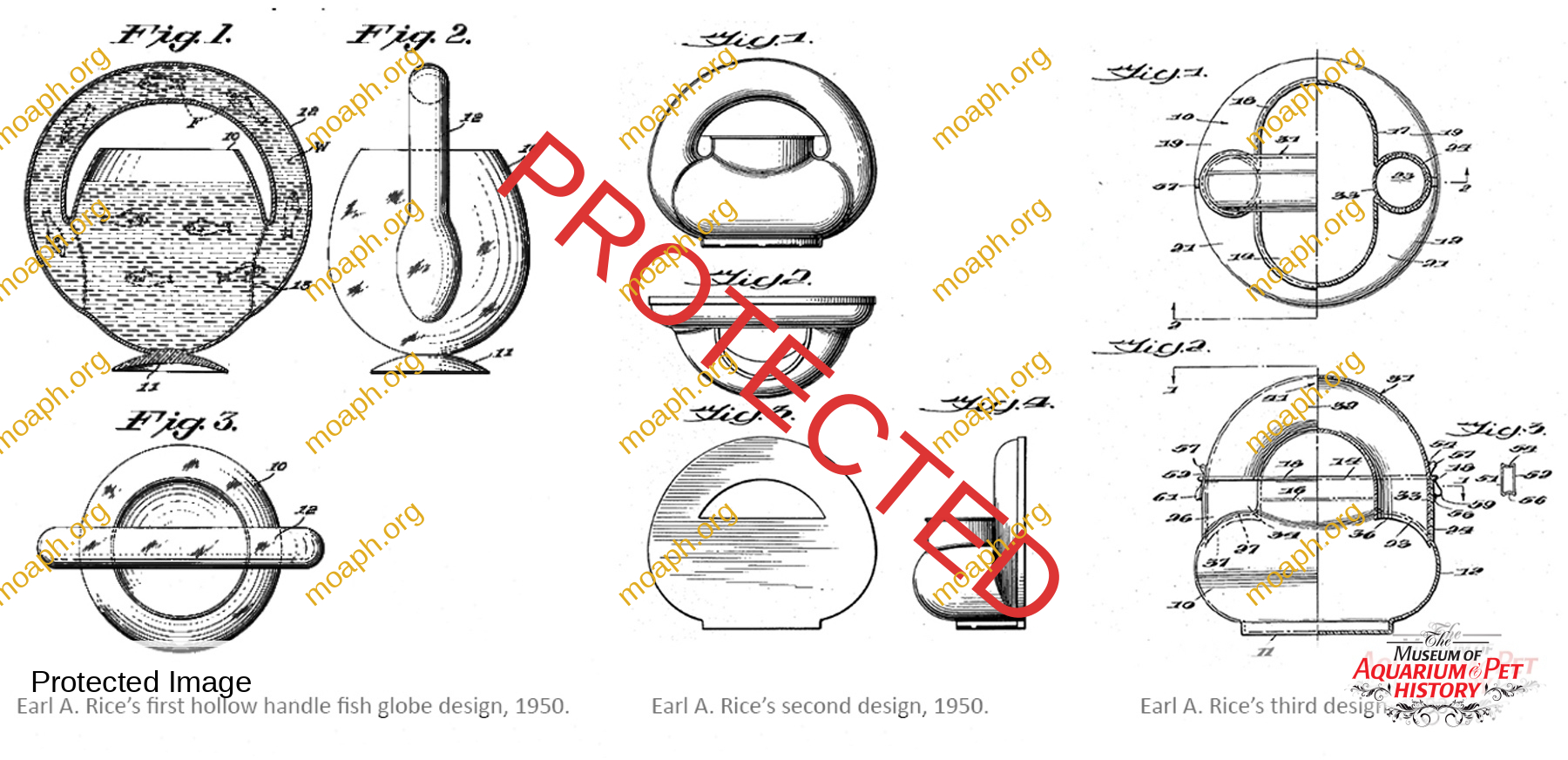
Technical drawings from Earl A. Rice’s patents. Images from the digital book A history of aquarium inventions by the late Albert J. Klee.
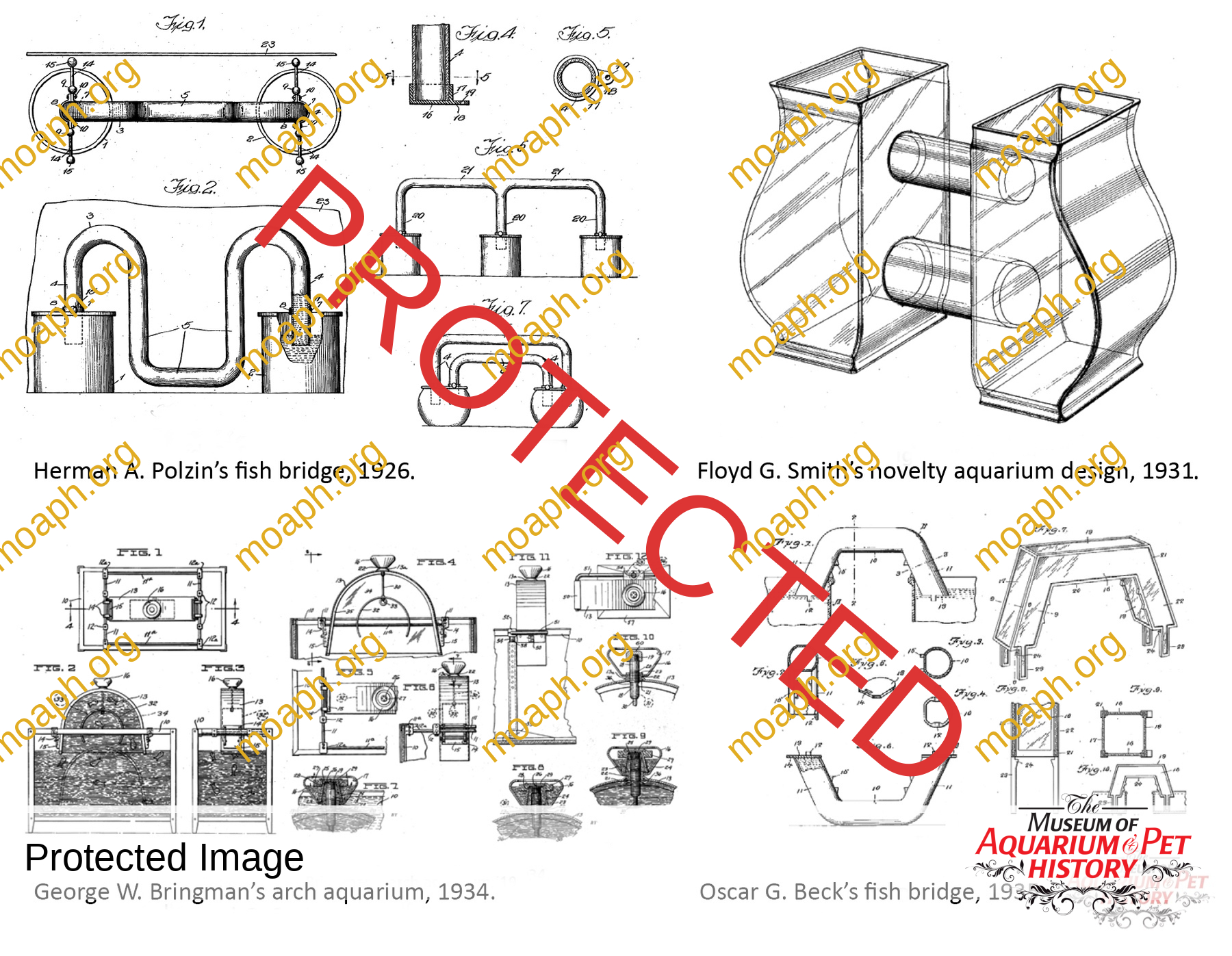
A few ideas of glass fish bridges patented in the US from the 1920s through the 1930s. Images from the digital book A history of aquarium inventions by the late Albert J. Klee.
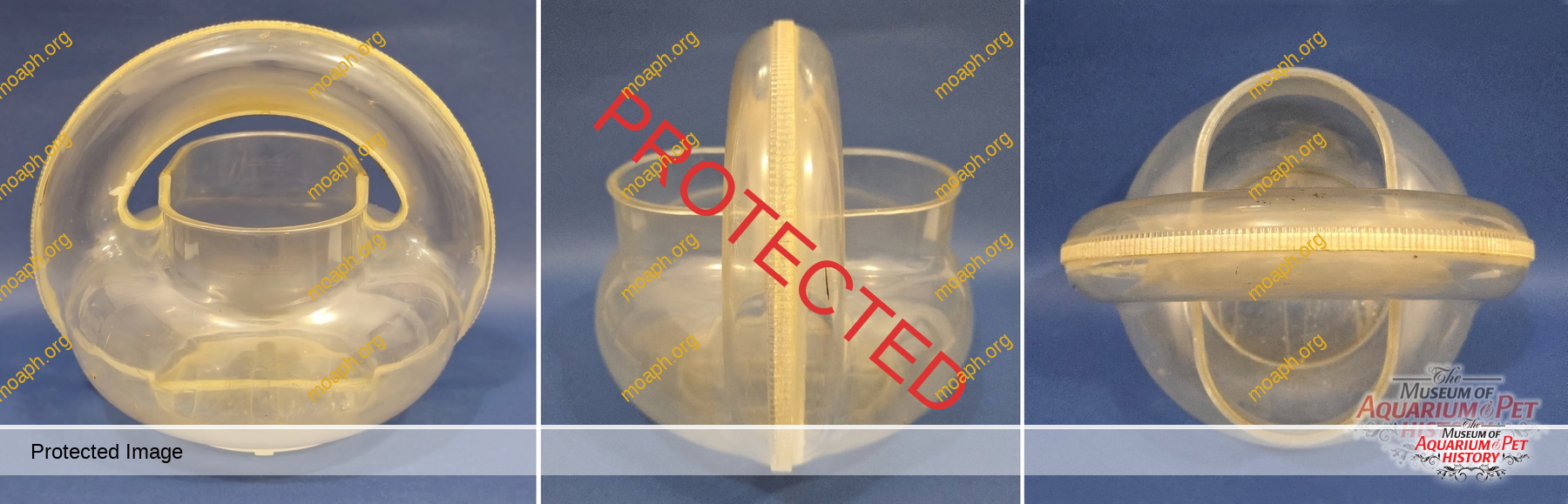
Tabletop Aqua-Loop fishbowl.
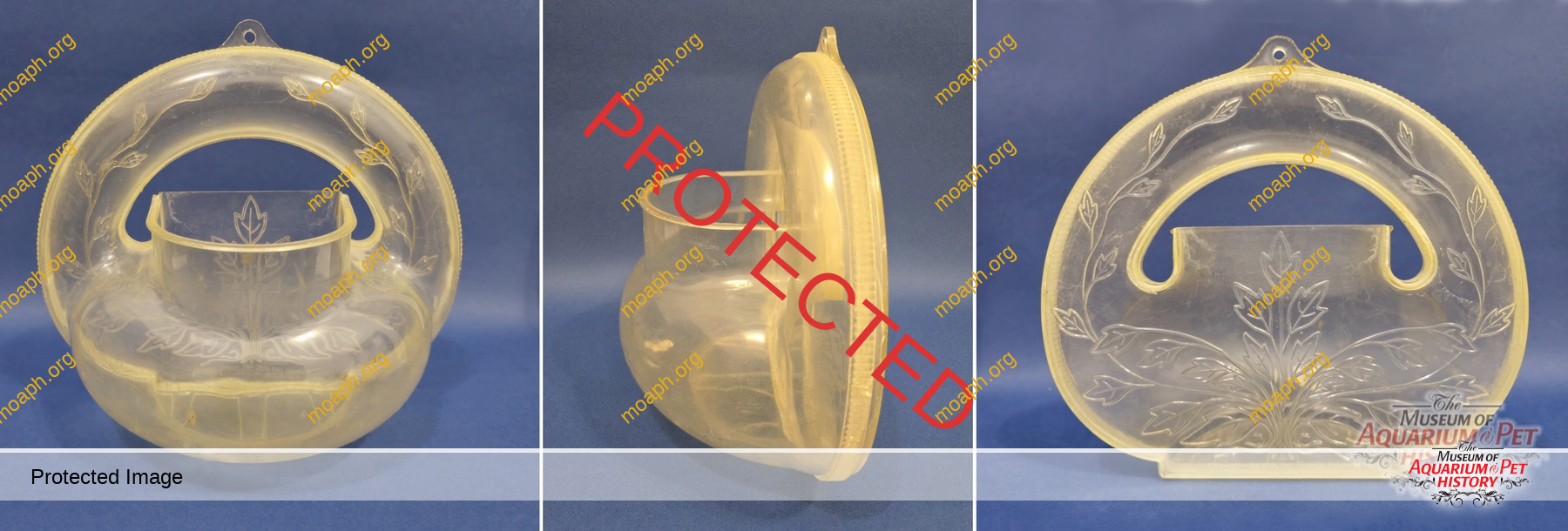
The Aqua-Loop “Venus” model was a wall half-bowl featuring a decorated background. These fishbowls are much rarer than the tabletop ones.
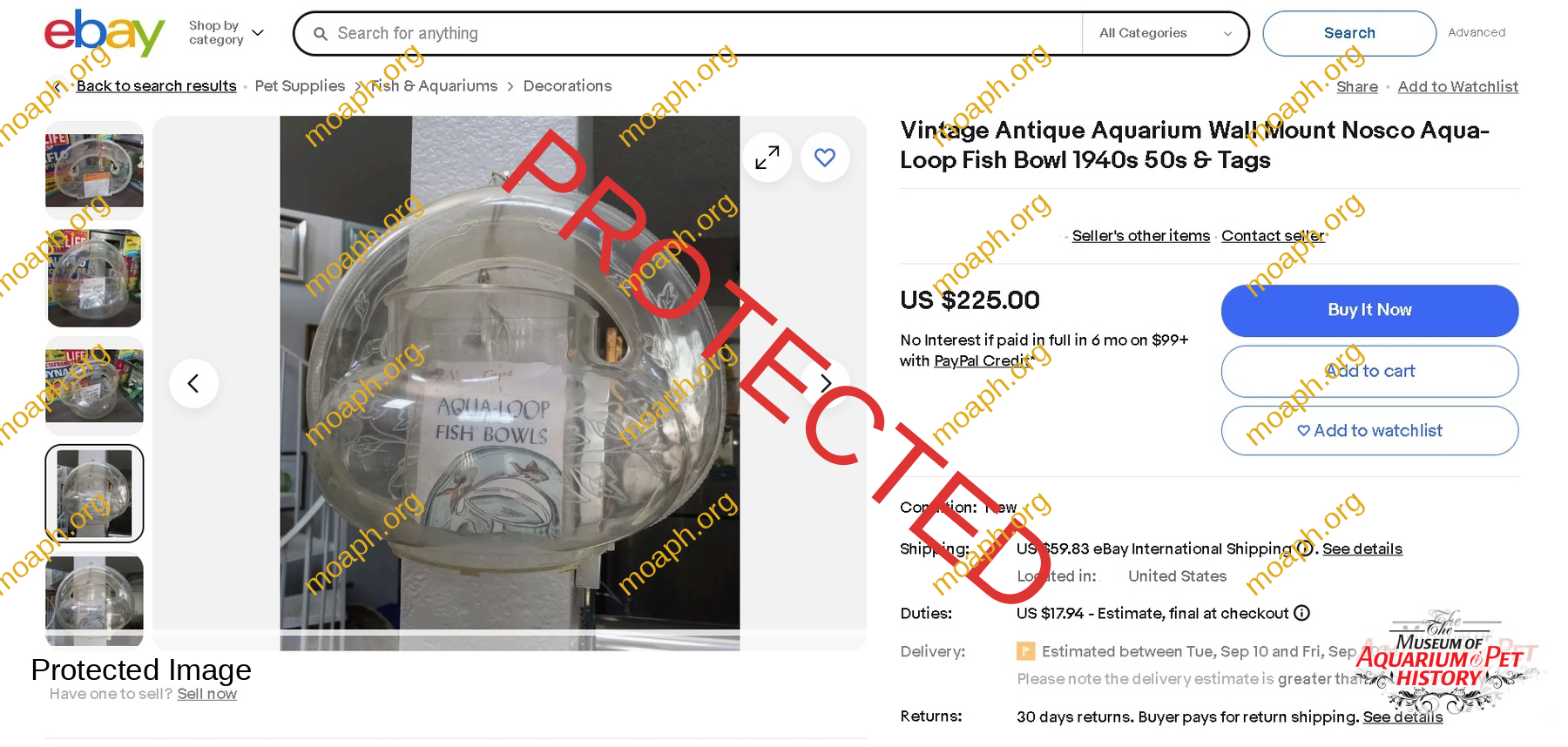
Wall mount Aqua-Loop fishbowl recently listed for sale on eBay.
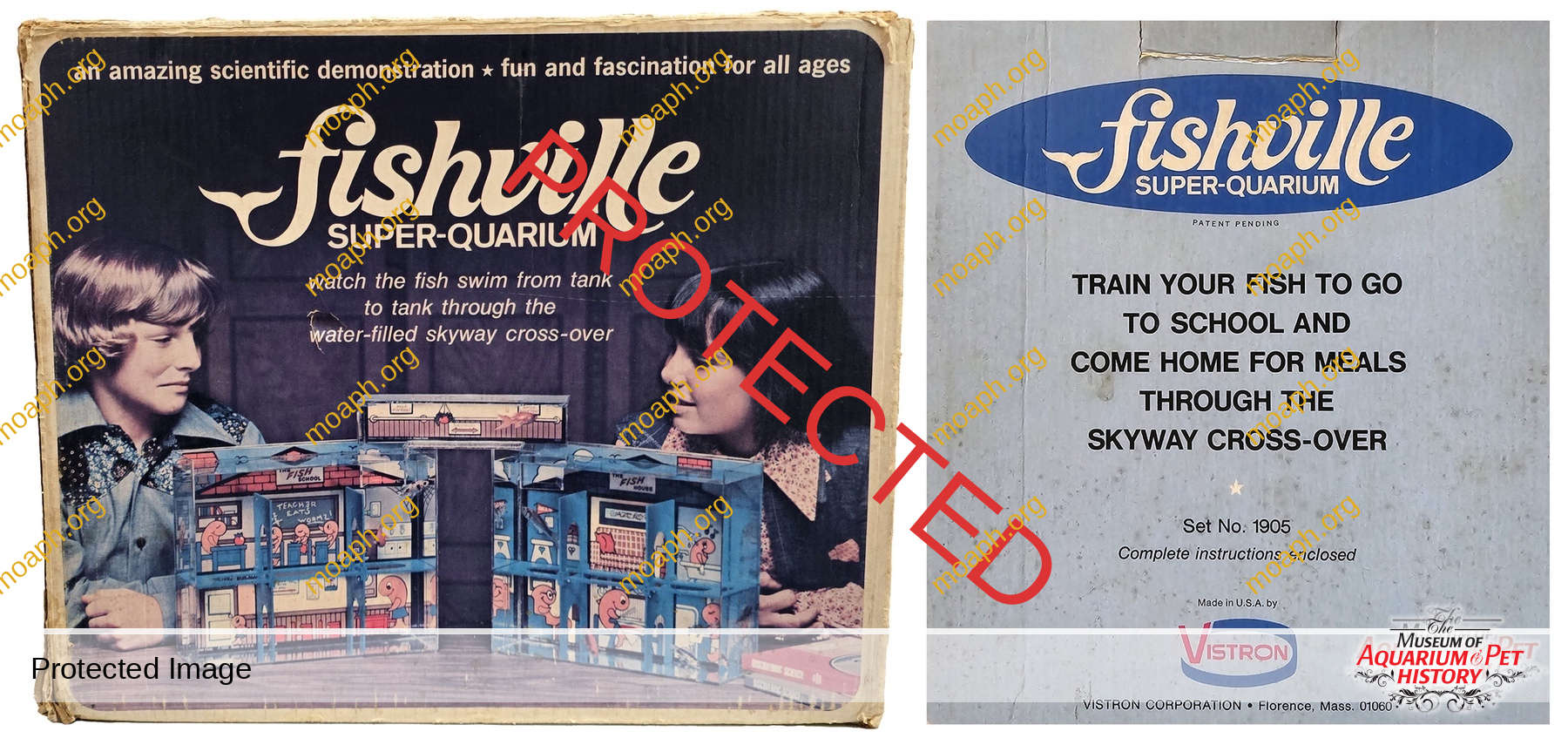
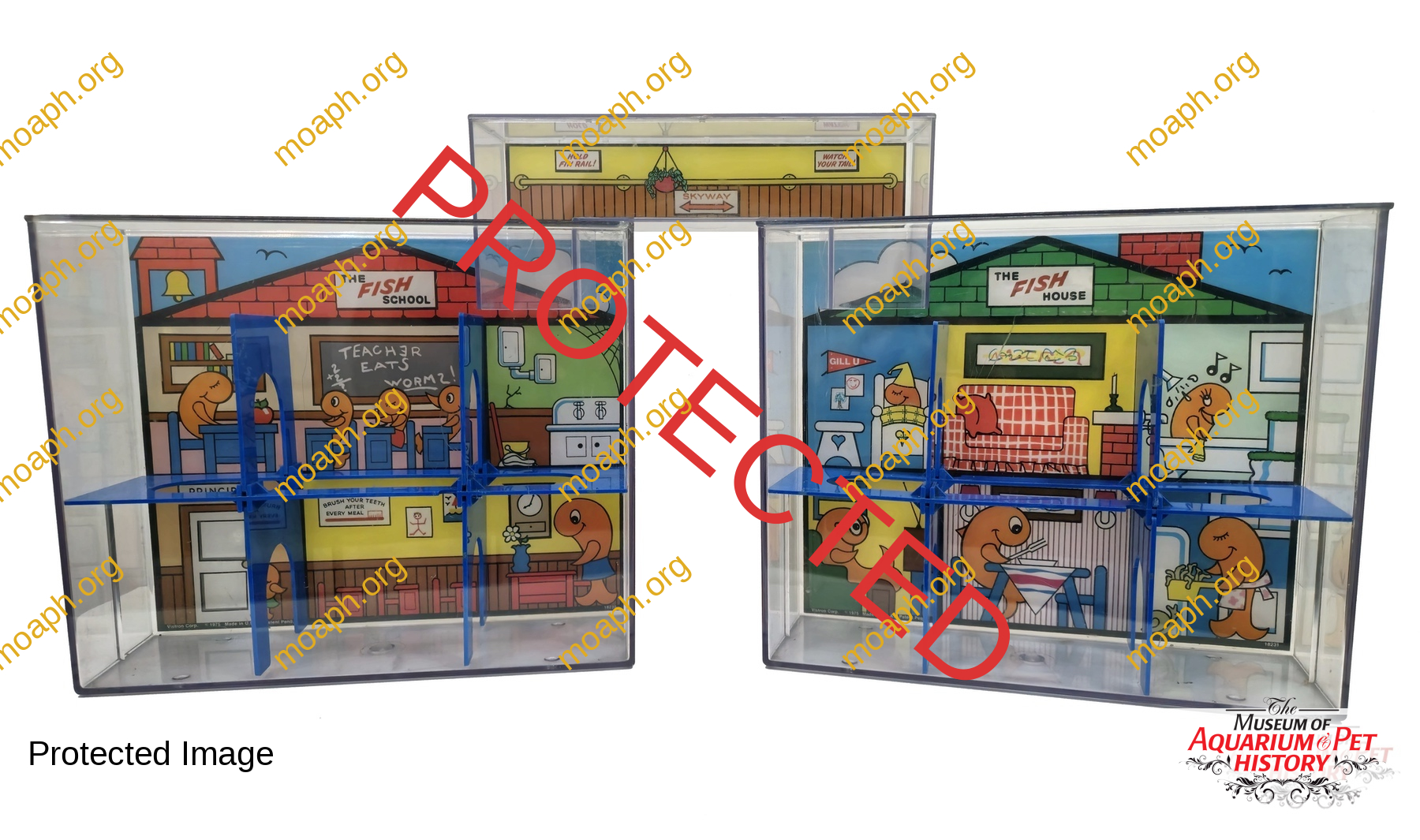
The Fishville Super-quarium is a tank where “fish swim from room to room and from one tank to the other.”
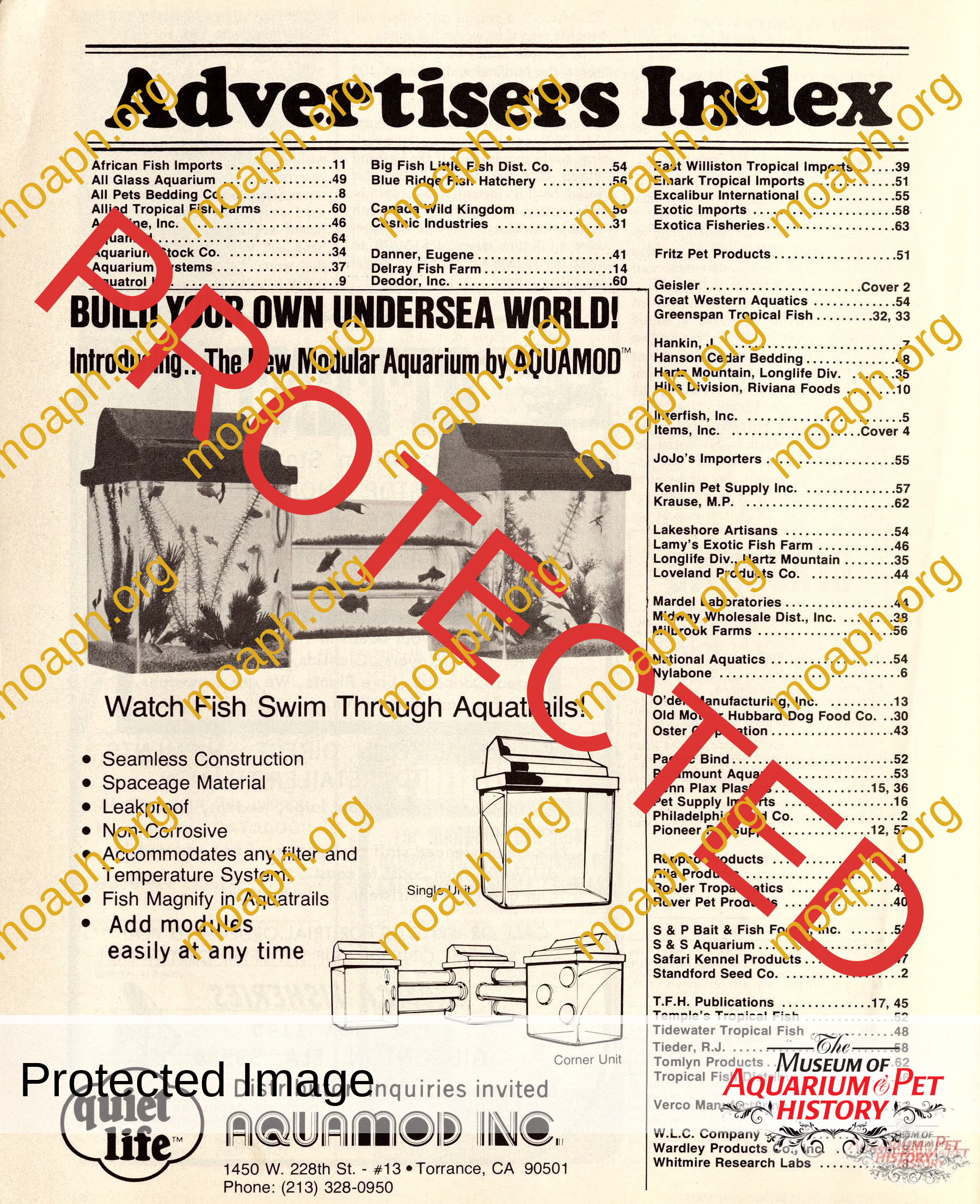
An interesting acrylic aquarium concept from the 1970s. Ad from the October 1974 edition of Pet Dealer. MOAPH’s archive.
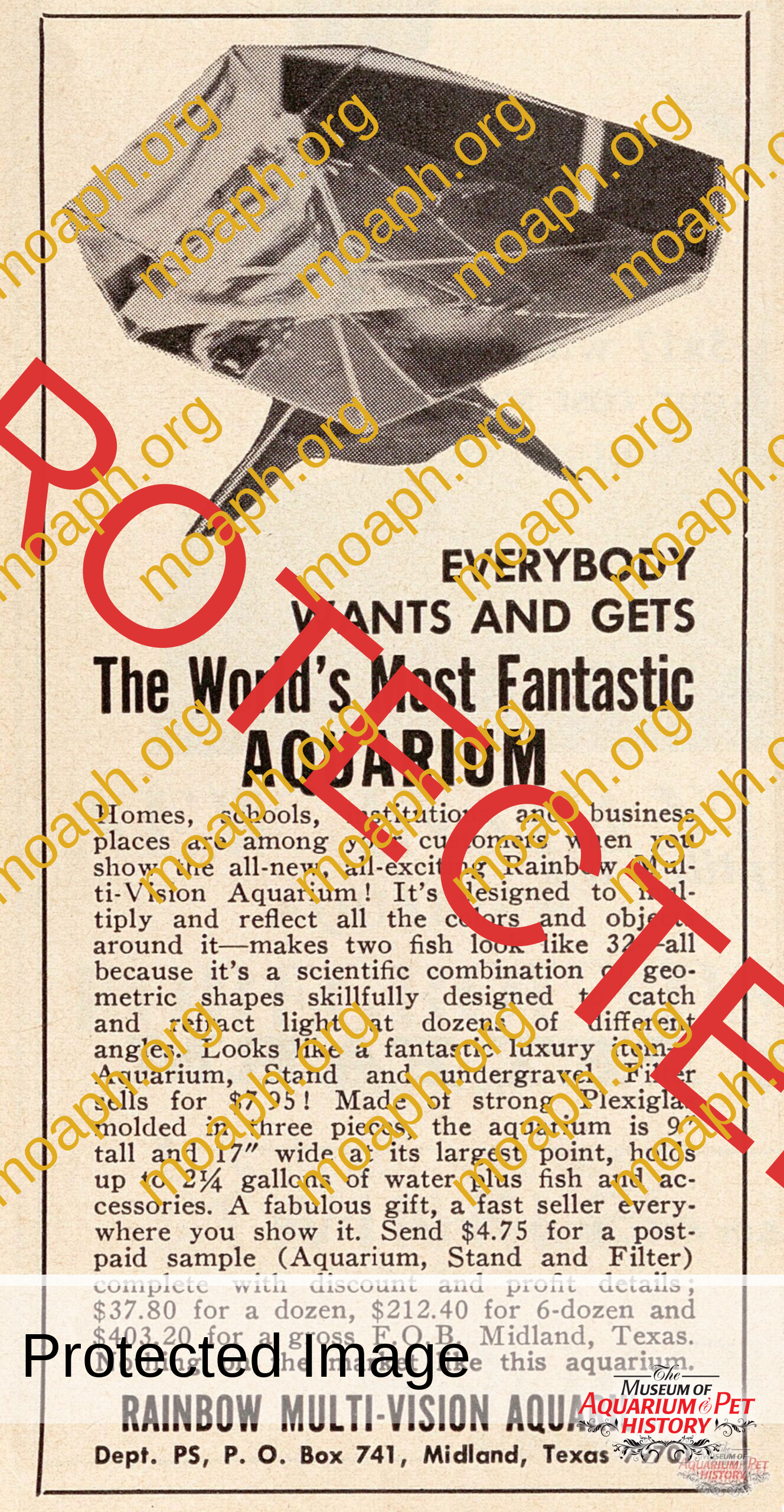
Rainbow Multi-Vision Aquarium, 1969. Nowadays this crazy angular Ruba-Rombic like plexiglass aquarium is next to impossible to find. MOAPH’s archive.
A corral for…seahorses
Thermoplastics and injection molding technologies made it possible to manufacture very small aquariums as well, like the “aqua-rama tank” which was inside the box of Instant Fish, a novelty launched by the toy manufacturer Wham-O (San Gabriel, CA) in 1962. The two competing products of Instant Fish, Kwikee Fish and Fish in a Flash, also included a small plastic tank.
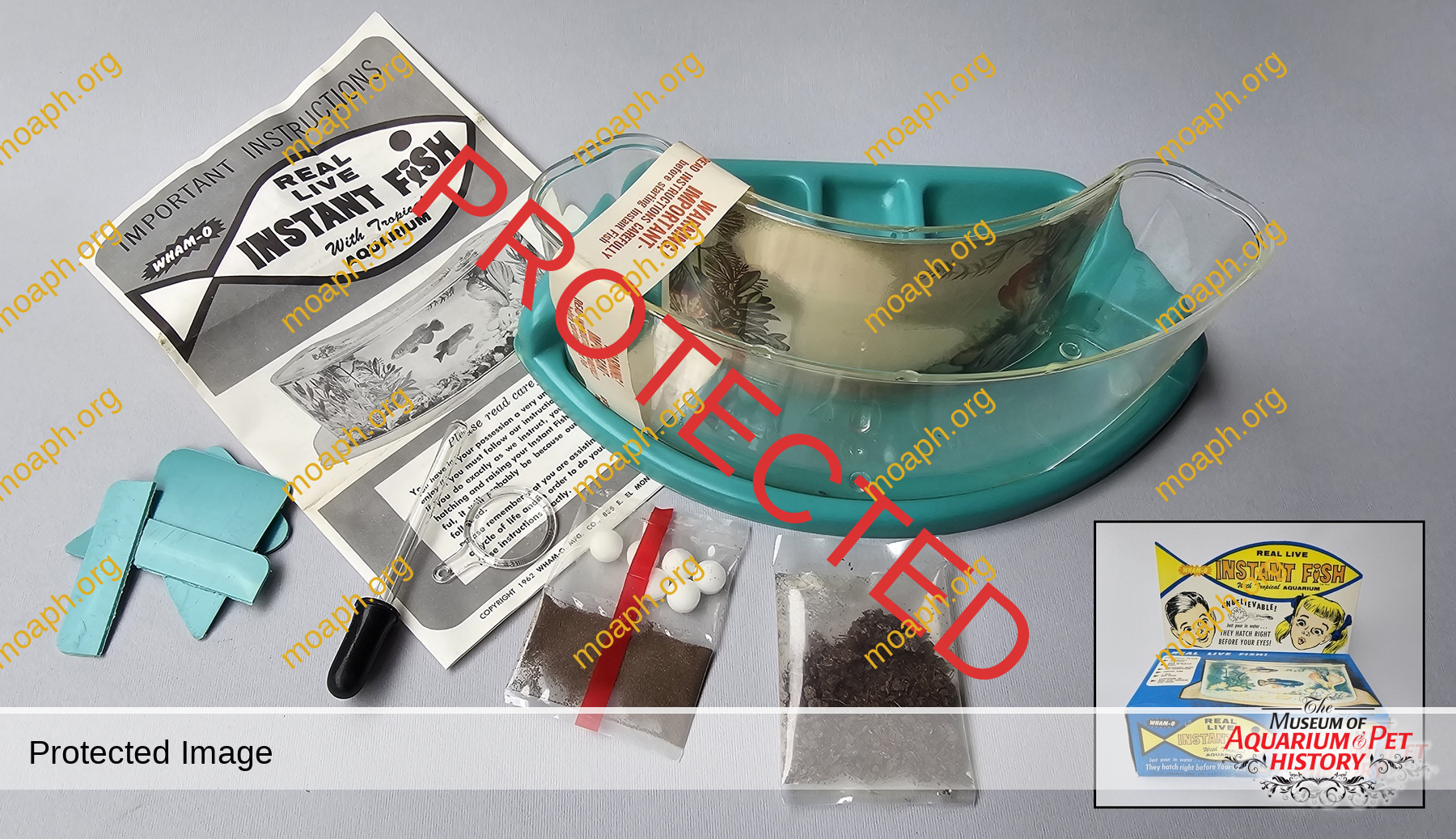
The small “aqua-rama tank” included in the box of Instant Fish.
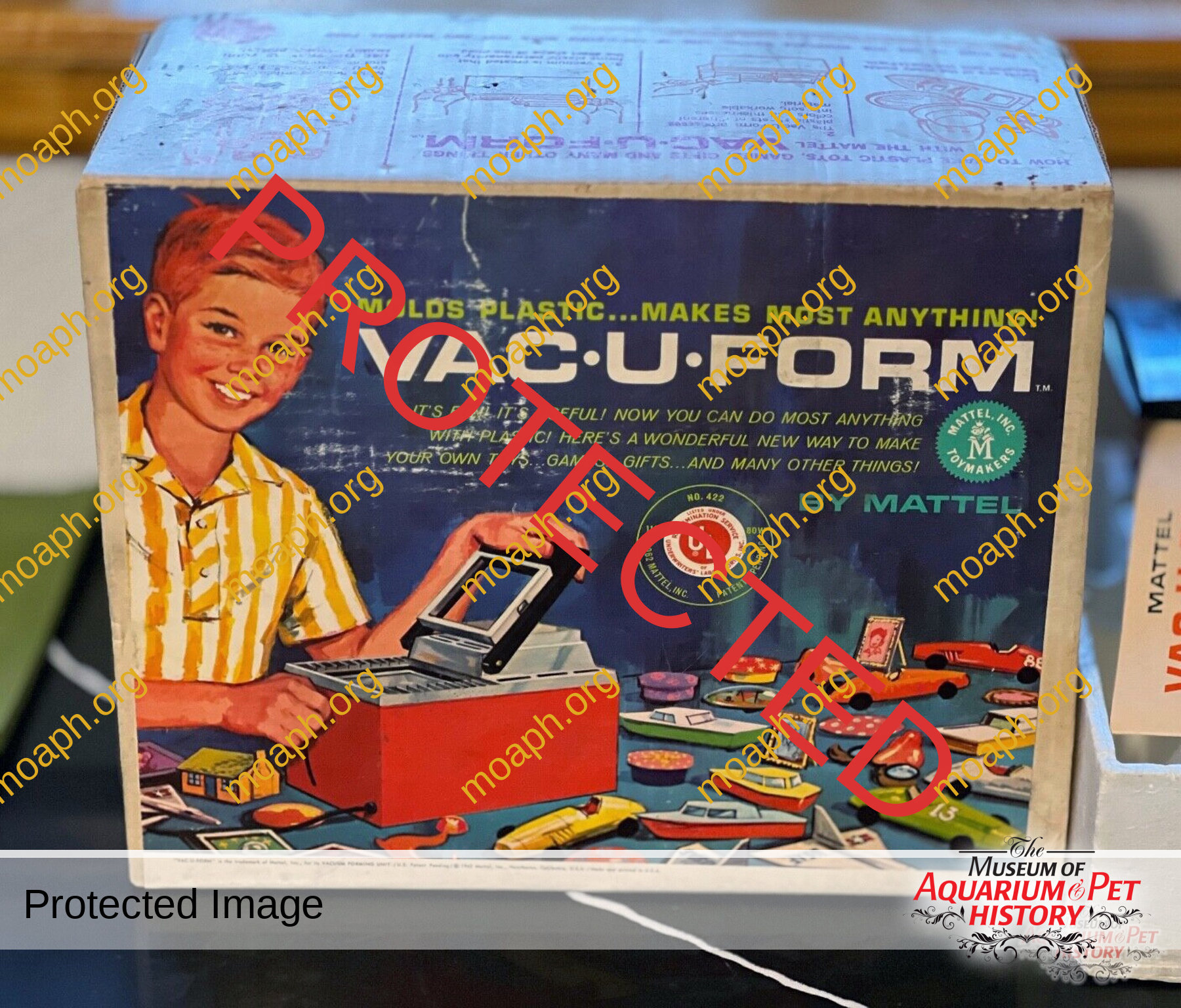
In the 1960s, the manufacturing process called “injection molding” led to an exponential increase in the use of plastic across several industries. Children in those days could even make their own plastic toys by themselves thanks to novelty devices such as “Vac-U-Form” by Mattel.
Towards the end of the 1960s, another “educational” toy involving live fish hit the American market, but this time the bar was raised as the product had to do with… seahorses. Like the aforementioned Fish in a Flash, however, the Sea Horse Corral by Uncle Milton (Hollywood, CA) had limited success primarily because it did not include ready-to-hatch eggs of aquatic animals. In order to get live, “frisky sea horses” at home, one had to mail in a “stock certificate” and patiently wait. In addition to that, the mortality rate of seahorses during transport or after being introduced into the aquarium – which was completely lacking in accessories – was too high.
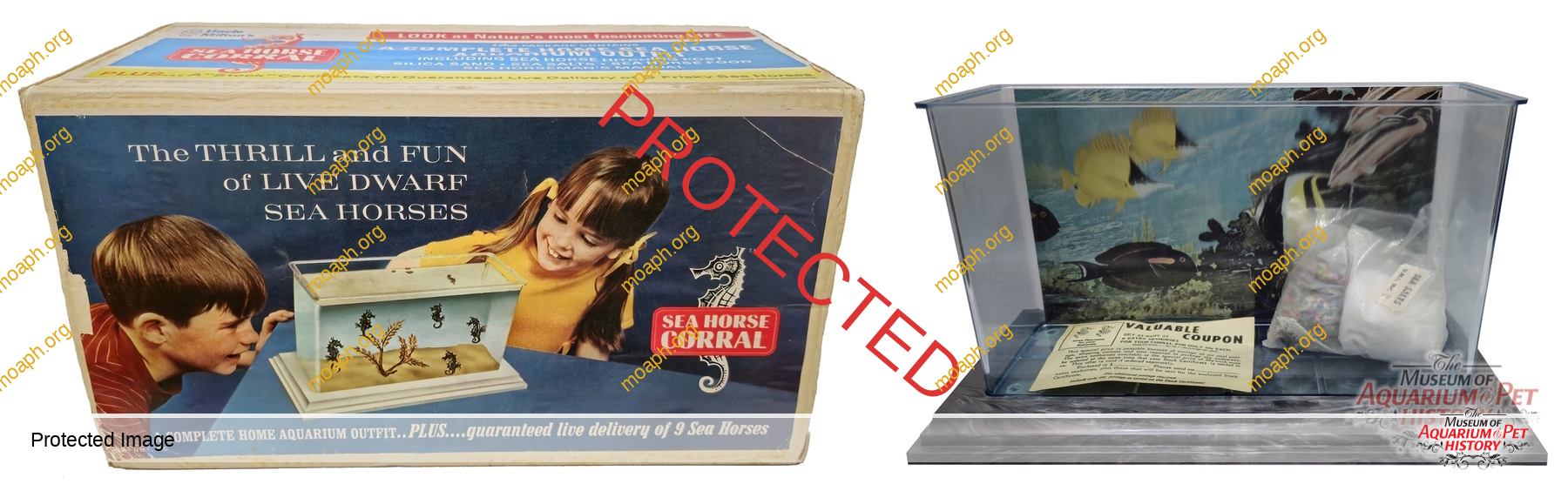
Sea Horse Corral by Uncle Milton, 1969.
Crazy 1990s!
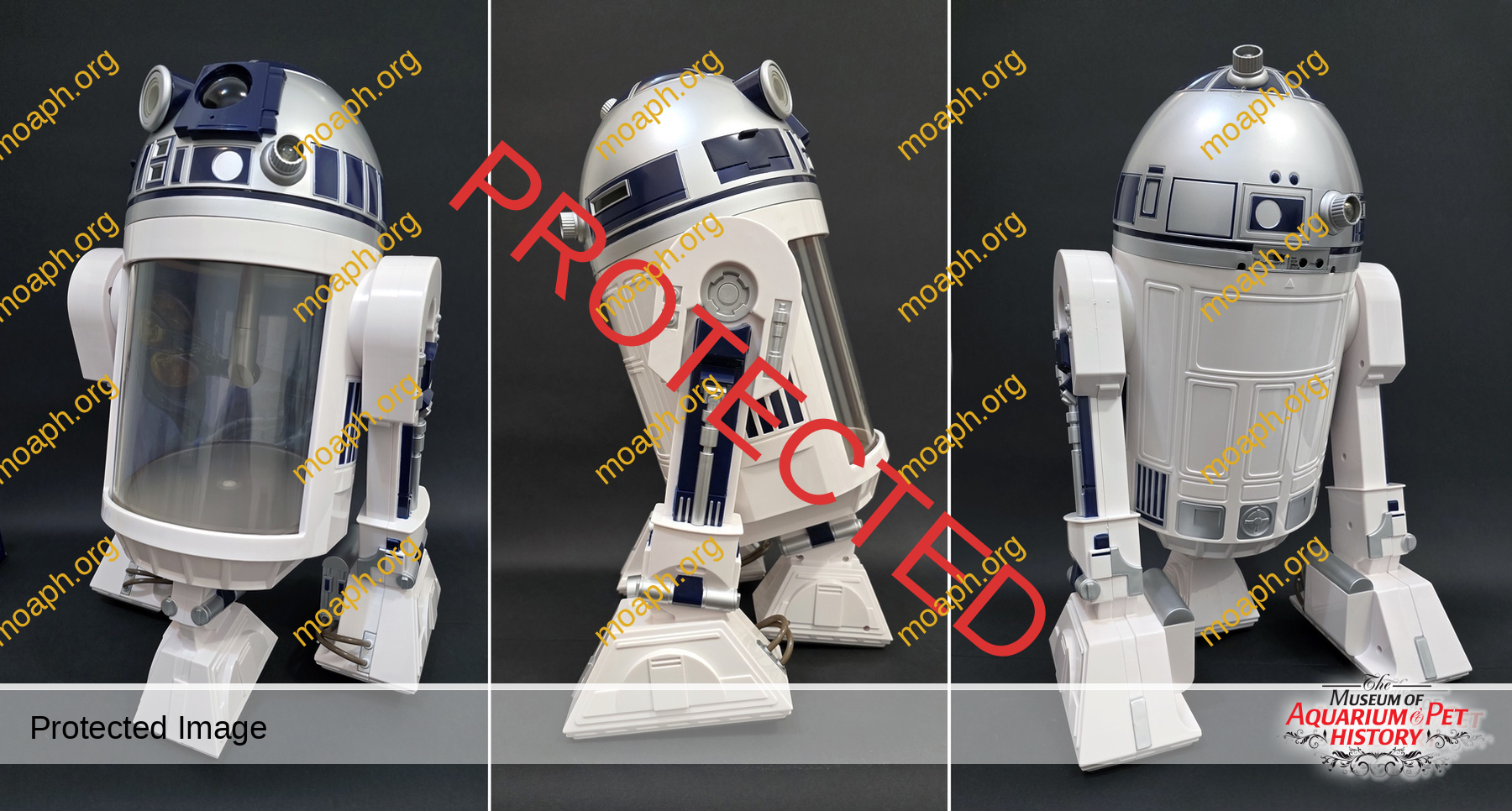
Some of the most successful plastic aquariums usually came from licensing agreements among aquarium manufacturers and the industries of movies, cartoons, and comics. I already mentioned Aquaman, but if we move from the 1990s onward, several examples really start to add up: Garfield, The Little Mermaid, Teenage Mutant Ninja Turtles, The Flintstones, Spongebob, Star Wars, and so on. Over the past few years, the value of some of these colorful themed aquariums has skyrocketed. The most striking example is certainly the R2-D2 Fish Tank launched in 2008 by Planet Pets (New York, NY), which is definitely one of my favorites although it can’t be considered vintage yet.
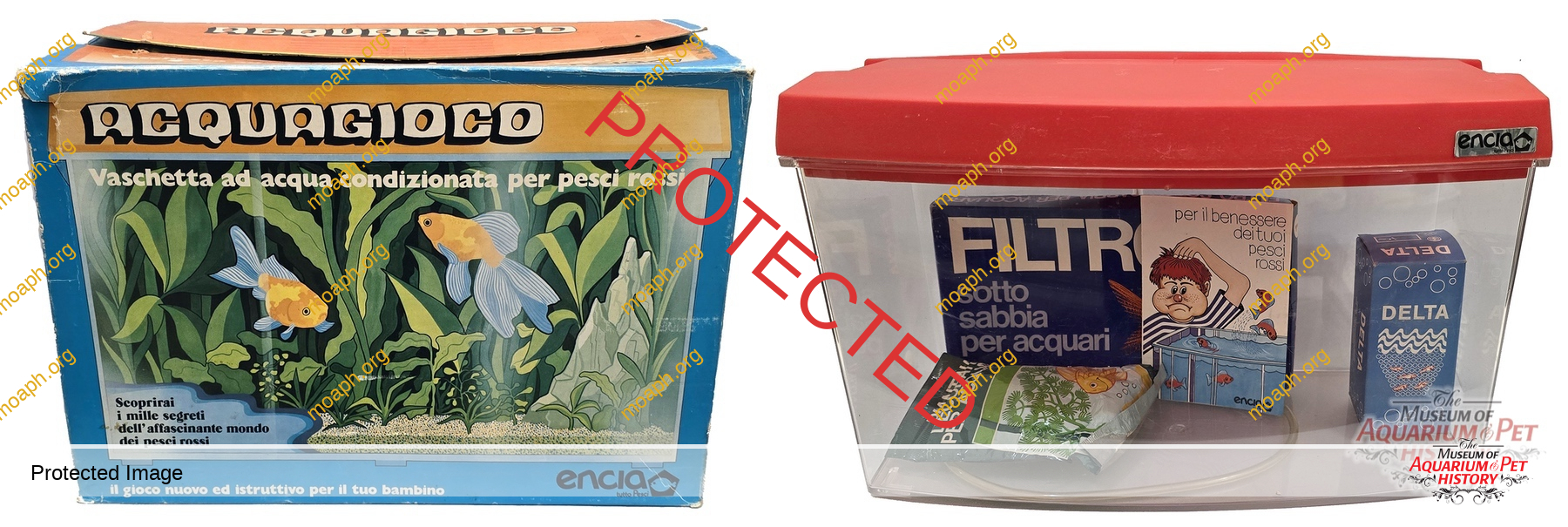
“Acquagioco” aquarium by Encia (Udine, Italy), late 1970s.
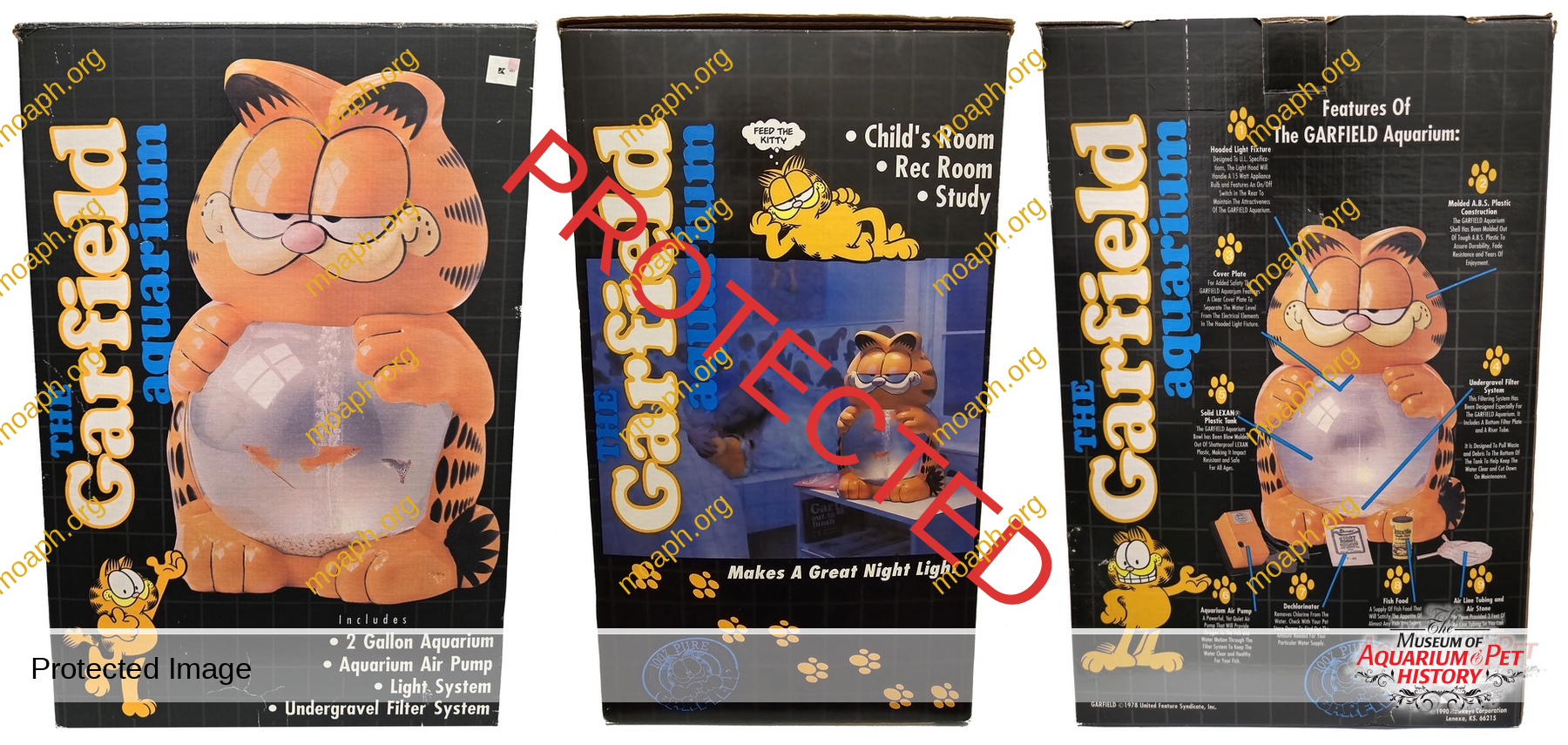
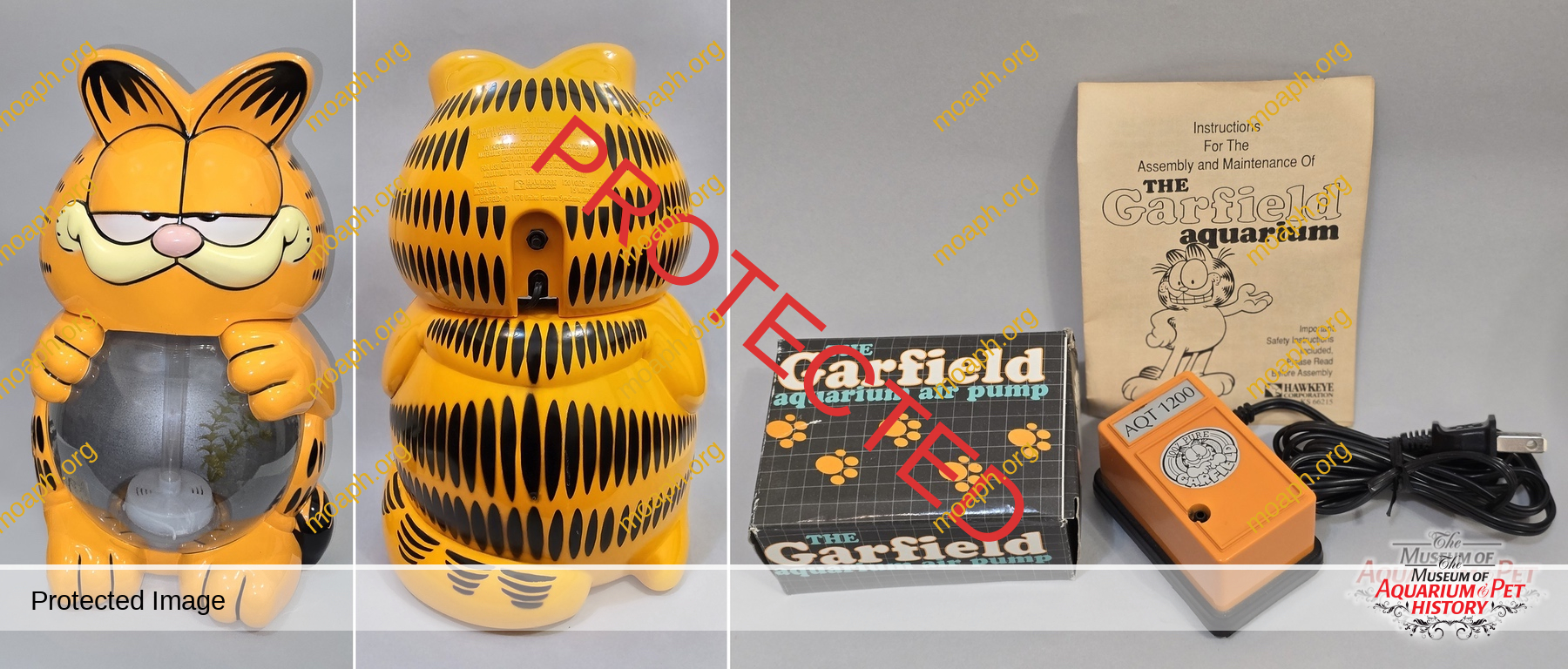
The Garfield Aquarium was released in 1992 by Hawkeye Corporation of Lenexa, KS.
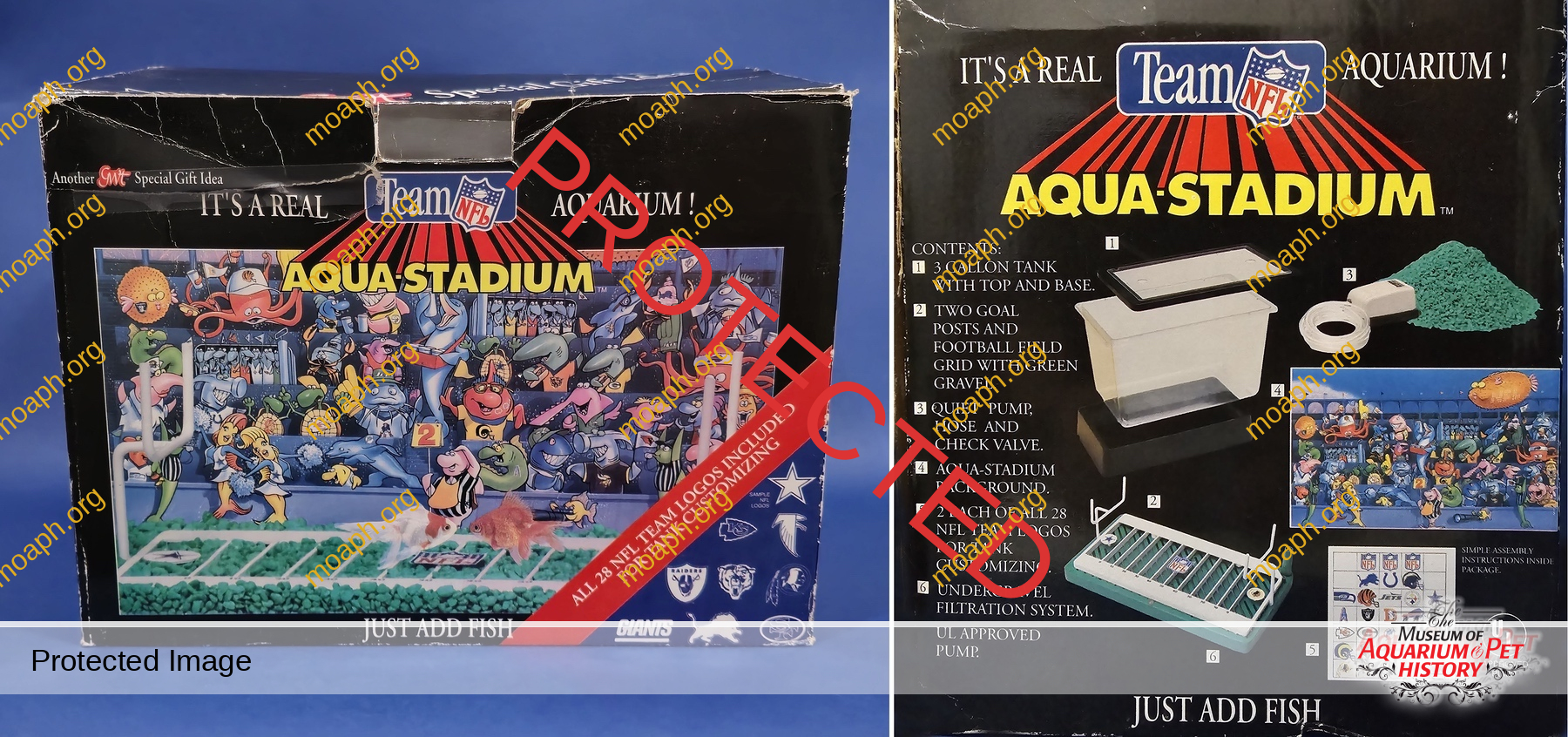
The NFL Team Aqua-Stadium from 1992 was manufactured and distributed by Great Western Trading Co., Inc. (Plano, TX).
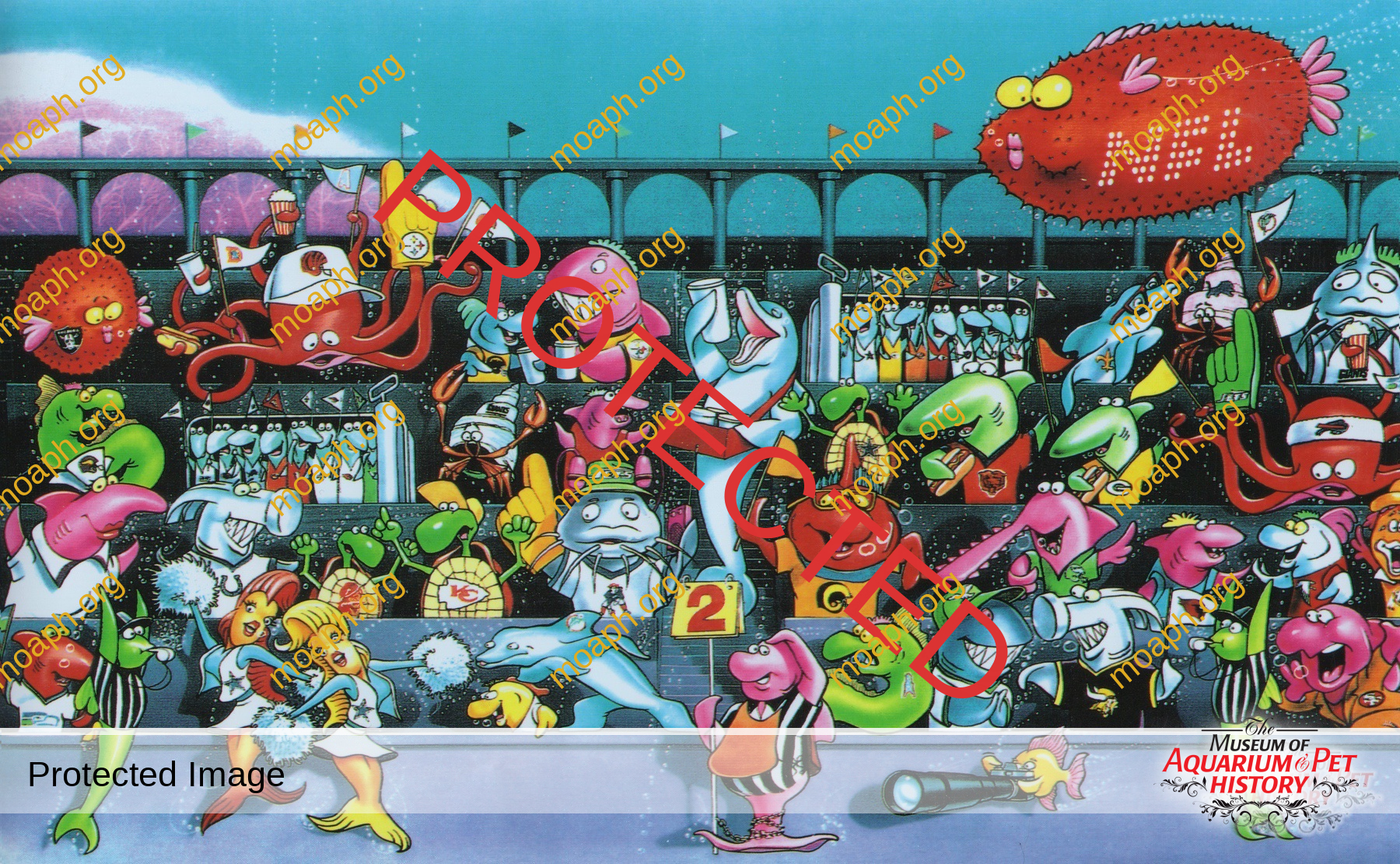
Background of the NFL Team Aqua-Stadium.
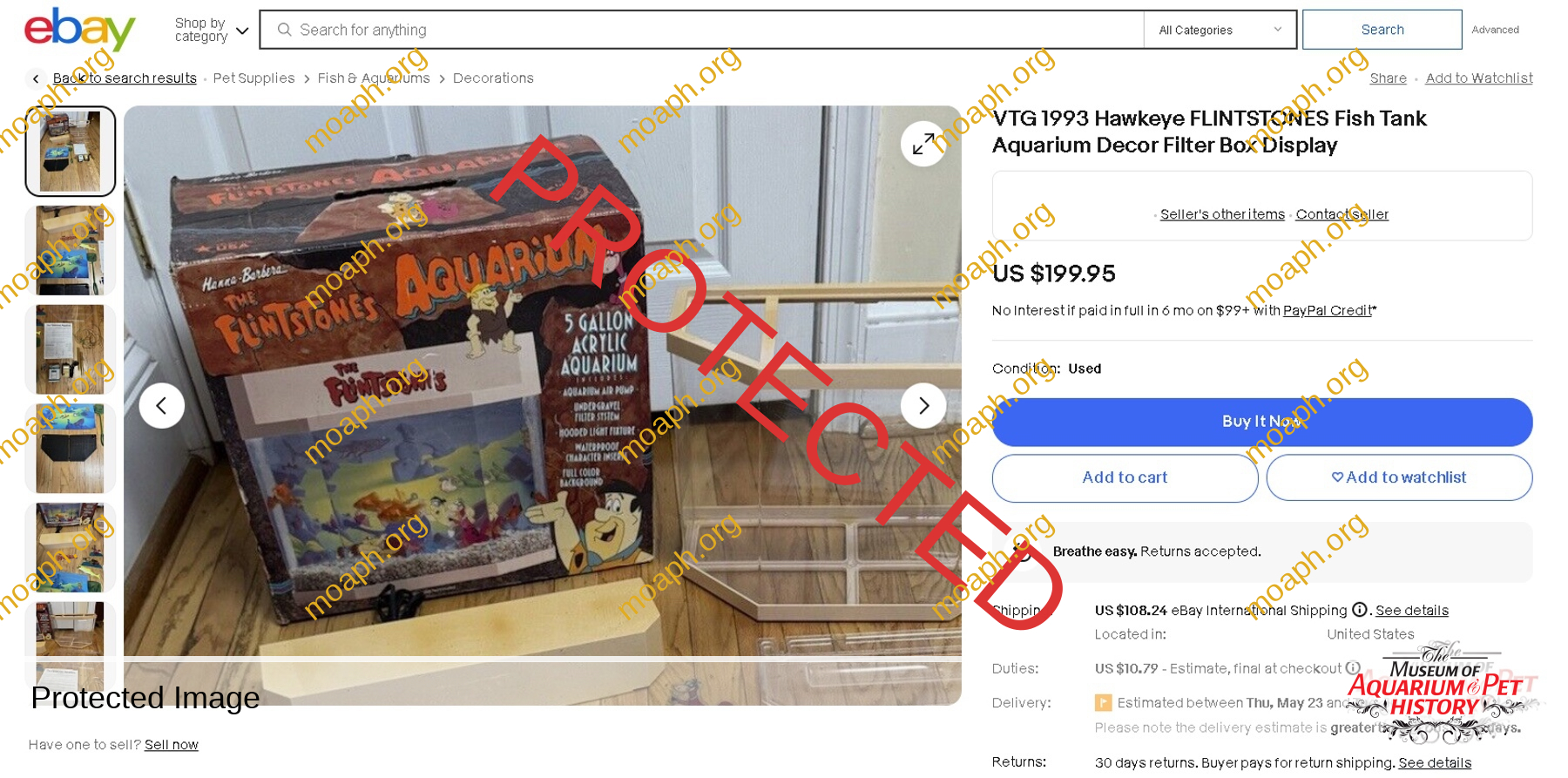
An example of 1993 Flintstones Aquarium recently listed for sale on eBay.
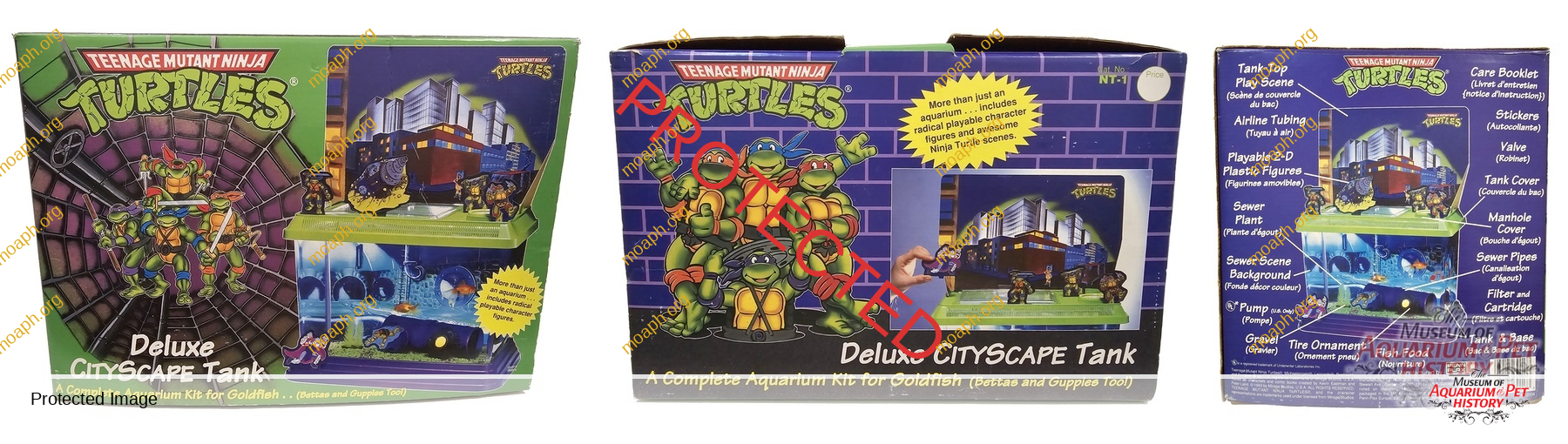
The TMNT Deluxe Cityscape Aquarium was made under license by Penn-Plax (Garden City, NY) in 1993.
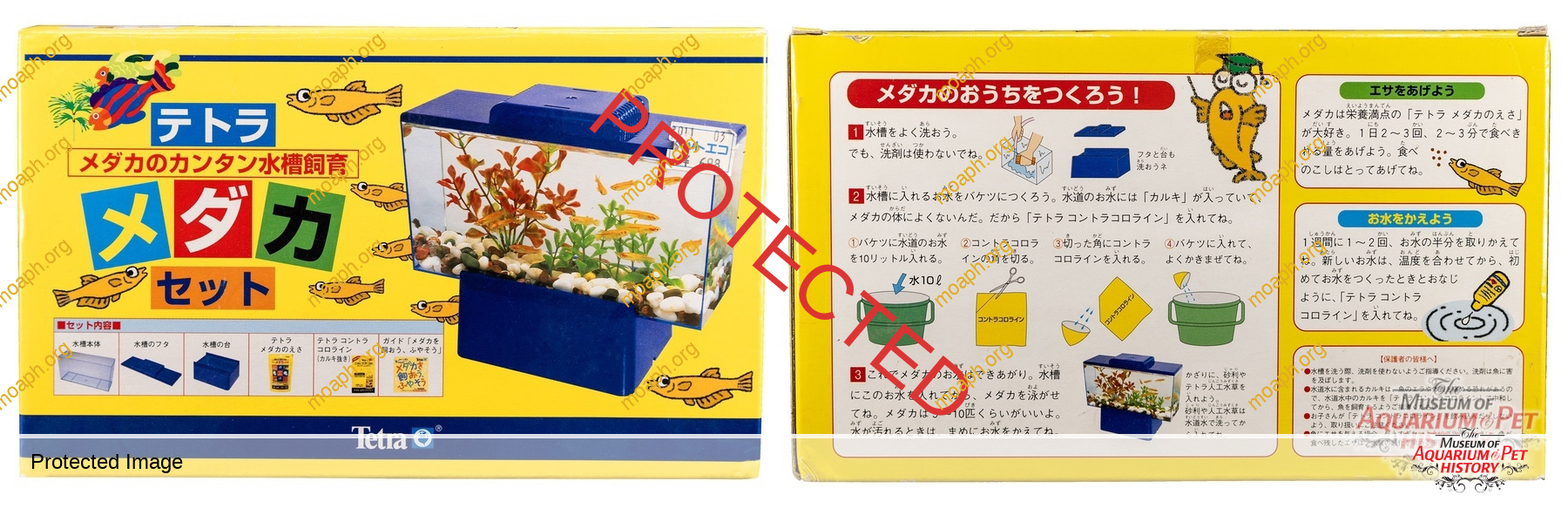
Plastic aquarium for medakas made by Tetra in the 1990s only for the Japanese market.
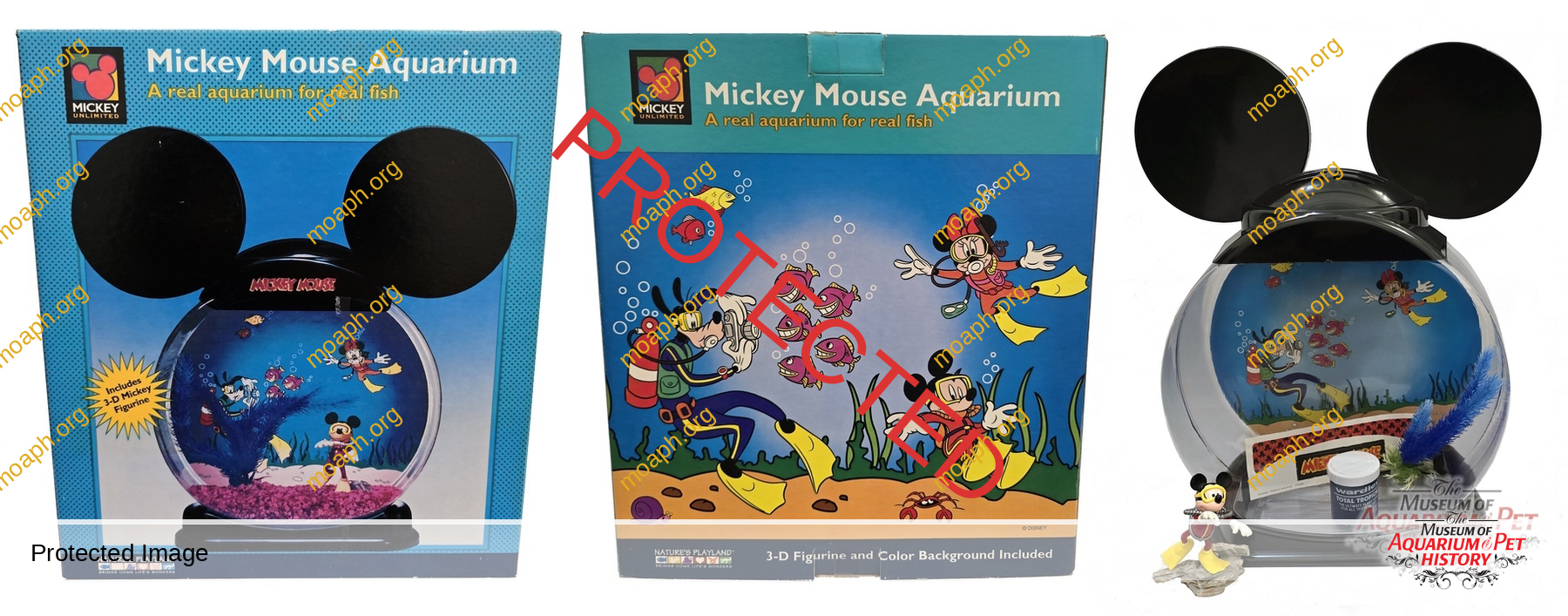
Mickey Mouse Aquarium, 1994 (Nature’s Playland Company, Hicksville, NY).
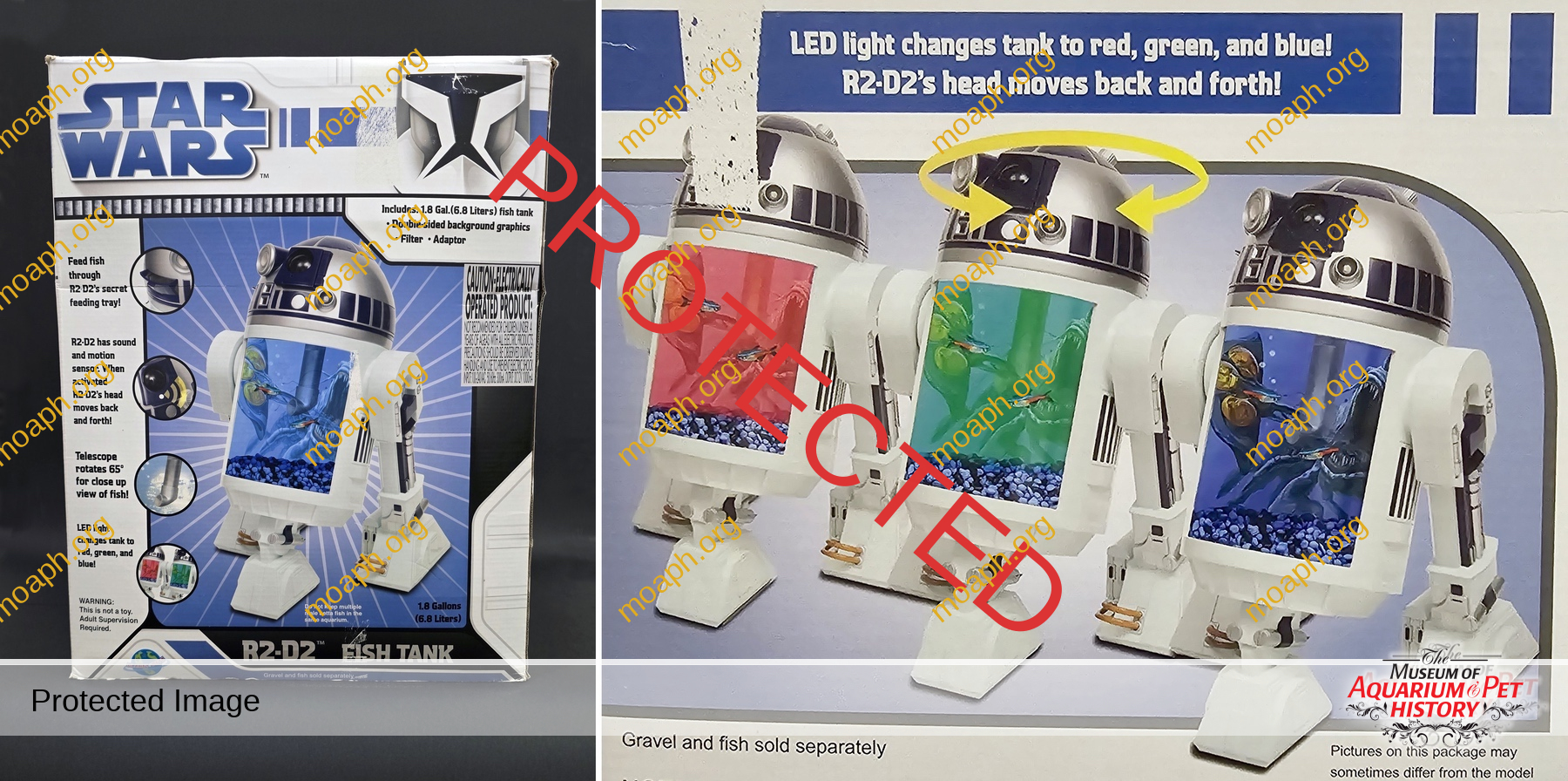
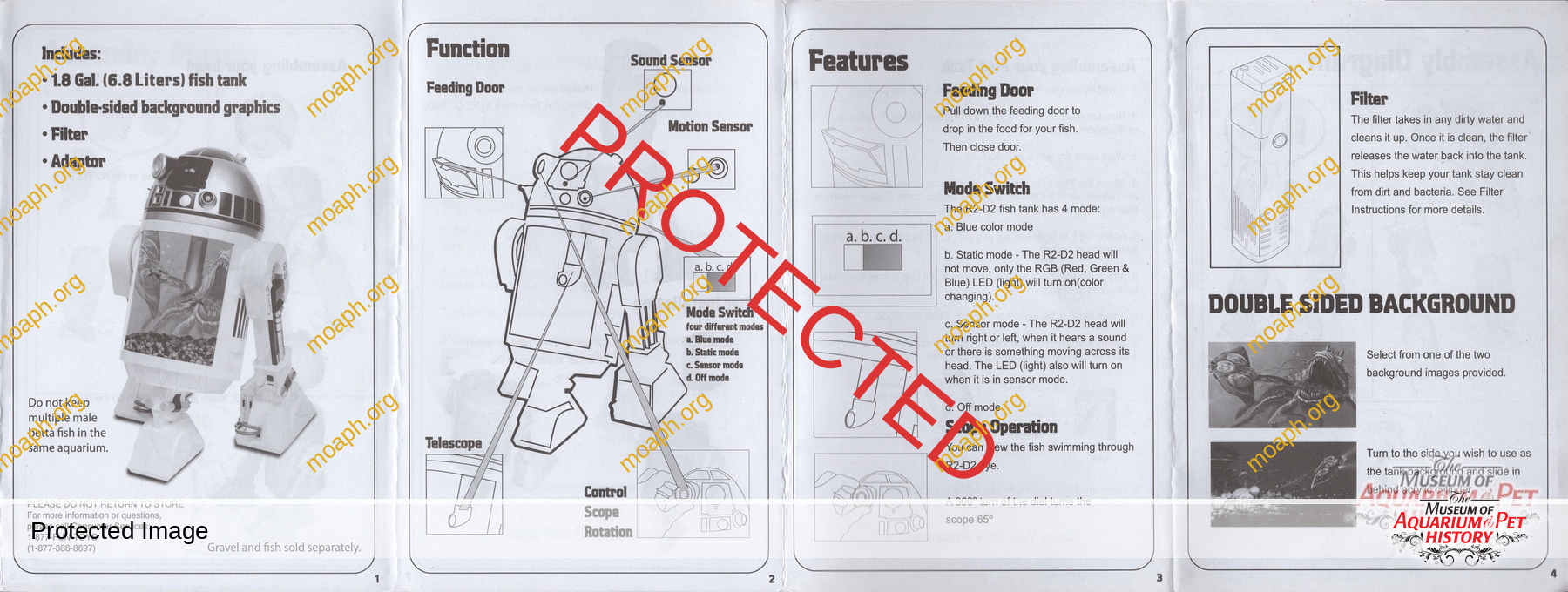
R2-D2 Fish Tank made under license by Planet Pets (New York, NY).
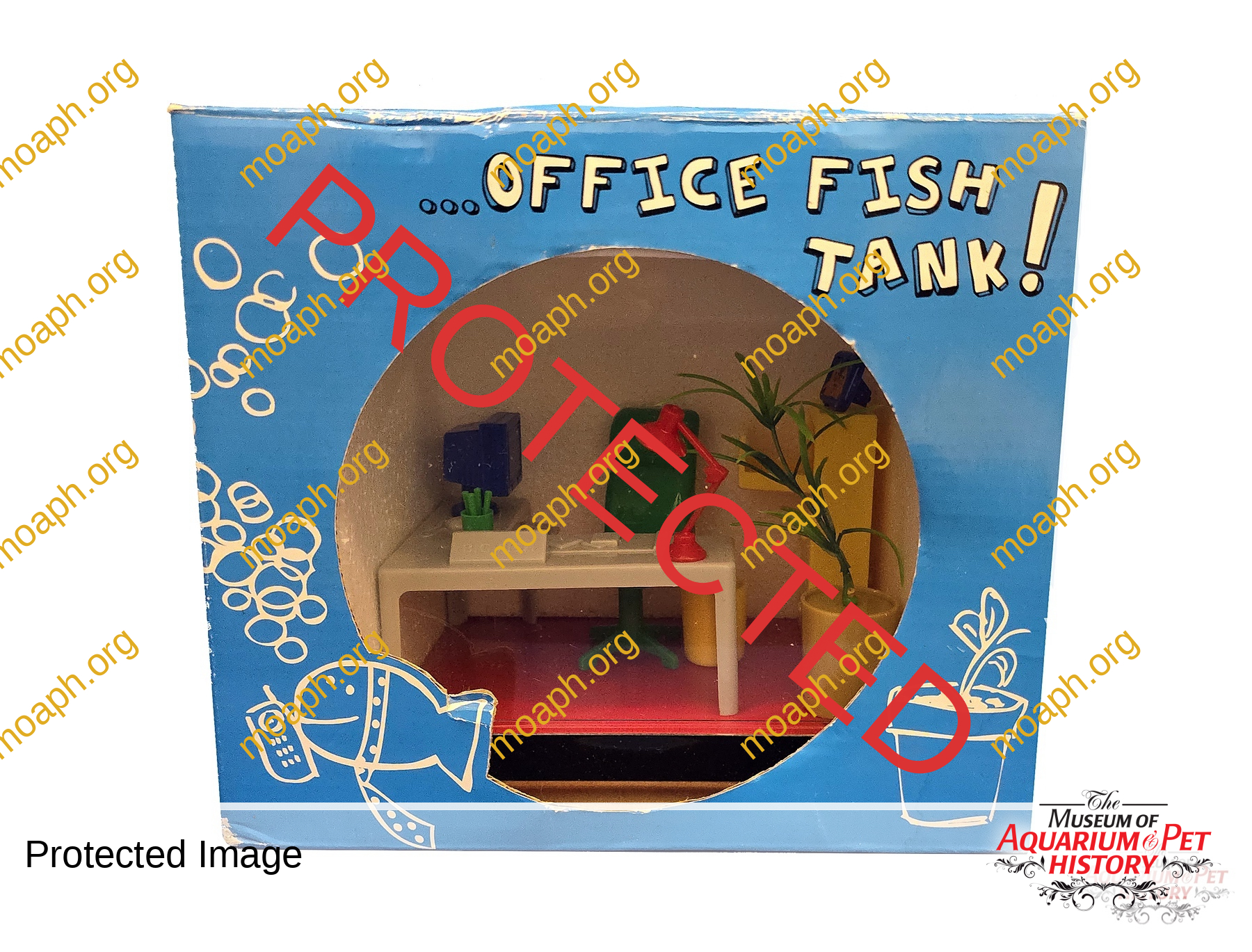
Office Aquarium, 2004.
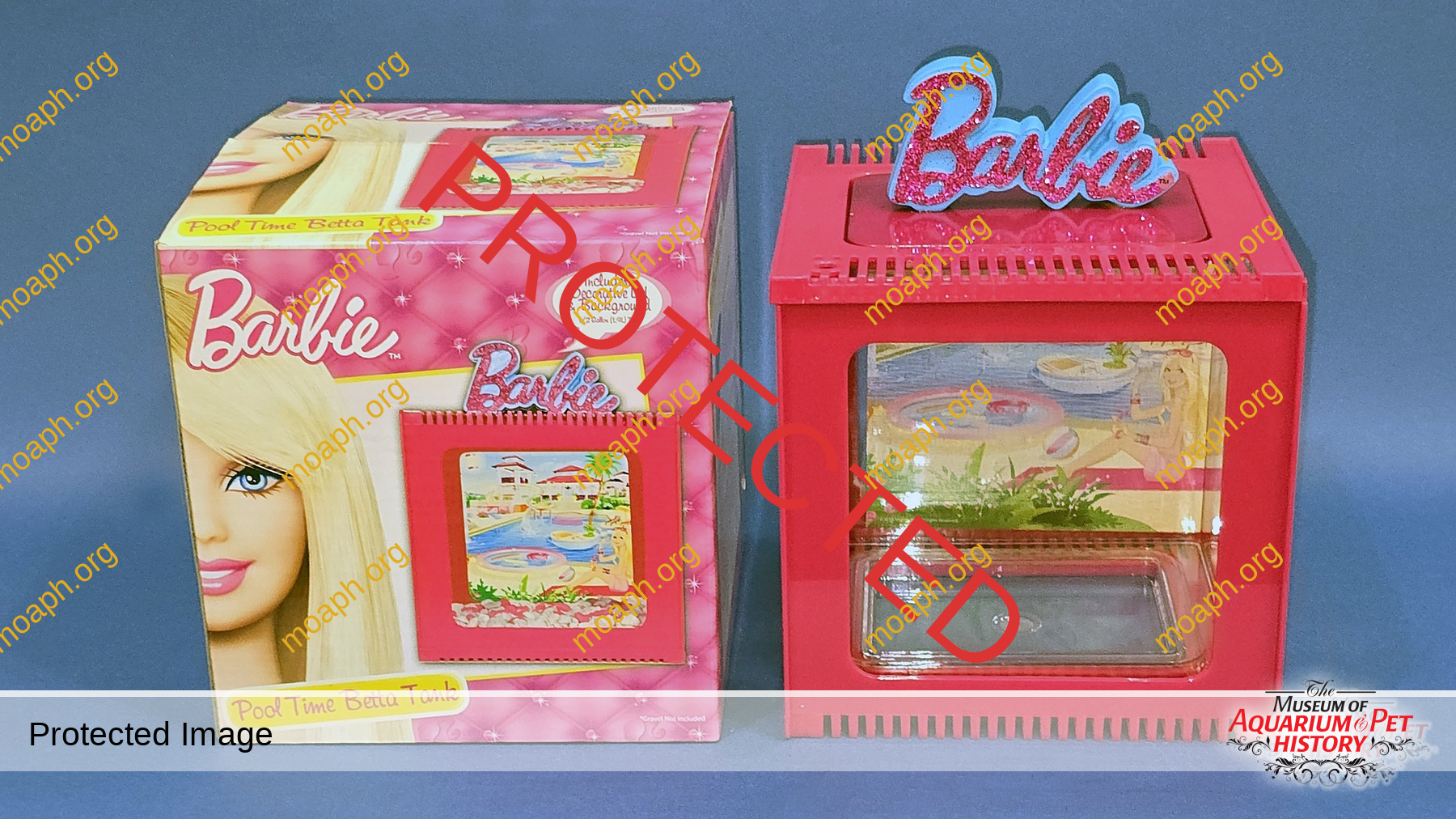
Barbie Pool Time Betta Tank by Mattel, 2014.
Does a Holy Grail exist in the world of vintage plastic aquariums? Absolutely, even though it is not a mass-produced tank like the ones we have talked about so far. It is the 300 gallon elephant-shaped aquarium made in the early 1990s by the American artist Tom Wise, who spent three years carving it out of a 6-by-7 foot block of blue glowing lucite (an acrylic-based plastic). In 1994, this bulky masterpiece was offered for sale in the Christmas catalog of the luxury chain Neiman Marcus at the crazy price of $120,000! Wise even made molds out of it, just in case more than a single order had come in!