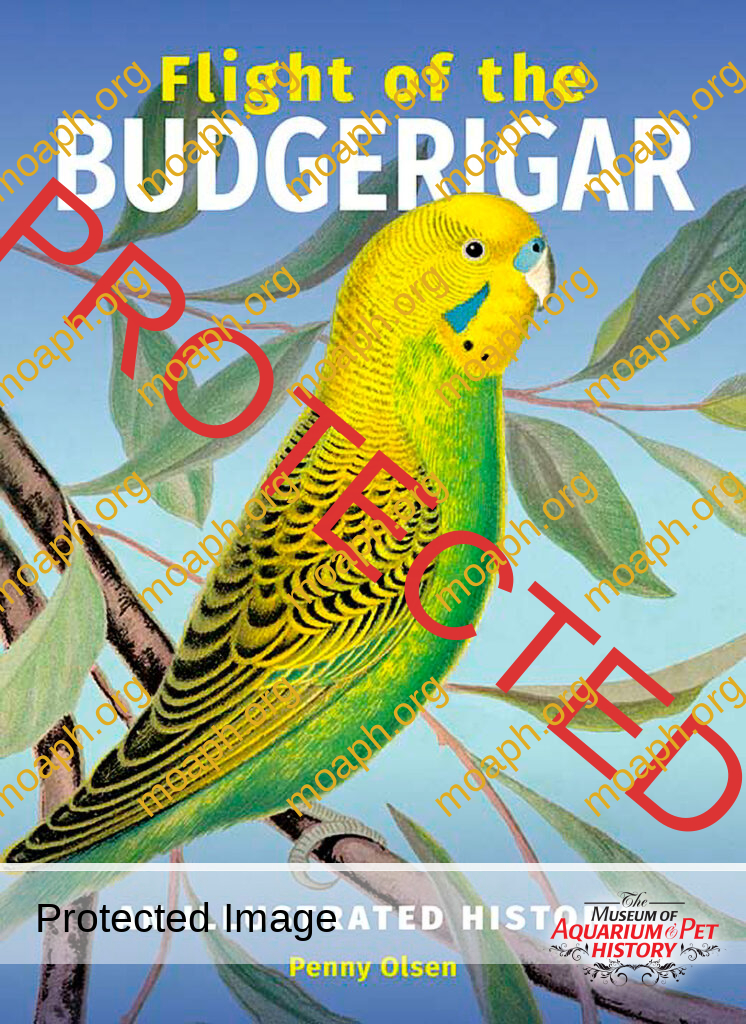
Flight of the Budgerigar – An Illustrated History

Vintage photo of a pet shop with a wall lined with bird cages.
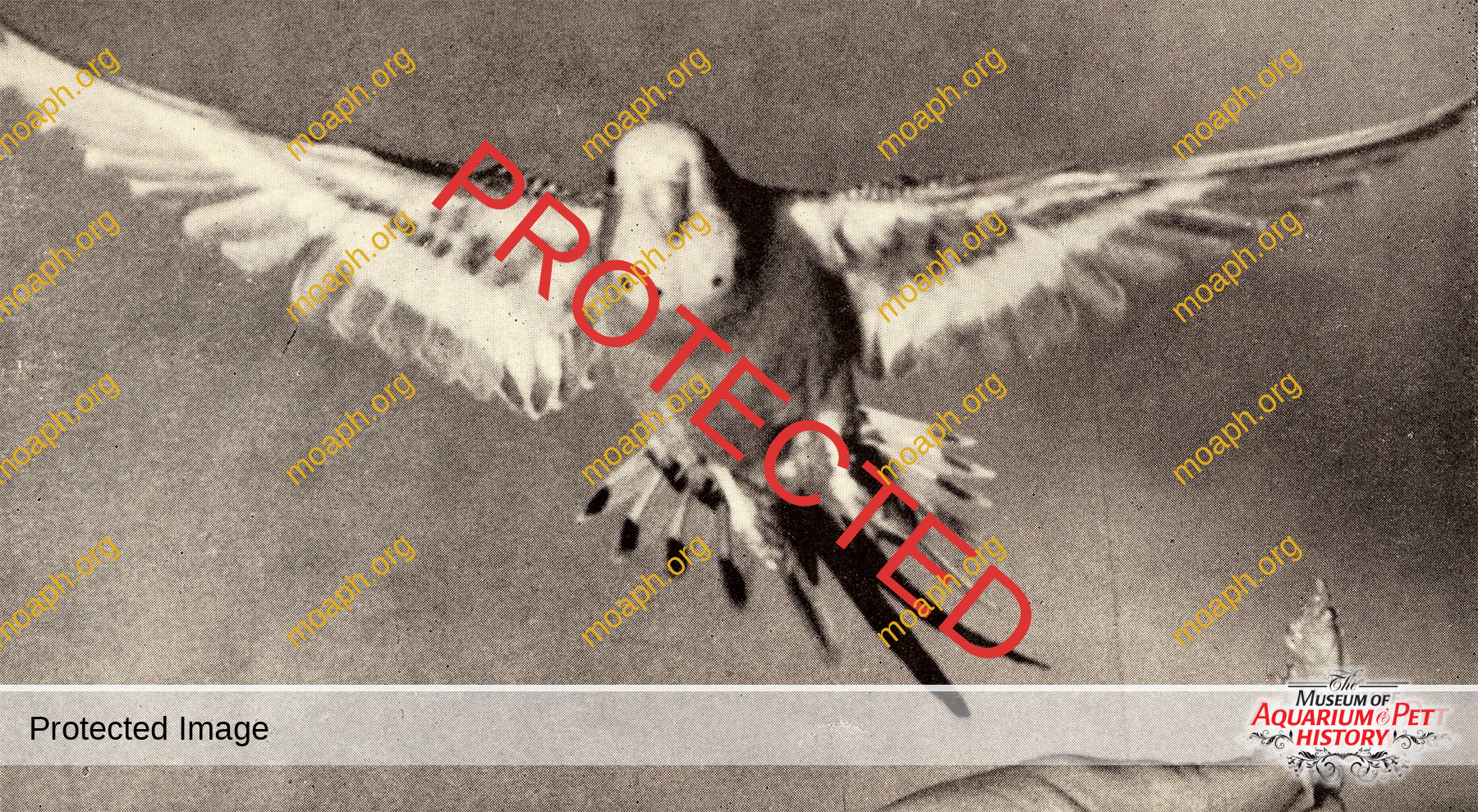
A rare photo of a budgie in full flight. Note the fan-like spread of the under-tail feathers, feet pushed forward ready to land on a finger. From Budgerigar Guide: Detailed Breeding Methods by Cessa Feyerabend.
Today we cannot walk into a pet store almost anywhere in the U.S. and not find a few colorful, playful budgerigars. Where did they come from and how did they get there? In Flight of the Budgerigar Penny Olsen takes us along on their journey, from Australia to England, and then on throughout Europe and the rest of the world. Starting as le diner du jour on the menu of indigenous people, the little green budgie — as they are often called — later could be found greeting Prince Albert and Queen Victoria, sipping brandy with Winston Churchill, or dining with the Kennedy children in the White House. They were also seen preening on show benches in a rainbow of colors, violet or blue, with clear or spangled wings. The budgie, as was later claimed, “conquered the world with cuteness.”
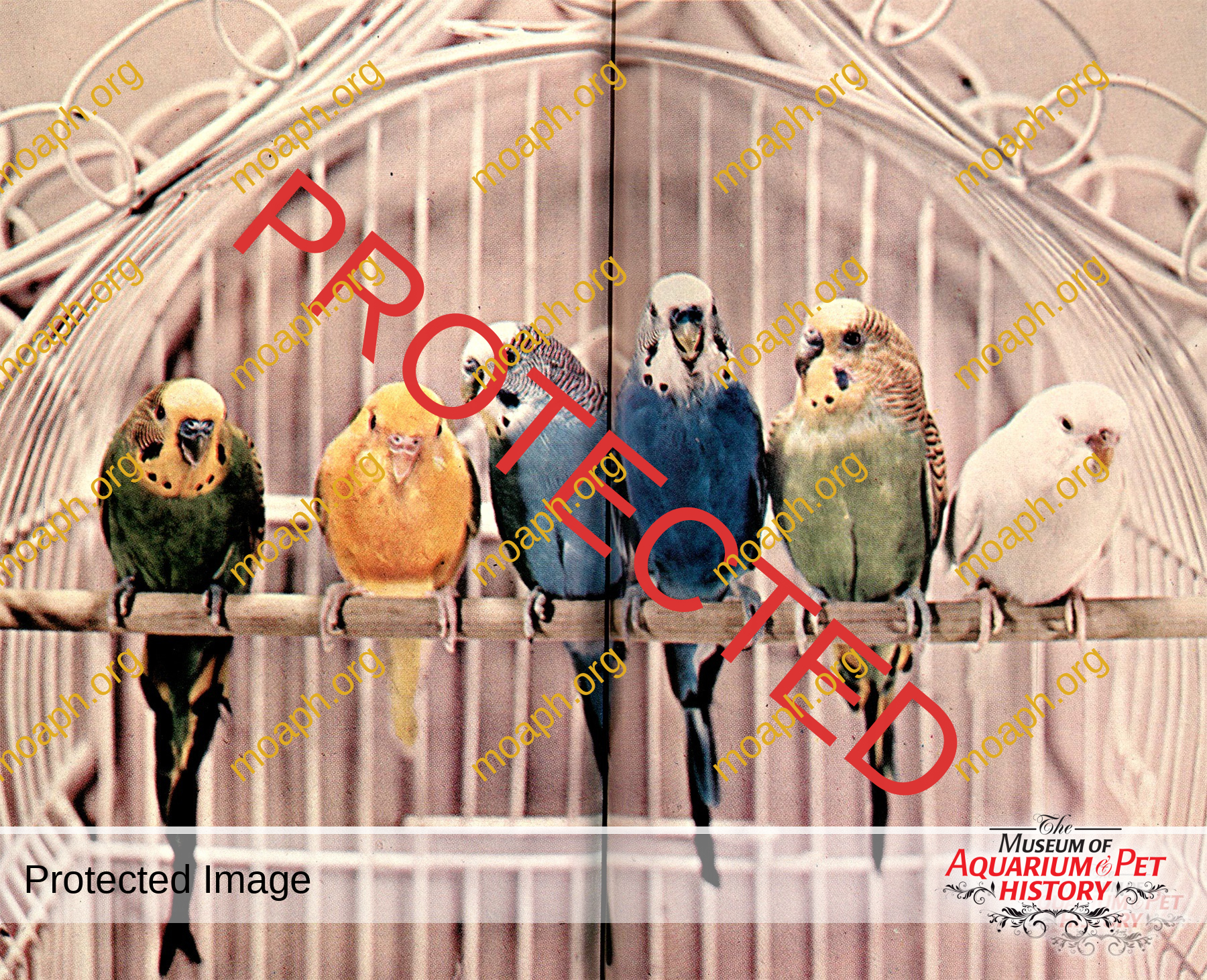
An array of budgie color varieties. From Budgerigar Handbook by Ernest H. Hart.
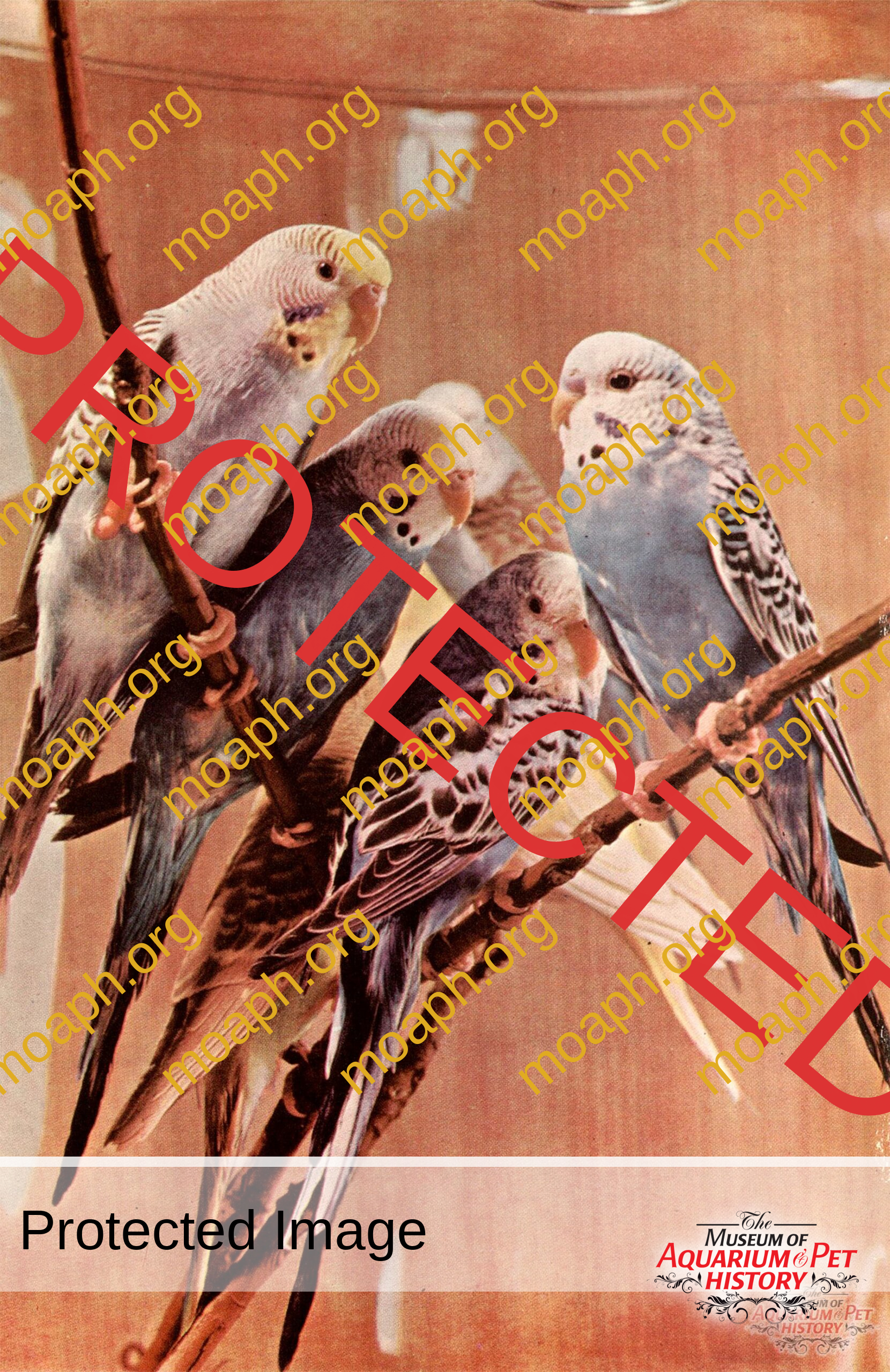
Group of colorful budgies. From Budgerigar Handbook by Ernest H. Hart.
The name budgerigar (betcherrygar) is thought to have originally meant good to eat, or good parrot. The little birds were important to native people, not only as a food source, but offering weather forecasts and leading them to sources of water, ensuring critical survival in dry times. The birds appeared in native totems, in art, song, and legends. There were a variety of some 50 indigenous names for them, not to mention early English descriptions such as shell or scalloped parrot, undulated parakeet, or warbling grass-parakeet. All were probably much easier to pronounce than John Gould’s Melopsittacus undulatus, with the first word meaning “melodious parrot” and the second describing its scalloped wing pattern. In America, budgies are often referred to as parakeets. While all budgies are parakeets, not all parakeets are budgies. It can get confusing!
Wild budgies live in small groups, but can congregate at various times by the thousands. Living paycheck to paycheck, so to speak, in boom or bust cycles, with the small birds breeding prolifically when water is available… and not so much when it is scarce.
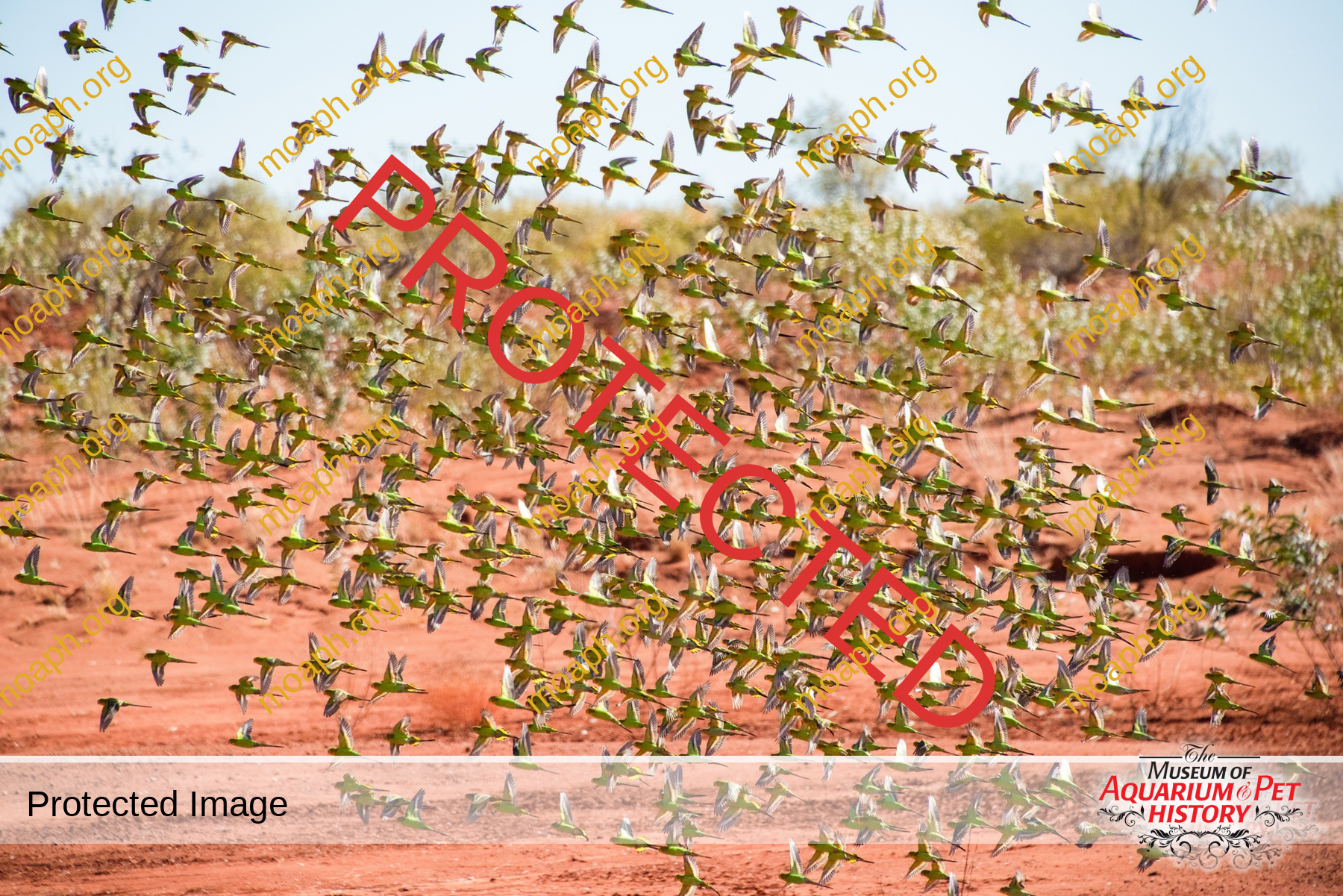
Flock of wild budgies.
Possibly the first budgie to arrive in England was a specimen shot by a Col. George Johnston in a vineyard or garden, or one sent to Mr. Arthur Harrison, a collector. We do know, however, that a juvenile specimen made its way to naturalist George Shaw at the British Museum and an illustration was painted by Frederick Nodder which, along with Shaw’s description, was presented in 1805. The first live budgies were brought to England by John and Elizabeth Gould and illustrated in their book, Birds of Australia, in 1840. Travel was difficult, during a four-month journey by ship, side-by-side with cats and vermin, many thousands of birds were lost until it was discovered that bad water was the more serious issue.
At first, the small parrots were of interest to ornithologists and taxidermists, or as a curiosity. The trade vied for the rare skins and preserved specimens for private museums. The keen interest led to a few unusual smuggling efforts and thefts! Live birds eventually brought premium prices. Ship captains found a lucrative trade, buying budgies in Australia for a few pence and selling them in England for six times or more than the purchase price. Thus, they successfully added value to their normal shipping cargo with little effort. The budgie became a popular curiosity, shown in traveling menageries or private museums such as Bullock’s in Piccadilly, London. By the mid-1800s, people flocked to the zoological gardens to see them, along with other curiosities such as lions, camels, and elephants!
Further explorations opened more of central Australia, more breeding grounds were discovered, and more budgerigars were exported. (Note: Australia stopped exporting native birds in the 1960s.) As more budgies survived, more became available, and many more became affordable and treasured family pets. In England, people were living better, an effect of the Industrial Revolution, and could afford to buy and keep them. This helped set up a budgerigar breeding industry of “budgie factories” in the 1860s and 70s. All this encouraged the beginning of an enduring love affair with the little green parrots.
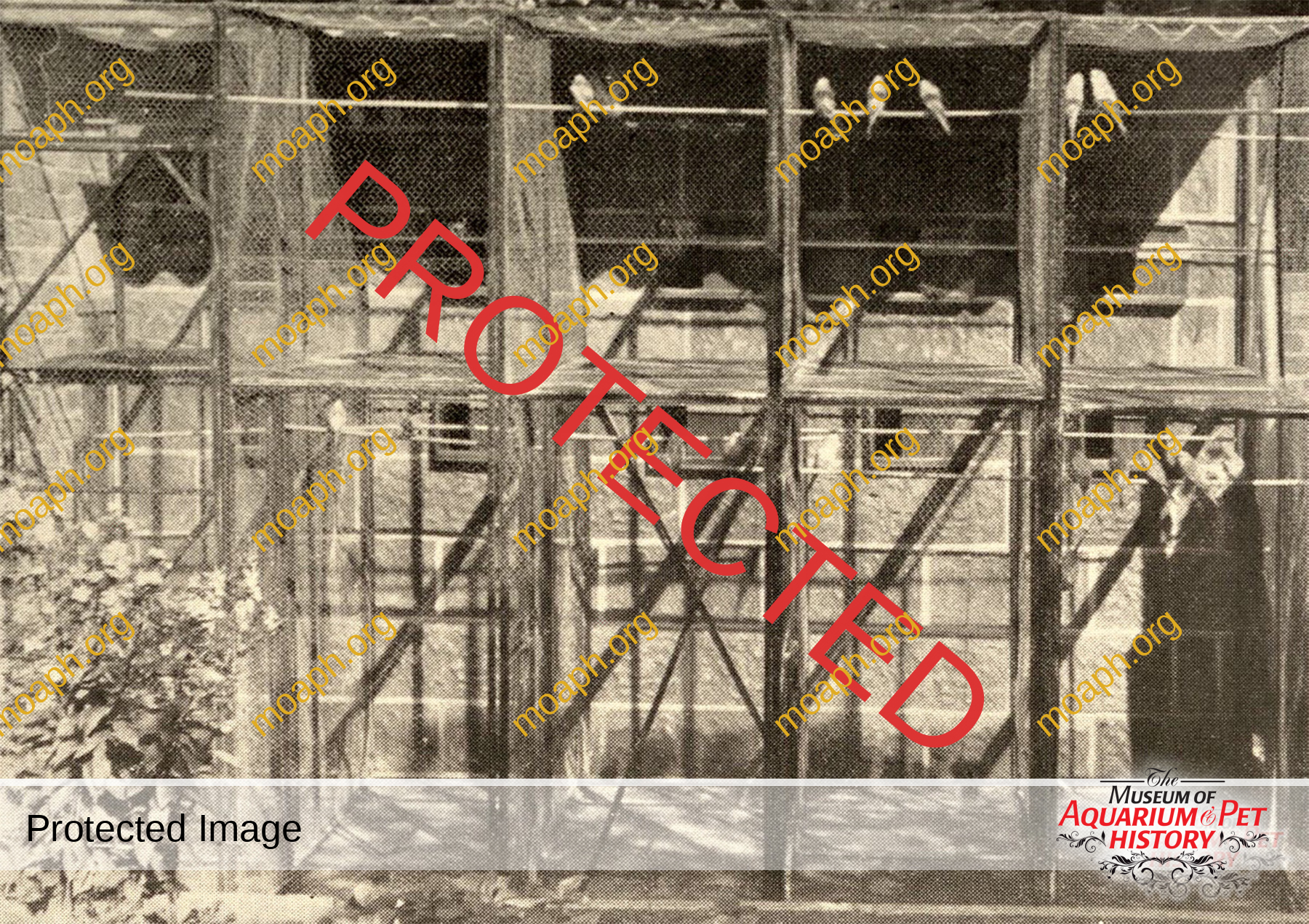
Double-decker breeding aviary for budgies. From All About Budgerigars by F.W. Pratley.

Garden aviary for budgies. From All About Budgerigars by F.W. Pratley.
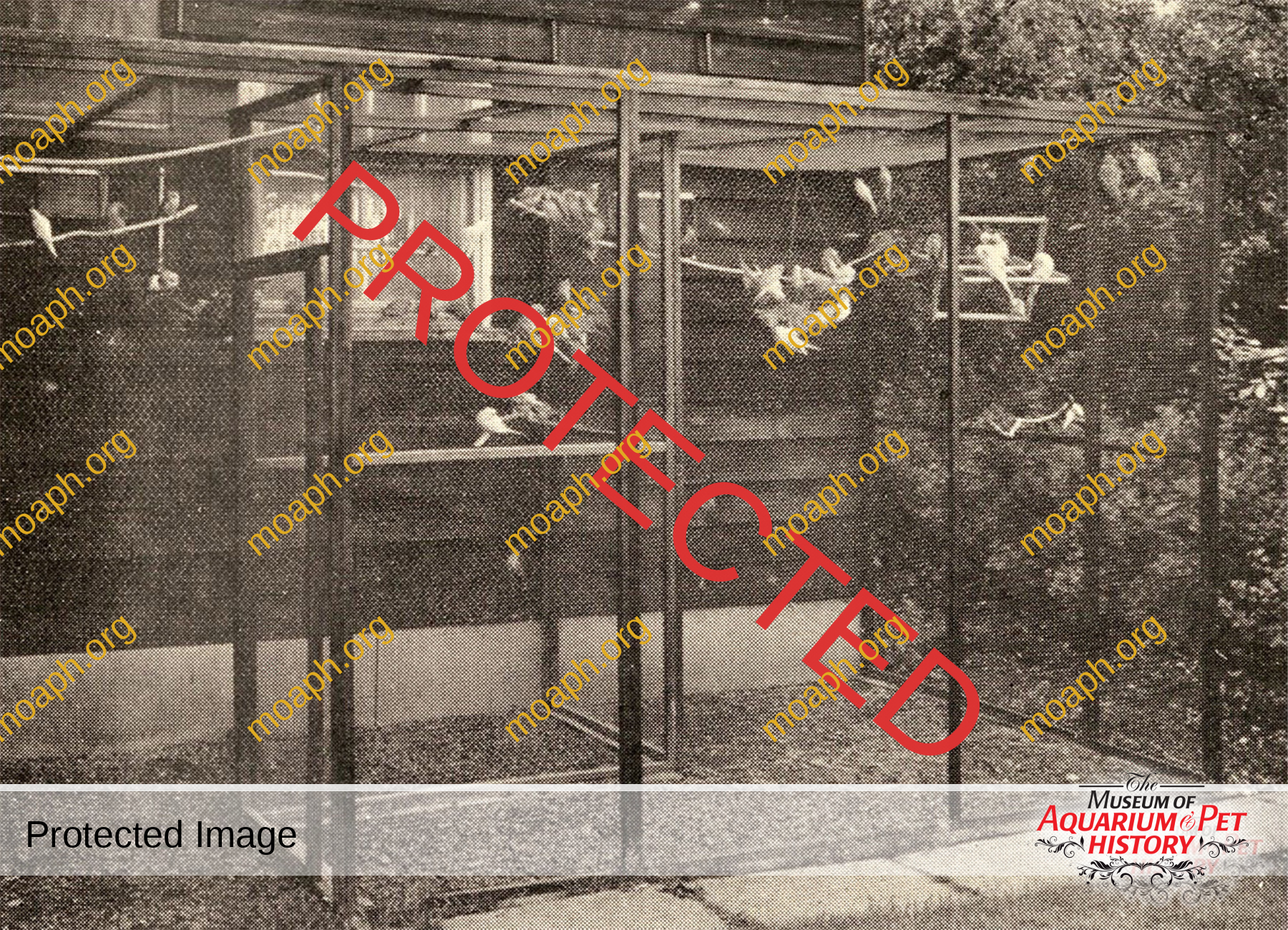
Outdoor flight aviary for budgies. From All About Budgerigars by F.W. Pratley.
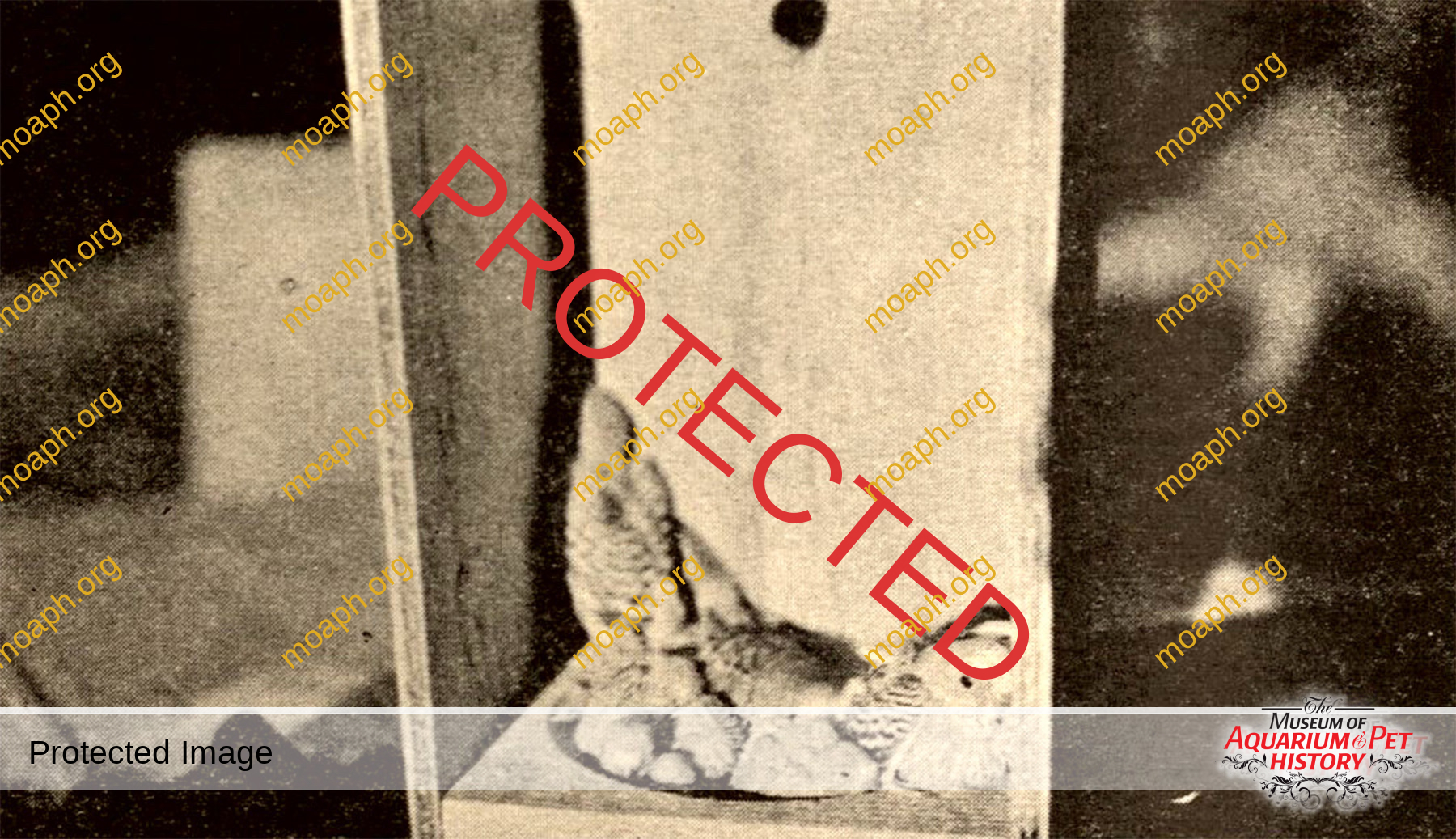
Parrakeet nest box with a family of 7 baby Cobalt Parrakeets. From Parrakeet Breeding for Profit and Other Aviary Birds by C.B. Glick.
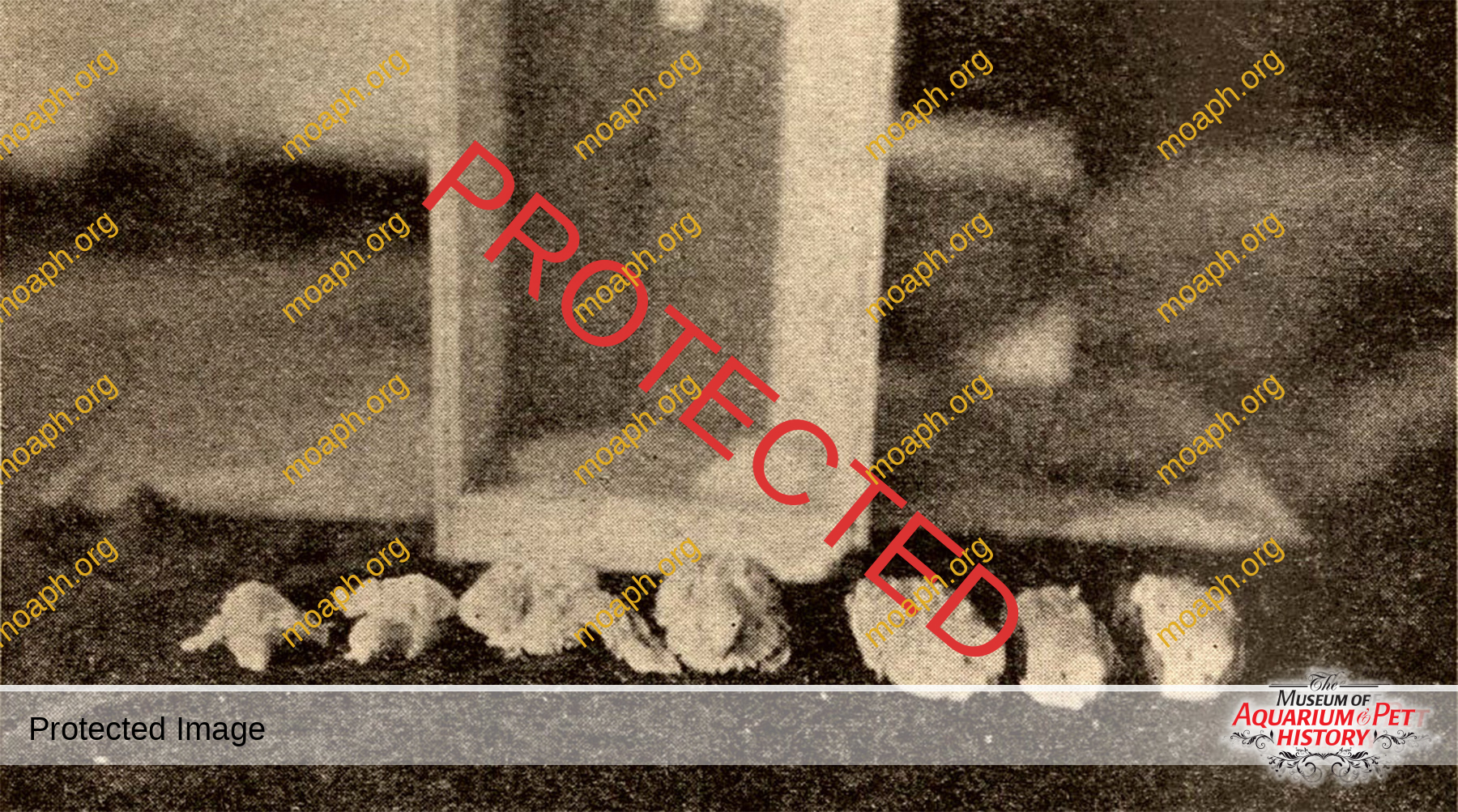
The female parakeet lays one egg every other day, and a clutch usually consists of 4-8 eggs. From Parrakeet Breeding for Profit and Other Aviary Birds by C.B. Glick.
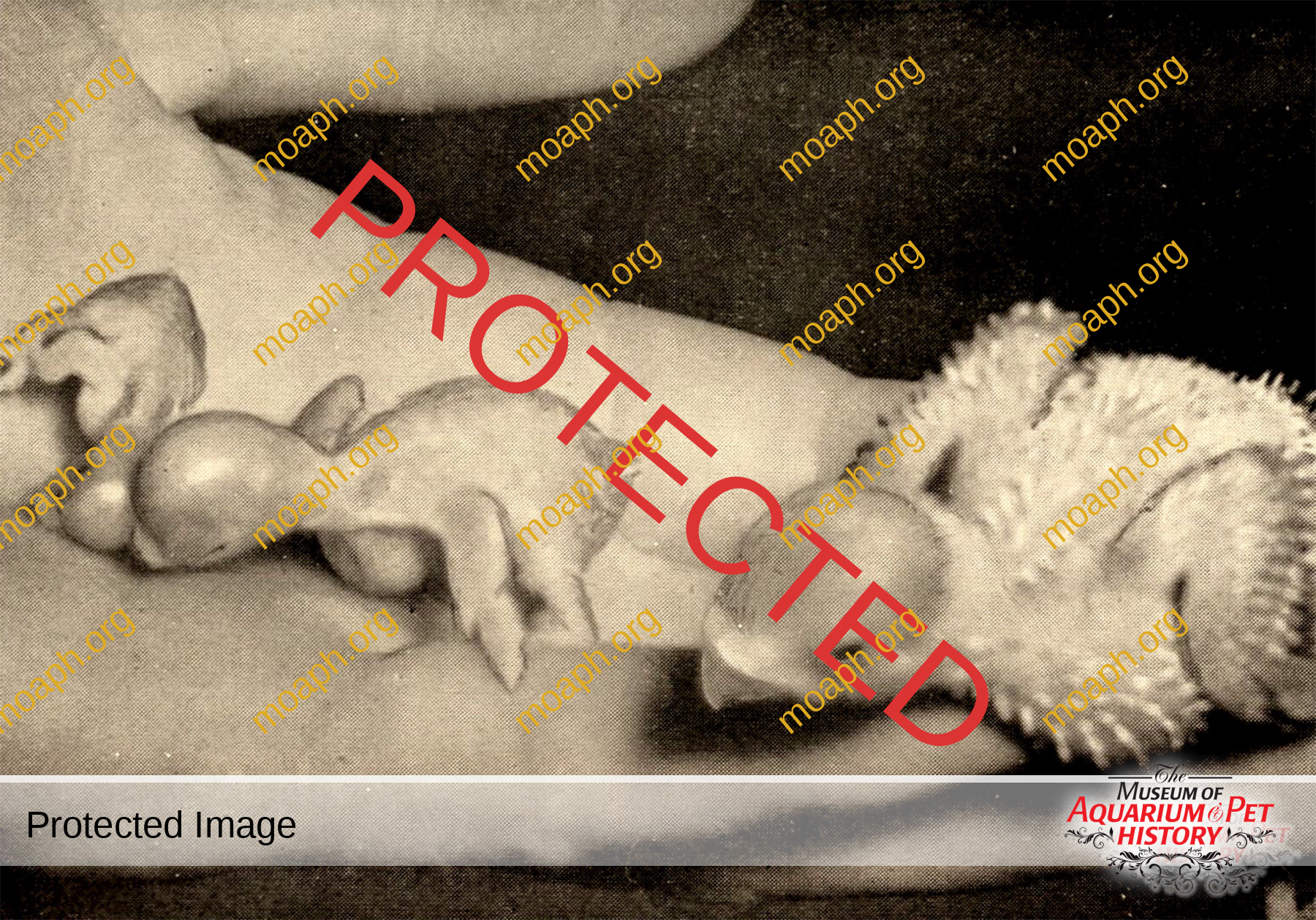
Budgerigar chicks from the same nest, two, four, and eight days old. From All About Budgerigars by F.W. Pratley.
Hugely popular in England, there were trick budgies and fortune-telling budgies. Young women especially enjoyed learning about the possibility of future romance as a little budgie pulled that surprise fortune card from the deck. Budgies participated in magic shows. The population of expatriate budgies was expanding; bird societies and competitive bird shows were gaining prominence. The budgie was transitioning from a curiosity to the people’s parrot.
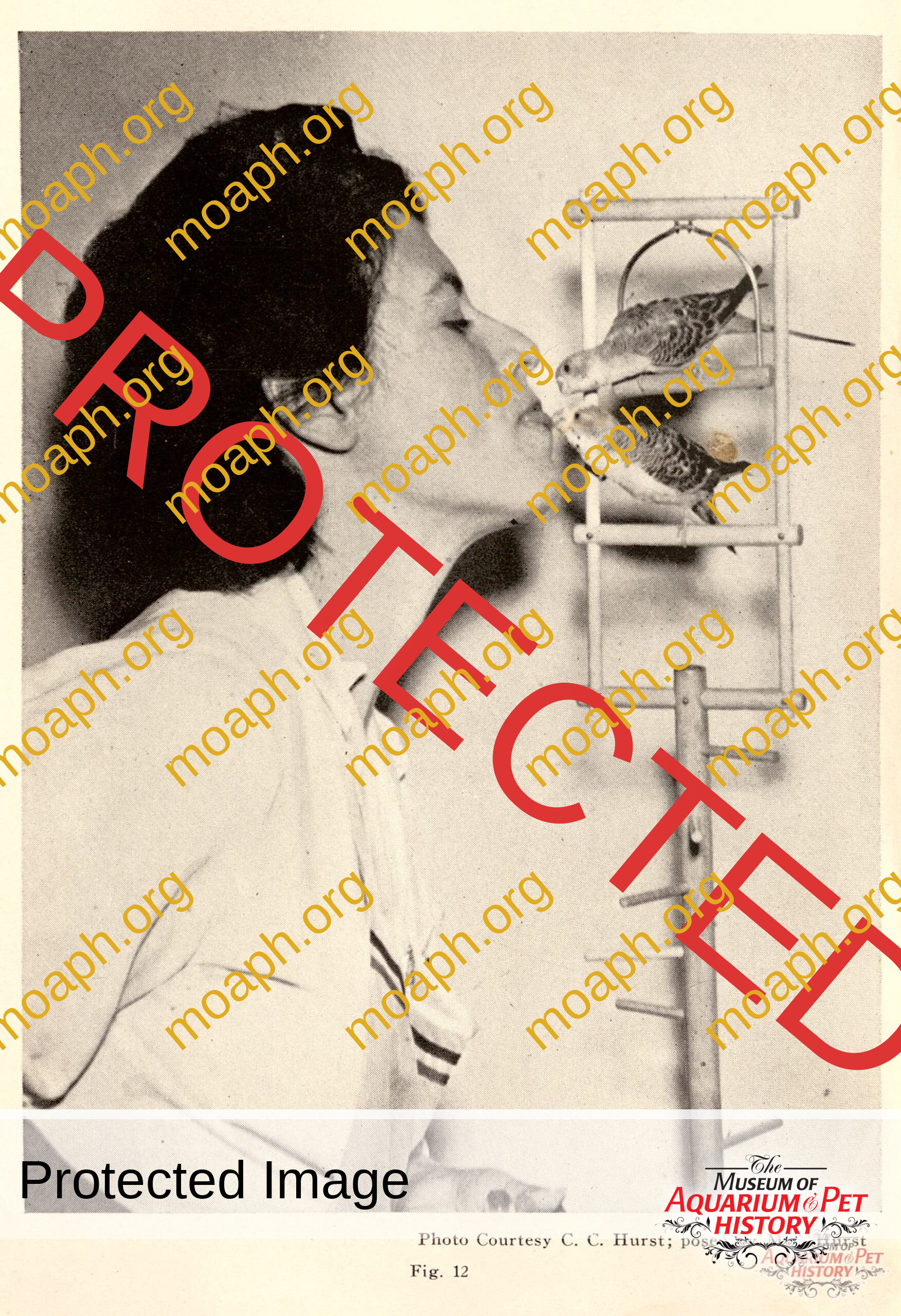
A woman with her pet parakeets. From The Budgerigar or Shell Parrakeet as a Talker by Feyerabend.
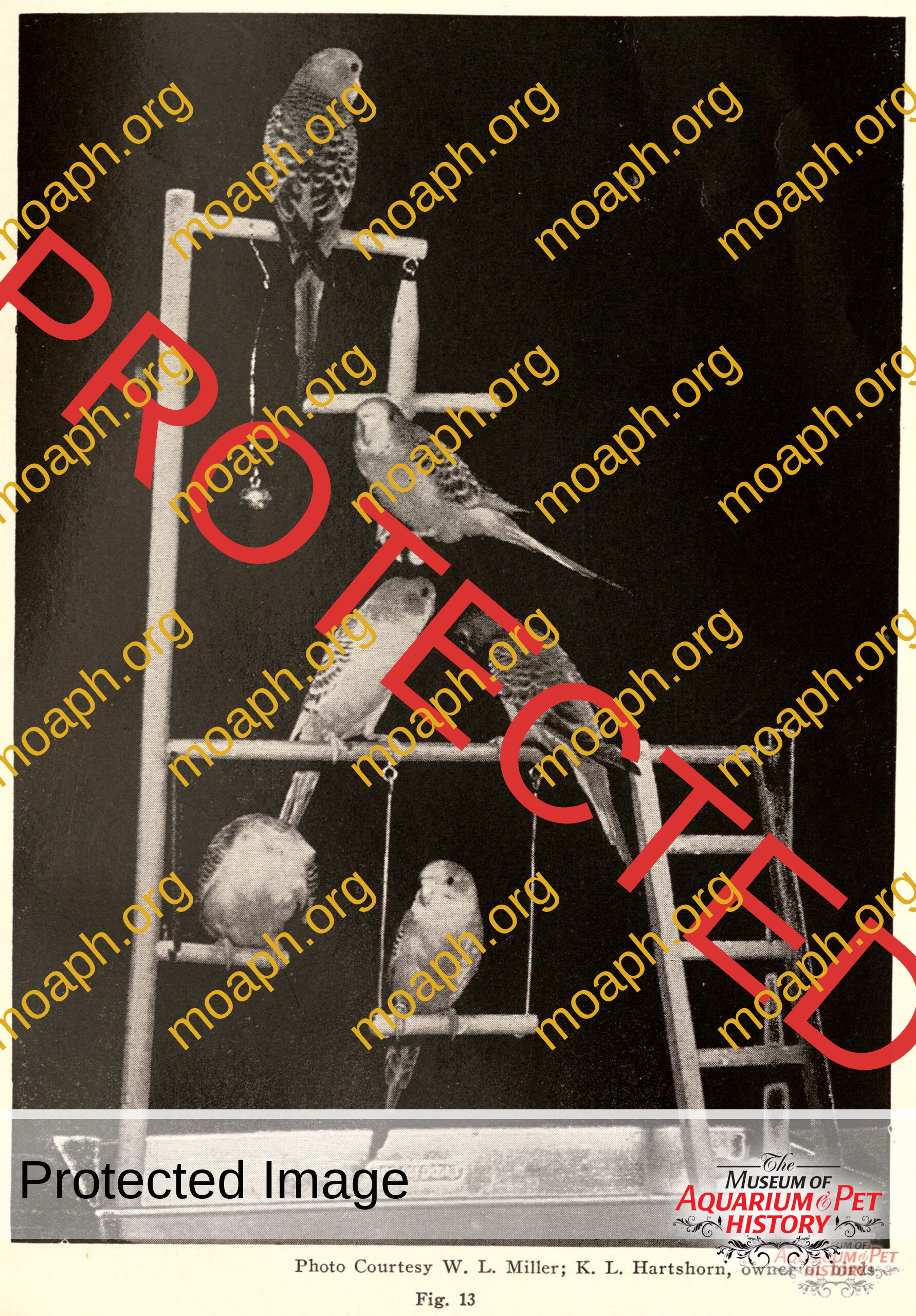
Parakeets on a jungle gym. From The Budgerigar or Shell Parrakeet as a Talker by Feyerabend.
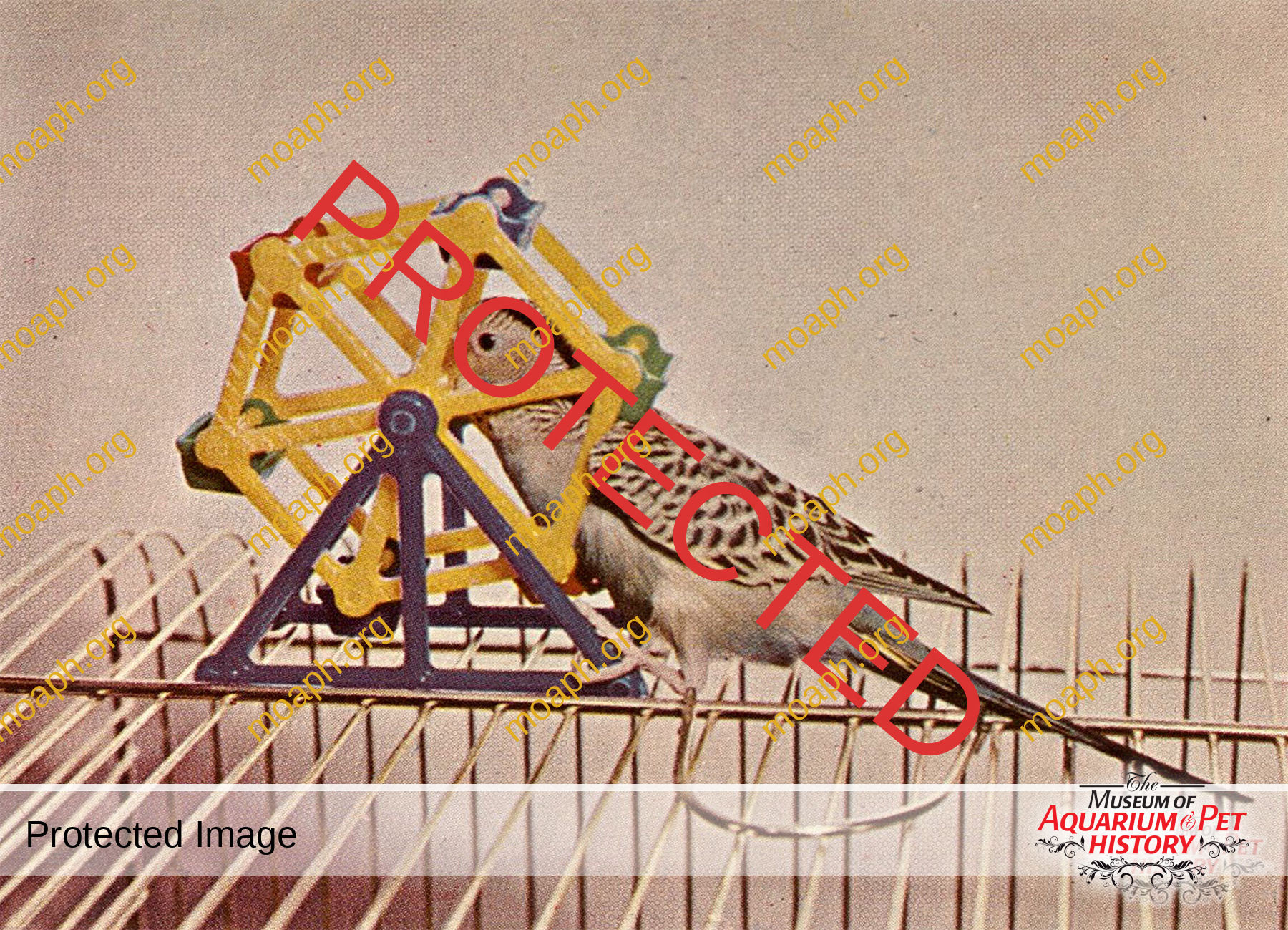
Colorful toys sold in every pet shop as “parakeet toys” or “Budgerigar toys” entertain the pet Budgie for hours. Make sure they are plastic and have no sharp edges. From Budgerigar Handbook by Ernest H. Hart.
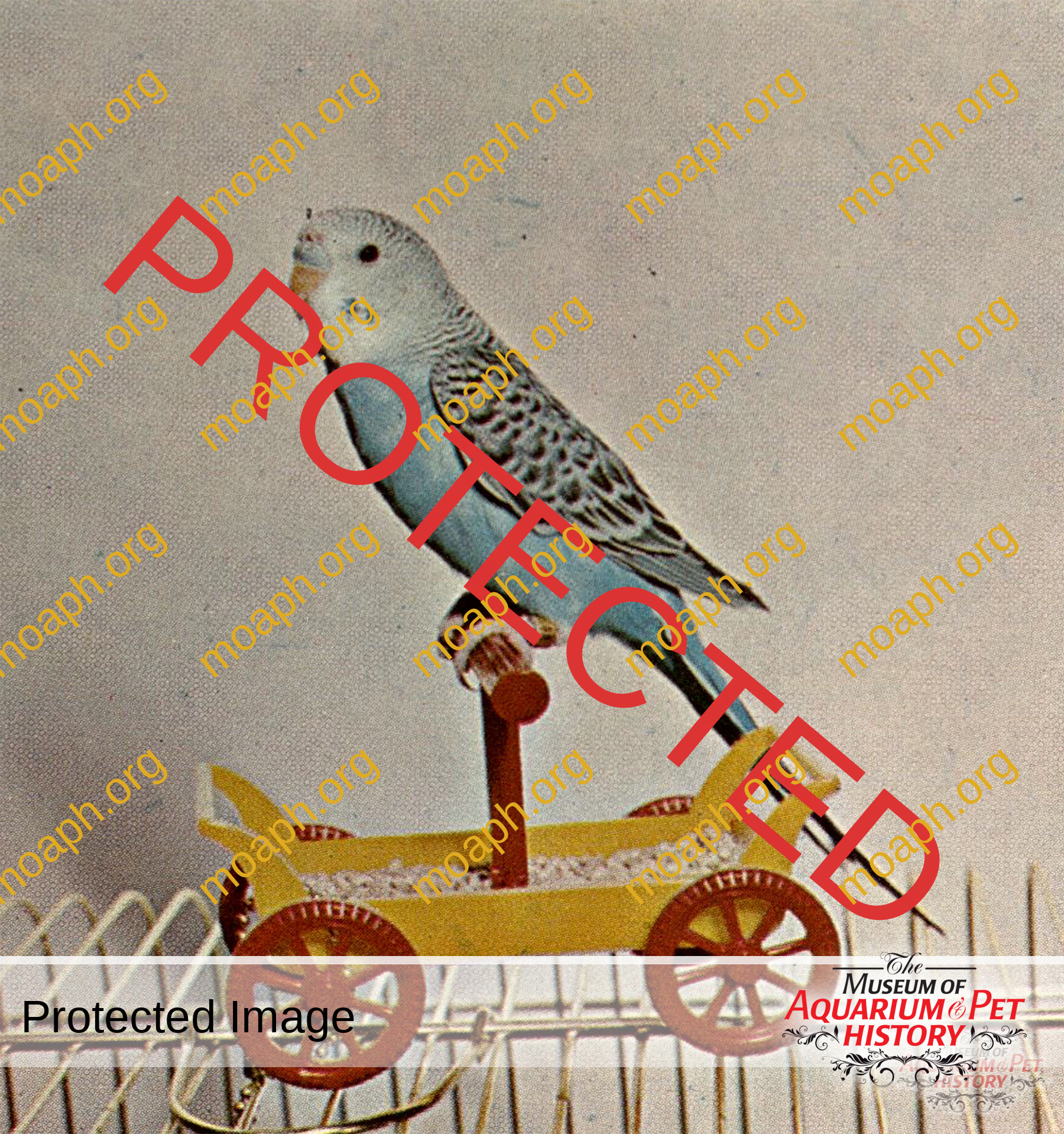
Pet budgie displaying his new toy. From Budgerigar Handbook by Ernest H. Hart.

This is the “pet room” of Mr. and Mrs. Edwin G. Schary of San Francisco. Photo taken March 15, 1944.
Meanwhile back in Australia the little talking parrot did not garner much attention. In fact, it had been used for target practice but, fortunately, being small and quick, that job was more often left for local pigeons to take the fall. The budgerigar was generally ignored. That is, until the 1920s and 30s after a paper was published, What Bird is That?
The original budgerigar was green with a bit of yellow or, more rare, an all yellow natural mutation. In other countries, blue, cobalt, gray, white, yellow, violet, mauve, and every color imaginable were being developed in breeding lines. It’s interesting to note that if a breeder or pet owner in Australia was later interested in one of these colors, it required the little budgie being imported back into its native land! Imports arrived from Europe, Japan, and even parts of Russia, but eventually were limited from the fear of introducing disease to native birds.
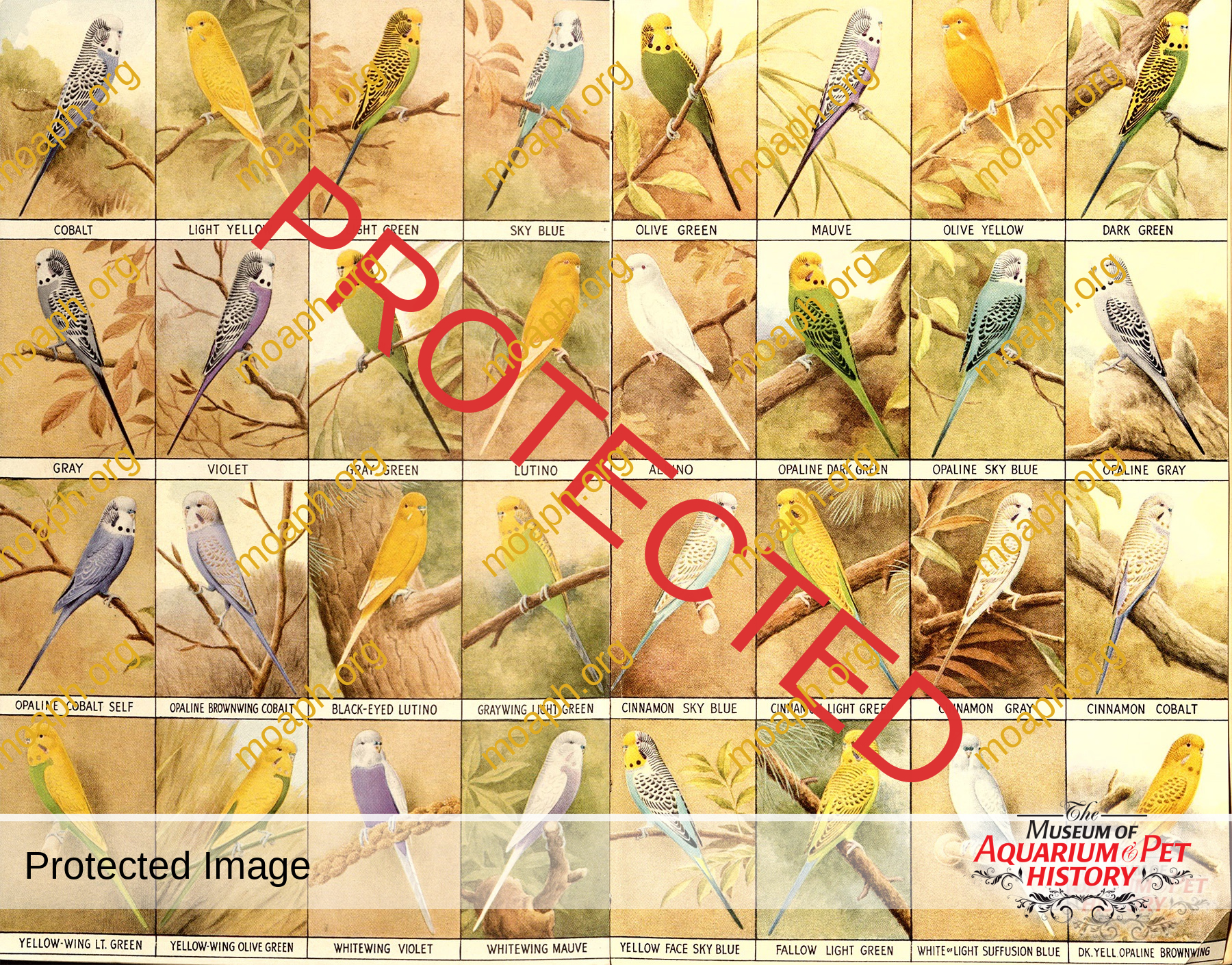
Illustrations of budgerigar varieties from Budgerigar Guide: Detailed Breeding Methods by Cessa Feyerabend.
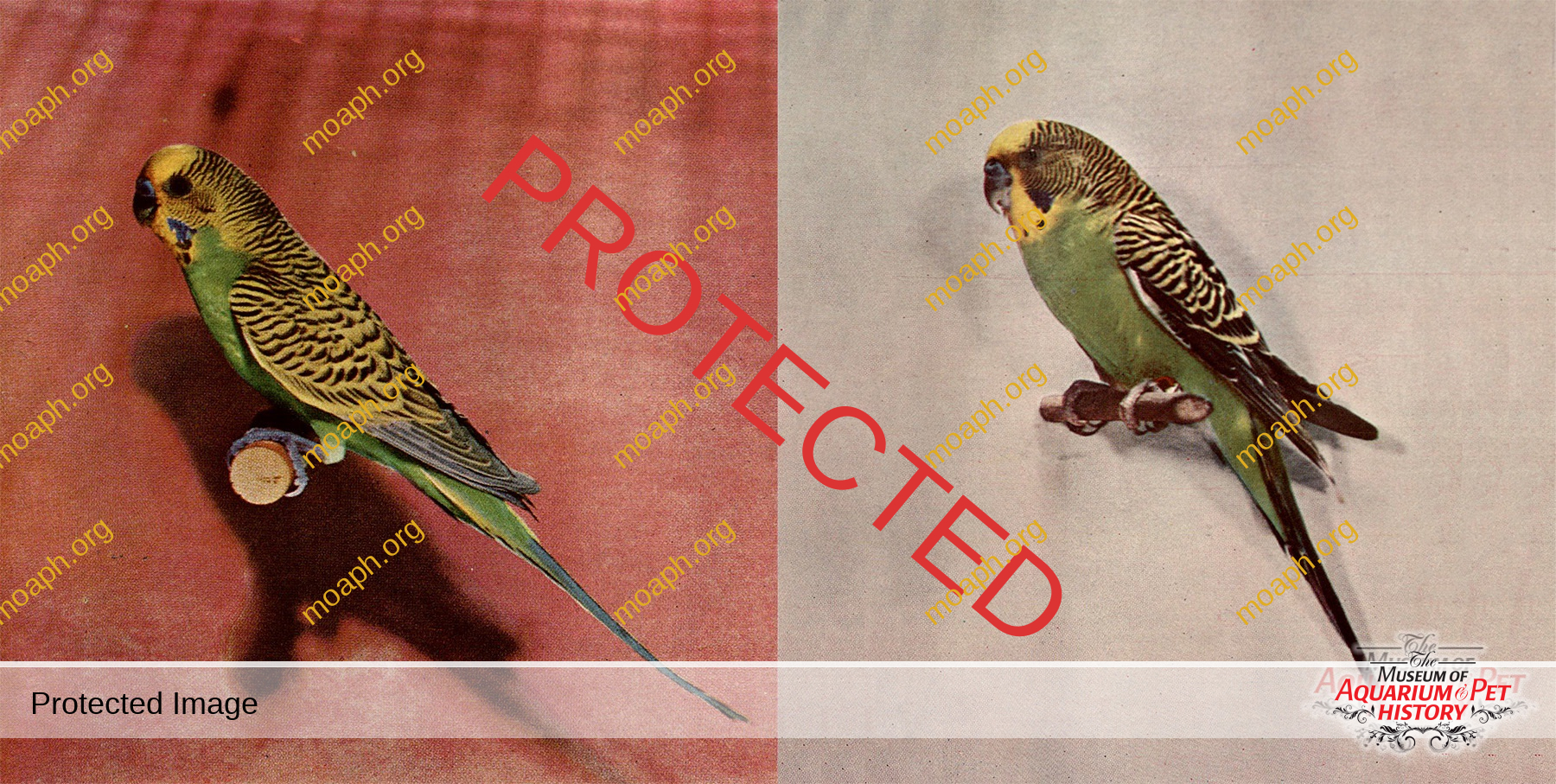
A wild budgie on the left shows light green coloring with a “racy” build. The domestically bred budgie on the right is still close to his wild ancestors, but the green feathering is more widespread. From Budgerigar Handbook by Ernest H. Hart.
Some budgies became as famous as movie stars for their talking ability. One, called Billy Peach, broadcast in 1939 on Australia’s radio just before WWII with a vocabulary of 300 words; starting his broadcast with “This is Billy Peach talking on the air,” and reciting eight nursery rhymes. He went on to entertain for over ten years but, when Billy moved to film, a body double was used since he was missing his tail and flight feathers! Soon after, he was replaced on the vocabulary score card by the UK’s green-and-yellow budgie, Sparkie Williams, in the 1950s with his vocabulary of over 800 words that gained him entrance into the Guinness Book of Records. Later, in 1995, Sparkie lost his title to a U.S. budgie when he was out-worded by a little blue linguistic genius in California named Puck, whose record of 1,728 words still stands. Puck was tracked by 21 volunteer bird experts and a couple of avian veterinarians over a six-month period who recorded his astounding number of words. What makes all “bird talk” even more extraordinary, is that birds don’t have vocal cords; they use an organ called a syrinx located at the base of the trachea to produce complex sounds!
Famous budgies abounded as mentioned, not only did Winston Churchill’s budgie, Toby, enjoy a nip or two of brandy, he also attended cabinet meetings, and at family dinners would carry the salt shaker to those who needed a bit of spice. Queen Elizabeth and her sister Margaret owned more than a dozen kept at Windsor Castle. In 1962, two budgies, Bluebell and Marybelle, lived with the Kennedys in the White House — residing in their Hendryx bird cage which was, of course, painted white! Budgies were everywhere, owned by Japanese princes and gaining Hollywood attention from American movie stars like David Niven and Elizabeth Taylor. Even comedian Red Skelton succumbed to their charms.
Not satisfied with relying only on its “cuteness,” the budgie offered insight into scientific investigations. How did flocks of budgies, flying in serious numbers, avoid collisions? Avid aeronautics experts wanted to know! This led to exploration in wind-tunnel aerodynamics and collision avoidance coordination. The small parrot’s ability to talk, arguably being intelligent enough to manipulate language and put together words in phrases, sent scientists to investigate the formation of language and open-ended learning. When DNA came into play, a number of bird genomes were traced. John Gould had surmised that the budgerigar was a grass parrot (Neophema) from its habit of feeding on seeding grasses. Surprisingly, it was discovered that they are closely related to nectar and fruit-eating lorikeets, and a sister group to song birds with whom they share a common falcon ancestor in the family tree.
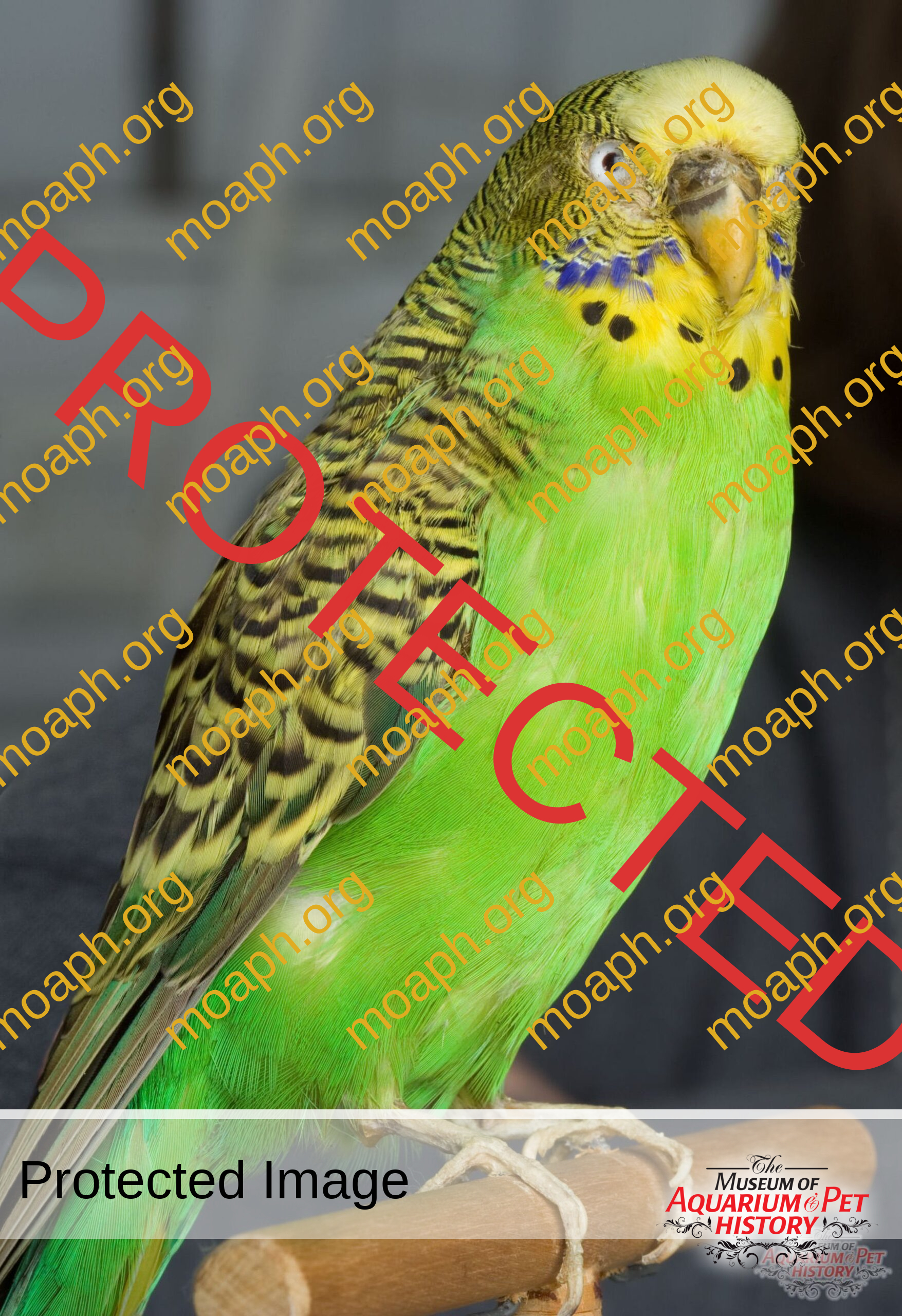
Sparkie Williams, now stuffed at the Natural History Society of Northumbria.
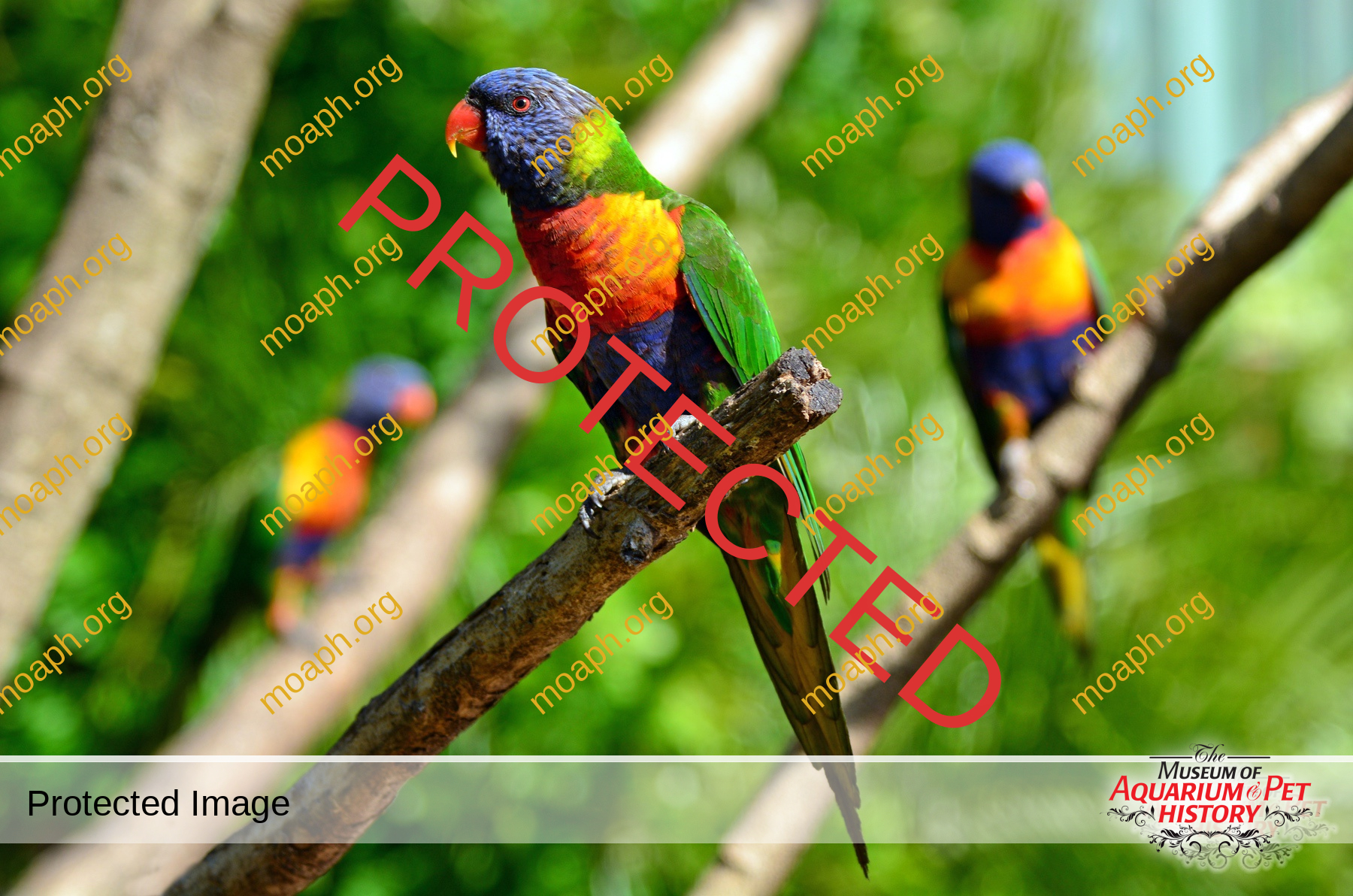
Australian rainbow lorkeet (Trichoglossus moluccanus).
The budgie flock has suffered highs and lows, not only in its native country, but by events such as two World Wars which affected grain exports or as aviaries were destroyed during the Blitz in England; all in addition to predators, habitat loss, and the burgeoning effects of climate change. Unfortunately for the wild budgerigar, climate change has led to heat waves that shorted water and food supply. Huge numbers were lost over the years, notably during 1932 and in 2009, and now possibly again as the country is currently affected by lack of water and wild fires from the changing climate.
Today it might be difficult to recognize the original little green budgerigar first described and illustrated by Shaw and the Goulds. While many American pet budgies have tended to stay small, with the exception of the English version, those in countries with fierce show competitions are often bred larger in size, with longer feathers and heavier markings. Some now have crests or coronas, weigh half again as much as the original, don’t fly nearly as well, and tote around much larger heads.
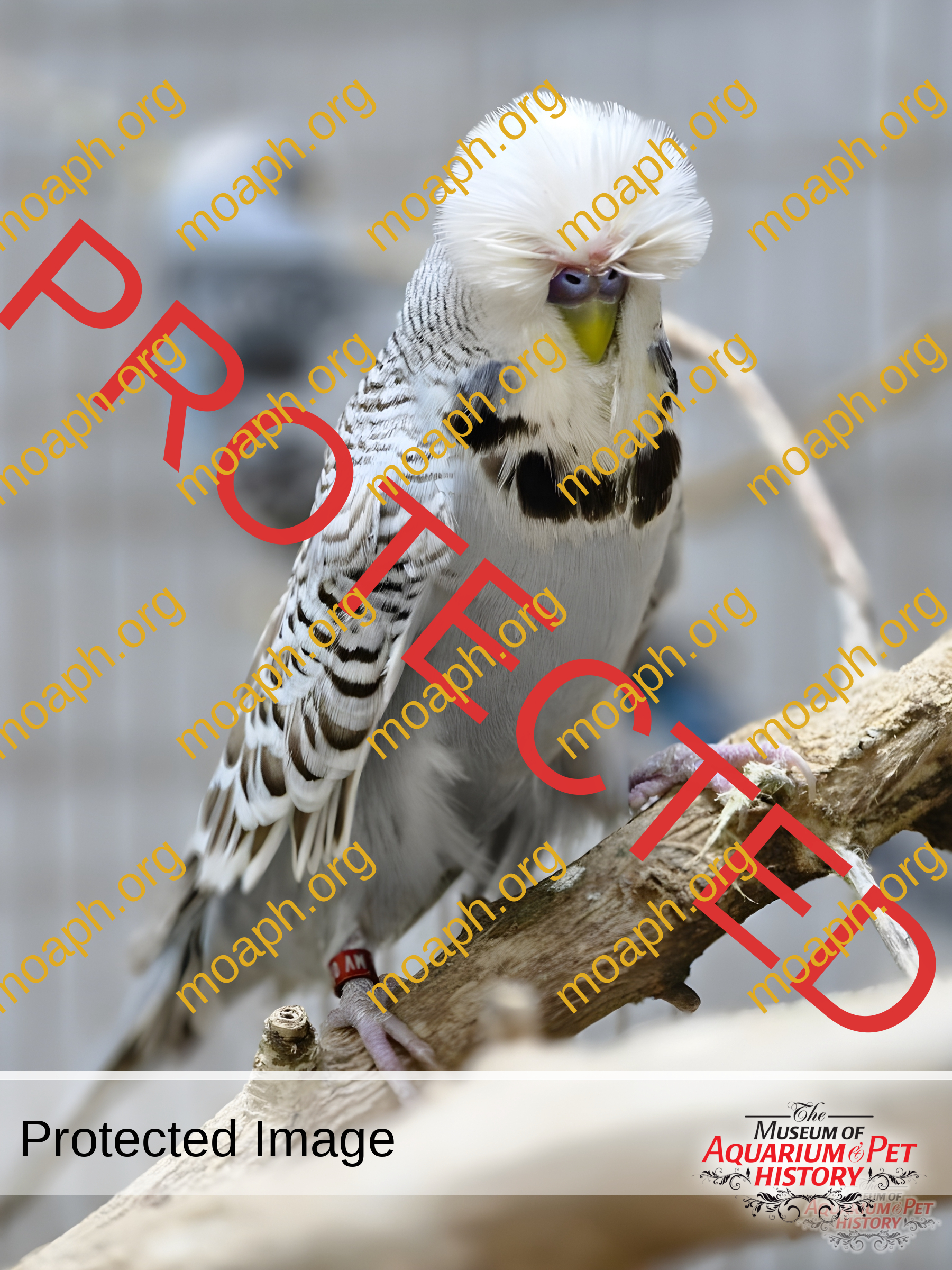
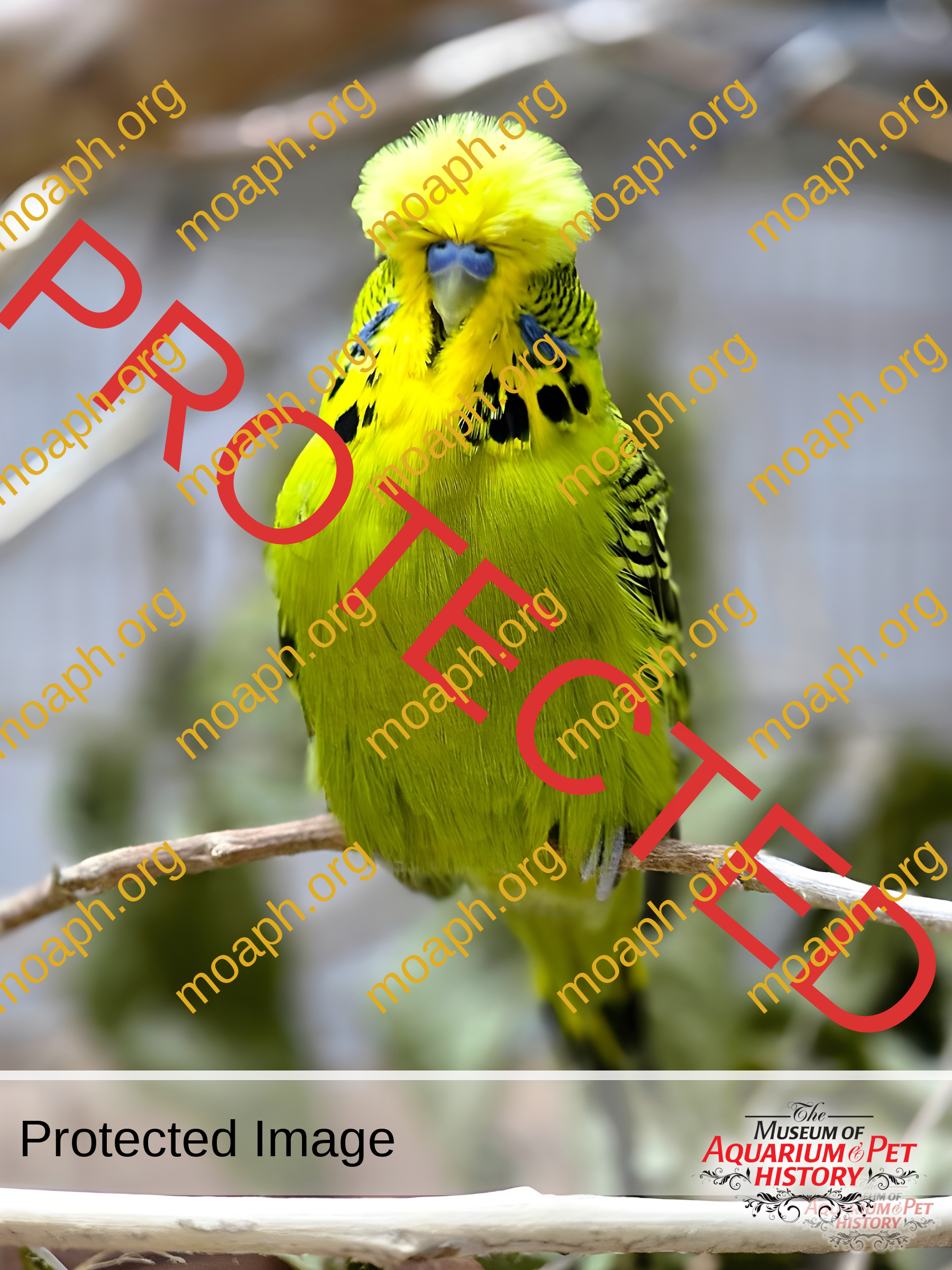
Examples of crested show budgies.
One thing that has not changed over the years is the budgie’s playful, intelligent personality that still delights its owners. Cage birds are only surpassed in popularity by dogs and cats. It has been estimated that budgerigars comprise 25% of all birds kept as pets. Many owners describe their budgies as charming, playful, chatty, intelligent, amusing, or even obnoxious — a large parrot concealed in a small body! This is perhaps why the budgie remains a cherished pet today. Many still have childhood photos of their beloved pets, with perhaps a small feather tucked into an old photo album. Anyone who has ever been owned by one of these amusing characters, will be entranced by reading their story.
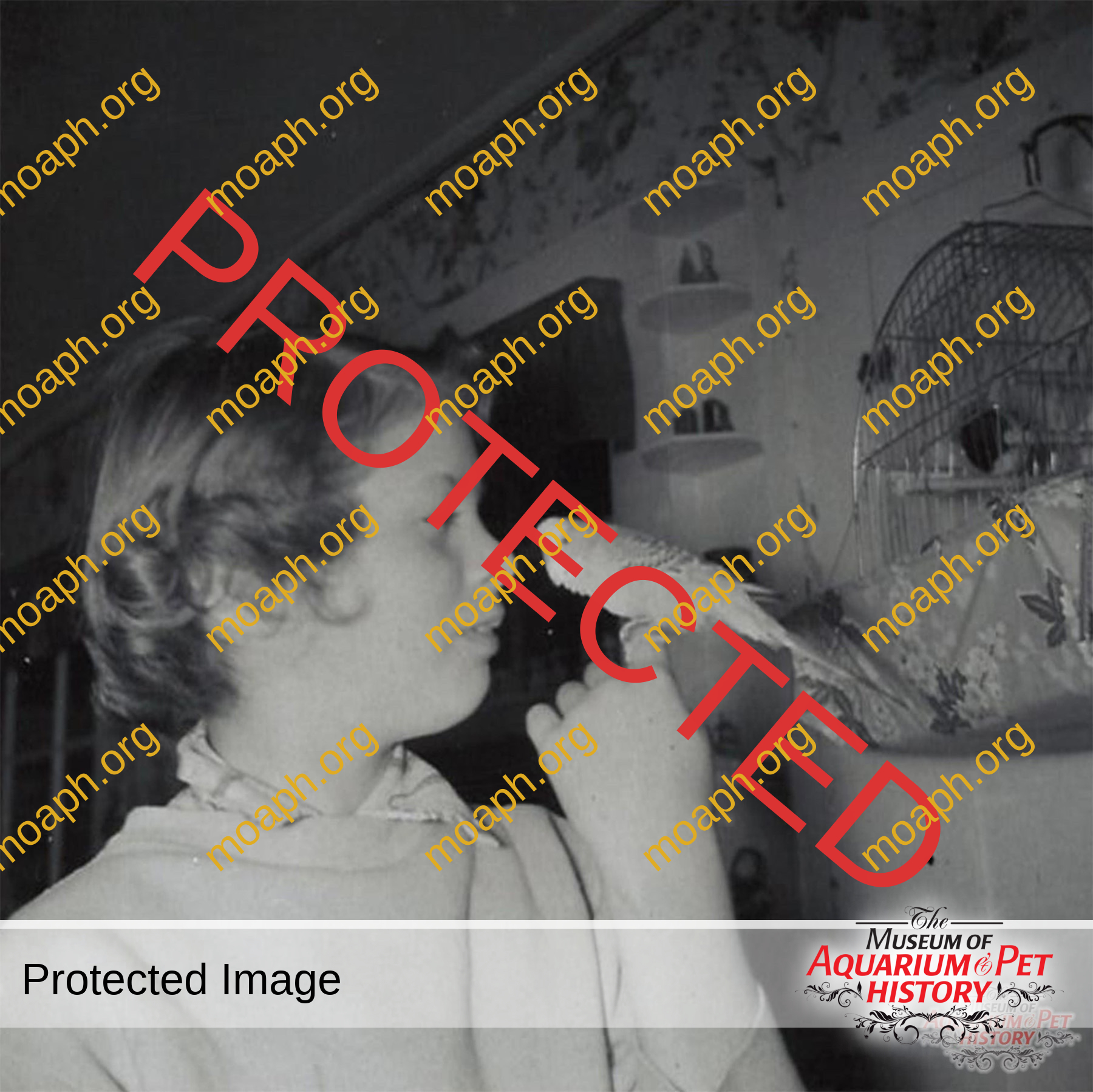
A girl and her parakeet.

A girl named Beckey in the kitchen kissing her talking parakeet.
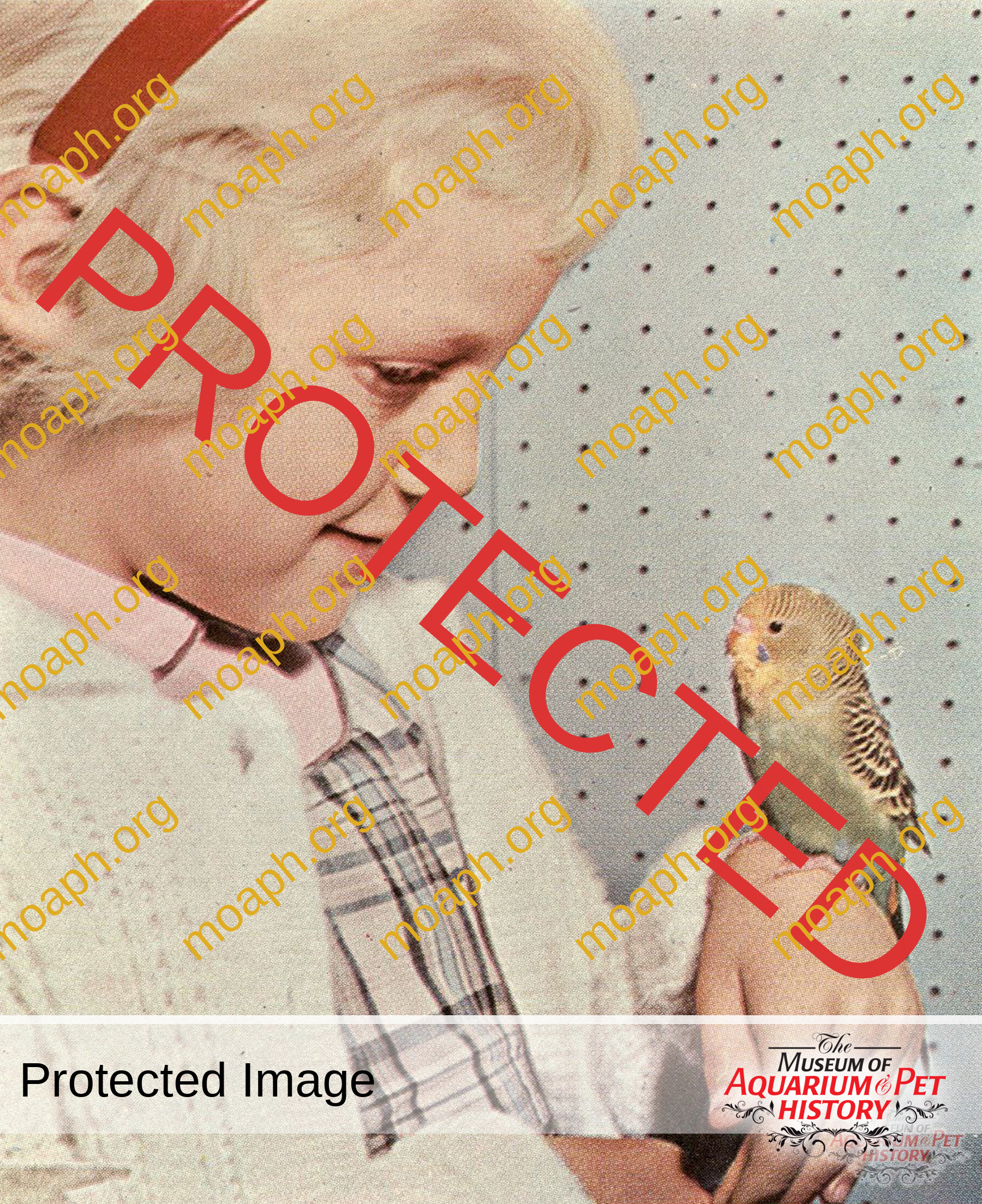
Little girl with a juvenile budgie. From Budgerigar Handbook by Ernest H. Hart.
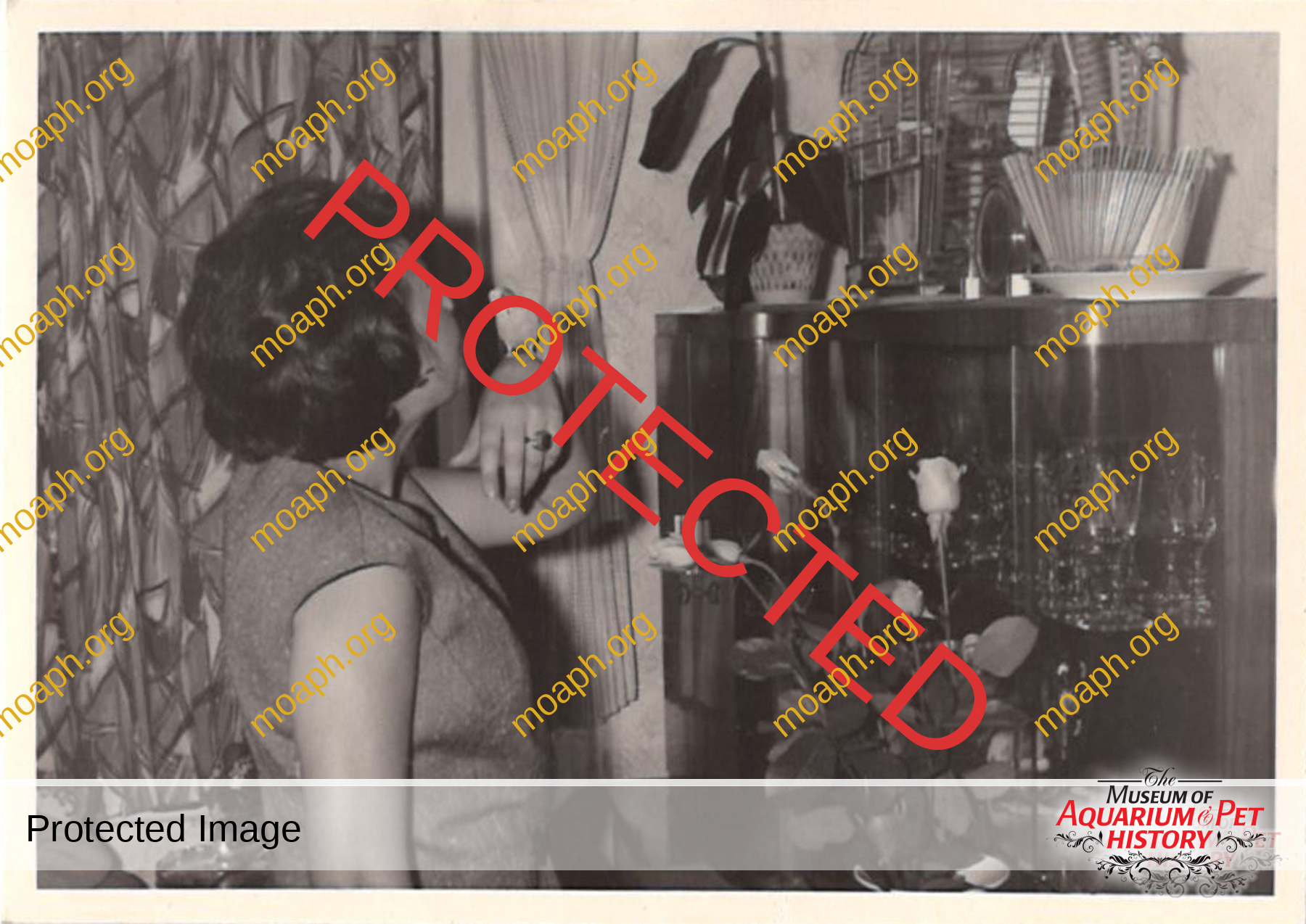
A woman and her pet parakeet.

Two women tending to their parakeets. One is clipping the bird’s wings so it can be finger tamed and the other is giving her bird a spray bath.
Extensively researched, richly illustrated, and fully indexed, Penny Olsen’s Flight of the Budgerigar provides the definitive history of the budgerigar — and a very enjoyable read!
(Dr. Penny Olsen, writer, field biologist, and ecological consultant, is an honorary Professor in the Division of Ecology and Evolution at the Australian National University.)