Flights of Fancy
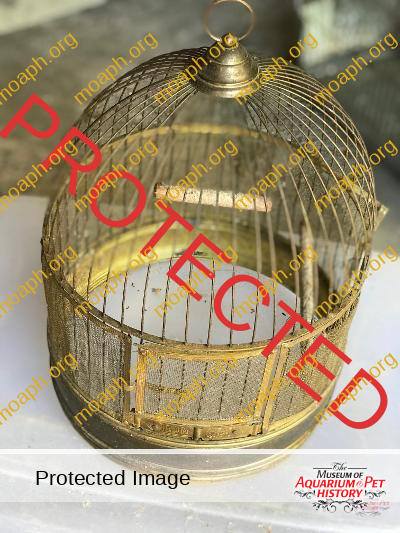
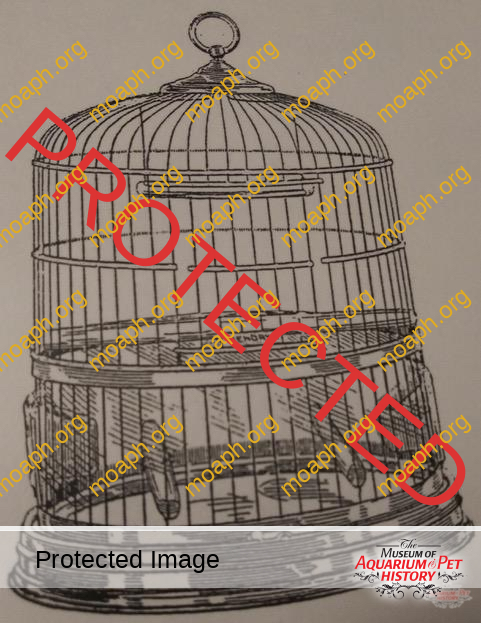
Recently some of our club members discovered a few vintage bird cages and, with the help of a Hendryx cage collector in Oregon, we dated some of these treasures and learned a few fun “cage facts” to share!
It might be hard to imagine, for many of us in the avicultural fancy, who love birds and who now house many more birds, that we often started with a single pet canary or parakeet in a single cage! But where did that cage come from?
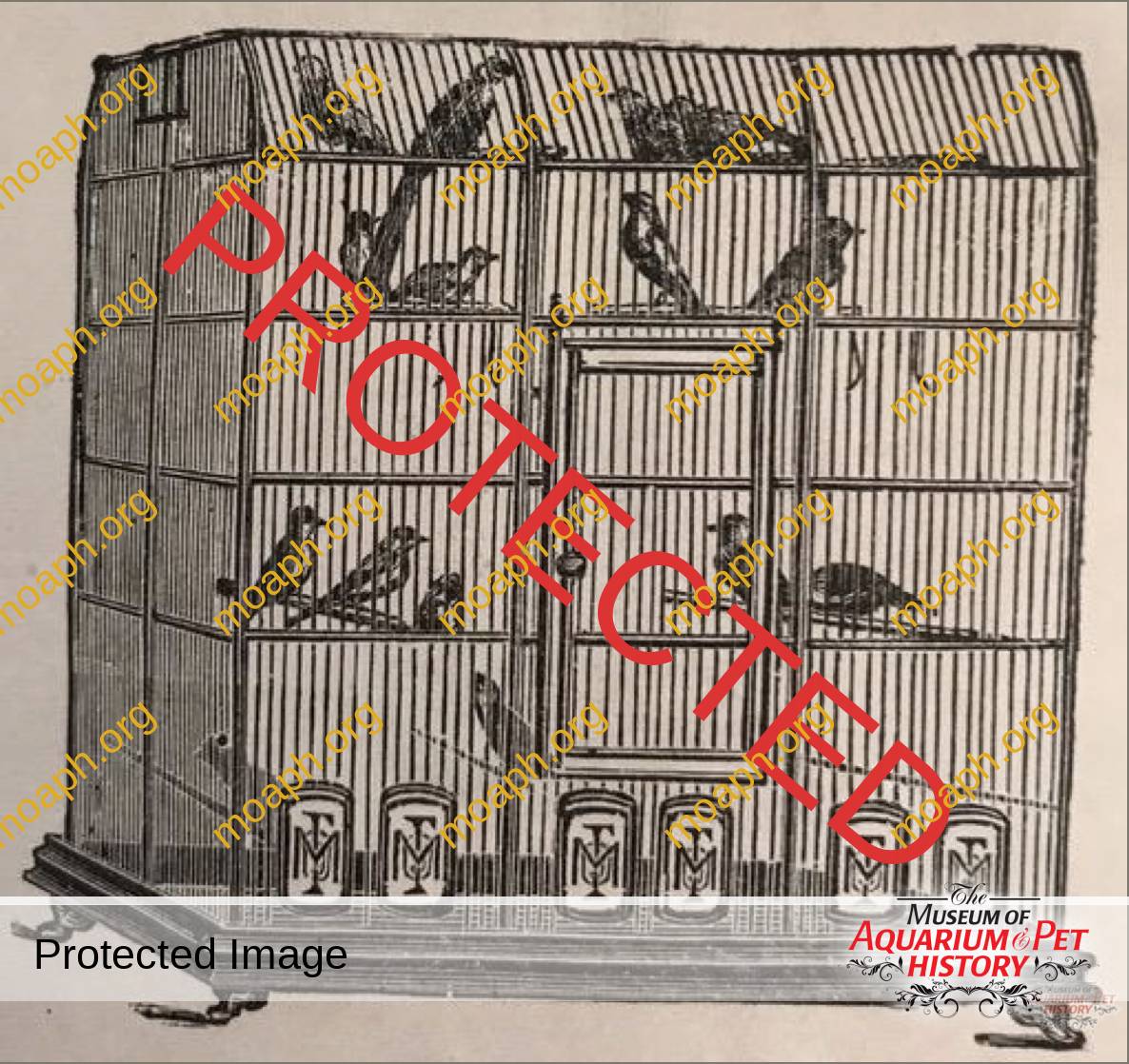
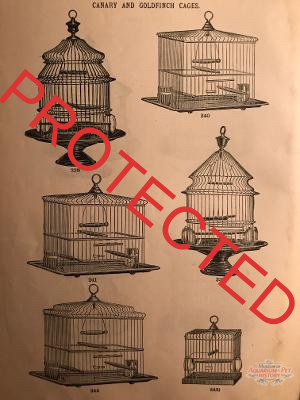
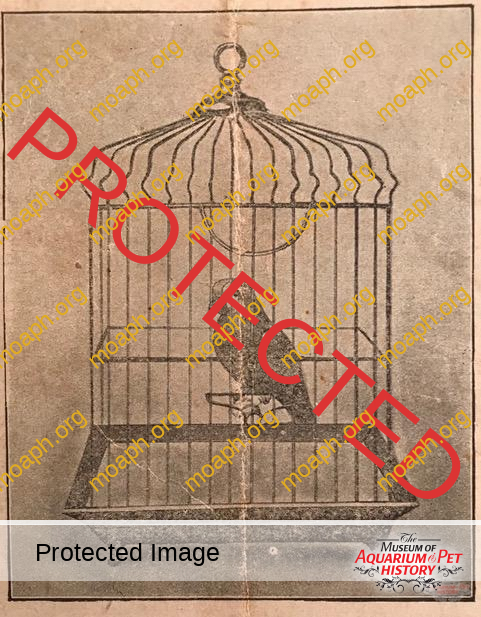
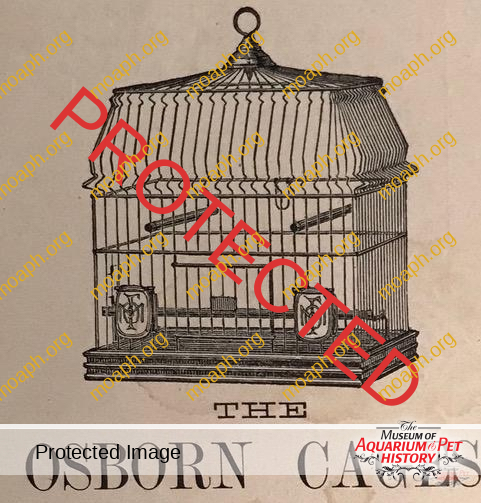
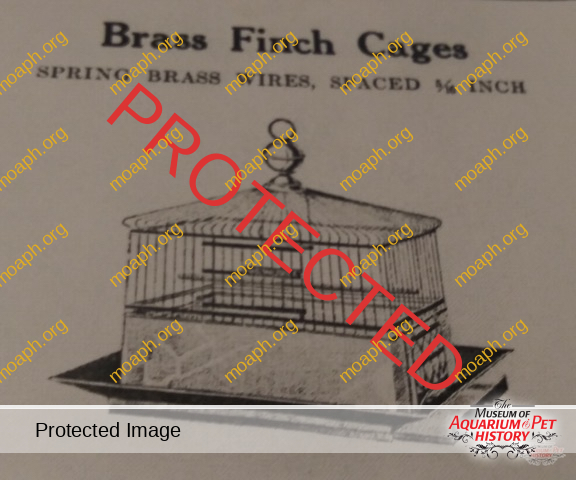
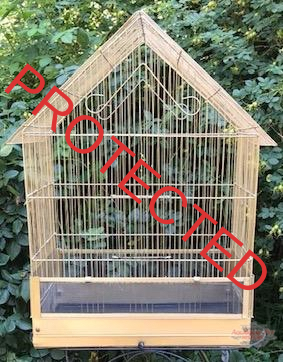
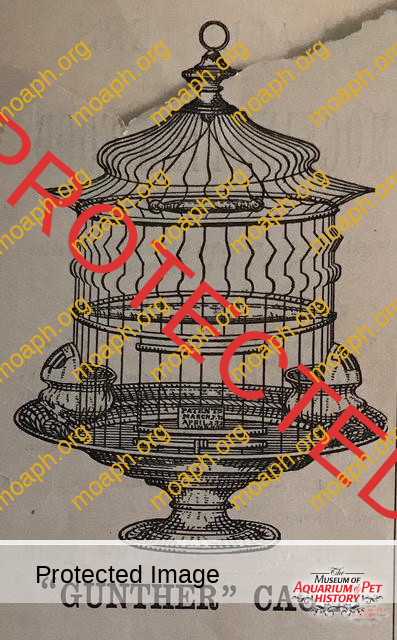
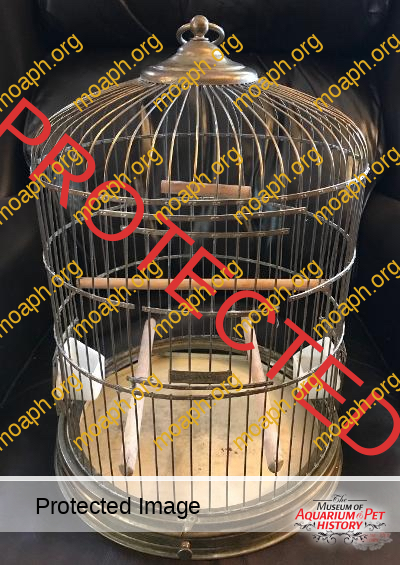
Starting in the 1800s there were many metal companies making bird cages to house these popular pets. Crown, Leon, Gunther, Osborn, OL&Co owned by Otto Lindemann, and the premier cage maker, Andrew B. Hendryx, whose popular catalogs once listed over 350 cages! Later there were cages made by Pacific, Hoei, Penn-Plax Euro, Prevue, and the list goes on. Early cages were made of solid brass, Japanned (painted) tin, stainless steel and various metals with various finishes. They came with seed guards made of screen, glass, and later plastic. Many of us, at one time or another, have probably owned at least one Hendryx bird cage!
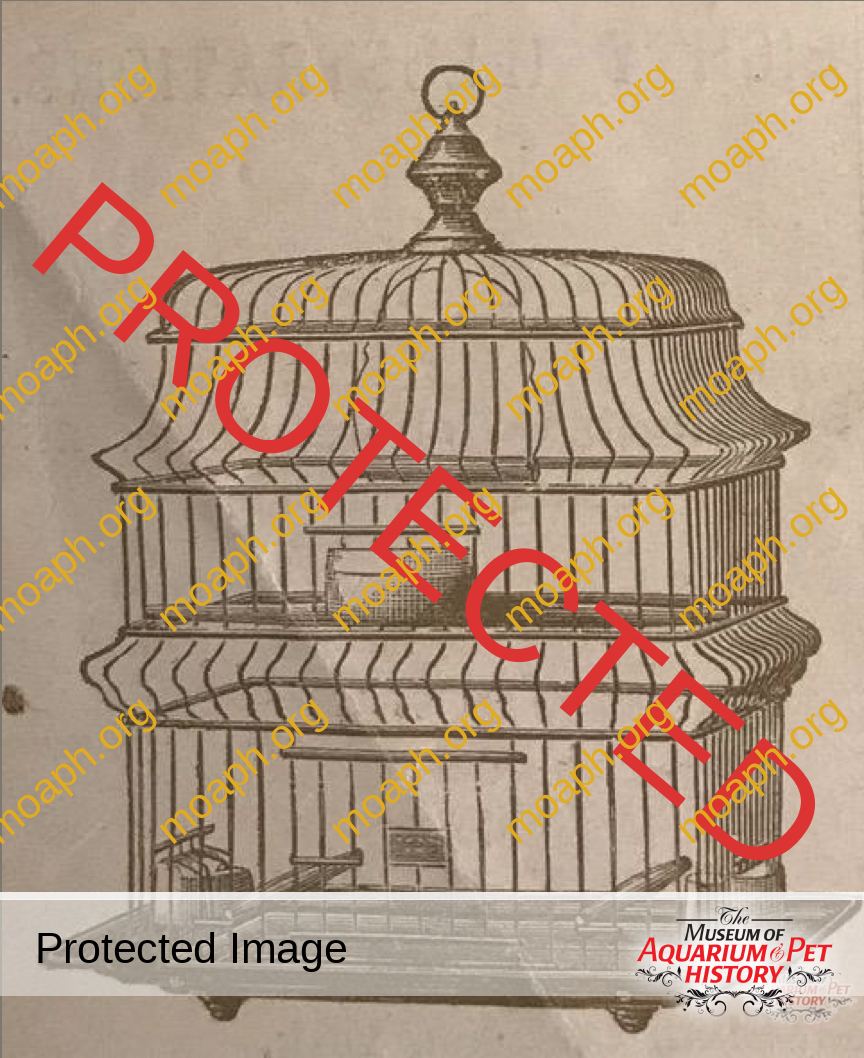
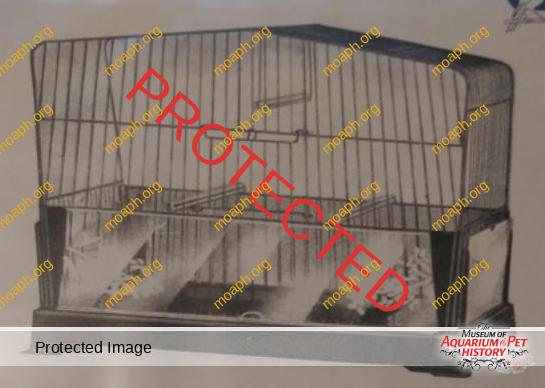
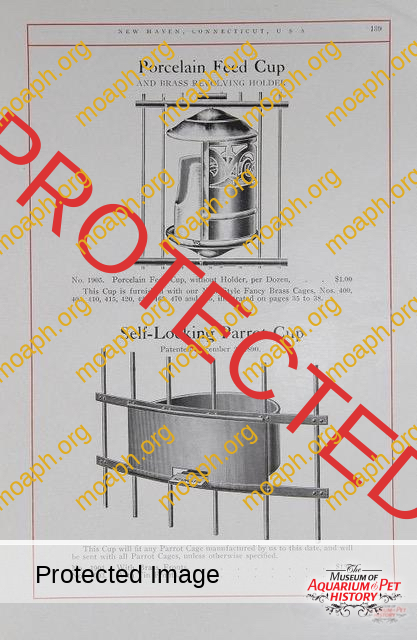
Who knew? Cages are said to have floors just like buildings. The 1st floor usually held the seed cups. Earlier cages often had the cage door on the “1st floor,” while later the door was moved up to the “2nd floor.” Of course, a few cages came with 3rd floors or more! Doors were spring loaded, guillotined, dropped down like a drawbridge, or had a simple bent wire to hold them closed Perches were made of cedar, birch, or maple. Cups were square or round, hooded or not, made of metal, milk glass, opal, lustreware, porcelain, or a combination, and some even swiveled in and out By 1910, the more expensive cages could be ordered with trays that pulled out for easier cleaning!

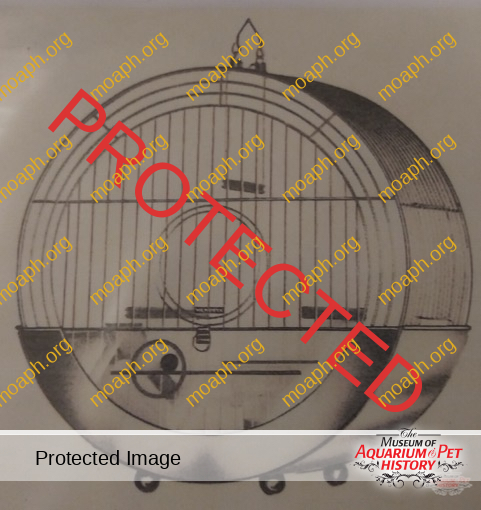
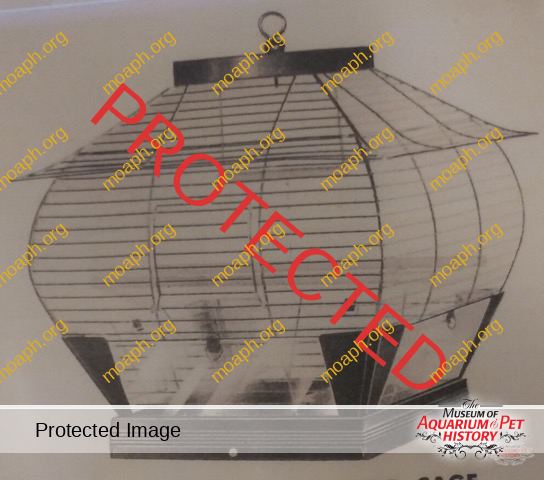
The Hendryx Company started in 1869 and shortly moved to New Haven, CT where the factory also produced popular items like fishing reels. In addition to premier brass bird cages, there were also cages made for pet squirrels, mice, and chipmunks – complete with spinning wheels. Early Hendryx cages had individual wires held in place by a small “u” of metal, riveted rather than soldered to a cross wire. Cages were sold by the dozen, anywhere from $12 to $90. Yes, for twelve! Some cages appeared only once in a single catalog while others, like the popular domed mid-century, first appeared in 1938 and remained until the last Hendryx catalog in 1969, when the company was bought by Prevue. (The Hendryx factory finally closed in 1969.) The last solid brass cages were made about 1949.

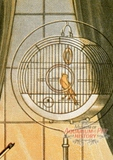
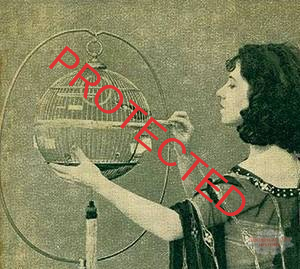
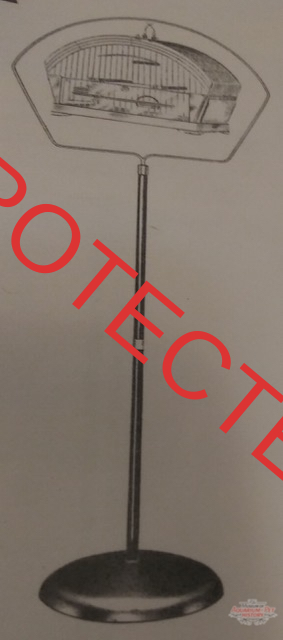
Of course, Hendryx also sold bird cage stands. These were sold separately, but often conformed to the shape of the cages. Some were like ornate tables, while others had a base, pole, and “harp” from which the cage was hung.
Cages and stands were designed to complement the current decor of the home: Victorian, Oriental, Art Deco, Mid-Century Modern or whatever suited the customer, including tassels on the bottom.
Many of these antique cages can be found at garage sales, or show up for sale on eBay or Etsy, and on “vintage” websites like Pinterest. Is there a bird cage “treasure” hiding in your attic or basement?