For the (Water) Birds
*(German Bisque Bird Aquarium Floaters)
In the early 1900s, in response to the demand for aquarium ornaments, German manufacturers produced a wide variety of fish tank fancies, from nubile sea nymphs and craggy castles for the fish bowl floor to fishing folks to perch on the rim. Even the surface of the water did not go unadorned, as German companies created an armada of floating figurines. A 1911 catalog by Bishop, which offered aquarium ornaments and assorted fish tank paraphernalia, stated that these bobbing bisque figures “add greatly to beautifying the Aquarium” and may also be used in “Christmas tree gardens, for Poultry Yard and on miniature lakes, where they float around gracefully and afford endless pleasure to the little tots.” This article will look at one of the most common forms of these floating figurines, aquatic avians.
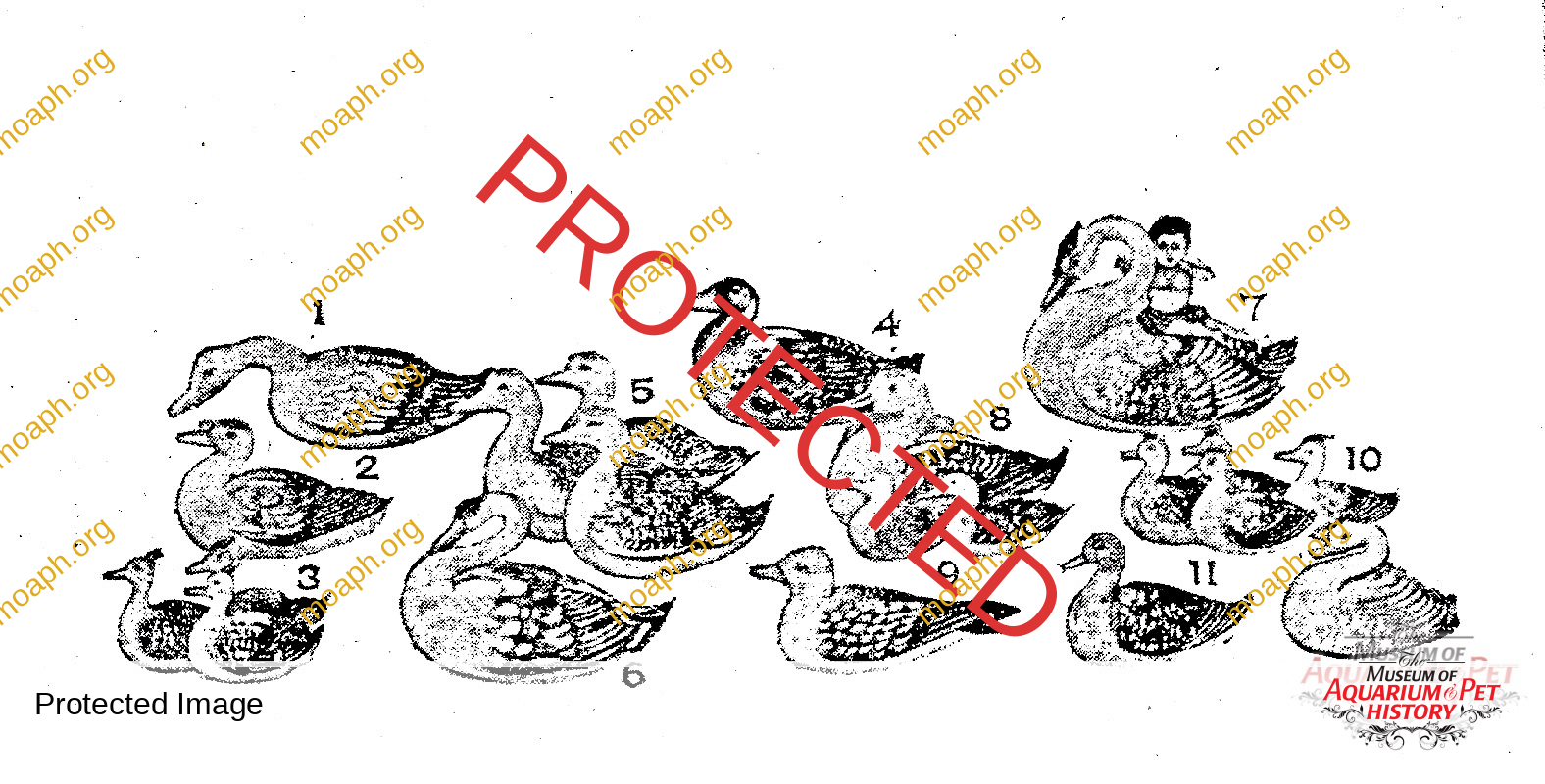
Illustration 1
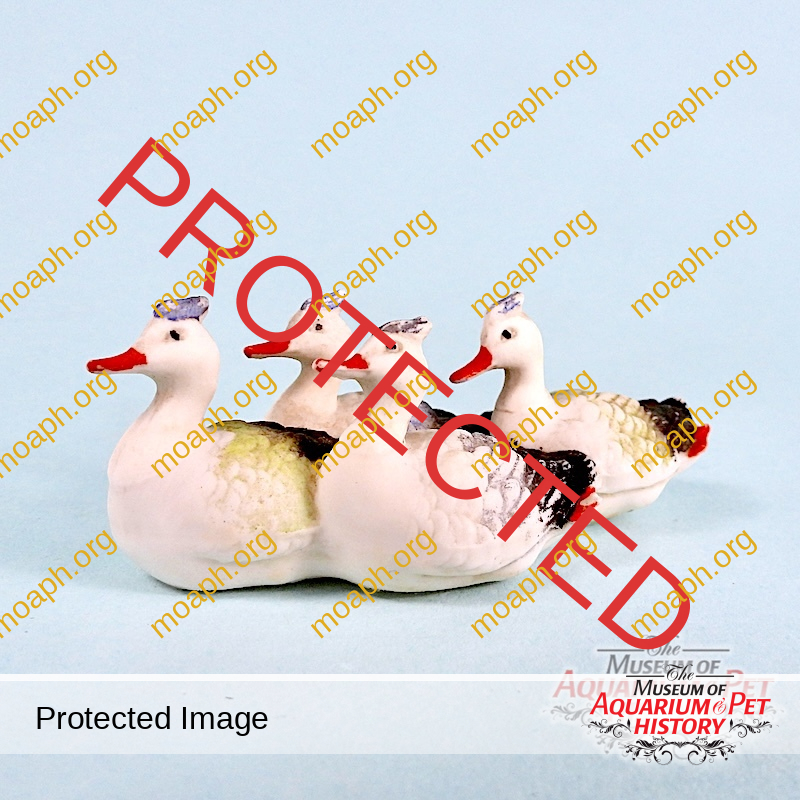
Illustration 2
Illustration 1 is a picture from the 1911 Bishop catalog featuring a flock of whimsical waterfowl. The listed prices ranged from five cents to 30 cents, and the entire assortment of 12 could be yours for $1.60. The foursome of conjoined crested ducks in Illustration 2 matches the picture in the catalog labeled as Number 10, which are described as a “Group of four small ducks” and priced at ten cents. Of excellent sharp bisque, the ducks are hollow, making them both buoyant and fragile, as the thin bisque shell could not withstand too many hard knocks against an aquarium’s edges. Despite the fact that these ducks, like their real-life counterparts, were expected to spend most of their time in the water, the decoration not fired in, but was cold-painted, so much of the color has washed or worn away over time. Unmarked, this piece is 3 inches long and 1 1/8 inches high.
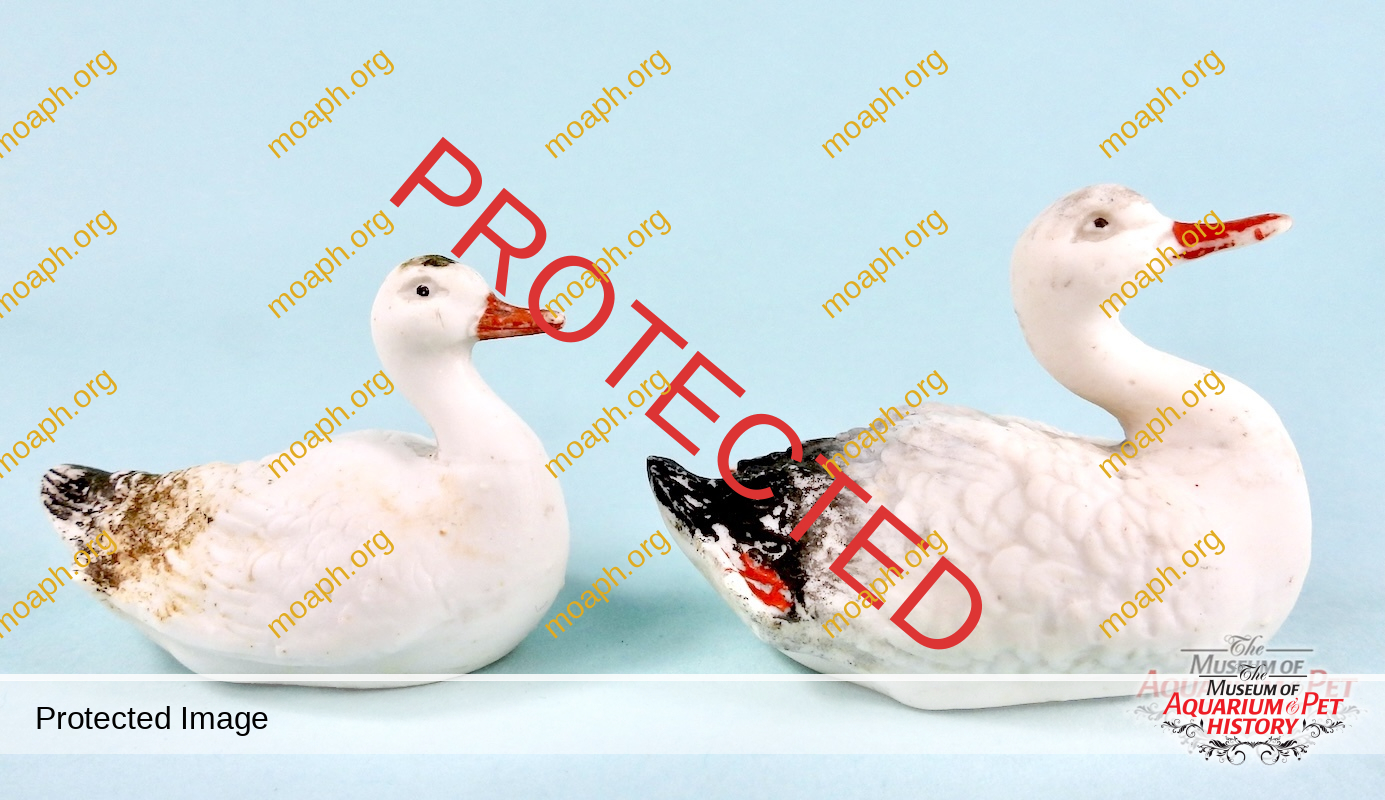
Illustration 3
Bishop offered individual ducks as well, from a “Small floating duck” for five cents to a large duck at ten cents. The larger duck in Illustration 3 is 2.5 inches long, 1.75 inches high, and is incised underneath “4909,” while its slightly smaller companion is 2.25 inches long, 1.5 inches high, and incised “3802.” Again, they were cold painted.
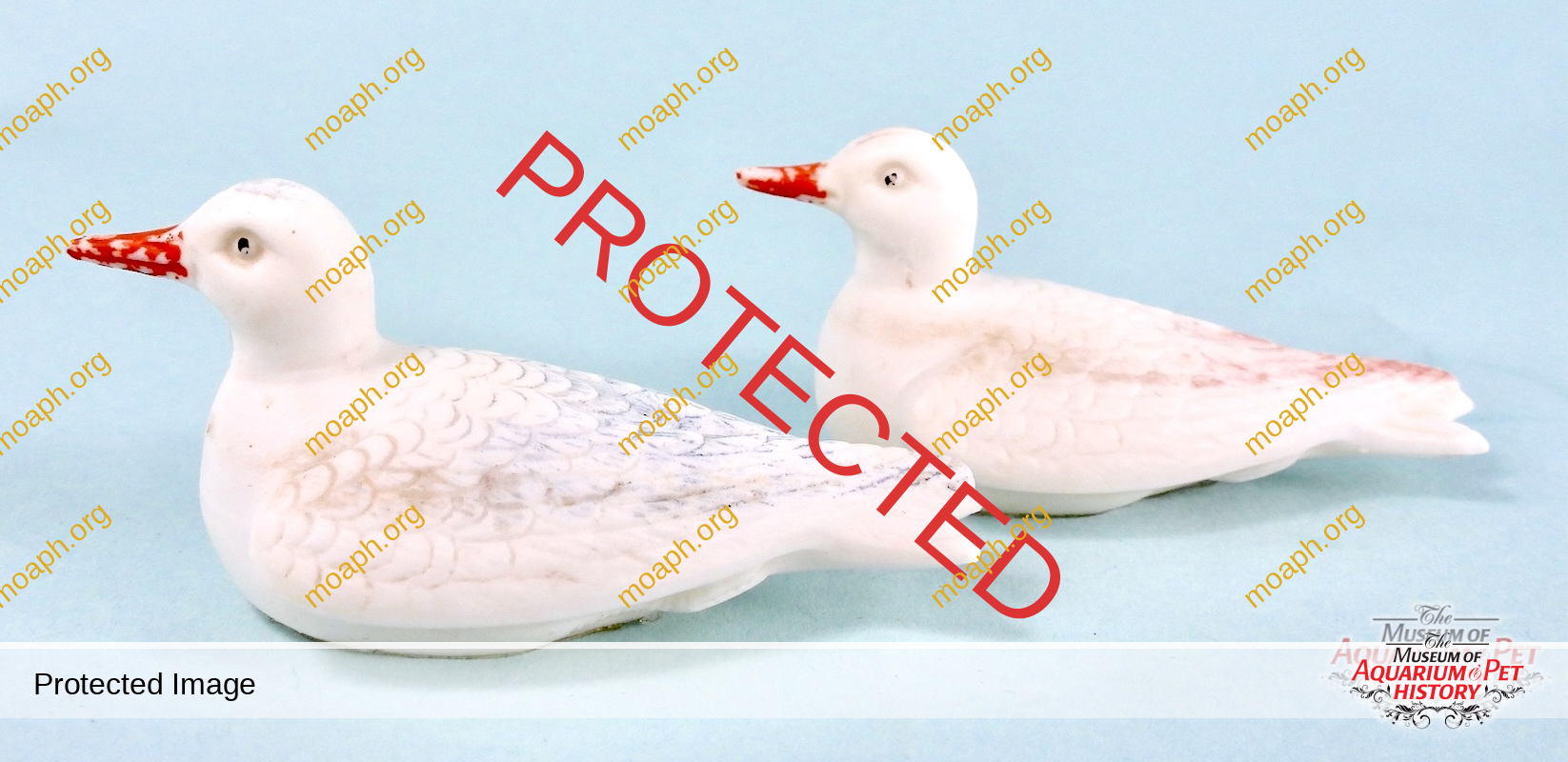
Illustration 4
Also for ten cents, the catalog offered a “Floating seagull,” numbered “9” in the catalog. The pair of sea gulls in Illustration 4 are realistically modeled, but one has the remains of a blue wash on its back, while the other has traces of pink (I guess that makes them a buoy and a gull). Like the ducks, the coloring is cold painted and shows signs of wear. Each gull is 2.75 inches long, 1.25 inches tall, and incised “3389 Germany.”
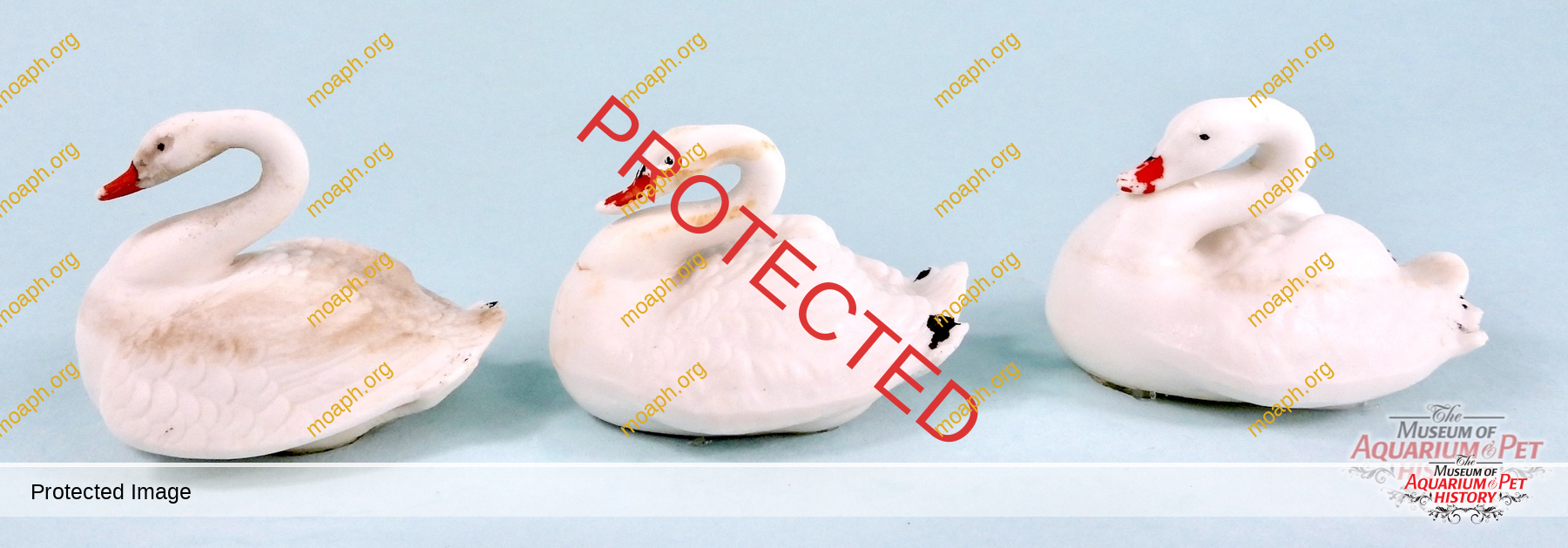
Illustration 5
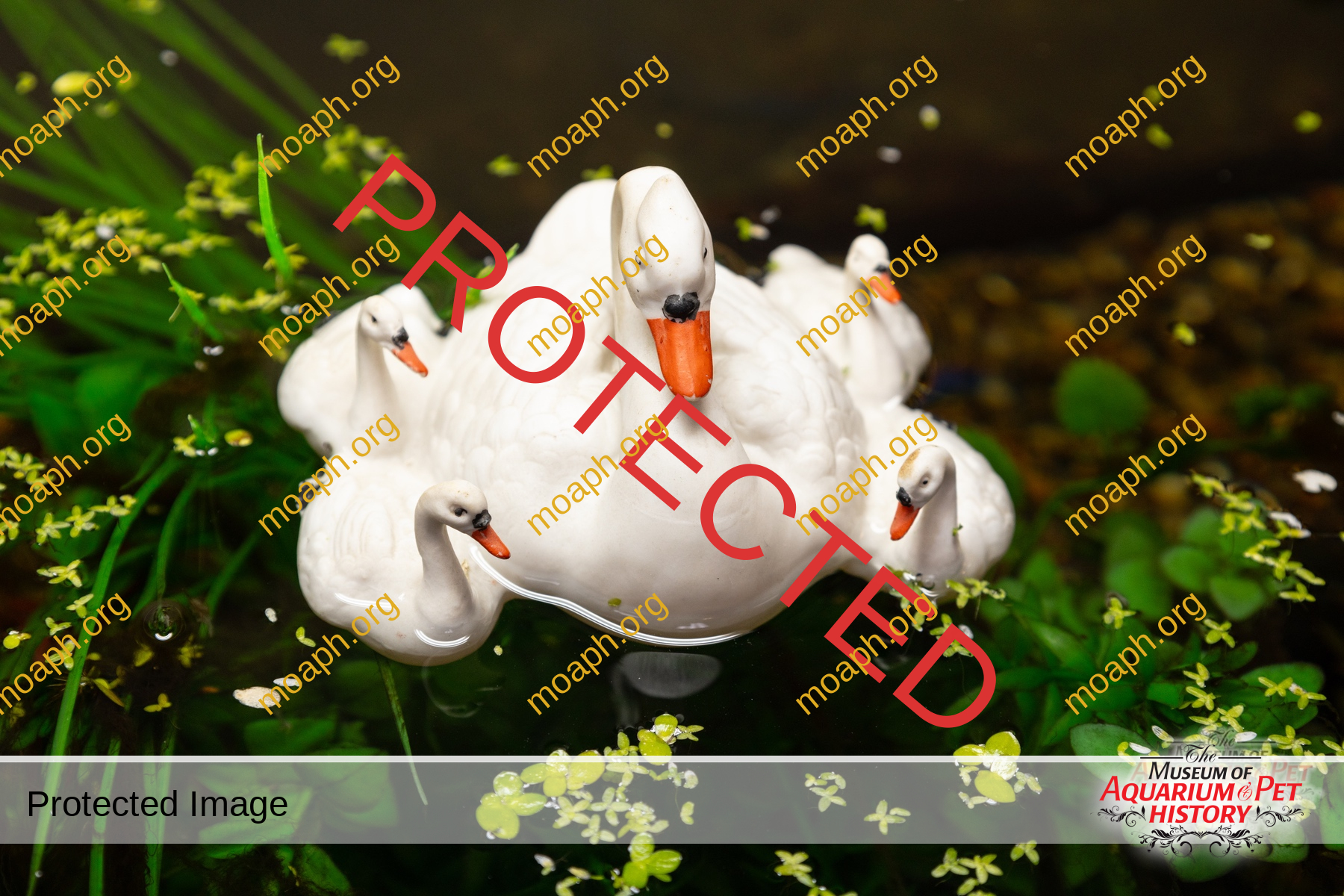
Duck and swans may be the most common of these fish tank waterfowl. Bishop offered a bevy of swans, from a single swan for 10 cents to a “Large swan with four young” for 30 cents. Two of the trio of swans in Illustration 5 show faint stains from the waterline almost two-thirds up from the base and all have wear to their cold-painted features. The swan at the front of the flock is 2 inches long and 1.75 inches high and is incised underneath with a “B.” The other two swans are each about 2 inches long and 1.5 inches high. The center bird is incised “O Germany” and the final fowl is incised “3195 Germany.”
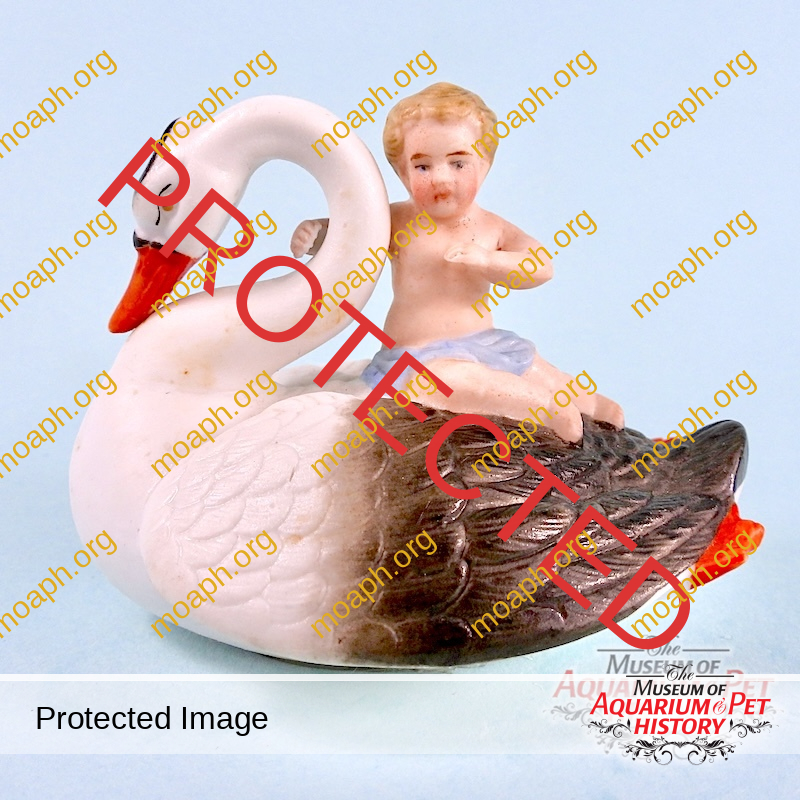
Illustration 6
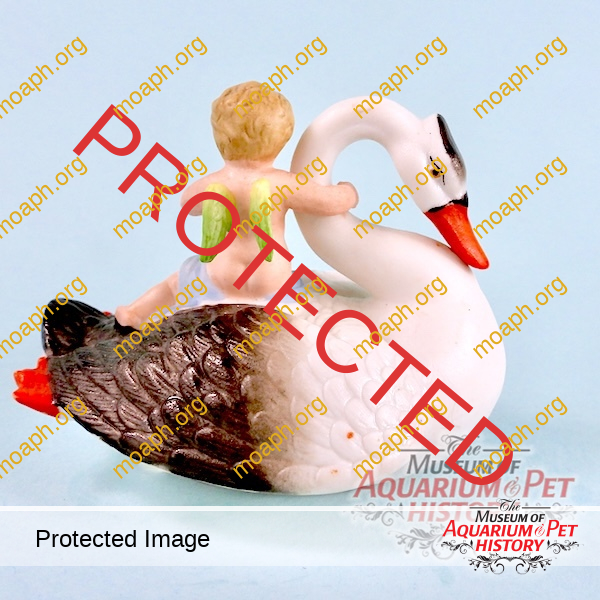
Illustration 7
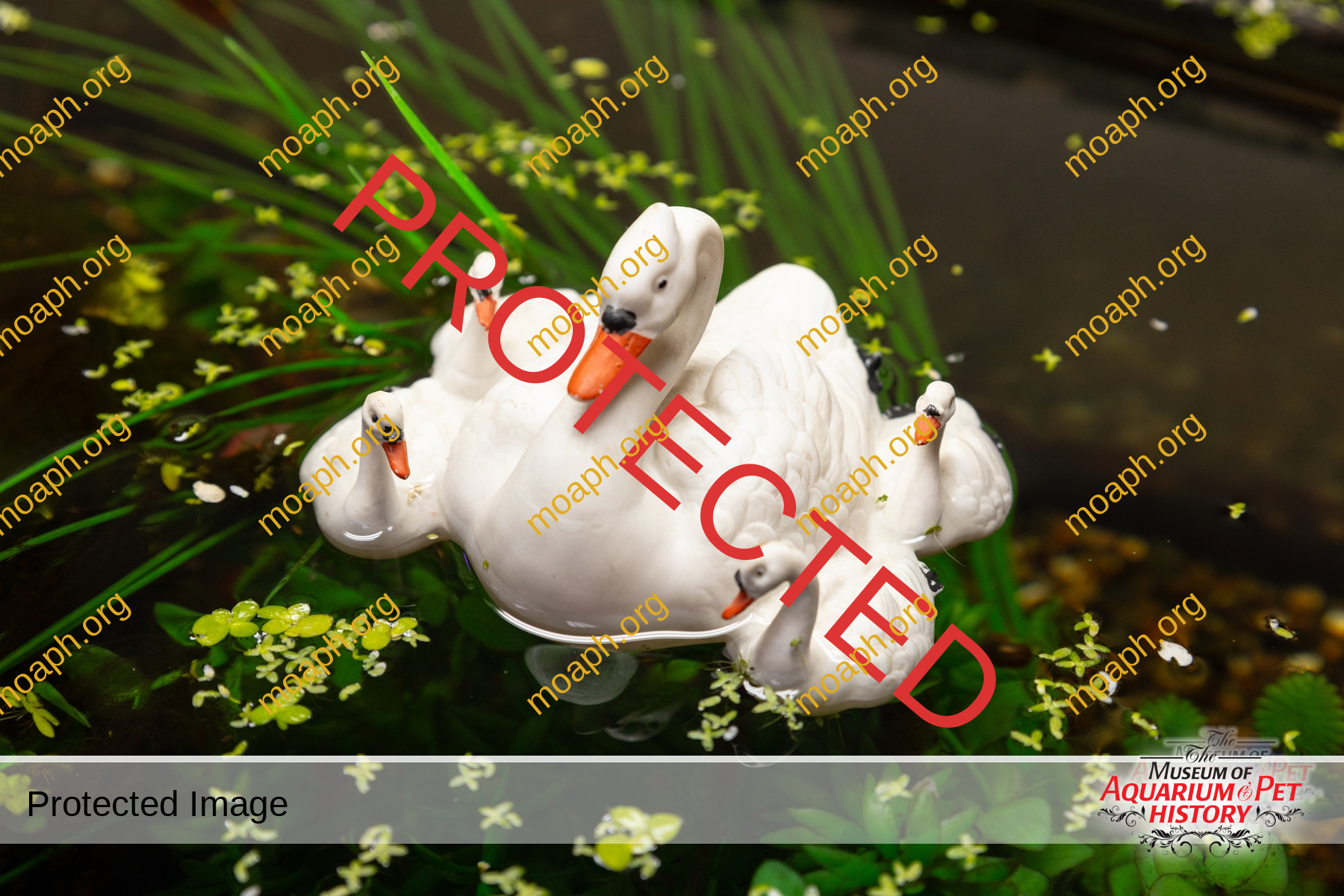
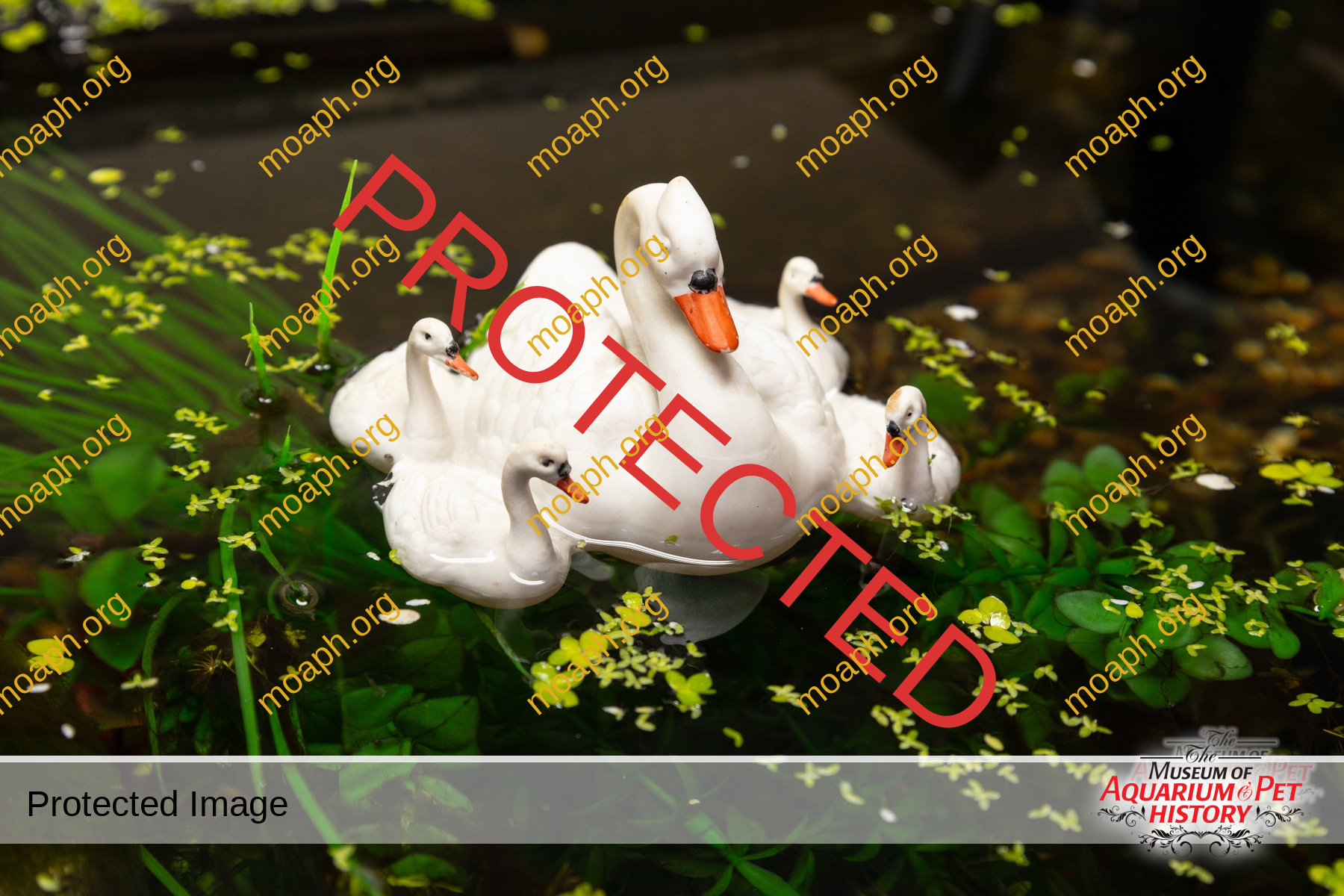
In Illustrations 6 and 7, Cupid literally swans about atop a feathered friend. Pictured in the catalog as Number 7, it is described as “Cupid on back of floating swan” and priced at 30 cents. Unmarked, this piece is of excellent bisque and the detailed decoration is fired in. At 3.5 inches long and 2.5 inches high, it is the largest of the Bishop offerings.
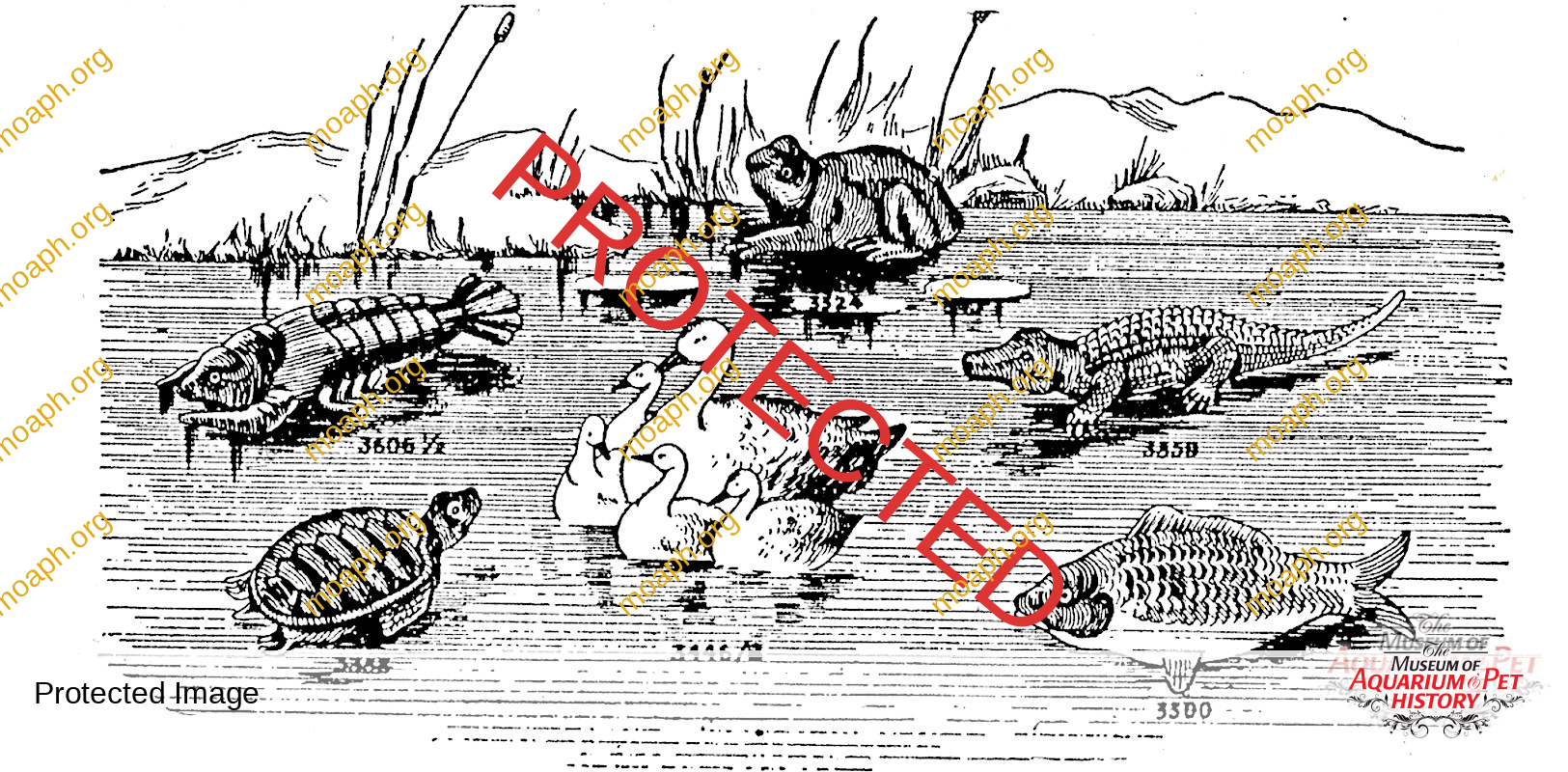
Illustration 8

Illustration 9
Bishop was not the only company to offer such fanciful floaters. Illustration 8 is from a Schmid’s Emporium of Pets catalog that seems to be of the same era. The pictured offerings are more fins than feather, with an alligator, goldfish, lobster, toad, and turtle, but in the center is a swan with four cygnets. Illustration 9 features a similar flock of bisque swans. They are 2.25 inches long and 1.5 inches high. The coloring is cold-painted and there are no marks.
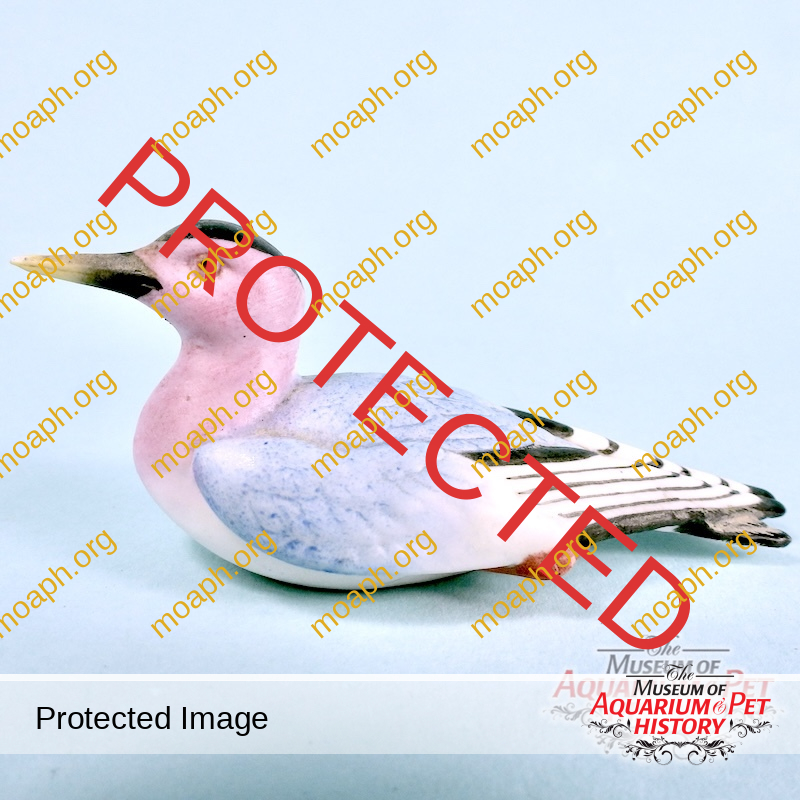
Illustration 10
Illustration 10 features an odd bird. The fired-in coloring of soft pink and blue is not to be found in any bird guide, but the modeling is sharp and realistic. Four inches from the tip of its long pointed beak to tail and 1.5 inches high, it is marked underneath with a freehand “0” in black.
These bisque birds would be replaced by cheaper celluloid novelties. The 1932 aquarium catalog from Nicholas Wapler Company appears to feature only a single floating bird among its “Beautifully Decorated and Colored Bisque Figures” from Germany, a mother duck with a baby attached to each wing. This floating family was also one of the most expensive items on the page at $3.60 a dozen. A Putnam’s Fisheries aquarium catalog from the same period offers a wide variety of floating “Celluloid Novelties,” including ducks and swans, some even garbed in cute molded costumes, but the most expensive offering was only $1.50 a dozen. A Grassyforks Fisheries catalog from this era also offers only similar celluloid floaters.
Although these floating waterfowl may not afford today’s Internet-obsessed tots “endless pleasure,” they are still appreciated by collectors of antique aquarium adornments.
Several images of a rare swan floater from the MOAPH collection: