From Royal Menageries to Courtly Canine Companions
(Queen Victoria, Tower of London, London Zoo, Royal Dogs and Parrots, and Cruft’s Dog Show)
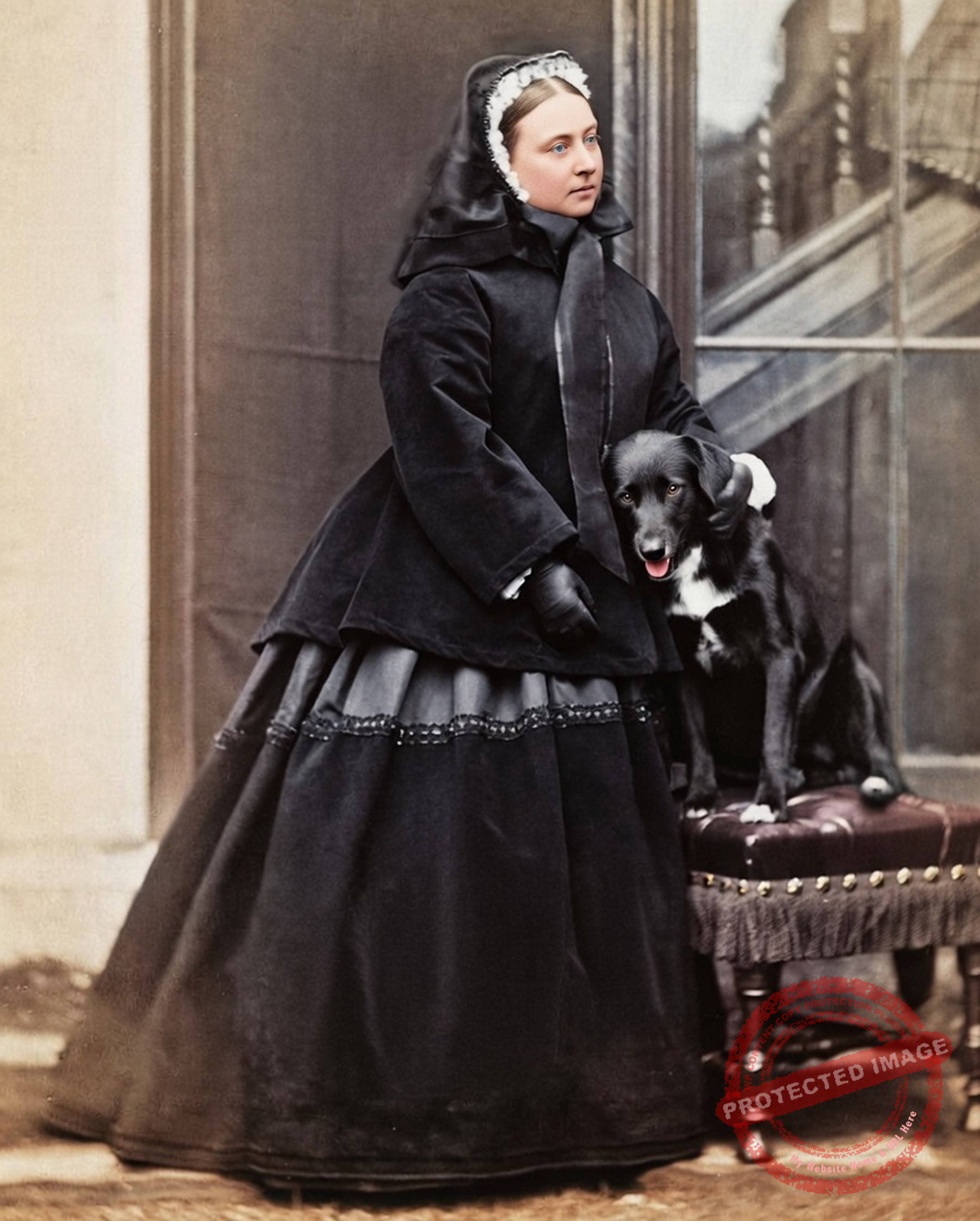
Queen Victoria with her beloved collie called Sharp, taken at Balmoral Castle, Scotland in 1867. Source PD/Wikipedia.
Royalty and exotic animals have been intertwined together over the course of millennia. From the dawn of civilization, monarchs maintained menageries—collections of rare and wild beasts that awed visitors, intimidated rivals, and asserted imperial reach. As an example, Charlemagne the Great received an elephant named Abul-Abbas from the Abbasid caliph Harun al-Rashid in 802, parading the beast across Europe as proof of his alliance with the East.
Early arrivals
Medieval Europe maintained the tradition, and ultimately expanded it. England’s King Henry I established one of the earliest recorded royal collections at Woodstock Palace around 1110, housing lions, leopards, lynxes, and camels. But it was his grandson Henry III who transformed the practice into a permanent institution. In 1235, the Holy Roman Emperor Frederick II sent three “leopards” (which were almost certainly lions) as a wedding gift, inspiring Henry III to create the Royal Menagerie at the Tower of London—the first zoo-like collection in Britain.
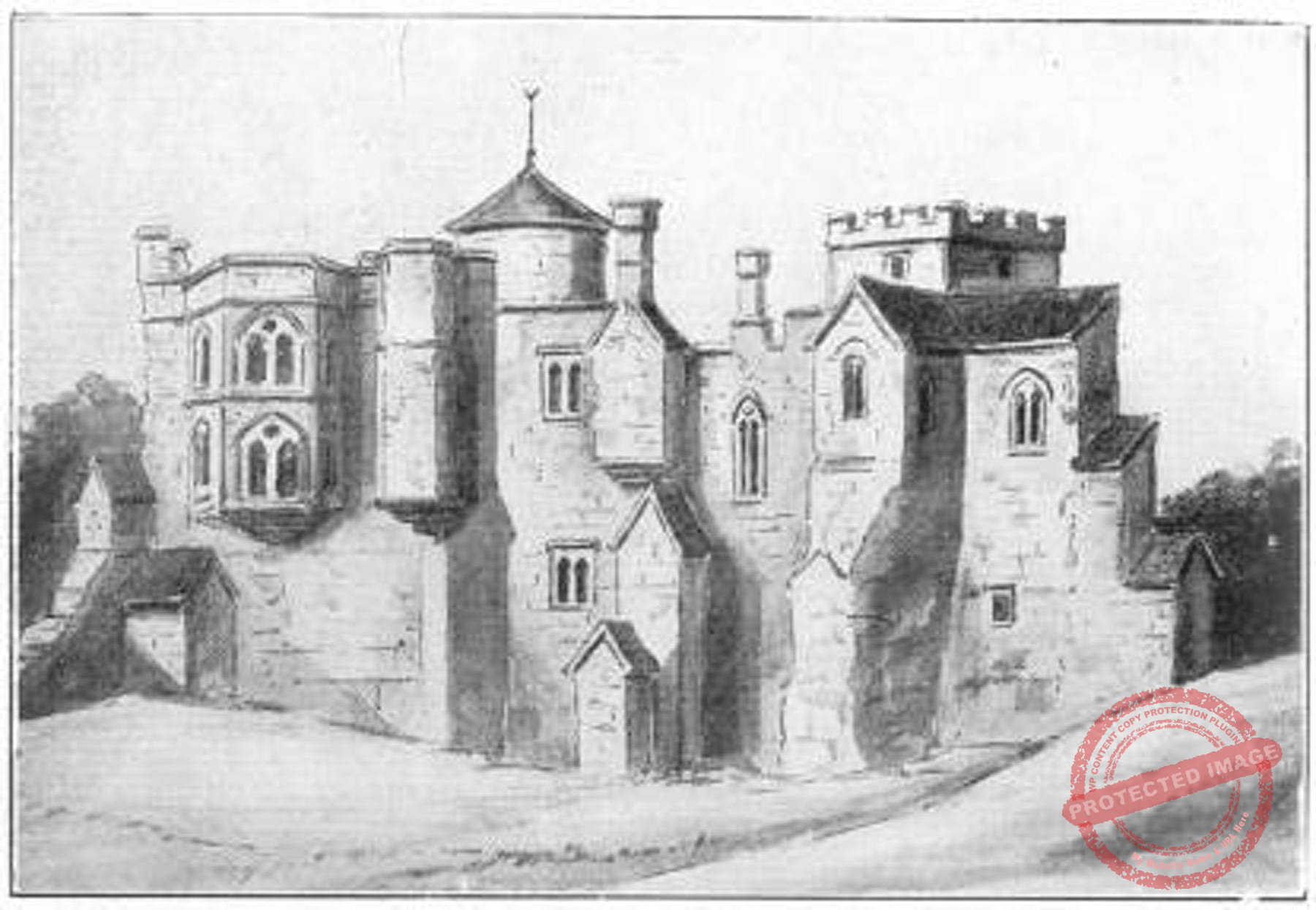
An early representation of Woodstock Palace—home to Britain’s first royal menagerie—which has been extensively remodelled down through the centuries, and was almost totally destroyed during the English Civil War of 1642-1651. Source PD/Wikipedia.
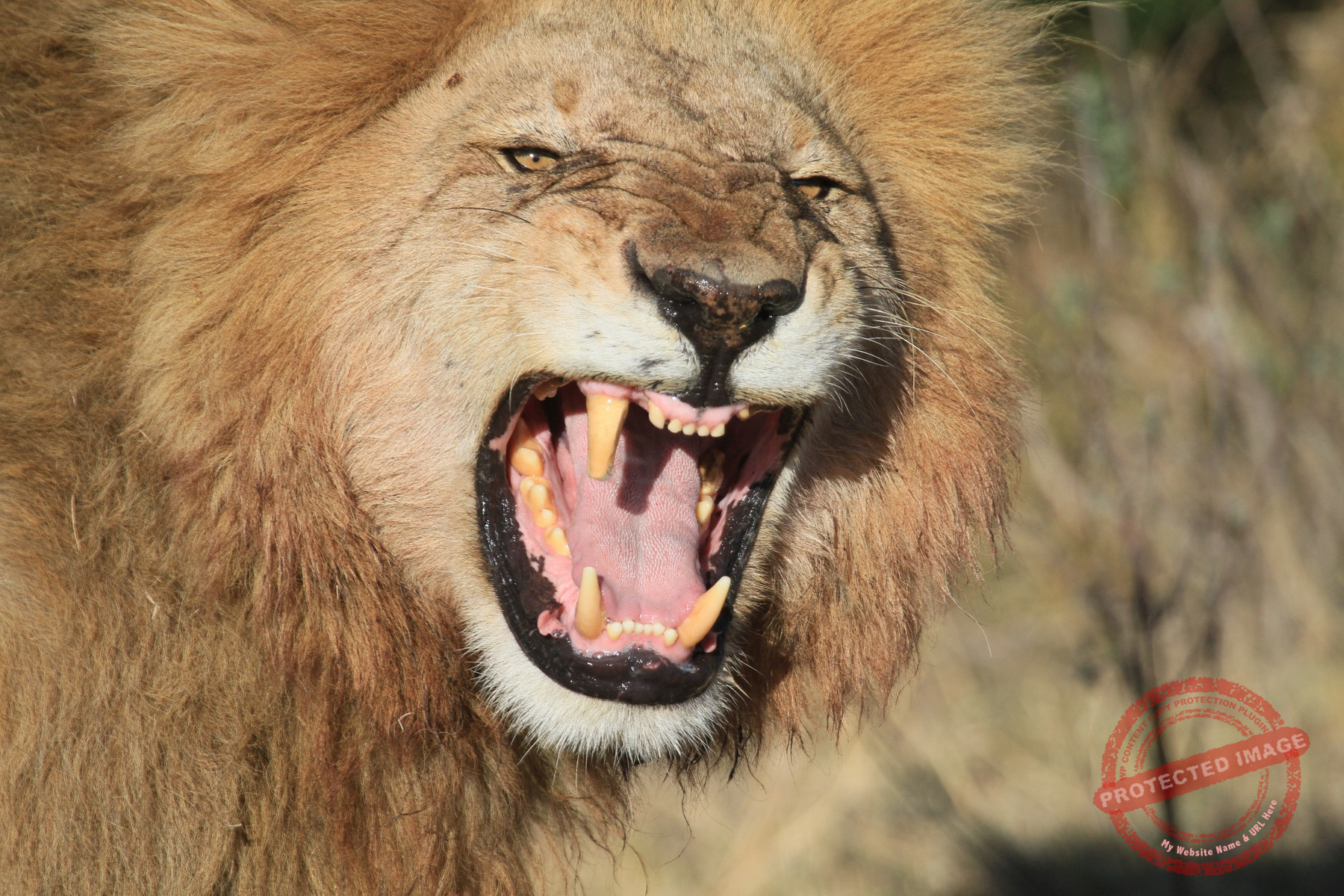
Photo by Louis Freeman/www.shutterstock.com
Subsequent records from 1252 note the arrival of a polar bear, a gift from the King of Norway, and although kept muzzled and chained, it was allowed to fish in the adjacent River Thames. Two years later, Louis IX of France dispatched an African elephant, which was housed in a specially built enclosure measuring 20 x 40ft (6.1 x 12.2 m). This pachyderm only survived two years, but during this period, records reveal that its upkeep was ruinously expensive.
Over the centuries, the animal accommodation at the Tower was expanded, and this area became home to all manner of beasts. Public access began sporadically under Elizabeth I (1558-1603) and became popular. Londoners were happy to pay to gawk at the exotic beasts and witness occasional maulings of their keepers. Her successor, King James I (1603-1625) carried on this tradition, refurbishing the dens with circular yards and cisterns.
The end of an era
Lions remained the centerpiece—echoing the royal arms of England—but were joined by a host of other predatory wild species, including tigers, leopards, pumas, jackals and eagles. A notable arrival in 1764 was a cheetah named Miss Jenny, who was brought over from Bengal in India, complete with her native keeper. By the turn of the next century however, the popularity of the menagerie was fading. A brief revival came about during the 1820s under head keeper Alfred Cops, who amassed a collection nearly 300 assorted animals.
Yet welfare concerns mounted. The Royal Society for the Protection of Cruelty to Animals (RSPCA), founded in 1824, raised issues of cruelty within the collection, while the costs associated with the menagerie soared. Luckily an alternative presented itself, leading the Duke of Wellington to order that most of the creatures in residence were transferred to the new Zoological Gardens in Regent’s Park, which is better-known today as London Zoo.
By 1835, the Tower Menagerie closed forever, with its last lions, tigers, and bears being transferred there or elsewhere. The Lion Tower itself was then demolished, marking the end of medieval-style royal menageries in Britain. Today though, if you buy a ticket to visit the Tower of London from the Ticket Office, or eat in the restaurant there, this is close to the area where menagerie was sited.
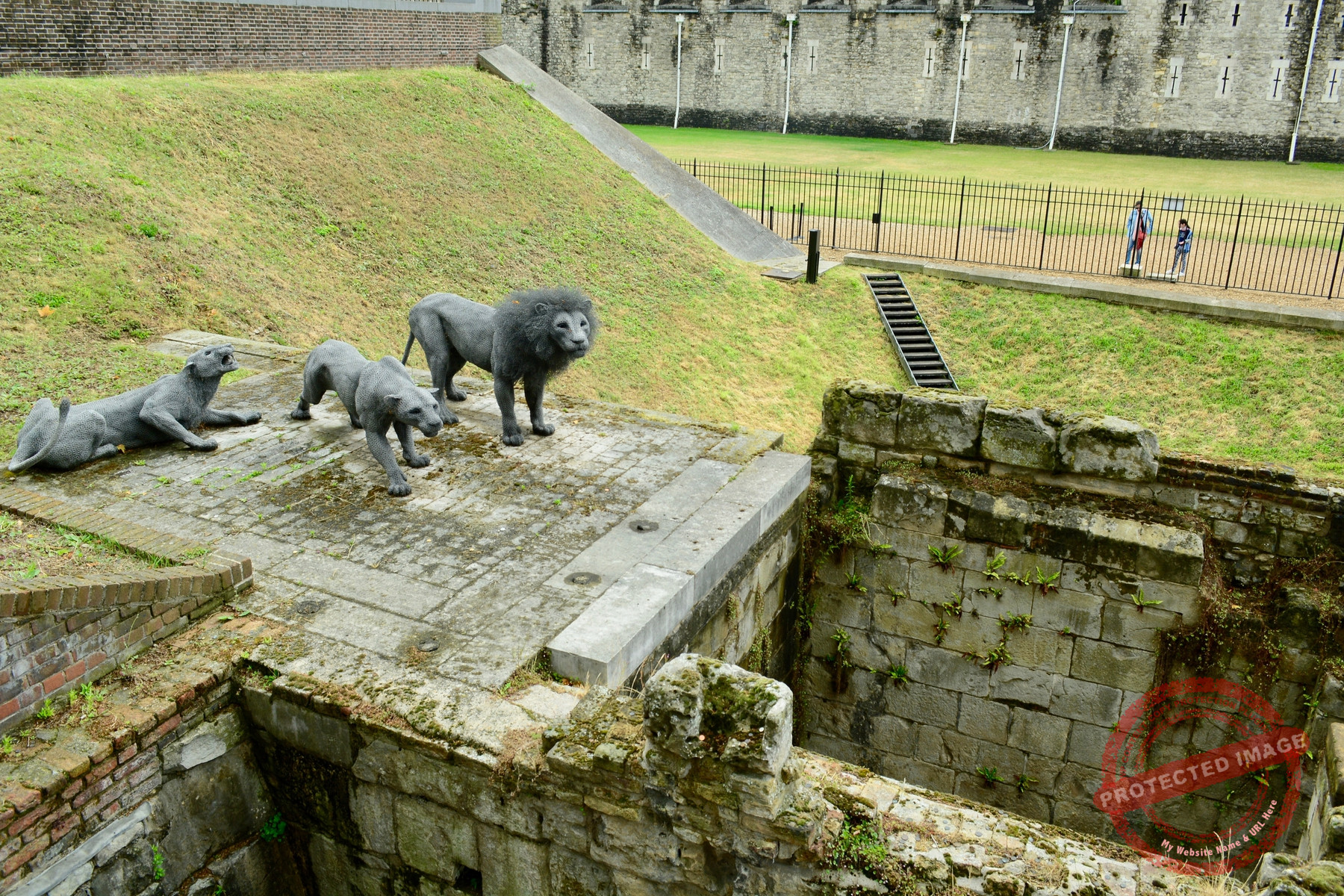
Wire sculptures now mark the location of the Lion Tower, which was demolished in 1853. Photo courtesy Natalia Marshall / www.shutterstock.com
A different approach
Across the Channel, Louis XIV’s Royal Menagerie at Versailles (built between 1661 and 1668) offered a more refined model: seven courtyards of birds, coatis, quaggas (a type of zebra, now extinct), cassowaries, and black-crowned cranes, designed for pleasure and scientific study rather than combat. It nevertheless projected absolute monarchy—rare beasts sourced through the French East India Company, underscoring the country’s global reach. Similar collections graced Schönbrunn in Vienna, opening to the public in 1765, and subsequently, the Jardin des Plantes in Paris where surviving former animal residents of Versailles were transferred after the French Revolution of 1789.
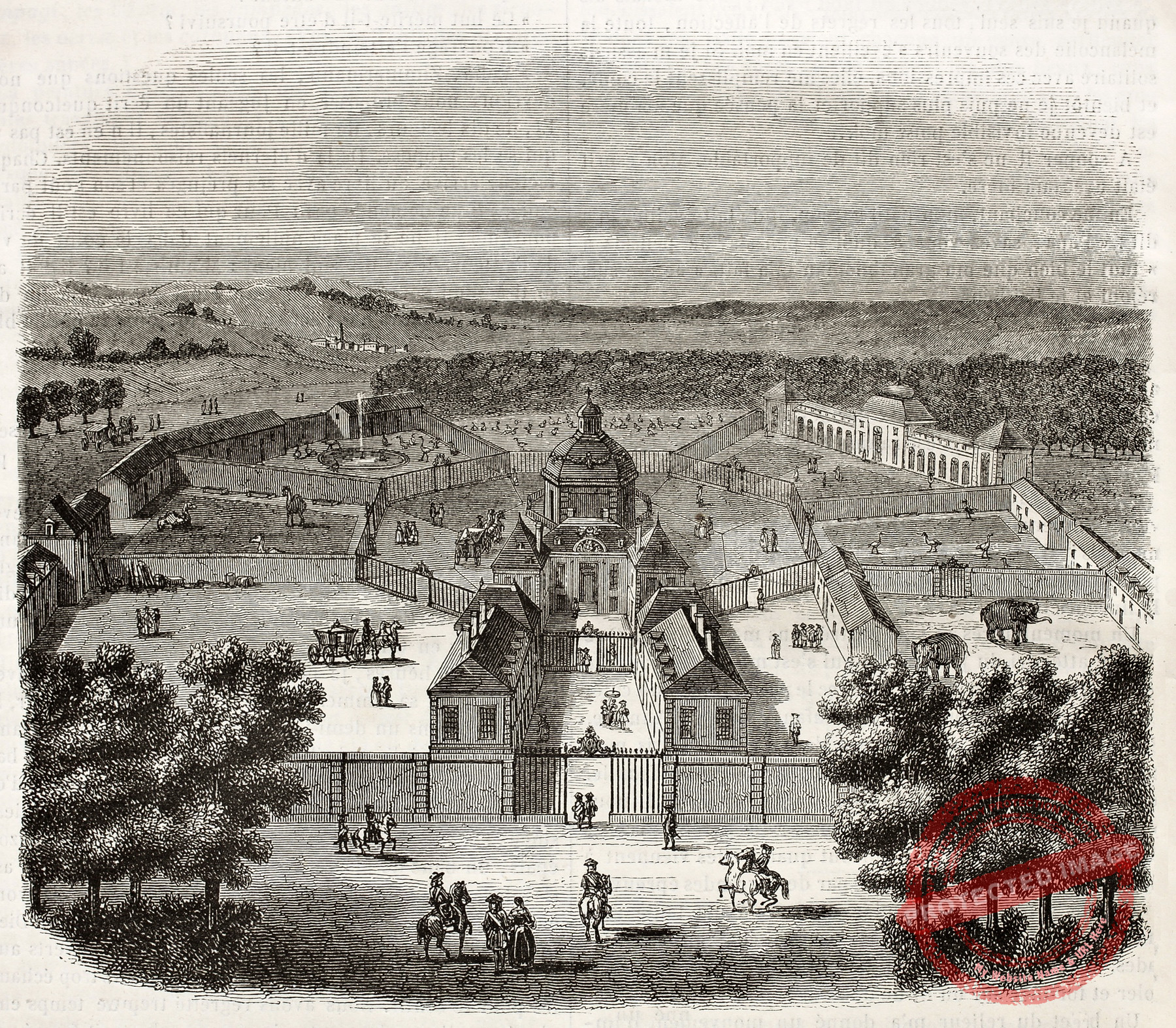
A view of the Versailles menagerie. Image courtesy Marzolino/www.shutterstock.com
Stepping into modern times
By Queen Victoria’s birth in 1819, the age of the private royal menagerie was waning, giving way to public zoos and, for British royalty, a quieter passion: domestic pets. She typified this trend. While her predecessors prized hunting hounds and falcons, Victoria transformed pets into family members. Isolated under the strict “Kensington System” imposed by her mother and Sir John Conroy which kept her largely on her own, the young princess found solace in animals. Her first great love arrived on 14 January 1833: a King Charles spaniel named Dash, given to her as a gift.
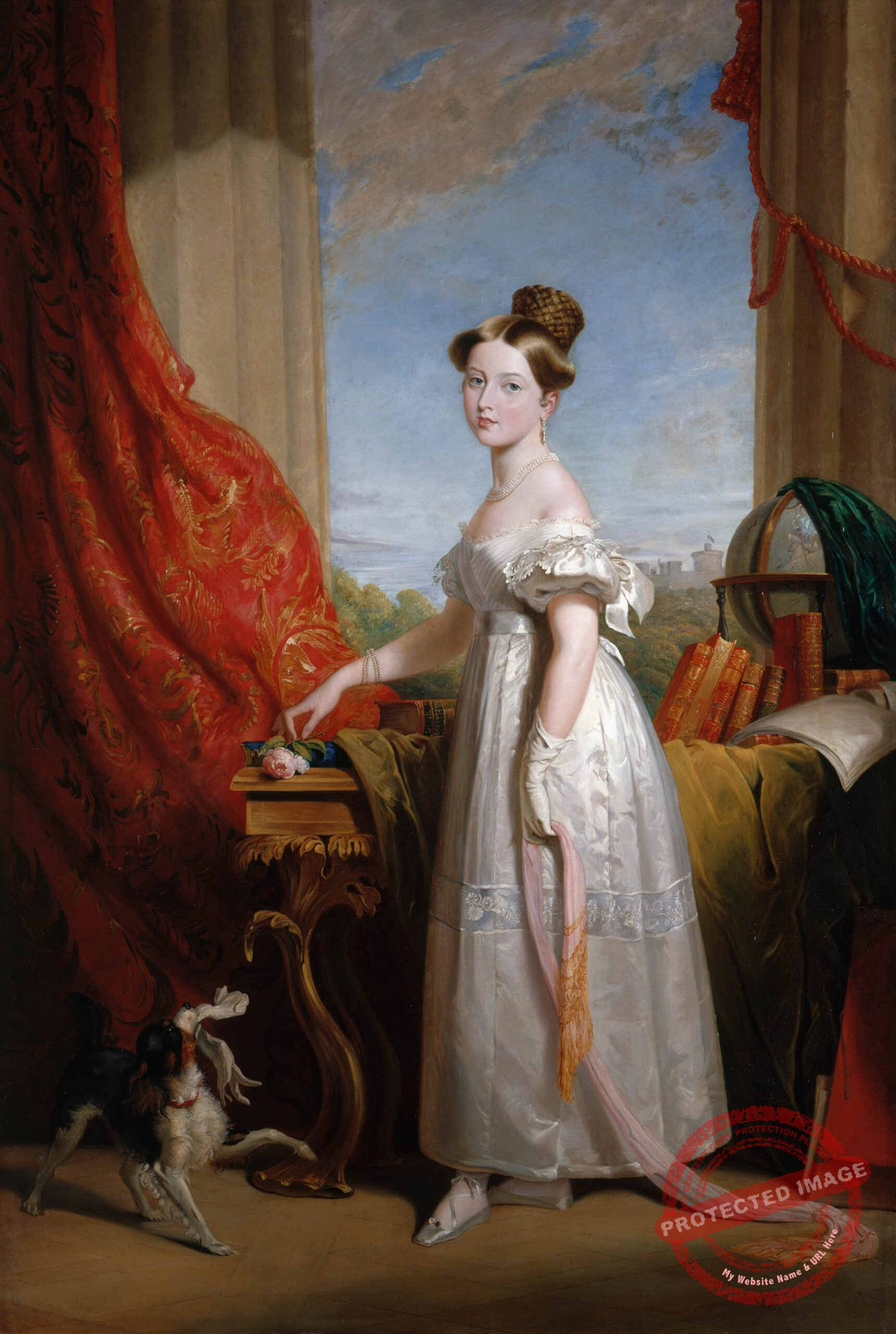
A portrait of Princess Victoria of Kent prior to her accession to the throne, shown with her spaniel Dash. The painting was exhibited at the Royal Academy, London, in 1833. Source PD/Wikipedia.
Initially, Dash just laid for periods at the Duchess’s feet, but by February, he had become the 13-year-old Victoria’s inseparable companion. Her journal entries sparkle with affection. On 14 March 1833, she wrote: “Dear little Dashy is quite my playfellow, for he is so fond of playing at ball and of barking and jumping.” He accompanied her on garden walks with her governess Baroness Lehzen, took part river excursions, and went on holiday with the young Princess in 1833 to the Isle of Wight. When left behind on a barge, Dash plunged into the sea and swam ten yards (nine metres) after the boat to reach her. Victoria took the time to bath Dash herself after her 1838 coronation and defended him fiercely when her mentor Lord Melbourne teased that his legs were crooked, lifting the dog onto the table for inspection.
Dash’s death on Christmas Eve 1840 devastated her. Prince Albert broke the news; Victoria recorded: “Albert told me that poor dear old ‘Dash’ was dead, which grieved me so much. I was so fond of the poor little fellow, and he was so attached to me.” Buried at Adelaide Cottage in Windsor Great Park beneath a marble stone she commissioned, Dash’s epitaph—most likely penned by Victoria herself—reads: “Here lies Dash / The favourite spaniel of Her Majesty Queen Victoria / In his 10th year / His attachment was without selfishness / His playfulness without malice / His fidelity without deceit / Reader, if you would be loved and die regretted, profit by the example of Dash.”
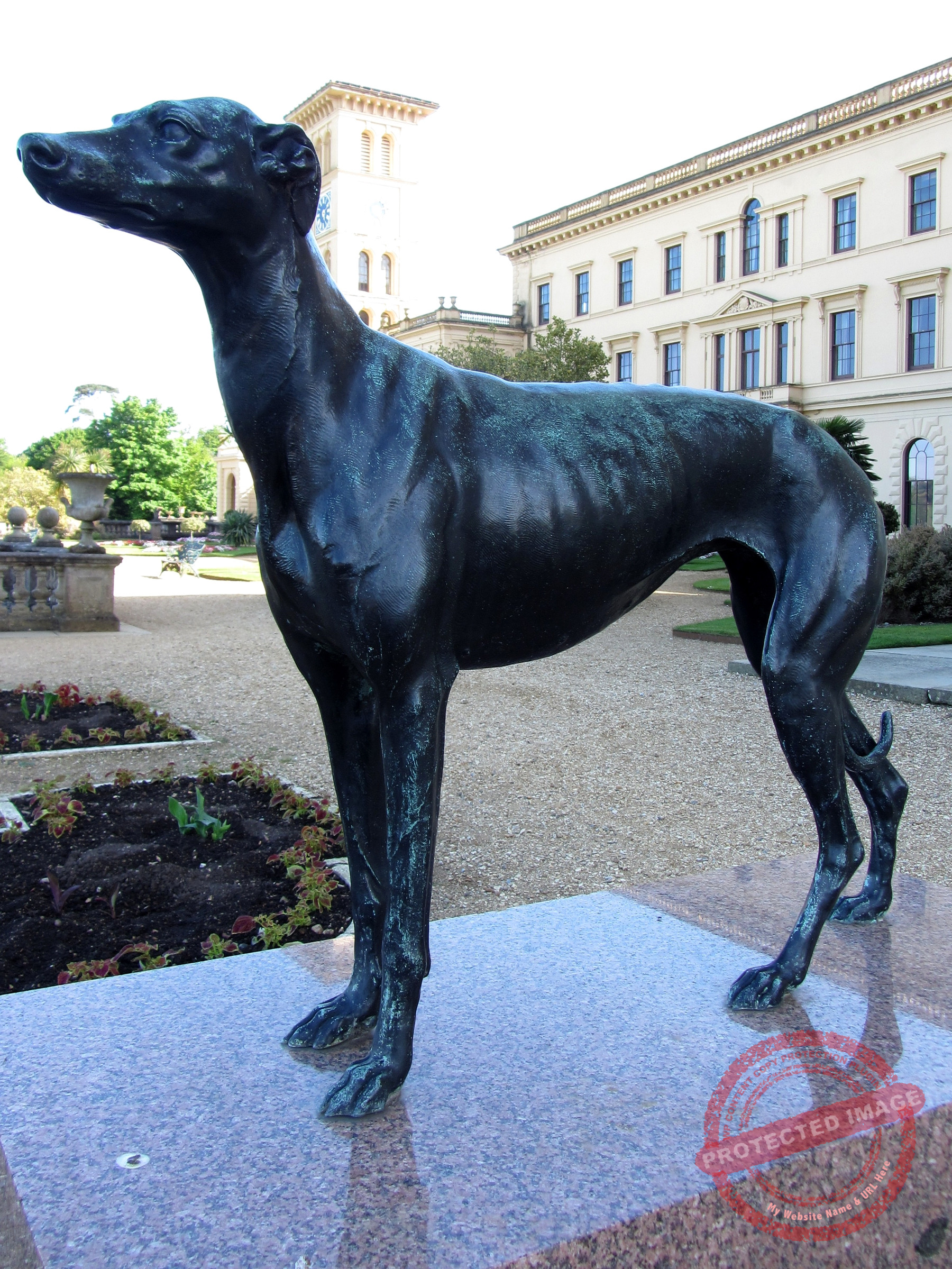
The statue to Eos at Osborne House on the Isle of Wight, which is a copy of the one over his grave. Photo courtesy Alex-David Baldi/www.flickr.com
Marriage to Prince Albert earlier that year had changed the royal menagerie into a domestic one. Albert brought his greyhound Eos, named after the goddess of dawn, with him. Eos, who had been sent ahead from Saxe-Coburg to England before Albert himself arrived, enchanted the young queen. Her husband’s subsequent grief at Eos’s death in 1844 moved her to commission sculptor John Francis to create a bronze statue (modeled on Landseer’s portrait) to stand both over the grave in Windsor Home Park, and at Osborne House.
Birds featured too
Sir Edwin Landseer (1802-1873), who effectively served as Queen Victoria’s unofficial court painter, immortalized many royal pets. These included not just Dash in playful studies, and Eos appearing sleek and noble. There were also group scenes involving various royal pets, such as Windsor Castle in Modern Times (created between 1840–45), where dogs mingle at the royal family’s feet. An earlier work from 1838 was Hector, Nero and Dash with the Parrot Lory, painted in 1838, which has caused confusion concerning the identity of the psittacine portrayed within the painting.
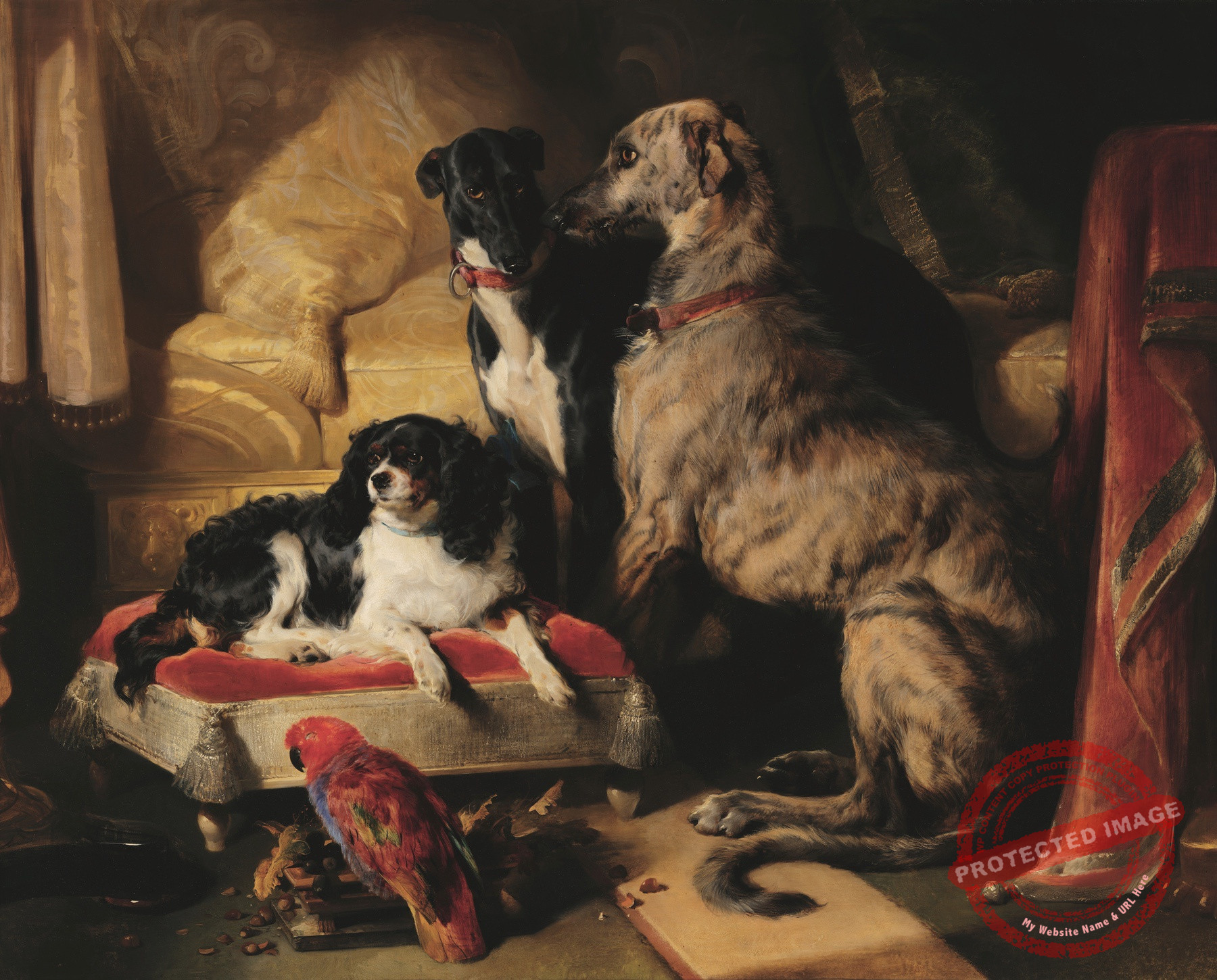
Another portrait of the Dash, this time by Edwin Landseer, alongside the Greyhound Nero and the Scottish Deerhound Hector, along with a pet parrot. Source PD/Wikipedia.
Lories are of course a group of brush-tongued parrots that are well-equipped to feed on pollen as well as nectar, and are often recognizable by their red coloration. In this case, however, it is clear that the bird in question was an Eclectus Parrot (Eclectus roratus), which displays the most striking difference in appearance between the sexes out of all nearly 400 species of living parrot. Whereas the cock Eclectus is predominantly green, its partner (as in Landseer’s painting) is predominantly fiery red and purple.
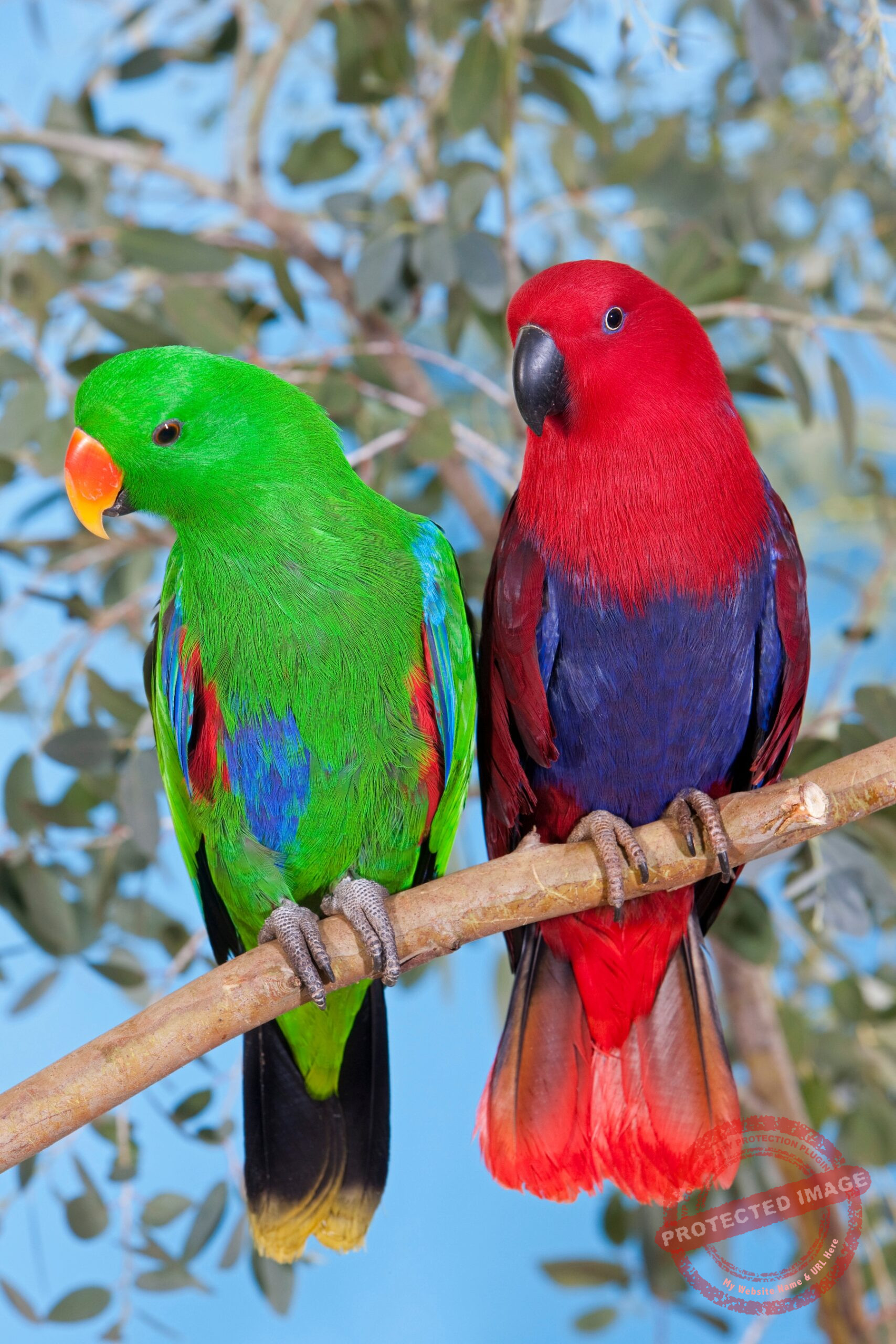
A pair of Eclectus, showing the striking difference in their plumage. Photo courtesy slowmotiongli/www.shutterstock.com
Expanding accommodation
The couple built kennels during the early 1840s in Windsor Home Park, which eventually accommodated 100 dogs of 32 breeds. Victoria banned tail-docking and ear-cropping there, aligning with her patronage of the RSPCA (she became its first royal patron around 1840) and later the Battersea Dogs’ Home in 1885. Collies became favorites. There was Sharp, a smooth-haired collie, who earned repeated journal praise—“dear good Sharp…so affectionate,” “my faithful collie dog.” Noble was another much-loved collie, who guarded her gloves and earned a bronze sculpture by Sir Edgar Boehm over his 1887 grave at Balmoral, inscribed with Victoria’s words of loss: “a real friend whom I miss terribly.”
A unique record
Queen Victoria visited the kennels often, naming every dog herself and arranging for them to be documented in a special red leather album featuring 51 early photographs taken by William Bambridge, who was appointed Royal Photographer in 1854.
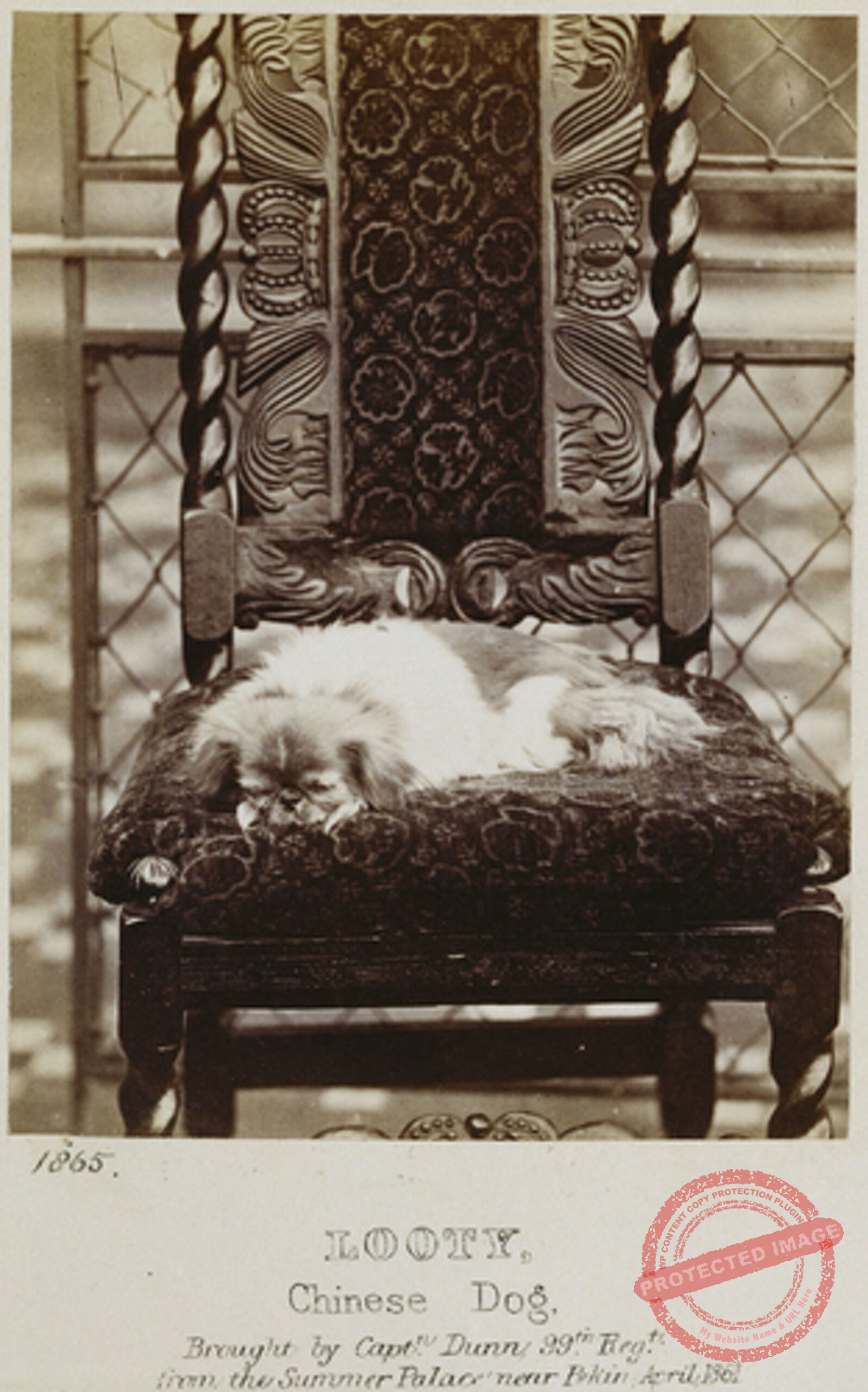
Looty the Pekingese, photographed in 1865 asleep on a chair by William Bambridge. Source PD/Wikipedia.
A similar work by Bambridge, featuring 28 mounted albumen prints and a printed index found its way as a gift from the poet Gerald Massey (1828-1907), who moved in artistic London circles, to the dog-loving heiress Celeste Winans Hutton (1855-1925) in the US. This unique copy subsequently surfaced for sale in 2018, at Christie’s New York, where it fetched a relatively modest $6,250, against its estimate of $7,000-$ 9,000. The album sold to an anonymous private buyer, and nothing has been documented about it since then. It is tempting to suggest that perhaps this copy may originally have belonged to Bambridge himself, before passing to Massey, but there is no evidence to support this theory.
One of the most notable and historically important examples of Bambridge’s work in this album was his photograph of Looty, the first example of the Pekingese breed seen outside China. Looty was reputedly seized in 1860 during the Opium Wars from the Summer Palace in Beijing, being brought back to Britain and presented to the Queen.
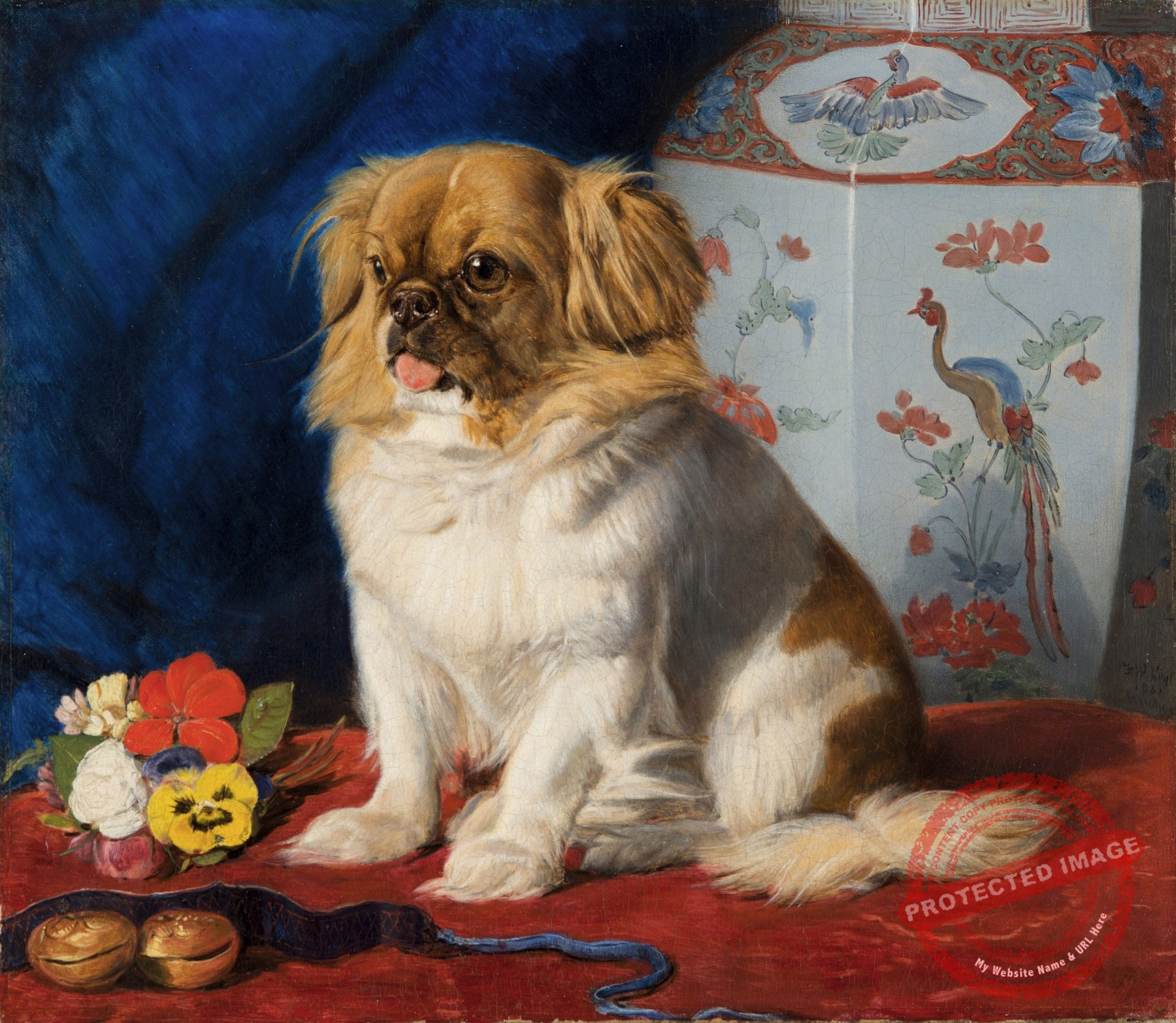
A contemporary painting of Looty set against an Oriental backdrop, from 1861, undertaken by Friedrich Wilhelm Keyl, who was Edwin Landseer’s only pupil. Source PD/Wikipedia.
Poms and some other pets
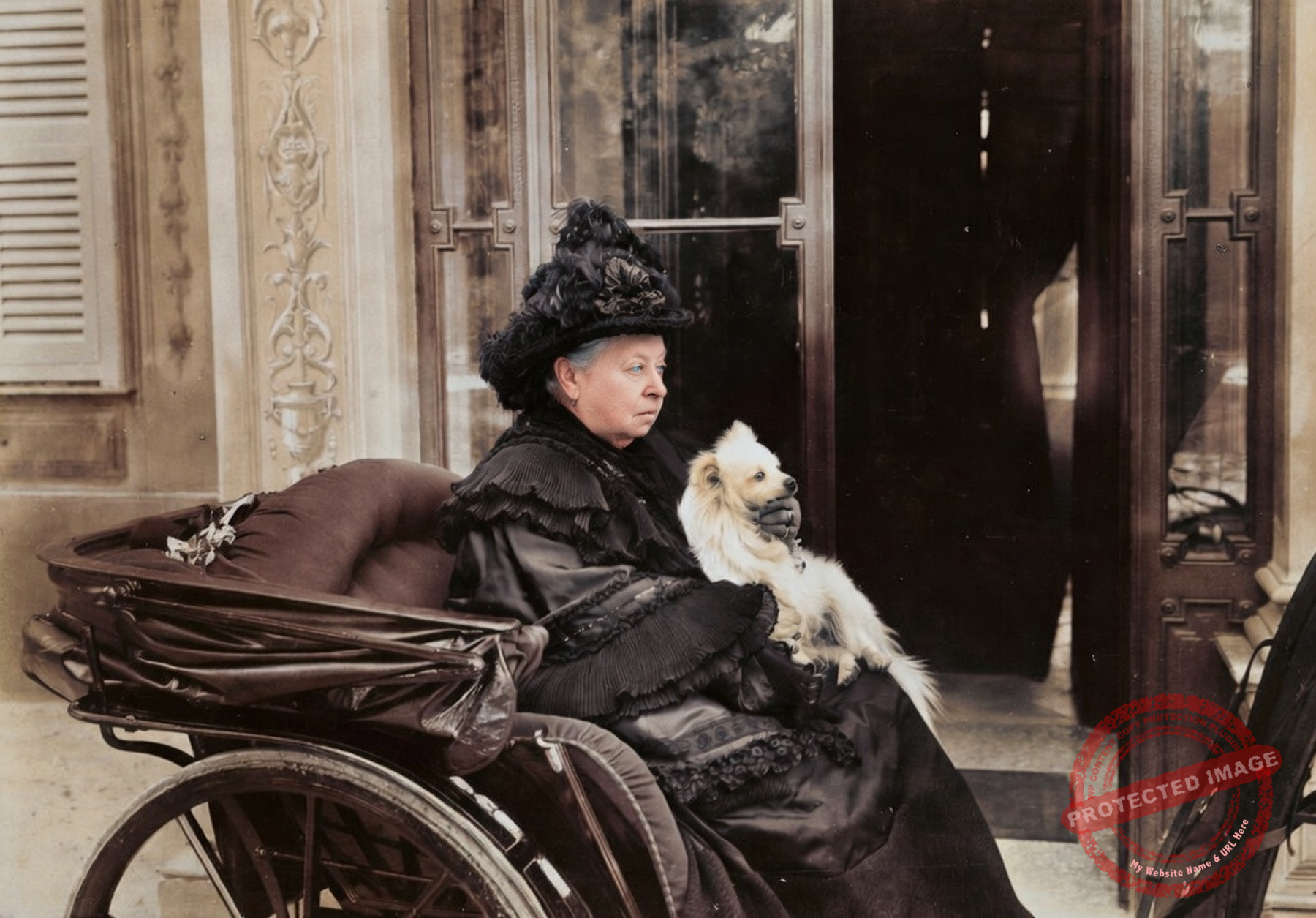
Pomeranians were a more traditional breed that held a special place in Queen Victoria’s affections. She acquired several in Italy, notably Florence, during the late 1880s, transforming this once-larger spitz breed into the compact toy variety we know today. She kept as many as 35 at the same time. Marco, a prize-winning auburn Pomeranian, was a kennel star; tiny Gina weighed just seven-and-a-half pounds. At the very end of her life, as the 81-year-old Queen lay dying on 22 January 1901 at Osborne House on the Isle of Wight, she asked: “May I have Turi?”—her favorite Pomeranian at that stage was then brought to her bedside and remained in the room after her passing.
Victoria’s affection revealed a softer, more human side rarely shown to her nine children, whom she sometimes found overwhelming. Dogs demanded nothing, offered unconditional loyalty, and never schemed. Her journals capitalize their names—“DEAR SWEET LITTLE DASH”—and record grief with raw honesty. She noted Noble’s 1887 death as “a grievous loss.” Her commitment to them helped to popularize dogs as companions across Victorian Britain, turning the nation into a land of dog lovers and pedigree canine enthusiasts.
A new departure
A striking public expression of Queen Victoria’s love for dogs heralded the dawn of the modern dog-show era. Charles Cruft, a dog-biscuit salesman, staged the first general dog show bearing his name at London’s Royal Agricultural Hall in Islington, on 7–8 February 1891. Among the 2,500 entries were six of Queen Victoria’s Pomeranians—Nino, Fluffy, Gena, and others—plus collies including Darnley II.
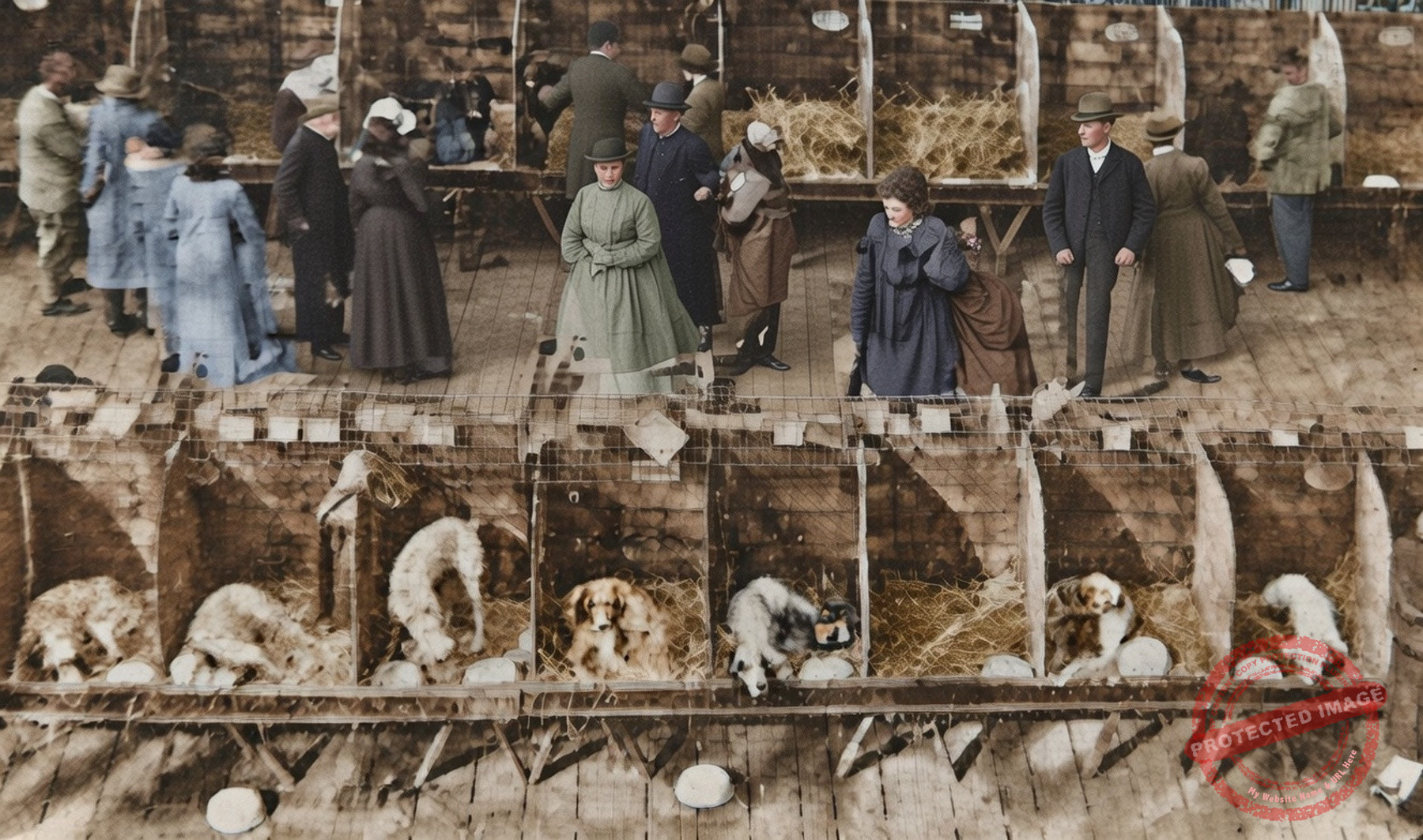
A scene from the famous 1891 Cruft’s show, where Queen Victoria’s dogs won various prizes. Source PD/Wikipedia
The Queen’s dogs triumphed: Fluffy won the Pomeranian class, repeating the feat in 1892 and 1893; Gena took equal first in 1891; Darnley II claimed honors among the collies. Newspaper reports celebrated the royal success, noting her personal interest in this area. Her entries also lent prestige to this fledgling event, ultimately helping to establish Crufts as the world’s premier dog show. Queen Victoria’s canine legacy continued in her own family too, with the royal love of dogs being apparent in her successors during the remainder of the 20th century and continues right through to the present day.