Goldfish – A Written and Visual Overview from the 1700s and Early 1800s
Some Words on Separated Color Plates
Almost four decades ago, I purchased, at a book and picture/plate dealer in Maine, two hand-colored plates of catfishes, which were accompanied by a single printed sheet of corresponding text. The plates were dated respectively November 1, 1799, and December 1, 1799. I was impressed with these in that I knew the catfishes but was quite taken aback by dates. Having no internet for research, I made photocopies of the material and mailed them off (the old-fashioned way) to Wheldon & Wesley, a well-known antiquarian book dealer in England. Eventually, also by snail mail, a reply was received providing information on the origin of the pieces. Also of special interest was a note by the replier that the book from which the plates and text originated was almost impossible to find in a complete state. This was because of the trend, over the centuries, to scavenge the title for the plates! Ever since receiving this information, I, at a dealer (store or internet), look very differently at such materials, which (for all areas of interest) are widely available.
The destruction of books and magazines, for such plates, was (and is) not a good thing and has long been a heated topic of discussions and writings.
Although my primary interests lie with the 19th Century history of aquariums, I also am very interested in early goldfish history, which greatly pre-dates this. Consequently, I have collected, over the years, several items, such as plates and text, dealing with the latter topic. One way of looking at this is in that these are available (and the original damage already done) why not obtain them and put them to work from a historical perspective (as opposed to just framing and hanging them on a wall). This is what I am attempting to do within this article. There is no denying that an interested party can now do similar pursuits on the internet with the utilization of many now available (and growing) sources. This, hopefully to some success, is what I have done, and now wish to provide an initial review to the MOAPH reader. In having these plates, I can present them as a gift (of sorts) free and clear to the reader without any “to whom does it belong” situations. It is obvious that many historically based articles utilize internet-based images and information who belong to (or are hosted) by someone without bothering to reference from whence they originated. So, herein I offer up some of my collection free and clear for your possible interest. And, of course, I must add that these are now a part of the great history project sponsored by MOAPH, and any reuse of them should be with the advanced permission of the Museum. I am sure that the Director, Gary, will be happy to work with people on this. Do I think that it will always be the case for people to make such requests? Of course not. The internet is the internet, and the “Wild West Attitude” will persist in certain quarters. But you can fight this and help to provide good, and referenced, use of materials whose availability is from the initially bad action of source destruction, be it yesterday or a century ago. Thanks! My apology for possibly editorializing a bit too long on this topic.
A Quick Note on “Short s” and “Long s”
If you haven’t read any English literature from the 1700s, you may be surprised looking at “The Royal Magazine” section below. Therein, as with most printed literature of the time, is seen the use of two different versions of the letter s. There is the “short s” that is still in use today. There is also the “long s” which appears in print quite similar to the letter f. It is kind of quirky, but presents no real, long-lasting problem in reading…in fact, it is kind of fun. For some additional information on this, see the Wikipedia page on “Long s”: https://en.wikipedia.org/ Last viewed 3/29/23.
What follows are the goldfish plates, and any additional information deemed necessary, presented in a semi-chronological order. You will note an often-used illustration – the blue-backed, gold lower part fish – and discussion of this situation may be found under the heading of the Linnaeus and Silby plate. Additionally, I will note that typical of the times, the plates, unless noted otherwise noted, are hand-colored. Also, throughout, I use the term goldfish instead of the then commonly used gold fish (or sometimes gold-fish).
FROM The Universal Magazine July 1754

Figure 1: Plate size 7 ¾ by 5 inches. The lower fish, as will be shown, is a commonly used example of goldfish in early works.
What follows is a transcription of the text that accompanied the illustration. In that I am primarily using only items in my collection I am presenting the information in this format. Consequently, the situation of the Long and Short “s” discussed above is not evident. There is probably a way to incorporate these into the computer brain but a deadline negates this. I do believe that history should be presented as written, but for now I must forego this. The spellings, word forms and paragraph structure is not modified from the original. But, do see the next item for the original mode of presentation.
A compendious System of Natural History (Page 203, Vol. XIV.)
continued
With a Copper-plate of two of the beautiful Gold Fish, from China, coloured from Nature.
Note: The continuation mentioned is only of the series title (line one). What is below is the complete piece present on pages 248-249 – plus one plate.
“These fish are of various colours and variegated in a very different manner; we have chosen the two, represented on the plate in their natural bigness, as a specimen of those beautiful fish. Some are larger, and others smaller; and some have no fins on their back.
These fishes are shaped very much like the carp, of which genus they are a species. Their nostrils rise out of their heads like the ends of little pipes. They have six fins on their under side; on the upper side some are without, and others have them of various forms, as represented in the figures. Some of them have single tails, and others have them double, and joined together on the upper edge as shewn in the upper figure. The lower figure is blue on the back and back fin, the other part of gold colour. The upper figure hath its upper side, double tail, and lower fins of a gold colour, and some black spots on the fins and tail.
These fish were not, generally, known in England till the year 1728, when a large number of them were brought over in the Houghton Indiaman; since which time, they have been propagated in ponds in the neighbourhood of London. They may be esteemed a domestic fish; they vary infinitely in their colours and marks, as all domestic animals do. They have been propagated, and greatly increased, in the island of St. Helena, from whence they are now brought by all our India ships that touch there. In China, they keep them in small ponds and basons for the amusement of the Ladies and other curious persons. Those propagated with us are, generally, of a deader colour than what are brought from China or St. Helena.”
Note: The original presentation of this piece can be viewed on the Internet Archive at https://archive.org/details/s2id13659100/page/n245/mode/2up (Last viewed 3/29/23).
FROM The Royal Magazine November 1765

Figure 2: Plate size 8 by 5 inches.
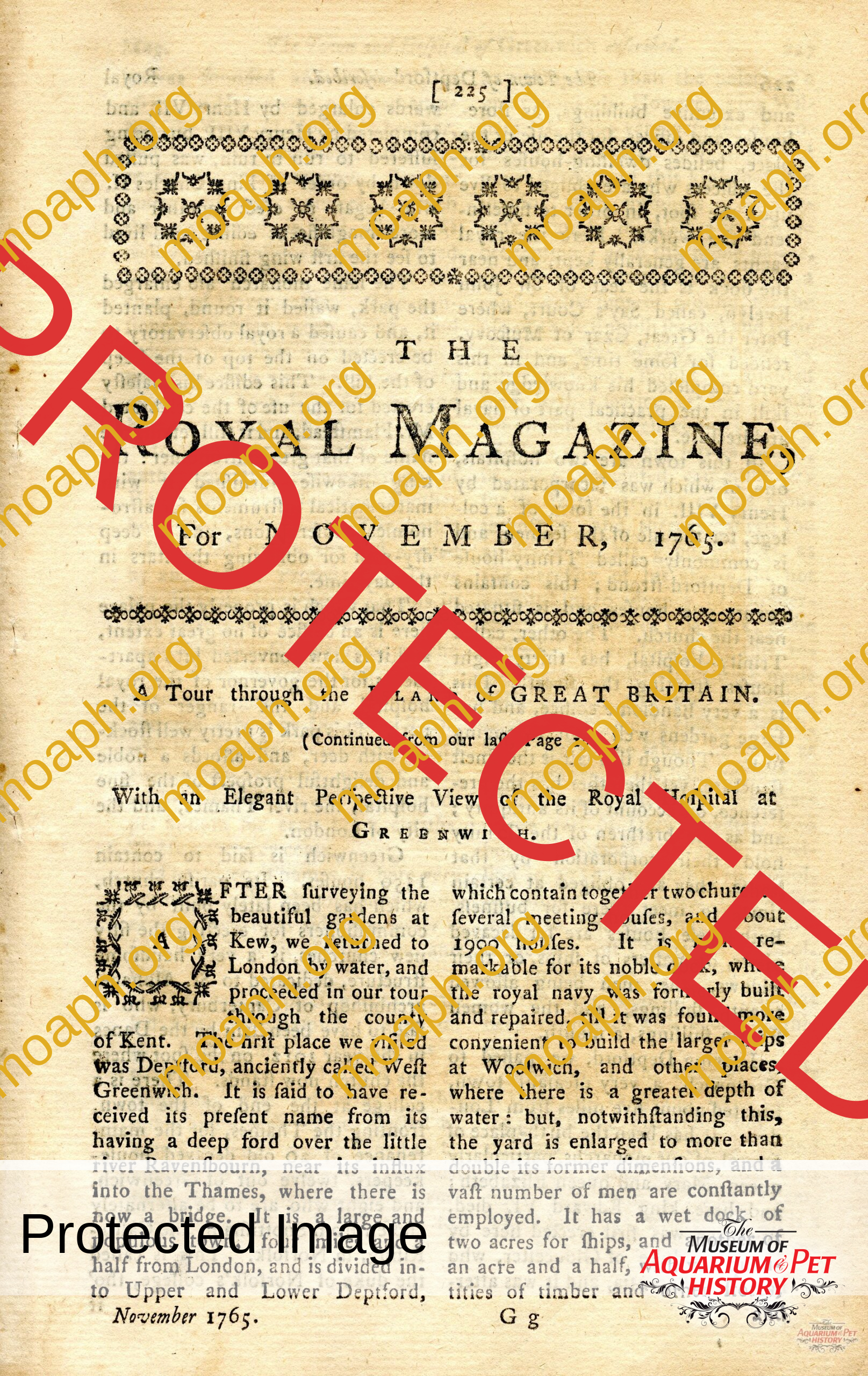
Figure 3: The first page of the issue of The Royal Magazine. This is the oldest “complete” piece in the author’s collection.
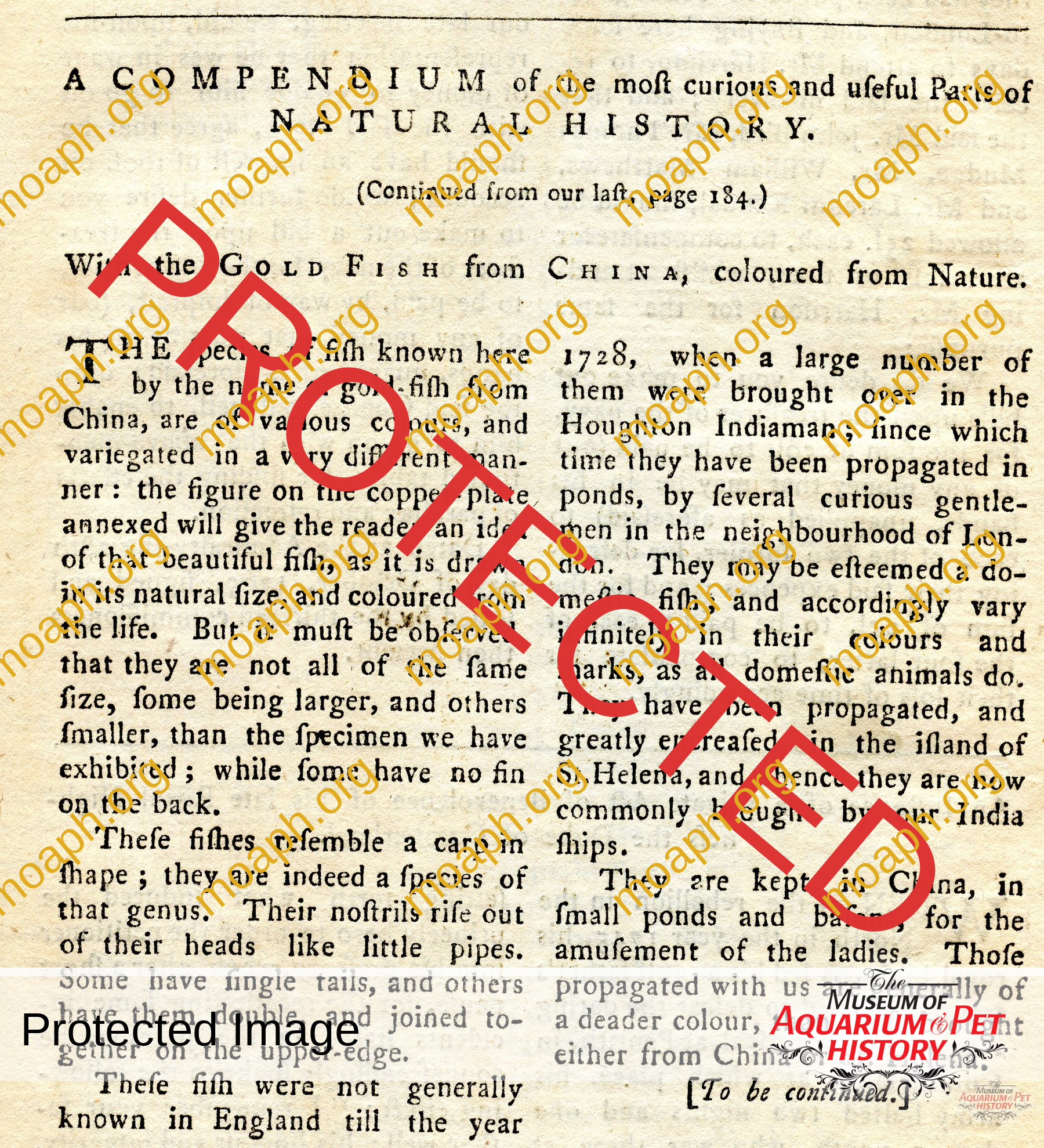
Figure 4: The article encompassing both the Long and Short s variants. As with the above piece the continuation refers only to the series. This article is complete.
Note: This is the only complete publication with a color plate in my collection. It was great that it was held together over the centuries. But not quite so. Although it is the complete November issue it shows signs that it was probably removed from a hard bound volume (there were six issues to a volume). But, I guess it is best to be happy with small positives.
FROM THE BOOK “A Genuine and Universal System of Natural History”
By Carl Linnaeus and Ebenezer Silby, 1797? – 1798?

Figure 5: This plate is dated July 1, 1797. Plate size 8 ½ by 5 ½ inches. Fish numbers one (from the top) and three may also be seen in variants above.
Note: I have not seen a full copy of this book. Only my plate and a few other pictures of this plate have been available to me so far. At least one of these was lacking the coloring of the fish. This was not uncommon in some early books as less expensive volumes were often available in which the plates were uncolored.
This book was noted to have been “…illustrated after…” several other parties. One of these was George Edwards. In 1751 he published Part Four of a book series which was headed with “A Natural History of Birds…” which continued with 16 lines (!) describing other life forms that were covered. A lot of what Edwards wrote is parroted in much subsequent literature including that seen above. Also, his illustration of four goldfish was used (modified) in this source. For whatever reason the fish were reversed (right if they faced left, and vice versa). The top to bottom placement of the fish is the same. Of importance is that Edwards described the color patterning of the four goldfish that he had drawn. These variants were based on fish under the care of the Duke of Richmond who maintained them in a “…large earthen vessel…”. Below I extract from the Edwards book his color descriptions of the four fish. As above the words, capitalization, punctuation, and sentence structure, as in The Universal Magazine piece, are the same. Missing only are the Long s letters.
From Edwards 1751: “The upper Figure is Blue on the Back, and Back Fin; the Rest of the Fish is of a Gold-Colour: These Colours break into each other on its Sides; the Tail is dark Brown. The second Fish is all over of a Gold-Colour, except a black Spot on the head. The third Fish hath its upper Side, double Tail, and lower Fins of a Gold-Colour; the Belly of a Silver; which two Colours mix confusedly on its Sides. It has some black Spots on its Fins and Tail. The Lowermost, or fourth Fish, hath its upper Side Dusky, and its Under of a Silver-Colour, which soften into each other on its Sides; its Fins and Tail are Dusky.”
The Edwards piece contains additional information that deserves consideration by anyone with an interest in the early history of goldfish. The publication is available at the Biodiversity Heritage Library at pt.4 (1751) – A natural history of birds – Biodiversity Heritage Library (biodiversitylibrary.org) (Last viewed 3/29/23).
Bilderbuch Fur Kinder – 1795
By F. J. Bertuch

Figure 6: Plate size 9 ½ by 7 ¾ inches. The lone “real goldfish” is the one at the bottom.
This picture and text is from an often reprinted German book, which at some point was also available in French. One of the editions was a “bootleg” and aimed at children. From what I have read Bertuch was not amused! The 1795 date used above is extracted from a title page photocopy that came with the print and text sheet.
This large plate is quite handsome, and regardless of what the heading on the text page says, only one of the fish is a goldfish. It seems that color was the guiding word here. Strangely the numbers on the fishes are jumbled. From top to bottom, the fishes are: Tinca tinca, Kurtis indicus, Leuciscus idus and finally, the goldfish Carassius auratus. The scientific names that are used here follow Eschmeyer’s Catalog of Fishes, which is electronically based at the San Francisco California Academy of Sciences. https://researcharchive.calacademy.org/research/ichthyology/catalog/fishcatmain.asp (Last viewed 3/26/23)
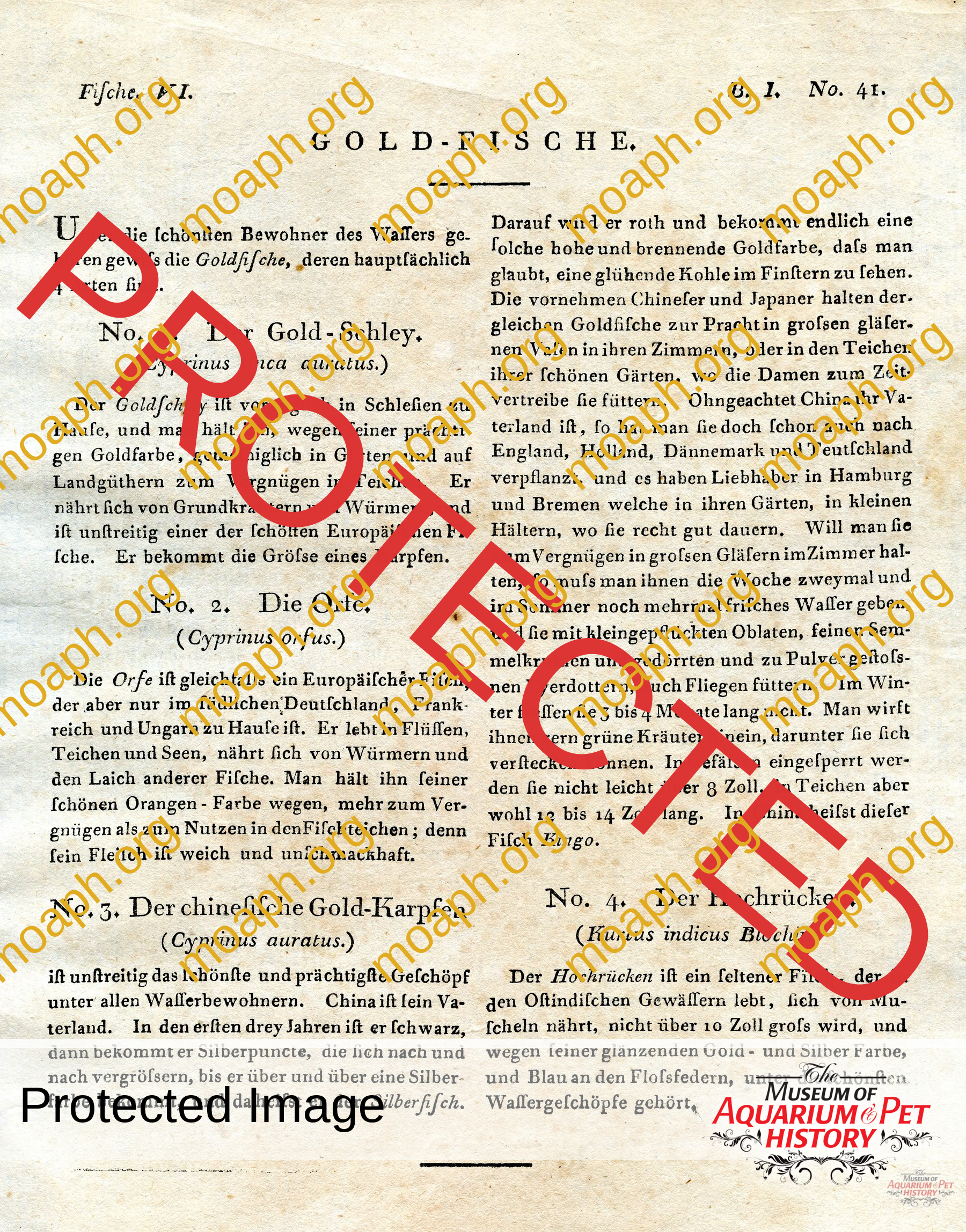
Figure 7: Page size 9 ½ by 7 ¾ inches. The true goldfish gets the lion’s share of the German text.
FROM “A Genuine and Universal System of Natural History”
By Carl Linnaeus and Ebenezer Silby, Date uncertain.
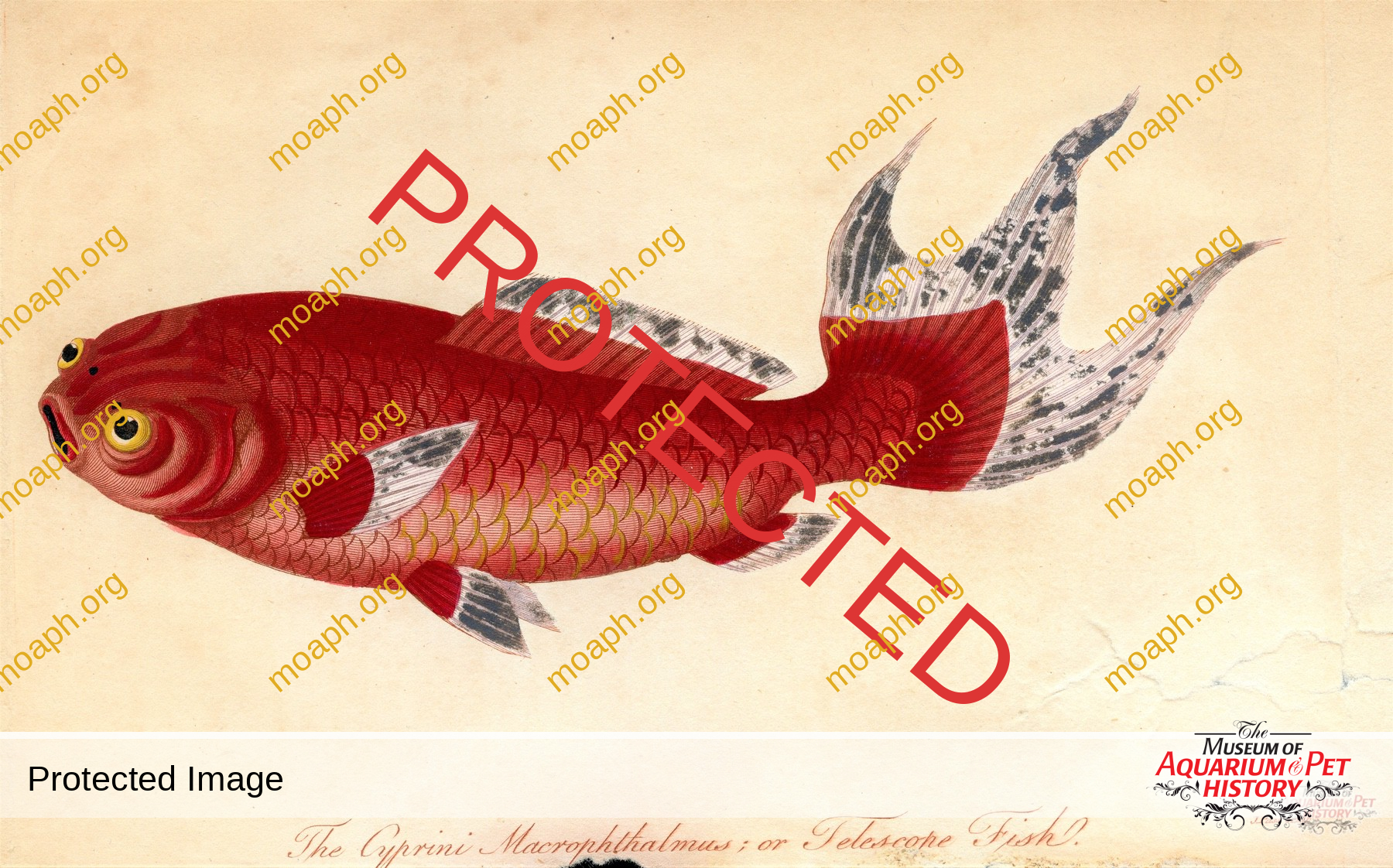
Figure 8: Plate size 8 ½ by 5 ½ inches. This is the left looking Pass plate of the Telescope Fish (1806?).
This rather beautiful plate of the so-called telescope fish is of uncertain origin within the definition of the above book. As noted above, illustrations were based on several sources, and the one above is obviously based on one in Bloch’s “Ichtylogie, ou Histoire naturelle générale et particulière des poisons, Volume 12”. A plate of this fish from the Bloch book (facing the right instead of the left) may be seen in the New York Public Library Digital Collections at Cyprinus macrophthalmus, The Telescope. – NYPL Digital Collections (Last viewed 3/28/23.)
As noted above, I have not seen a copy of the Linnaeus and Silby book. What information I have seen indicates that an engraver named J. Pass (whose small name is on the lower right section of my plate) did plates for an 1806 edition of the Bloch book, which was published in London. Apparently, there are black-and-white versions of the print by Pass in existence. Interestingly, in the original Bloch plate (see above, NYPL), the posterior part of the caudal fin is all white. In images that I have seen possessing the Pass designation on them, the caudal fin may appear clear, darkly speckled (note above Figure Eight), or totally black. I will admit that I am in a confused state in regards to this, and obviously, further research is needed to figure this situation out.
I think that I will take a break, write another article on something else of interest and then look back into this topic. Or, who knows? It might be hard to avoid going after it on some otherwise boring day. And also, yet another interesting goldfish plate might just show up. The adventure of history continues!