Hotel Cats
Something of a tradition of having a resident cat has developed in various hotels around the world. Although initially, these may have helped with rodent control, the presence of a cat today essentially brings a homely feel to the hotel, attracting guests and appealing to staff as well. In fact, the Algonquin Hotel, located at 59 West 44th Street in Manhattan, is now internationally famous for its series of feline residents.
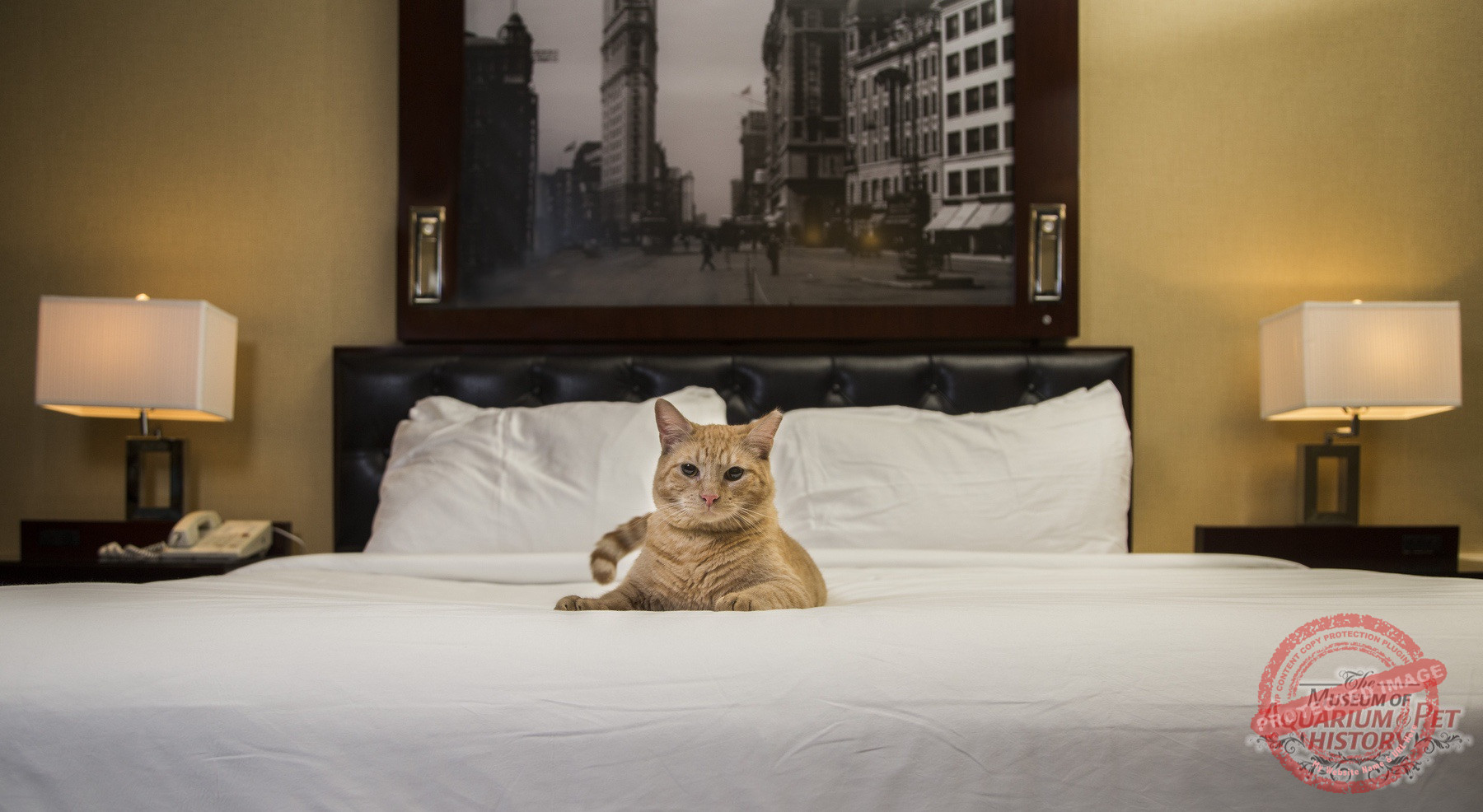
There has been a resident cat at New York’s famous Algonquin Hotel for almost a century. Here is the latest occupant of this role – a tabby called Hamlet VIII, whose name is closely linked with the hotel’s history. Photo courtesy of Alice De Almeida/Algonquin Hotel.
The first official hotel cat there was a tortoiseshell called Rusty, who moved into the hotel during the 1920s as a stray, and was soon enchanting the guests. The special cat door constructed for Rusty can still be seen today at the hotel, and has been used by her successors, through to the present day. The Algonquin’s cat traditionally sleeps on a small chaise longue just inside the hotel’s entrance.
Rusty’s replacement was a blue and white tabby, who simply wandered in off the streets, and was allowed to stay by the general manager and owner Frank Case. This cat became known as Hamlet, a theatrical name suggested by the actor John Barrymore, who was a frequent visitor to the hotel.
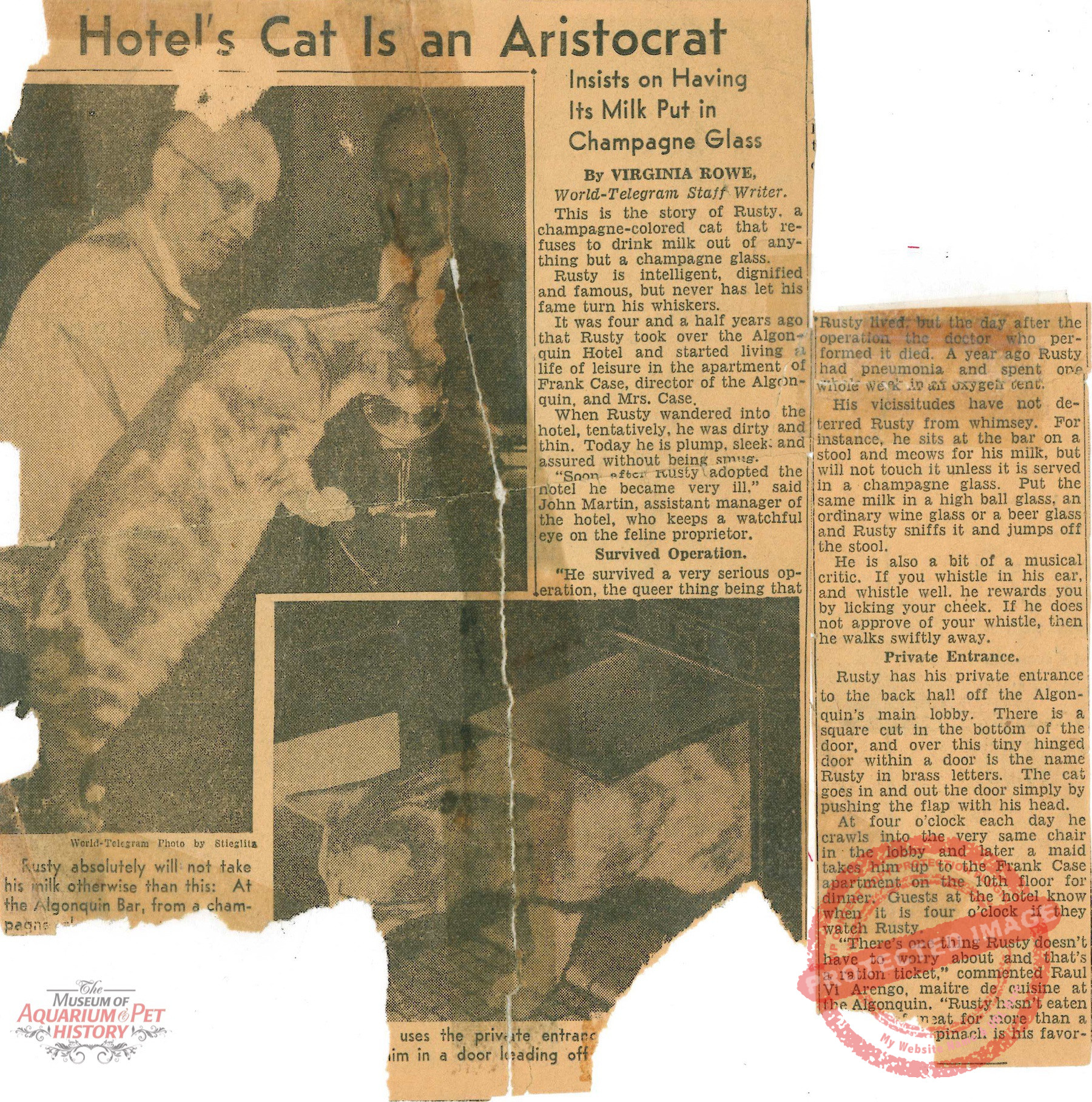
Probably the only surviving photograph of Rusty – the first feline resident of the Algonquin Hotel, from an old newspaper clipping. It was said that he would on-ly drink milk from a champagne flute! Photo courtesy Alice De Almeida/Algonquin Hotel/World-Telegram/Stieglita.
It was during Hamlet’s time at the Algonquin that the writer and socialite Dorothy Parker was asked how to kill a cat. She replied “Try curiosity”, which has since become transposed into “Curiosity killed the cat”. This reflects the way in which cats will investigate new things in their surroundings, and the fact that this behaviour can sometimes lead them into danger.
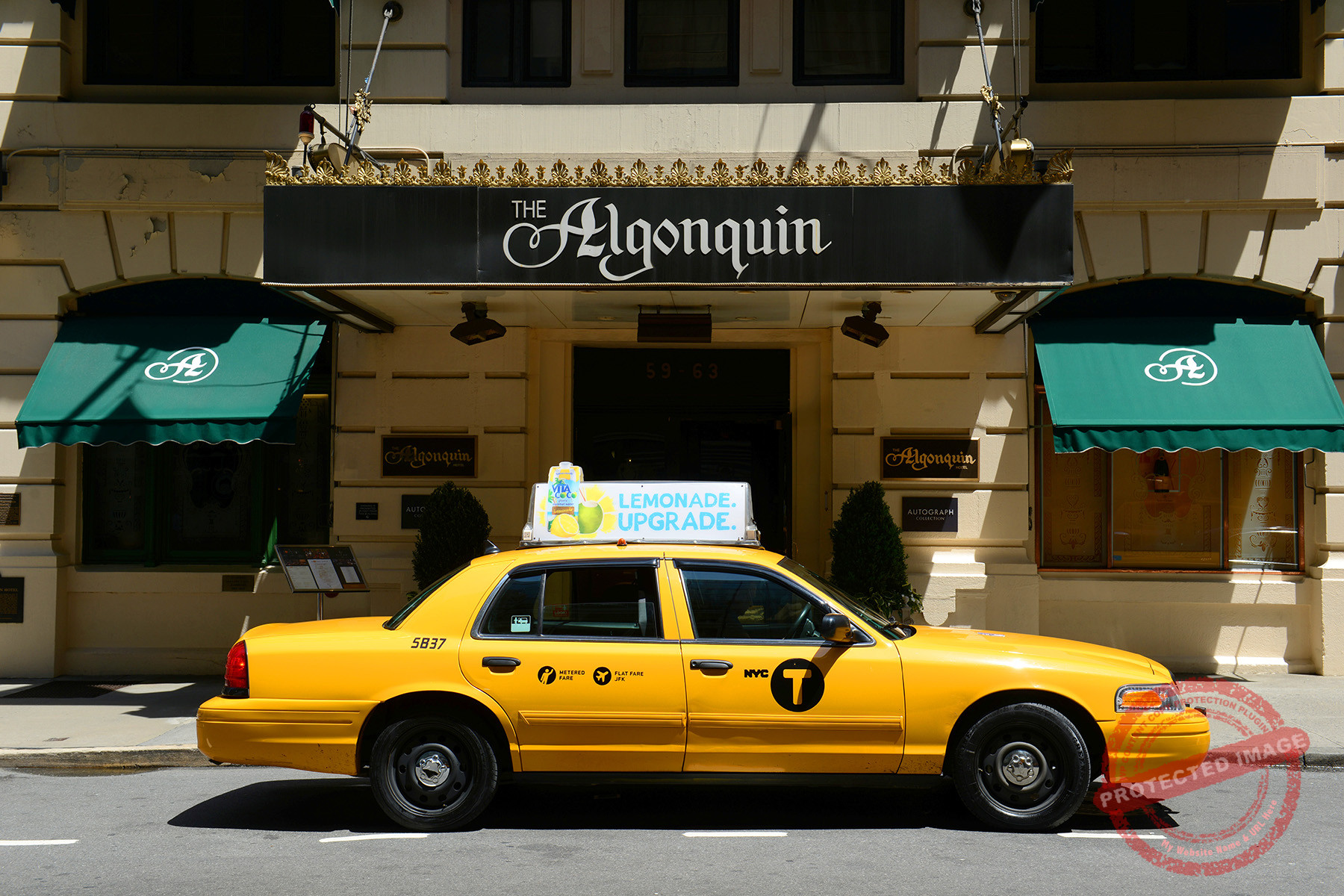
Entrance to the Algonquin Hotel in New York City. Photo courtesy jiawangkun/www.shutterstock.com
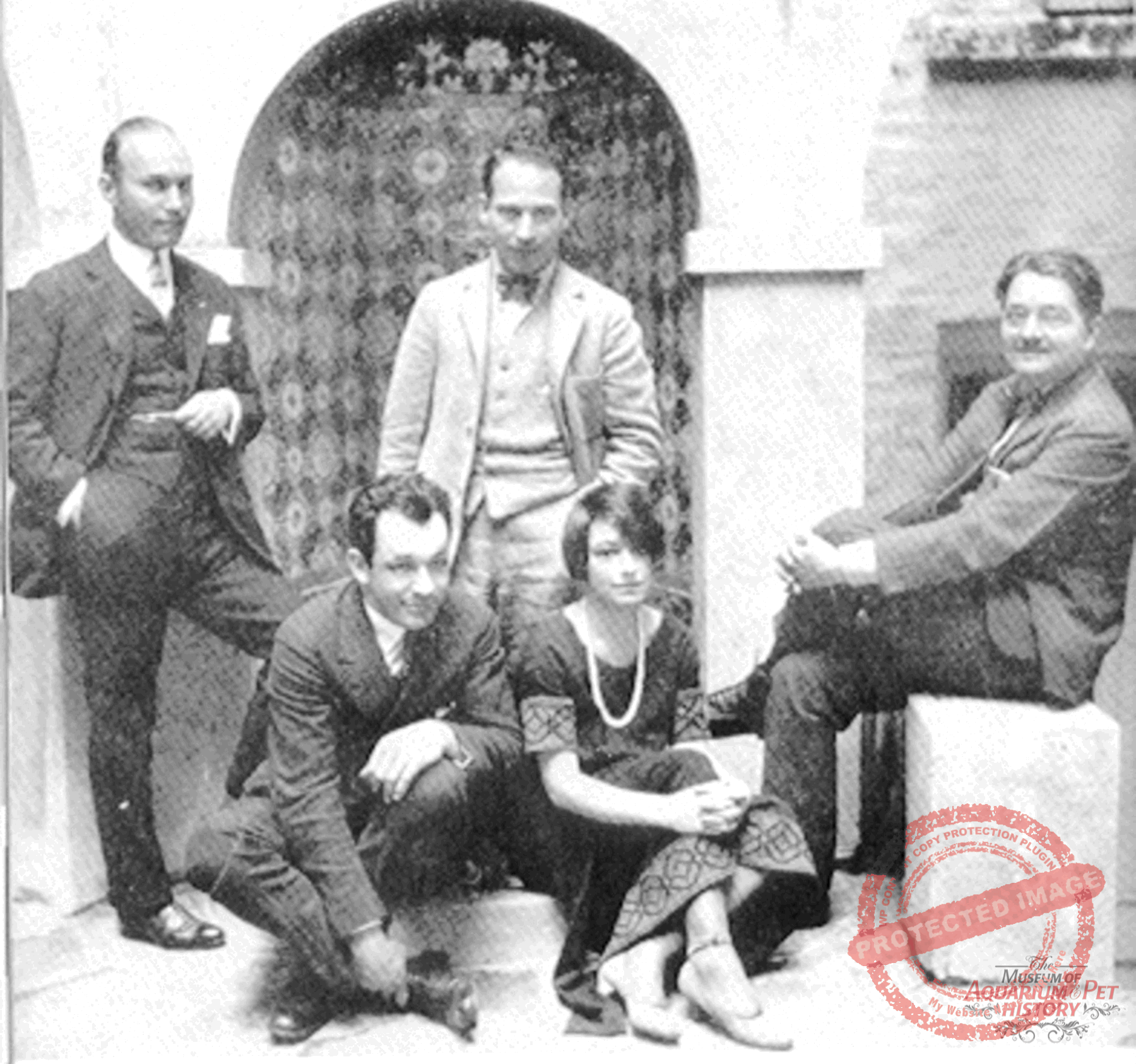
Did you know? Dorothy Parker was a member of a group of literary and theatrical figures who met regularly at the Algonquin Hotel in the 1920s, and was inspired to come up what is now a very famous feline saying. Source PD.
A female tradition
Whereas male cats at the hotel have traditionally been called Hamlet, females have been named Matilda. The post also brought with it a special collar that was handed down from one cat to another. Unfortunately, during the 1990s, in a sign that times change, the Matilda in residence at that stage suffered the indignity of being mugged for this distinctive collar, although she was otherwise thankfully unaffected by the experience.
The majority of cats at the Algonquin have not had a pedigree past, but Matilda II, a recent holder of the post, was an illustrious pure-bred ragdoll, one of the most docile of all breeds, who had fallen on hard times before finding her way to the hotel. She received the Cat of the Year award in 2006 and established a considerable worldwide fan base. Reflecting changing times, she received emails from all around the world, and always closed her replies with the immortal words “Have a purrfect day”.
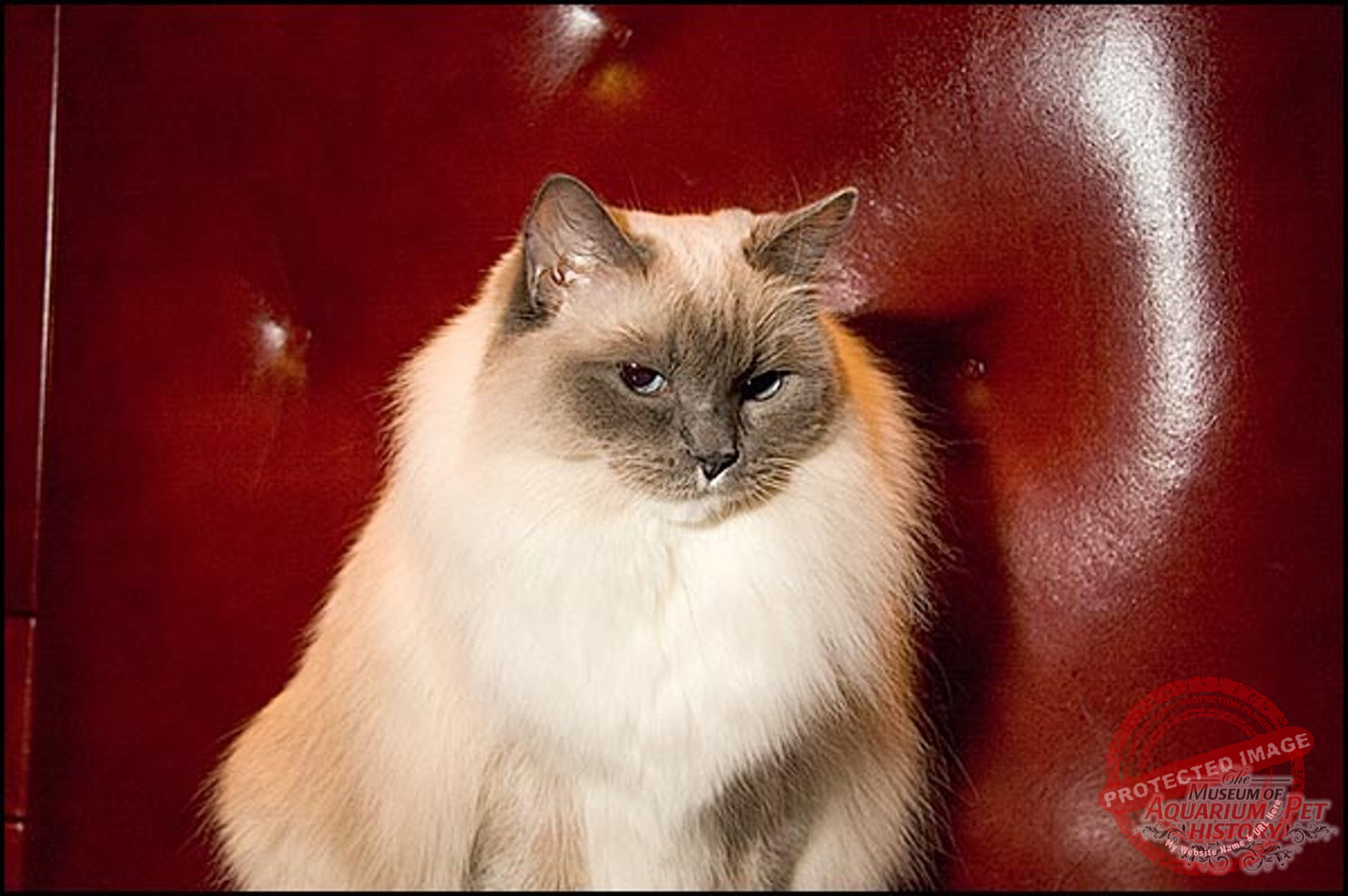
Ragdolls called Matilda have been resident at the Algonquin over recent years. This is Matilda II. Photo courtesy Alice De Almeida/Algonquin Hotel.
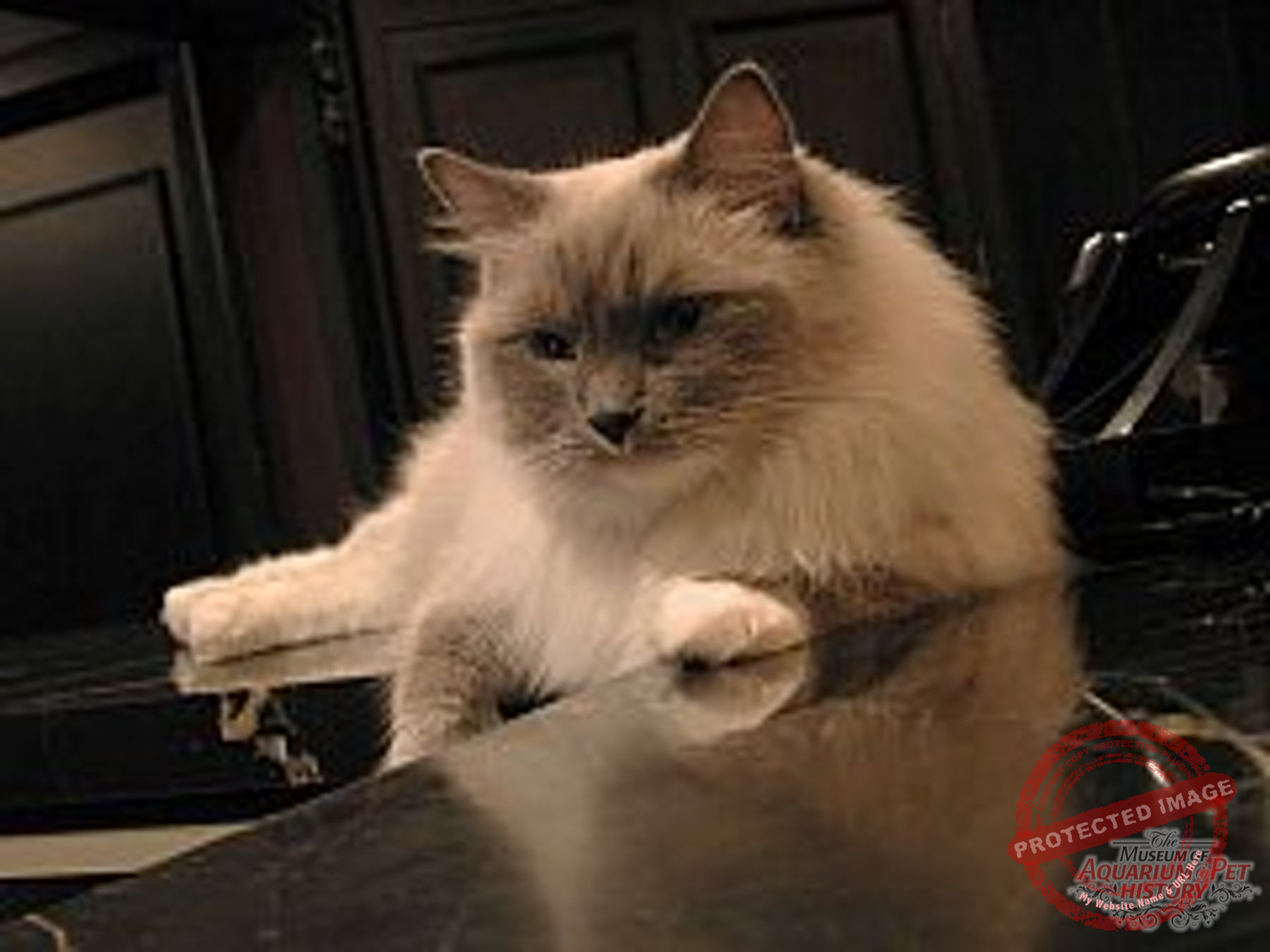
Ragdoll cat Matilda II resting. Photo courtesy Alice De Almeida/Algonquin Hotel.
In due course, she was succeeded in 2010 by another ragdoll, who was a rescue cat obtained through the North Shore Animal League. She became known as Matilda III, and was the eleventh holder of the post, remaining in residence up until July 2017. Matilda III then lived out a brief retirement in Duluth, Minnesota, before passing away in October that year.
The current holder of the post is a striking red tabby, again called Hamlet, in homage to his predecessors. It had been almost 40 years since a cat of this name had graced the hotel. He came from nearby Long Island, and reports to Alice De Almeida, who is recognized as the Algoquin’s Chief Cat Officer.
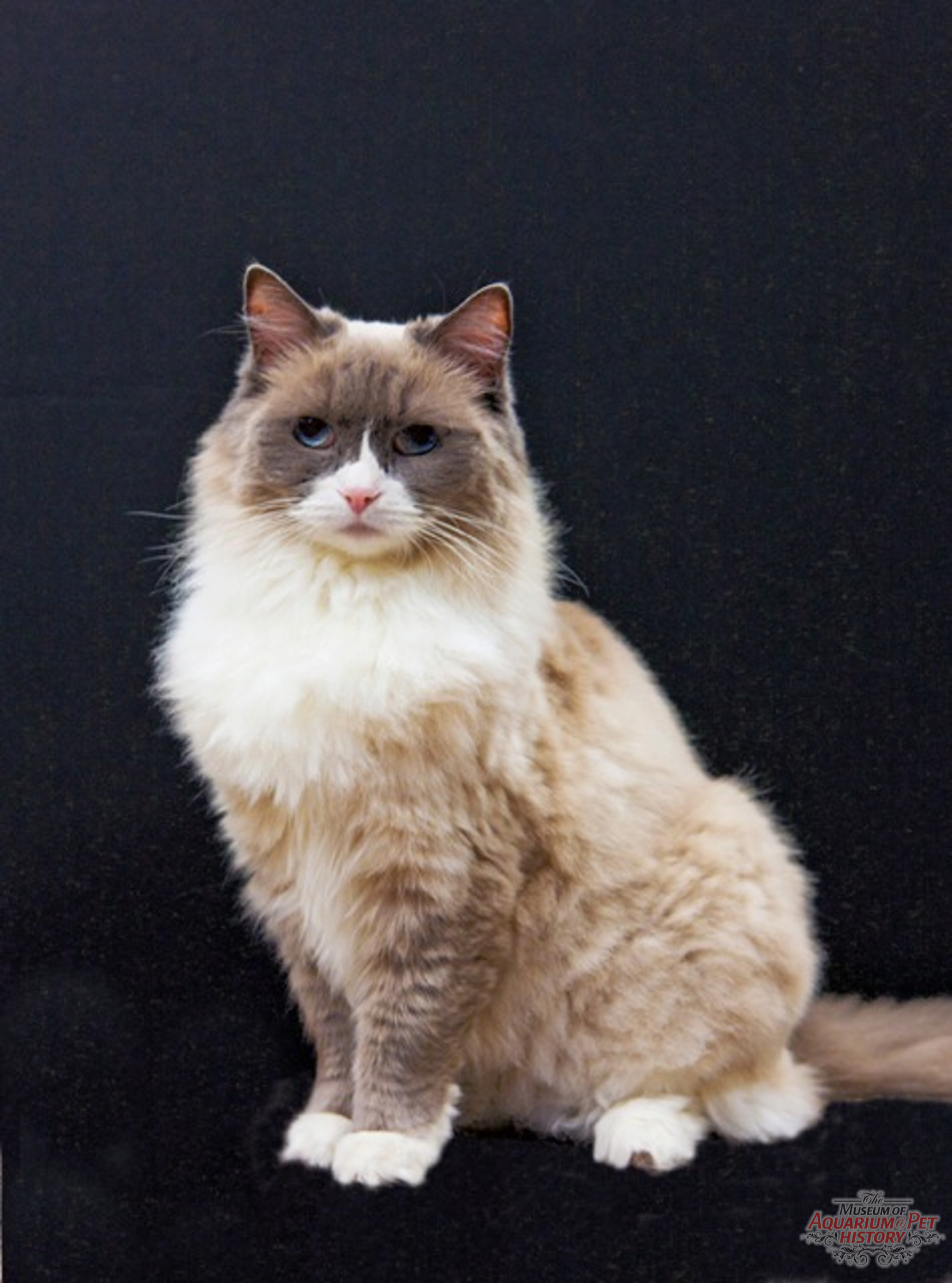
Unlike her predecessor, Matilda III had a white blaze on her face. Photo courtesy Alice De Almeida/Algonquin Hotel.
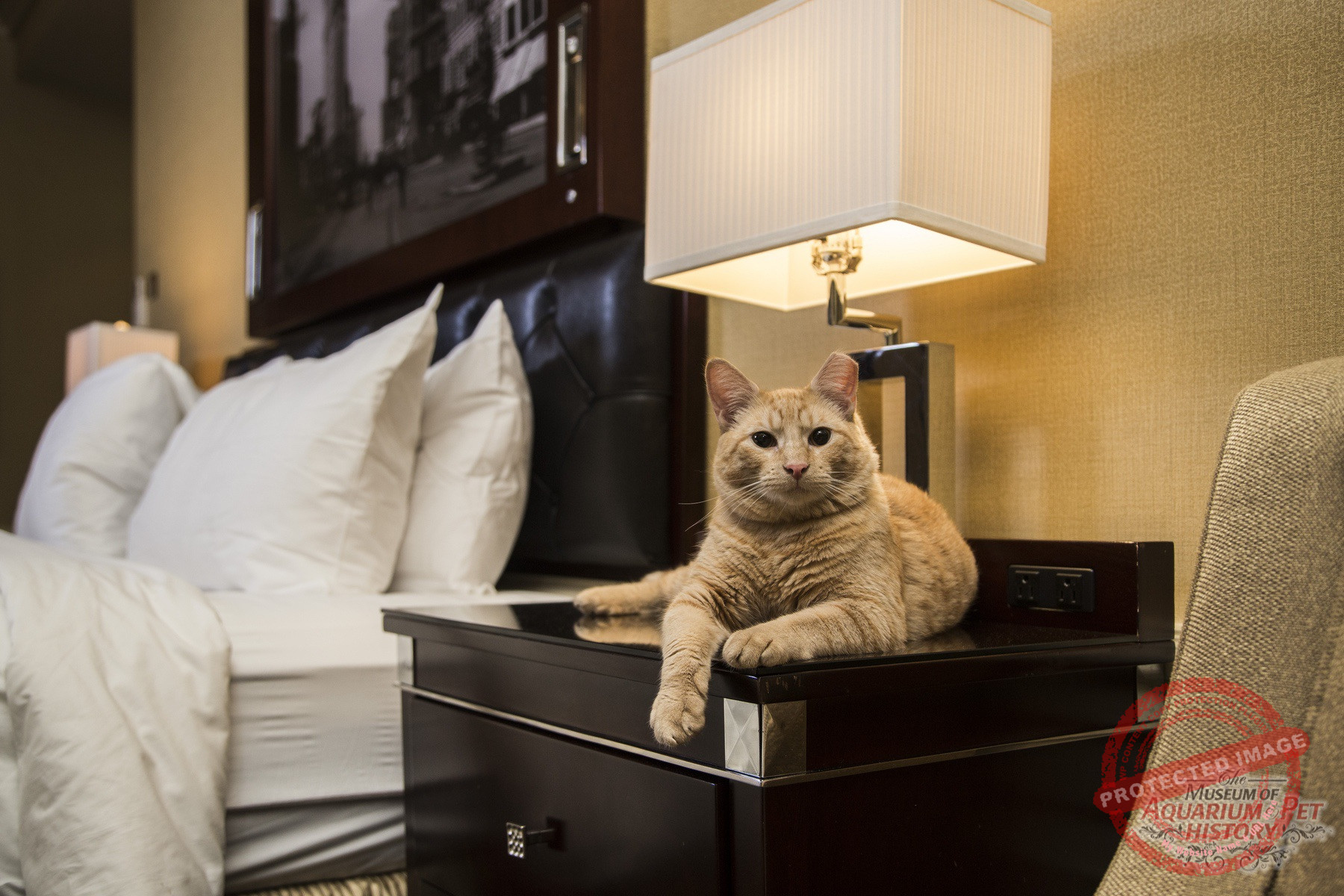
Hamlet VIII is instantly recognisable by the partial loss of one of his ears, reflecting his difficult past, living on the streets. Photo courtesy Alice De Almeida/Algonquin Hotel.
Living in the Ritz
In London too, hotel cats are not unknown. One of the most notorious was Tiger, who lived at the Ritz Hotel in London’s Piccadilly district. He was ostensibly resident to catch mice, being nicknamed “The Terror of the Ritz”, but in reality, he spent much of his time lounging around, relying on treats from guests, as well as being spoilt by kitchen staff. In fact, he became so obese that he had to be sent away on an annual holiday, in order to slim down.
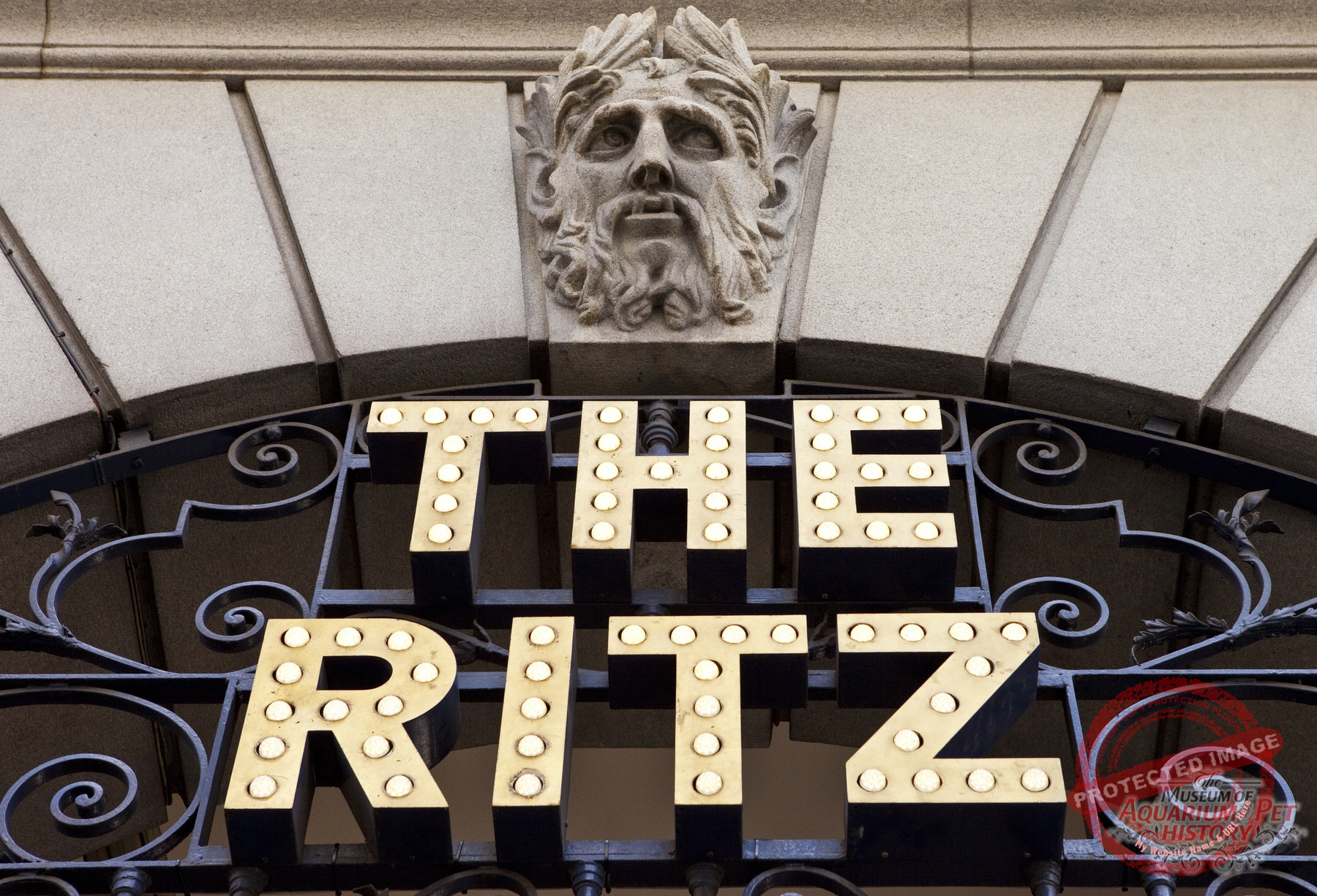
The Ritz Hotel, which was patrolled by a cat called Tiger. Photo courtesy chrisdorney/www.shutterstock.com
The case of Kaspar
Kaspar may not be a real hotel cat, but he is considered to be a very lucky one. He is still to be seen at the Savoy Hotel in London, where he has been on display since the 1920s. He is black in colour, and was carved by the designer Basil Ionides. Most of the time, Kaspar resides in a special display case, located opposite the gift shop, but occasionally, however, he attends dinner parties at the hotel.
This is because back in 1898, a South African businessman called Woolf Joel had booked a dinner for 14 people, although one of the guests was unable to attend at the last minute. Woolf laughed at the superstition that for a party of 13, the first person to rise after the meal would meet an inauspicious end, and left the party before the other guests.
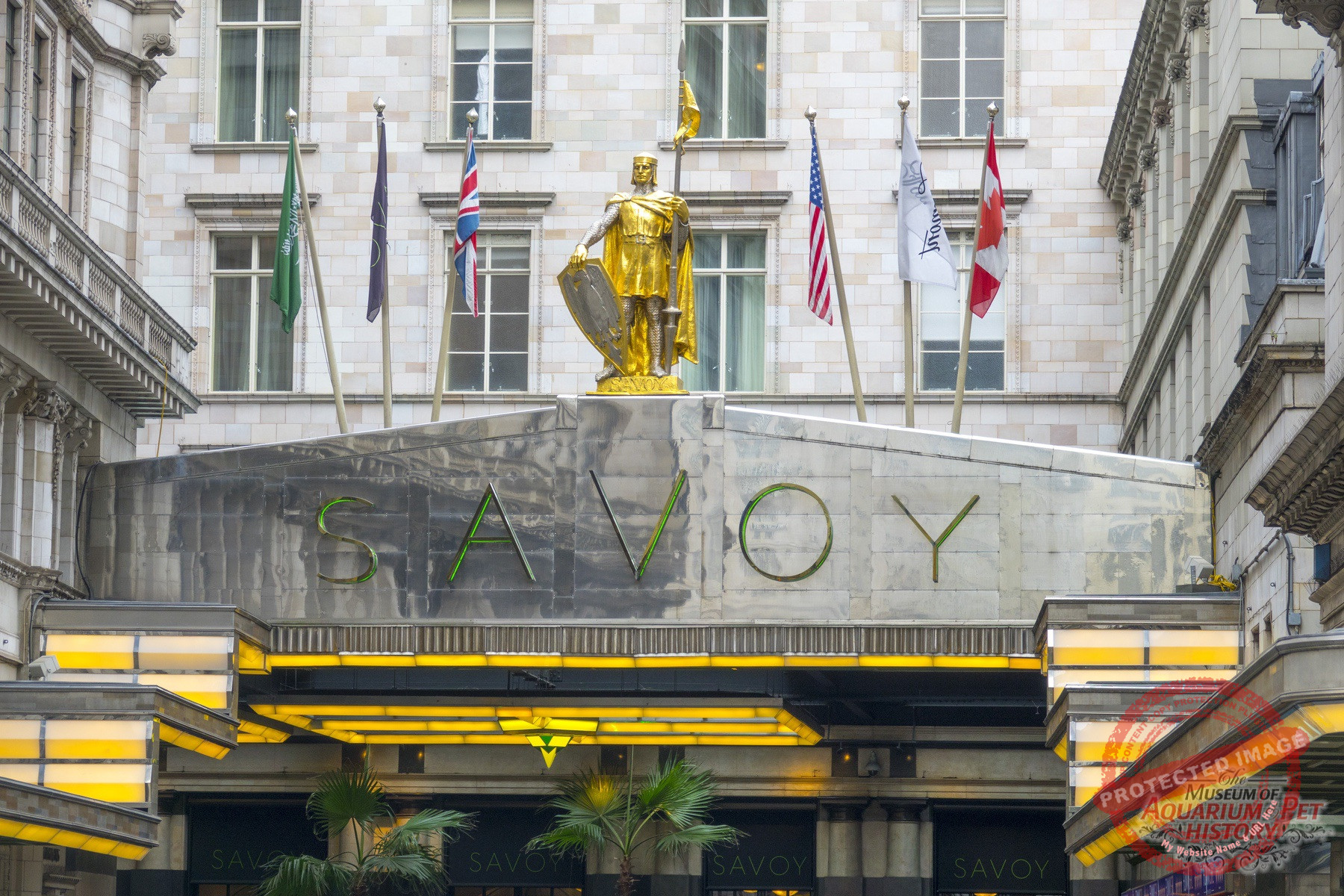
London’s Savoy hotel has a bizarre feline tradition. Photo courtesy 4kclips/www.shutterstock.com
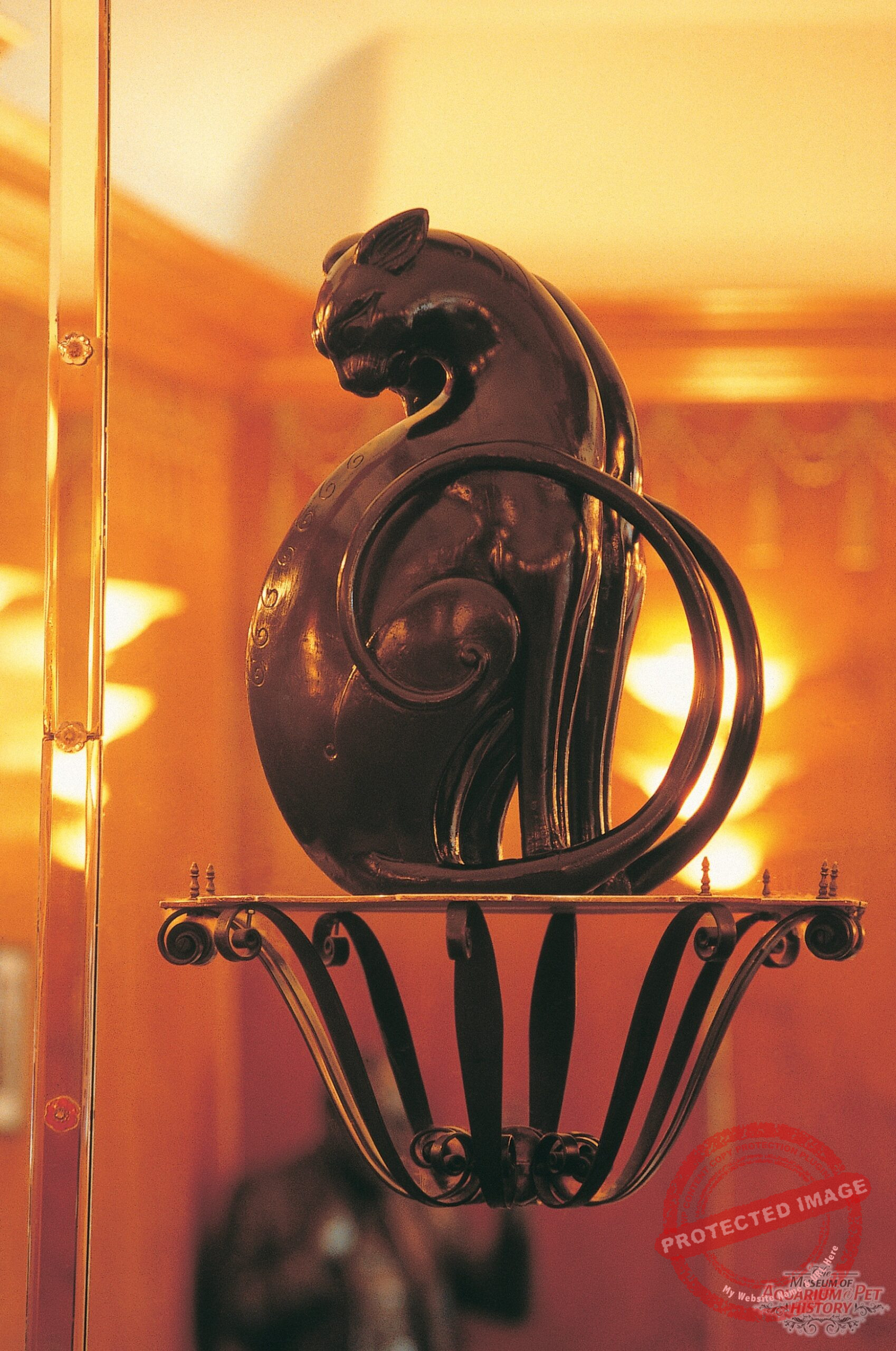
Kaspar in his case. Photo courtesy Magellan PR/the Savoy Hotel.
Plenty of people remembered what had happened however, when a short time afterwards, having returned home, he was found shot dead. The potential for bad publicity meant that the management at the Savoy originally had a member of staff increasing the numbers at a dinner when a booking for 13 guests was received. It was not ideal however, and so they then came up with the enlightened solution of making Kaspar the honorary 14th guest. No one objected to him being present, particularly since he could be relied upon to be completely discrete. He is always seated at the table, with the cutlery for each course laid out in front of him, and a napkin tied around his neck.
But this is not to say that Kaspar has not had something of an adventurous life. In fact, he was once kidnapped by a group of Royal Air Force personnel and his release was negotiated by Britain’s Prime Minister at that stage, Sir Winston Churchill, who valued his company as a dinner guest. He has even provided the inspiration more recently for the novel entitled Kaspar Prince of Cats written by Michael Morpurgo.