Memories from the Mesozoic
By Martin R. Brittan, Professor of Biological Sciences, Emeritus. California State University, Sacramento
I enjoy reading ichthyological and aquarium historical overviews like those of Al Klee and the many contributors to Collection Building in Ichthyology and Herpetology (Special Publication 3, Amer. Soc. Ichthyol. and Herpetol., T. W. Pietsch and W. D. Anderson, eds.,1997), and of the memories of aquarists like Richard Griffiths, who, after 30 years in the hobby is an “old timer.” But I’d like to talk about my start in the hobby, 70 years ago.
My first fish-keeping consisted of flat-sided goldfish bowls containing not only goldfish, which I bought from the big pool inside Navlet’s Florists in San Jose, California, but with mosquitofish and small native minnows (probably young hardheads and pike-minnow), which I caught with a kitchen strainer and brought home in mason jars from Coyote Creek. My dad built a 25-gallon aquarium for me, of plate glass and angle-iron, and in it I kept these fish with goldfish and the aquatic plants cabomba and elodea. It was 1932, and I was 10 years old, and the house was full of jars and screened wooden cages with bees, wasps, praying mantis, frogs, lizards, and snakes. I was already a budding naturalist.
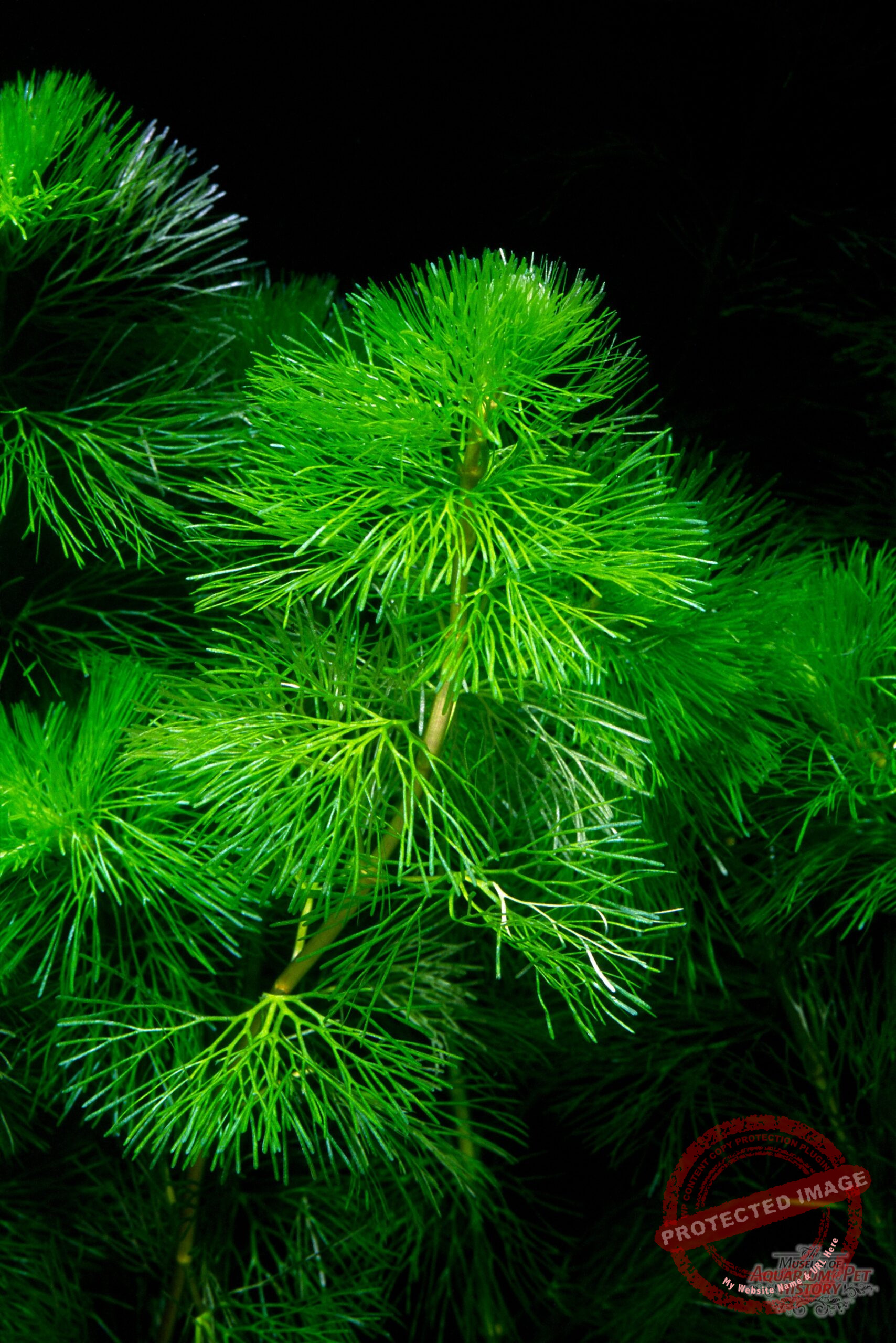
Cabomba aquatic plant in aquarium.
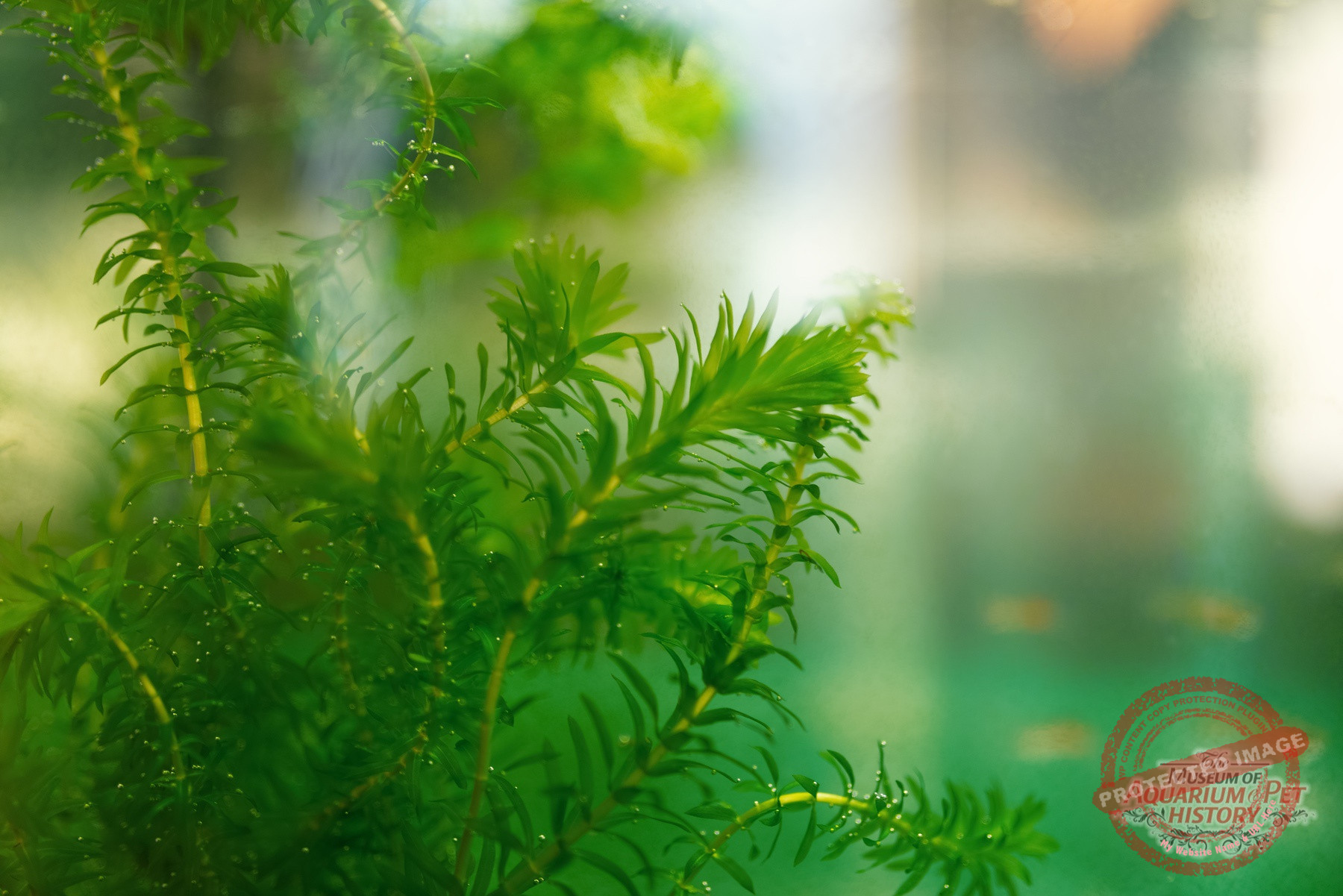
Elodea aquatic plant in aquarium.
In 1935, in the course of a year, my mom, dad, grandmother, and favorite uncle, died (they probably all would have been saved by modern surgery and antibiotics). My brother and I, under the guardianship of our aunt, our dad’s sister, and other relatives, were given solace by having our love of nature constantly encouraged. We didn’t forget our loss, but it made it much easier.
At 13 and 14, I already had several aquaria. A local high school girl, Midge Nelson, kept tropical fish and grew aquatic plants. Her father had a large home nursery, and both of them sold plants to Navlet’s. Midge got the few fish species available from a Japanese fish shop in San Francisco, which bred their own goldfish and imported a few fish from the Orient; they got others from eastern U.S. wholesalers like Trickers in St. Louis and Paramount Aquarium in N.Y.
Midge helped me a lot with fish, and she was smart, pretty, and I had a strong case of puppy love. I would ride over to her house and back on my bike, buying fish which I paid for with my newspaper route money, and carry them back in mason jars (remember, this was before plastic containers or bags). I brought home green swordtails, red platys, a brown rivulus, rosy barbs, zebras, the “tetra von (from) Buenos Aires”, the harlequin rasbora, an otocinclus catfish, the paradise fish (a gourami), and the Jack Dempsey cichlid. The tetras were fin-nippers, the paradise were aggressive, and Jack was like his pugilistic namesake. They were banished to the bigger of the goldfish bowls, and the others made up a community tank. One day, within yards of my house, I took a flop in the street. I managed to scrape up one swordtail, and with fingers full of glass splinters, I raced into the house. I picked the glass out, and the swordtail survived.
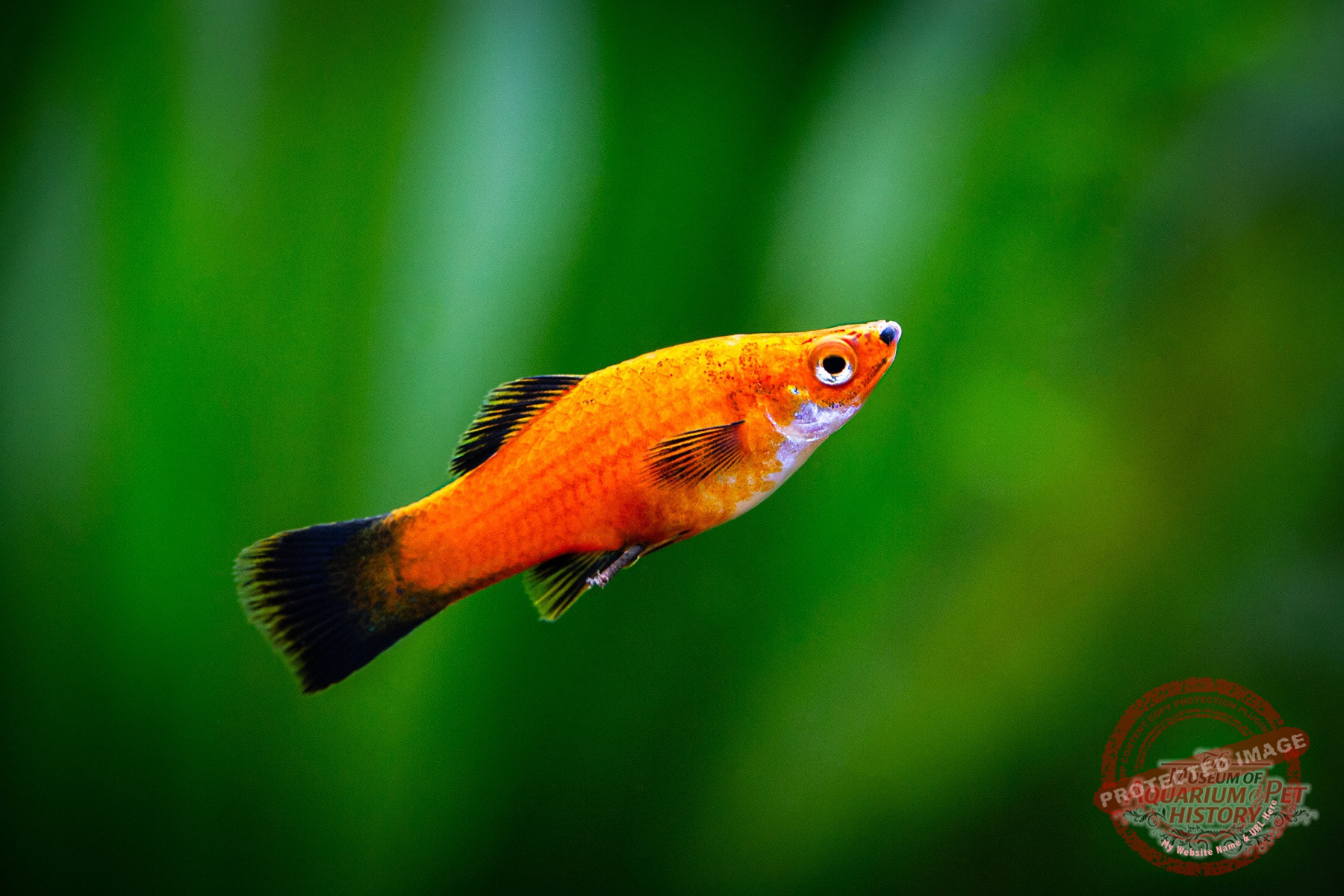
Red platy (Xiphophorus maculatus)
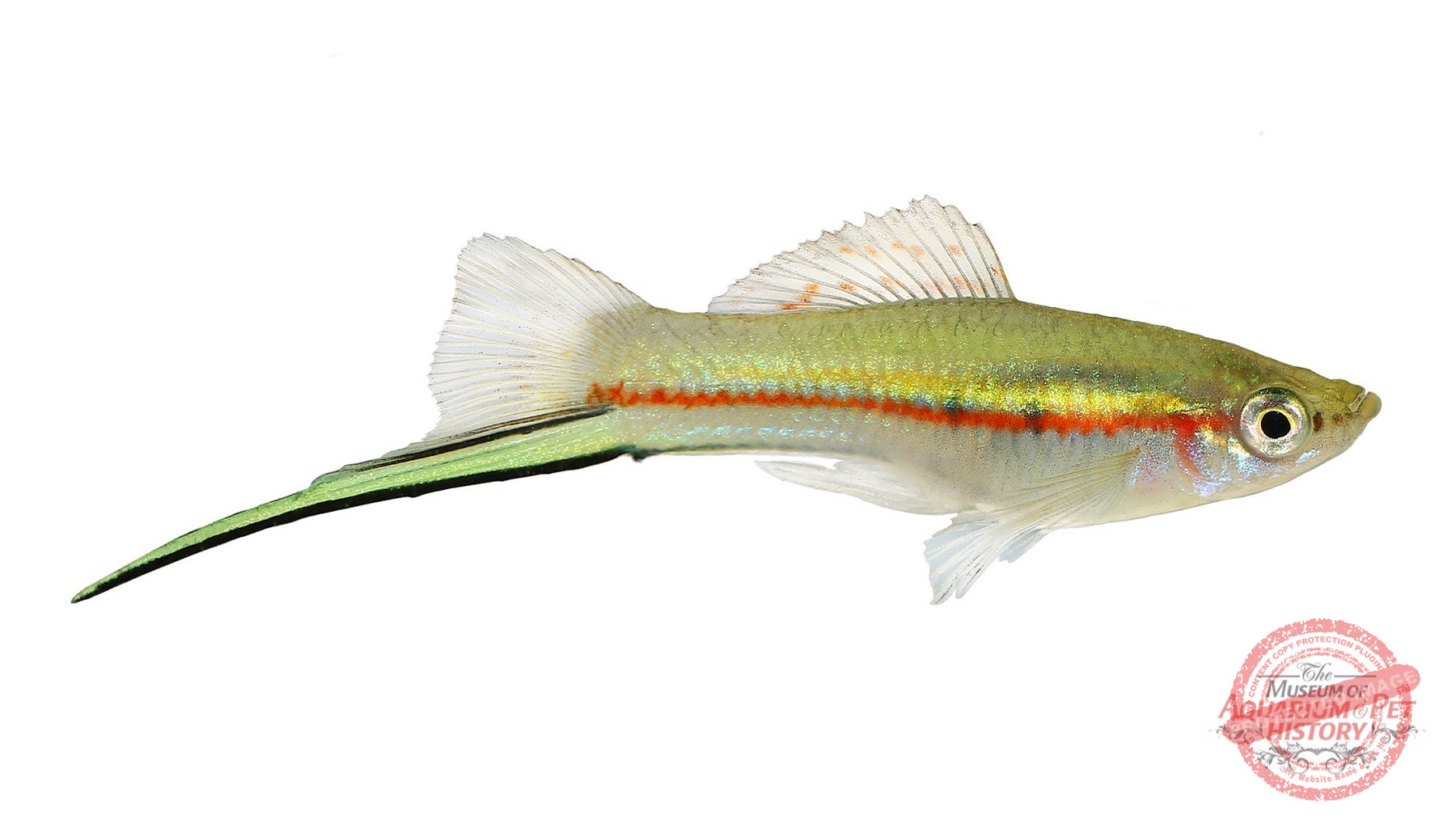
Green swordtail (Xiphophorus hellerii)
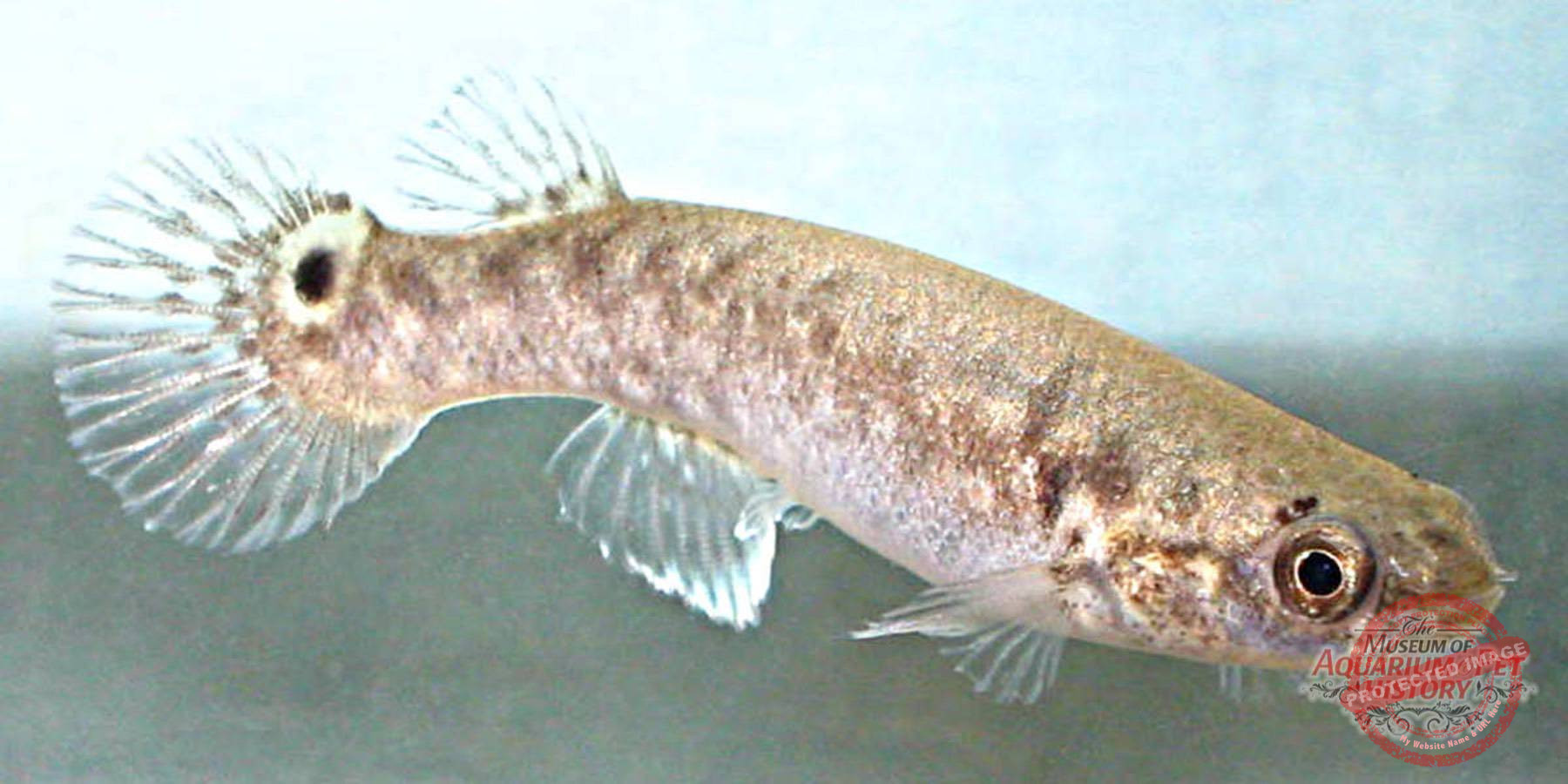
Mangrove rivulus (Rivulus marmoratus)
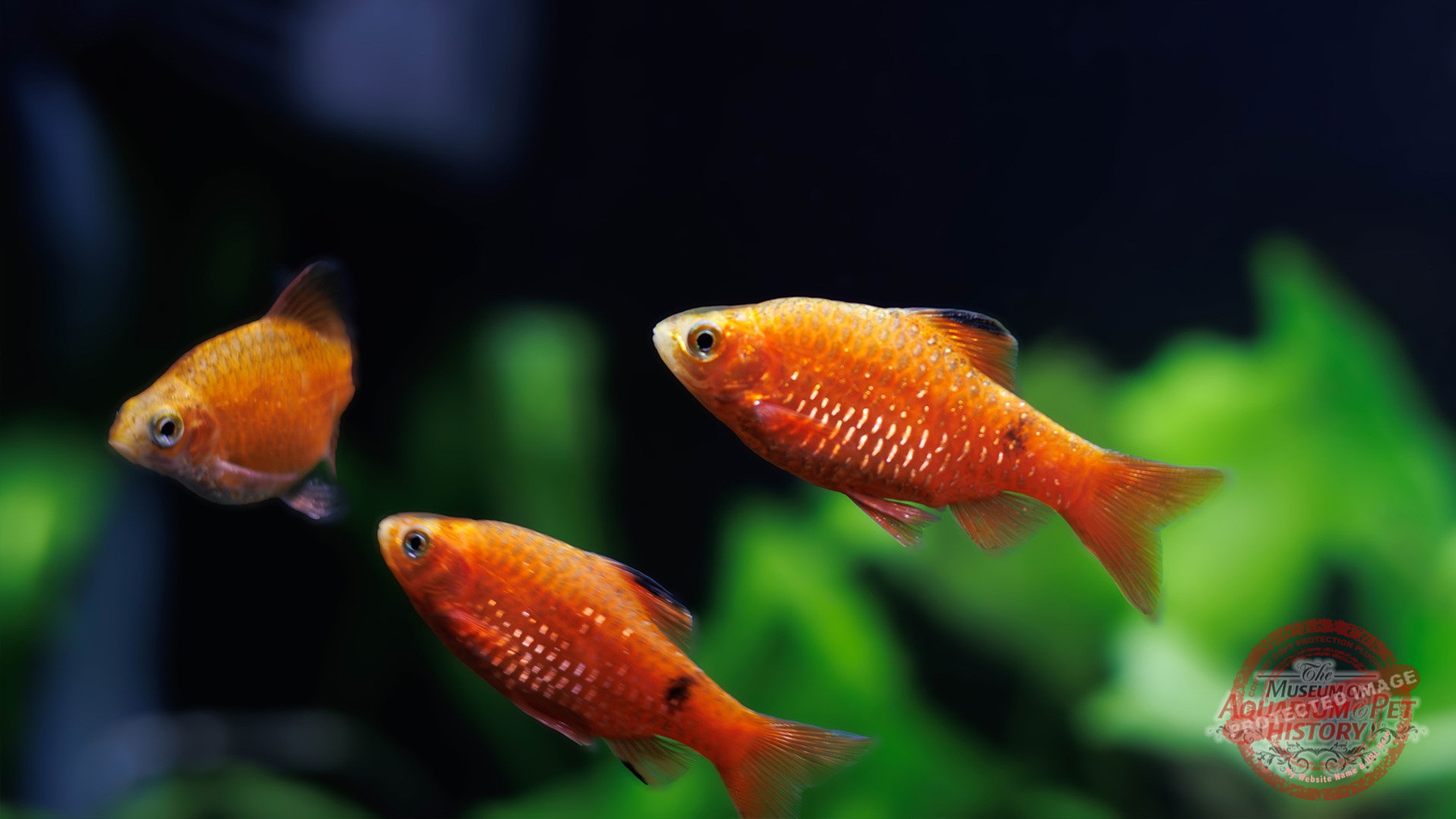
Rosy barbs (Pethia conchonius)
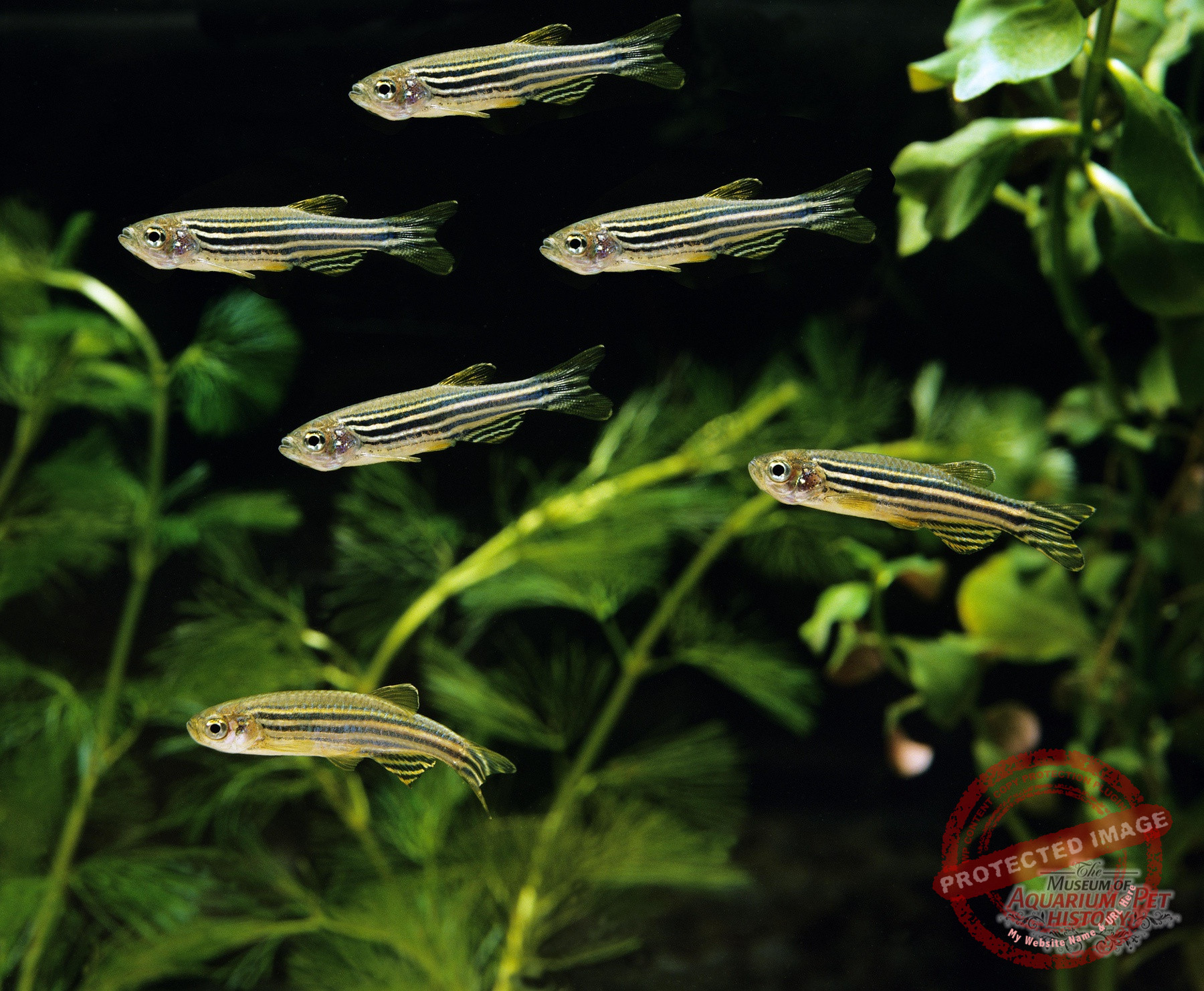
Zebrafish (Danio rerio)
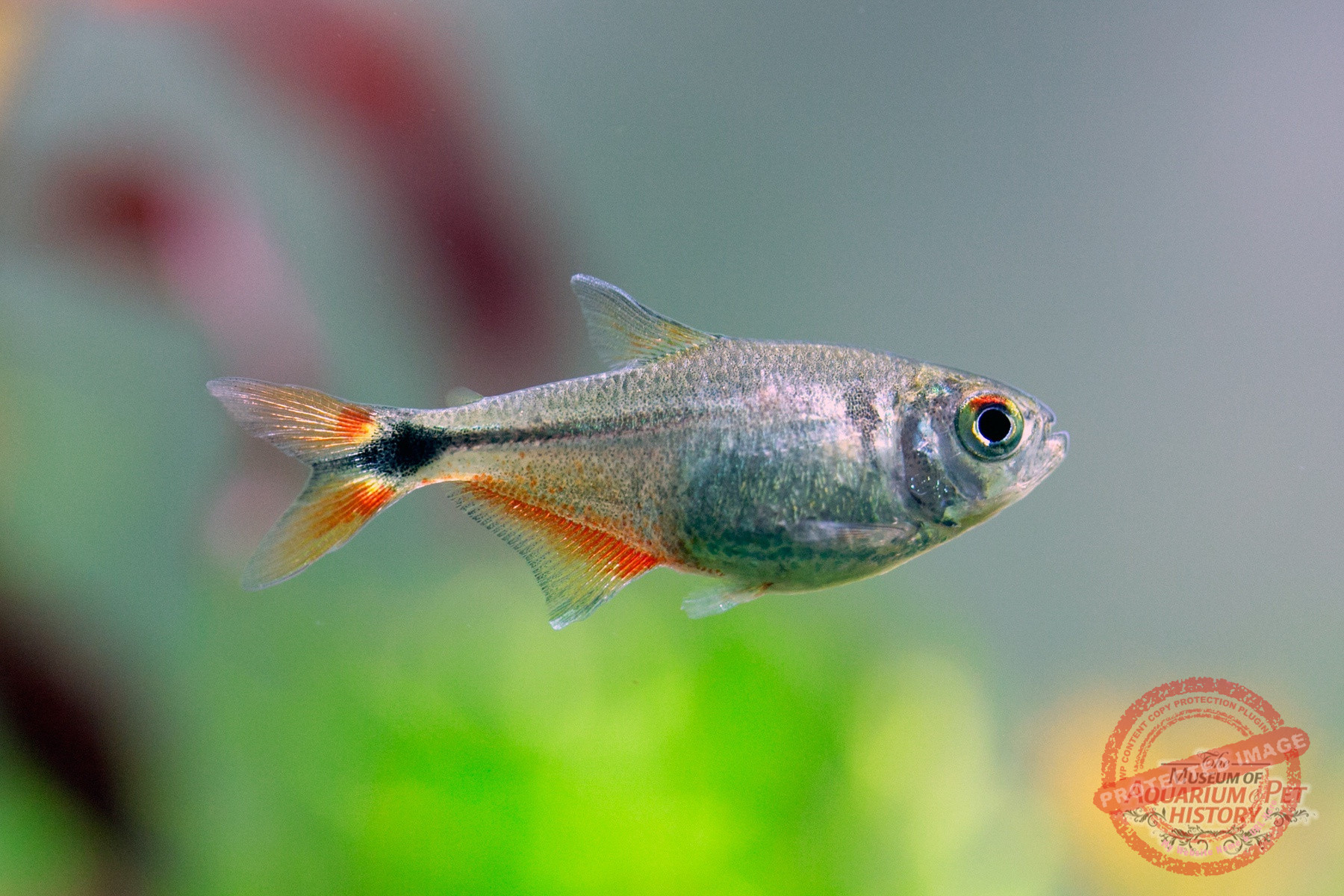
Buenos Aires tetra (Psalidodon anisitsi)
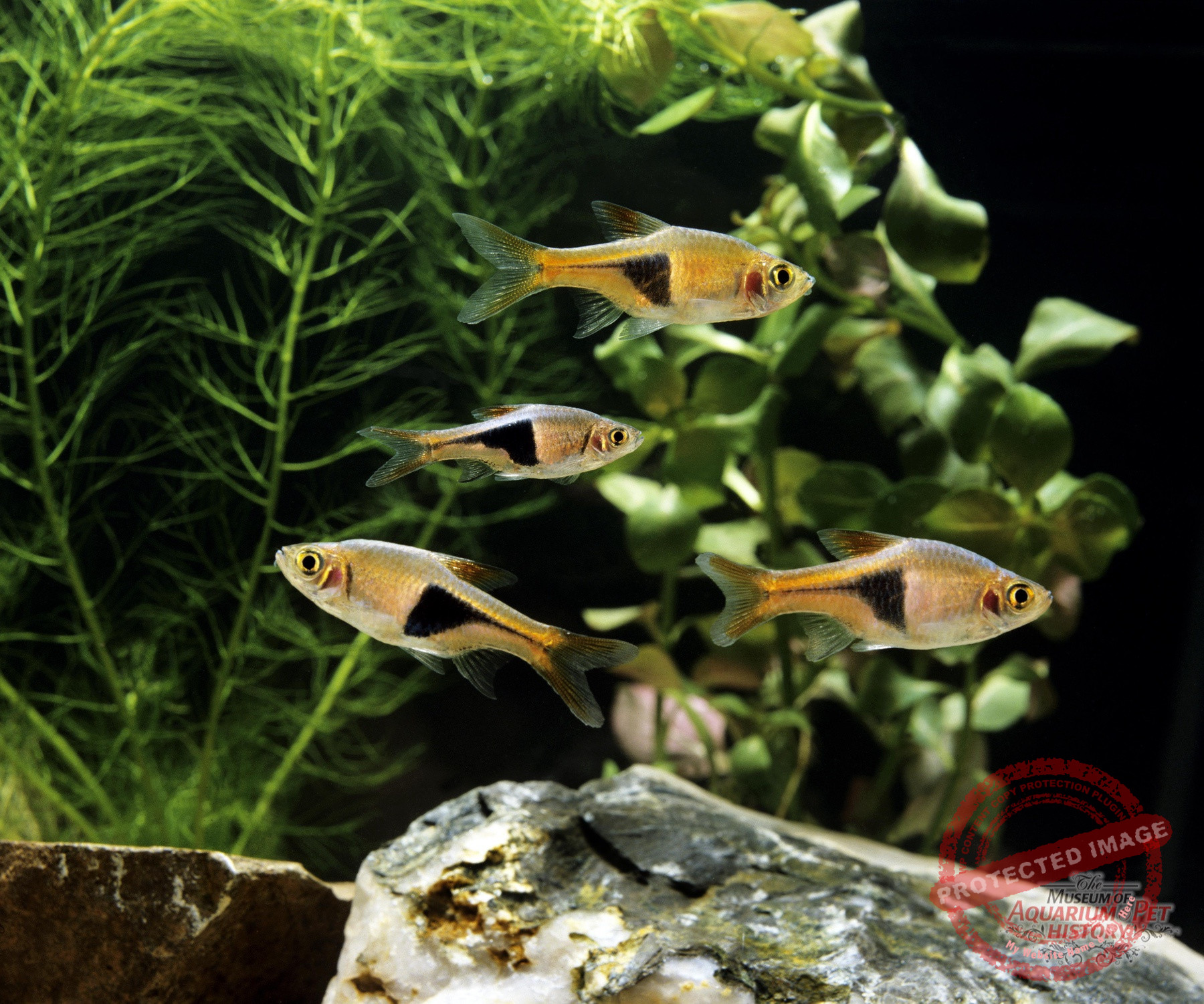
Harlequin rasbora (Trigonostigma heteromorpha)
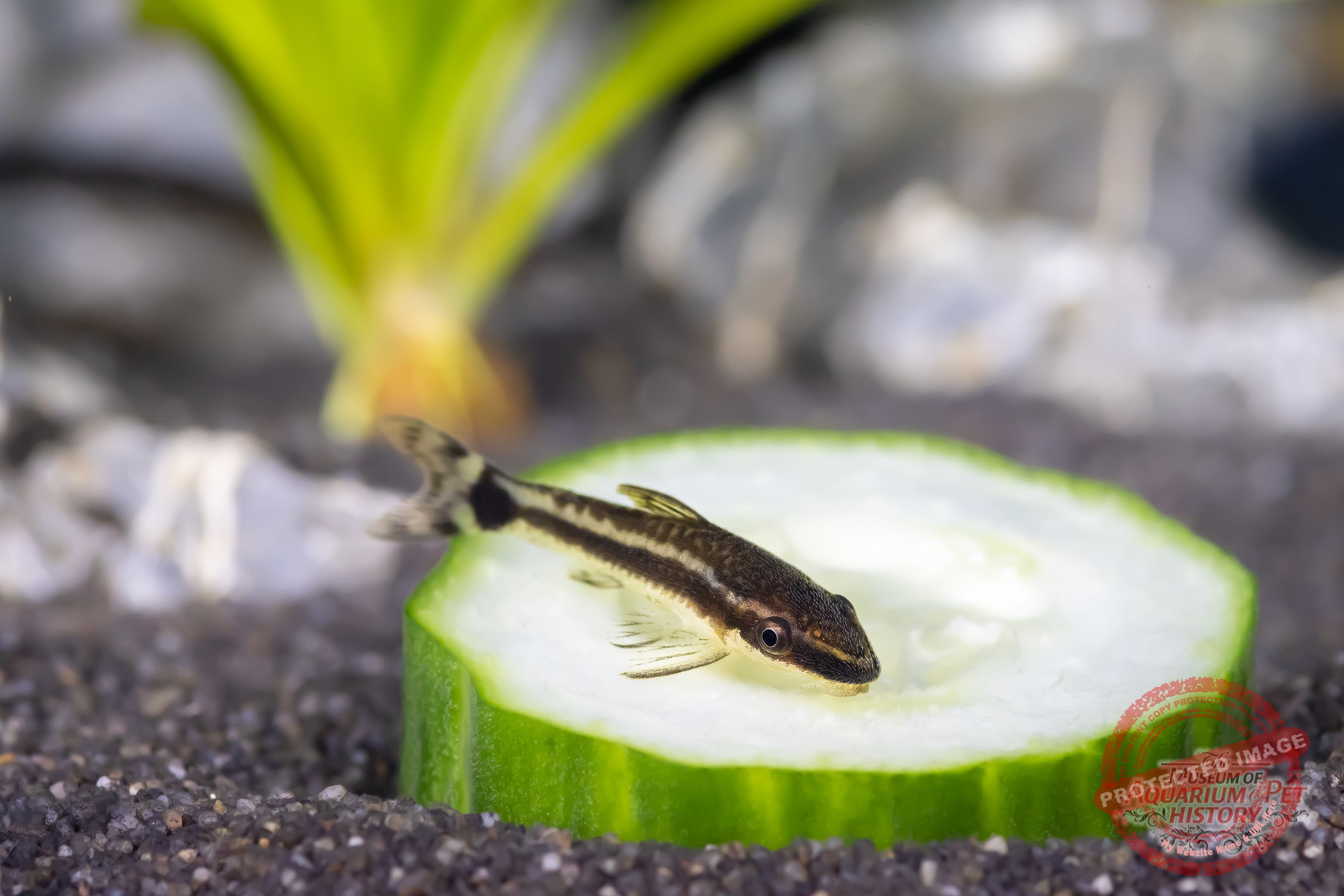
Otocinclus catfish
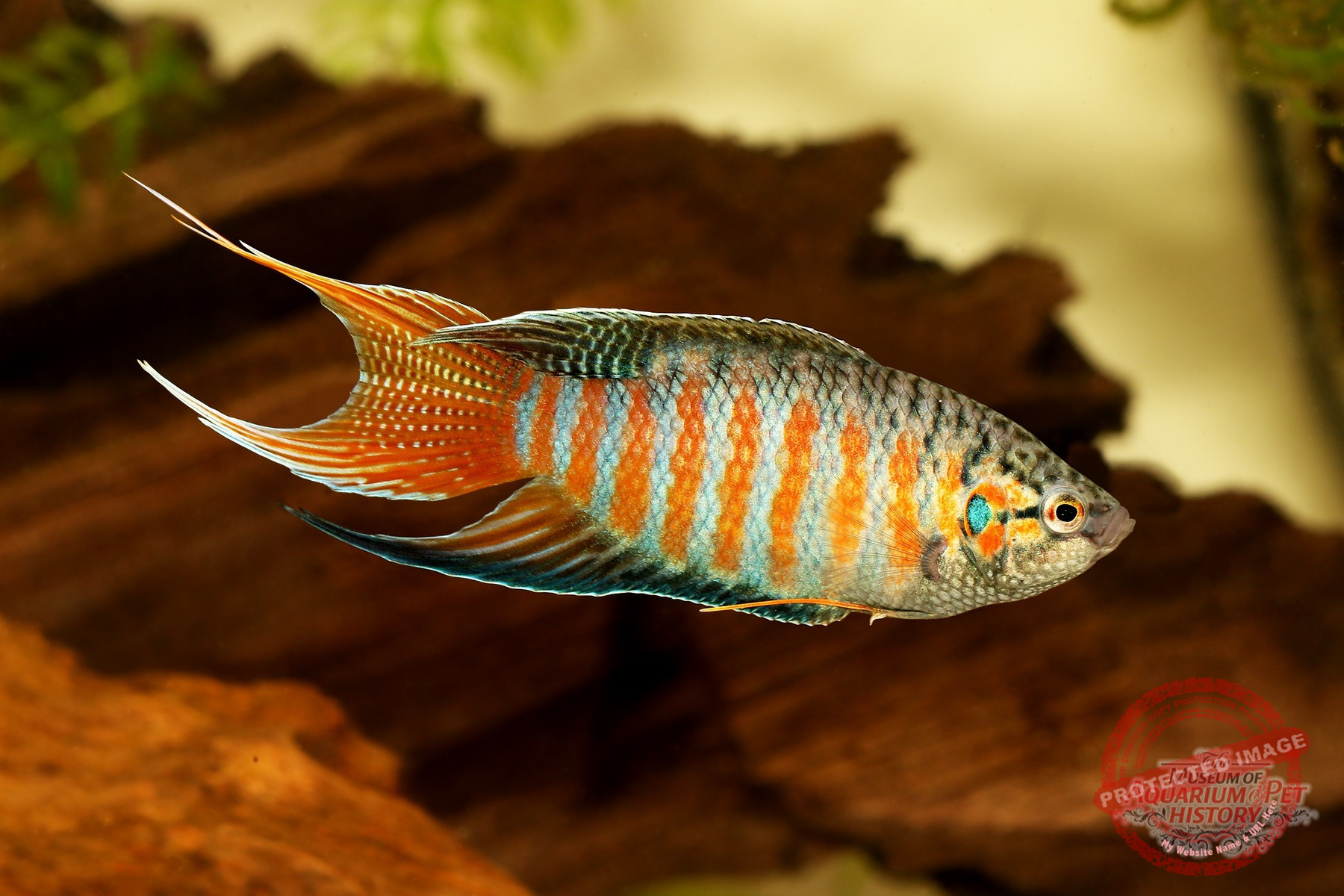
Paradise fish (Macropodus opercularis)
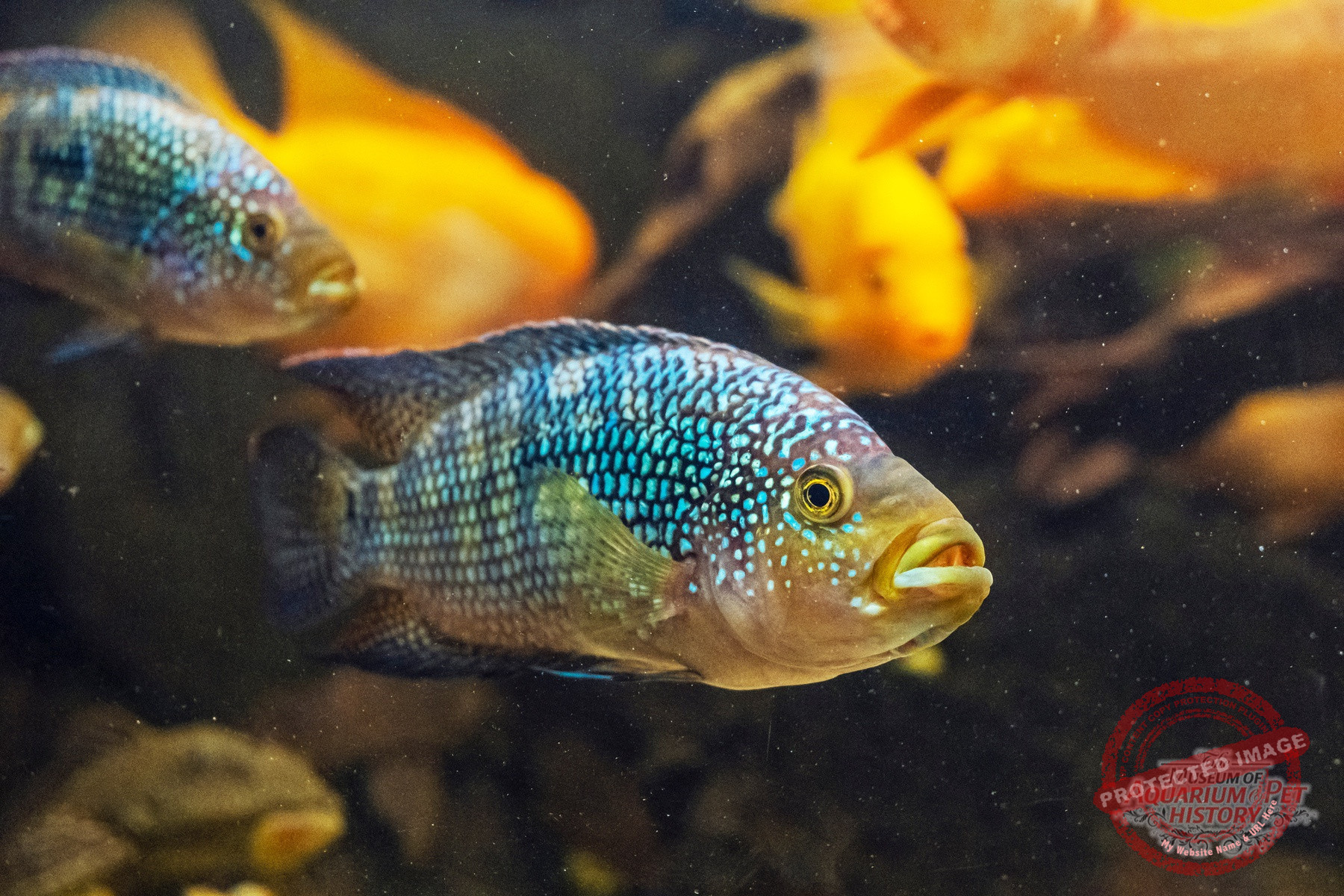
Jack Dempsey cichlid (Rocio octofasiata)
I had seen my first copy of The Aquarium, published and edited by William T. Innes, on a magazine rack in San Jose. It was vol. no. 1, either 1932 or 1933. It had a beautiful color plate on the cover, slick plate paper, and intelligent, authoritative writing. Dr. George S. Myers was the scientific editor. I bought every issue for years and read it avidly. In 1935, Innes’ beautiful book, Exotic Aquarium Fishes, acknowledged Myers’s scientific contribution. I bought the book immediately. Through high school and into college, my fish keeping steadily decreased as I became dedicated to staying on the honor roll, and in running track (I won the league championship in the half-mile one year), but I always kept bettas.
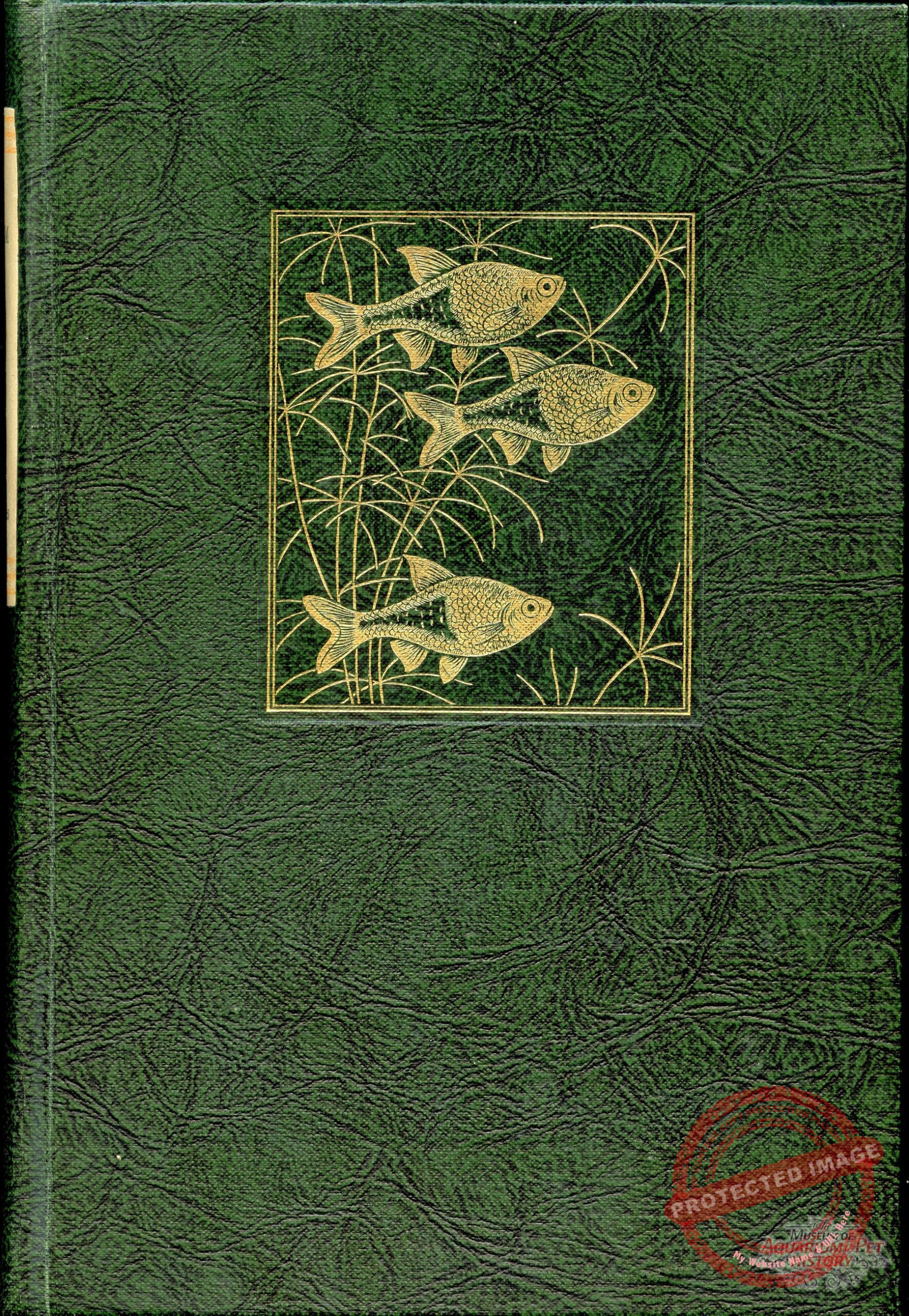
The cover to Innes’ book, Exotic Aquarium Fishes
During my two years at San Jose State, before my Army Enlisted Reserve Corps unit was called to active duty in WWII, two of my professors who were Stanford Ph.D.s took our classes up to U.C. Berkeley and to Stanford, where I met Dr. Myers. I already had a small case of hero worship from reading The Aquarium, but after Myers talked about aquarium fishes with me for an hour, and autographed my copy of Exotic Aquarium Fishes, it was much expanded.
My military service was pretty unheroic, but useful. I was in clinical labs and on autopsy teams, and learned a great amount of medical biology. When I got out, I could hardly wait to get back to college. I quickly finished at San Jose State by taking huge unit loads. During the summer of 1946, I attended Hopkins Marine Station of Stanford University. I took a very intensive ichthyology course from Dr. Rolf Bolin, an authority on west coast fishes, as well as on sculpins and lanternfishes, in particular. He was a marvelous instructor, and a close friend of the biologist Ed Ricketts (“Doc” in Cannery Row), whom I found a fascinating guy. In the fall I went up to Stanford to work on a Ph.D., with Dr. Myers as my major professor. I decided to study the genus Rasbora. They were beautiful, and I thought I could handle the 20 or so known species. Little did I know that my studies would confirm 45; there are now about 85 recognized! I took Myers’s year-long course in advanced systematic ichthyology, in which he exhibited his encyclopedic knowledge of fishes and fish literature, and made constant reference to not only the magnificent Jordan library, but to his own large personal one. The Jordan library, and much of Myers’s, are now at the California Academy of Sciences in San Francisco.
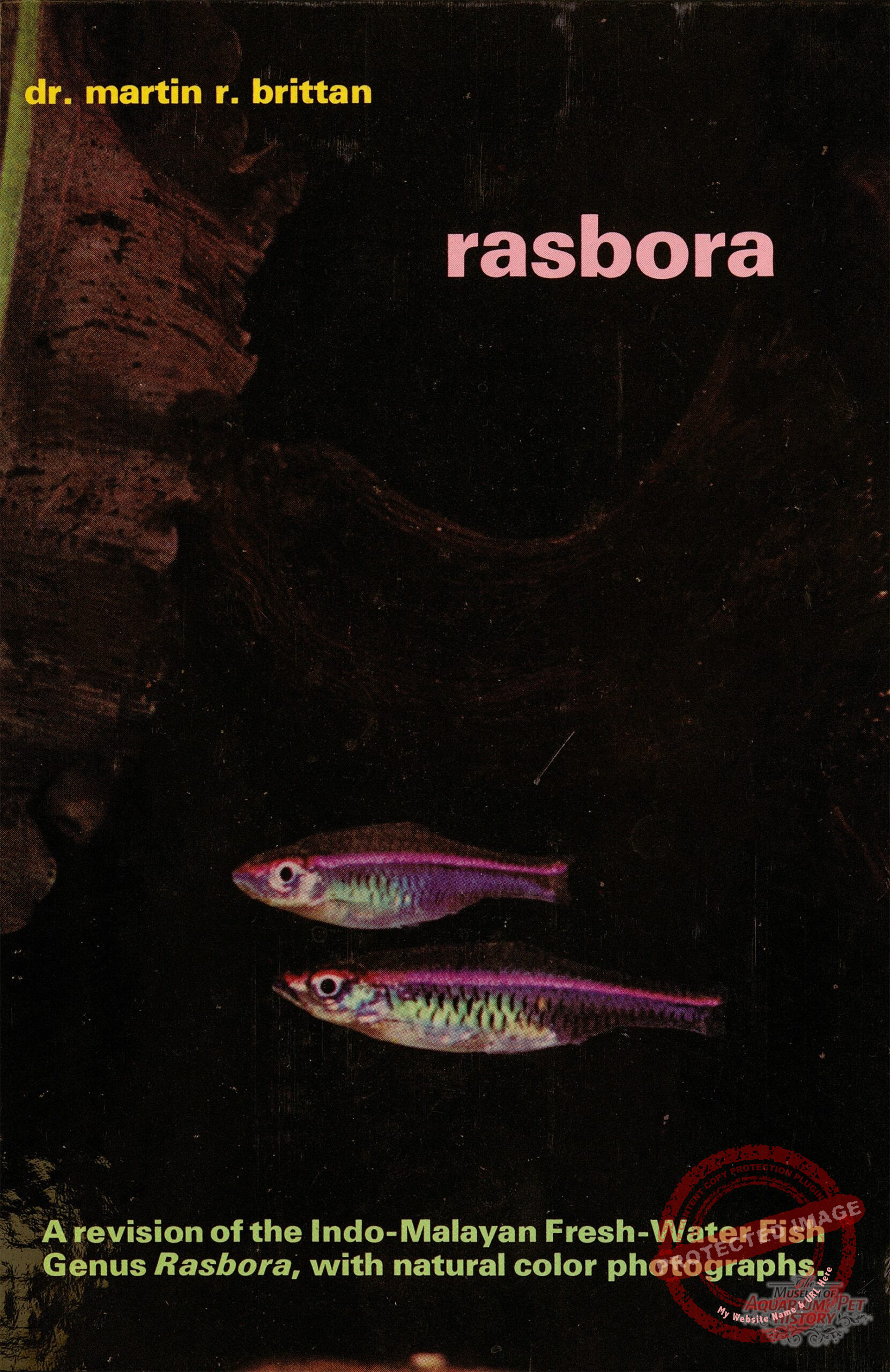
Cover of Dr. Martin R. Brittan’s book, Rasbora
During the late 1940s, many new species were finding their way into aquarists’ tanks as sea, land, and, especially, air shipping became increasingly sophisticated. In San Francisco, Maurice Racowicz, who later, I recall, ran the San Francisco Aquarium Society’s brine shrimp business, and his brother, were bringing in many new fishes, some of which turned out to be new to science. One of the real gems was a dwarf cichlid, which was later named Apistogramma ramirezi (the local aquarists called it the “rammer razzy”).
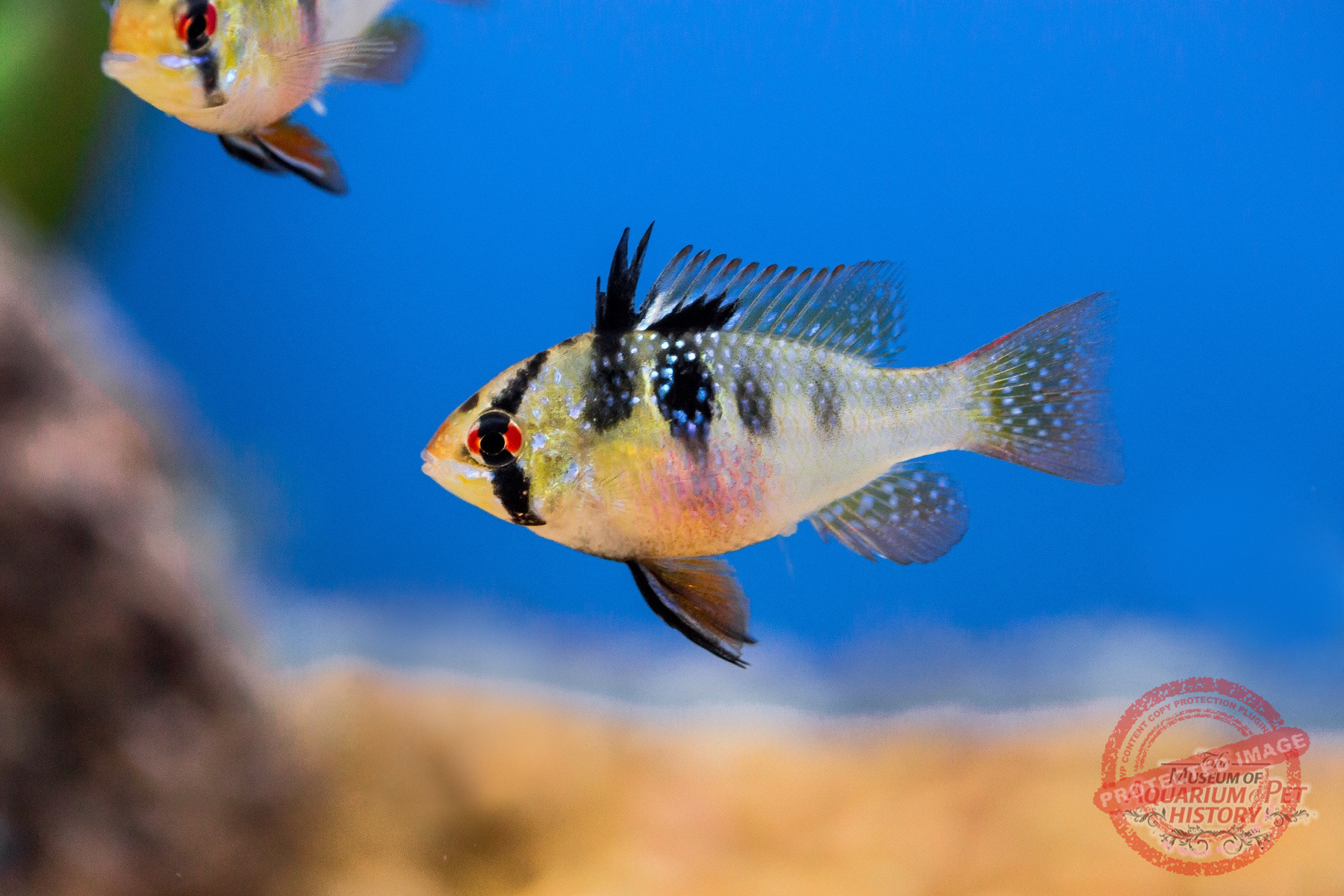
Ram cichlid (now called Mikrogeophagus ramirezi)
During my Stanford grad school days, I corresponded with Innes, who covered the rasboras available to aquarists in his classic Exotic Aquarium Fishes; Hermann Meinken, a high school biology teacher who had described a number of aquarium fishes, including a couple of rasboras, in German aquarium magazines; and Dr. L.F. deBeaufort, one of the grand old men of European ichthyology, who had given the best contemporary coverage of the genus in its natural range in vol. 3 of Fishes of the Indo-Australian Archipelago.
I got my Ph.D. in 1951, and was on the faculty at San Diego State. Dr. Carl L. Hubbs was at nearby Scripps Institution of Oceanography at La Jolla. I had met him earlier at Stanford through my fellow grad student, his son, Clark, when he and his son-in-law, Dr. Robert Rush Miller, had come to Stanford to look at some of the fishes in the Natural History Museum. Though Carl Hubbs was then working on western Pacific marine fishes, his earlier fame came from his researches at the University of Michigan, mainly on cyprinids, cyprinodonts, poeciliids, and centrarchids. Hubbs and his wife, Laura, were pioneer workers on fish-hybridization. In San Diego, Carl and Laura were most kind to me, and through them my wife, Ruth, and I met Fred Stoye and his wife, Helen Jean. Fred had written in the 1930s one of the few handbooks of tropical freshwater fishes, published, as I recall, by Paramount Aquarium. Fred was then in his 70s and had been a telegrapher on German ships running between the Far East and Africa and Hamburg. These ships carried insulated cans of tropical fish, and the telegraphers were the usual “fish-sitters.”
I also first met Harold Dill, an enthusiastic young aquarist who was my friend for 35 years. He always kept big, unusual fish, and when he moved to San Francisco, I was amazed that he had gotten his huge tanks up to his third-floor apartment. He had lungfishes, bichirs, mastacembalid eels, big cichlids, and other whoppers.
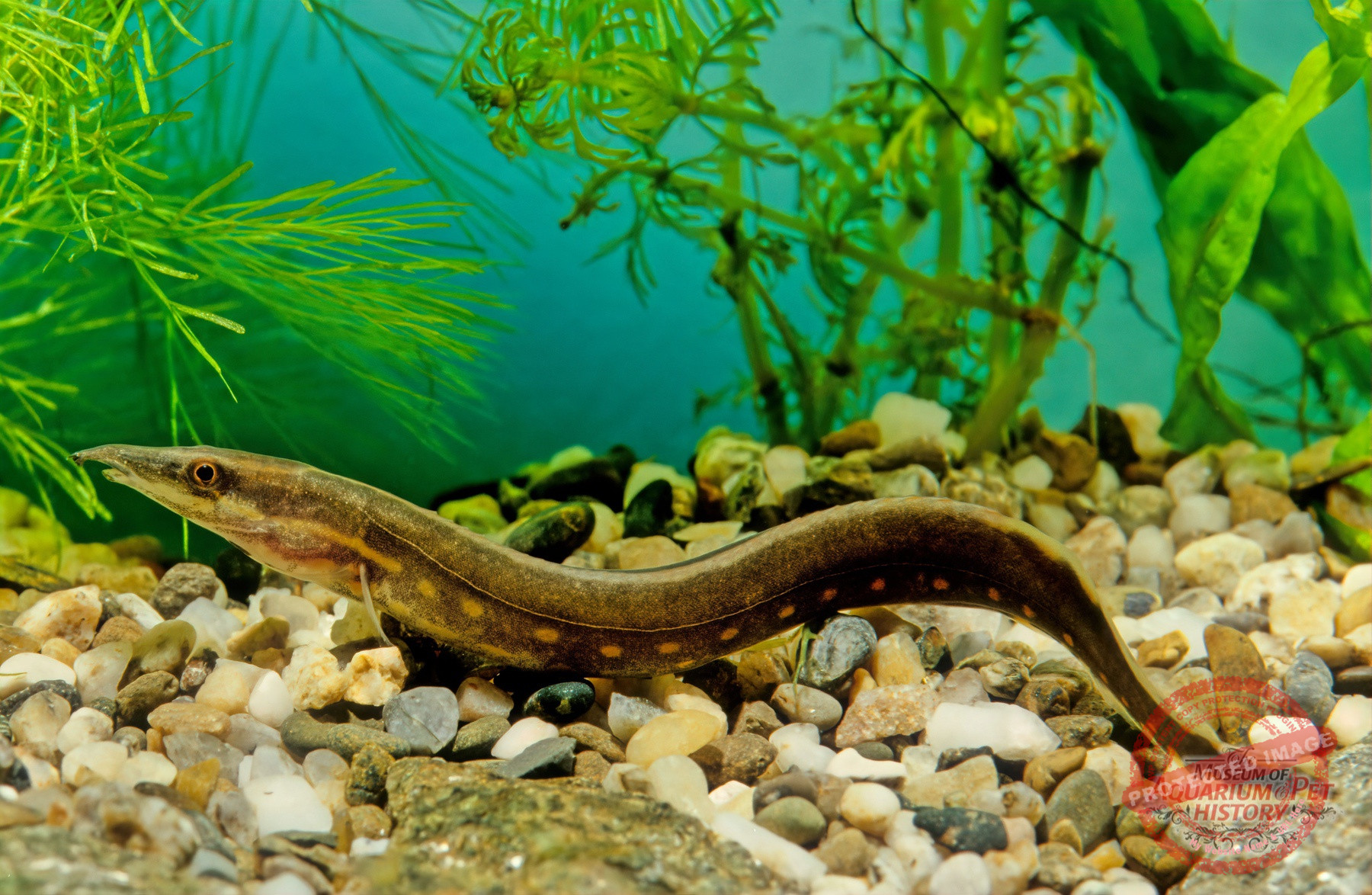
Fire eel (Mastacembelus erythrotaenia)
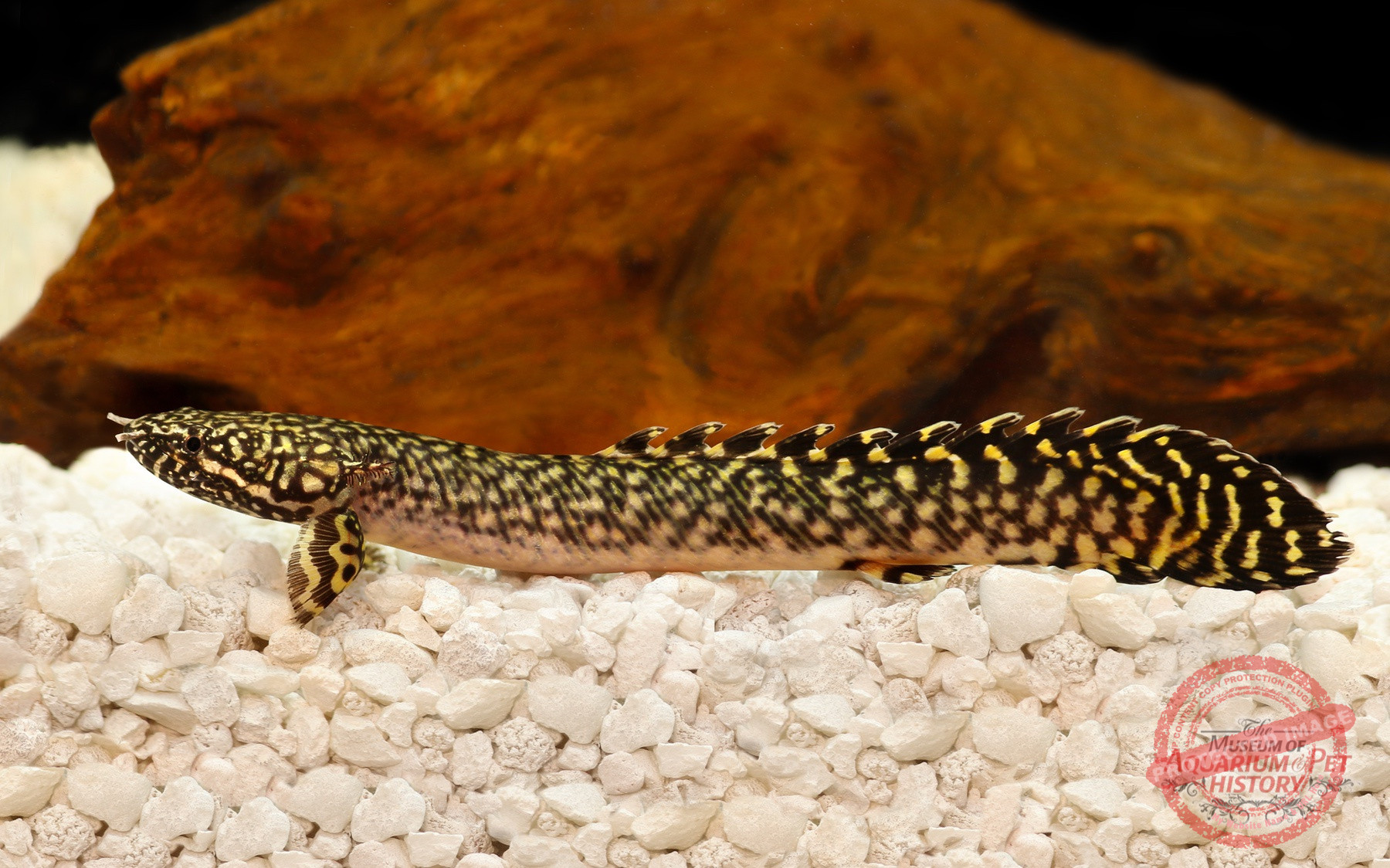
Ornate Bichir (Polypterus ornatipinnis)
I kept up my connections with Stanford and with George Myers, who had a marvelous assemblage of grad students too numerous to mention here, but just the ones working on freshwater tropicals included Jim Bohike and Stan Weitzman, who became world authorities on characins. (For more on the famous “Stanford School of Ichthyology,” dating back to the 1890s, read my article on the subject in the aforementioned Collection Building volume). At this time, George was one of the scientific editors of the San Francisco Aquarium Society’s The Aquarium Journal, later becoming editor. Still later, I became a scientific editor myself.
When I came up to Sacramento State in 1953, I joined the Sacramento Aquarium Society. I’ve been a member for 50 years! For many years, my wife, Ruth, was the SAS Treasurer. At Sacramento State, besides the obligatory general biology and zoology courses, I taught ichthyology and other vertebrate zoology courses, ecology, conservation biology, and aquatic biology, both freshwater and marine. I once had as many as 20 aquaria, some on circulating fresh and saltwater systems, and filled with local California freshwater and tidepool fishes, as well as exotic tropical fishes.
In 1956, I participated for an entire summer in Project Coral Fish in the Palau Islands, Yap, and Saipan, run by the George Vanderbilt Foundation at Stanford, under the leadership of Dr. Robert Rofen, a former fellow student of George Myers. We dived on the coral reefs nearly every day, and it was one of the great experiences of my life. We tripled the known species from the Palaus and found dozens of new species.
I had, from its start, noticed a modest new aquarium magazine, Tropical Fish Hobbyist, published by Herbert R. Axelrod, who had recently gotten his Ph.D. under the fish geneticist, Dr. Myron Gordon, along with fellow students James Atz and Donn Rosen, later prominent at the New York Aquarium and the American Museum of Natural History.
In 1955, Axelrod and Dr. Leonard Schultz of the Smithsonian authored a book, the Handbook of Tropical Aquarium Fishes. It was an excellent job, but since no ichthyologists can be experts on all groups, I offered to help with the rasboras in the next edition. Axelrod took to sending me color slides of southeastern Asiatic cyprinids for identification. I’d do my best, and send them back. One day, I got a call from Dr. Axelrod, saying he was in San Francisco with his wife, Evelyn, and wanted to have lunch with my wife, Ruth, and me. We had a long, leisurely lunch, during which time we talked about tropical fish and his magazine, and became friends. Over the years, I have traveled with Herbert Axelrod to Europe and to tropical South America, especially the Amazon, as a sort of “consulting ichthyologist.” The results were many articles by me in TFH magazine. He also published two books by me about rasboras. Axelrod also bought up The Aquarium Journal when, as I understand it, it was about to fold financially, and turned it into Ichthyologica, the Aquarium Journal, which was scientifically-oriented and dealt with a broader range of subjects than aquarium fishes. I was editor for its 2-year life in the 1960s; Axelrod eventually decided that he could no longer publish it for what was essentially gratis distribution, and it went out of existence.
George Myers and Herbert Axelrod were at odds early on over some professional issues, both being, in my opinion, geniuses, with all that implies. I found that Herb respected Myers as a scientist, and that George respected Axelrod as a go-getting expander of the aquarium hobby. I believe I played a small part in their getting together, with the result that Myers did The Piranha Book for TFH Publications.
A lot of people have bad-mouthed Herbert Axelrod over the years, much of it through professional or business jealousy, I think, and most who have bad-mouthed him have never met him, or even anyone who knows him. Axelrod has never been anything but kind to me and mine. Herb does not claim to be a research ichthyologist, but he has tremendous knowledge of aquarium fishes. With his boundless energy, he has done more, in my opinion, than any other individual to make the present-day aquarium fish industry (as well as other phases of the pet industry) what it is today. He has imported aquarium fish, many of them new to the trade. He has manufactured aquariums and accessories. He has published popular pet books and valuable scientific books, beautifully illustrated in color; the latter would have been published nowhere but by TFH Publications, Inc. He reprinted classic ichthyological books and monographs, such as Bleeker’s Atlas, the works of Bloch, Hugh M. Smith, and others, knowing that none of these were commercial-success items. He funded a scientific foundation at the Smithsonian and gave several million dollars to American and Canadian museums and other scientific institutions. He made TFH magazine what it is today. Compare the aquarium and terrarium hobbies today, with the vast array of available species, the technically sophisticated equipment, the polished magazines and books, with what many of you knew when you entered the hobby. How many people, including Axelrod’s critics, have ever done anything so worthwhile?
In 1993, I retired after 40 years on the faculty of Sacramento State University (California State University, Sacramento). I am proudest of the many students who have passed through my biology classes, especially of those who have gone into environmental fields. They have really helped society. My main interest now is in the history of ichthyology, fisheries, and the aquarium hobby. And I still have three small fish tanks!

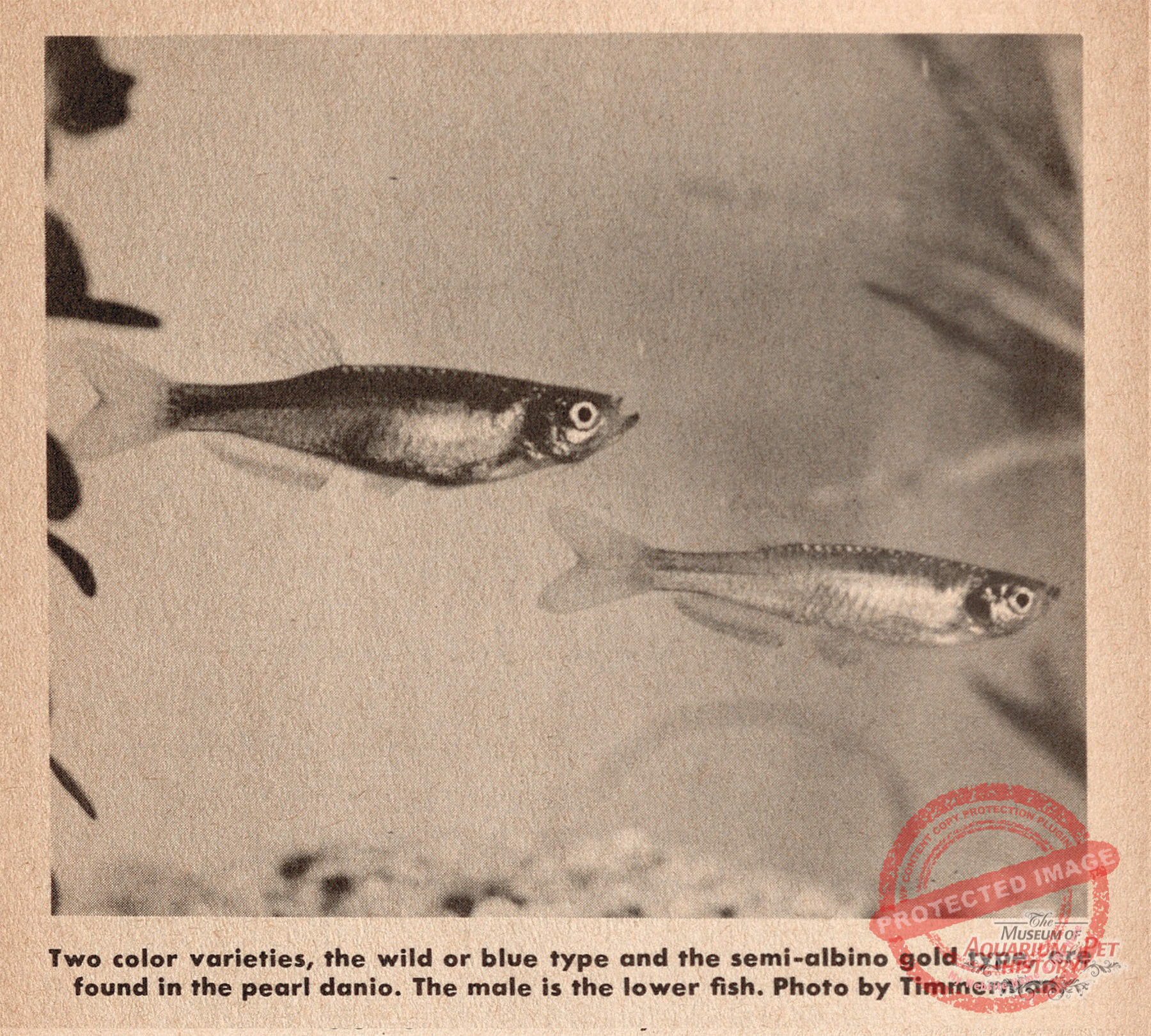

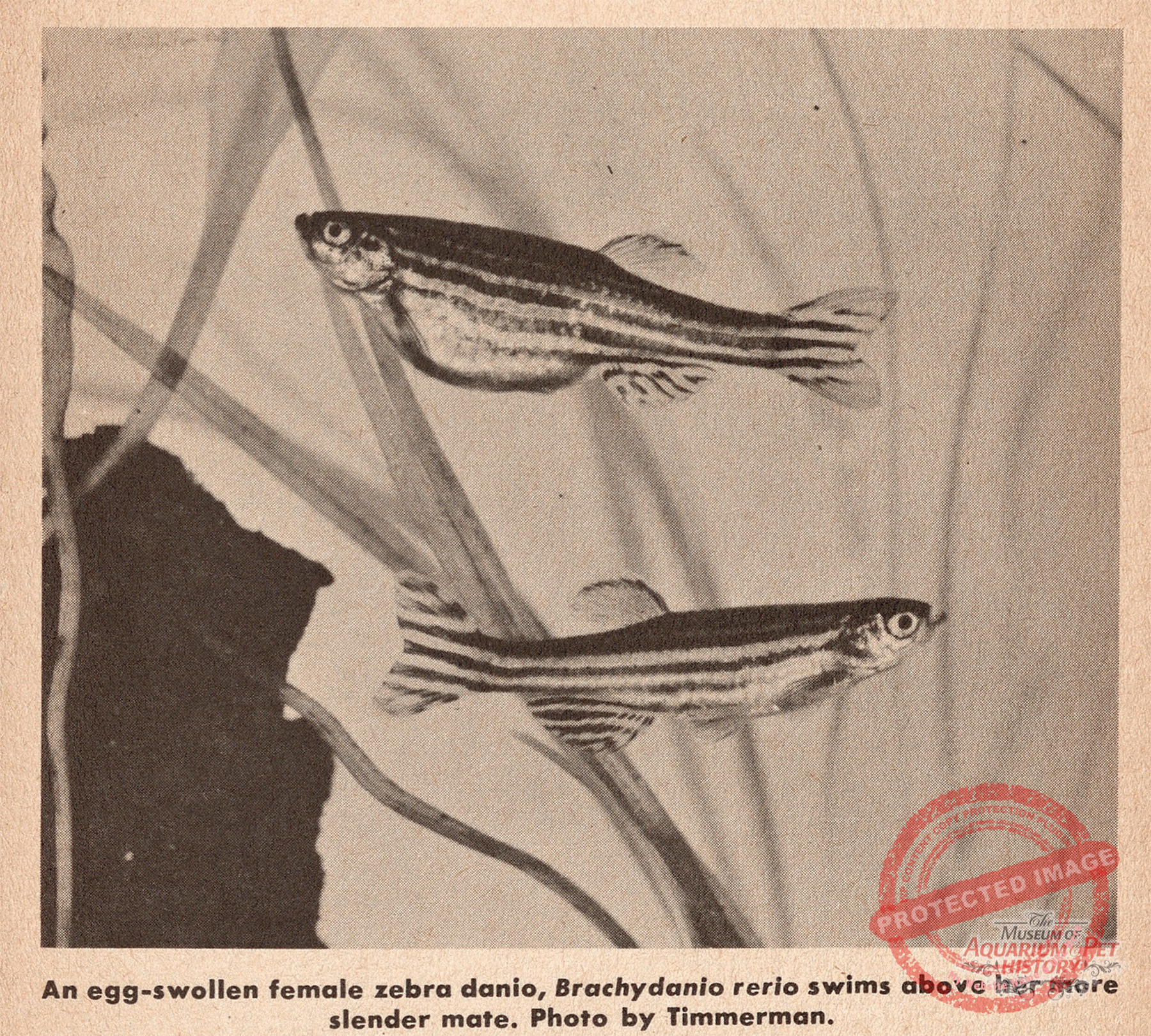

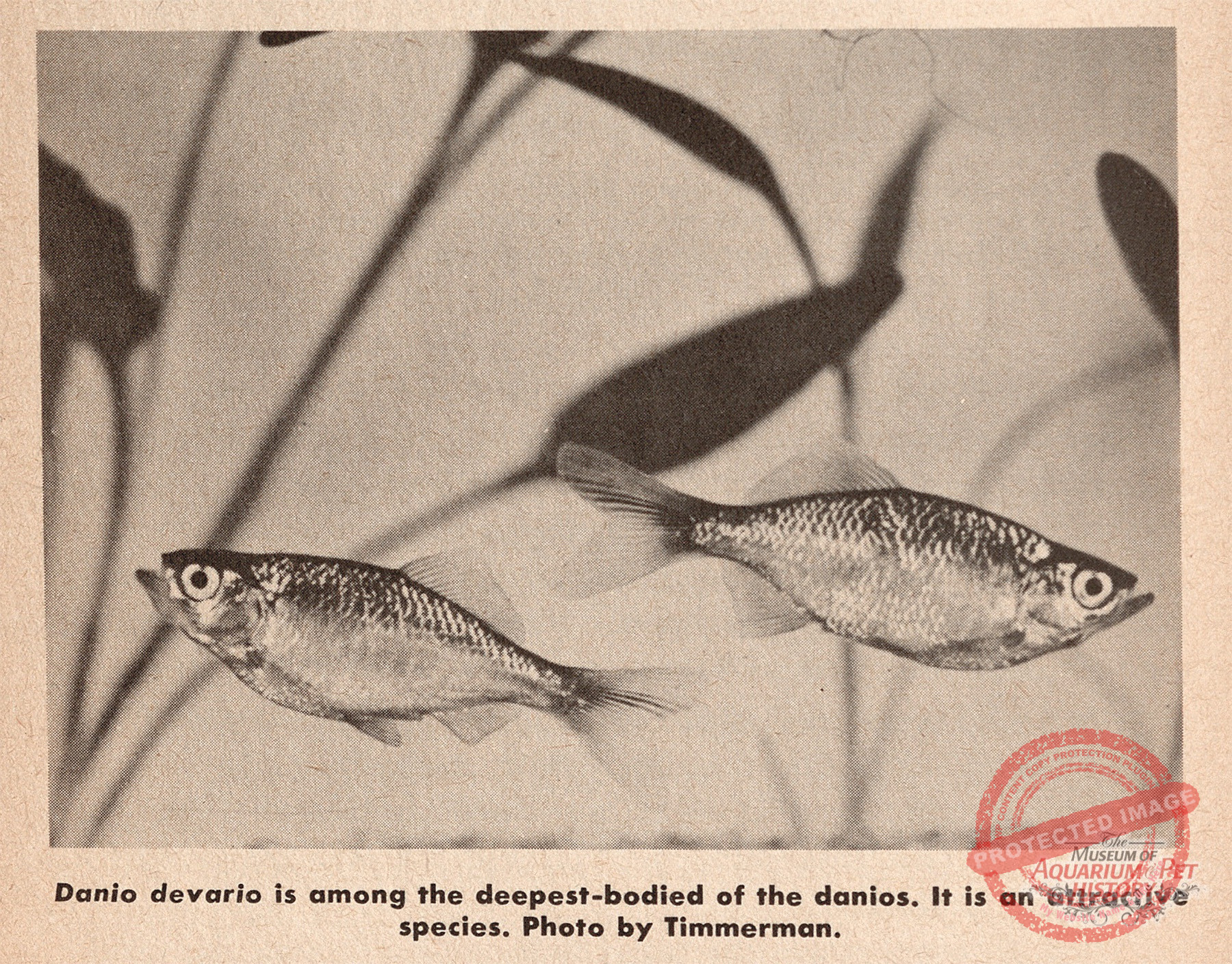
Photos from Dr. Martin Brittan’s book Danios
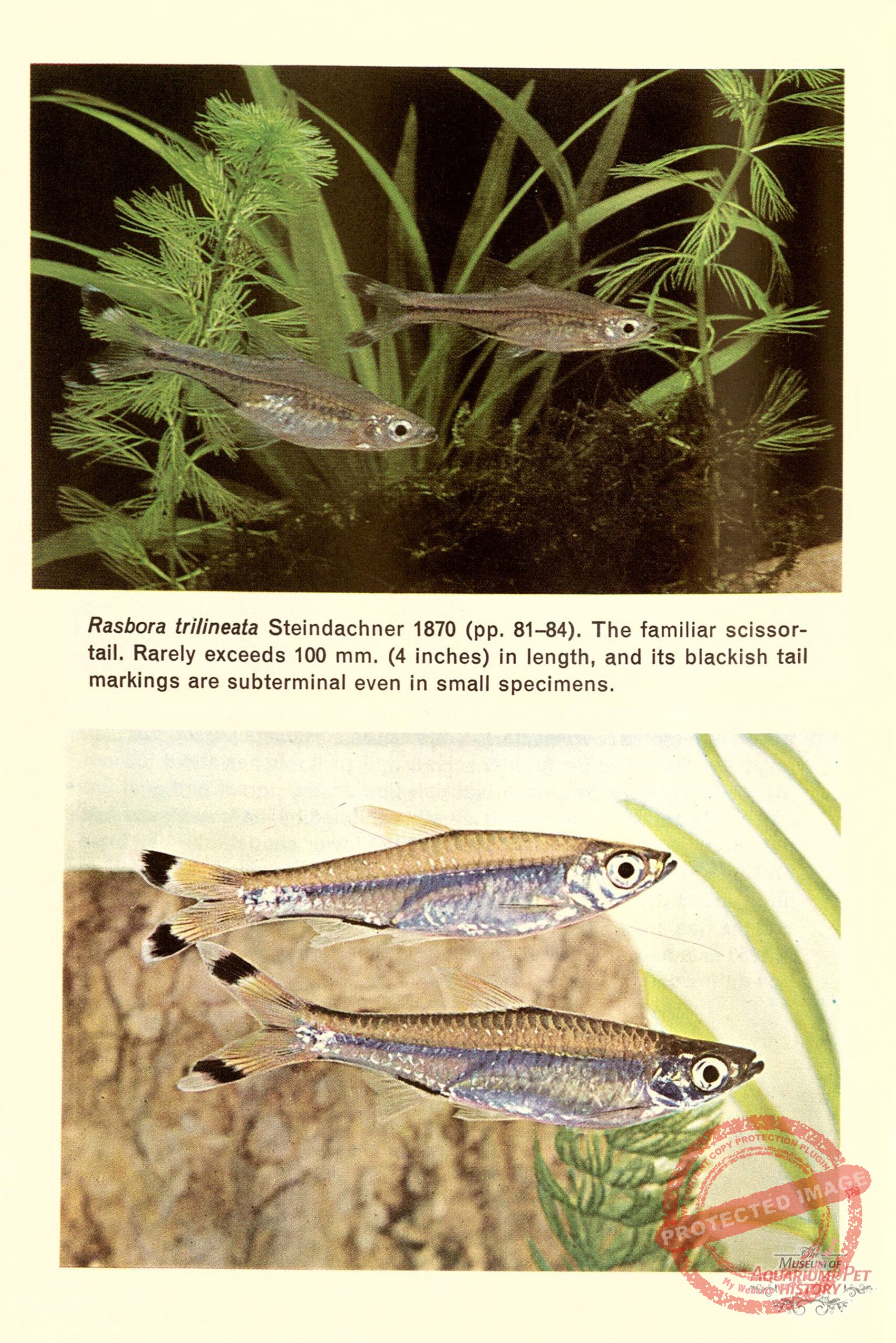

Photos from Dr. Martin Brittan’s book Rasbora
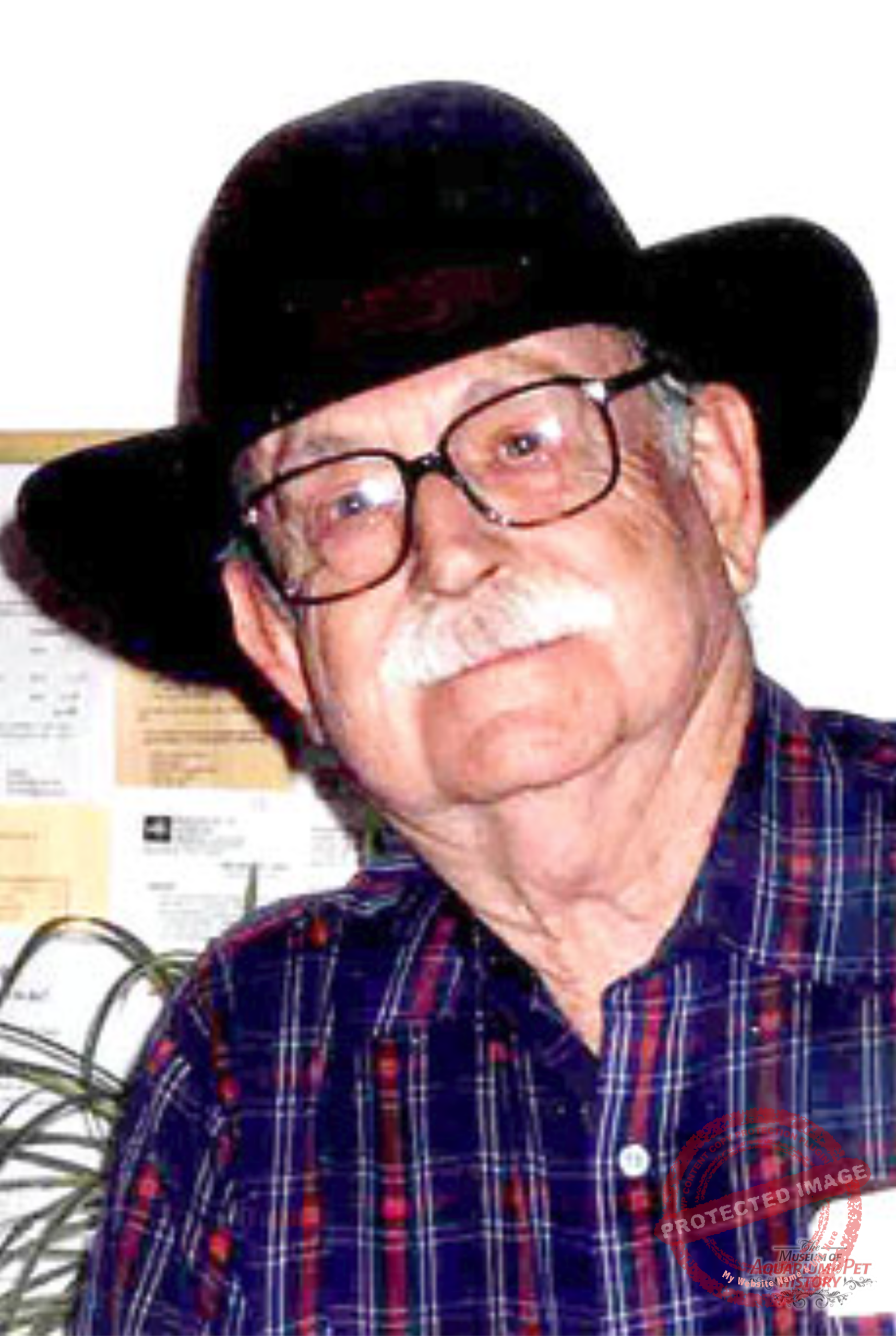
Photo from Dr. Martin Brittan’s obituary on legacy.com. He passed away May 24, 2008.
The Museum of Aquarium and Pet History would like to thank the Sacramento Aquarium Society for permission to reprint this article from their newsletter. Images were added by us.