My Early Start in the Pet Hobby in Gotha
When I was born, the city of Gotha was already 1,183 years old. That means it will celebrate its 1,250th anniversary in 2025. What does the name Gotha actually mean? The original form, Gothaha, translates to “good water.” And therein lies the story of our hobby—one that I want to recount here, beginning with this article, in a series of reflections.
Geographically, Gotha lies in central Thuringia, which itself is situated at the very heart of Central Europe. The city rests at the foot of the Thuringian Forest, a mountain range formed during the last Ice Age. In front of it stretches the so-called Thuringian Basin, a shallow depression about 300 meters above sea level where sediments accumulated over millennia. Right there, at the edge of forest and plain, Gotha has long been a focal point for the surrounding region.
In its earliest centuries, the city’s inhabitants drew water from wells—sufficient for a small population. But by the Middle Ages, when the population grew and devastating fires threatened the city, it became clear that more water was needed. In 1369, a brilliant master builder named Conradus, hired by Landgrave Balthasar of Thuringia, devised a solution: a nearly 30-kilometer canal, the Leina Canal, which carried water from the upper reaches of the Hörsel River—called the Leina—to Gotha. The feat was remarkable: engineers managed the gradient so precisely, from 381 meters above sea level at the Leina near the village of Schönau vor dem Walde down to 314 meters near Schloss Friedenstein, that fresh, clear water flowed steadily into the city at a gentle pace. The water not only supplied the population, it also powered mills, fed fountains—such as those in the Orangerie near the castle Schloss Friedrichsthal and the so called Wasserkunst above the market square—and later fueled a complex network of channels that sustained much of Gotha’s daily life. By 1653, another canal, the Flößgraben, was added to strengthen the supply, particularly for transporting timber from the Thuringian Forest.
From the same geological strata that feed the Hörsel, another river, the Apfelstädt, gathers its waters near Tambach-Dietharz. As Gotha grew and the Leina system no longer sufficed, a dam was built there in 1902, creating the first reservoir in Thuringia. From then on, Gotha and its neighboring villages were supplied with water from the Tambach Reservoir. Good water indeed: Gothaha!
This background is essential to understand why this very spot, in the middle of Europe, became the cradle of aquarium fish breeding, the birthplace of the world’s first aquarium society, and the starting point for so many later developments. The water here—whether from the Leina Canal or later from the reservoir—is exceptionally soft, neutral in pH, and free of the usual mineral additives. With a few adjustments familiar to aquarists, it comes remarkably close to the clarity of tropical “clearwater” streams, and in some respects even to the “blackwater” habitats of the Amazon.
There was another influence as well, one that enriched the intellectual soil of the region: Johann Matthäus Bechstein (1757–1822), the naturalist, was born and raised in nearby Waltershausen, within Gotha’s orbit. As a boy, he roamed the same “natural playgrounds” I would later explore—the brooks and ponds fed by the Thuringian Forest’s soft water, teeming with flora and fauna. Bechstein became the first naturalist in the world to describe the keeping of aquatic animals in glass containers. In 1797, his Natural History of Domestic Animals, published in Gotha by Carl Wilhelm Ettinger, included accounts of observing alpine newts (Mesotriton alpestris) in glass bowls—newts he collected, just as I did, from local ponds during their spring breeding season.
Teachers, too, played an important role in shaping the cultural life of Thuringia during the nineteenth century. Natural sciences held a special place in the school curriculum; the first school gardens were established, and excursions into the Thuringian Forest became part of education. This pedagogical groundwork mattered greatly for the eventual founding of an aquarium society. I mention it here because my own mother, a senior teacher, was deeply marked by that tradition. On our walks, she would name every plant we passed, encouraging my curiosity about animals as well. For my third birthday she gave me an aquarium—my first. Under her guidance, I was responsible for its care. It was thanks to her that I would later study biology, earn my doctorate, direct a zoo department and a museum, manage a publishing house, and become the owner of a major German publisher dedicated to aquaristics. Like my distinguished predecessors—Bechstein above all—I had been shaped by both the natural environment and a family that fostered wonder.
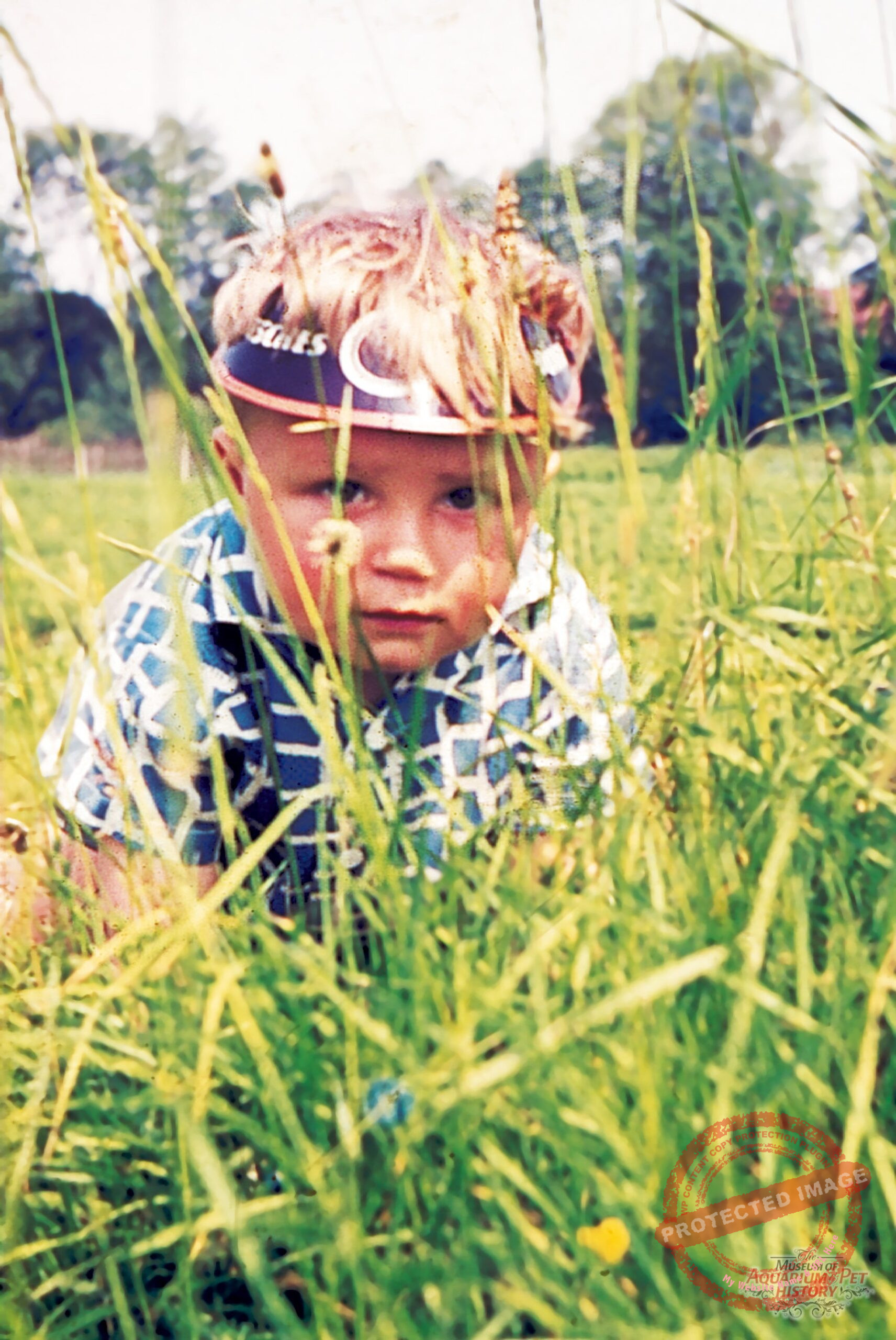
Early on, I explored the natural world around me
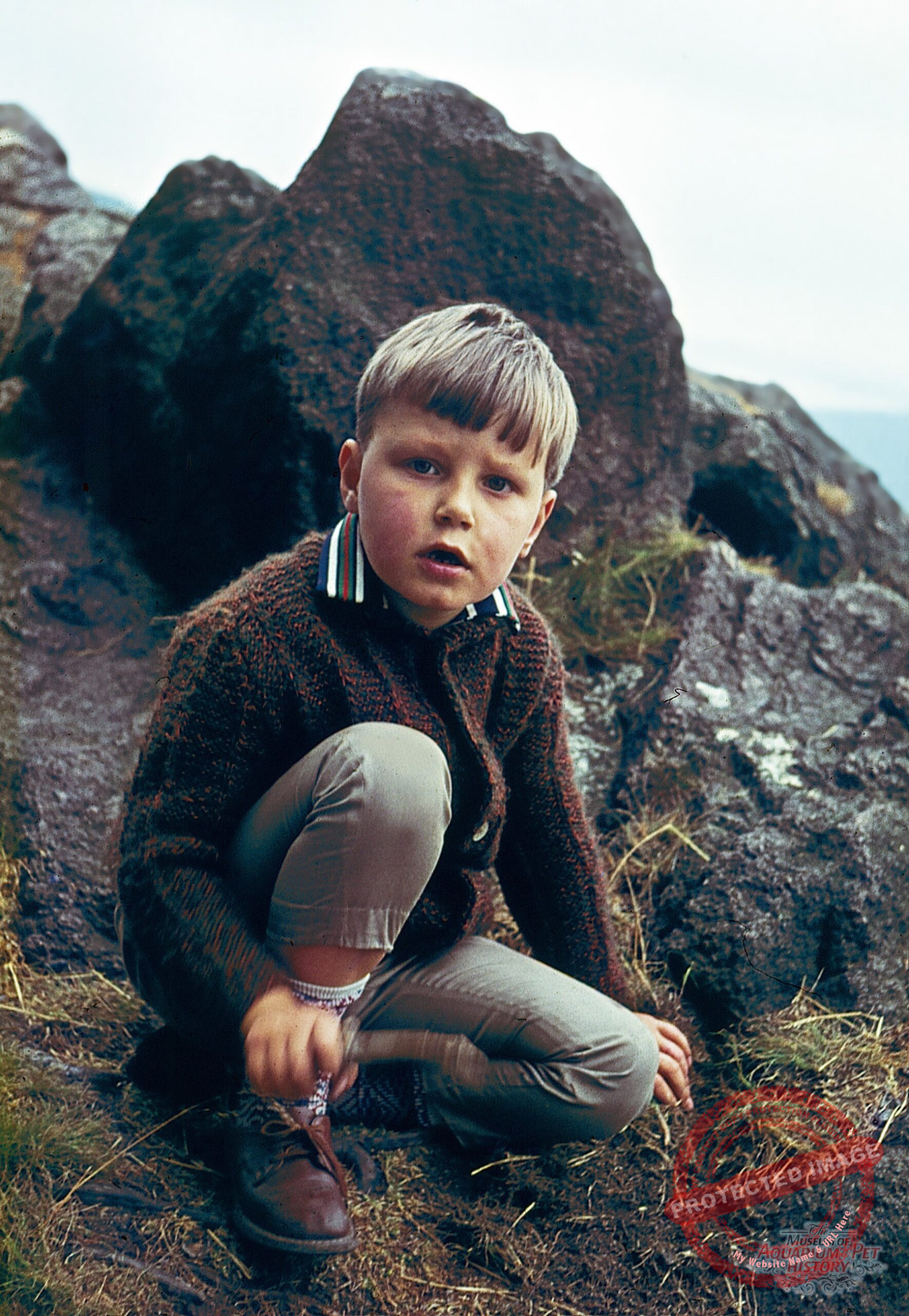
Long hikes through the Thuringian Forest taught me the natural connections between geology and water quality
That first aquarium would hardly withstand the criticism of today’s hobbyists, yet to me it was a marvel: a small all-glass tank with rounded corners, perched on a tiled plant stand in our living room. Such “full glass” aquariums were then produced in large numbers by the Thuringian glass industry—better known for ornaments and Christmas baubles—originally as battery jars. Their panes were often streaked or distorted, but as the old photographs from 1961 show, my little veiltail goldfish could be observed well enough.
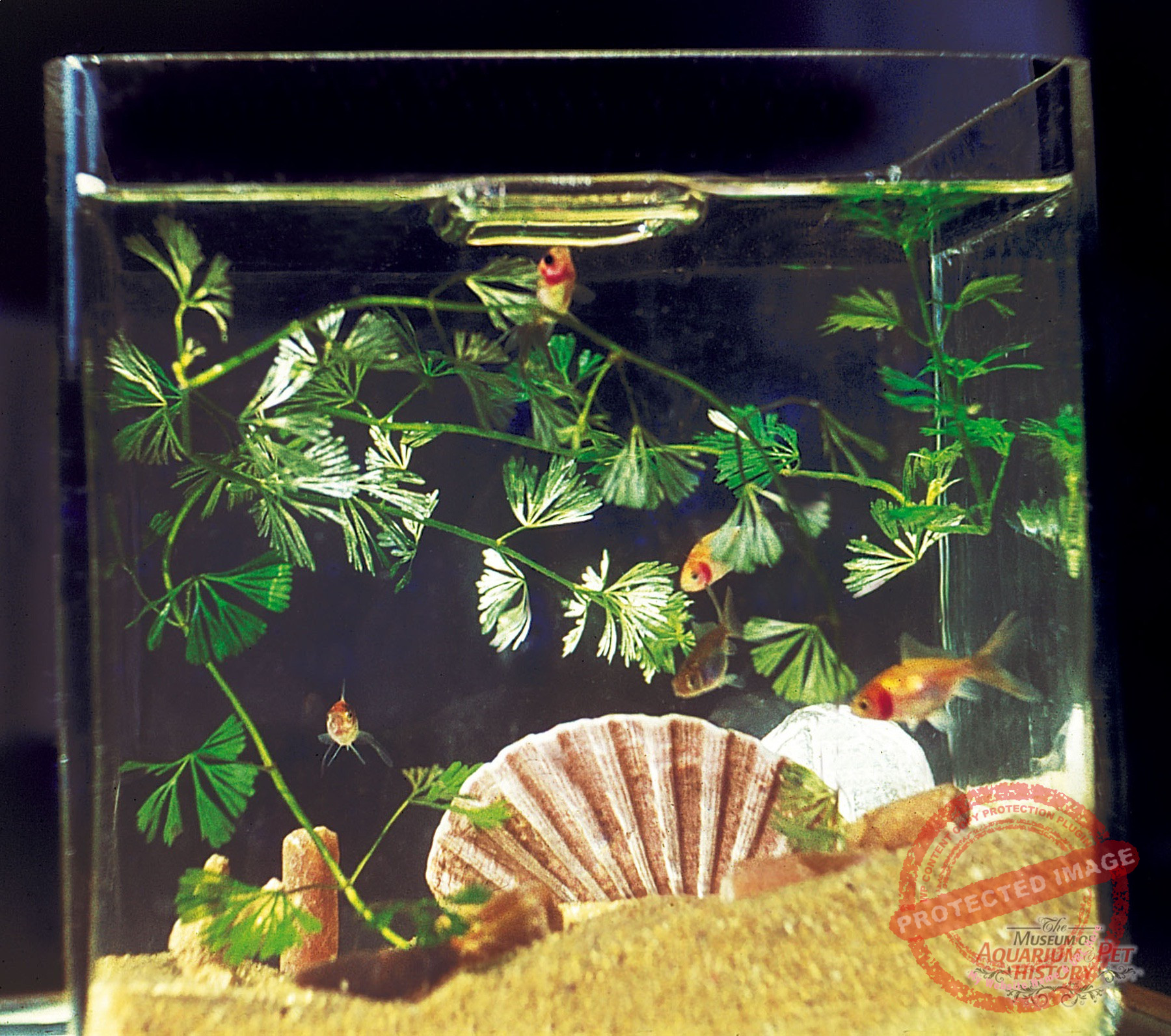
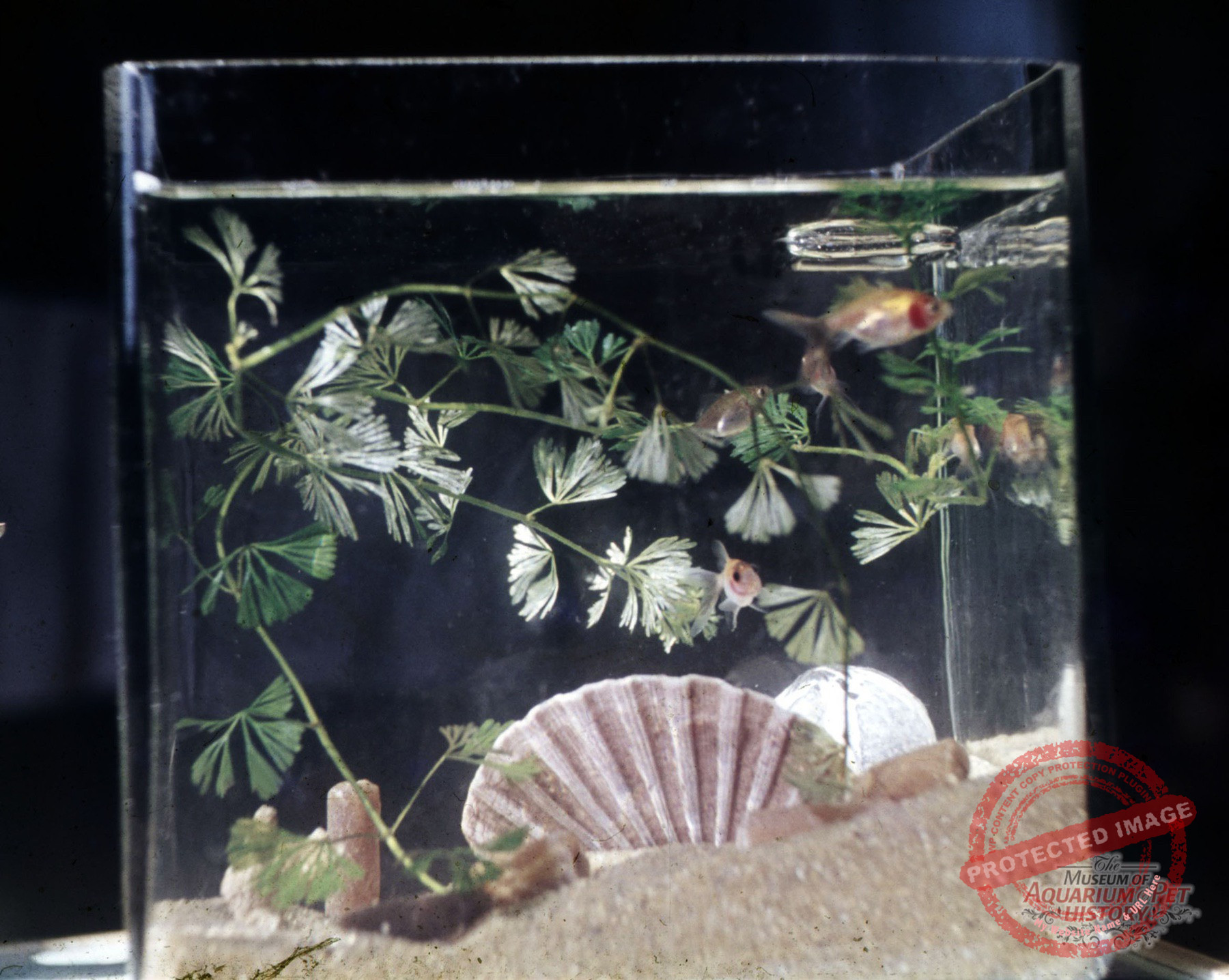
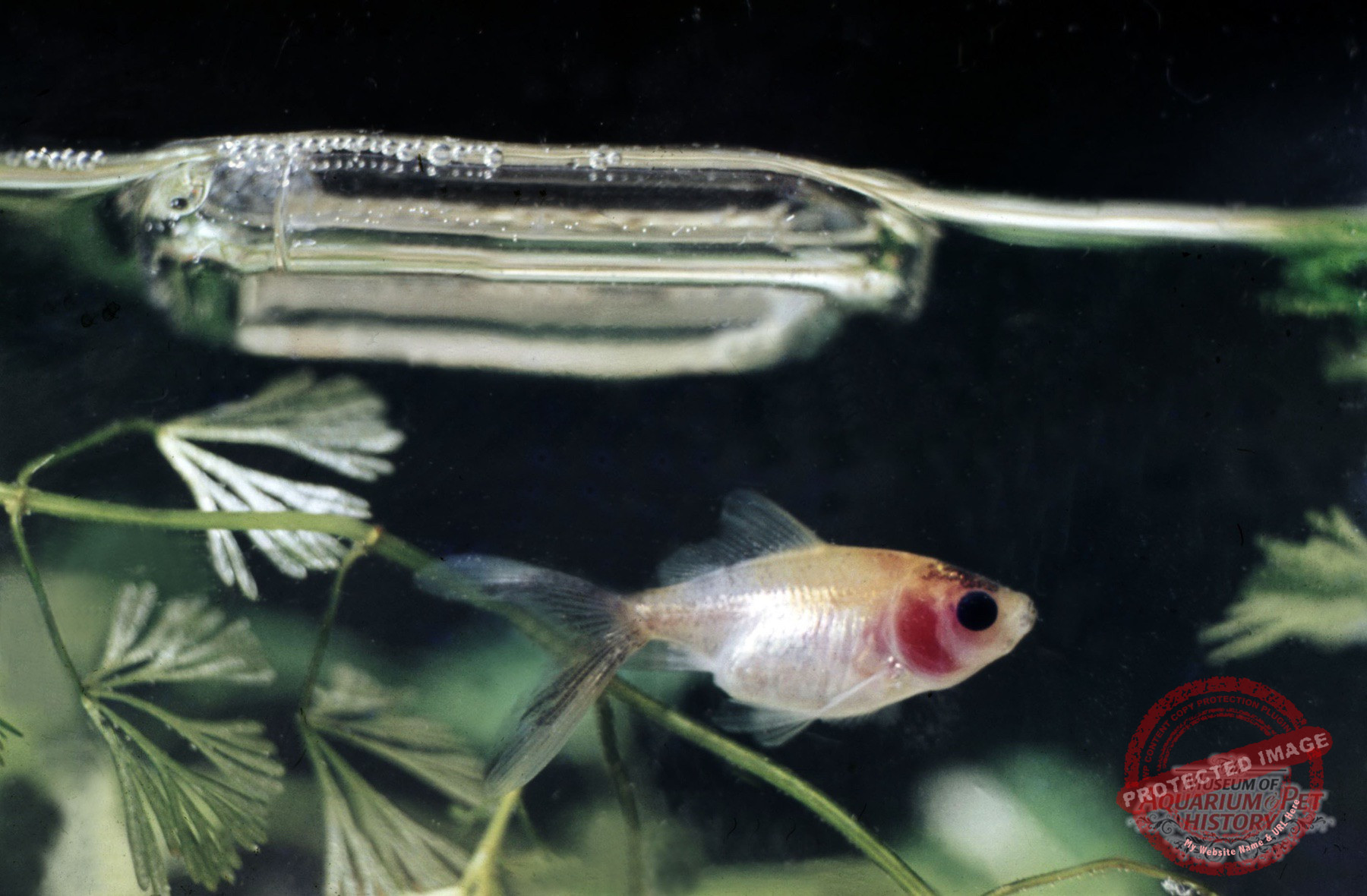
My first aquarium with veiltail goldfish, 1961
That first aquarium would hardly withstand the criticism of today’s hobbyists, yet to me it was a marvel: a small all-glass tank with rounded corners, perched on a tiled plant stand in our living room. Such “full glass” aquariums were then produced in large numbers by the Thuringian glass industry—better known for ornaments and Christmas baubles—originally as battery jars. Their panes were often streaked or distorted, but as the old photographs from 1961 show, my little veiltail goldfish could be observed well enough.
My mother furnished the tank with a giant clam shell, a fossil sea urchin, and several belemnites—marine relics with no rightful place in a freshwater aquarium, but enchanting to me nonetheless. A sprig of Cabomba provided greenery. Decades later, when I recounted this beginning in an editorial for my „Aquaristik-Fachmagazin“ and published that very photo, I received a call from Dr. Helmut Mühlberg, Germany’s foremost authority on aquatic plants. Excited, he asked where the tank was—convinced that the photograph revealed a long-lost cultivar of Cabomba believed extinct since the 1960s. Regretfully, I had to disappoint him: the photo was simply a relic of a time when that plant still thrived.
The educational power of a living hobby soon became clear. I tended the aquarium diligently, cleaning and caring for the fish. A year later I was given a toy train set, but after a careless movement toppled the plant stand and spilled the aquarium, leaving my veiltails writhing among electrified rails, I was horrified. I never again touched the train. From then on, my passion belonged entirely to animals.
A relative soon gave me a goldfish globe with a golden orfe (Leuciscus idus). Even without much knowledge, I sensed this was no proper home. Salvation came when my grandmother’s old enamel wash kettle—blackened and chipped after decades over coal fires—was replaced. With the small spade of my grandfather I dug a hole in the garden, lowered the kettle in, and planted a water lily brought by a friend. When filled, it became my first garden pond, and the orfe was released into it. The glass globe stood empty, but my world had already widened.
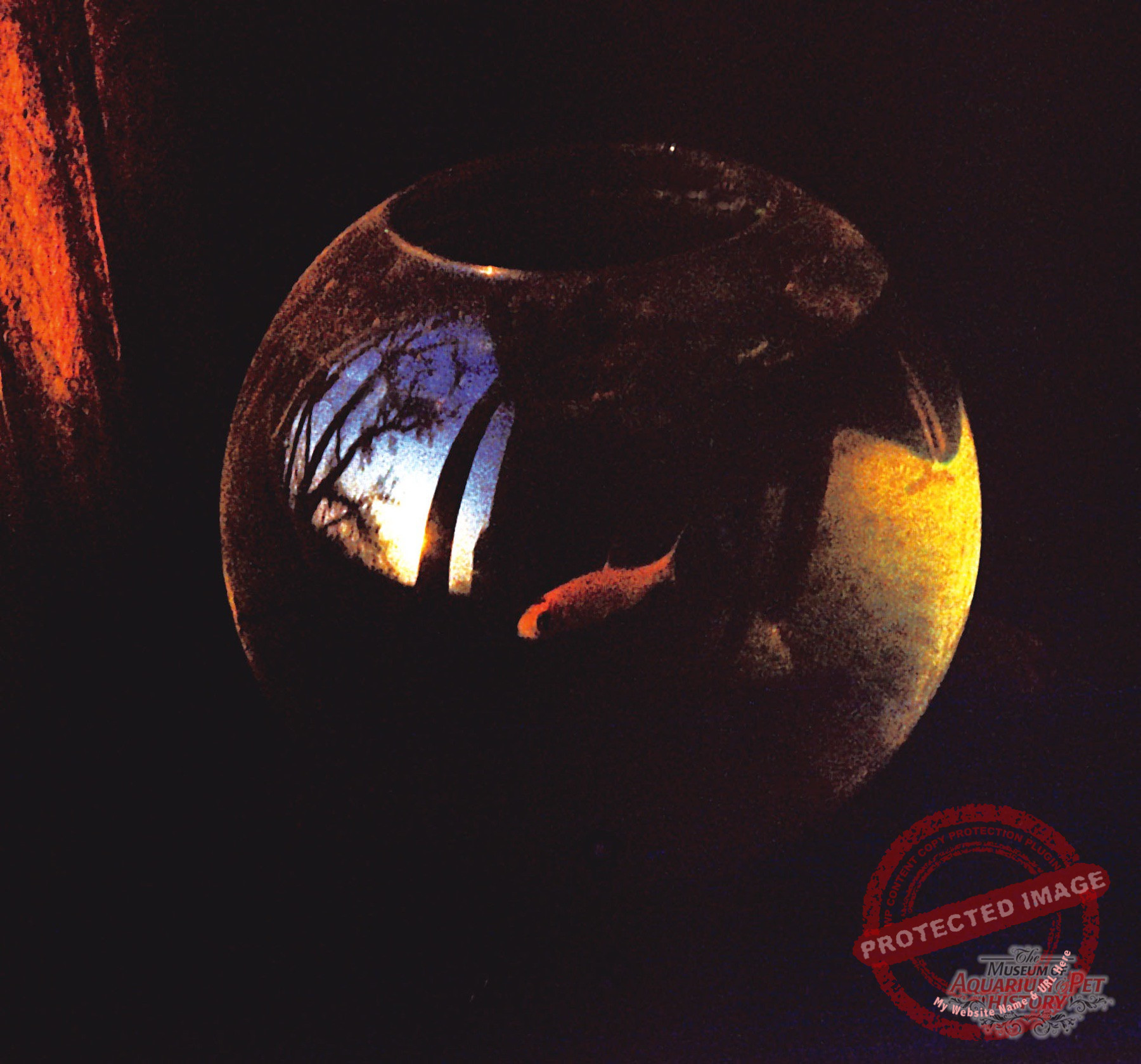
Goldfish globe with a golden orfe
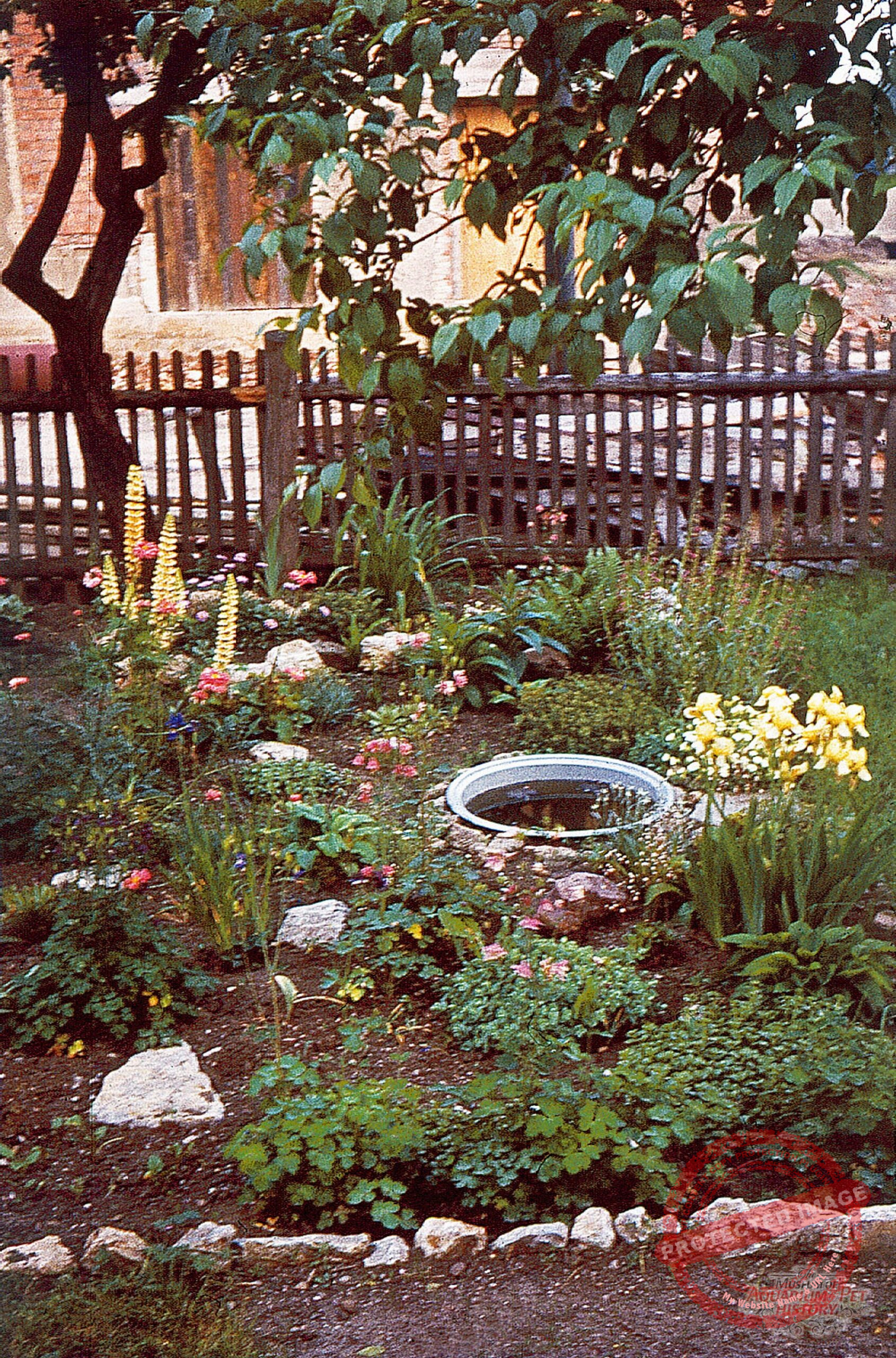
My first pond, fashioned from a wash kettle
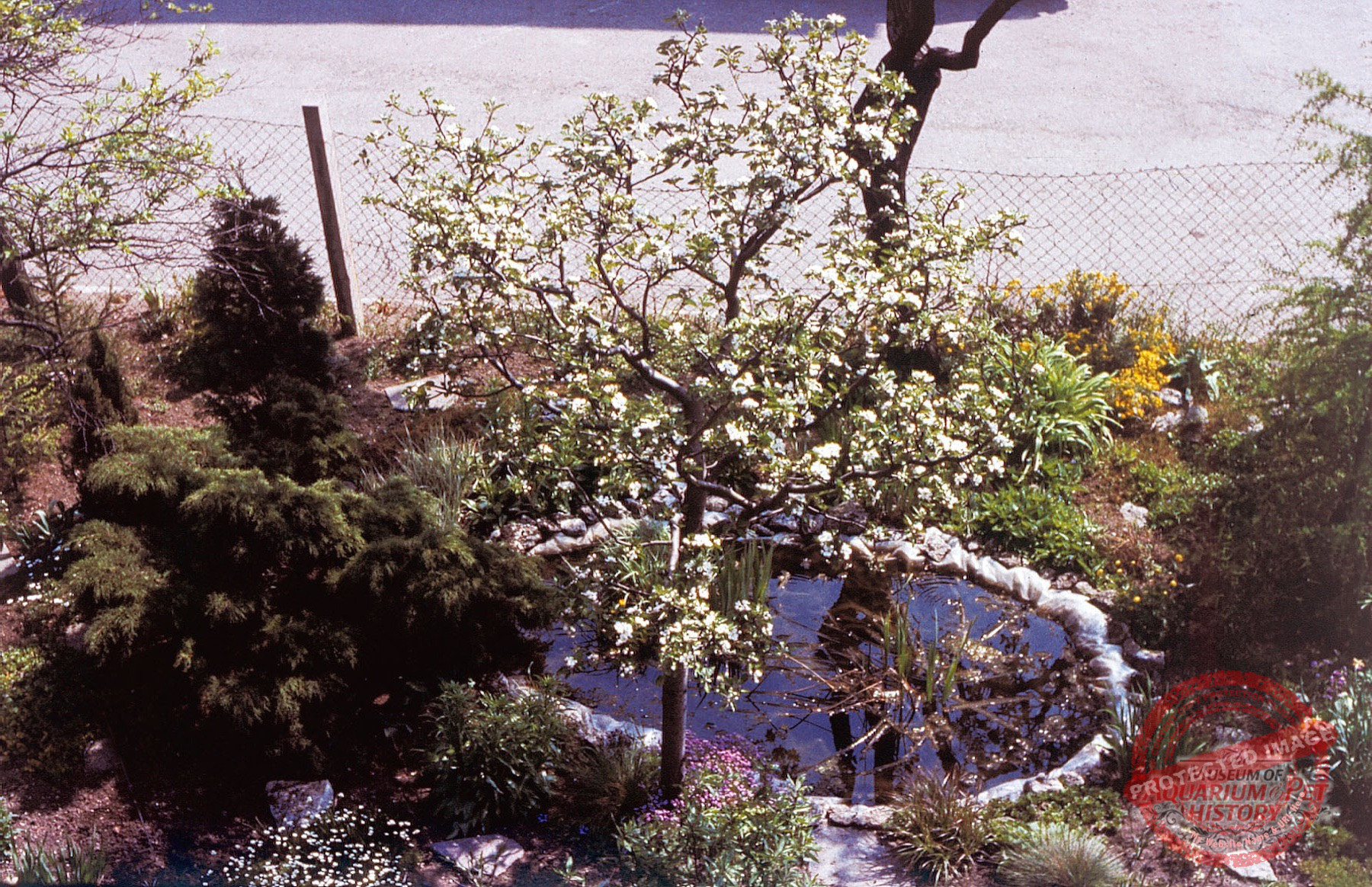
Soon the pond was enlarged with a liner
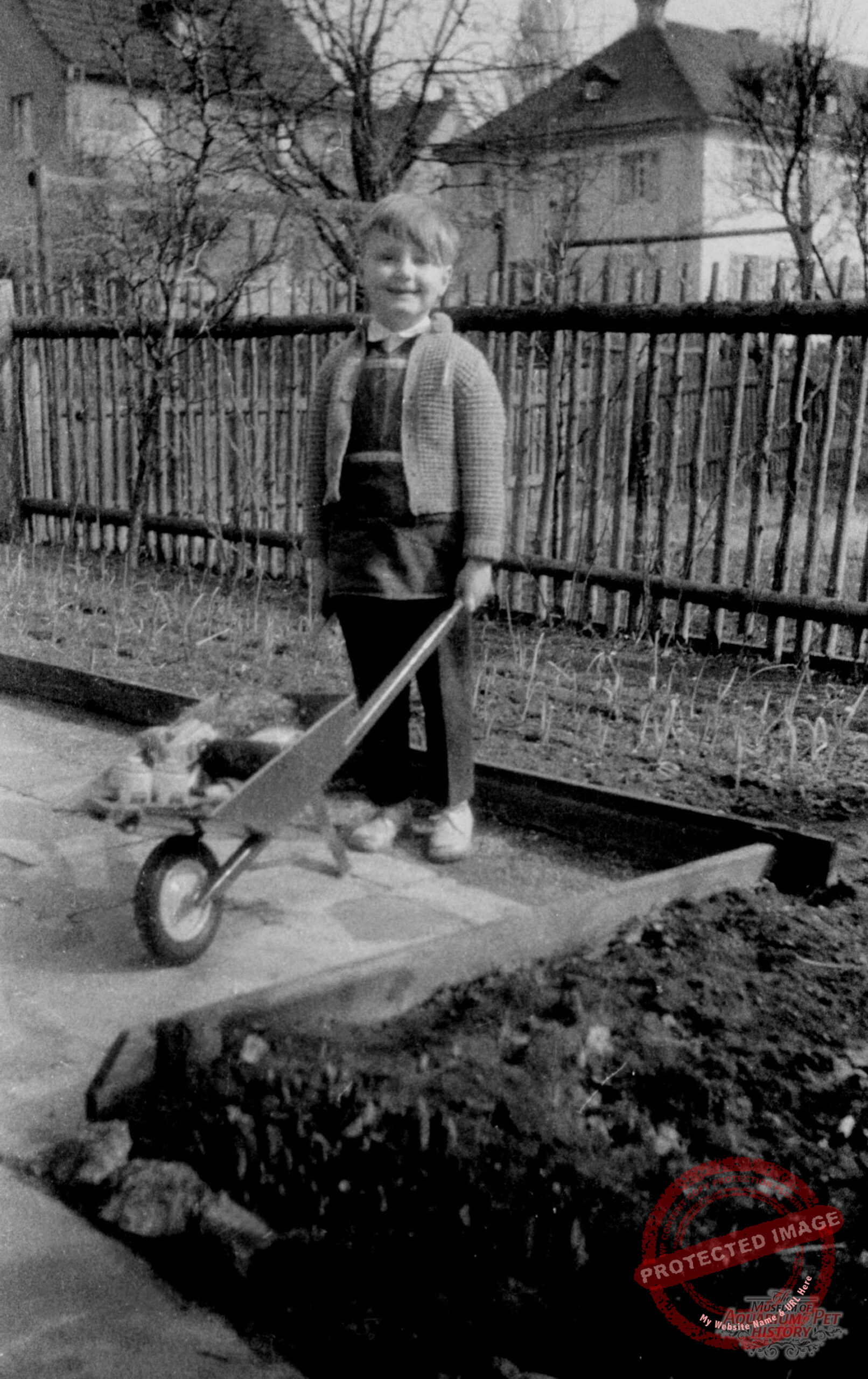
Black-and-white photo of me working at the pond
My mother recognized my boundless curiosity. Near our garden, just four hundred meters away, ran the Leina Canal. One of its offshoots, the “Narrow Rhine,” flowed behind our fence, feeding ditches along the nearby railway line. In one of these I discovered strange creatures: olive-green newts with orange bellies, one male resplendent with a jagged crest, a bluish tail, and spots. They were smooth newts (Lissotriton vulgaris) in their breeding season, as my mother read to me. I captured a few and placed them in the largest container available—a ten-liter preserving jar.
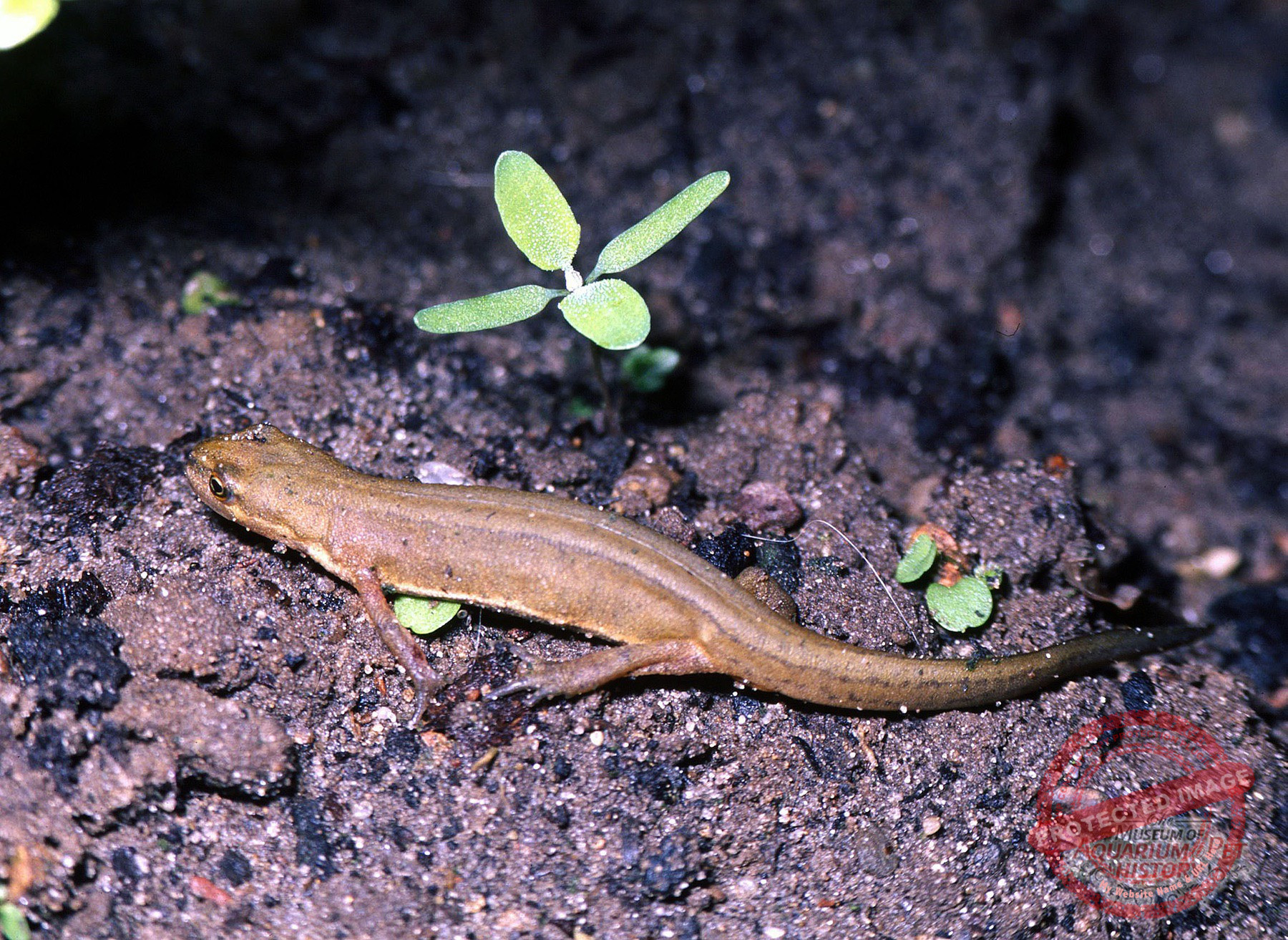
Female smooth newt on land
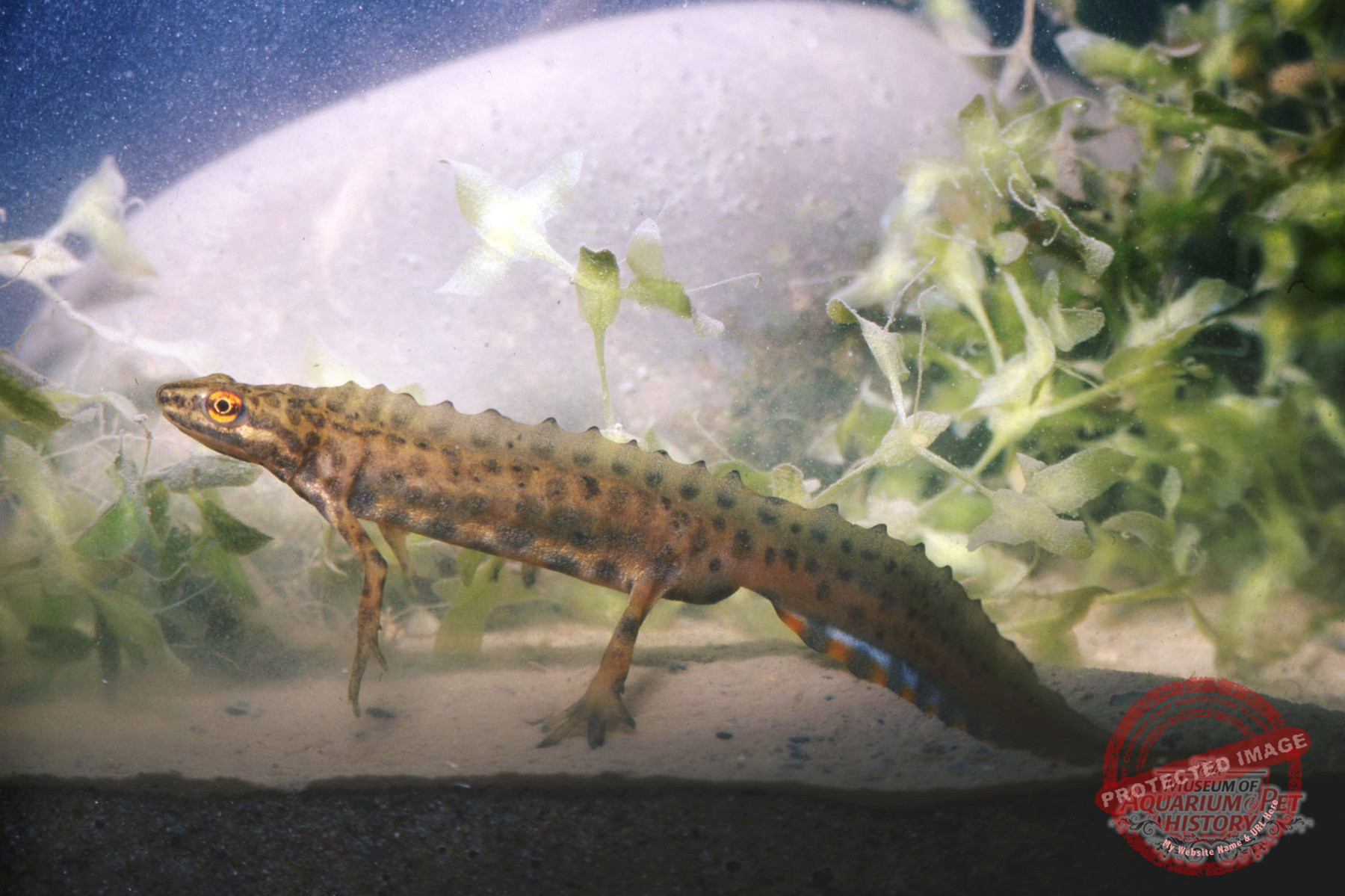
Male smooth newt in breeding colors, underwater
The next morning three had vanished. Disheartened, I went to my mother. She was still in her bed, looking to a point near her feet. There was sitting one newt. The other two were sitting beneath the furniture. I rinsed them off and returned them to the jar. Now I knew: newts can climb glass. Soon, as young toads appeared in our garden, my passion deepened. A neighbor crafted for me a wooden terrarium with a wire-mesh lid. A photographic tray served as a pond. Thus began my first real studies of amphibians—a field that would later shape my academic career.
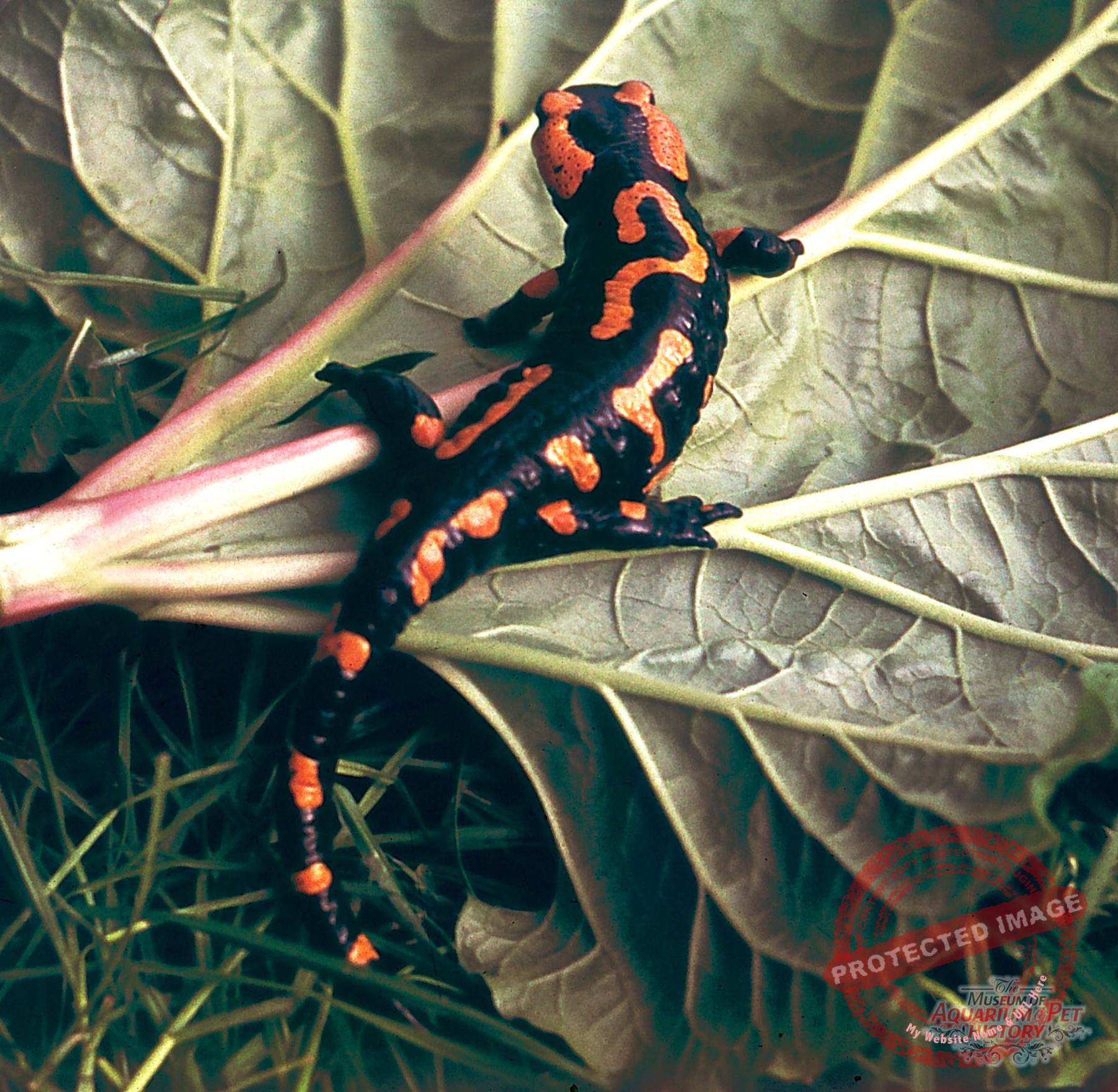
Like a birthday surprise, this fire salamander appeared at our doorstep on the morning of my tenth birthday
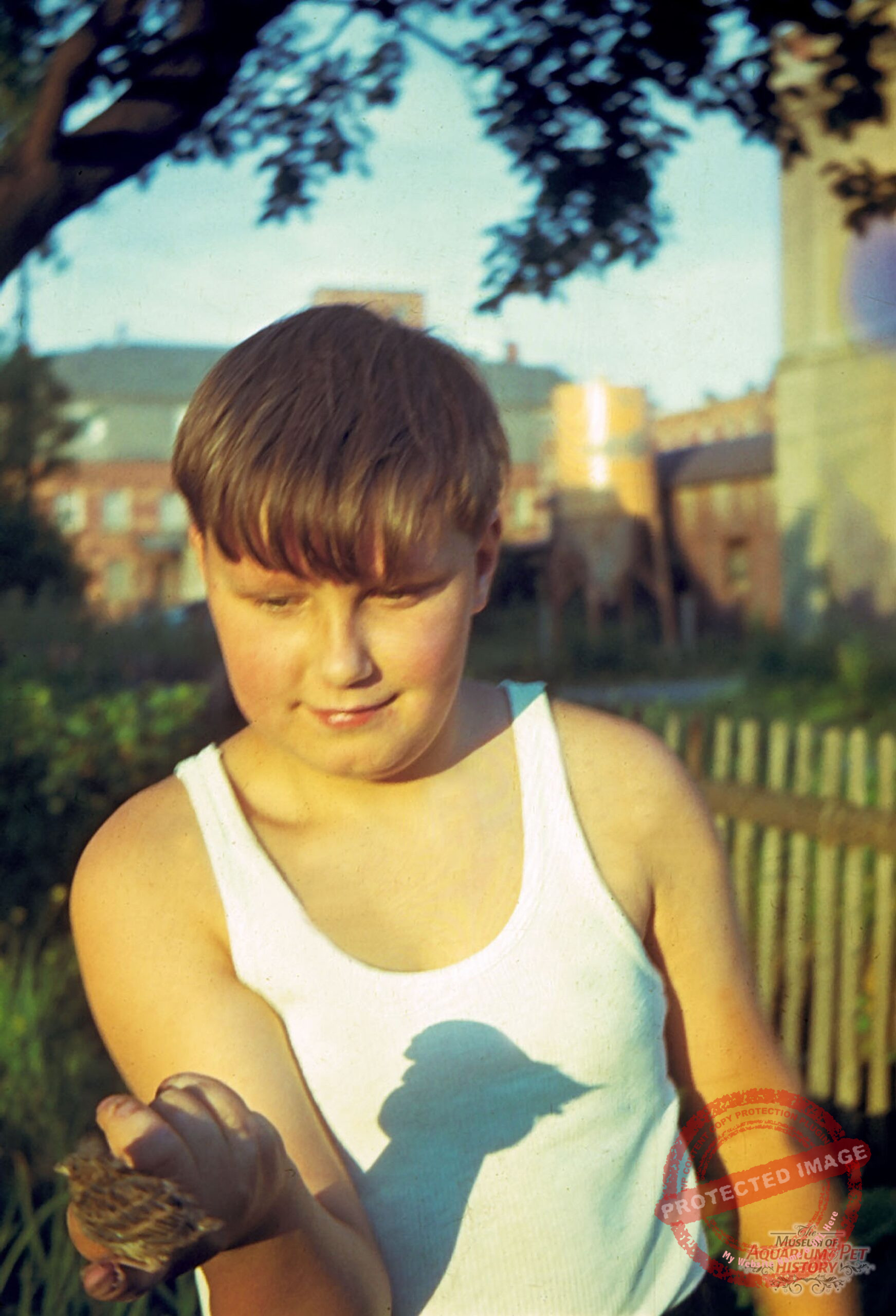
I often raised and cared for wild animals, here a house sparrow
My mother knew how to encourage me. Sometimes, when she went to a café, she chose one I nicknamed the “Fish Café” in Gotha’s Jüdenstraße, for it housed eight aquariums, splendidly stocked. I was captivated by the pearl gouramis (Trichogaster leeri). At last, just before I entered school, she bought me a frame aquarium—the finest kind then available, with glass panes set into a metal frame sealed with putty. Sixty centimeters long, it seemed enormous to me. With gravel and stones I set it up, awaiting her promised trip to the pet shop.
As it happened, my enthusiasm spread quickly through the neighborhood. Soon I discovered I was not alone: across the street lived an older woman who invited me in one day. Her husband’s name, Hans Kehl, was on the doorplate—“Heating Contractor.” She showed me a living room filled with aquariums lushly planted and teeming with fish. Using a glass catching bell, she scooped out a few tiny fry and placed them in my hands. “Guppies,” she explained. They were the newborn offspring of the adults with black-and-blue fan-shaped tails that swam in her tanks.
I carried them home proudly and raised them in my own frame aquarium. Later, Herr Kehl himself, a man with a deep, sonorous voice, presented me with more guppies, this time in varied colors. He praised my passion for aquarium fish, and only much later, while researching this very series, did I realize the significance: on a photograph of the early members of the Gotha Aquarium Society, I found his name. My very first tropical fish had come from one of the founding members of the oldest aquarium society in the world.
Not long after, my mother finally took me to Zoo-Kästner, the only pet shop in Gotha at the time, located on Gutenbergstraße. The year was 1965. The shop, still in its old quarters before moving later, was narrow, dark, and damp—yet to me it was pure wonderland. The air was filled with the smell of aniseed from bird sand, a hint of must, and unmistakably the scent of animals. A rhesus monkey (Macaca mulatta), “Fips,” sat chained inside. When the shopkeeper, Wolfgang Kästner, called out “Lora,” it was not his wife who answered but a blue-fronted Amazon parrot (Amazona aestiva) perched on the counter. In a tall corner cage lived a family of marmosets (Callithrix jacchus). Kästner was an adept animal keeper, fascinated by the full spectrum of the animal world. Many of his charges were elderly, survivors from prewar days—exotics that could no longer be imported into the GDR.
Yet it was the aquariums that enthralled me. On the lowest shelves lived pale, ghostlike axolotls (Ambystoma mexicanum), sorted by size. Above them swam hardier fish such as paradise fish (Macropodus opercularis). Higher still were angels (Pterophyllum scalare), guppies (Poecilia reticulata), swordtails (Xiphophorus helleri), cichlids of various species, and, to my delight, pearl gouramis (Trichogaster leeri). Only later did I understand the logic: in the stove-heated shop, the upper tanks were warmest. For me, it was paradise. When my mother, thinking of Herr Kehl’s guppies, tried to leave without buying anything, I burst into tears. She relented, and we carried home a small group of platies (Xiphophorus maculatus). That moment marked the true beginning of my aquaristic life—with warmwater fish and a sturdy frame aquarium.
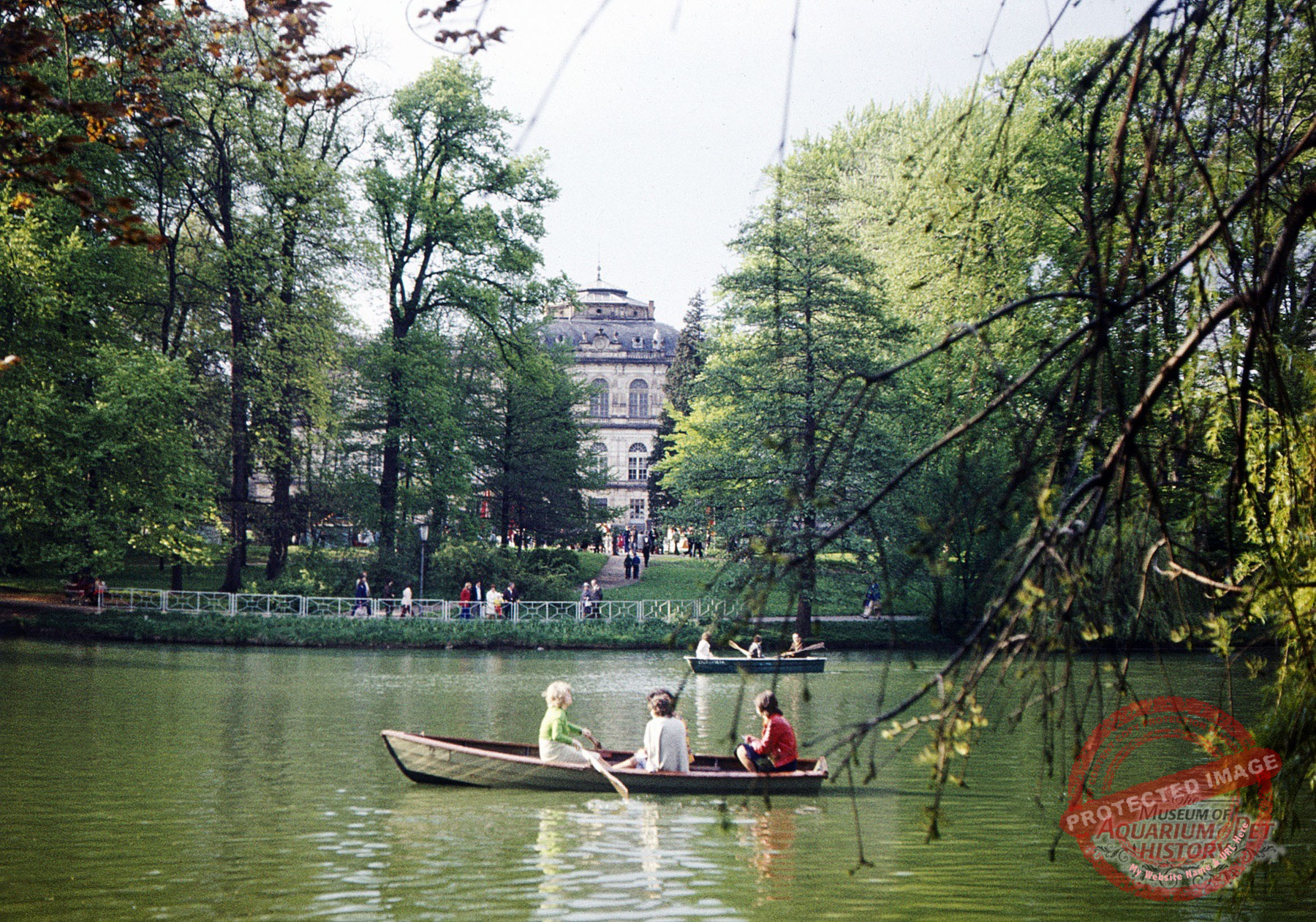
By the time I was eighteen and preparing to leave home, I had built a menagerie of aquariums and terrariums. In the park pond of Gotha’s Schlosspark—whose design Goethe himself used as a model for Weimar’s Ilm Park—I netted clouds of water fleas (Daphnia pulex). I delivered them to Kästner, who, with kind indulgence, pretended they were of great value. In return I acquired tanks, heaters, pumps, lamps, and, of course, more fish. Terrarium animals I caught myself, fashioning cages and enclosures from whatever containers I could repurpose. We hobbyists in the GDR were inventive out of necessity. Later more about this…
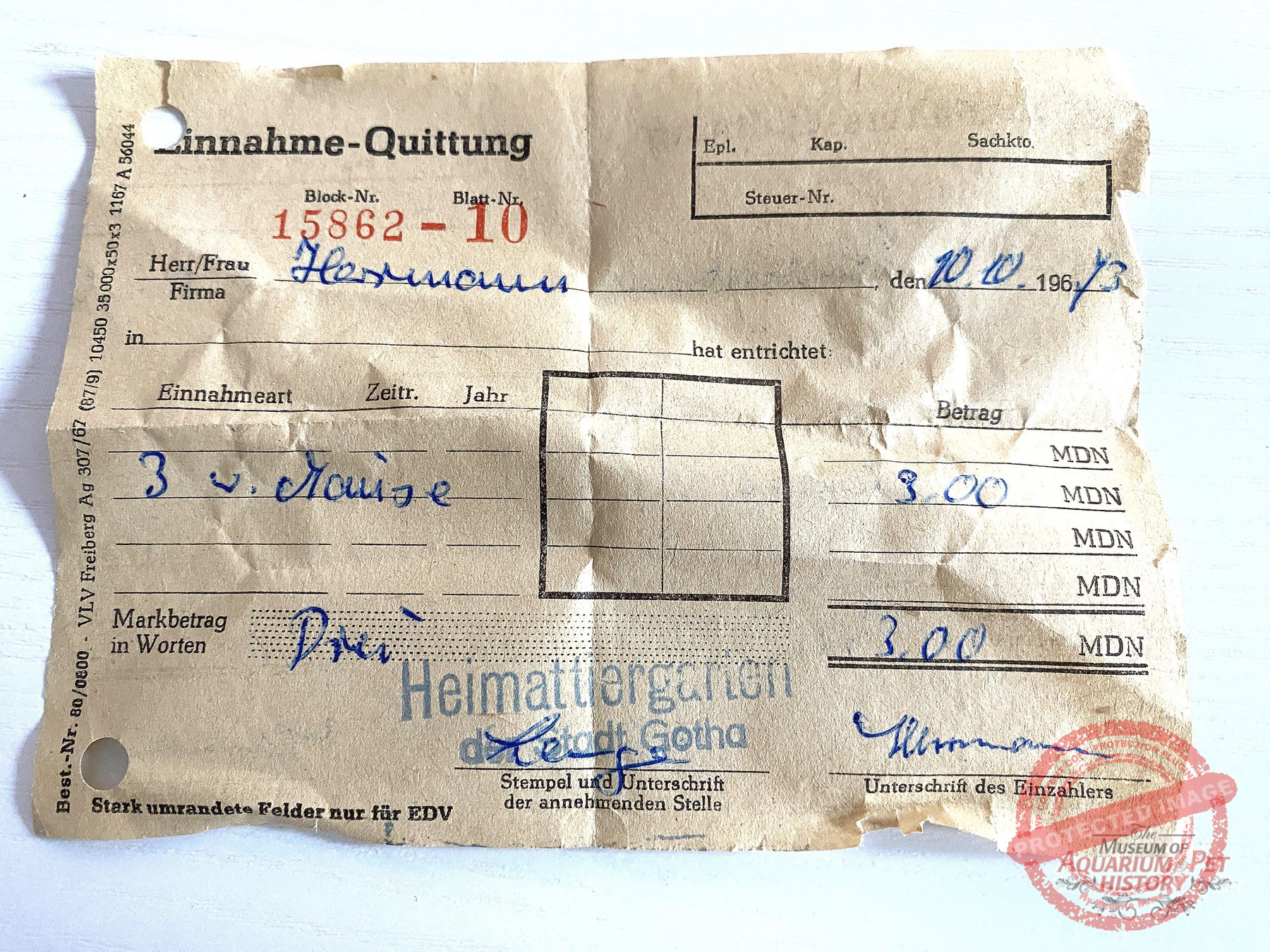
I financed many of my hobby expenses by collecting water fleas or selling my own offspring—here, white mice bred as live food for the zoo
At age eight I succeeded in my first breeding: from two striped females and a white male of the zebra cichlid (Amatitlania nigrofasciata). My appetite for knowledge grew, and I longed for contact with fellow aquarists. It was then my mother told me of a relative—Charly Fuchs, the brother-in-law of my late great-aunt—who lived on the outskirts of Gotha, in a district built around the so-called “Gotha Aquarium.” The name intrigued me. She said the site was now derelict, but uncle Fuchs could explain why.
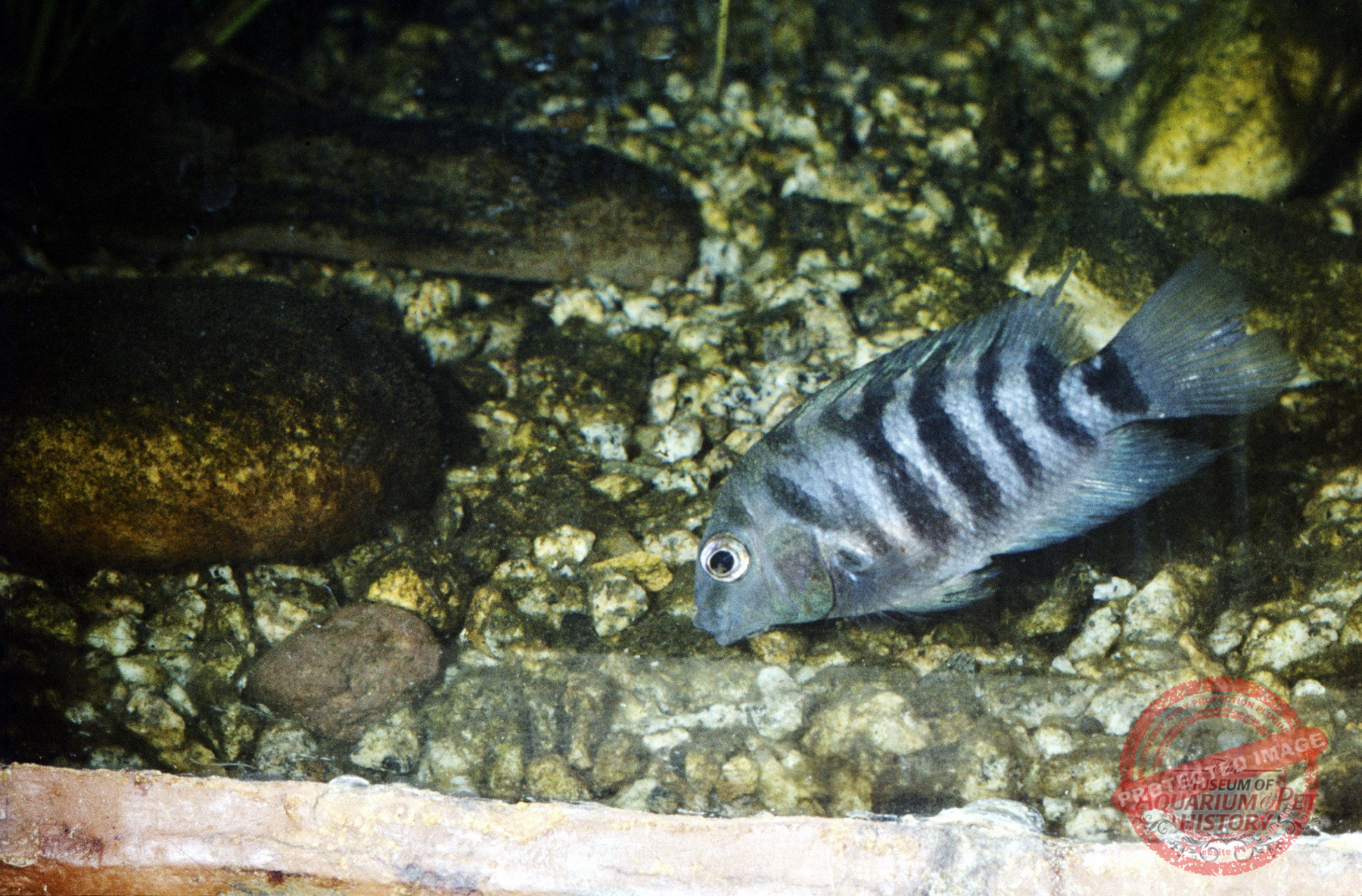
Female zebra cichlid in my frame aquarium; the aquarium putty is visible at the bottom
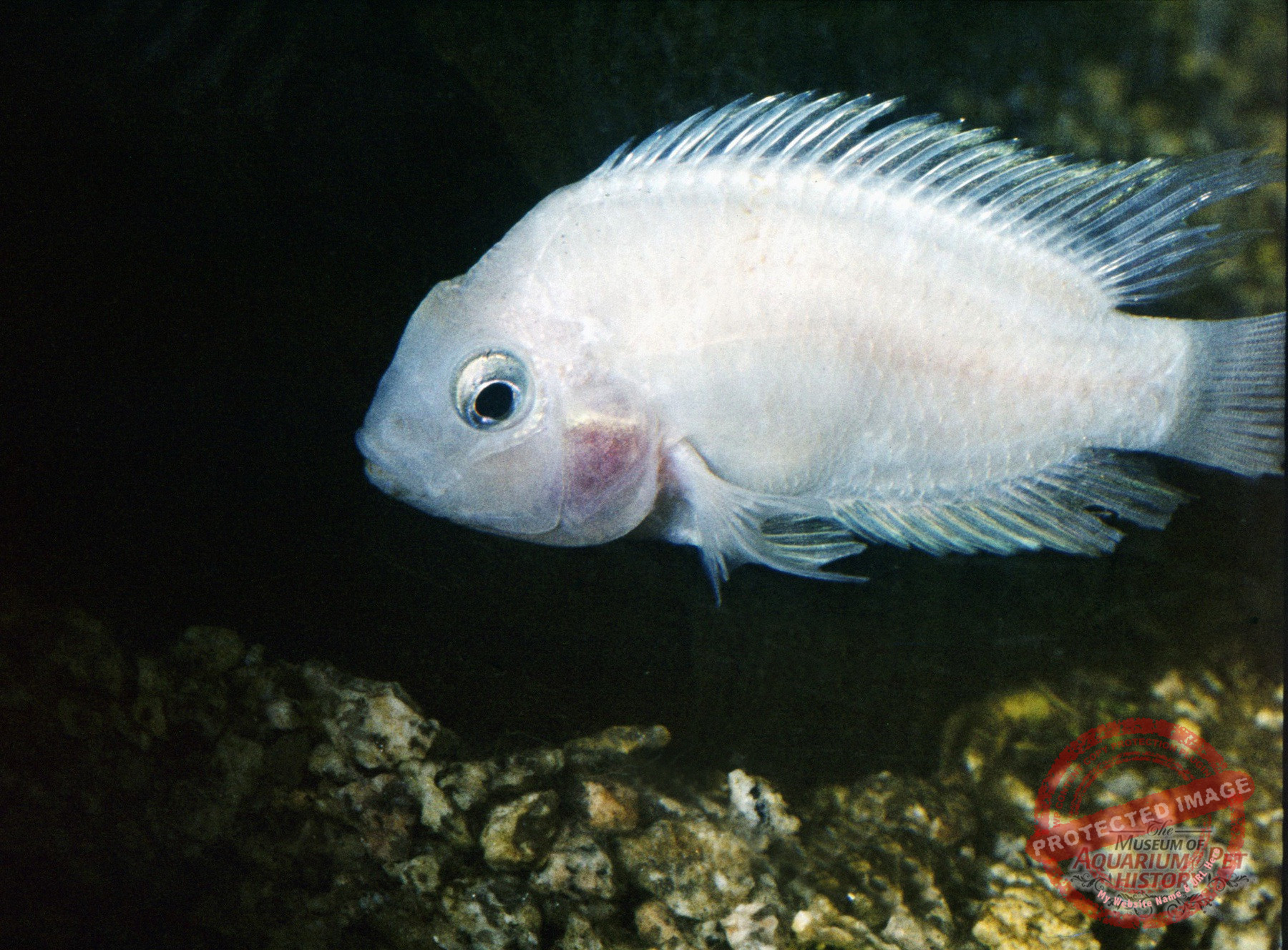
My white breeding male zebra cichlid
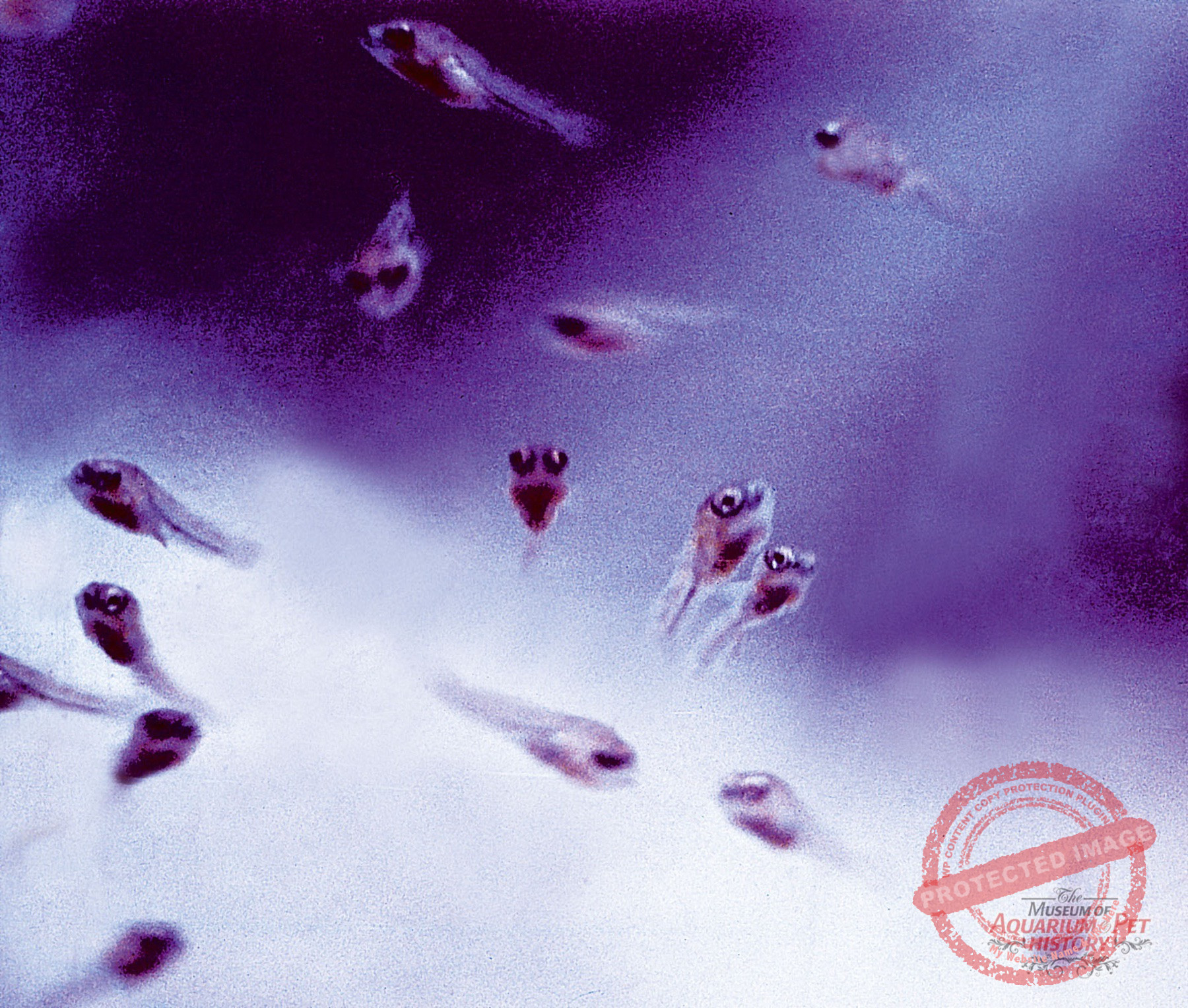
My first fry
The very next day I sought him out. What he told me, and what I saw, belongs to another chapter of this story. For now, I will only reveal this: he was one of the leading figures of the Gotha Aquarium Society, a man who lived nearly a century and devoted his life to preserving and passing on the aquaristic tradition. And he was my kin. Through him I gained a direct link to the venerable world of aquarists. Soon afterward I met Kurt Koch, another prominent founder, who still maintained a vast breeding installation. But more of that later.
By the time I was thirteen, my interests had begun to expand to larger animals. I spent nearly every day at the Gotha Heimattiergarten—the local zoo. I had learned that, after the Second World War, it had been built by members of the Aquarium Society on the former “Danio Grounds,” which had once been another outdoor aquarium. The site included ponds and an aging but still well-stocked aquarium house. Without being asked, I began helping there, making myself indispensable until I had established a close relationship with the zoo director, Georg Rainer.
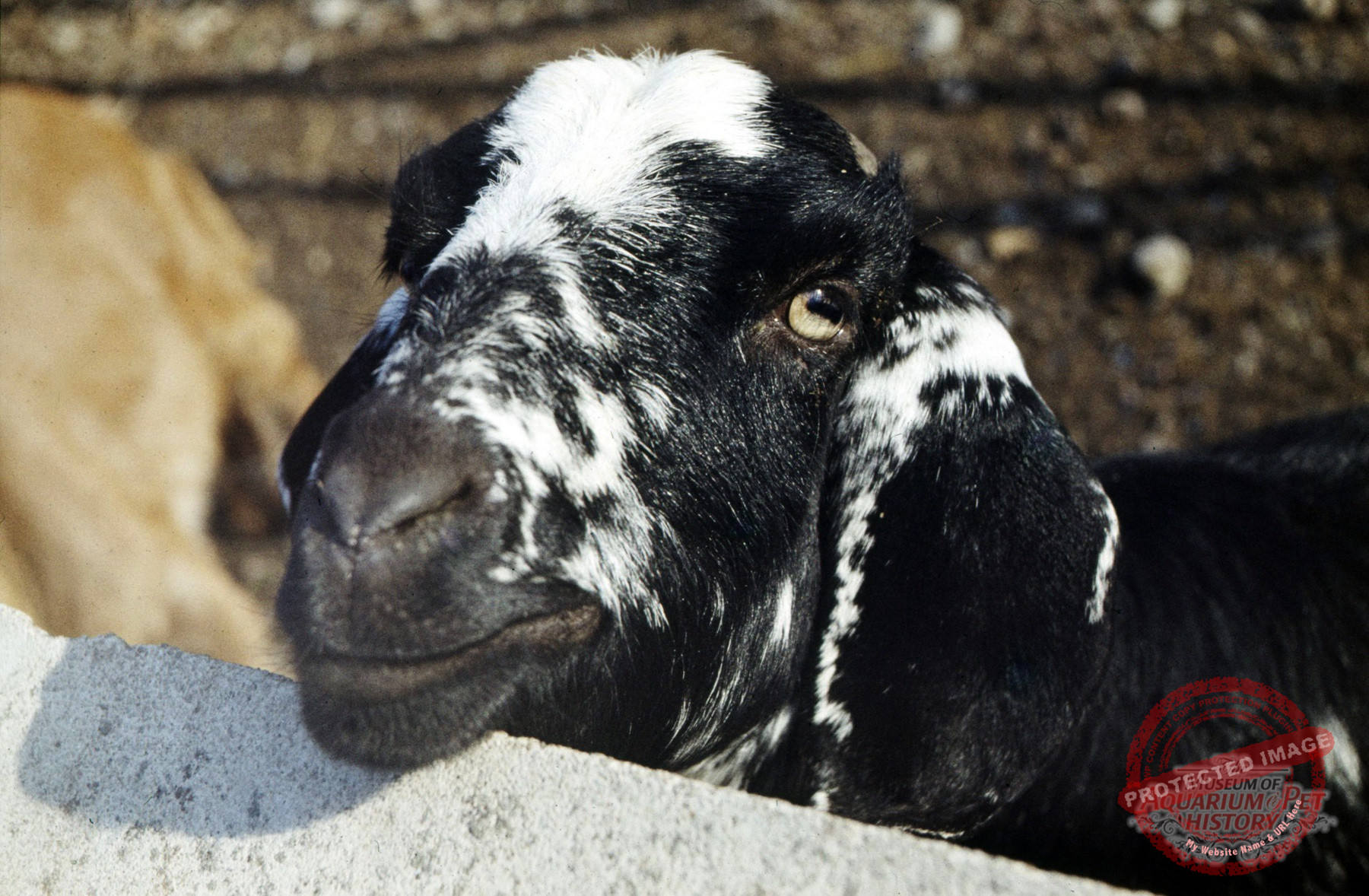
He took me along to meetings of the Kulturbund, the cultural association that organized hobbyists and artists in the GDR. There I entered the world of terrarium keepers, made contacts with breeders, and gained opportunities to care for an ever wider variety of animals—snakes and crocodiles, tegus and other lizards, even rare breeds like Hungarian racka sheep, as well as a dingo and a young puma entrusted to me temporarily. At home I kept a small private zoo: golden hamsters (Mesocricetus auratus), Russian tortoises (Testudo horsfieldii), Caspian pond turtles (Mauremys caspica), Pityus wall lizards (Podarcis pityusensis), cockatiels (Nymphicus hollandicus), turquoisine parakeets (Neophema pulchella), and countless native species I caught myself. Together with a handful of like-minded youths, I founded the Tierpark Youth Club—a loose gathering of animal lovers who met almost daily after school at the zoo.
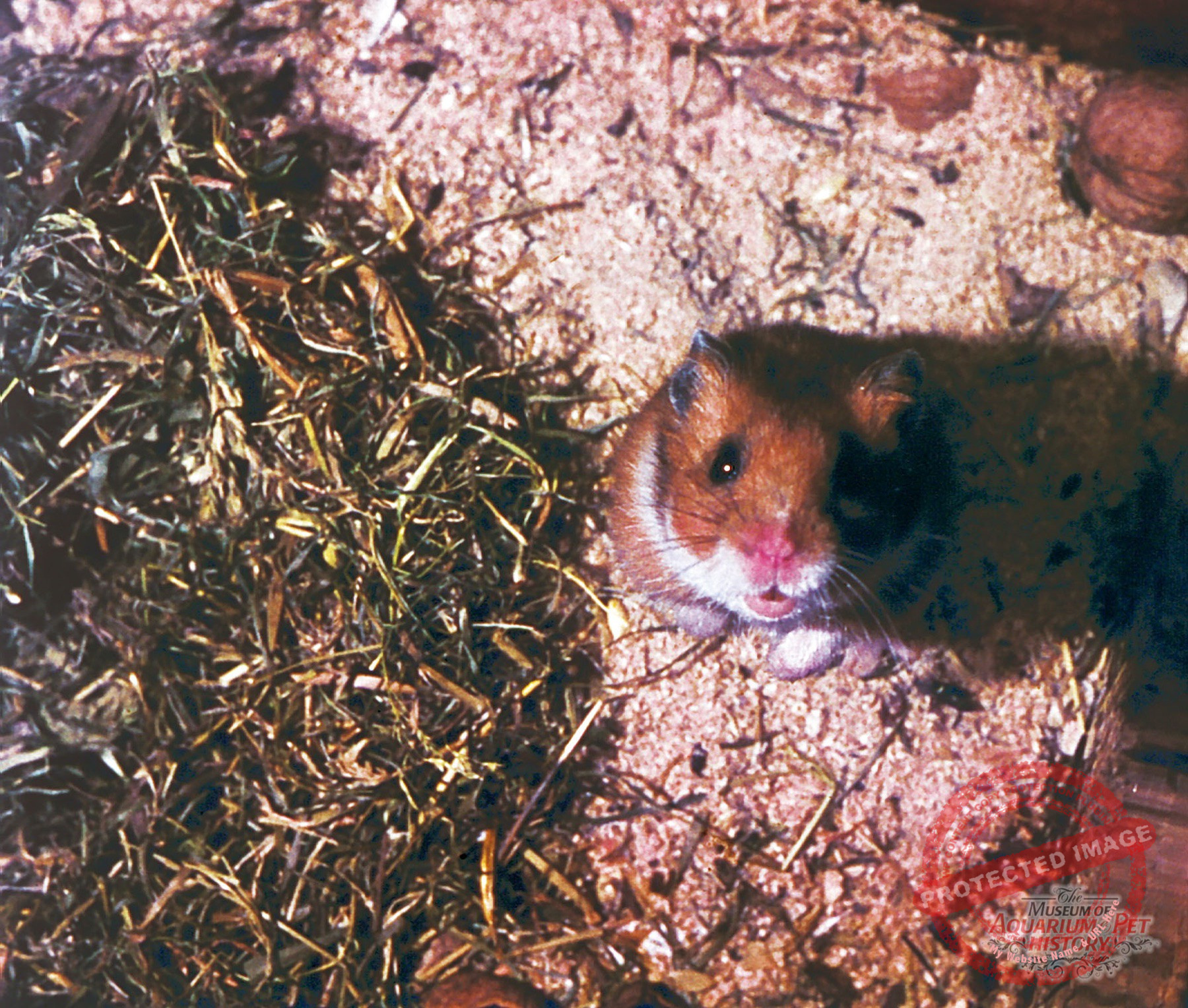
Golden hamsters were always part of our household
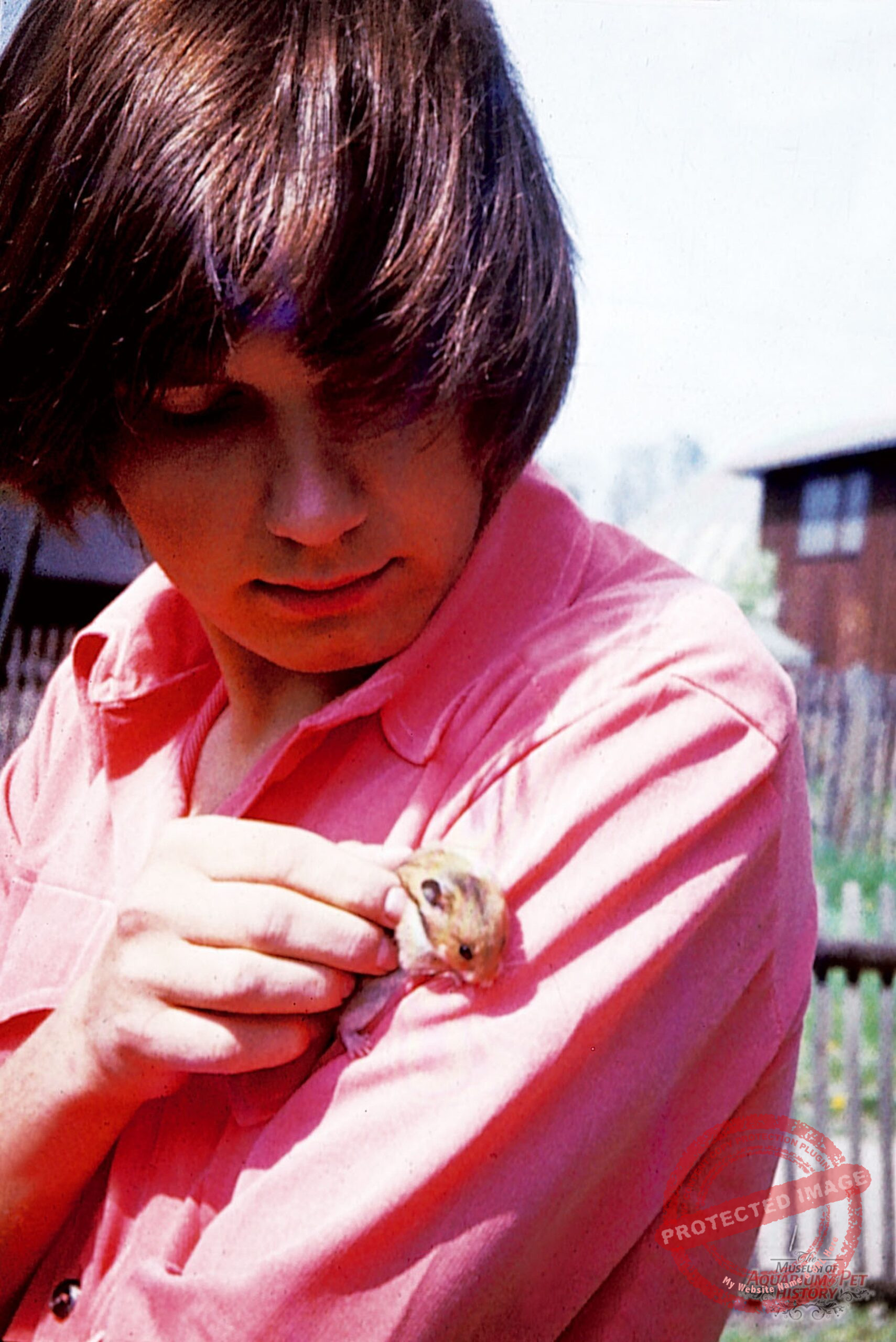
I gave many animals highly individual, personal care—like this golden hamster
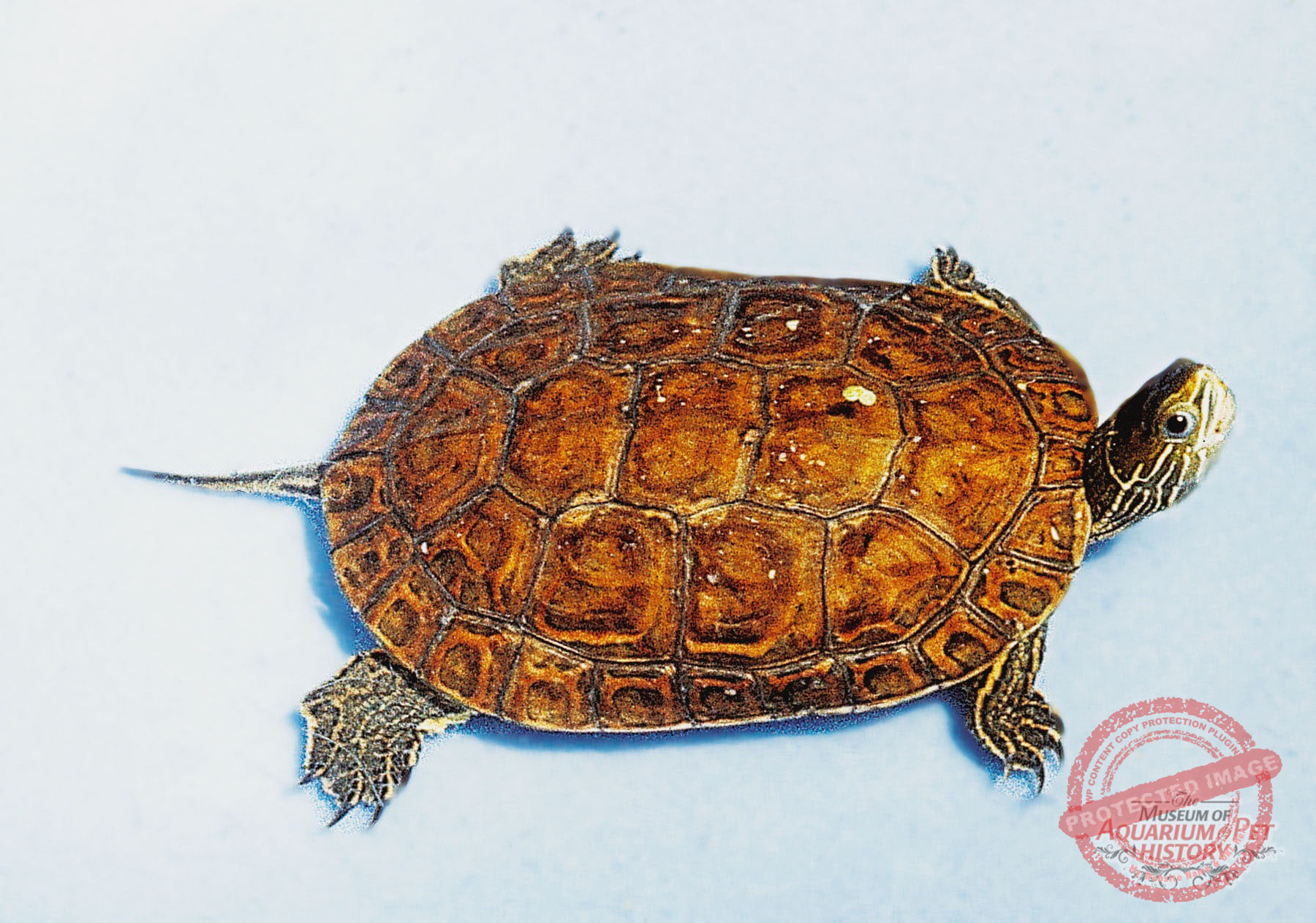
In an aquaterrarium I kept this Caspian pond turtle
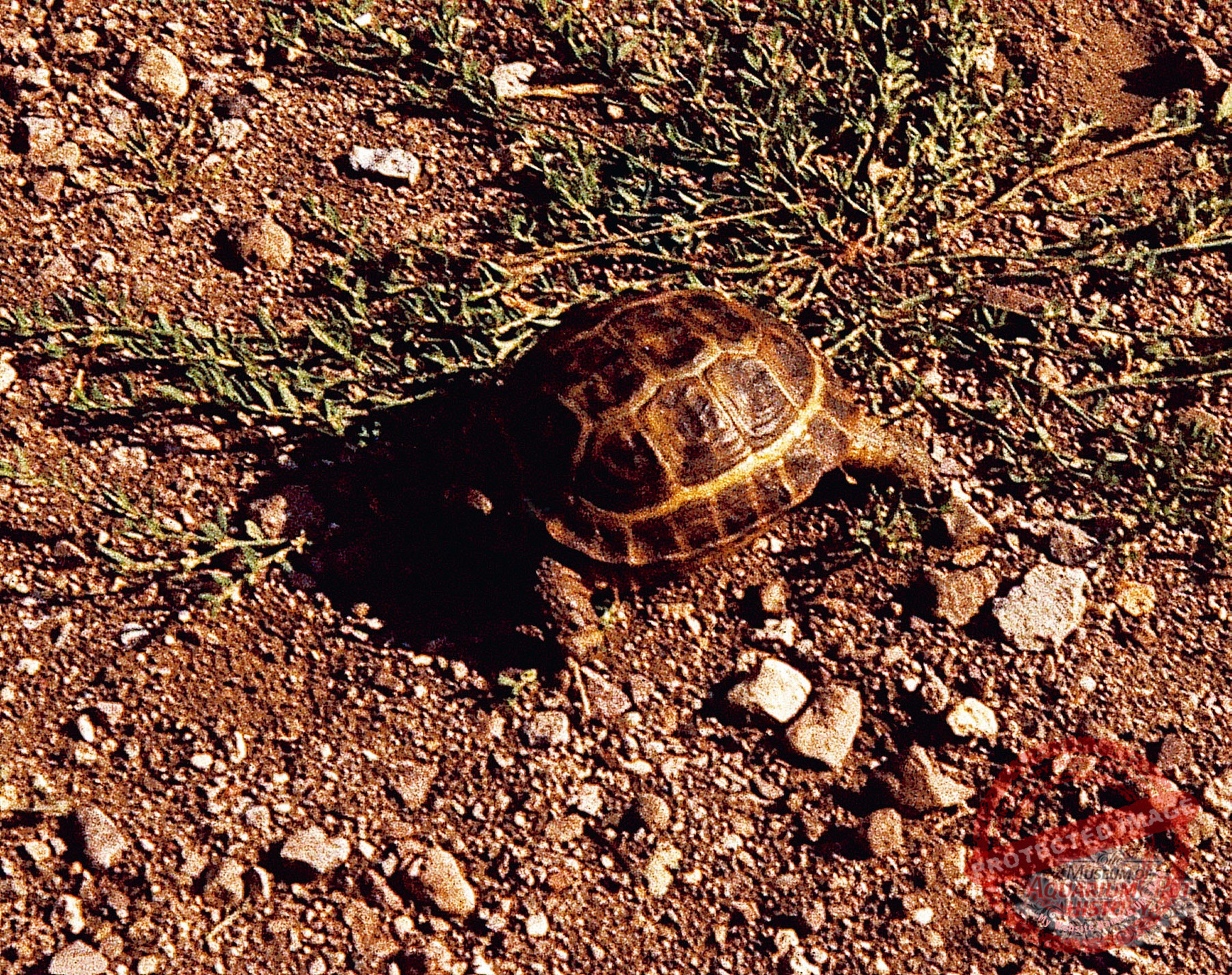
Russian tortoises lived outdoors in a sunken wooden tub terrarium
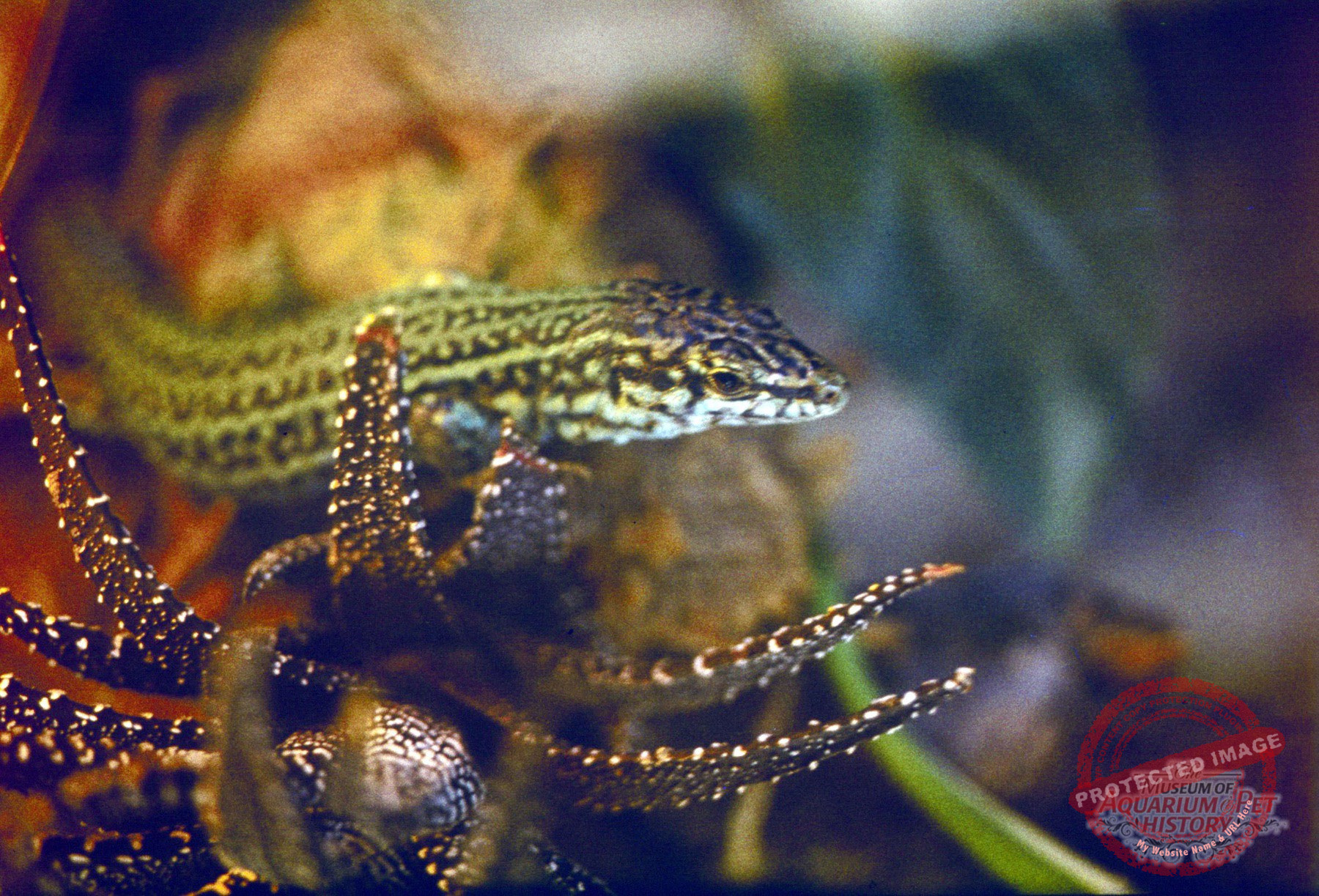
My first lizard from a pet shop was this Pityus wall lizard
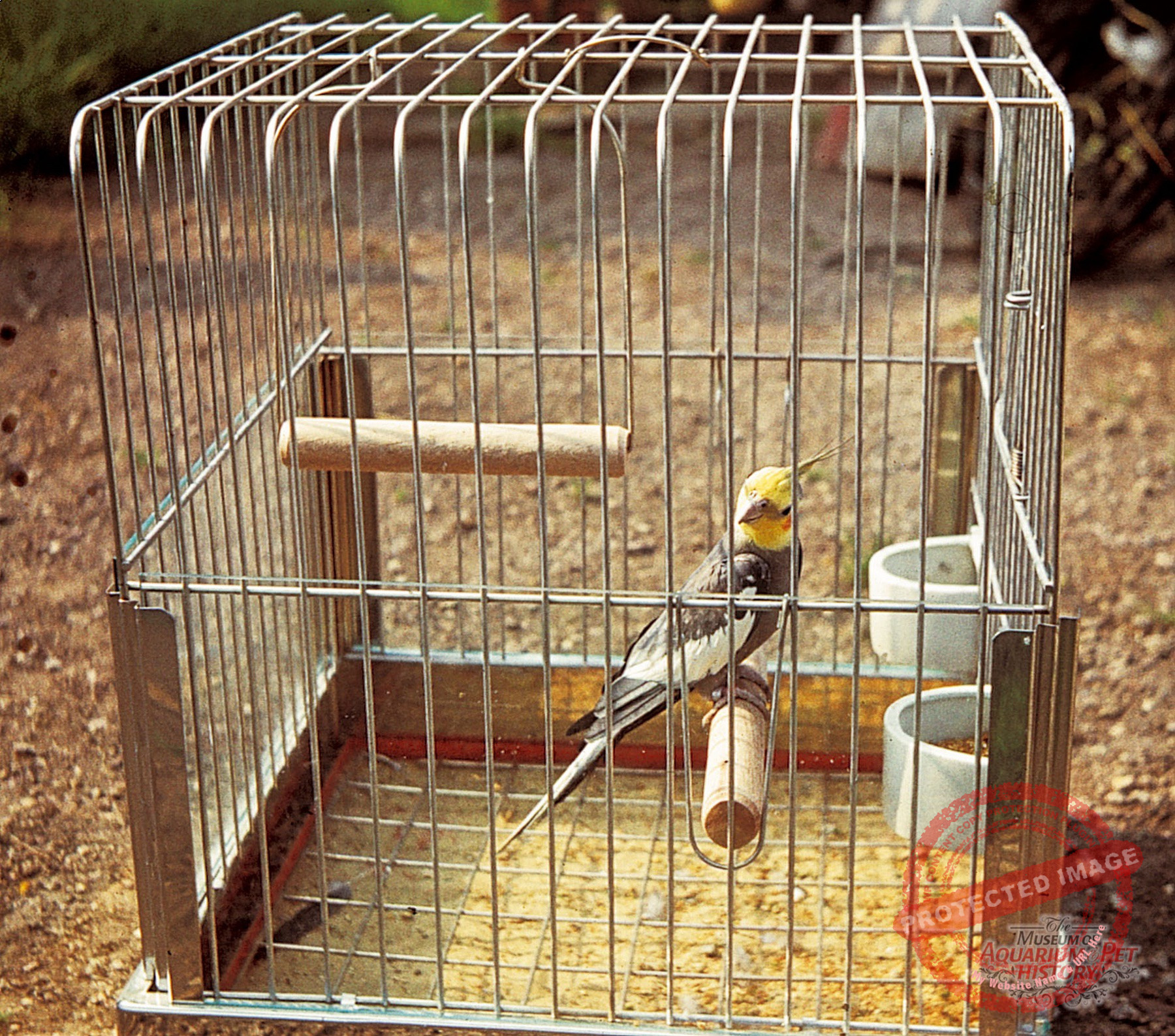
My first pet bird was a cockatiel named “Pfeffi”
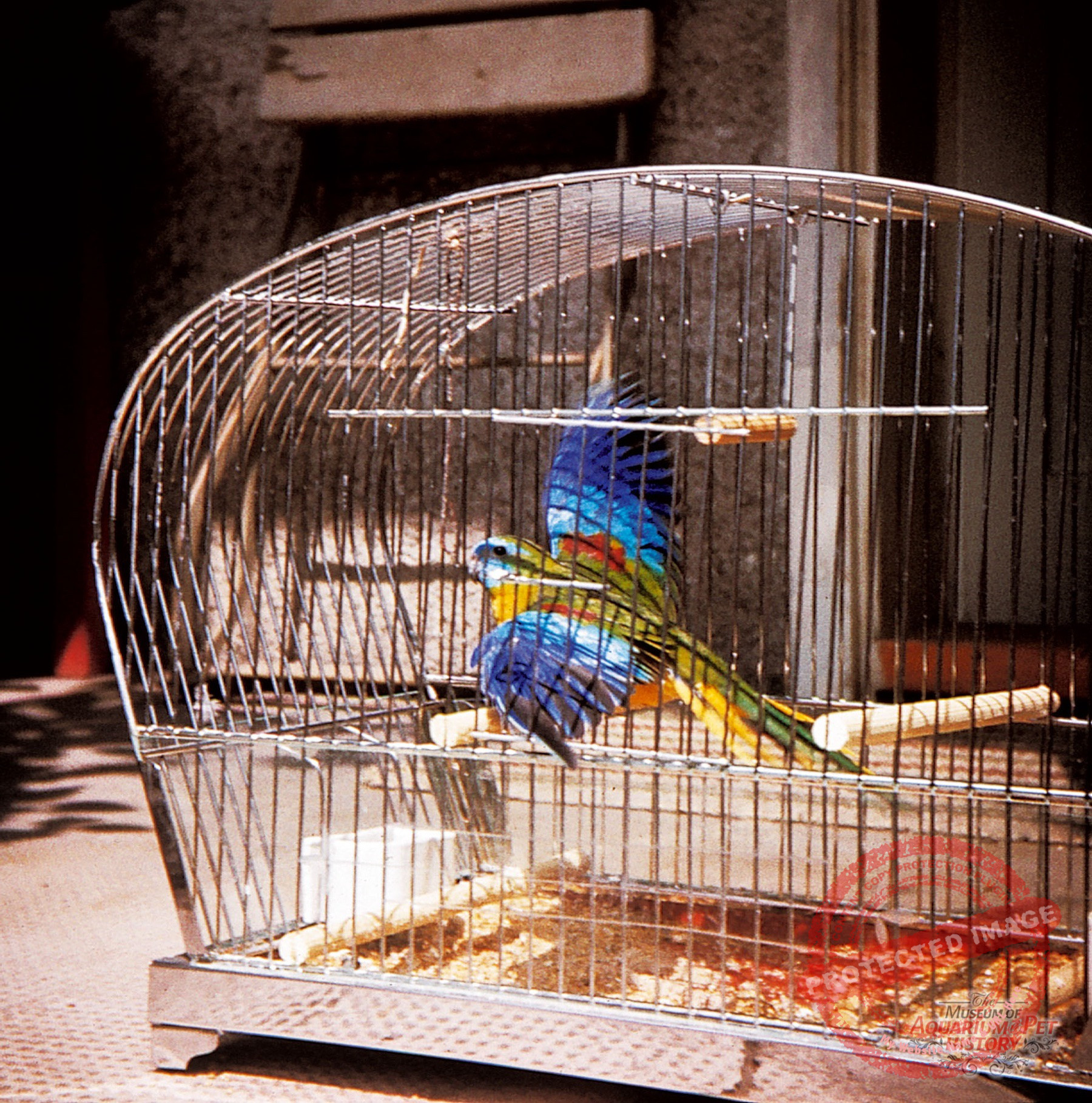
My second parrot was a turquoisine parakeet
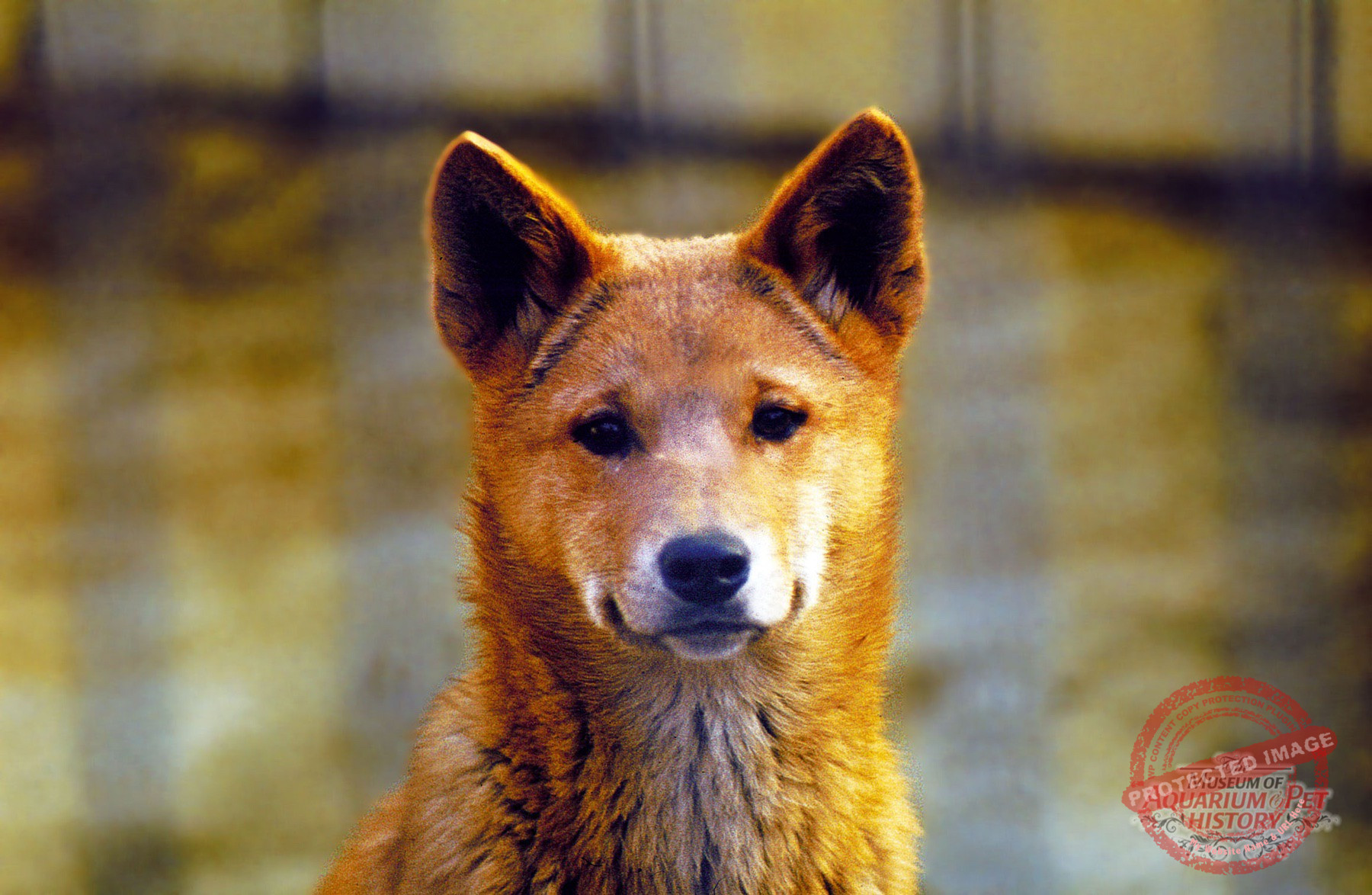
Even a dingo lived in our house for a time
Even a dingo lived in our house for a time
The grounds of the Gotha zoo played a decisive role in the history of aquaristics, one that I will recount in detail later. But they were only one of many places that nurtured me as a budding biologist: the famous Museum of Natural History with its remarkable collections; the libraries, especially the research library of Schloss Friedenstein; and the fish fairs of the Aquarium Society held in the Kulturbund building. In my last two years of school, I was mentored by my biology teacher, Dr. Wolfgang Klug, who allowed me to write a year-long study on the Siebleber ponds near Gotha and took me on numerous field excursions.
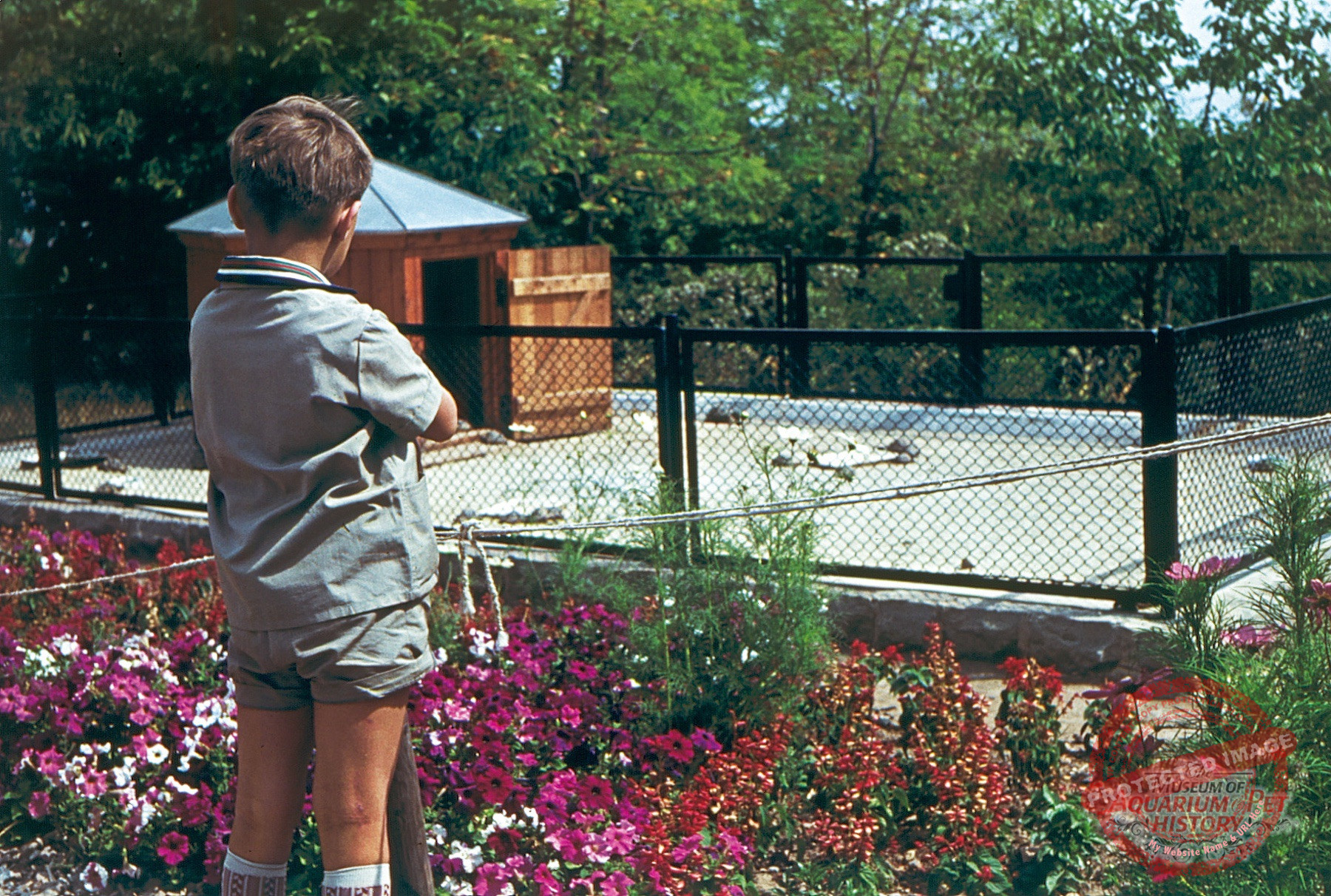
Visits to zoos—here in front of the turtle exhibit at the Thuringian Zoo Park in Erfurt—showed me how animals should be properly cared for
I developed a ritual: after school I avoided the direct route home, instead climbing the castle hill, wandering through the park past the ponds, and watching the animals there—swans (Cygnus olor), which I came to know almost personally. On my eighteenth birthday, the May issue of Gotha Information published my first article, about the tawny owl (Strix aluco) in the local zoo. I loved everything Gotha had to offer, but at eighteen I had to leave—for military service, and then for university. The foundation of my life as a biologist and author, however, had been laid in my birthplace. The story of the world’s first aquarium society, and of all that followed, will continue in the next installments of this series. I still have much to tell…
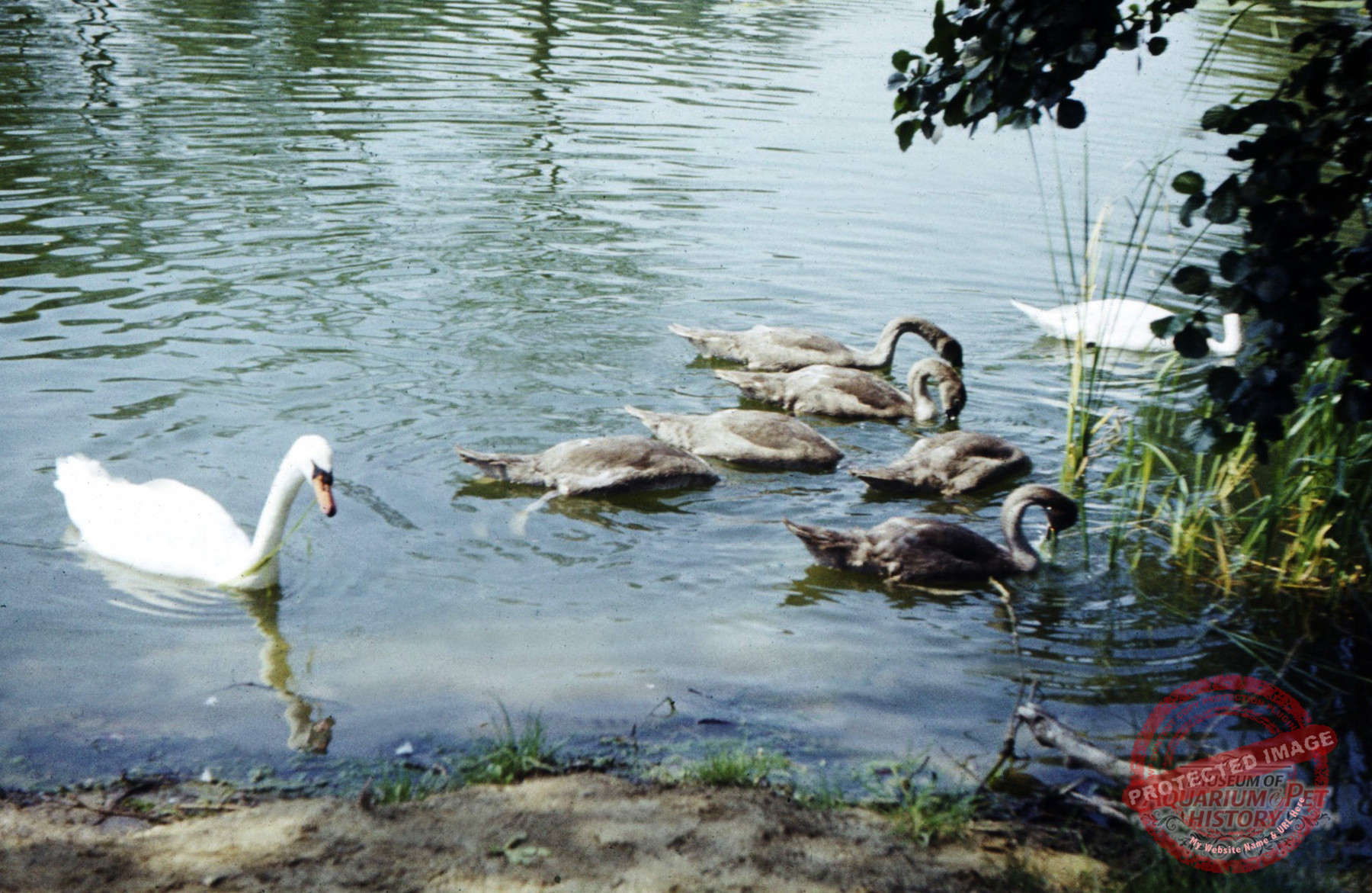
In the smaller park pond lived a swan family that I visited every day