New Beginnings, Reconstruction, and Reactivation – Vivarium Keeping after the Second World War, 1945 to the Early 1960s
Europe, after 8 May 1945—the day of the German Wehrmacht’s capitulation—lay in ruins. Most historic city centers resembled quarries of shattered masonry; many streets were barely discernible, and people picked their way across and around the debris along whatever paths remained passable. From today’s conflicts, we know the harrowing images from Gaza, Ukraine, or Lebanon. Yet the devastation then was even more profound. That portion of the German population which had believed in the Nazis and their ideology lay broken, much like the fallen regime itself. An almost incomprehensible pessimism, coupled with resignation and a wounded sense of self-worth, cast a pall over all of postwar life. Hunger and scarcity prevailed everywhere—worse even than during the war. It thus comes as no surprise that in the years 1945 and 1946 many people succumbed to the lingering effects of their injuries, to the emaciation endured in concentration camps, or to sheer hunger and destitution. All of them may rightfully still be counted among the war’s victims.
City centers were gradually cleared, yet there remained a dire lack of housing, basic infrastructure, and indeed nearly everything required for an ordinary life. Within the occupation zones of the four Allied powers that had liberated Germany from fascism, life developed along markedly different lines. While the regions occupied by France, Great Britain, and the United States in western Germany soon joined forces, using reconstruction funds (the Marshall Plan) from the United States—investments directed particularly toward industrial areas such as the Ruhr, the automotive industry of southern Germany, and mining—to begin a gradual return to normality, eastern Germany, under Soviet control, largely fell behind.
In this eastern zone, however, the process of denazification was pursued more rigorously and systematically: officials and officeholders of the NSDAP were exposed and stripped of power. Whereas in western Germany many functionaries were allowed to remain in offices, organizations, and universities, the East saw a comprehensive replacement of personnel. Yet reconstruction lagged, proceeding slowly and often with rudimentary means. Where once stood grand edifices, there now rose simple barracks or provisional structures. In Gotha, too, several significant buildings were missing—the theater, the wagon factory where railway carriages and trams had been produced, and railway stations. Still, Gotha had not suffered destruction on the scale of cities such as Berlin or Dresden. In Berlin, one can still see, in many places today, the bullet holes left by the street fighting of 1945. When I later brought my first aquaristic and terraristic articles to the editorial office of the journal Aquarien Terrarien, I would walk from Friedrichstraße station past the Gendarmenmarkt to Otto-Nuschke-Straße. The Gendarmenmarkt—once Berlin’s most beautiful square, with the German and French (Huguenot) cathedrals and the Schauspielhaus at its center—was then a landscape of ruins. When I visit the meticulously reconstructed square today with younger friends and colleagues, scarcely anyone can imagine that trees once grew amid its rubble.
Those who, in East Germany and in Gotha as well, sought after the war to revive our hobby step by step were mostly young people, uncorrupted by Nazi ideology. As sensitive spirits, they possessed an affinity for art and culture. A prominent example from Berlin is Hans-Albert Pederzani, long-time editor of the later GDR journal Aquarien Terrarien. Like nearly all young men, he had served at the front and bore injuries and traumas that haunted him throughout his life. Pederzani was a writer, actor, and dramaturge. Yet after the war there was no employment for such pursuits. In 1946, he earned a little extra as an extra in the first German feature film after the war, Die Mörder sind unter uns, directed by Wolfgang Staudte. Soon thereafter, Berlin’s only functioning theater „Schlossparktheater“ resumed performances under Boleslav Barlog; as in the film, Hildegard Knef appeared as the first female lead. Pederzani attended, paying for his tickets—as did all theatergoers—with coal, the only means of providing a modicum of warmth. Like him, many culturally inclined individuals combined a love of art with a love of nature, seeking a sense of belonging within a larger organization.
It is thus hardly surprising that artists and hobbyists alike followed similar paths in times of hardship. As early as 4 July 1945, the German poet Johannes R. Becher founded the „Kulturbund zur demokratischen Erneuerung Deutschlands“ (Cultural Association for the Democratic Renewal of Germany). Here, all those who were more optimistic than the former adherents of Nazism found a new home. Intellectuals and people of varied talents and interests quickly formed regional groups throughout the country. Alongside artists in the narrower sense, historians, naturalists, local heritage enthusiasts, philatelists, numismatists, and vivarium keepers found a place for their activities. Hans-Albert Pederzani became one of the key figures in aquaristics and terraristics within the Kulturbund. They were united by a single aspiration: never again war. Financial motives were of little concern; they were ready to begin anew in a peaceful, humanistic world. When, in 1949, the Federal Republic of Germany was founded in the western zones and, through currency reform, effectively sealed itself off from the East, the Soviet zone was compelled to respond. To survive, the German Democratic Republic was established—initially open, tolerant, and above all antifascist.
This description of the postwar situation is necessary to understand the development of Gotha’s aquarium and terrarium societies. Their facilities—the three open-air aquariums along with their club buildings—had been destroyed by bombing. Many aquarists had fallen in the war or perished in air raids. Their aquariums and terrariums had likewise vanished; who among the survivors possessed the means, food, or space to sustain such a hobby in times of dire need? And yet, there were a few—foremost among them the two surviving leading figures of the Gotha clubs, Charly Fuchs and Kurt Koch. Both had been fortunate: their homes had escaped bombing, and their aquarium installations remained intact. Like those enthusiasts who, even in the darkest war years, had clung to their hobby as a final refuge for their souls—sacrificing their last resources for it—these two Gotha activists continued to care for and breed their fish. Particularly in the soft-water regions of Thuringia, but also in Bavaria and Baden, aquarium fish were bred even during the war. Thus, a foundation for renewal already existed, for imports were out of the question.
Since the 1920s, a stock of aquarium fish had become established. Wherever aquariums had survived, they contained various species that continued to be bred. Because the GDR later saw almost no new imports, this politically enforced isolation can be regarded as the largest and longest genetic experiment—spanning, in many cases, from around 1930 to 1989—offering practical evidence against the oft-cited concerns about inbreeding damage. Many aquarium fish from all systematic groups were thus the descendants of the original imported specimens across countless generations. To this day, they are considered among the most robust breeding lines, best adapted to aquarium life, and most tolerant in terms of water parameters, diet, and behavior.
Which fish were these? Alongside numerous livebearing toothcarps and their cultivated forms, and classics such as Macropodus opercularis and Australoheros facetos, there were species still commonly found in aquarium shops today. Among characins, for example, Hyphessobrycon flammeus, Pristella maxillaris, Moenkhausia sanctaefilomenae, Hemigrammus erythrozonus, Paracheirodon innesi, and Gymnocorymbus ternetzi. Among cichlids, species such as Pelvicachromis pulcher, Heros severus, and Amatitlania nigrofasciata survived the war. From the latter—the zebra cichlids—I received a pair as a schoolboy from Kurt Koch’s breeding facility; they were the first fish I successfully bred in my own aquariums. Carp-like fishes such as Danio rerio, Pethia conchonius, Puntigrus tetrazona, and Tanichthys albonubes were likewise maintained, as were killifishes including Aphyosemion gardneri, Epiplatys dageti, and Fundulopanchax gardneri, to name but a few.
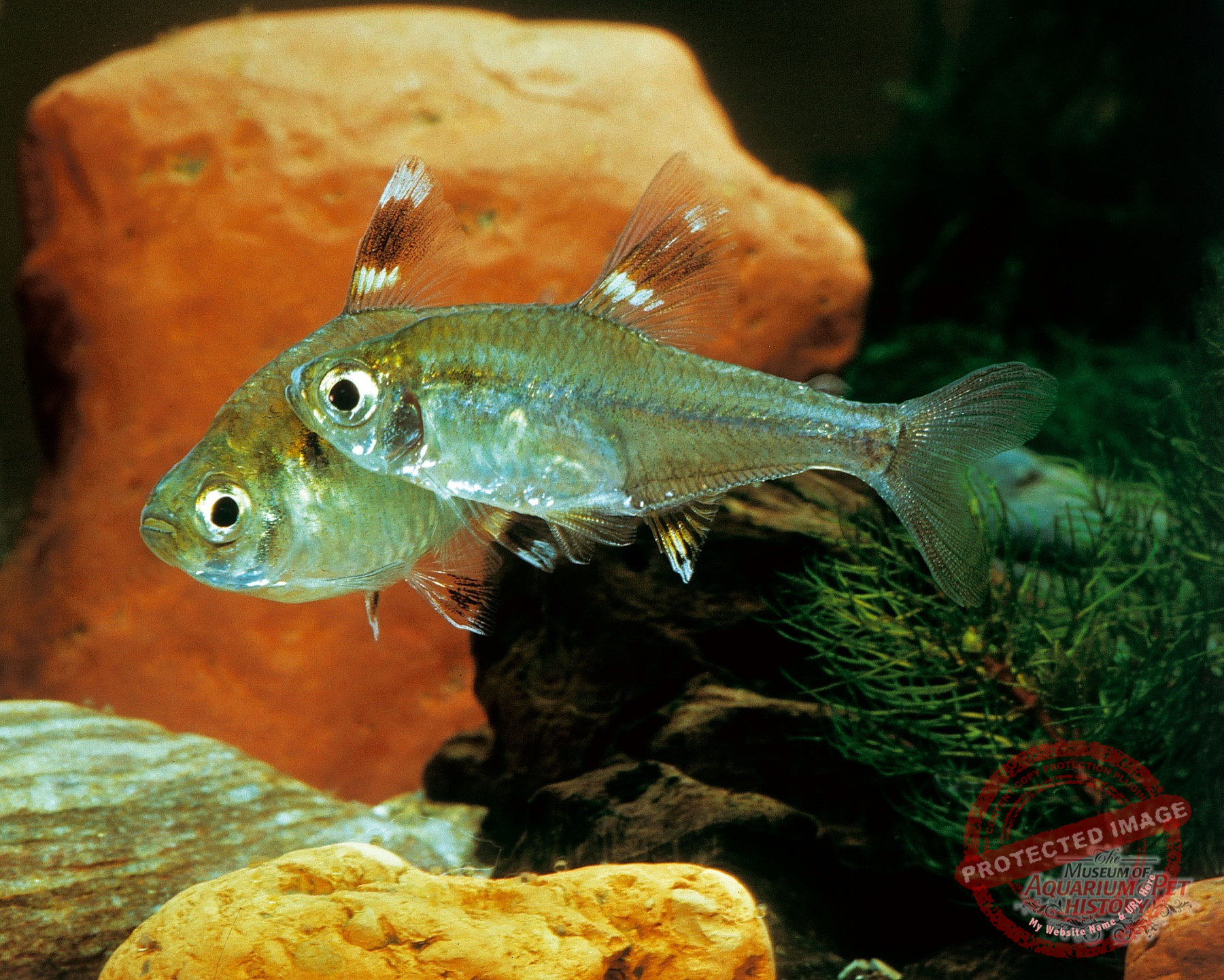
X-ray tetra, Pristella maxillaris
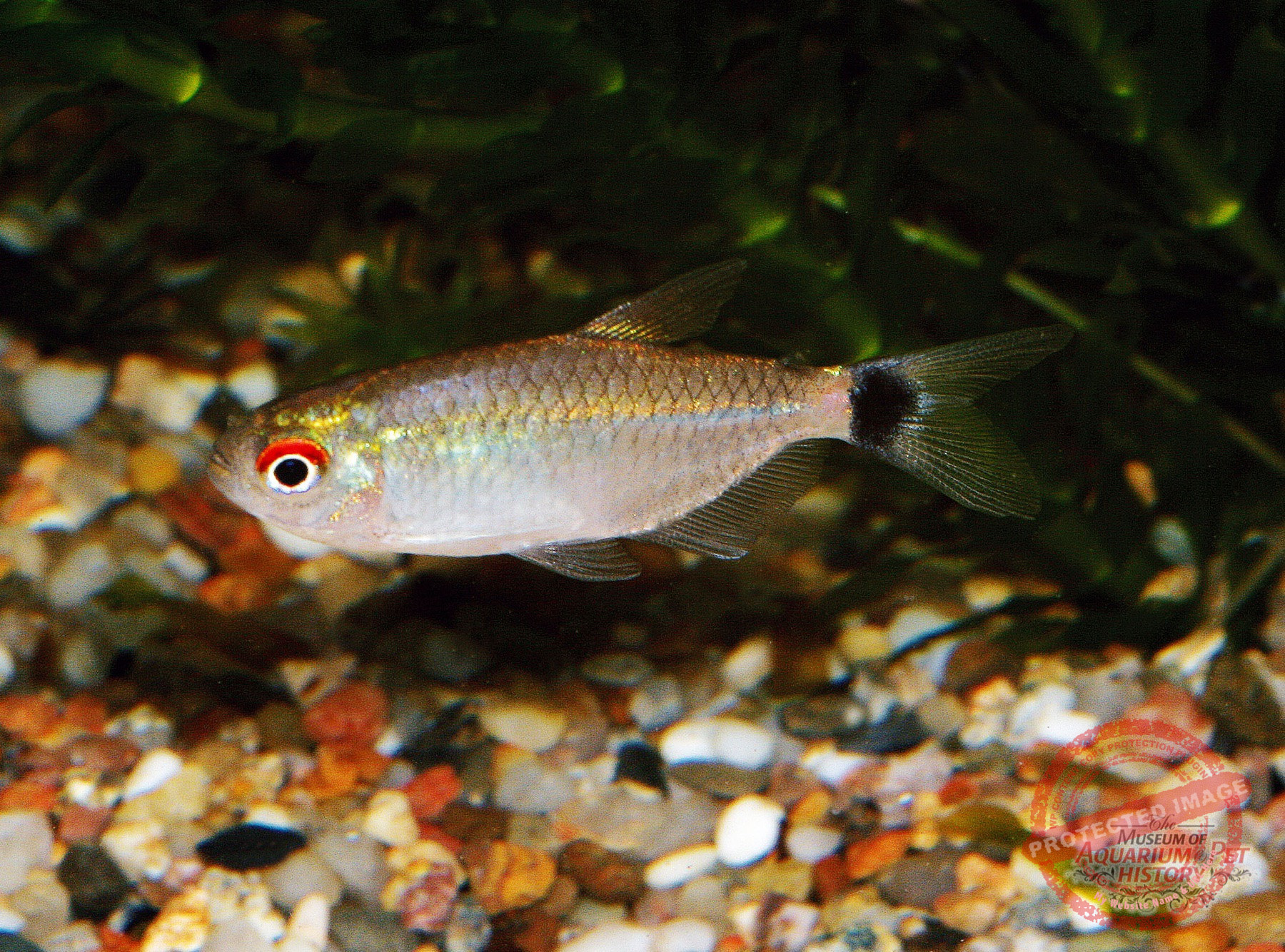
Red-eye moenkhausia, Moenkhausia sanctaefilomenae
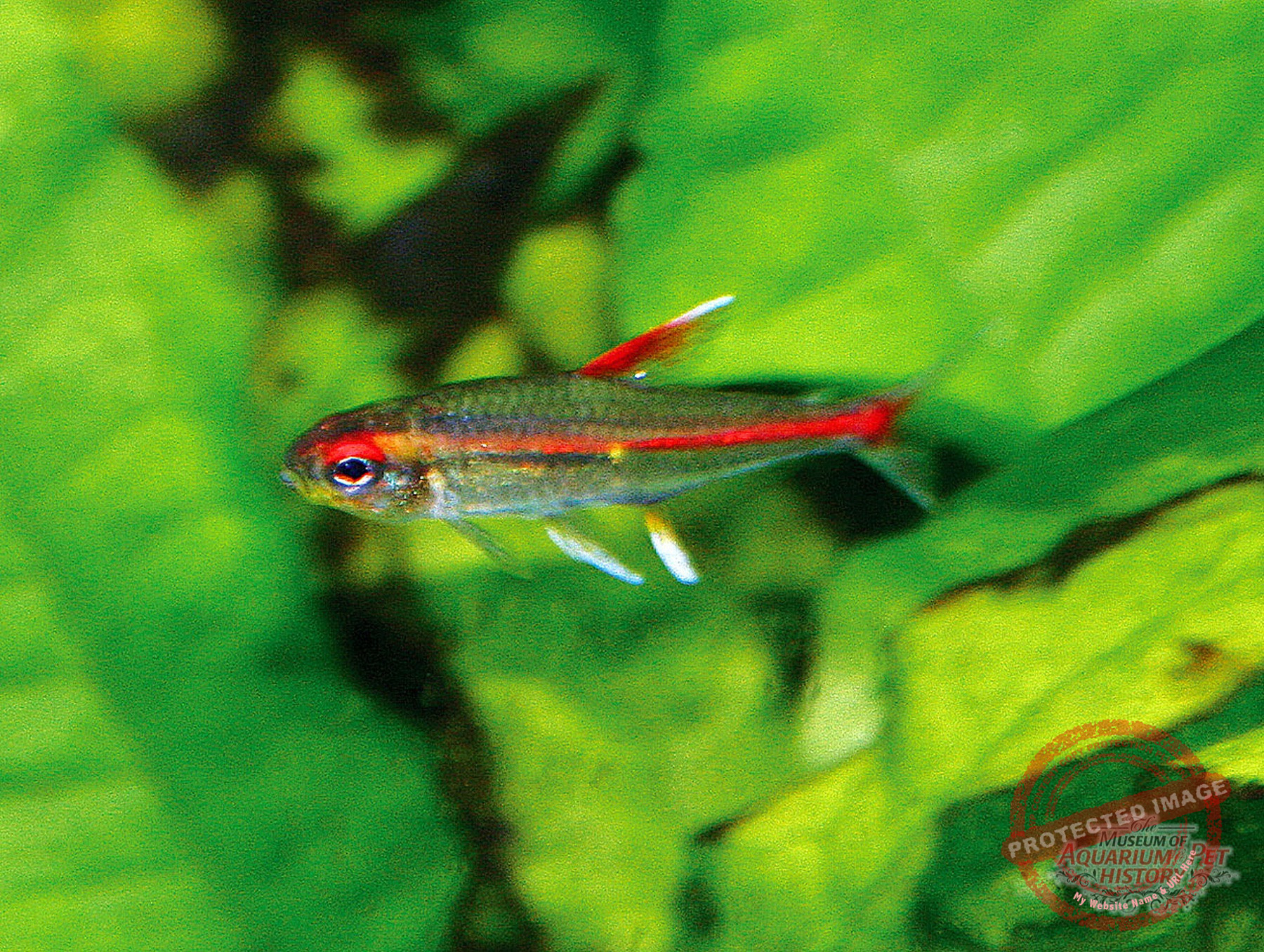
Glowlight tetra, Hemigrammus erythrozonus
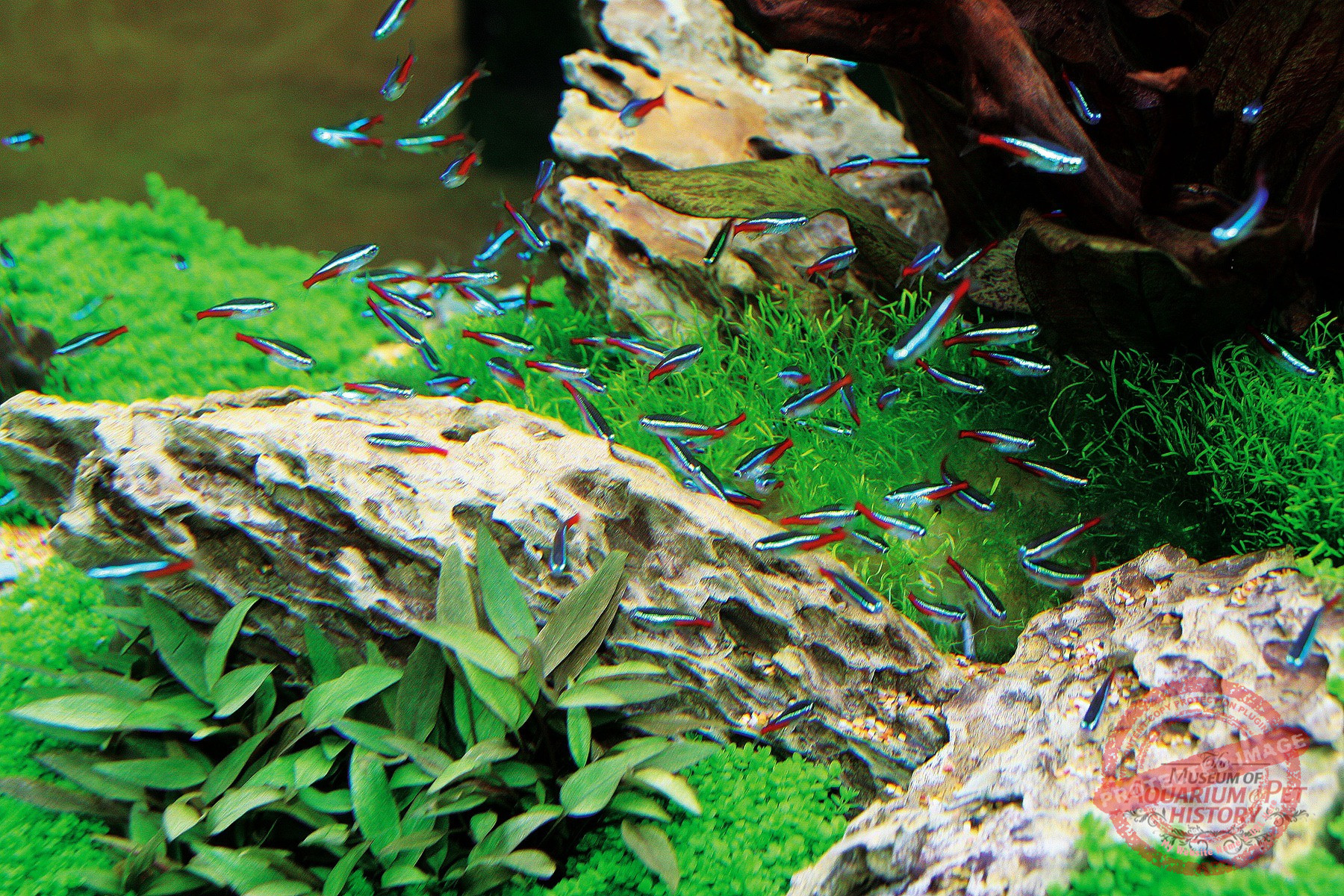
Neon tetra, Paracheirodon innesi
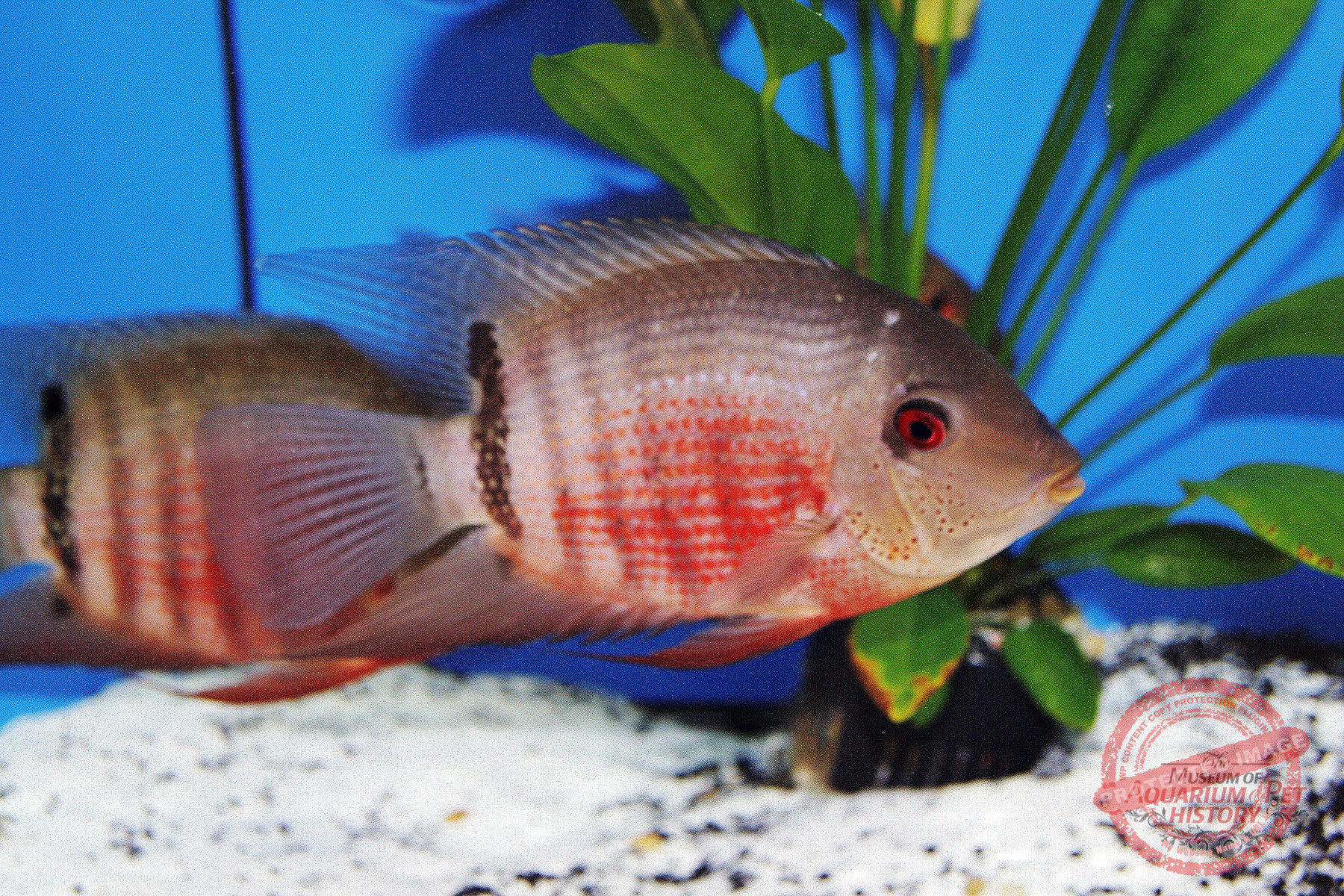
Severum cichlid, Heros severus
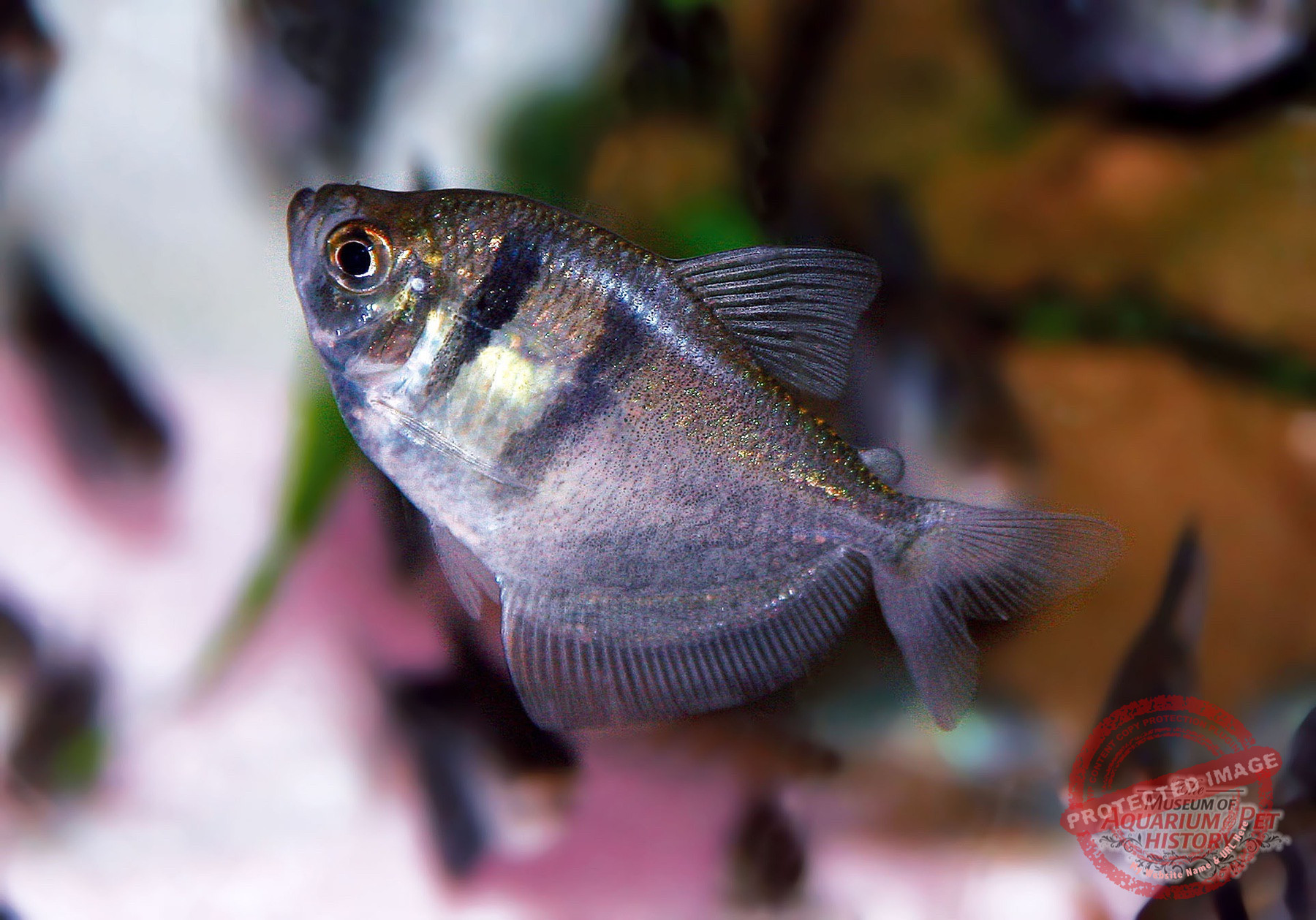
Black skirt tetra, Gymnocorymbus ternetzi
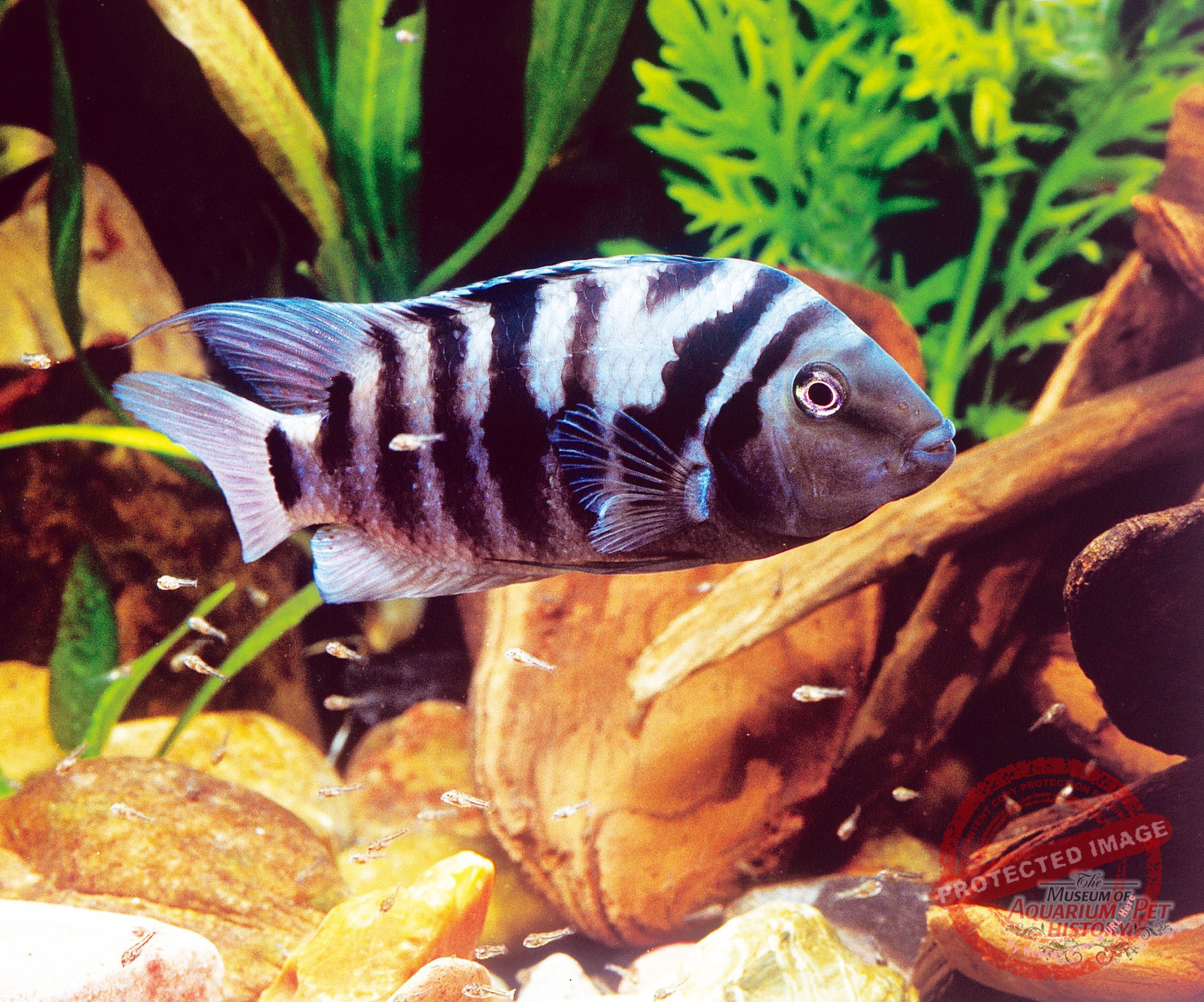
Zebra cichlid, Amatitlania nigrofasciata
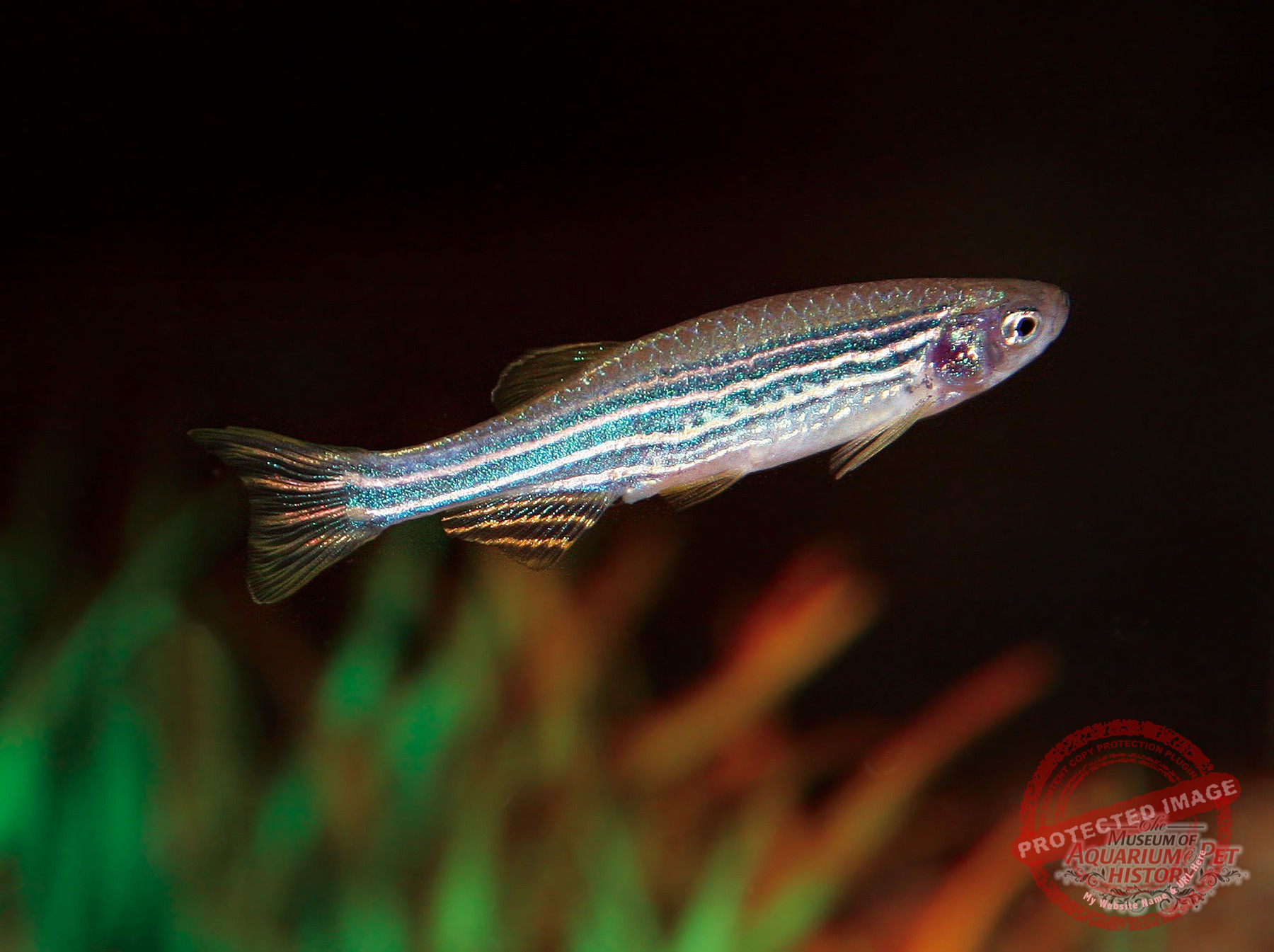
Zebra danio, Danio rerio
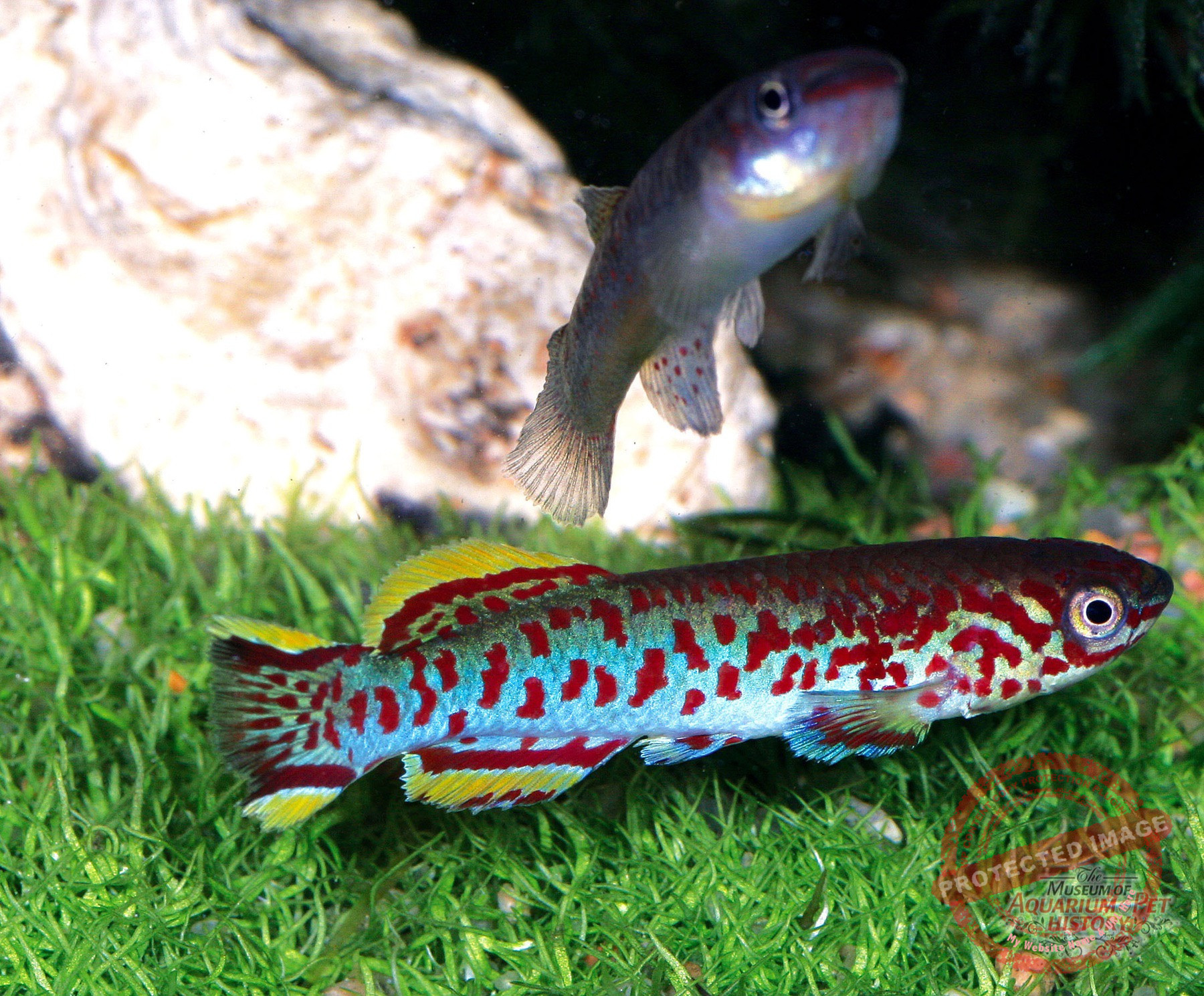
Gardner’s killifish, Fundulopanchax gardneri
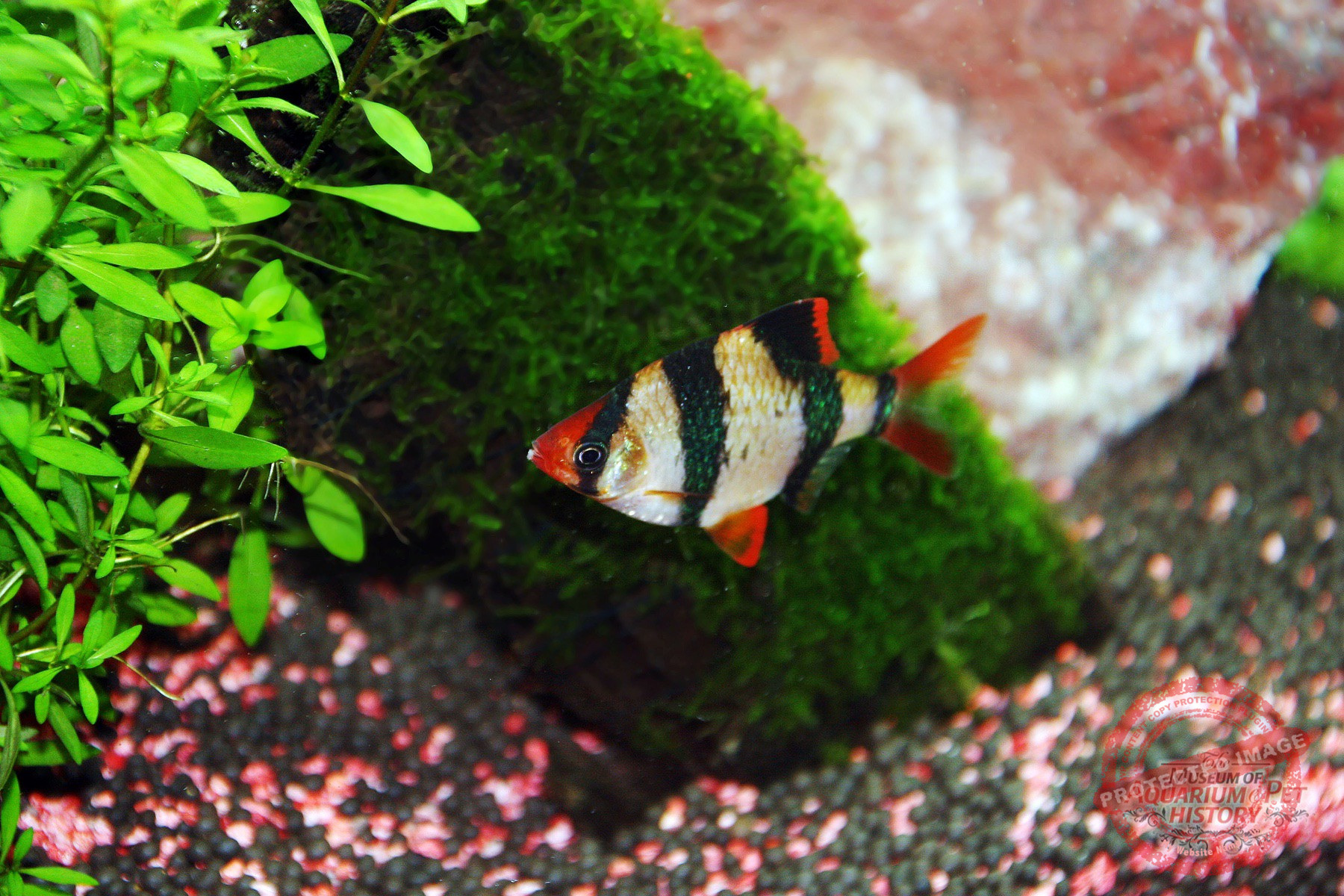
Tiger barb, Puntigrus tetrazona
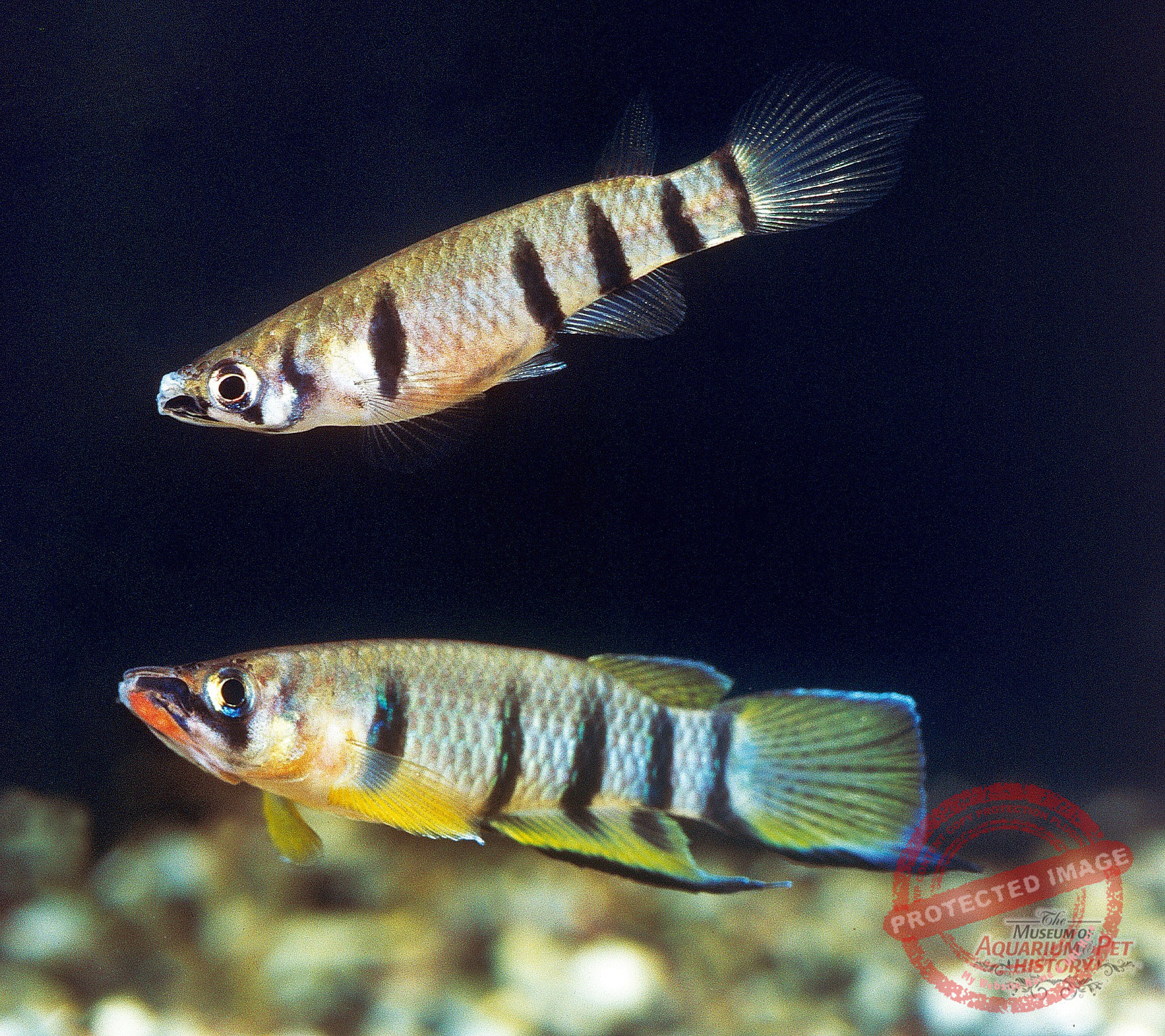
Banded panchax, Epiplatys dageti
I would like to single out the black-banded barb, Striuntius lateristriga. I first saw these imposing large barbs in the Erfurt Aquarium on the Nettelbeckufer in the mid-1960s. The labeling, however, was incorrect; the fish were identified as “Everett’s barb, Barbus everetti,” a completely different species not yet known in the GDR at that time. A school of black-banded barbs was on display—aged specimens originating from a Thuringian postwar breeding line, as they were no longer imported into the GDR. For reasons I cannot fully explain, these powerful fish fascinated me, and I searched for them at fish exchanges, pet shops, and breeders. Only a visit to Kurt Koch yielded modest success: in his facility swam a single specimen, which I obtained in exchange for a pair of dwarf gouramis, Colisa lalia. Koch, too, referred to the fish as “Everett’s barb.” The well-known club activist and prolific author Wilhelm Schreitmüller had reported on the breeding of this species in 1936 in the journal Das Aquarium. Apparently, all remaining specimens in the GDR descended from this and a few other postwar breedings, as further reproduction failed. Perhaps the fish were too old, or improper feeding had rendered them incapable of spawning. Thus, for some species, preservation proved impossible; the spotted danio, Danio nigromaculatus, suffered a similar fate.
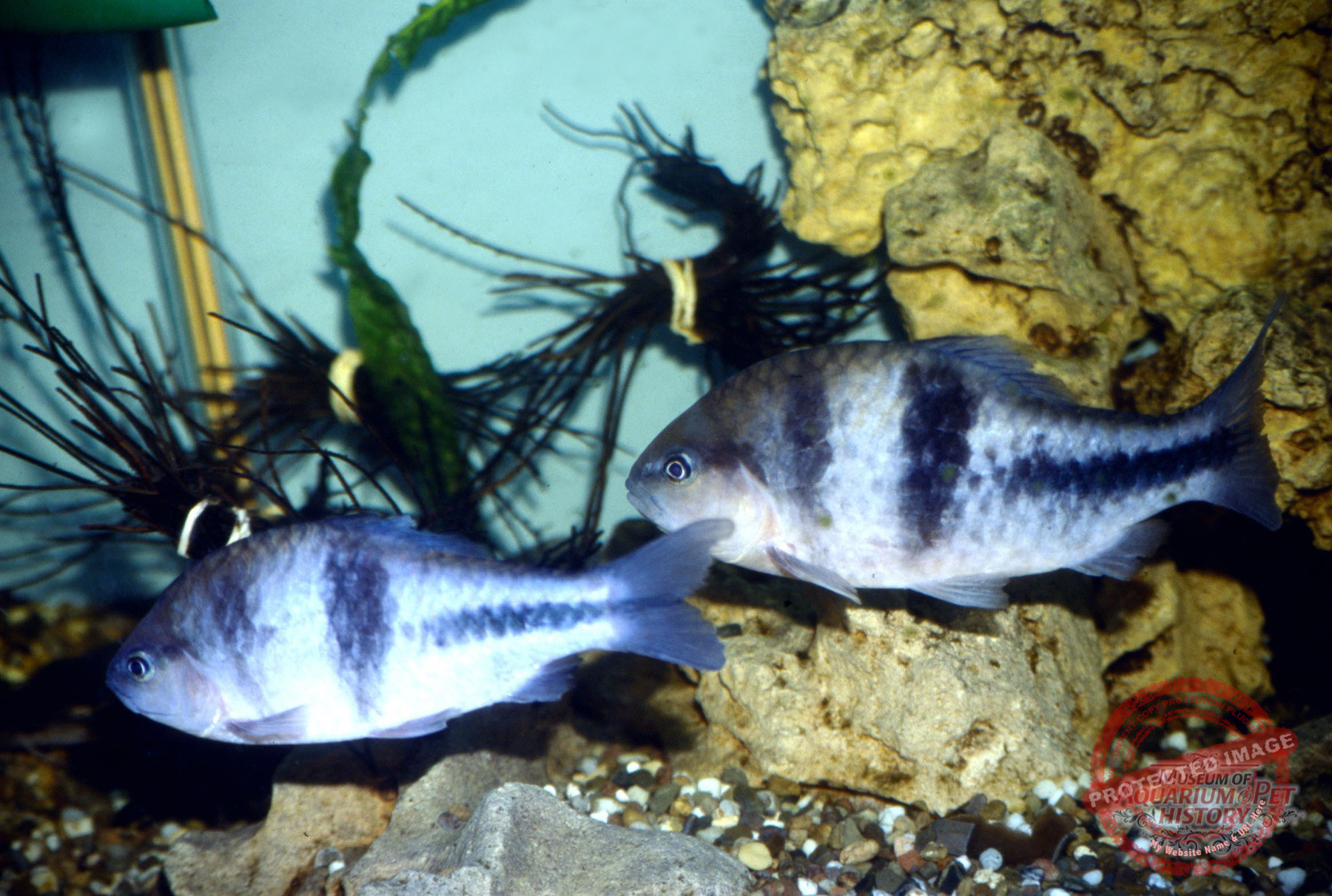
Black-banded barb, Striuntius lateristriga
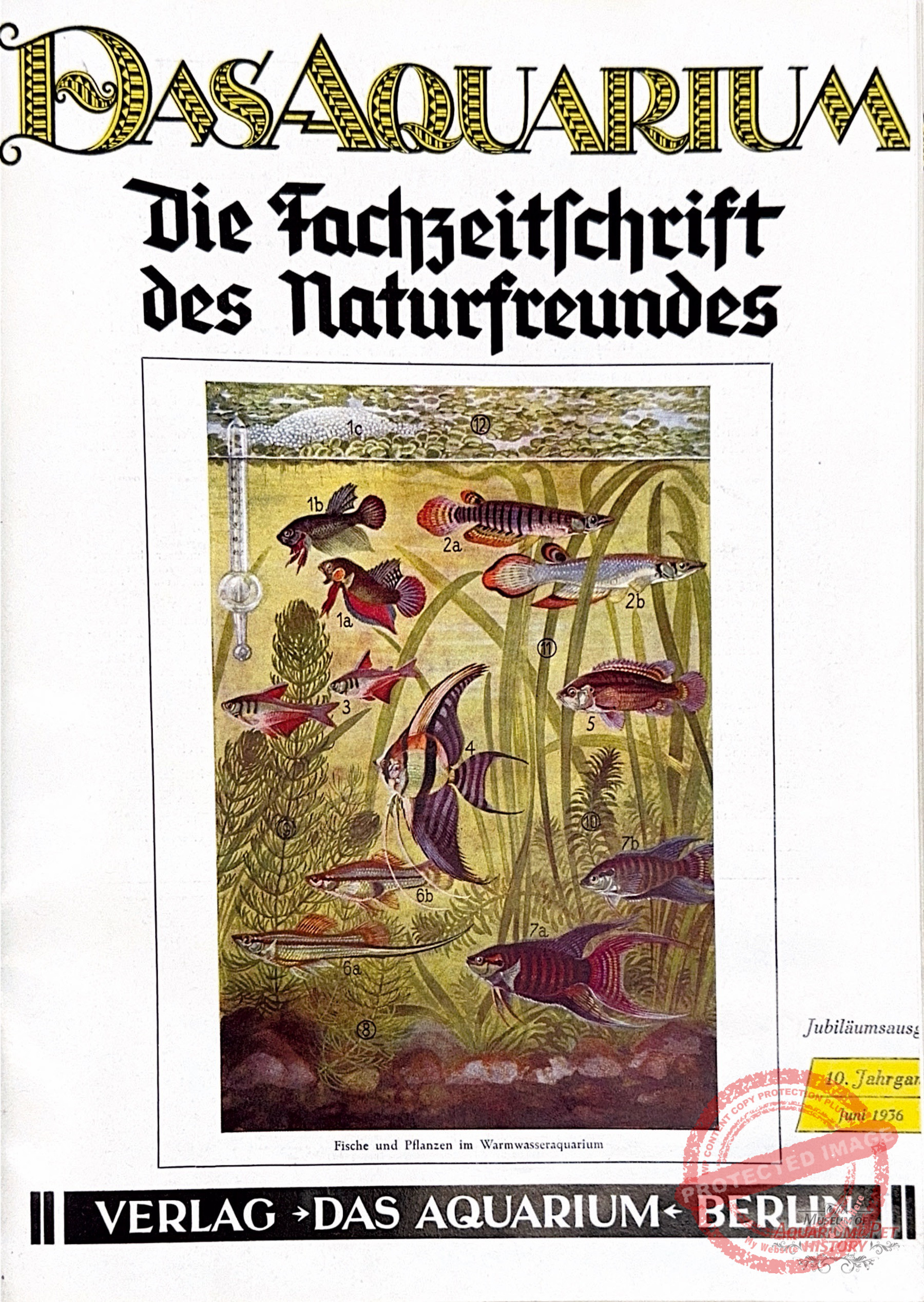
Cover page of the June 1936 issue of the journal Das Aquarium
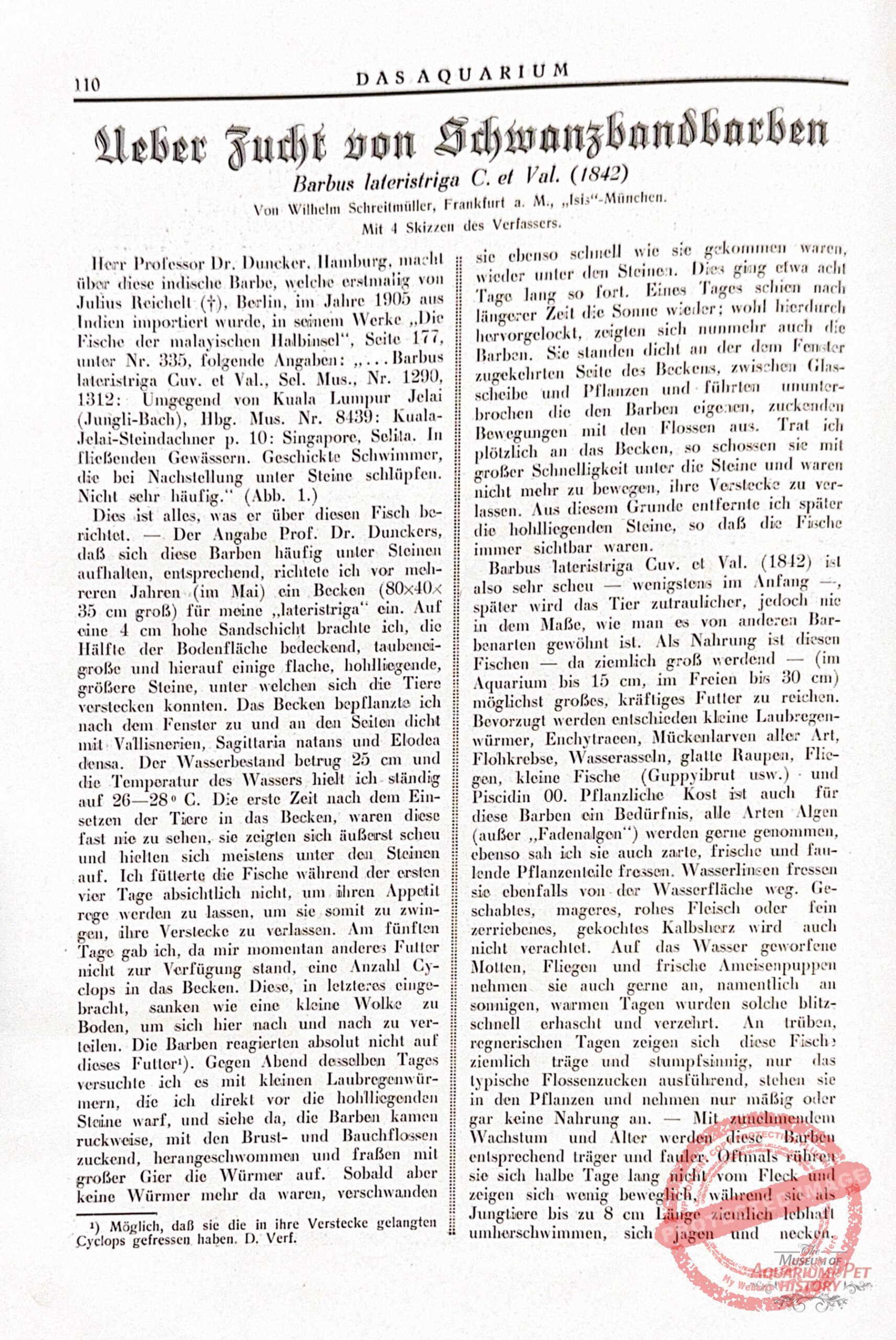
This issue contained Wilhelm Schreitmüller’s breeding report on the black-banded barb
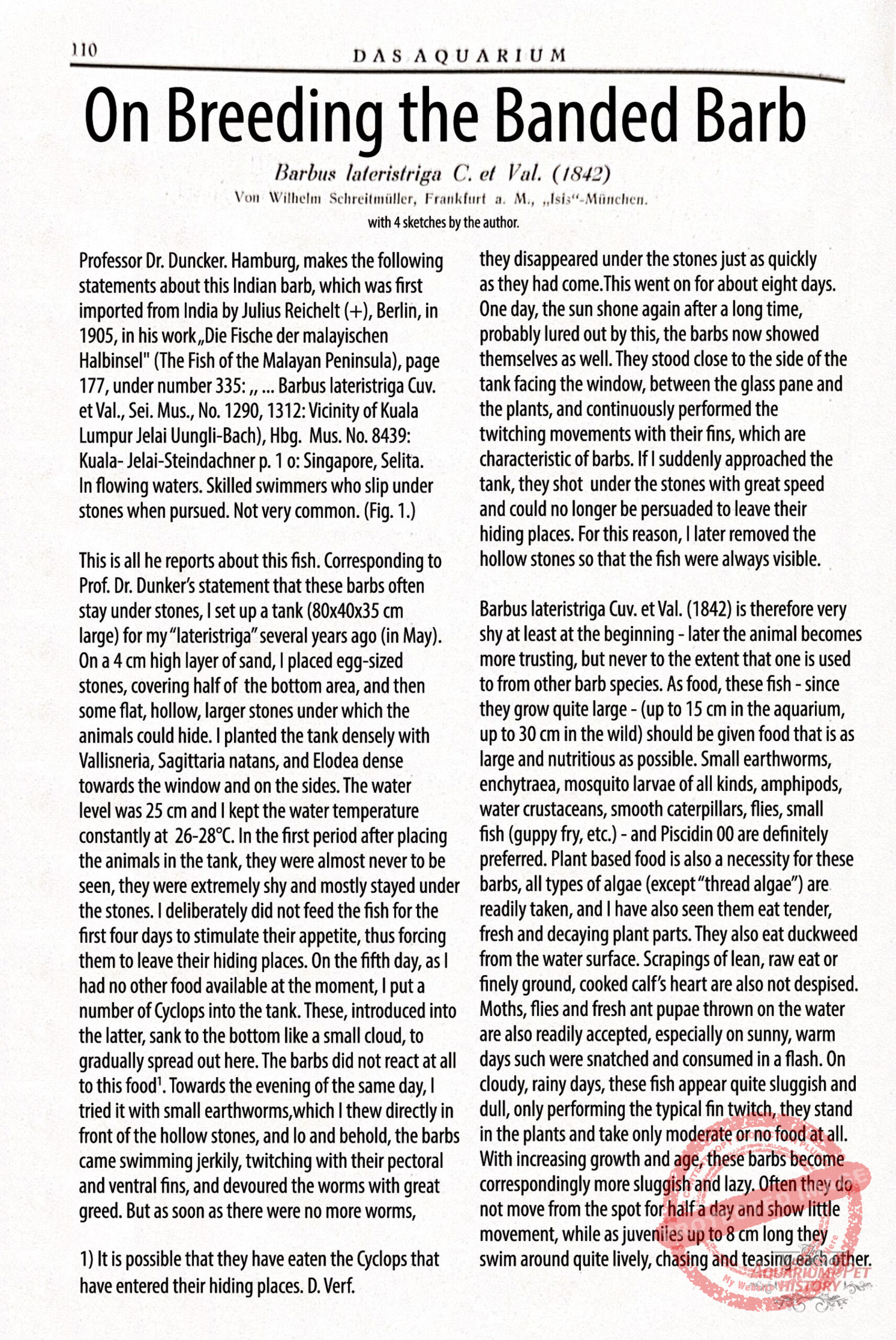
Wilhelm Schreitmüller’s breeding report on the black-banded barb translated to english using notegpt.io
Returning to the immediate postwar situation of Gotha’s aquarists: if there was any positive outcome of Nazi rule, it was the realization that noble ideas and goals gain strength only through unity in the face of evil. The remnants of Gotha’s three aquarium and terrarium societies had come to understand this. During the twelve years of Hitler’s regime, they had partly gone underground, partly adapted, and partly been suppressed. Their distinct club cultures had been destroyed, and former rivalries had become meaningless. Like shipwrecked sailors from three once-hostile frigates, cast ashore on a common island and forced to struggle together for survival, Gotha’s vivarium keepers united after the war. They pooled their finest qualities and experiences—resources that had already sustained them through the Great Depression and the First World War. Initially, the club leaders sought, unsuccessfully, to obtain official reinstatement of their associations and open-air aquariums through the municipal cultural office. Gustav Schubert undertook this effort for the Danio Club. Meanwhile, Kurt Koch gathered a group of young aquarists around him, inspiring them with enthusiasm for the hobby. Former members of all three clubs reconciled and began meeting informally in 1946 and 1947.
Some members of the Danio Club sought cooperation with Gotha’s scientific institutions to consolidate remaining resources. On 30 December 1948, the active member Erich Veit wrote to the city’s cultural office proposing collaboration with the local natural history museum. He suggested installing aquariums and terrariums for native small animals, to be maintained by club members, and even proposed the establishment of a small zoological garden on the bombed-out Danio site. Unfortunately, no documents survive regarding the city’s response.
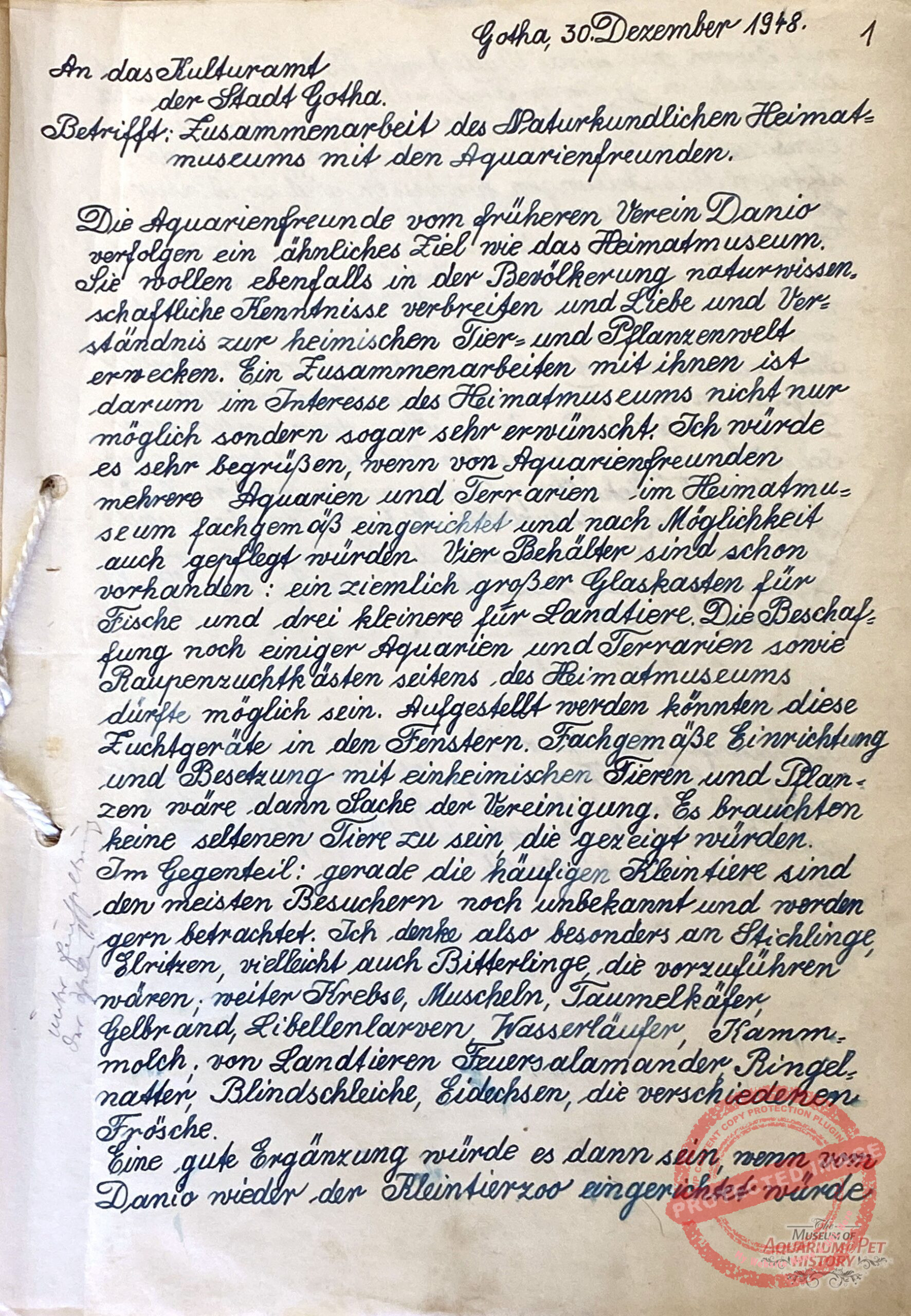
First page of the letter from Erich Veit, written on behalf of the Danio Society to the Gotha municipal cultural administration
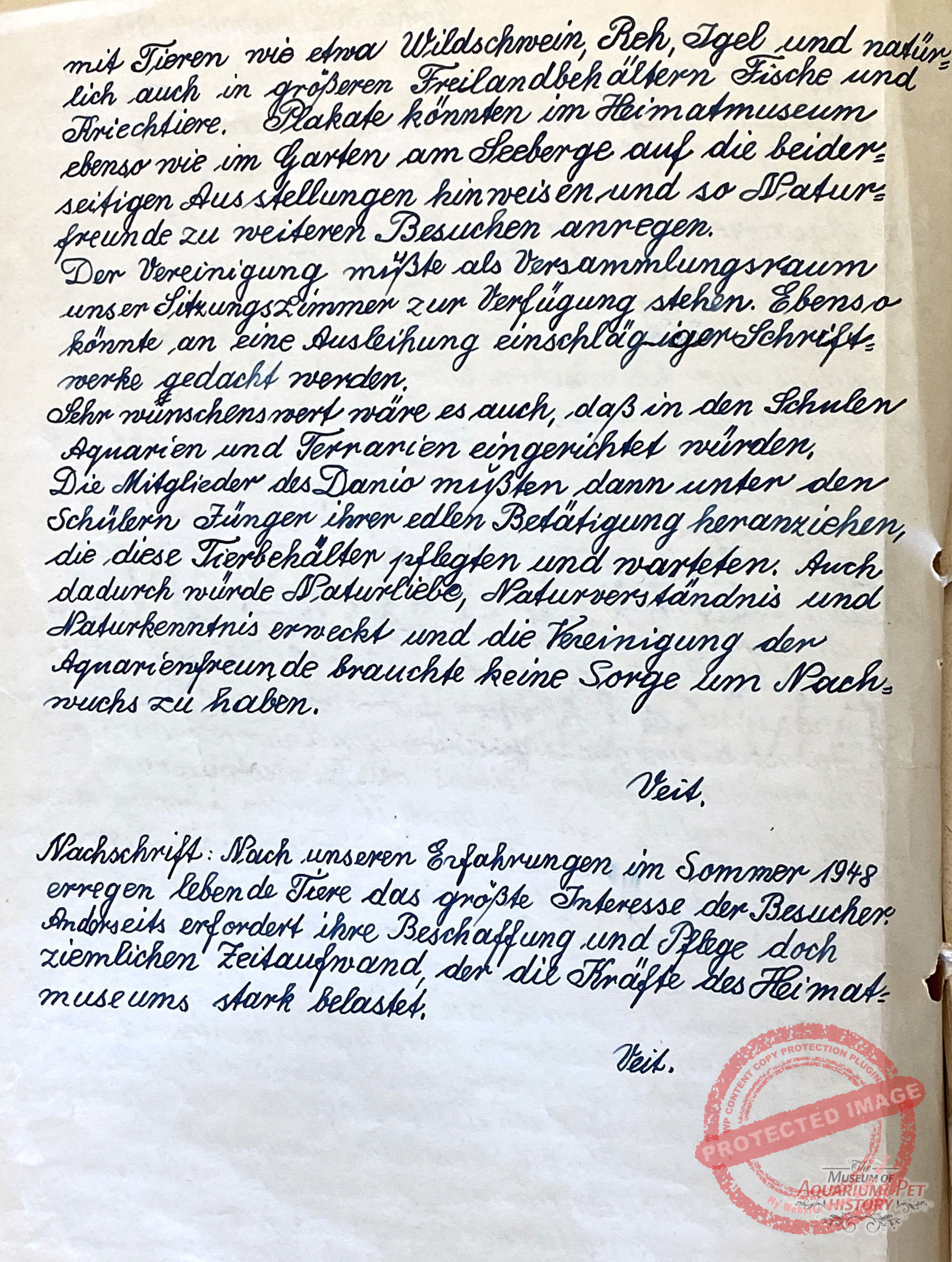
Second page of this letter, which also contains the first renewed reference to rebuilding the Danio open-air aquarium
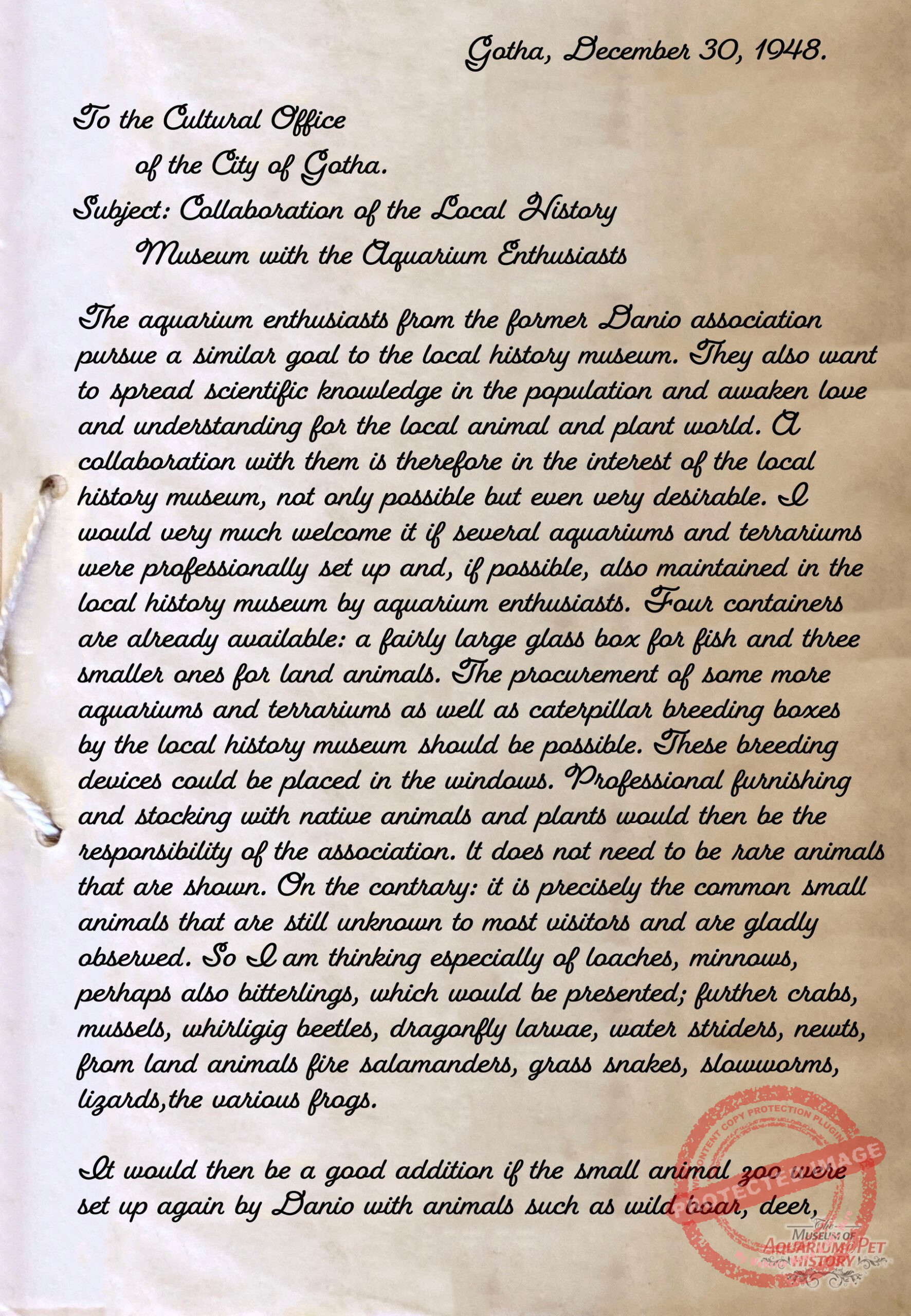
First page of the letter translated with notegpt.io
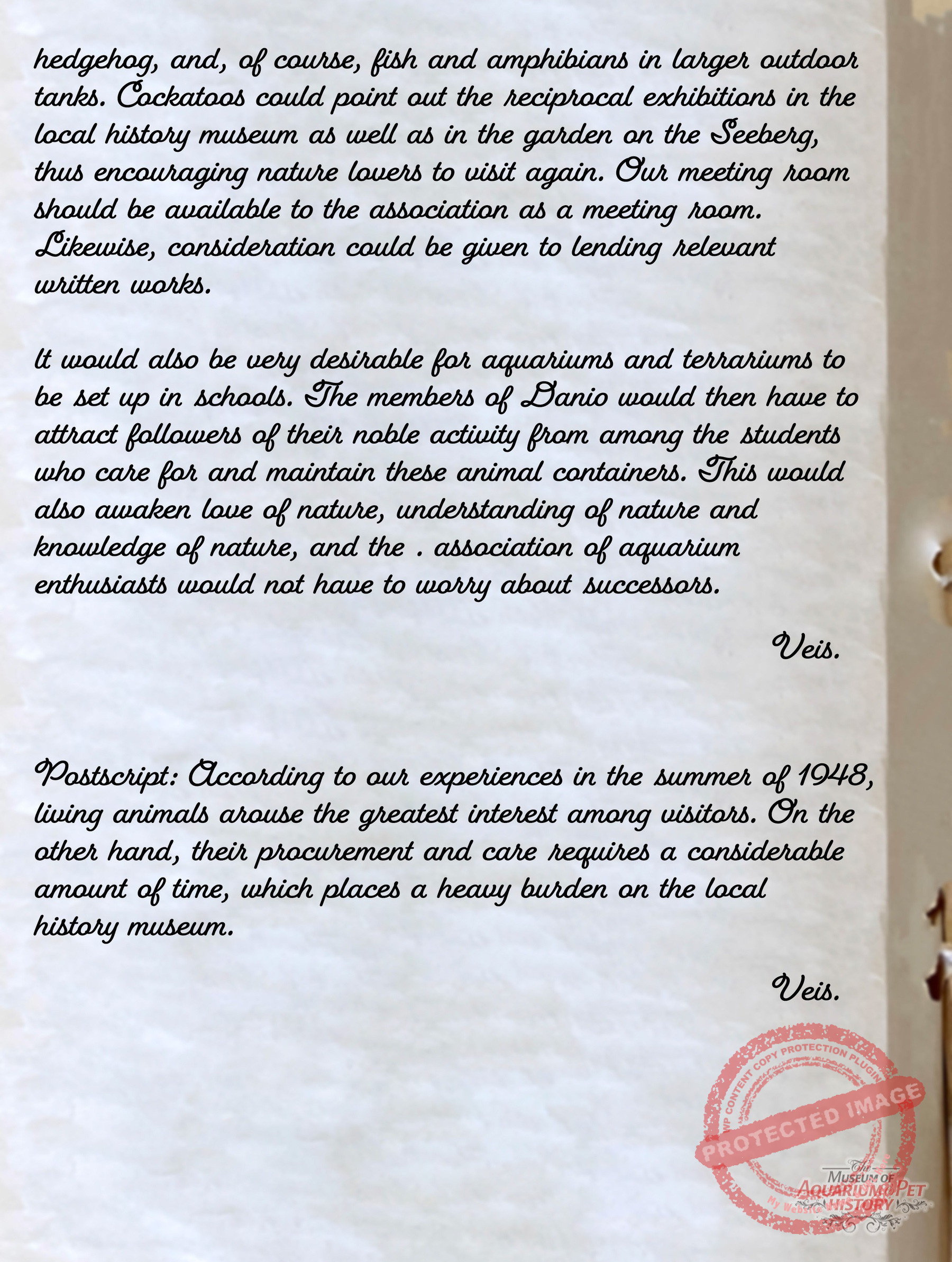
Second page of the letter translated with notegpt.io.
Before the war, each club had maintained its own archive—specialist literature, photographs, specimens, and records—within the small buildings of their open-air aquariums. Most of these were destroyed by bombing. Consequently, only a few scattered documents and images remain. One relic did survive: a pennant attesting to the Gotha “Verein für Aquarien- & volkstümliche Naturkunde” membership in the umbrella organization VDA since its founding. This membership could only be reactivated much later, after German reunification in 1990.
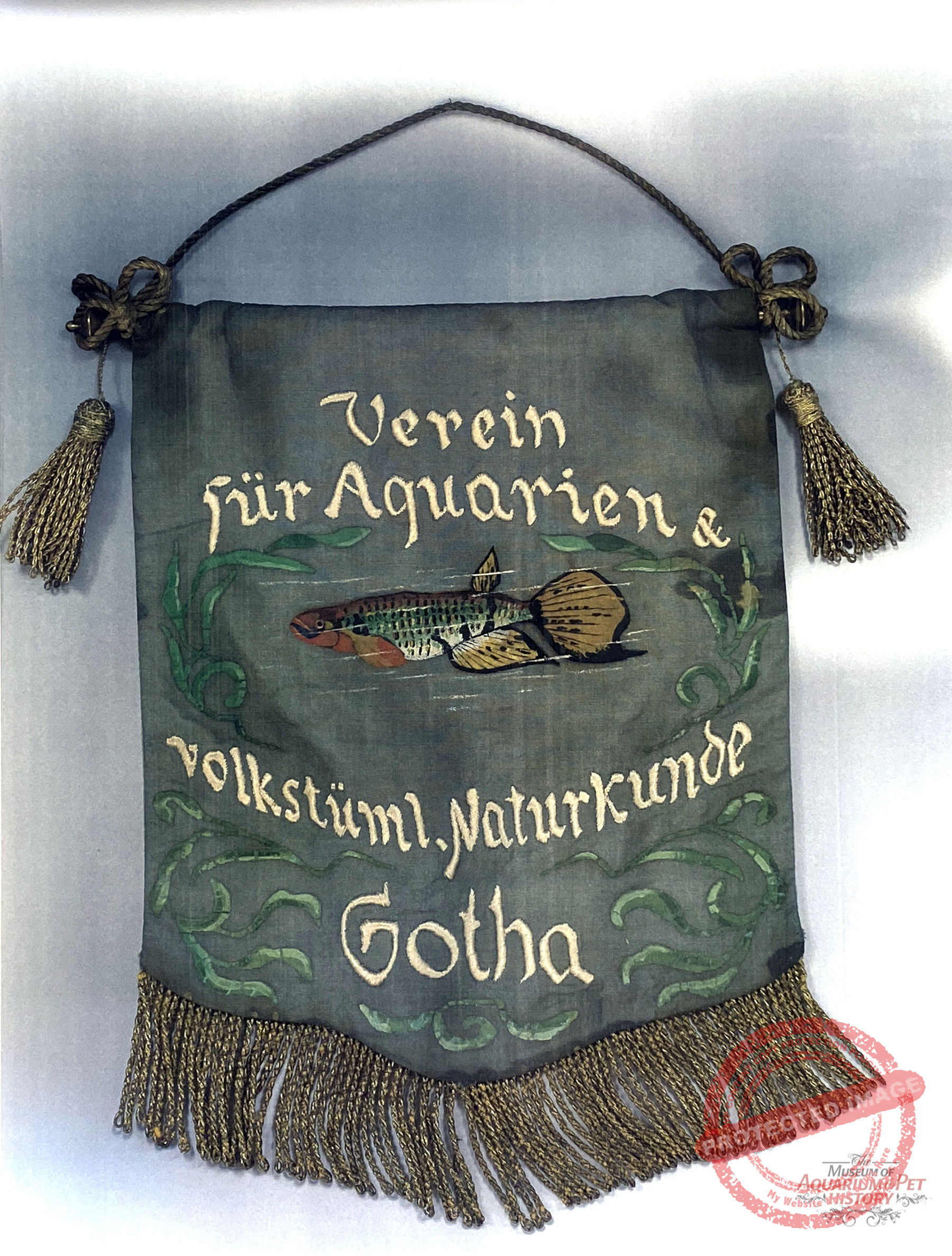
The pennant from the founding years, documenting Gotha’s membership in the VDA, survived the destruction of the war
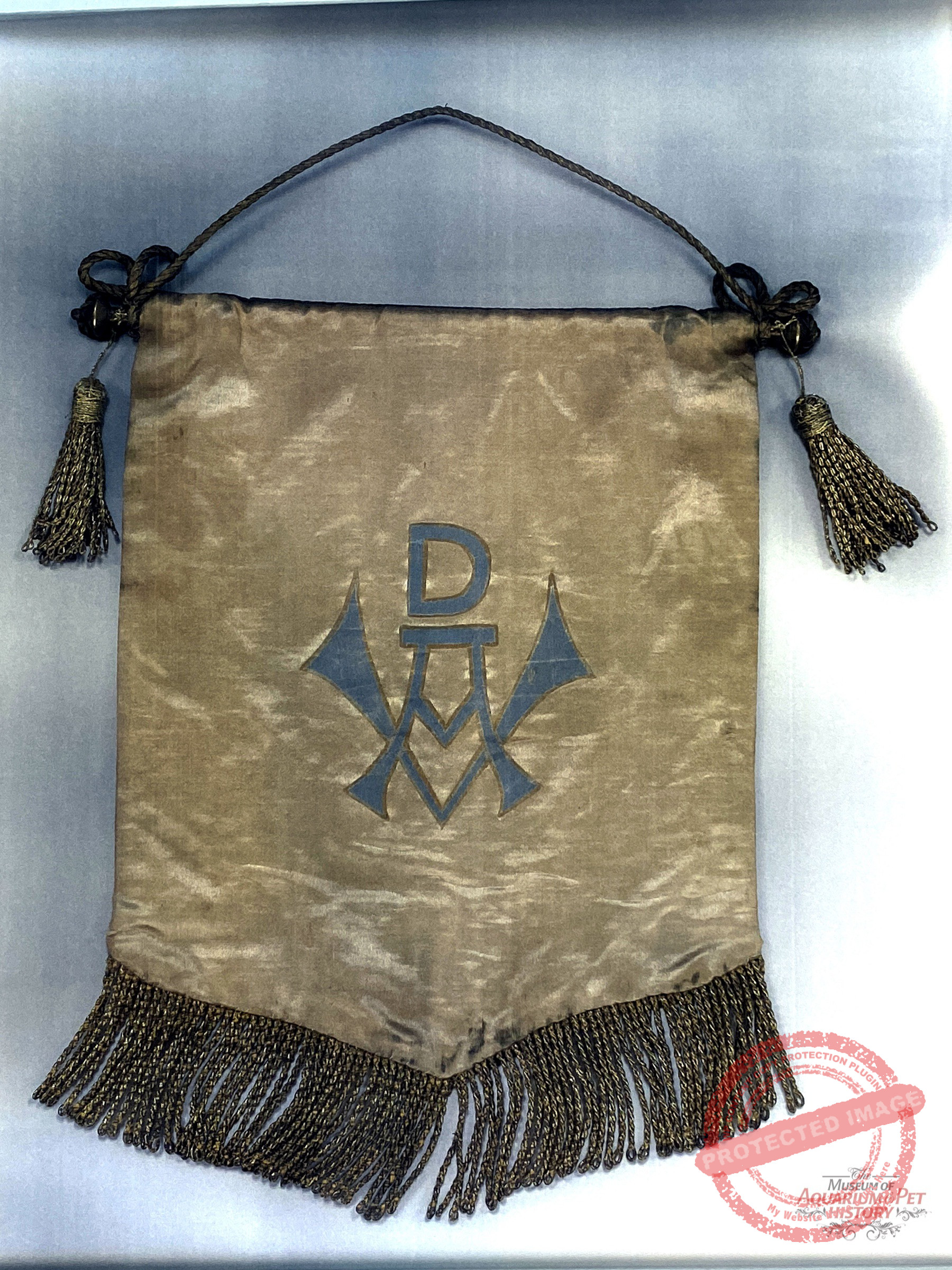
Reverse side of this pennant
Ultimately, the Kulturbund provided an organizational home. The Gotha group registered as the Verein für Aquarien- & volkstümliche Naturkunde” (Working Group for Aquaristics and Terraristics). Leadership fell to the most experienced, knowledgeable, and active member: Kurt Koch. Regular club evenings resumed, featuring ambitious topics. To demonstrate that the war had not extinguished their beloved pursuit, the newly formed Gotha association organized the first postwar aquarium and terrarium exhibition on 10 July 1949—before the founding of the GDR on 7 October 1949. The exhibition drew countless citizens of Gotha, for whom aquariums and terrariums offered a welcome and uplifting diversion in austere times. Thirty-two school classes, totaling 965 pupils, attended; more than fifty species were displayed—an extraordinary achievement under such conditions. History seemed to repeat itself: as in the 1920s, the proceeds enabled the restoration of the Danio site, whose open-air aquarium had been destroyed by bombing.
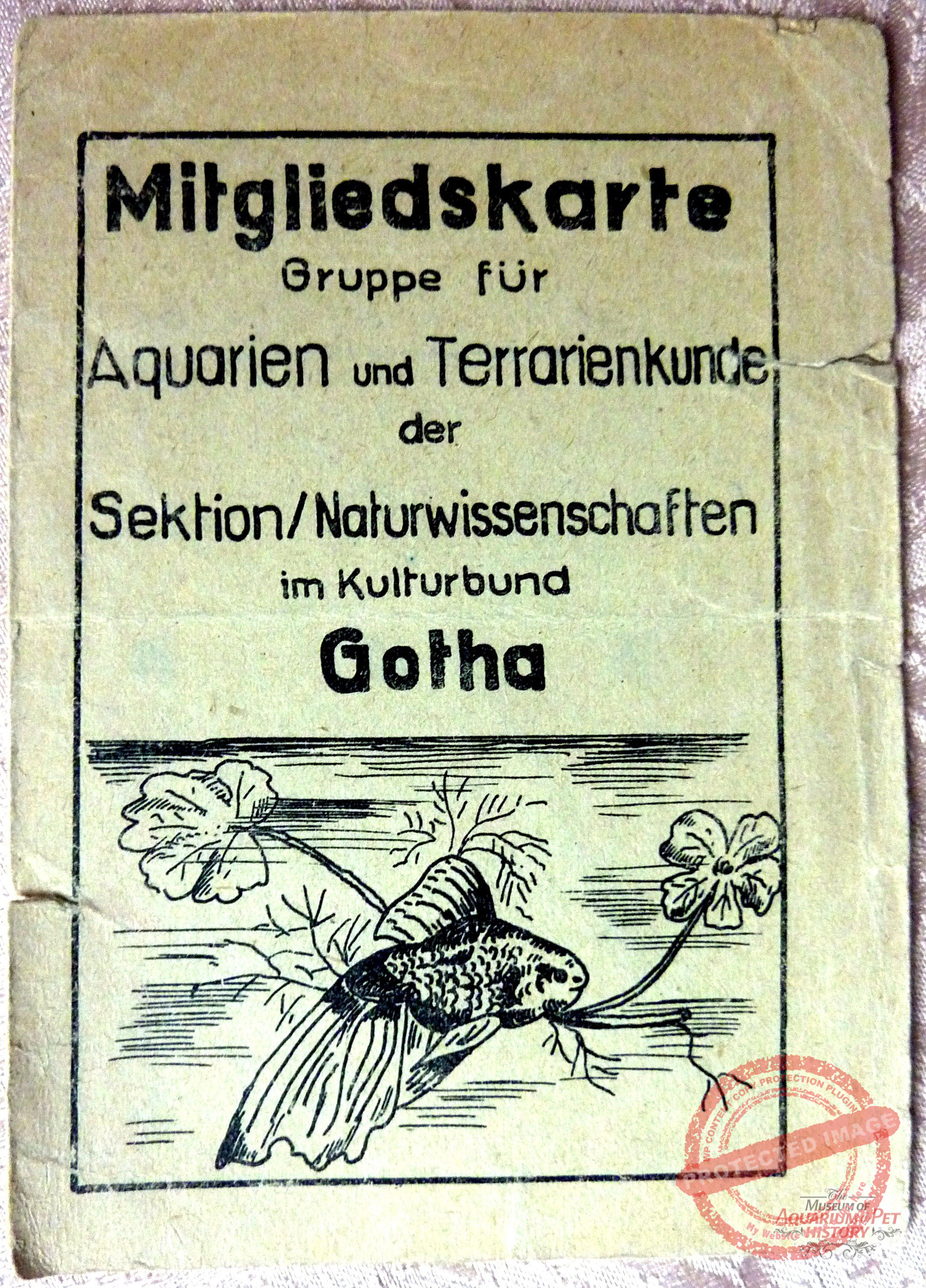
The first membership card of the Aquarium and Terrarium Group within the Natural Sciences Section of the Kulturbund Gotha
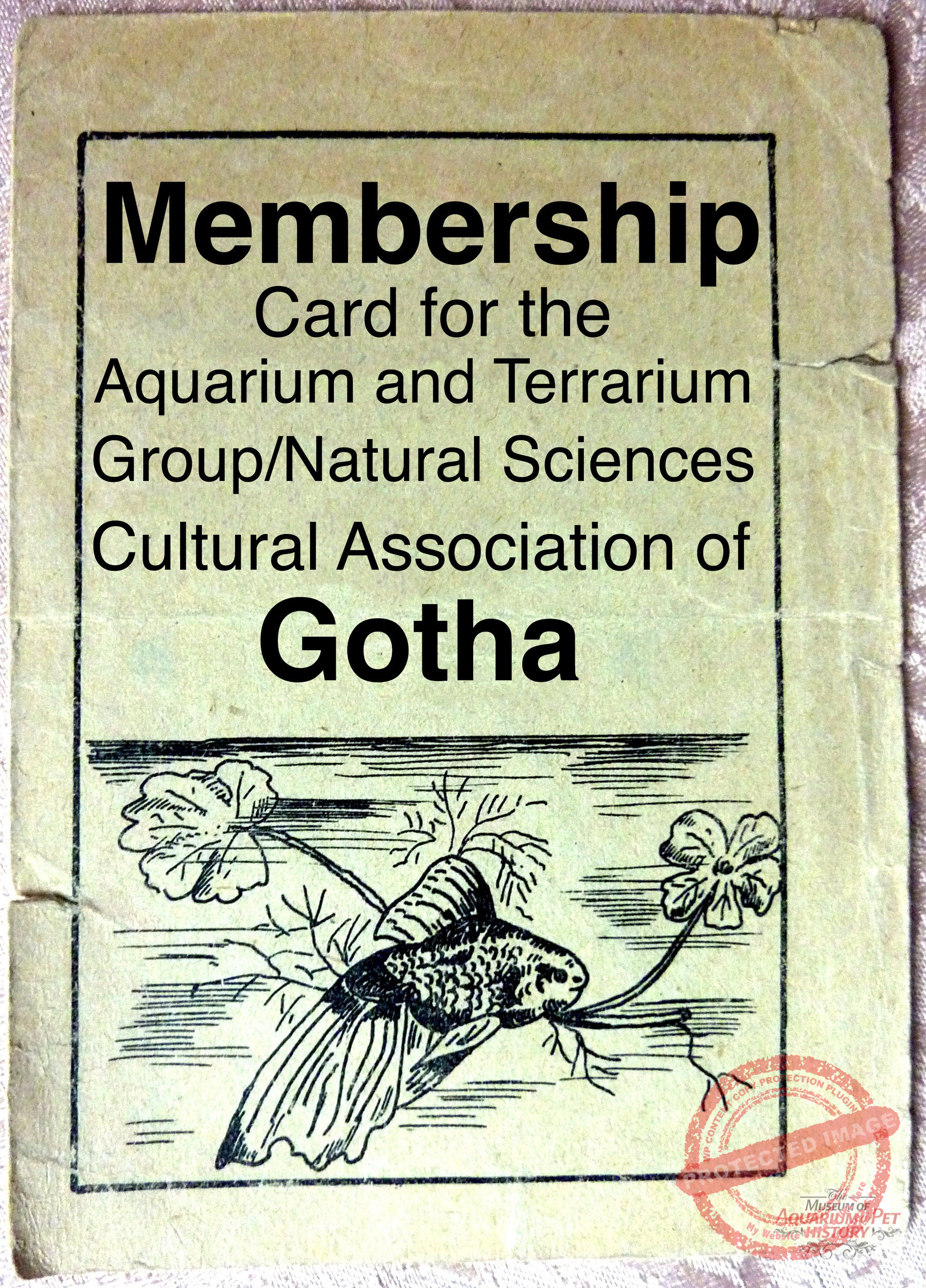
Membership card translated with notegpt.io.
Because the Danio grounds were the easiest to rehabilitate compared to the other sites at Uelleber Ried and the Seven Ponds, all efforts from 1949 onward were concentrated there. Kurt Koch had already attempted to secure protected status for the site through the cultural office, albeit unsuccessfully. A group of young aquarists initially tried to begin restoration but failed without the support of experienced members who had established the site a quarter century earlier. Eventually, the city administration requested that the aquarists, under Koch’s guidance, make the grounds accessible again, recognizing its potential as a recreational space. With virtually no financial resources available, the burden fell once more upon the members’ physical labor and personal dedication.
The rubble field first had to be fenced, though timber was scarce. Somehow, it was accomplished. Filling bomb craters with earth, clearing debris, and repairing ponds constituted a Herculean task. Paths were laid out anew, surfaces leveled, drainage installed, and trees and shrubs replanted. The greatest concern, however, was the destruction of buildings, for materials were almost nonexistent—priority was naturally given to housing reconstruction. In this phase of scarcity, the ingenuity, improvisation, and self-reliance that would later become hallmarks of East German aquarists began to flourish. Cement was procured through unofficial channels; iron parts and pipes were salvaged from the ruins of Gotha’s airfield. Even nails, screws, and wire mesh were collected and reused. I recall from my grandfather how old rusted nails were straightened on a steel block and painstakingly cleaned—each one individually—a laborious lesson from my childhood.
In total, 14,500 hours of labor were invested—before the later establishment of the GDR’s “Nationales Aufbauwerk“ (National Reconstruction Work), which called for voluntary, unpaid contributions from the population. In the 1960s, I participated as a schoolboy, derusting and repainting benches and fences. Yet what Gotha’s aquarists achieved on the Danio site far exceeded such efforts. They transported 35 tons of natural stone to rebuild foundations. All of this was done in their spare time; in the postwar years, every worker was needed in factories, and unemployment was virtually nonexistent due to the immense loss of life.
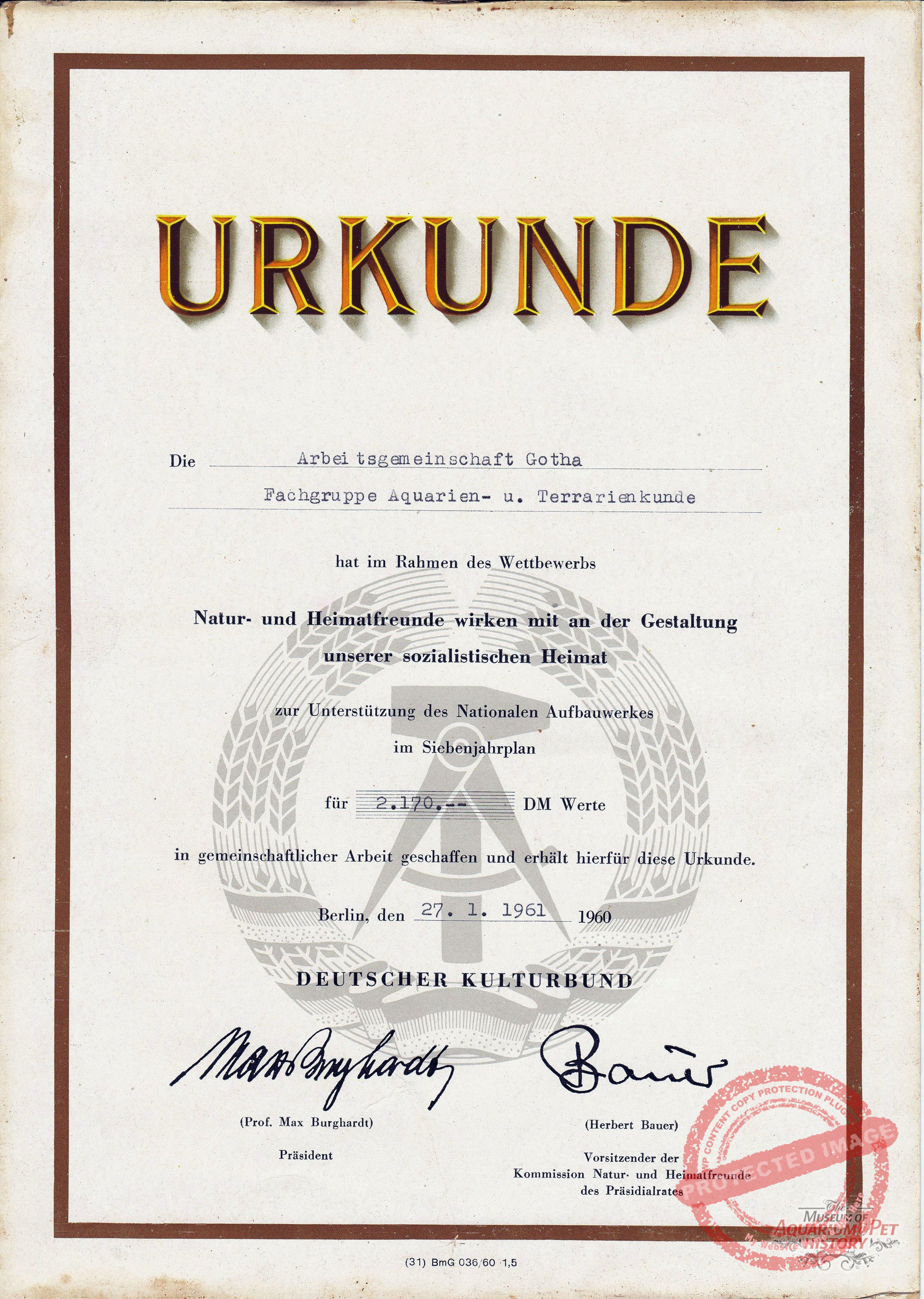
No monetary compensation was given for the reconstruction work; instead, certificates such as these were awarded within the framework of the so-called “National Reconstruction Work”
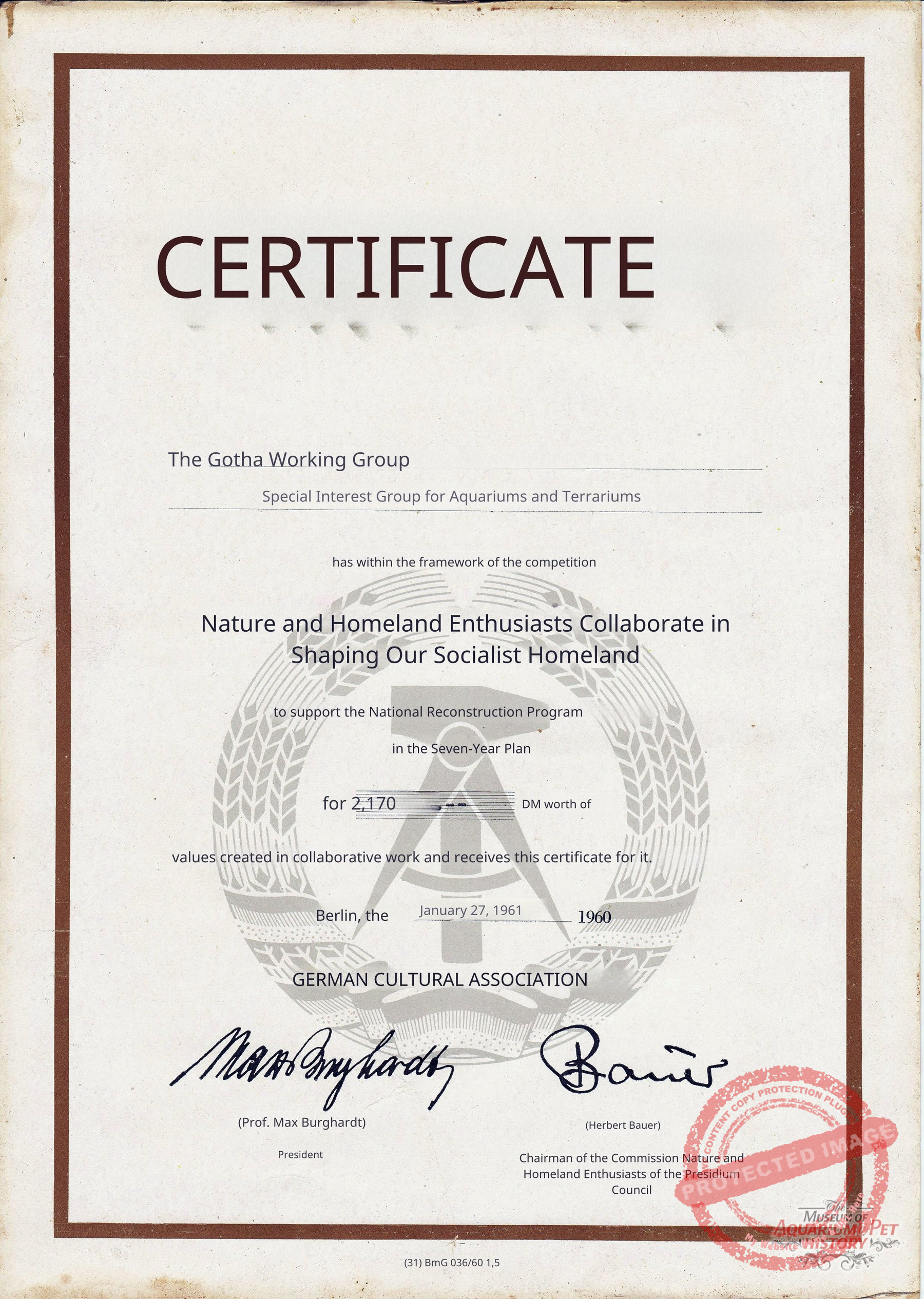
Certificate translated using notegpt.io.
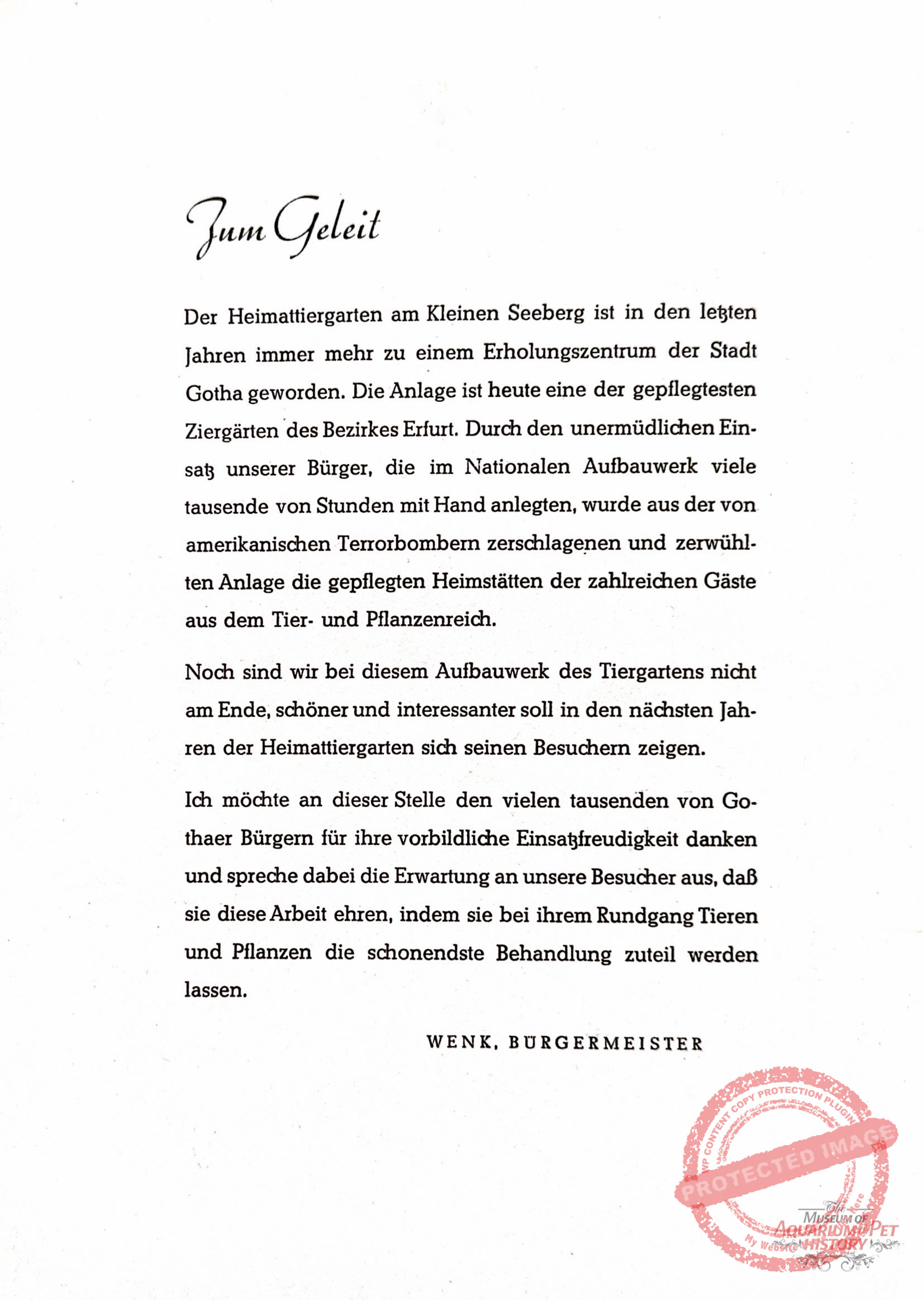
In his foreword, then-mayor Wenk did not mention the true driving forces behind the reconstruction—the Gotha aquarists
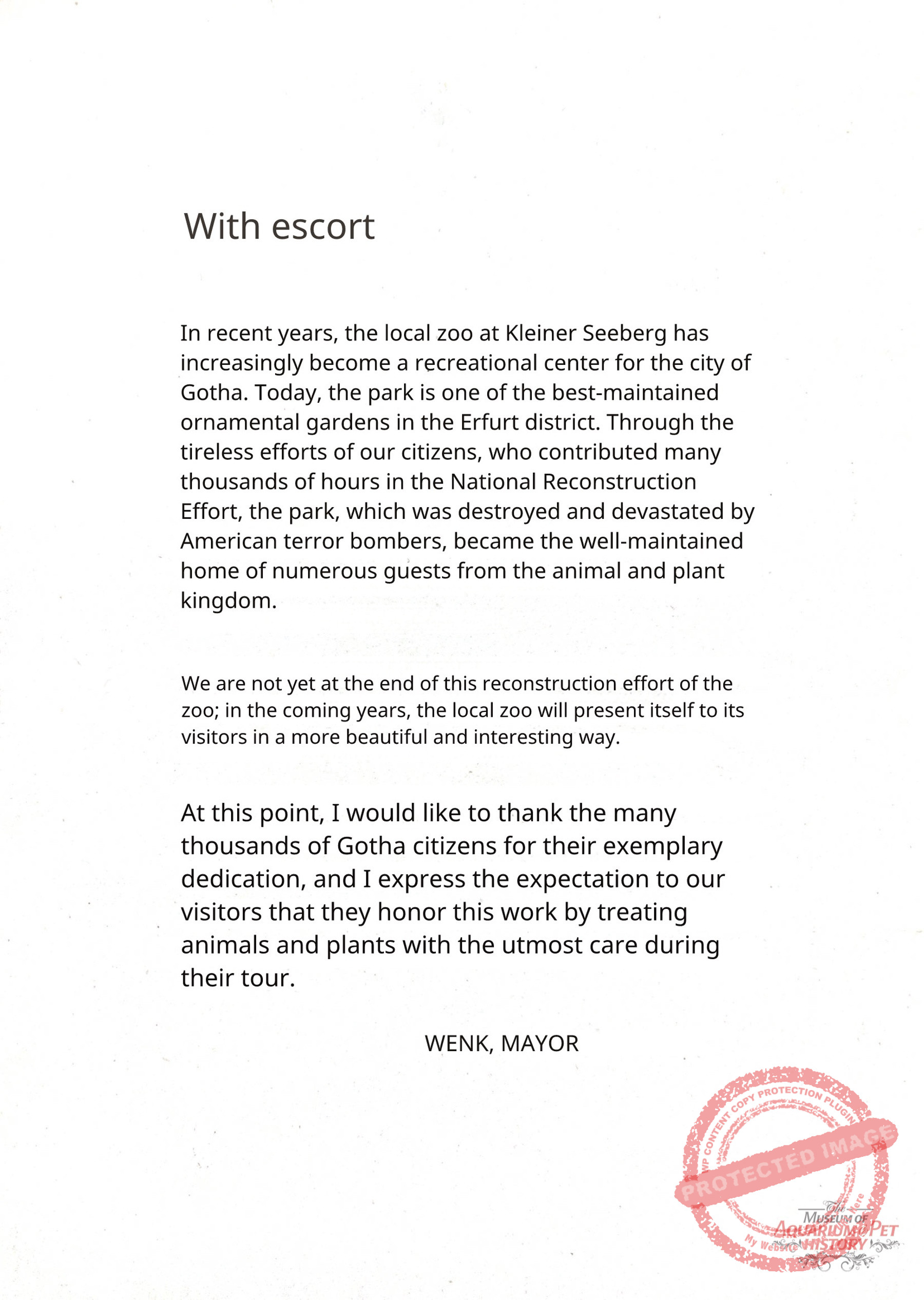
Mayor Wenk’s foreward translated using notegptio.
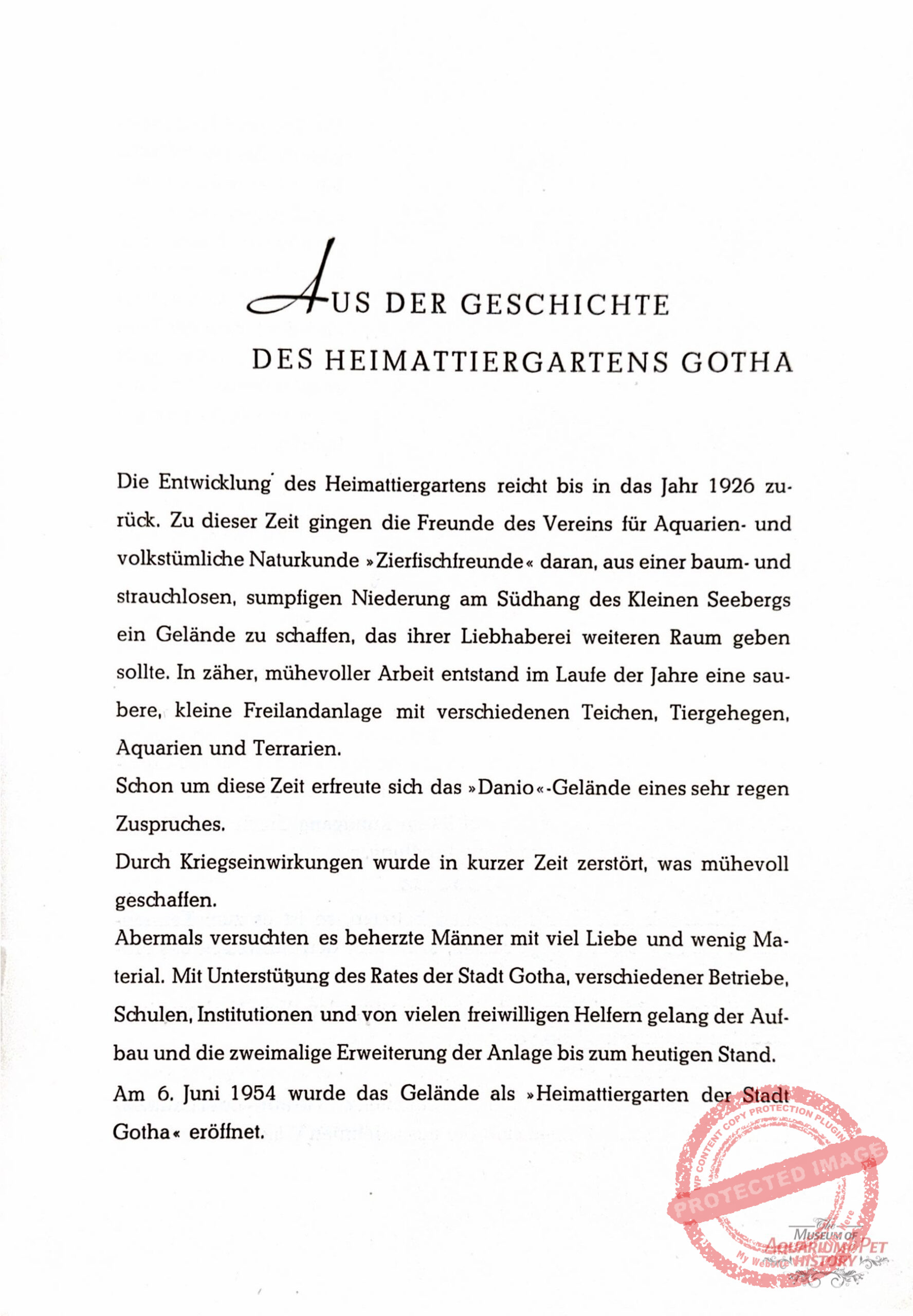
The unfortunately now unknown author of the excellent text of the brochure at least notes on this page that the site was formerly the Danio grounds of the aquarium society of the same name

Brochure text translated using notegpt.io.
On 6 June 1954, the Danio site was reopened to the public under the name “Heimattiergarten Gotha.” Kurt Koch, who had carried the main burden of organization and labor, delivered the opening address, declaring: “Whoever loves nature also loves their homeland and peace; whoever loves their homeland is prepared to struggle and to make sacrifices.” These words were not bellicose, but reflective of a time marked by rationing, food stamps (which persisted in Gotha into the late 1950s), and pervasive scarcity. Everything had to be fought for; much more effort was required than in ordinary times. Those who devote such effort to a hobby do so with true conviction—and so did Gotha’s aquarists. Even after the opening, they contributed an additional 18,120 hours of labor.
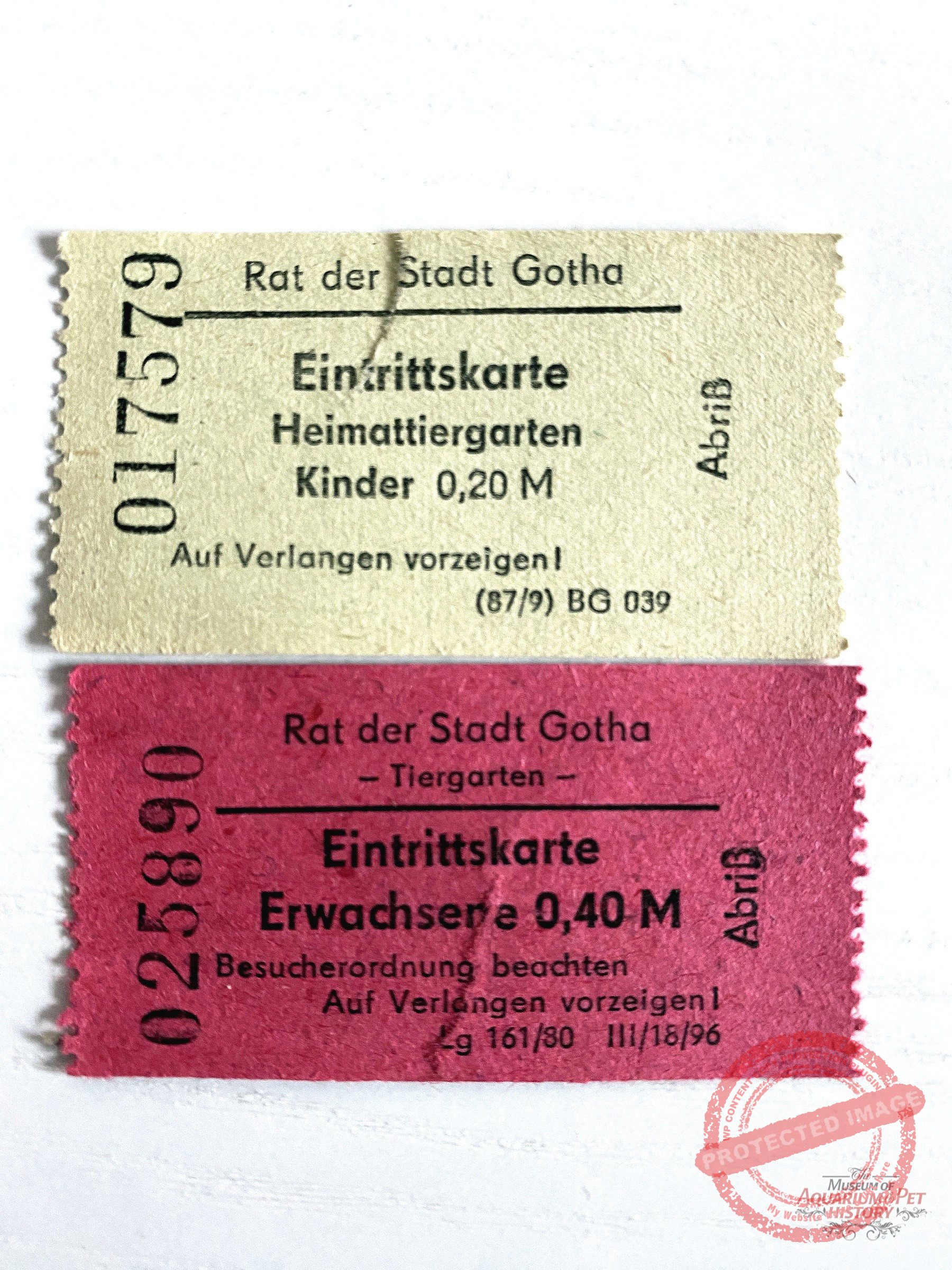
Admission ticket for the Gotha Heimattiergarten, for adults and for children
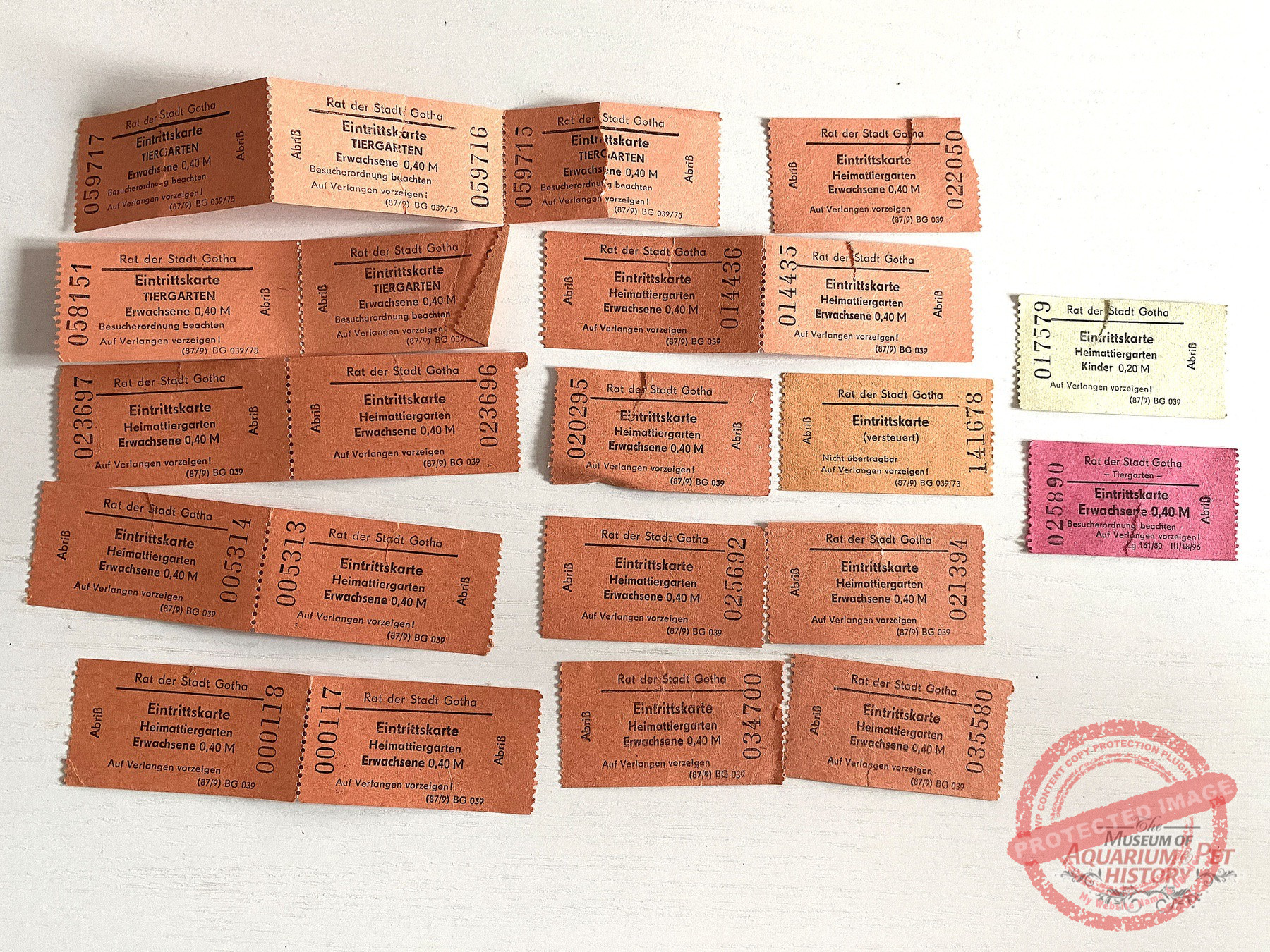
Although I was already active in the zoo youth club, I always purchased and collected a ticket to support the zoo; the price was negligible
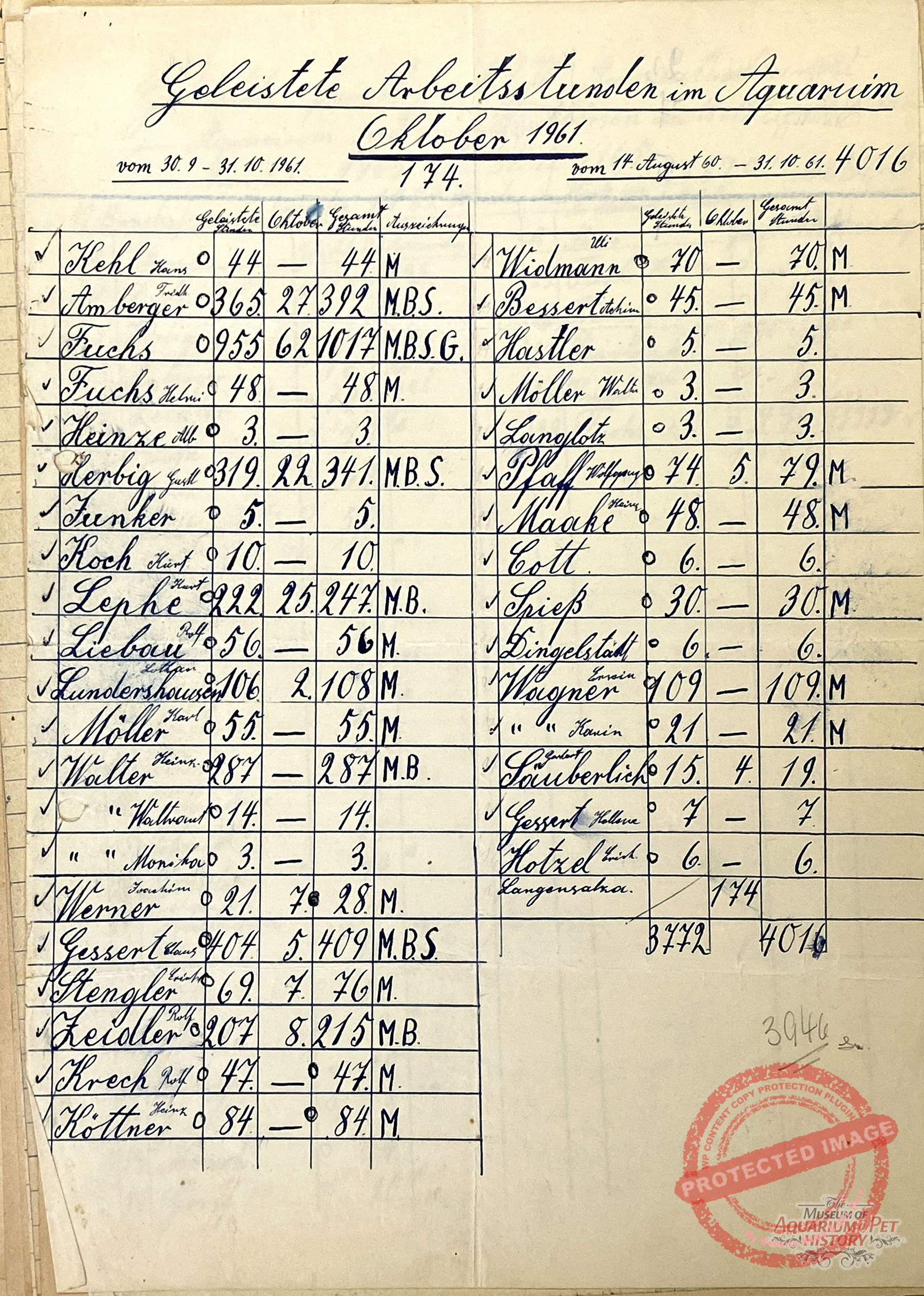
Within the association, every hour of labor on the Danio grounds was meticulously recorded; here is an overview from 1961
Yet the increasingly species-rich Heimattiergarten (little Zoo) could no longer be maintained by the hobbyists alone. Full-time staff provided by the city became necessary. Although the association was granted a consultative role in the facility’s development, the sacrifices of its members went largely unrecognized once the site became municipal property. The socialist state assumed control, shaping and managing it according to its principles under a politically approved director. During the 1950s, the aquarists still participated actively, but their involvement gradually diminished.
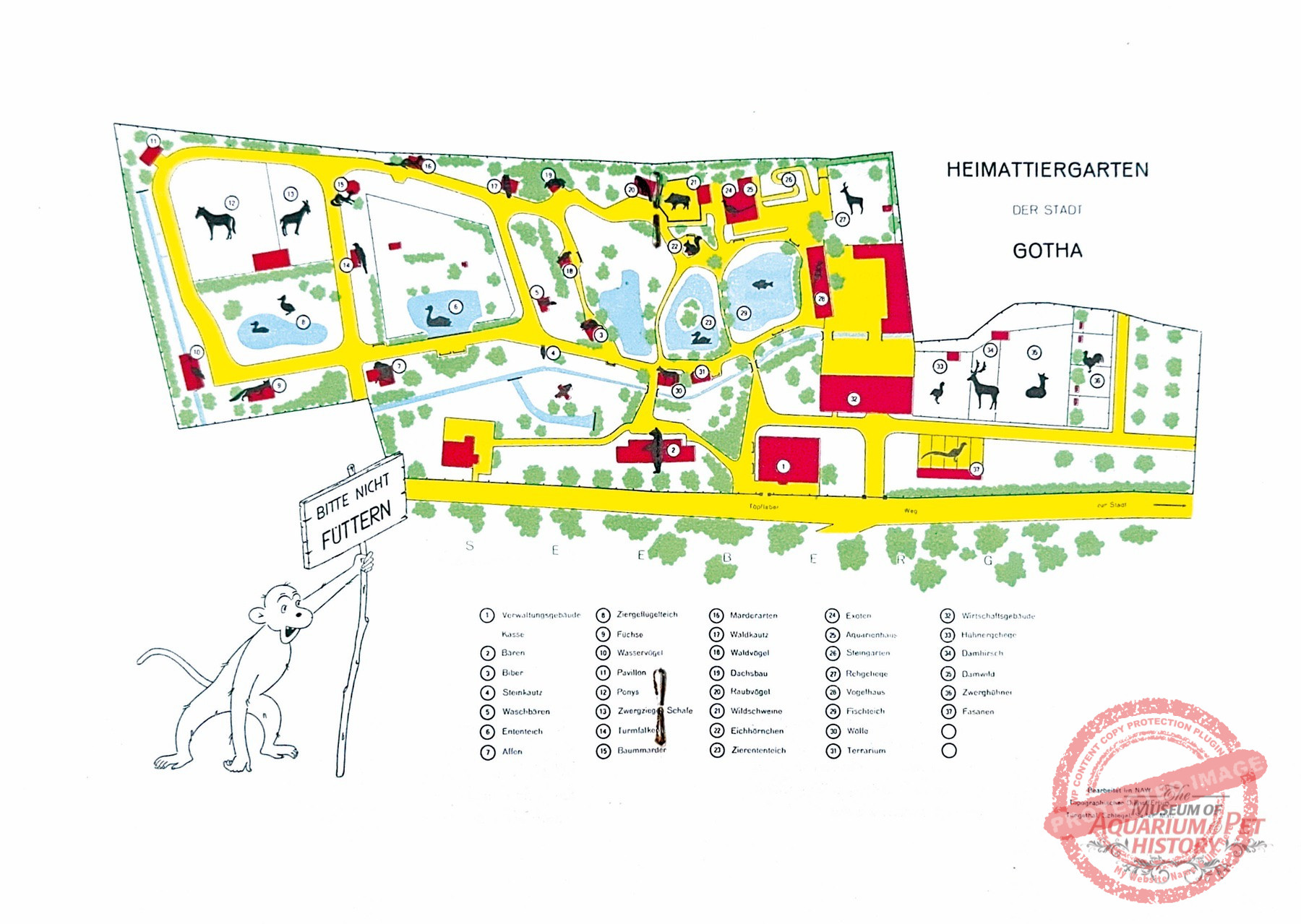
Site plan of the Gotha Heimattiergarten
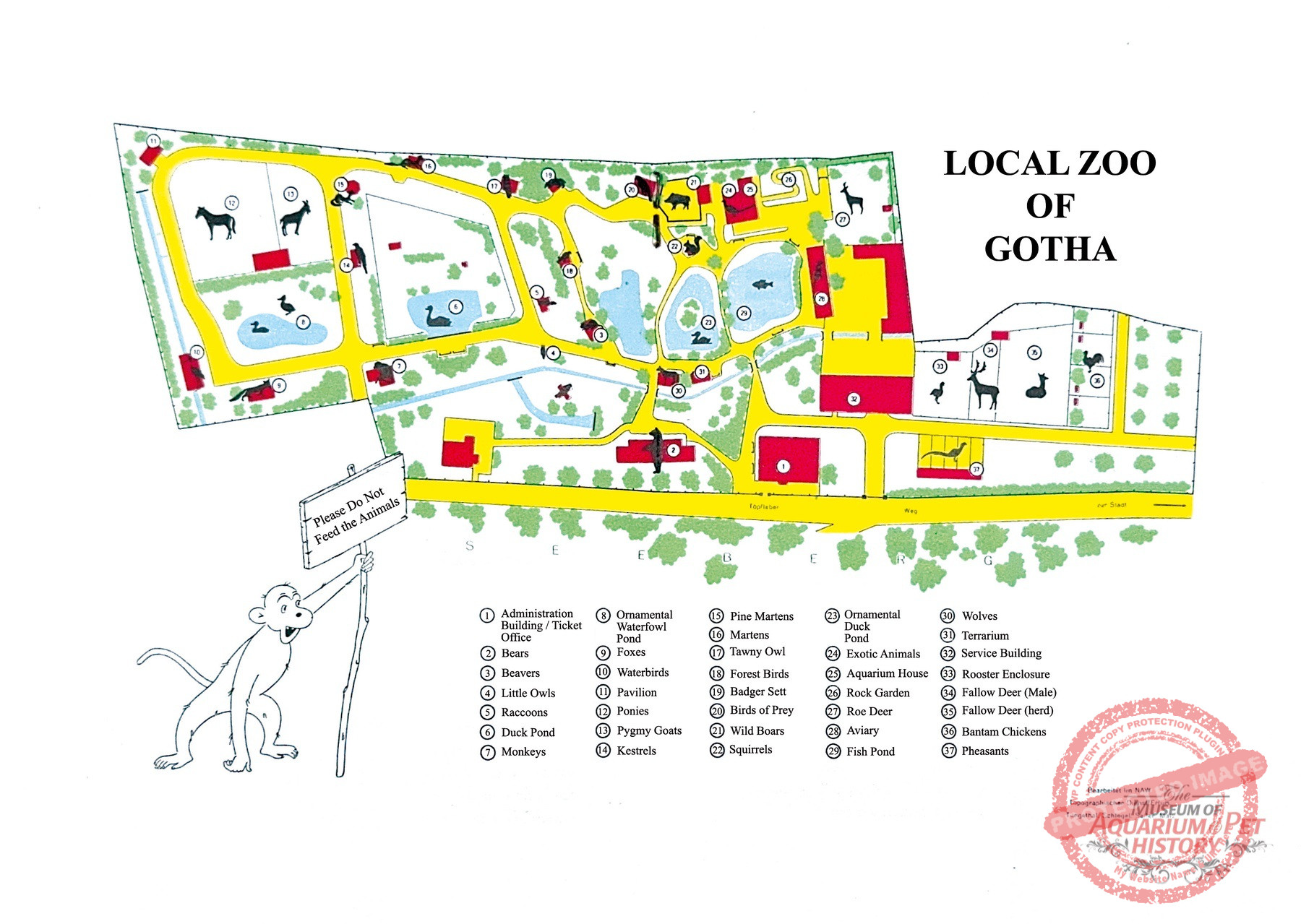
Site plan translated using notegpt.io.
A guidebook to the “Heimattiergarten der Stadt Gotha am Seeberg” records the animals on display, mentioning only in passing the site’s origins as the Danio Club grounds. For a modest entrance fee—0.40 GDR marks for adults, 0.20 for children—visitors entered and were immediately captivated by the bear enclosure. Brown bears were kept in Gotha until 2025, breeding almost annually; their playful cubs delighted visitors, sometimes even escaping to sit atop the enclosure—an unimaginable scenario today.
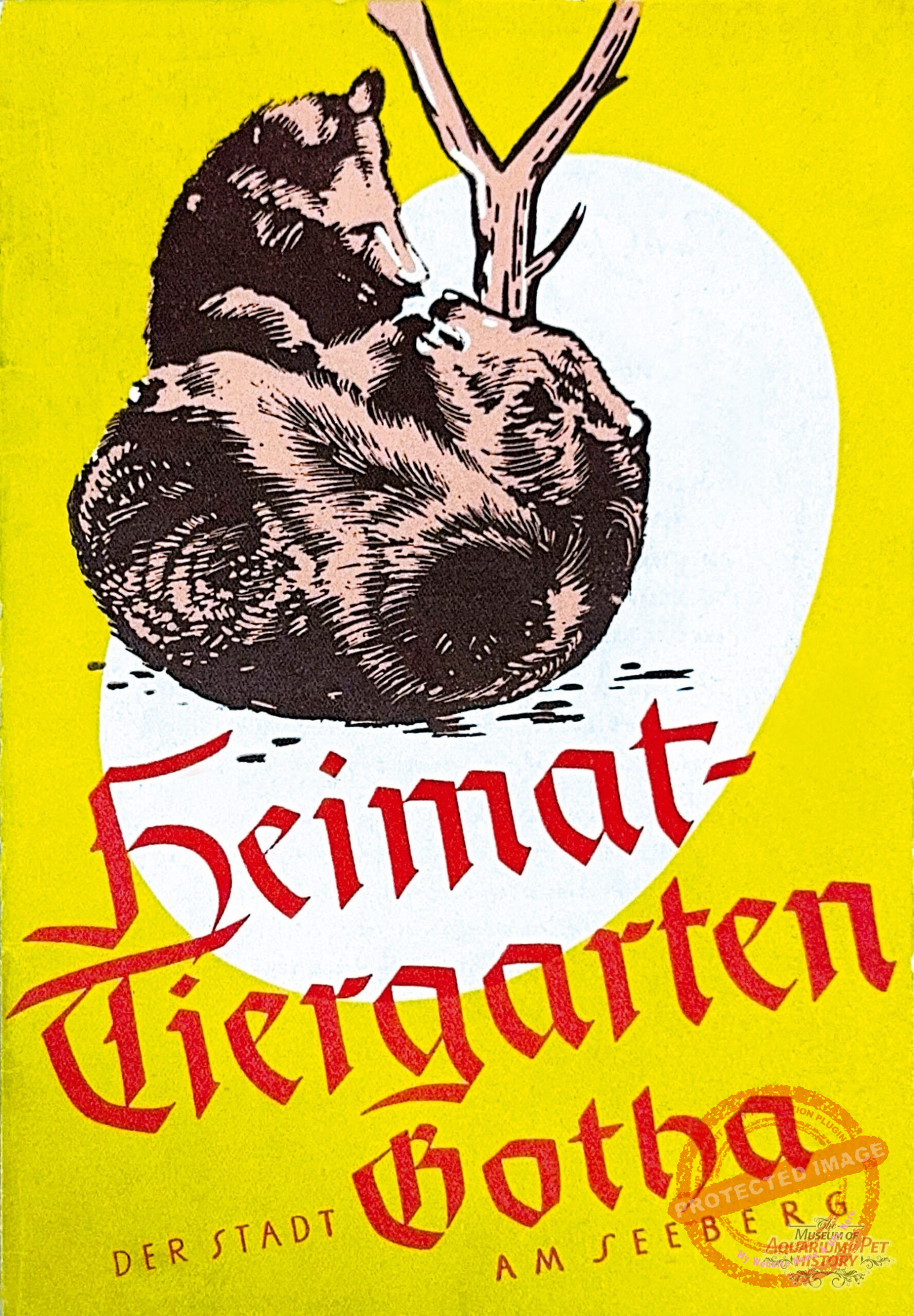
Title page of the zoo guidebook available for purchase at the entrance
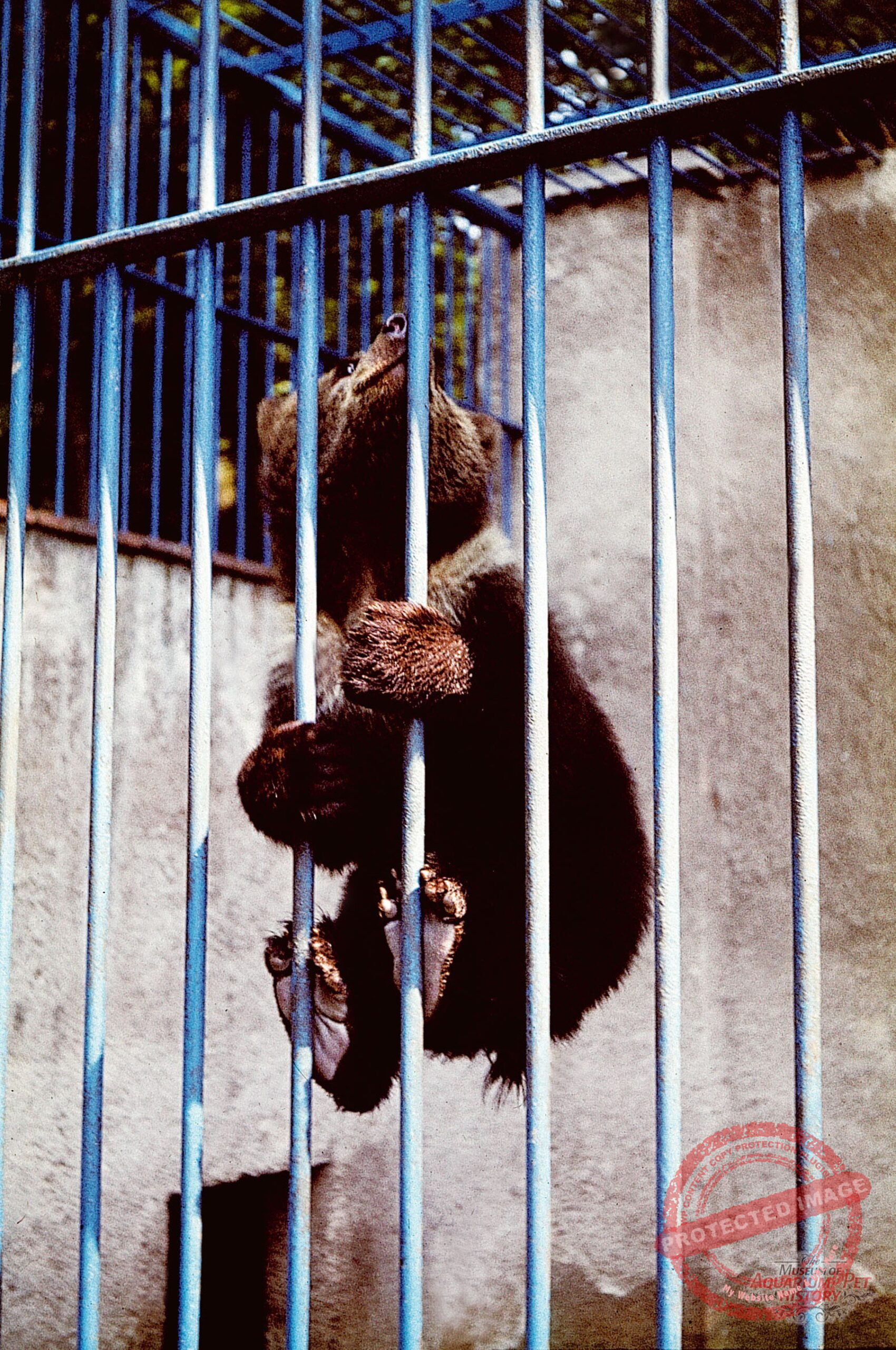
In the 1960s and 1970s, I photographed many animals in the Gotha Heimattiergarten; here are some examples: a young brown bear, Ursus arctos, climbs the bars of the bear enclosure
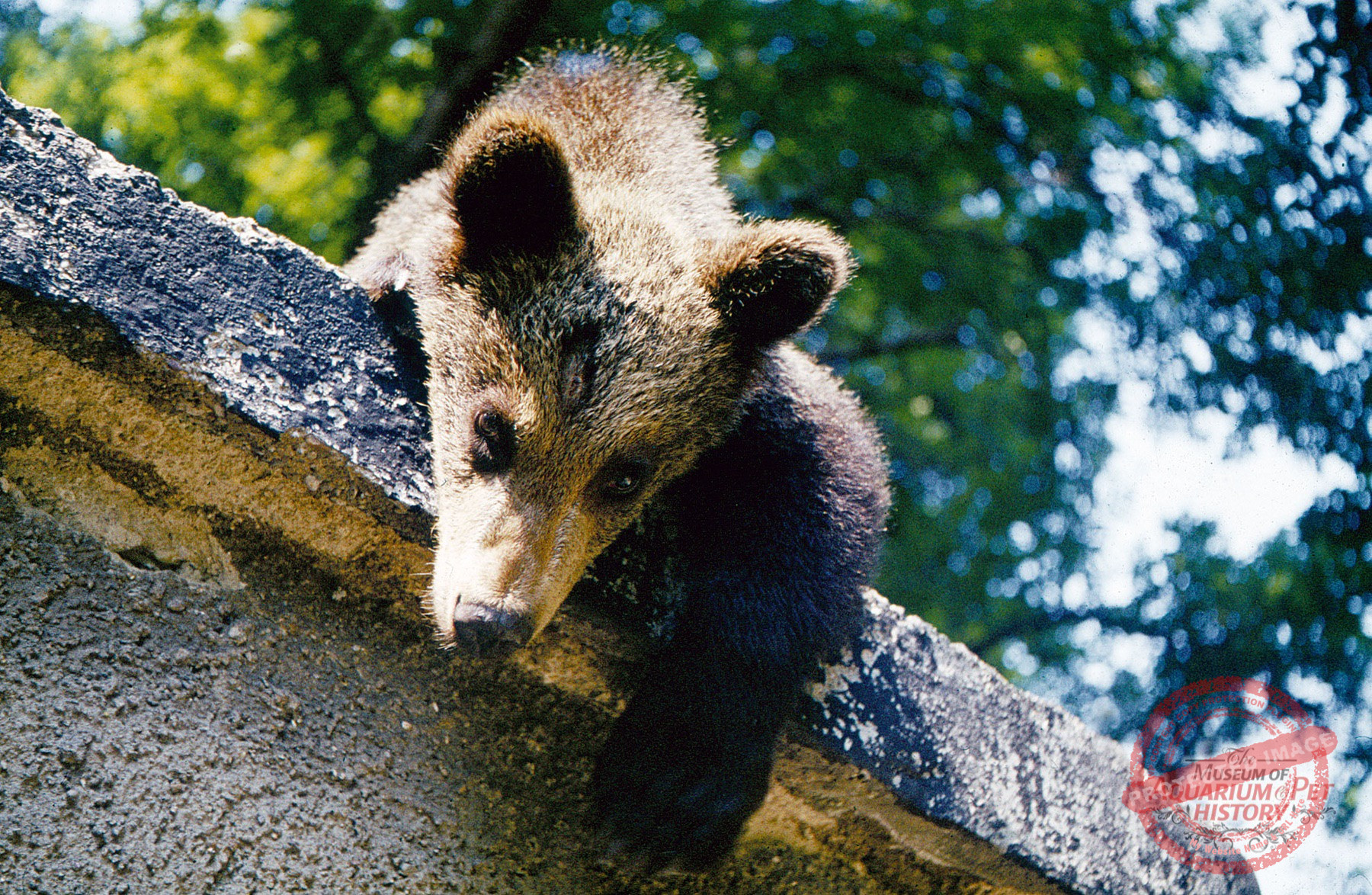
The bear has reached the roof of the enclosure and is now roaming freely about the zoo
In modest enclosures built with postwar means, visitors could observe native wildlife, domestic animals, and a few exotic species—birds of prey, mustelids, waterfowl, gallinaceous birds, and ungulates. Particularly popular was the enclosure for rhesus macaques, Macaca mulatta, where young were regularly seen. Water installations for nutria and ponds for fish and waterfowl were also noteworthy. The former club building, hastily rebuilt and unheated, housed aviaries for budgerigars, Melopsittacus undulatus, and cockatiels, Nymphicus hollandicus. There was also a small aquarium house—a corridor lined with tanks and, at its end, a large terrarium for European tortoises. Heated by steam pipes from a coal stove that had to burn continuously in winter, it exuded a damp, slightly musty atmosphere that I loved dearly.
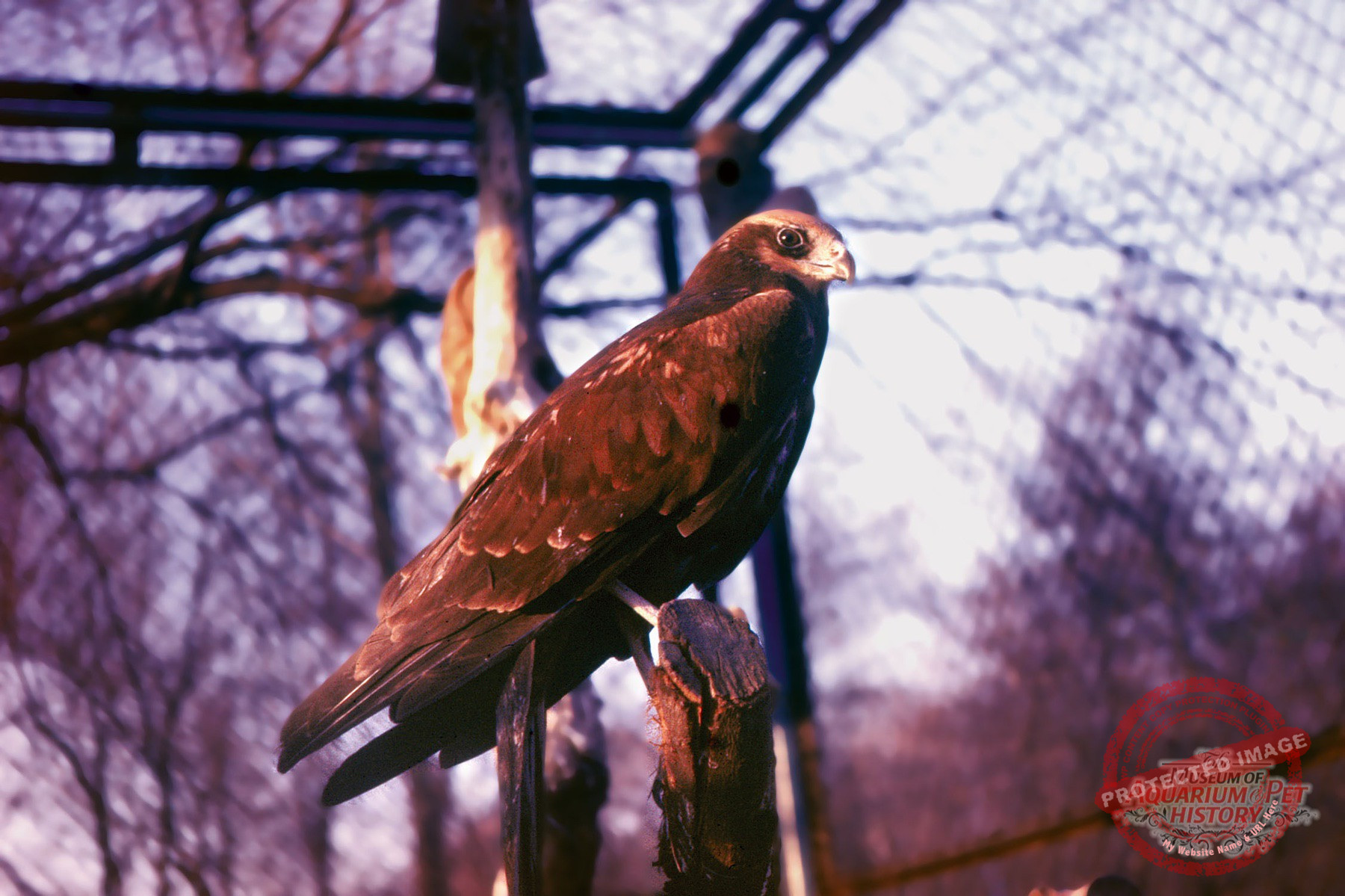
Even the rare western marsh harriers, Circus aeruginosus, were exhibited
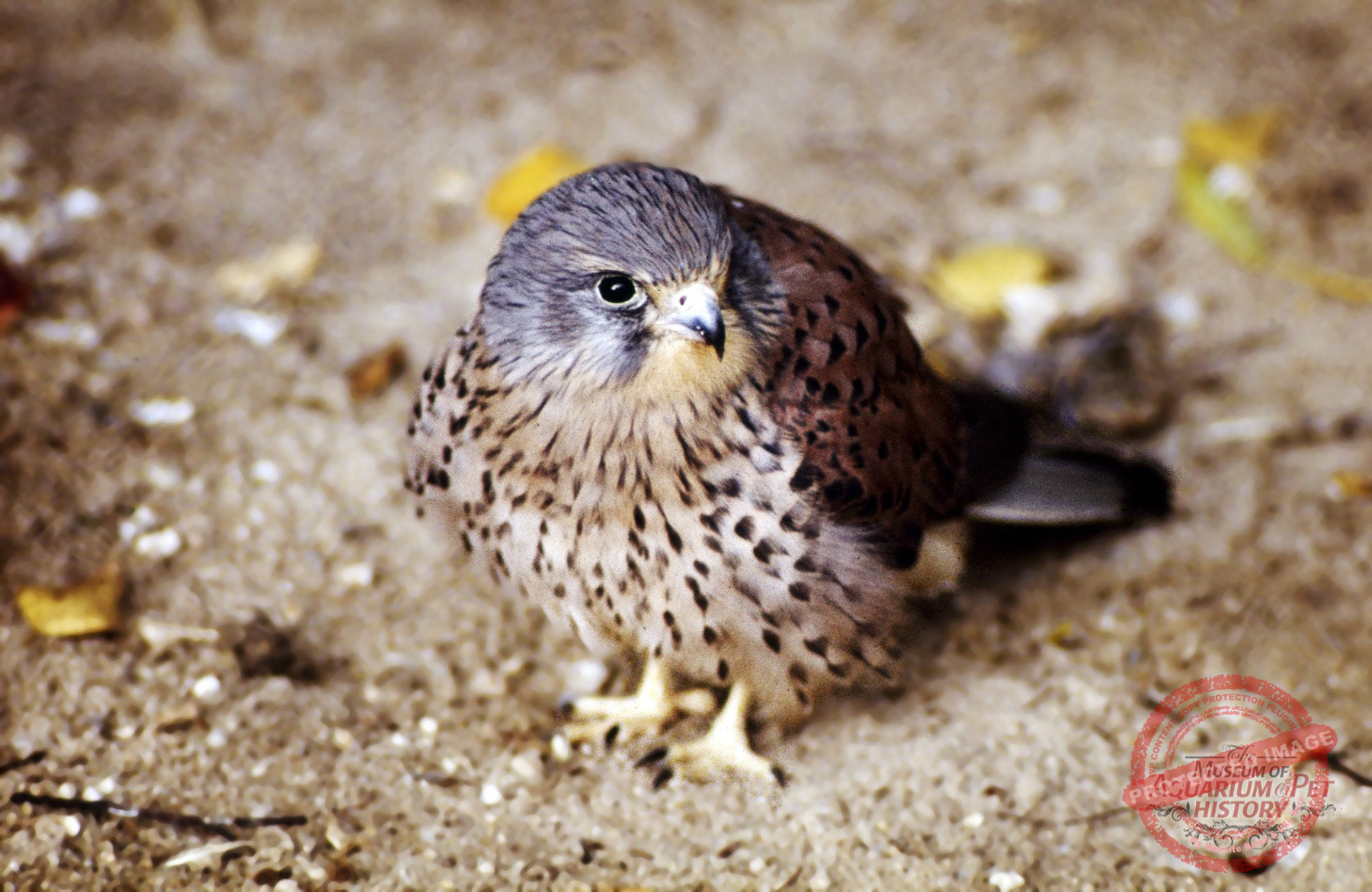
Common kestrels, Falco tinnunculus, were provided with a spacious and well-designed aviary
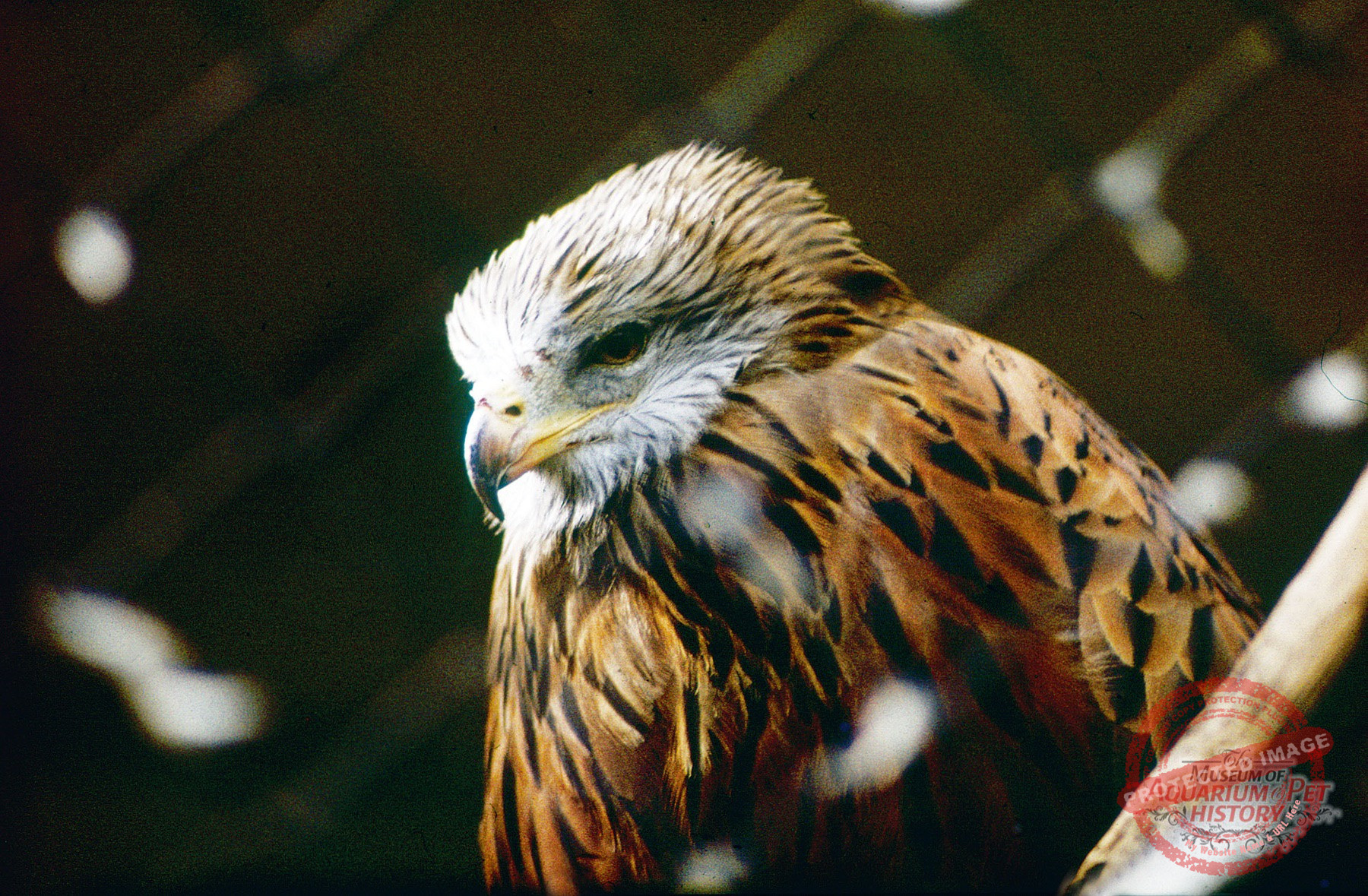
Red kites, Milvus milvus, could be heard from afar with their plaintive, melancholy calls
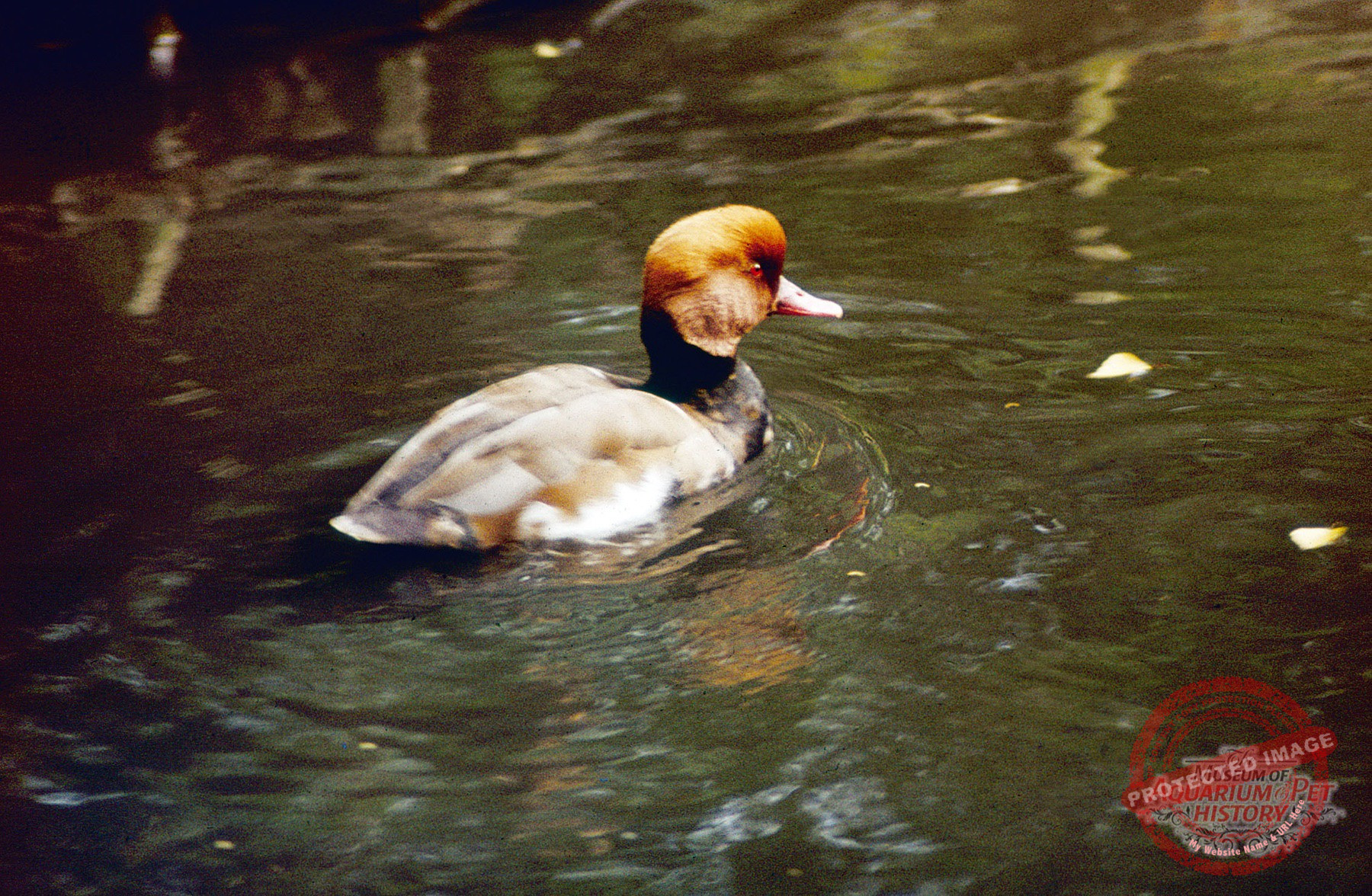
Red-crested pochards, Netta rufina, were the most lively inhabitants of the pond that housed many species of dabbling and diving ducks
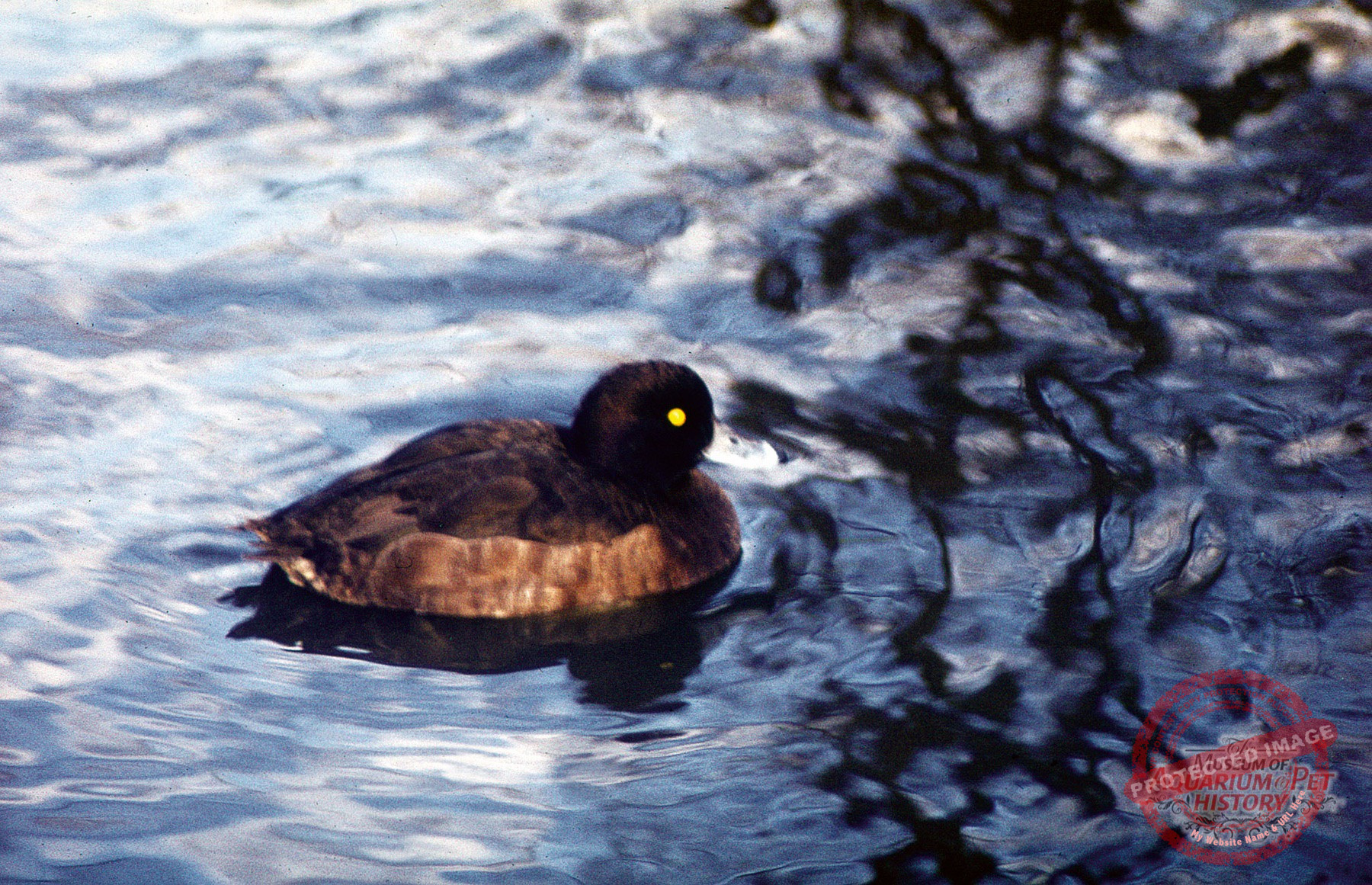
Ferruginous duck, Aythya nyroca, on the duck pond
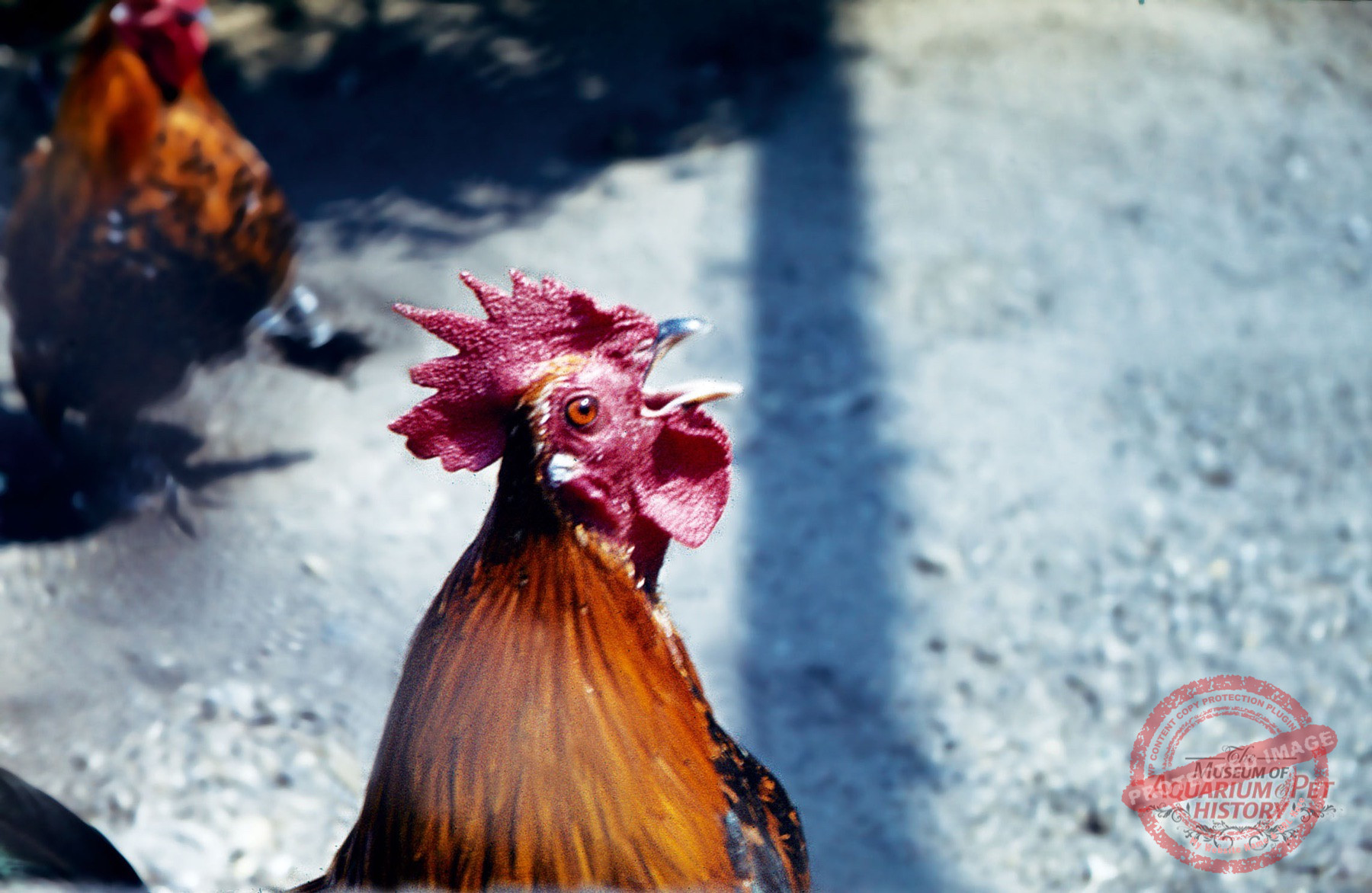
In the so-called pheasantry, numerous species and breeds of gallinaceous birds thrived alongside the pheasants
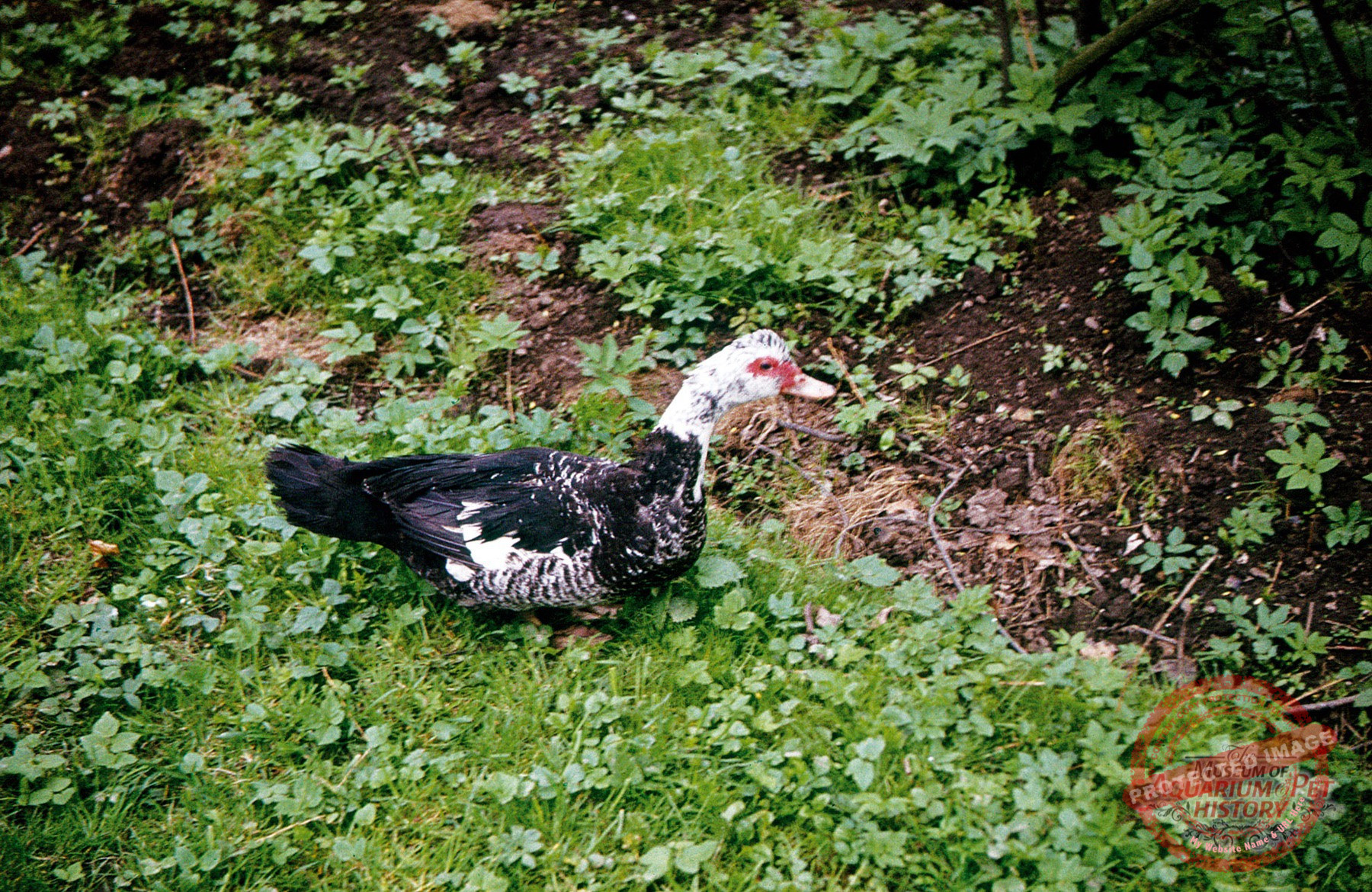
The domesticated form of the Muscovy duck, Cairina moschata, known as the Muscovy or Barbary duck, was also kept among the domestic animals
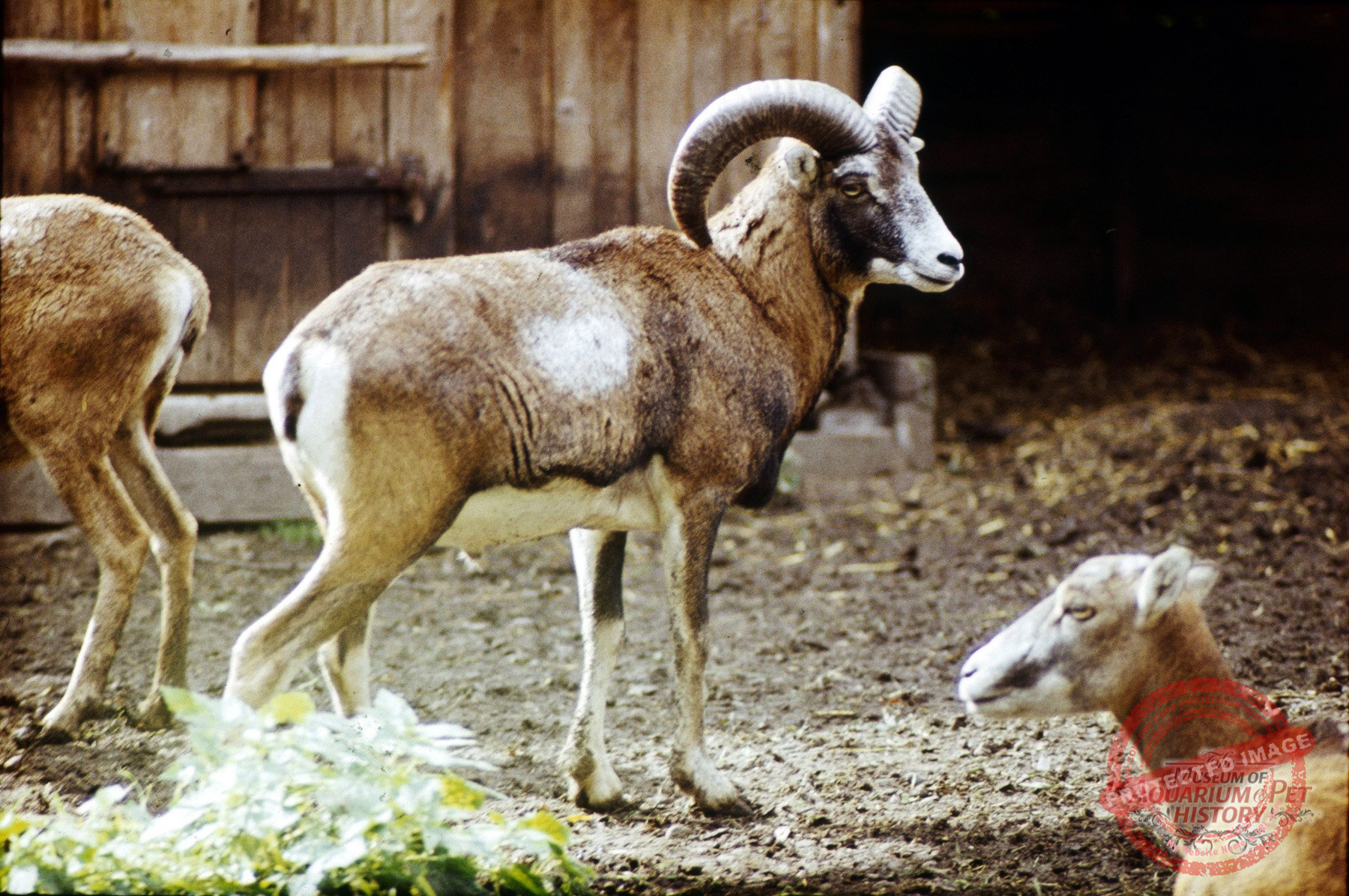
Among European wild sheep, the mouflon, Ovis orientalis musimon, held a permanent place in the Heimattiergarten and bred successfully
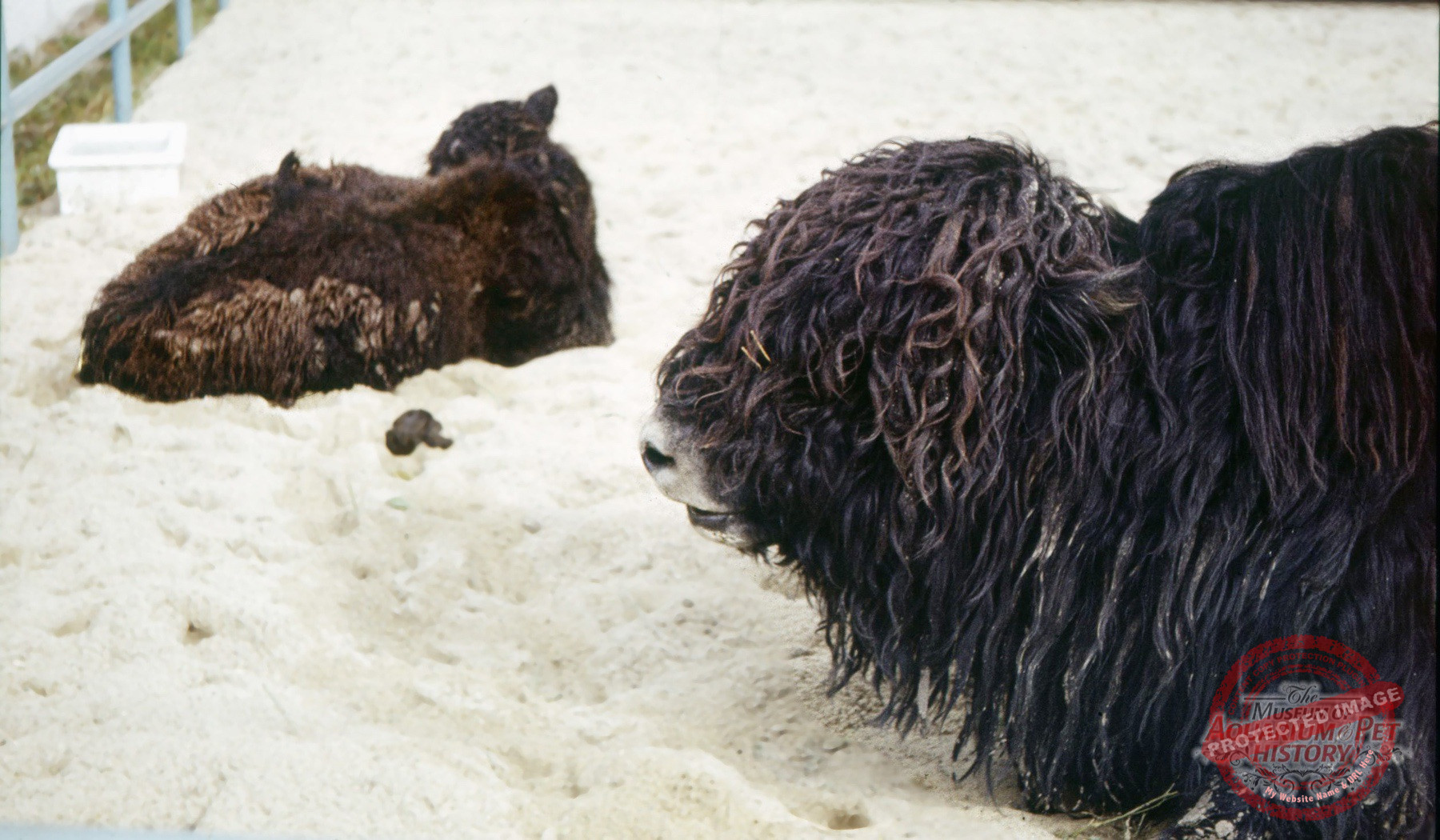
Among domesticated cattle, the hornless-bred variety of yaks, Bos mutus, was particularly rare and highly prized
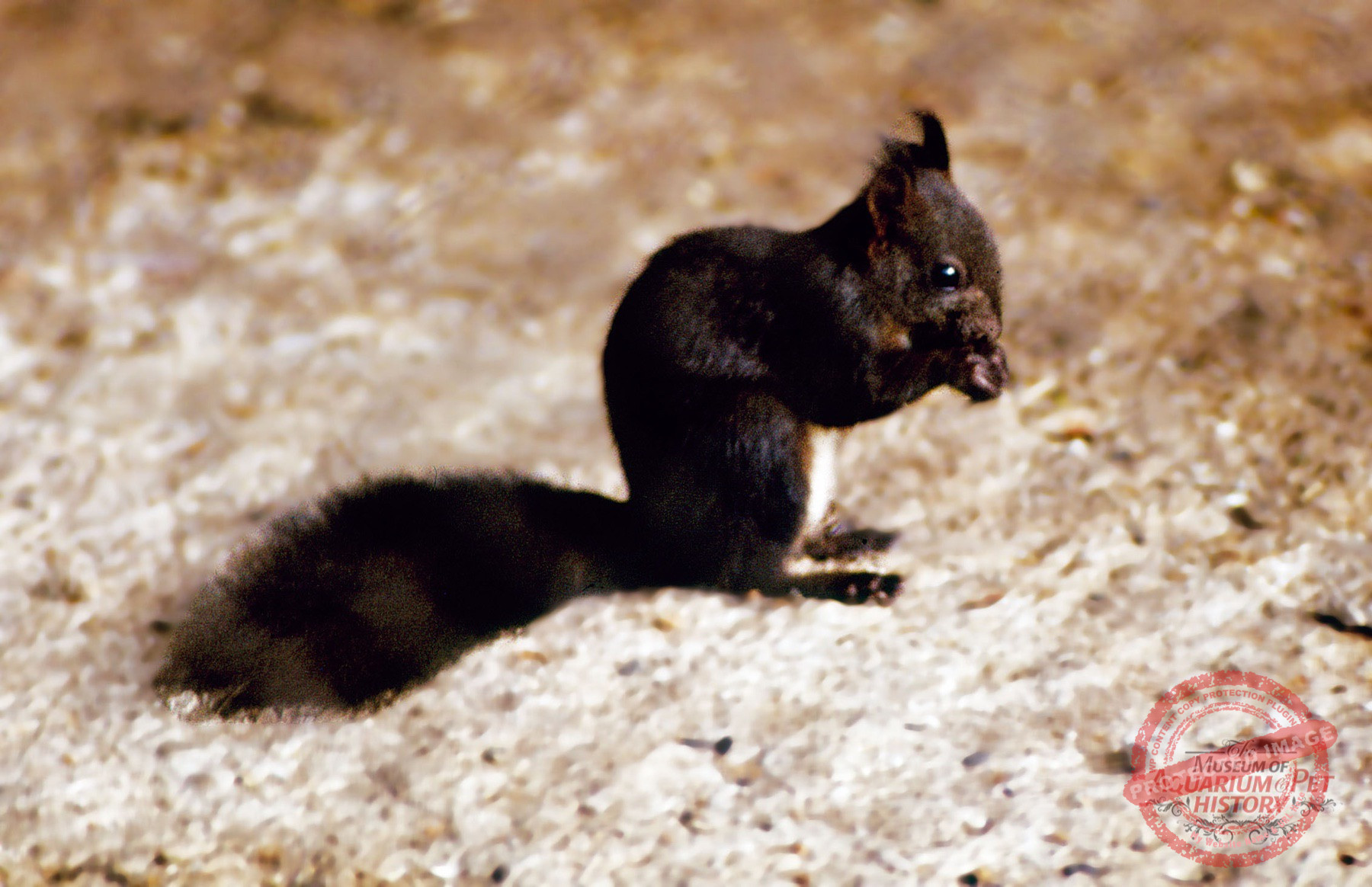
A very darkly colored Eurasian red squirrel, Sciurus vulgaris
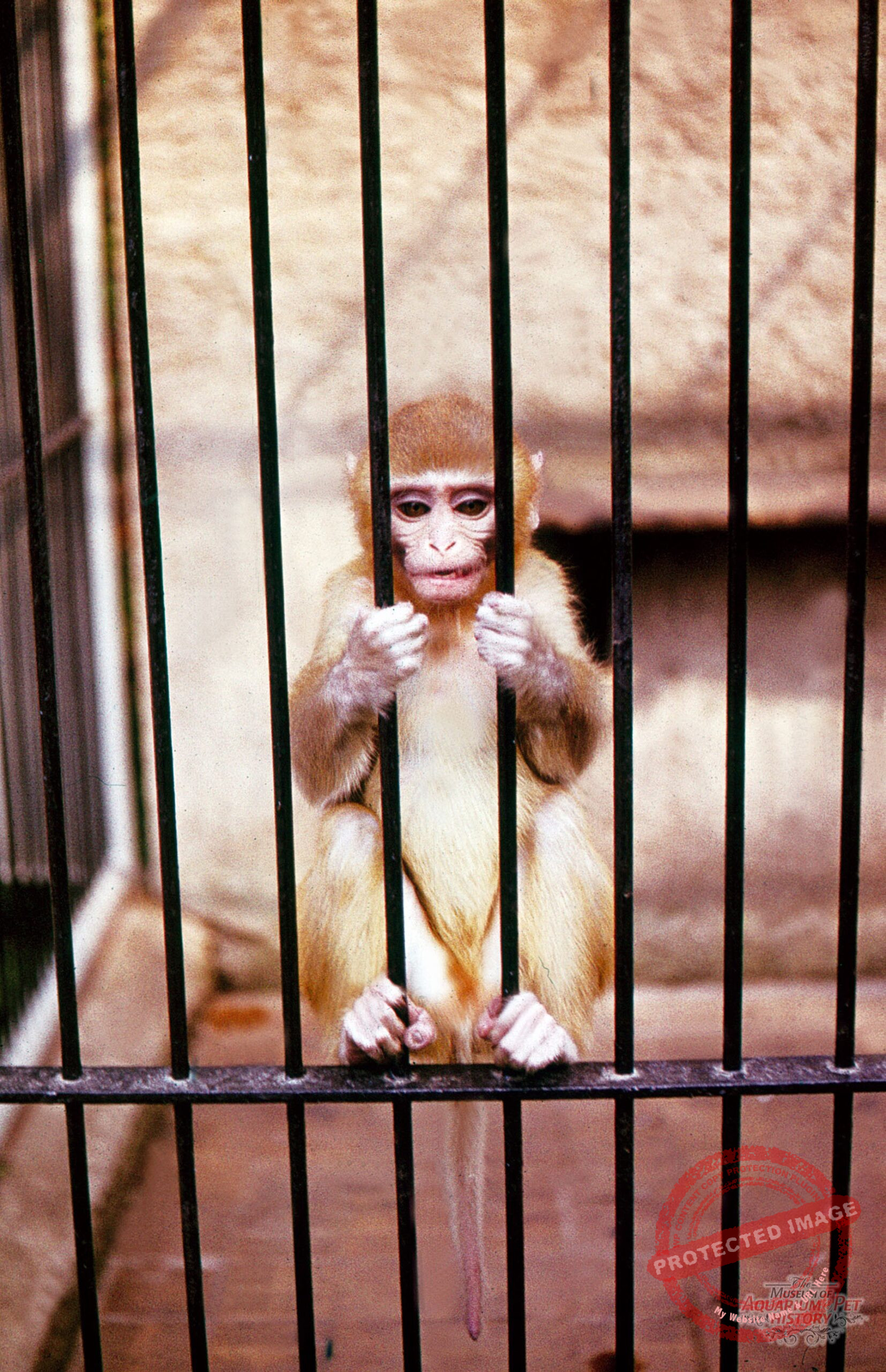
A particular crowd favorite was the enclosure of the rhesus macaques, Macaca mulatta, where charming young animals could regularly be observed
The Gotha Heimattiergarten remained largely unchanged until the late 1970s. The aquarium house was later closed to the public without clear reason. As a member of the zoo youth club, I cared for the remaining fish, amphibians, and reptiles as best I could under the circumstances. New enclosures were added—for Arctic foxes, raccoon dogs, and dingoes—and even pumas, lynxes, and eventually Siberian tigers were exhibited, often aging animals from circuses. Some renovations were well executed: the wolf enclosure became a porcupine exhibit, and a former pasture was converted into a habitat for hornless yaks.
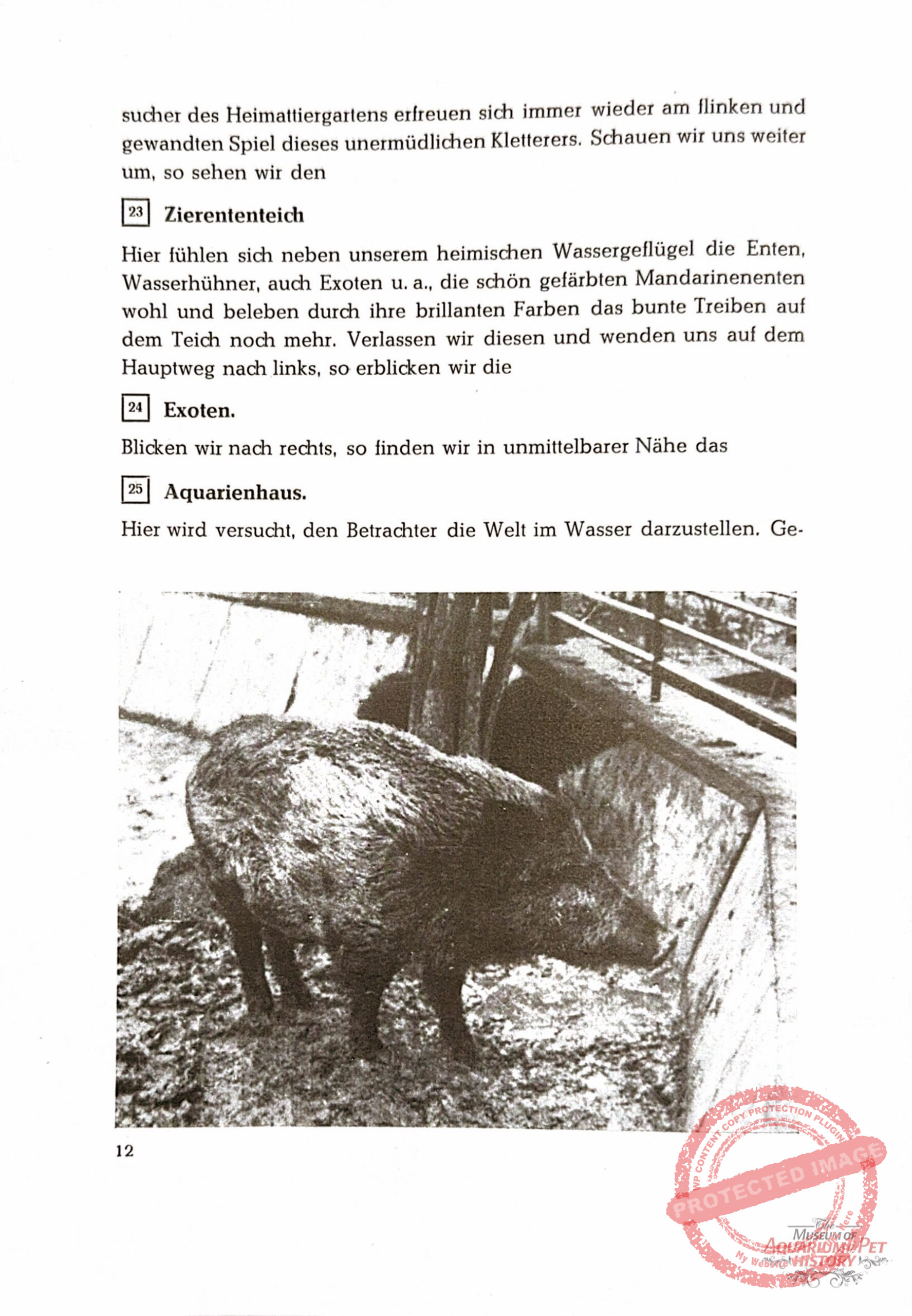
In the site plan, position 25 designates the aquarium house

Following page with the description of the aquarium

First page of site plan translated using notegpt.io.
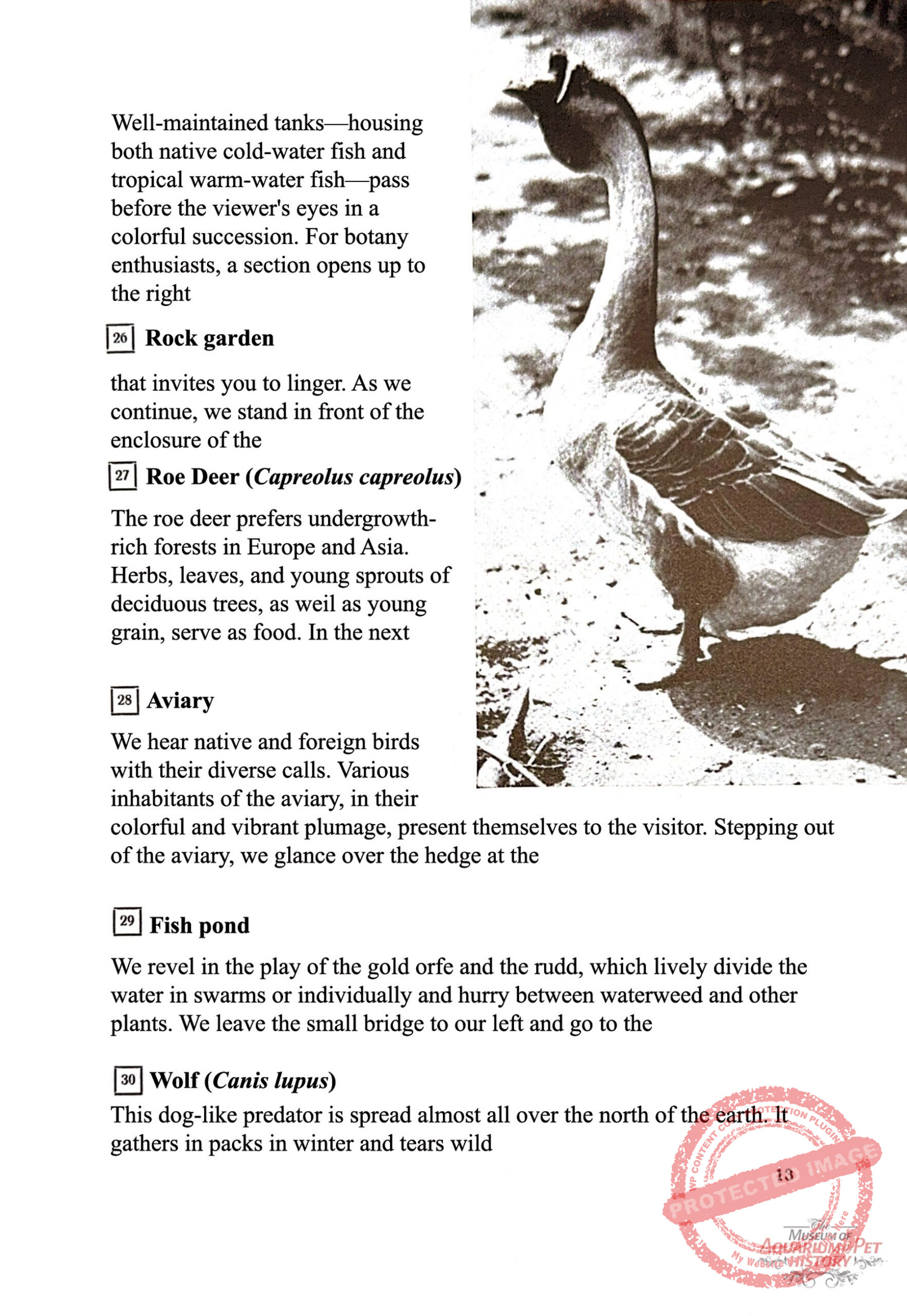
Second page of site plan translated using notegpt.io
Kurt Koch proved an able chairman—now termed “section leader” within the Kulturbund. Records from a club meeting on 17 July 1958 show that he was re-elected, reflecting the renewed emphasis on democratic, collectively accepted decisions after years of dictatorship. Despite ongoing scarcity, Gotha’s aquarists remained optimistic and forward-looking. The same record notes contact with a West German association, enabling an exchange between the GDR journal Aquarien Terrarien and the West German Die Aquarien- und Terrarienzeitschrift. Such exchanges remained possible until the summer of 1961, after which all connections were severed by the GDR leadership.

Minutes of the Gotha Aquarium Society meeting of 17 July 1958
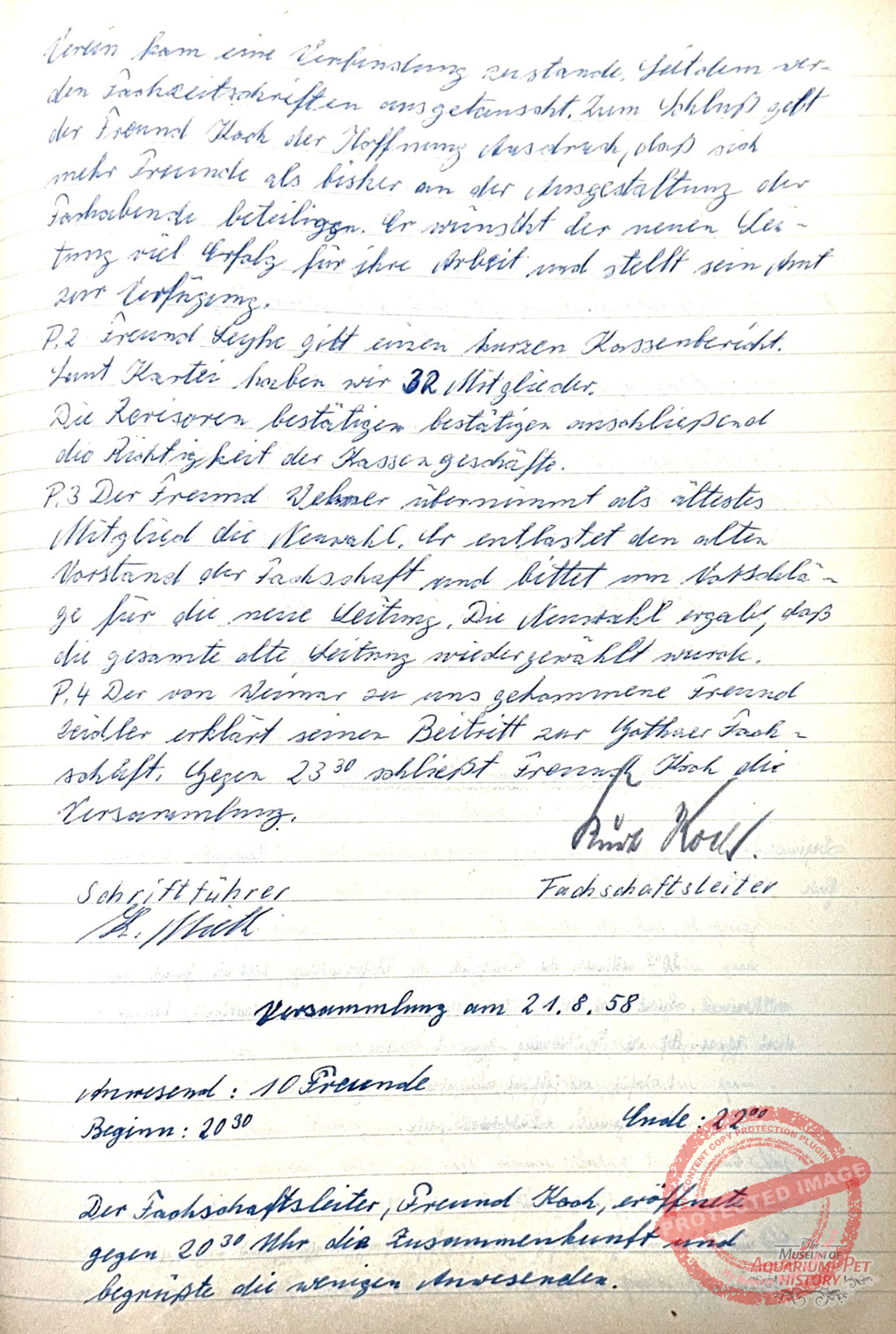
Second page of these minutes, noting the journal exchange between East and West as well as the re-election of Kurt Koch as chairman; Kurt Leyhe is listed as treasurer—he later led the association and ultimately became a venerable elder among Gotha’s aquarists
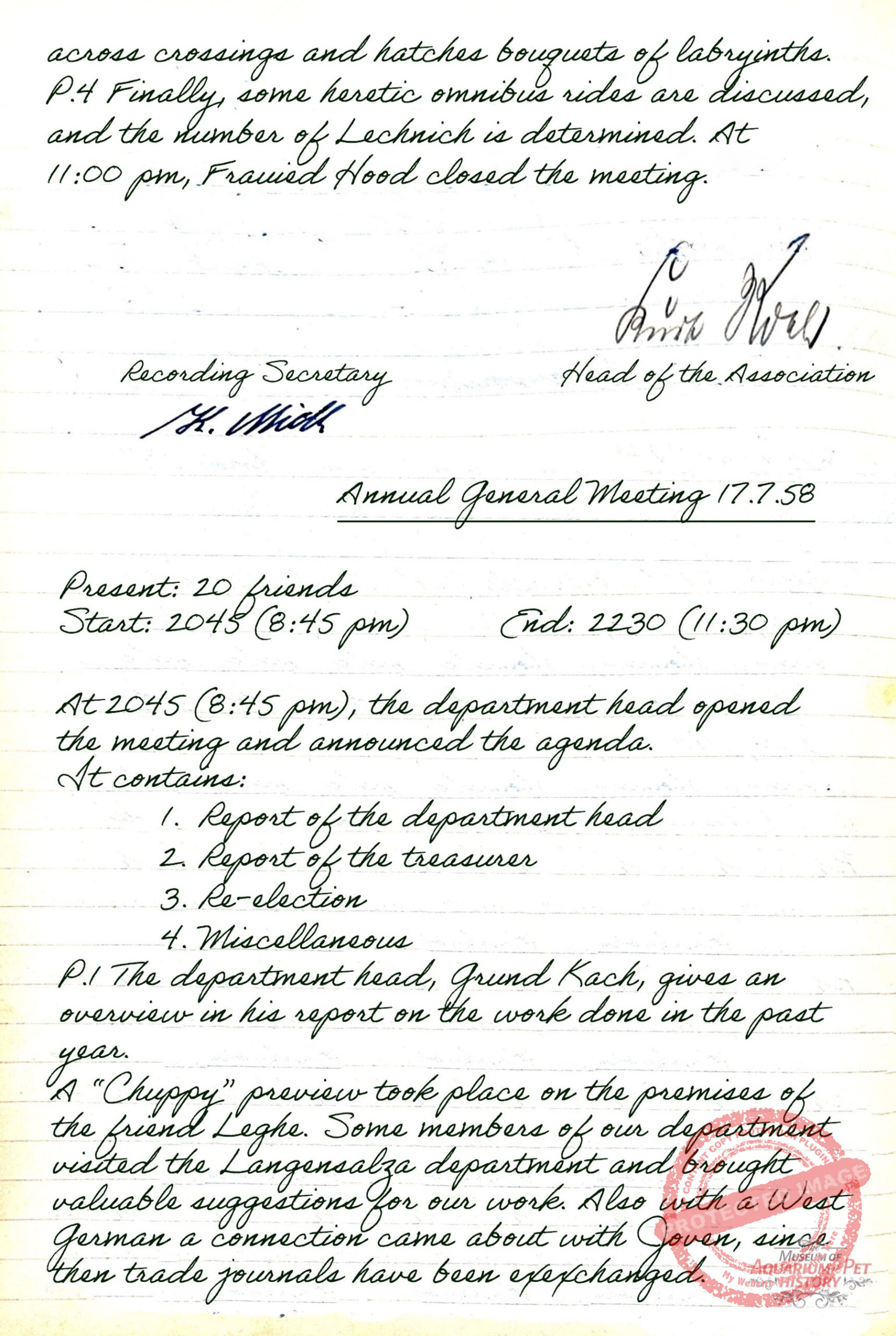
First page of the Gotha Aquarium Society meeting minutes translated using notegpt.io.

Second page of the minutes translated using notegpt.io.
Increasingly, Gotha’s aquarists turned to their private breeding activities. Fish breeding flourished, offering lucrative supplementary income by GDR standards. The state wholesale enterprise “Zoologica” in Berlin issued purchase lists to clubs, acquiring young fish for export to Western countries in exchange for hard currency. The GDR mark held little value; foreign currency was essential for acquiring vital goods. Thus, the breeding efforts of aquarists inadvertently contributed to the survival of the socialist state. Further details—along with the fate of the other two open-air aquariums—will be discussed in the next part of this series.
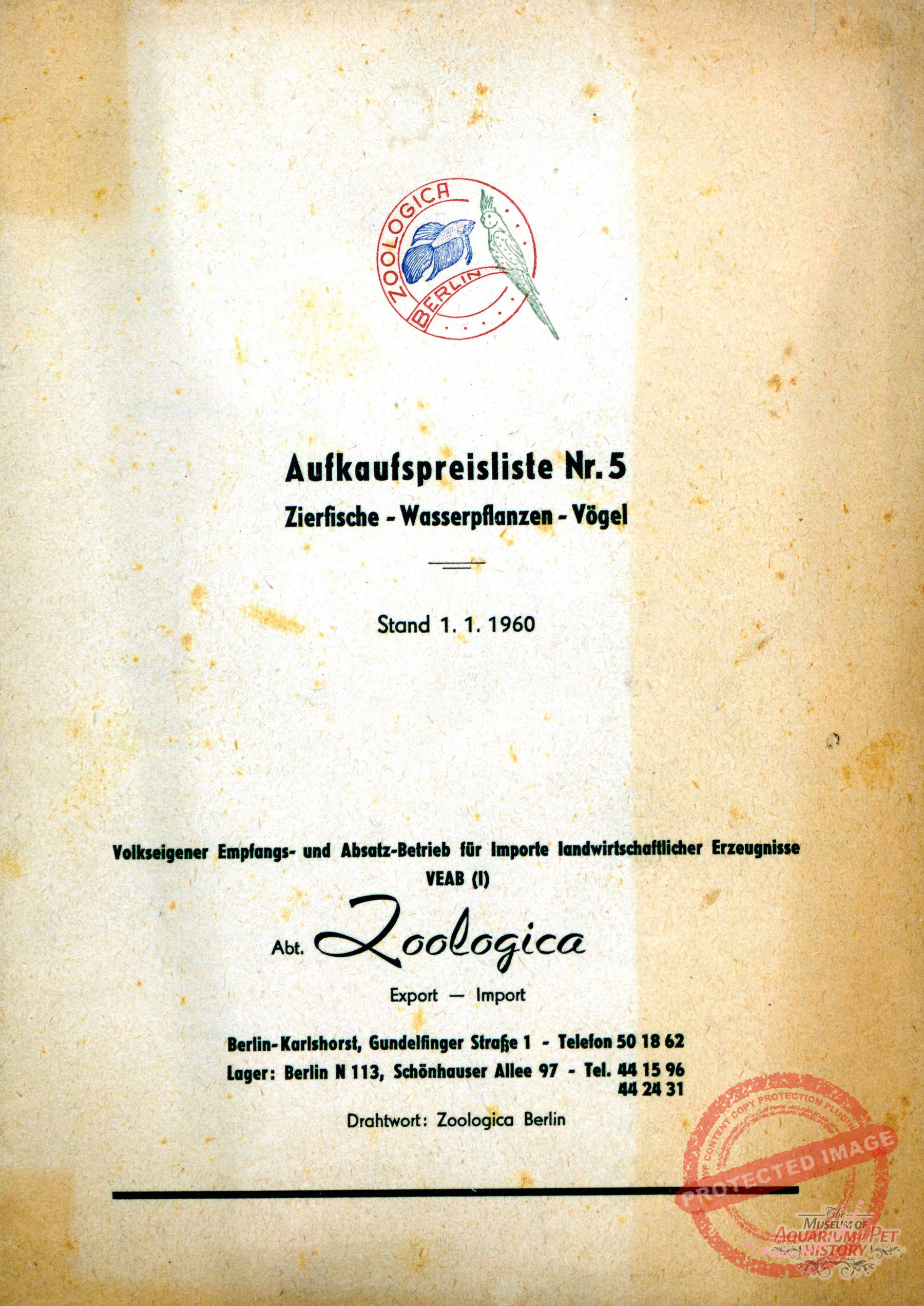
Purchase price list from the GDR’s sole zoological wholesale enterprise, “Zoologica”
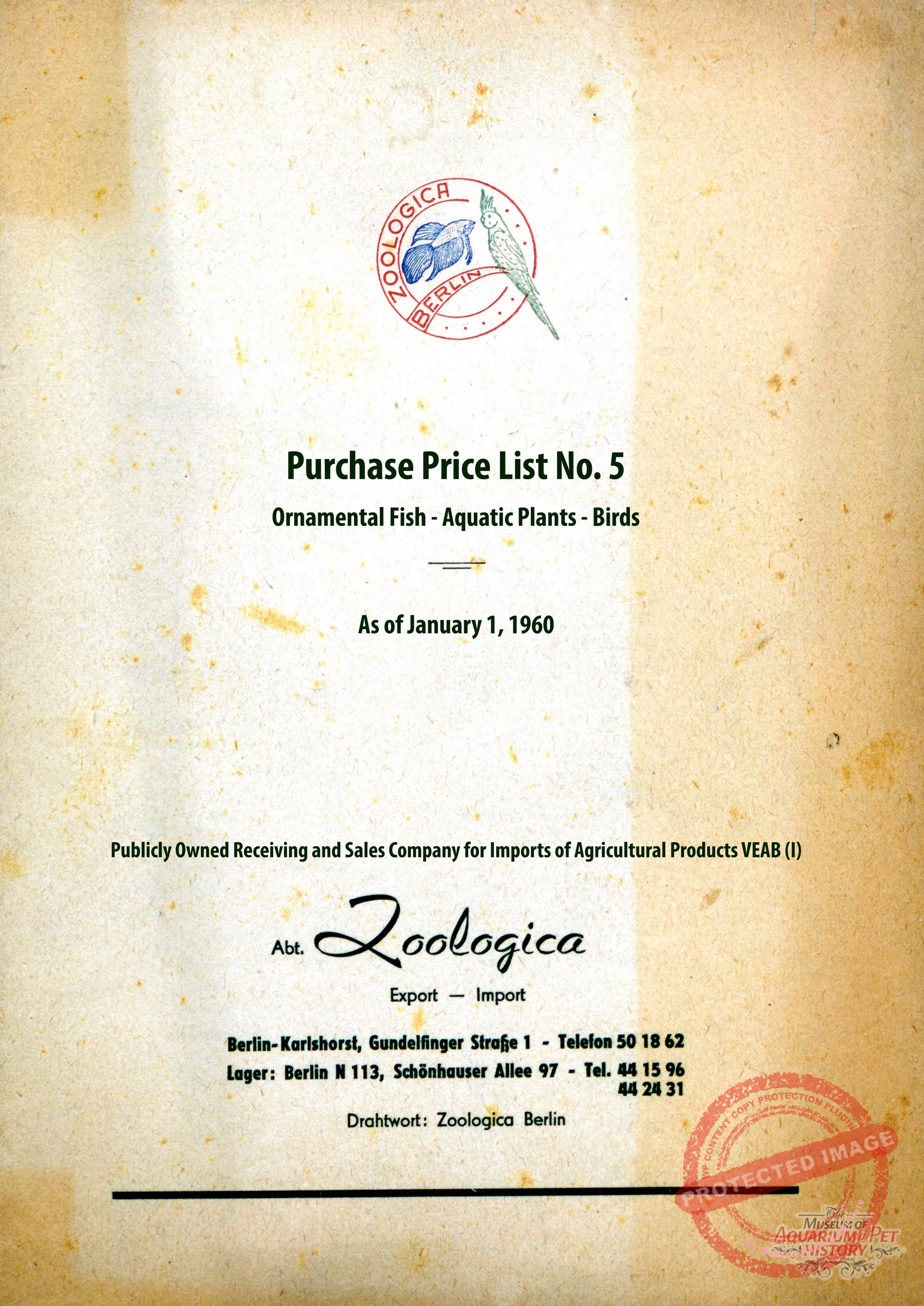
Purchase price list translated using notegpt.io.
Acknowledgments:
My thanks go to my family members (Charly Fuchs), to friends and colleagues in Gotha—especially Uwe Heustock, current chairman of the Gotha Aquarium Society—and to the staff of the Gotha City Archive, Dr. Julia Beez and Dorett Sagner, for granting access to documents, as well as for providing photographs, information, and preserved original artifacts.