Rustic Adornments for Homes of Taste:
James Shirley Hibberd’s Masterpiece
My parents always told me: “Emiliano don’t judge a book by its cover, it’s a bad habit you shouldn’t have.” This was helpful advice which I still follow in everyday life. However, when I assume the role of old aquarium book collector, sometimes it happens I do the opposite due to my soft spot for all the books with a lavishly illustrated cover.
Sadly, the earliest books on aquarium keeping (1850s-1860s) usually had original covers that were quite bland, non-distinctive, and lacking in wow factor. Among the few exceptions, my favorite is doubtless the first edition of Rustic Adornments for Homes of Taste and Recreations for Town Folk in the Study and Imitation of Nature (Groombridge and Sons, 1856), a very special book, outside and inside, for several reasons.
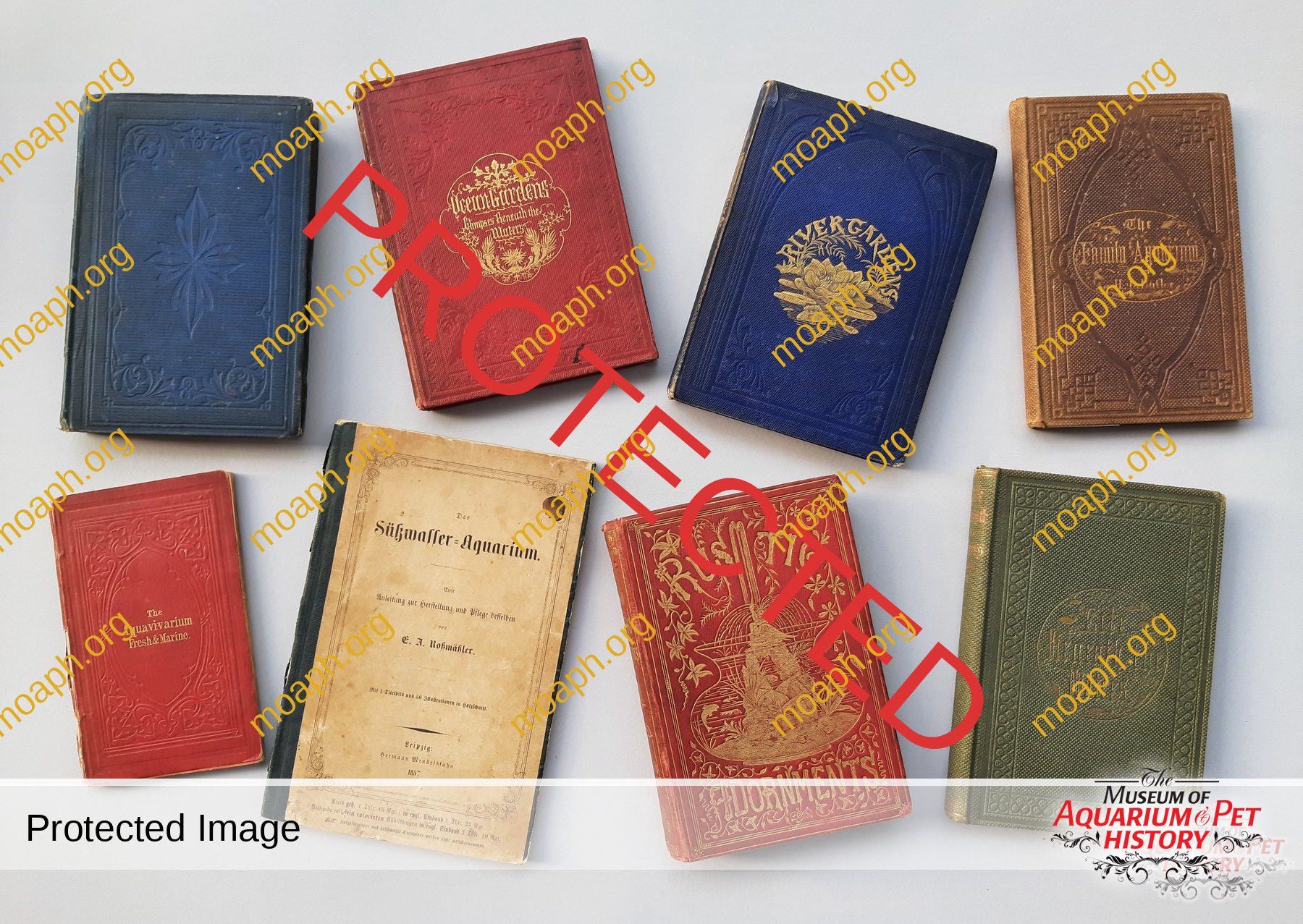
1850s books on aquarium keeping.
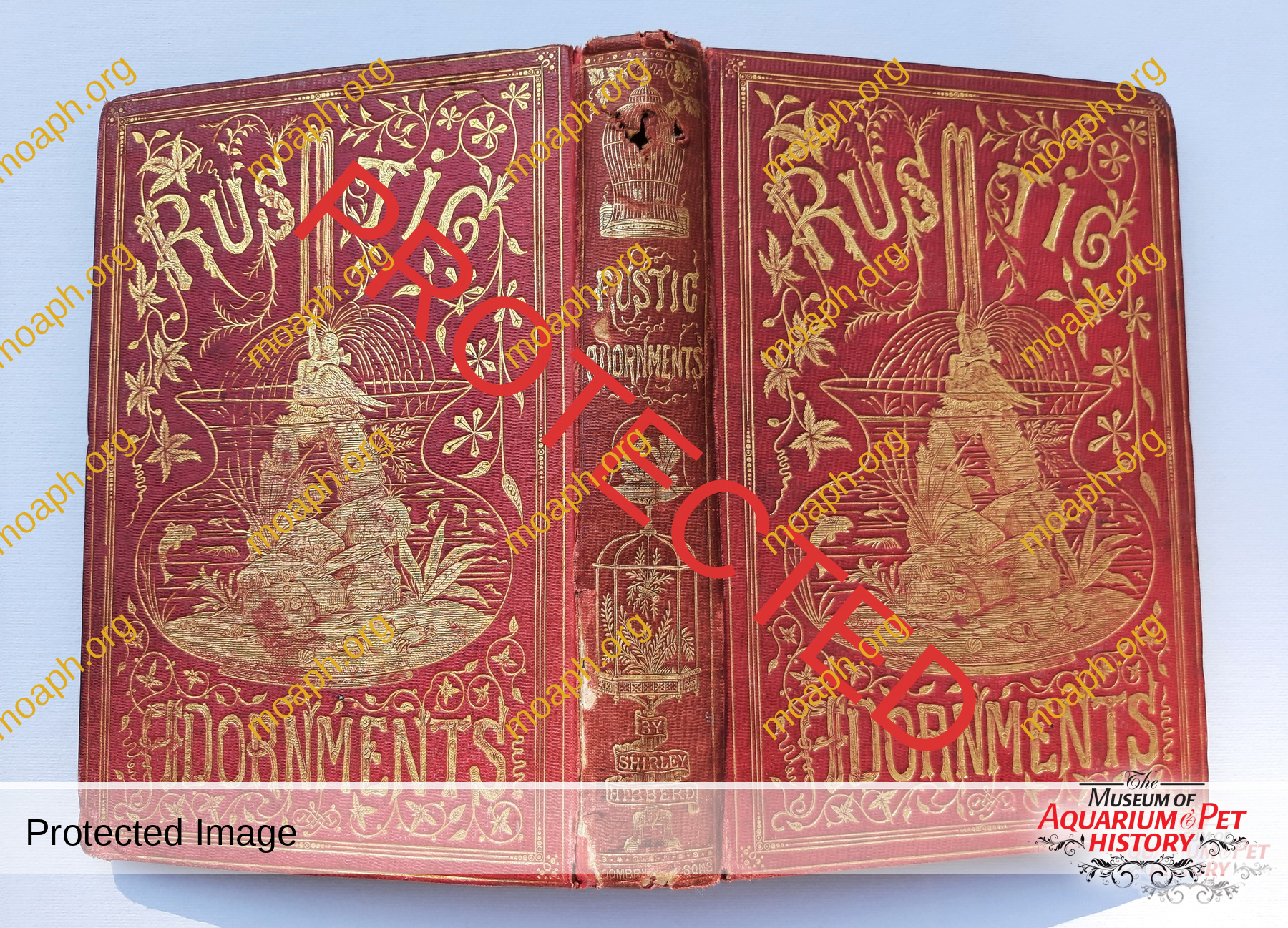
The magnificent first edition of Rustic Adornments.
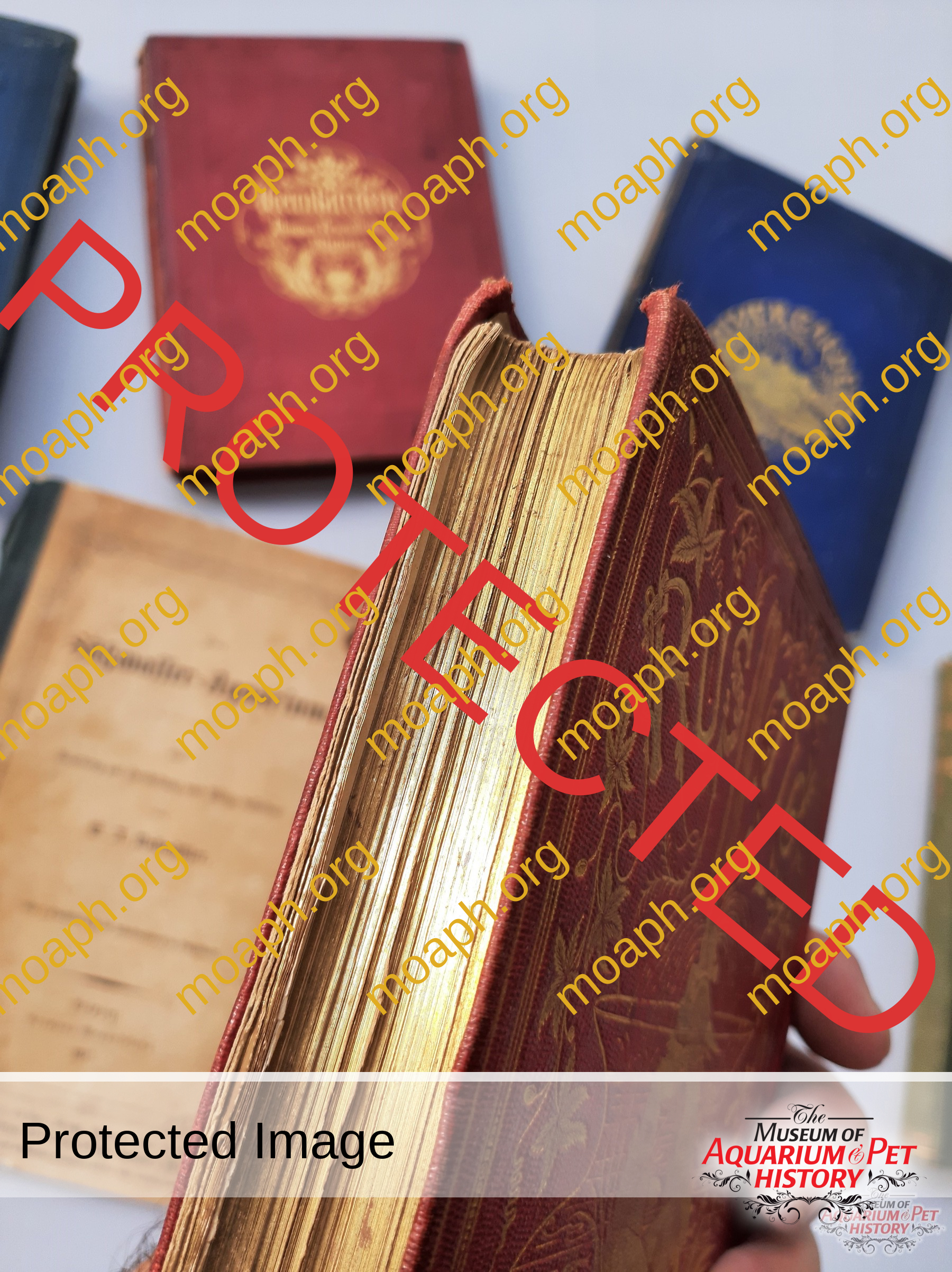
The elegant gilt edges are another touch of sophistication.
“A modern man who lived in a different age”
Its author, James Shirley Hibberd (1825-1890), was one of the most popular, prolific, and successful English writers of the Victorian era. He published over a dozen books on gardening and several more on natural history and related subjects, including aquariums. Hibberd, who wrote many articles and gave lectures on these subjects as well, also worked as editor of a few serial publications, such as Amateur Gardening which still survives today.

James Shirley Hibberd in late middle age.
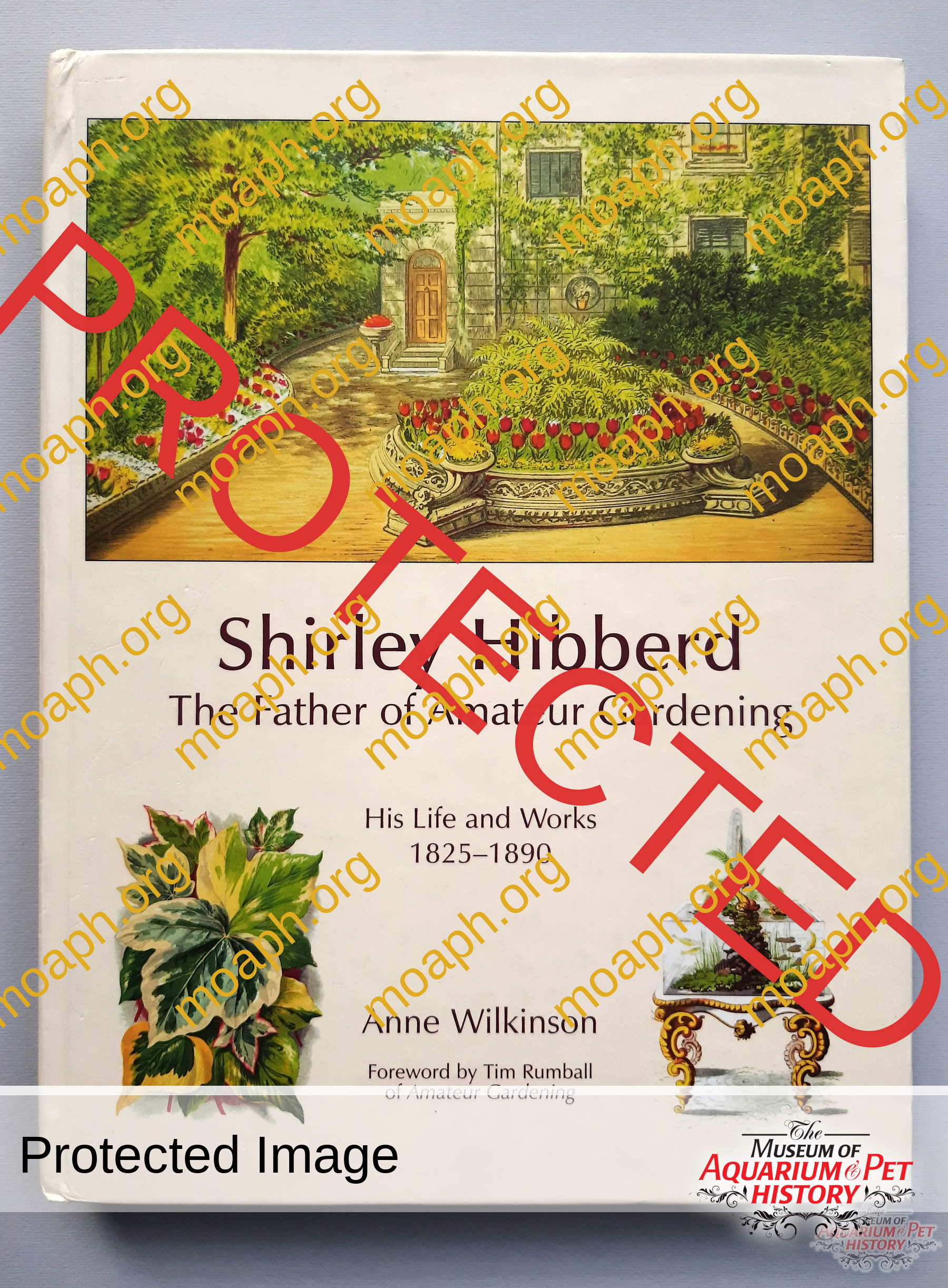
Shirley Hibberd,The Father of Amateur Gardening by Anne Wilkinson (Cortex Design, 2012) is already a classic among the aquarium history books.
In the foreword of the book Shirley Hibberd, The Father of Amateur Gardening by Anne Wilkinson (Cortex Design, 2012), the journalist Tim Rumball perfectly describes Hibberd as “a modern man who lived in a different age”. He in fact promoted town gardening, vegetarianism, water recycling, environmental conservation, bee-keeping, and the prevention of cruelty to animals, something unusual for a 19th century man. Clashing with the conservative society and the skeptical elite of professional gardeners, by means of his easy-reading works Hibberd made gardening accessible to everyone, especially people living in the Dickensian, smoggy English towns and cities of the day.
During his childhood, he was interested in wildflowers, insects, and birds. When he lost his father at the age of 14, he had to enter the labour market, working as an apprentice to a local bookseller, as a self-taught chemist, and as a book binder. In the early 1850s, he began to take an interest in the gardening and in the underwater world. His first experiences with aquatic life dates from the winter of 1851, when during a sojourn in the north of England he made his first collection of “marine plants” and animals, filling some jars with them. He loved pets as well as plants, therefore when in 1856 he moved to a new house in Church Farm Nursery, Tottenham (north London), with his first wife Sarah Elizabeth Voyer (1823-1880), he surrounded himself with many different animals, such as parrots and birds of different species, bees, fancy poultry, etc.
Even though his first marriage was childless, probably these peaceful years spent taking care of his garden and his little menagerie were the highlight of his life. He was a true aquarist, more than other Victorian authors who wrote about aquariums. In his cabinet room, he kept freshwater tanks of different sizes and a marine tank, maintaining native fish from different species, larvae, water beetles, aquatic spiders, water scorpions, and snails. During his career, Hibberd shared these personal, constantly growing experiences with his readers, making his books more practical and less “religious”, “philosophical” and theoretical than the ones of other authors such as P.H. Gosse.
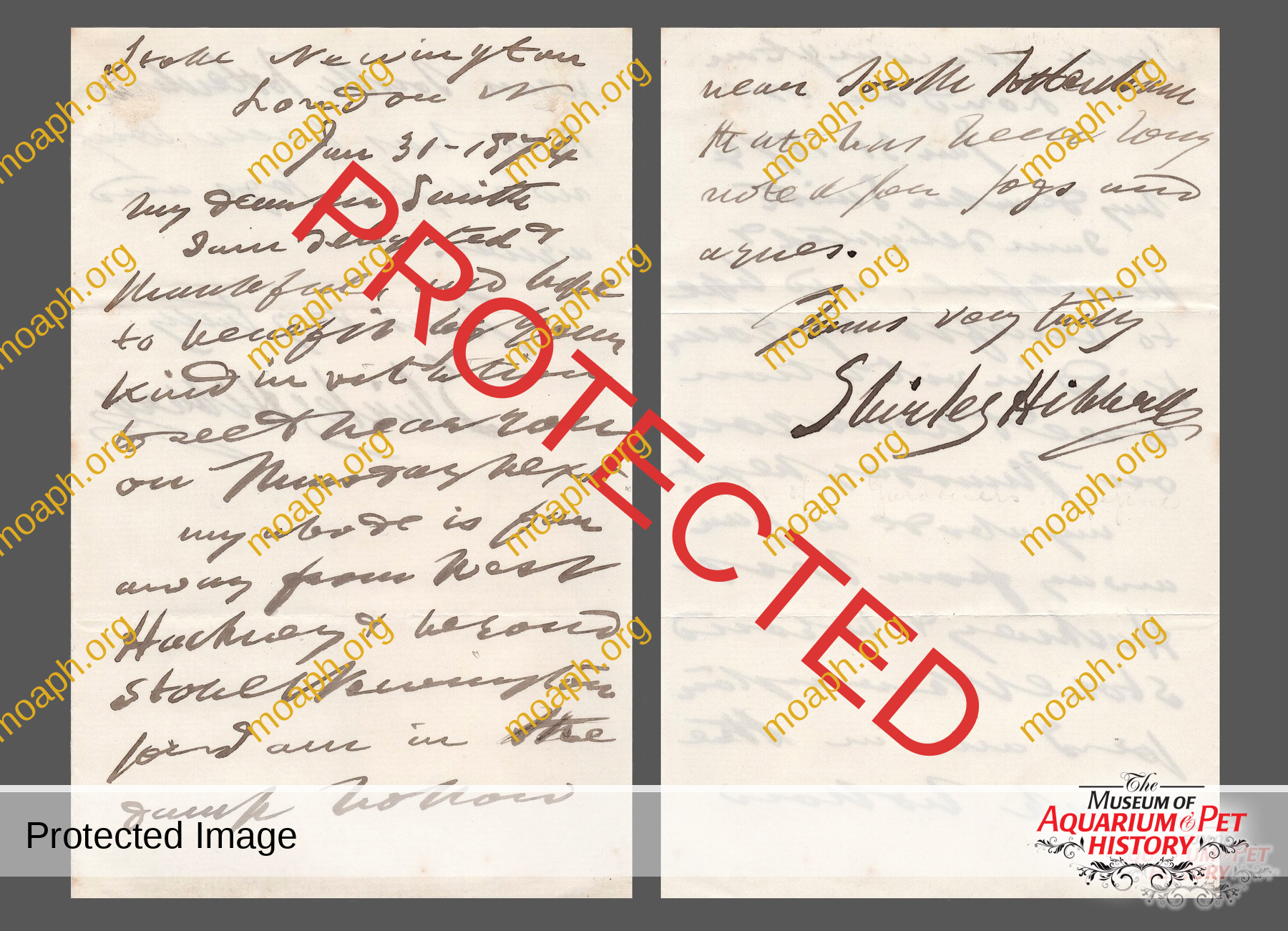
1874 original letter written by Hibberd to John Smith, author of the book on vegetarianism Fruits and Farinacea, the Proper Food of Man. Hibberd wrote a review on Smith’s work in The Gardener’s Magazine. Probably Smith have seen the review and written to Hibberd, inviting him to a lecture. Hibberd, whose handwriting is not easy to “decipher”, answered as follows: “…I am delighted and thankful, and hope to benefit by your kind invitation to see and hear you on Thursday next. My abode is far away from West Hackney and beyond Stoke Newington found… in the damp hollow near South Tottenham that has been long noted for fogs and agues…”
A successful book
In 1856, he published four aquarium books: The Book of the Fresh-Water Aquarium, The Book of the Marine Aquarium, The Book of the Water Cabinet, and Rustic Adornments for Homes of Taste. The aquarium craze and the pteridomania (the craze for ferns) in Great Britain were widely spreading and there was a high demand for books dealing with such subjects. Hibberd was one of the earliest authors to talk extensively about the freshwater aquarium, the easiest home aquarium to keep considering the pioneering equipment and know-how available at that time.

The Book of the Marine Aquarium (Groombridge and Sons,1856).
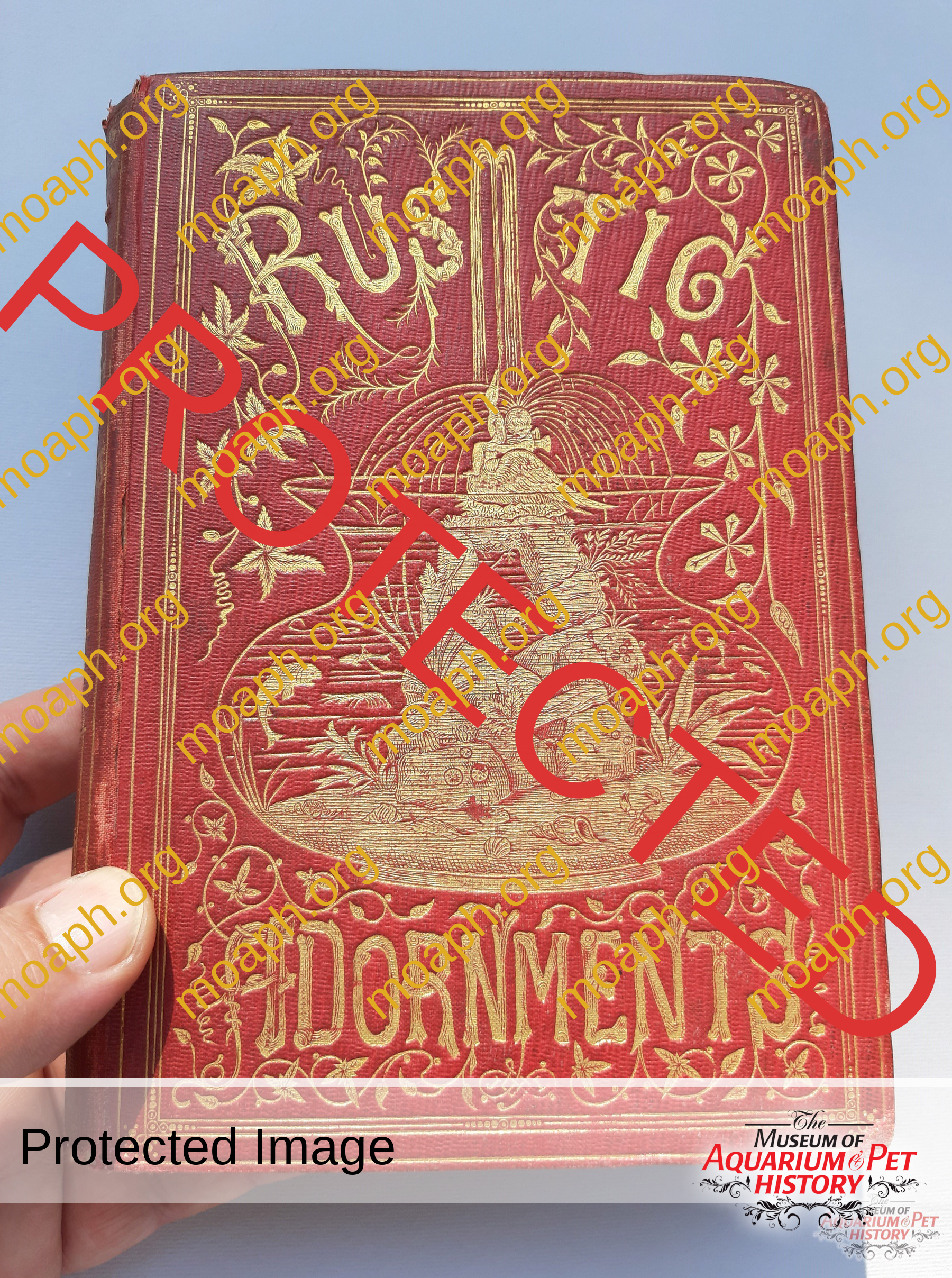
Still in shape and ready to win any book beauty contest!
Half of Rustic Adornments deals with marine and freshwater aquariums, “garden aquariums” (ponds), and Wardian cases. The subjects of the second half of the book are: the ornaments for dwelling rooms, the aviary, the apiary, the rockery, the fernery, and garden scenery and ornaments. The choice to gather all these topics into one volume made this 354-page book a bestseller and a perfect gift for a wide range of recipients.
The first time I saw it listed on abebooks.com I thought it was a book written for snobby and rich people. Honestly, its title led me astray. Actually, it is the perfect opposite. Hibberd’s message to his readers is that everyone can build a better, tasteful home and enhance his own status and quality of life thanks to the rustic adornments featured in the book.
As a collector, let me underline once again how Rustic Adornments is first of all a joy for the eyes. It’s such a beautiful book that, honestly, I would have bought it even if I had known that inside I would have found only blank pages! The publisher, Groombridge, and Sons (London) was well known for the fine covers and the illustrations of their natural history titles. The talented artist who designed the spectacular gilt decorated cloth of the first and the second edition was John Leighton (1822-1912), one of the most prolific book-cover artists of the 19th century. The frontispiece in color drawn by George Voyez is gorgeous and gives the reader a perfect preview of the book’s content. The six color plates signed G. Voyez and engraved by Benjamin Fawcett (1808-1893), who also printed the volume, doubtless have a strong appeal, even though they are not at the same level of the illustrations of other aquarium books from the 1850s, such as Ocean Gardens and River Gardens by H. Noel Humphreys.
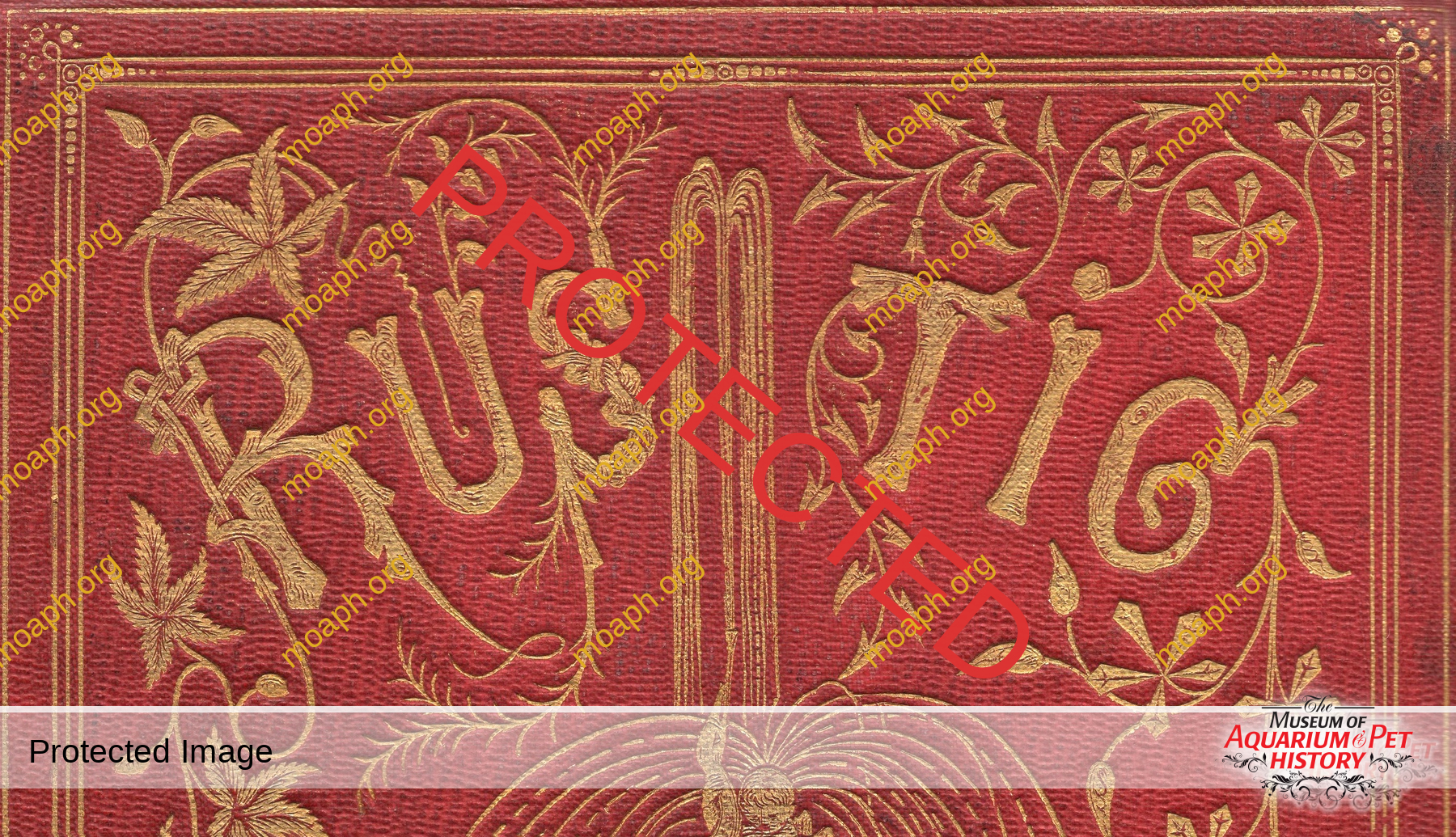
This cover close-up shows Leighton’s crazy attention to details.
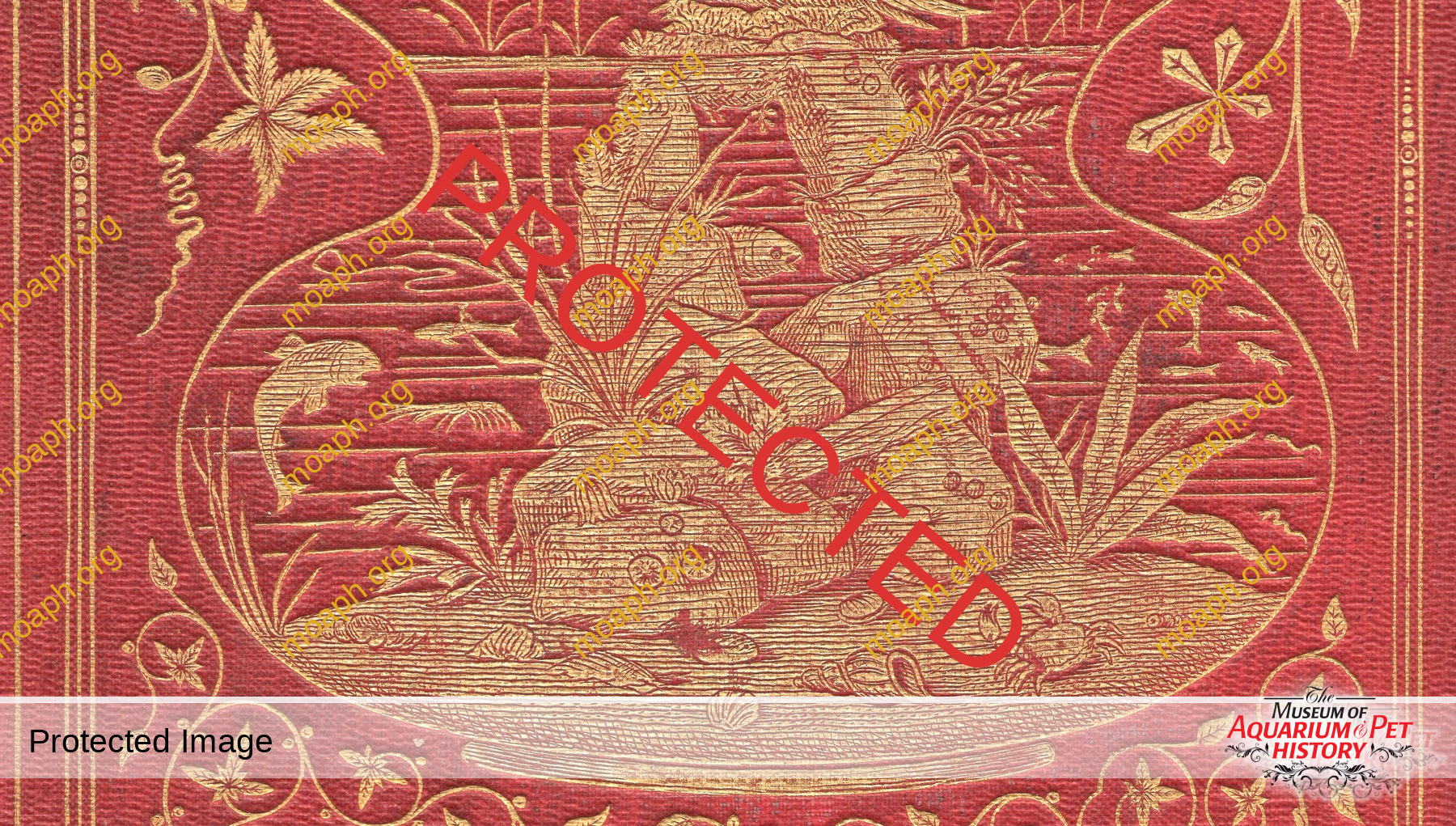
The hyper-detailed aquarium we find on the cover of the first edition. Sadly, it disappeared in the second edition.

Leighton used to hide his initials “J” and “L” in the design of his covers. He did it also in the first and second edition of Rustic Adornments.
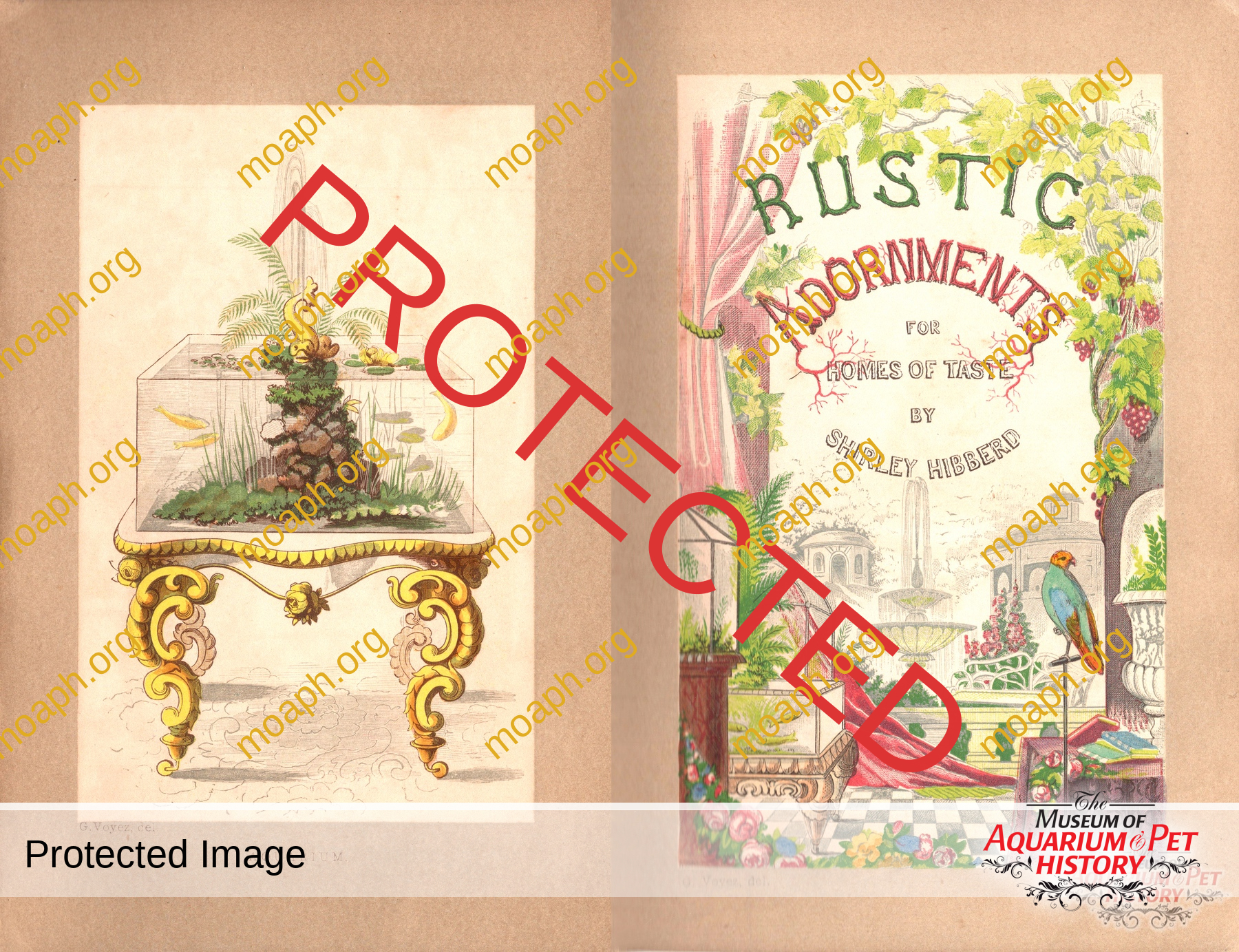
The color frontispiece of Rustic Adornments (the same for first and second edition) gives the reader a perfect preview of the book content.
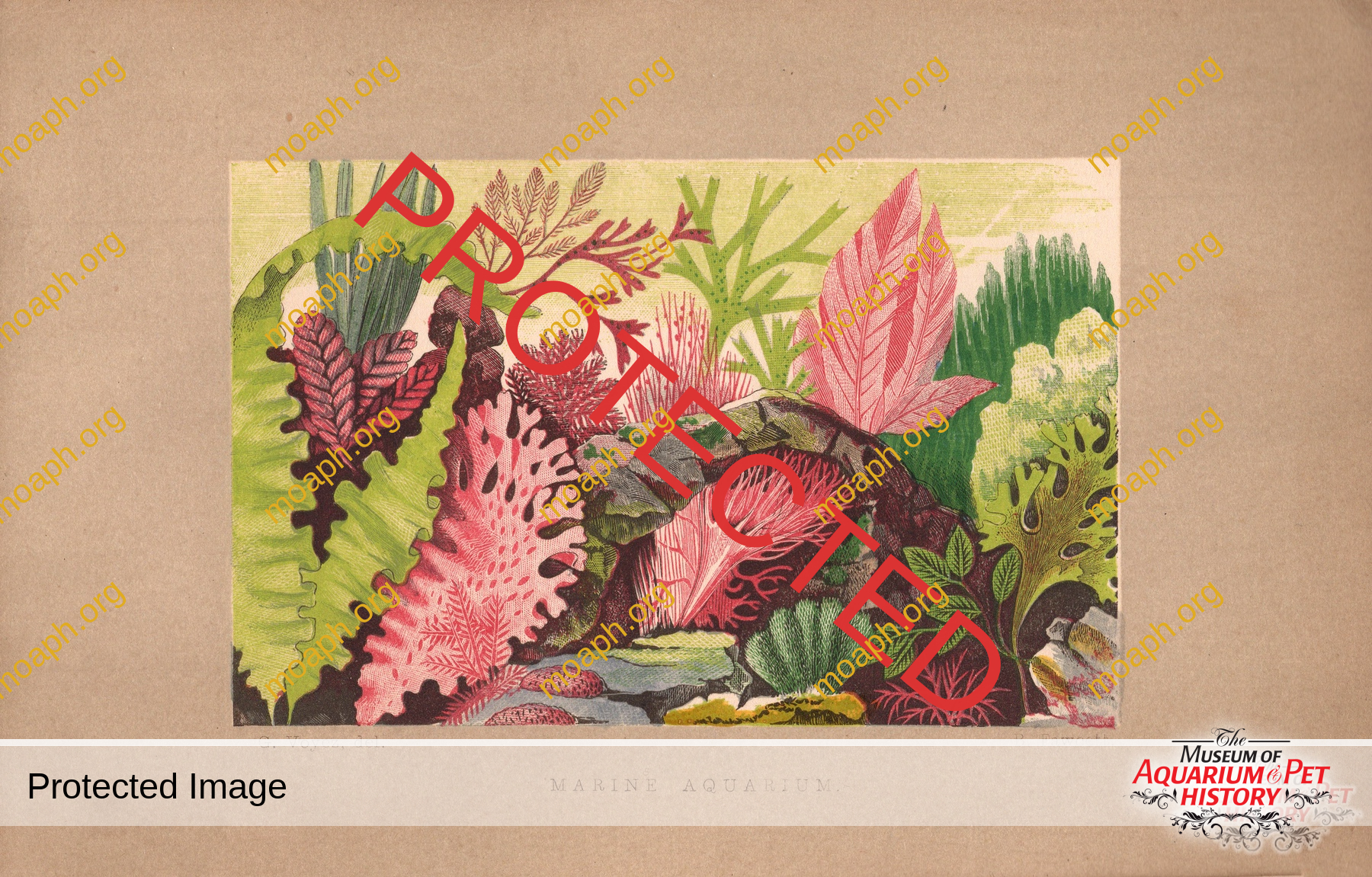
Rustic Adornments, wood engraving by Benjamin Fawcett (1808-1893), who also printed the book.
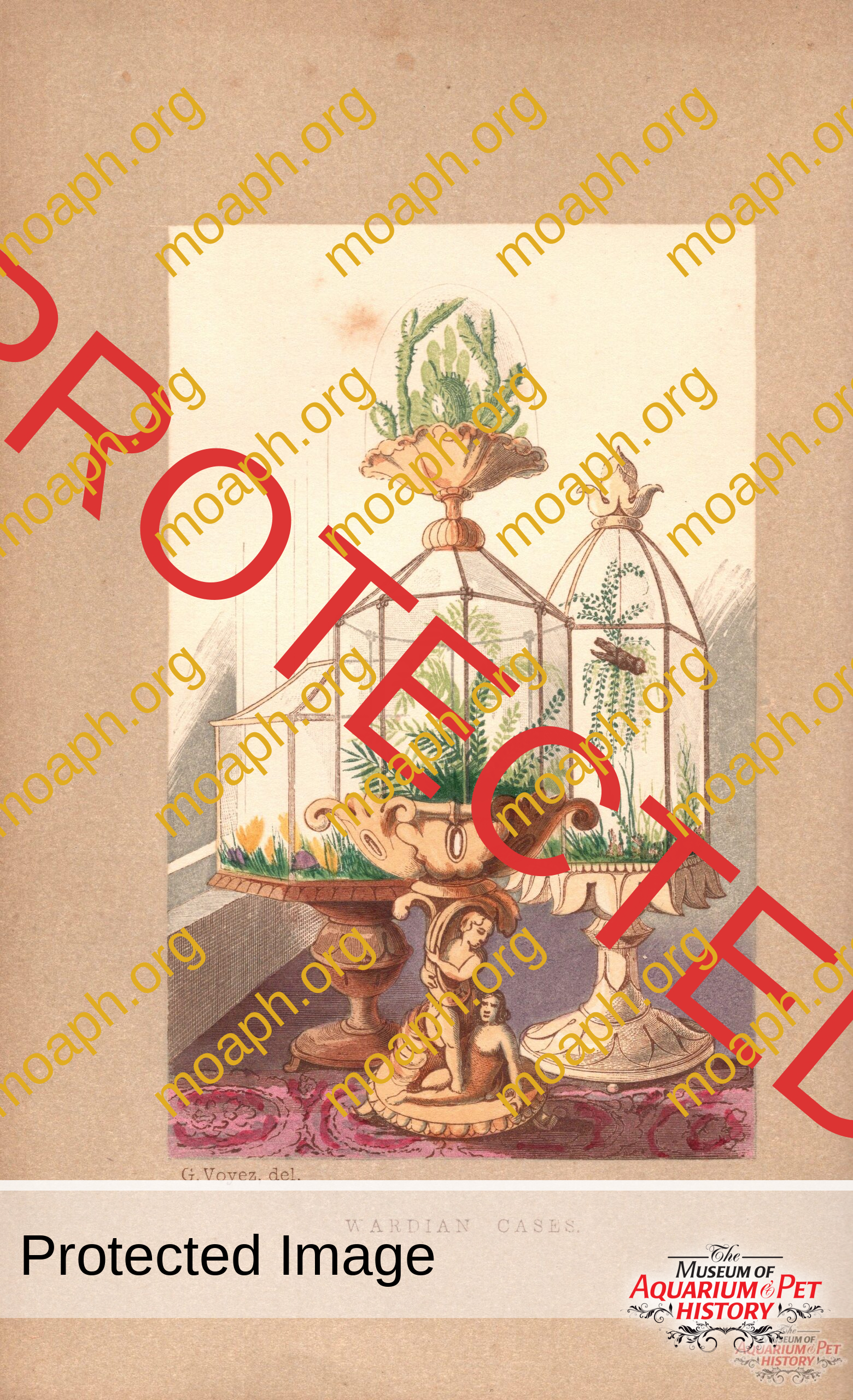
Plate from the first edition of Rustic Adornments depicting three Wardian cases, fashionable accessories for the Victorian drawing room. Hibberd, referring to the book On the Growth of Plants in Closely Glazed Cases by N.B. Ward, explained the significant difference between “closely glazed” and “hermetically sealed”.
Hibberd, fishkeeping, and the best pioneering opinions of the day
The aquarium section deals with practical topics (set up, tank positioning, cleaning, feeding, recommended fish, etc.) and, at the same time, gives us the immediate awareness of Hibberd’s modern, responsible approach to fishkeeping. He suggests to his readers’ respect, a serious commitment, kindness, and compassion for the aquarium inhabitants, common threads making all the editions of this book different and special.
The “vessel” shape, for example, is very important for fish health, that’s why the old habits should change (p.85):
“The superiority of the flat-sided tank over the old fish globe, or the newly-constructed vessels of Dr. Badham, applies with as much force to Freshwater as to Marine Aquaria. Everyone who has kept goldfish in globes must have regretted how rapidly they die off, in spite of the frequent change of water and all the tender nursing which such a vessel enables them to receive. Besides this mortality of the fishes, the distortion of them when viewed through this huge crystalline lens–for a filled globe is nothing else–makes them rather fitter subjects for laughter than admiration; and in all probability, the refraction which amuses the spectator hastens the destruction of the fish as much as the excess of light to which they are always exposed. The tank secures a proper shade, the plants give it a more natural aspect, and assimilate it to their natural home in weedy streams and flower-covered lakes, while the growth of vegetation supplies them with those two great requisites–air and food.”
The first edition contains many extracts and opinions from other contemporary writers’ works. P.H. Gosse, who wrote the first book on aquarium keeping two years before, is often mentioned but also criticized for his overcrowded aquariums (p.72):
“Many of those classed as amongst the most delicate, we have already described as hardy, in accordance with our experience; though some which Mr. Gosse describes as adapting themselves easily to confinement, we have failed in domesticating. No doubt in a pursuit so young as this is, many of the causes of failure and success have yet to be understood; and till they are understood, individual experiences will in some points differ considerably. Mr. Gosse confesses that he keeps more animals in his tanks than is consistent with their health, trusting to frequent supplies; and keeps as great a variety as possible for the purposes of study. It is much to be regretted that so experienced a naturalist has not given specific instructions as to the amount of life which may be safely packed into a given space without entailing the necessity of frequent renewal. We will endeavor to supply this information from our own experience, begging the reader to note that there is vast room for improvement. If a tank is stocked according to our instructions, we believe that no failure, not even of a single Periwinkle, need be feared if proper precautions are taken to ensure the establishment of the collection.”
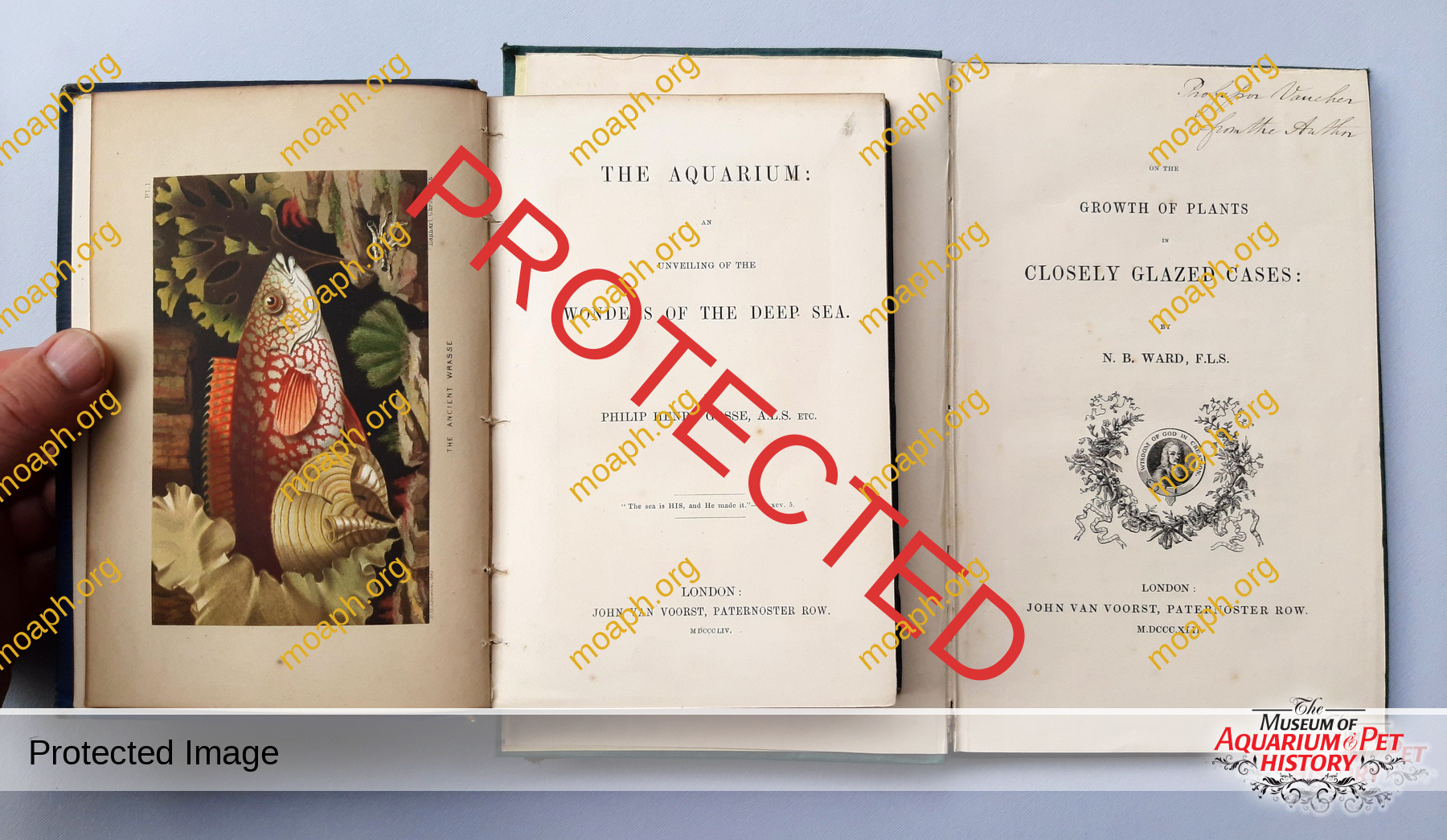
Two books which inspired Hibberd, The Aquarium – an Unveiling of the Wonders of the Deep Sea by P.H. Gosse (1854), and On the Growth of Plants in Closely Glazed Cases by N.B. Ward (1842). Note the inscription by Ward on the upper right!
Early suppliers
Hibberd’s book gives us interesting information about the earliest suppliers and manufacturers as well. One of these pioneers of the aquarium industry was Sanders and Woolcot who also manufactured fish tanks for William Alford Lloyd and his Aquarium Warehouse, the very first aquarium shop in history (p.98):
“Since writing these chapters we have had the pleasure of inspecting the tanks constructed by Messrs. Sanders and Woolcot of Doughty Street and Guilford Street, Bloomsbury. This firm constructed the large tanks for the Vivaria of the Zoological Society and has since devoted a portion of its premises specially to such work. Their patterns are designed in the best taste and include some very fine forms of ornamental tanks, a great variety of which they keep in stock ready-made for the inspection of visitors. Four of these are represented in pages 80, 99, and 100. We strongly recommend those who wish to set up Aquaria to visit Messrs. Sanders and Woolcot’s establishment.”
Collecting specimens on the coast at low tide was funnier than purchasing them, anyway in Great Britain you could already count on at least two well-stocked suppliers (p.38):
“There are two skillful naturalists now engaged in preparing stock for Aquaria. These, true to the genial character of the lover of nature, are willing to give information whenever it is sought and to aid persons in the stocking of tanks by means of good advice and suitable suggestions. William Thompson, Esq., the eminent naturalist of Weybridge, keeps a dredge constantly employed for the purpose of supplying the Zoological Society, and is willing to supply any person desirous of setting up a Vivarium. From Weymouth to London. The cost of transit by mail train and special messenger amounts only to a few shillings, and a moderate-sized tank of about two feet by one foot could be stocked with a beautiful variety of animals and plants at an expense of fewer than forty shillings. Anyone sending for specimens, or making a trip to procure them, should remember the necessity for coral rag for rock-work and sea sand for the bottom of the tank. They can be had alongside specimens.
Another gentleman, well-known for his perseverance in research and general accomplishments as a naturalist, more accessible too for Londoners than Mr. Thompson, is Mr. W. Alford Lloyd, of 164, St. John’s St., Clerkenwell. Mr. Lloyd undertakes to supply loose stock of all kinds, rock-work, sea sand, glass jars and vases, sea weeds, zoophytes, annelides, mollusks, and indeed every variety of the strange creatures that peep up at us, the masters of the deep.”
And what about seawater for the marine aquariums of the day? It could be artificial or come directly from the sea. Hibberd, confirming once again his goal to provide many helpful tips, explains how seawater should be collected from a safe source (p. 23):
“It is an easy matter to obtain sea-water by means of steam boats that ply beyond the mouth of the Thames, or with the help of the captain of any of the fishing boats that bring fish to Billingsgate. The steward of almost any sea-going steamer making short trips will bring a cask every voyage if it be wanted; and he must be charged to dip it in the open sea beyond the reach of rivers. You will frequently get some curiosities in the water if it comes direct and still fresh to land, and while any animals it may contain are still alive.”
In the second edition published by Groombridge and Sons in 1857, Hibberd provides fewer quotes from other writers and more information coming from his increased personal experience. Following the great success of the first edition, this book had 150 extra pages, more engravings, the same spine design and gilt edges, and a new spectacular cover by John Leighton depicting trees and plants, statuary, birds, a vase, and a fountain. Unfortunately, there are no aquariums on the cover, but more aquarium illustrations (by Frederic Lydon and E. Whimper) in the book featuring different fish tanks, the aquarium inhabitants, the suitable plants, and combined aquariums and fern cases.
During the years, this edition was printed with bindings of at least three different colors: dark blue, red (the same used for the first edition), and green.
In 2019, the beautiful, bright green second edition of Rustic Adornments has given much to talk about for a serious reason far from the content of the book. It was discovered, in fact, that its binding is toxic, like the ones of many other Victorian books out there!
The confirmation arrived from Dr. Melissa A. Tedone, the lab head for library materials conservation at the Winterthur Museum, Garden & Library in Delaware, who started the Poison Book Project after analyzing the green binding of a second edition of Rustic Adornments and discovering the presence of a toxic pigment known as “emerald green” or copper-acetoarsenite. The widespread use of this cheap arsenical colorant in England and the United States during the Victorian era is well documented. Commercially developed in 1814, and also known as Paris green, Vienna green, and Schweinfurt green, it was massively used in the production of textiles for home decoration and apparel, wallpaper, and toys, and today we know book cloths as well. The height of popularity for the emerald green in the book industry was in the 1840s-60s. Thousands of poisonous books were printed during that era, and many of them survived to today. In order to deal with them safely, the Poison Book Project developed the following list of handling, storage, and identification tips:
-
Handling
- Wear nitrile gloves and an N95 mask
- Avoid eating, drinking, and smoking near the book
- Wash hands afterwards
- Avoid soft, upholstered surfaces
- Wipe down hard surfaces after use
-
Storage
- Polyethylene zip-top bag
- Put a warning label in the bag
-
What to look for
- English or American imprints
- 1840s-1860s publication date
- Gold and blind stamped decoration
- Vibrant green book cloth on boards.
- Vibrant green or fade brownish book cloth on spine
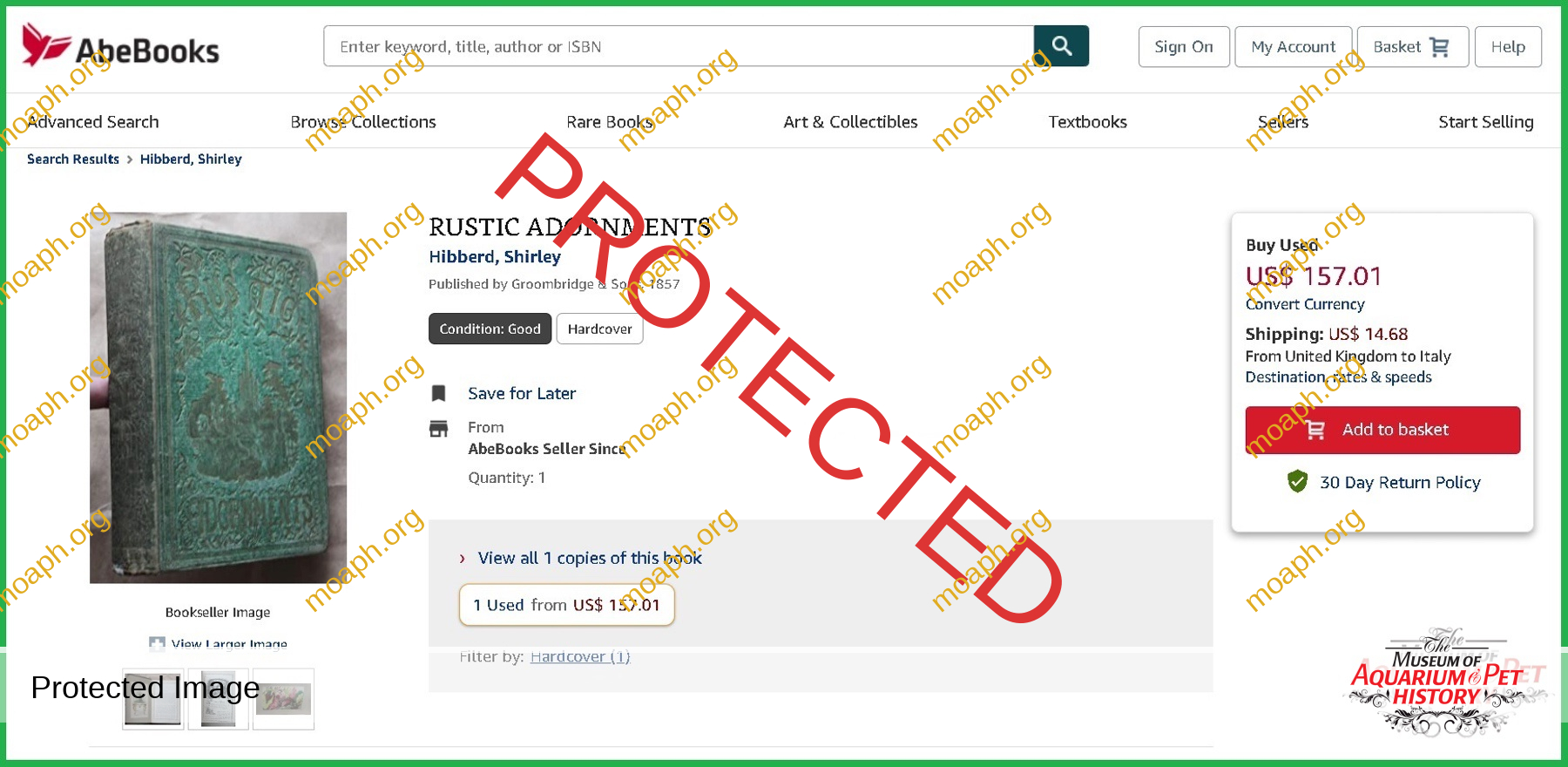
A lot of arsenical books survived to today, and from time to time one of them comes up for sale on famous online marketplaces.
The arsenical book cloths tend to crack, peel and flake over time. Especially those who handle these books frequently, such as librarians, booksellers, or researchers, should pay attention, as they may accidentally inhale or ingest particles that contain arsenic. In any case, private collectors should be careful as well.
I always enjoy remembering when I addressed this sensitive topic with one of the most important antiquarian booksellers in Germany whose collection is full of arsenical books. He patiently waited for the end of my boring explanation and then answered: “Emiliano, do you usually eat your antique books? I guess you don’t, so what’s the problem?” That’s true wisdom…
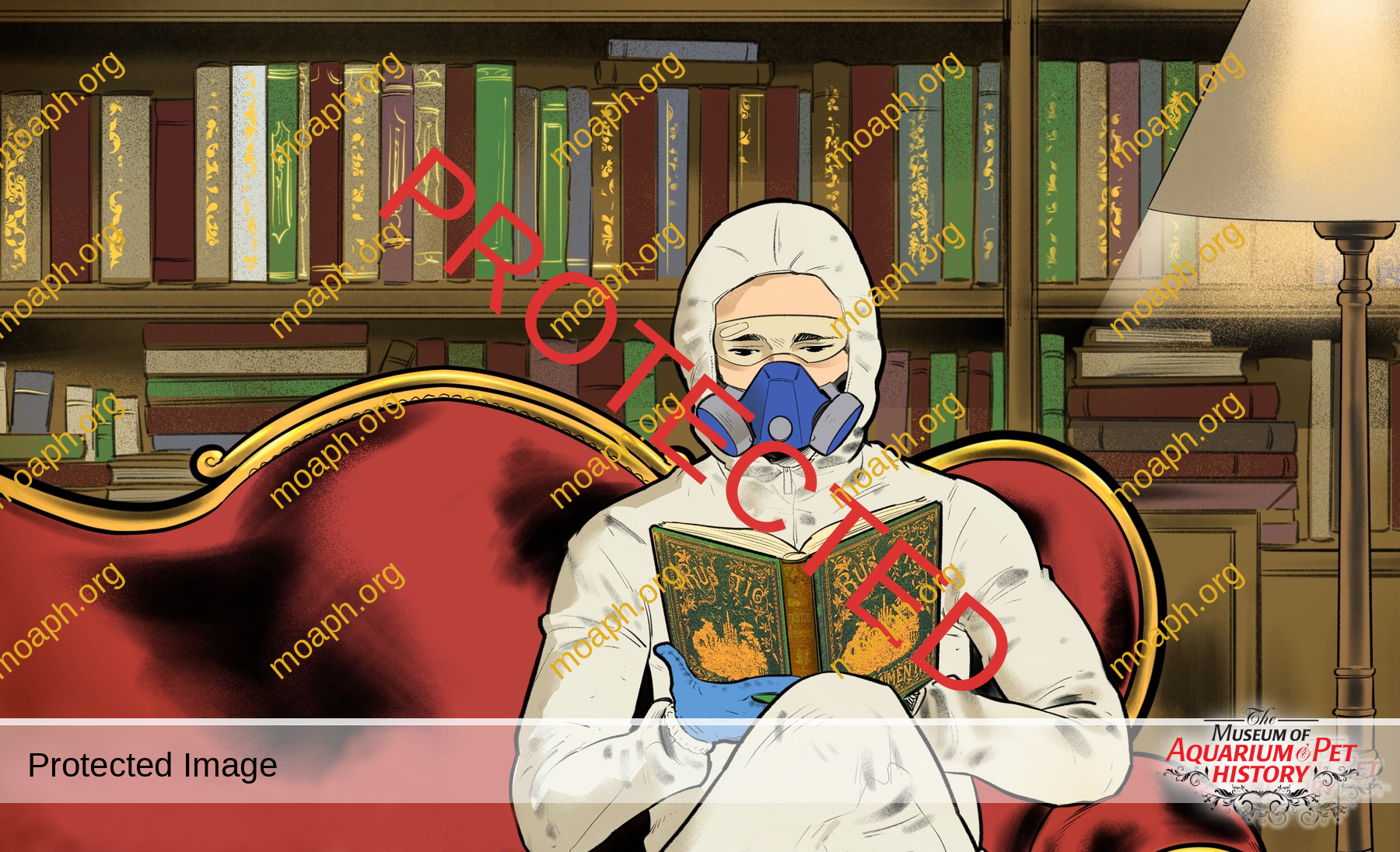
Recommended equipment for a pleasant and safe read of the arsenical second edition of Rustic Adornments!
Strong terms to deliver a message of responsibility
But now let’s talk about the content of the second edition. The focus on the freshwater aquarium is still clear, as well as the importance Hibberd gives to the balance between aquatic animals and plants. Hibberd’s vision of fishkeeping is still ethical, even more, I would say. He wants to teach his readers that fish are not lower creatures, they have emotions and deserve our respect and our best effort (p.105):
“You shall soon discover that your aquatic friends have a capacity for recognizing voices and features, that they are capable of affection, and of the emotions of joy, and grief, and fear…”
Fish can be amusing as well and interact with their keeper (p.105):
“It is now become a Vivarium for the finny pets which, with proper care, will soon endear themselves to their keeper, will display a thousand funny tricks for his amusement, learn to know and love the hand that feeds them, and in time become so tame as to take choice morsels from the fingers, rise to the surface at the call of a familiar voice…”
Aware of the lack of technologies for the aquarium management, he suggests that when the conditions, such as the water temperature, are not the best for the health of the aquarium inhabitants, people should show compassion and release them in nature (p.112):
“…you must consider that the creatures have done their best for six months to amuse you, and since you gain nothing by their death, give them their liberty in some neighbouring stream.”
Note that, in order to be more incisive, Hibberd uses the term “prison” referring to the aquarium (p.105):
“…through the glass sides of their prison, watch the events of the world without.”
This term will be used in the third edition (Groombridge and Sons, 1870) as well (p.14):
“An aquarium, whether filled with fresh or salt water, and no matter whether large or small, is a prison; and as birds in cages require special care to compensate them for confinement, so gold-fishes and sea anemones must be looked after, with love of course, for there can be no success without that, but also with skill, for the merely putting so many creatures into a tank is not to establish an aquarium. A few fundamental principles must be borne in mind at every stage of the enterprise.”

The typical fade brownish spine of many arsenical books.
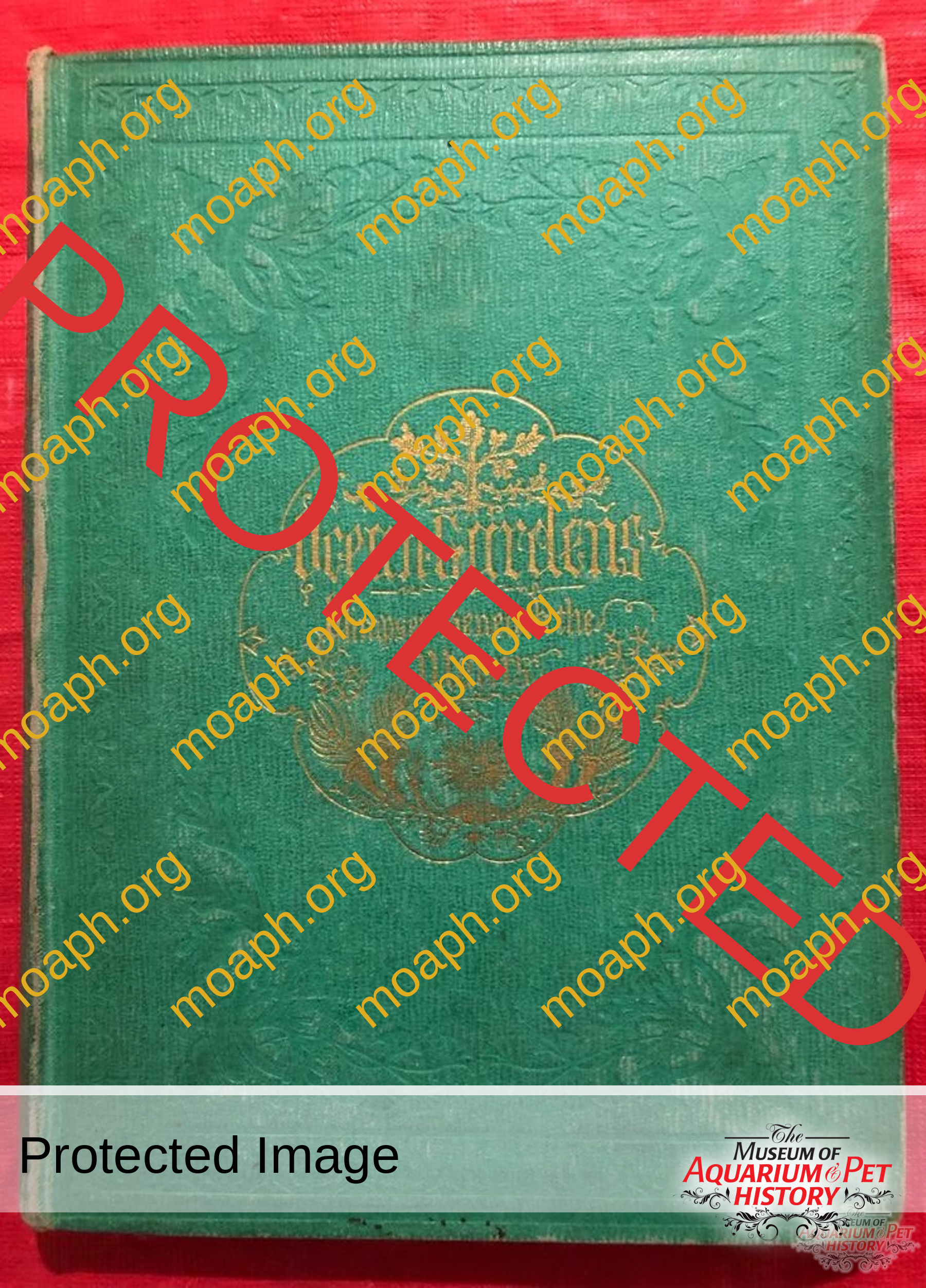
The spectacular books by Henry Noel Humphreys are well known and sought-after by collectors of aquarium antiques. Ocean Gardens: The History of the Marine Aquarium (Sampson Low, Son, and Co., 1857) was printed with at least two different bindings. The bright green one in the picture is arsenical.
Where it was enforced by explaining the risks coming from overcrowded aquariums (p.15):
“Remembering that the tank is a prison, we must remember also that prisons are hurtful to life if over-crowded. In the measureless volume of the sea itself, there is a measureless and inexhaustible supply of oxygen for all the inmates of the depths. Every crest that forms on the top of the wave, every streak of froth and foam, consists of atmospheric air entangled in the water. There is no such agitation of the surface of the water in a tank to refresh it in this way unless artificially produced; nor does the fresh breeze play over it perpetually; nor can it nourish forests of vegetation as the sea does, serving as breweries of oxygen for its stores of animal life. It follows from these considerations that an over-crowded tank is likely to become a dead house.”
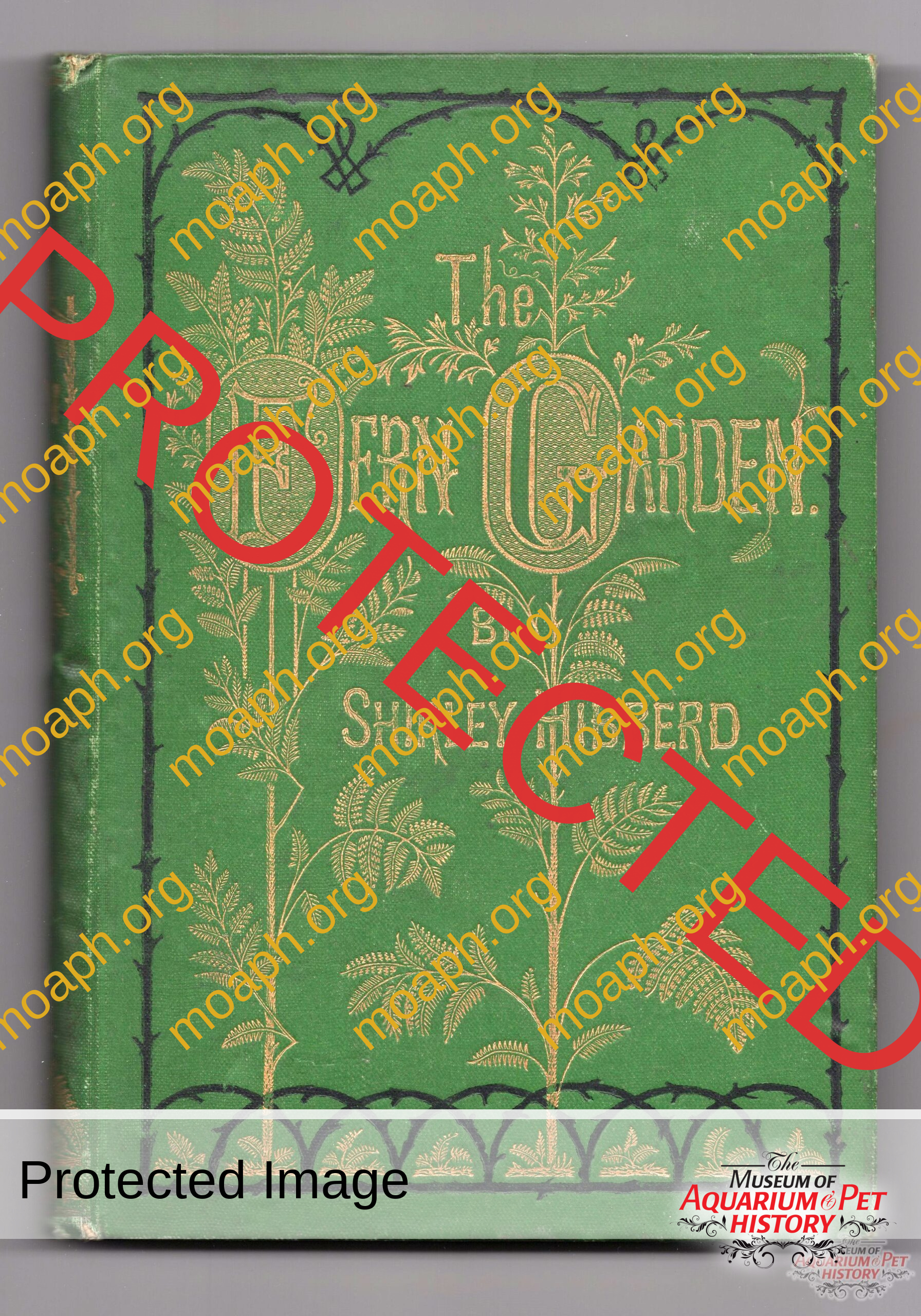
Another Hibberd’s success: The Fern Garden, How to Make, Keep and Enjoy It (Groombridge and Sons, 1869). The bookcloth is green but not toxic! It contains chromium and lead, no traces of emerald green pigment.
My copy of the fourth edition: a time capsule
After the publication of the 402-page third edition of Rustic Adornments in 1870 and The Seaweed Collector – a handy Guide to the Marine Botanist in 1872, Hibberd left the aquarium scene to follow his many other interests.
The fourth edition of Rustic Adornments was revised by T.W. Sanders and published by W. H. & L. Collingridge in 1895, five years after Hibberd’s death. I consider my copy of this edition very special, as its former owner was Wilfrid Jasper Walter Blunt (1901-1987), an art teacher, author, artist, and gallery curator who helped to start a revolution in the hand-writing of British school children, using the 15th century Italian Cancellaresca script as a basis. Besides, I was so lucky to find inside the book a letter written to Blunt by a journalist of the Sunday Times (the letter follows a successful Blunt article on Hibberd published by this magazine in the 7th January 1951 issue), and other original letters written by Hibberd’s daughter Ellen “Nellie” Shirley Hibberd (1885-1975).
The first part of Ellen’s life was very sad. Her mother, Hibberd’s second wife Ellen Mantle (the first wife passed away in 1880 after spending much of her life as a semi-invalid with a weak heart), died of septicaemia and peritonitis a few days after giving birth. In 1890, when Ellen was but five, Hibberd himself died and she was adopted by her cousin from Hibberd’s first marriage, Charles Montague Mitchell. She subsequently trained as a nurse at the London Hospital in Whitechapel, the place where she met her future husband Alexander Kennedy (he had been one of her patients).
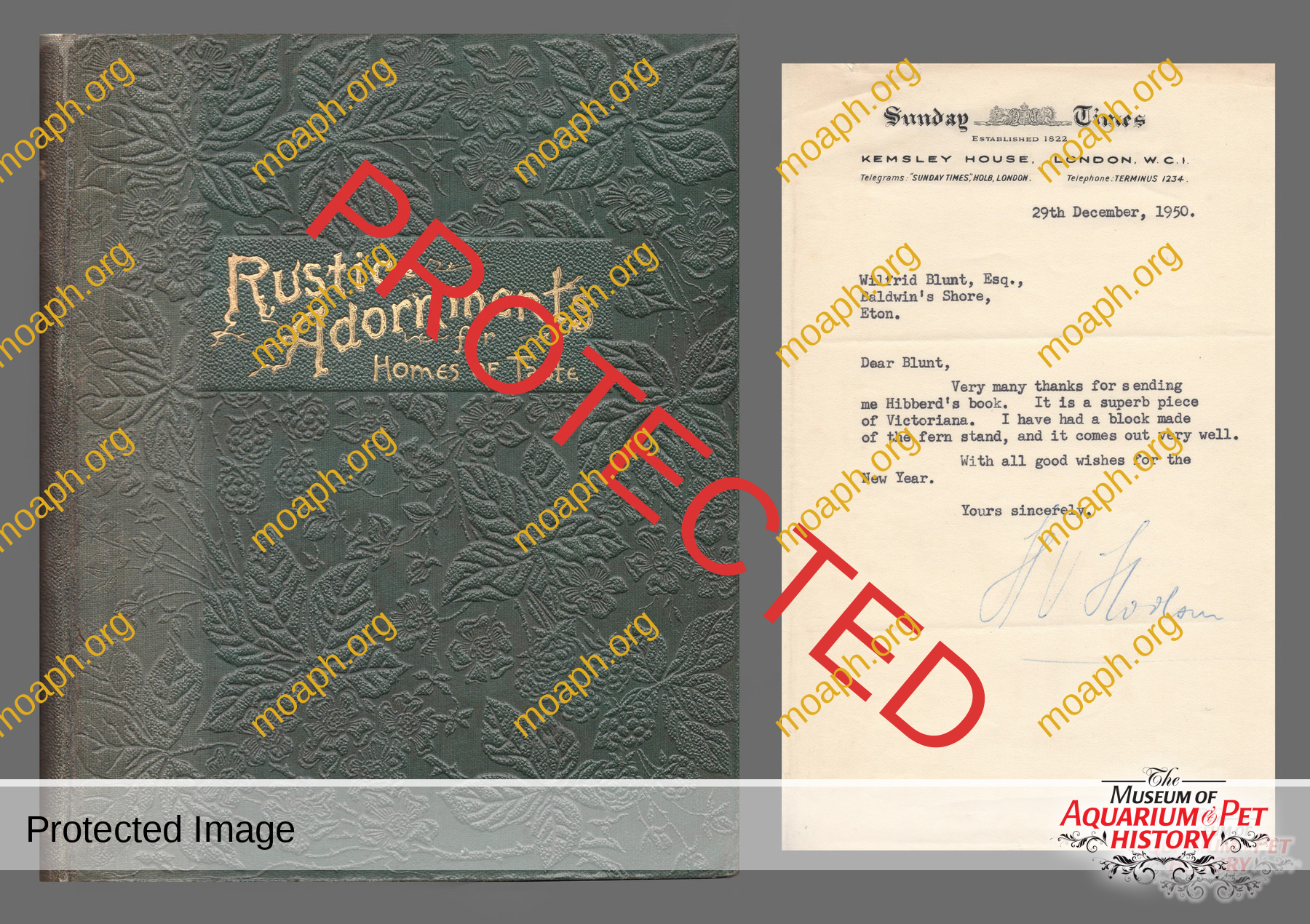
Fourth edition. About this book, the aquarium historian Albert J. Klee, Ph.D. stated: “The 1895 edition is one of the most beautiful aquarium books ever published”.
In one of the above-mentioned letters to Wilfrid Blunt dated 1951 Ellen wrote about her father:
“…I have been deeply interested and thrilled to read your article in today’s Sunday Times about my father the late James Shirley Hibberd and to think that he is still remembered and quoted after so many years. I have only the vaguest recollection of him but have always understood that he could make even such a subject as a cabbage romantic and interesting!!
Also that I have not inherited either his gift for writing or fluency of speech – I do thank you for your comments about him…”
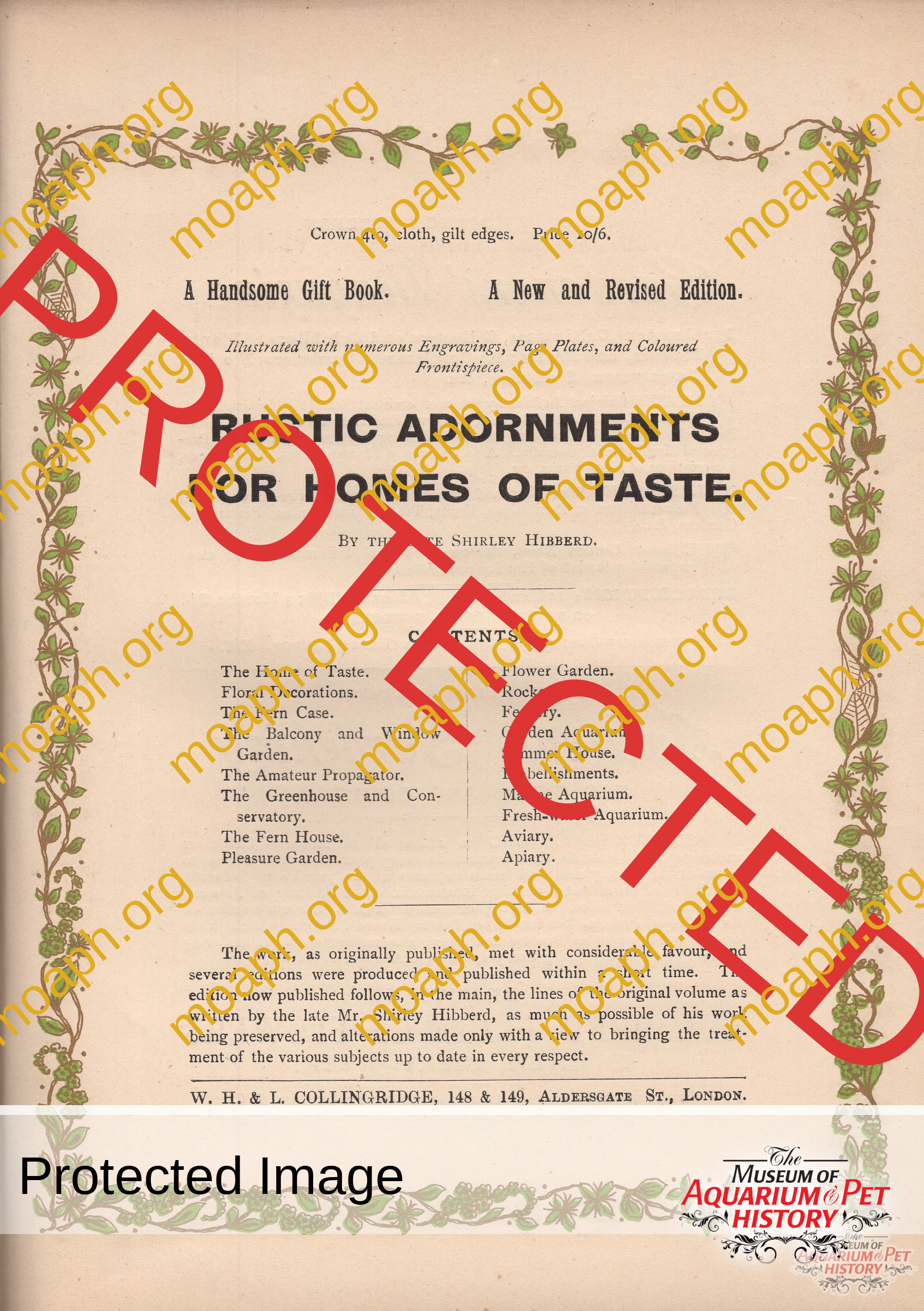
Contents of the fourth edition (1895). Note that the aquarium chapters shifted to the end of the book, reflecting the faded interest of English readers on the subject.
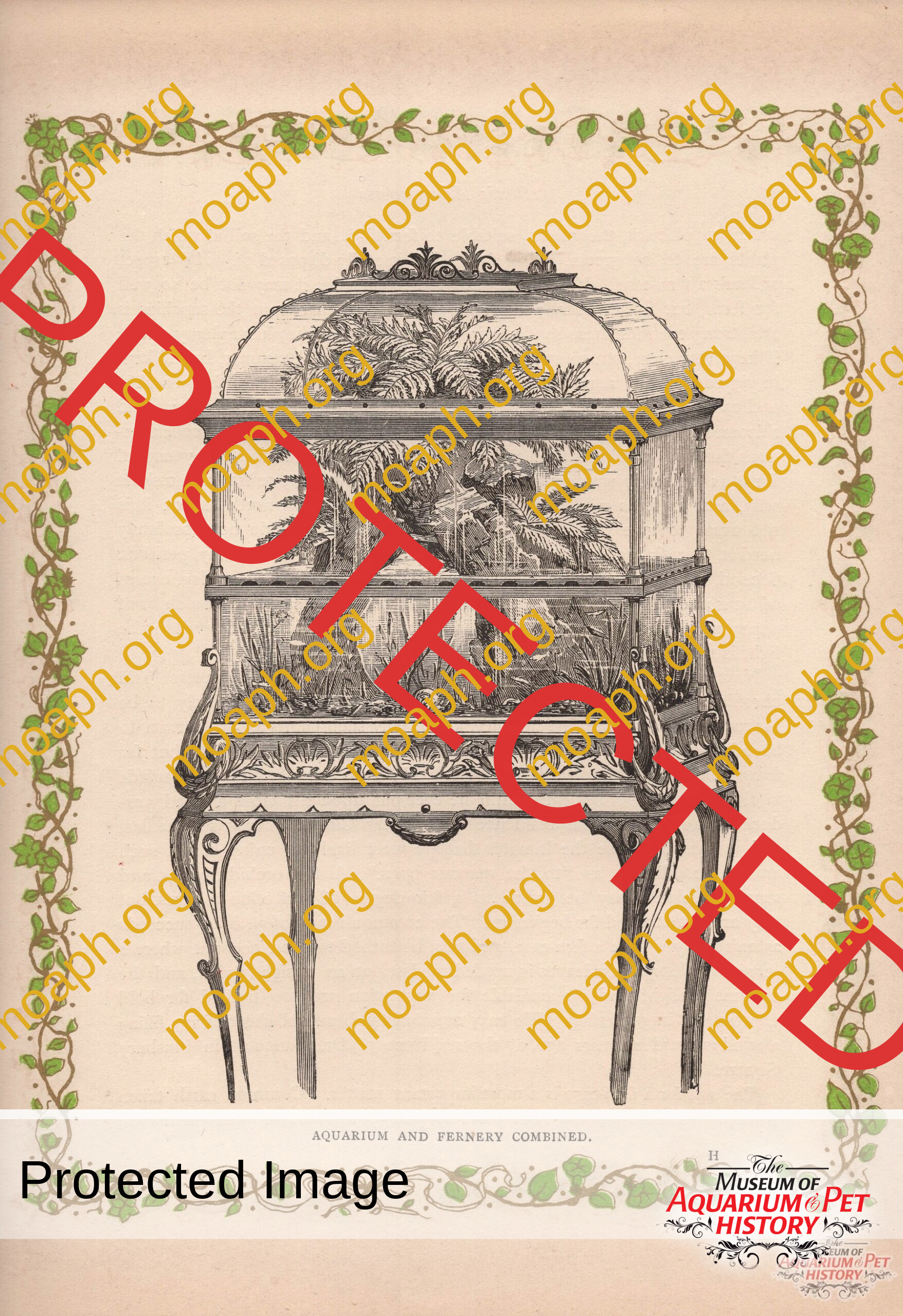
Engraving from the fourth edition featuring a combined aquarium and fernery. Today we simply call it a “paludarium”. Note the floral border in full color, every single page of the book is decorated with it.
Hibberd’s legacy
James Shirley Hibberd is regarded as the forgotten father of amateur gardening, but what’s his legacy related to fishkeeping? In a few words, enjoy your aquarium and learn from it, but be always respectful of the needs of its inhabitants, putting their health before your amusement. It’s what we call today ethical, responsible fishkeeping, astonishingly promoted more than 160 years ago!
He was an emotional man, eclectic, sometimes eccentric, and very decisive in defending his own opinions. He really loved nature, knowledge and his family more than money and success. He had a sense of humor, believed in humankind, and encouraged information sharing among enthusiasts being more “social” than many other contemporary writers.
He dedicated his final book, The Golden Gate and Silver Steps, with Bits of Tinsel Round About – A Prosey-Versey-Medley for Young People of All Ages (E.W. Allen, 1886), to his beloved daughter Nellie. This book, however, doesn’t deal with plants, animals, aquariums, or other natural history subjects. It is instead a collection of poems, stories, plays, and songs, some of which autobiographical and written by Hibberd 40 years before.
Even though I’m pretty sure I do not have Hibberd’s public speaking skills, every so often I give lectures on aquarium history. At the end of some of my past talks, the still awake part of the audience has asked me which, in my opinion, was the most beautiful aquarium book ever published. My answer as a collector has always been the same: “the cover of the first edition of Rustic Adornments for Homes of Taste has no rivals!”
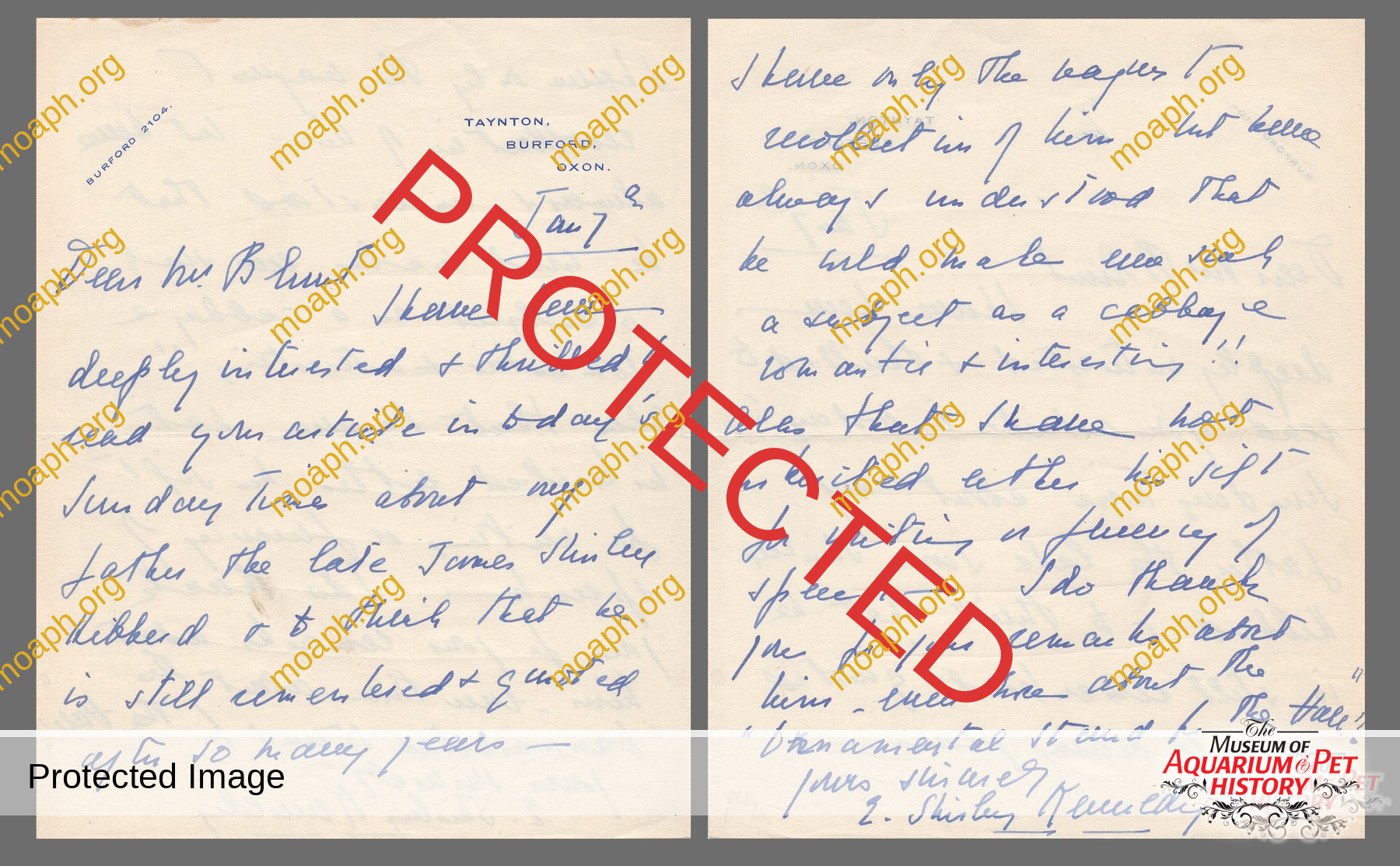
The original letter written by Hibberd’s daughter to Wilfrid Jasper Walter Blunt.
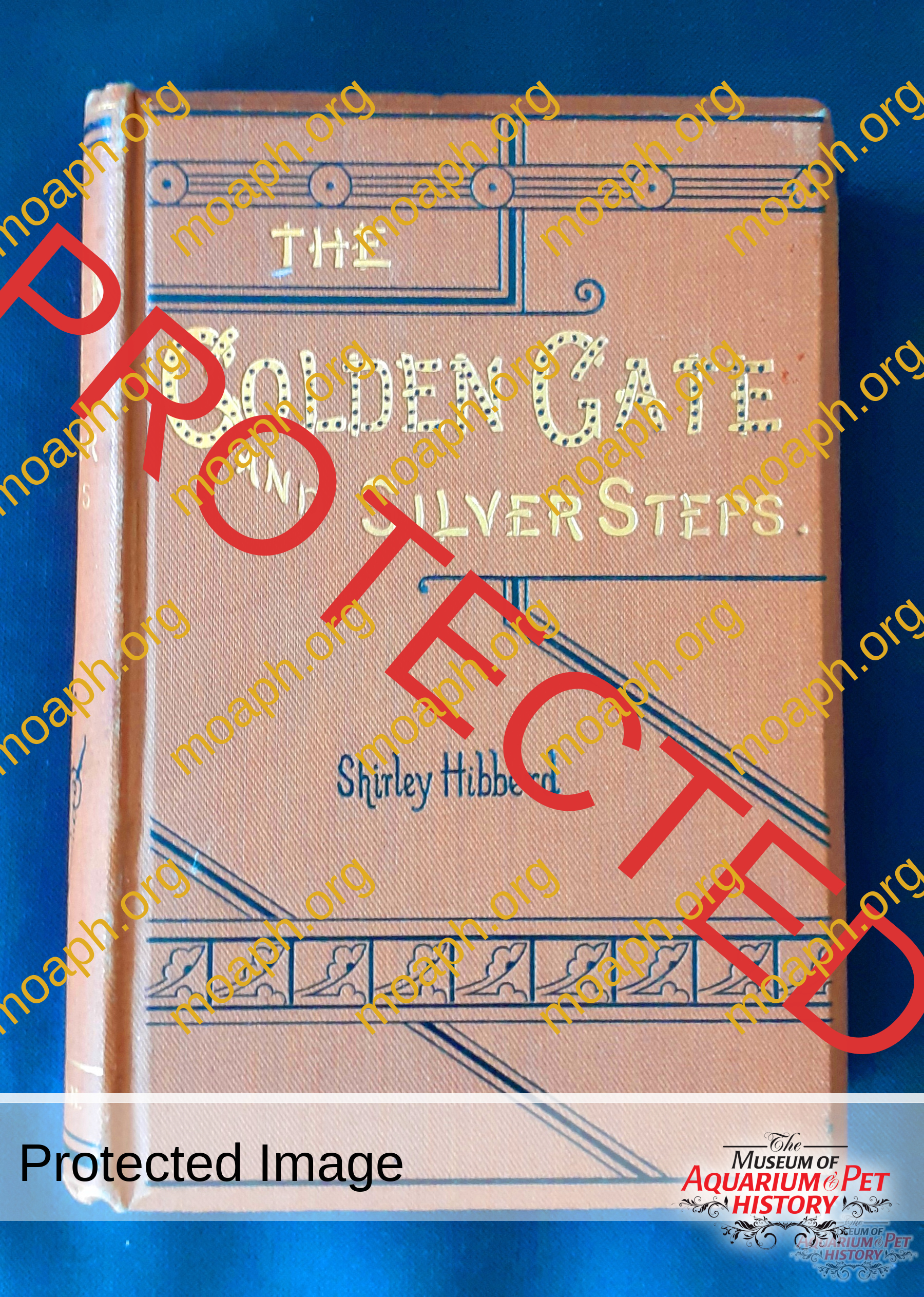
Hibberd’s final book.
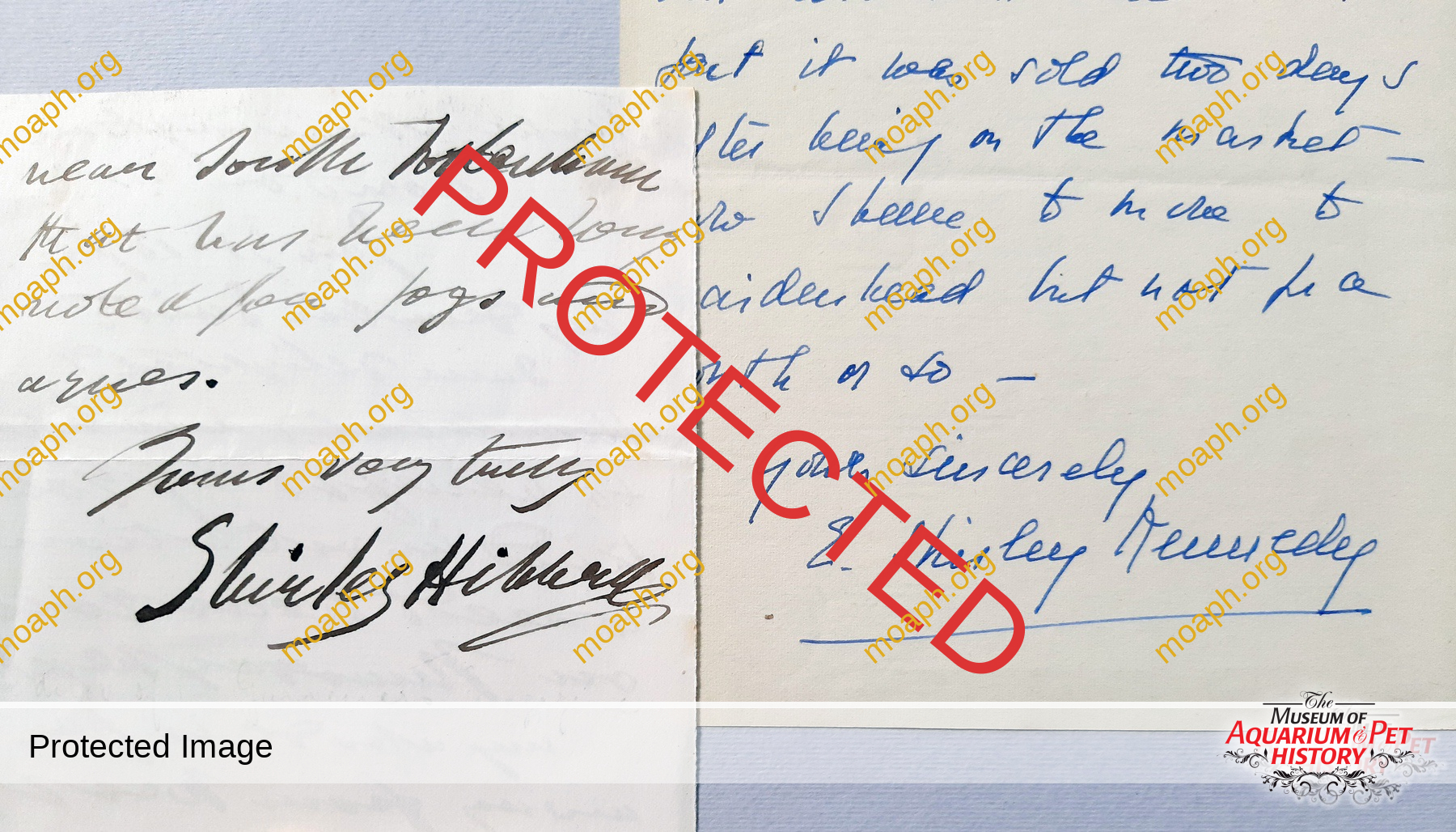
James and Nellie.
Acknowledgments
My special thanks to Joe Ferdenzi, who bravely risked his life to take a picture of his arsenical copy of Ocean Gardens, and to Anne Wilkinson, who knows Shirley Hibberd better than anyone else.