
The Curious Case of a Vintage Low-Profile Tank
(SACEM Nano Tank)
In the world of pets, industrial design can’t be just an exercise in style, as is sometimes the case in other fields. It should be, first and foremost, an act of responsibility. Every product designed to house an animal becomes a silent interface between humans and other living beings with their own specific needs. In this context, good design isn’t just about looking nice: it’s about actually working.
This principle matters even more when it comes to ornamental fish, since their welfare depends almost entirely on the artificial environment we create for them.
Developing a product that puts image first, while pushing proportions, functionality, and usability into the background, may generate immediate success, driven by trends and visual appeal. But that success is usually short-lived. Over time, design flaws begin to surface, the user experience deteriorates, and what once seemed desirable inevitably reveals itself to be a failure.
Simply put, in good design, “form follows function”.
I’ve always found it fascinating to see how, over its long journey to the present day, the hobby of fishkeeping has absorbed advances in technology and scientific knowledge. These developments have deeply influenced both aquarium design and the way aquarium systems are managed.
So, it’s no wonder that nowadays the largest companies in the aquarium industry maintain dedicated R&D departments and actively promote collaboration between designers and hobbyists to improve the welfare of aquatic animals in human care. Along this increasingly virtuous path the hobby has taken, however, there has been no shortage of poorly designed products. Surprisingly, some of these failures have cropped up even in recent years. Collectors may love them; fish, on the other hand, have certainly enjoyed them far less…
Unlikely resemblances
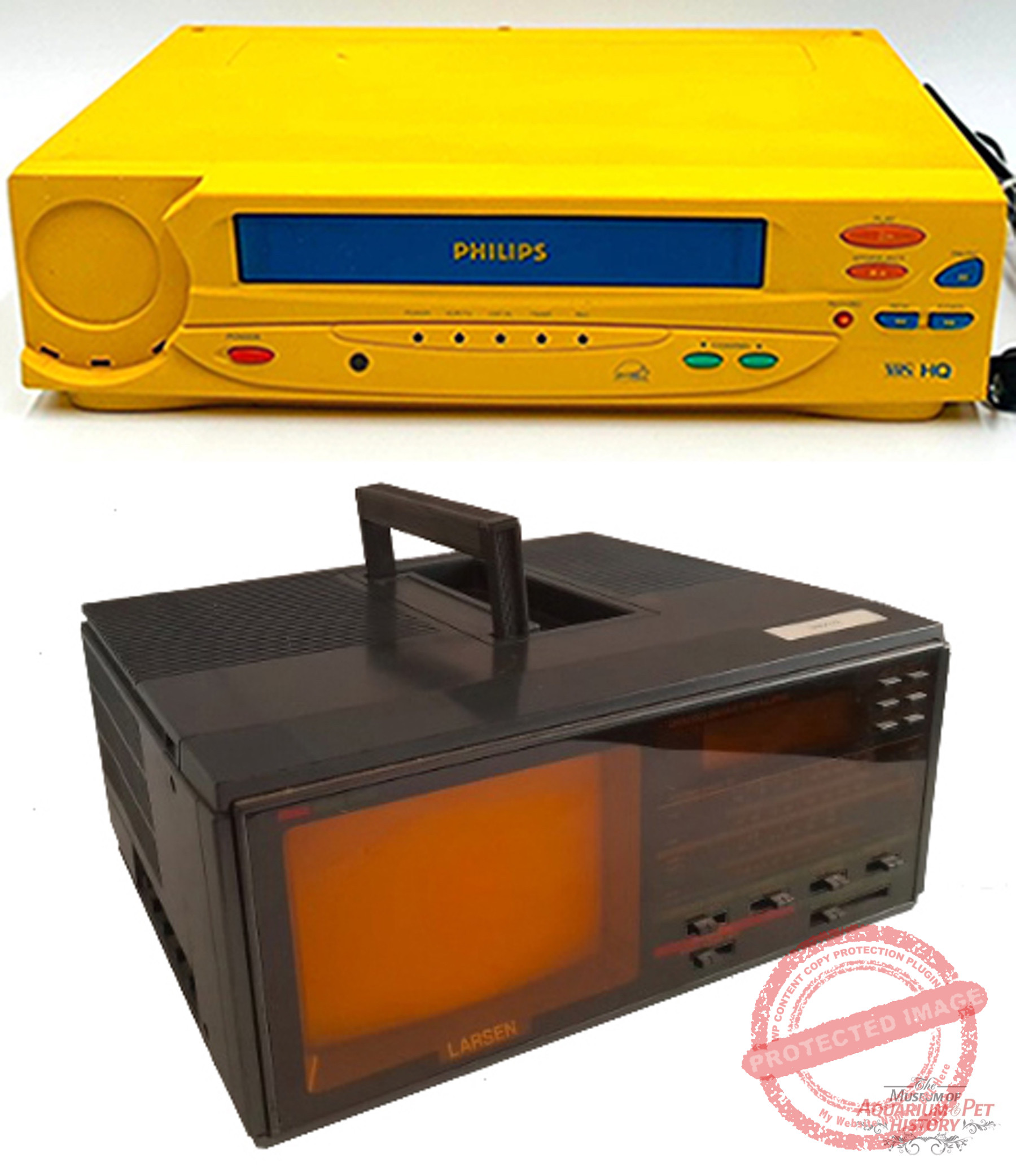
I recently bought one of these on eBay. It’s an overengineered plastic aquarium from the 1990s which I immediately found cool. At first sight, it reminded me of some short and wide objects from my childhood home that really shouldn’t have much in common with an aquarium. Here they are, in my personal order of affection:
- Pizzamatic, a portable multi-cooker that was all the rage in Italy back then
- Philips VHS Video Cassette Recorder, model VRKD11YL21, in its striking yellow version
- Larsen 8000 portable TV with built-in radio, which my father kept in his man cave
- an alarm clock radio.
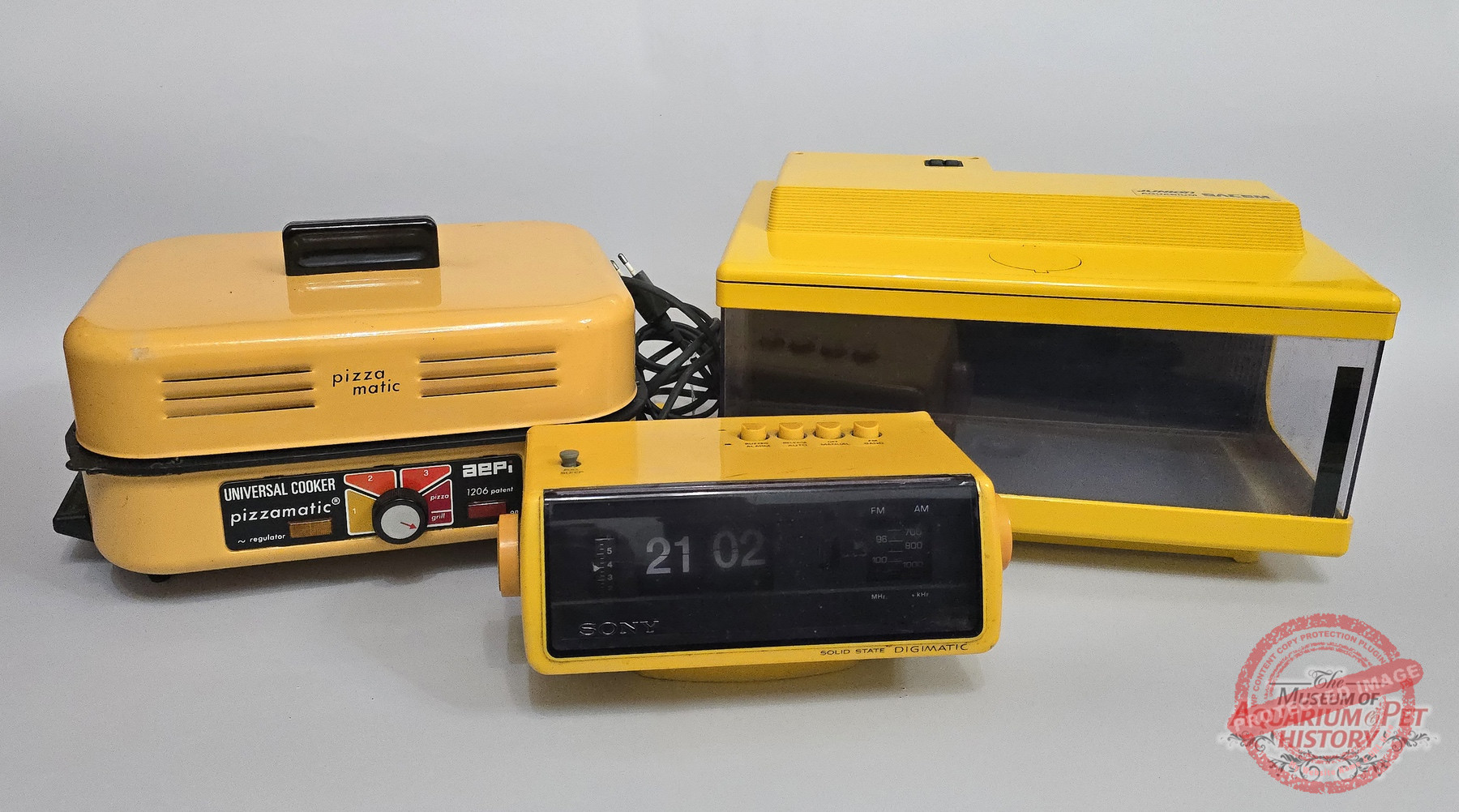
Find the odd one out!
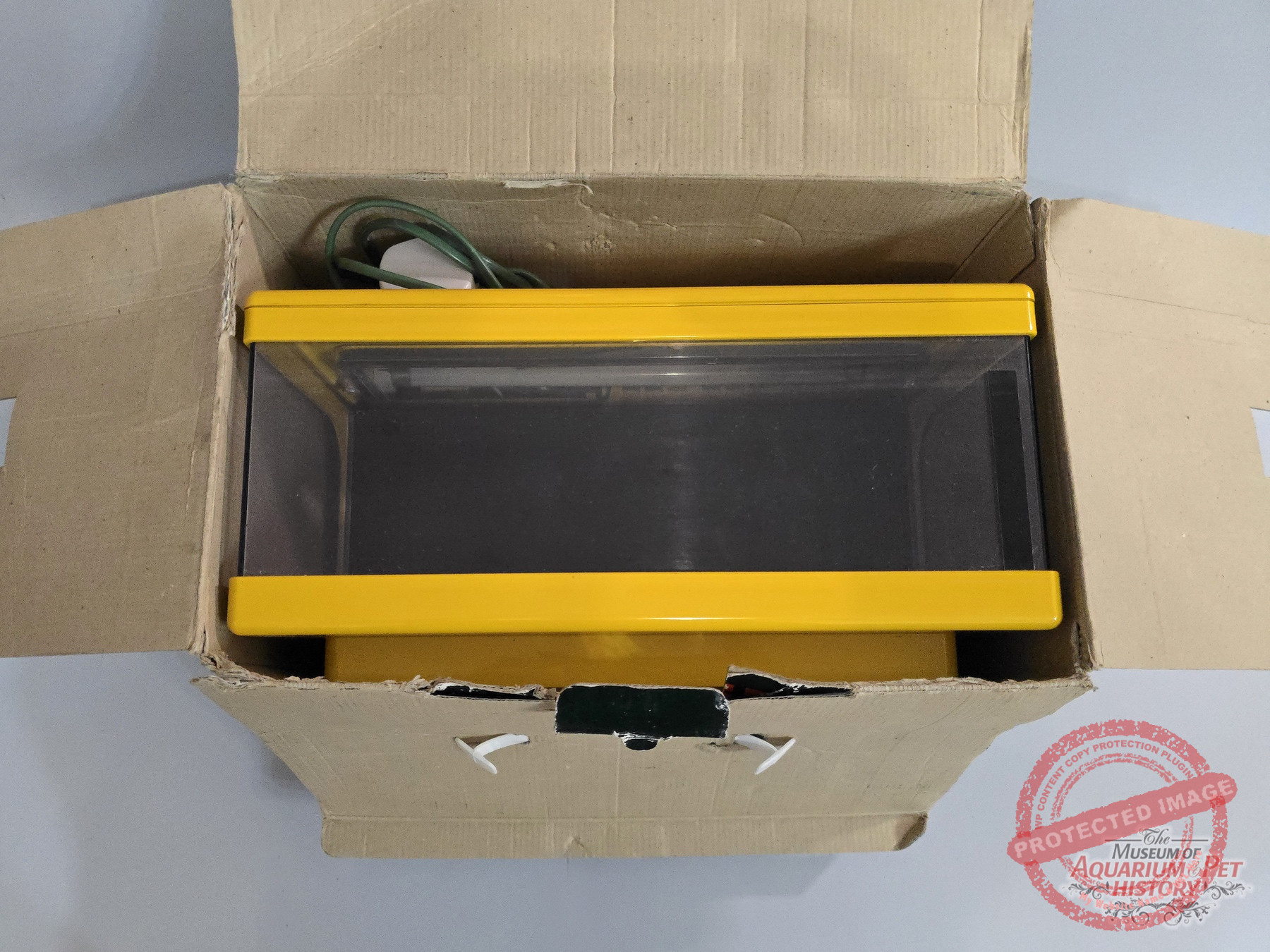
This peculiar tank was designed and produced by SACEM, an Italian company that sadly went out of business years ago. Founded in the late 1970s, SACEM was one of the earliest, proudly Italian alternatives to major German manufacturers such as EHEIM. The firm specialized in filters, heaters, water pumps, accessories for fish ponds, and on a smaller scale aquariums. Its advertisements in trade magazines often included the slogan: “L’amore per la natura dà sempre buoni prodotti” (Love for nature always bears good products).
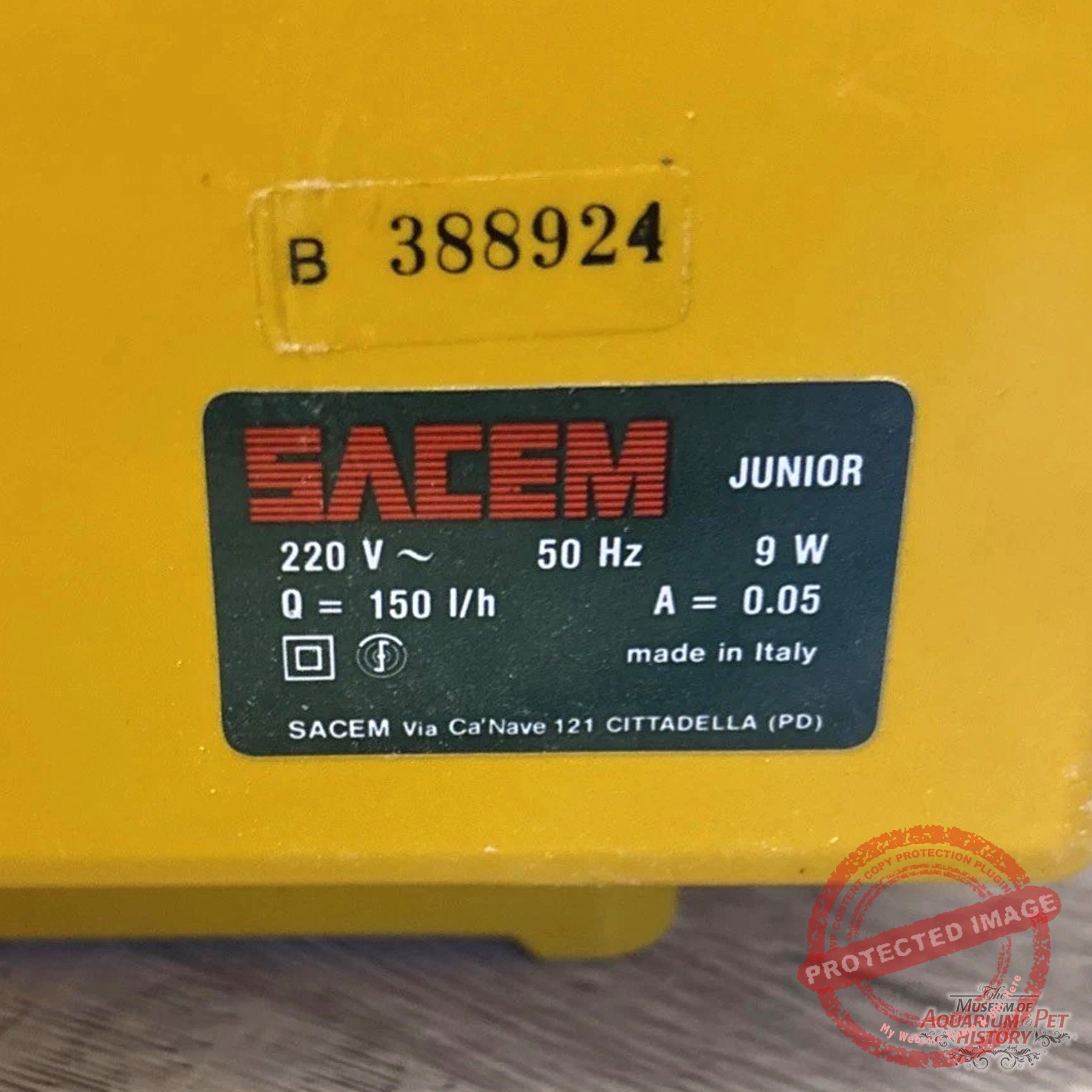
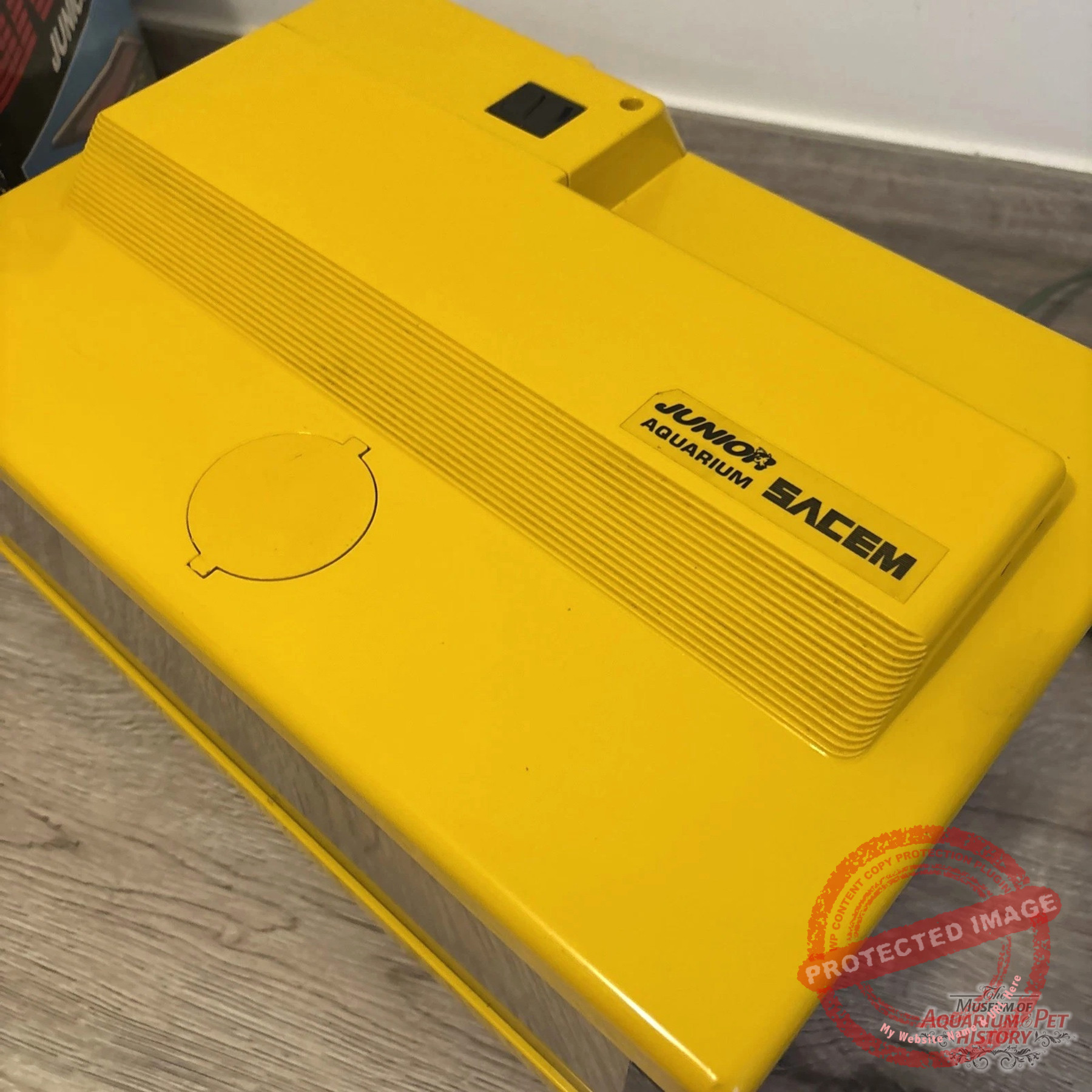
The reluctant star of this article is called SACEM Junior Aquarium. It was made entirely of plastic and came fully equipped with everything you might need: a water pump, a heater, and a full hood. Luckily, I managed to find it in its yellow version rather than the more common black one.
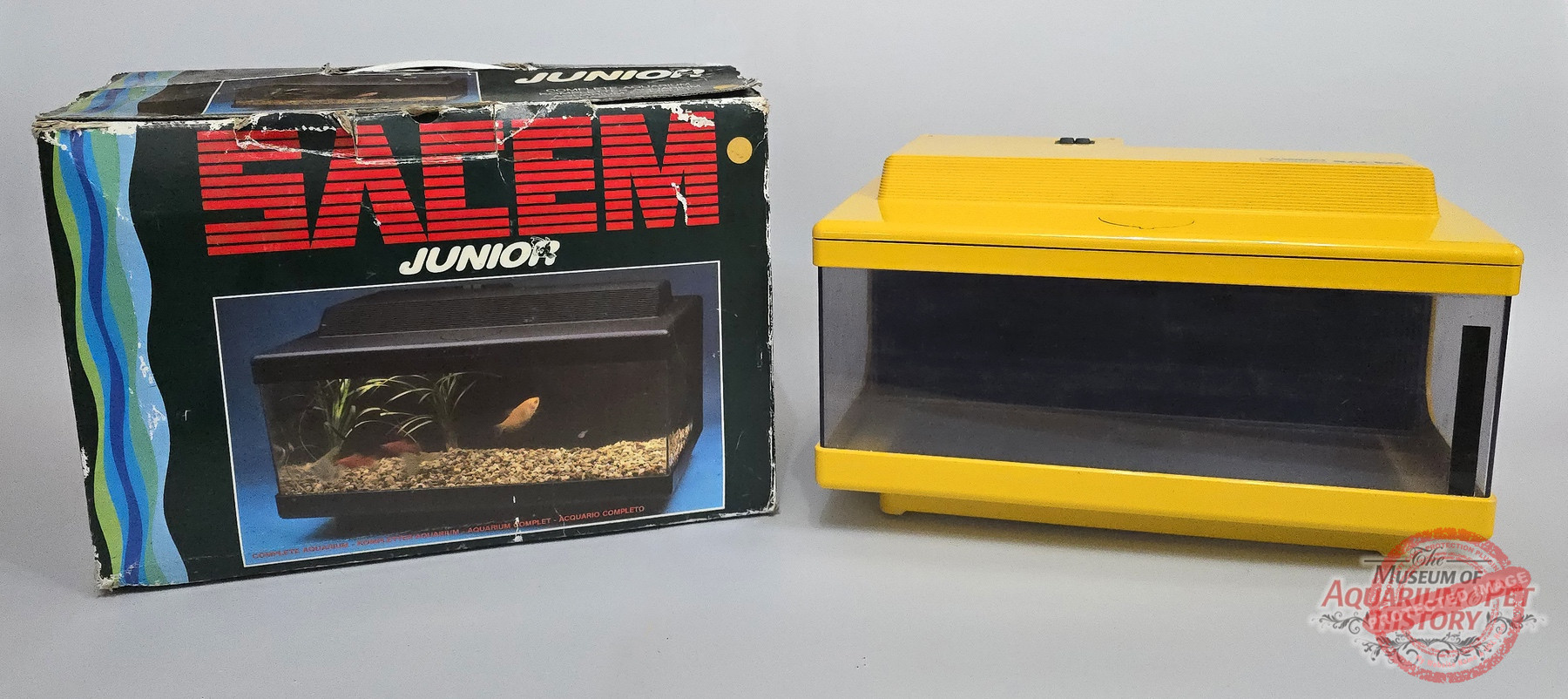
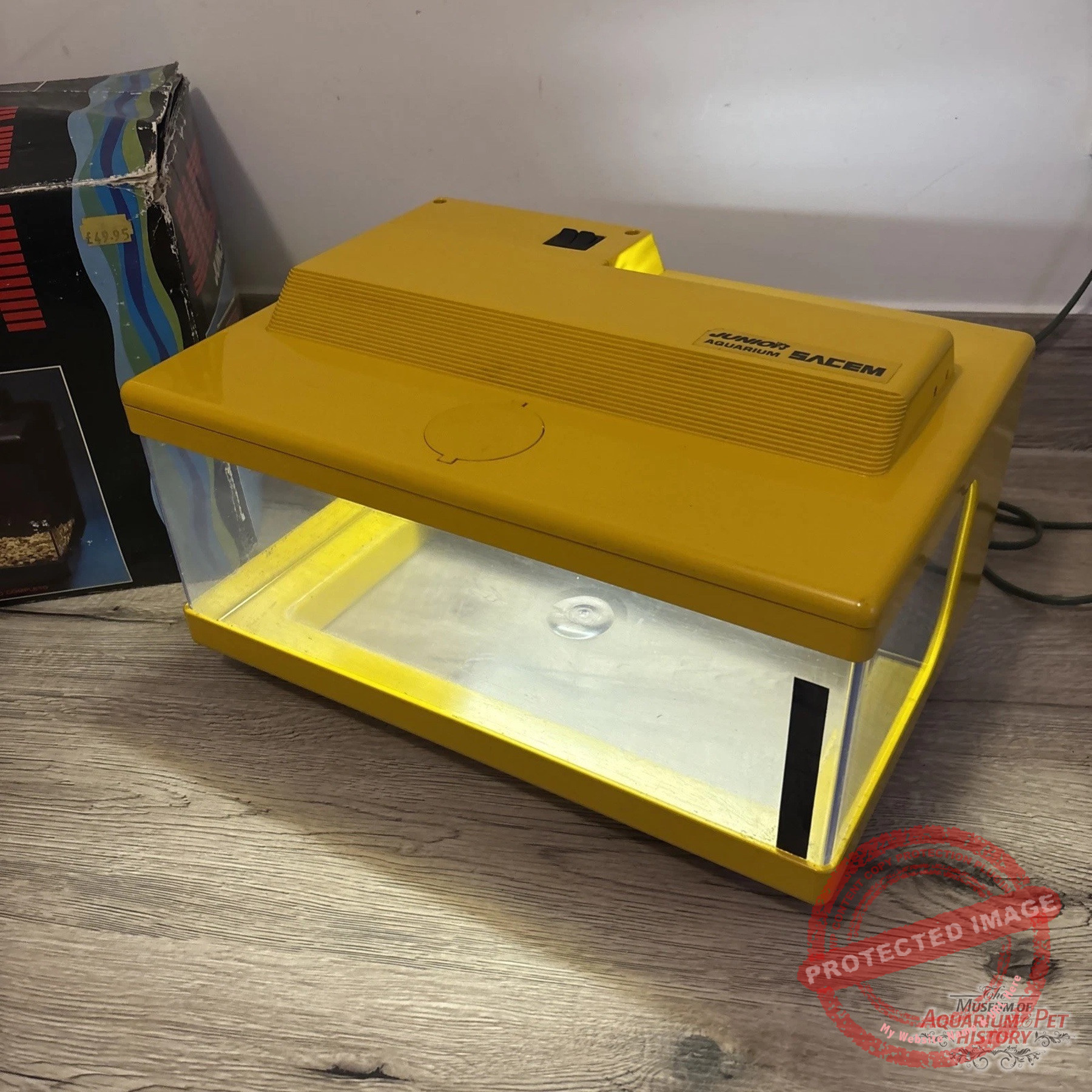
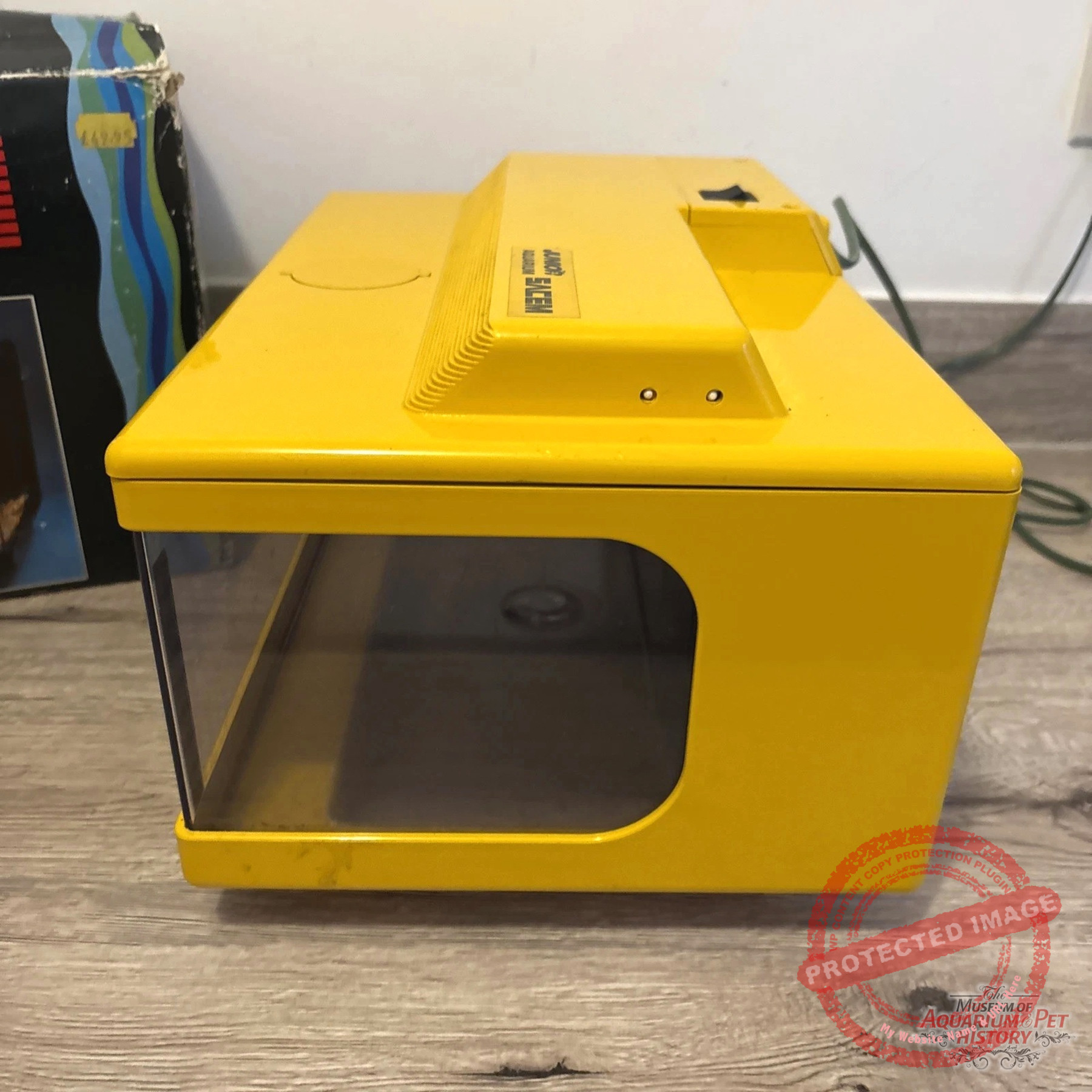
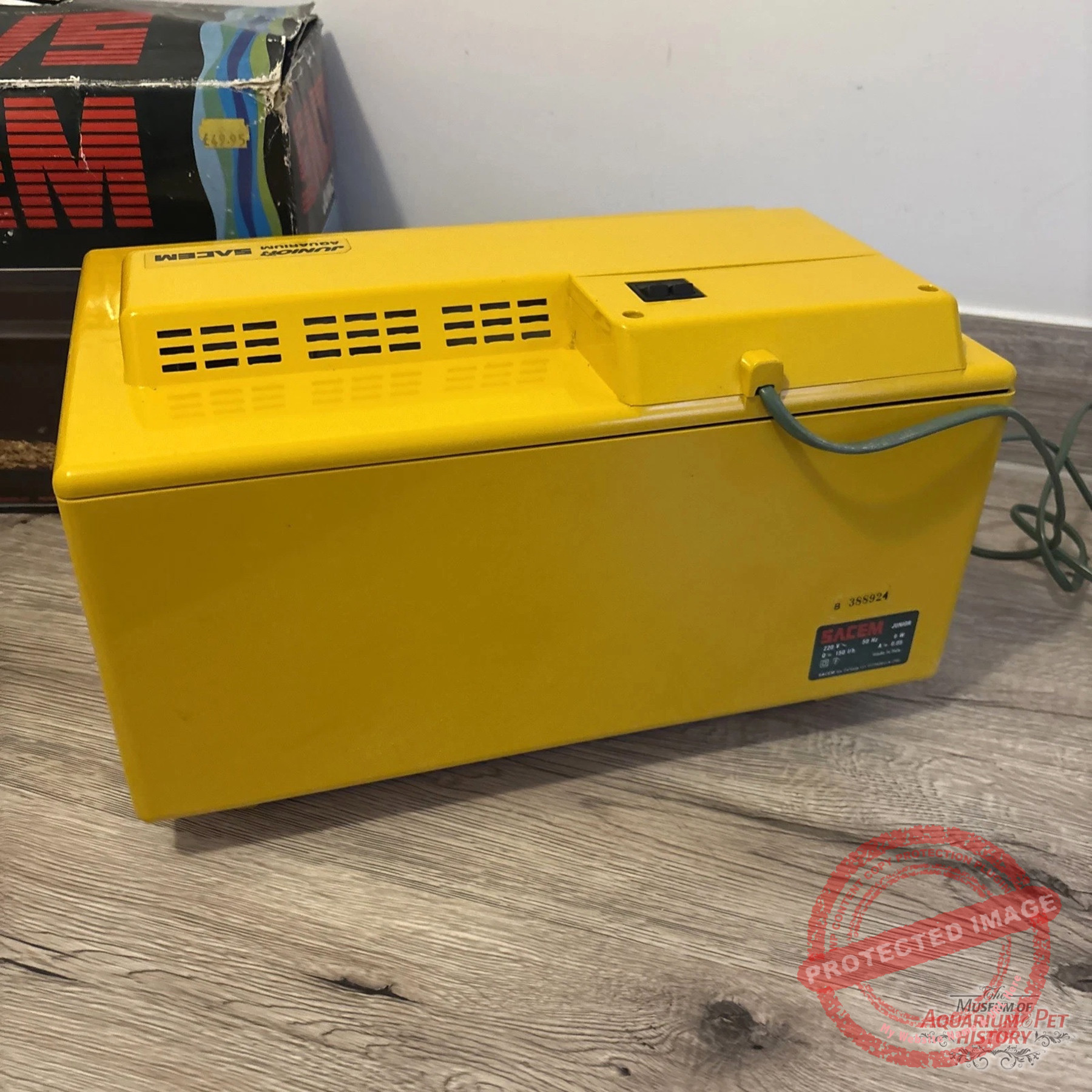
Like most plastic aquariums, it was conceived as a tabletop tank to introduce kids to the hobby. Mine comes complete with its original box and a price sticker in British pounds: £49.95. Assuming the sticker was added sometime in the late 1990s or early 2000s, that would be about $160 in today’s money.
Houston, we have a few problems…
Proportions are what make this aquarium particularly weird. Severely constrained by its limited height, it looks as if it has been flattened by a hydraulic press. As a result, it’s tricky to see what’s inside it unless your line of sight is almost perpendicular to the front panel.
The original plan was probably to present this product as a desktop aquarium or nightstand aquarium. Regardless of where you place it, even so, the hood and overall shape still make it hard to enjoy its inhabitants.
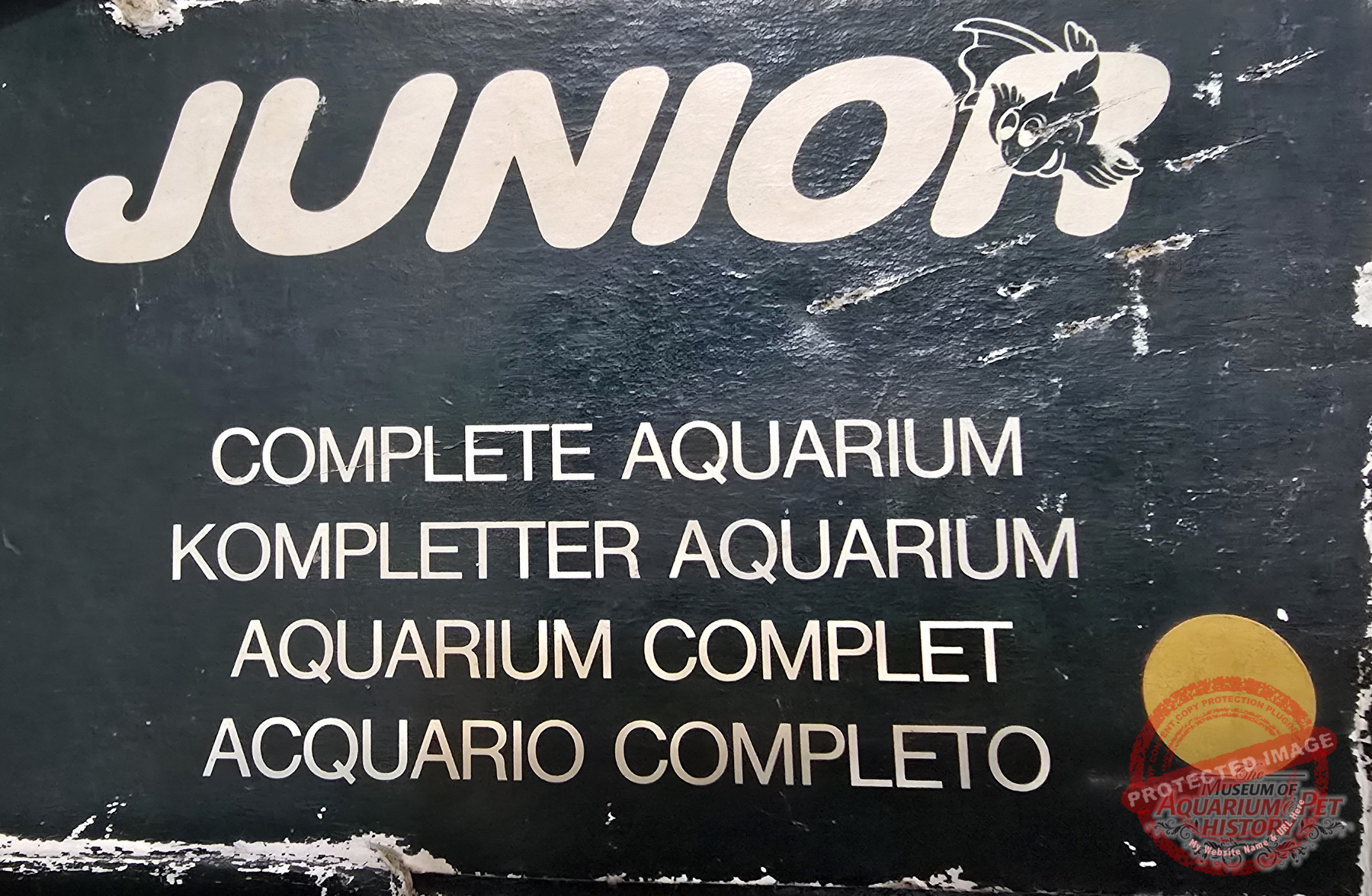
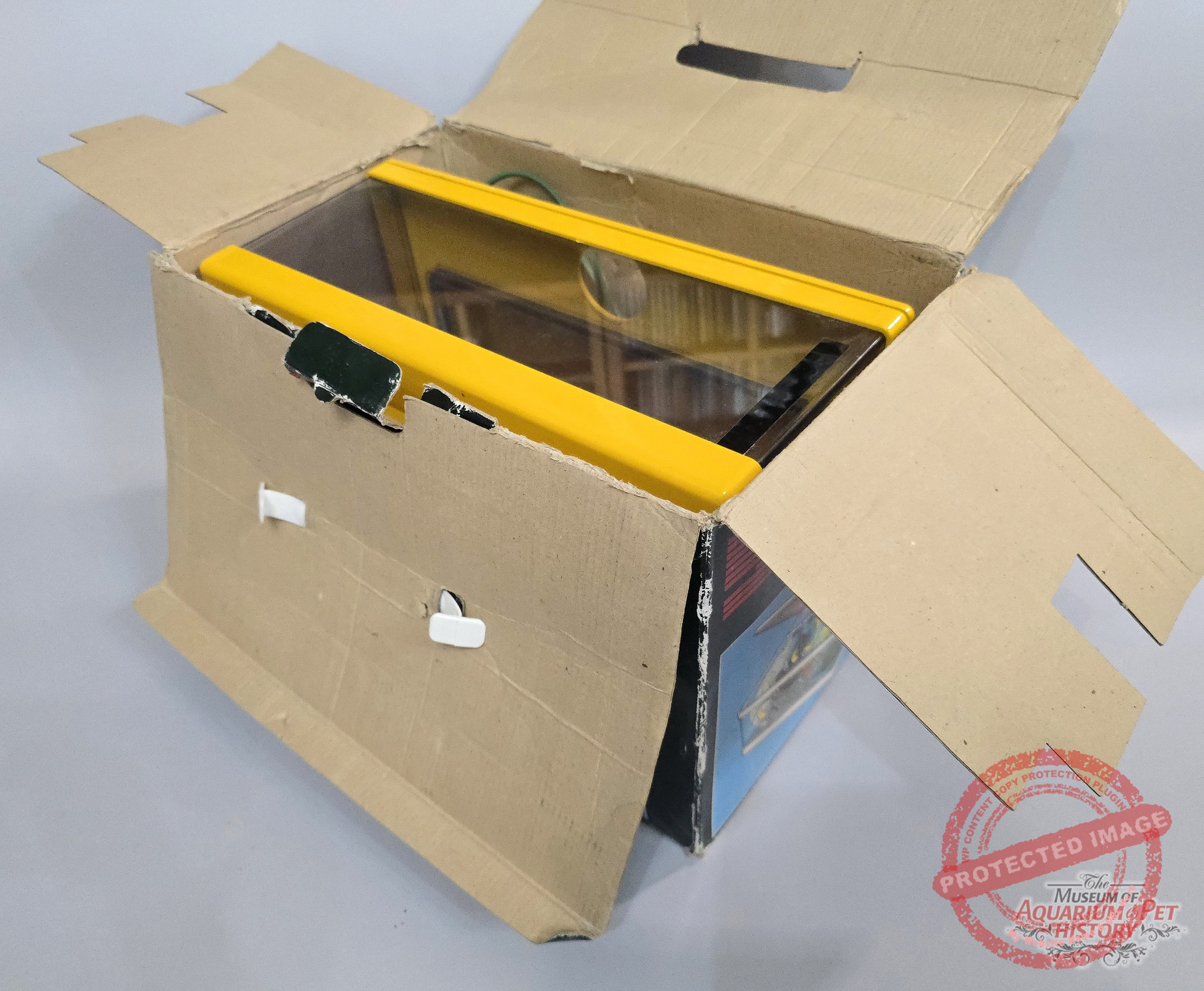
Unlike most aquariums, this tank needs to be placed inside its original box resting on its back side, rather than on its base. This makes it look as though the box contains a small aquarium of regular proportions.
The front window for viewing into the tank feels even more cramped because of the yellow frame that wraps around the aquarium. It leaves the viewer with only 4 ⅛” (10.5 cm) of height! The side panels aren’t any better, having been reduced to tiny portholes.
The amount of space given to fish is questionable as well. Without gravel, this section is 13 ½” long, 6” wide, and 5 ½” high (34.5 × 15.5 × 14 cm). In other words, not counting the water inside the filter box, there’s only about 2 gallons (7.5 liters) for the aquatic animals.
The internal filter box is made of small dividers that snap together and attach to the walls of the aquarium. It takes up about the same amount of space as half of the fish compartment, another weird design choice for such a small vessel.
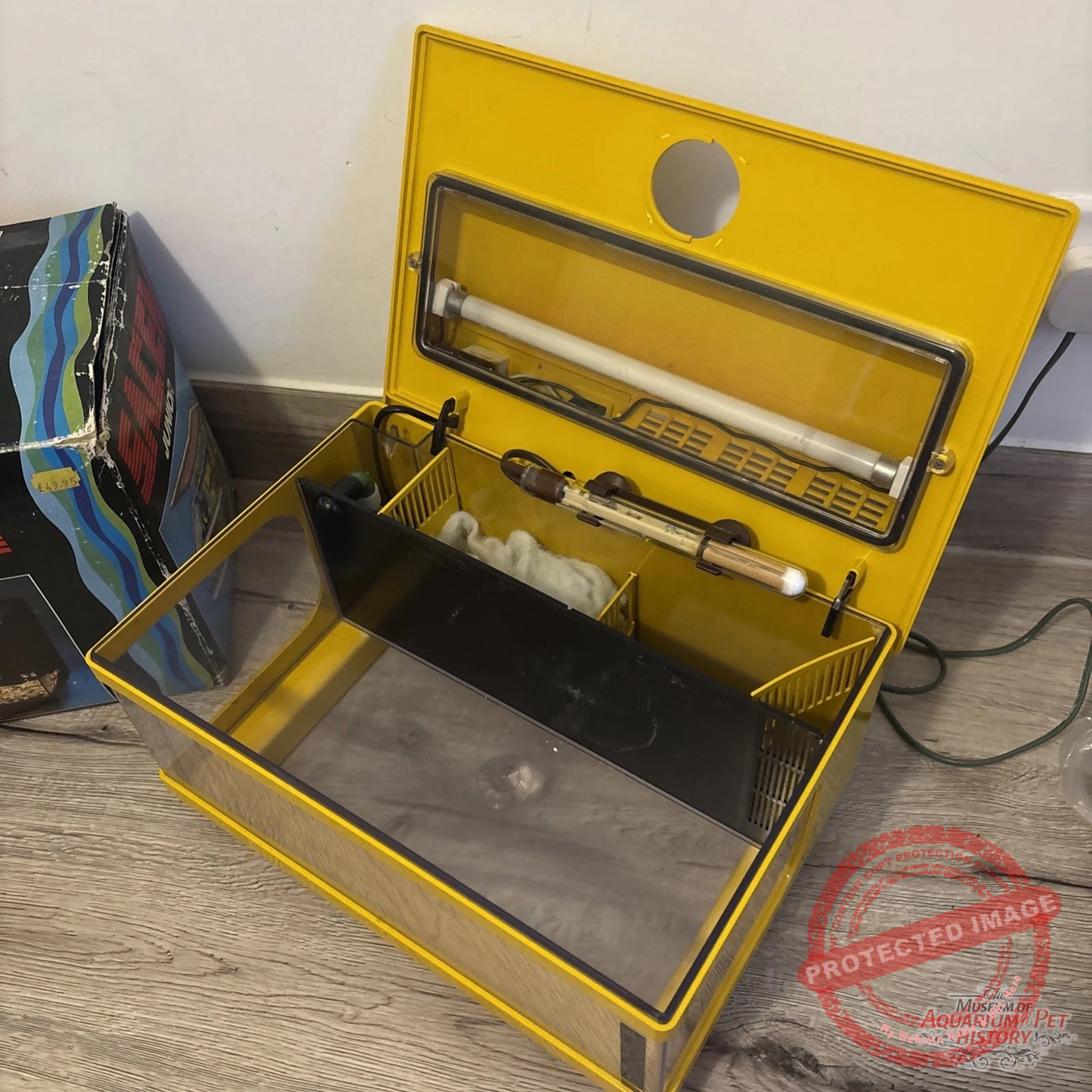
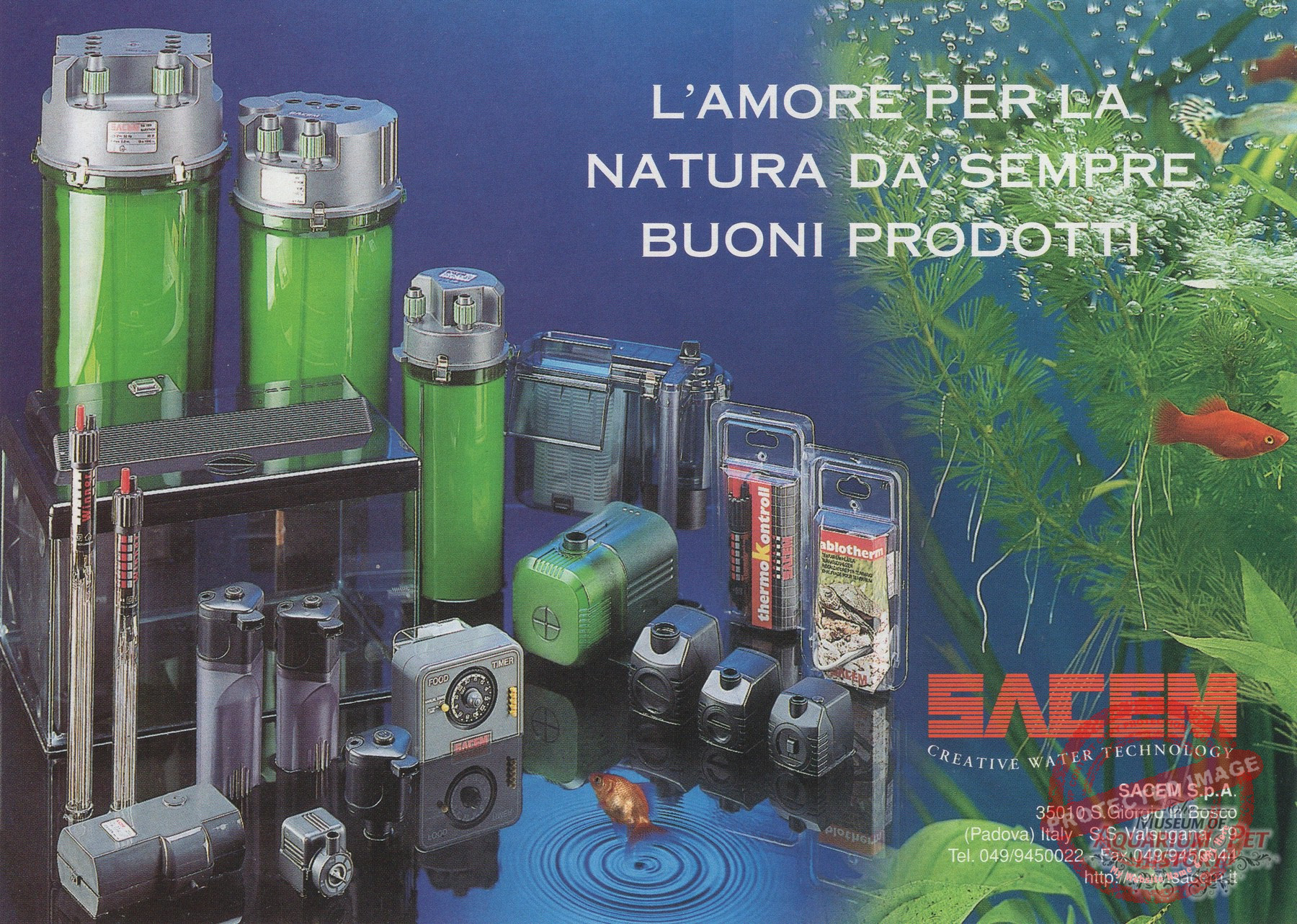
In some SACEM advertisements from the late 1990s, one can spot an aquarium with a much more conventional height. It’s hard to say what led the company to compress the vertical dimension so drastically in the Junior Aquarium. Ad from the Italian magazine Aquarium, Vol. XXVIII No. 4, April 1997.
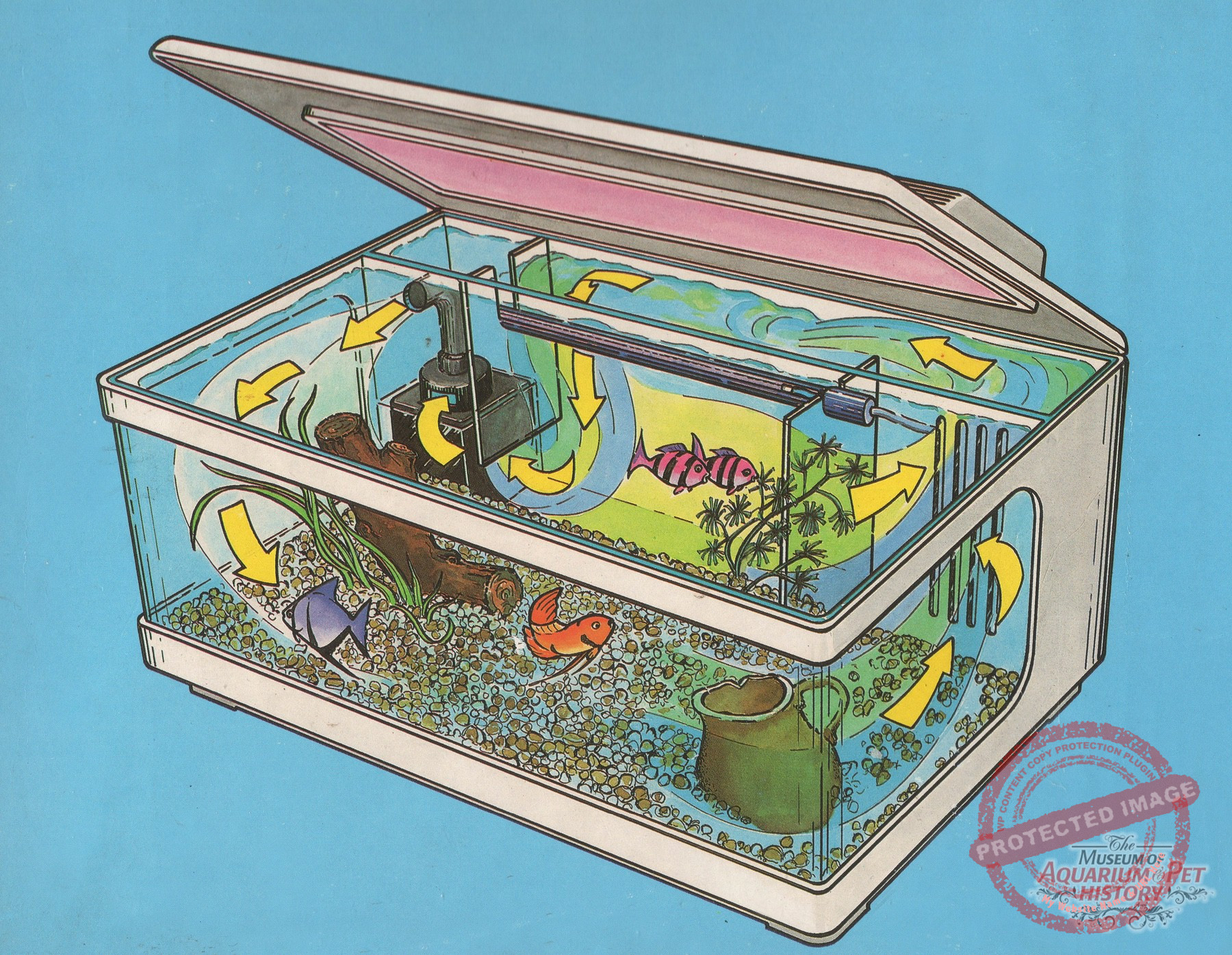
This illustration appears on both sides of the aquarium’s original box. It seems the artist may not have had the tank at hand: the filter box differs from the real one, and there are some noticeable perspective issues.
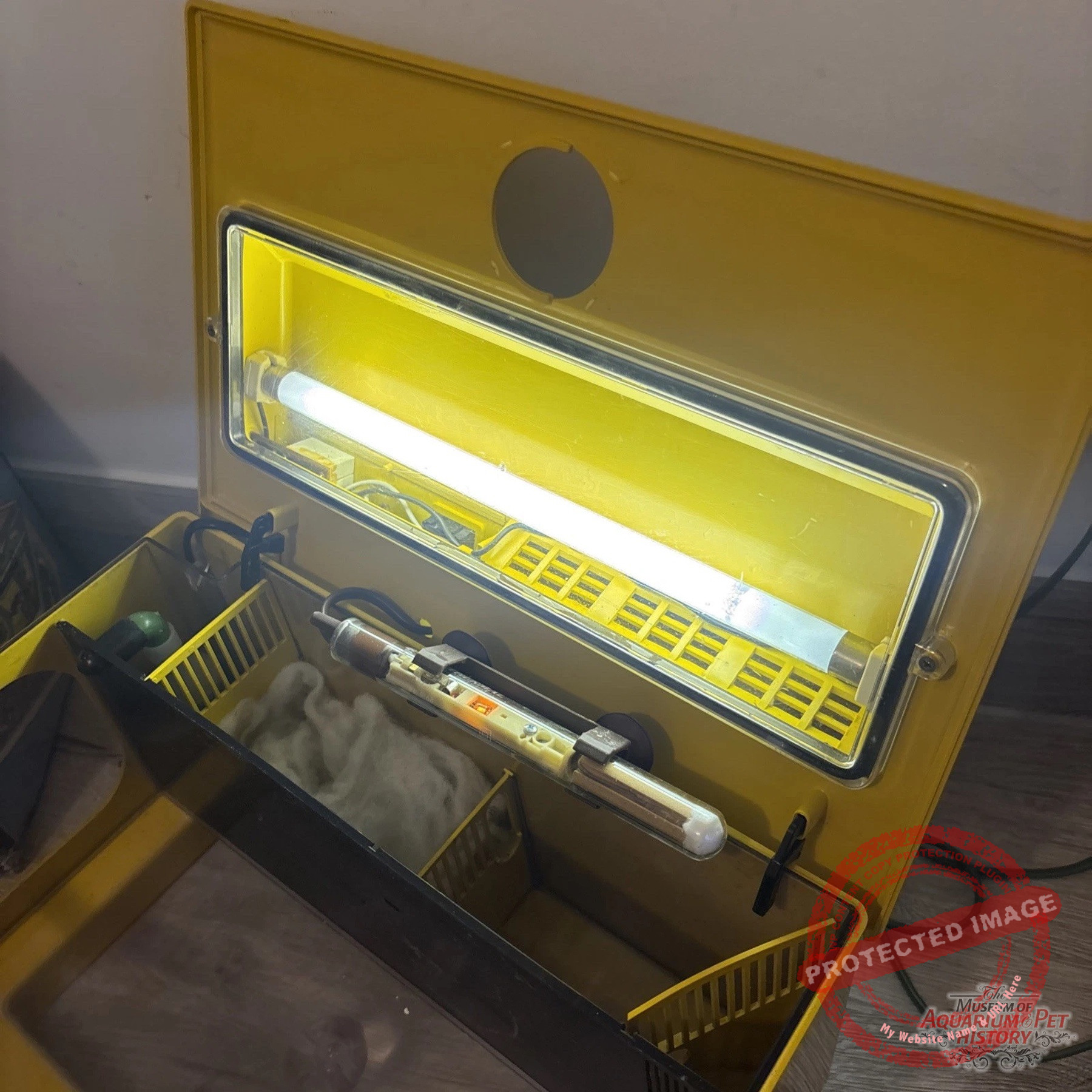
The final thought concerns the lighting system. In aquariums with such a shallow water column, lights should hang at a reasonable distance from the water surface to avoid stressing the fish. In the Junior, instead, the fluorescent tube compartment almost touches the water surface.
Before declaring this colorful product one of the most poorly proportioned tanks with a full hood in history, I reviewed every commercially produced aquarium with a full hood in my collection. I also carefully examined dozens and dozens of catalogs, but I couldn’t find anything more extreme than the Junior itself. Despite this unfortunate distinction, I must confess that if I ever came across this model in ten different color variants, I’d buy every single one of them!