The Hamster Market & CritterTrail
As a young boy through my teenage years, my passion for turtles always found me stopping to visit and explore pet stores every chance I got. Most pet stores concentrated on either tropical fish or birds and many carried puppies and kittens. Those stores which carried reptiles usually kept them towards the back of the store along with their hamsters, guinea pigs, and other furry critters. It was like an exotic exploration every time I’d walk to the back of those stores searching for any new critters that just arrived. Back in those days, the red-eared slider (baby green turtle) was by far the number one reptile offered as a pet as well as eastern spotted newts and anoles; which were marketed as chameleons. The stores that delved a bit deeper into exotics would carry some snakes and lizards and perhaps a few different aquatic or box turtles. Only the very specialized stores offered a more extensive inventory of reptiles.
As it relates to small animals, the golden hamster which was discovered in Syria in the early 1900s, was introduced into the USA in the 1940s. Its gentle nature and cleanliness allowed them to become domesticated and it didn’t take long before commercial breeding provided thousands to the pet industry allowing the “Golden Hamster” to become a most popular small pet for children. Guinea pigs, rabbits, and other rodents were also available but in limited quantities.

Golden hamster photo by Mervin F. Roberts featured in the 1958 booklet Hamsters.
As for the related merchandise, most pet stores carried products for the care of both reptiles and small animals but frankly speaking, there weren’t many items available. The typical assortment was plastic turtle bowls, screen covers, and other aquarium accessories used in reptile keeping, plus a few different basic small animal cages, exercise wheels, a water bottle, a chew stick, and a food dish for the little furry guys. Remember, reptiles and small animals were not as popular as they are today. Tropical Fish, bird keeping, and of course dogs and cats were the main pets.

Another example of a vintage hamster cage before the CritterTrail from the booklet: enjoy your HAMSTER, by Earl Schneider and The Pet Library LTD
When I began pursuing my goal of entering the retail pet business in the late 1960s and finally opening Noah’s Ark in 1971 things started changing. Due to the increasing popularity of reptiles, products to support them began hitting the market and it was about that time that Gary Bagnall focused his reptile passion into filling that need by creating Zoo Med, a company that would eventually become the world’s largest supplier of reptile products.
1971 At the same time a small animal boon hit the market. Metaframe Corporation introduced a totally innovative product catapulting the hamster into an unprecedented position of now becoming the single most popular pet for children. That boon was HABITRAIL, a clear plastic enclosure with see through tubes and elbows. This product not only eliminated the mess of bedding being continuously kicked out of the wire cages but its design allowed you to expand and connect it together with other enclosures and accessories while enjoying the interesting behaviors of those little critters as they scampered through the tubes.
As the hamster demand increased, more commercial breeders entered the market, with many starting to produce albinos, creams, blacks, and pandas, both in long and short-haired varieties. It’s amazing how a single product like Habitrail created such a positive impact on a niche market.
In researching Habitrail’s history, I spoke to some industry experts. Two of the most successful professionals; Phil Cooper and Harvey Fineberg had the answers.
I learned that back in 1959 a husband and wife; Elliot and Ruth Handler created the Barbie Doll which propelled the Mattel Toy Company into the largest toy company in the world. It was introduced at the International Toy Fair in New York resulting in the unheard of sales of 350,000 dolls in less than one year. This one product spurred the growth of several other brands through both new product development and acquisition. Then as Mattel started acquiring companies that were major players within their industries, they purchased Metaframe Corporation, the #1 company manufacturing aquariums, pumps, dynaflo power filters, and aquatic accessories from Alan & Harding Willinger, Irving Gall, and Harold Nestler.
Sometime in the early 1970s, as Mattel continued developing more and more successful toys, one of their designers was intrigued to observe how mice behaved as they scampered through the ventilation tubes of an HVAC unit that was being serviced by an outside service contractor. He took the idea and built a prototype which led to a patented interactive hamster enclosure with connecting tubes, tees, and elbows. They named it Habitrail, and their Metaframe division entered the small animal category by successfully penetrating the pet industry with the most innovative product the hamster market had ever seen. Children everywhere enjoyed a whole new experience with their pet as it explored through the clear plastic tubes.
In 1971 Harvey Feinberg joined Metaframe eventually becoming the product manager for Habitrail as he implemented sales and marketing programs. At the same time; on the retail end, I can distinctly remember the busy weekends at Noah’s Ark Pet Center in the 70’s, when we saw how Habitrail regularly turned a $2.00 hamster sale into a $75.00 to $100.00 total purchase. This had never been done before.
As Metaframe continued making inroads in both the aquarium and small animal sectors; another well-known figure, Mel Juster was hired as senior VP of Sales and Marketing to manage the growth of both Habitrail and Dynaflo; their 2 biggest brands.
Then in 1979, Mattel decided to make a drastic move. They restructured their strategic planning and focused exclusively on children’s toys and began selling their subsidiaries that didn’t fit, one of which was the Metaframe brand when in 1980 they sold the company to an investment group led by a gentleman by the name of Jerry Margolis. Somewhere during this time, a company by the name of Aquology was formed. I can’t be sure but I believe this was the company that Jerry Margolis started.
The Metaframe brand continued its dominant position for a few years but eventually started incurring cash flow problems resulting in serious “out of stocks” on their key items. This continuous problem of not being able to supply the demand for Habitrail and Dynaflo products resulted in their wholesalers and retailers alike becoming more and more frustrated. I remember this period well, as we at Noah’s Ark were hopelessly stuck with literally thousands of dollars worth of Habitrail accessories and other slow-moving components without the key items to sell.
Key personnel changes were beginning, one of which was the loss of Harvey Fineberg who went over to Perfecto Manufacturing Company, a relatively new aquarium and accessory manufacturer in Indiana. Around about the same time Mel Juster left Metaframe and joined the Ethical Products Co., a well-known and successful dog and cat toy and accessory importer.
1986 – 1987 As the industry was reluctantly accepting the fact that they couldn’t depend on receiving Metaframe products in the Habitrail and Dynaflo lines, Mel and Alan Zelinger, president of Ethical, initiated talks with Jerry Margolis and began to strategize a buyout of just the Habitrail brand. As their confidential negotiations were starting to materialize and just before the deal was consummated, Mel hastily sent out a letter to the pet industry wholesalers across the country, in hopes of calming the storm. The letter explained the acquisition and promised that Habitrail inventories would soon be available on a regular basis. The catch was that he was also initiating a new sales policy stating that only customers who supported the Ethical Pet Product line would take precedence in receiving Habitrail shipments in addition to the fact that only specific items would be available until the pipelines were full, in essence not allowing any “cherry picking”. Needless to say, this infuriated many of the wholesalers, especially those that didn’t do business with Ethical. Restraint of trade was an issue and talks of lawsuits were in the making. Then would you believe it; in the 12th hour and before they could finalize the deal, Jerry went broke and was forced into bankruptcy. Before the news got around the country and before anyone had a chance to react, the Rolf C. Hagen Corporation swooped in and quickly bought all of the assets of Metaframe including the Dynaflo and Habitrail brands from the bankruptcy courts. End of story?………….No way; it was just the beginning………………
Even though Habitrail only had a few years left on its seventeen-year patent it was such a great seller, that the Hagen Corporation felt that it made all the sense in the world as a money maker and since they lacked products in the hamster category they knew that the Habitrail line would become their door opener, giving them a launching pad for future hamster products. Hagen swiftly filled the pipeline, enjoyed the sales over the following years and all was well; so they thought.
While Hagen was making in-roads with Habitrail, Penn Plax was taking a similar but different route. While expanding their aquarium product range as well as dog and cat products, they too decided to enter the hamster product market but needed a keystone program to kick it off. In knowing that the Habitrail patent would soon expire, they began discussions with one of their suppliers in Thailand to develop a similar program that would compete with Habitrail. The Thai company was being managed by an experienced Japanese pet industry mogul by the name of Arai San who relocated to Bangkok, for the sole purpose of developing this new product program.
They worked day and night for months in order to roll it out at the June 1989 APPMA (American Pet Product Manufactures Association) annual trade show.
I remember it well; that show turned out to be one of the most talked about shows in APPMA history because of the impact Penn Plax made when they unveiled their new program. It was named S.A.M. (small animal module) and it took a first place award for best new product. I found it amusing as I witnessed the entire Rolf C. Hagen Corporation team spending a considerable amount of time walking back and forth past Penn Plax’s display in the new product section of the show.
1990-1991: During the following years as S.A.M. started entering the marketplace it became obvious that it was somewhat different in looks and had a few new unique features, but I personally felt that it missed the mark and didn’t offer anything functionally different. I felt that whoever designed it didn’t do their homework as it related to understanding the pet and the child’s requirements. The tube attachments and connectors were similar to Habitrails, along with the overall shape and size of the unit, not to mention that even the colors of red and yellow resembled Habitrail’s colors. They depended solely on the designs of an already successful item with the intention of taking some market “share” rather than upsetting the market and doing something totally new and innovative. Nevertheless, Penn Plax being a major player as well, was very successful at penetrating the market in spite of the fact that they had to work out a few of the bugs in their designs regarding attachments not fitting together securely plus eliminating “chew points” and areas of escape.
These two companies, which were among the most famous and largest pet supply accessory companies in the world fought for the hamster housing market share in a vigorous and fierceful way. Even though aquarium, dog, and cat supplies were both of these companies’ main emphasis, their pride and egos, I’m sure, came into play.
1992-1993 The following year Hagen fired back by hiring a European designer; giving him the assignment of coming up with a totally new version of Habitrail. They obviously invested considerable resources and money in order to jump back into the market and regain their strong position. They ended up introducing a new innovative design by adding something very important. They combined wire panels with plastic components which successfully addressed and solved the one main drawback which was insufficient ventilation.
1993-1994 Hagen released their new Habitrail version and with as innovative as it was, and in knowing the market as well as I did, I felt that it didn’t completely hit the nail on the head. The tube design was basically the same and they added a few new attachments but all were very “European” in looks. It lacked the excitement and bright colors that American children loved. Its drab earth-tone green and beige colors with packaging to match just didn’t market the product well, however in spite of all these, it was accepted, primarily due to Hagen‘s strong loyal support from their wholesalers.
However, once the product hit the retail stores, it didn’t perform as projected at the consumer level. In addition to the colors and packaging, it missed the retail price points, being very expensive for the first-time pet owner; all of this while Penn Plax’s S.A.M. continued to establish itself in the hamster housing market.
1994-1995 While the battles continued between these top two companies, Pets International tried to stay under the radar as we kept chugging along. After introducing the HAMTRAC just the year before and deciding to focus our company direction on small animal products exclusively, we began making phenomenal inroads within the category. I’m not sure if many of our competitors even took notice and if they did, they didn’t initially look at us as any type of a threat. But while discontinuing and closing out all of our commodity tropical fish, bird, dog, and cat products as well as the few reptile products in our line we were busy investing our resources in the small animal category in a most serious way. The Super Pet brand started becoming synonymous with creatively designed housing for rabbits, guinea pigs, and ferrets along with myriads of innovative small animal accessories. These new small animal homes, feeders, water bottles, treats, toys, and chews gave us several 1st place new product awards and it didn’t take long before the entire industry was starting to take notice.
I always respected and kept a friendly relationship with my competitors. After all, just a few short years earlier I was a good customer of many of them. If I wasn’t sharing a meal with them, I always stopped by their trade show booths to just say “hello” and shake hands.
Talk about something that validates your hard work; I remember in 1996 at the Interzoo trade show in Nuremberg, Germany, when Rolf Hagen interrupted a sit-down meeting he was having when he saw me walking by. He made it a point to interrupt his own meeting and come over and shake my hand and tell me what a great job I was doing with Sid Meyers company and then with a smile said in his strong German accent; ”Bob; I’ve got to keep my eye on you.” It was occasions like that, which not only made me feel proud but incentivized me to work even harder.
1996 Here we were in 1996 and I’d been building this company into a world-class organization all the while capitalizing on the fact that the small animal segment of the pet industry was rapidly increasing in size. This was of course due to the added exposure of this category at the retail level which was fueled by Habitrail and S.A.M. as it related to hamsters and I would like to think that many of our unique small animal homes and products contributed to the excitement of owning all the other small animals. But it was definitely a 2-way street as we combined all of these really cool products with the increased availability of new animals coming into the market like Ferrets, Dwarf Hamsters, and Dwarf Rabbits along with the more unusual ones like Chinchillas, Degus, African Dwarf Hedgehogs, Prairie Dogs and Sugar Gliders.
We were now focusing on the small animal niche exclusively and most definitely making a difference. We were becoming the leader in almost every area of small animal keeping from exercise wheels, wood chews, woven nests, an expanded runabout ball program, feeders, waterers, toys, tubes and cage accessories, litter pans, harnesses and leads, rabbit, ferret and guinea pig vests, hammocks, and swings, etc. We especially excelled in homes for rabbits, guinea pigs, and ferrets but no one had to tell me that there was one major and glaring void in our product selection. We were painfully aware that we needed our version of the absolute best hamster home; after all, hamsters were not only the most popular small animal pet in the nation but in the entire world.
Yes, we had a few different basic styles of cages for hamsters but that’s all they were; basic commodity-type hamster cages. We absolutely needed a unique hamster home, a product that would fit perfectly into our Super Pet line and not just do well in the marketplace but a product that would bring it to the next level, a product that would take the market by storm, and create the same type of excitement the original Habitrail did 25 years earlier.

During my monthly Vistage meetings, I would always look for that “take home” message; something that I could apply to my business and hopefully make an improvement. While attending one of those meetings and listening to a presentation from a motivational speaker, he emphasized the importance of doing something that I was pretty good at; and that was setting goals. He also said that the goals we set sometimes lose their importance due to the fact that we many times change our minds and or reprioritize. He then explained the need of thinking out the entire process well before you set that goal and most importantly, stressed the importance of everyone establishing a “BHAG”.
He went on and defined BHAG as your BIG HAIRY AUDACIOUS GOAL. This by far was the most important one. The one that once achieved, would make the most astounding difference.
At first I had no idea what he was referring to but once he explained a bit further, I knew exactly what it was and as a result, I knew that the creation of my new and completely different hamster home would soon become my “BEHAG”. What a “take home” message that became.
Back at the office, I knew that we couldn’t wait any longer. We needed to develop a hamster home with new features that no one, including myself even knew we needed. We began to ask ourselves what are the drawbacks of what was already on the market? What could we improve on as it related to the care and relationship between the child and the hamster? Hagen has already done a pretty darn good job taking the original Habitrail design and changing it completely, addressing some of the improvements needed while at the same time attempting to differentiate from Penn Plax’s S.A.M.
What was it then that Pets International could do differently outside of jazzing it up with colors and fancy attachments? We didn’t want to just take a piece of the market, we wanted the lion’s share of the market. We just had to become the market leader in hamster housing and in doing so round out our already successful line of small animal products.
The cost of its development sure wasn’t the issue as we knew that the expense of new tooling wouldn’t be any more or less by creating totally innovative features or “silver bullets” as I called them, which would give us the best chance at making a difference. It was the “silver bullets” we had to figure out.
After discussing my BHAG with our Product Development department and making sure we were all on the same page as to what our priorities were, Dave Hitsman and I were soon on our way to China with the main purpose of discussing our objective in developing that new hamster housing with Bem Partners and Tominaga, the best people we felt could help us make it happen.
Our planned meeting was in Tominaga’s China factory where he employed and housed hundreds of young workers producing injection molded articles for several different industries. During the very first day of our meetings and before we had a chance to even talk about the intended purpose of our visit, Tominaga brought out two prototype hamster enclosures. We immediately learned that he was already working with one of his Japanese customers in developing their version of a connectable hamster cage for the Asian market and wanted us to add the 2 sizes they designed into our Super Pet line for the U.S. market. A bit disappointed, we weren’t totally excited about the designs and felt we could have done better but after further discussions, Tomi informed us that it would be our exclusive program for the U.S. market and that we would only be required to expend a minimal investment for tooling and developmental expenses.
As the day progressed and after an afternoon meal alongside hundreds of young Chinese workers in their dining hall, Dave and I agreed that we should definitely consider Tomi’s proposal.
As our meeting resumed, we insisted that we redesign the tubes to match our already successful line of funnel tube hamster accessories, select specific colors for the plastic components, and give us time to come up with accessories that were totally different. Once we were all in agreement, we returned to the U.S. as working samples were air-shipped to us. At the same time, new tooling was being worked on to the exact specifications of our funnel tubes.

Upon receipt of the samples we began brainstorming in developing new attachments, packaging, and marketing material as we set up several units for testing both in our R&D department as well as the kitchen in my townhouse using hamsters, gerbils, and mice as our test animals. We ended up developing an entire range of various attachments which we sourced in China; wooden blocks, poly resin vehicles, and natural woven nests, all of which could be attached to the funnel tubes inside the enclosures and in doing so, offer an unlimited array of fun accessories for both the critters and the children.
Earlier in the year at the Interzoo show in Germany, I offered to have a Dutch customer’s son come and stay with me in the U.S. to learn more about the pet industry. It was now 1996 and Pascel Defesch had the pleasure of working in my company for a few months and at the same time living with me in my townhouse along with my Hermanns tortoise and now literally hundreds of fancy mice set up in a rodent city of different units all connected together across all of the kitchen counters. There were 2 sizes of units and being extremely energetic, the mice created an exciting and active attraction as they constantly foraged in all directions through the maze of funnel tubes. Every morning I’d sit with my coffee just studying their behavior. It was like a miniature typical city of constant movement and as I became more and more intrigued, I felt; “why not?” Even though the urine of male mice had a strong odor, I felt that their amusing and extremely active behavior may allow fancy mice to be readily accepted as an additional choice rather than only hamsters and gerbils. In always thinking out of the box and trying to be different, I wanted to see if we could promote fancy-colored mice as interesting little pets, especially for the smaller-sized unit. Being as prolific as mice are, Pascel reminds me to this day how many mice I ended up with during the two months the units were set up in my kitchen.; too many to count.
We introduced the program at the Philadelphia APPMA show in June of 1996, offering the industry an alternative to SAM and Habitrail. Throughout the year we promoted the program at trade shows and open houses where we always had live set-ups of hamsters as well as taking a stab at introducing fancy mice in some of the displays. After an entire year of sales and marketing efforts promoting and exhibiting along with investing big dollars in man hours, packaging, graphics, marketing material, and loads of inventory, the program didn’t perform as hoped. We were afraid to admit it, but we also missed the mark. The units were too expensive due to the amount of raw material that was designed into them and as functional as they were, even with the assortment of various attachments, they didn’t scream “WOW”.

1997 We finally came to the realization that we had hastily jumped on an existing design and failed. We knew right then and there that if we wanted to succeed we had to go back to the drawing boards.
1998 In refusing to surrender, we revisited the process and again conducted meetings with Bem and Tominaga. In January of 1998, while in Osaka, Dave and I were introduced to the owner of SANKO, the company which Tominaga worked with in developing the hamster home which failed in the U.S. market but was somewhat accepted in the Japanese market. His name was Mik San; a quiet-spoken and sincere Japanese businessman who was slowly becoming one of their top Asian customers as he concentrated on also becoming the #1 provider of small animal products in the Japanese market. Sugimoto along with Tominaga saw several similarities in the way we both did business and felt that cooperation between all of us would benefit all parties involved.
This wasn’t a practice I was necessarily interested in and my reluctance was obvious. But having confidence in both Sugi and Tomi, I kept quiet. During the discussions, we had the opportunity of reviewing SANKO’S new catalog and Dave and I were both impressed. It was obvious that they were somewhat following the same marketing direction we were. After two days of very involved meetings, we finally came to an agreement that we would all enter into a partnership by working together and sharing the costs equally in the development of small animal products starting out with the most important item, that ideal hamster home which was Pets International’s BHAG. The most important part of the agreement was that we would have the final say in all designs and once completed Pets International would have exclusive sales rights in the entire North American and European markets while SANKO would have the same rights in Japan and other Asian markets.
Because of the fact that our company was comprised of individuals with a deep animal husbandry background not only as hobbyists but as both retailers and wholesalers, we thoroughly understood the market like no one before. We walked in the shoes of our customers and had detailed knowledge about their needs and concerns. Tomi and Sugi were very aware of this and knew that the relationship we were creating would help everyone involved. I had David Hitsman at my side who was continuously gaining knowledge of product development and Larry Sternal who was always improving the manufacturing process and solving the inherent problems we’d always encounter as we kept changing designs. In addition, we had an energetic staff behind the scenes in our R&D, Marketing, and Graphic Arts departments who constantly fed us with creative out of the box thinking. We had the team to succeed.
We had acquired several different Habitrail and S.A.M. units and after setting them up in our R&D department, we carefully analyzed each one, taking them apart, studying their good points, and discovering their shortcomings. As it relates to Hagen’s new Habitrail, the most distinctive attribute was the fact that there were wire mesh panels incorporated into the overall design of the cage. This was important as it provided adequate ventilation while eliminating periodic condensation. As we shared our findings overseas, Tomi began making a few different prototypes and began sending them to us. Upon receipt, we immediately assembled each one and set them up for testing. Within a few days, our team felt that most of the hamsters weren’t cooperating being that they were sleeping for the better part of the day and when they weren’t, they just accepted any of the features we offered due to their gentle and accommodating nature. We needed to be absolutely sure of our designs and features and decided to use gerbils as our test animals. They turned out to be our workhorses, being very active during the day and just loved to gnaw on everything they could find. They helped us in smoothing out the rough edges so to speak, making sure that we not only had a functional product but the intricate details of our design didn’t offer any potentially harmful areas while eliminating chew points and possible escape locations.
It wasn’t long before our team of New Product Development, Marketing, and Manufacturing experts, Dave Hitsman, Diane Pawelko, and Larry Sternal combined with our Asian partners took what was already on the market, addressed their weak points, improved on their good ones and added features which weren’t even thought of. On both sides of the ocean, we all strategized in developing this program that wouldn’t just take some of the market share but would “knock the ball right out of the park” and take the lion’s share. It was our combined goal to become number one in hamster housing come hell or high water. We knew we had to build on the successes of what was already on the market but bring it to a much higher level in every respect. “Knock it up, instead of knocking it off”.
1998 – 1999 Over the following year we were constantly flying back and forth to Japan and China changing and improving the prototypes, making sure that we addressed every potential problem. We had to analyze every drawback also making sure we looked at it as if we were a seven-year-old child. The entire unit had to function properly. It had to securely snap together and apart easily and safely. A child’s hands had to be able to attach and easily disassemble the tubes and other accessories. The size of the units had to be an ideal maximum size for the well-being of all hamsters and gerbils. All “add-ons” had to be designed with sufficient ventilation. We strived to incorporate patented features that served an important purpose in animal care. The design of our funnel tubes facilitated climbing and navigating while adding sparkle and shine. The colors we selected turned the units into a carnival of fun as the exercise wheels spun.
One of our key points was the fact that our plastic base design allowed us to build different units making 2 and 3-story models just by adding taller wire panels along with plastic ramps, slides, and ladders.
Then in the final stages, one of SANKO’S designers came up with the idea of incorporating a built-in compartment that could be removed and used as a carrier for the hamster. Since it was a common practice for Japanese children to carry their small pets to either school or to a friend’s house, this would become an important feature for the Japanese market but not necessarily for the U.S. or European markets. Several designs were worked on and with our testing and retesting this concept eventually evolved into a totally different purpose especially as it related to the U.S. market.
Being that hamsters are for the most part, crepuscular, many times whenever a child wanted to interact with their pet, the hamster would be sleeping. The child would reach into the cage and touch or try to pick up the hamster and occasionally the hamster would become startled and defensively nip the child’s finger. To address this, we modified the built-in removable carrier and redesigned this feature into all of our Crittertrails labeling it as our “petting zone”. This became a spacious independent compartment with a snap-lock hood. It slid in and out of a built-in chamber located on top of the home where hamsters would instinctively climb up through the interior funnel tube and use it as their sleeping quarters. Then whenever a child wanted to interact with their hamster and it was sleeping, rather than opening a wire door and haphazardly reaching into the corner and possibly startle the hamster while waking it up, all the child had to do was safely unlatch the top compartment and gently nudge it with a treat as it woke up. This patented petting zone became our primary “silver bullet” which served four purposes; a sleeping/nesting area that the hamster would instinctively use, a safe holding container while the entire Crittertrail was being cleaned, and a carrier if so desired but most importantly an area where the child and pet could easily interact thereby encompassing our main goal of “enhancing the relationship between the pet and the pet owner”.
Our marketing department capitalized on this “petting zone” bringing this feature to the forefront of all of our advertising and feature benefits of Crittertrail.
By everyone working together, testing, changing, improvising, modifying, and then sharing, the Crittertrail was created. We were able to address the needs of the U.S. and European markets as well as the Japanese and other Asian markets as it related to features, color selection, and packaging.
1999 In November 1999, as we were working on our packaging we hired a new pet professional, Jason Casto who joined our marketing department with his years of retail pet experience and a strong marketing background he assisted us in the final stages of getting Crittertrail ready to market. Then my son Bob Jr. joined Pets International a month later. After college, he spent a couple of years in the pet industry working for both Noah’s Ark Pet Center and a fast-growing tropical fish wholesaler by the name of Apet Inc. Being very outgoing with a great personality he excelled in the sales field and he became our west coast sales manager. It was an exciting year for us as we began positioning ourselves for the growth of the company which no one could have ever imagined.

2000 During the next few months it finally happened; we ended up introducing our NEW patented hamster home naming it CRITTERTRAIL 1. It was not only functional, attractive and eye-catching, but expandable with a design that we could continuously build on with new models and features each year. It was child-friendly in so many ways. We addressed the needs and habits of the hamster along with incorporating fun and attractive designs into our rainbow-colored attachments for feeding, playing, and fun with see-saws, wheels, ramps, and slides. It had hiding places and tubular bubble-shaped tunnels which we marketed as “funnels” so you could expand and connect your hamster’s “playland” at the pace you desire or could afford.
Over the next years, this modular and expandable design allowed us to economically market a complete program rather than just one new item. Using the same plastic base, its design allowed for different heights of wire mesh panels thereby avoiding the necessity of investing in additional tooling. Together with our shelves, ramps, ladders, and slides, we were able to offer two and three-story versions; CRITTERTRAIL 2 and CRITTERTRAIL 3.
The customer not only had a choice but they could modify and expand their existing Crittertrail by simply connecting them together. Then each year our product development department added new models with unique moving exercise features along with creative add-on accessories to the program. Our graphic arts department constantly improved our kid-friendly packaging while together with our marketing department had so much fun designing outstanding eye-catching new product displays for our trade shows.
The overall Crittertrail design allowed us to create a forward-moving program to easily and economically build on.
As we took over the market in hamster housing, from the year 2000 when we introduced the CRITTERTRAIL 1, eventually adding several more modular and connectable homes during the next five years. Our entire team of dedicated and fun-loving employees in our Product Development, Marketing, Graphic Design, and Manufacturing departments all at one time or another participated in the designs and development of unique and fun attachments as well as attractive action-based trade show displays, advertising, and marketing material.
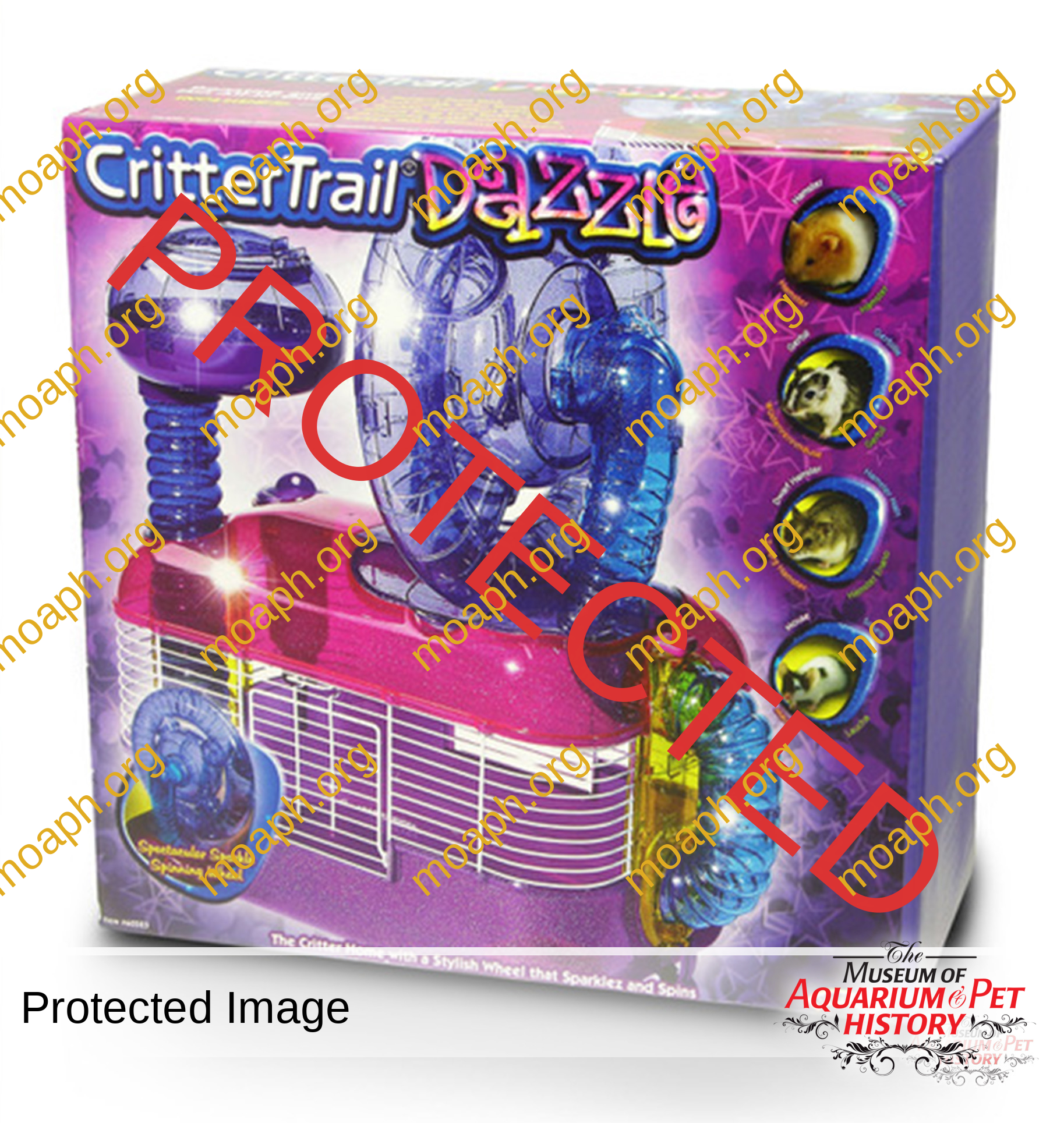
We introduced CRITTERTRAIL 2, 3, X, Y, Z, BASIC, PINK, MINI, TREEHOUSE, etc. Each one having a new major feature in the form of interactive movement by incorporating wheels, spinners, or an exercise sphere. The pride everyone took in contributing was immeasurable.
I was so proud of my son, James when he joined our company as a part-time graphic artist and package designer and started full-time after receiving a degree in fine arts from Dekalb University. One of his assignments was to come up with a totally new design for the packaging of a new Crittertrail model we were developing. He took it to a totally new level and was not only instrumental in designing a really cool new look but he helped develop a totally new feature on the product as well, resulting in our CRITTERTRAIL X taking a first place award at the 2003 APPMA show in Atlanta and became one of the best selling items in the Crittertrail program boosting sales skyward.
The entire Crittertrail program spawned several other accessories including a carrier, a sky spinner, a school bus, and a revolving platform among others. Any item we brought out that was connectable warranted it to be included in the Crittertrail program.
2003 thru 2005 Crittertrail took the worldwide small animal market by storm. Crittertrail became the face of our company resulting in the restructuring of many responsibilities in our company. Our sales department saw the biggest improvements as Brain Kindl focused his expertise exclusively on PetSmart and Petco; two of our biggest customers. My son, Bob Jr. became National Sales manager overseeing a team of over a dozen salespeople nationwide calling on distributors but mainly detailing independent retail pet stores, showing new products and writing “turnover” orders. It shouldn’t have surprised me as to how rapidly he established sales techniques and policies which proved so successful. He led the charge in putting together economical Crittertrail direct container programs with suggested quantity orders which could be easily understood and justified by our wholesale customers, especially those not accustomed to ordering large container orders. We would ship directly from our Chinese Manufacturing Facility with dependable ETA’s all the while passing on significant savings to our wholesalers while maintaining our gross profit margins. We made it very easy for our customers and showed them how economical (saving as much as 30%) and convenient it was especially for promotions and seasonal sales like Christmas, Easter, and return to school promotions. This program was taken advantage of by all of the major wholesalers throughout the USA along with PetSmart and Petco.
Our marketing department developed several promotional end cap displays and in-store signage and offered promotional discounts. We soon created entire small animal department planograms for pet stores. These were anchored by Crittertrail and supported by every other key product we manufactured. The success of offering a pink version to support the Susan G. Komen breast cancer foundation where we donated one dollar for every unit sold allowed the CRITTERTRAIL PINK to become a permanent item in our line.
We created an in-house consumer support program where consumers could call a toll-free line requesting information and replacement parts.
CRITTERTRAIL grew into the single biggest program of my company’s history eventually representing as much as 20% of our total annual revenue and becoming our calling card in all future trade shows. As a result, much of our company’s emphasis became directly related to Crittertrail. It was most definitely a team effort that not only put Crittertrail on the map but kept it there with yearly additions and improvements.
Our marketing & product development departments (Dave Hitsman, Jason Casto & Diane Pawelko) always had various new models, features, and programs in the works. Our manufacturing support of ACCUTEC (Larry Sternal) continuously brought new ideas and applications to the table while always making sure our designs were obtainable from an injection molding perspective. Our graphic arts department (Tony and Eva) always had new packaging, brochures, and instruction sheets they were working on. Our Sales department (Brian and Bob Jr.) focused their attention on taking over the market with CRITTERTRAIL implementing many programs including the game-changing, impactful direct container programs, and making sure their entire sales staff throughout the country spent a considerable amount of time concentrating on Crittertrail, as they detailed every retail pet store in the country.
Our International Sales Department operated solely by Tina Drews as director of International Sales concentrated on all foreign sales. Tina had her hands full selling and coordinating sales in our foreign markets especially the U.K. where Batleys volume mirrored our top customers. In addition, she was successful at marketing the Crittertrail program in Germany, Denmark, Belgium, the Netherlands, France, Hong Kong, Malaysia, Australia and Mexico.
This necessitated her traveling throughout Europe exhibiting the program in numerous pet industry trade shows, successfully penetrating several markets not only with Crittertrail but with the entire Super Pet line. I couldn’t count the amount of miles Tina and I accumulated traveling together through foreign markets all the while listening to “my travel wife” always hollering at me to slow my brisk walking down as we scurried through airports.
This international business which I became very proud of, allowed us to build partnerships as well as friendships with many companies around the world.
I also subscribed and adamantly believed in Wardley Pet Products president, Alan Levy’s philosophy that “NOTHING HAPPENS UNTIL THE PET IS SOLD”.
It was proven thousands of times over that the majority of animal housing is sold at the same time the small animal is purchased. This is also the time when the retailer has the important responsibility of starting that new pet owner out correctly with proper food, treats, and accessories. In turn, and if done properly, a loyal customer is established.
As a result, we vowed to stay loyal to the independent pet stores as well as the Pet Super stores and not enter the mass markets; Walmart, Target, etc.
The greatest Crittertrail achievement was the fact that the entire process worked so well. Not only was the Crittertrail brand a financial success at each level, but it also became a product that transformed the company. In doing so, it performed extremely well for everyone involved from the manufacturing process all the way to the end user including the hamster.
“An attractive and fun product which truly enhanced the relationship between the pet and the child.”
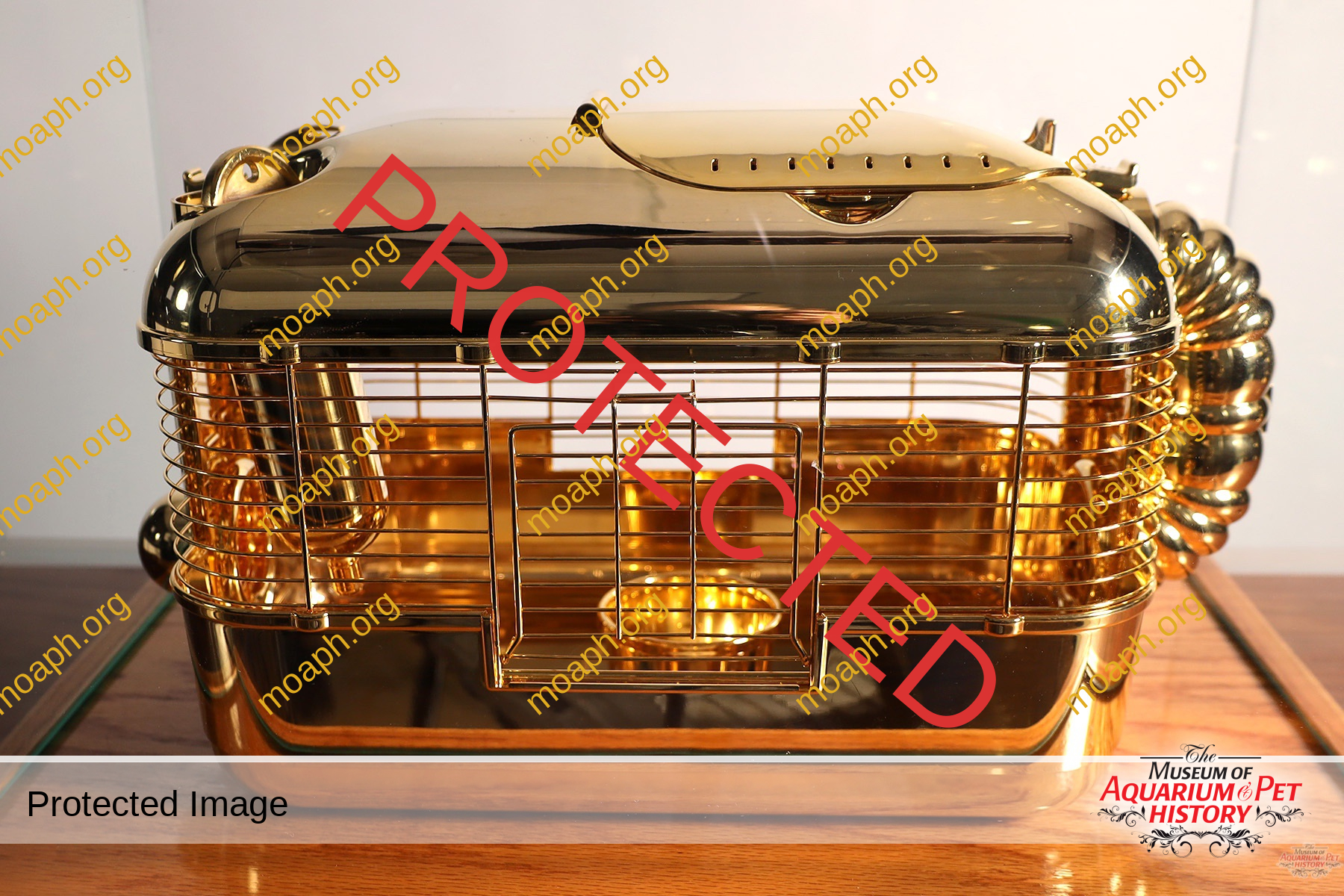
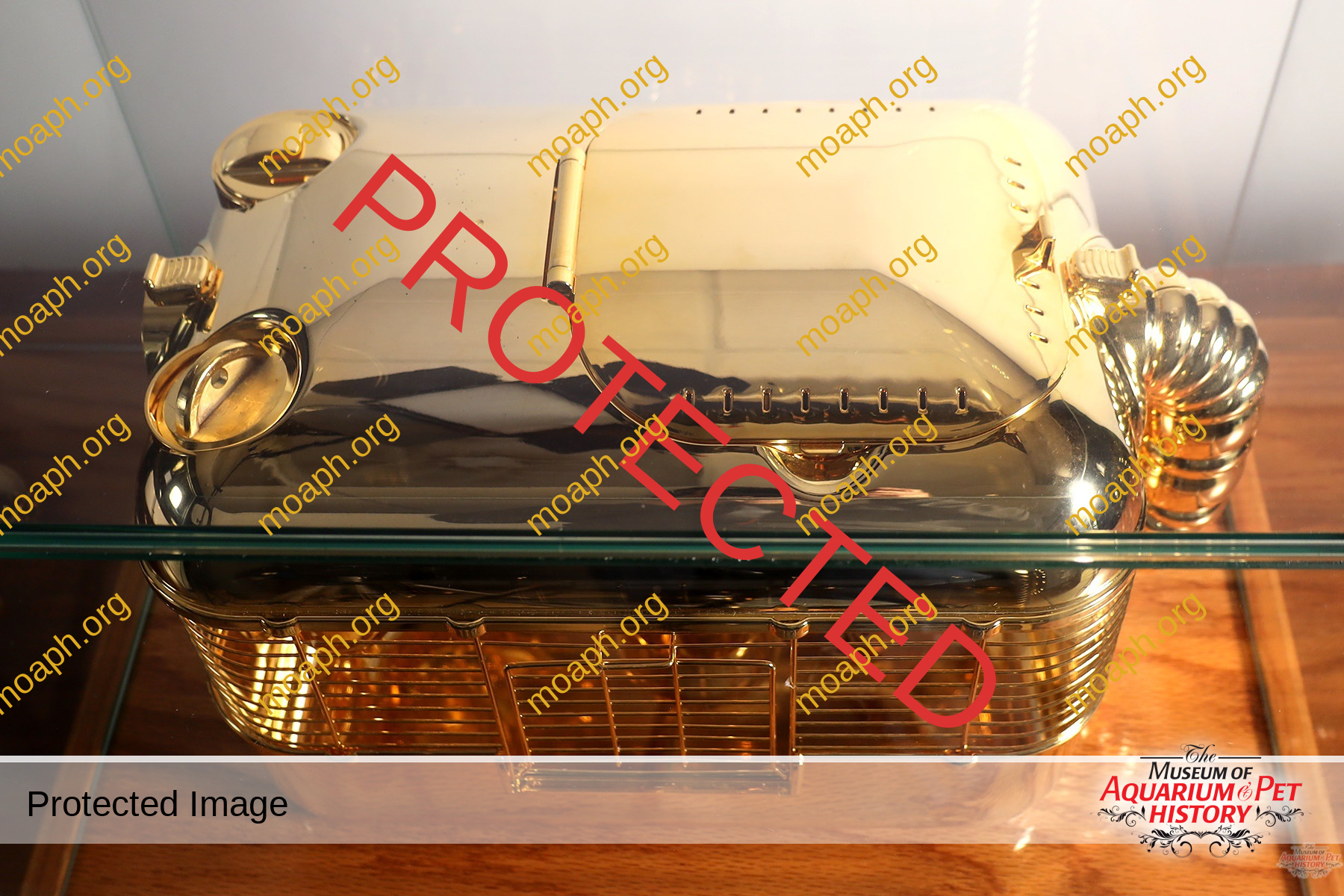
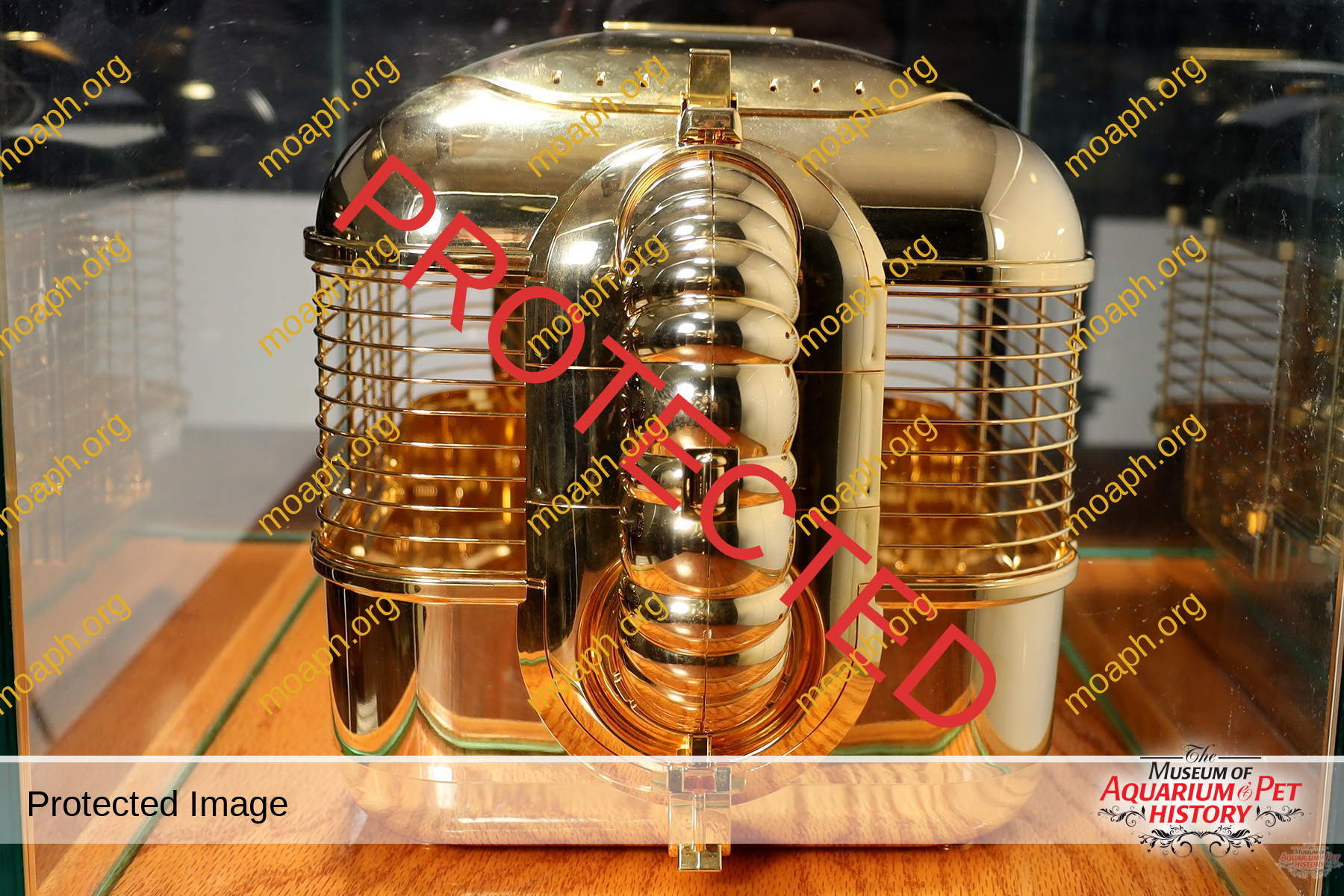
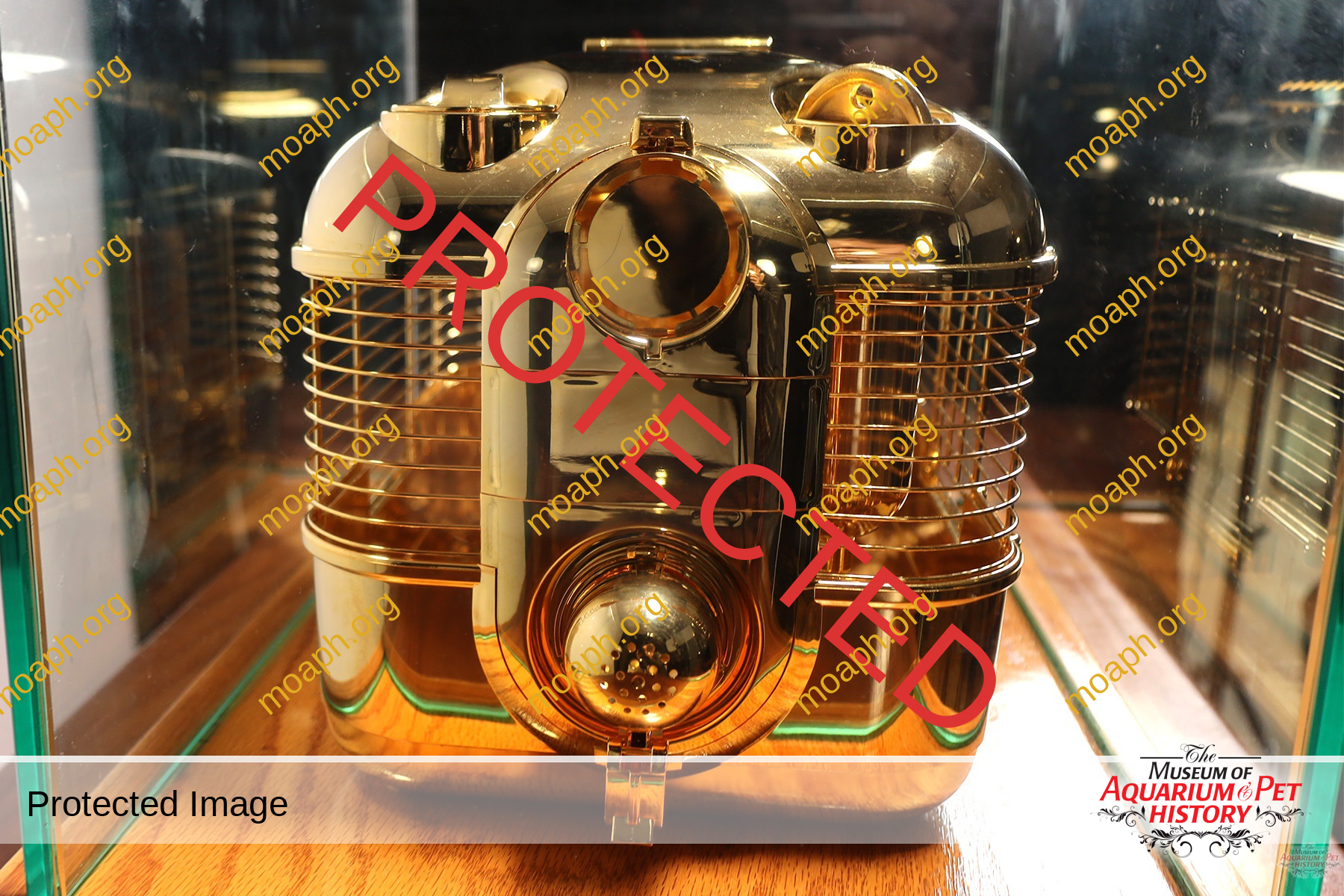
The GOLDEN CRITTERTRAIL (a gold-plated version) which represented our 1,000,000 unit of production was presented to me in 2003 at a memorable ceremony in China from our manufacturing division.