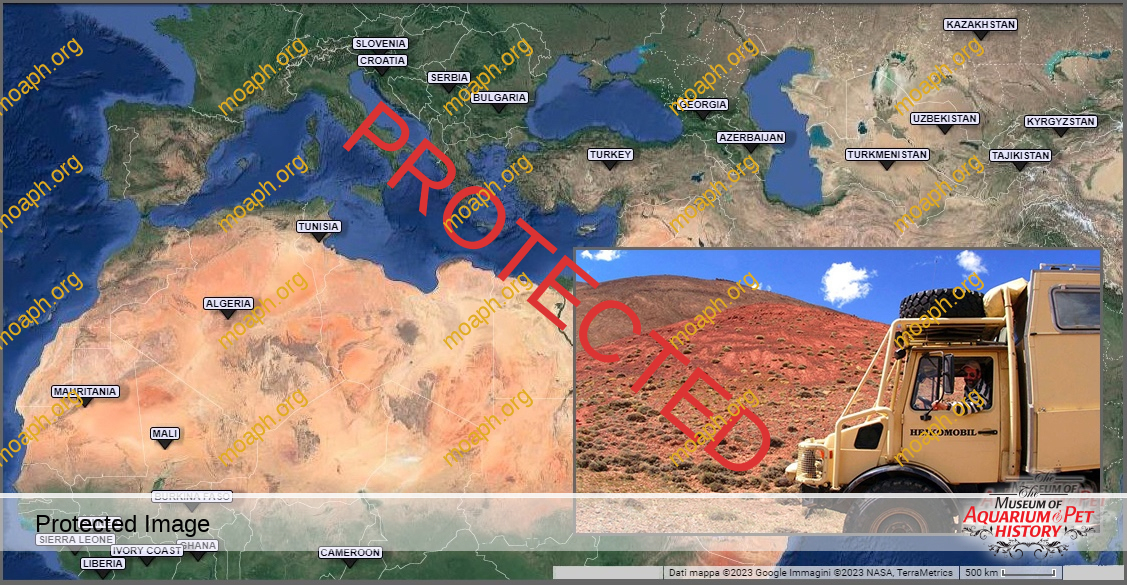
The Heikomobile: No Compromise
Born in Frankfurt am Main, Germany, in 1944, Heiko Bleher is a living legend and a true icon of the aquarium industry. I have always thought of him as the natural heir of Auguste Rabaut and Percy Fawcett, but also as a kind of superhero whose main power is to discover countless fish and plants new to science and the hobby!
I met Heiko for the first time in 2017, here in Italy, where he moved in 1997 after closing Aquarium Rio, his famous company at Frankfurt am Main. As to Italy, he is fond of saying: “It is the best country in the world, but many Italians don’t know it.”
As to a location for recording the interview, which I had asked him about a few days before by phone, he chose his publishing house, an evocative place that also housed his incredible private library and his huge photographic archive. One of the first things he asked me was in which language the interview would take place. It was a perfectly legitimate question since he speaks nine languages! Eventually, we decided on Italian.
Even though he knew little about me, Heiko showed respect and great patience. Thus, what was supposed to be a formal interview with one of the most influential figures in the freshwater aquarium hobby, soon turned into a pleasant chat between an aquarium history enthusiast, and a man who has written multiple chapters of that history.
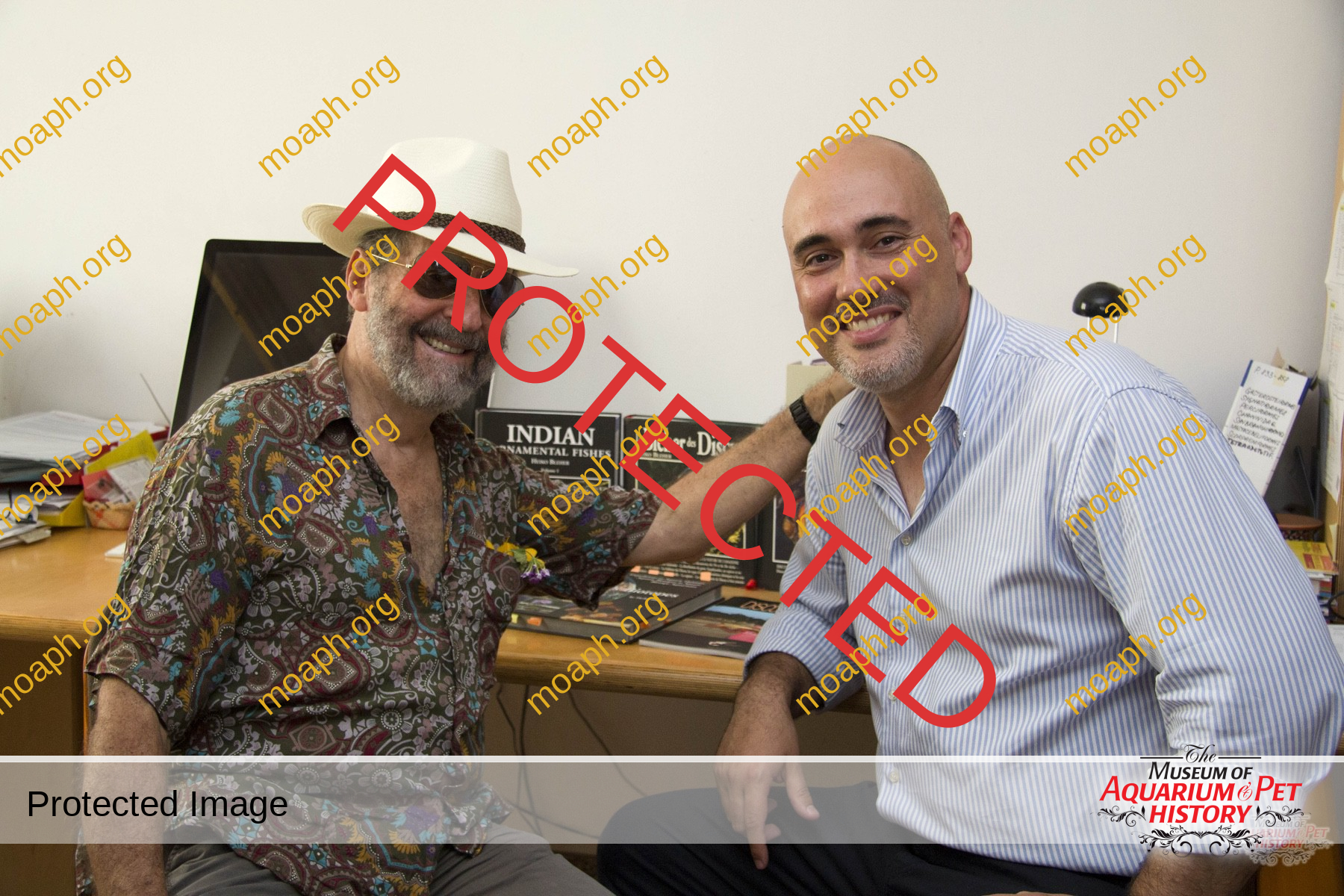
Heiko and the author.
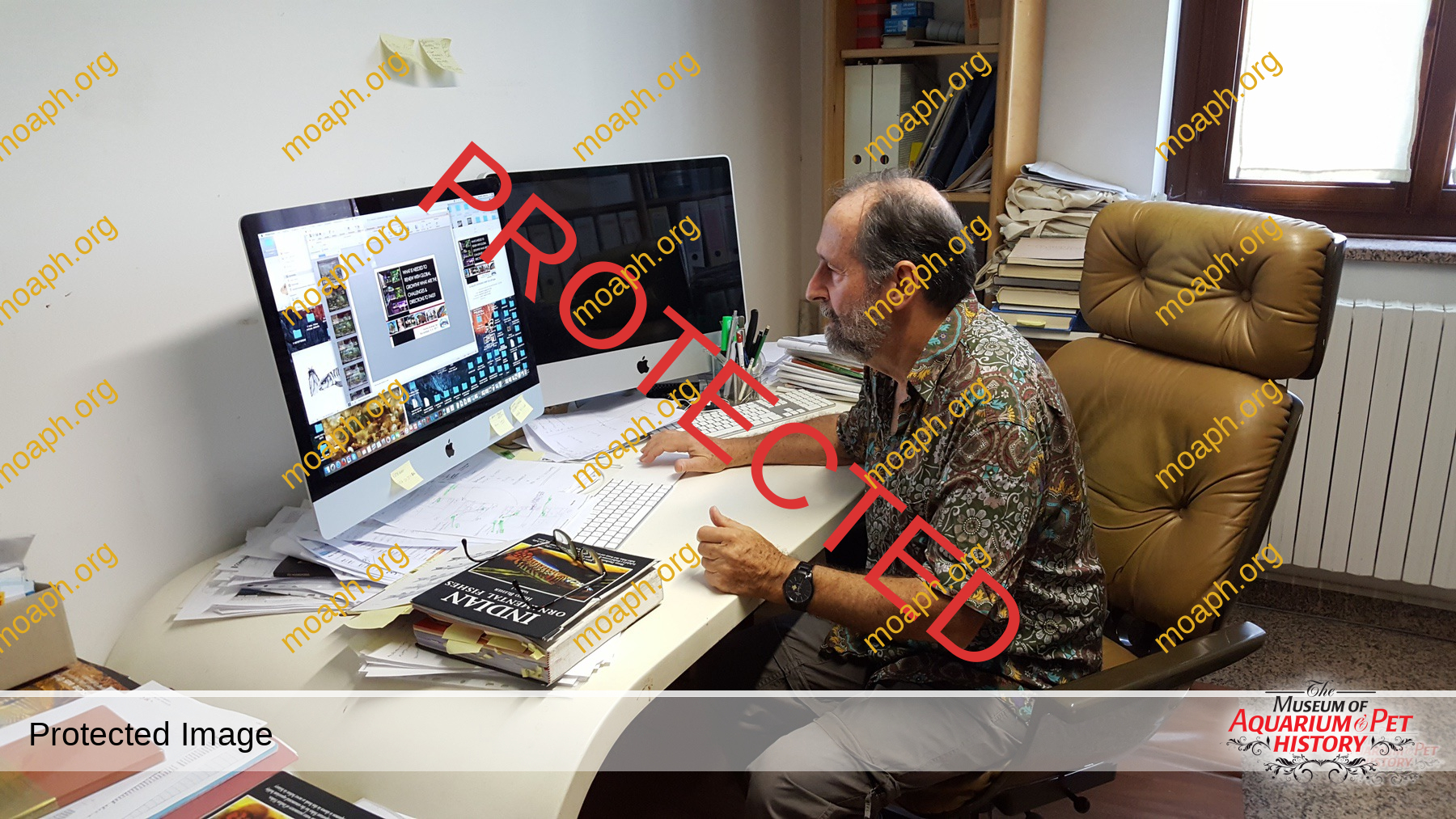
The explorer sitting at one of his desks.
We recorded for about an hour and covered many interesting topics until we arrived at one of my favorites, the Heikomobile (Heikomobil in German).
The idea of designing a vehicle for fish collecting and research, something able to reach the most inaccessible places, matured in Heiko’s mind during the early 1980s. The “ordinary” 4x4s, in fact, often struggled to overcome the natural obstacles that separated him from many unexplored destinations and sometimes broke down too.
German DNA
This is how, in 1986, Heiko went to one of the largest Mercedes/Daimler centers in Germany to start developing his custom vehicle. A massive Unimog U 1300 L from the heavy-duty 435 series was chosen as the platform for the project (the acronym “Unimog” stands for UNIversal-MOtor-Gerät, which means “universal motorized device”).
It took three years for planning and construction. The waterproof living pod, the bumper and cab guard, and the roof rack were developed, according to the detailed specifications provided by Heiko, by a company different than Mercedes, which used innovative materials which, back then, had been used in experiments by NASA as well!
Heiko’s goal was to have an extreme motor home capable of penetrating jungles, climbing anywhere, passing through deserts, and crossing rivers (according to Heiko, up to 10 feet in depth!).
In those years, the Unimog was undoubtedly an ideal choice for customers with such needs and good spending capabilities. The earliest Unimogs were produced by Boehringer starting from 1948 for use as multi-purpose tractors, trucks, lorries, and to operate farm equipment. Daimler-Benz took over the manufacture of the Unimog in 1951 and first produced it in Gaggenau (Germany). By 1951 the Unimog was sold under the Mercedes-Benz brand, and the early units to feature the three-pointed Mercedes-Benz star logo appeared on the market in 1953.
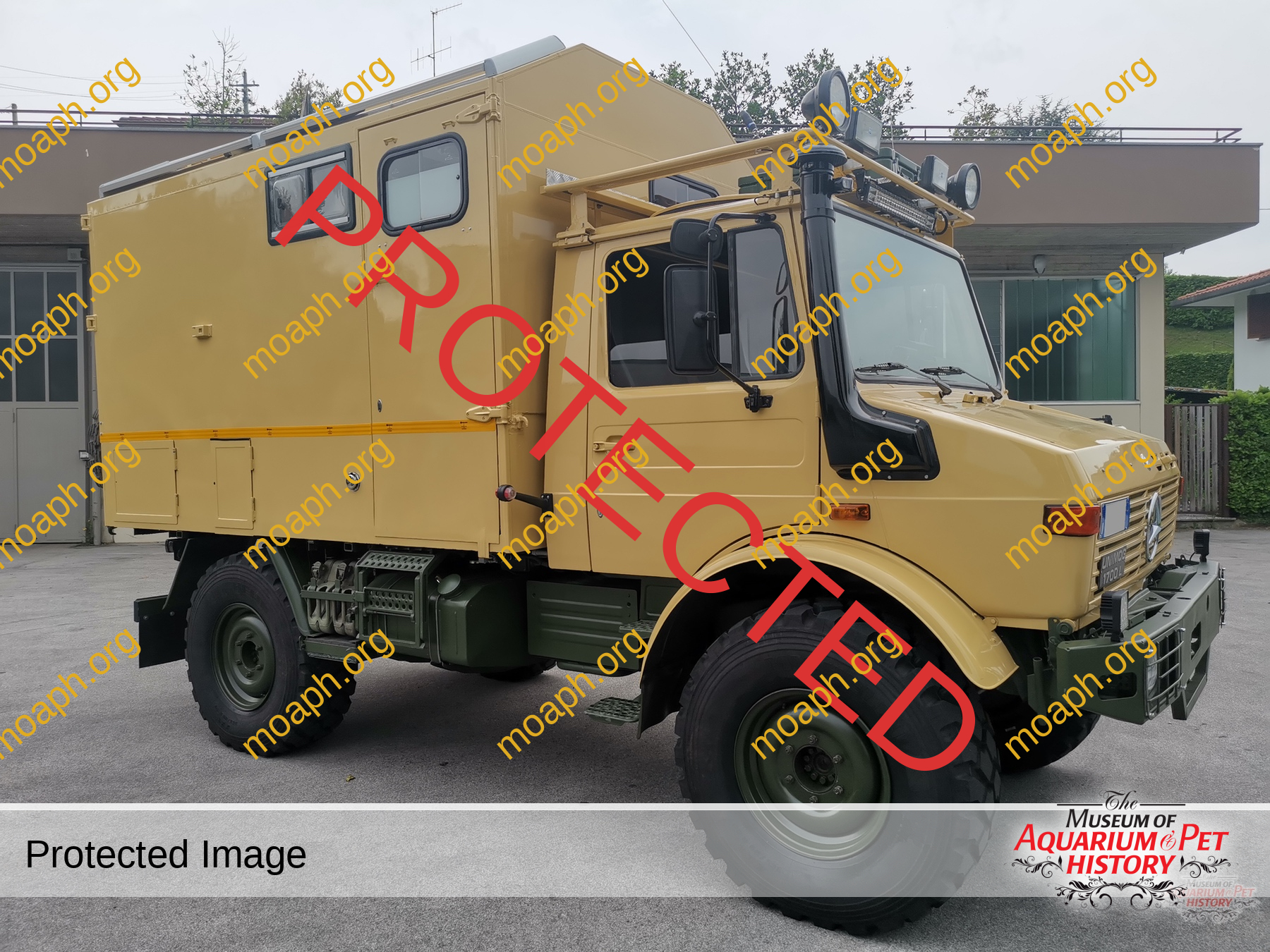
In the 1980s, when Heiko started to think about a custom truck, the Unimog 1700 L was one of the available options. Courtesy of Marco Citterio (Unimog Club Italia).
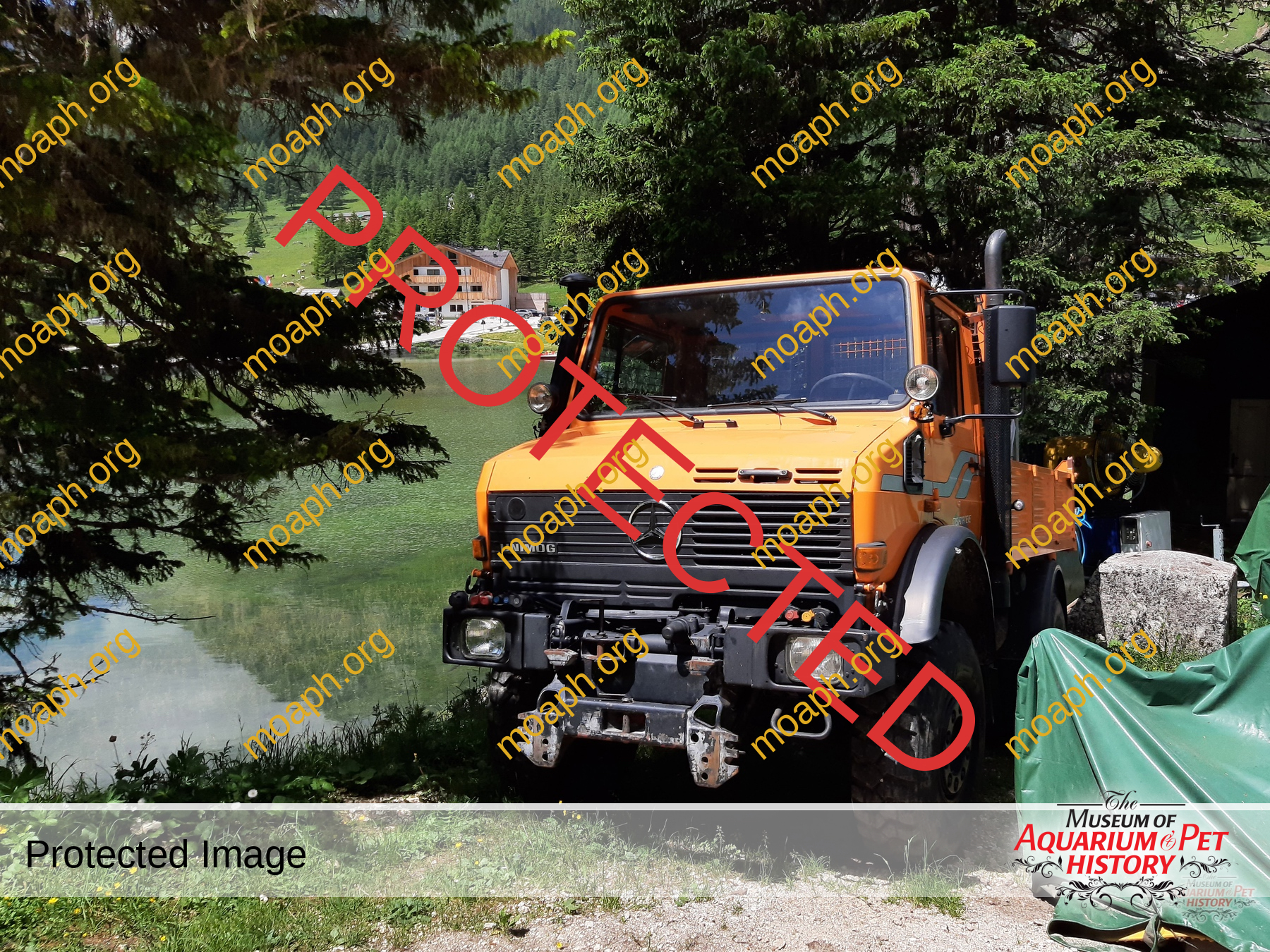
A modern Unimog photographed in a mountain area of northern Italy.
Over the years, the versatile and unstoppable Unimogs gained a solid reputation in many countries as reliable utility vehicles to use both in the military and civilian fields (fire and forestry services, municipalities, etc.). Their ingenious design includes several peculiar features, such as portal axels and a flexible ladder frame which gives these vehicles a high ground clearance (nearly 18 inches in the U 1300 L!). In addition to that, the chassis design was conceived to prevent the rear cabin from twisting during extreme off-road maneuvers. They virtually can tackle any type of terrain, even the most rugged, overcoming obstacles up to 40 inches high and slopes that would intimidate most of the 4x4s.
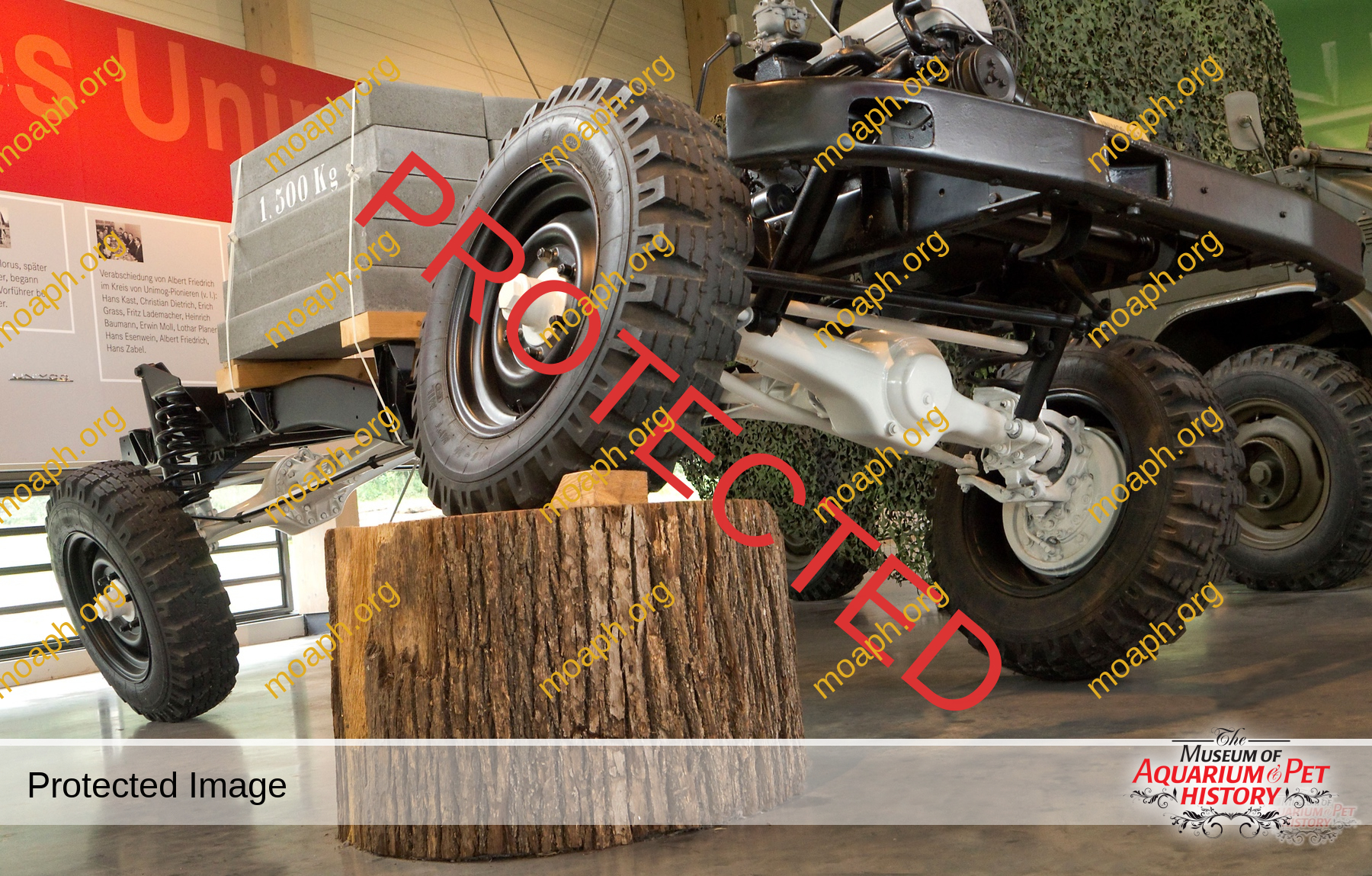
Some of the technical features of Unimogs on display at the Unimog Museum in Gaggenau.
The model U 1300L in particular is a rear-wheel drive vehicle with selectable four-wheel drive, equipped with an inline six-cylinder diesel engine (5.7 liters) with direct injection. The gearbox is a fully synchronized 8-speed manual gearbox with lockable differentials.
The Heikomobile reaches a top speed of 55 mph, not too bad for an 8.5 ton boxy truck from the 1980s.
Holy cow!
At the end of the interview and the subsequent lunch at the restaurant, I couldn’t help but ask Heiko to see it in person. After all, this custom truck has always been a superstar, an iconic vehicle featured in dozens of magazines, books, posters, websites, social media pages, and even on the official 1991 Mercedes truck calendar.

Heiko and his beloved daughter Amanda while catching goldfish in the pond of the restaurant!
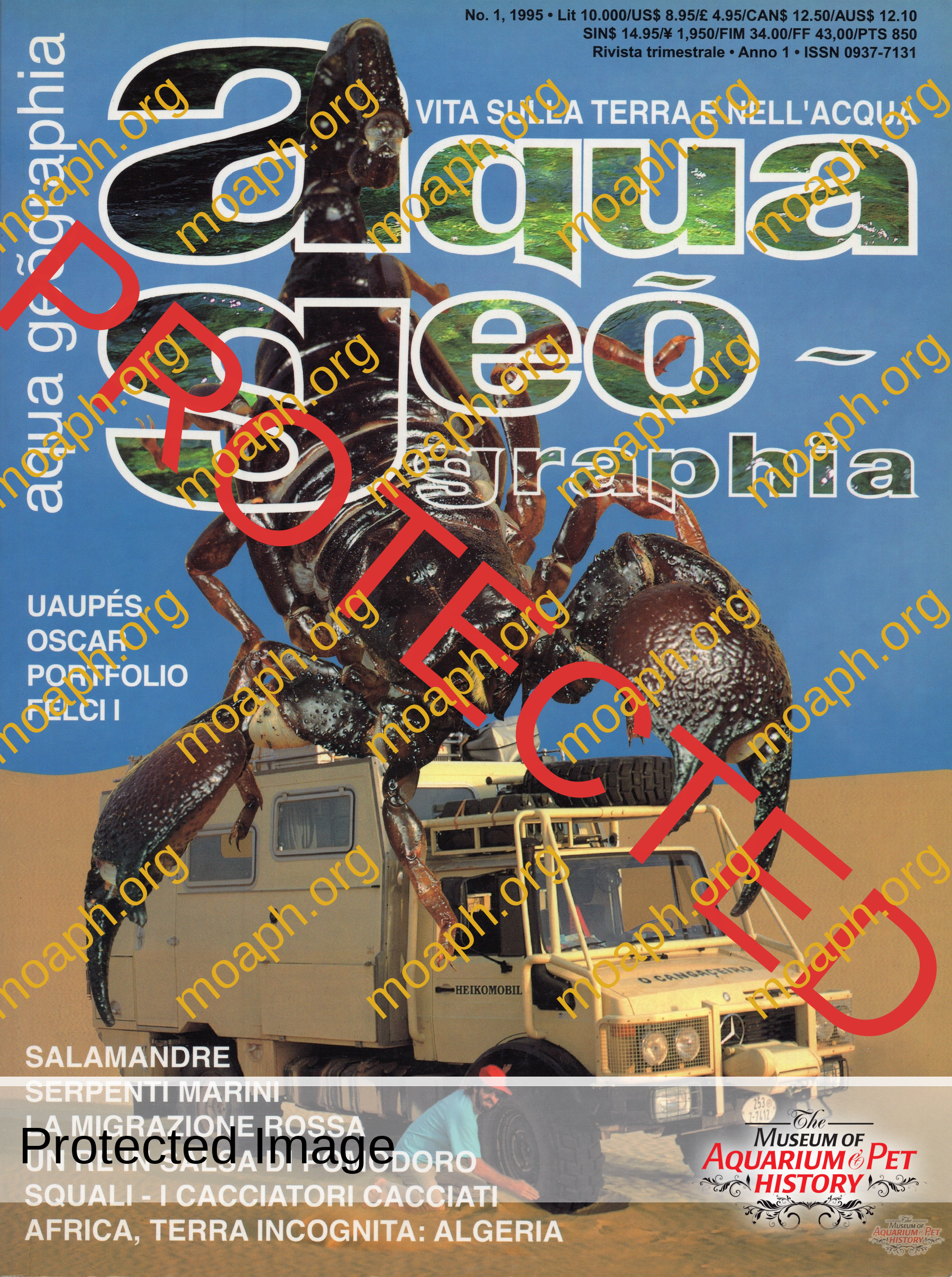
The Heikomobile on the cover of the magazine Aqua Geõgraphia issued by Aquaprint (later Aquapress).
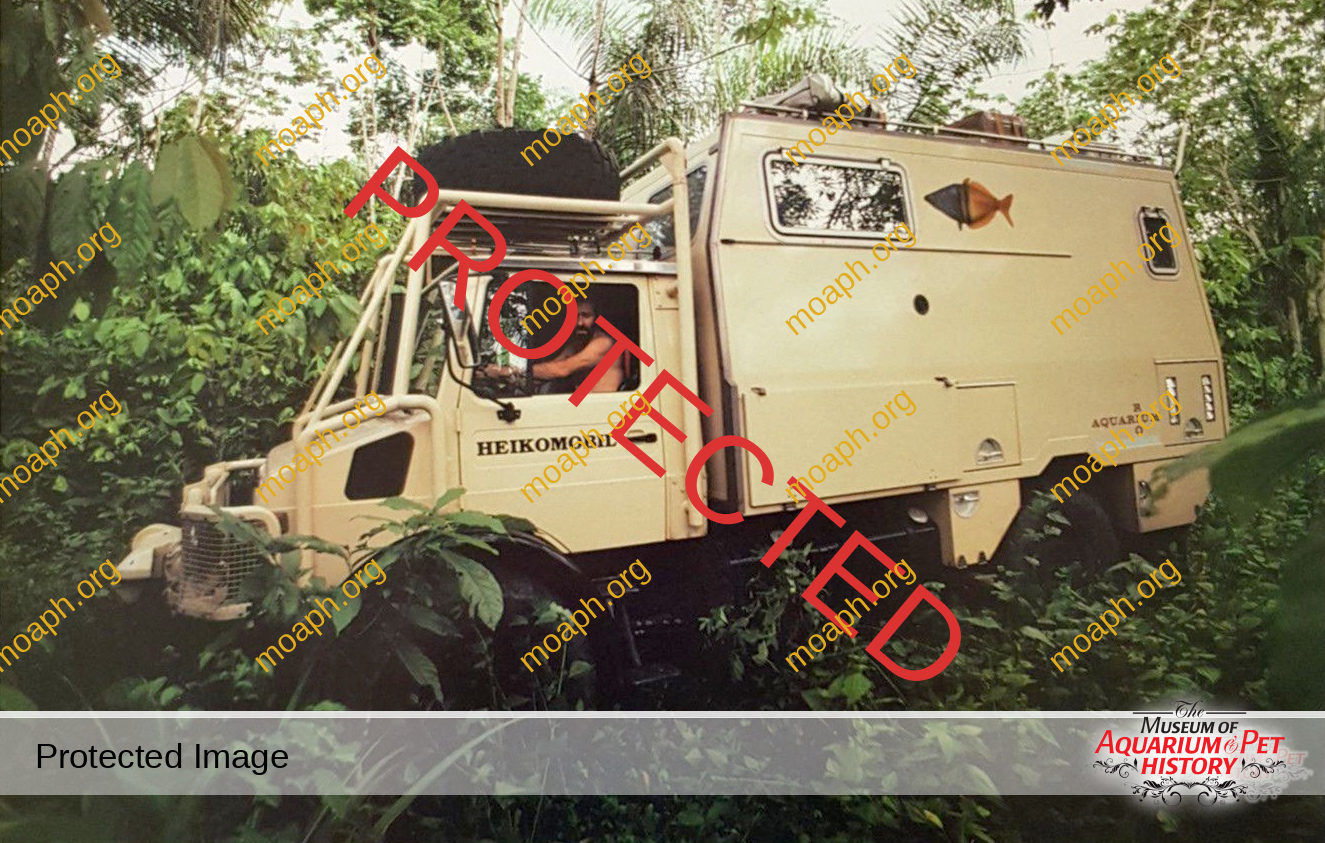
An image of Heiko’s Unimog published in the 1991 Mercedes truck calendar.
Fortunately, he willingly accepted. I must admit that finding myself in front of this giant was truly exciting, the perfect ending to an extraordinary day. My SUV looked like a child’s pedal car in comparison! I still remember the first words I said to Heiko: “Holy cow, this thing is ready to face a zombie apocalypse, it resembles a steroid version of one of those vehicles that the A-Team member “B.A.” Baracus (Mr. T) used to build to defeat the bad guys on duty!”
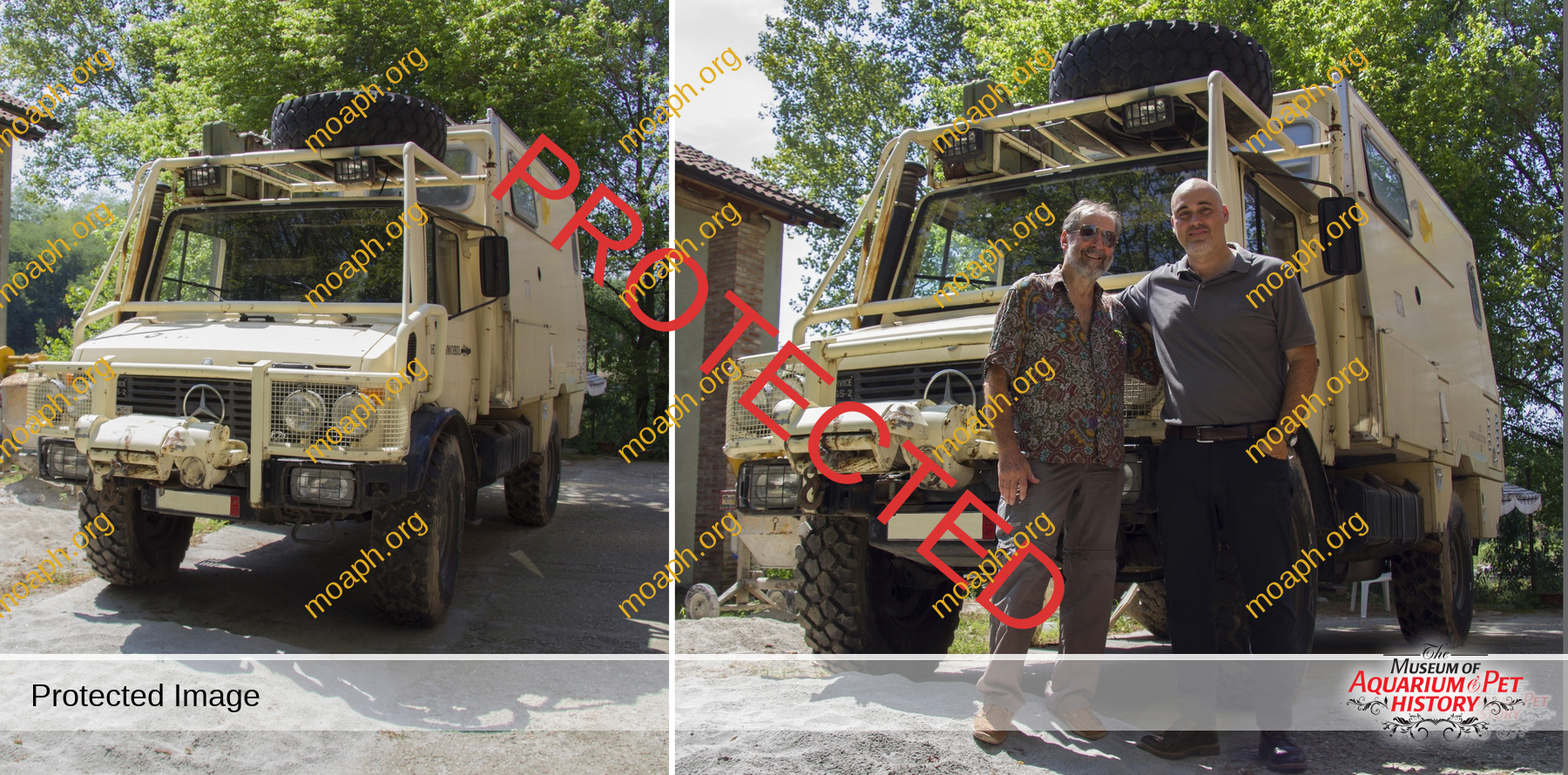
Author’s dream comes true.
A few details especially caught my eye:
- the three extra fuel tanks
- the off-road lights
- the big custom bumper and cab guard and the roof rack which both wrap the cab and give the Heikomobile an aggressive look
- the protection grilles on all the headlights
- the massive Werner front winch
- a second winch and a hatch (a common feature of military Unimogs) above the cab roof
- the Michelin XZL 365/80 R20 tires (average cost today is over $1,200 each!)
- the several external storage compartments for equipment such as air compressors, dinghy, and generator
- the big off-road snorkel for river crossing and the multiple features designed to make cab, engine, and living pod waterproof
- the analog onboard instrumentation encompassing many accessories usually mounted on military Unimogs.
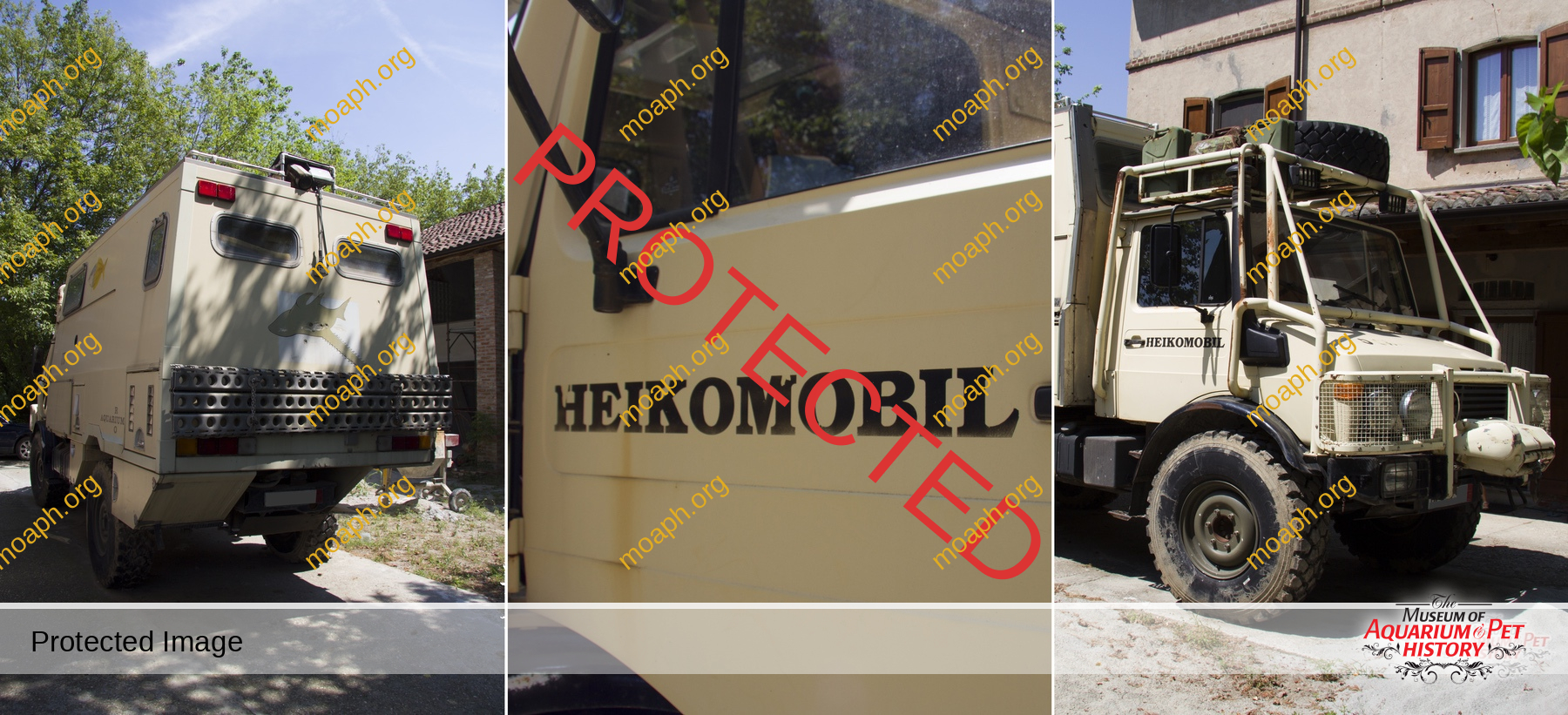
The Heikomobile from different persectives.
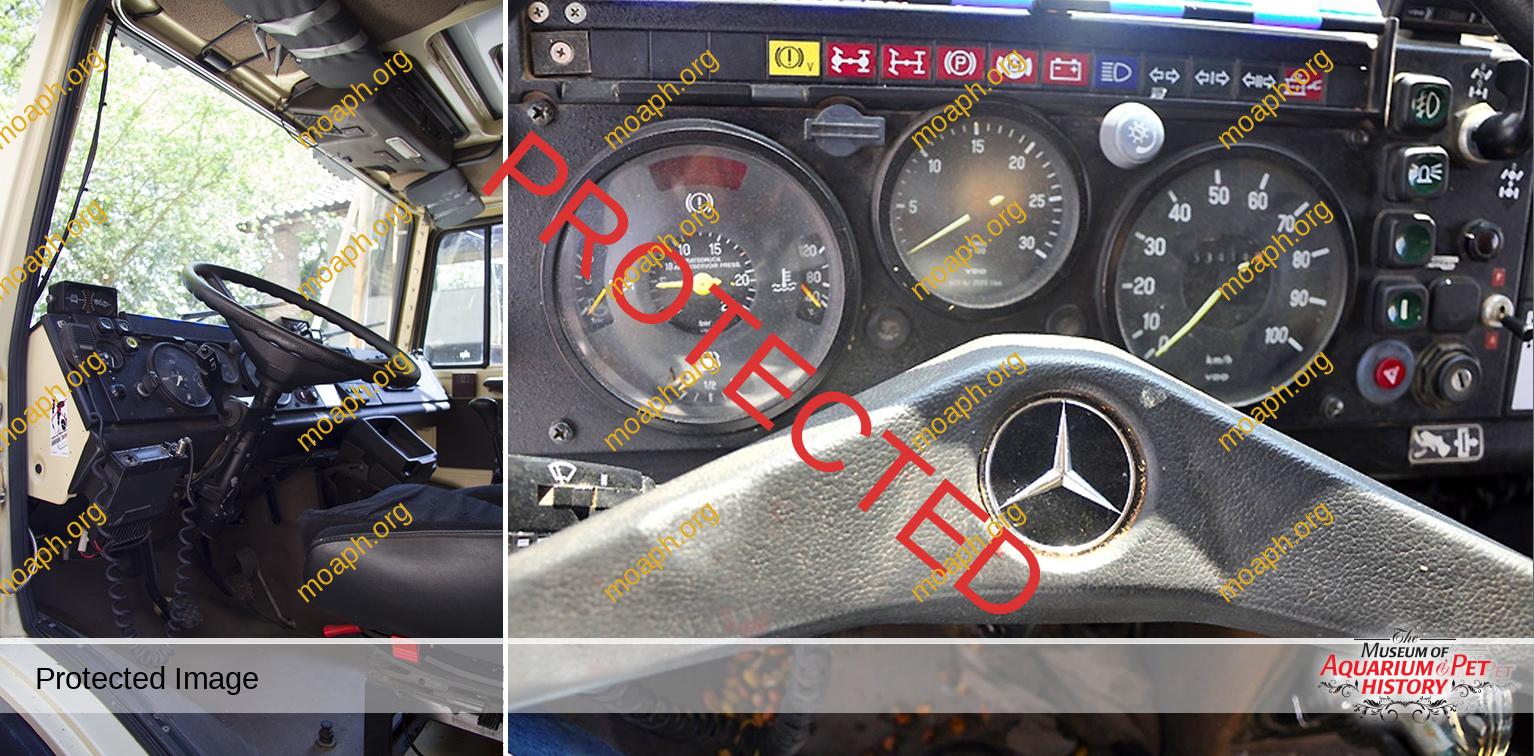
The old school analogic dashboard. ©Heiko Bleher.
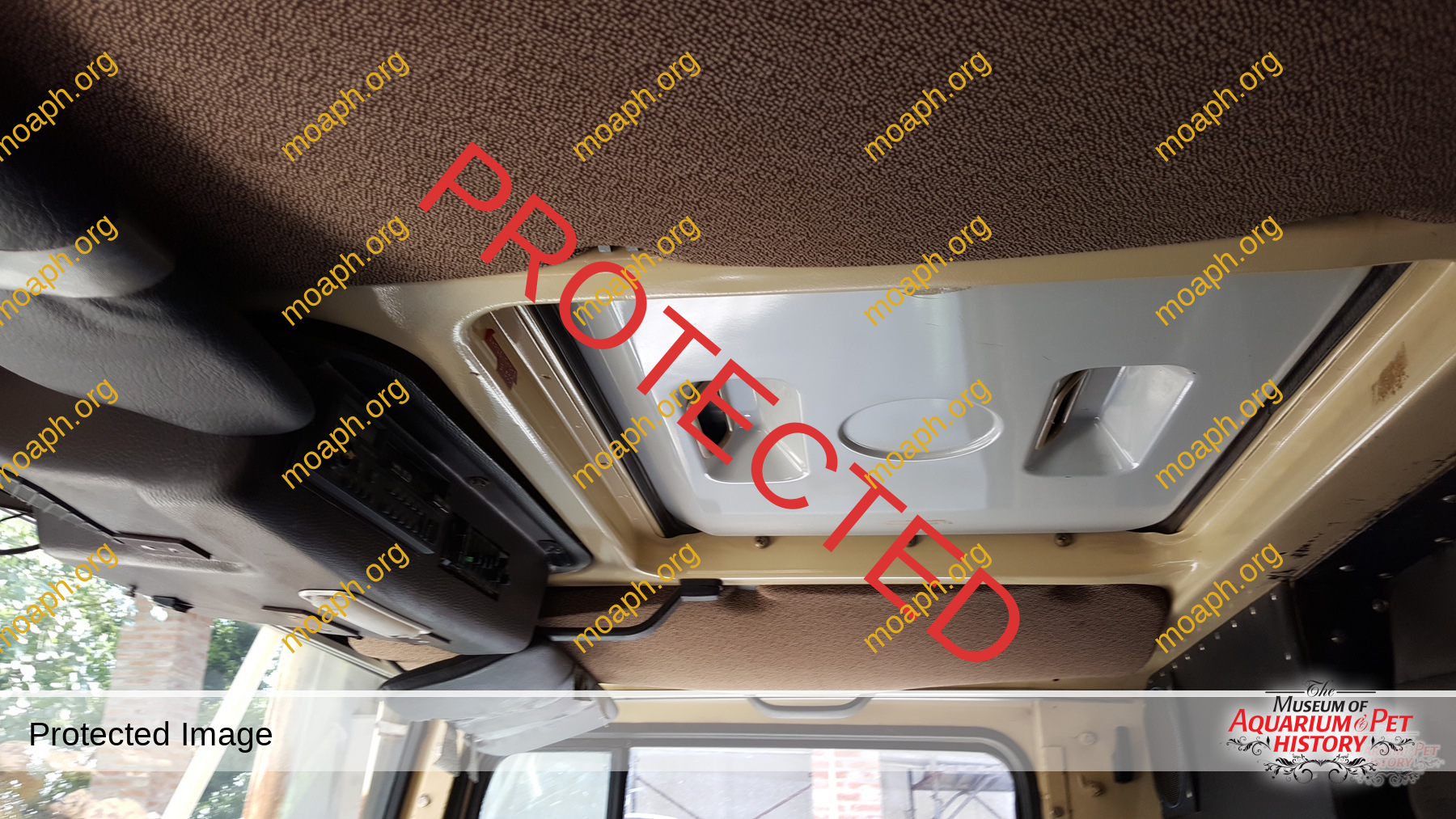
Heikomobile’s rooftop hatch, a common feature in military Unimogs.
Custom graphics
One of my favorite details is the writing on the hood: “O CANGAÇEIRO”, after the outlaw cangaçeiros, the former Robin Hoods of Brazil who stole from the rich and gave to the poor. Reading the book Iténez – River of Hope, a phenomenal compendium of the memories of Heiko’s mother, I discovered that this is not the first time that this word is painted on a Bleher family vehicle. It also happened with a Chevy Belair which, on September 9, 1958, Heiko’s mother used to leave Frankfurt with her four children. Back then the lettering was red, a color which according to Xingu Indians offers magical protection. They were abandoning Frankfurt forever with their final destination being the Rio Iténez, a South American region covered by the jungle and sparsely populated by Indians. I never had confirmation of this from Heiko, but I can imagine that he chose to reproduce the same writing on the Unimog because it symbolizes the courage to leave for unknown destinations, freedom, and an adventurous life in the wild. He and his siblings used to name each other cangaçeiros, likely the writing is also the way Heiko carries the family with him everywhere.
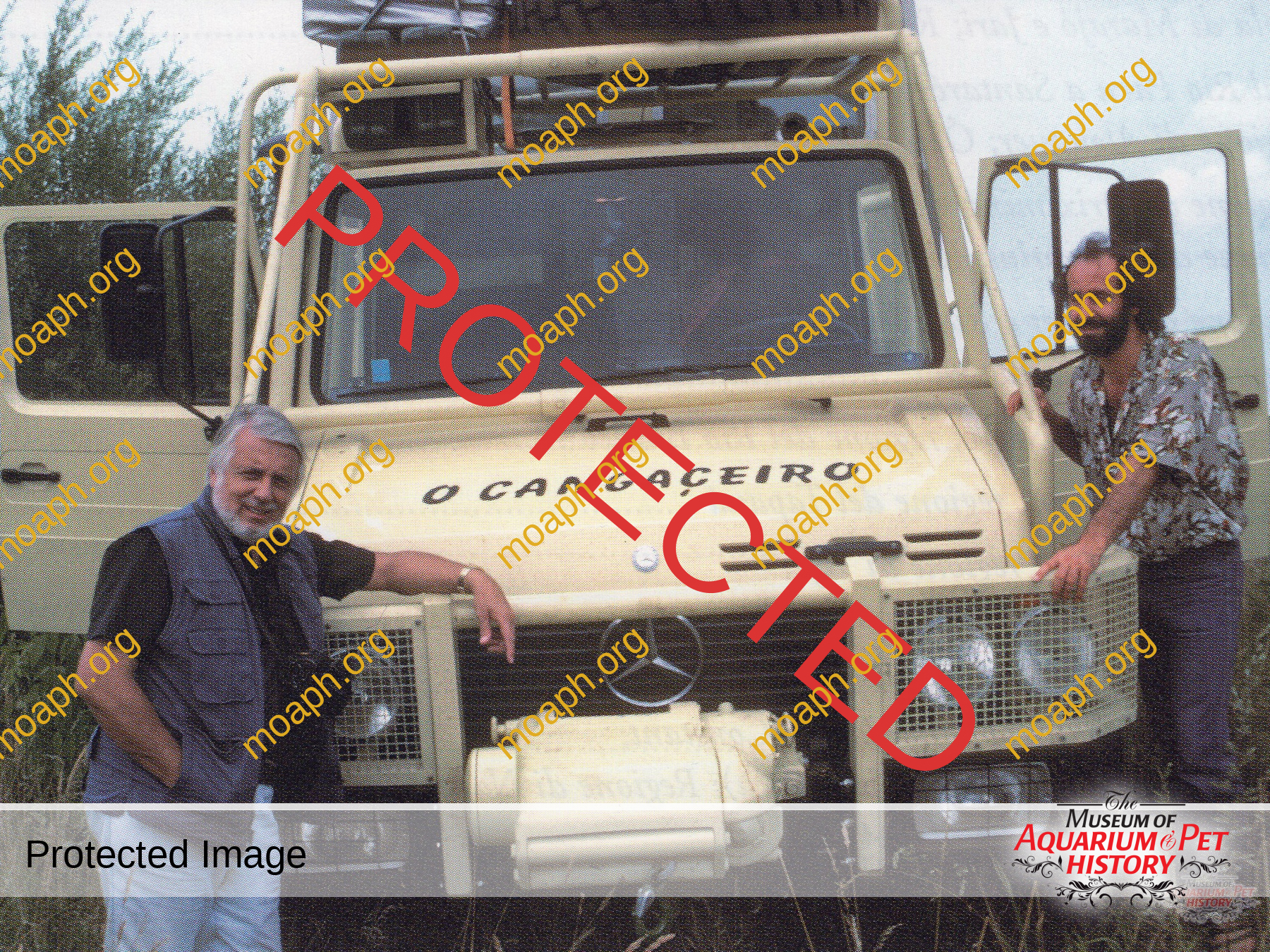
Heiko and the late Hans J. Mayland proudly posing near the Heikomobile. ©Heiko Bleher.

Mont Péko National Park, Ivory Coast. ©Heiko Bleher.
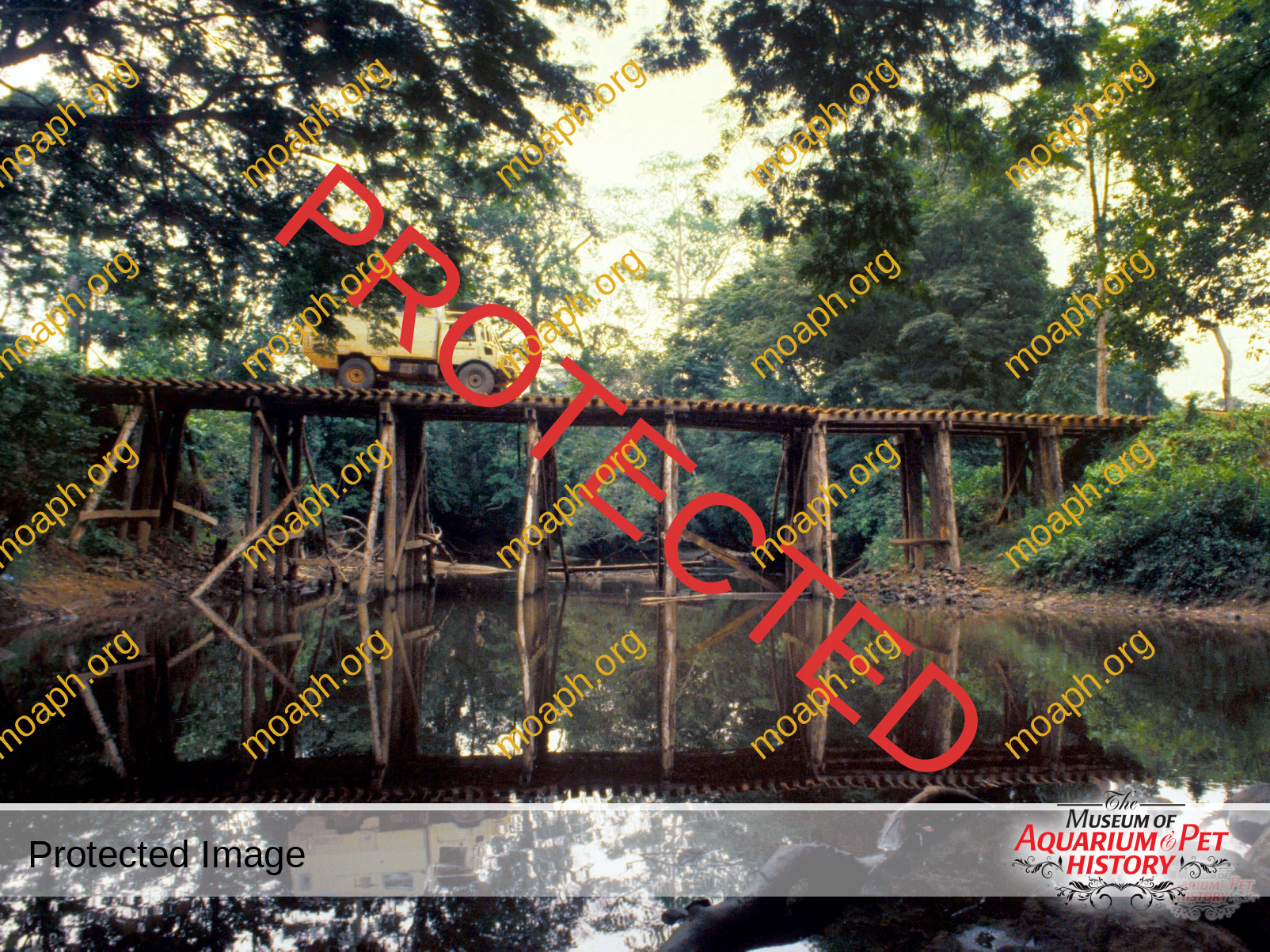
The Heikomobile in Guinea, where Heiko reached many remote areas in search of unknown Gobiocichla, Amphilius, Labeo, Nannocharax and Hemichromis species. ©Heiko Bleher.
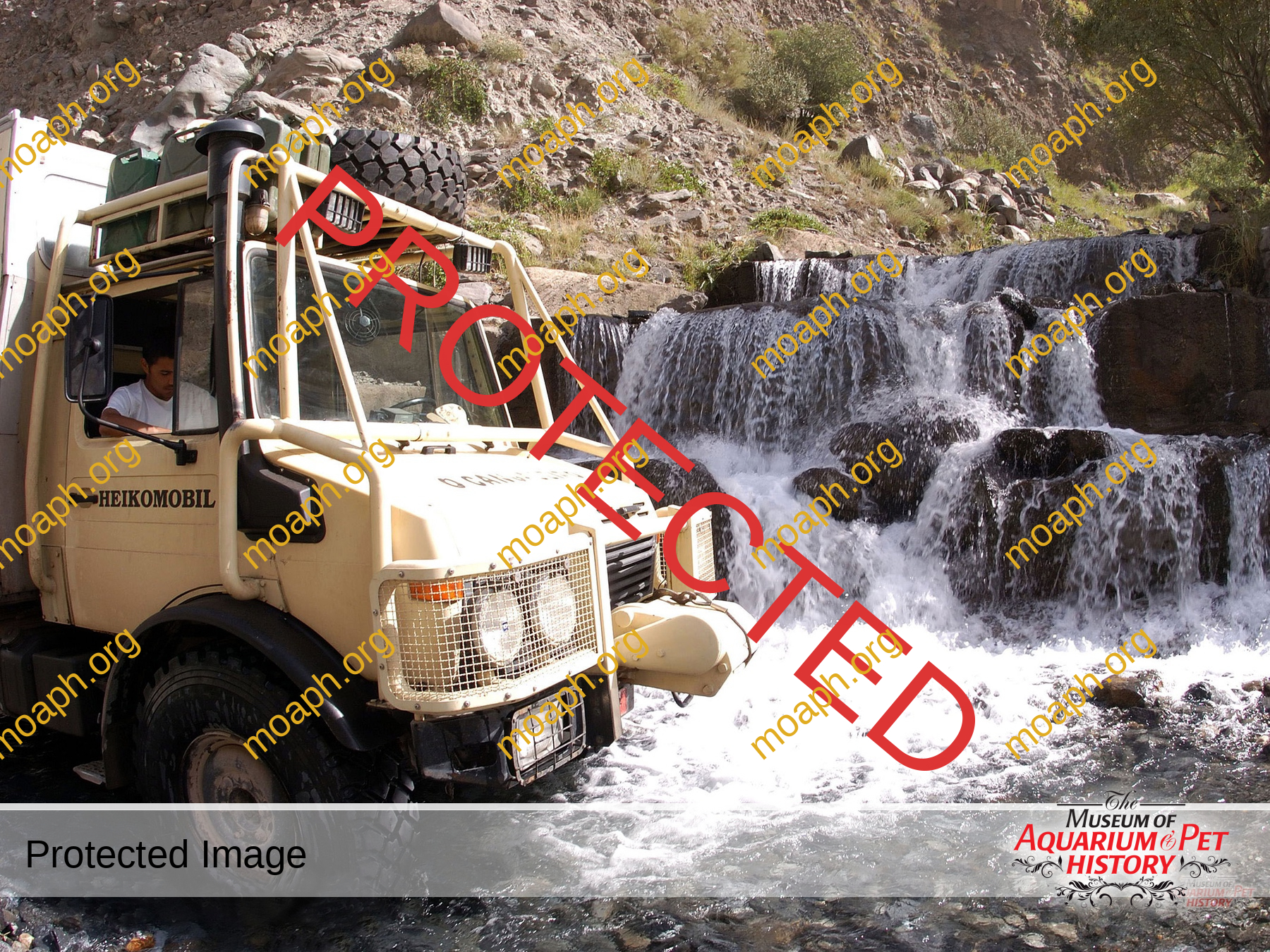
Travelling in Tajikistan. ©Heiko Bleher.
Other evocative graphics you can see on the Unimog depict two of Heiko’s most important discoveries: a rainbowfish that has become a best-seller in the hobby, and the freshwater sawfish he found in a remote lake of northern Australia. The latter is also the logo of his publishing company Aquapress.
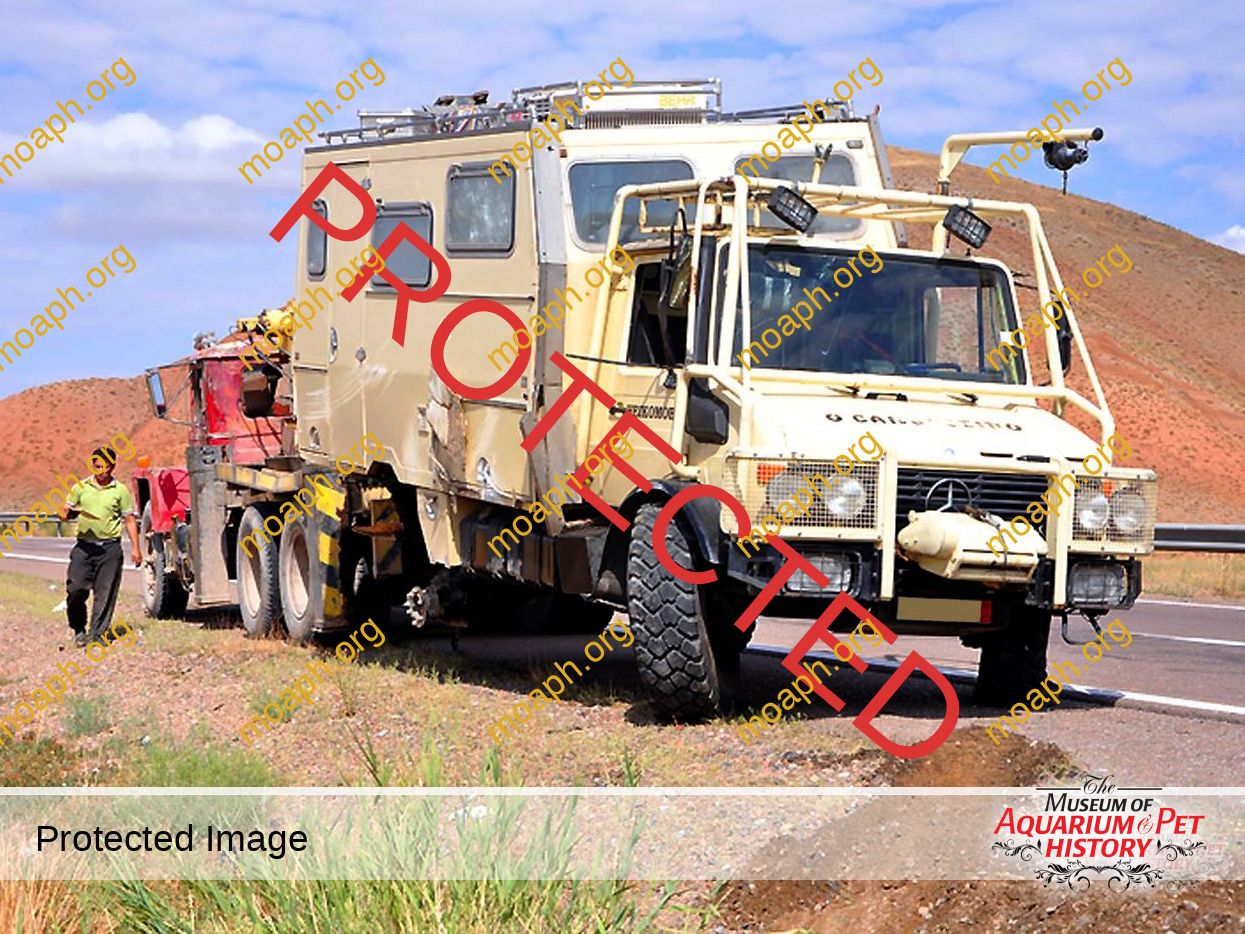
Heiko’s Unimog after a brutal accident happened in Iran due to a possible material construction fault. The rear back rim with its giant tire suddenly blew out, while the five bolts remained fixed in place. The vehicle went totally out of control and landed down on some rocks. It took nearly a year to get it from Iran to Istanbul, where it was finally repaired for the modest price of $27,000! ©Heiko Bleher.

Surmounting rough roads is child’s play for the Heikomobile. ©Heiko Bleher.
Aboard this incredible vehicle, Heiko made research trips to Africa, Europe, the Middle East and Central Asia, covering more than 93,000 miles. Nowadays the Heikomobile shows the marks of time and some accidents, but I am sure that it will prove to be a reliable travel companion for thousands of miles more.