The Role of Aviculture in Avian Re-wilding Schemes
Following on from very many years (centuries in some instances) of the depletion of nature across countries and continents, there has arisen a growing trend to attempt to restore the natural diversity of many areas. Although many of the headline projects involve mammals such as wolves and bison, there has been an even longer campaign to bring back to their natural environments, some species of birds. This article is an attempt to reveal the role of aviculture in this process.
In some elements of avian conservation, the route to recovery has involved either restoring and protecting natural environments or the actual re-introduction of species into traditional environments from which they have become extinct. In some instances, both of these approaches have been necessary.
When mammals are reintroduced to an area, the normal approach would be to capture adult animals to form a breeding stock and to release them into a suitable new environment. In the UK the current emphasis in this regard has focussed upon the re-introduction of the European beaver. However, a somewhat different approach has generally been taken when it comes to birds. It is mainly for this reason, that the skills of the aviculturist, garnered through years of experience, have come to play a major part in these schemes. For, rather than capturing and transferring adult birds, the general approach regarding birds is to breed young birds for release in their new lands. There are several ways in which this process can be undertaken.
The first occasion on which I became aware of this was when an advertisement was placed in the weekly magazine: Cage & Aviary Birds asking for volunteers to become involved in a project to reintroduce the cirl bunting to its traditional breeding haunts in South Devon. This small passerine bird was always quite a rarity and for many years held on to its residency in the UK in a relatively small area of the country. The advert was specifically requesting help from people with experience not only of breeding birds but of hand-rearing birds. This particular aspect of bird-keeping is something many of us gain experience of through necessity when young birds are either neglected by their parents or thrown from the nest. Most breeders of finch type birds will have experienced this at some stage. Other schemes involved the parent rearing of birds in captivity.
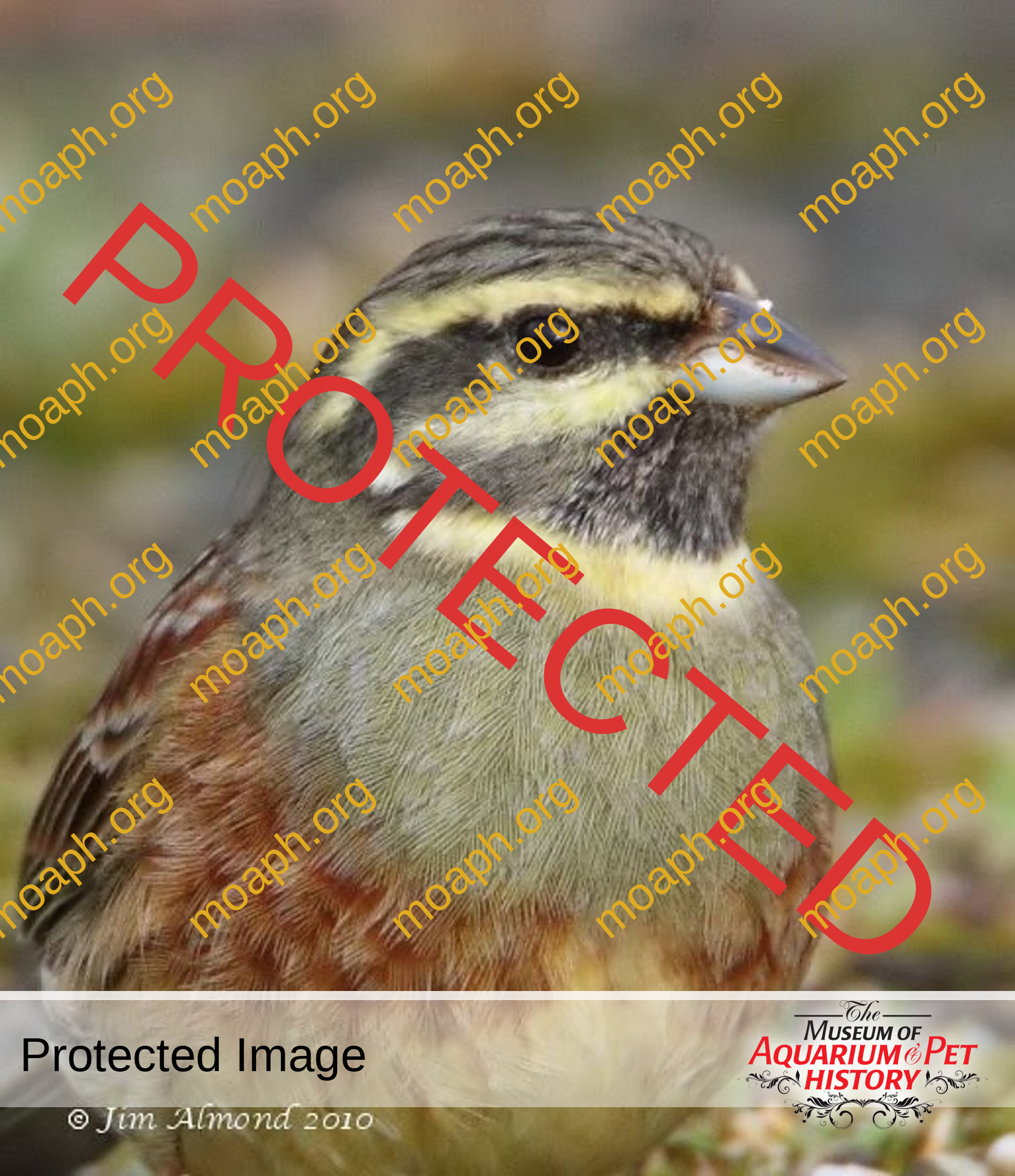
Male cirl bunting
With later reintroductions in the UK, the latter approach tended to take precedence especially with such species as the chough, the bustard, and the crane. Whilst the reintroductions of such as the red kite and the sea eagle involved the transfer of adult birds.
The care of many of the birds during the process of reintroduction was undertaken by experienced zoo staff and others with considerable experience in caring for birds, whilst those working for the conservation bodies may have considerable knowledge and experience of birds in the wild, they normally have little or no experience of caring for birds in captivity.
But the really significant developments in this area have been with regard to attempts at re-establishing species that have become extinct in the wild. This is where the true value of aviculture in assisting with the recovery of species has been seen. For, without the dedication of certain aviculturists, these species would have disappeared from the world. I am mainly referring here to certain species of parrotlike birds, and especially those found in South America.
The bird that was most at risk of extinction was the spix’s macaw and the story of its recovery is quite remarkable. A native bird of Brazil, it was declared extinct in the wild in 2019. However, there were some birds held in captivity, and these proved to be the means by which a reintroduction programme could take place.
The scheme to bring some macaws back to their original wild environment began in 1987 with Loro Parque Foundacion (based in Tenerife on the Canary Islands) leading the way with their own captive population. At that time, only seventeen birds were located in captivity. In 1997 the Foundacion gave ownership of the Spix’s macaws in its possession to the Brazilian Government. The remaining birds in captivity were then purchased by Sheikh Saud bin Muhammed bin Ali Al-Thani of Qatar, who set up a breeding programme.
Meanwhile two farms were purchased in Brazil to establish a release area that would offer the best opportunities for the macaws to survive and breed. By 2022 there were 177 of the birds in captivity, an astonishing achievement given that the breeding capabilities of the birds were constrained by the tiny genetic pool they represented. This can be explained in part by the new technique that was adopted in this programme of artificial insemination.
The Spix’s macaw is still far from being fully re-established in the wild, but there is increasing evidence that it is once more a free breeding wild population.
A similar story involves the Guam Kingfisher. Recovery of the bird, also known as the sihek, is part of the Sihek Recovery Programme. This is a US led scheme to re-establish the bird in the wild on its Pacific Ocean atolls. Sedgwick County Zoo in Kansas has been involved in increasing the captive population of these rare birds. Birds have been re-located to the islands in preparation for their release with the hope that they will once more become established as a wild breeding population.
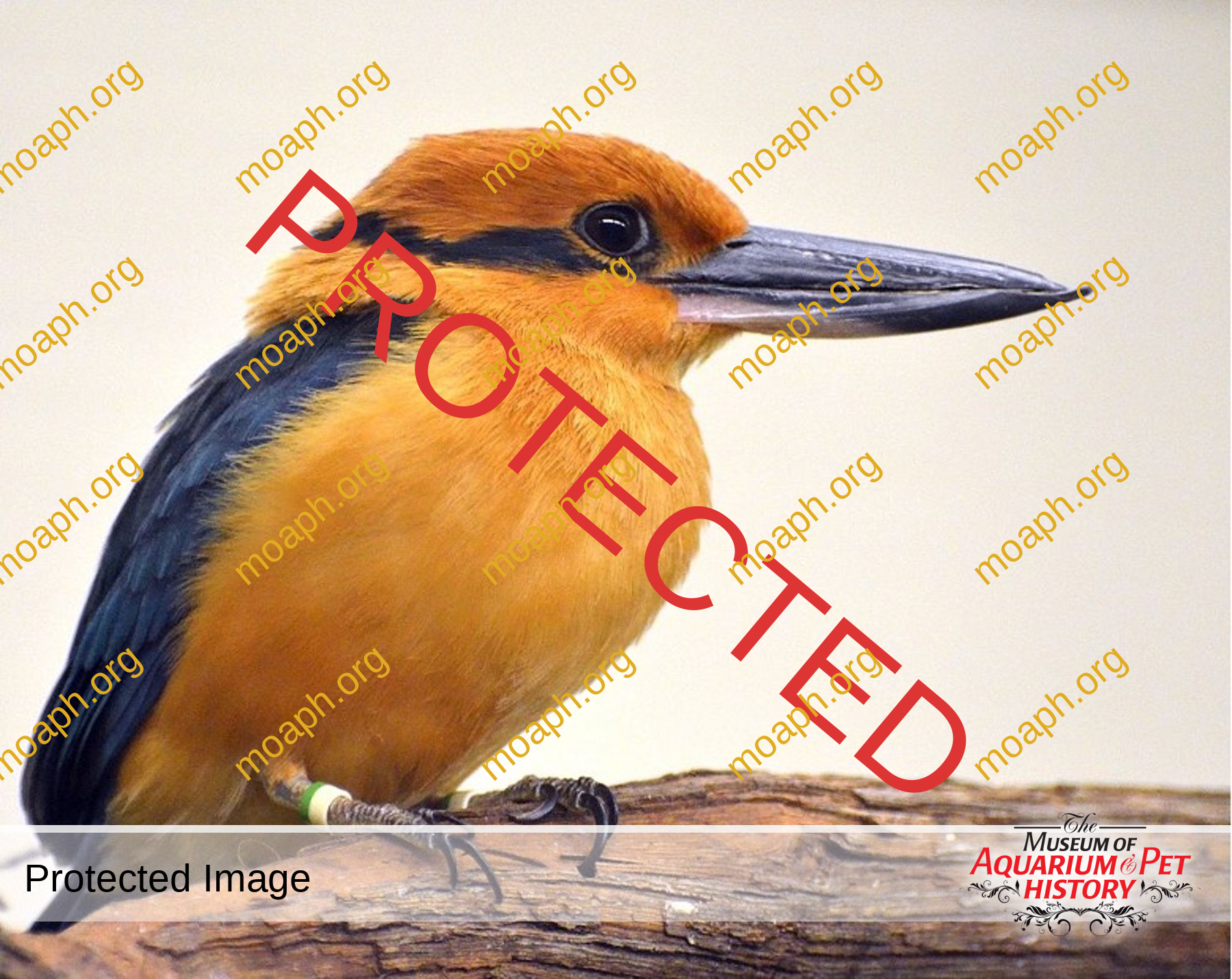
Guam Kingfisher

Temporary release aviaries for kingfishers
Within the US the most emblematic of birds with a recovery programme was the condor. By 1982 it was thought that only 22 condors survived in the wild in the US. By 1987, these birds had been captured with a view to establishing a captive breeding population. In 2004 came the first chick to hatch in the wild since the start of the programme. The current population of wild birds now numbers several hundred.
Without the knowledge and skills built up over many years by aviculturalists, it would have taken much longer to have brought these schemes to fruition. Our natural environment would be less enriched without the success of these programmes.
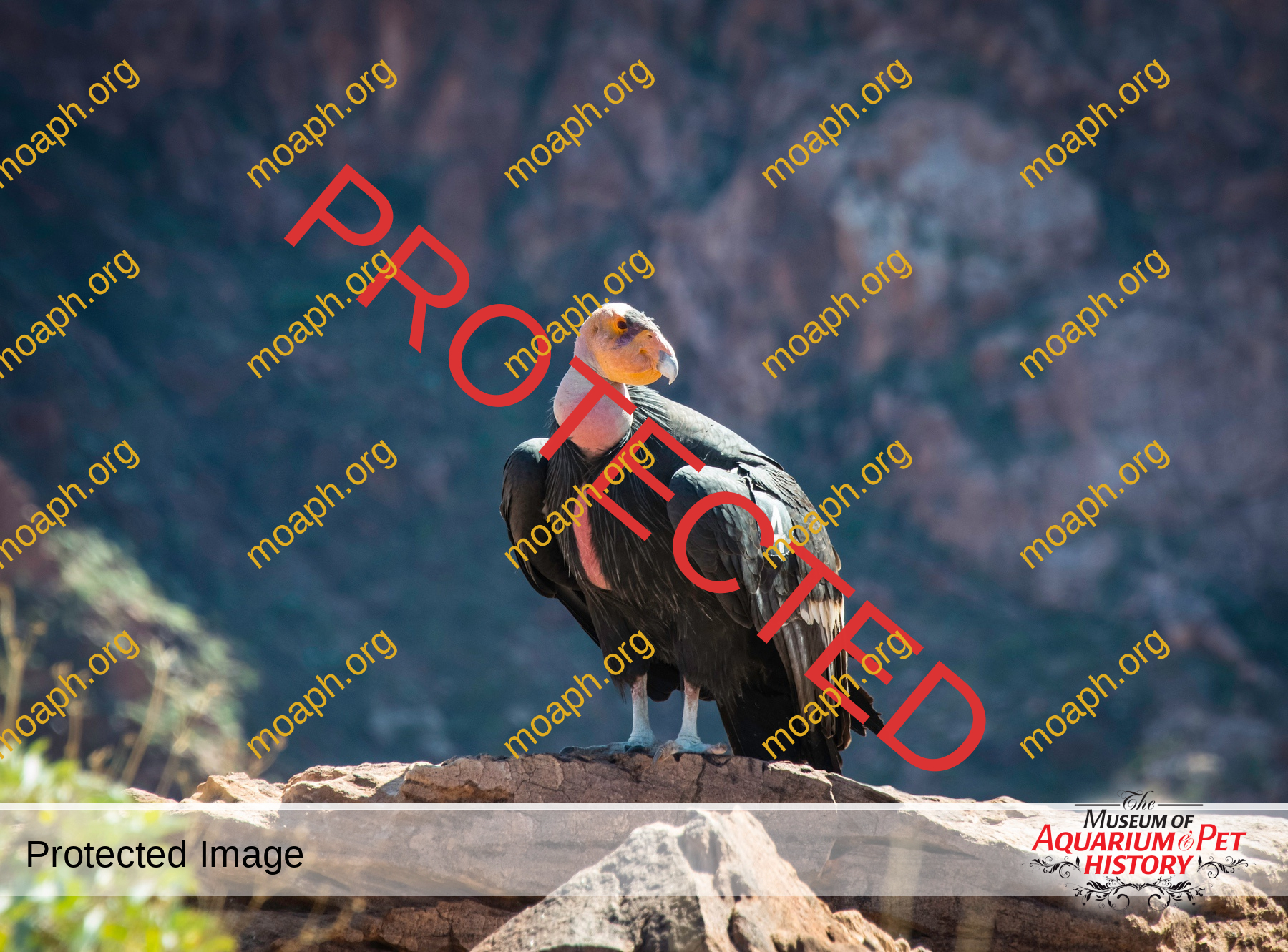
Californian condor