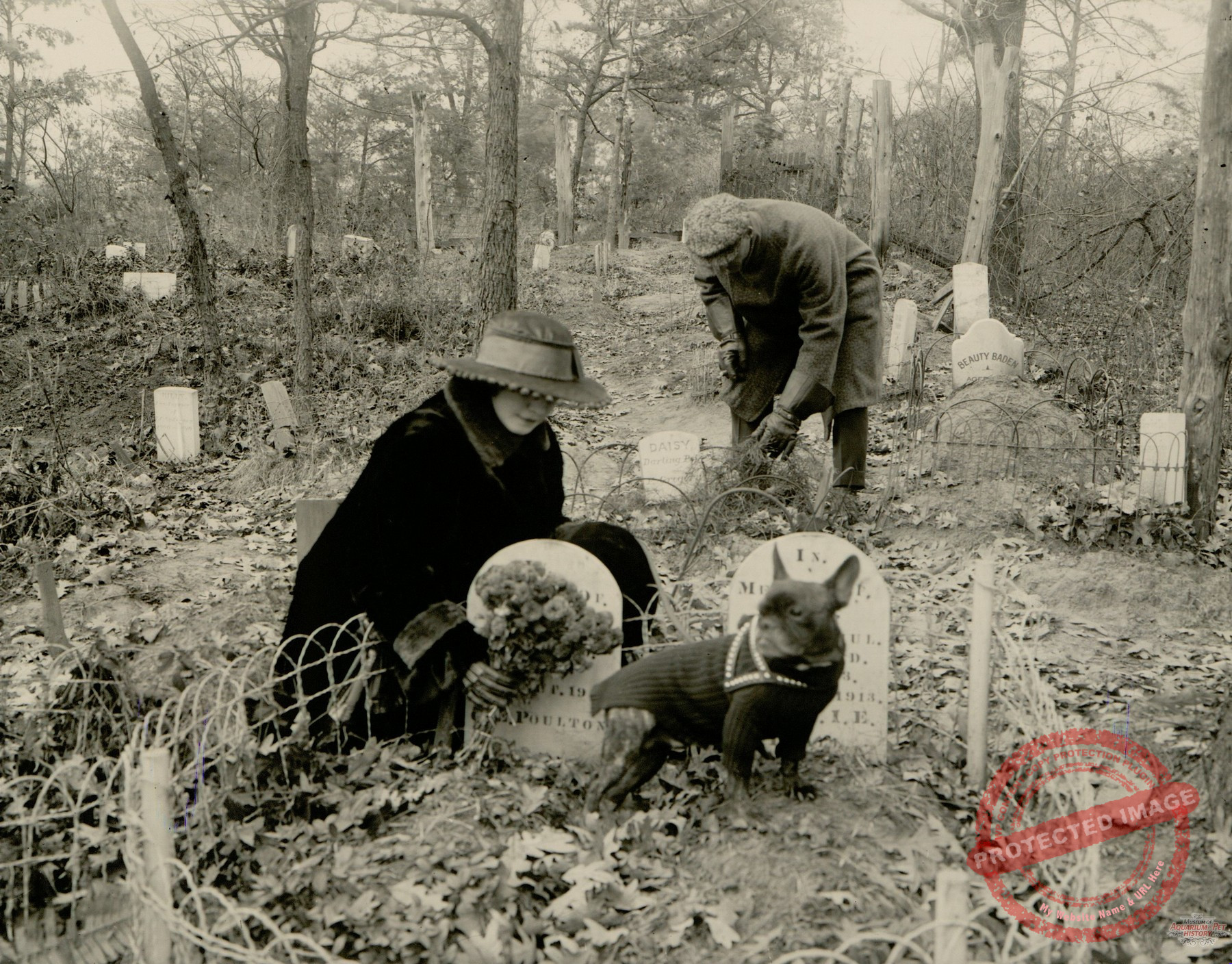
A 1916 photo taken in Dr. Buckingham’s Dog Graveyard. Washington, D.C. – MOAPH collection
When considering the phrase: “Pets are family,” what images first come to mind? Perhaps it’s a dog welcoming a newborn home alongside first-time parents, or a cat snuggling up to comfort its sick owner. Regardless of the association, people have considered their pets as best friends and family members for centuries, sometimes placing their companionship above even their human relatives.
No other place uniquely illuminates this undying love for animals than that of pet-graveyards.
This article highlights the history of dedicated pet cemeteries. By exploring the oldest animal cemeteries in the UK and U.S., it showcases the evolving relationship between people and their animal companions and highlights the stories that revolutionized the way animals are memorialized. It also briefly explores the phenomenon at similar sites in Scotland, France, California’s West Coast. Ultimately, these amazing pet graveyards capture the impact of pets on the lives and memories of those who cared for them.
The archeological trail of human-animal cohabitation dates to approximately 20,000 years ago for dogs, and 10,000 years for cats, making the history and necessity of animal burials extensive. However, it wasn’t until the 18
th and 19
th centuries that pet-keeping and pet memorialization as people think of today truly developed.
Archaeologist, Dr. Eric Tourigny, discusses how public expressions of grief when animals died emerged within elite Victorian households. He explains how these owners “staged small funerals for their pets, and erected memorials to them in their gardens.” This highlights how domesticated animals, once deemed as tools for work, evolved to be seen as companions, especially in families that had disposable income.
The first formal pet cemetery was not founded until 1881. The concept was introduced when the owners of a deceased Maltese Terrier named Cherry sought a peaceful place to lay him to rest. Noticing the beauty of Victoria Lodge, a short distance from Cambridge Square where they lived, the couple decided to ask the gatekeeper permission to bury their dog in his private garden on the grounds.
The gatekeeper, Mr. Winbridge, sympathetically obliged. Word spread of his kindness, and “over the next two decades, almost 500 little gravestones sprang up in the increasingly crowded garden, forming Britain’s first dedicated pet cemetery.”
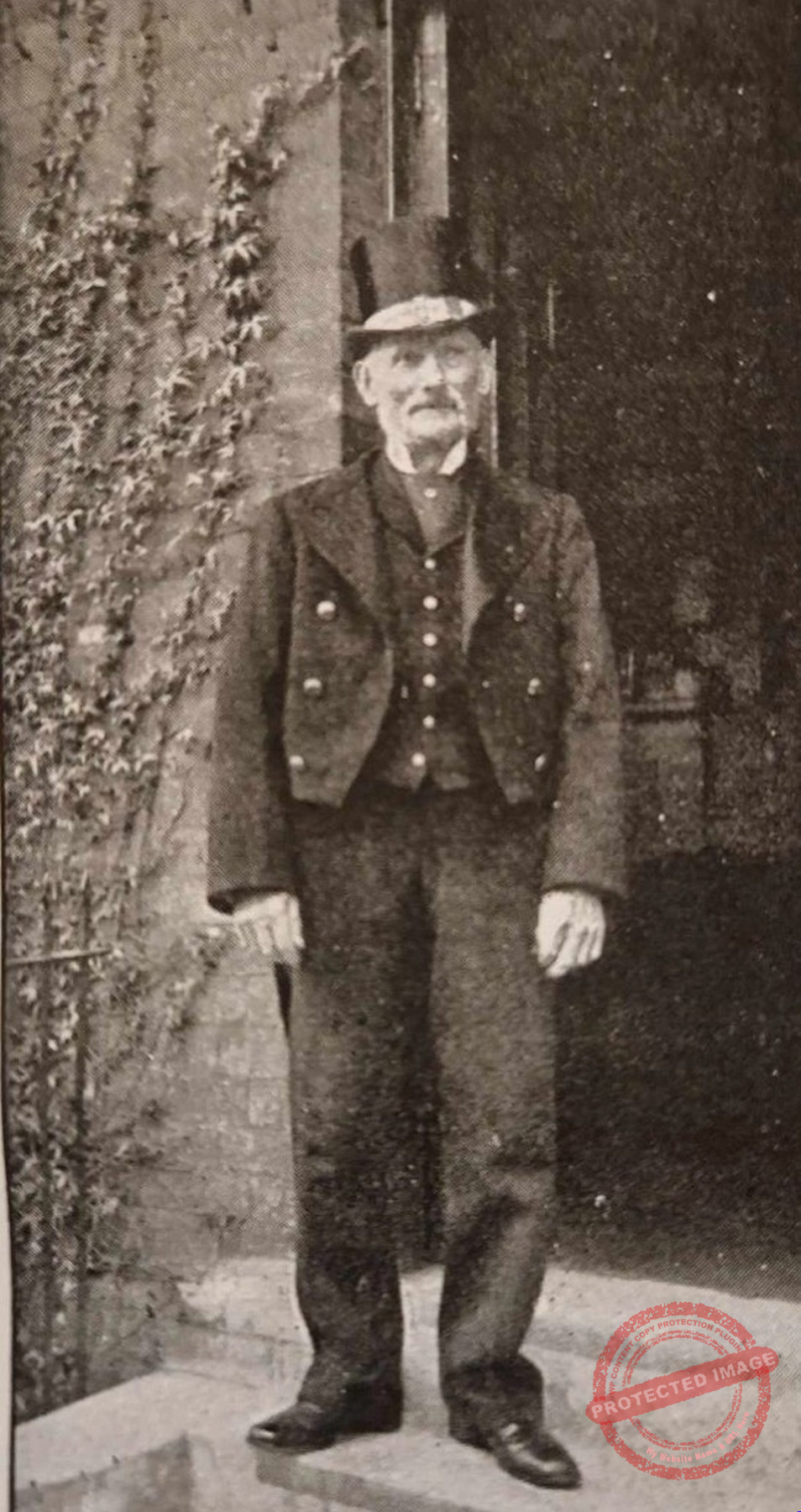
Mr. Winbridge, gatekeeper at the Victorian Lodge and founder of Hyde Park Pet Cemetery. Credit: The Royal Parks – “A Cemetery for Dogs,” The Strand Magazine, 1893
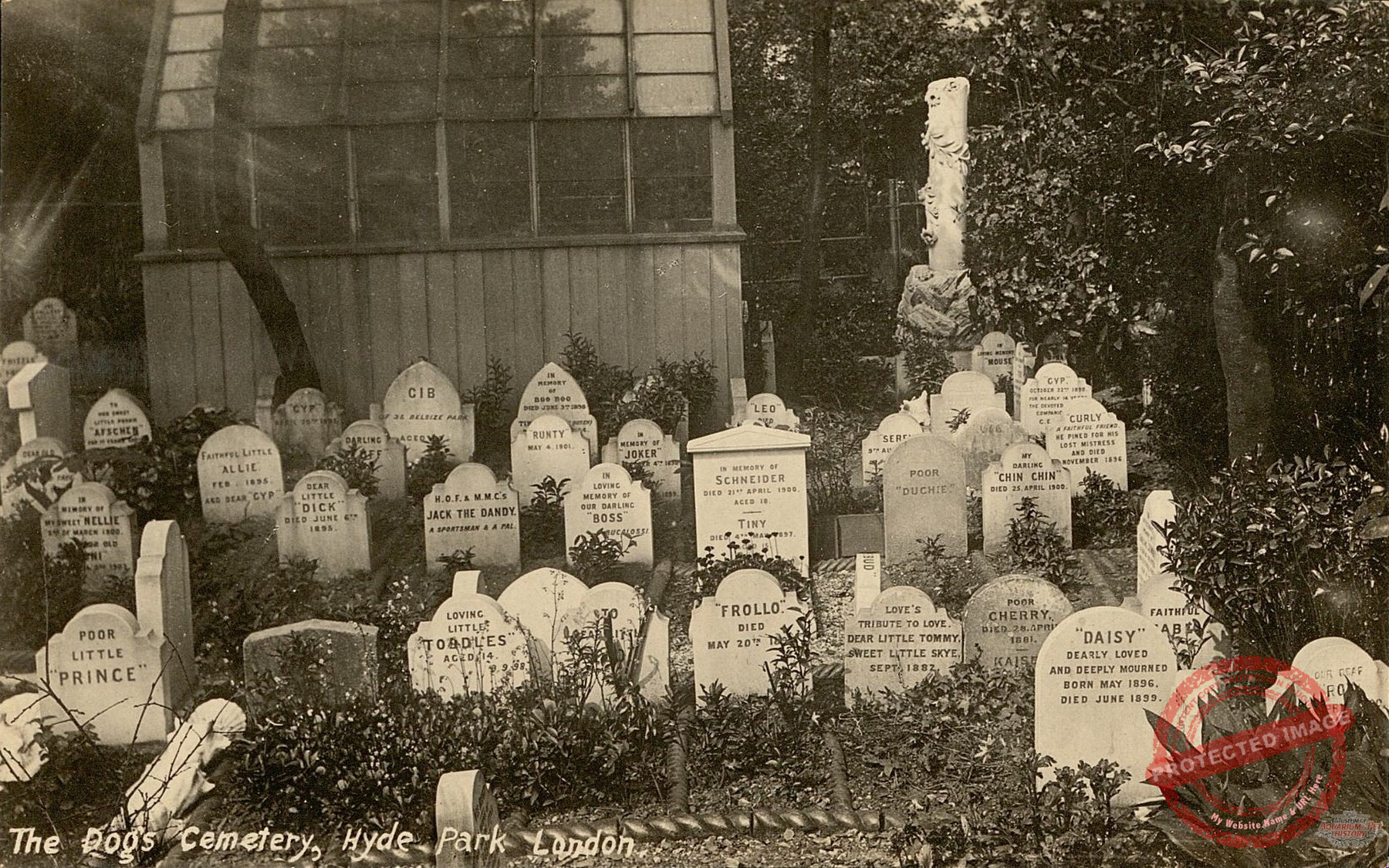
A postcard depicting pet headstones in Hyde Park, London. The back of the card has a handwritten message exclaiming that the individual had found “the most interesting cemetery,” and asking if the recipient had been there. – MOAPH collection
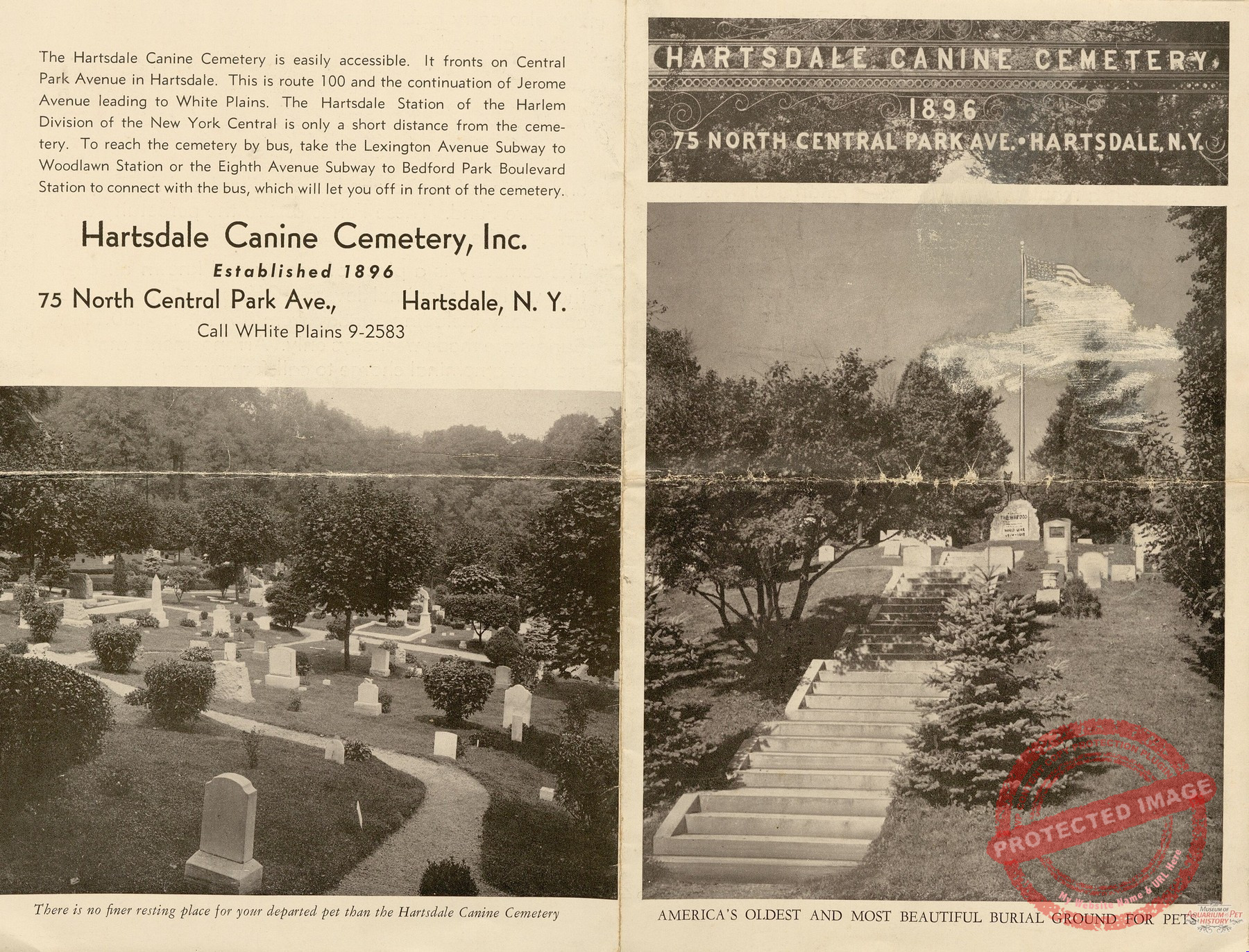
The appeal of laying pets to rest in beautiful gardens is not unique to the UK, however. A similar story unfolded in the United States. In 1896, New York City veterinarian, Samuel Johnson, allowed one of his clients to bury their dog in his apple orchard. Known as Hartsdale Pet Cemetery, the property “has over 80,000 dogs, cats, rabbits, birds, reptiles, monkeys, horses, a lion and even some people buried on its five acres.”
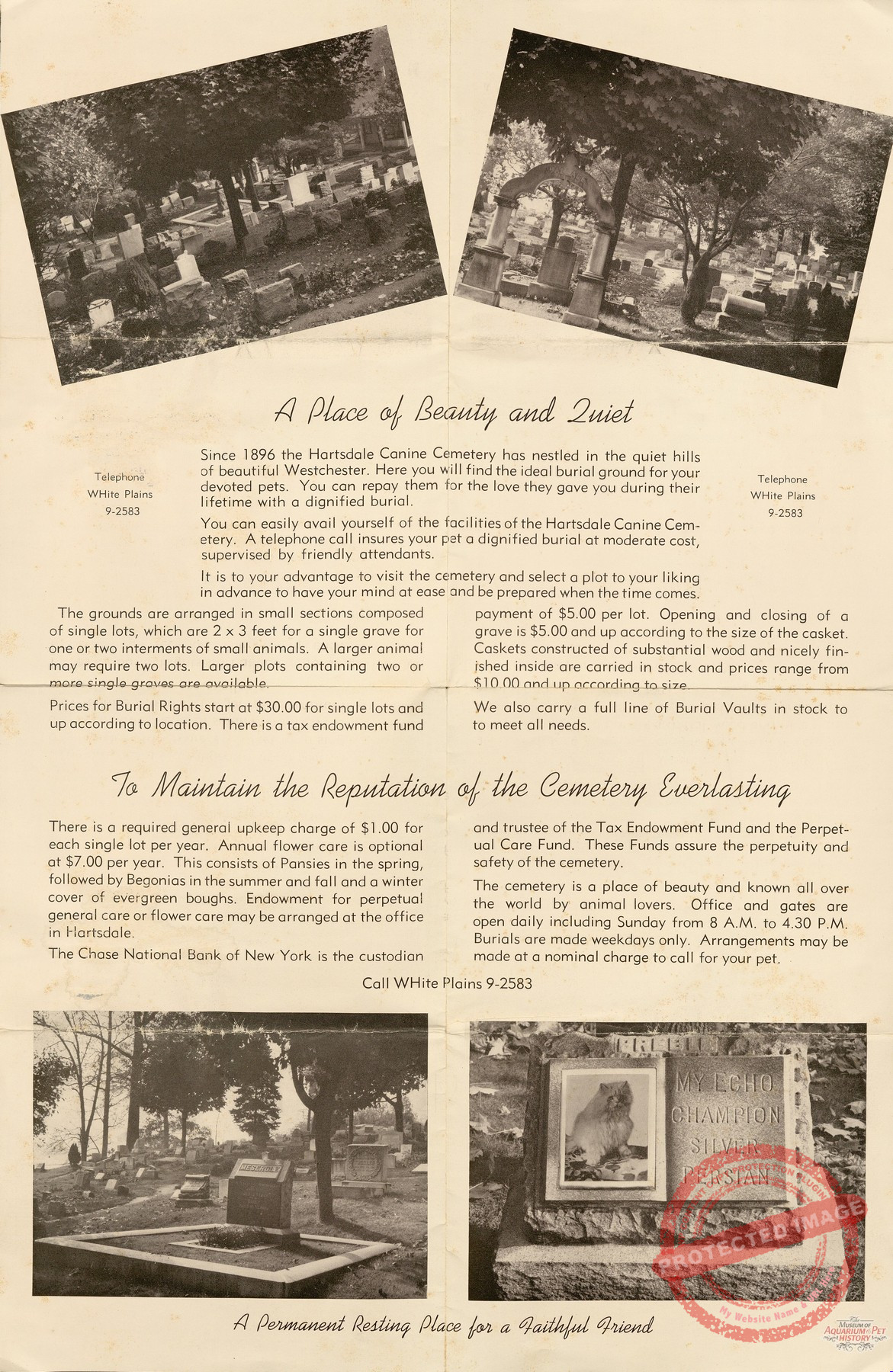
This pamphlet advertises Hartsdale as, “a place of beauty and quiet,” offering a dignified burial site for people’s beloved pets. Interestingly, it became more common for pet cemeteries to emphasize the need to honor a companion animal’s life via burial, something historically only seen between humans until that point.
This page of the pamphlet highlights Hartsdale as “America’s oldest and most beautiful burial ground for pets,” and gives readers directions to the cemetery’s location.
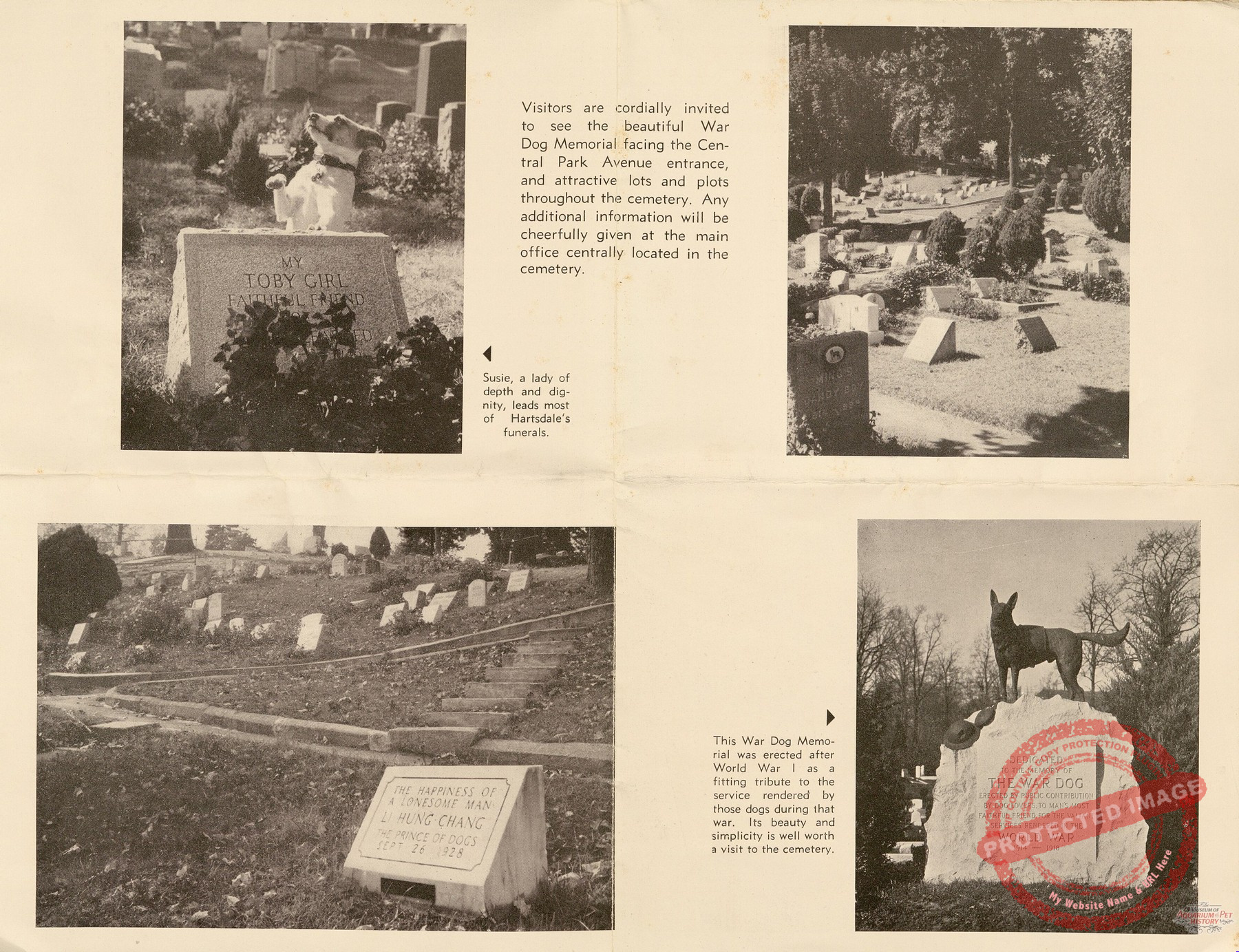
The last page of the pamphlet encourages visitors by emphasizing friendly staff, beautiful views, and historic memorial sites, like that of the WWI canine hero statue.
Although the Hyde Park and Hartsdale pet cemeteries were far from the first animal burial sites, what made them groundbreaking (quite literally), was that conventional pet “disposal” in places like the UK and U.S. had historically involved discarding bodies in the trash or nearby bodies of water. If a pet was buried, it was usually in an undisclosed, unmarked location.
Thus, when Mr. Winbridge and Johnson allowed people to not only bury their beloved animals on their properties but place small headstones that more closely resembled the grave sites of people, they radically, even if unintentionally, broke from tradition.
A Scottish postcard depicts the similarities between human and pet cemeteries. Regimental Pets Graveyard at Edinburgh Castle is situated on a hill that overlooks the city, and headstones distinctly mark the presence of each animal. These sites reflect more than affection for animals—they mirror evolving ideas about which lives deserve ritual, remembrance, and public grief.
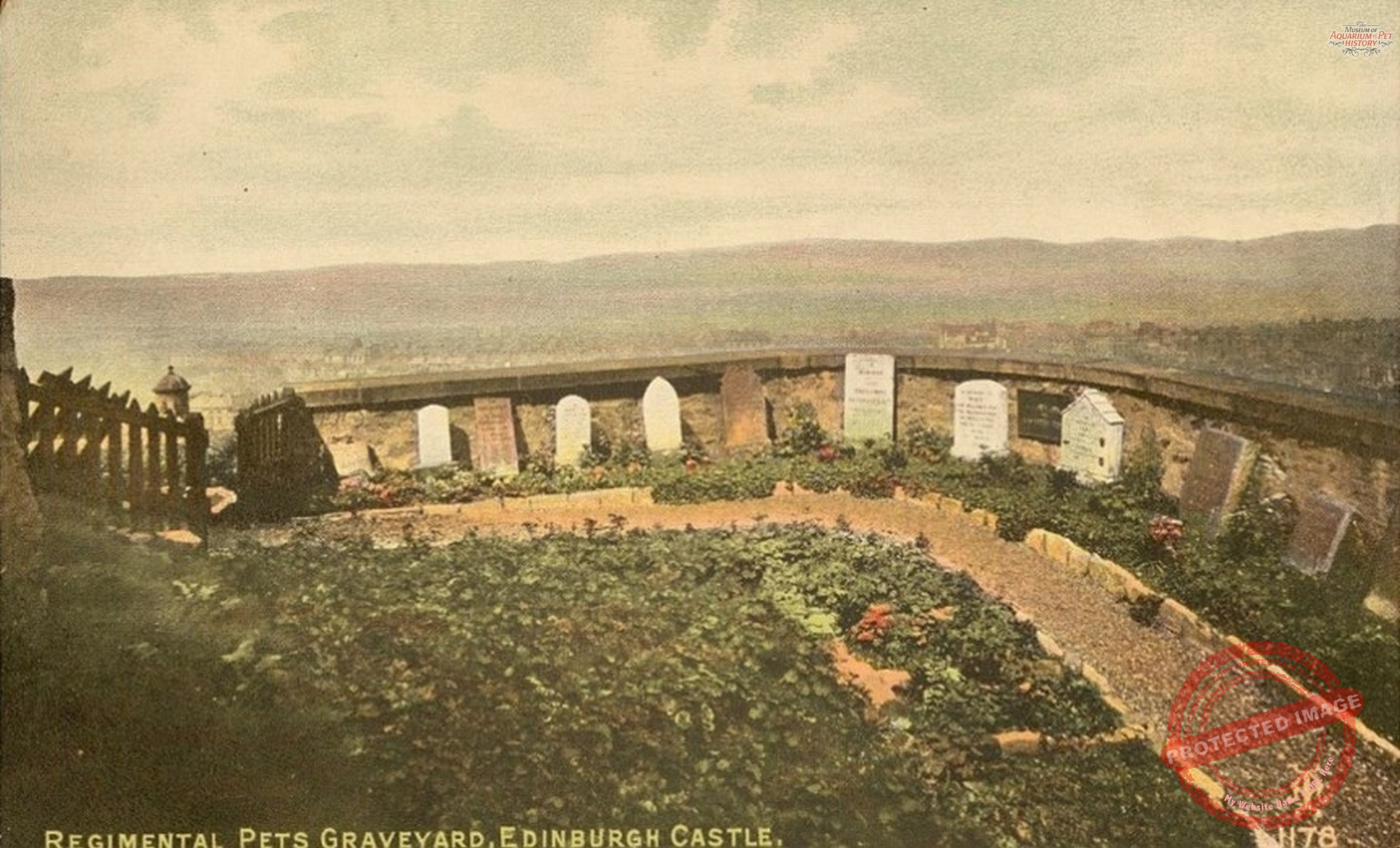
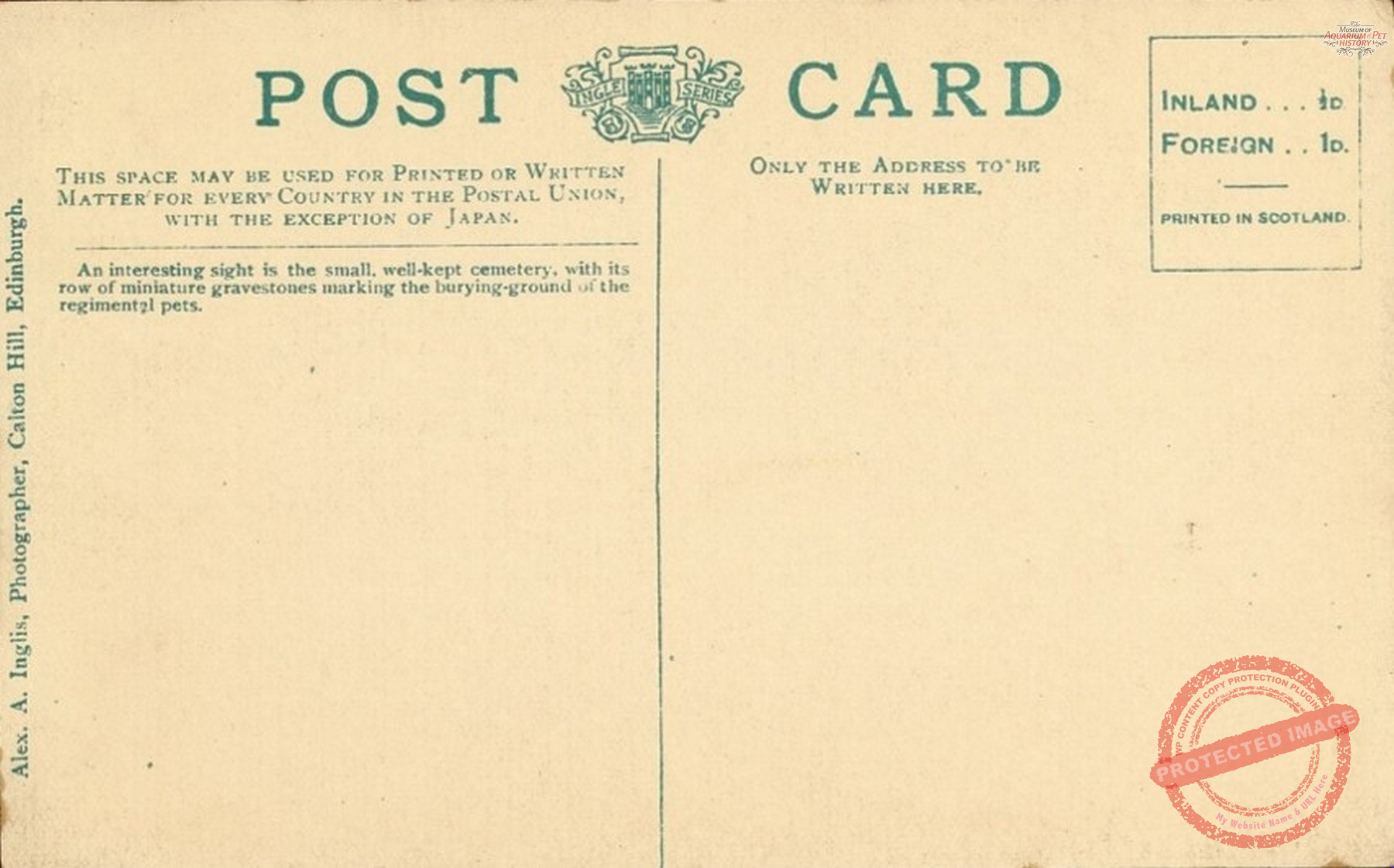
Front of postcard: “Regional Pets Graveyard, Edinburgh Castle.” Back of postcard: “An interesting sight is the small, well-kept cemetery, with its row of miniature gravestones marking the burying-ground of the regimental pets.” – MOAPH collection
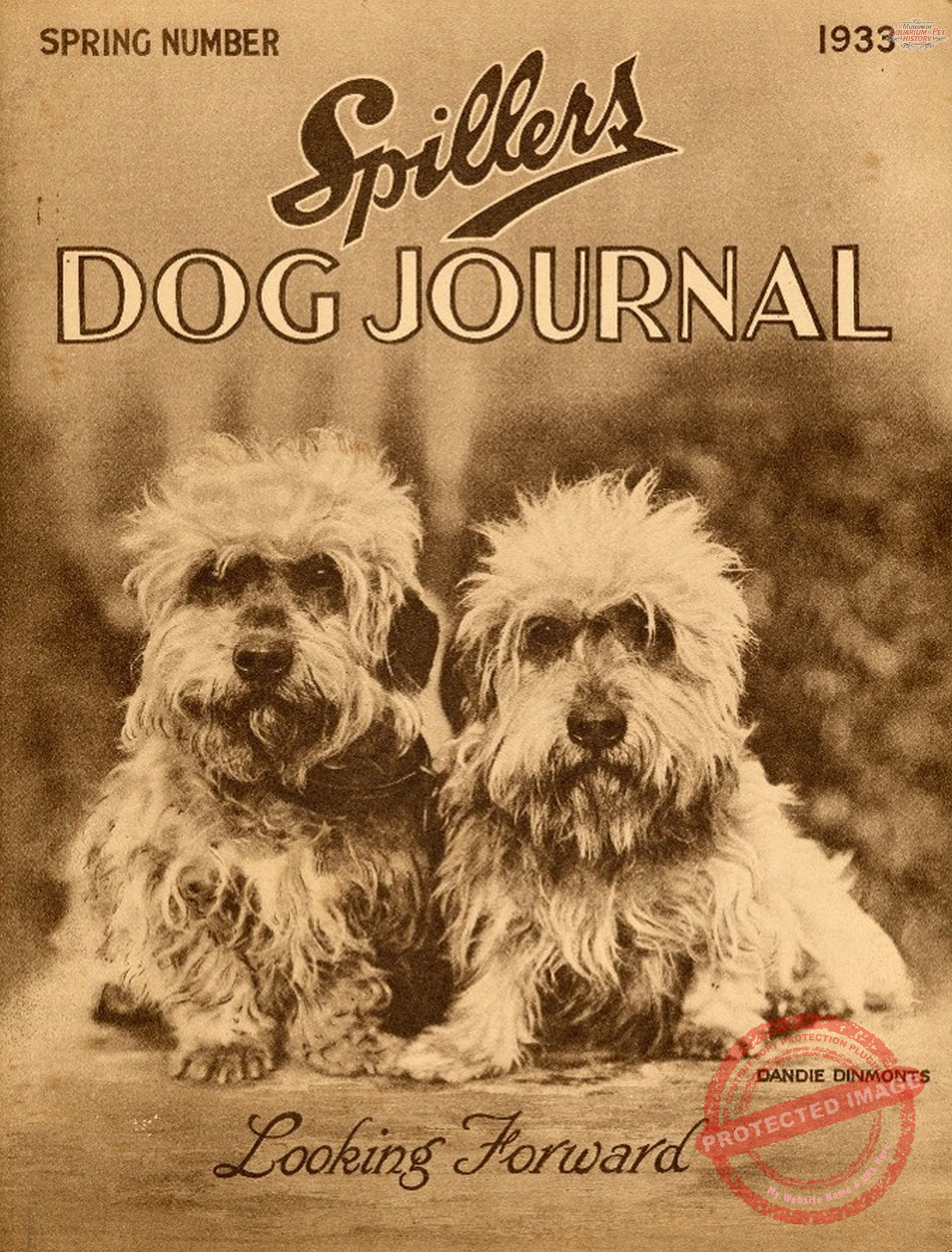
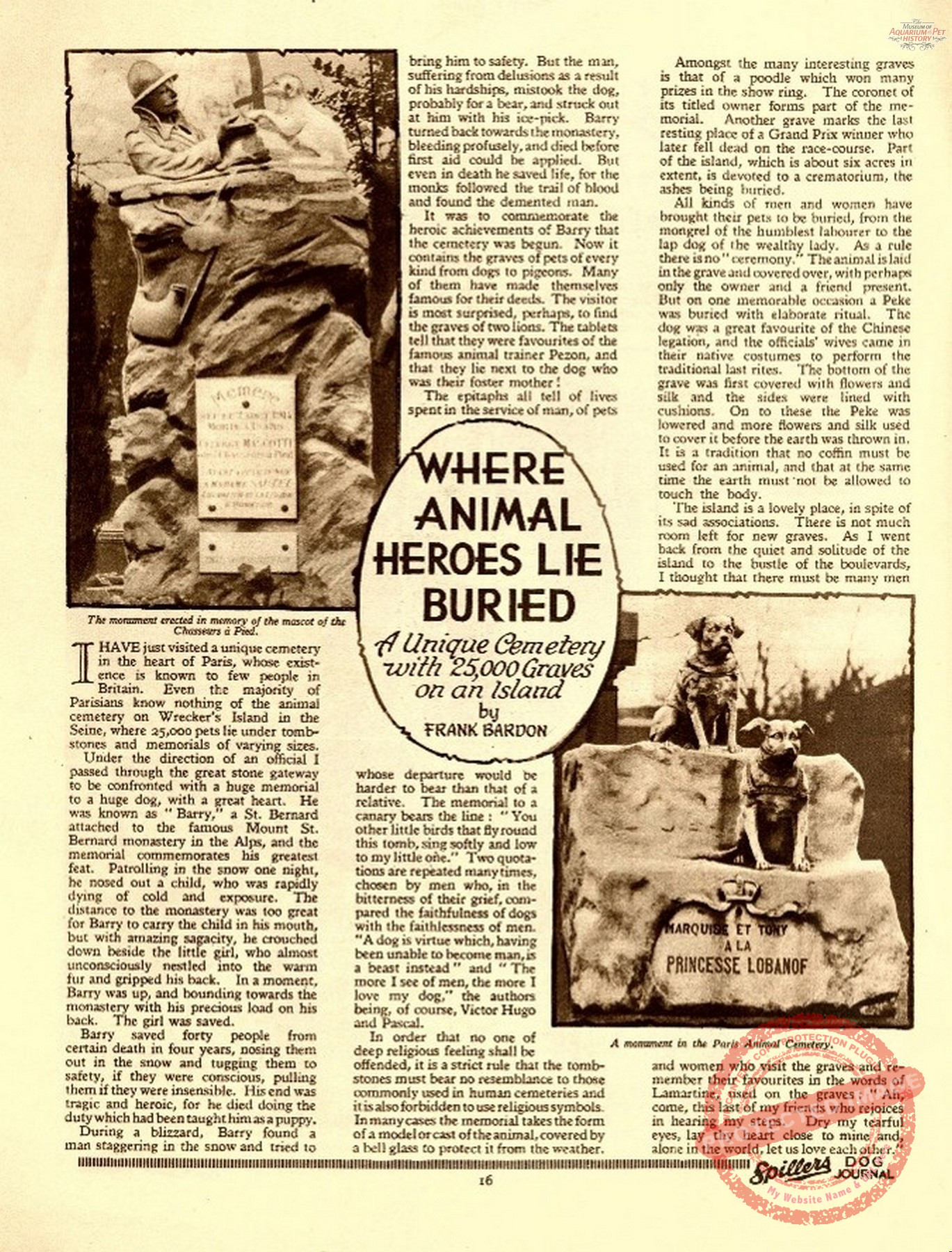
A 1933 article in Spiller’s Dog Journal titled “Where Animal Heroes Lie Buried” by Frank Bardon further illuminates this sentiment by discussing an animal cemetery on île des Ravageurs (Wrecker’s Island) in France that houses 25,000 pet graves. Notably, he highlights the stories of animal heroes that have been memorialized at the location.
The 1933 cover of Spiller’s Dog Journal, featuring two Dandie Dinmont Terriers. – MOAPH collection
“Where Animal Heroes Lie Buried,” an article by Frank Bardon. – MOAPH collection
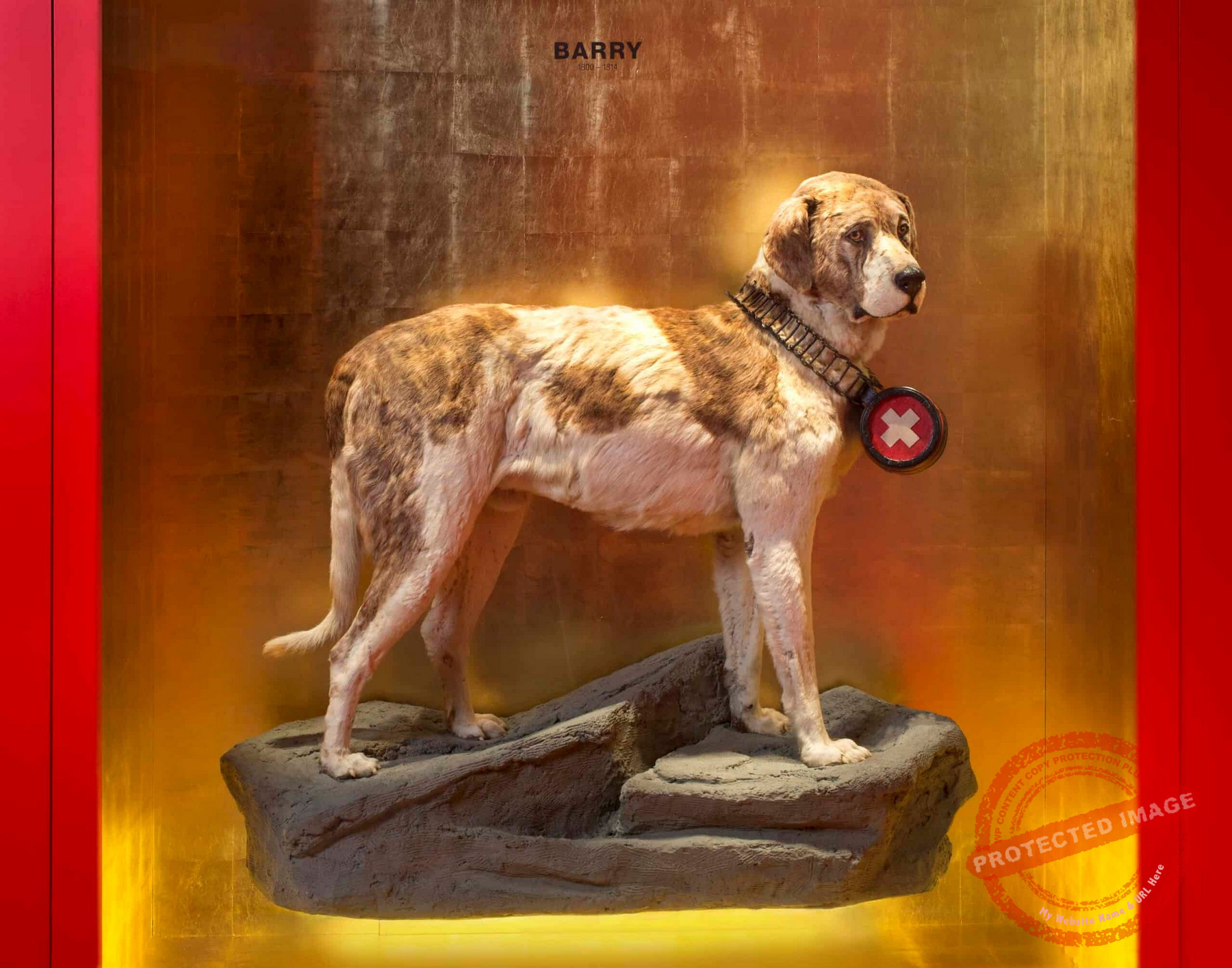
On example is Barry, a St. Bernard dog from the St. Bernard Monastery in the Alps who risked his life retrieving individuals from treacherous snow conditions. Following his untimely death after a rescue accident, Barry was the first animal memorialized on the French island, a way to commemorate his over 40 successful life-saving operations.
A memorial statue that preserves the heroic legacy of Barry, the St. Bernard. Credit: PraktikantinNMBE CC BY-SA 4.0
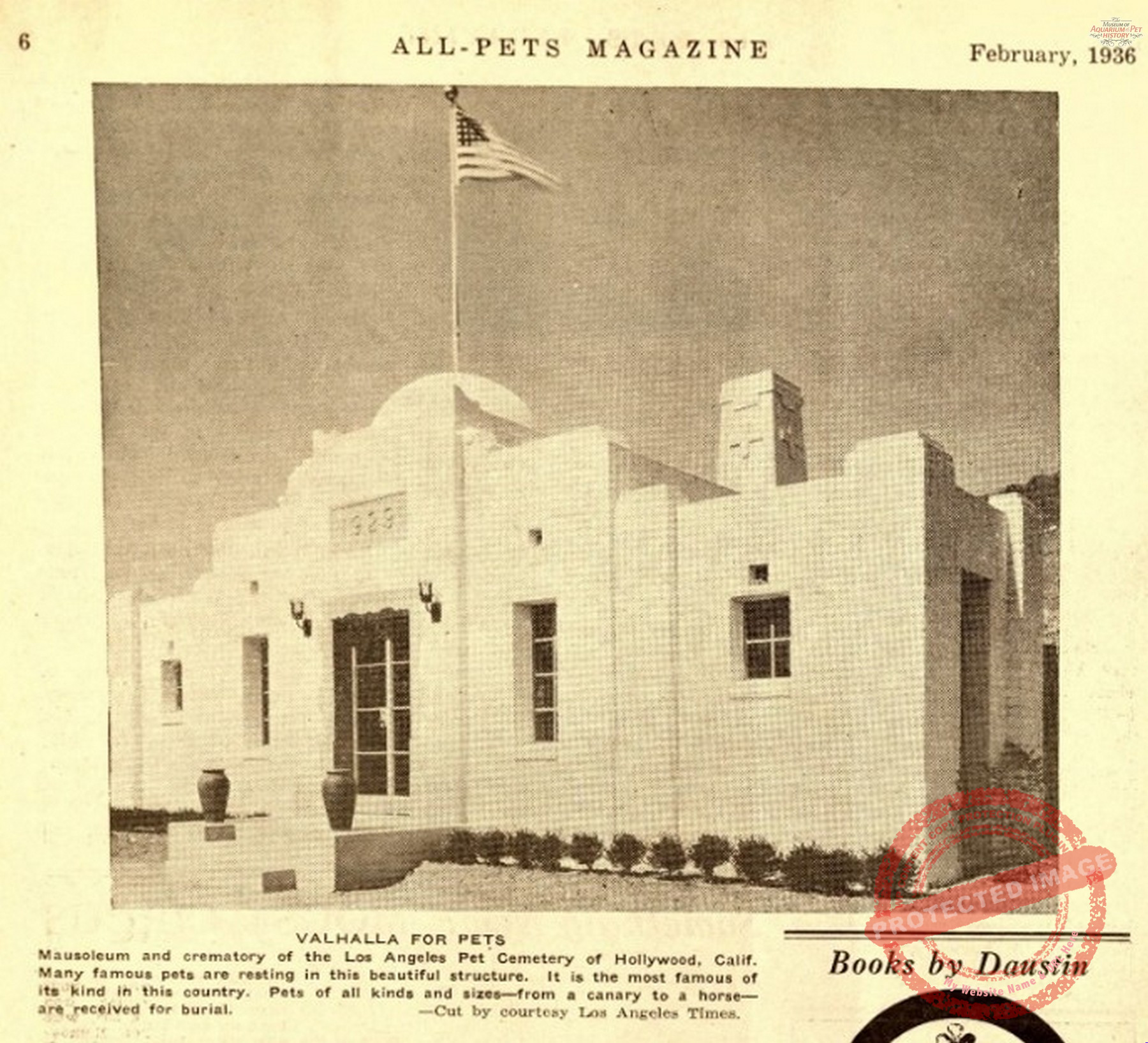
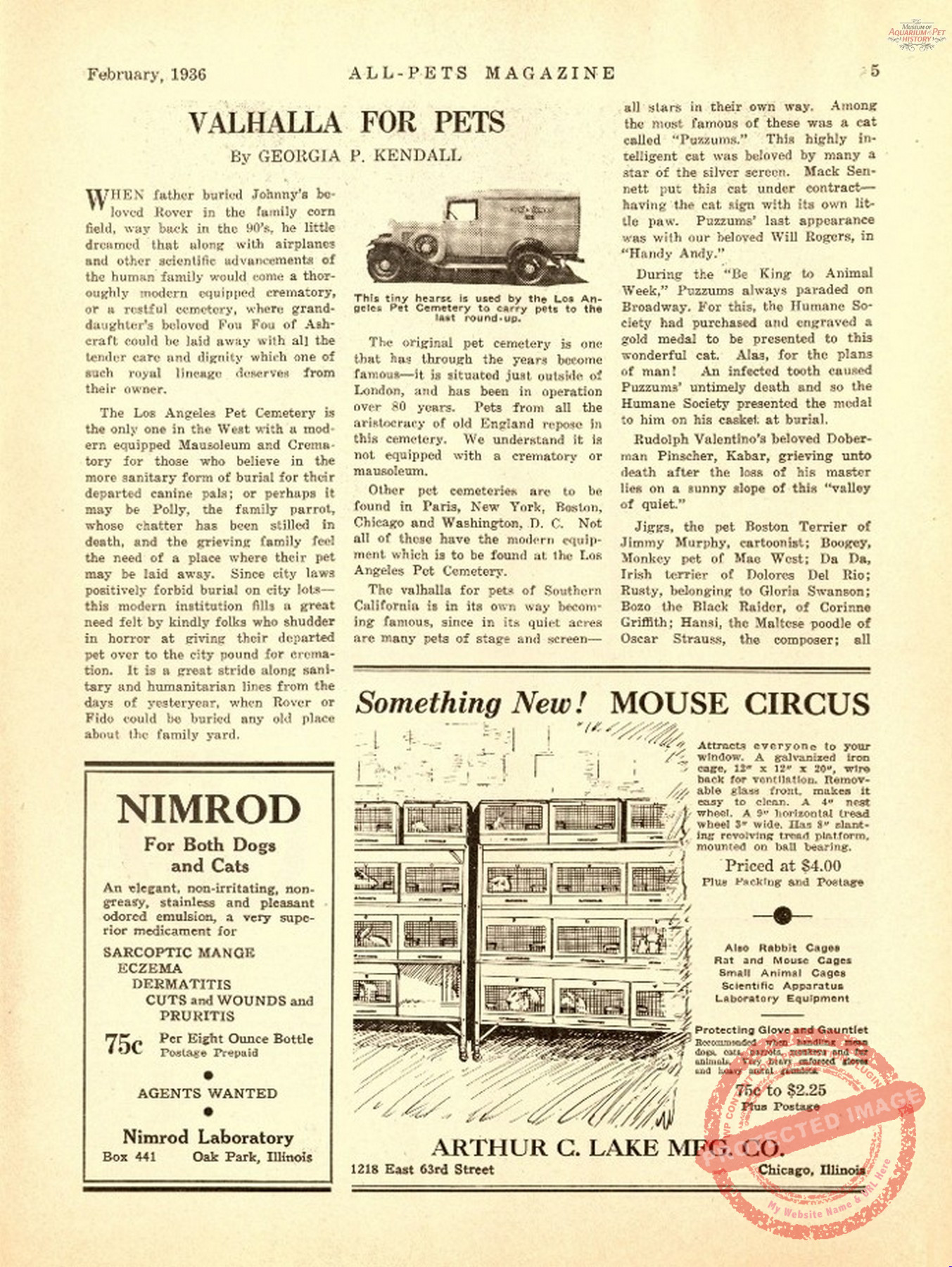
Similarly, a 1936 article in All-Pets Magazine titled “Valhalla for Pets” by Georgia P. Kendall notes the famous pets buried at the Los Angeles Pet Cemetery. She states that “The Valhalla for pets of Southern California is in its own way becoming famous, since in its quite acres are many pets of stage and screen—all stars in their own way.” Notable mentions include “Puzzums” who starred in “Handy Mandy,” cartoonist Jimmy Murphy’s Boston Terrier, Jiggs, and Dolores Del Rio’s Irish Terrier, Rusty.
The Los Angeles Pet Crematory. – MOAPH collection
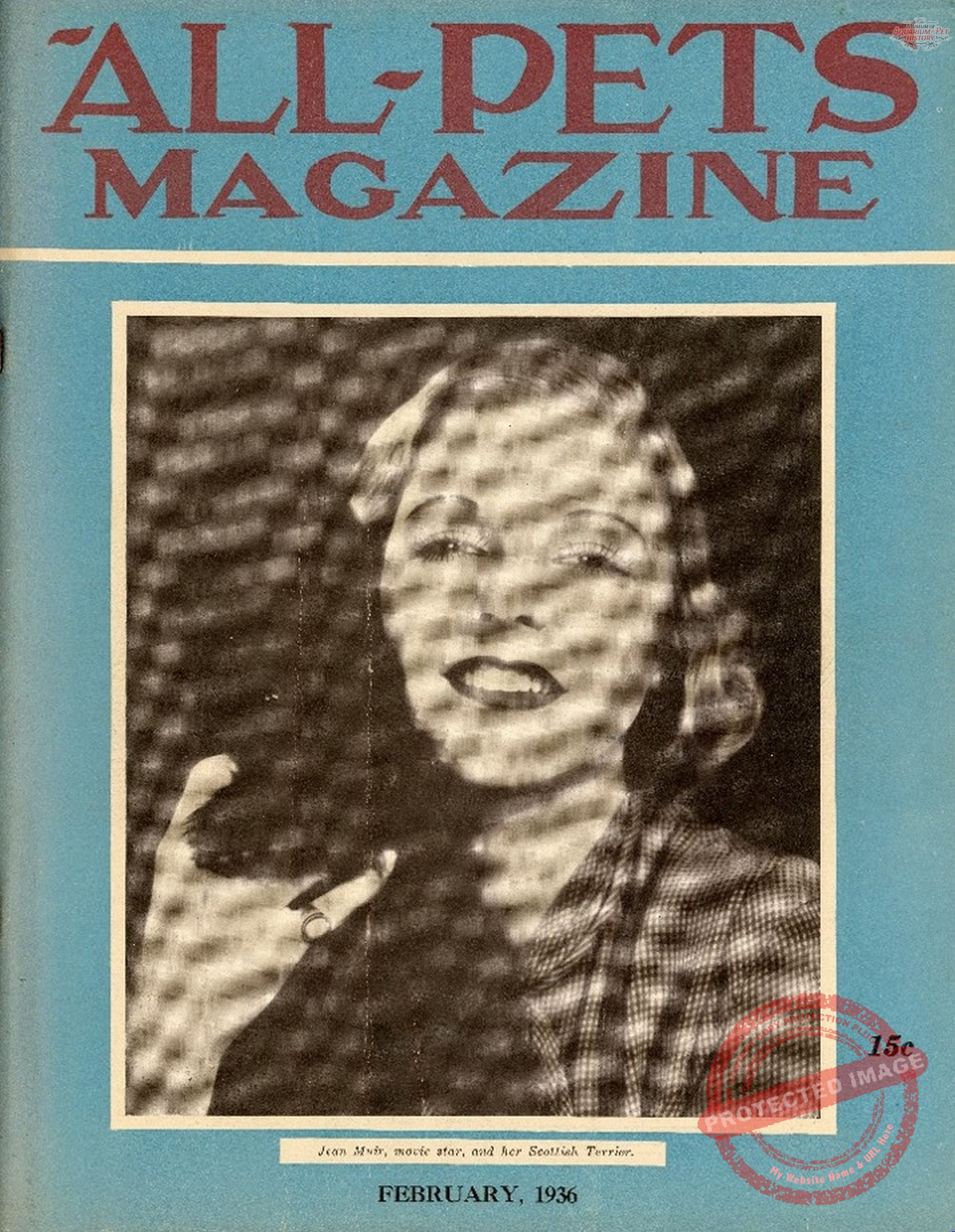
The 1936 cover of All-Pets Magazine, featuring movie star, Jean Muir, and her Scottish Terrier. – MOAPH collection
“Valhalla for Pets,” an article by Georgia P. Kendall. – MOAPH collection
The article also informs readers that the cemetery offers embalming and cremation services. Kendall explains that the modern facility is “equipped (with a) Mausoleum and Crematory— for animals ranging in size from a horse to and canary bird, and has expertly prepared bodies in a manner that makes them ‘appear natural and lifelike.’”
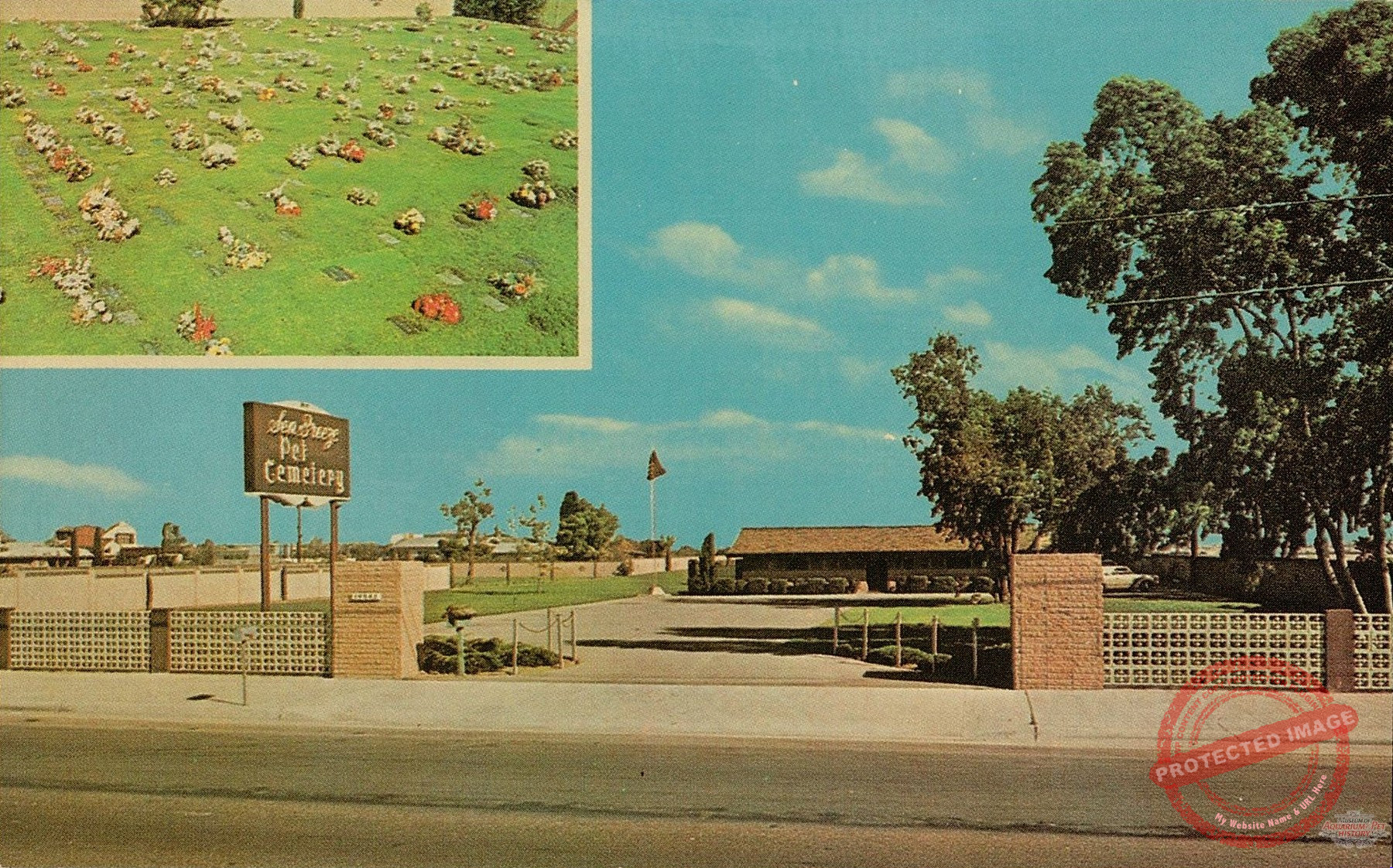
Another example of such sites in California is Sea Breeze Pet Cemetery. Established in 1961 in Orange County, this location maintains over 40,000 pet graves. Sea Breeze is also the final resting place for “Old Sarge,” a decorated WWII Devil Dog and purple heart recipient.
The emphasis on technological advancements and arrangements further suggests that animals became increasingly seen as family members by exemplifying the importance of dignified care, even in death. Businesses like Hoegh Pet Casket Company in Chicago also reflect the demand, as seen by their advertisement below.
A Hoegh Pet Casket Co. advertisement. – MOAPH collection
Yet, regardless of if an animal was cherished by thousands on TV or loved by a single individual—whether they lived for twenty years or only two—such sites are reminders that their time on earth mattered. Although they may no longer be here, their presence continues to shape the households and people that they left behind.
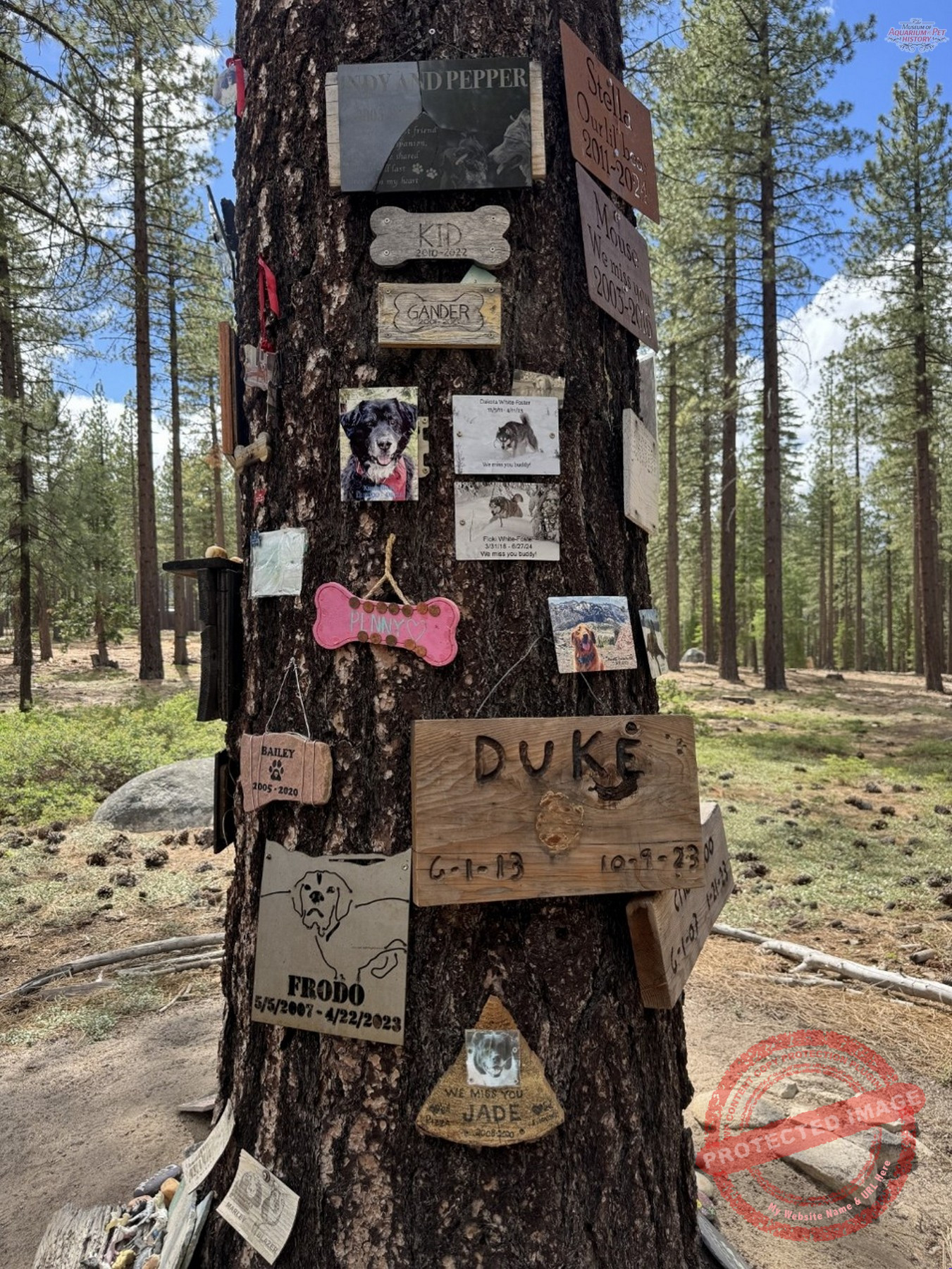
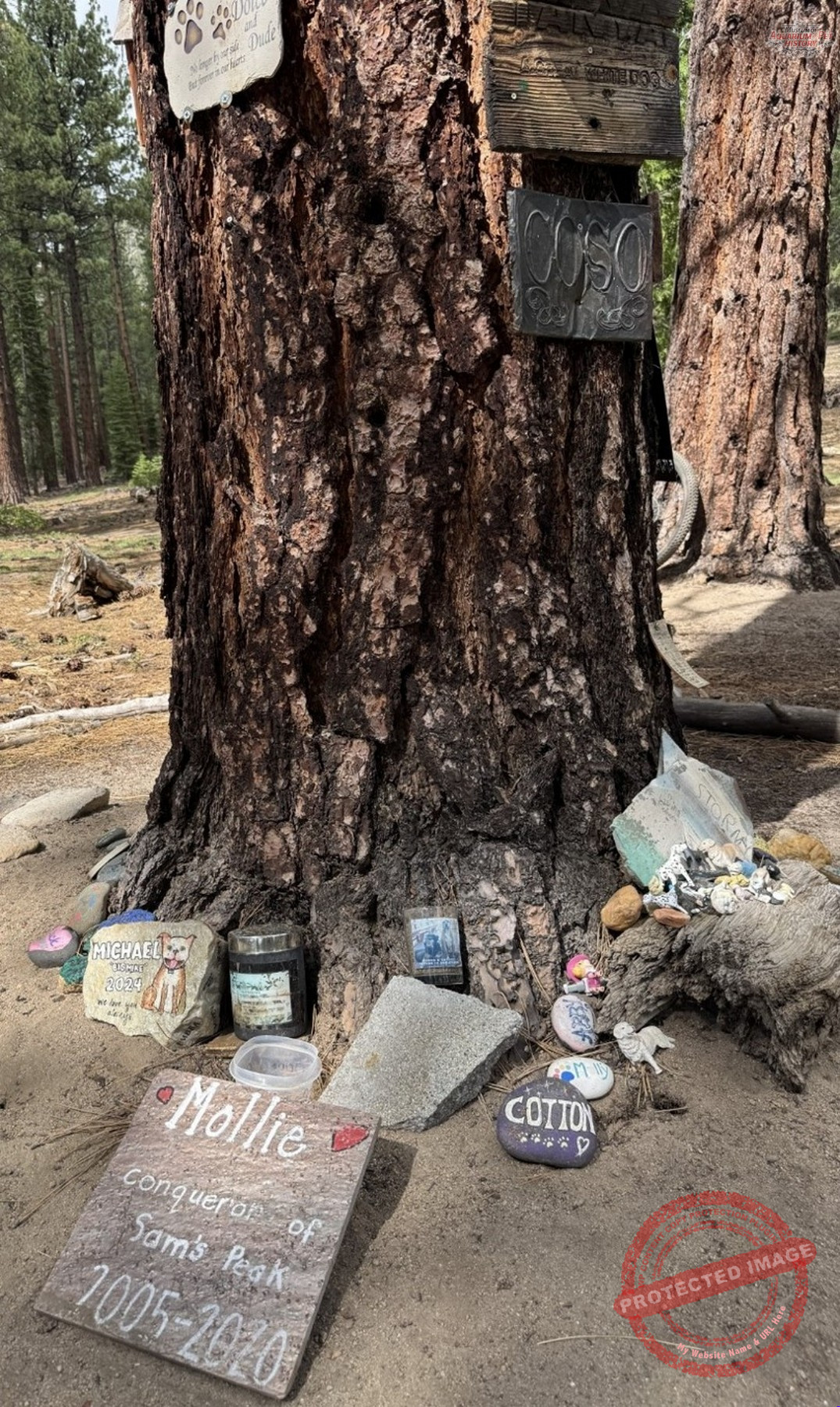
A dog memorial tree in Lake Tahoe. – Photos taken by author
Above is a tree in Lake Tahoe, California. Located along a serene walking path and decorated with signs, images, and painted stones, it stands as a local reminder of the adventure dogs of the past. Whether carved into marble, printed in magazines, or gently nailed into pine bark beside a mountain trail, these memorials reveal the same enduring truth: people have long searched for ways to keep beloved animals present after they are gone.
To all the departed good boys and girls out there, rest easy.