Wilde Tiere Frei Haus (Wild Animals / Free Delivery) – Chapter 7 – Lowen Auf Dem Sofa (Lions on the Sofa)
Translated by Alex Haro of MOAPH


Starting in September 2024, the Museum of Aquarium and Pet History (MOAPH) will be releasing a chapter a month on the translated autobiography Wilde Tiere Frei Haus (Wild Animals Free Delivery) by Hermann Ruhe.
Firma Ruhe (the Ruhe Company) was the name of an animal trading company based in Alfeld, Germany from 1860 until its official closure in 1993. During this time, they were world renowned for their importation and exportation of exotic animals and birds from all across the globe, even supplying many zoos as well as circuses. Having survived both world wars, Firma Ruhe continued to dominate the world of animal trading until the mid-20th century and is a testament to true determination and leadership.
Wilde Tiere Frei Haus (Wild Animals Free Delivery) also documents the plethora of adventures, failures and successes endured by all those a part of Firma Ruhe. Through Hermann Ruhe’s great storytelling, we are able to visualize and understand the world from the perspective of animal collectors navigating through some of the most difficult situations, often not knowing whether or not they would ever return home. His recollections provide a vivid portrayal of the challenges and triumphs faced by the company, and give readers a glimpse into the world of animal trading.
One of the basic conditions for the planned expansion of the company was the use of the training halls located on the Weisse Erde (White Earth). Circuses and variety shows1 were flourishing. Nothing seemed more appropriate than to expand this industry and at the same time fulfill my childhood passion.
I had long given up the thought of becoming a lion tamer myself, but I saw in the training a successful business.
Thus, a new and rather unique line of business developed: the purchase or rental of complete animal acts, with or without a tamer.
In 1924, I succeeded in bringing the predator tamer Charles Illeneb to our facility in Alfeld. He was what one might call a Schnell-dresseur (fast trainer), working mostly with already fully grown predators—a rarity in his profession! Naturally, the training of fully grown predators is much more difficult than working with young animals, which can be ‘played’ into getting used to humans, the tamer, and the training.
Illeneb worked very differently.
Particularly aggressive animals—especially lions—he would have a strap thrown over, which was attached to a rope and pulley. As soon as a lion wanted to jump down from its pedestal, where it was supposed to sit according to the training plan, to attack Illeneb, a man outside the cage would pull the rope and pulley, stopping the predator’s leap toward the tamer.
After this had happened a few times, the lion thought carefully whether he really wanted to jump at the tamer again—or whether it would be better to stay where he was supposed to be.
And he obeyed—more or less. This method was so effective that Illeneb managed to train his lions within four weeks. People said Eine Dressur zusammenschlagen (Training something without much consideration)
He worked out training numbers in which the animal never came into physical contact with the tamer. This way, if the lion attempted to attack the man again, it would suddenly find itself hanging from the strap and then refrained from trying again after experiencing such a shock.
One day, when I wanted to watch him work, I witnessed his method and strictly forbade Illeneb from ever using this type of training again.
“Then I have to have this criminal killed, boss,” Illeneb told me. “I doubt you’d prefer that,” I replied.
“Nonsense,” I said. “Throw this ‘criminal’ out of your group!”
“The whole thing is pointless; one day he’ll get you, and no one can prevent that. We’ll trade out the animals, so both of us can sleep more soundly.”
Illeneb strictly adhered to my prohibition during his time in Alfeld. As it turned out, it was not necessary to change the animal. The lion got used to the presence of the animal trainer and even became quite engaged. Of course, the tamer always kept on his guard.
1MOAPH:Variety Shows are a type of entertainment with several different features including but not limited to comedies, dance routines and magic tricks.
In his work, Illeneb followed the principle of feeding his lions well and generously so that they were always well-fed and gradually lost their aggressive lust as a result of a kind of oversaturation.
Illeneb took on a young helper, a newcomer to the business, known among tamers as a ‘Coachman.’
One Saturday, before Illeneb retired for his midday nap, he gave Coachman a task: “When you’re done with the work, you can go wash the bear.”
In professional jargon, that didn’t mean washing the bear, but rinsing the cage in which the bear was kept, from the outside.
In the predator act that Illeneb was currently training, there was an adult grizzly bear, which was already relatively old and a bit nasty. He had to be treated with great caution and could only be handled by Illeneb himself. Due to his unreliability and dangerousness, the bear lived in a special cage-wagon all by himself.
No one but him would have dared to even touch the bear through the bars, even just to pet.
When Fritz Tegtmeyer, the youngest of our animal handlers, who happened to be in Alfeld, came back from lunch at noon and walked past the training hall, he froze in his tracks, terrified.
Coachman” had climbed into the cage with the grizzly bear. Next to him stood a bucket of water. The young man held a broom in his hand and scrubbed the grizzly bear, dipping the broom repeatedly into the bucket of water and then vigorously running it over the animal’s fur.
What particularly shocked the onlookers was the fact that the huge bear lay comfortably on his back, stretched all four of his legs in the air, and let this treatment happen with evident pleasure.
Tegtmeyer retreated just as quietly and carefully as he had approached and hurried to wake up Illeneb. The tamer rushed to the hall. While Tegtmeyer stood watch in the background, Illeneb calmly approached the cage-wagon, as if everything was perfectly fine.
In a completely normal, calm tone of voice, he said to Coachman: “That’s enough now. Come out slowly, backward, through the door. You can leave the bucket inside.” The new helper did everything Illeneb said, with great self-confidence—and so this dangerous adventure ended without any bloodshed.
Tegtmeyer told me about this incident an hour later. Coachman, he concluded his story, “still couldn’t understand why he received a resounding slap in the face from Illeneb as soon as the door to the cage was closed again.”
“Better a slap than something worse from the bear,” I said. Illeneb was absolutely right to make his point in such a ‘forceful’ manner. These young rascals otherwise think they know how to handle wild animals—until it’s too late, and the lamenting begins.
I could sing a song about medical bills! How often we had trouble from the recklessness of new people, who often only smiled dismissively at the training attempts of the old, experienced animal keepers and said, “That can’t happen to me!”—until they received a swipe or a severe bite.
The worst thing a newcomer can do is to put himself within reach of bears or other predators, regardless of whether it’s with the hand, the bowed head, or—in the case of the new Coachman who had been so lucky—even with his whole body.
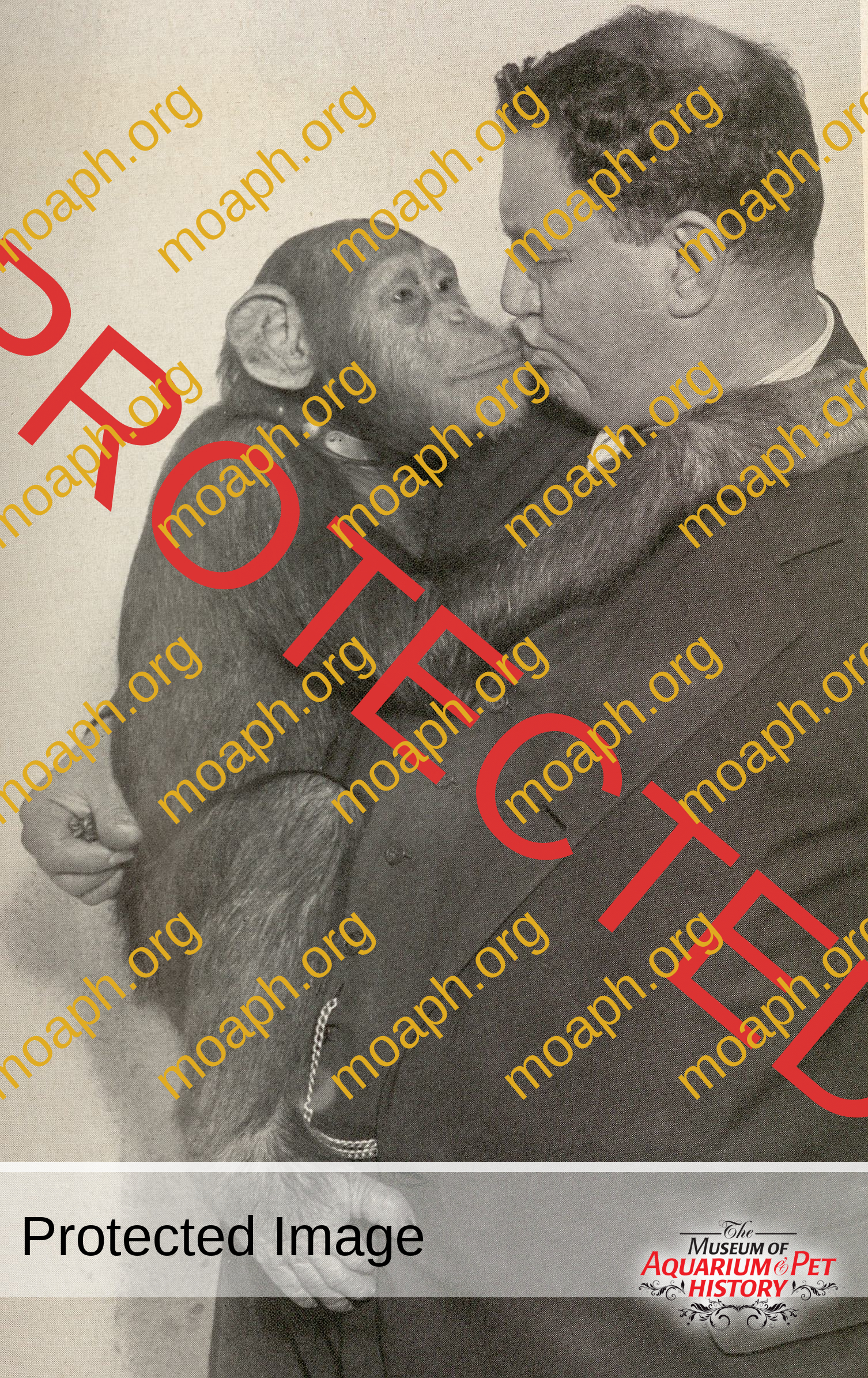
The Australian, Ellis Josef, an animal dealer in New York, two meters tall and correspondingly corpulent, with a chimpanzee.
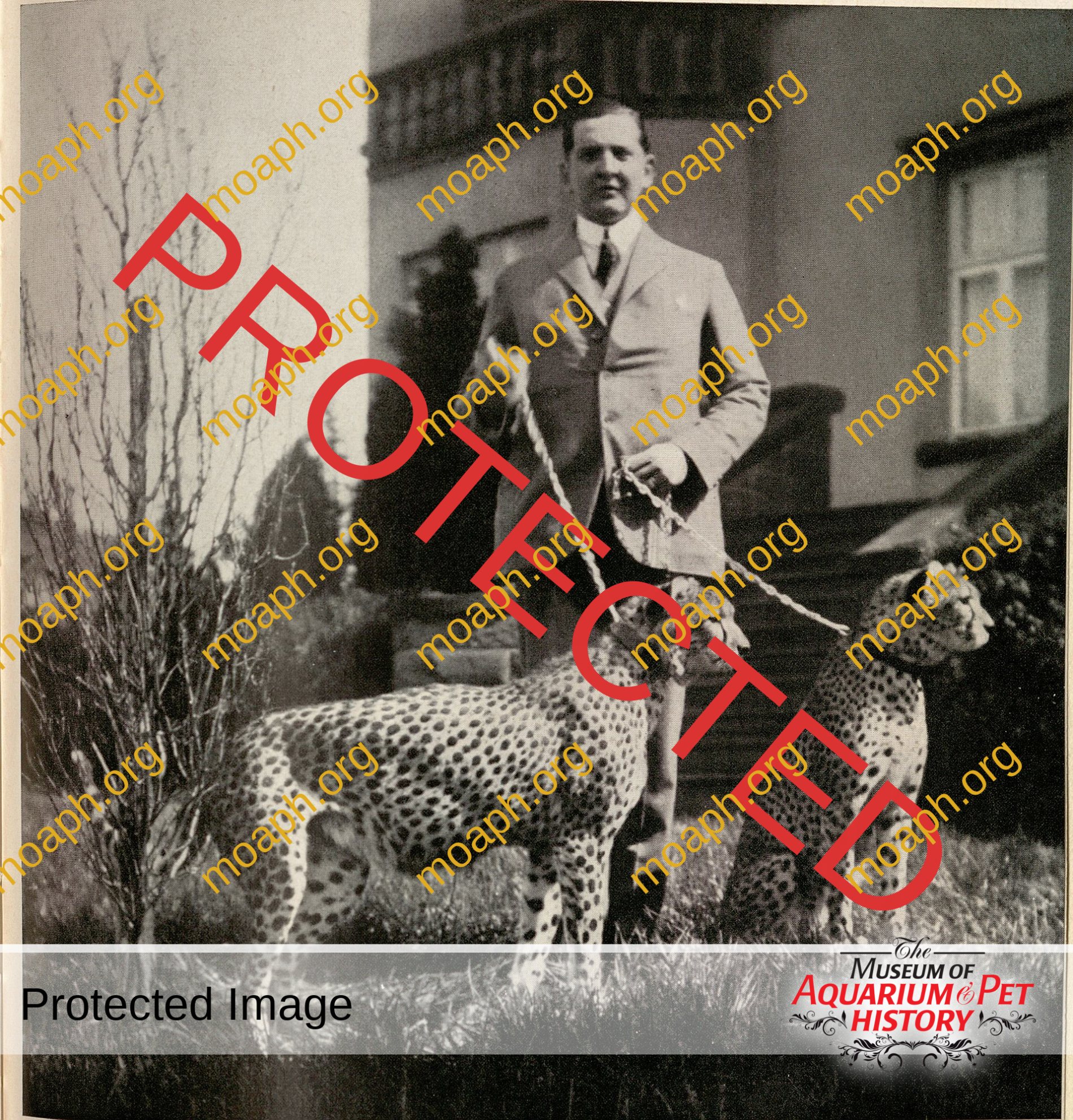
Hermann Ruhe, the young head of the Alfeld company, around 1925 with two tame cheetahs in front of the villa on Kalandstraße.
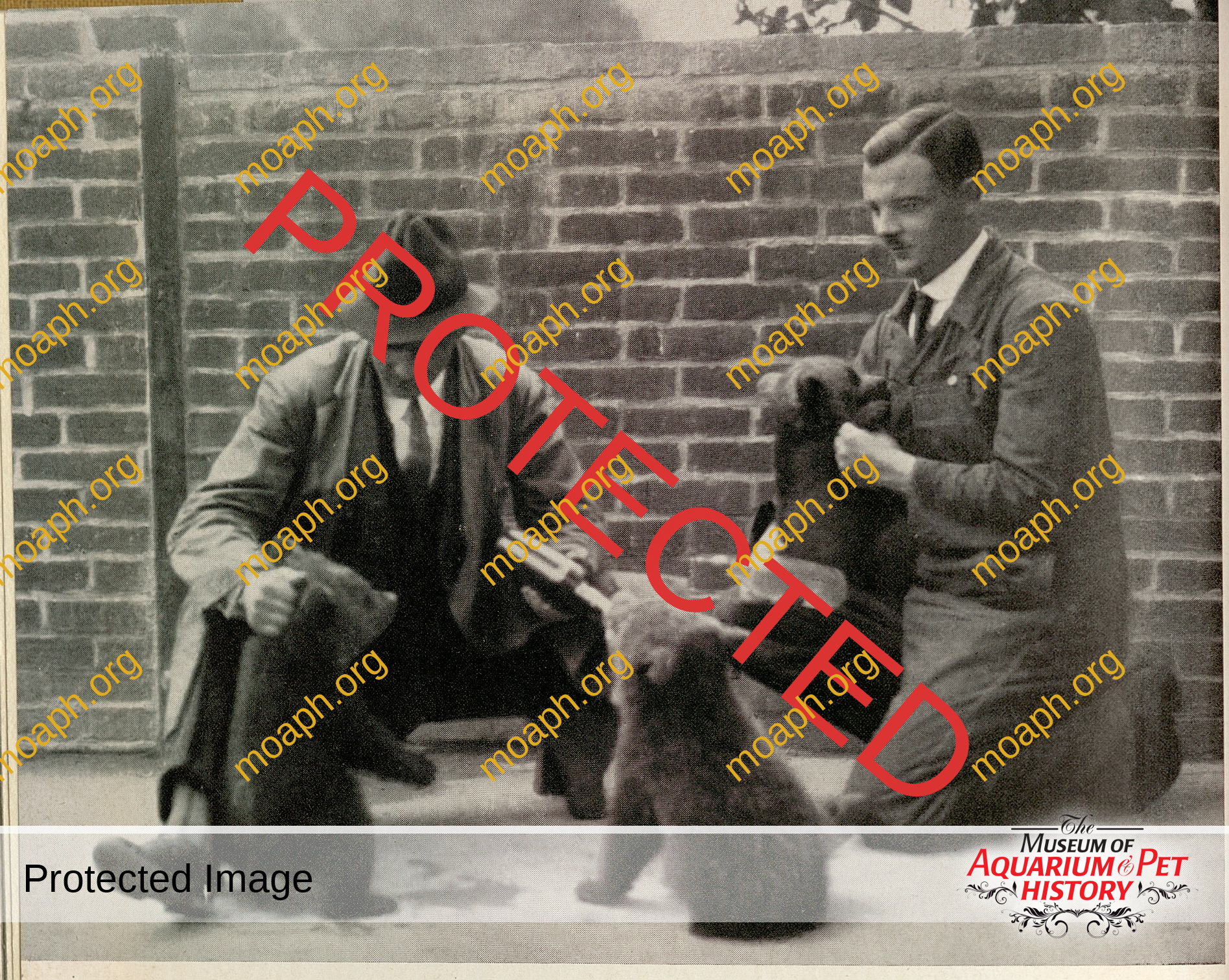
The animal collector Dr. Havestadt (with hat) and Carl Eiffert feeding young brown bears, who usually develop a healthy appetite, in Alfeld.
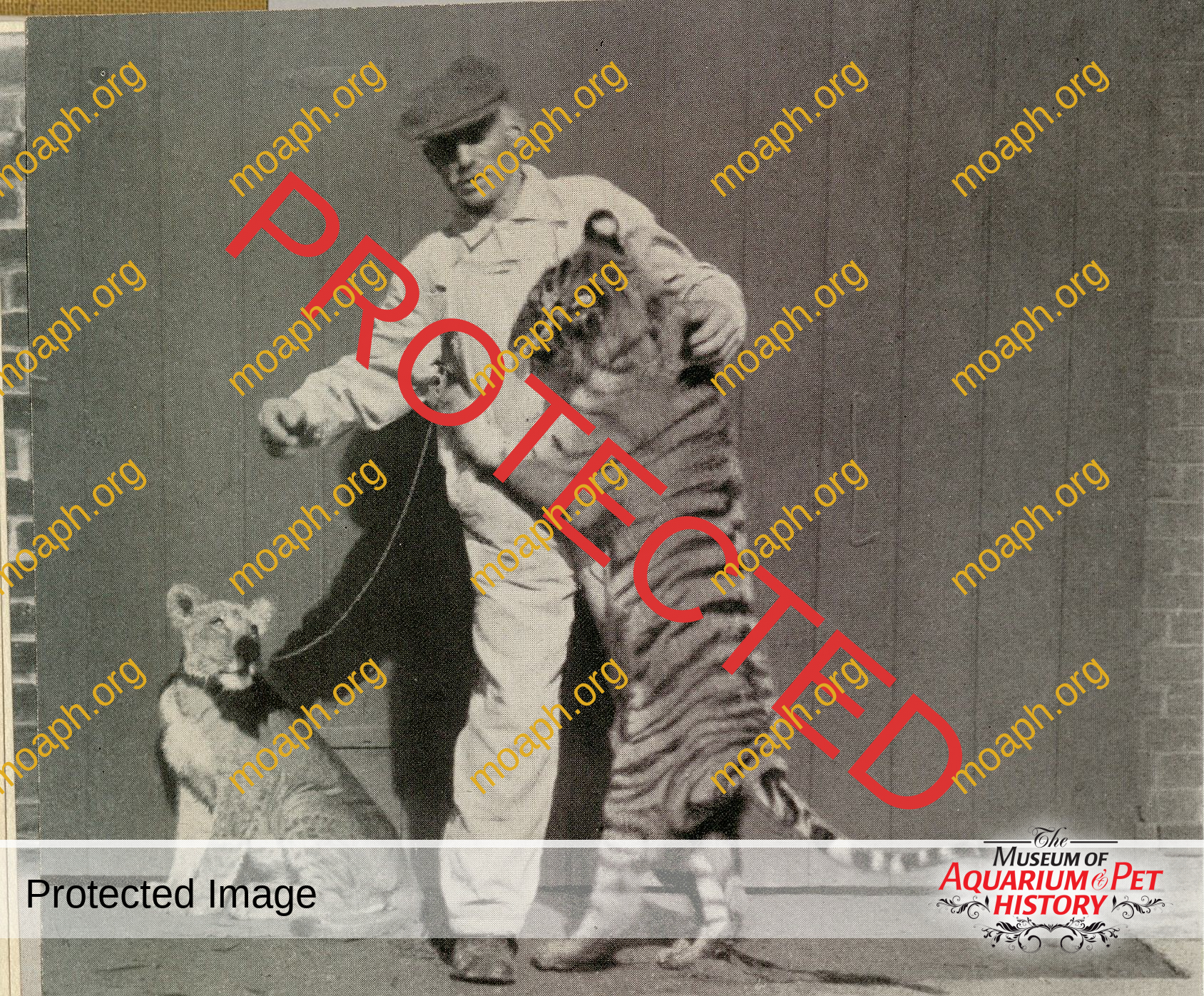
Oberwarter Seigfried, affectionately loved by all the animals, plays with a young lion and a half-grown Bengal tiger.
Love for animals is part of the business! Even Procurator Plawitzky takes care of the well-being of the living trade objects, as far as his time allows.
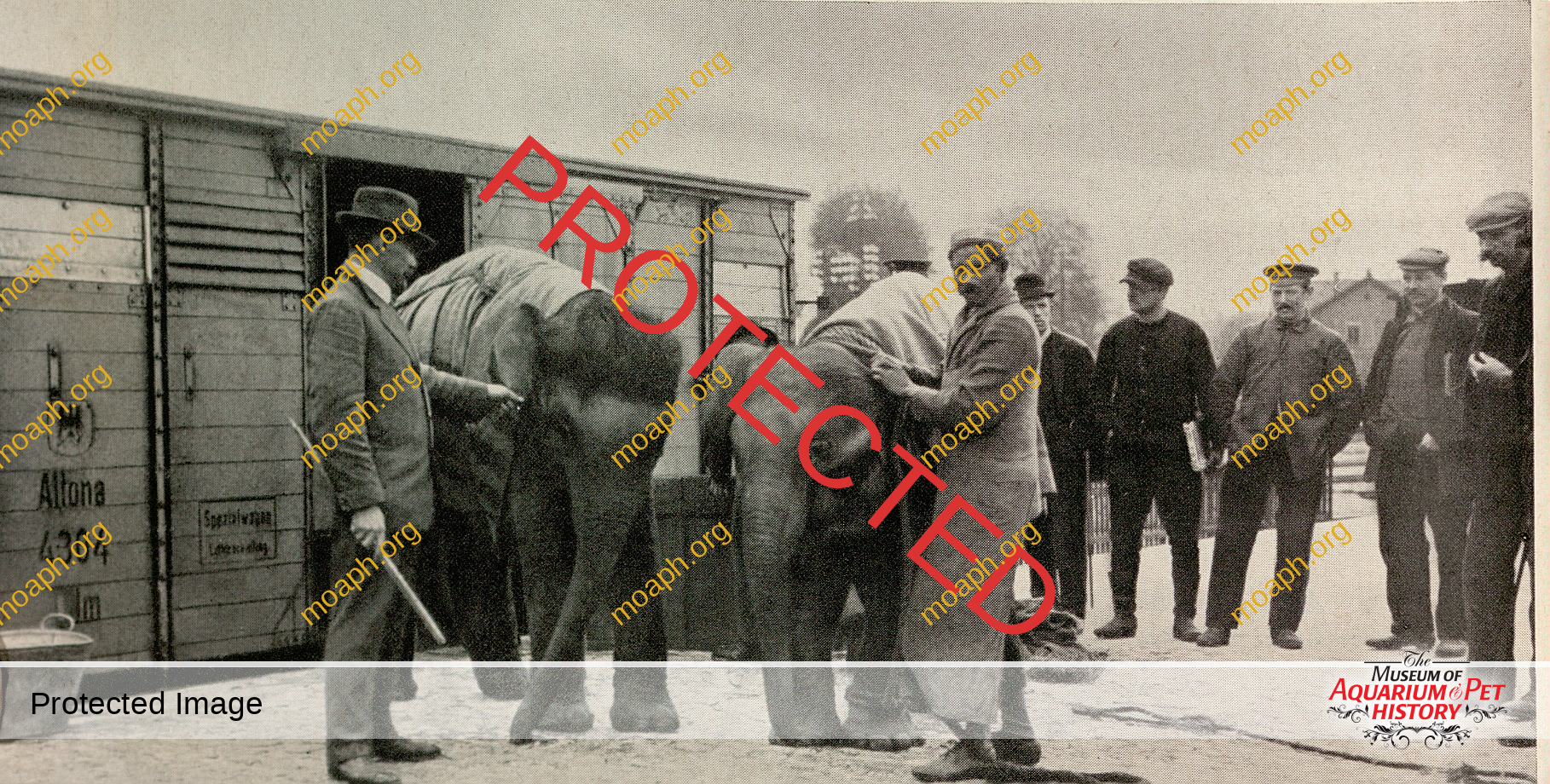
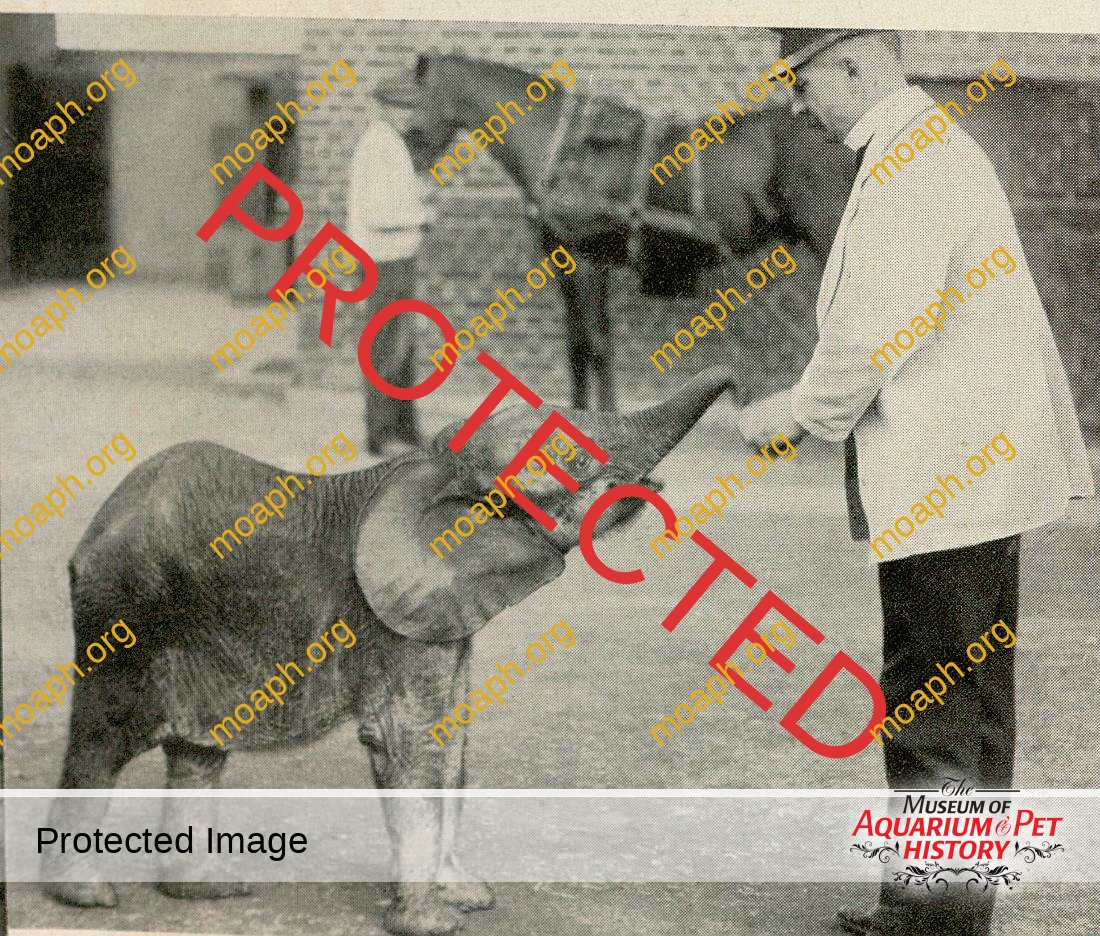
Karl Kreth (with hat) unloading warmly wrapped Indian elephants at the Alfeld train station. Next to him is one of the native elephant keepers.
Illeneb’s training sessions resulted in turbulent acts; they were not necessarily tailored to the taste and nerves of the German public. They mostly ended up in circuses in the eastern states, the Balkans, where they were more successful than in Germany.
In 1925, the two sea lion tamers Nansen and Carl Frohn joined, both experts in “sea lion soul studies.” By the way, Carl Frohn II is the son of Carl Frohn, who was apprenticed with his father in Alfeld, later became an animal keeper, and eventually made the “Marine Studio” in Miami, Florida, a famous aquarium, where he now trains dolphins.
And in 1925, Rübner, another predator tamer who, unlike Illeneb, worked exclusively with young animals, joined.
The training halls at the Weisse Erde (White Earth) were in full operation, and I succeeded in recruiting a well-known man: Karl Mölker—a student of the famous tamer Richard Sawade (1847-1932) from the old Hagenbeck School2
The circus, for which he traveled the world, printed its programs on silk! Particularly remarkable were his successes in Italy, where the ladies especially admired him—a favorite with women—and he fully deserved the sympathy shown to him.
His most remarkable training act was the Sofa im Kafig (Sofa in the Cage). Mölker could lie serenely on a sofa placed inside a cage amidst a group of predators; above him lay a lion, with its head snugly resting on his face, while a pyramid of predators built up around him, without Mölker, who was defenseless under a fully grown lion, moving a finger. Whip and weapon lay carelessly on the floor of the arena—a powerful image that triggered storms of enthusiasm among the audience.
Mölker could immediately tell whether a young lion or tiger had a particularly good character and quickly understood what was happening.
These were then the animals with which he practiced tricks, such as throwing the whip away, driving a tiger with his chest toward the cage door, making the predator hiss, and pushing it out of the arena into the passageway. This sold excellently; the audience wanted to see such things.
2MOAPH: The Hagenbeck school pioneered by Carl Hagenbeck is best known for revolutionizing the way wild animals were trained and displayed in circuses and zoos.Once it became known that we in Alfeld had a good training act with such a variety of animals—predators, bears, monkeys, and sea lions—the circus directors came not only from Germany but also from foreign circuses to purchase animal acts with or without a tamer.
Initially, I would say, “Tomorrow, Director So-and-So from Circus So-and-So is coming to watch your act.” “The result of this was that the trainer became nervous, and his nervousness transferred to the animals, especially to monkeys or sea lions, which are particularly sensitive. They then promptly messed up the entire act, and everything had been for nothing.”
“No, Mr. Ruhe!” the circus director would say. “The act isn’t ready yet!”
After this happened twice, I didn’t tell the tamer anything about a potential client coming. In the side doors of the training halls, there were peepholes, so the directors could watch the training acts without the tamer or the animals sensing that something special was going on today; this method proved successful.
Training didn’t always go smoothly. There were some incidents that delayed or even interrupted the work. If an animal was handled too harshly or incorrectly, it would become shy and would have to be taken out of training for fourteen days to forget the incident before the tamer could begin work again. However, this did not hinder sales; they could only be slightly delayed by such incidents.
My first year in independent business became a successful year. To my great joy, my wife also gave me my heir in November, whom I named Hermann. My friends immediately called the tiny screaming bundle “Hermann III,” while my now one-and-a-half-year-old daughter Christel began to say “Männe”—a name that stuck with the boy for years.
The sale of trained and untrained animals flourished. Among other things, in 1924, I sold: 18 elephants, 25 lions, 13 tigers, 25 leopards, 4 jaguars, 5 cheetahs, 5 panthers, 33 polar bears, 10 brown bears, 12 hyenas, 26 dromedaries, 5 camels, and many smaller animals.
One of the main buyers that year received the animals “on loan,” one could say— “on a trial basis.” It was the Zoological Gardens of the City of Hanover.
This zoo had been closed since 1917 and was only reopened in the spring of 1924. It was natural that the neighboring and therefore well-known animal trading company Ruhe was entrusted with the delivery or procurement of most of the animals needed for the zoo, which began in 1924.
I met the city of Hanover, which wished to make a new beginning with great caution3. Initially, I provided the city with animals worth around 400,000 marks4 on loan. The feeding costs were to be borne by the zoological garden—as well as the salaries of the keepers from Alfeld, whom I brought over, so that the new zoo staff could be trained. I was lucky in that the animals were completely taken over by the city of Hanover the following year.
All this was nice and good. Everything looked bright again. Only one thing went terribly wrong.
3MOAPH: In this case, the author is personifying the city of Hanover to compare it himself in their shared struggle of restarting in post-war Germany.
4MOAPH: 1.7 Million in USD today.
I received a letter from Professor Antonius5 from Schönbrunn Zoo in Vienna. He wrote to me that he had met the son of an acquaintance: Lieutenant Unterwels, who had been interned in Africa after the First World War. He told me that the lieutenant had fought under Lettow-Vorbeck6 in the Schutztruppe and had already been stationed in Africa before the war. Unterwels would like to return to East Africa—did I have any opportunity for him?
He advised me to inquire directly with Lettow-Vorbeck about the lieutenant.
Since I was used to working closely with my collectors—just like my father and grandfather—I followed the professor’s advice and wrote a letter in which I asked the general for information.
In fact, a reply soon came from Lettow-Vorbeck: he was pleased to hear something once again about one of his best officers. He would appreciate it if it were possible for me to do something for the first lieutenant.
I had already planned to visit Professor Antonius in Vienna and decided to make the trip. It was to be my first visit to the beautiful city on the Danube.
Of course, I also met Unterwels, who was staying in Vienna with his family. He arranged a pleasant evening, which we spent with his two very beautiful 18- and 19-year-old sisters in Vienna’s old town.
Page 100:
The evening turned into a long, joyful celebration that lasted until the early morning hours. But I didn’t waste any time recovering. I invited Unterwels to my hotel at 9 a.m. to discuss business matters and went back at noon. The lieutenant was a sympathetic, upright man of impeccable conduct; just a little older than I. I liked him very much, and I made the arrangements perfectly: From then on, the retired lieutenant became an animal collector for the Ruhe company.
5MOAPH: Otto Antonious (1885-1945) was the director of the Vienna Zoo and a prominent zoologist.
6MOAPH: Paul Emil Lettow-Vorbeck was a colonial officer in East Africa during the outbreak of the first world war. He led guerilla warfare tactics on the allied troops during the early years of the war. He was revered as a German national hero.
A short time later, he was already on his way to Porto Amelia in Portuguese East Africa, equipped with 20,000 Marks7 in cash.
Finally, the first letter arrived. It was very interesting. He had, as he wrote, already gathered a considerable number of animals. To reinforce these pleasant assertions, he included a number of very promising photos showing him with the animals in his camp.
I breathed a sigh of relief. After all, he was a newcomer as a collector and I had stored up concerns about him due to his lack of expertise.
I immediately telegraphed back: “When will everything be ready for shipment?”
Unfortunately, I received no answer. Weeks passed.
The explanation came when an export merchant from Hildesheim visited me in my Alfeld office. He had been in East Africa, and right near the place where Unterwels had settled a few months ago.
He introduced himself. Then he said, “Mr. Ruhe, I’m sorry to say this, but I feel it’s my duty to inform you, as a fellow countryman—I’m from Hildesheim—that Unterwels, with whom I was together with Lettow-Vorbeck, does indeed have some fine animals—but rarely while sober!”
This didn’t surprise me much. I had almost expected something similar after such a long silence.
My visitor continued: “If I may offer you advice, Mr. Ruhe—send someone immediately to pick up the animals. Otherwise, I’m afraid you won’t see any of them.”
“This is a fine mess,” I said. “But who can I send so quickly? All my people are out on the road… What should I do now?” I thought to myself: Who among the collectors is currently on the road and where? “Would you perhaps like to go there yourself and pick up the animals?” I asked the visitor.
Page 101:
He looked at his shoes. He hesitated: “I’ve been away for years, and my wife would certainly not like to see me go again. I just came back from Africa and am happy to be back in Germany.”
7MOAPH: 88,550 USD today
Suddenly, he seemed to have made a decision: “But if I can do you a favor, Mr. Ruhe, and if something can be salvaged from this financially, I might go.”
In the end, the arrangement was made. He received full powers of attorney from me, instructed Unterwels to hand over all the animals to him, and left. Of course, not without money. To salvage whatever could still be saved, I had to spend another 10,000 Marks8.
It was agreed with the export merchant from Hildesheim that he would telegraph me as soon as it was clear when the animals were loaded at the camp, so that I could send an experienced collector to Porto Amelia to accompany the animals on the ship transport to Hamburg and take care of them.
No sooner had my new representative arrived in East Africa than he sent me a telegram: “Unterwels dead—animals eaten by natives.”
I was stunned by this tragic news!
A short time later, another telegram arrived; the export merchant reported that he had saved a small animal transport himself!
That was, thank God, a joyful surprise after this dilemma. I personally received him and his small transport in Hamburg.
“It wasn’t much more, Mr. Ruhe,” said the man from Hildesheim when we greeted each other. “But I hope it will at least be enough to cover your worst losses.”
It was quite respectable, considering he was a newcomer, indeed, an absolute layman in the industry. After all, there were a few fairly good, healthy antelopes, so at least his trip had paid off.
Unterwels was also dead. What he died of—whether from an animal injury or an illness—my representative was unable to find out.
END OF CHAPTER 7
8MOAPH: 44,327 USD today