Wilde Tiere Frei Haus (Wild Animals / Free Delivery) – Chapter 8 – Kamele Sind Doch Kluge Tiere (Camels are Indeed Clever Animals)
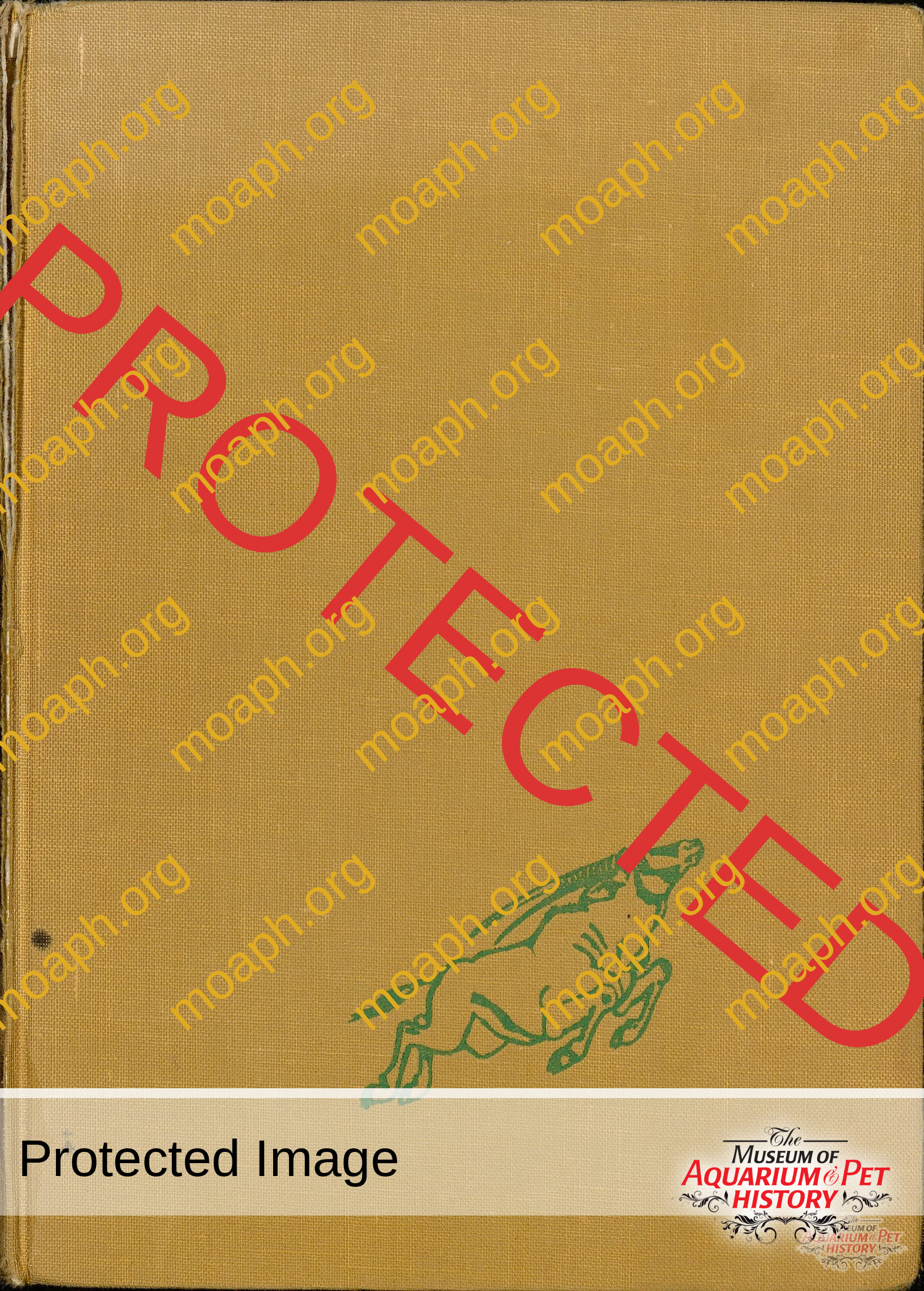
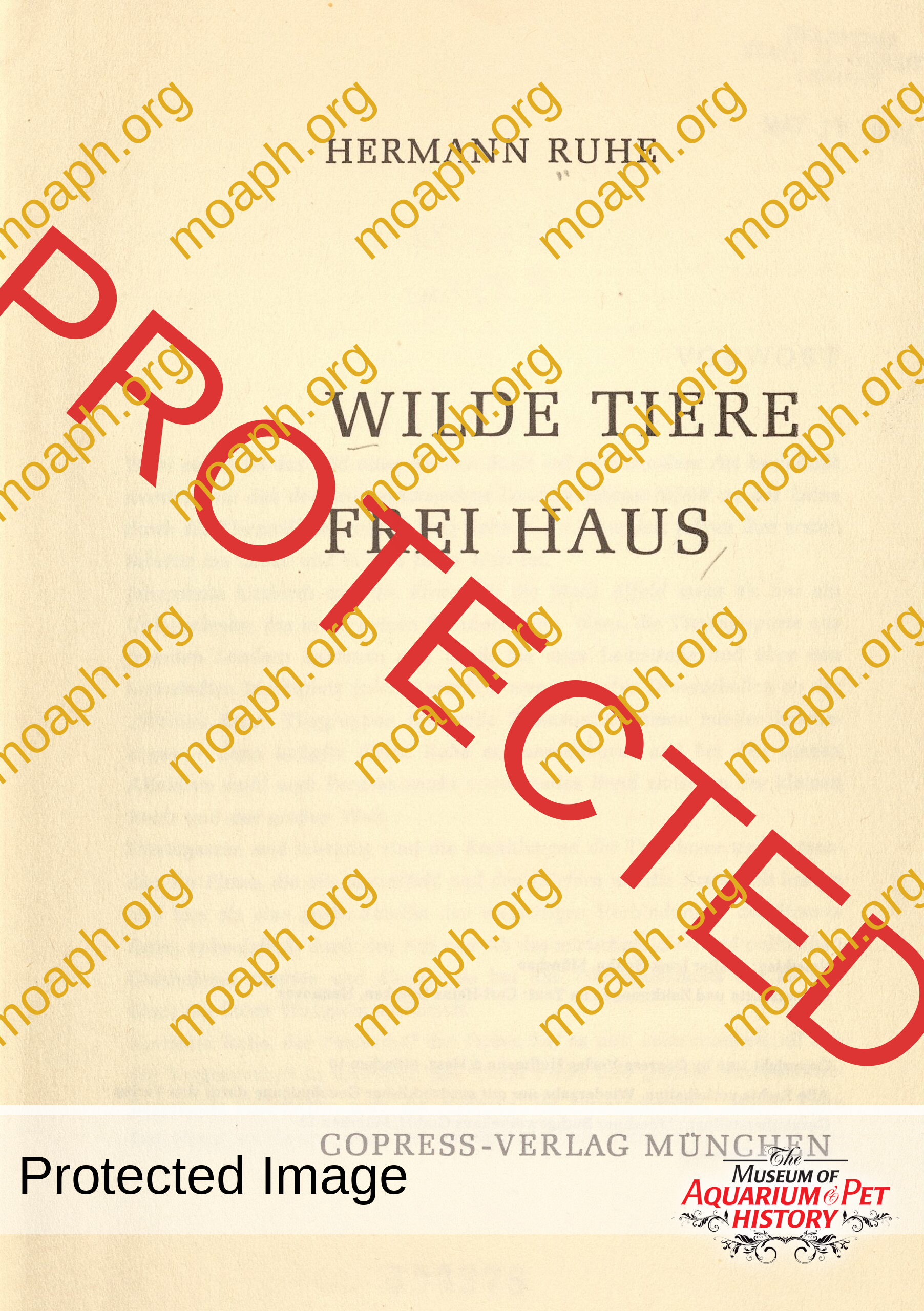
Starting in September 2024, the Museum of Aquarium and Pet History (MOAPH) will be releasing a chapter a month on the translated autobiography Wilde Tiere Frei Haus (Wild Animals Free Delivery) by Hermann Ruhe.
Firma Ruhe (the Ruhe Company) was the name of an animal trading company based in Alfeld, Germany from 1860 until its official closure in 1993. During this time, they were world renowned for their importation and exportation of exotic animals and birds from all across the globe, even supplying many zoos as well as circuses. Having survived both world wars, Firma Ruhe continued to dominate the world of animal trading until the mid-20th century and is a testament to true determination and leadership.
Wilde Tiere Frei Haus (Wild Animals Free Delivery) also documents the plethora of adventures, failures and successes endured by all those a part of Firma Ruhe. Through Hermann Ruhe’s great storytelling, we are able to visualize and understand the world from the perspective of animal collectors navigating through some of the most difficult situations, often not knowing whether or not they would ever return home. His recollections provide a vivid portrayal of the challenges and triumphs faced by the company, and give readers a glimpse into the world of animal trading.
Fortunately, my other collectors were fully compensated for the loss I suffered in East Africa. Karl Kreth and Albert Meems, Fritz Tegtmeyer, and Carl Darnedde Jr, the son of our old procurator1 Carl Eiffert and Ernst Voss – they all worked tirelessly and were deeply involved in the matter. Shortly after the war, my father hired a new collector: Ernst Bussius, who had worked for Baron Friedrich von Falz-Fein in Askania Nova from 1901 to 1917. Bussius spoke perfect Russian. No one could have been better suited to handle negotiations with Soviet zoos. At the same time, he also took care of the difficult import, export, and transit formalities at the Russian trade mission. The barter trade of my company with Russia would later reach a considerable scale.
We delivered South American, African, and Australian animals to Russia, and in return, we received splendid Siberian tigers, camels, magnificent polar bears, wild horses, Kashgar sheep, Siberian ibexes, and many other animals. We even managed to make a first import to Germany: red-breasted geese!
Bussius was usually on the road for about a quarter of a year per trip and visited Moscow, Kiev, Leningrad, and Kharkov for me. Bussius, who later also wrote articles for magazines, was a good storyteller.
The story of one of his first trips had made it back to Alfeld, in which he wrote about his journey in Poland which had lasted four days and three nights:
Shortly before the Polish-Russian border, at a station where there was a shortstop, I was supposed to get help from the people of the Moscow Zoo.
They told me that among the animals was a half-grown elephant, which had not been in captivity for long and was therefore very restless. Everything went well until then. I had given him a sedative, which took effect after fifteen minutes, so that they could catch him again, but despite this, he began to run around the station yard, climbing over the transport cages.
The other eleven romped in the wagon between the cages, where I could no longer calm them down, before the elephants became nervous as well.
At night, shortly before the aforementioned station at the border, the elephant suddenly broke through. He tried to break the cage by using the front bars as leverage and at the same time pushed back with his trunk. Fortunately, the cage door held, and I hoped the last night would pass without incident before I, as mentioned, was to receive help from Moscow the next day.
The elephant finally fell asleep out of exhaustion. Suddenly, there was a loud crash. Then came a spine-chilling scream from the elephant, which made me fall from my straw bed.
The only lighting in the wagon was a weak wind lantern. Still, I could hardly see what had happened. The elephant, which had been chained by a front and a hind leg, had loosened the chain on the front leg and turned the chain on the hind leg. Then he stumbled and lay with his head trapped against the outer wall.
Neither was I able to loosen the chain from the hind leg, nor was it possible to secure the chain on a crossbar, as the entire weight of the elephant was hanging on it. The cage door was locked. With an iron wedge, I tried to loosen the crossbar, which succeeded but the wood was too hard. While I was still desperately working on the hole, I accidentally hit the storm lantern. I stood in the dark, squeezed between the wall and the cage door. The space between the cage door and the wagon wall was barely 30 cm. If the door had given way, I would have been crushed like a pancake. But I didn’t think about that. The elephant was no longer screaming; he was only gasping.
1MOAPH: Managing legal or financial affairs of a company or business
In addition to Bussius’s depressing situation, there was also the fear that the elephant could suffocate in the compressed position he was in. Fortunately, the collector had a flashlight in his pocket and now used it to hit the crossbar. The bar holding the elephant was hit and broke, freeing the elephant’s head.
With a deafening bang, the crossbar holding the elephant’s chain came loose, and Bussius was thrown to the ground. The door flew open under the pressure of the elephant’s head, pushing against it by 30 cm to the wagon wall.
Bussius continued in his vivid description:
“But the elephant did not move. The gasping had stopped, and I was struck with cold dread—dead, I thought. With my last bit of strength, I struck the trunk, which was coiled around the elephant’s body, and felt that the animal was no longer breathing but was still warm. After what seemed like endless minutes, the bull suddenly stirred and slowly raised his head like a drunk. Trembling and hesitant, he began to move again. He hesitated, not knowing whether to be friendly or angry, and kept nagging me with the trunk I had hit him with, but he no longer resisted; in those few minutes, he had become tame!”
Bussius’s letters read like feuilletons2; he also enjoyed writing, and thus, he received insights into many difficult transportation situations that my other collectors otherwise did not describe in such detail.
On another occasion, Bussius lost a larger number of camels and about 20 yaks in Odessa on an Italian steamer bound for Trieste3. The ship first entered a strong storm—still in the Black Sea. After the Mediterranean and finally the southern part of the Adriatic Sea near Brindisi was reached, the storm, which had been raging for days, intensified into a hurricane. Bussius also had a dramatic report this time—now about his return journey.
On the deck of the ship were mast oxen and sheep, intended for Trieste. Everything that was on deck was washed overboard by the hurricane.
Including the mast oxen and sheep!
Our camels, which Bussius was supposed to bring to Alfeld via Trieste, were fortunately stowed in the lowest hold in the front part of the steamer, and the yaks were in the tween deck4 of the same section. There was no lack of air.
The hatch above the animal holds had been closed with a sailcloth cover as the storm arose. The animals underneath were in danger of suffocating.
Bussius spoke excellent Russian, but his Italian was not as good. The boatswain5 on the ship was a Montenegrin, who fortunately understood a little Russian and had already shown kindness to my collectors.
Even now, in this dire situation, the boatswain declared himself ready to stay with Bussius at the hatch to provide the animals with air. The two men loosened a board from one side of the sailcloth cover and saw a hatch board. They remained seated on either side of the hatch, holding the hatch board with one hand and the sailcloth with the other to let air into the hold for the animals. As soon as a strong spray of seawater swept over the deck, they quickly covered the hatch with the sailcloth to protect the animals from getting wet.
2MOAPH: A french style newspaper containing light literary content
3MOAPH: Triste is a city in Italy.
4MOAPH: Intermediate deck situated between top and bottom decks.
5MOAPH: A senior position on a ship responsible for overseeing the crew members and equipment.
They did all this against the captain’s explicit order, who had instructed that this hatch be completely closed as a safety measure. Neither of them thought that a real wave could indeed come.
But one did come! It washed the boatswain away from the hatch. Bussius quickly pulled the sailcloth over the opening, just as a second wave hit and took him with it. He landed on the railing of the foredeck, where a sailor managed to catch him before he was swept away. The washed-away boatswain also found himself on the foredeck again, where he was thrown against a wall. His knee was injured, but he was safe.
Of course, the captain did not miss this scene. He immediately had the hatch closed again and scolded both my collectors and the daring Montenegrin, who later recovered from the shock with a good vodka.
Bussius pondered. What would become of the animals? They could not survive long in the tightly closed hold without air.
He spoke to the captain again. The captain insisted that the ship was worth more than the animals and that the ship was more important than the animals—especially since there were also people on board! He strictly forbade Bussius from entering the foredeck again.
Things looked grim on the ship. The lifeboats were torn from their holdings and shattered or drifted away. In the second-class dining room, a steward knelt on the floor and prayed.
The storm worsened. As it was later discovered, several ships sank that day. Even as the evening approached, the storm showed no sign of abating, and the night was pitch black.
“I decided,” Bussius said, “to make my way to my animals. I sneaked out, holding onto the railings with all my strength, and made my way up the stairs to my hatch on the foredeck. The darkness helped my plan; the captain didn’t notice me.”
“I did manage to get to the hatch, open the sailcloth, and lift a board just enough to crawl through. Then I climbed down the steep iron ladder. Fortunately, the light was still burning—what I saw was horrifying. They were standing on iron floors, with the straw underneath them washed away by the storm.”
On the wet, smooth iron, the animals slipped helplessly. During the loading process Bussius had tied them to a ledge that ran along the walls, fastening them with ropes. Some yaks lay on the floor, while others struggled to stay on their feet, holding their long-haired tails high over their backs. A few animals were roaring—it was more like a desperate grunting. Others had already broken one horn against the walls and looked pitiable. The ropes tied around their horns had come loose, and with bleeding horn tips, the poor animals had been thrown around by the storm on the swaying floor. I must say that just hearing this made me feel hot inside, especially since we had been taking care of the poor yaks with their broken horns at Alfeld since yesterday, giving them the best veterinary treatment.
“With considerable effort, I tied one of the half-toppled animals back up, securing it with a rope around its neck to the same ledge where it was originally tied,” Bussius continued. “But I was careful to keep my distance from them, as they were so agitated that they were pressing against the wall. The tied animals even wanted to take me on with their horns. I had to catch a monkey that was moving around the ledge, trying to stay as high above the animals’ heads as possible—and that was difficult because the space was relatively low. Finally, I managed to do it. Exhausted, I stood still for a moment to catch my breath. Then I descended one level lower to where the camels were, which had been stowed in the lowest hold. When I opened the hatch above them, I could barely see them through the steam.”
The steam had formed from the body heat and exhalations of the forty animals in the cramped space.
It is often said that camels are dumb. But they are absolutely not—they are sometimes incredibly stubborn. It is well known that camels, when it comes to their performance, can hardly be surpassed by any other animal. As pack or riding animals, they prove their strength and incredible endurance.
“I would have wished for a better space for the animals during loading in Odessa—but that wasn’t available,” Bussius continued.
I knew that it would have been impossible to secure enough hold space so that the animals—otherwise individually packed in transport crates—could be transported as usual. At that time, few steamers were leaving Odessa, and we had to be happy that Bussius was able to bring his animals on board the Italian 7,000-ton steamer at all.
The camels lay quietly together on the thick straw and supported each other so that they wouldn’t roll around! They calmly chewed their cud.
Here, far less had happened—in other words, practically nothing, which truly speaks to the intelligence of camels!
Also of great interest were the reports and stories from Karl Kreth, who kept them much shorter.
Sometimes he talked about the then still large and numerous elephant herds in British India. Our gathering place was in Calcutta. Kreth visited, among others, the annual large elephant markets, also called ‘fairs’, where up to 500 elephants from all provinces of the country were often offered. These markets usually lasted a full month and were attended by countless Indians. The Vice-King, as well as almost all Indian maharajas, rajas, and nabobs6 appeared there. Huge tents were set up to accommodate these high-ranking individuals.
On these markets, Kreth often bought for me, especially elephant cows7, which he transferred to our camp in Calcutta, the acclimatization and gathering area. Tigers, monkeys, birds, and other animals from India, as well as pandas (little red bears), leopards, bears, wild goats, and wild game from Tibet and Bhutan, also came there to be acclimatized and prepared for feeding before being transported to Alfeld or directly to New York.
Kreth also had his share of transportation difficulties! From the elephant markets or other procurement sites, the animals sometimes had to endure day-long marches on foot before they could be loaded onto a railway line, which led to more or less extensive detours to Calcutta. There were times when everything was submerged during river crossings: elephants and people—and the luggage, including the paper money bags, which then had to be carefully dried again. Once, despite all precautions, an elephant managed to grab Kreth’s documents and—ate them. Kreth had unbelievable difficulties until all the formalities were settled again and new papers were issued.
Even the procurement of food was not always as simple as one might assume. It happened that during the marches planned for the elephants, they had to traverse regions with little vegetation, so Kreth had to send someone ahead to arrange for good fodder8 for ox carts to be sent to them.
6MOAPH: Terms used to denote rulers over territories in south Asia.
7MOAPH: A direct translation of the word ‘Elefantenkuh’ meaning female elephant.
8MOAPH: Fodder is coarse food eaten by domestic animals such as sheep, cattle and horses.
That the evening gatherings at the regulars’ table in Alfeld—especially when several collectors arrived at once and laymen listened in—did not always go without some exaggeration is understandable. Sometimes I heard such incredible stories that I laughed until I cried over the flourishing imagination, which the astonished listeners usually took as the gospel truth. Albert Meems, the Dutchman, despite his broken German, could tell wonderfully funny stories. It’s no wonder that stories from these gatherings often spread beyond the immediate circle and sometimes were even printed, with the events being referred to as tales from the “Jungle on the Leine”, though with a certain caution.
To distinguish where imagination ended and truth began—that could really only be attempted by a specialist!
The term “Jungle on the Leine,” was an expression coined in Alfeld and soon became synonymous with curious, yet real events, for every non-Alfelder.
I remember, for example, in 1925, when Bussius brought those camels from Russia, how excursions into the surrounding area—especially to the hill range of the Sieben Berge—were organized for the volunteers and young keepers from Weisse Erde (White Earth). These outings would frighten any stranger. Among the volunteers was Richard Müller, a student of zoology, who interned with me for a few months. Dr. Richard Müller, now the director of the Wuppertal City Zoo, later told me how much he learned during that time, as he already believed then that sufficient practical experience was a useful supplement to theoretical zoology.
Richard Müller also received a few kicks and bites from the freshly imported camels, which were supposed to be broken in and trained for circus use.
At the same time, the son of the director of the Breslau Zoo, Grabowski Jr., was in Alfeld. The volunteers and young keepers slipped a sack between the humps of the camels, tied the ropes under the animals’ bellies—and off they went to the Sieben Berge9.
“Up we go, Mr. Ruhe,” Müller said after one of these excursions, “you can lean against the rear hump—but going downhill is rough.”
The irregular trot of the animals… At the slightest disturbance, they would lay down, and all of a sudden, you’d be lying a few meters lower on the ground.
“Watch out!” I warned the young crew, “Camels kick unexpectedly far!”
Another time, a lion was to be transferred to Alfeld. It was standing in a circus wagon on the farmyard and needed to be moved into a transport crate. All efforts were in vain. Neither treats nor scratches, nor water hoses helped. Even the experienced senior keeper Siegfried had reached the end of his wisdom.
I arrived. “You really are slackers”, I said. “Surely you can manage to move a lion!”
“Nothing to be done, Mr. Ruhe” said Senior Keeper Siegfried, wiping sweat from his face. “We haven’t seen such stubbornness in a long time”.
“We’ll see about that!” I scolded. “What’s the point if we always waste so much time?”
9MOAPH: The ‘Sieben Berge’ or the Seven Mountains are a hill range located in the Lower Saxony region in Germany.
I grabbed a club and gave instructions on how to properly operate the various sliding doors. Then I entered the wagon holding the big cat from the side of the head, climbed into the first, empty section of the wagon, and closed the door behind me. Then I opened the sliding door to the transport crate on the other side and tried to outsmart the lion with a quick transfer tactic. So, as if the grid between us didn’t exist, I stepped energetically toward the lion, raised the club, and roared: “Will you—or won’t you”.
When I raise my voice to full volume, the walls shake. The deathly frightened lion disappeared into the transport crate, and the sliding door clapped shut. I climbed out again. Senior Keeper Siegfried wiped a final drop of sweat from his brow and went back to his office.
Not long after that, something similar happened, as such unnecessary incidents usually occurred in close proximity to one another.
A trainee named Müller was also responsible for taking care of part of the predator house. One morning, at the beginning of his shift, he noticed that a freshly arrived leopard was missing. Müller immediately locked the doors. He then reported the missing animal to the head guard, who immediately sent a message: “See what you can do,” he said to the guard, who arrived at the villa while we were having breakfast. That was all that was needed; I was immediately ready to deal with the situation. After all, this was no world-shaking event and would not be the first time. I knew that Siegfried would consider it an honor to be able to recapture the leopard. The predator house remained closed. The gate was opened, and the bait, consisting of fresh meat, was placed in the cage. The leopard ran around the cages, which had been elevated. In the meantime, the man with the water hose moved away. Finally, everyone took cover behind the chest-high barriers. The two men stood to the right and left with long poles ready, overseer Siegfried had a long whip, and Richard Müller armed himself with a fire hose. We observed how Siegfried and Müller sprayed the leopard with gas pistols. After ten minutes, the leopard indeed appeared from under the cages – but instead of moving back into the cage, it ran under the barn roof. The four of us in the predator house kept the leopard moving. Finally, the latch of the slightly jammed cage door could be heard. The leopard, however, voluntarily returned to its proper place.
After all, the whole affair had taken a few hours, and I was not thrilled by the work and effort needed to correct a keeper’s mistake. Once again, I addressed everyone and gave them a good dressing down. Simply put, the correct closing of the predator cage door must never be forgotten!