William Alford Lloyd and His Connections to American Aquariums
In an obituary for U.K. master aquarist William Alford Lloyd the British journal Nature (July 29, 1880, Page 299) noted that he had been connected with the establishment of public aquariums, either hands on or via mail communications, in the following places: Paris, Vienna, Dresden, Frankfort, Naples, New York, San Francisco, Melbourne, Adelaide, Calcutta, Rhyl, Yarmouth, Tynemouth, Nottingham, Morecambe, Edinburgh, Westminster, Southport, Rothesay and Aston. The Crystal Palace Aquarium in Sydenham, London, which Lloyd is best known for, had been mentioned separately. The currently available information regarding Lloyd’s involvement with these public aquariums varies. With some a good body of material is available. With some others such information is sketchy at best. And there are still others which are not generally mentioned (e.g. St. Petersburg, Kazan and Moscow in Russia. (Lloyd, 1874)) and some others that appear to have for the most part escaped coverage in the modern literature. In this article I would like to address four of these latter cases and provide some information on Lloyd’s public aquarium involvements in America. Lloyd never traveled to America, but via letters and publications he did have varying degrees of involvement. Lloyd was not shy in print regarding what he considered poorly run aquariums. Those that didn’t follow what he considered to be in the “proper way” were so noted. The 1872 and 1876 quotes regarding Barnum’s aquariums that follow are examples of this. Additionally, some visitors from America would have the pleasures (and otherwise) of his company in Germany or England (see Mather, 1897 and Lloyd 1877 below).
Barnum’s American Museum Aquarium & Boston Aquarial Gardens
P.T. Barnum’s aquarium at his New York American Museum opened in 1857. Additionally, Barnum was involved in the Boston Aquarial Gardens which opened in 1859. The use of Barnum’s name herein is in the “corporate” sense in that when his 1857 aquarium opened, he was technically not the owner. Henry D. Butler and John Greenwood, Jr. were such in New York. Later Butler and James Ambrose Cutting were the Boston “owners”. But Barnum, who was considered as an “Agent”, was really in charge of things. He was the man behind the curtain. It would be early in 1860 before he was again, officially, the owner of record (Saxon, 1989).
Lloyd had a strong interest in the history of aquariums (private and public) and wrote regularly on the topic. In his 1872 “A Guide Book to the Marine Aquarium of the Crystal Palace Aquarium Company (Limited)” after both aquariums were long gone the following quote is presented. (I will note that in the five later revised and expanded editions of this publication, which were then designated as a Hand-Book, the same information appears.)
“In America there was an aquarium in Boston; and another one formed a part of Barnum’s Museum in New York; and in all of these the animals were sometimes in a series of tanks, sometimes in only one; but in every instance there was the same defect that characterizes private aquaria, namely, the creatures at first too many in number, too large in size, wrong in kind, ending at last with none at all, combined with want of constant motion in the water (in the form of streams of water, and not merely in the form of bubbles of air), with too much light and heat, developing too much vegetation.” (Lloyd, 1872).
In an 1876 article Lloyd provided, to his mind, the following additional reason for the lack of success at both the Boston and New York aquariums of Barnum.
“Another great evil attended the marine portions of the aquaria at Havre, Arcachon, and Boulogne, just the same as it was in Boston and New York, i.e., the facility which there exists of changing the sea-water, instead of always using the old water, unchanged and clear, because constantly and abundantly oxygenated [sic].” (Lloyd, 1876).
While the above speaks to a lack of success regarding the two aquariums, there is also some available information which shows a more positive approach to the New York Museum aquarium. One of the fun parts of researching such areas is the finding of what would now be called “Easter eggs” or hidden clues. Of course, then they were not “planted” as they are today, but they do exist and to some extent serve the same purpose. One of these involves Lloyd and Barnum’s New York aquarium.
In February of 1867 English physician and naturalist Charles Robert Bree had an article dealing with one of his communications with Lloyd, who at the time was at the Keeper of the Aquarium at the Zoological Gardens in Hamburg Germany. One of the topics covered was the difficulty of keeping seahorses alive in the aquarium due to the lack of knowledge on how to feed them. In the piece it is noted that “Mr. Lloyd was told by an American friend…” how he had observed seahorses feeding. Bingo! An American friend! This was the “Easter egg” of sorts. As another project, I am working on a bibliography of Lloyd and within the gathered materials I found the answer to this “friend” mystery.
“I have been informed that they [seahorses] feed on polyzoa, and that they consume any parasitical growths on bushy red seaweeds. These growths, however, vary much in kind. In 1862 I was told by Mr. Roberts, collector for the aquaria of Barnum in New York, that he has seen Hippocampus thrust its nose into the tubes of Serpulae, and suck out the contents.” (Lloyd, 1867.)
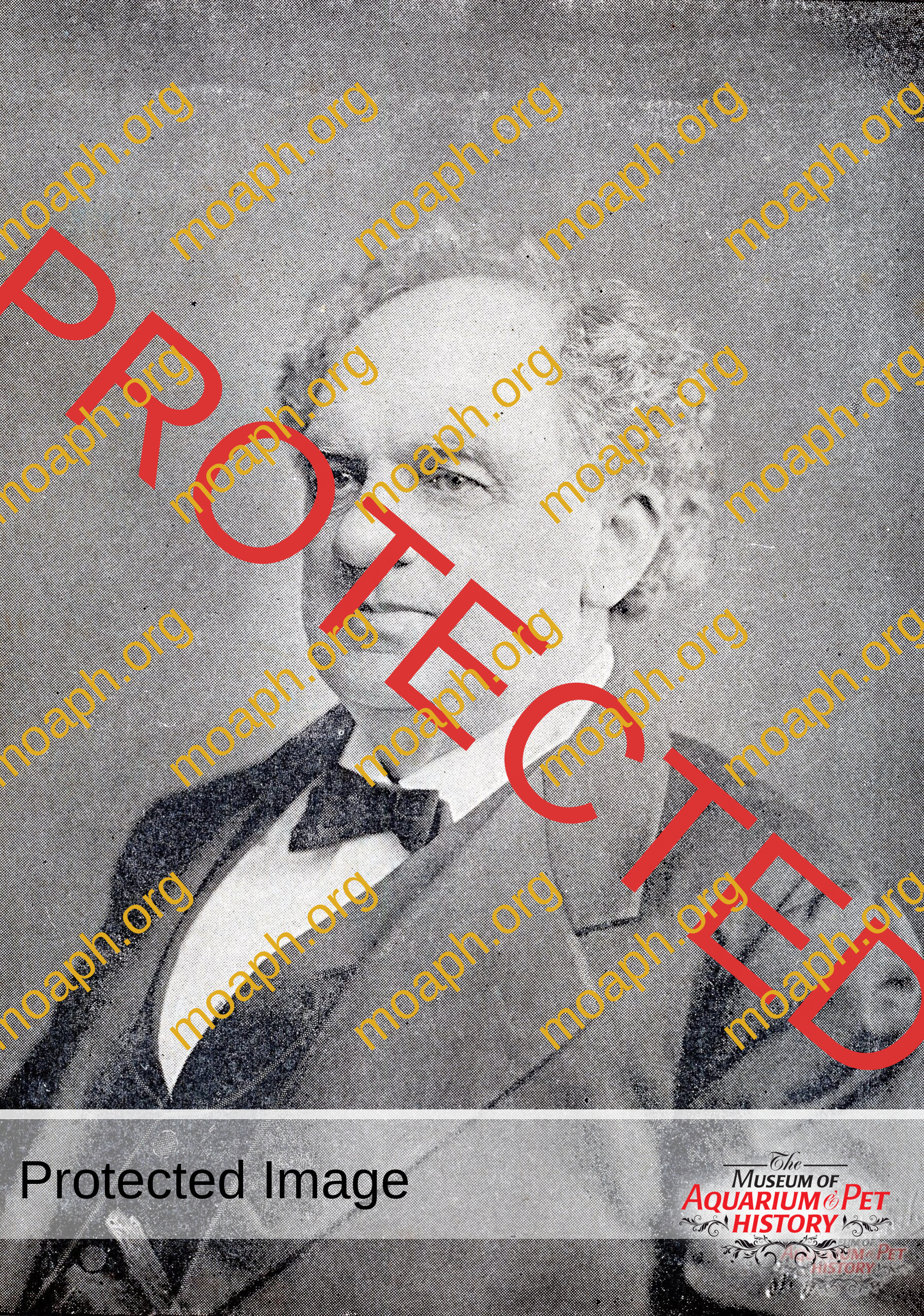
P.T. Barnum – Did he meet with Lloyd regarding aquariums?
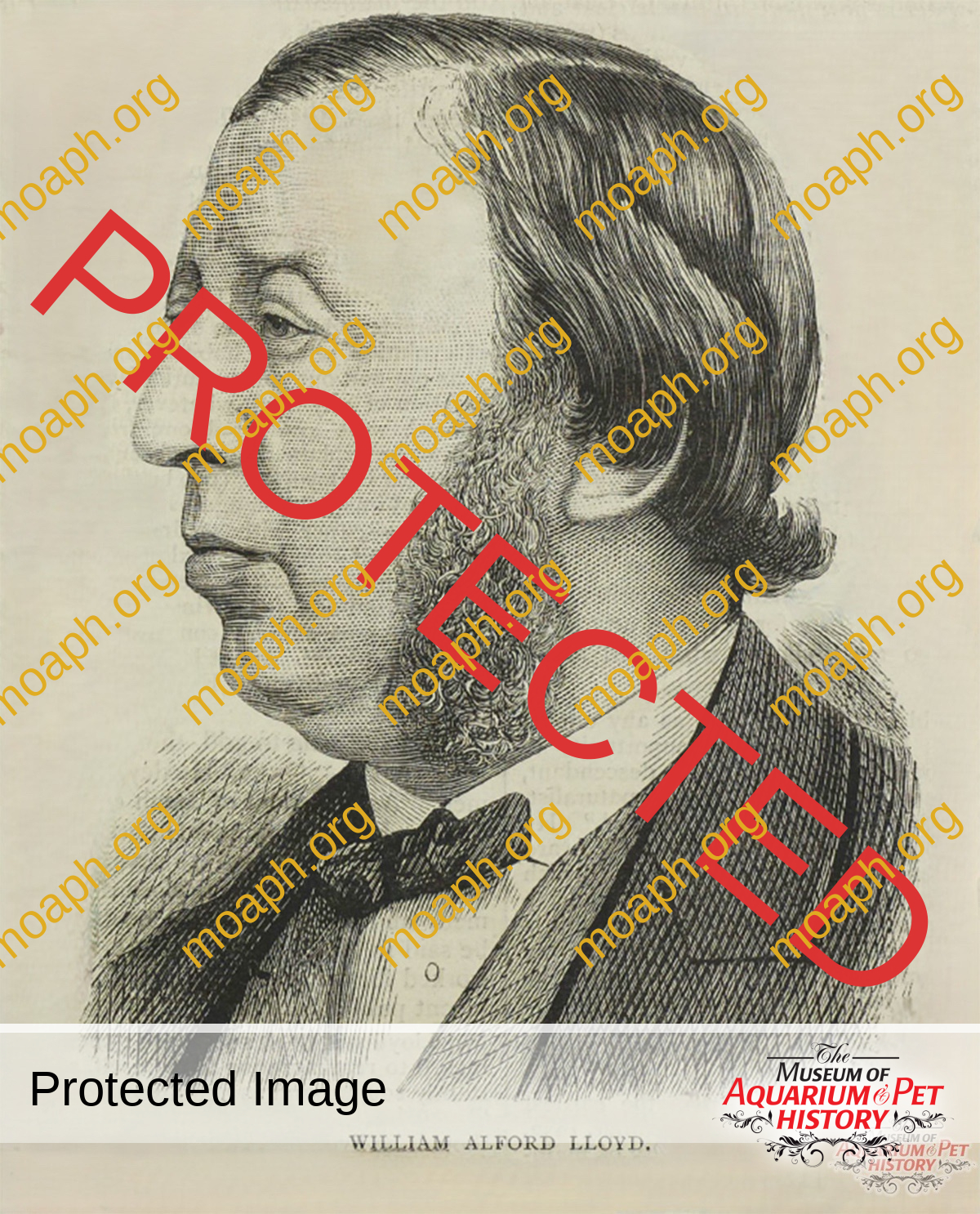
W. A. Lloyd – Did he meet with Barnum regarding aquariums?
That is about as specific as you can get for a direct Lloyd connection to Barnum’s aquarium. The Mr. Roberts is A.W. Roberts. See the sidebar for some comments regarding Roberts.
Sidebar
Some Notes on A.W. Roberts
Alfred W. Roberts, who always went under the moniker A.W. Roberts, is an important, but poorly known, part of American aquarium history. I have an ongoing project regarding him that will be presented herein later, but this does seem to be a good time to at least say a few words on his behalf.
A.W. Roberts was a New Yorker (Brooklyn) with a wide range of nature interests, especially those of an aquatic sort. In his late teens he was collecting and selling aquatic plants to the newly formed aquarium (the “Grand Aquaria”) in Barnum’s American Museum. By 1862, when Barnum was again in charge, he was working for the museum with a specialty in collecting aquatic specimens and did this in New York and around New England. As a part of this he was also second in charge of the aquarium, under William Emerson Damon. During this time, he also honed his skills in art and became a talented artist and professional engraver.
When the Coup and Reiche New York Aquarium opened in 1876 he went on board as Director of Fisheries and collected specimens far and wide. Towards the end of the facility’s function as a true aquarium he was the Superintendent and worked, unfortunately to no avail, to maintain the status of the institution. He also, for a while, replaced Henry D. Butler as the person in charge of W. C. Coup’s traveling aquarium with the New United Monster Shows circus (Finley, 2022b).
Roberts was also a prolific writer and produced numerous articles, which he usually illustrated, during the 1870s and 1880s. Many of these dealt with topics of aquatic natural history and aquariums. Articles of his appeared in a variety of sources including, but not limited to, Harper’s Young People, Scientific American, The American Angler, Forest and Stream and The Young Scientist.
Did I mention that his wife Ida Batty Roberts, whom he met at Barnum’s Museum, was also an aquarist who wrote aquarium-based articles? No? I guess that I’ll have to cover that in the article to come. I believe that this qualifies as an Easter egg.
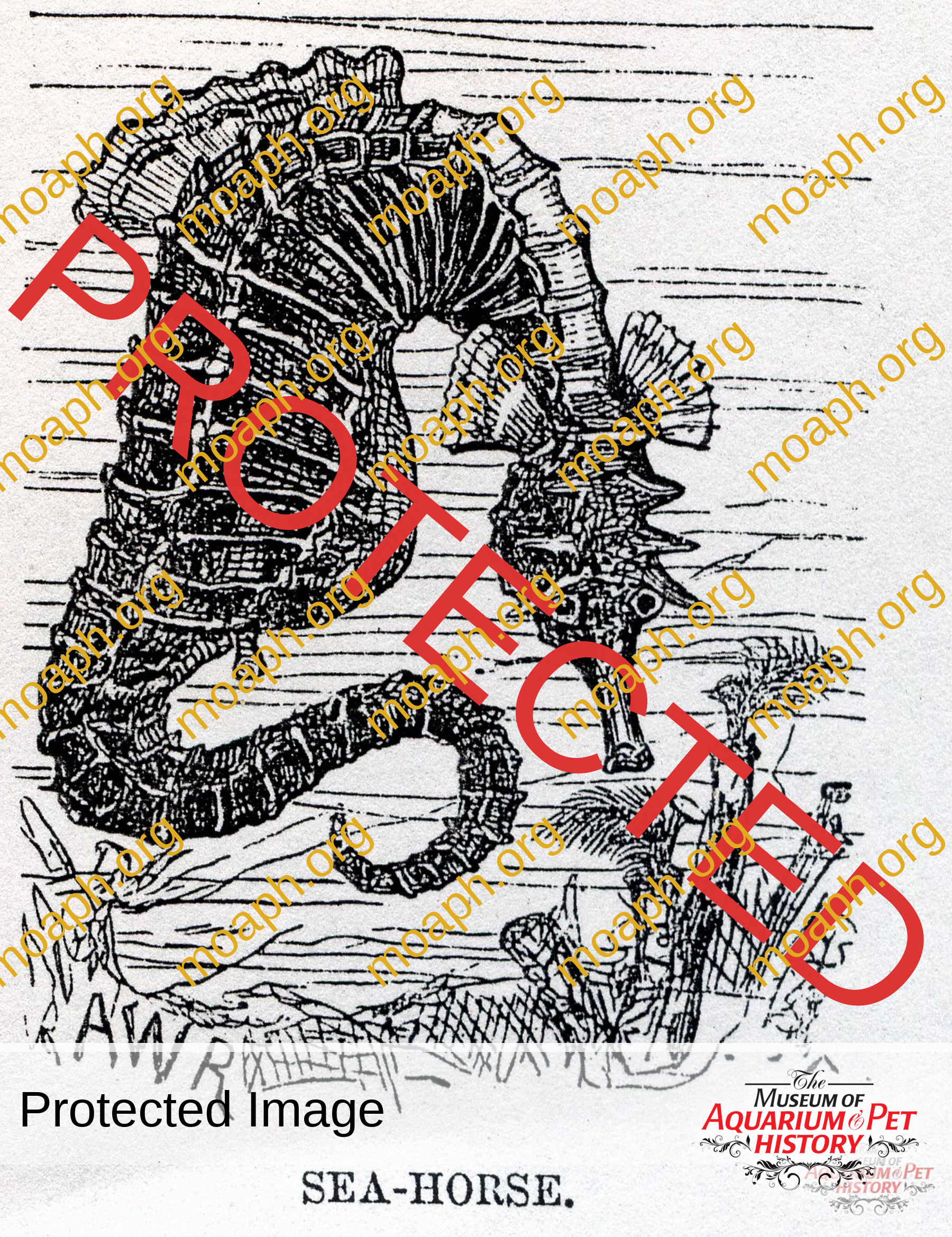
A seahorse feeding on Serpulae. Drawn by Alfred W. Roberts. His often-used AWR initials are evident.
A thought: Barnum, who had arrived in England in late 1856, developed the concept for his aquarium based on the one at the Regent’s Park Zoological Gardens and was helped greatly with this by the primary Secretary of the organization, David William Mitchell. At the time Barnum was there the facility consisted of at least 20, and probably more, aquariums. These aquariums had been built by the London firm of Sanders and Woolcott. Barnum was to use knowledge of tank building, and probably some of the workers, from this business to produce his aquariums in the U.S. The aquariums of Sanders and Woolcott were also used, advertised and available in a larger number at Lloyd’s Portland Road store, the Aquarium Warehouse. Would not Barnum have wished to see this larger variety of tanks and their associated aquatic life while he was in the country? To date I have found nothing to indicate such a visit by Barnum…but I am still searching. Such information would certainly complete the circle.
The W. C. Coup and Reiche Bros. New York Aquarium
The W.C. Coup and Reiche Bros. New York Aquarium, which opened in 1876, was an institution in which Lloyd provided a real and positive influence. Already a circus great, William Cameron Coup partnered with New York and Boston based German animal dealers Charles and Henry Reiche to become an aquarium great. Coup had toured many of the public aquariums in England and Europe and had developed a good working relationship with Lloyd. In addition to guiding Coup to his filtration and circulation principles, Lloyd also helped him in acquiring the needed pumps and other machinery (not available then in the U.S.) to do the job.
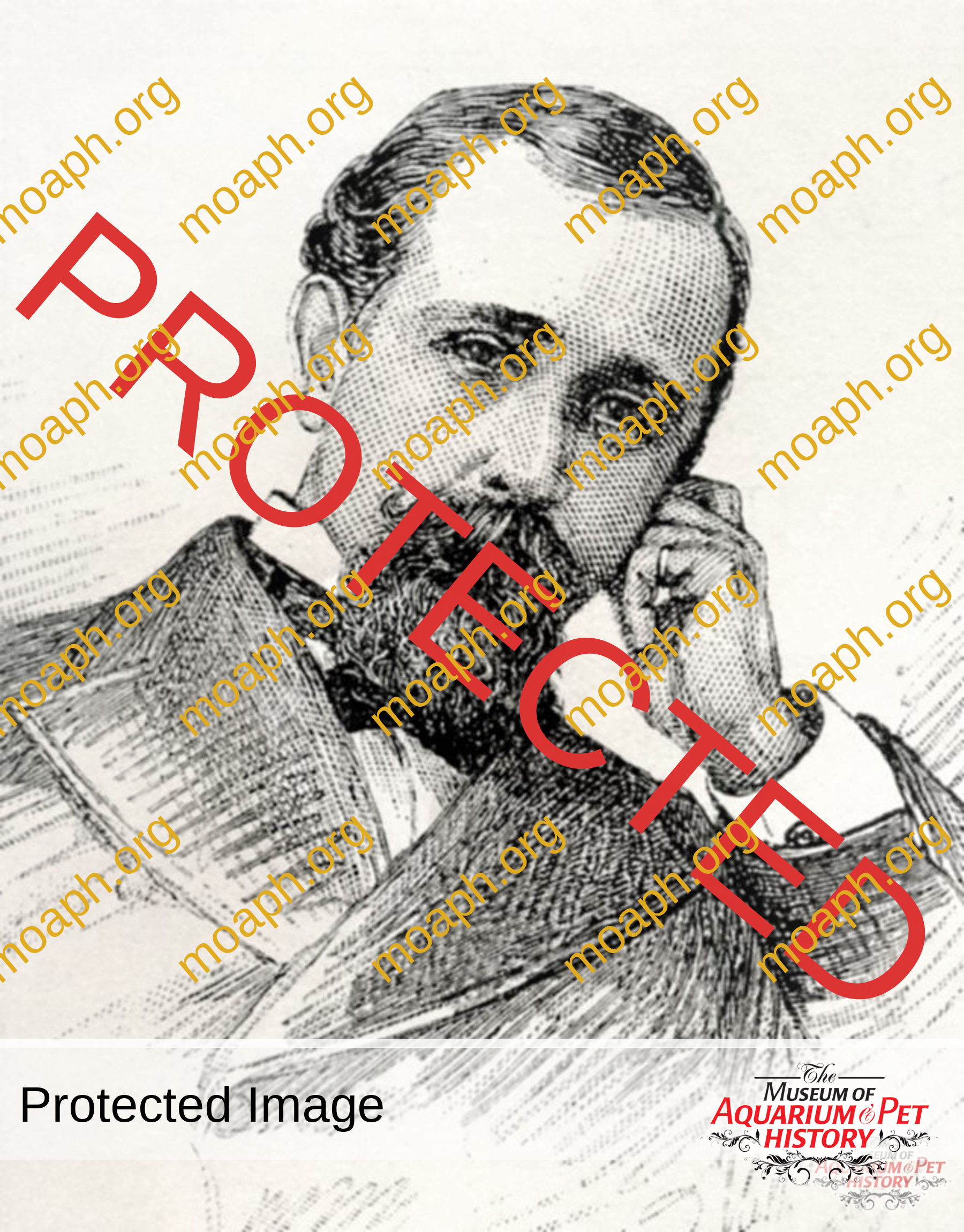
William Cameron Coup – A circus and aquarium great.
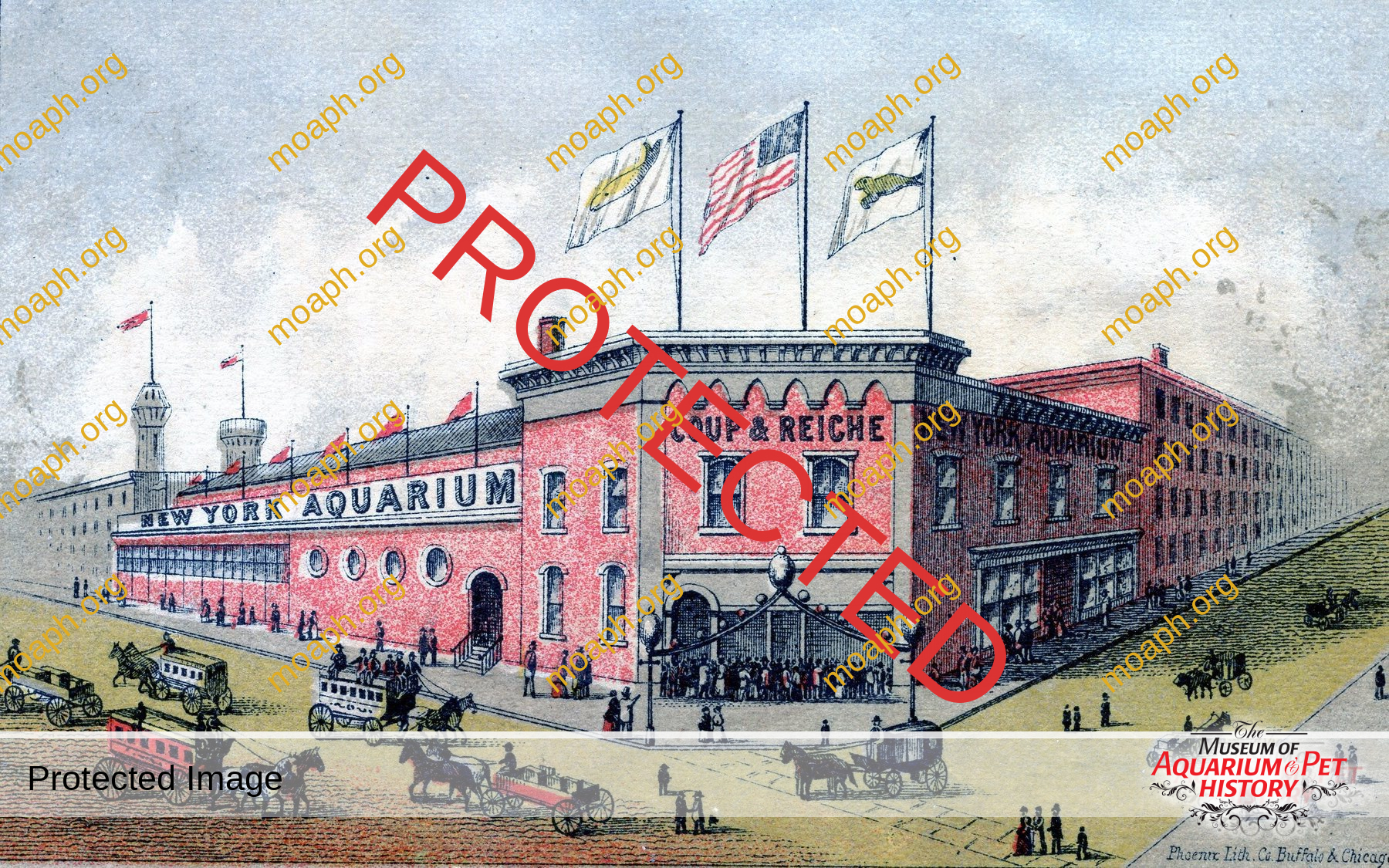
The Coup and Reiche New York Aquarium at the Corner of Broadway and 35th Street.
When the aquarium first opened there was a strong note of cloudy water in the large tanks. This was disconcerting, but Lloyd, who had devised the basic plan for the filtration and circulation system based on a large beneath the floor reservoir, which provided aeration, was quick to respond regarding this:
“…Mr. Lloyd in his correspondence with Mr. Coup has demonstrated that this lack of clearness at first is a necessary evil which will soon be overcome by means of the system of aeration now actively going on.” (Anon., 1876).
Generally, Coup was good at acknowledging those who helped him towards his goal. The following untitled notice appeared in a later issue of the same publication of the aquarium.
“It is with pleasure that the manager of the New York Aquarium takes the liberty of making a public acknowledgment of his obligations to Mr. W. A. Lloyd, whose long experience in the management of kindred establishments renders his advice and counsel of marked assistance in this our first home enterprise.” (Anon., 1877).
The following piece remarks on some comments by Lloyd, and referenced by Coup, regarding the 1877 Guidebook to the aquarium. The guide was written by H. Dorner and this book format publication had gone towards generally replacing a periodical publication. (Later another periodical (The Aquarium News), which is poorly known, was published (Finley, 2022a).
“…I have had several flattering letters, and among the rest one from Mr. Lloyd, who is the originator of the Aquarium in London, saying, that from our catalogue it compares very favorably with that of the English Aquarium. In fact we have a great many specimens here that they have not been able to procure there yet. Of course they have some that we have not.” (Coup, 1877a).
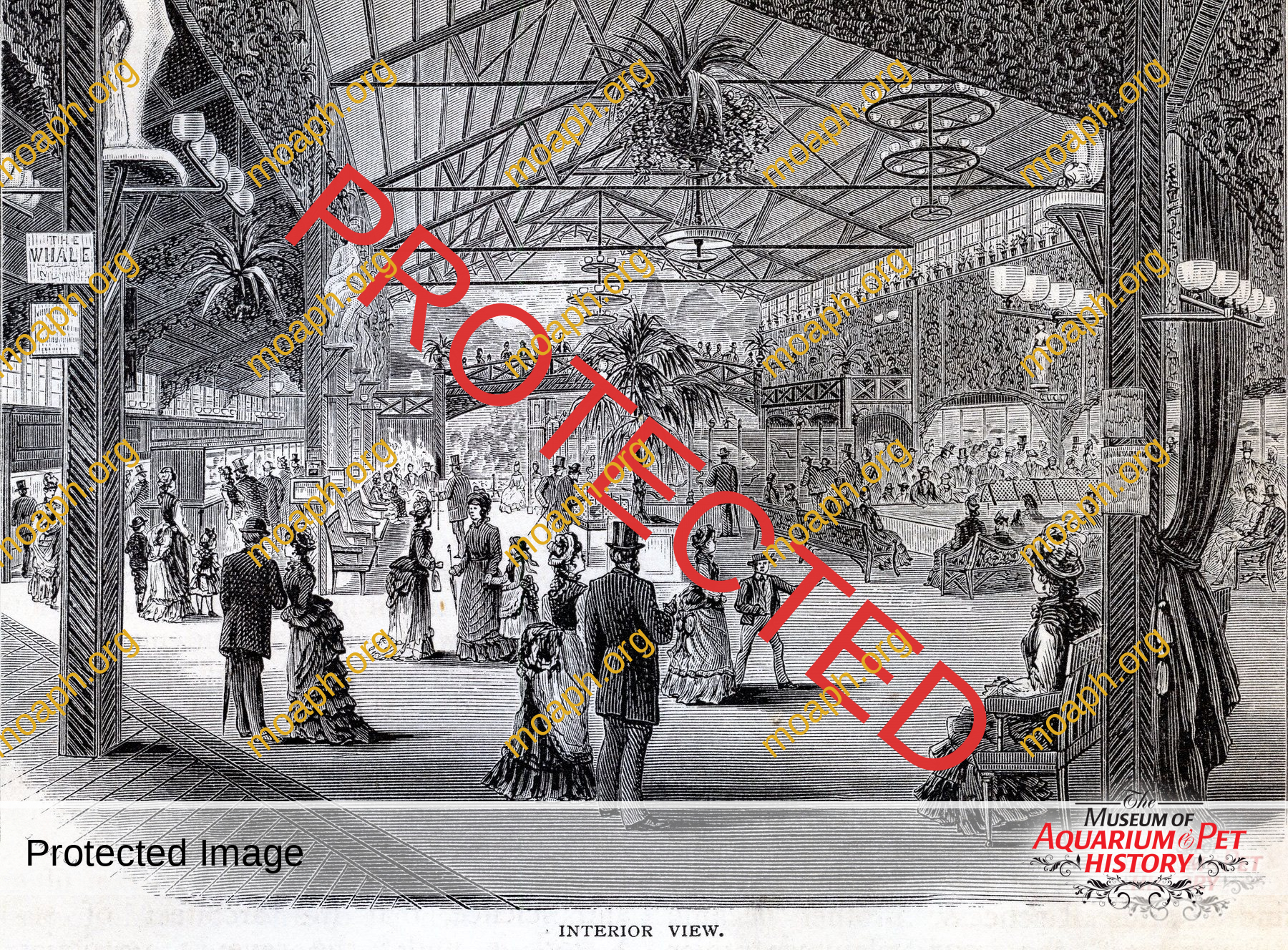
An interior view of the Coup and Reiche New York Aquarium.
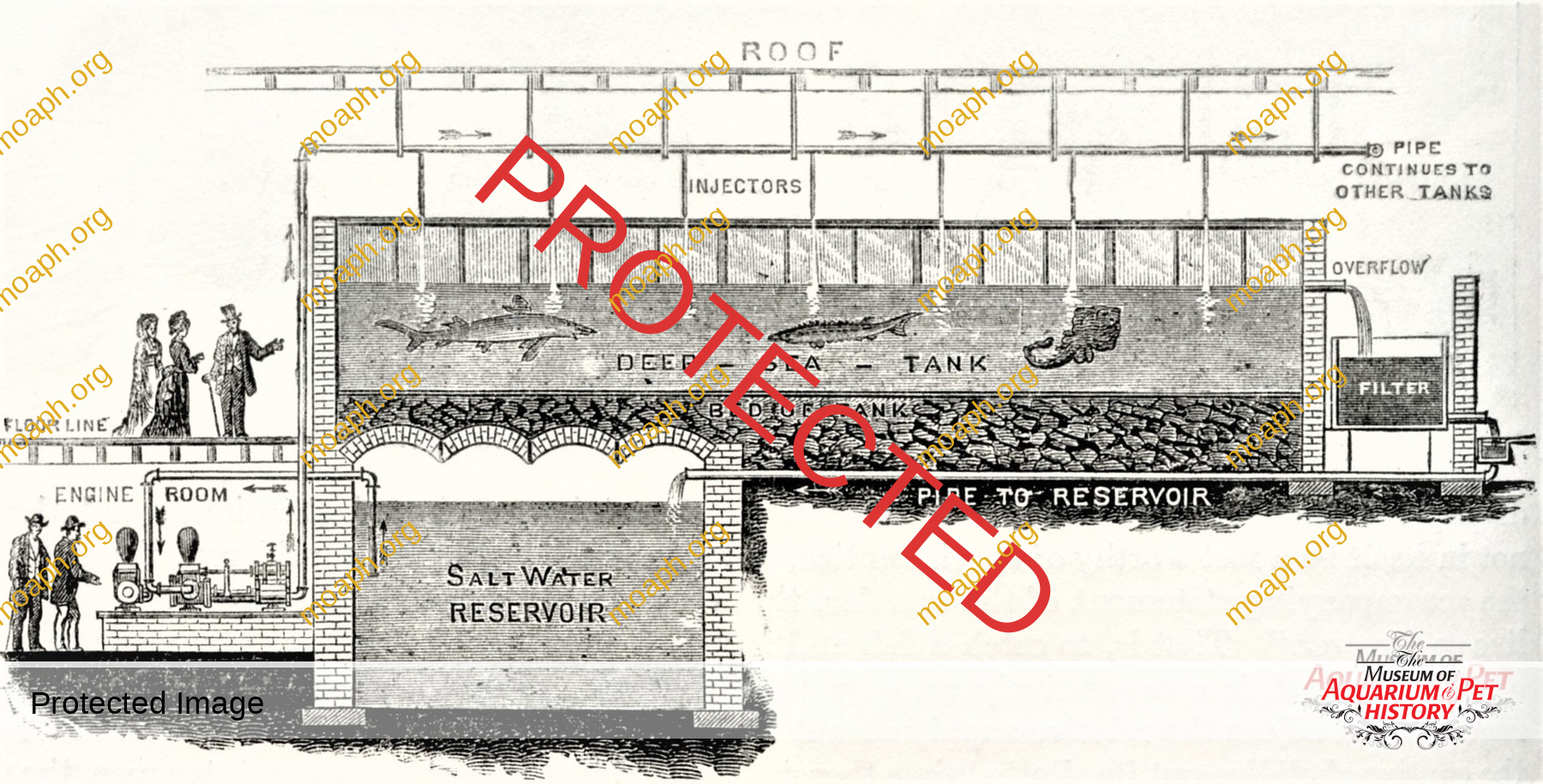
The water movement system devised by W.A. Lloyd at the Coup and Reiche New York Aquarium. The same system had been used at the Woodward’s Gardens aquarium.
In May of 1877, in a letter to the Editor of the New York Times, Coup notes that he, and others, had been receiving letters from W. A. Lloyd (whom he described a “…a celebrated naturalist of Europe, and at present naturalist of the Crystal Palace Aquarium…”) stating “…that owing to the habits, nature and anatomy of the whale, it was impossible to keep one alive, and that all attempts to do so in Europe have been abandoned.” Coup took exception to this and noted the following: “I think having kept one for over four months that I have sufficiently demonstrated the contrary.” As it was, other whales were sent into Europe (some by Coup and company) with poor results. Additionally, Coup had more whales captured and poor results ensued.
As part of their ongoing use of Beluga Whales for the aquarium, arrangements were made to capture and ship four whales to several aquariums in England. Lloyd was strongly opposed to the keeping of mammals in aquariums and gave his comment below, not believing that it could be done. In print Coup followed up Lloyd’s comments with the following: “It is possible, you see, for even an Englishman to be mistaken.” I have seen no follow up by Lloyd on Coup’s comment. He probably would not have been amused.
“My dear Coup, it is utterly impossible to bring white whales across the ocean, and nobody but an American like you would undertake it, as you are accustomed to big things.” (Coup, 1879).
Lastly, I would like to offer some comments and quotes from noted fish culturist Fred Mather. Although Mather does not specifically reference the 1876 New York Aquarium his position there does make the comments of value. When the New York Aquarium opened he was the Superintendent of Fish Culture. Mather, distributing fish eggs from the U.S. Government, had been in England and Europe during the early 1870s and it would have been in the time that the visited the Crystal Palace Aquarium which was under Lloyd’s leadership. Mather’s comments are quite interesting in the general context of aquarium history and do offer some personal reflections on Lloyd that are important. In that Mather did go to work at the New York Aquarium carrying his observations of Lloyd, his thoughts on aquariums and his demeanor, I feel that these are useful comments towards the topic of this article.
“The late Mr. Lloyd, the superintendent of the Aquarium in the late Crystal Palace. London, and in his day the best aquarium authority, would not admit any lung-breathing animal into an aquarium. He even went so far as to refuse a place to the newts, turtles and frogs. His rule was: “The animals must not be lung-breathers; that is to say, they must be either such as the sea-anemones and corals, and some others which have the function of respiration diffused over their entire bodies, or be such as the creatures above them (up to and ending with fishes), which are provided with gills during their whole period of existence.” This rule would admit the tadpoles, but not the frog nor the salamander, but then Lloyd was cranky on such things.
“His aquarium was devoid of all ornament, and he was offensively blunt in condemning my taste for caves and grottos, which he said did not accord with the plain floors beneath them, and which tried to make the visitor believe that he was under the sea when he was not; and he scolded about “bad taste” like a fish wife. Many of his small table-tanks were so low that the visitor looked down into them, and it was my turn when he asked me how I liked them. “Mr. Lloyd” said I, “they are the worst lot I’ve seen. If I was in charge here they would be raised until the eye of the visitor was below the waterline. The worst possible view to get of a fish is to look down on its back [“].
“That’s the only natural way to see a fish,” he replied. “When you are on the bank of a stream or in a boat, don’t you look down on the back of a fish? Why not in an aquarium?”
“Because most fishes look alike from a dorsal view, and the bright colors are usually on the sides.”
“I care nothing for that,” he snapped out; “what I want is to follow nature and have no tomfoolery,” and he walked off.
I let him go for a while. He was all right on his management of water and keeping fish alive, but he was notional and irritable. I soothed his fur by talking about his remarkable clear sea water, which he stored in reservoirs and used over and over all the time, and we parted friends.” (Mather, 1897).
Woodward’s Gardens Aquarium, San Francisco, California
Note: The aquarium at Woodward’s Gardens chronologically came, by three years, ahead of the Coup and Reiche New York Aquarium. I have chosen herein to go in a geographical manner. This is in way of explaining its placement.
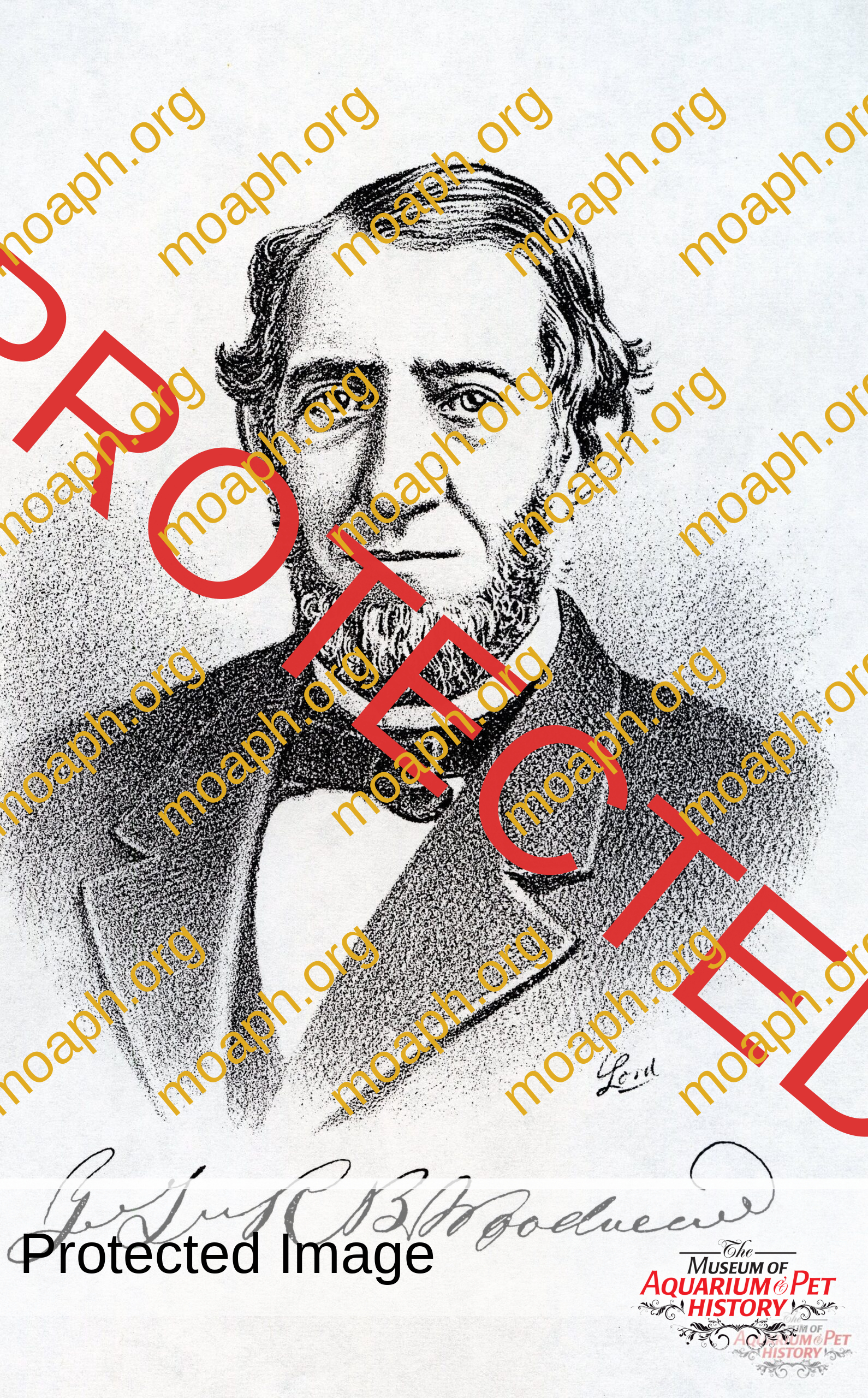
Robert Blinn Woodward whose aquarium was three years ahead of that of Coup and Reiche.
Robert Woodward was a Rhode Island native who migrated to California during the Gold Rush. He was a true 49’er. In 1868 he formally opened what was his home property as Woodward’s Gardens. I apologize for the short sheeting of the interesting process, but it is the aquarium that we must move on to. If you look at the map of the place in late 1873/early 1874 you can get an idea of the growth and the various attractions of the place. By 1880 there were 39 attractions noted on a version of the same map. The “New Whale Pond” on the illustration (number 5) never came to fruition and was removed from the map.
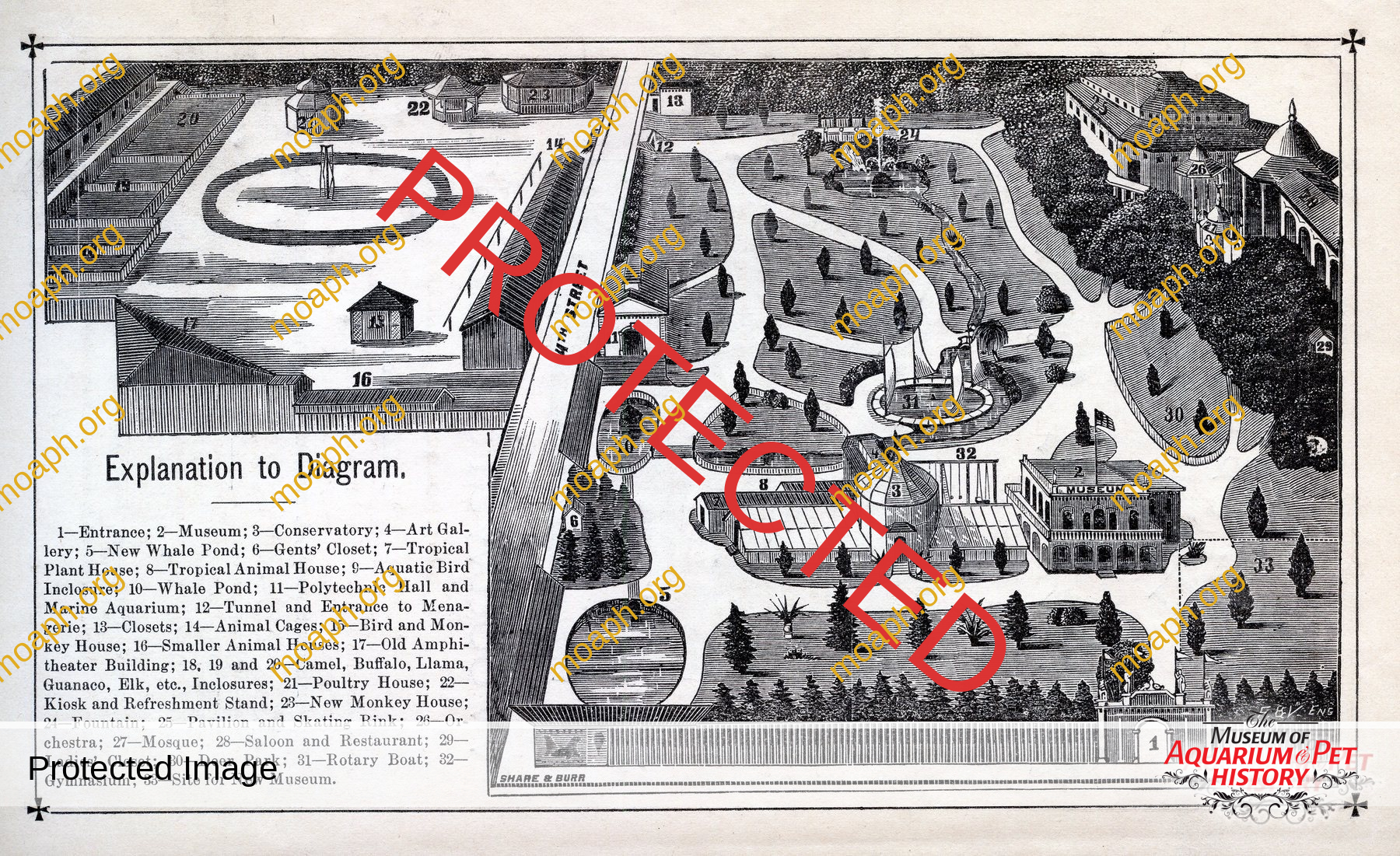
A diagram map of Woodward’s Gardens from 1873.
In 1870/1871 it was decided that an aquarium was needed as an attraction. Charles Schuman was dispatched to England and Europe to research what was needed to make this a reality. Enter Lloyd. Although Lloyd does not mention Schuman by name it is clear from the following that he is the party being discussed. (Note: I have seen Schuman’s name also spelled with 2 “n’s”, but herein I use the one “n” spelling which is used in the Woodward’s catalogues).
“During my eight years stay as curator of the Hamburg Aquarium, from 1862 to 1870, there came to me a gentleman for repeated examination of the aquarium in a manner which convinced me that his object lay beyond those of an ordinary visitor, and it was only after he had ceased coming to me and had left the place, that I ascertained by accident that he made his observations for the purpose of using them somewhere in America, where an aquarium was proposed to be built. I could ascertain no more, and it was only in the year 1875 that I got to know that my German visitor had employed such information as I had given him in conversation, in the erection of a large public aquarium in Woodward’s Gardens, San Francisco – a kind of public pleasure gardens, much frequented, and belonging to Mr. R.B. Woodward, who in the year last named, came to England for various purposes, one of them being how to ascertain how he could improve his aquarium, as it was troublesome to manage, and though well “paying” enough, commercially, the general natural-history results were not at all commensurate with its cost and bother of maintenance. I had had letters from him before, but it was only in conservations that I got to know that the person who had erected his aquarium was no other than he who had so diligently, and yet so fruitlessly as to all general and practical ends, sought my counsels in Hamburg. Had he been more open, and less mysterious, I should have been glad to have painstakingly shown him my own numerous and palpable mistakes in aquarium construction in Germany, arising from comparative inexperience. Instead of which, he, in his closely-buttoned self-reserve, went all the way to San Francisco to copy my blunders (Lloyd, 1877).
Schuman did construct an aquarium that worked…but not so good. He had adopted Lloyd’s flow through tank system, but failed to have a large reservoir placed underground so that it was in darkness. This is evident from the discussion of Rev. Dawson (1874). Lloyd was also unhappy with the “decoration” of the facility. Schuman had been very impressed with the cave-like appearance, with hanging plaster stalactites, of the Berlin Aquarium and adopted this look for California (see the tank illustration). Lloyd was severely against such faux “decoration” and has written almost two pages letting the reader know why (Lloyd, 1873).
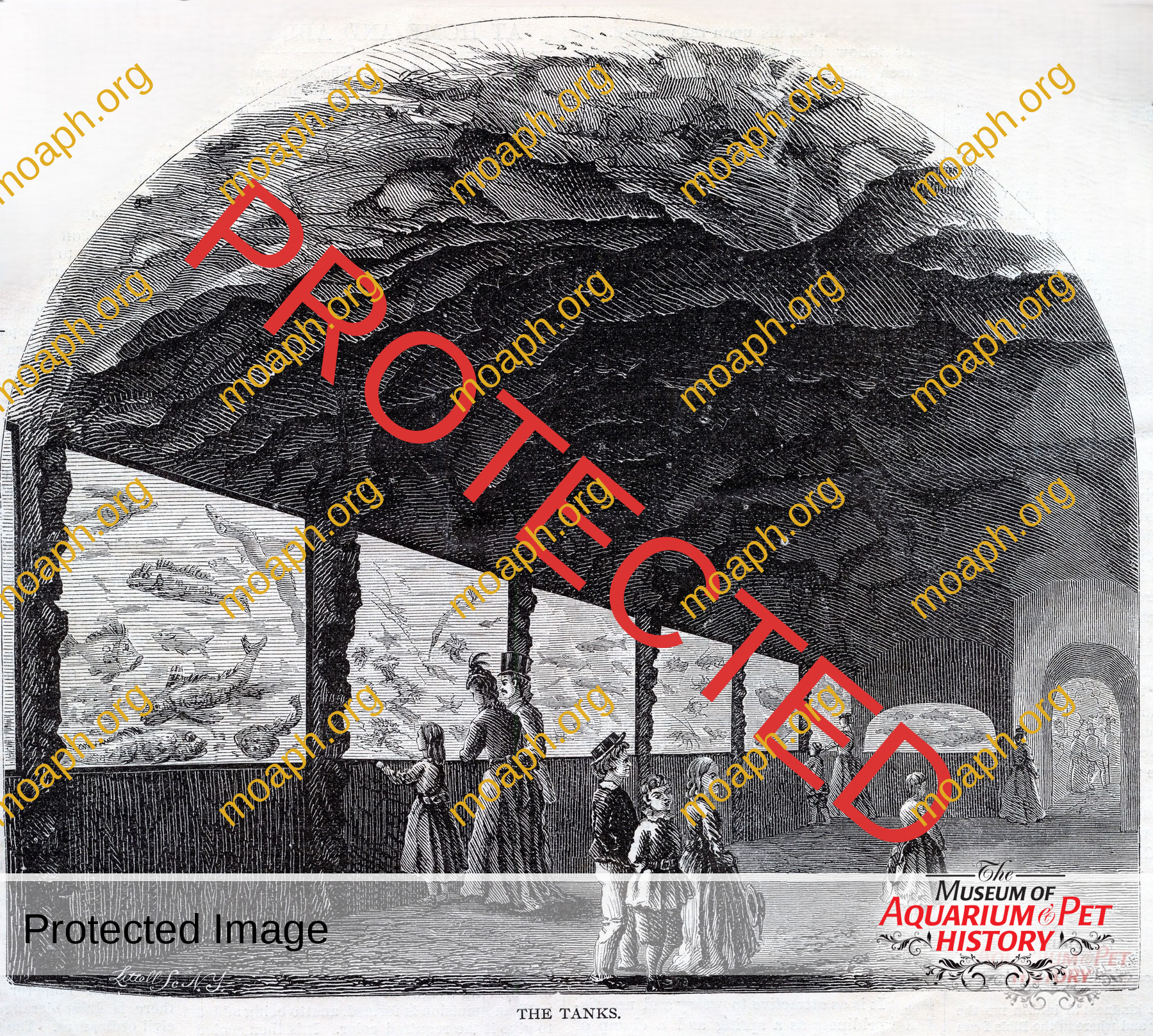
The saltwater section of Woodward’s San Francisco public aquarium in 1874. Note the cave-like appearance that was despised by W.A. Lloyd.
In the 1877 article Lloyd also opined on Mr. Woodward whom he got to meet when he visited Lloyd at the Crystal Palace Aquarium. I can say that the concept of “night and day” fits well here. Below, in Lloyd’s words:
“I liked Mr. Woodward immediately, as a blunt, straightforward, plain, civilly-spoken, common-sense man, who was quiet, but firm, in demeanour, never obtrusive, but who would not be thrust aside needlessly. A man who never interpolated his speech with expletives, who never wore a stove-pipe hat, and who never went about with his hands in gloves. Such busy men as he is, regard all useless head-gear, and cloves, and sticks, and umbrellas, with perhaps a dog to follow them about, as so many tiresome encumbrances which much impede freedom of thought and action.”
After his trip ended Woodward returned to his Gardens and made sure that positive changes were made to the aquarium. Some sidewalks were torn up and excavations made to allow for the installation of subsurface cisterns of enough capacity to adequately take care of the saltwater tanks following the Lloyd method. Charles Schuman remained as the Superintendent at least through 1880 (possibly longer) and had a better system to work with from the combined efforts of Lloyd and Woodward.
Regarding the title of Lloyd article: After his visit, Woodward sent to Lloyd seven 20 by 15 inches photographs taken of the rugged coast of the Farallone Islands by noted photographer C.E. Watkins. These islands are about 30 miles out into the Pacific Ocean west of the San Francisco Golden Gate. It is reported that “several hundred” of his photographs were on display in the Polytechnic Hall of the Gardens. Lloyd was thrilled and he valued the pictures “…much as rare works of art…” and had them displayed in the nave of the Crystal Palace for all to see.
Lastly, a few words on how the aquarium, and Lloyd, were treated in the guides to Woodward’s Gardens are warranted. I will attempt to keep this brief, but I will no doubt at a later date treat this aquarium in greater depth.
I have had access to three of the guides to Woodward’s Gardens. Some comments on these are in the References section below. I direct them to you for some additional information. So, by the ascending dates I note”
- 1873. A short section on the aquarium is presented (pages 55-56). It is noted that: “At this date, it is impossible to give a very definite outline of this important new feature, as it is not fully stocked.” A listing of the 16 large tanks is presented and what life forms are included are noted. There is a sub-section titled “The Problem of the Aquarium” which reads very much like something from the 1850s discussing the concept of balance as it was then presented.
- 1875? The aquarium is covered on pages 67-74. Of these pages four consist of full-page illustrations. One of the cave-like aquarium rooms itself (see it herein) and three of various life forms (fishes and invertebrates). The text is more in keeping with literature of the time and some of it appears to be adapted from Lloyd’s works. Regarding the work with aquariums, it is noted that “…Mr. Lloyd has contributed much to the advancement of the science.” Also noted is “In the Hamburg Aquarium the system inaugurated by W.A. Lloyd and maintained at the Crystal Palace, consists in having a bulk of water of 5 times the amount in the tanks, in reserve in the reservoir beneath.” Following this is a good discussion of the mechanics of the aeration/filtering system. There is also slightly more than a full page listing the contents of the tanks and providing both common and scientific names. All in all, this is a very nicely done section.
- 1880. Almost two pages of text and the same four illustrations noted above are included in the aquarium section. The text is nicely written but the listing of displayed specimens is weak. There is no mention of Lloyd or Crystal Palace although the system for maintaining the tanks is the same as above and briefly described.
So, it appears, as might be expected, that William Alford Lloyd had at least a mild to moderate degree of involvement with several public aquariums developing in America during his lifetime. Somehow, I think that there might even be more information that is yet undiscovered. I will be looking for additional materials to add to the knowledge base regarding world aquarist W.A. Lloyd. I don’t think that I will be disappointed.
Acknowledgements
Over the years many people have been almost unbelievably kind and patient in aiding me with my various projects. In regard to this current piece I would like to offer some special thanks to the following: First of all, my wife Aline…because she is there and puts up with so much; Mary Sears of the Ernst Mayr Library of the Museum of Comparative Zoology, Harvard University; the staff and librarians of the Widener Memorial Library at Harvard University who welcomed me as a Visiting Researcher; Fred Dahlinger (when he was at the Circus World Museum in Baraboo, Wisconsin); Phil Browning at the Royal Society for the Prevention of Cruelty to Animals (U.K.); Lorna Black and the Librarians at the National Library of Scotland; James W. Atz (RIP), a mentor; Wayne Leibel (RIP), a mentor; The Ichthyology Library at the Smithsonian Institution; Meredith Elrich, of MOAPH, who always makes my articles look better; and Gary Bagnall, the Director of MOAPH, who, among many other things, kindly provides a wonderful platform for pieces like this.
Illustration Credits
- P.T. Barnum. Frontispiece in The Life of Barnum. Globe Bible Publishing Co. No date, but WorldCat lists it as 1892. Author’s collection.
- William Alford Lloyd. Courtesy of Phil Browning at the Royal Society for the Prevention of Cruelty to Animals (U.K.).The picture originally appeared in the February 1881 issue of “The Animal World” and is based on an 1872 photograph.
- Sea-Horse. From Harper’s Young People magazine, August 17, 1880. Author’s collection.
- William Cameron Coup. From Scribner’s Monthly, March 1877. Author’s collection.
- New York Aquarium Building. 1876 advertising folder. Author’s collection
- New York Aquarium interior. From Scribner’s Monthly, March 1877. Author’s collection.
- New York Aquarium tank system. From Scribner’s Monthly, March 1877. Author’s collection.
- Robert Blinn Woodward. Courtesy of the Widener Memorial Library, Harvard University.
- Diagram map of Woodward’s Gardens. From 1873 Illustrated Guide and Catalogue of Woodward’s Gardens. Author’ collection.
- The Woodward’s Aquarium. From Illustrated Christian Weekly, February 21, 1874. Author’s collection.
References
Anon. 1873. Illustrated Guide and Catalogue of Woodward’s Gardens. Frances & Valentine, San Francisco, Cal. 62 pages. Note: I am assuming that this, as with later issues of the publication, was compiled by F. Gruber. But in that his name is not on the copy at hand I will settle for the Anon. and this note.
Anon. 1876. The New York Aquarium. New York Aquarium Journal. Vol. 1, No. 2, October 25, pages nine -10. Note: On the cover is this titled “New York Aquarium Journal and Guide.”
Anon. 1877. Untitled Note. New York Aquarium Journal. Vol. 1, No. 9, April, Page 68.
Bree M.D., C.R. 1867. The Wrasse and Other Fish in The Hamburg Aquaria. The Field, Vol. 29, February 9, page 105.
Coup, W.C. 1877a. Transactions of the American Fish Culturists’ Association. Sixth Annual Meeting, February 14th and 15th, 1877. John M. Davis, Printer, 131 pages. Note: Coup’s comments were made on February 15th and appear on page 108.
Coup, W.C. 1877b Scientific Classification in the Aquarium (Letter to the Editor). The New York Times, May 21.
Coup, W.C. 1879. A Contract for Eight White Whales. The Courier Company 1879 publication for The W.C. Coup New United Monster Shows. 16 pages. Note: The referenced section appears on page nine.
Dawson, Rev. T.M. 1874. Woodward’s Marine Aquarium. Illustrated Christian Weekly. Vol 4, No.5, February 21, pages 88-89.
Finley, L. 2022a. An apparently unrecorded 1878 weekly publication of the Charles Reiche and Brother New York Aquarium. Museum of Aquarium and Pet History (website: https//moaph.org). Published on-line August four. A printed copy consists of seven pages – three of text and four of a copy of the document of the title.
Finley, L. 2022b. Coup’s Aquarium is Coming to Town!! Redux. Museum of Aquarium and Pet History (website: https//moaph.org). Published online September six. 11 pages.
Gruber, F. (assumed Compiler). 1875? Illustrated Guide and Catalogue of Woodward’s Gardens. [assumed Frances & Valentine, San Francisco, Cal.] 84 pages. Note: Title page of this HathiTrust digital copy is absent and the 1875 date that they use is not firm. Some text suggests to me that 1876 might be a more appropriate dating. Also, comments relating to Lloyd, the Hamburg Aquarium and the Crystal Palace Aquarium are on pages 69 and 71.
Gruber, F. (Compiler). 1880. Illustrated Guide and Catalogue of Woodward’s Gardens. Frances & Valentine. San Francisco, Cal. 87 pages. Note: Pages 66 – 71 covers The Marine Aquarium. The copy to which I had access had two covers – one dated 1880, the other 1879. In the Prominent Visitors Of Woodward’s Gardens section on page 83 it is noted that General U.S. Grant, Ex-President of the United States, was present on the 29th of September, 1879. Using this as a time point, I have opted for the suggested 1880 date of publication for this guide.
Lloyd, W.A. 1867. Sea-horses – Hippocampus. The Field, Vol. 30, October 19, page 313.
Lloyd, W.A. 1872. A Guide Book to the Marine Aquarium of the Crystal Palace Aquarium Company (Limited). R.K. Burt & Co. Printers. London. 30 pages. Note: The used quote appears on page five.
Lloyd, W.A. 1873. Official Hand-Book to the Marine Aquarium of the Crystal Palace Aquarium Company (Limited). Fourth Edition, Revised and Enlarged. The Crystal Palace Aquarium Company (Limited). 86 pages. Note: See pages 22 and 23 for Lloyd’s discussion of cave-like building “decorations.”
Lloyd, W.A. 1874. Something Russian. Sydenham & Penge Gazette (Crystal Palace News), May 30, page five.
Lloyd, W.A. 1876. The Royal Aquarium at Westminster, London. The Gardener’s Magazine, Vol. 19, January 22, pages 34-37.
Lloyd, W.A. 1877. Photographs of the Farallone Islands, Pacific Ocean. Marylebone Mercury (newspaper), March 31, page four.
Mather, F. 1897. The New York Aquarium [Part one]. Forest and Stream. Vol. 49, No. 20, November 13, pages 389-390.
Saxon, A.H. 1989. P.T. Barnum: The Legend and the Man. Columbia University Press, New York. 437 pages.