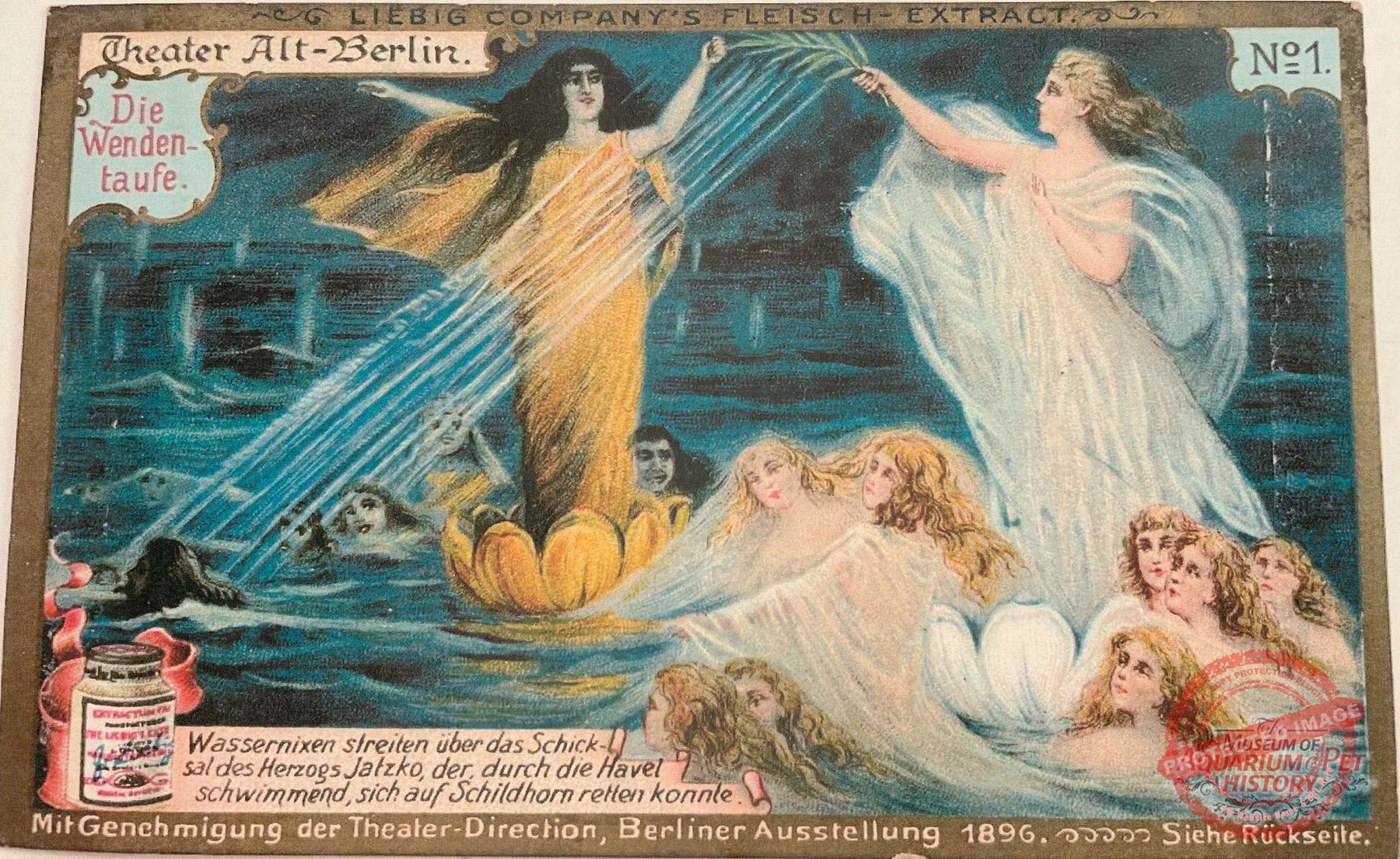
Theater Alt-Berlin Trade Card from 1896
Translation:
G Liebig Company’s Meat Extract
No.1
Theater Alt-Berlin
The Wendish Baptism
Water nymphs argue about the fate of Duke Jatzko, who, swimming across the Havel, was able to revel in Schildhorn.
With permission of the Theater Management, Berlin Exhibition 1896.
This 1896 for the Theater Alt-Berlin trade card depicts a scene from a medieval-inspired play that emphasized the conversion to Christianity. In 1157, Duke Jatzko fled during the conquest of Brandenburg. As legend goes, he tried to cross the Havel River on horseback to escape. Exhausted and facing certain death, he called upon God for help. Miraculously, he and his horse reached the safety of a wooded peninsula, later called Schildhorn (“shield horn”), where he hung his shield and horn on an oak tree as a sign of gratitude and conversion to Christianity.
The play staged at the 1896 Berlin Exhibition added a mythical layer by introducing water nymphs who argue over Duke Jatzko’s fate as he struggles in the river. This detail is not a part of the original medieval legend but gives the story dramatic tension. Their presence emphasized the sense of danger, fate, and divine intervention, making the escape more theatrical and visually striking for the audience.
The trade card also features an advertisement for Liebig’s Extract of Meat: a concentrated beef extract paste developed by German chemist Justus von Liebig in 1847 and later marketed as a flavorful stimulant.