Chapter 10: Apes from Sumatra – Wilde Tiere Frei Haus (Wild Animals/Free Delivery)
Translated by Alex Haro
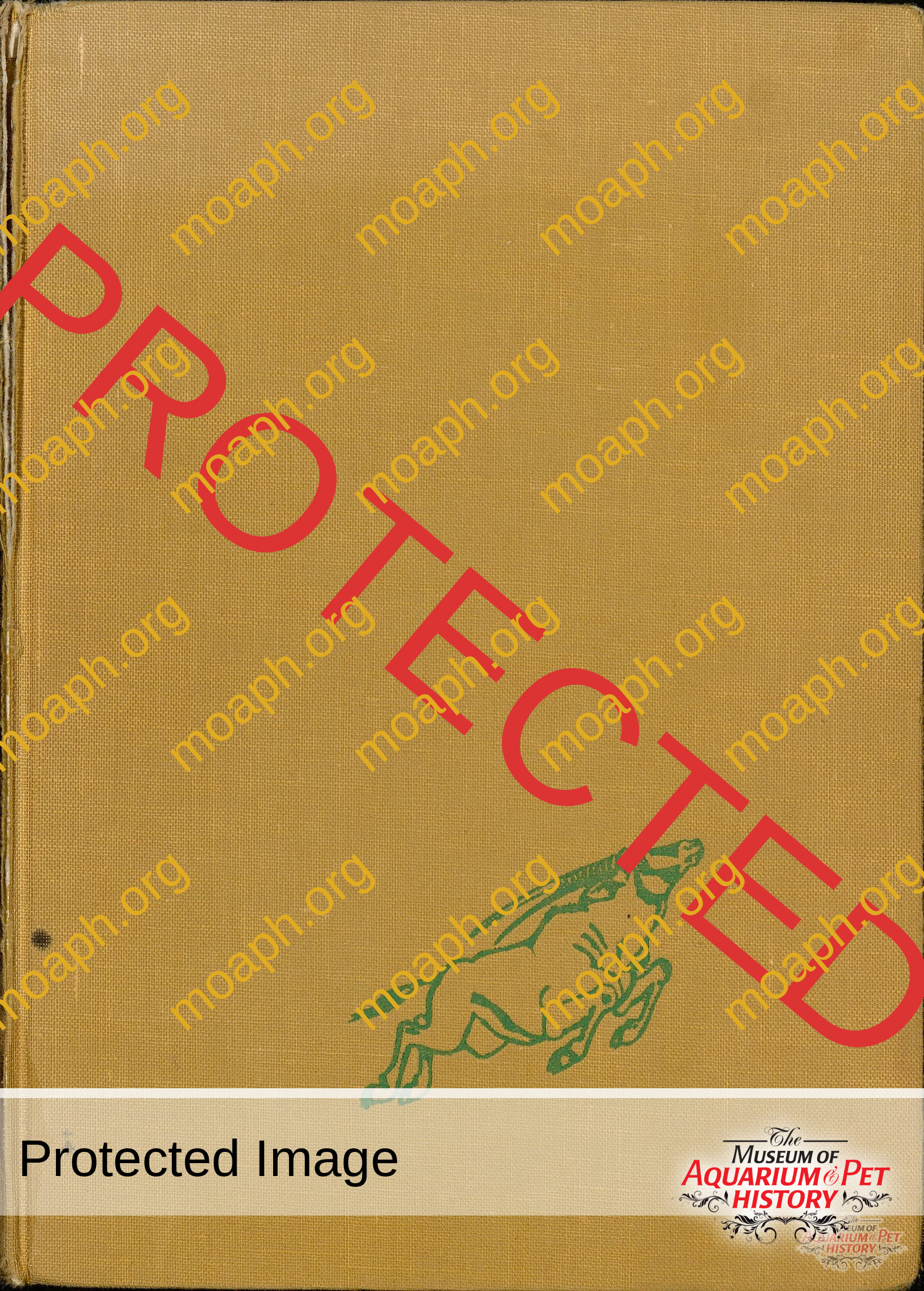
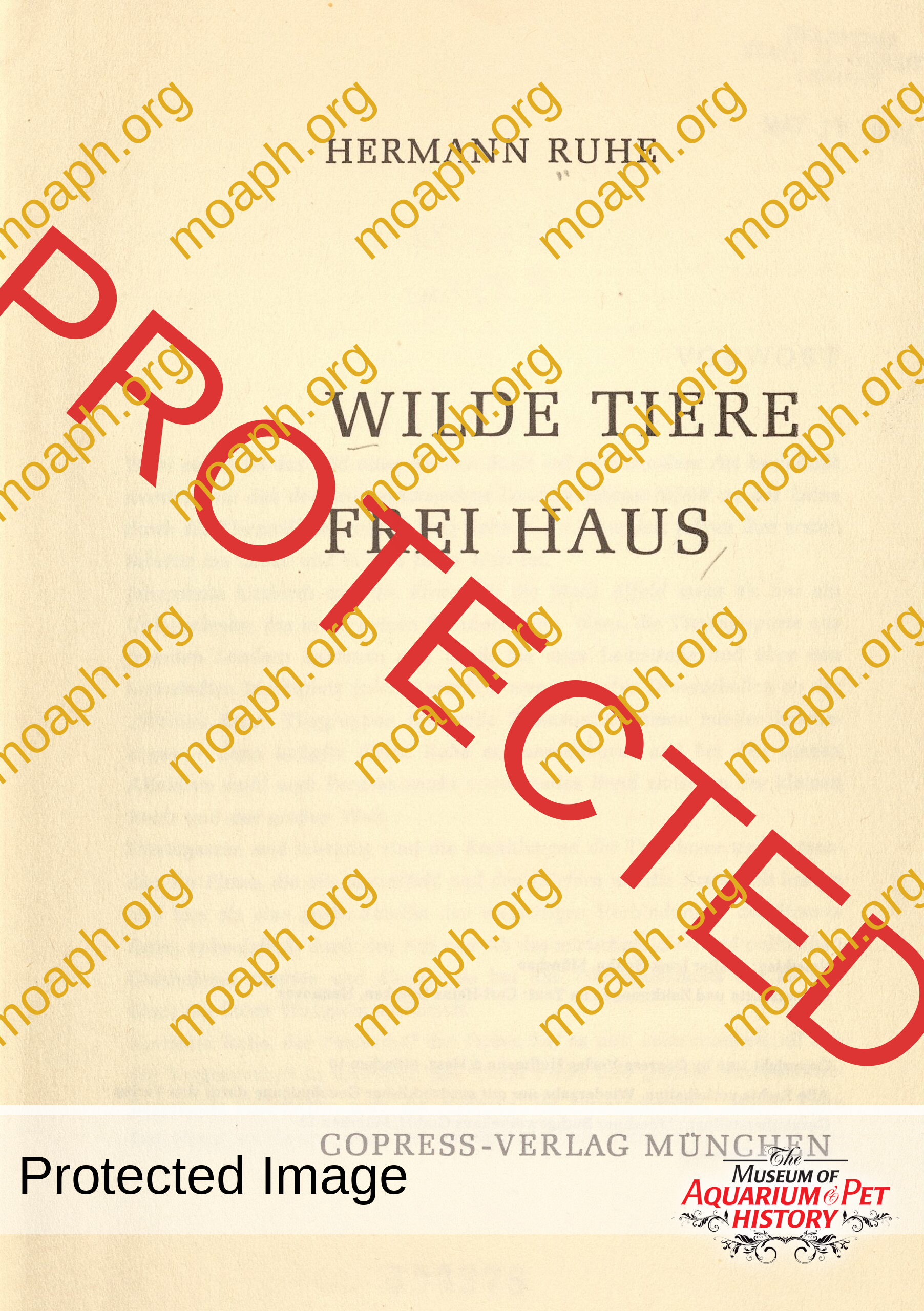
Starting in September 2024, the Museum of Aquarium and Pet History (MOAPH) will be releasing a chapter a month on the translated autobiography Wilde Tiere Frei Haus (Wild Animals Free Delivery) by Hermann Ruhe.
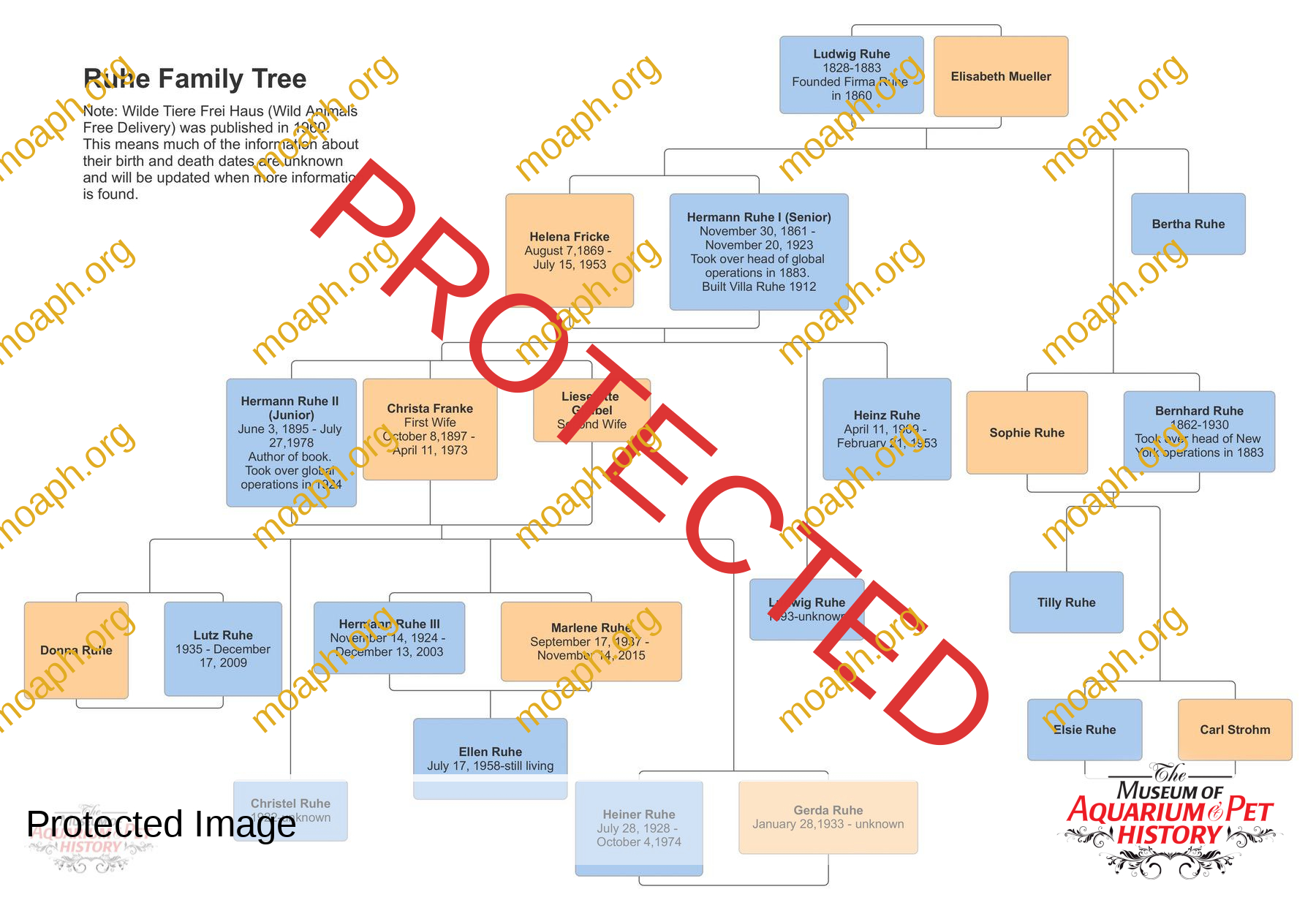
Firma Ruhe (the Ruhe Company) was the name of an animal trading company based in Alfeld, Germany from 1860 until its official closure in 1993. During this time, they were world renowned for their importation and exportation of exotic animals and birds from all across the globe, even supplying many zoos as well as circuses. Having survived both world wars, Firma Ruhe continued to dominate the world of animal trading until the mid-20th century and is a testament to true determination and leadership.
Wilde Tiere Frei Haus (Wild Animals Free Delivery) also documents the plethora of adventures, failures and successes endured by all those a part of Firma Ruhe. Through Hermann Ruhe’s great storytelling, we are able to visualize and understand the world from the perspective of animal collectors navigating through some of the most difficult situations, often not knowing whether or not they would ever return home. His recollections provide a vivid portrayal of the challenges and triumphs faced by the company, and give readers a glimpse into the world of animal trading.
While my travelers were on journeys around the world, I oversaw operations from my home in Alfeld. This is how the business was first put into motion: purchasing and procurement. After I had inspected the animals myself upon arrival, I began the second part of the trading business, namely offering and selling.
From season to season, I had ‘animal stock lists’ printed and sent them to countless zoos from around the world, as well as to circuses and private clients. Although the animal stock list already contained information about the individual animals, it rained requests for details about returns, telegrams, and phone calls. On top of that, many visitors came who wanted to see the place and the animals, for which there was no lack of opportunities, many trips, and constant contact with all my customers—a very time-consuming but necessary factor!
Since I was making larger and larger orders from season to season, a new difficulty arose that caused me concern: the acclimatization of animals coming from tropical countries to the European climate. It even happened that the health condition of the animals, already affected by the somewhat harsh Alfeld climate, rapidly deteriorated. The risk to the animals’ health fell on the importer—meaning me—as well. If one had always been able to limit imports to the warmer months, such as from April to June or July, it would not have been so bad.
The season in the zoos however, began in early spring. For every zoo, it was important to be able to present a full animal collection by Pentecost or even by Easter. So the season was delayed year after year, and public interest in animals and thus in zoos increased until it already partly extended into winter or early spring, so after a while, this often became a bitter ordeal.
Sleeplessly, I racked my brain about how to better deal with this problem. Finally, I remembered a small acclimatization station on the French Riviera in Cros de Cagnes, which I had heard about before.
When another sensitive, freshly imported gazelle arrived in Alfeld, I quickly decided to go to southern France and take a closer look at the zoo garden in Cros de Cagnes. It was owned by a native Russian, G. von Basilewsky, a relatively young man who immediately made a good impression on me. I looked at his animal inventory, which led me to the idea of a small private zoo, and that evening I sat with him on the veranda of his house with a bottle of wine, explaining my proposal.
“Take a partner,” I suggested. “Cros de Cagnes would be the perfect place to gradually acclimatize sensitive animals.”
Basilewsky had come to the sunny Mediterranean in 1923. Barely escaping the upheavals of the war and the revolution, he decided to deal with animals. He had purchased the large property, which was in a great location between Nice and Cannes. The garden, with its palm trees and warm Mediterranean weather, was an ideal place for temporary animal housing. Additionally, the proximity to the Marseille port was, of course, favorable.
The means at Basilewsky’s disposal were few. He had bought land but could only build very primitively on it, and his farm was more reminiscent of an African animal capture camp than a European zoo.
At the entrance to the zoo, he had a sign put up: ‘Acclimatization Station on the Riviera’. The animal selection was limited to a few monkeys and a number of colorful birds, which enlivened the cages and aviaries. Zoo director Heinz Heck of the newly reopened Tierpark München-Hellabrunn, who had told me about Cros de Cagnes, had been helpful with advice and establishing business relationships. Basilewsky, a diligent man, had been active and among other things, busy with the exact determination of the climatic conditions on the Riviera in relation to practical animal husbandry.
So he found that the Riviera’s statistically recorded 300 sunny days per year did indeed arrive, but on the other hand, the nights were very cold during certain weather conditions, colder than the Riviera usually offered, which one could not easily handle. As a partner, he saw it as his duty to share his climatic experiences. The outlook of expanding his business and being able to show and keep large animals attracted him, and we took the matter seriously.
I returned to Alfeld and immediately took everything necessary into my own hands. First, I sent some craftsmen to Cros de Cagnes; they had worked with me at the Weisse Erde (White Earth) for years and knew exactly how to proceed with the construction of suitable animal enclosures. The season began in Cros de Cagnes according to new instructions and under Basilewsky’s careful supervision, ponds and fountains were built and laid out at various points along the park. They created a representative entrance and a parking lot. Even at that time, this was an important prerequisite for the good fortune of a modern zoo, where the public should feel comfortable which should, in turn, be profitable.
A few weeks later, the zoo in Cros de Cagnes was ready for the arrival of animals and visitors.
As soon as the next transport from Alfeld arrived, I sent a particularly challenging shipment, which was transported directly from Africa to Europe. This transport consisted of about 50 adult baboons (Hamadryas baboons), zebras, antelopes, and all sorts of smaller animals, which were immediately brought to Marseille to be taken to Cros de Cagnes for acclimatization. I was relieved that the zoo was ready because my Alfeld animal station would have burst from the seams from the sheer number of baboons!
Basilewsky received the animals in Marseille. All transport crates arrived well at Cros de Cagnes; however, a small mishap occurred there.
They hadn’t managed to unload and move all the animals into their cages or enclosures by dusk. Somehow, 50 large baboons managed to escape. There was a huge scandal as it emerged at dawn that they had perched side by side on the zoo wall like roosters and made a lot of noise.
Fortunately, they were all male animals, so they could be lured back to the remaining females and captured again. Basilewsky was very relieved; the wild horde could have caused quite a bit of damage. We intended to advertise our newly established zoo—but we didn’t need that kind of press leaking out!
Some of these baboons, by the way, were then used for the rejuvenation operations by the famous Dr. Voronoff. The doctor had set up a laboratory in “Chateau Grimaldi” in Menton, and Basilewsky was a good customer of his. For his operations (grafting monkey glands1, he earned enormous fees, which, despite this fact, drew a remarkable clientele from among older patients.
MOAPH1: Dr. Serge Vornoff was a surgeon whose procedures involved grafting Monkey testicles and implanting them in older male patients. The purpose was rejuvenation and essentially, eternal youth. Over time it became clear that this operation was not only inhumane and cruel to the monkeys, but it also did not work.
When I came to Cros de Cagnes next time, several animal transports had already arrived. I was very pleased with the inspection of my new collection.
Cros de Cagnes was a popular excursion destination for vacationers who stayed on the Riviera and spent their relaxing days wandering through the zoo. Although the entry fee at that time was raised from 2.45 francs2 to 15 francs3, back then about 3 marks4 making us somewhat expensive for the size of our zoo. However, the abundance of animals offered to the public was by no means the smallest; on the contrary! The variety was enormous, and so was the number of animals.
MOAPH2: $1.68 equivalent today
MOAPH3: $10.27 equivalent today
MOAPH4: $12.40 equivalent today
The sensation over our zoo grew from the arrival of 75 giant Galapagos tortoises, some of which weighed more than 500 pounds. An adult could ride these elephant tortoises while they moved without disturbing them. This transport was relatively late and we were not at all prepared for such a quantity of elephant tortoises in Cros de Cagnes. I called Basilewsky and sent a few people from Alfeld to build a large, heated house for these very heat-sensitive animals.
The tortoises did not stay long in Cros de Cagnes; they found a brisk market in the zoos of various countries, where they would be sold.
During this period, between 1926 and 1929, things happened so quickly that it is difficult today to reconstruct the exact sequence of events. However, I will never forget one thing: the news that Mynheer van Goens had indeed succeeded in capturing a number of orangutans, and they were on their way to Europe!
An incredible excitement broke out; not only at the Weisse Erde (White Earth). As soon as the rumor leaked, telegrams began to arrive in Alfeld. When the orangutans were finally scheduled to arrive, I experienced a fierce competition for the animals like never before.
Meanwhile, feverish activity began on the Weisse Erde (White Earth). We had been waiting for this news before starting to build the cages that we would need for the orangutans. Now the start was given, and the best Alfeld craftsmen took pride in building the cages for the rare animals, modeled after the sample cage that Professor Brandes had constructed in Dresden.
When the transport, as I recall, arrived in Amsterdam—because of my short stay there—I immediately sent orders to Alfeld to prepare for their arrival. The Zoo directors of Berlin, Munich, Nuremberg, Frankfurt, Düsseldorf, Königsberg, and Leipzig were there. Not to forget Professor Brandes from Dresden, to whom I had given a promise, which I intended to keep. Even the animal photographer Paul Eipper came to Alfeld to witness the arrival of this sensational transport.
For anyone involved in the wholesale animal trade or a zoo, it is always an event to unpack animals from their transport crates and place them in their new enclosures; now imagine such unusual treasures as the orangutans!
The animals were carefully packed in lead-lined, exotic hardwood crates that had to be pushed to their cages by eight men. Here we secured them with heavy chains before opening the slides.
Everyone gathered in our primate house, and even the old animal helpers were speechless as entire orangutan families—father, mother, and child—slowly and a bit distrustfully came forward. Individual males carried enormous cheek flanges, were nearly a meter and a half tall, and with outstretched arms, had a wingspan of almost three meters!
Most of them remained quite calm; some, however, immediately began to test the strength of their new homes. To the pride of our construction team, only parts of the interior fixtures needed attention. A whole load of bananas and especially fresh fruits, which we had provided in time, were willingly accepted by the animals.
Professor Brandes was the first to take a close look at a female orangutan: a magnificent orangutan lady with a healthy young child. They would later go to the Dresden Zoo.
At noon, when we wanted to sit down to eat with all our guests, we noticed that Paul Eipper was missing!
I went over to the primate house, where the main entrance was closed, but through the open rear door, the sight of which shocked me a little, Paul Eipper was completely absorbed in watching a newly arrived orangutan cage and did not move.
When I called out to him, he did not respond. I laughed, “Come on, you’re making the housekeeper uneasy. Everyone is sitting at the table—only you’re missing. The soup will get cold!”
Paul Eipper gave me a devastating look, and on his way to the villa, he did not utter a word.
“Well, Mr. Eipper, what is wrong with you?” asked one of the directors—I believe it was Geheimrat5 Heck from Berlin.
MOAPH5: Geheimrat: A term referring to the highest councilor/advisor to the King during the holy Roman Empire. The term existed up until World War I.
Paul Eipper looked up, but he wasn’t entirely ready with what he wanted to say. “You… look like you’ve seen something…” he murmured.
“Me—what?” the Geheimrat asked, astonished.
“No. The animals!”
And so it was that in our Alfeld villa, during the soup, in a well-mooded large company, Paul Eippers’ famous booklet “Tiere sehen dich an” (Animals look at you) was probably born.
Between the zoo directors, there were lively discussions. Not least about the designations used by Mynheer van Goens for the orangutans, ‘Mavas Kouda’ and ‘Mavas Mavas6’,with which van Goens wanted to distinguish the orangutans with cheek flanges from those without.
MOAPH6: These are outdated terms used to differentiate cheek flanged orangutans from their non cheek flanged counterparts.
So it was with these valuable primates that they did not stay with me for long. They were sold as soon as they were ready, and thus, as I recall, the male animals, once the cheek flanges7 were fully grown, which usually took about 15 years, were bought quickly. No zoo director left Alfeld without having bought at least two orangutans. The shipment, which consisted of 25 animals in total, was sold out immediately.
MOAPH7: Thick pads of flesh that develop on the faces of male orangutans and are seen as a sign of dominance.
Thus, it also happened that the 33 orangutans that arrived in August 1927, although they were quickly resold to the Ringling Brothers in the USA, remained in Alfeld for a while to recover from the strains of their journey.
As well arranged as everything was, when the first shipment of orangutans arrived and was sold, the matter did not go as smoothly as one might have hoped, which eventually became annoying.
John Ringling8 had come to Europe personally to spend two days in Rotterdam waiting for the arrival of the transport.
MOAPH8: John Ringling was an American based circus director.
He immediately bought the entire group of orangutans!
We nursed the orangutans from the transport in the relatively well-equipped cages in Alfeld until they were thoroughly fit, then repacked them to set out on their journey to their new home, the United States.
John Ringling was not prepared for the onslaught of so many primates. In the meantime, he had set up a small private zoo, the “Winter Quarters” in Sarasota, on the west coast of the large Florida peninsula, where he intended to keep the orangutans in the custom-built cages according to our proven pattern.
In our trade, it is common to finalize business transactions with large customers, such as zoo and circus directors, verbally and with a handshake. John Ringling, co-owner of the largest circus company in the world, was no exception to this rule.
After the arrival of the orangutans in Sarasota, however, John Ringling was somewhat disappointed. It was agreed that the animals should travel via Alfeld to Rotterdam, but the risks were borne by John Ringling, who made his return trip to the United States with the utmost care.
Barely had the animals arrived in Sarasota when complaints arose. On the journey, two orangutans had died. He, John Ringling, stood at that point with such losses, which were not to be expected, and thus recognized only two-thirds of the total agreed purchase amount.
He initially refused to accept the check and wrote me an angry letter. My brother Heinz, who had been in the USA since 1926 with Uncle Bernhard, was diligent—and indeed very skillful!—and took on the matter, which ultimately could not be brought to a conclusion.
The back-and-forth lasted for several months, and I decided, during my next visit to the USA in the spring of 1928, to personally speak with John Ringling and settle the matter.
In March of a certain year, the Ringling Brothers Circus began the circus season in Madison Square Garden. It was there that I sought out John Ringling.
Three times I tried in vain to be presented to the “King of the Circus.” On the fourth attempt, I lost my patience.
With a solid walking stick in hand, I half-forced my way, half by sheer persistence, into the private office. The confrontation that followed almost made the office walls shake. Finally, John Ringling relented, and we eventually reached a reasonable arrangement that was suitable for both of us.
By now, not all the wishes of my clients for orangutans had been fulfilled. As incredible as it sounds, van Goens managed to catch yet another transport, which was even larger than the previous ones, in terms of the number of animals delivered: 44 orangutans!
This meant that the enclosures had to be rearranged for space reasons. In a hurry, cages were built in Cros de Cagnes that our specially trained Alfeld orangutan cage specialists had constructed to meet the requirements.
Basilewsky was unbelievably excited to once again have these valuable animals in Cros de Cagnes. Professor Brandes, who had the animals transported over the Riviera via Marseille, was in a rush to add a young male orangutan to his collection. Paul Eipper, who joined the excitement at the same time, traveled to Marseille to photograph the beautiful specimens and then accompanied them to Cros de Cagnes.
One of the gorillas, which we named “Bobby,” was just under three years old and weighed about 35 pounds. He turned out to be just as playful as he was grateful to be cared for. I believe it is worth noting that he was the only gorilla living in Europe in 1928.
Bobby was purchased by Geheimrat Ludwig Heck for the Berlin Zoo, and Paul Eipper personally took Bobby and his chimpanzee friend on a first-class train to Berlin.
So excited was Geheimrat Heck at first to introduce the little gorilla as a sensational novelty at the Berlin Zoo and raise him, but after a week of staying in Berlin, Bobby got a cold—sniffles.
Entirely agitated, Geheimrat telegraphed that he was not prepared to keep the sick gorilla.
To understand why he was so concerned about the sniffles, one has to know how dangerous what we consider a “ridiculous cold” can be for such a sensitive animal as a gorilla. Too often, a cold in these susceptible apes can develop into severe bronchitis or even pneumonia, which few of these animals can survive.
The telegram from Geheimrat Heck was by no means unusual for me, but it was a big surprise because Bobby had been well taken care of before leaving Cros de Cagnes and was healthy. After all, the gorilla represented considerable value, and nothing would have been worse than not being able to see him properly settled in. Fortunately, Bobby recovered thanks to the excellent care of Geheimrat Heck and his faithful animal keeper Liedtke in a short time, almost to the point where the Geheimrat was almost angry with me. We later laughed about it together.
Bobby was probably one of the most famous zoo animals in Europe. Almost everyone knows that a giant gorilla, weighing more than 550 pounds, grew up in the Berlin Zoo over the years.
Even the third transport of orangutans with 44 animals did not stay long in Cros de Cagnes. The buyers came and went, and soon all the animals were sold to various parts of Europe and the rest of the world.
And with that, I initially ended the matter of orangutan deliveries. I cannot say with certainty whether it was not the captures by Mynheer van Goens, which all passed through my hands, that were the reason why the capture and export of orangutans from Sumatra were strictly prohibited—and still are to this day.
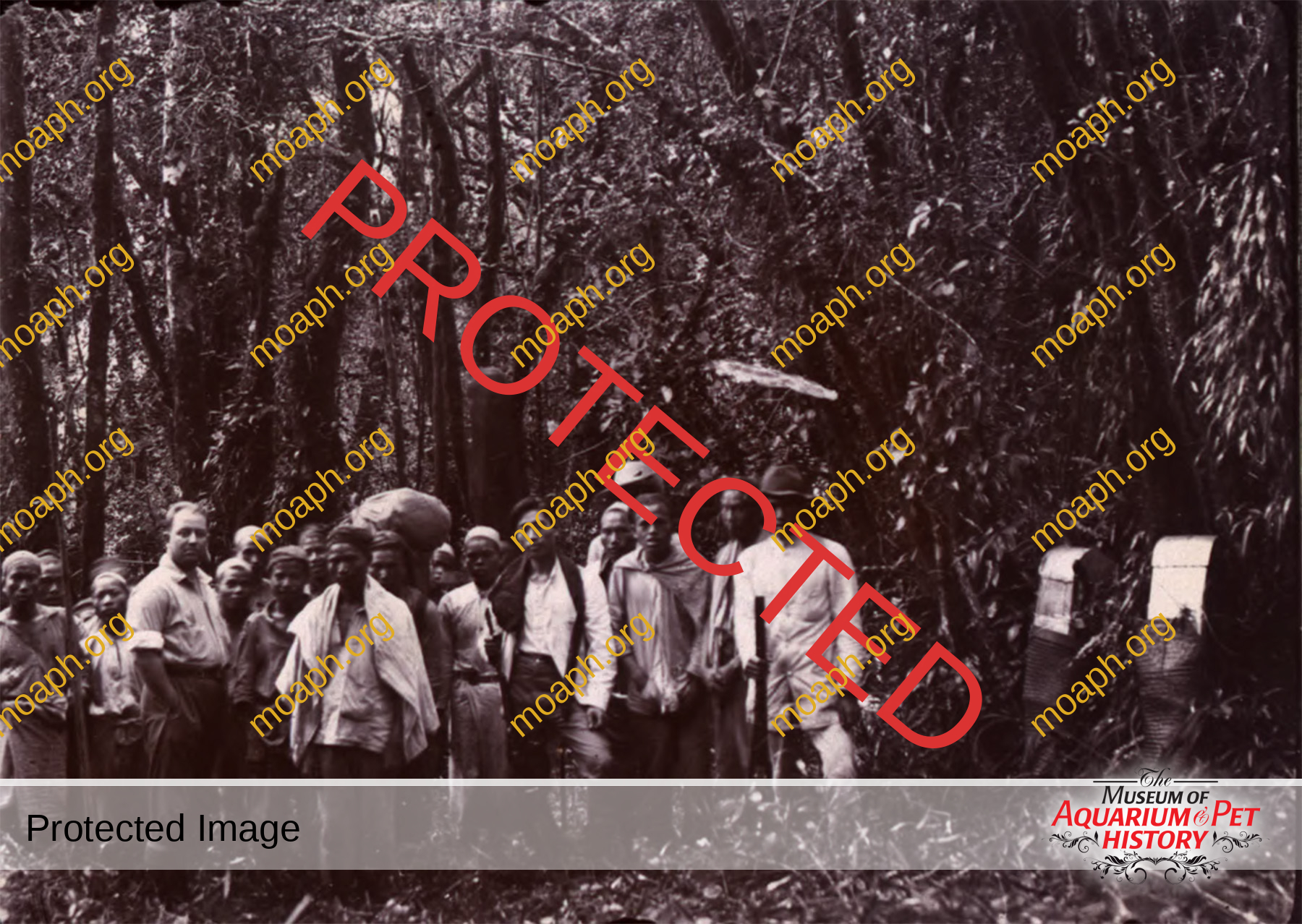
Dutch explorers in the Jambi province in Sumatra. Photograph between 1918 and 1923. KITLV 119899. Public domain via KITLV Digital Collections.
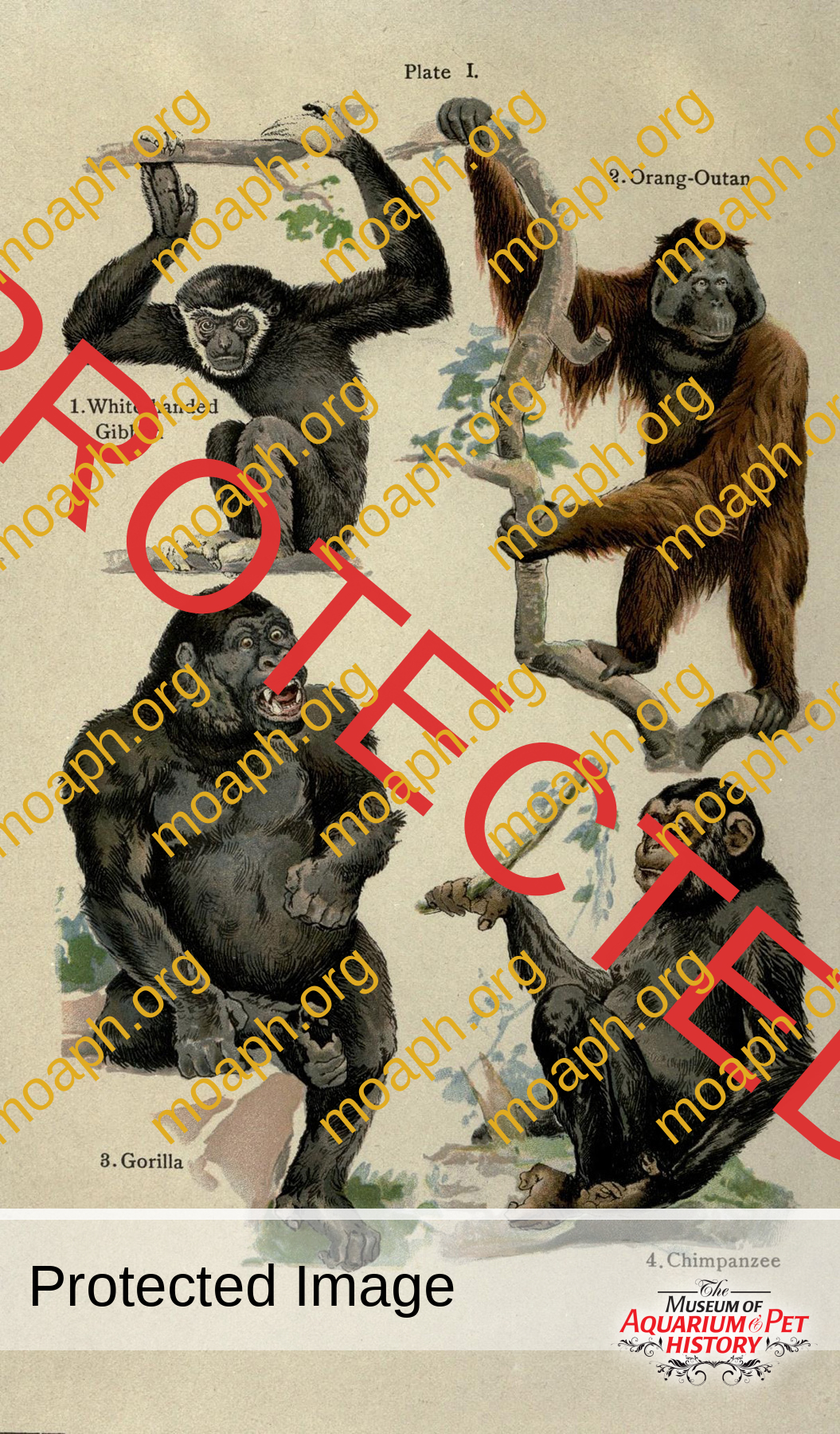
Depiction of several species of Apes in Sumatra. Illustration by Ernest Protheroe, The Handy Natural History (Coloured Plate I), 1910. Public domain via Wikimedia Commons.
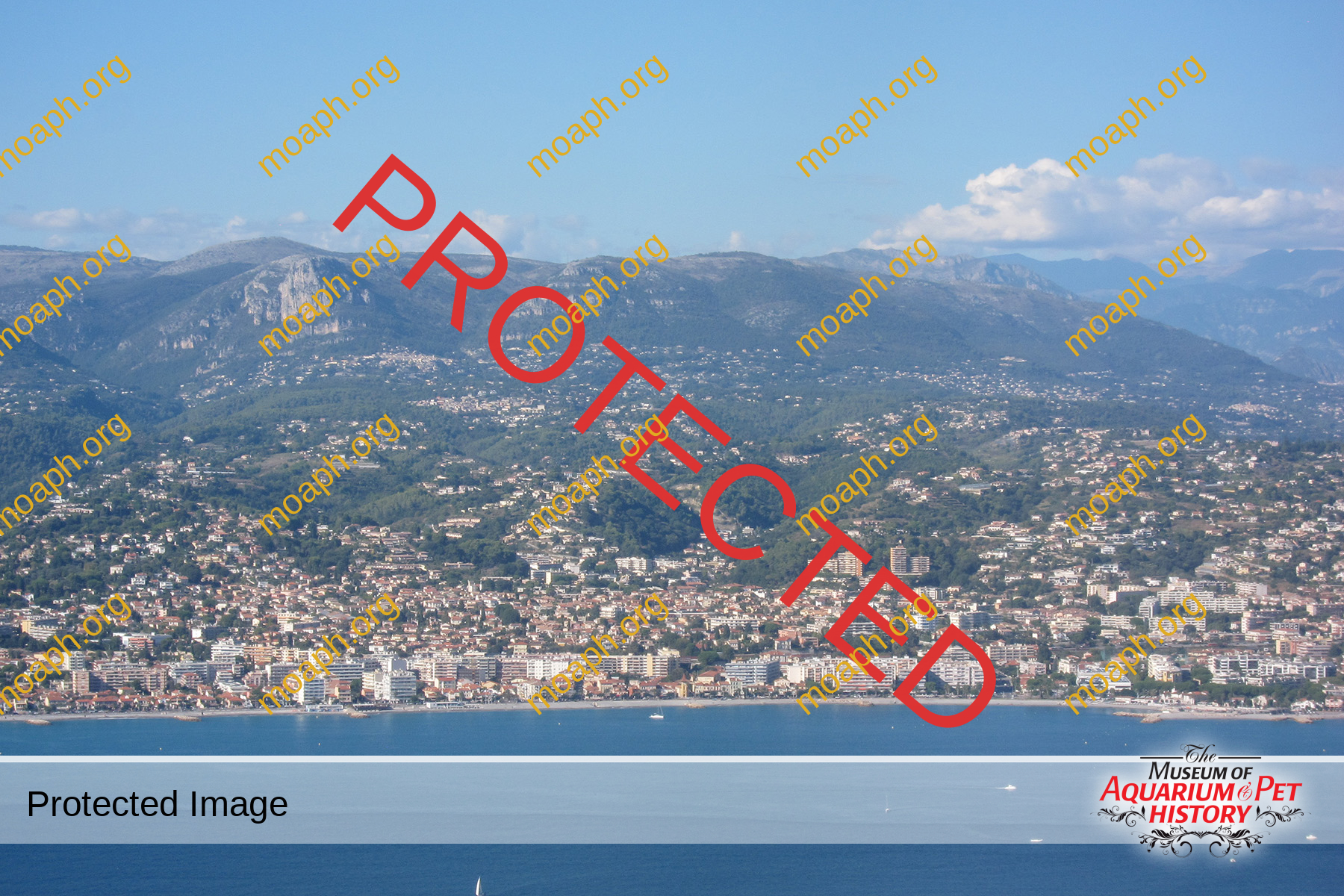
Aerial photo of Cros de Cagnes, where Firma Ruhe had its acclimatization station for recent animal imports. Photograph by Olivier Cleynen, Aerial photograph of Cros-de-Cagnes, 2020, via Wikimedia Commons.